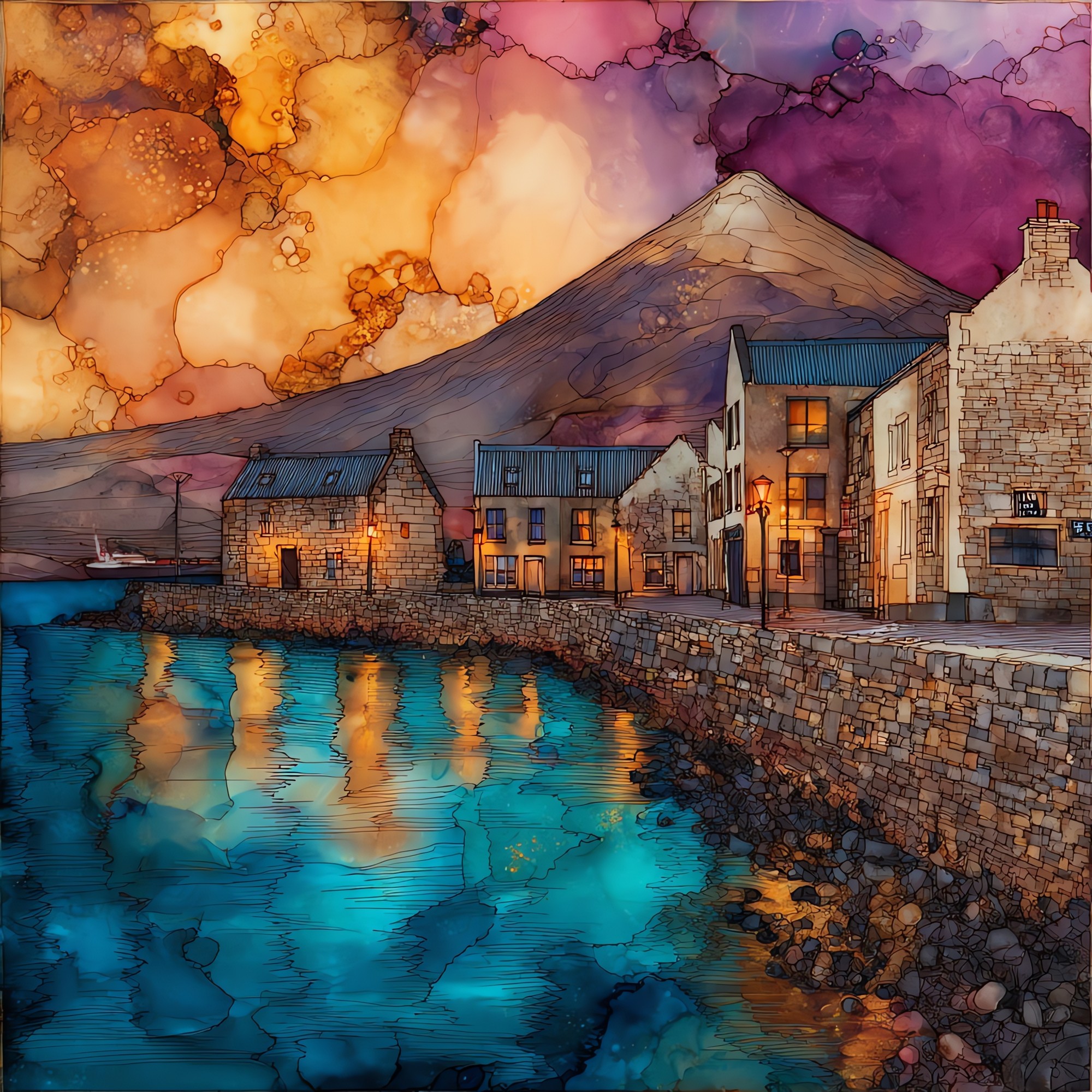
Westport Quay
— the bay the town walks down to.
Not only on a wall.
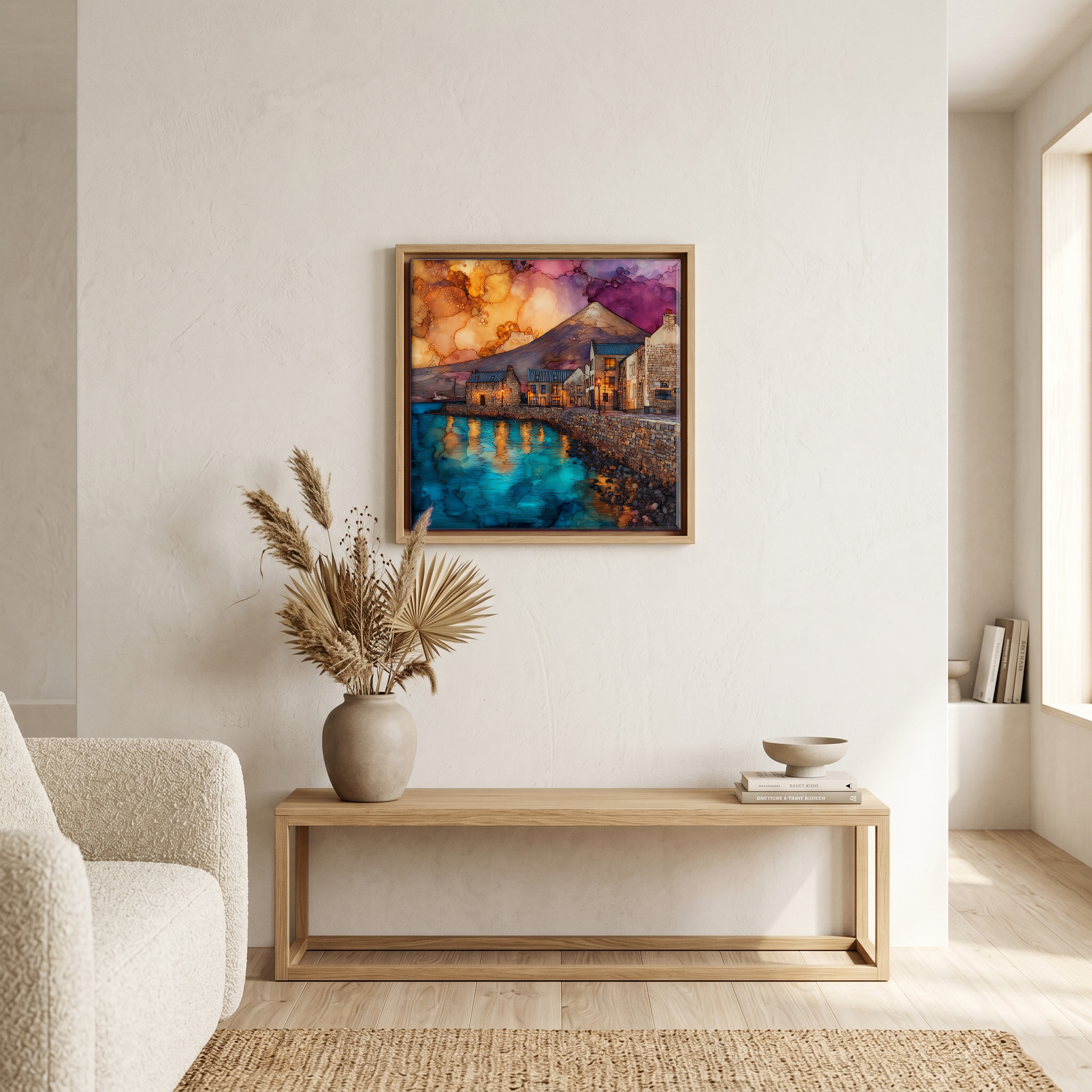
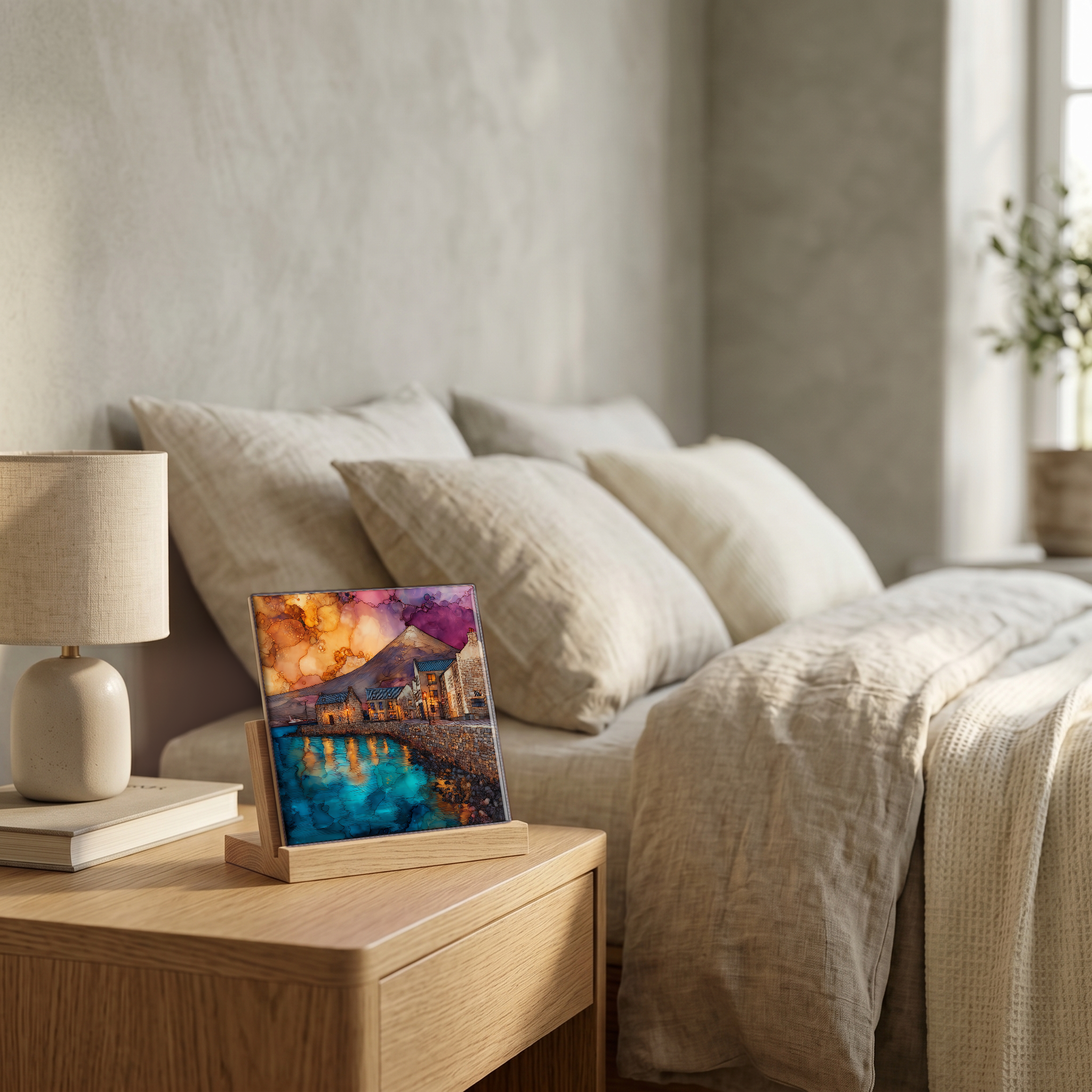
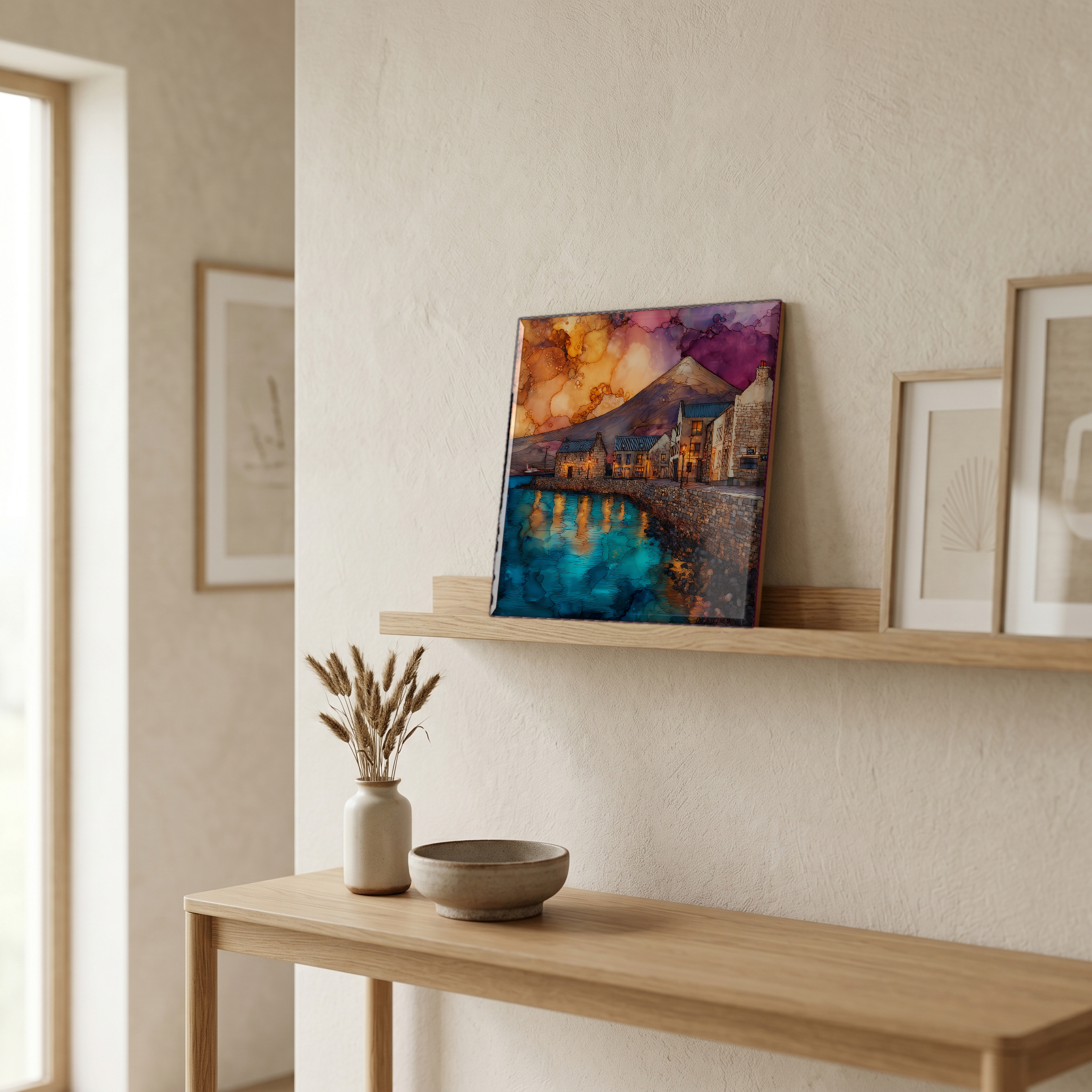
“The harbour at the foot of Westport, on the east side of Clew Bay. A planned Georgian town laid out in the 1780s walks its straight streets down to a row of stone warehouses, restored now as restaurants and inns. The bay holds more drumlin islands than anyone has ever finished counting. The local figure is 365, one for every day. Croagh Patrick rises to the south, climbed once a year as a pilgrimage and watched from the quay the rest of the time. When the tide drops the boats settle into the mud and the warehouses keep what shine the day has left.
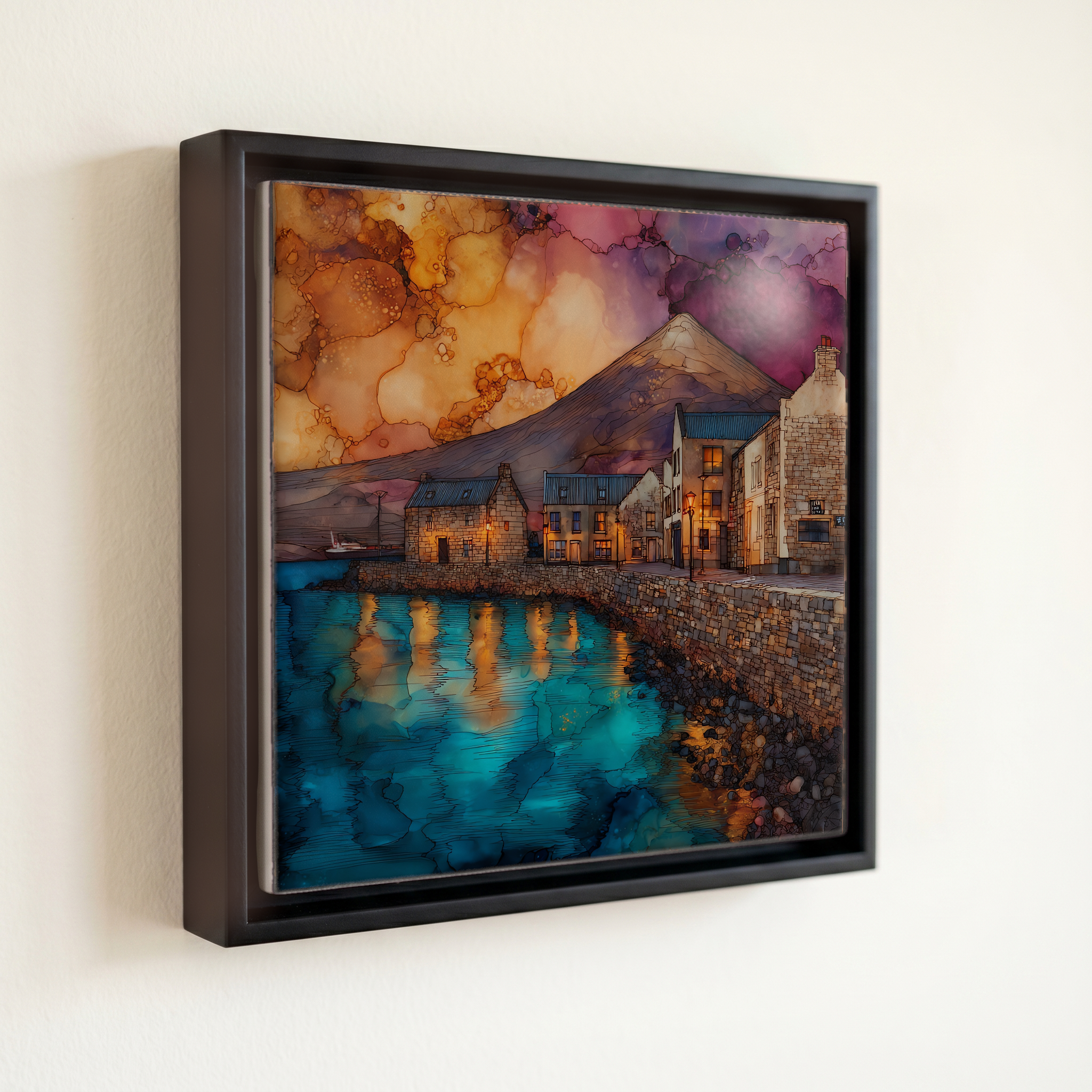
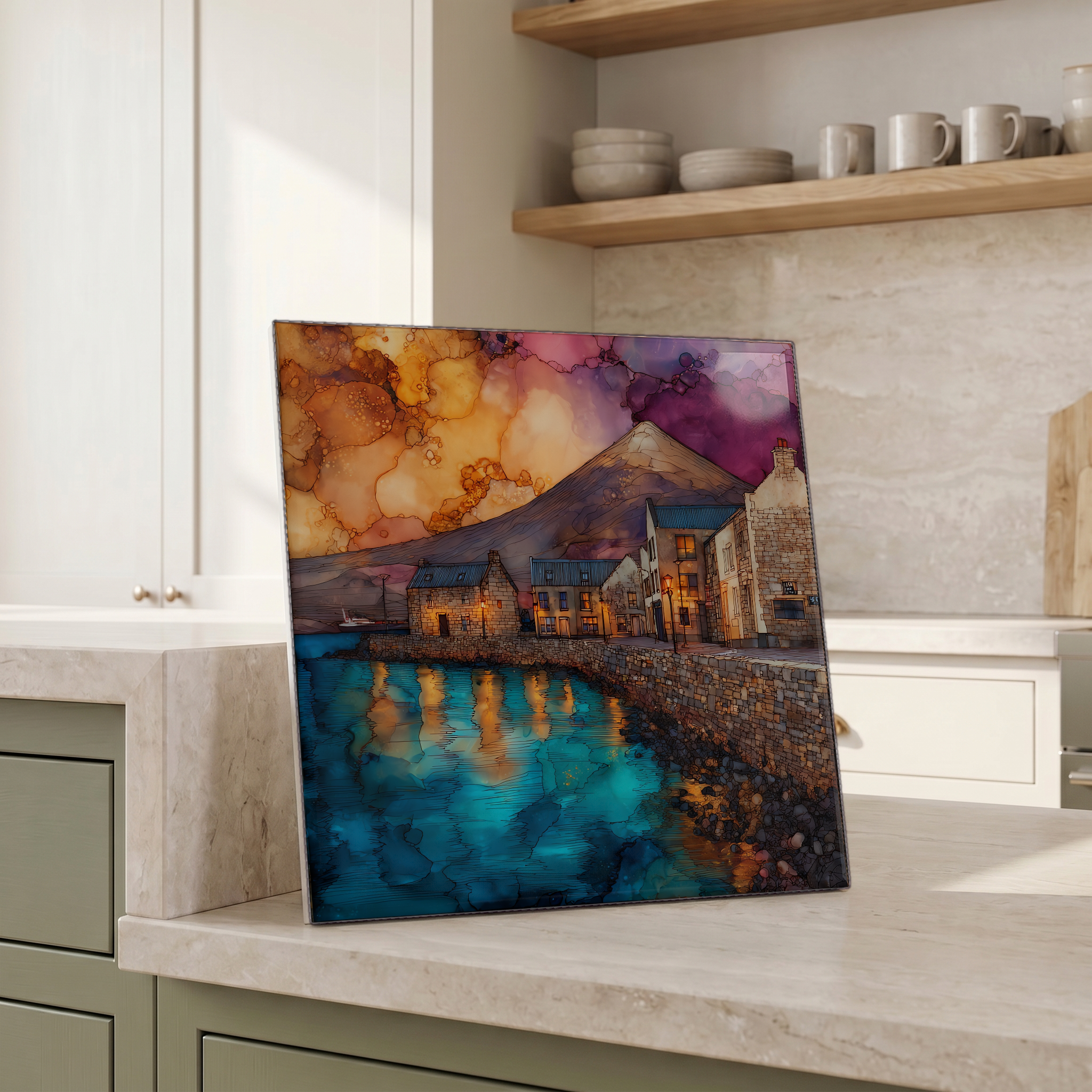
Westport Quay, on ceramic.
Each tile is finished by hand in our Knoxville studio. Artwork is slowly infused into the ceramic surface under high heat and pressure, and rests beneath a thin glossy finish. The colour lives in the surface, not on top of it.
Pick any four 4-inch tiles — National Parks you've been to, a Smokies set, the four seasons of one place. $ for a set of , cork-backed, ready to live on the table.
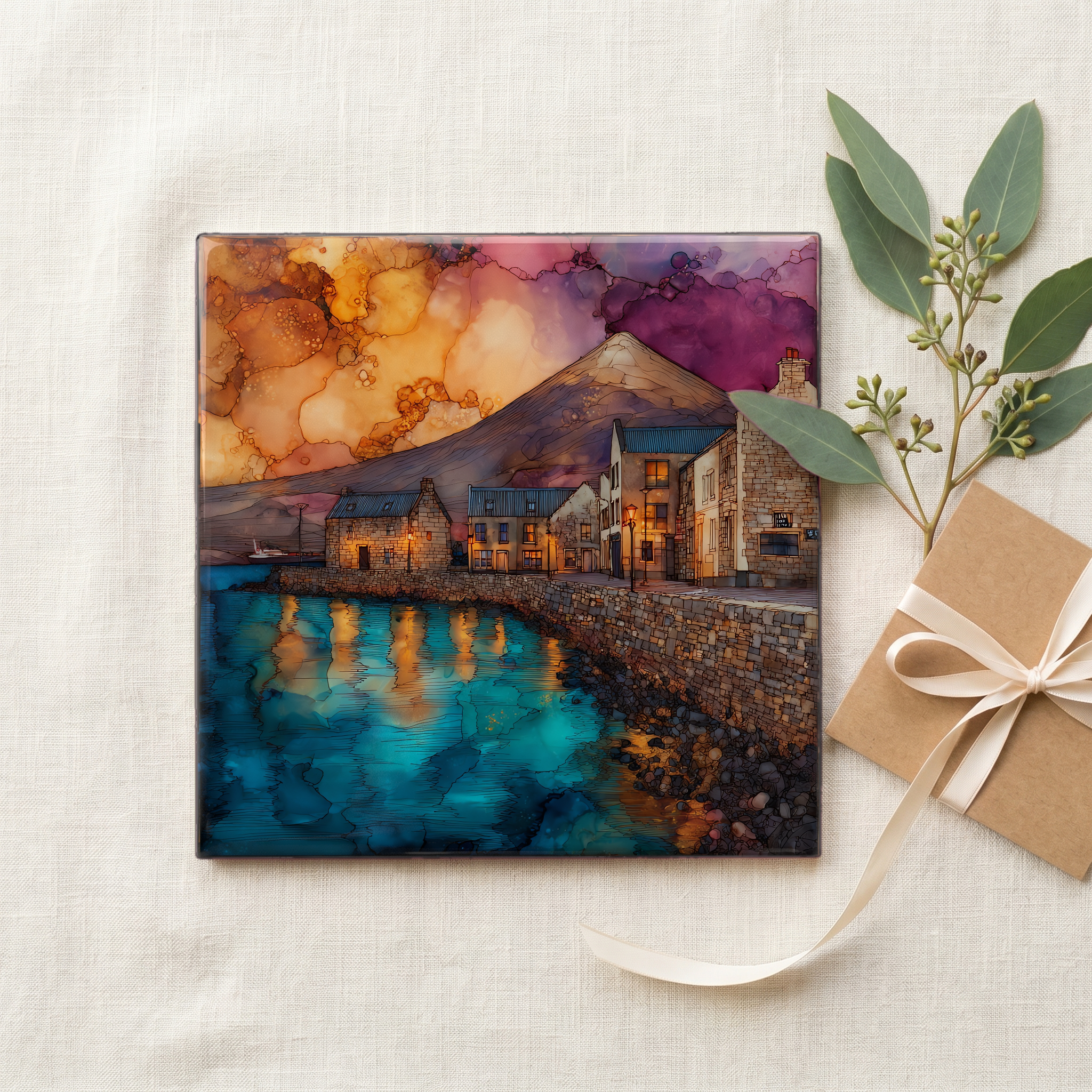
Each tile ships in a kraft box, tied with cream ribbon, with a handwritten note from the studio if you'd like to add one.
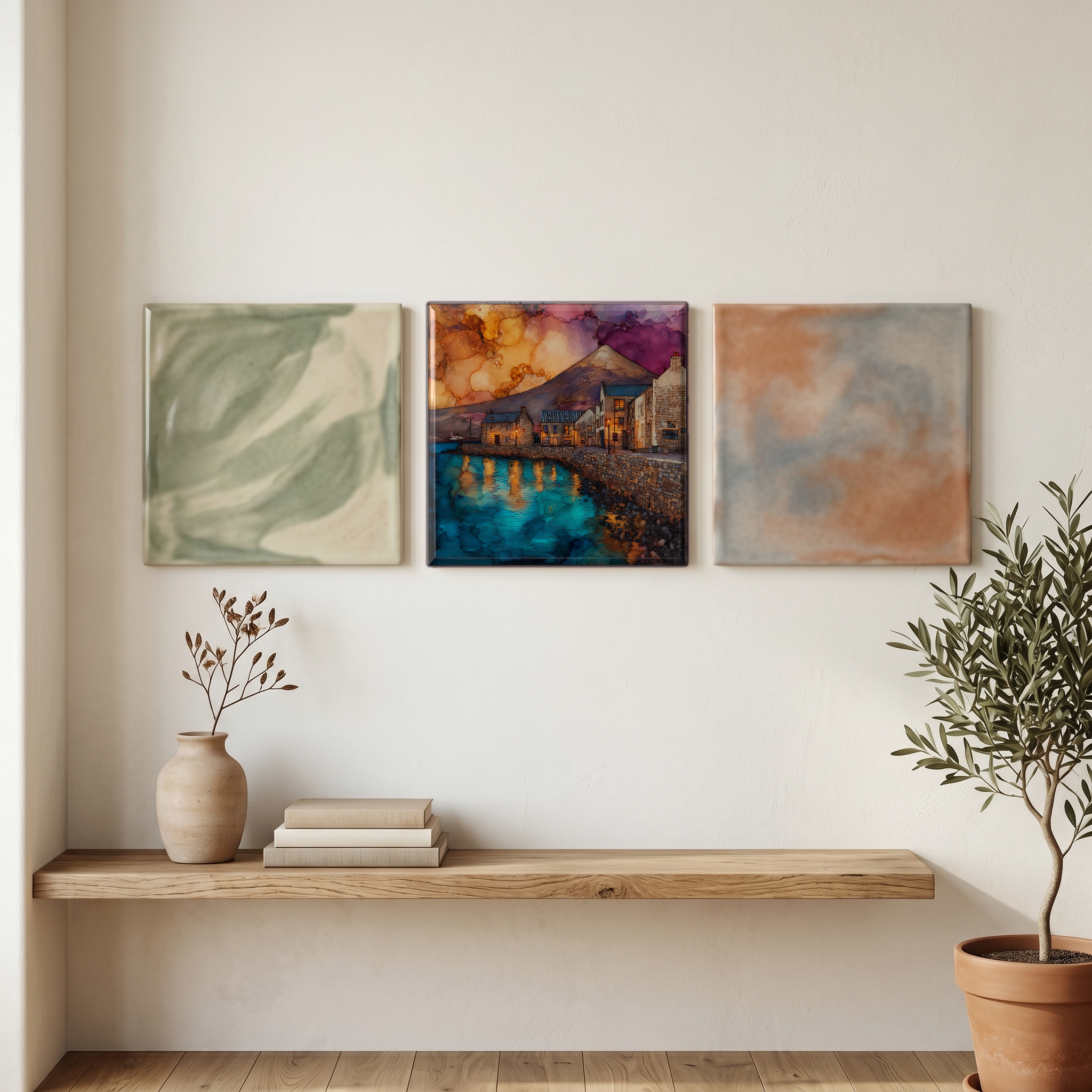
Three or five different vistas, hung together — a chapter of places you've been, or want to go.
The place, in three passes.
Westport Quay sits about two kilometres west of Westport town, on the southeast shore of Clew Bay in County Mayo on Ireland's Atlantic coast. The town itself was laid out as a planned Georgian settlement in the 1780s, attributed to the architect James Wyatt for the Browne family, later the Marquesses of Sligo. The quay served as a working port through the nineteenth century, handling linen, grain, and emigrant traffic. Today the restored stone warehouses house restaurants, inns, and small businesses along the harbour. The town of about 6,000 people sits on the Wild Atlantic Way, a 2,500 kilometre signed coastal driving route that runs the whole western edge of the country from Donegal to Cork.
Clew Bay is celebrated for its drumlins, the low rounded islands left behind when the last ice sheet retreated from western Ireland. The bay contains well over a hundred of them, though the local tradition is to count 365, one for every day of the year. They form one of the most concentrated drumlin coasts in Europe, and they make the bay's surface a maze of channels and tidal flats. Granuaile (Grace O'Malley), the sixteenth-century chieftain known as the Pirate Queen, ran her trading and raiding fleet through these islands from her stronghold on Clare Island at the bay's mouth. From the quay at low tide the nearer drumlins surface as green hummocks of grass and gorse, and the bay holds the light a long while.
The quay is walkable from town. From the Octagon at the centre of Westport, the half-hour walk along the Quay Road leads past Westport House, the eighteenth-century estate of the Browne family designed by Richard Cassels. The quay itself runs along the harbour, with restored stone warehouses on one side and the working pier on the other. Pubs serving Atlantic seafood and traditional sessions of Irish music sit between converted granary buildings. Croagh Patrick, the 764 metre conical mountain visible from the quay, is climbed each year on Reek Sunday, the last Sunday in July, by tens of thousands of pilgrims, and by a steady stream of walkers the rest of the time.