Wender·Vista
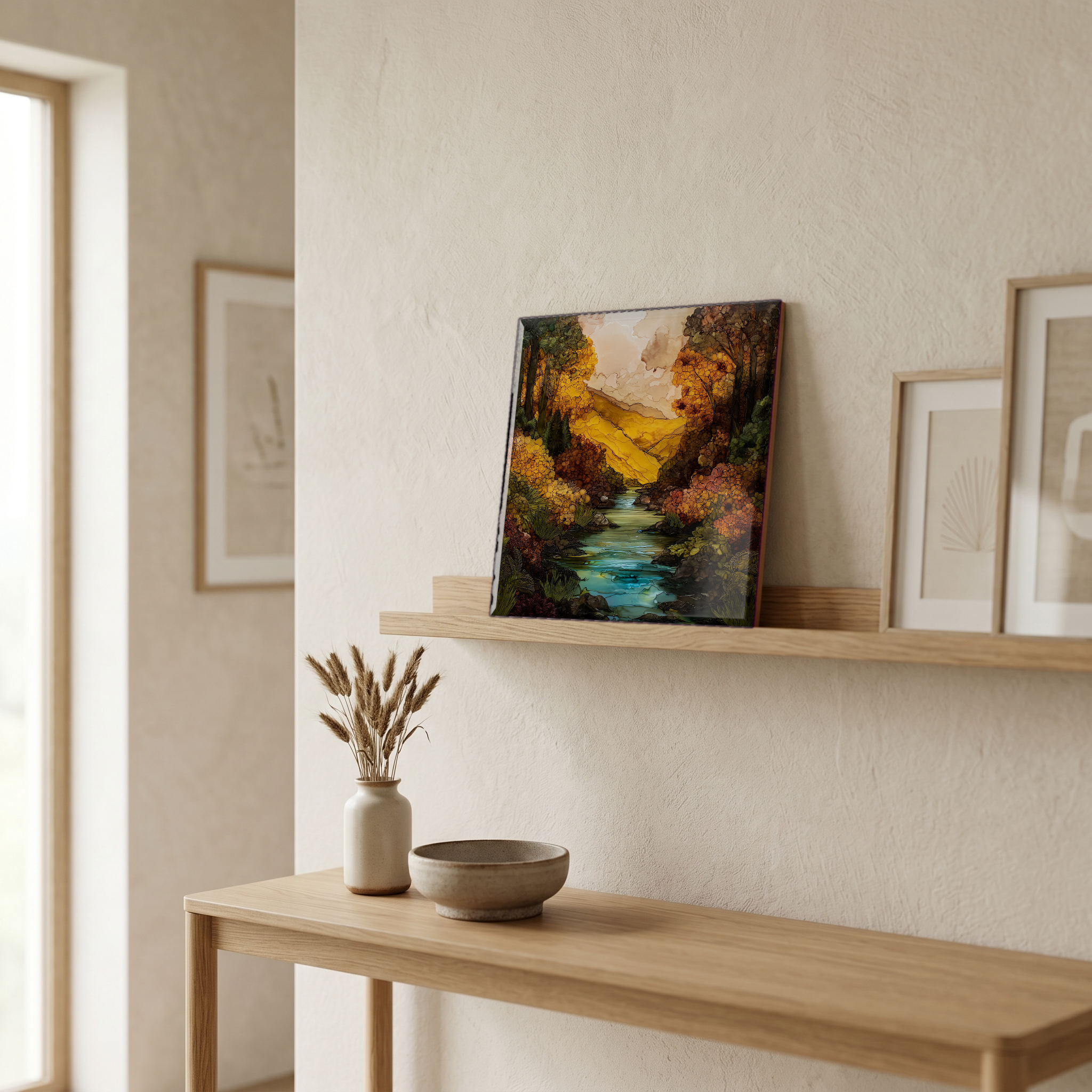
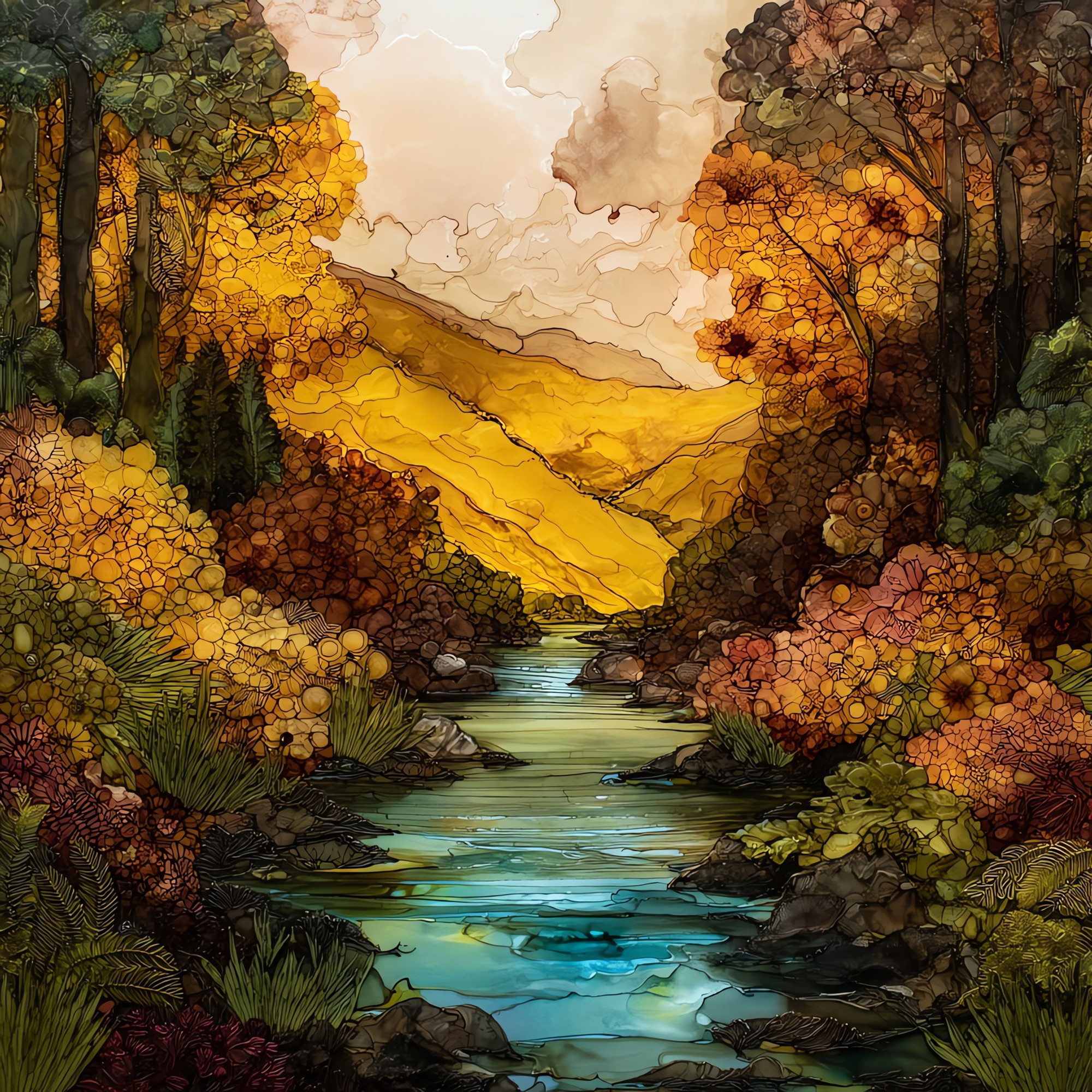
Vale of Avoca
shown on ceramic, 12-inch tileIreland
in County Wicklow, an hour south of Dublin

Vale of Avoca

— two rivers learning the same name.

Where it lives

Not only on a wall.

A small tile on the nightstand catching the morning. A larger one above the fire. Yours, wherever you spend the slow hours.
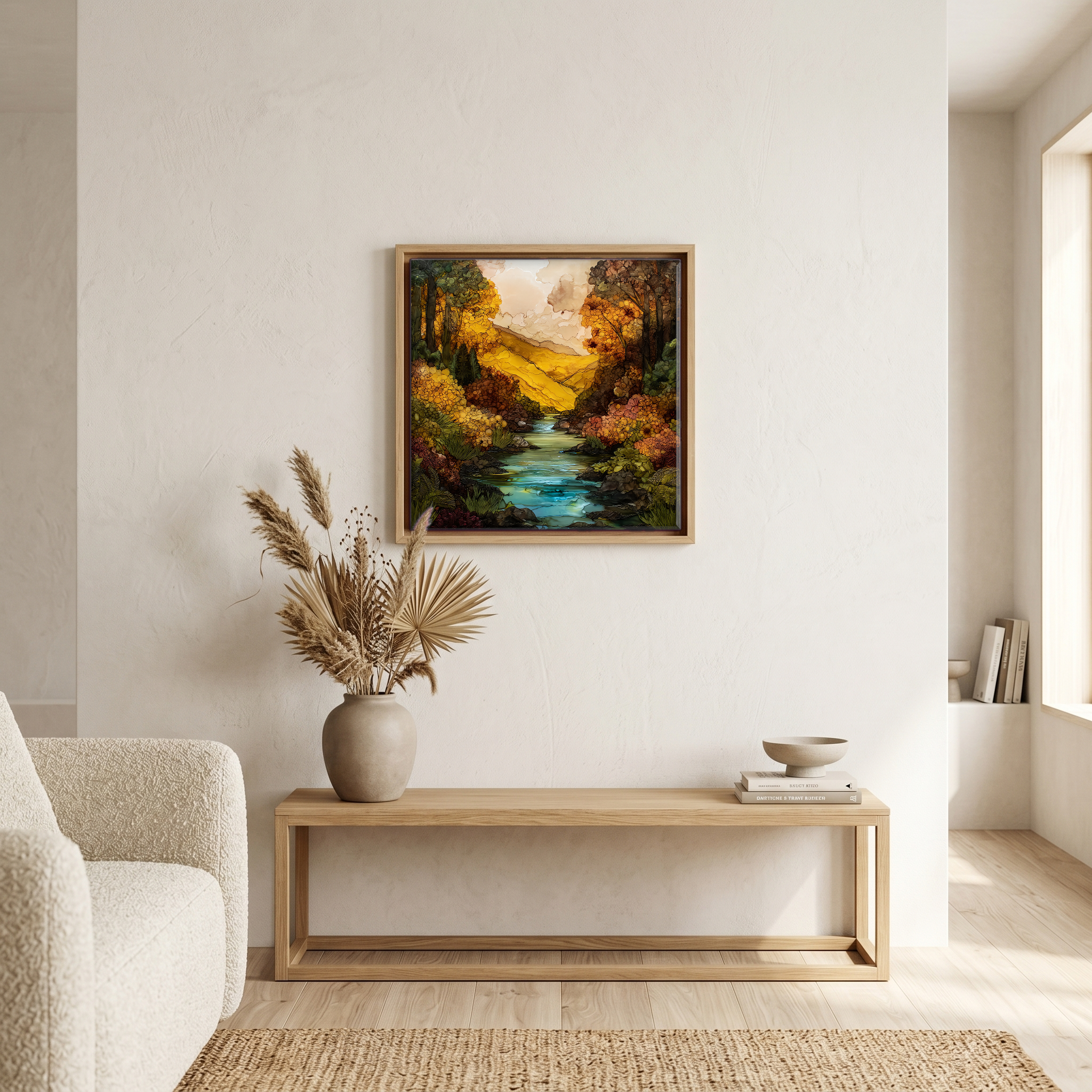
Above the bench, in a warm oak surround.
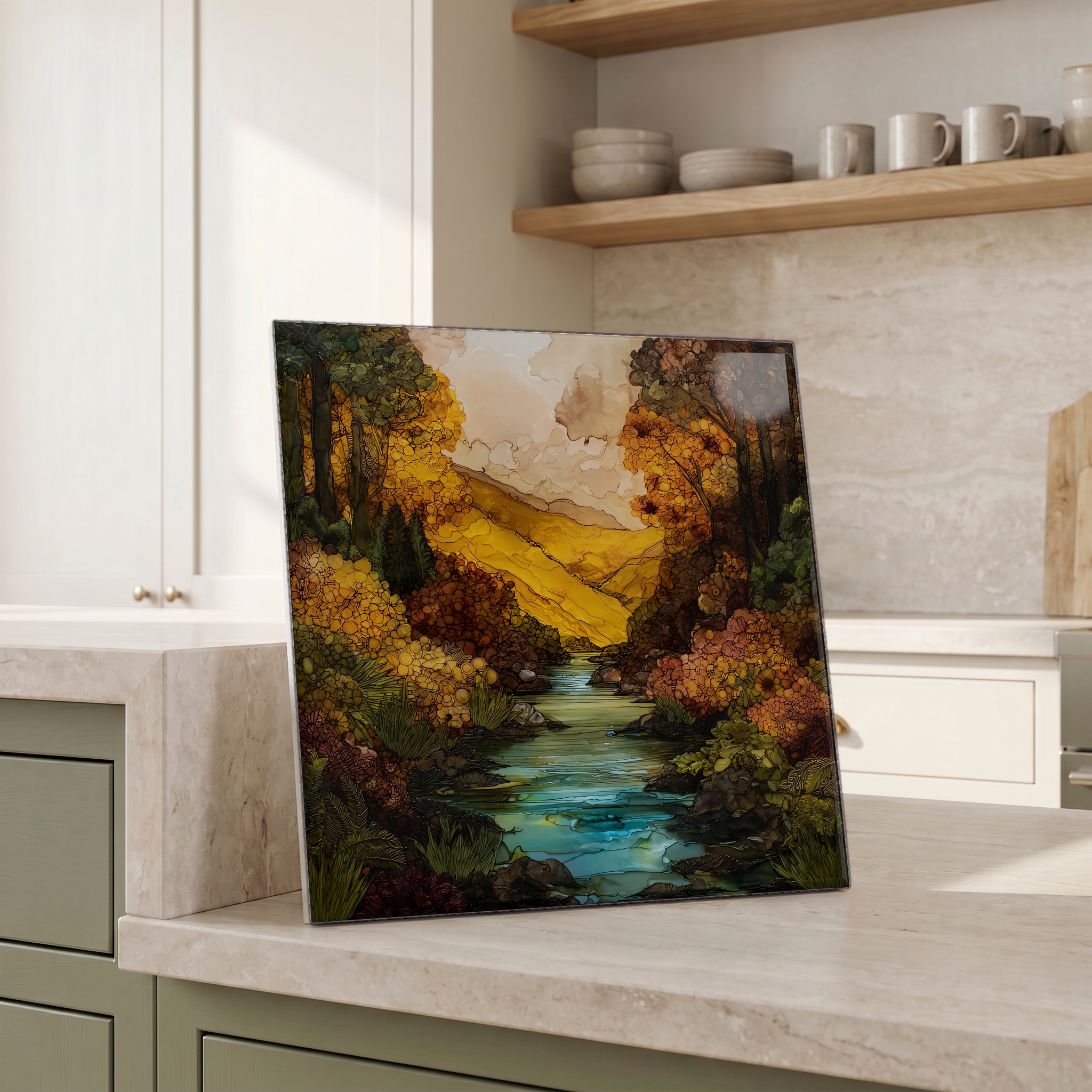
Beside the kettle, propped on the counter.
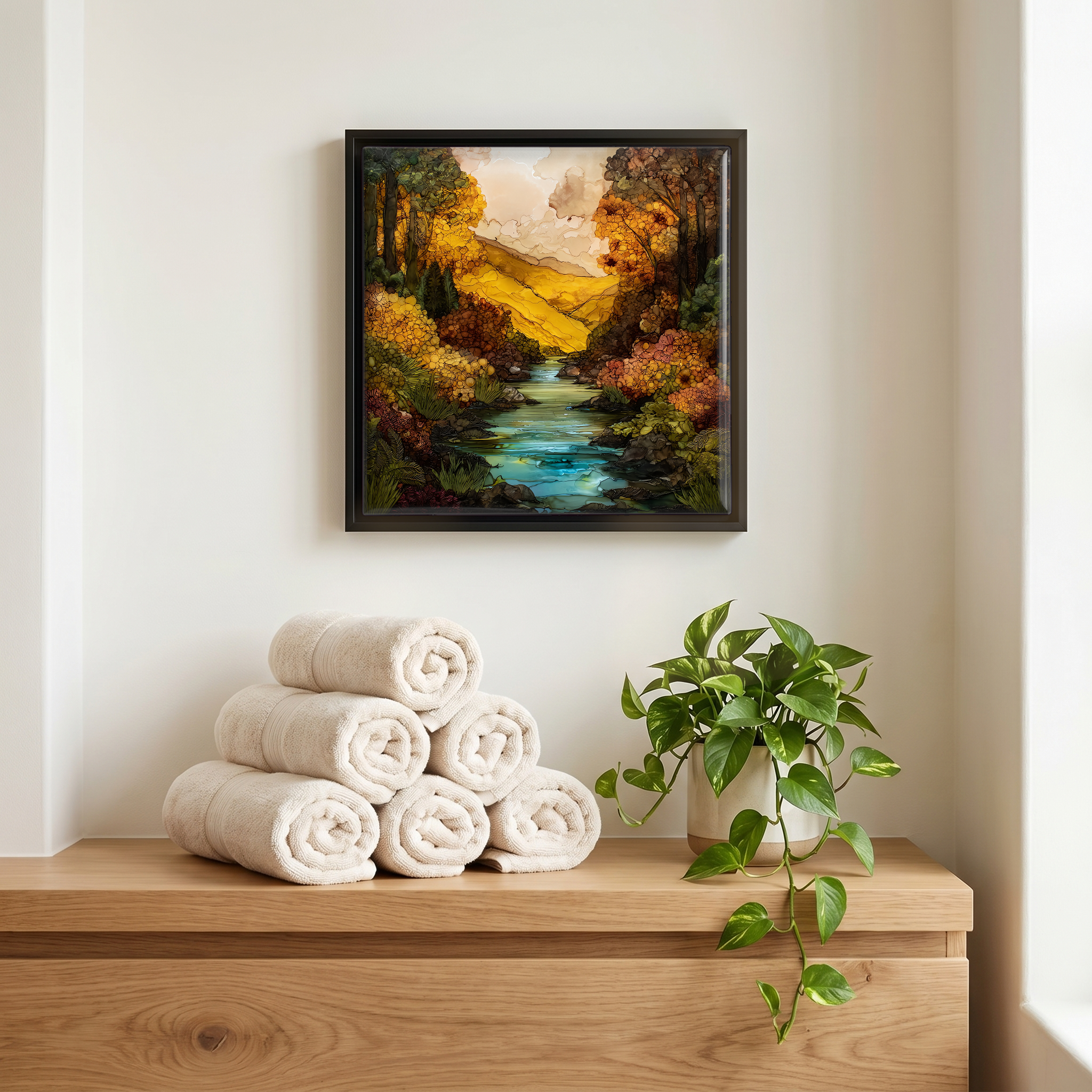
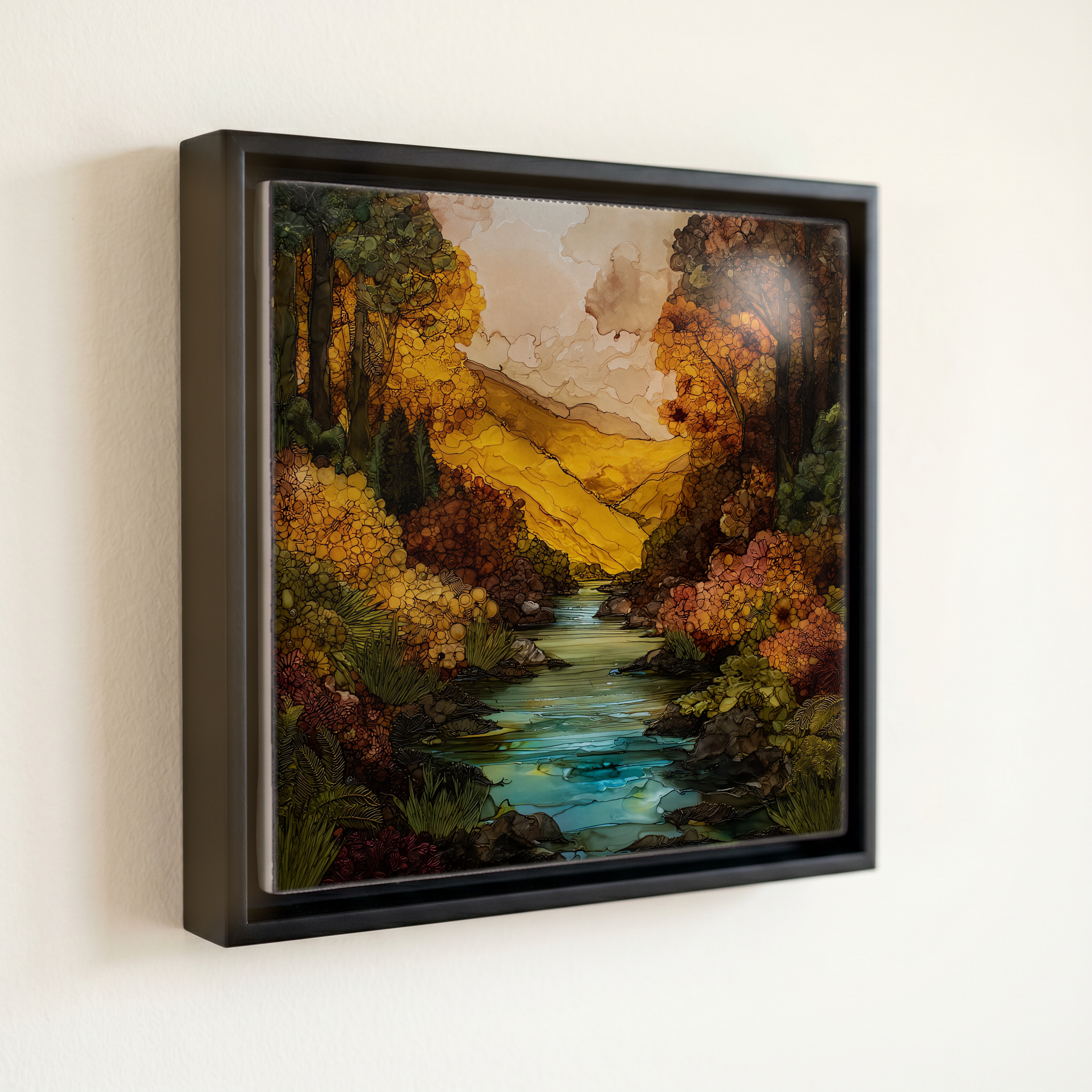
Above the linens, in a slim black surround.
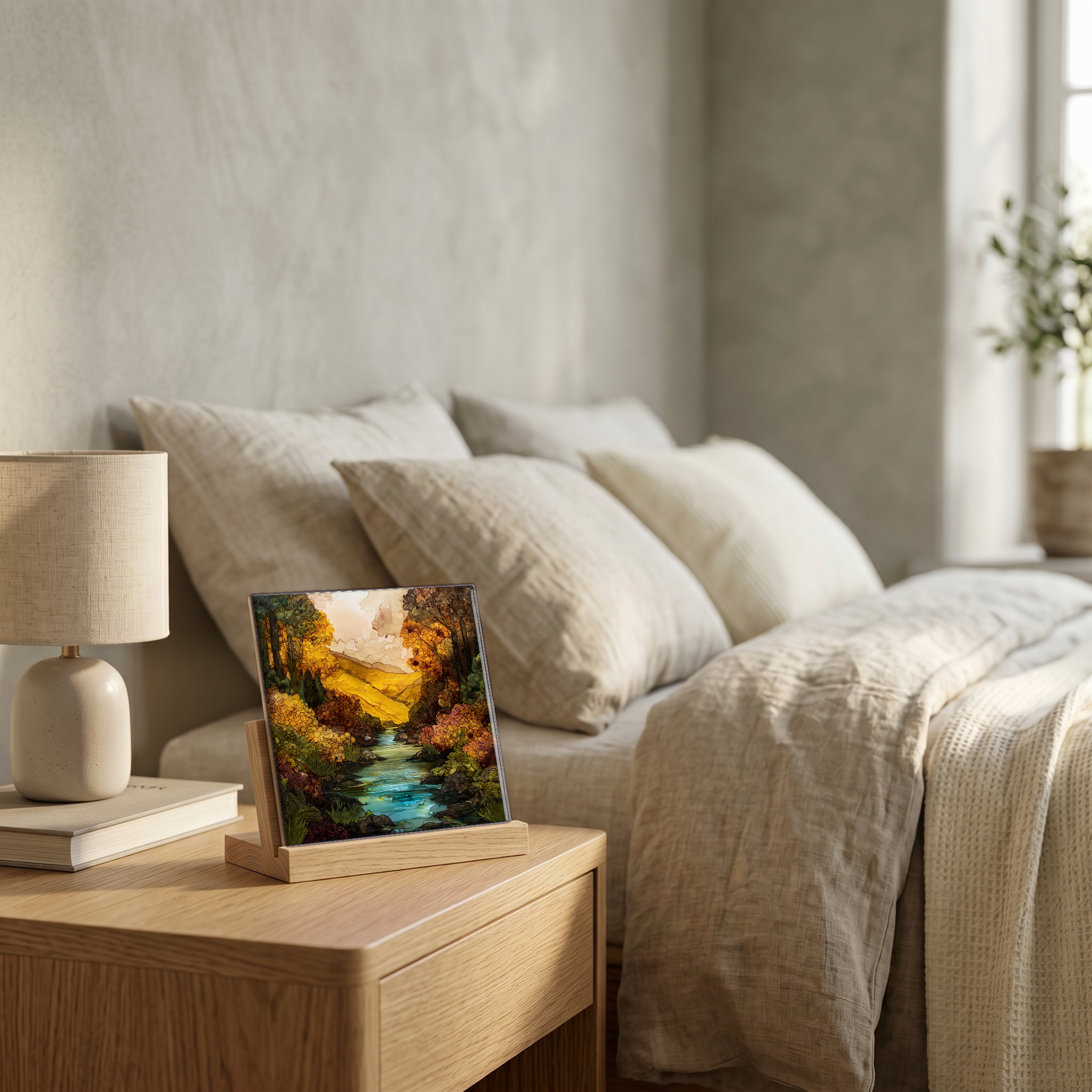
On the nightstand, on a light oak stand.
On a picture ledge, where the light comes in.
a note from the studio

The confluence of the Avonmore and the Avonbeg in South Wicklow, the Big River and the Small, folding together into the Avoca and on to the sea at Arklow. Thomas Moore put a song to the spot in 1807, and it has carried the name Meeting of the Waters ever since. Three kilometres downriver, the mill at Avoca village has been weaving since 1723. The valley is wooded, dark with oak in summer, copper-red in autumn. There are quiet pull-offs along the road where the river sound is the only sound.
from the studio
shown in a slim black floating frame · 6 × 6 in
— bring it home

Vale of Avoca, on ceramic.

Each tile is finished by hand in our Knoxville studio. Artwork is slowly infused into the ceramic surface under high heat and pressure, and rests beneath a thin glossy finish. The colour lives in the surface, not on top of it.

What kind of piece?
One tile — square or rectangle.
How big?
the popular one — counter, shelf, nightstand
6 × 6 in · 15 cm · 1.6 lb
Surface finish
A clear glossy finish — the artwork reads as if under resin. Ideal for show-pieces and framed wall art.
How it sits
A hidden cleat — sits ¼″ proud of the wall.
$58
Hand-finished and shipped from our studio at the foot of the Smokies. On your wall in about ten days.
size
6 × 6 in
15 cm
weighs
1.6 lb
solid in the hand
surface
ceramic, hand-finished
art rests beneath a thin glossy finish
from
Knoxville, TN
our family studio, at the foot of the Smokies
— start a Coaster Set

Pick any four 4-inch tiles — National Parks you've been to, a Smokies set, the four seasons of one place. $ for a set of , cork-backed, ready to live on the table.
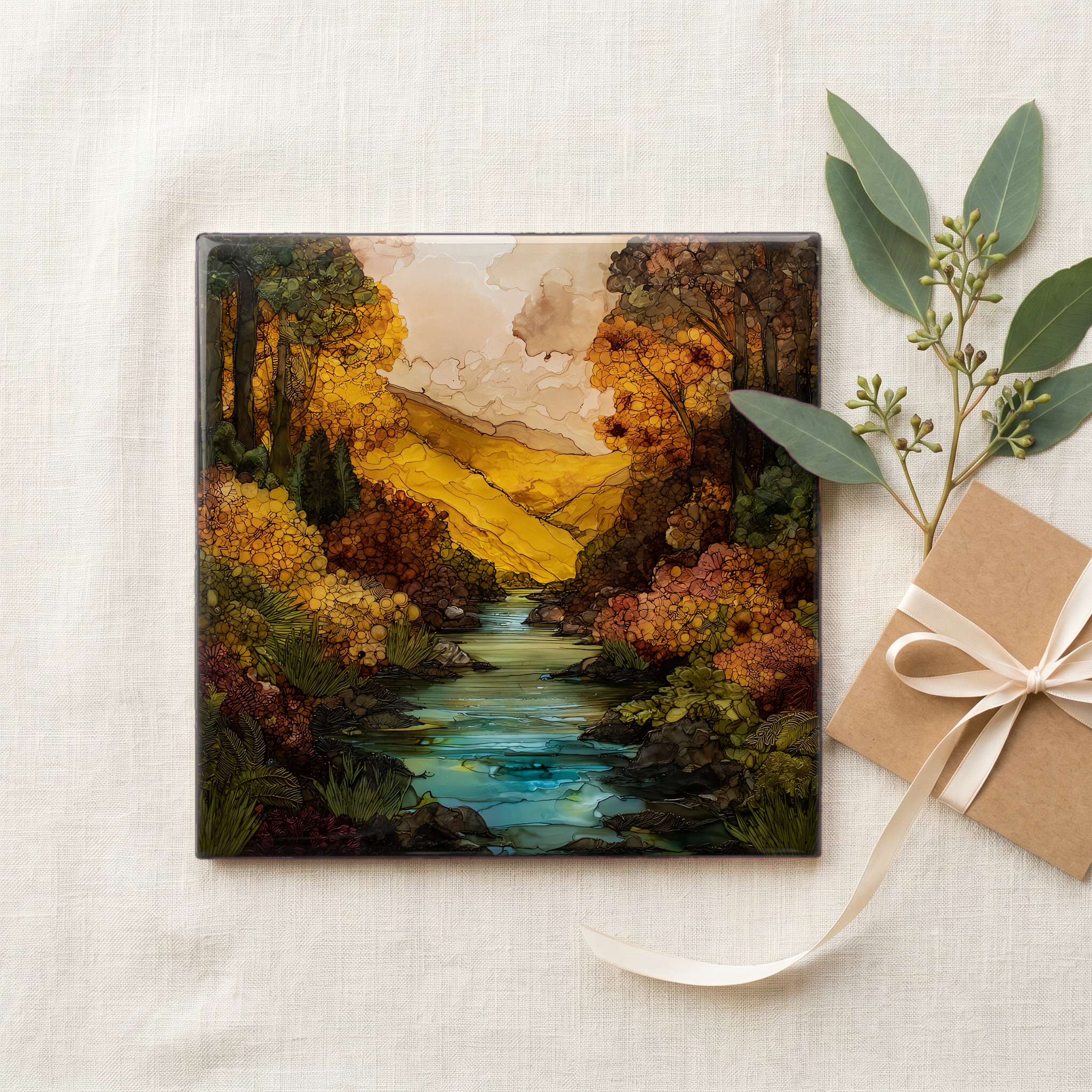
comes gift-ready
comes gift-ready

Each tile ships in a kraft box, tied with cream ribbon, with a handwritten note from the studio if you'd like to add one.
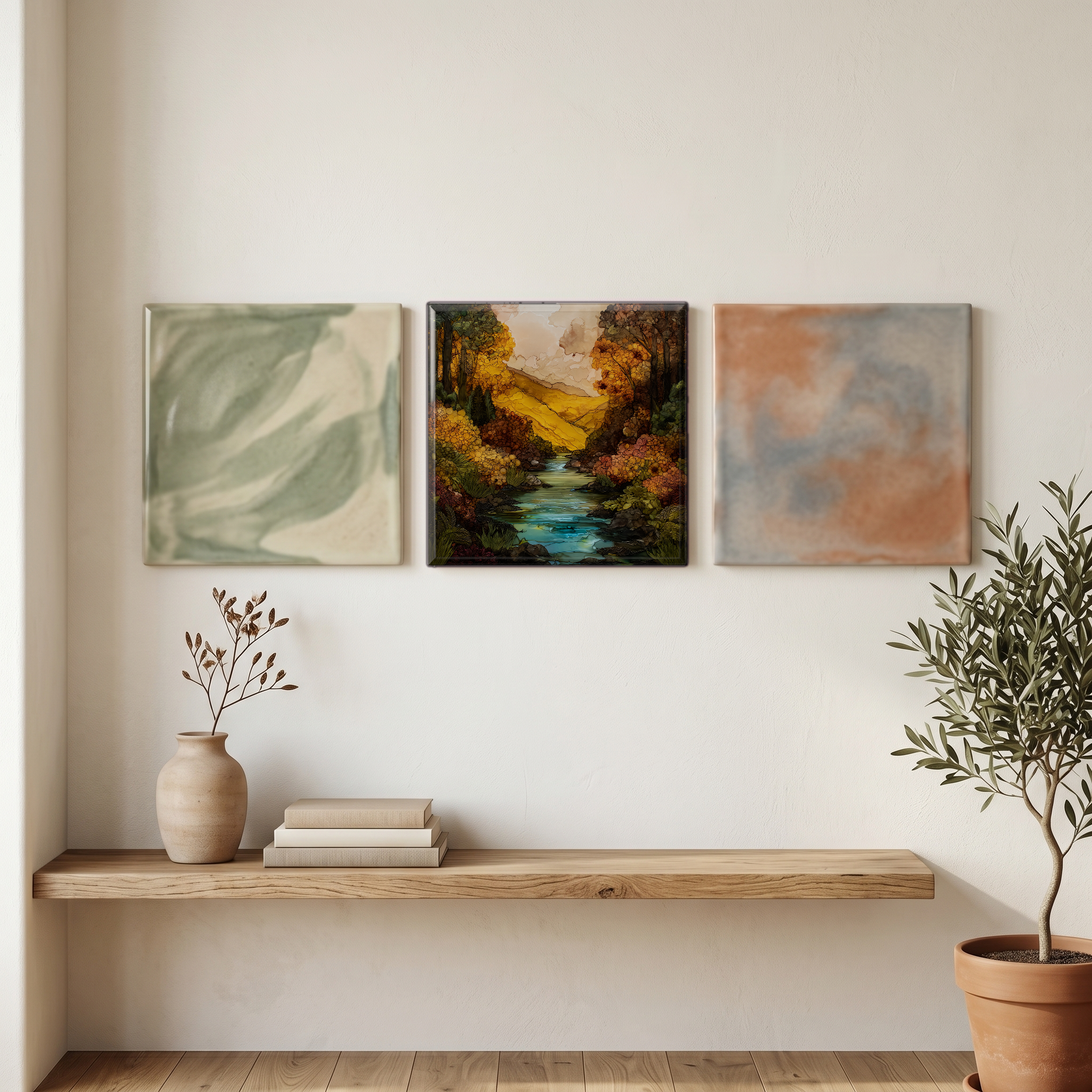
or build a grouping
or build a grouping

Three or five different vistas, hung together — a chapter of places you've been, or want to go.

about Vale of Avoca

The place, in three passes.

A little of what's known, in case you fall down the rabbit hole — or want to go see it yourself.
the place

The Vale of Avoca is the wooded river valley of South County Wicklow, about 66 kilometres south of Dublin and roughly 13 kilometres inland from the Irish Sea at Arklow. The Avoca River itself is some 56 kilometres long, formed at the Meeting of the Waters, the confluence of the Avonmore and the Avonbeg about three kilometres north of Avoca village. The valley sits between the Wicklow Mountains to the north, with Glendalough as the next reach upcountry, and the gentler farmland that runs to the coast. The Dublin to Rosslare railway threads the lower vale, with the nearest station at Rathdrum. County Wicklow is locally called the Garden of Ireland.

the water

The confluence is famous because Thomas Moore wrote a song about it. In 1807 the Dublin poet set new lyrics, beginning There is not in the wide world a valley so sweet as that vale in whose bosom the bright waters meet, to an older Irish air called The Old Head of Dennis. The piece appeared in the first volume of his Irish Melodies in 1808 and became one of the most-sung melodies of the nineteenth century. Moore is said to have written the lines under a tree near the join; the original tree is long gone and a replacement was planted on the same spot, marked now by a small monument. The Avonmore (Big River) and the Avonbeg (Small River) carry the run-off of the Wicklow uplands; together they make the Avoca, which reaches the sea at Arklow.

the visit

Three kilometres downriver from the confluence is Avoca village, and on its riverbank stands Avoca Mill, established in 1723 and the oldest working mill in Ireland. The mill still weaves the throws, blankets, and scarves that carry the village's name, and runs free guided tours through the working sheds. The village itself stood in for the fictional Ballykissangel in the BBC series of the same name, filmed in Avoca from 1996 to 2001, and a number of the pubs and shopfronts from the show are still recognisable. Castle Howard, a privately held estate on the river above the village, is the spot Moore later named in a letter to Lord John Russell as the one that suggested the song. Most visitors come in summer; autumn is the quieter season and the more honest light.

where
Ireland · County Wicklow
elevation
66 m · 217 ft
position
52.8831° N · 6.2297° W
the neighborhood

What's nearby.

A handful of named places within an hour's walk or short drive. Some we've already painted; some we will.
3 km S
Avoca village
village
1 km S
Castle Howard estate
private estate
8 km NW
Rathdrum
village
13 km SE
Arklow
coastal town
20 km N
Glendalough
monastic site· on a tile
15 km N
Wicklow Mountains National Park
national park
N
Vale of Avoca
Avoca village
Castle Howard estate
Rathdrum
Arklow
Glendalough
Wicklow Mountains National Park
common questions

What people ask.

A few questions we get about Vale of Avoca — and about bringing the piece home.
about the place

The Vale of Avoca is a wooded river valley in South County Wicklow, Ireland, about 66 kilometres south of Dublin and 13 kilometres inland from the Irish Sea at Arklow. The Meeting of the Waters lies about three kilometres north of Avoca village.

The Meeting of the Waters is the confluence of the Avonmore and Avonbeg rivers, which join in the Vale of Avoca to form the River Avoca. The names of the two rivers mean Big River and Small River in Irish. Thomas Moore made the spot famous with his 1807 song of the same title.

Two reasons. The poet Thomas Moore wrote The Meeting of the Waters about the confluence in 1807, and the song became one of the best-known Irish melodies of the nineteenth century. Three kilometres downriver, the Avoca Mill has been weaving on the riverbank since 1723.

Thomas Moore (1779 to 1852) was a Dublin-born poet and lyricist, best known for his Irish Melodies, ten volumes of songs published between 1808 and 1834. He set new lyrics to older Irish airs. The Meeting of the Waters appears in the first volume and remains one of the most-sung pieces from the collection.

The valley reads best in autumn, when oak and beech turn copper through the wooded slopes. Summer is the busy season around the mill and Moore's tree. Winter is quiet and often cold; the river runs full and the colour goes silver and grey.

By car the drive from Dublin is roughly an hour south on the M11 and R752. The Dublin to Rosslare railway runs through the lower valley, with the nearest stop at Rathdrum, about eight kilometres from the Meeting of the Waters.

Avoca Mill, with free guided tours of the working weaving sheds, a café, and the original retail store. The village also served as the fictional Ballykissangel for the BBC series filmed there between 1996 and 2001, and several of the pubs and shopfronts from the show are still recognisable.

about the piece in your home

It has been a meaningful gift for many of our customers with ties to Ireland. The Meeting of the Waters is one of the most-sung lines in Irish music, a touchstone for anyone who grew up with Moore's Irish Melodies or has driven the Wicklow road. A Coaster or Small with a handwritten note from the studio carries well.

The forest greens, river silver, oak browns, and amber autumn of the piece sit well in Cottage-traditional, Library-warm, and Coastal-Irish rooms. It does particular work against book-lined walls, oiled wood, linen, and slate. It is less suited to high-contrast Minimalist or Mid-century-bold interiors.

Yes. The cottage-traditional and slow-home strands that have returned to entry halls, parlours, and reading corners take well to a piece that carries an heirloom weight without printing a slogan. The Medium above a console or the Large above a sideboard reads as both old and new.

Above a standard sofa, a single Large reads as a quiet centrepiece; a 4-tile Mural fills the wall and lets the river-meet pattern unfold across the seam lines. Above a console or fireplace, the Medium is the standard pick. For a wide accent wall or stair landing, the 9-tile Mural carries the room.

Yes. Order the Dura Satin or Matte finish for any room with steam or splash, such as a bathroom, a kitchen backsplash, or a shower surround. Both finishes are scratch-resistant and clean with a damp microfibre cloth. The Glossy finish is reserved for framed wall art in dry rooms.

A soft microfibre cloth with water is enough for ordinary dust and fingerprints. For kitchen and bathroom installations in Dura Satin or Matte, mild dish soap will lift grease without damaging the surface. Avoid abrasive pads and ammonia-based cleaners. The colour lives inside the ceramic surface, so it will not lift with cleaning.

Yes. Every WenderVista piece is original to the studio, painted by Reid Wender and hand-finished in Knoxville, Tennessee. The artwork is not licensed in or out. The Vale of Avoca is one piece in our Ireland atlas, made in our distinctive stained-glass and alcohol-ink language.

if this one stayed with you

A few you might also love.

Hand-picked by the eye that found Sorapis. Same air, same kind of quiet.