Wender·Vista
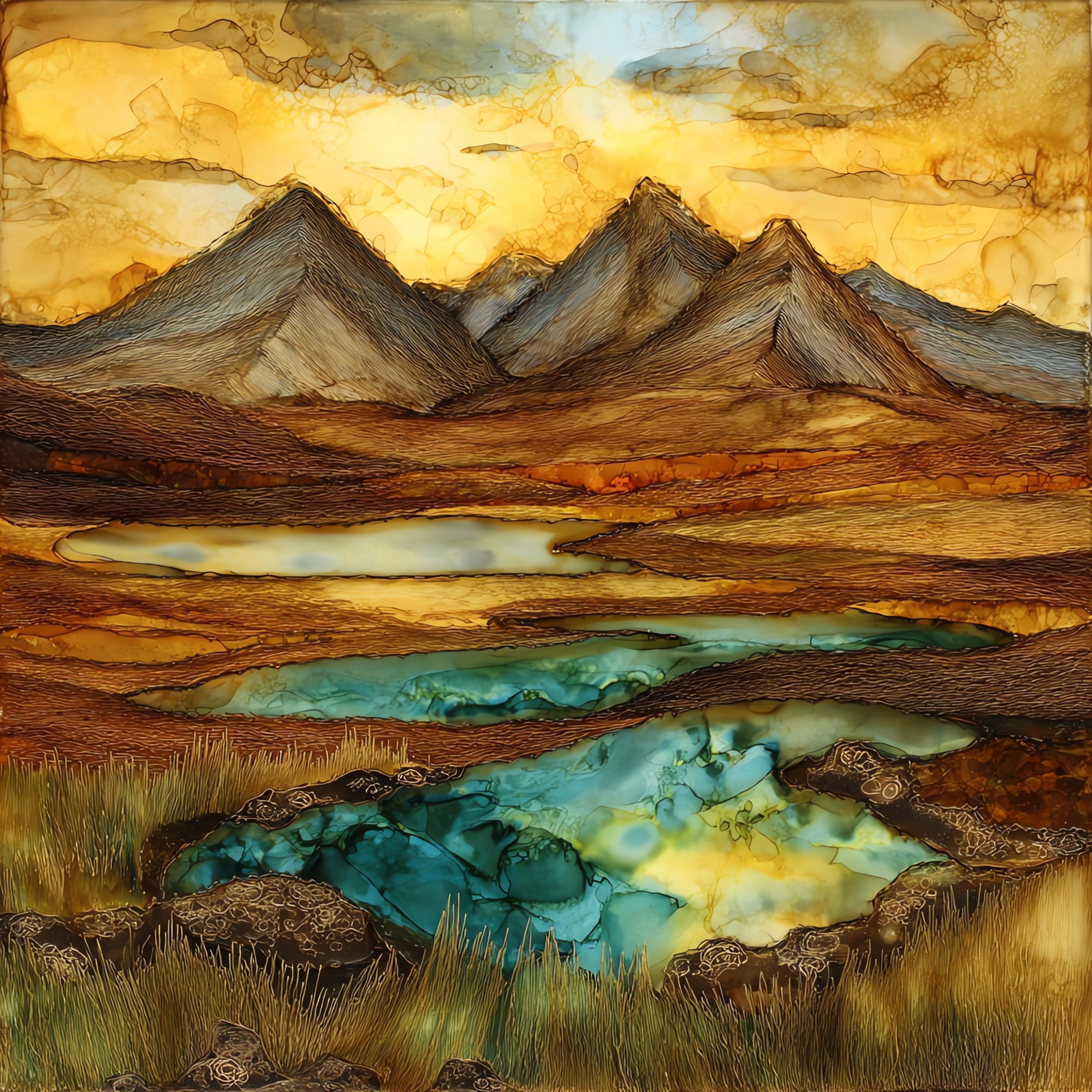
Twelve Bens
shown on ceramic, 12-inch tileIreland
in Connemara, west of Galway

Twelve Bens

the white stone, the morning after rain.

Where it lives

Not only on a wall.

A small tile on the nightstand catching the morning. A larger one above the fire. Yours, wherever you spend the slow hours.
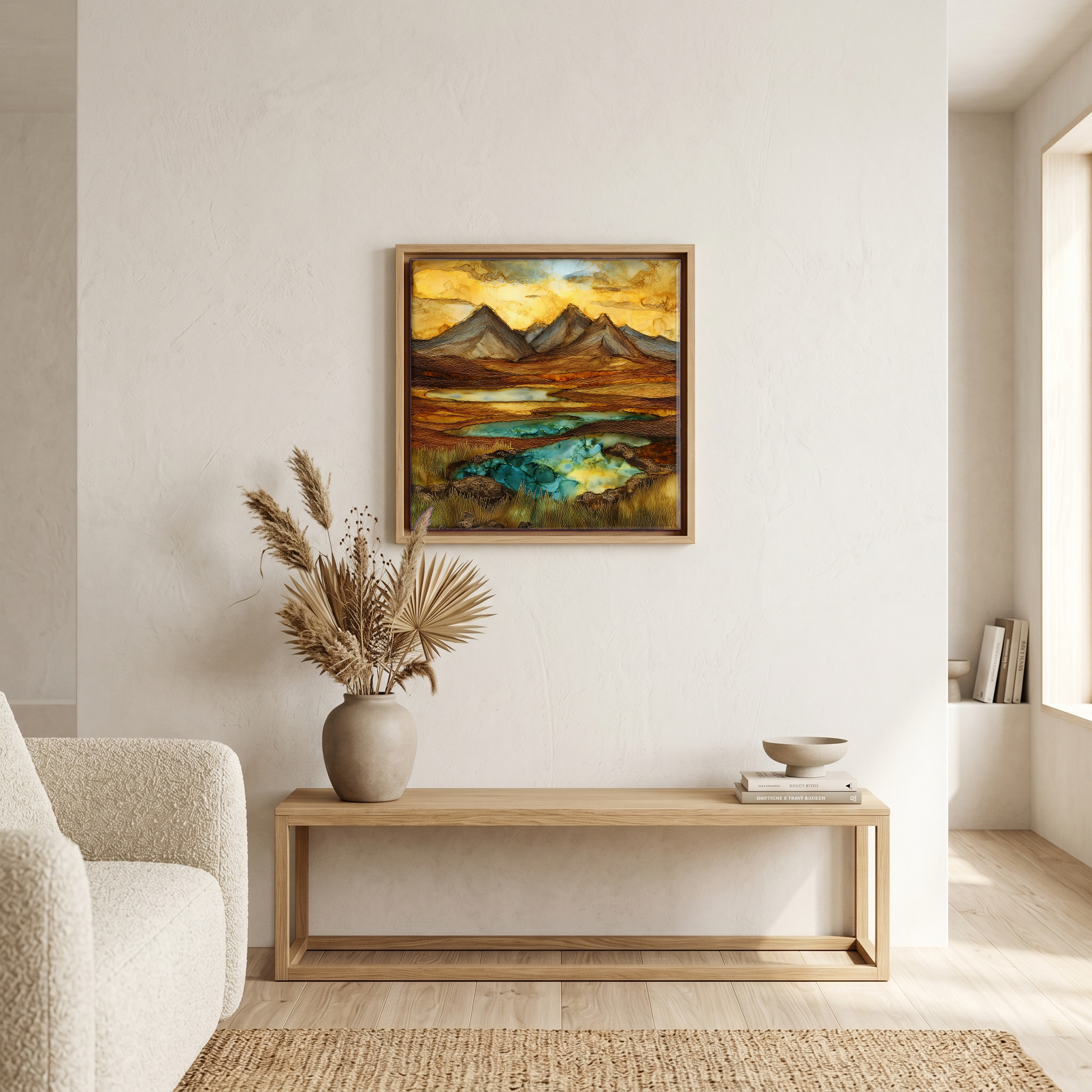
Above the bench, in a warm oak surround.
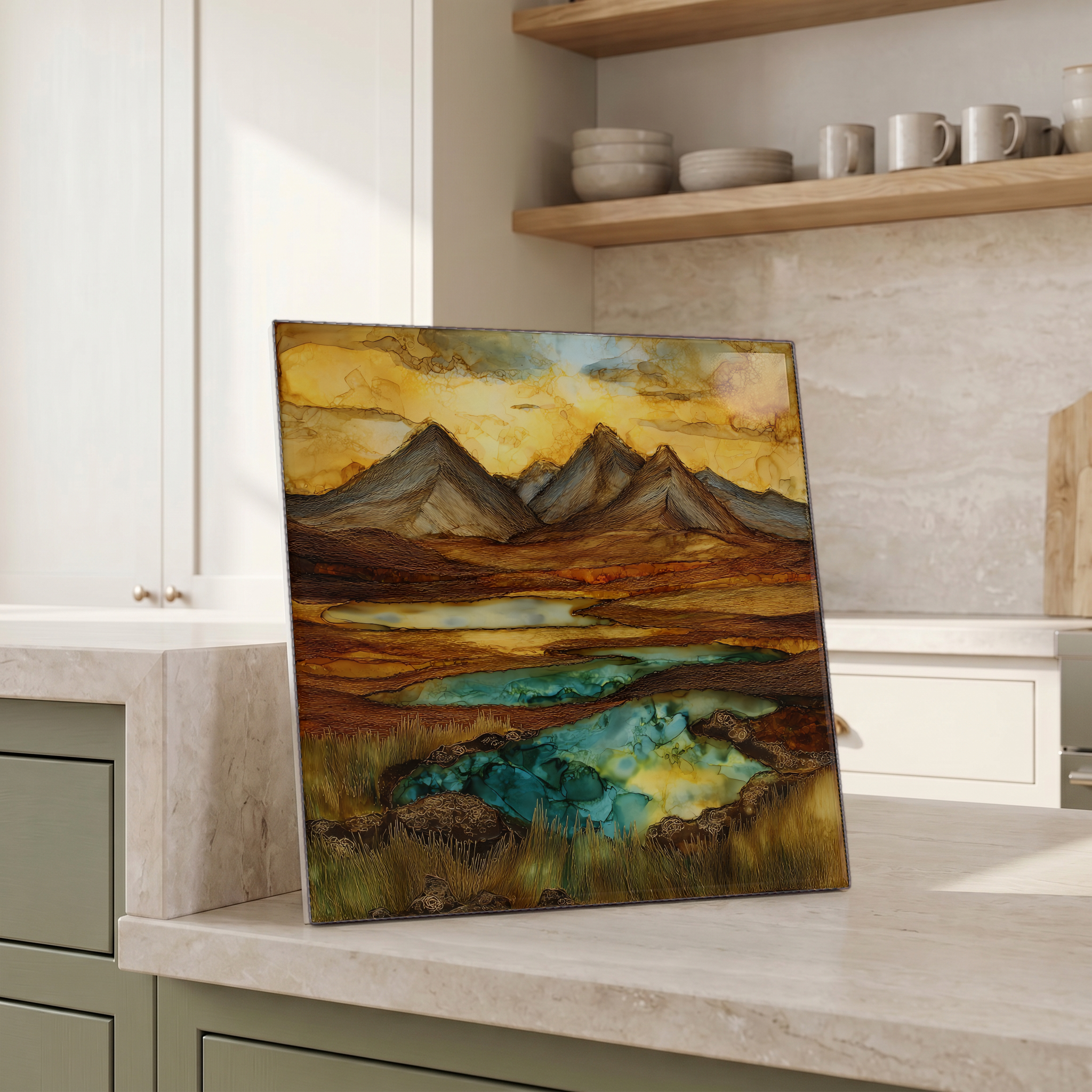
Beside the kettle, propped on the counter.
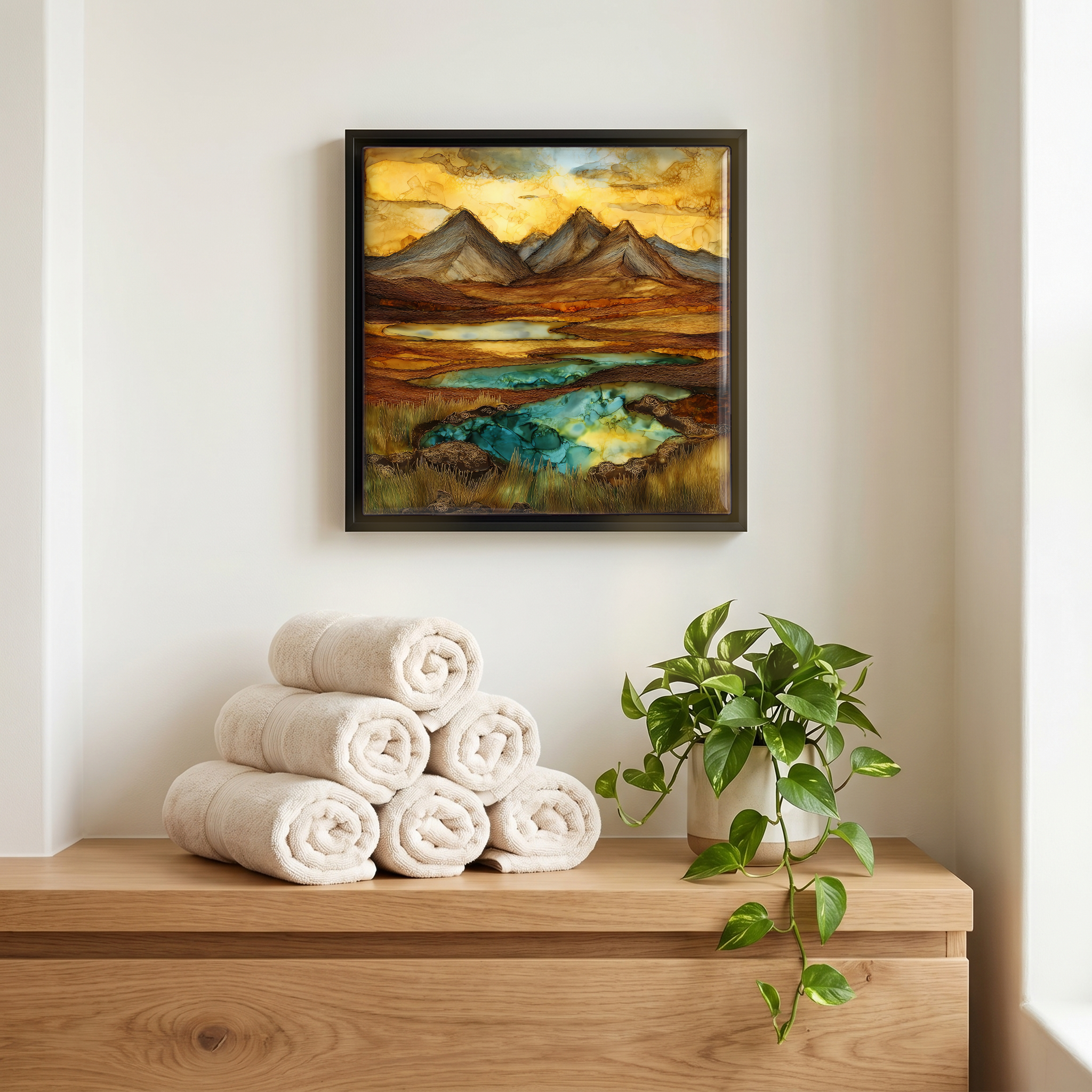
Above the linens, in a slim black surround.
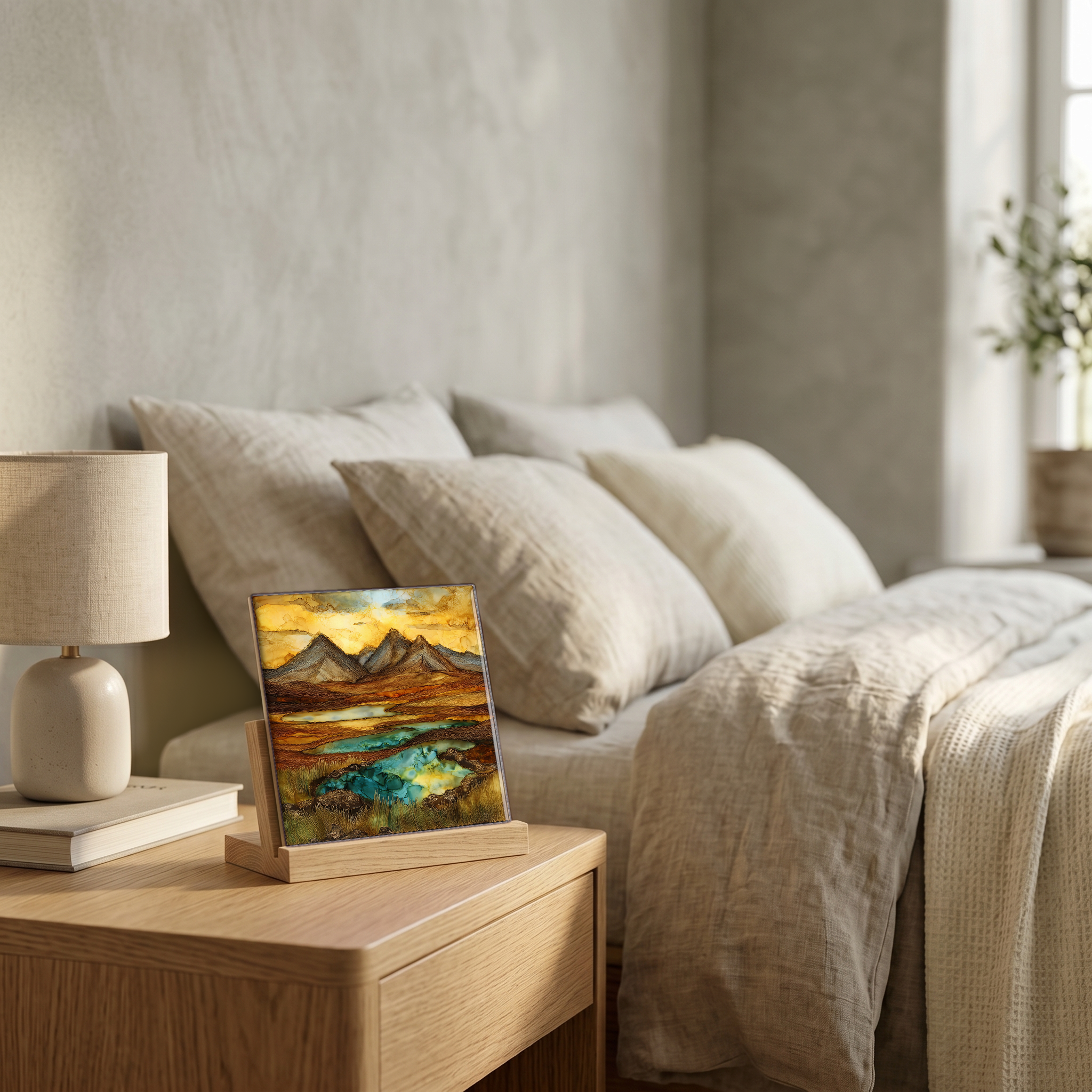
On the nightstand, on a light oak stand.
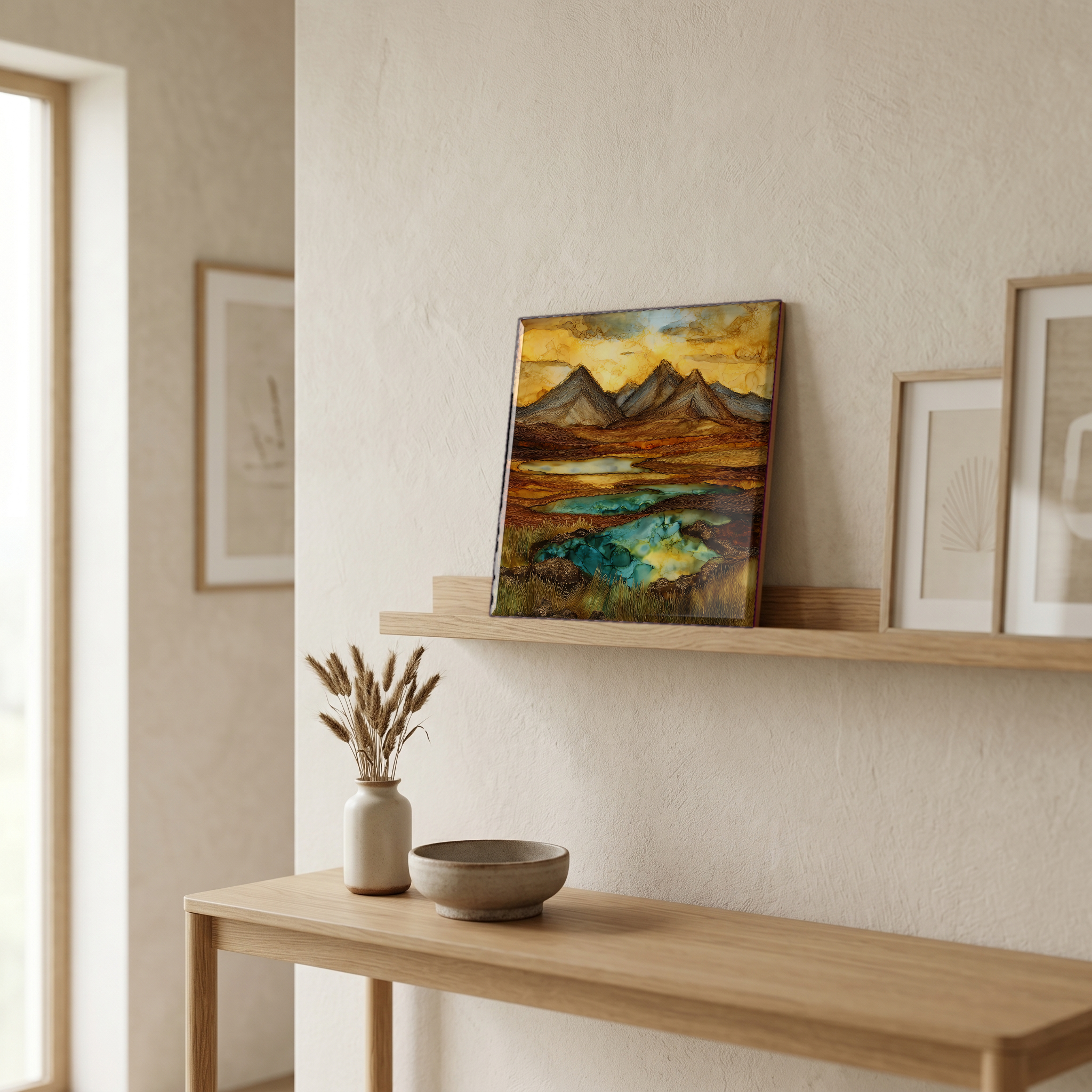
On a picture ledge, where the light comes in.
a note from the studio

Twelve sharp peaks of pale quartzite rising out of the brown peatlands of Connemara. The white of the stone catches whatever light is going: a low sun, the rim of a clearing storm, the silver moment before more rain. Drivers on the N59 watch them appear and vanish as the cloud moves. There are pull-offs near Letterfrack and Recess where nobody hurries to leave. The peaks have Irish names that don't quite count to twelve, depending on who's counting.
from the studio
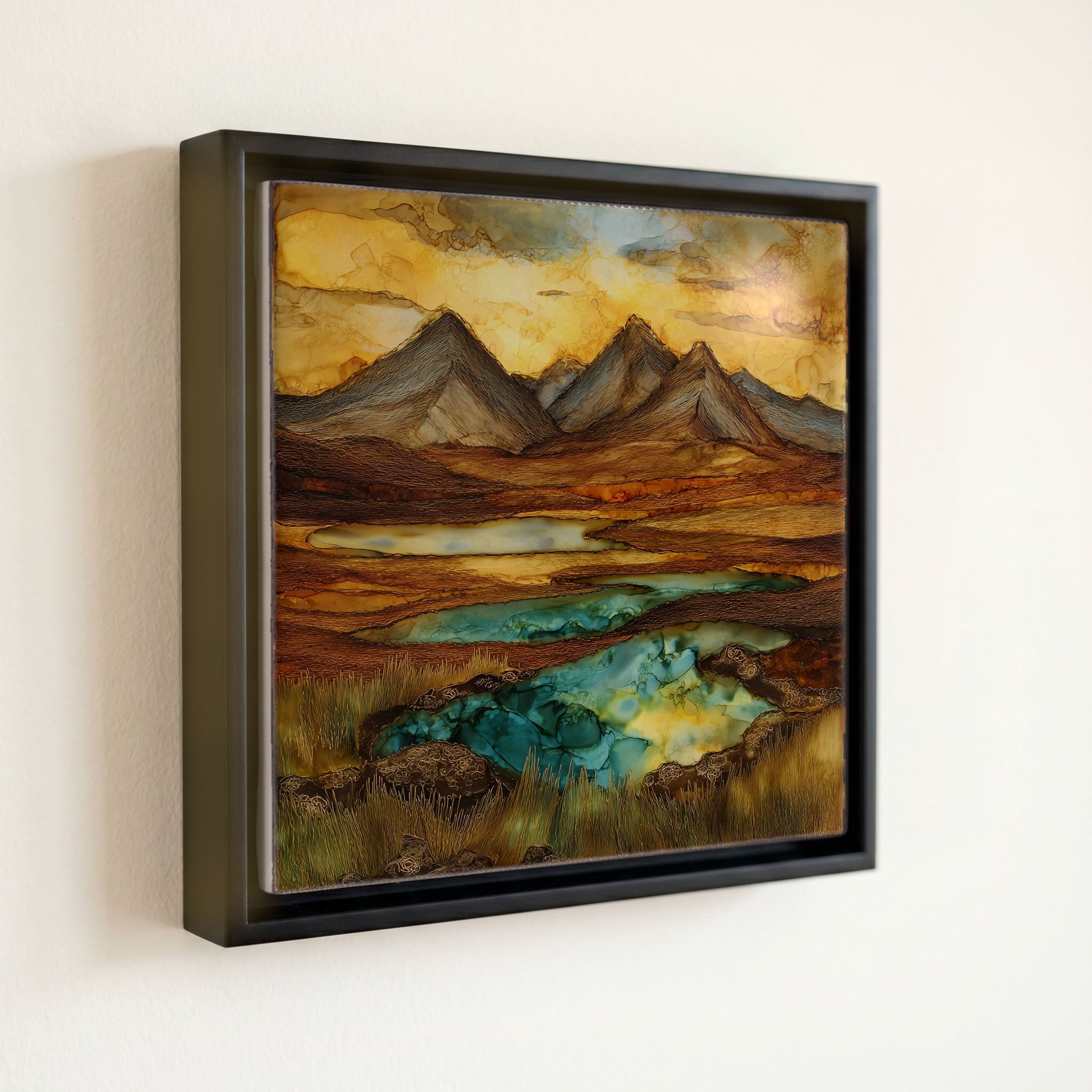
shown in a slim black floating frame · 6 × 6 in
— bring it home

Twelve Bens, on ceramic.

Each tile is finished by hand in our Knoxville studio. Artwork is slowly infused into the ceramic surface under high heat and pressure, and rests beneath a thin glossy finish. The colour lives in the surface, not on top of it.

What kind of piece?
One tile — square or rectangle.
How big?
the popular one — counter, shelf, nightstand
6 × 6 in · 15 cm · 1.6 lb
Surface finish
A clear glossy finish — the artwork reads as if under resin. Ideal for show-pieces and framed wall art.
How it sits
A hidden cleat — sits ¼″ proud of the wall.
$58
Hand-finished and shipped from our studio at the foot of the Smokies. On your wall in about ten days.
size
6 × 6 in
15 cm
weighs
1.6 lb
solid in the hand
surface
ceramic, hand-finished
art rests beneath a thin glossy finish
from
Knoxville, TN
our family studio, at the foot of the Smokies
— start a Coaster Set

Pick any four 4-inch tiles — National Parks you've been to, a Smokies set, the four seasons of one place. $ for a set of , cork-backed, ready to live on the table.
comes gift-ready
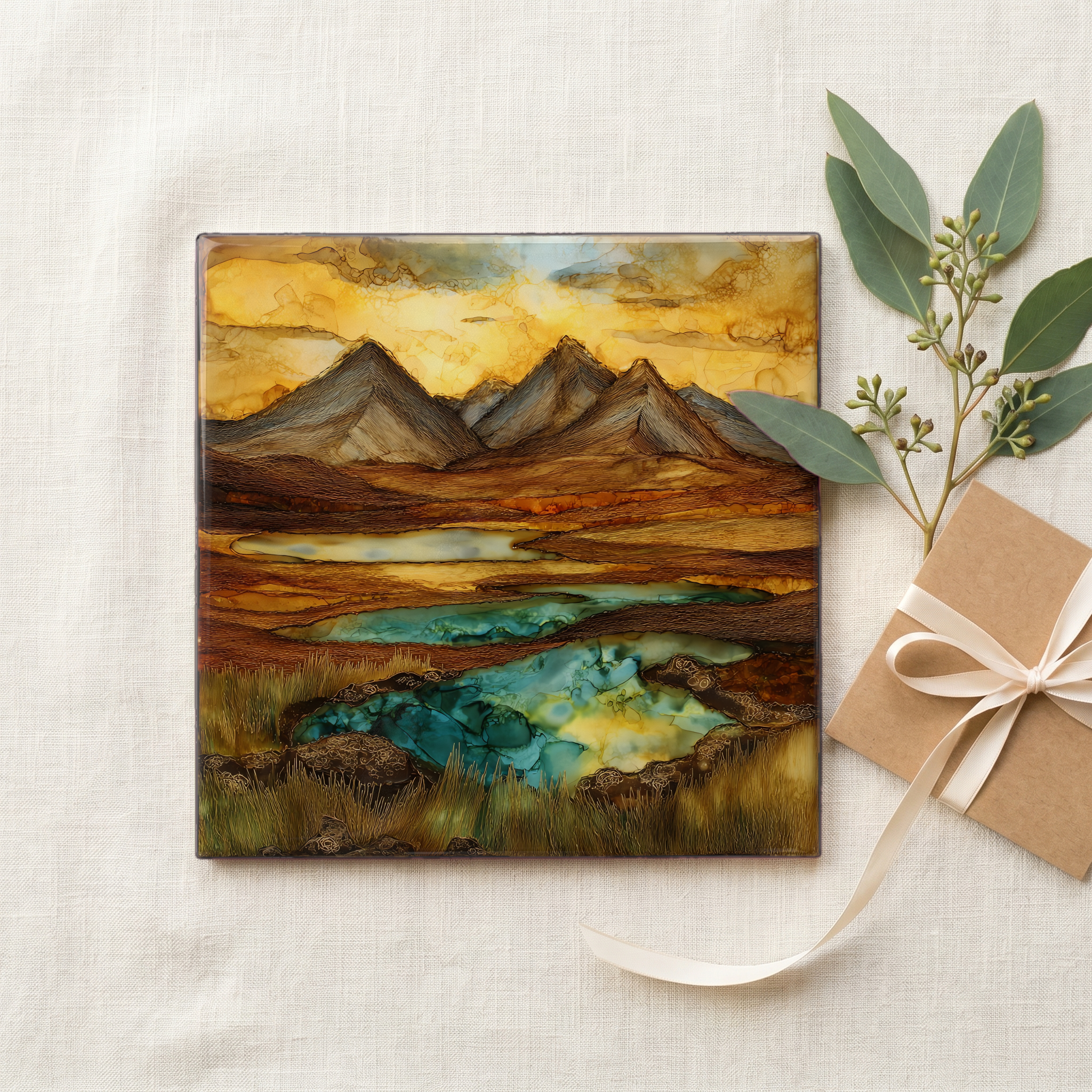
comes gift-ready

Each tile ships in a kraft box, tied with cream ribbon, with a handwritten note from the studio if you'd like to add one.
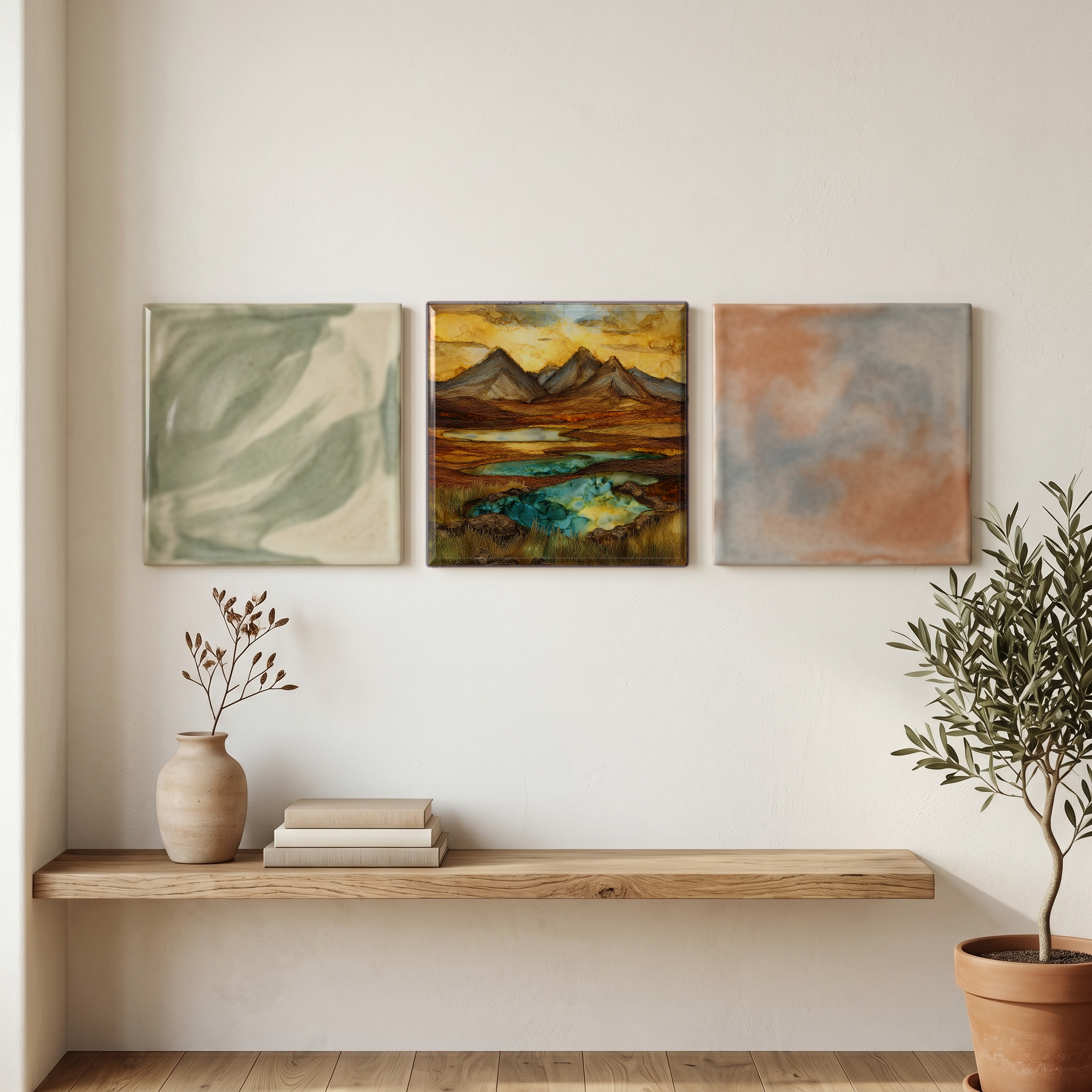
or build a grouping
or build a grouping

Three or five different vistas, hung together — a chapter of places you've been, or want to go.

about Twelve Bens

The place, in three passes.

A little of what's known, in case you fall down the rabbit hole — or want to go see it yourself.
the place

The Twelve Bens, in Irish Na Beanna Beola, are a range of mountains in Connemara, in west County Galway, Ireland. The highest peak, Benbaun, reaches 729 metres above sea level. The range sits between the towns of Clifden to the west and Recess to the east, with the village of Letterfrack at its northern edge. Connemara National Park covers the northern peaks. Access is from the N59 road, which loops around the range; the park visitor centre is in Letterfrack. The Glencoaghan valley cuts into the southern side of the range and is the most common starting point for hill-walkers.

the stone

The Twelve Bens are made of quartzite, a metamorphic rock formed from sandstone under great heat and pressure roughly 400 million years ago during the Caledonian orogeny. Quartzite is unusually hard, resistant to weathering, and pale, close to white in clear light, silver in mist. The surrounding lowland is blanket bog, deep peat that holds water and reads almost black against the peaks. The contrast is the defining visual signature of Connemara: pale stone above dark country. The same rock makes up Croagh Patrick in County Mayo to the north, where pilgrims still climb the cone-shaped peak each July.

the visit

The range draws hill-walkers more than casual visitors. The classic high route is the Glencoaghan Horseshoe, a long day across six of the peaks (Derryclare, Bencorr, Bencollaghduff, Benbreen, Bengower, and Benlettery), usually started from the south side. Connemara National Park, free to enter, offers easier walks: Diamond Hill, a separate quartzite cone signposted from the visitor centre at Letterfrack, is the most-walked summit in the park. The weather is the main caveat. Cloud closes over the high peaks quickly, the bog underfoot is wet much of the year, and there are no marked trails on the upper slopes.

where
Ireland · Connemara, County Galway
within
Connemara National Park
elevation
729 m · 2,392 ft
position
53.5167° N · 9.8333° W
the neighborhood

What's nearby.

A handful of named places within an hour's walk or short drive. Some we've already painted; some we will.
8 km N
Kylemore Abbey
abbey on a lake
10 km N
Diamond Hill
quartzite peak
6 km N
Letterfrack
village
12 km W
Clifden
town
5 km E
Lough Inagh
lake
10 km E
Maumturks
mountain range
N
Twelve Bens
Kylemore Abbey
Diamond Hill
Letterfrack
Clifden
Lough Inagh
Maumturks
common questions

What people ask.

A few questions we get about Twelve Bens — and about bringing the piece home.
about the place

The Twelve Bens are a mountain range in Connemara, in west County Galway, Ireland. The range sits between the towns of Clifden to the west, Letterfrack to the north, and Recess to the east. The N59 road loops around the range.

The Twelve Bens are made of quartzite, an unusually hard, pale rock formed from sandstone under heat and pressure during the Caledonian orogeny roughly 400 million years ago. Quartzite weathers slowly and reads close to white in clear light, silver in mist, against the dark blanket bog of the surrounding lowland.

Benbaun is the highest of the Twelve Bens at 729 metres, or 2,392 feet. It sits near the centre of the range and is the most commonly bagged summit, usually approached from the Glencoaghan valley to the south or from the Connemara National Park side to the north.

The name Na Beanna Beola is traditional rather than literal. Most counts give twelve main summits, but a few subsidiary tops bring the practical total higher, depending on what threshold counts as a separate peak. The range has been called the Twelve Bens, and the Twelve Pins, for centuries.

Connemara National Park covers the northern part of the range, including Benbaun, Bencullagh, Benbrack, and Muckanaght. The park entrance and visitor centre are in Letterfrack, just off the N59. Entry is free, and the most-walked summit in the park is Diamond Hill, a separate quartzite cone outside the main range.

The Glencoaghan Horseshoe is the classic high traverse of the Twelve Bens, a long single-day route over six of the main peaks: Derryclare, Bencorr, Bencollaghduff, Benbreen, Bengower, and Benlettery. The full circuit covers roughly 17 kilometres and 1,500 metres of climbing.

May through September gives the most settled weather, though clear days are never guaranteed in Connemara. The cloud sits low on the peaks for much of the year. Late spring brings the longest daylight and the driest underfoot conditions for walking the high ground.

about the piece in your home

It travels well as a gift for anyone with roots in the west of Ireland. The Twelve Bens are one of the defining sights of Connemara, recognisable to anyone who has driven the N59 between Galway and Clifden. A Keepsake or Small with a handwritten note from the studio carries the place neatly.

The cool quartzite-and-bog palette sits well with Coastal-modern, Mountain-modern, and quiet Maximalist rooms. The piece reads warmer in oak-and-linen interiors and sharper against painted plaster or whitewash. It carries the green and grey-blue end of the Connemara palette without competing for attention.

Yes. Mountain-modern interiors have moved toward grounded, stone-led palettes (quartzite white, peat brown, lichen green) and away from antlers and primary colours. The Twelve Bens piece sits inside that vocabulary, especially as a Medium in an entryway or above a console.

Above a standard three-seat sofa, a single Large reads as the centre piece; a 4-tile Mural carries the whole wall. Above a console table or a sideboard, the Medium is usually the right scale. For a long hallway, a 9-tile Mural turns the wall into the view.

Yes, with the Dura Satin or Matte finish, both of which are scratch-resistant and tolerate steam. The colour lives in the ceramic surface itself, so condensation does not affect it. We do not recommend the Glossy finish for installations close to a shower.

Microfibre cloth and water. No abrasive sponges, no solvent-based cleaners. The colour is slowly infused into the ceramic surface under high heat and pressure, beneath a thin glossy or satin finish, so the surface wipes clean and does not need polishing.

Yes. Every Wender Studios piece is original to the studio. We hold the eye and the hand on every step from the source painting to the finished tile. No licensing, no resold designs, no third-party stock. Reid Wender chooses what enters the WenderVista atlas.

if this one stayed with you

A few you might also love.

Hand-picked by the eye that found Sorapis. Same air, same kind of quiet.