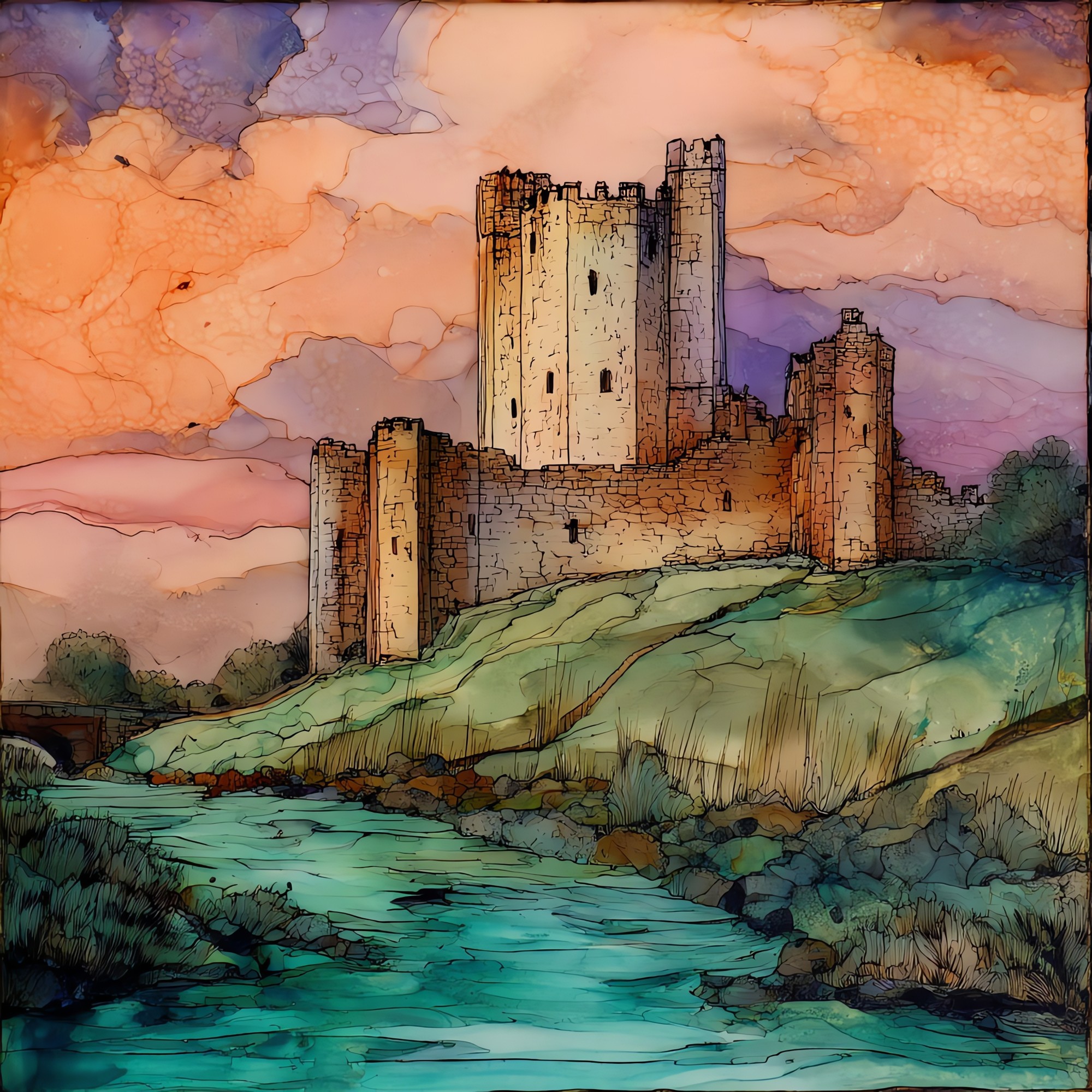
Trim Castle
— grey stone, green field, slow river.
Not only on a wall.
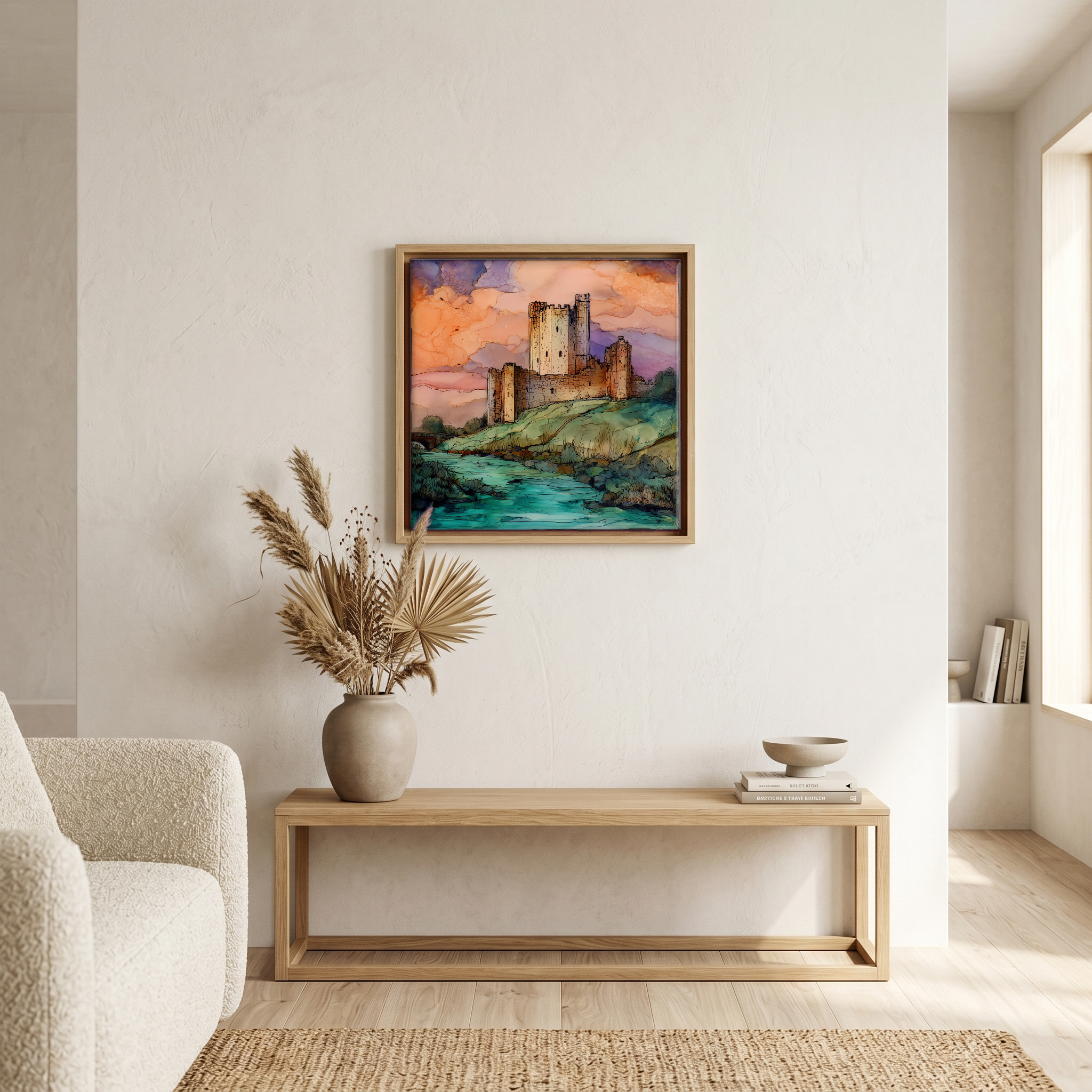

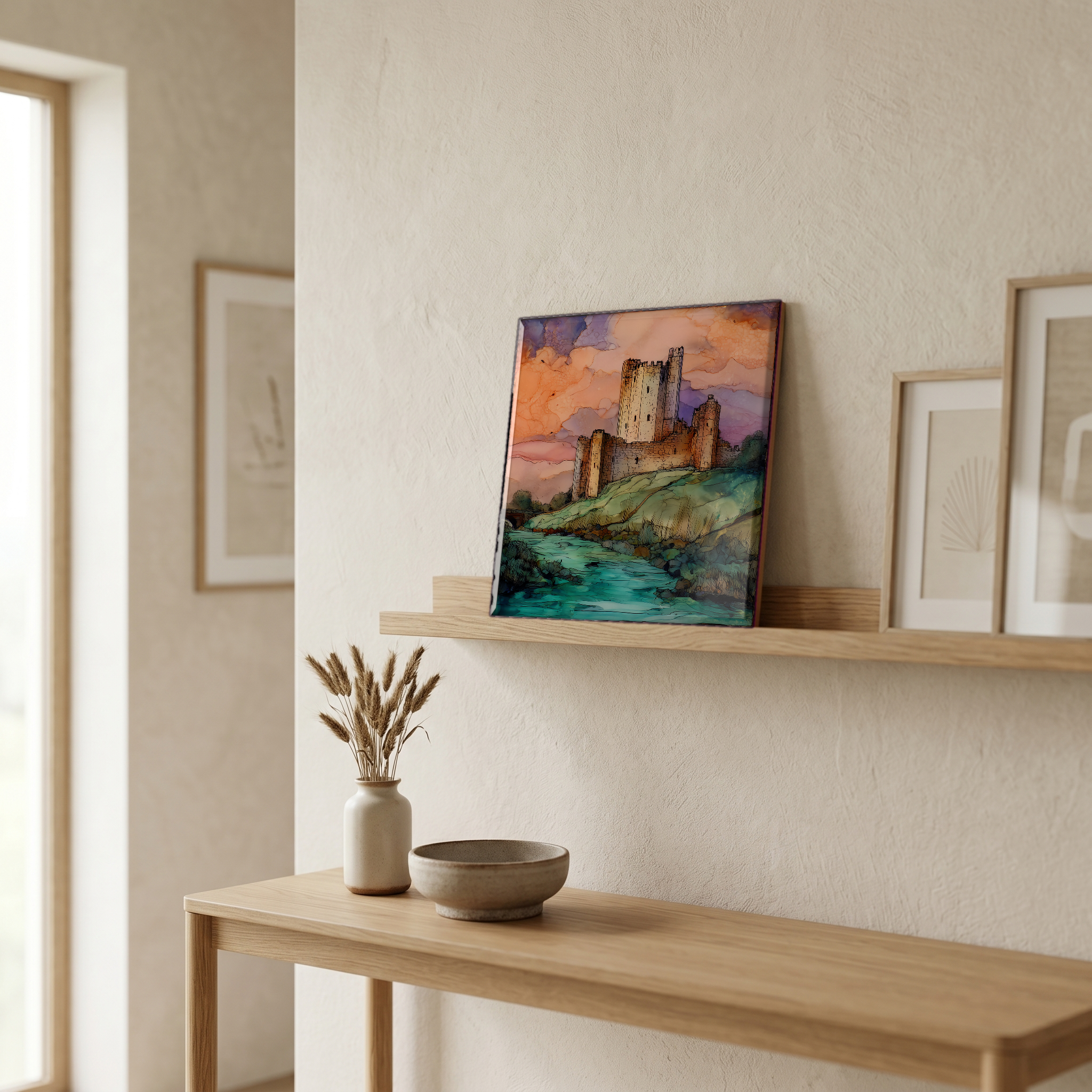
“The largest Norman keep in Ireland still stands above the Boyne. Hugh de Lacy began it around 1172. Eight centuries on, the curtain wall holds a meadow that slopes down to the river, and the twenty-sided tower has the same patient grey it has always had. Trim grew up around the castle, then went quiet, the way market towns do. Late in the day the light catches the stone and turns it warm. Children play football on the grass below the keep. The Boyne moves the way it has always moved.
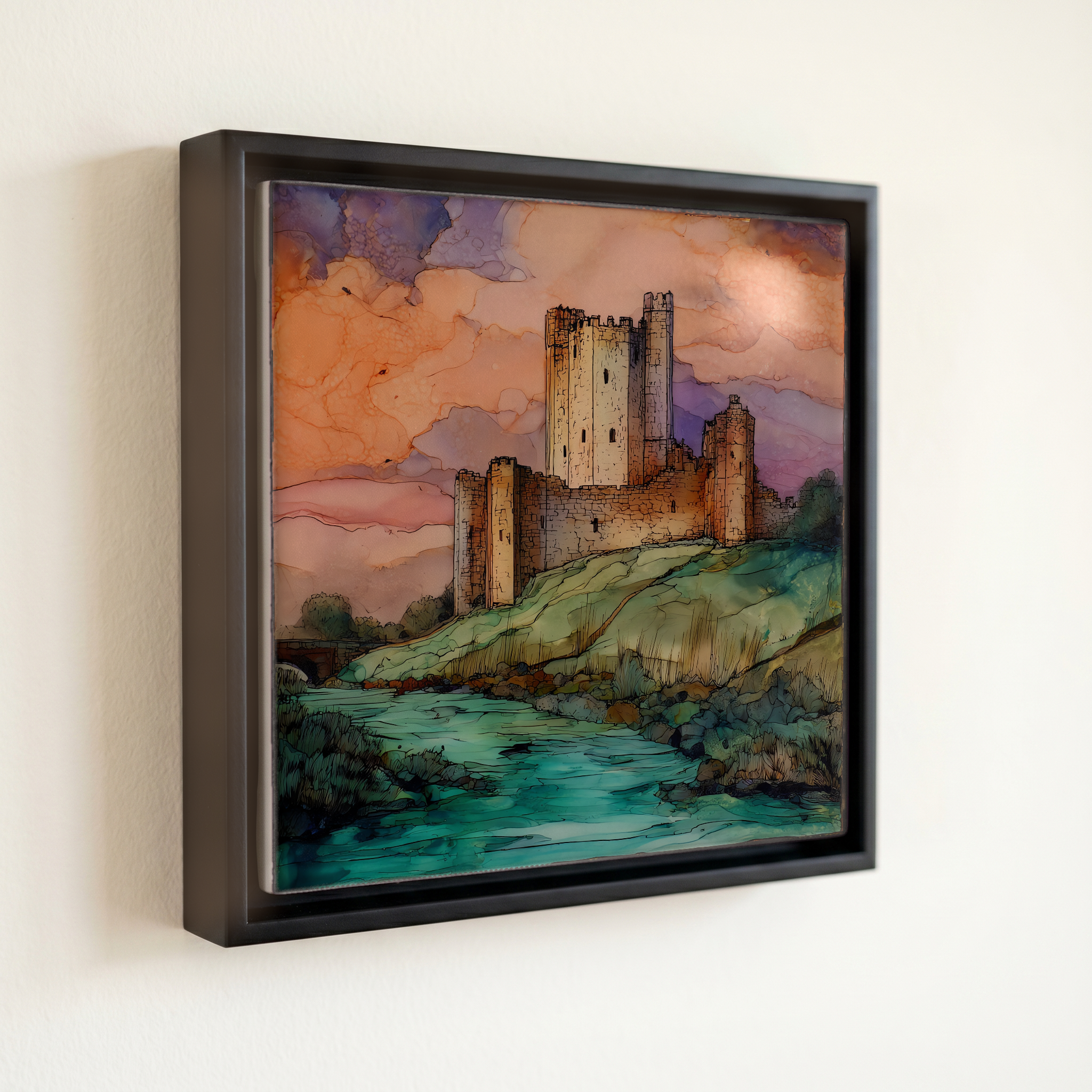
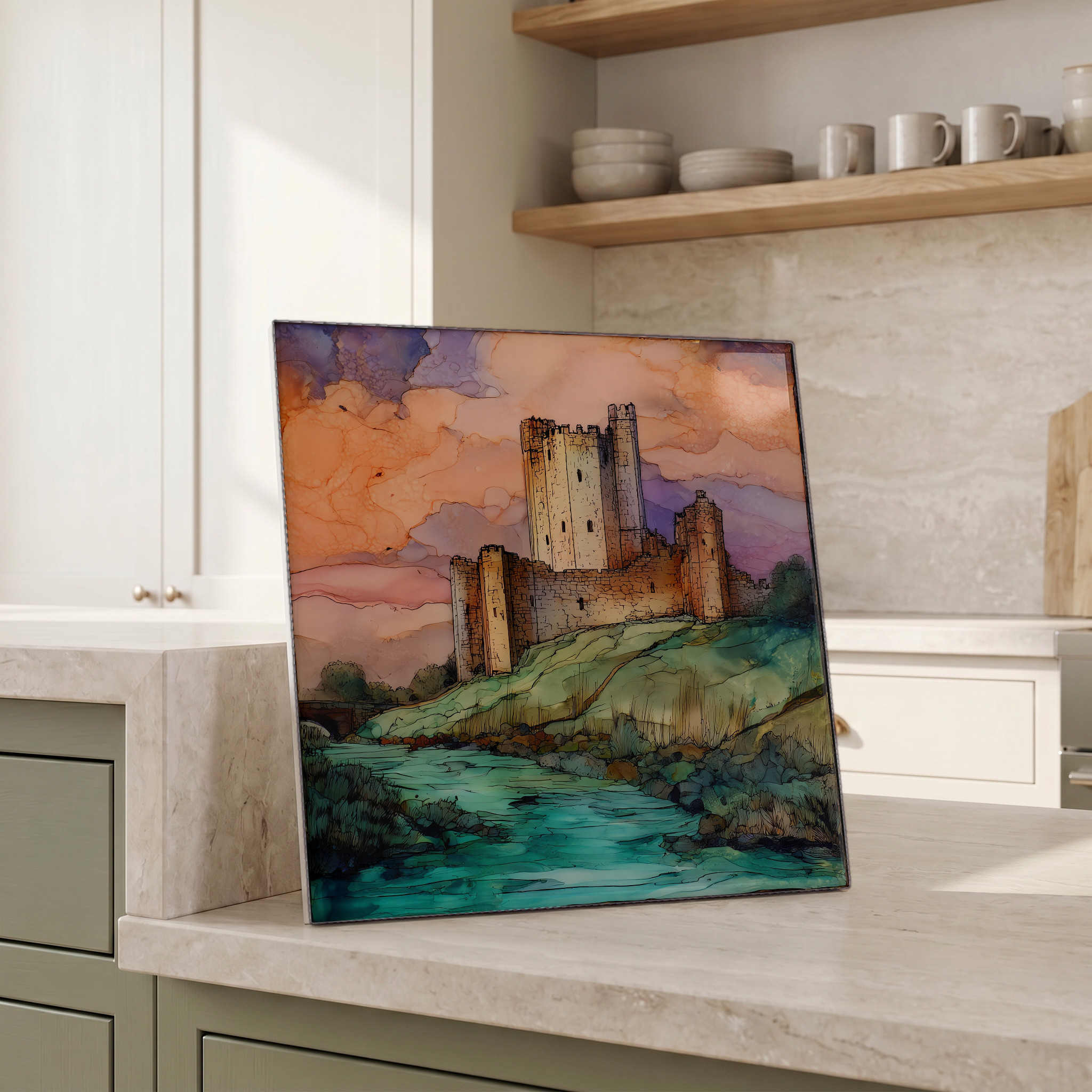
Trim Castle, on ceramic.
Each tile is finished by hand in our Knoxville studio. Artwork is slowly infused into the ceramic surface under high heat and pressure, and rests beneath a thin glossy finish. The colour lives in the surface, not on top of it.
Pick any four 4-inch tiles — National Parks you've been to, a Smokies set, the four seasons of one place. $ for a set of , cork-backed, ready to live on the table.
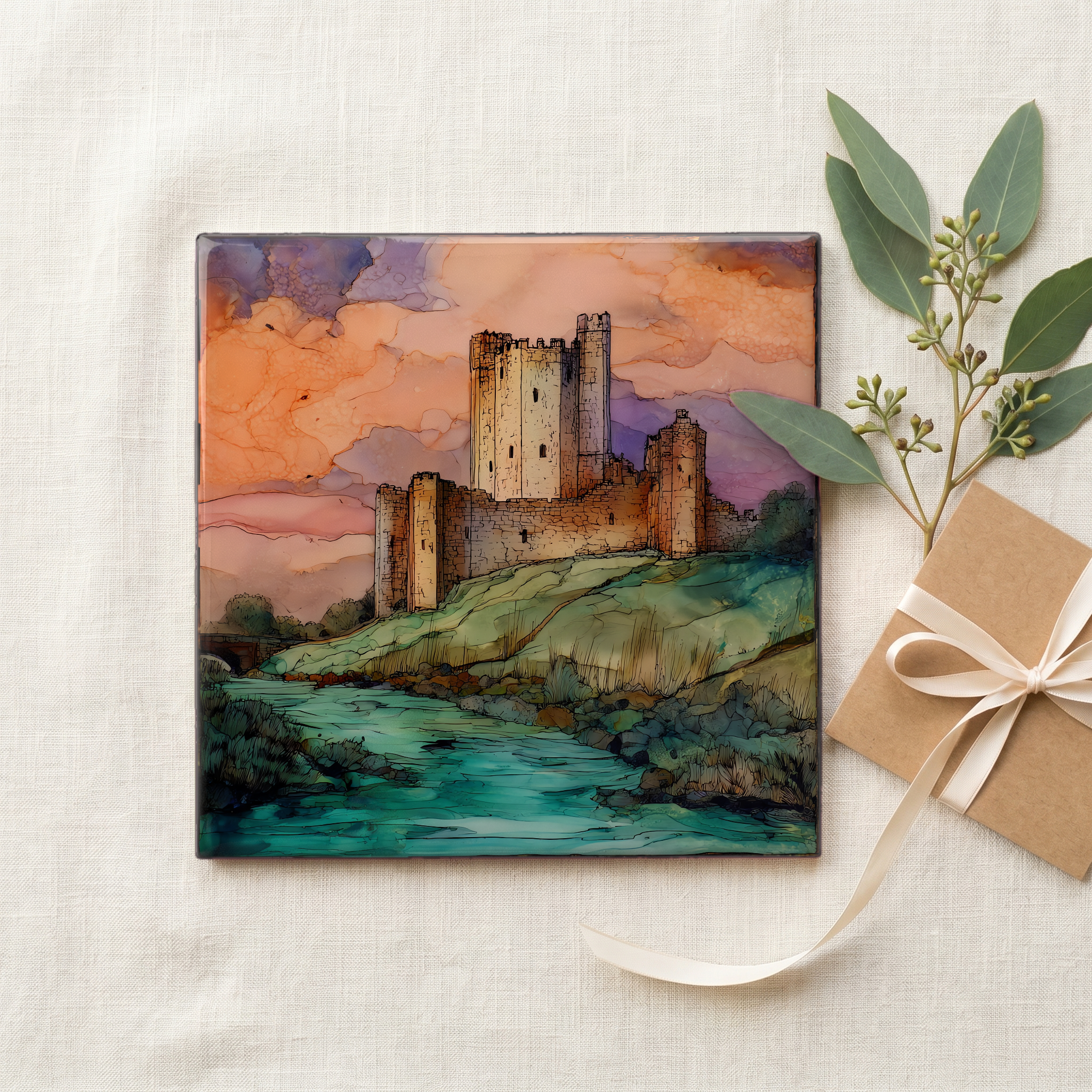
Each tile ships in a kraft box, tied with cream ribbon, with a handwritten note from the studio if you'd like to add one.
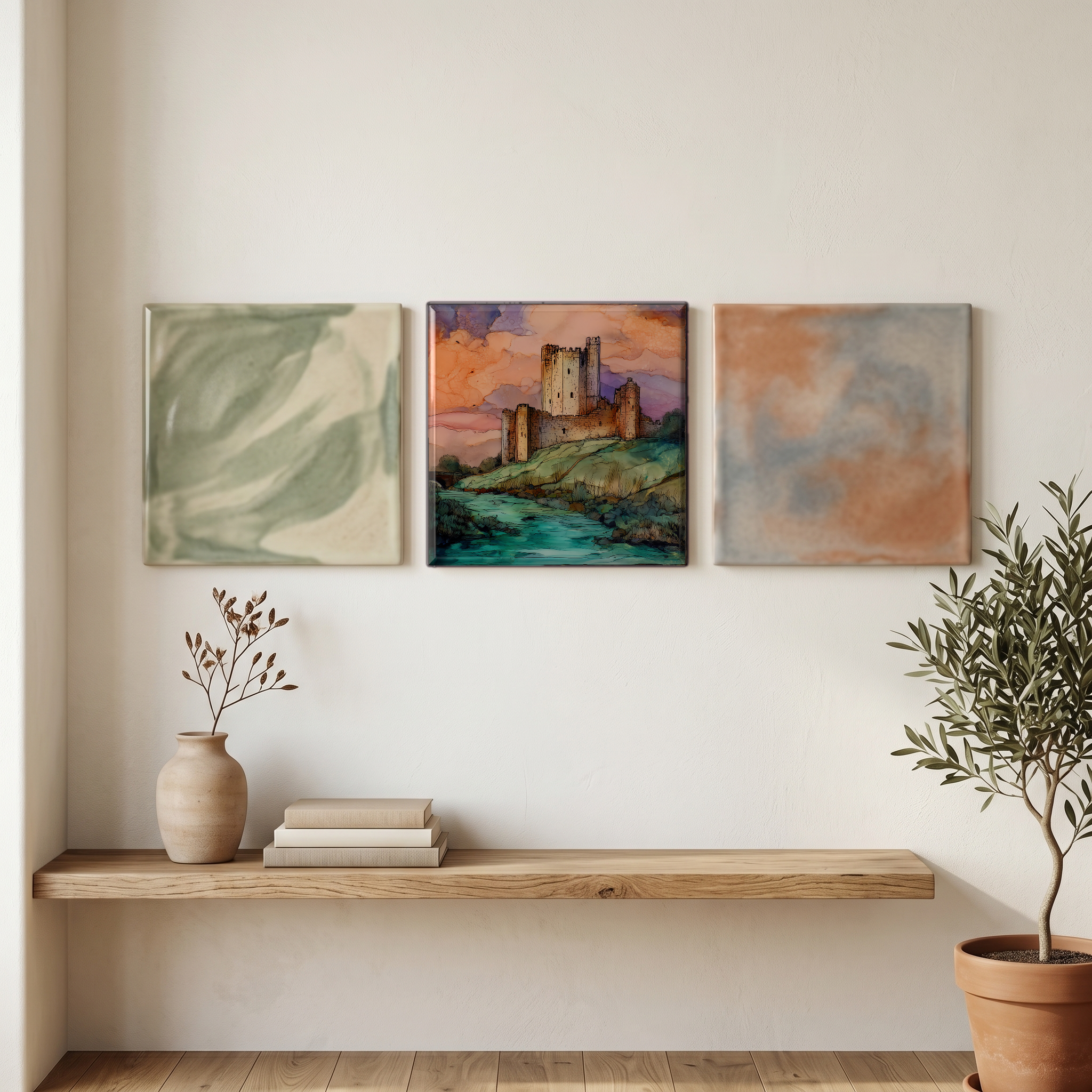
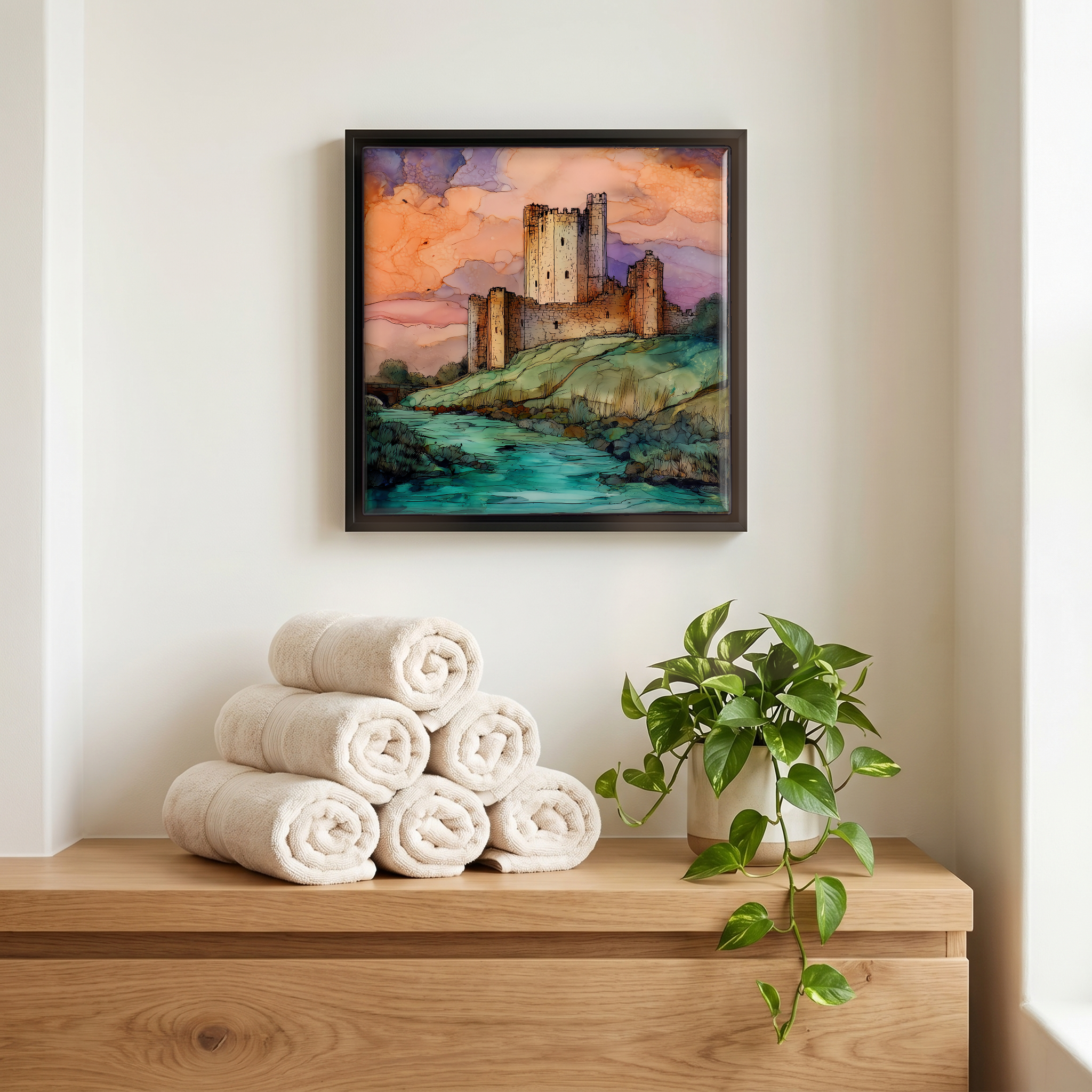
Three or five different vistas, hung together — a chapter of places you've been, or want to go.
The place, in three passes.
Trim Castle sits on the south bank of the River Boyne in County Meath, about 50 kilometres northwest of Dublin. It is the largest Anglo-Norman castle in Ireland, occupying roughly three hectares within its curtain wall. The keep was begun by Hugh de Lacy around 1174 on a fortified site he had taken in 1172, after Henry II granted him the Lordship of Meath. The castle stands at the western end of the wider Boyne Valley, where the same river runs east past Brú na Bóinne, the prehistoric passage tomb complex of Newgrange and Knowth that holds UNESCO World Heritage status. The town of Trim, with a population of about 9,000, grew up alongside the walls. The site is a National Monument under the care of the Office of Public Works.
The keep at Trim is a twenty-sided cruciform tower, an architectural form almost without parallel in medieval Europe. It rises about 25 metres above the bedrock and was built in two main campaigns between roughly 1174 and 1224, the upper storeys finished under Walter de Lacy, son of the founder. The unusual plan, a Greek cross with a square projection at each corner, gave defenders overlapping fields of fire and an impression of mass disproportionate to the actual footprint. The curtain wall, lower and partly reduced, follows the bend of the Boyne and is punctuated by D-shaped mural towers and a barbican gate. The local limestone weathers a pale grey that goes faintly warm at low light.
The castle is managed by the Office of Public Works, and the grounds within the curtain wall are open to the public daily at no charge. Access to the interior of the keep is by guided tour only, in small groups, departing from the visitor centre near the gate. The keep operates on a seasonal schedule, with the high season running roughly Easter through October and reduced or no tours during the winter months. Booking ahead through heritageireland.ie is sensible on summer weekends and bank holidays, when tours can sell out. The keep stair is steep and narrow and is not suitable for visitors with limited mobility. The town of Trim is about an hour by road from central Dublin via the M3.