
Tintern Abbey
— — a vow made at sea, kept in grey stone.
Not only on a wall.
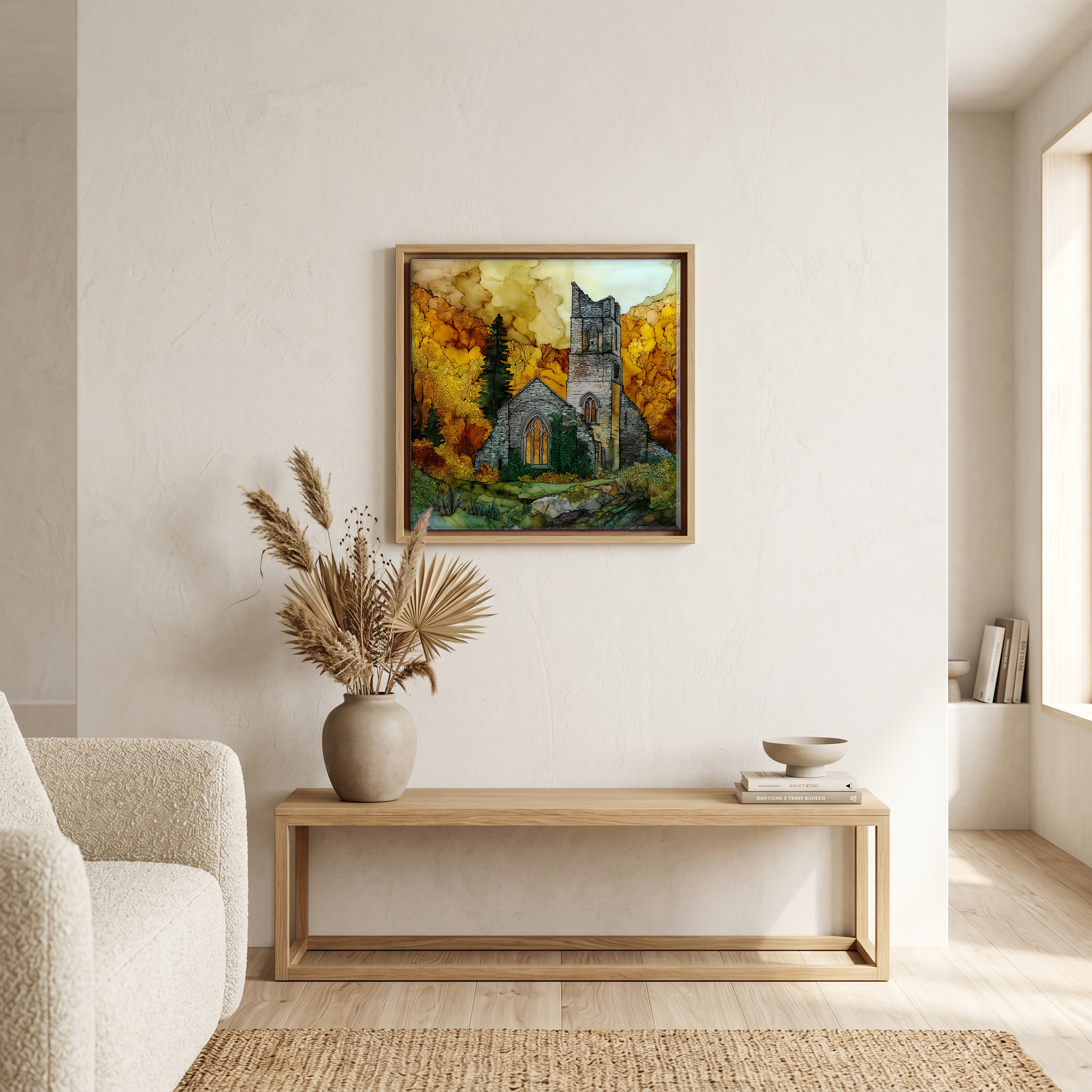
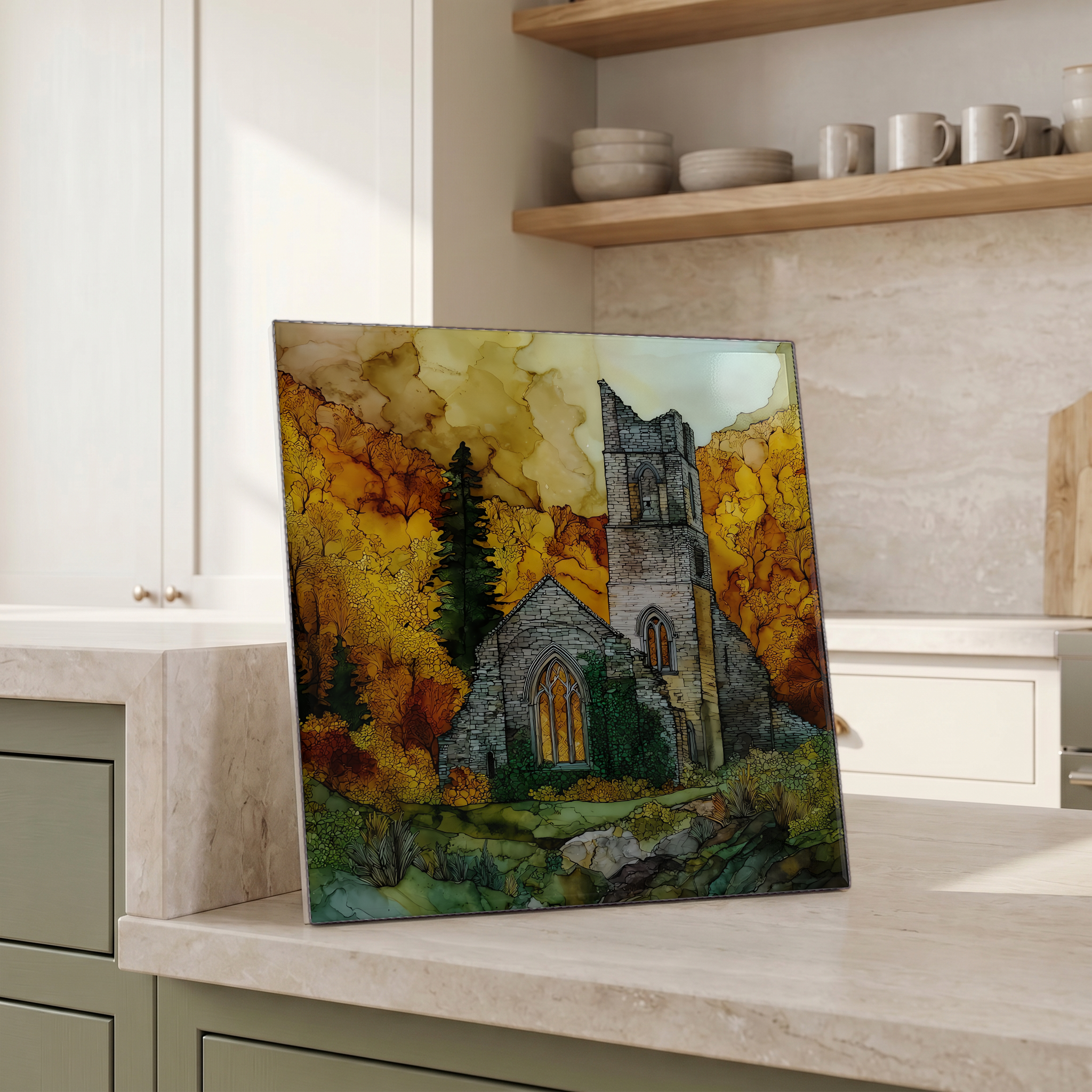
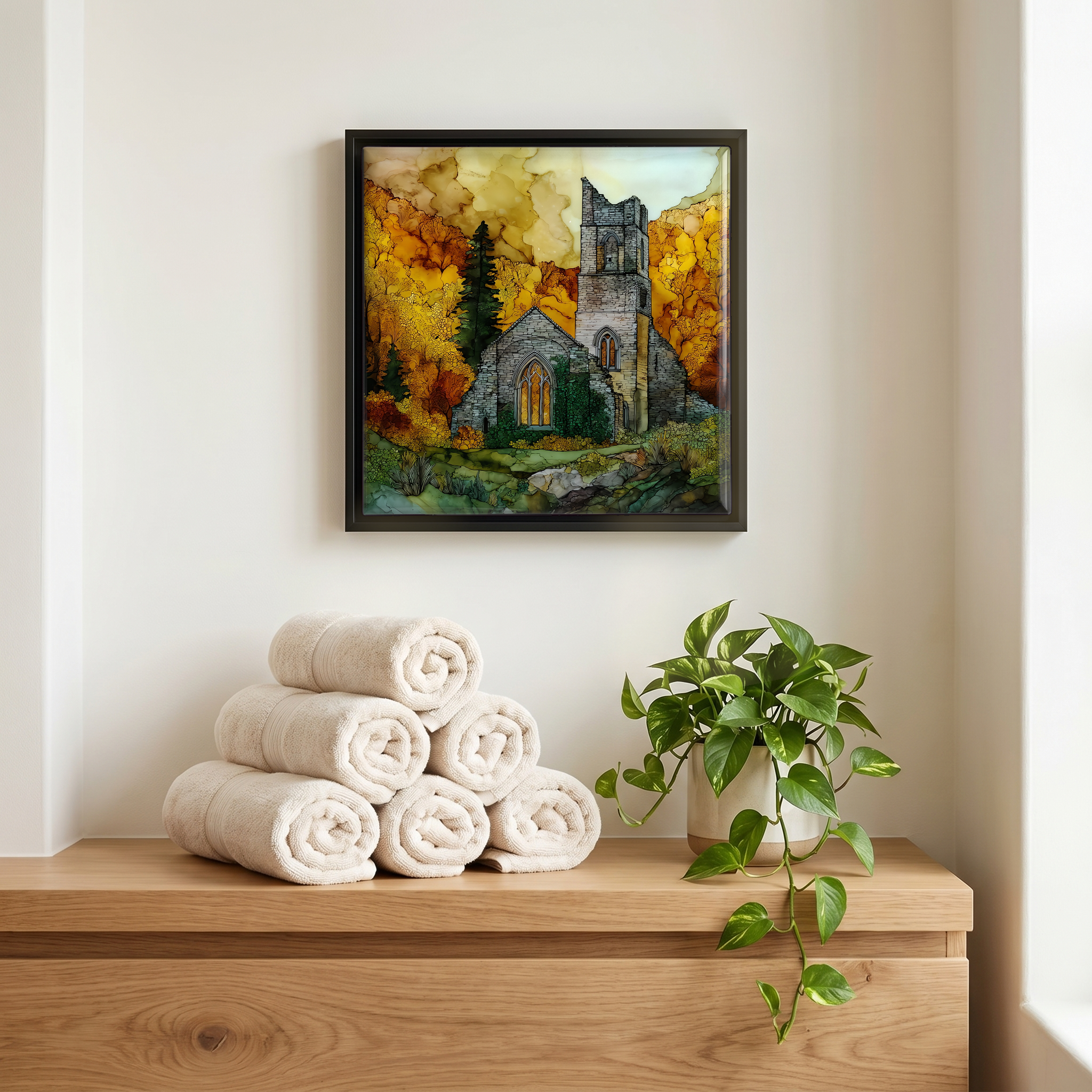

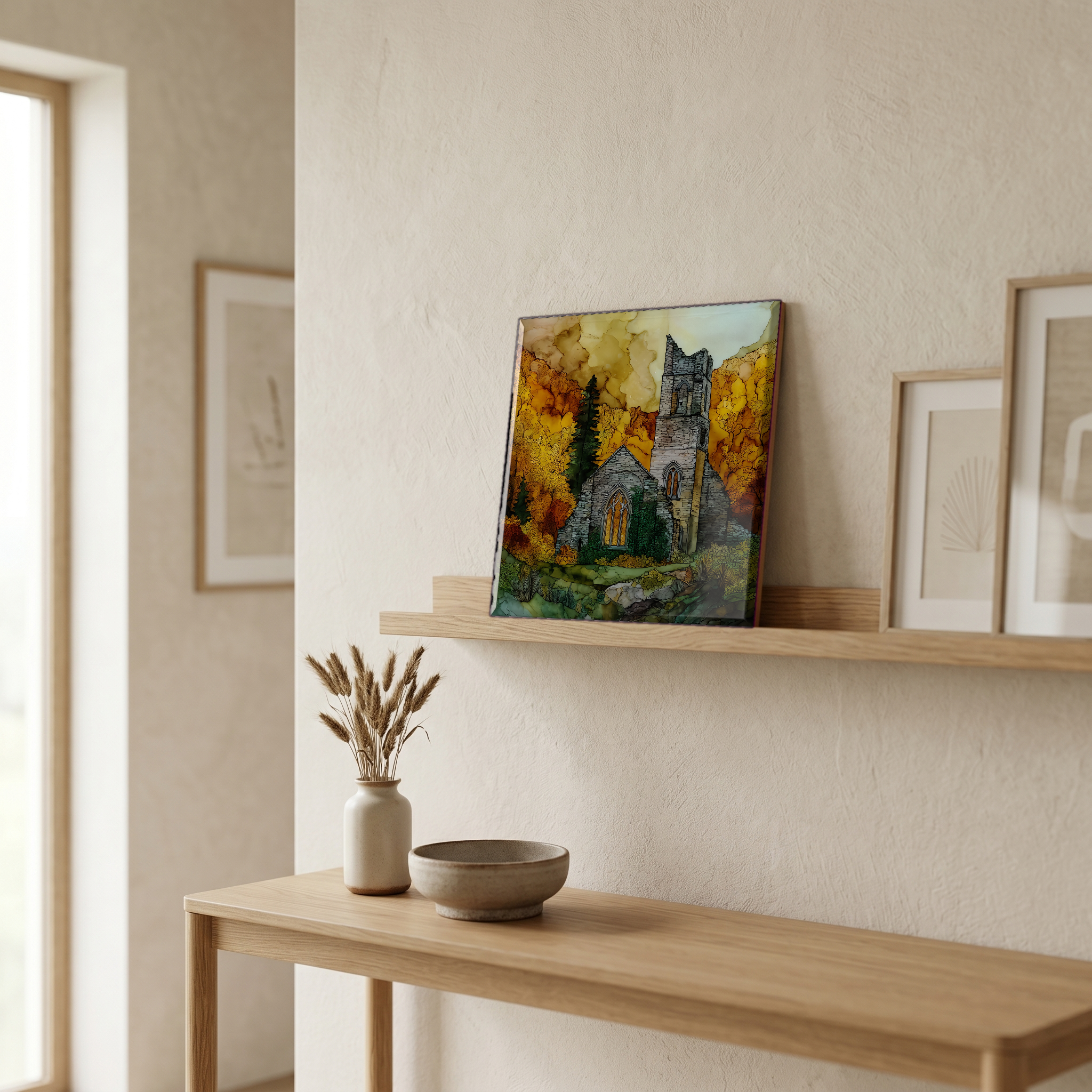
“The other Tintern. The one in Wexford, not Wales. William Marshal's ship caught a storm crossing the Irish Sea; he vowed that if he reached land he would found an abbey. He did, and he did. On a quiet bend of the Bannow River, around the year 1200. He named it for the Welsh house he had inherited through his wife. The Cistercians came over from Wales and built. Henry VIII's commissioners came three centuries later and emptied it; the Colclough family moved in and stayed nearly four hundred years. What's left is grey stone and a slow river and a walled garden the gardeners are still putting back.
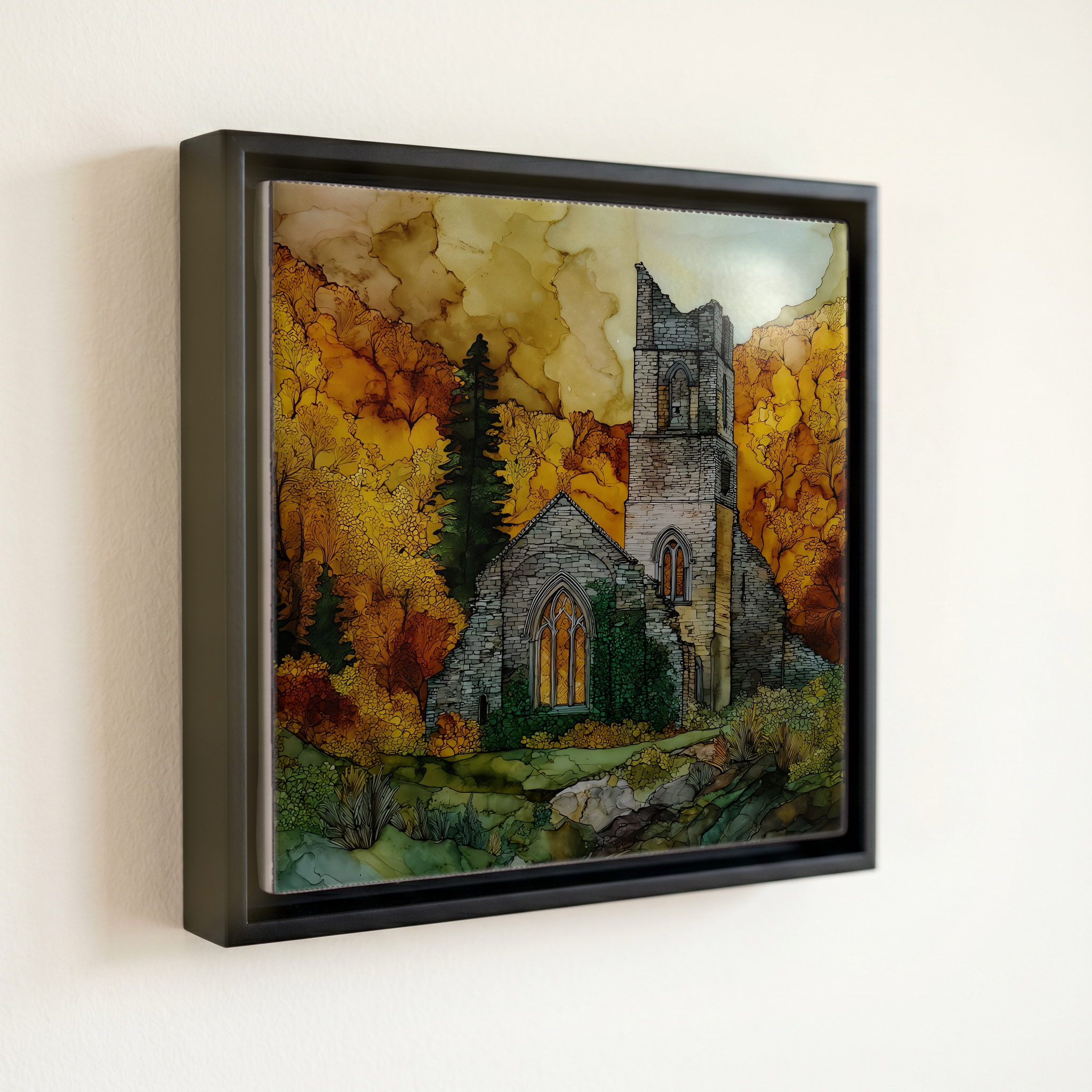
Tintern Abbey, on ceramic.
Each tile is finished by hand in our Knoxville studio. Artwork is slowly infused into the ceramic surface under high heat and pressure, and rests beneath a thin glossy finish. The colour lives in the surface, not on top of it.
Pick any four 4-inch tiles — National Parks you've been to, a Smokies set, the four seasons of one place. $ for a set of , cork-backed, ready to live on the table.

Each tile ships in a kraft box, tied with cream ribbon, with a handwritten note from the studio if you'd like to add one.
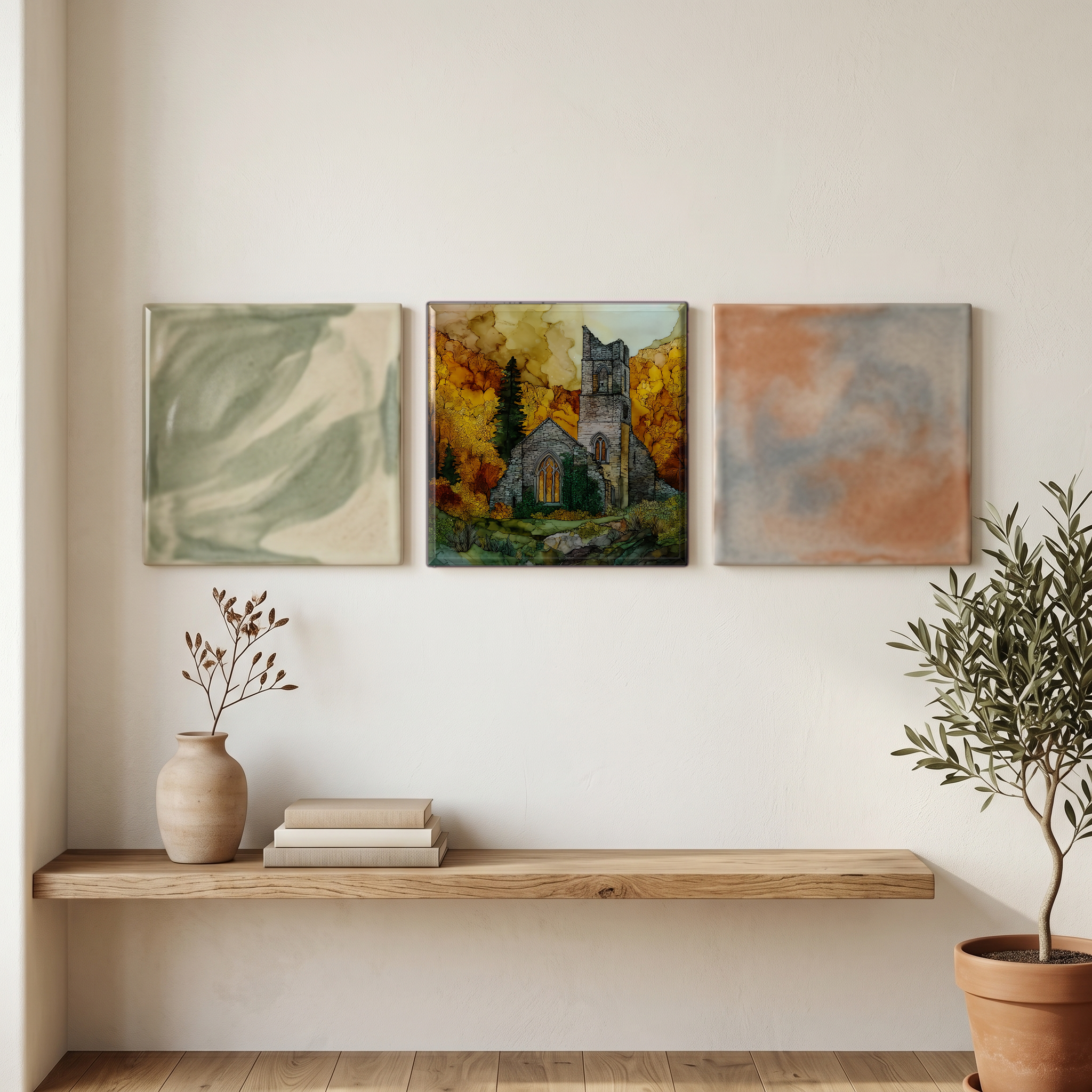
Three or five different vistas, hung together — a chapter of places you've been, or want to go.
The place, in three passes.
Tintern Abbey sits on a tidal bend of the Bannow River, on the Hook Peninsula in County Wexford, in the southeast of Ireland. It was founded around the year 1200 by William Marshal, Earl of Pembroke, and colonised by Cistercian monks from Tintern Abbey in Monmouthshire, Wales, the mother house from which it took its name. It was sometimes called Tintern de Voto, Tintern of the Vow, after the storm at sea that prompted its founding. The site lies on the Hook Peninsula south of New Ross, signposted from the R733 and R734 roads. The remains are managed by Ireland's Office of Public Works and stand within a woodland estate that includes a medieval bridge across the river and the restored Colclough Walled Garden.
The standing fabric is Cistercian work of the early thirteenth century, raised in local rubble masonry with dressed stone at the openings. The plan follows the Cistercian rule: an aisled nave, transepts with side chapels, a square-ended chancel. The crossing tower and battlements were added later in the medieval period as Wexford grew restless. After the dissolution of Ireland's monasteries in 1536, the lands passed to Anthony Colclough, a soldier in the Crown service. The Colclough family converted the nave and chancel into a fortified house and lived in the abbey for nearly four hundred years, leaving in 1959. The result is unusual: three building phases in one envelope, monastic and domestic at once. Office of Public Works conservation work is ongoing under the woodland canopy that grew around it.
Tintern Abbey is open to the public seasonally, generally from early spring through the end of October, with guided tours of the abbey interior included in the admission. The grounds, the Colclough Walled Garden, and the river walks are accessible outside the guided-tour season as well, at no charge. The walled kitchen garden was restored by a community trust beginning around 2010 and now grows period-correct vegetables, fruit, and herbs. The site lies on the Hook Peninsula south of New Ross, signposted from the R733 and R734. There is a small car park and an interpretive centre in the former monastic outbuildings. Allow two hours for the abbey, the garden, the medieval bridge, and the woodland loop along the Bannow estuary.