Wender·Vista
The Burren
shown on ceramic, 12-inch tileIreland
on Ireland's Atlantic coast, south of Galway Bay

The Burren

— where the stone keeps a garden.

Where it lives

Not only on a wall.

A small tile on the nightstand catching the morning. A larger one above the fire. Yours, wherever you spend the slow hours.
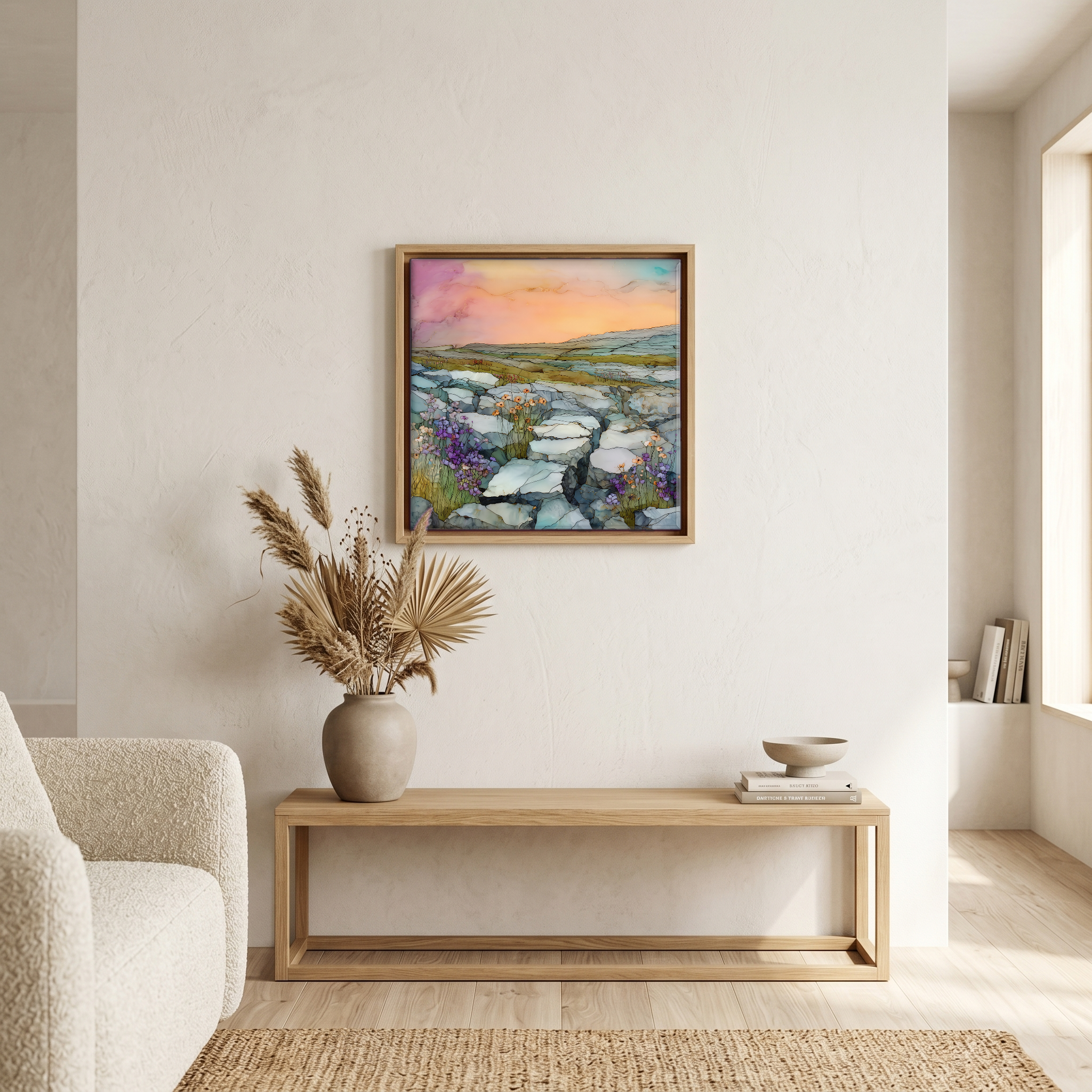
Above the bench, in a warm oak surround.
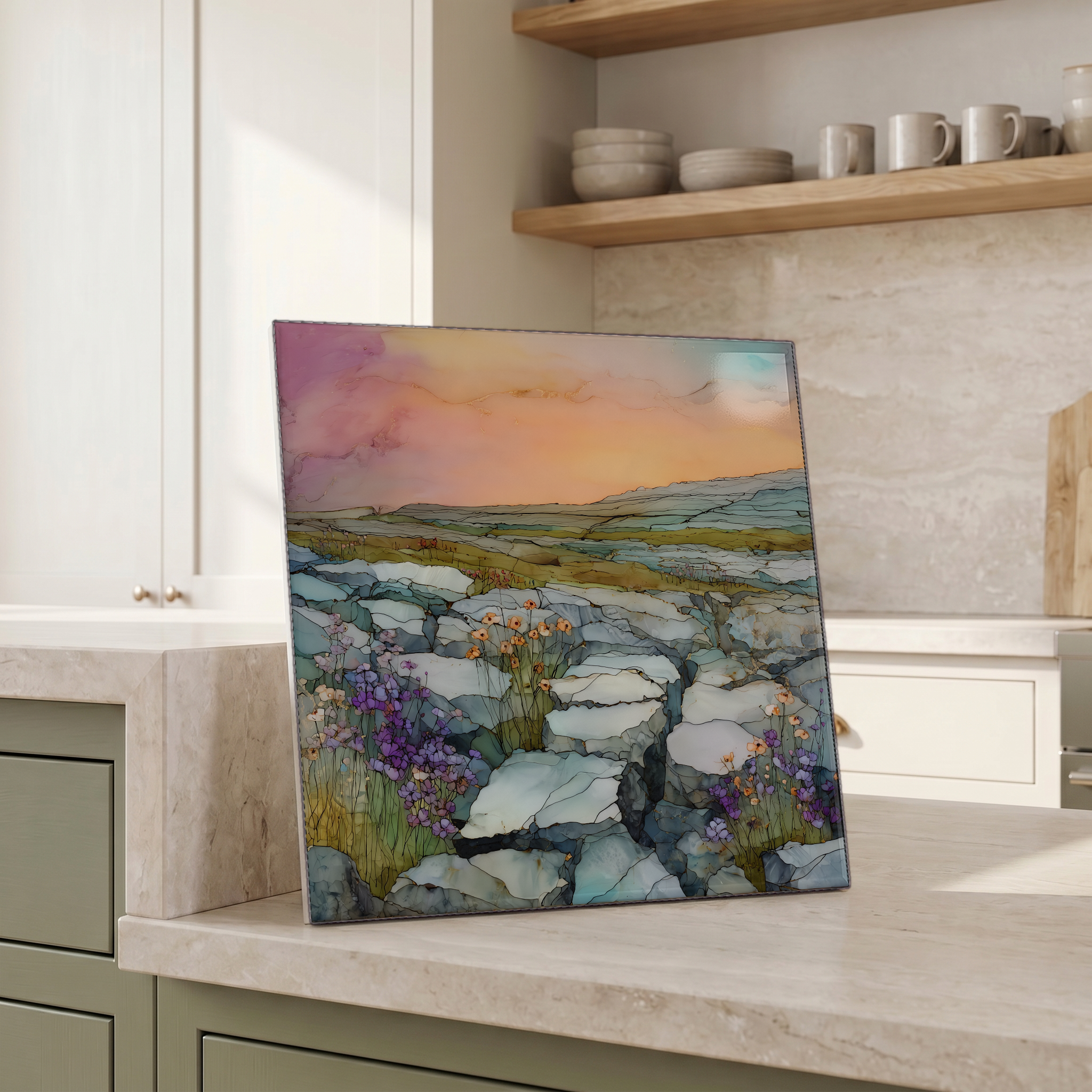
Beside the kettle, propped on the counter.
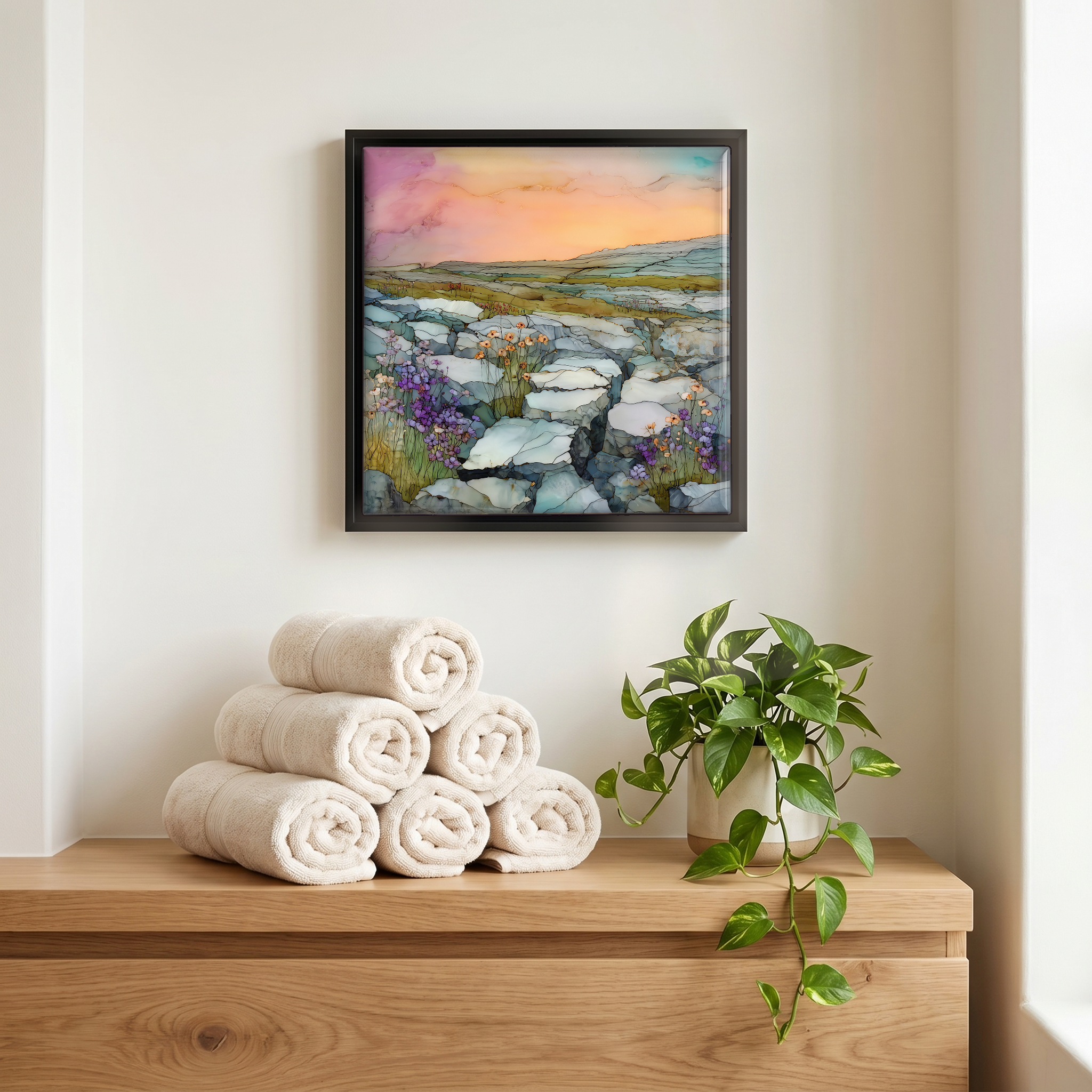
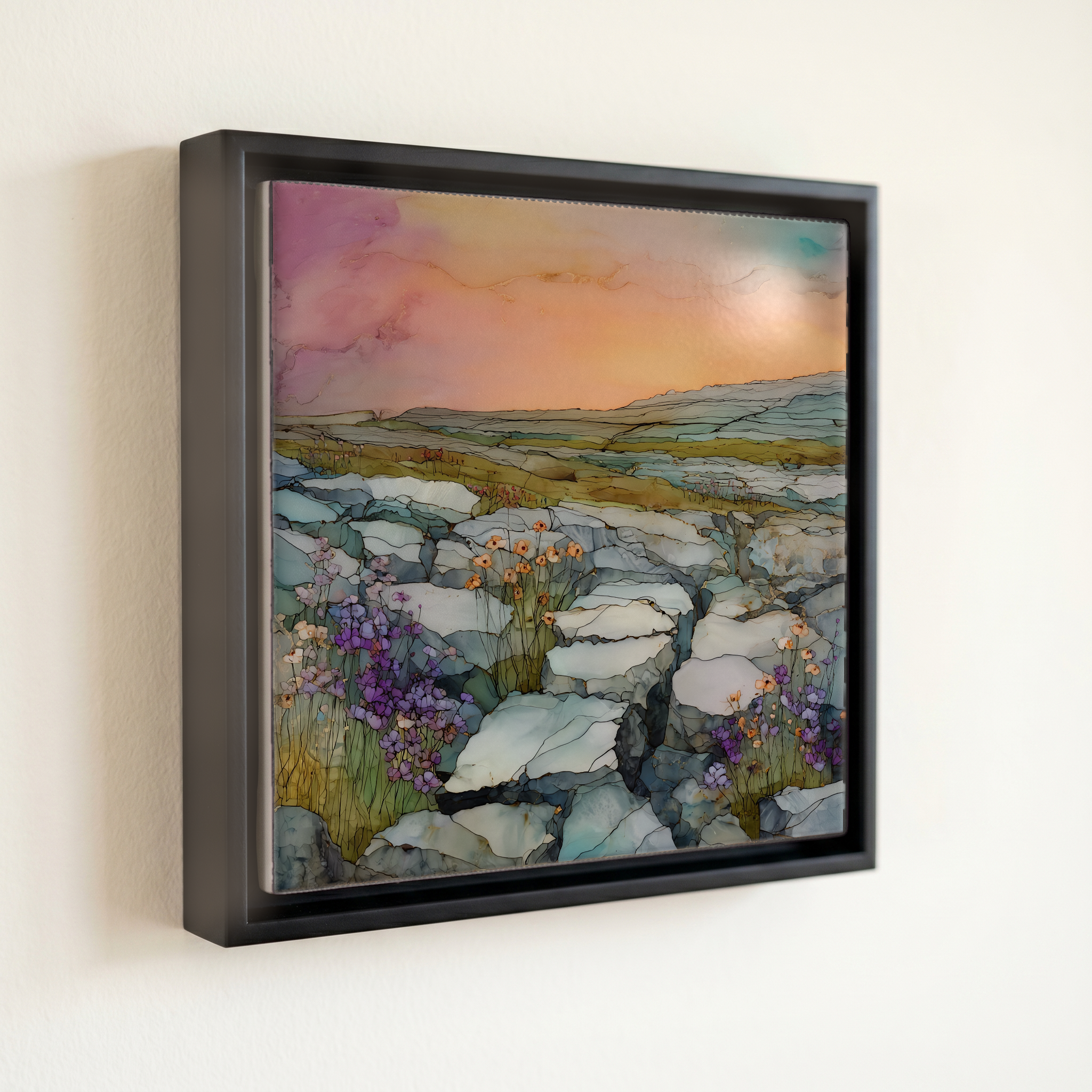
Above the linens, in a slim black surround.
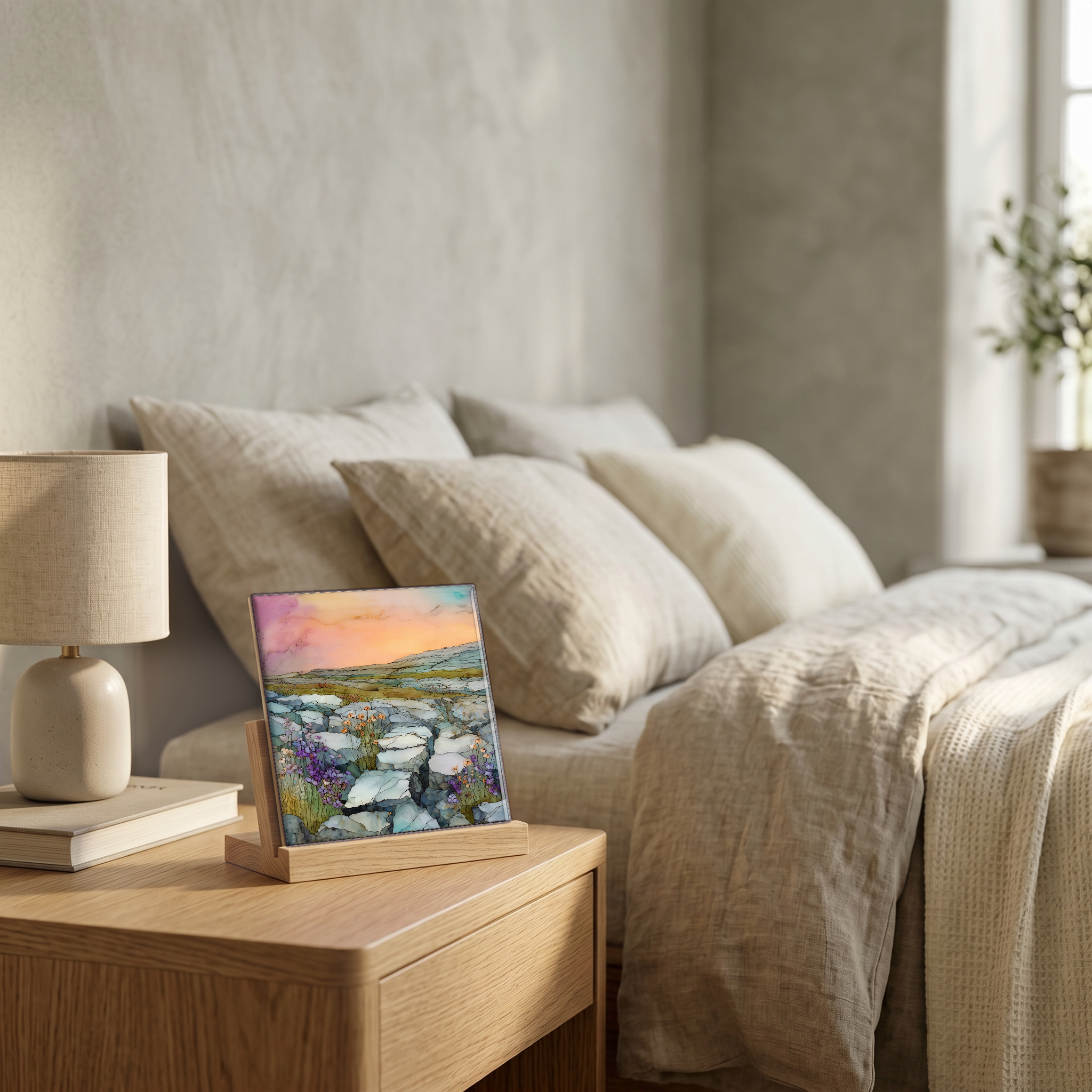
On the nightstand, on a light oak stand.
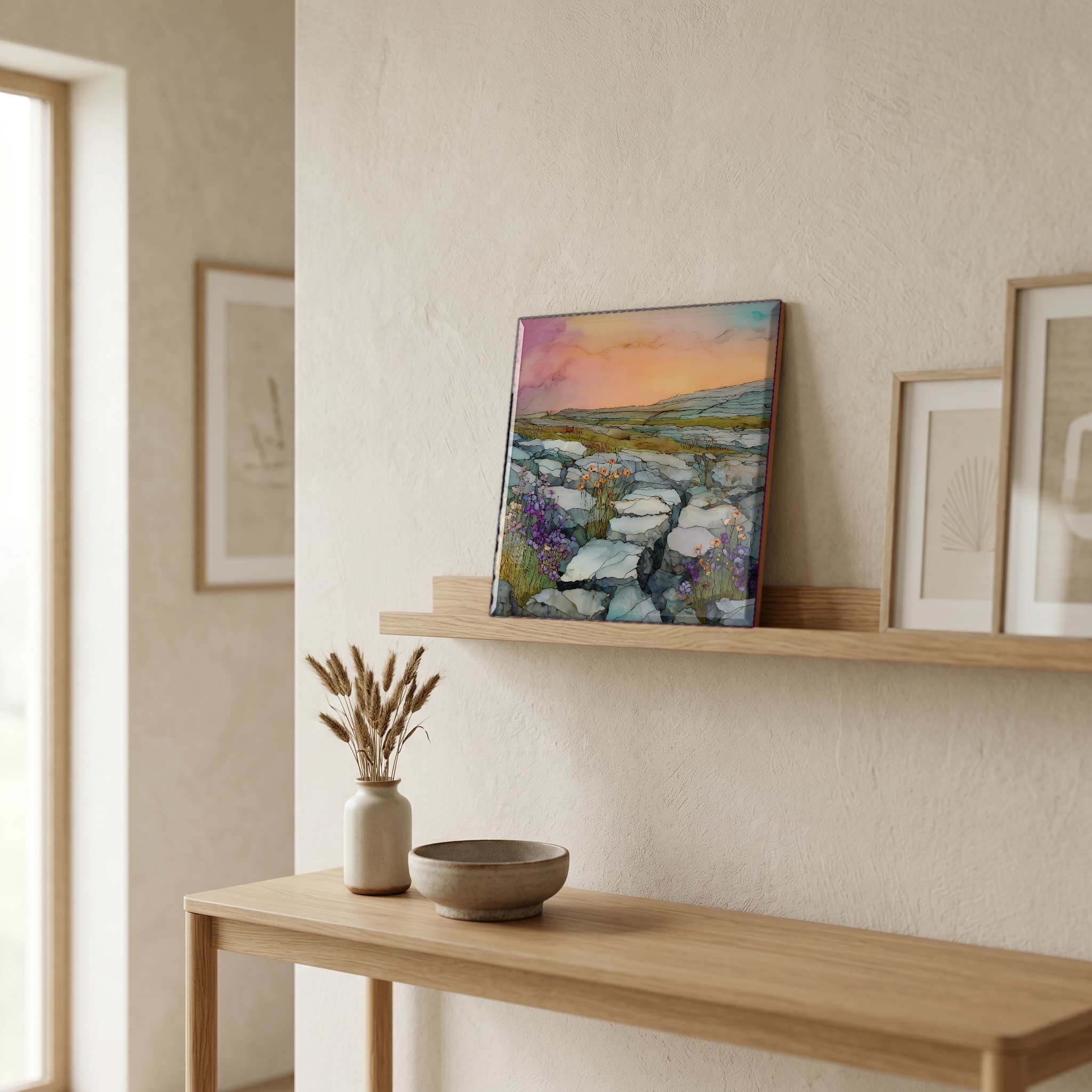
On a picture ledge, where the light comes in.
a note from the studio

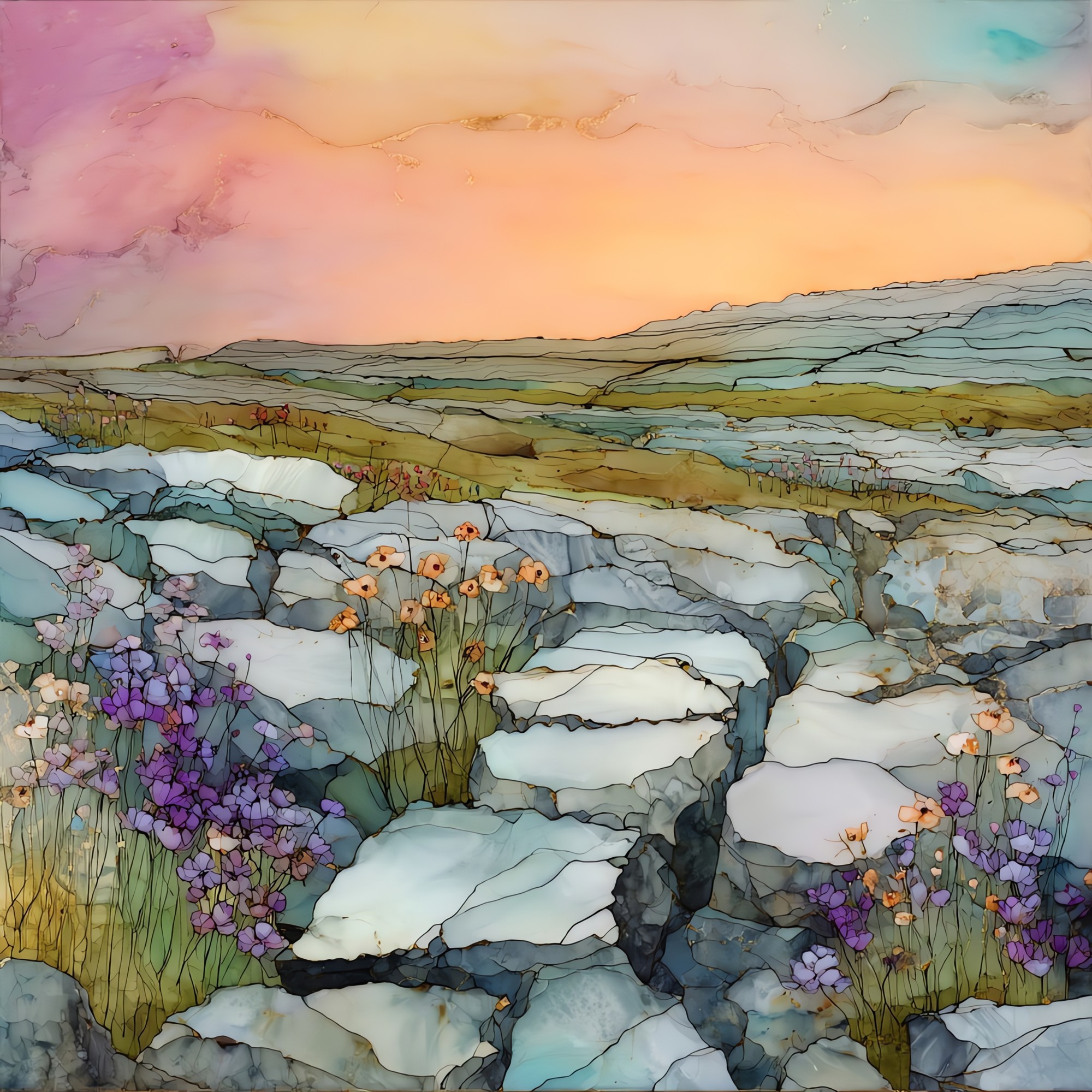
Two hundred and fifty square kilometres of limestone pavement in County Clare, west of the Shannon, south of Galway Bay. From the road the grey looks bare. In May spring gentian opens in the cracks, and Arctic and Mediterranean plants share the same metre of stone, which happens nowhere else like this. The Poulnabrone dolmen has stood on the pavement for nearly six thousand years. Edmund Ludlow, an officer under Cromwell, once called the Burren a country with no wood to hang a man, no water to drown him, no earth to bury him. They missed the garden.
from the studio
shown in a slim black floating frame · 6 × 6 in
— bring it home

The Burren, on ceramic.

Each tile is finished by hand in our Knoxville studio. Artwork is slowly infused into the ceramic surface under high heat and pressure, and rests beneath a thin glossy finish. The colour lives in the surface, not on top of it.

What kind of piece?
One tile — square or rectangle.
How big?
the popular one — counter, shelf, nightstand
6 × 6 in · 15 cm · 1.6 lb
Surface finish
A clear glossy finish — the artwork reads as if under resin. Ideal for show-pieces and framed wall art.
How it sits
A hidden cleat — sits ¼″ proud of the wall.
$58
Hand-finished and shipped from our studio at the foot of the Smokies. On your wall in about ten days.
size
6 × 6 in
15 cm
weighs
1.6 lb
solid in the hand
surface
ceramic, hand-finished
art rests beneath a thin glossy finish
from
Knoxville, TN
our family studio, at the foot of the Smokies
— start a Coaster Set

Pick any four 4-inch tiles — National Parks you've been to, a Smokies set, the four seasons of one place. $ for a set of , cork-backed, ready to live on the table.
comes gift-ready
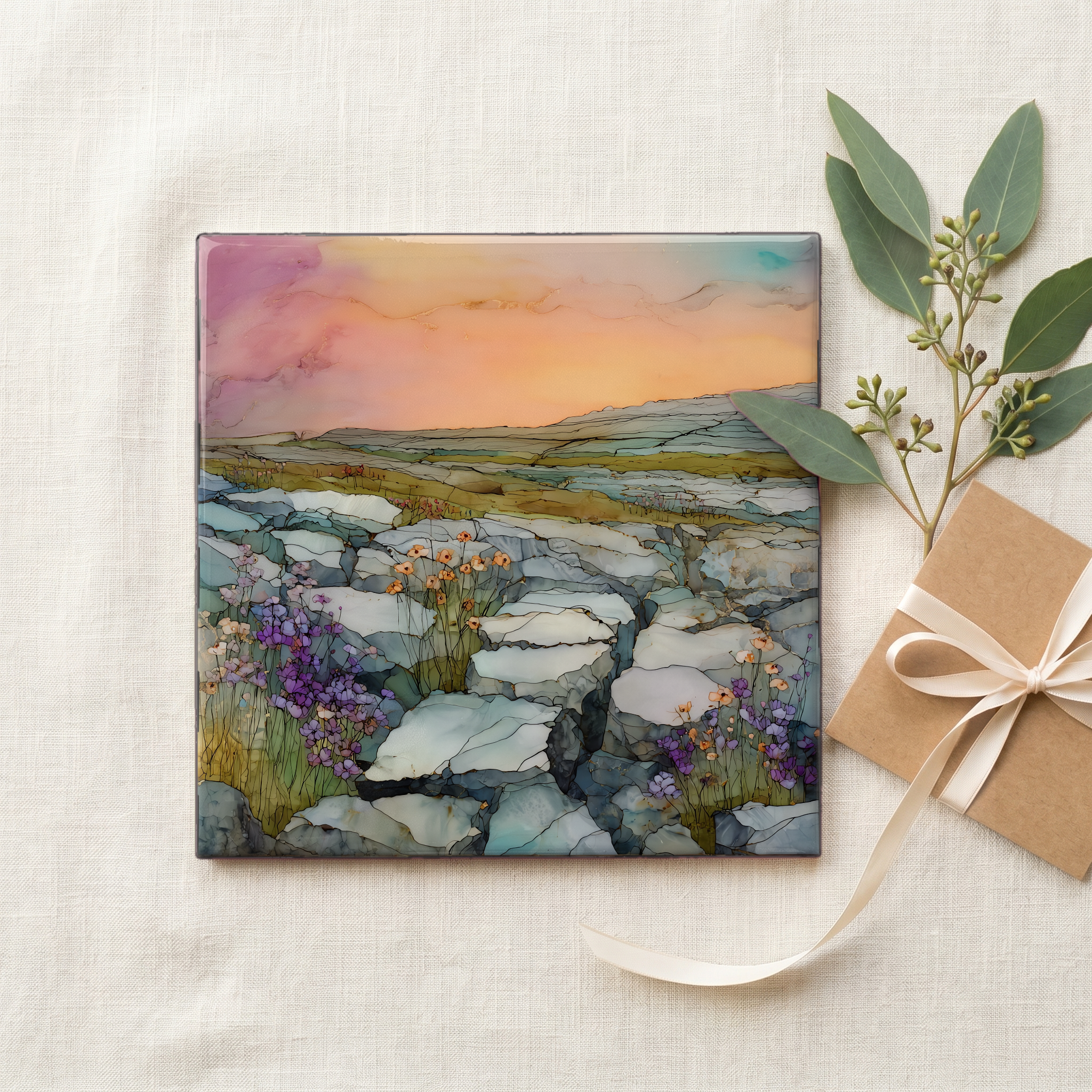
comes gift-ready

Each tile ships in a kraft box, tied with cream ribbon, with a handwritten note from the studio if you'd like to add one.
or build a grouping
or build a grouping

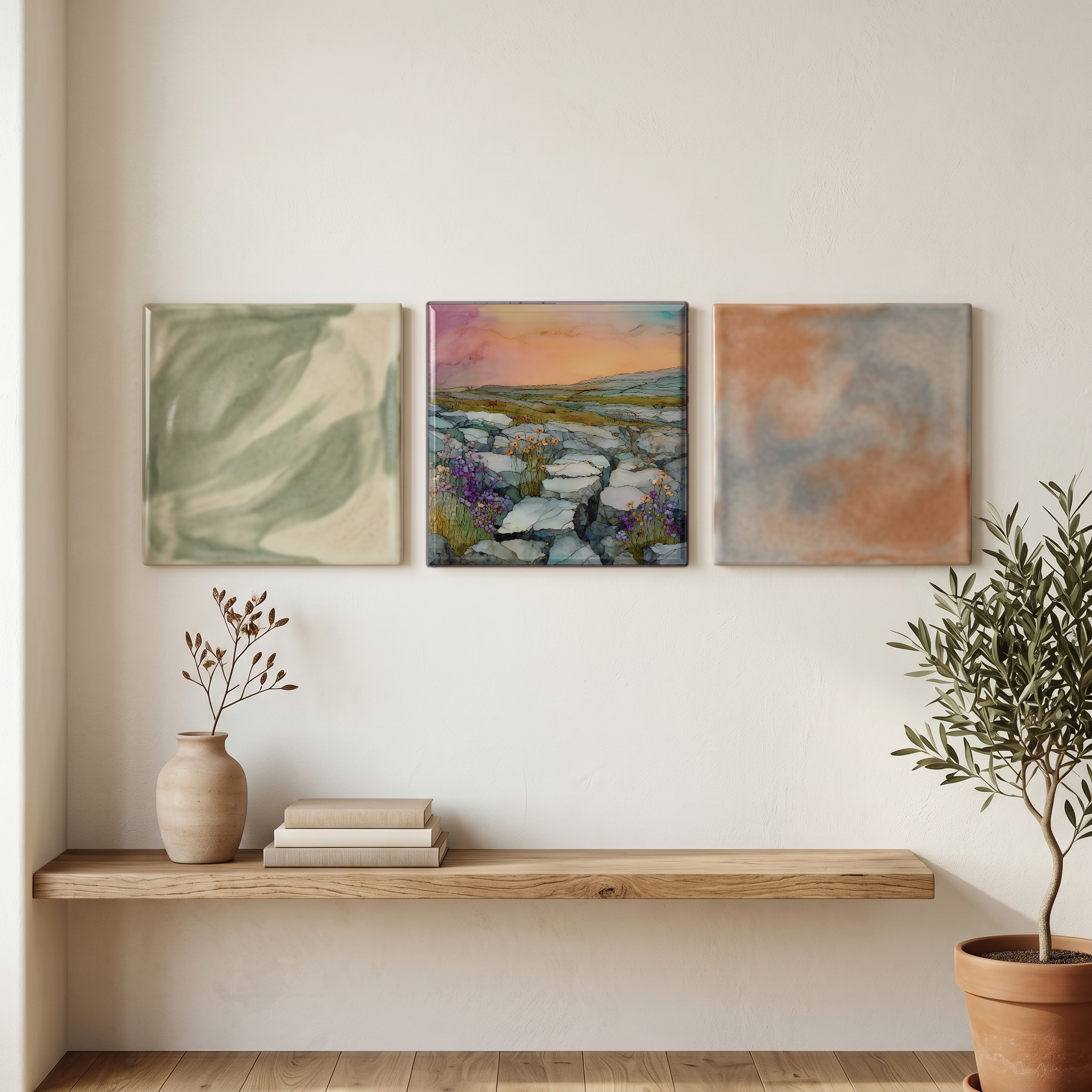
Three or five different vistas, hung together — a chapter of places you've been, or want to go.

about The Burren

The place, in three passes.

A little of what's known, in case you fall down the rabbit hole — or want to go see it yourself.
the place

The Burren is a limestone karst landscape of roughly 250 square kilometres in northwest County Clare, on the Atlantic coast of Ireland, south of Galway Bay and north of the Cliffs of Moher [Wikipedia: The Burren]. The name comes from the Irish Boireann, meaning great rock. Burren National Park sits at the centre of the region, about 15 square kilometres of pavement, hazel scrub, and turlough, the smallest of Ireland's six national parks [Burren National Park]. Since 2011 the wider area has been recognised as the Burren and Cliffs of Moher UNESCO Global Geopark, one of the first in Ireland. Villages on the edge, such as Ballyvaughan, Lisdoonvarna, and Doolin, sit where the pavement meets the road network from Galway and Ennis.

the stone

The pavement is Carboniferous limestone laid down roughly 330 million years ago, when this part of the world lay under a warm shallow sea [Geological Survey of Ireland]. Glaciers of the last ice age scraped the rock clean, leaving a near-flat plateau of horizontal beds. Rainwater has since dissolved the joints into deep parallel cracks called grikes, isolating the flat blocks between them, the clints. Erratics dropped by retreating ice still rest on the surface, including a famously balanced one near Poulnabrone. In the grikes, sheltered from wind and grazing, grow Arctic-alpine, Mediterranean, and Atlantic plants together, a floral pairing that no other place in Europe holds in the same way [Burren and Cliffs of Moher UNESCO Global Geopark].

the season

The wildflower bloom runs from late April through June, when more than six hundred species of flowering plants come up across the pavement [Wikipedia: The Burren]. Spring gentian (Gentiana verna) opens its sharp blue in May, often beside mountain avens (Dryas octopetala), an Arctic-alpine that has held on here since the ice retreated. The Burren in Bloom festival runs through May with botanical walks led from Ballyvaughan and Carron. Summer brings orchids: fly orchid, dark red helleborine, early purple. Evening light stretches long off Galway Bay. October and November turn the pavement quiet again, hazel scrub yellowing in the lowlands and the karst returning to grey [Burren National Park].

where
Ireland · County Clare, Munster
within
Burren and Cliffs of Moher UNESCO Global Geopark
position
53.0000° N · 9.0330° W
the neighborhood

What's nearby.

A handful of named places within an hour's walk or short drive. Some we've already painted; some we will.
8 km NW
Poulnabrone Dolmen
Neolithic portal tomb
22 km S
Cliffs of Moher
sea cliffs
7 km N
Ballyvaughan
harbour village
18 km SW
Doolin
village
25 km W
Aran Islands
limestone islands
9 km N
Aillwee Cave
show cave
12 km S
Kilfenora
high cross village
N
The Burren
Poulnabrone Dolmen
Cliffs of Moher
Ballyvaughan
Doolin
Aran Islands
Aillwee Cave
Kilfenora
common questions

What people ask.

A few questions we get about The Burren — and about bringing the piece home.
about the place

The Burren is a limestone karst region of about 250 square kilometres in northwest County Clare, on Ireland's Atlantic coast, south of Galway Bay and north of the Cliffs of Moher. The nearest cities are Galway and Ennis; the closest villages are Ballyvaughan, Lisdoonvarna, and Doolin.

The Burren is known for its exposed limestone pavement and for the unusual coexistence of Arctic-alpine, Mediterranean, and Atlantic wildflowers growing together in the cracks between the stones. Around 70% of Ireland's native flowering plants are recorded here, including spring gentian and mountain avens.

Late April through June is the peak wildflower season, when spring gentian, mountain avens, and the early orchids come into bloom. The Burren in Bloom festival runs through May. Summer brings longer evening light off Galway Bay; autumn turns the hazel scrub quiet and yellow.

The bedrock is Carboniferous limestone laid down in a warm shallow sea about 330 million years ago. Glaciers of the last ice age scraped the surface clean, exposing a near-flat pavement. Rainwater has since dissolved the joints into the deep parallel cracks called grikes, leaving the flat blocks between them, the clints.

The name comes from the Irish Boireann, meaning great rock or rocky place. In the 1650s Edmund Ludlow, an officer under Cromwell, described it as a country with no wood to hang a man, no water to drown him, and no earth to bury him.

Burren National Park is a 15-square-kilometre protected area at the southern edge of the karst region, near the village of Corofin. Established in 1991, it is the smallest of Ireland's six national parks. Walking trails cross Mullaghmore Mountain and the surrounding hazel scrub.

Yes. Poulnabrone Dolmen is a Neolithic portal tomb on the limestone pavement of the Burren, dated to between 3800 and 3200 BCE. It is one of the oldest known megalithic tombs in Ireland and sits on the R480 road between Ballyvaughan and Kilfenora.

about the piece in your home

It has been a meaningful gift for many customers with family in Clare or the west of Ireland. The Burren is one of the country's most loved landscapes, recognisable to anyone who has walked the pavement or driven the coast road from Galway to Doolin. A Small or Medium with a handwritten note from the studio reads well.

The greys, mossy greens, and spring-gentian blue notes sit well in Coastal-modern, Irish Cottage Modern, and Stone-and-Linen Minimalist rooms. The piece holds against limewashed walls, reclaimed oak, and natural linen. It also lands inside a darker library palette where the blue tones give the room a centre of gravity.

Yes. Biophilic and Wabi-Sabi rooms both lean on natural texture, weathered colour, and a connection to land. The limestone-pavement palette and ancient-stone reference of the Burren read directly into both. The piece pairs with stone, oak, dried grasses, and matte ceramics.

Above a standard sofa or long console, the Large carries the wall on its own. For a stronger anchor, a 4-tile Mural arranged in a two-by-two grid reads at sofa scale. A 9-tile Mural becomes the room's centre of gravity above a long sectional or dining buffet.

Yes, in either the Dura Satin or Matte finish. Both are scratch-resistant and hold up against steam, splash, and the demands of vertical installation in showers and backsplashes. The standard Glossy finish is meant for framed wall display outside the splash zone.

A soft microfibre cloth and clean water are all the tile needs for everyday care. The colour is slowly infused into the ceramic surface under high heat and pressure, beneath a thin glossy finish, so it does not lift with normal wiping. Avoid abrasive pads and harsh solvents.

Yes. Every WenderVista piece is an original by Reid Wender, painted in the studio's stained-glass and alcohol-ink visual language and hand-finished in Knoxville, Tennessee. The Burren tile is not licensed from a stock library, and the same image does not appear on another brand's tile.

if this one stayed with you

A few you might also love.

Hand-picked by the eye that found Sorapis. Same air, same kind of quiet.