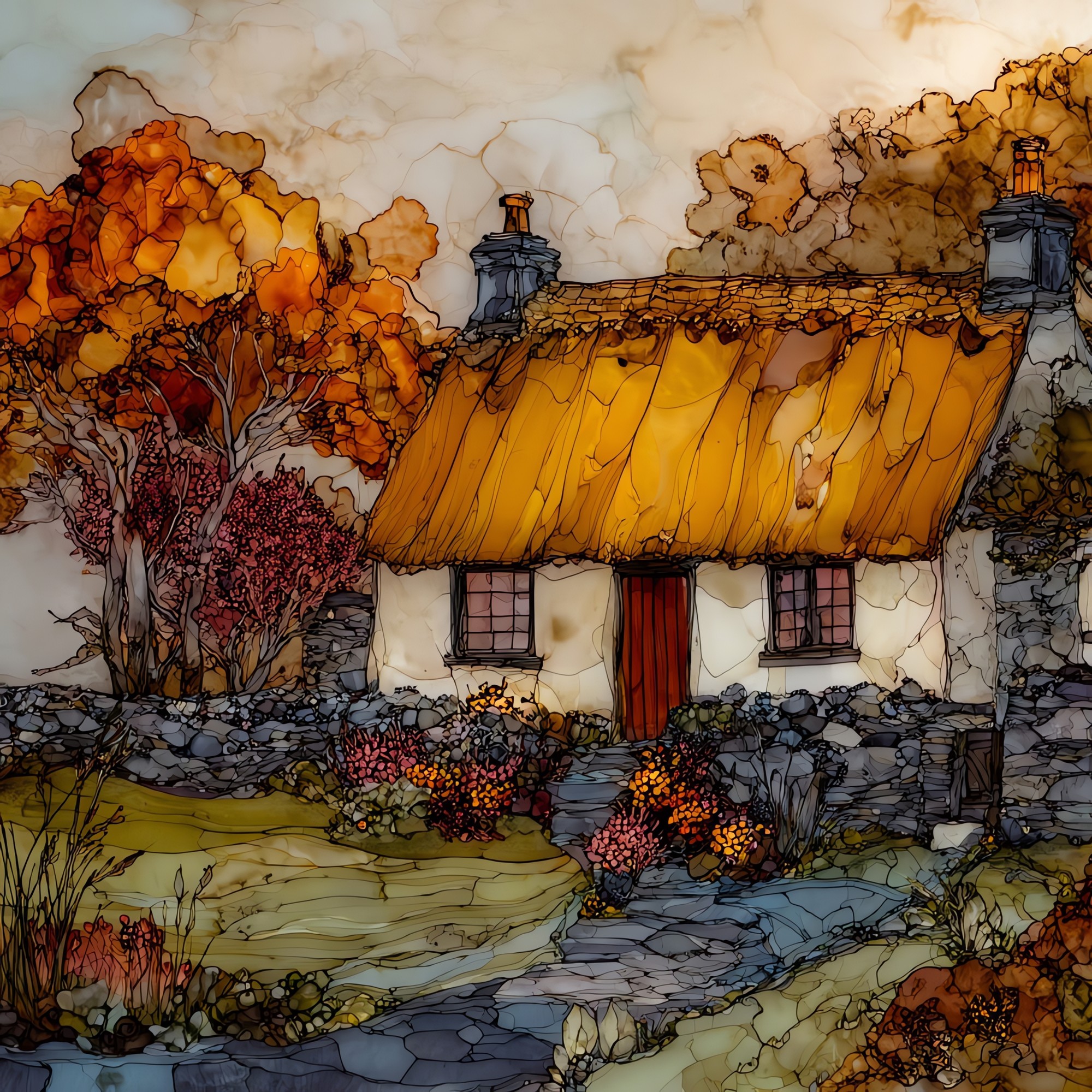
Irish Thatched Cottage
— — the white wall the Atlantic couldn't move.
Not only on a wall.
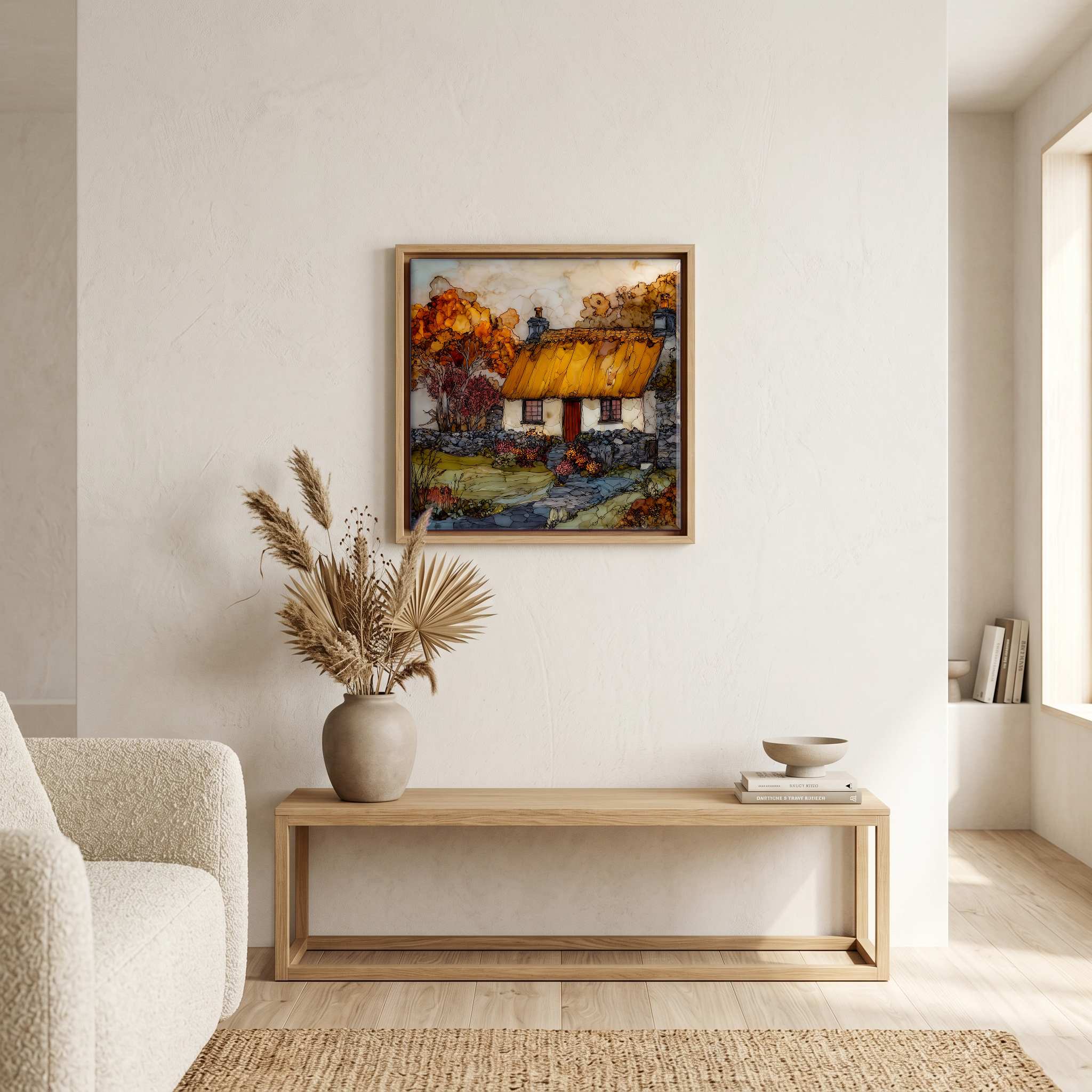
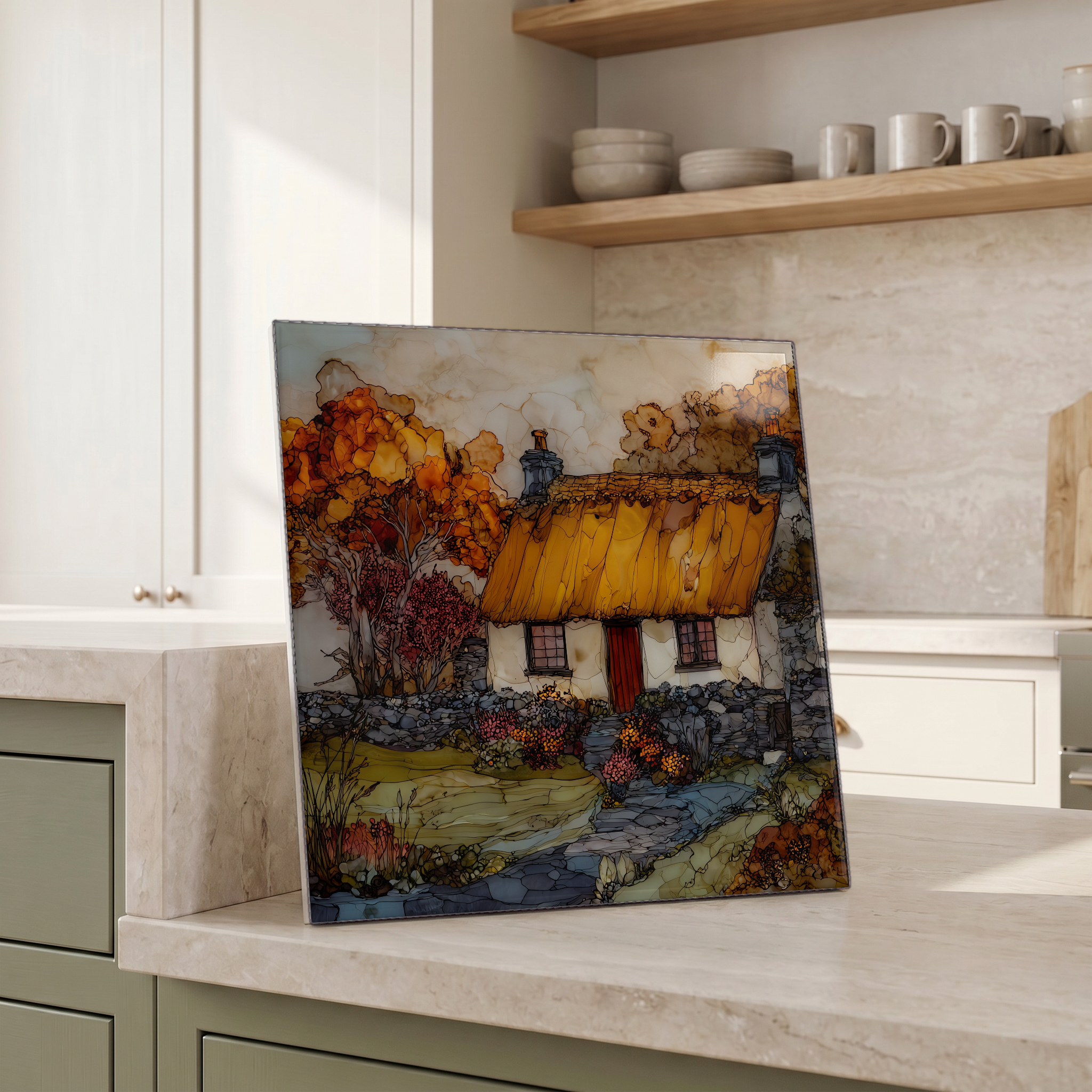
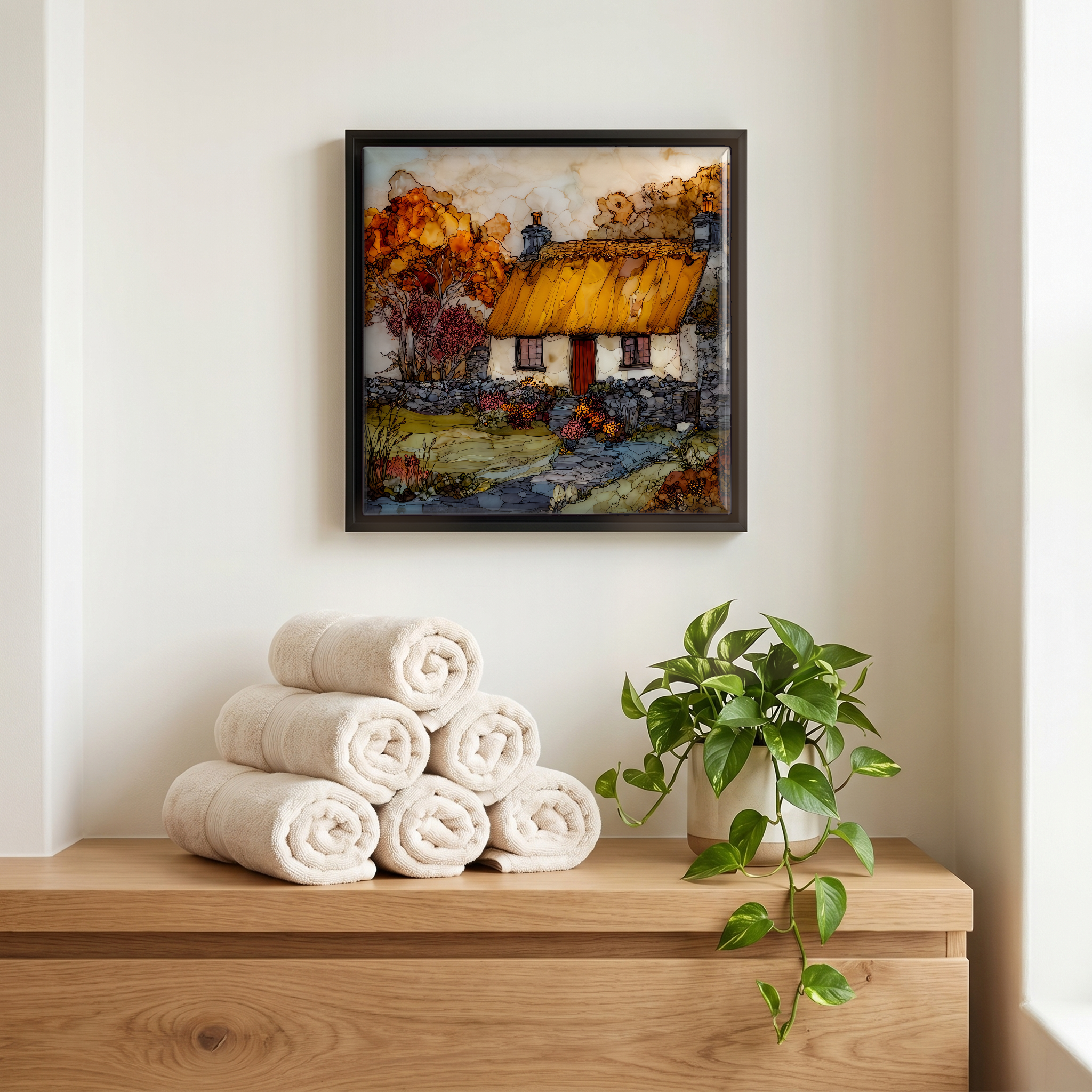
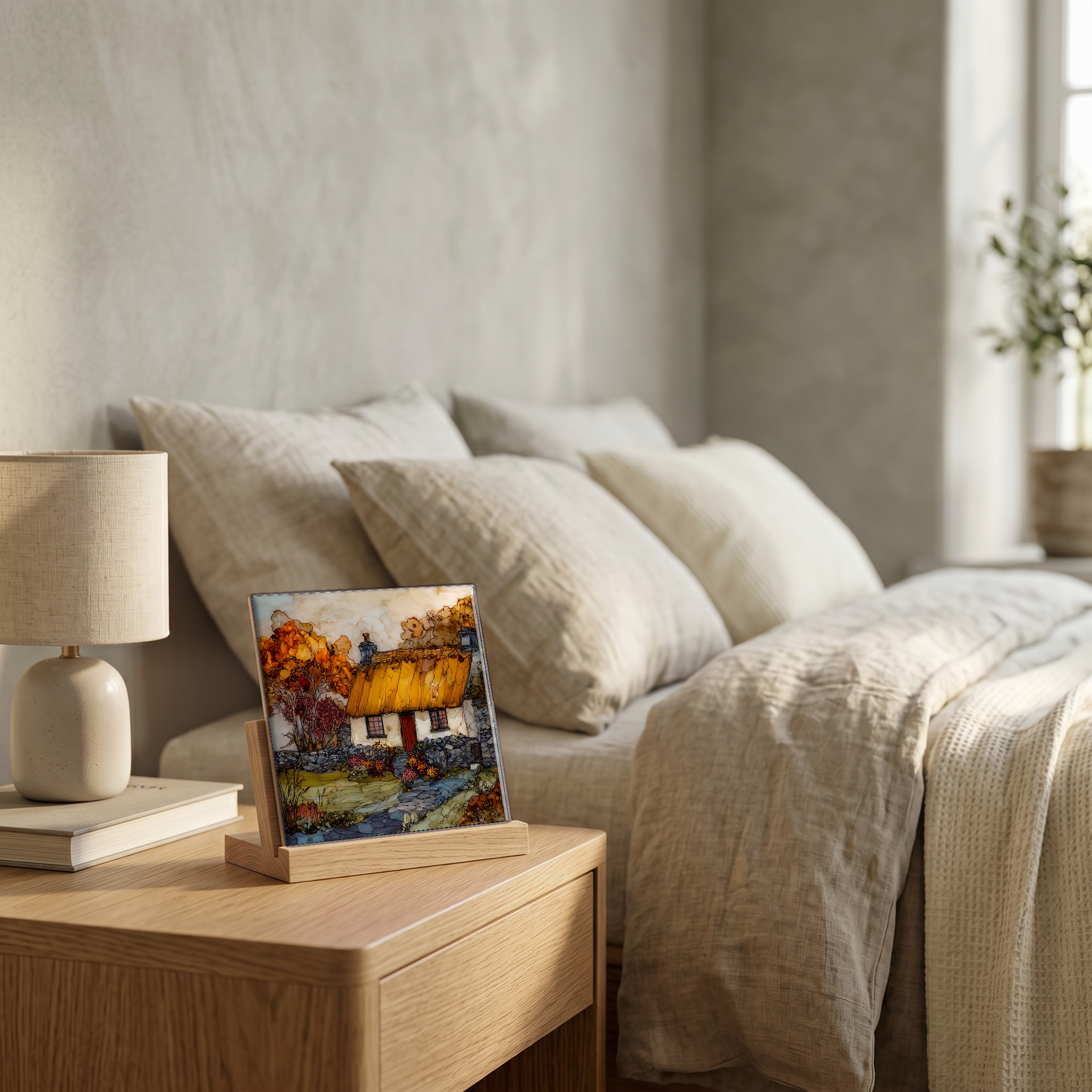
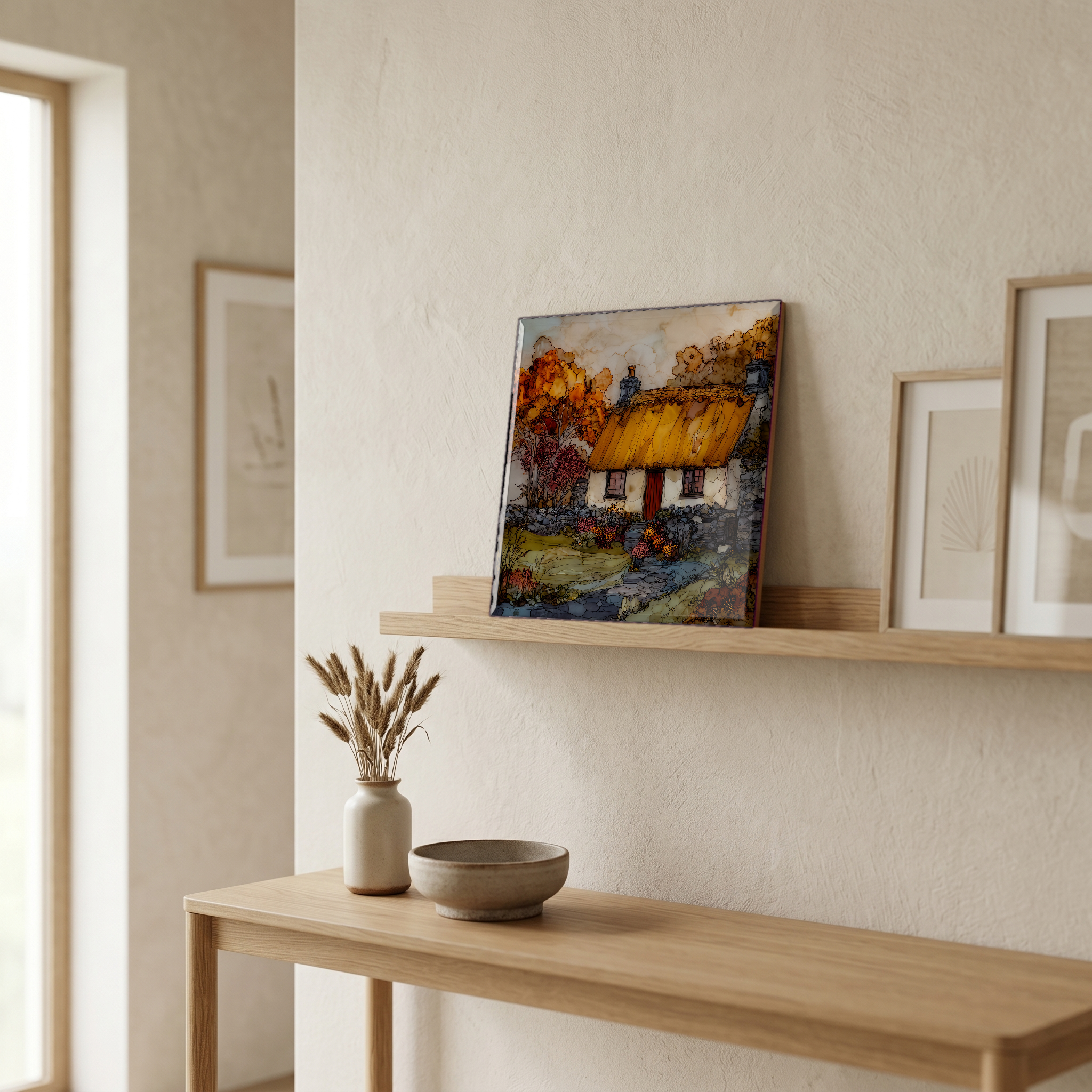
“A low whitewashed cottage along a Connemara lane. Lime walls thick enough to hold winter out, a roof of wheat straw tied down with sugán rope against the Atlantic, the half-door painted bright against the grey. Over a million of these stood in Ireland before the Famine; recent estimates from the Department of Housing put the surviving number under 2,500, kept up by families, the Heritage Council, and a small national grant scheme. The same shape sits in every postcard from the west, not because anyone arranged it that way, but because nothing else needed to be added.
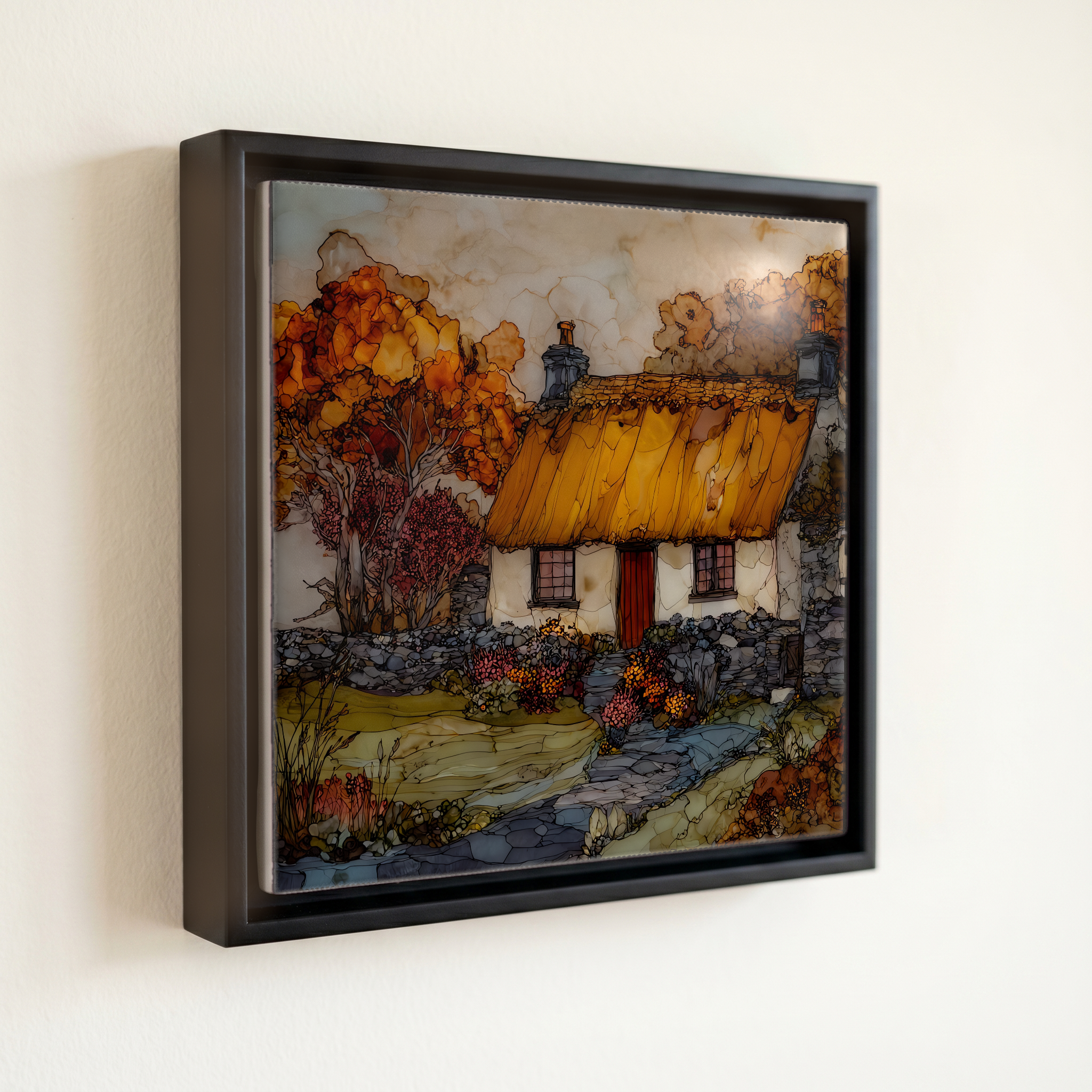
Irish Thatched Cottage, on ceramic.
Each tile is finished by hand in our Knoxville studio. Artwork is slowly infused into the ceramic surface under high heat and pressure, and rests beneath a thin glossy finish. The colour lives in the surface, not on top of it.
Pick any four 4-inch tiles — National Parks you've been to, a Smokies set, the four seasons of one place. $ for a set of , cork-backed, ready to live on the table.
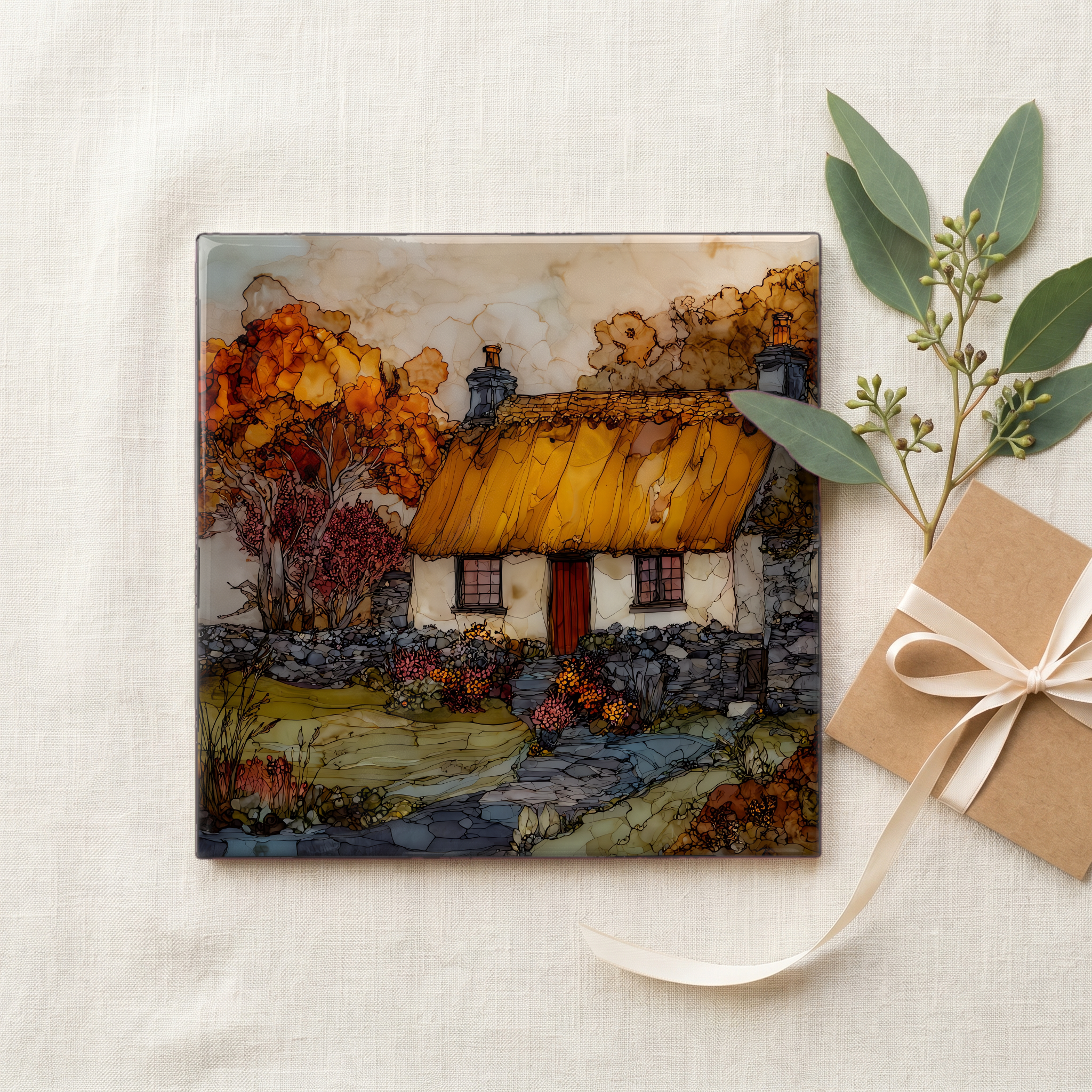
Each tile ships in a kraft box, tied with cream ribbon, with a handwritten note from the studio if you'd like to add one.
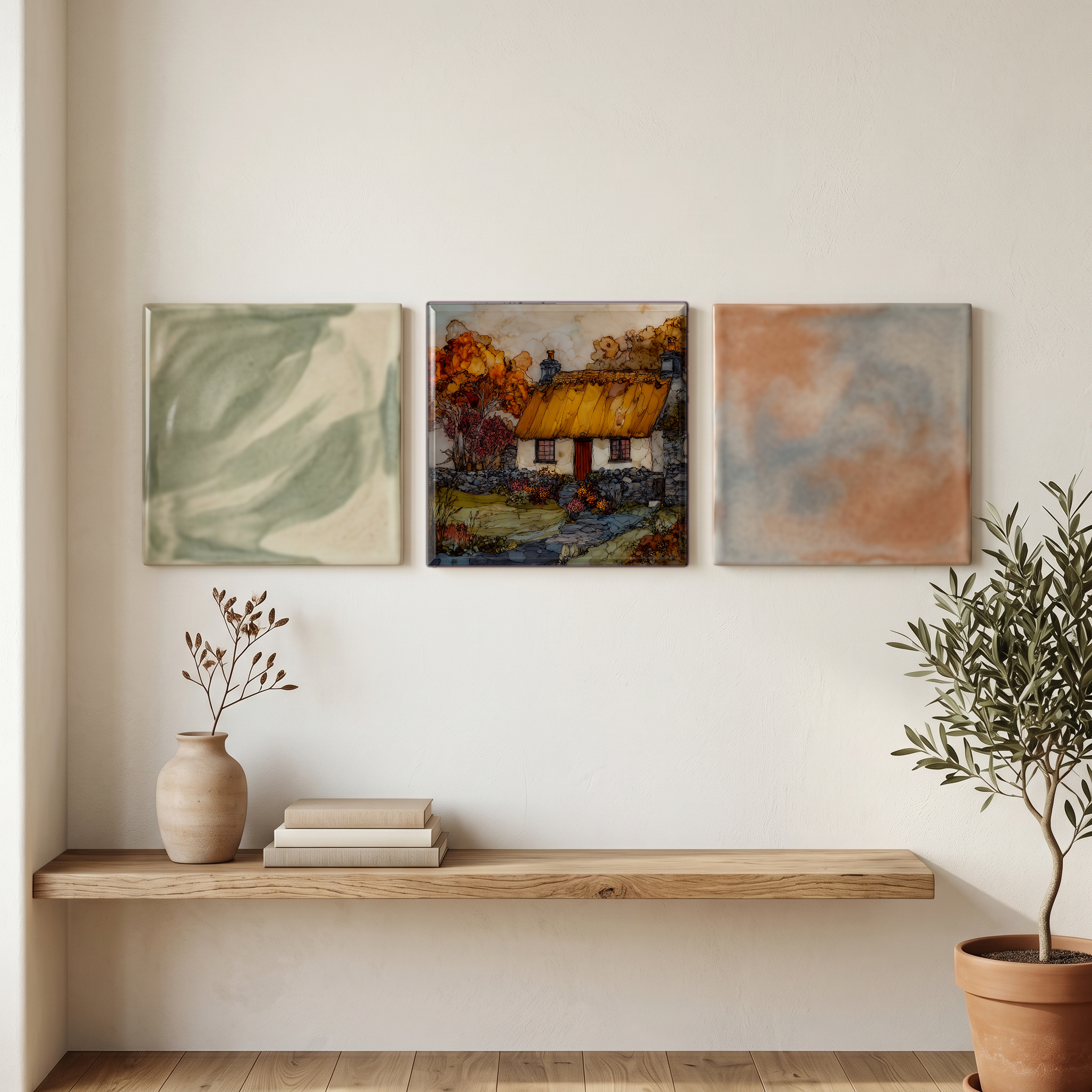
Three or five different vistas, hung together — a chapter of places you've been, or want to go.
The place, in three passes.
The Irish thatched cottage is the vernacular dwelling of rural Ireland: low, single-story, lime-washed, with a steep roof of wheat or oat straw and a chimney at one or both gables. The 1841 census of Ireland recorded roughly 1.33 million inhabited houses across the island, the great majority of them thatched. Recent estimates from the Department of Housing, Local Government and Heritage put the surviving number between 1,300 and 2,500, concentrated along the western seaboard from Donegal through Connemara and west Kerry. Most are listed as protected structures; a smaller number are still lived in or worked as farmhouses. The shape, long and low and hugging the contour of the field, was built to take Atlantic weather and the heat of a turf fire at one gable end.
Walls were built of local fieldstone set in clay or weak lime mortar, then lime-washed white inside and out. The lime came from coastal limestone, burned and slaked into wash, and was renewed each spring by the woman of the house; the colour reflects light into rooms with windows the size of a hand. In the west, thatch is held down with sugán, twisted straw or hay rope pegged through the eaves and weighted at the gables, a pattern documented in Connemara, the Aran Islands, and the Donegal coast against the November gales off the Atlantic. Trim and doors are painted in single saturated colours: postbox red, harbour blue, Donegal green. The half-door, hinged in two pieces, let light and air in and kept the hens out of the kitchen.
The largest open-air collection is at Bunratty Folk Park in County Clare, where roughly thirty original buildings, including thatched cottages moved in from the Atlantic seaboard, were reassembled into a working nineteenth-century village. Glencolmcille Folk Village in southwest Donegal preserves three cottages furnished to the 1720s, 1820s, and 1920s, a single hillside reading as three centuries. In the wild, the densest surviving clusters are the R341 through Roundstone in Connemara, the Slea Head loop in west Kerry, and the south of Inis Mór on the Aran Islands. A handful of restored cottages are let by the Irish Landmark Trust and listed on Failte Ireland's registers; a few are still working farmhouses, and the photograph that lasts is usually taken from the road.