Wender·Vista
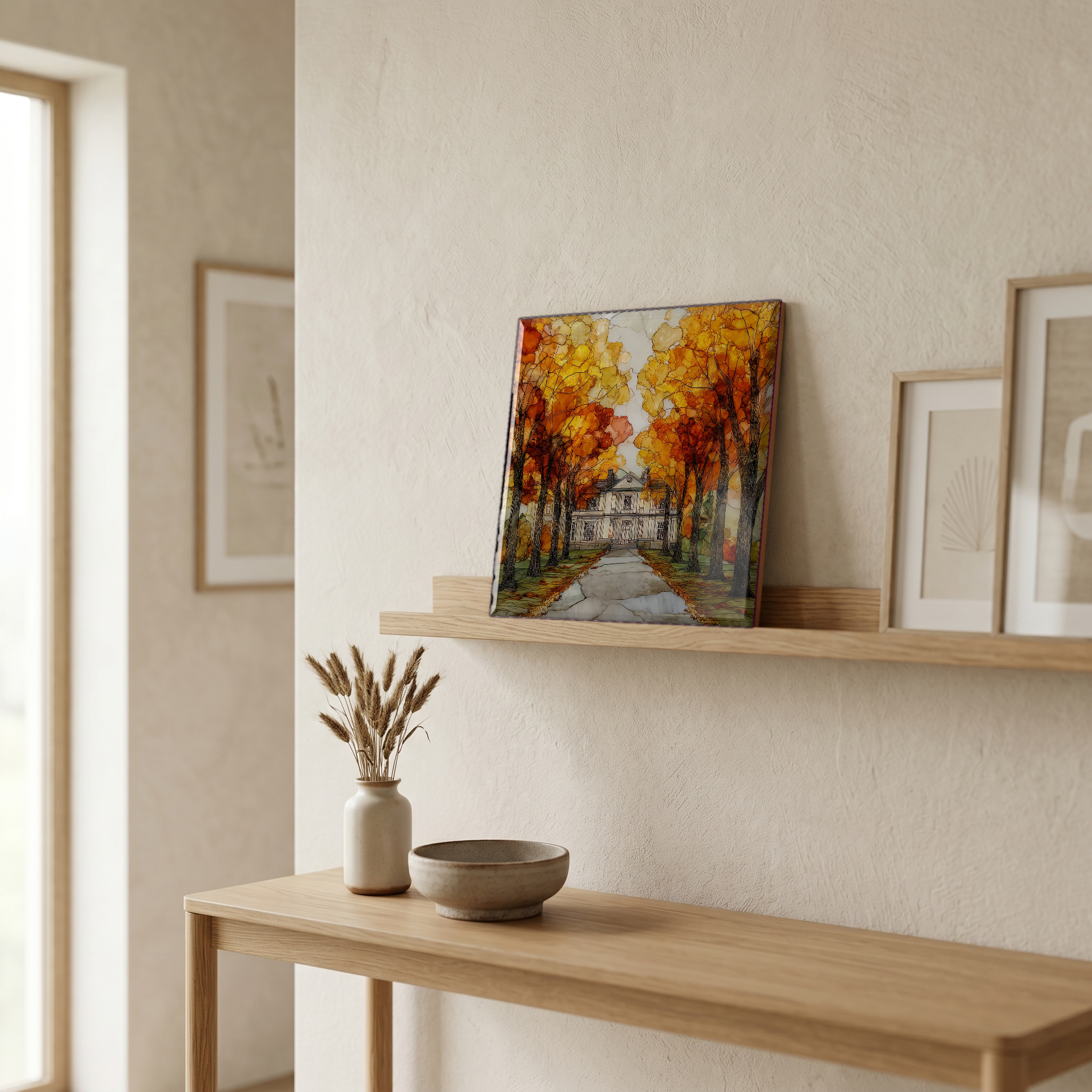
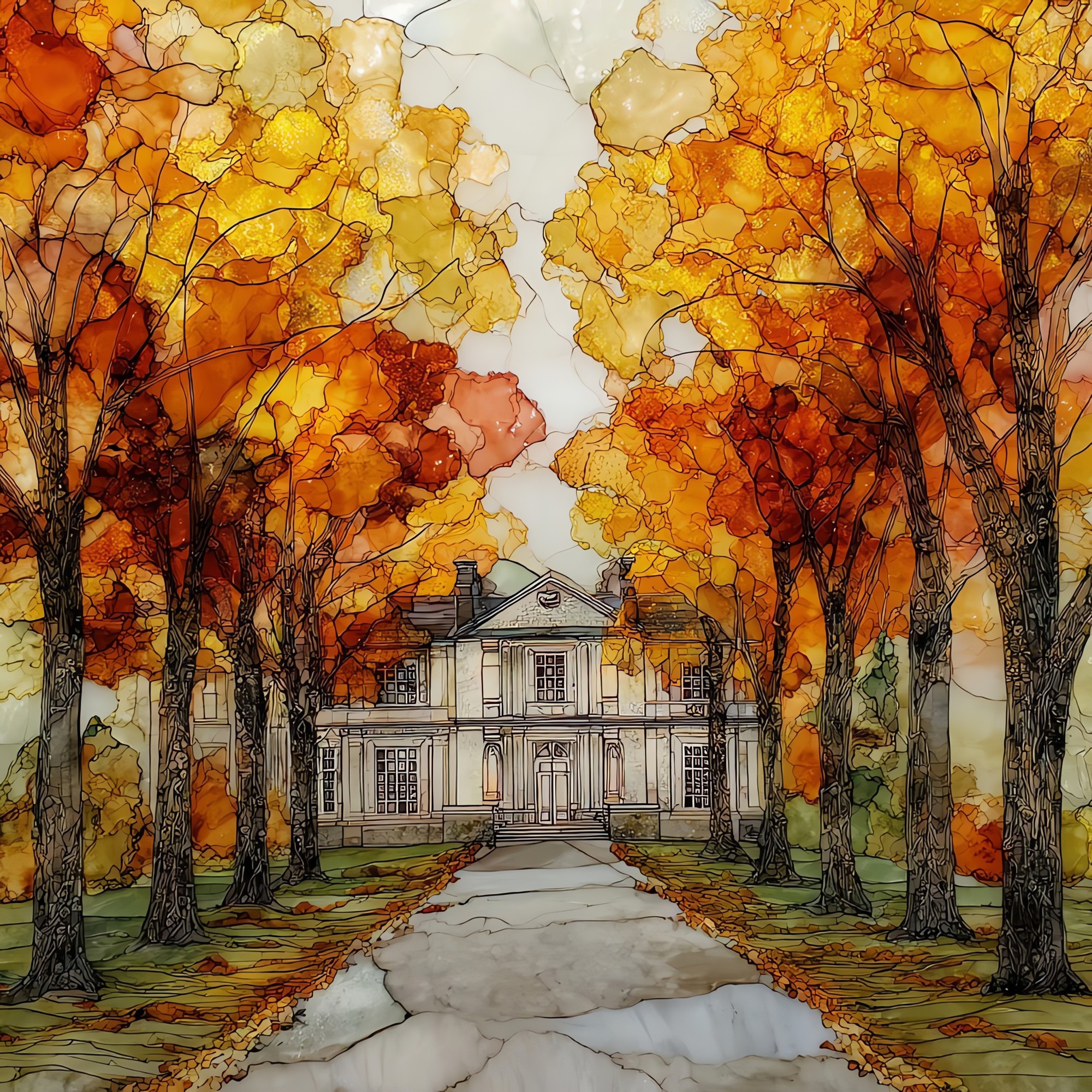
Strokestown Park
shown on ceramic, 12-inch tileIreland
in County Roscommon, west of the Shannon

Strokestown Park

a long avenue and a longer memory.

Where it lives

Not only on a wall.

A small tile on the nightstand catching the morning. A larger one above the fire. Yours, wherever you spend the slow hours.
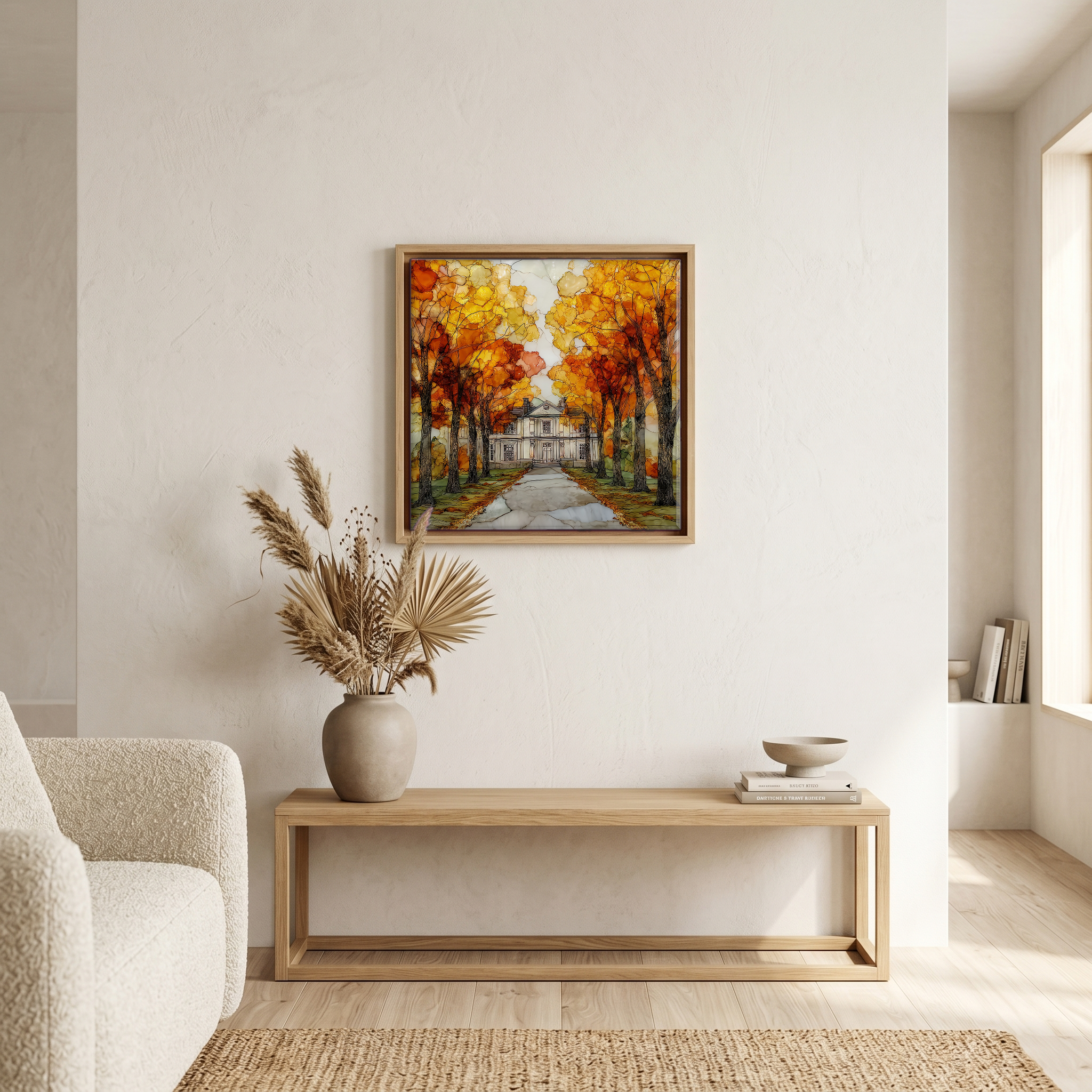
Above the bench, in a warm oak surround.
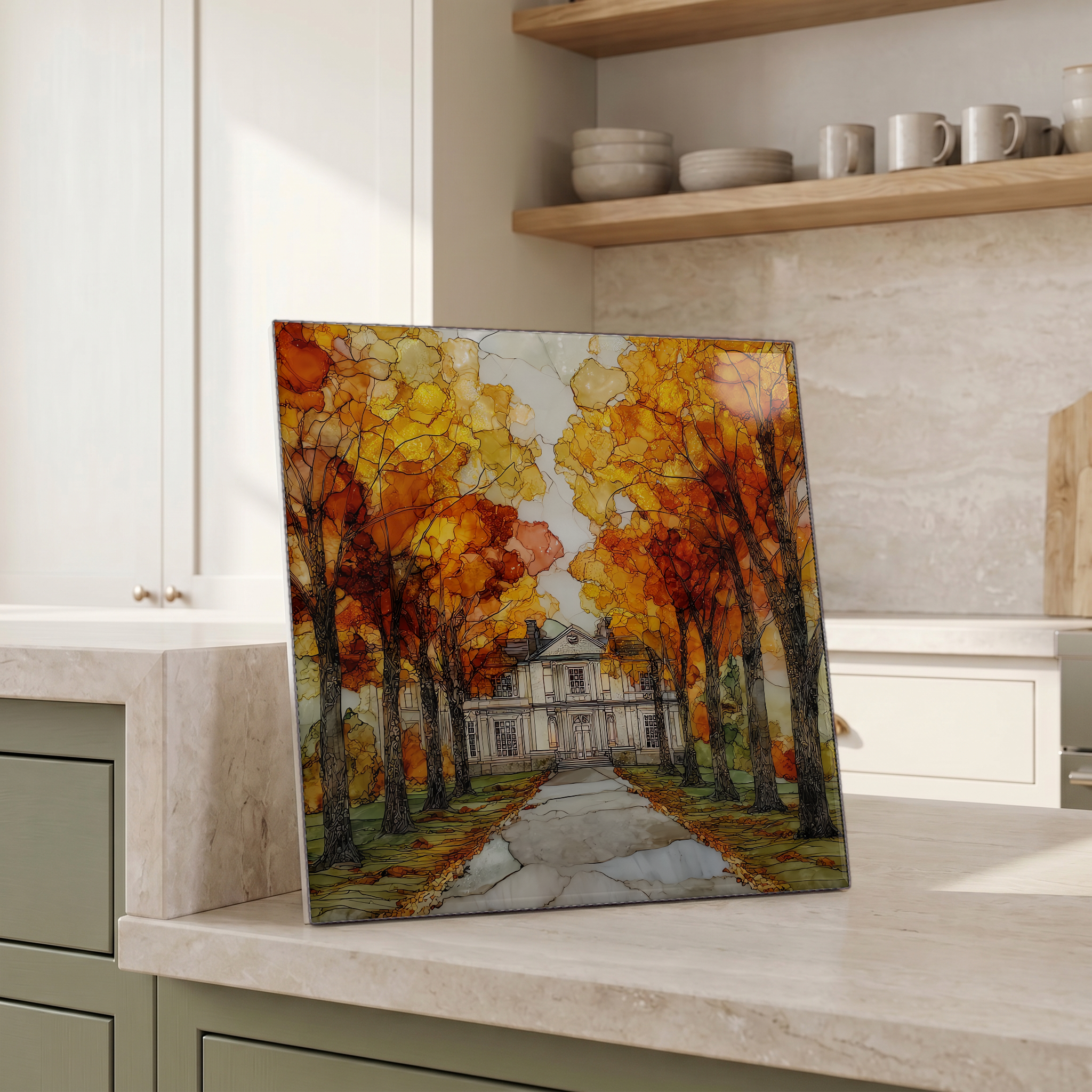
Beside the kettle, propped on the counter.
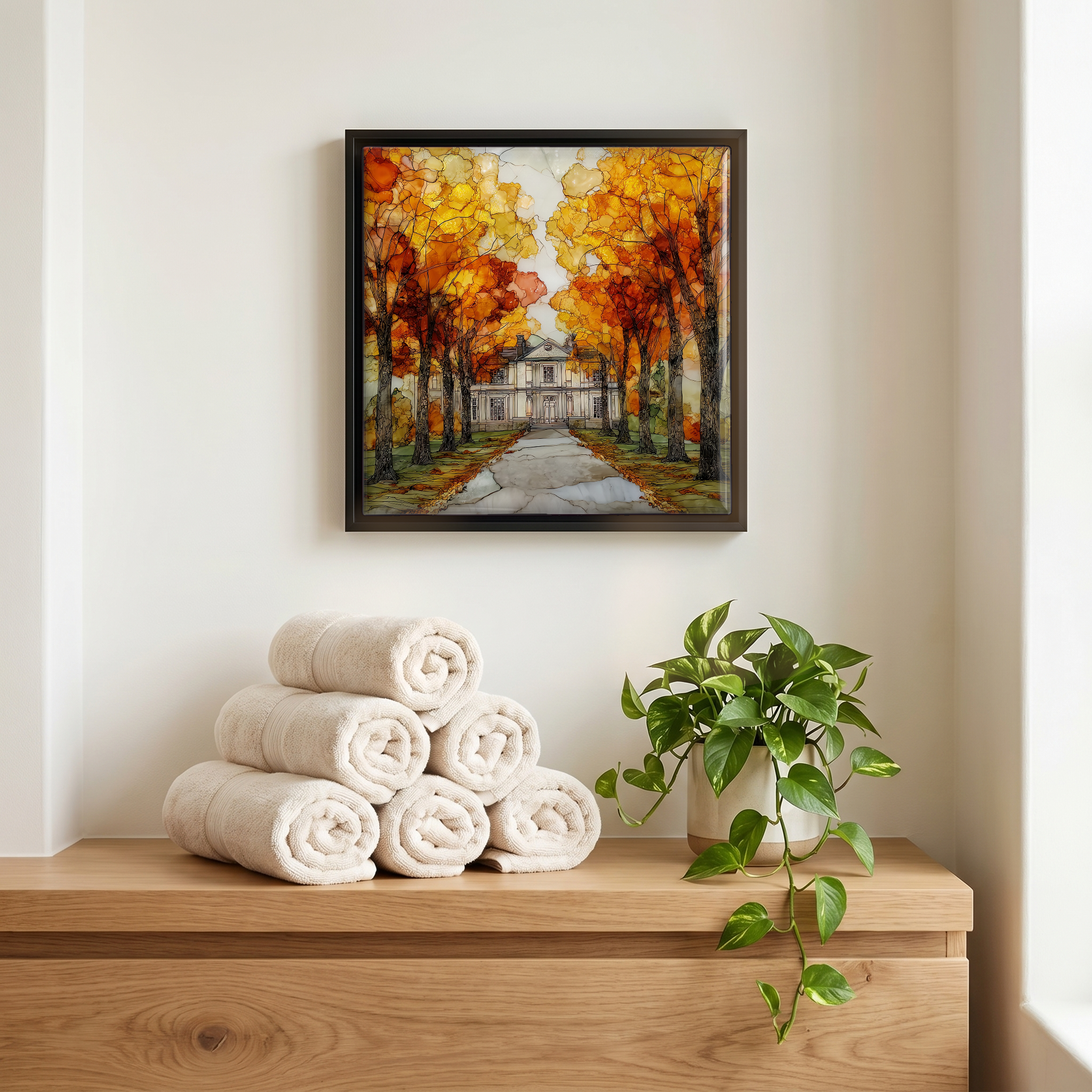
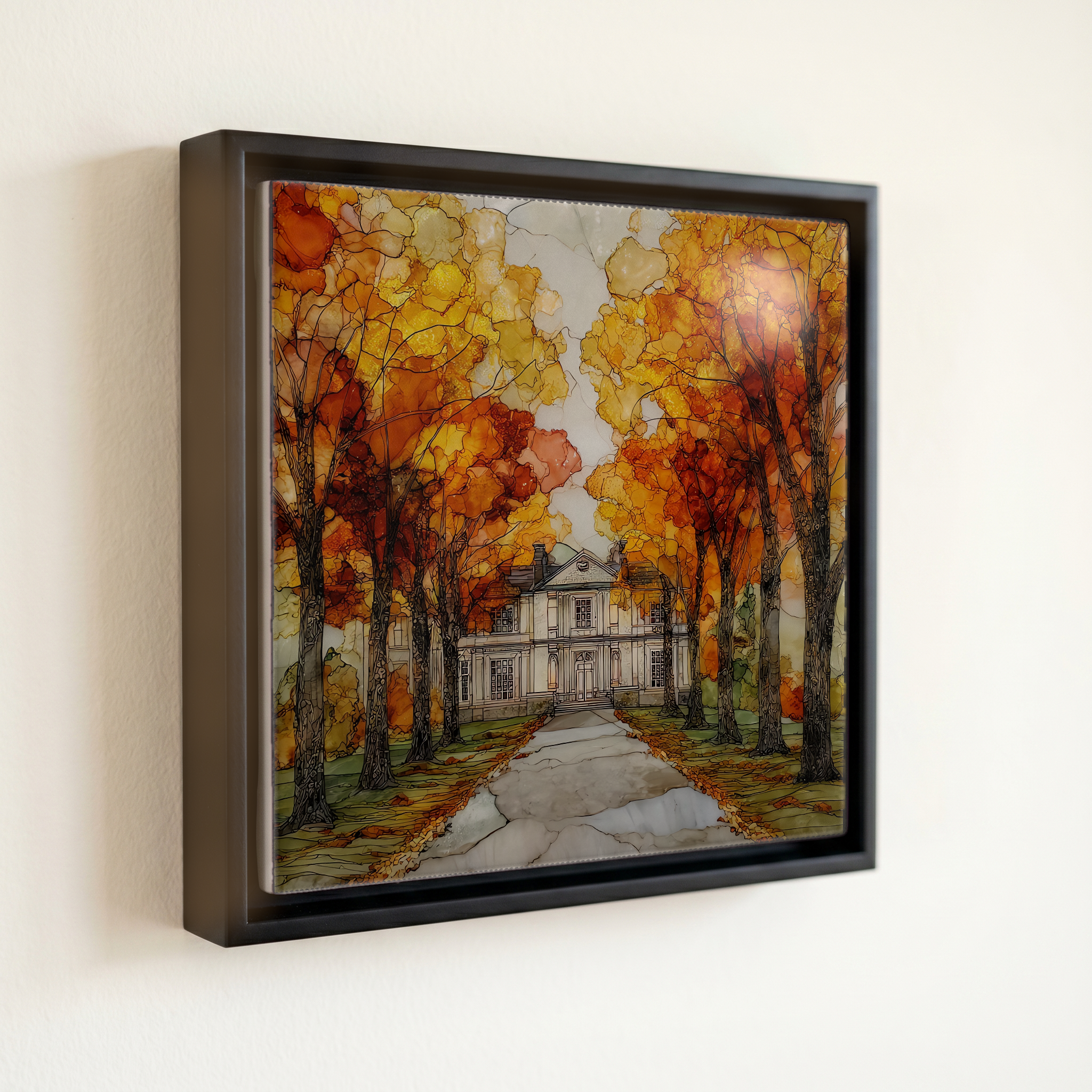
Above the linens, in a slim black surround.
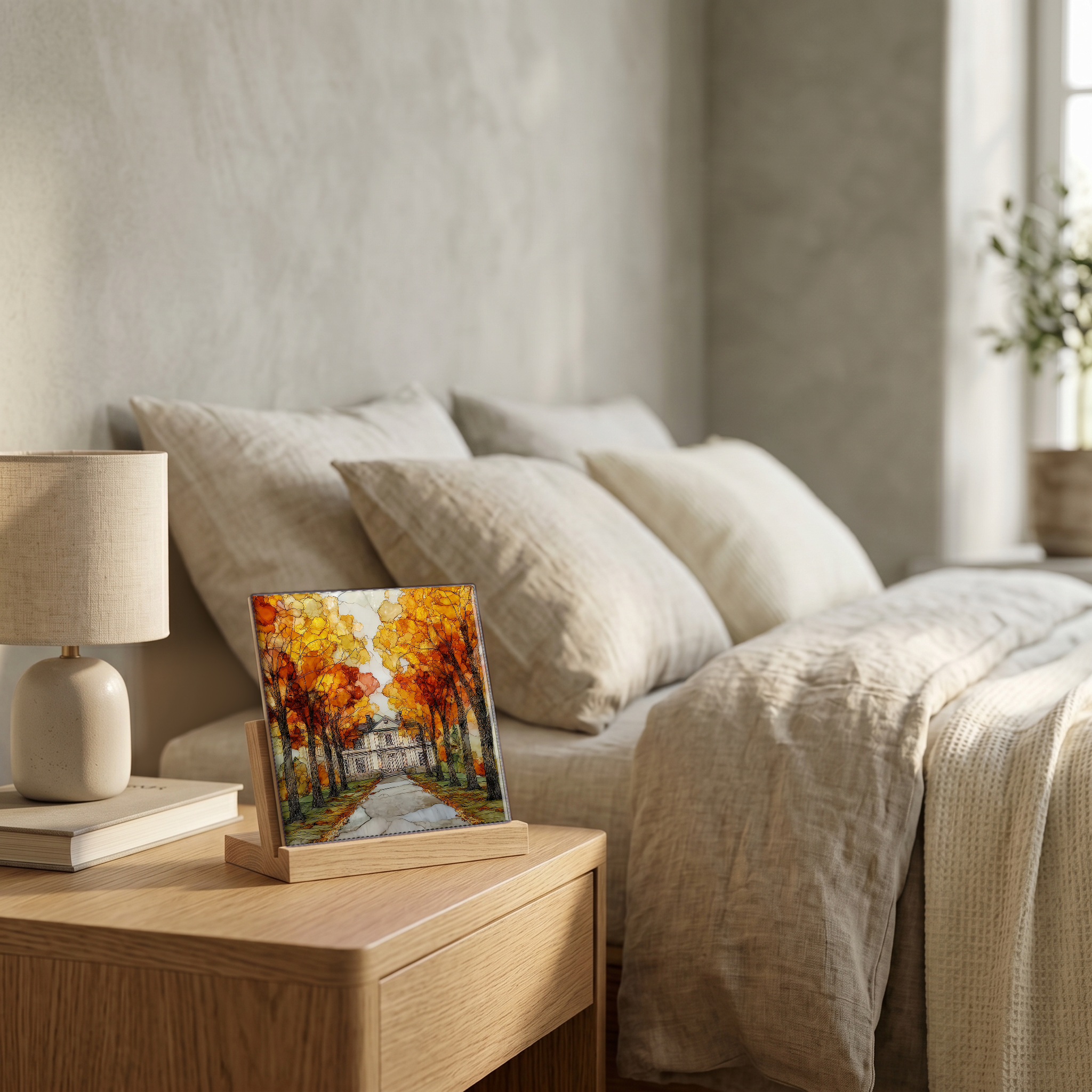
On the nightstand, on a light oak stand.
On a picture ledge, where the light comes in.
a note from the studio

A Palladian house at the end of a quiet avenue in County Roscommon, the kind of front that looks small from the road and grows as you approach. Inside, the National Famine Museum keeps about 50,000 documents from the famine years, the closest thing Ireland has to a private letter from the Hunger. The walled garden behind the house holds one of the longest herbaceous borders in Ireland. A 165-kilometre walking route begins at the front gate and ends at Dublin's quays. Quietly kept. Both house and memory.
from the studio
shown in a slim black floating frame · 6 × 6 in
— bring it home

Strokestown Park, on ceramic.

Each tile is finished by hand in our Knoxville studio. Artwork is slowly infused into the ceramic surface under high heat and pressure, and rests beneath a thin glossy finish. The colour lives in the surface, not on top of it.

What kind of piece?
One tile — square or rectangle.
How big?
the popular one — counter, shelf, nightstand
6 × 6 in · 15 cm · 1.6 lb
Surface finish
A clear glossy finish — the artwork reads as if under resin. Ideal for show-pieces and framed wall art.
How it sits
A hidden cleat — sits ¼″ proud of the wall.
$58
Hand-finished and shipped from our studio at the foot of the Smokies. On your wall in about ten days.
size
6 × 6 in
15 cm
weighs
1.6 lb
solid in the hand
surface
ceramic, hand-finished
art rests beneath a thin glossy finish
from
Knoxville, TN
our family studio, at the foot of the Smokies
— start a Coaster Set

Pick any four 4-inch tiles — National Parks you've been to, a Smokies set, the four seasons of one place. $ for a set of , cork-backed, ready to live on the table.
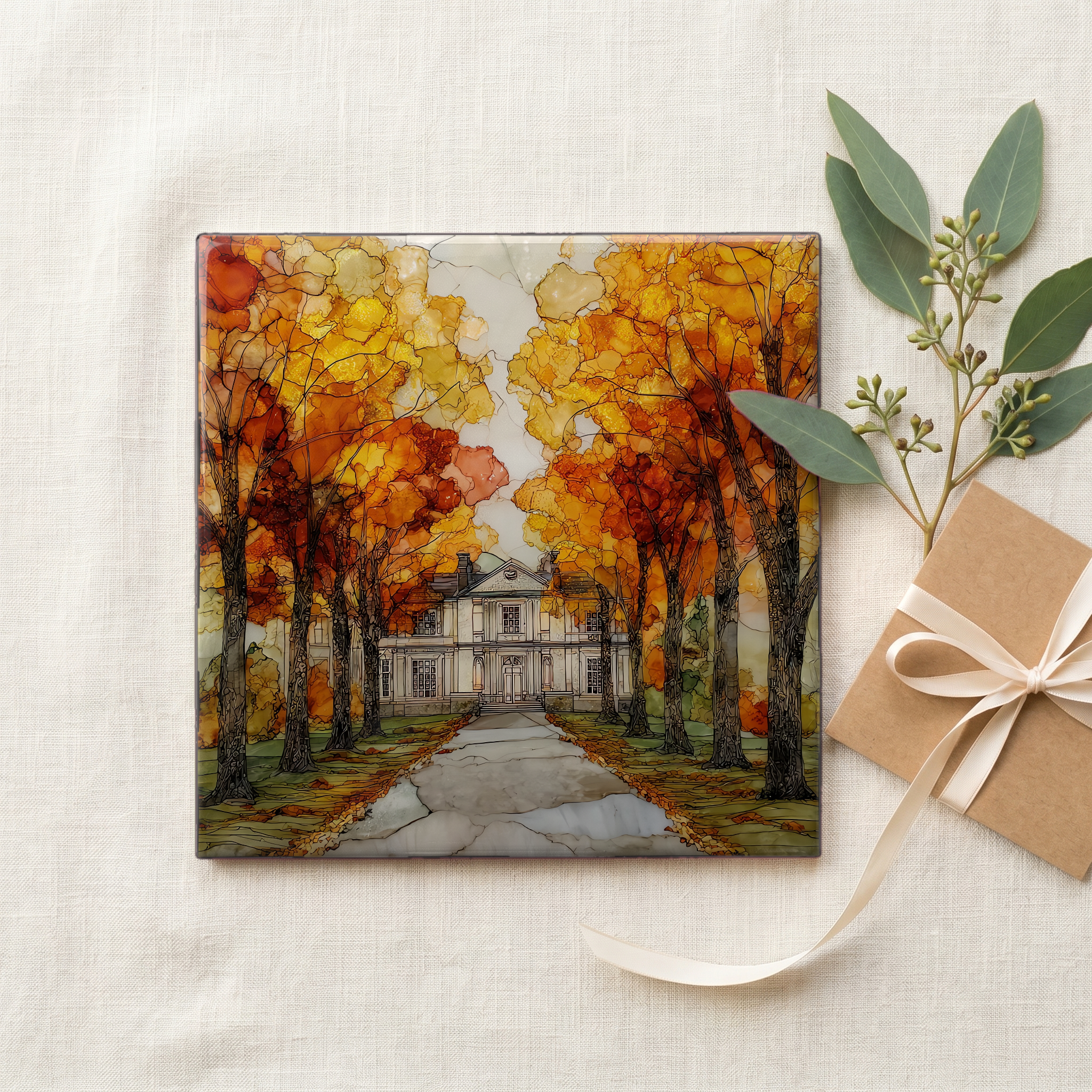
comes gift-ready
comes gift-ready

Each tile ships in a kraft box, tied with cream ribbon, with a handwritten note from the studio if you'd like to add one.
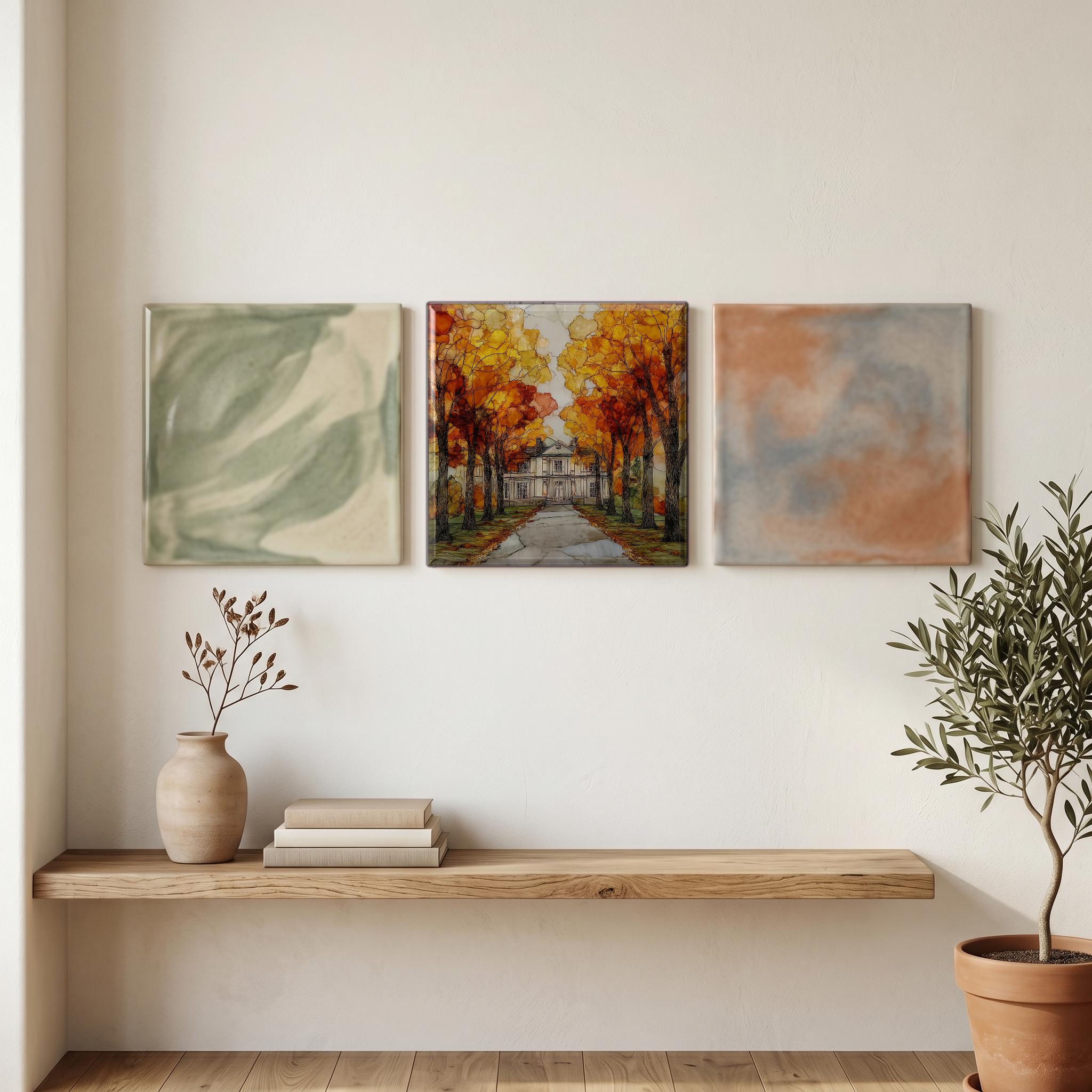
or build a grouping
or build a grouping

Three or five different vistas, hung together — a chapter of places you've been, or want to go.

about Strokestown Park

The place, in three passes.

A little of what's known, in case you fall down the rabbit hole — or want to go see it yourself.
the place

Strokestown Park sits at the end of a wide tree-lined avenue on the western edge of Strokestown, County Roscommon, in the west of Ireland. The Palladian villa was built for Thomas Mahon around 1696, with the central block and wings completed in the 1730s to designs by Richard Castle, the German-born architect also responsible for Powerscourt House and Russborough House in County Wicklow. Strokestown is on the N5 road between Longford and Castlebar; the estate's demesne sits on the limestone plain of Roscommon, with the River Shannon to the east and south and the Curlew Mountains to the north. The Irish Heritage Trust has managed the property since 2015.

the silence

The Irish National Famine Museum opened in Strokestown's converted stable yard in 1994, after Jim Callery, who had bought the estate in 1979, found roughly 50,000 documents from the famine years in the property's attics and outbuildings. The Strokestown archive is one of the most complete private records of An Gorta Mór anywhere in Ireland. In 1847 the estate's owner, Major Denis Mahon, paid to ship about 1,490 of his starving tenants to Canada on four vessels; he was assassinated on his way home from a Roscommon meeting that November, in one of the most notorious episodes of the Famine years. The National Famine Way, a 165-kilometre walking and cycling route that retraces the tenants' march to Dublin, begins at the museum's front gate.

the season

The four-acre walled gardens behind the house contain what is generally cited as Ireland's longest herbaceous border, a double-sided perennial planting set against an 18th-century brick wall. The gardens were rescued and replanted from the early 1990s onward and are open from spring through autumn; the border peaks in late June and again in early September, with a quieter showing between. Beyond the wall sit a restored gazebo, a sunken summerhouse, a fern walk, and a pleasure ground laced with old yew. The kitchen garden still grows a working collection of heritage cultivars, supplying the small visitor cafe in the converted stables.

where
Ireland · Strokestown, County Roscommon
elevation
70 m · 230 ft
position
53.7780° N · 8.1000° W
the neighborhood

What's nearby.

A handful of named places within an hour's walk or short drive. Some we've already painted; some we will.
11 km W
Rathcroghan
archaeological royal site
11 km NW
Elphin Windmill
restored 18th-century windmill
9 km W
Tulsk
village
13 km S
Tarmonbarry
Shannon crossing village
N
Strokestown Park
Rathcroghan
Elphin Windmill
Tulsk
Tarmonbarry
common questions

What people ask.

A few questions we get about Strokestown Park — and about bringing the piece home.
about the place

Strokestown Park is in the town of Strokestown, County Roscommon, in the west of Ireland, about 130 kilometres north-west of Dublin. The estate is signposted off the N5 road between Longford and Castlebar. The Irish Heritage Trust manages the property.

Strokestown Park is best known as the home of the Irish National Famine Museum, which opened in 1994. It holds an archive of roughly 50,000 estate documents from the famine years, discovered by Jim Callery after he bought the property in 1979.

The estate's owner, Major Denis Mahon, paid to ship about 1,490 of his starving tenants to Canada on four vessels in 1847; many died on the crossing. Mahon was assassinated on his way home from a Roscommon meeting that November, in one of the most notorious cases of the Famine.

The National Famine Way is a 165-kilometre walking and cycling trail that begins at the front gate of Strokestown Park and ends at EPIC, the Irish Emigration Museum on Dublin's quays. The route retraces the 1847 march of the 1,490 evicted tenants to the port of Dublin.

The four-acre walled gardens are open from spring through autumn. Ireland's longest herbaceous border, set against an 18th-century brick wall, peaks in late June and again in early September. The pleasure grounds include a restored gazebo, a sunken summerhouse, and a fern walk.

The central block and wings were designed in the 1730s by Richard Castle, the German-born architect also responsible for Powerscourt House and Russborough House in County Wicklow. The villa was built for Thomas Mahon on land granted to his ancestor Nicholas Mahon in the 1650s.

about the piece in your home

It has been a meaningful gift for customers tracing Famine-era family lines. Strokestown holds one of the most complete archives of the period in Ireland, and the National Famine Way runs through the same Roscommon countryside many emigrant ancestors left. A Small or Medium with a handwritten note from the studio carries well.

The piece sits well in country-cottage, classical-traditional, and library-modern rooms. The deep ceramic palette of slate, ochre, and mossy green keeps company with oak, brass, and unpolished stone. Less at home in high-contrast modernism; very much at home in a hall, a study, or a guest room with a reading chair.

Yes. The vernacular-cottage revival running through Dublin and along the Wild Atlantic Way has pulled estate architecture, walled gardens, and reclaimed timber back into the centre of Irish interior design. A Medium or Large reads as anchored heritage in a hallway or reading room without tipping into period pastiche.

A single Large covers a small console or a narrow hallway wall. Above a standard sofa, a 4-tile Mural fills the frame without crowding it. Above a longer sectional or a six-foot console, a 9-tile Mural carries the room.

Yes. Order the Dura Satin or Matte finish for any wet or splash-prone install: a kitchen backsplash, a bathroom feature wall, a mudroom panel. The Glossy finish is best kept to dry-room display pieces and framed wall art.

A soft microfibre cloth and warm water. No abrasive sponges, no scouring powder. The colour lives in the ceramic surface beneath a thin glossy finish, so washing will not fade it.

Yes. The painting was made by Reid Wender, the curator of the studio. Every WenderVista piece is original to a single studio in Knoxville, Tennessee, and the artwork is not licensed elsewhere.

if this one stayed with you

A few you might also love.

Hand-picked by the eye that found Sorapis. Same air, same kind of quiet.