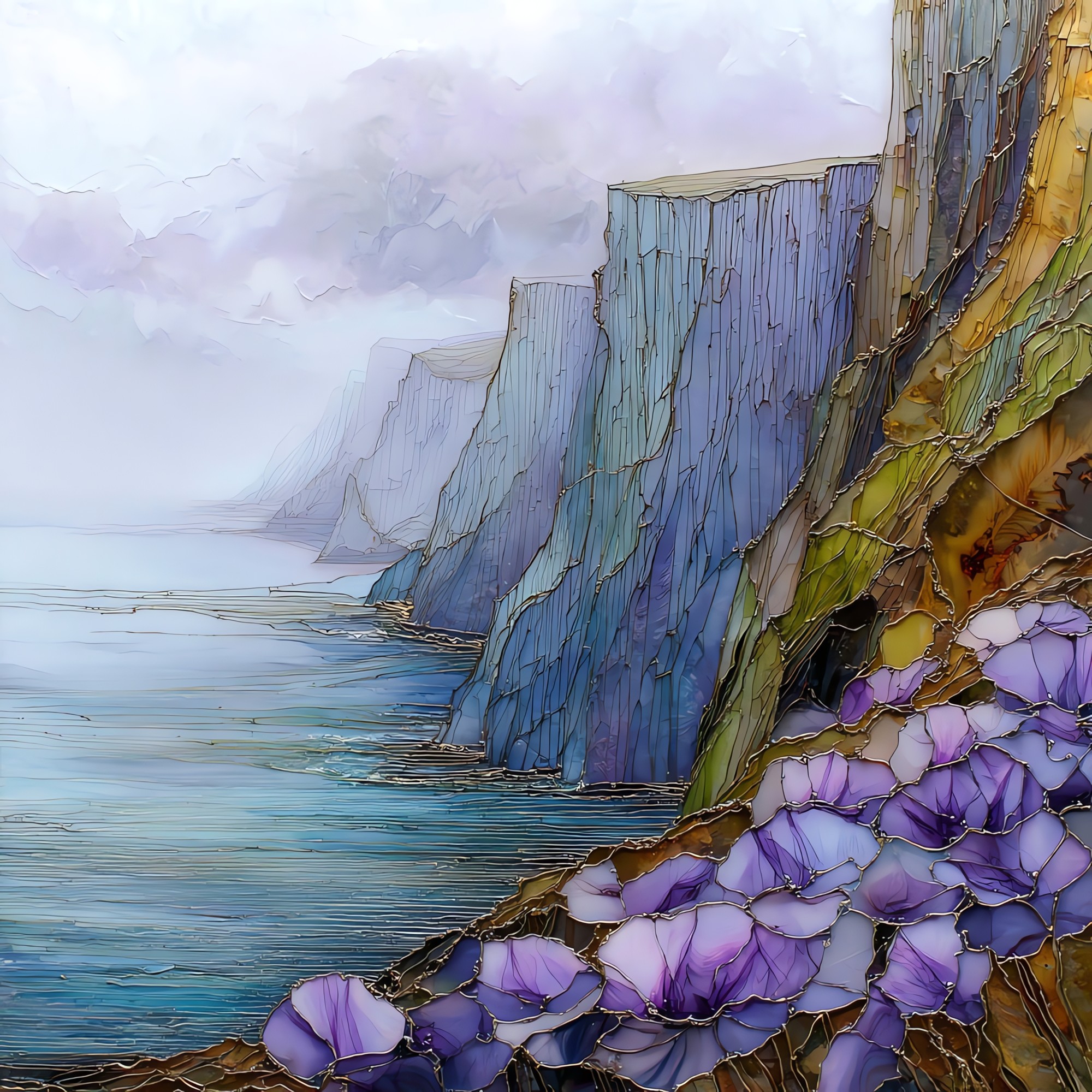
Slieve League
— — a wall the Atlantic hasn't finished.
Not only on a wall.
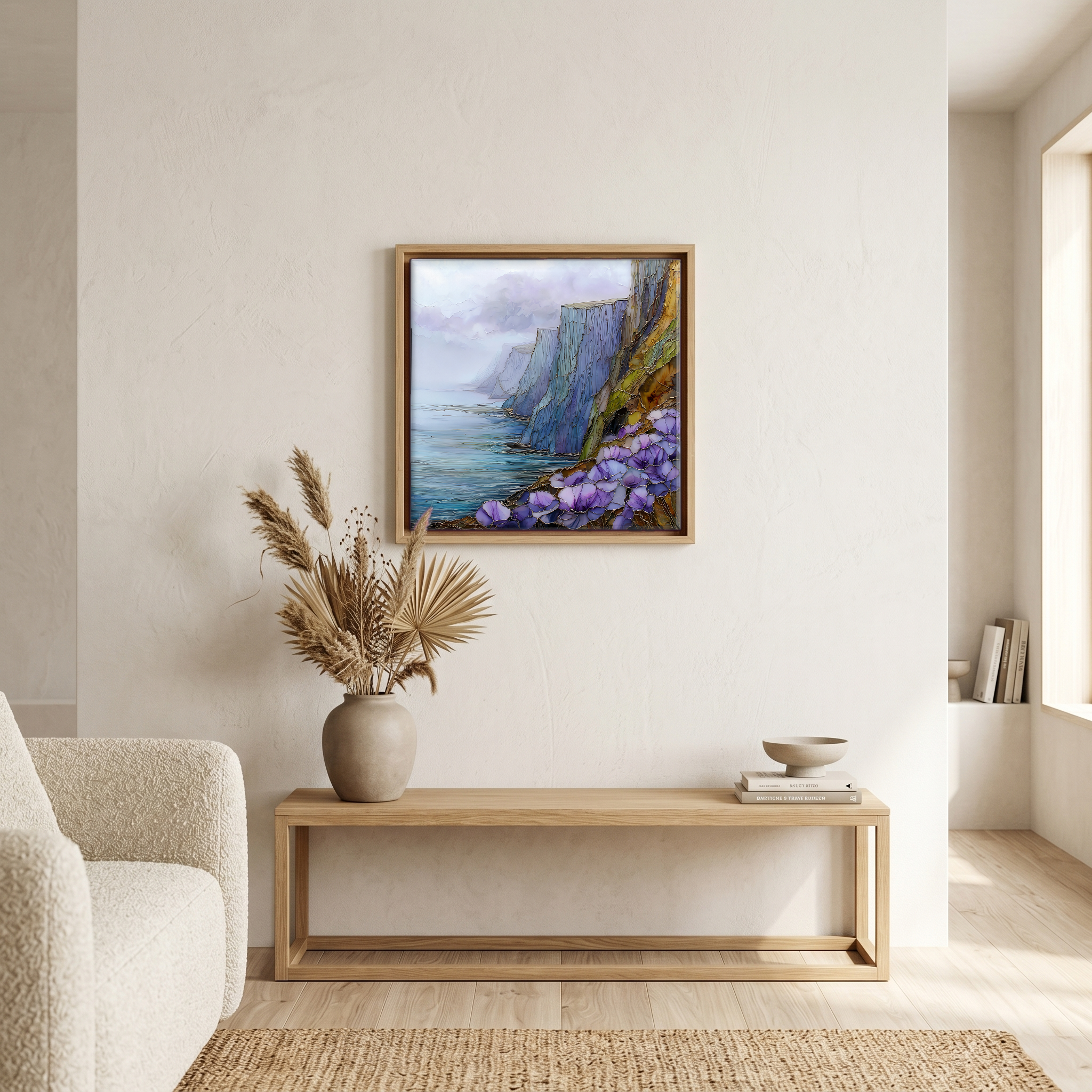
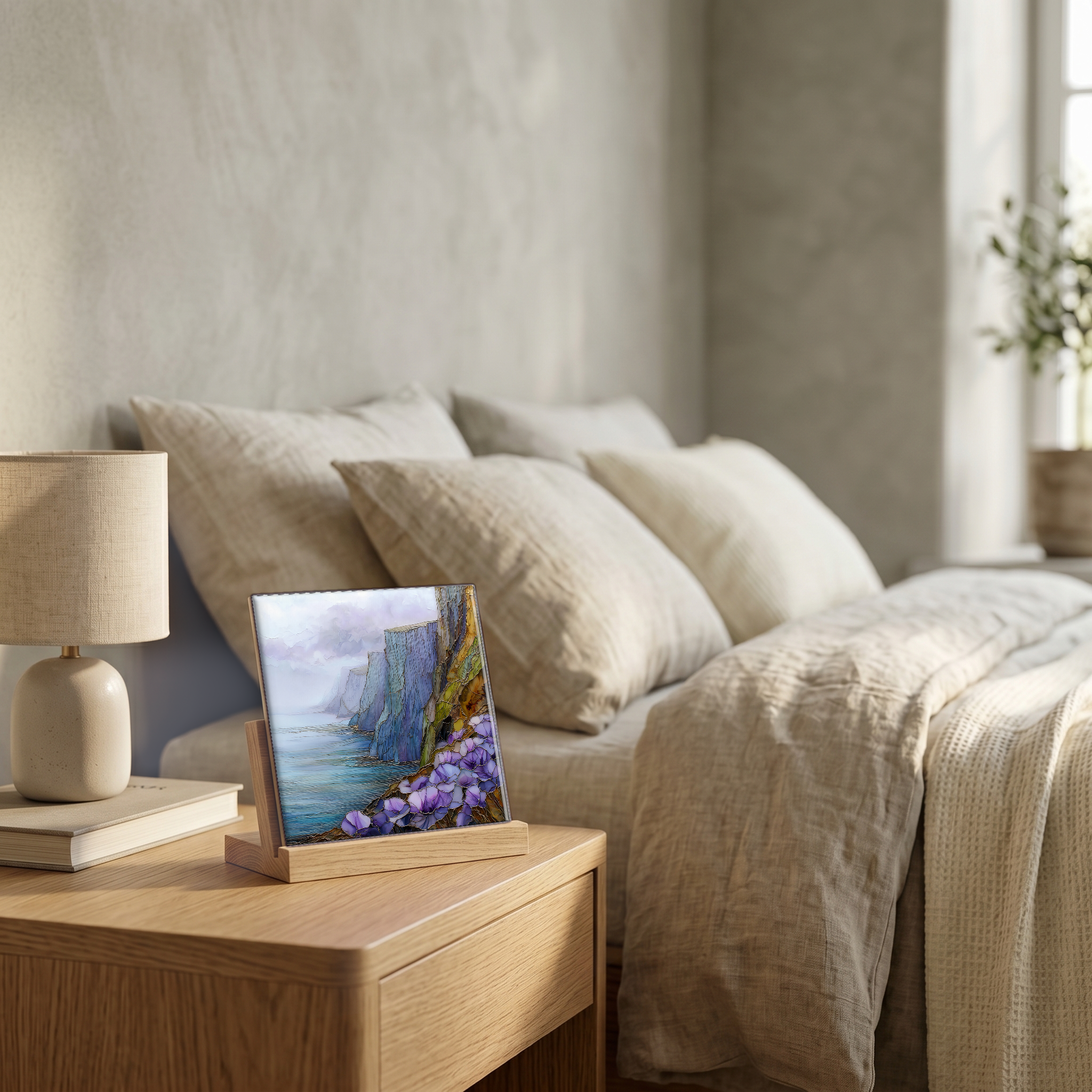
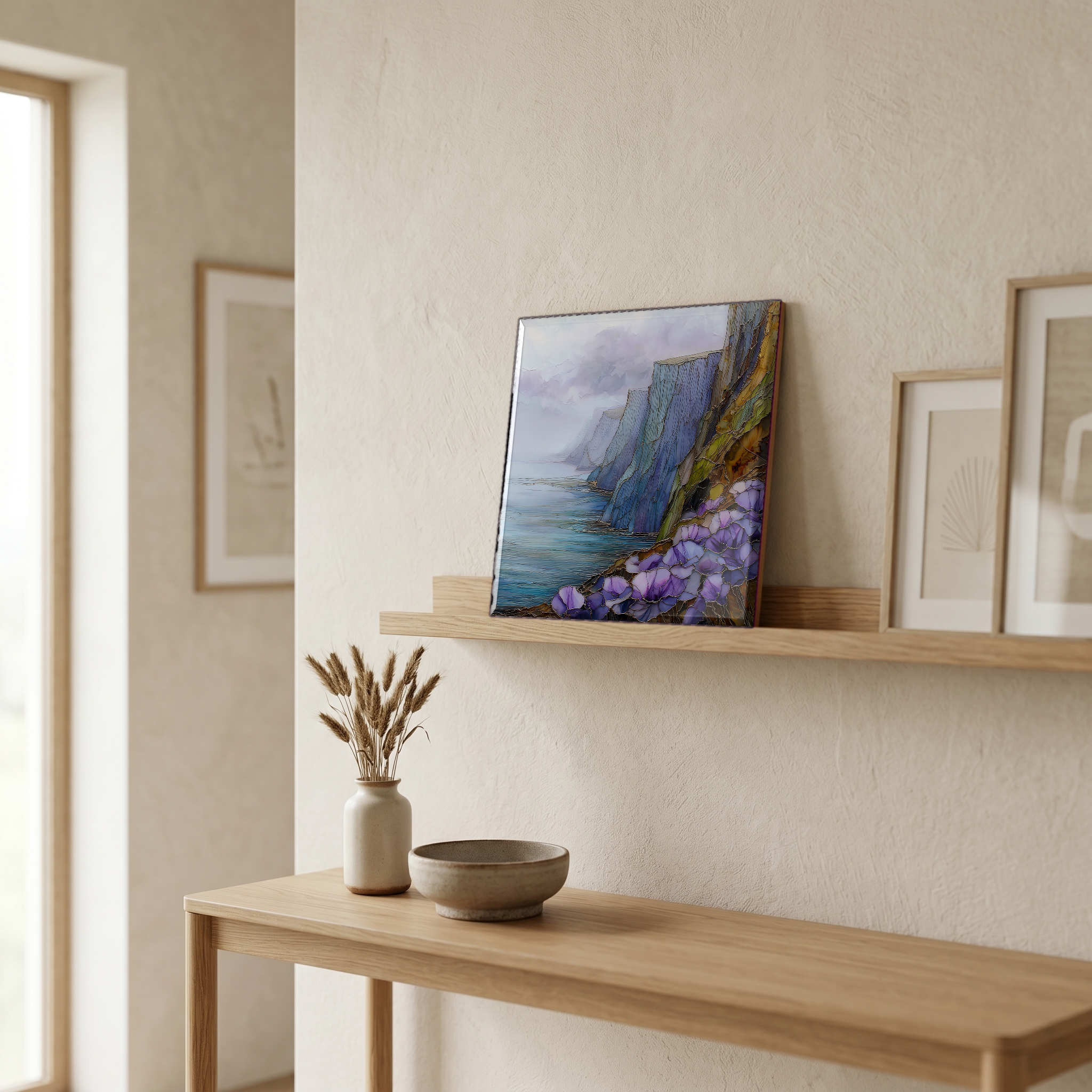
“The cliffs at the western end of Donegal Bay, among the highest sea cliffs in Europe. The rock falls nearly two thousand feet to the Atlantic, layered in rust and quartzite and slate. Locals know the road up to Bunglass, where the view opens and the sea is too far below to hear. The weather decides the colour. A passing squall pulls one set of tones, the late sun another. The old pilgrim path runs along the top toward One Man's Pass. Nobody hurries here. The wind is the only thing in a rush.
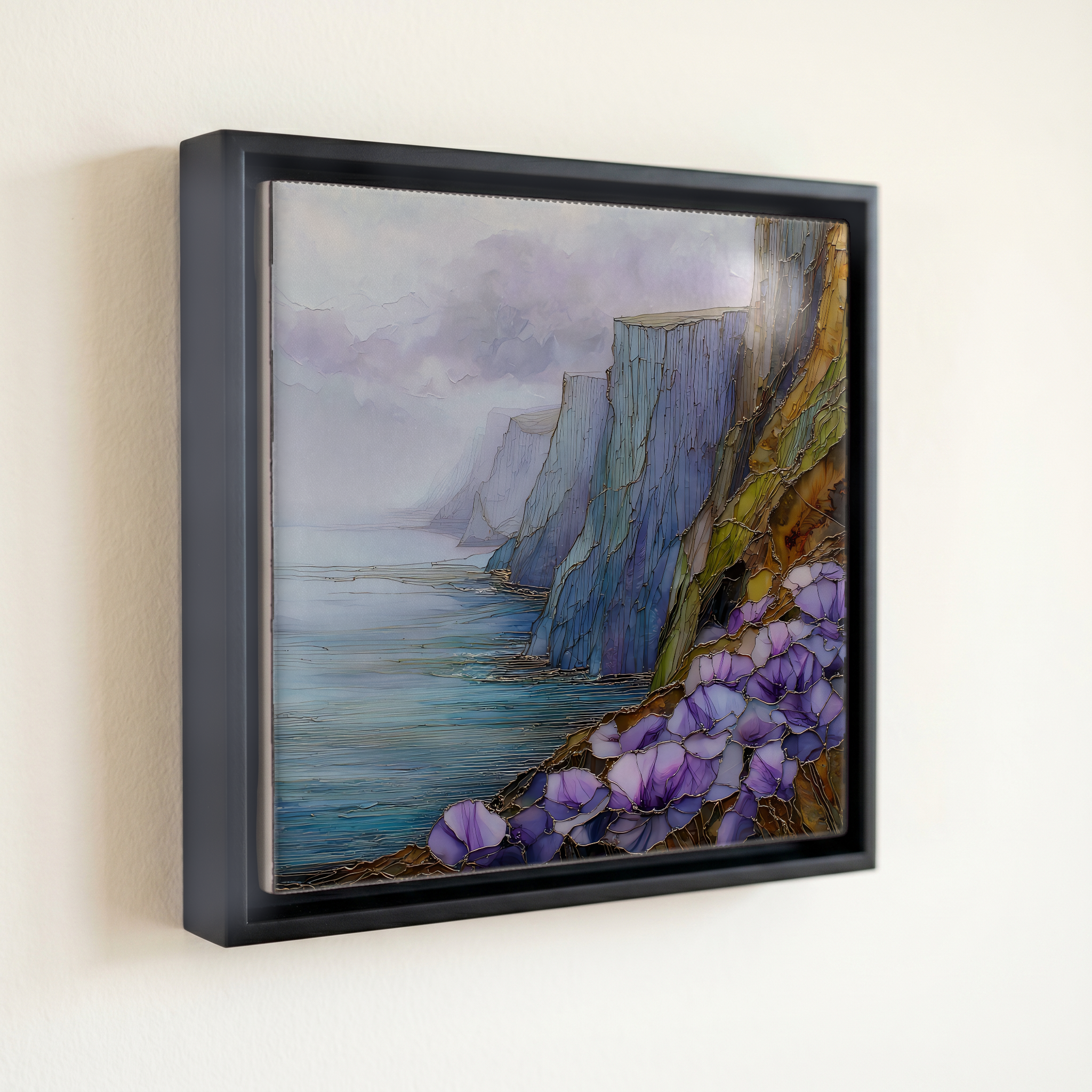
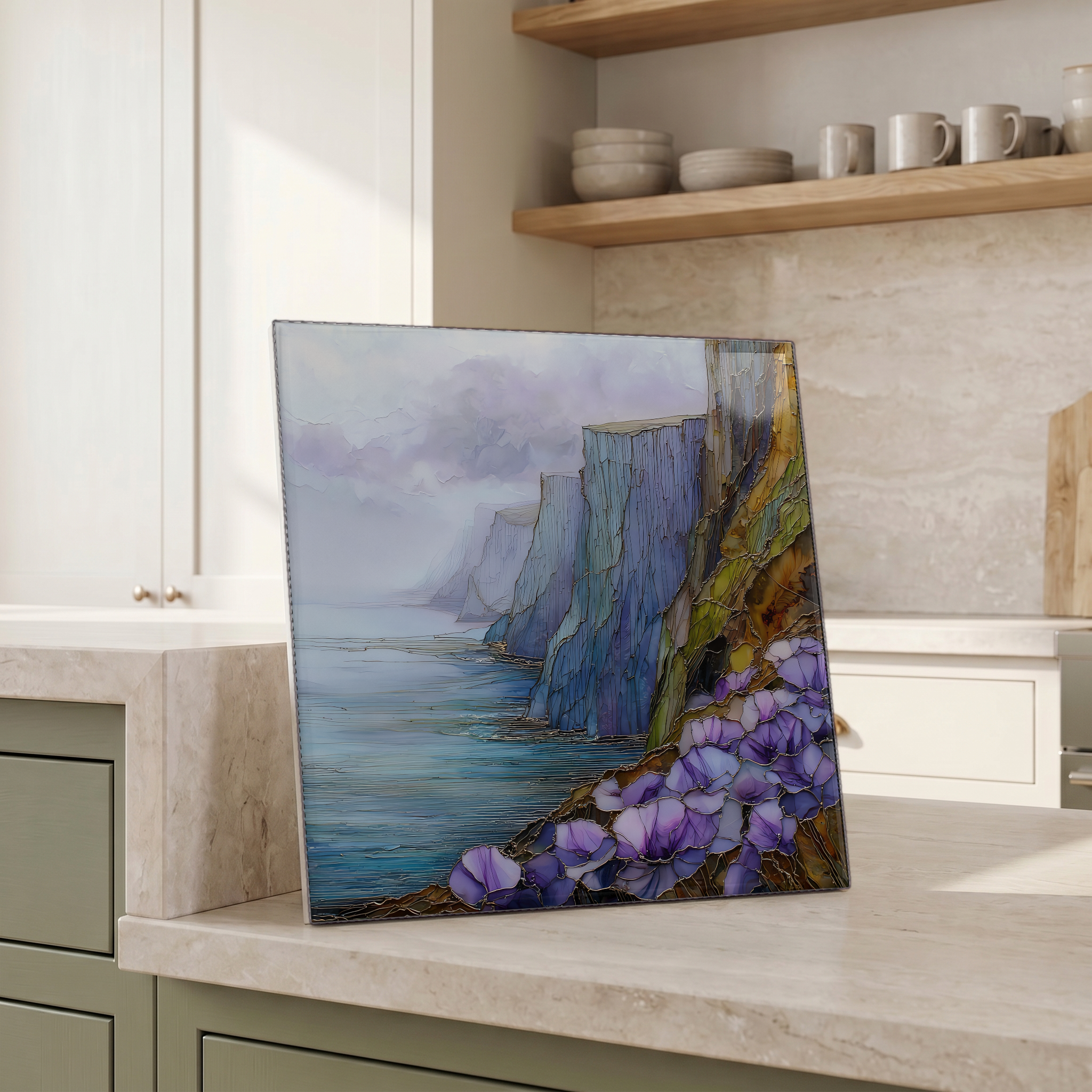
Slieve League, on ceramic.
Each tile is finished by hand in our Knoxville studio. Artwork is slowly infused into the ceramic surface under high heat and pressure, and rests beneath a thin glossy finish. The colour lives in the surface, not on top of it.
Pick any four 4-inch tiles — National Parks you've been to, a Smokies set, the four seasons of one place. $ for a set of , cork-backed, ready to live on the table.
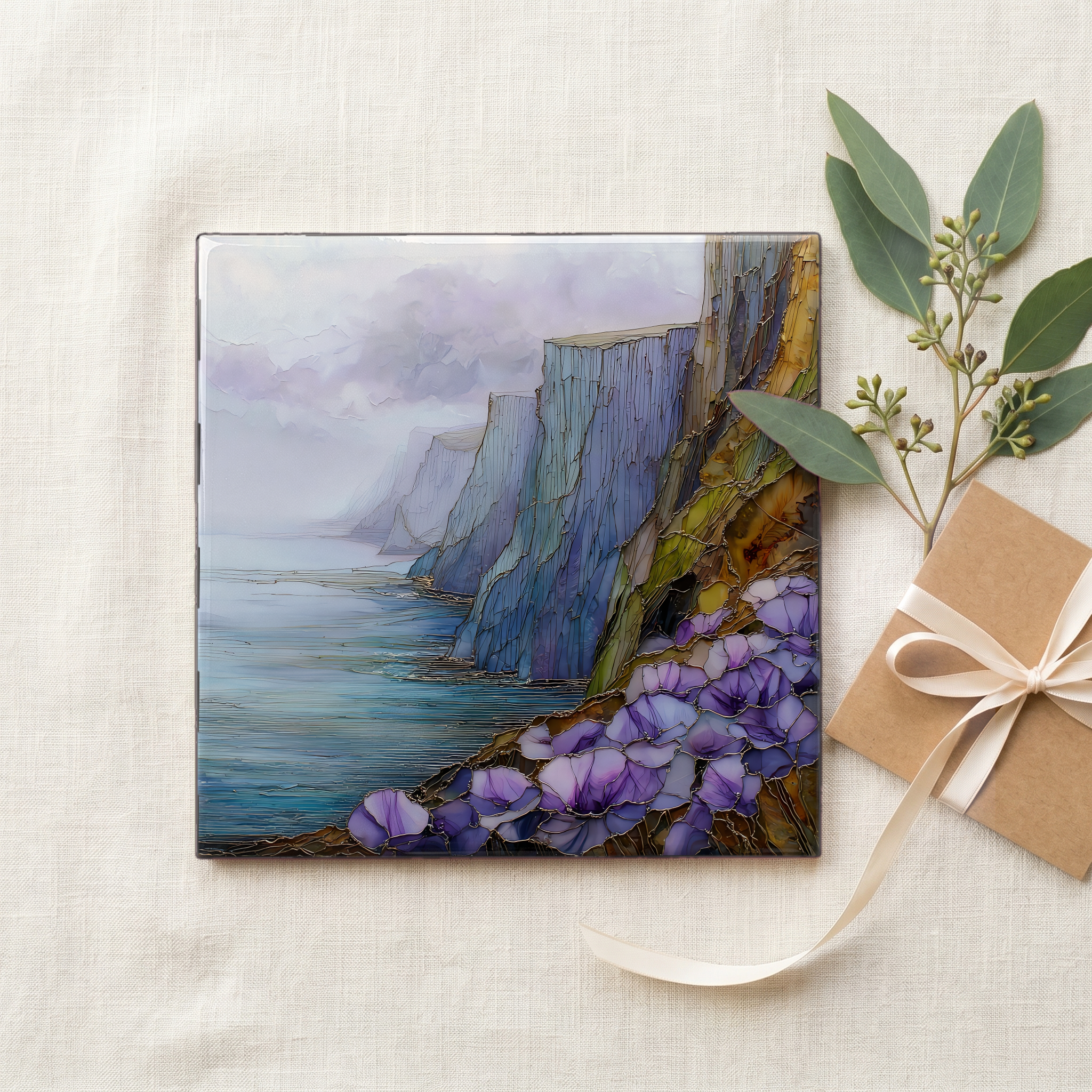
Each tile ships in a kraft box, tied with cream ribbon, with a handwritten note from the studio if you'd like to add one.
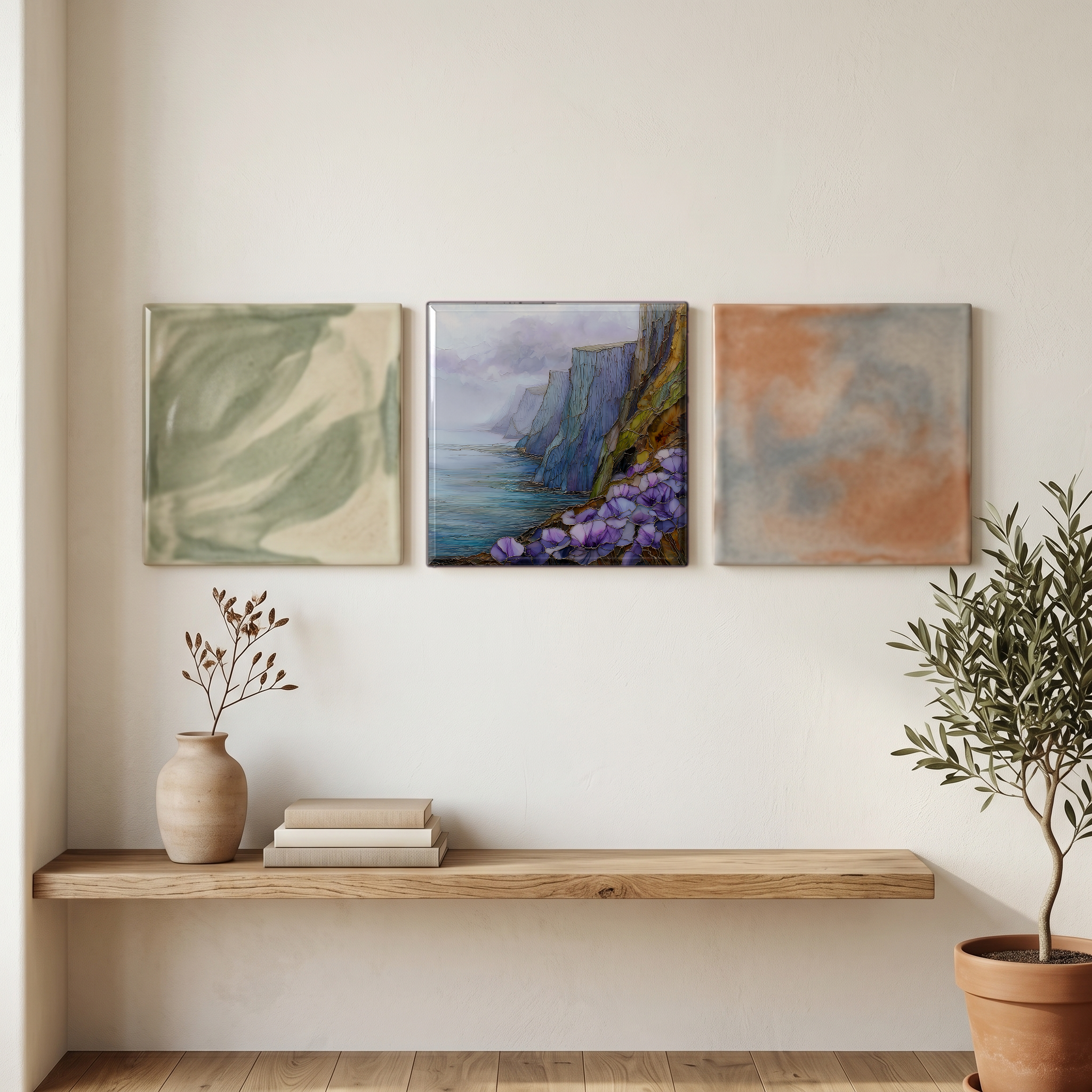
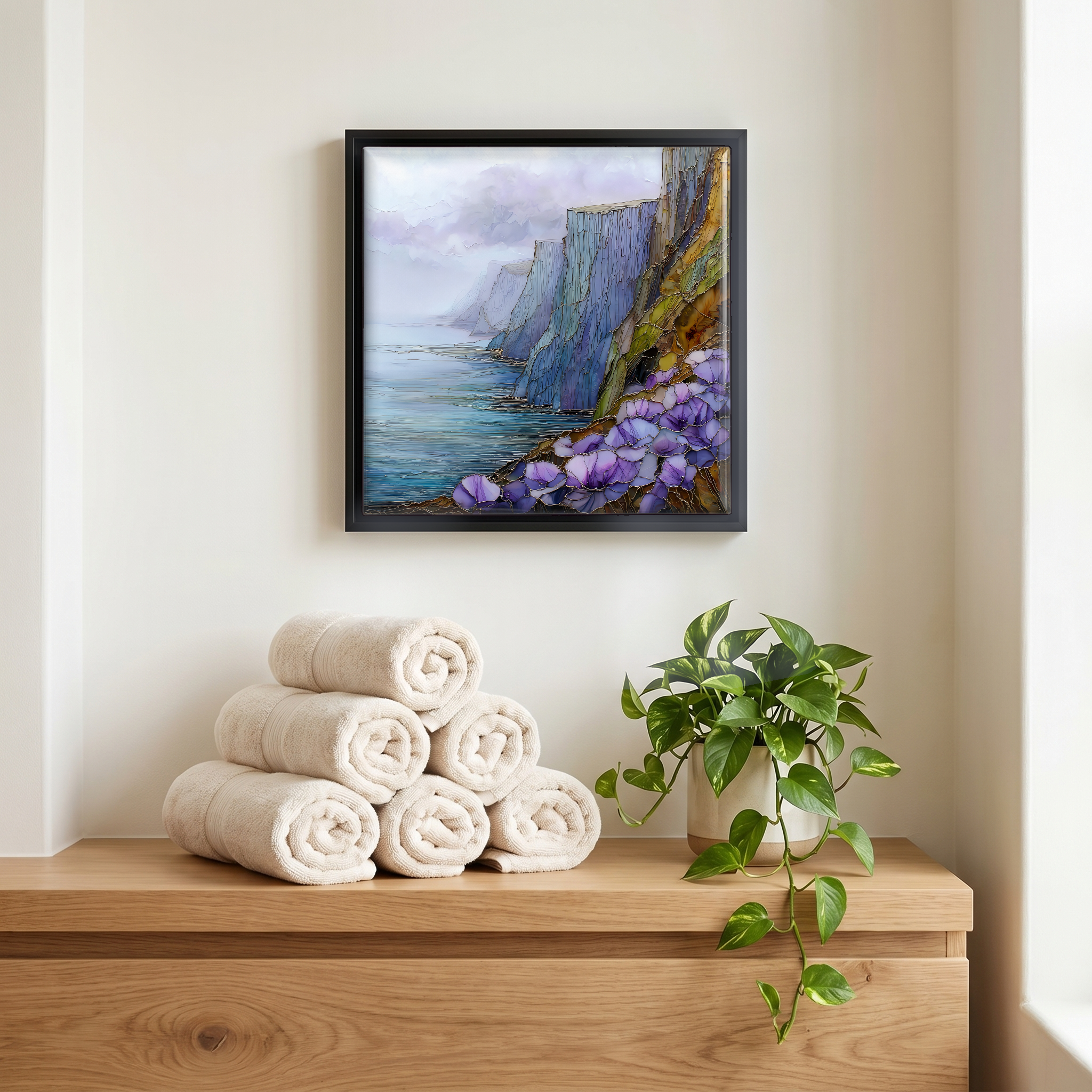
Three or five different vistas, hung together — a chapter of places you've been, or want to go.
The place, in three passes.
Slieve League rises from the south coast of the Slieve League peninsula in southwest County Donegal, on the western reach of Ulster. The summit stands at 595 metres above the Atlantic, with a sea-cliff face that drops in a near-vertical wall from the Bunglass viewpoint to the water below. The cliffs are among the highest in Europe and a marked Discovery Point on the Wild Atlantic Way driving route. The nearest village is Teelin (Teileann), about four kilometres from the lower car park; the fishing port of Killybegs lies roughly twenty-five kilometres east. A single-track road, navigable only in fair weather, climbs to Bunglass; beyond that, the path is on foot.
The cliff face exposes a folded sequence of quartzite, slate, and conglomerate from the Dalradian Supergroup, the same Neoproterozoic rock that runs through the Scottish Highlands across the water. The stone reads in bands of rust, ochre, grey, and near-black; the colours shift as the rain wets the surface and the wind dries it again. The Pilgrim Path along the upper edge passes a small early-Christian monastic site near the summit, where the stone foundations of cells and a small oratory survive in fragments. People have come to this rock to look at the sea for more than a thousand years.
The light at Slieve League is North Atlantic light: low, oblique, often filtered through cloud and mist that move in fast off the sea. The cliff faces roughly south by southwest, so afternoon and evening sun strike the rock directly and pull the layered colour out of it. Squalls travel through in minutes; a wall that read grey at three o'clock can be lit gold by four. The viewpoint at Bunglass, about 300 metres above the sea, is the easiest place to watch this. From there, a clear line opens out toward Donegal Bay and, on the rare clear day, the coast of County Sligo to the southeast.