Wender·Vista
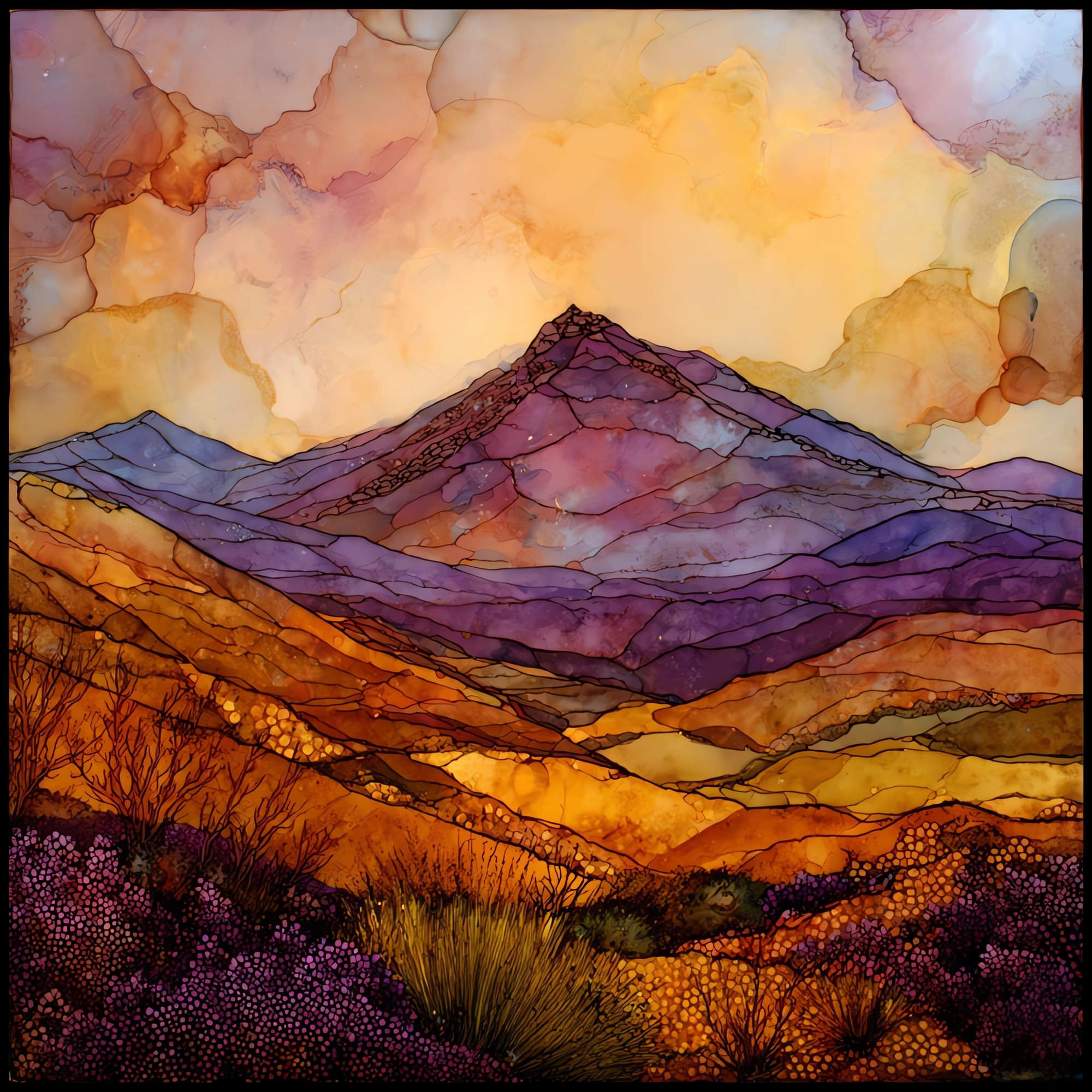
Slieve Gullion
shown on ceramic, 12-inch tileIreland
south of Newry, in the borderlands

Slieve Gullion

the cairn the winter sun finds.

Where it lives

Not only on a wall.

A small tile on the nightstand catching the morning. A larger one above the fire. Yours, wherever you spend the slow hours.
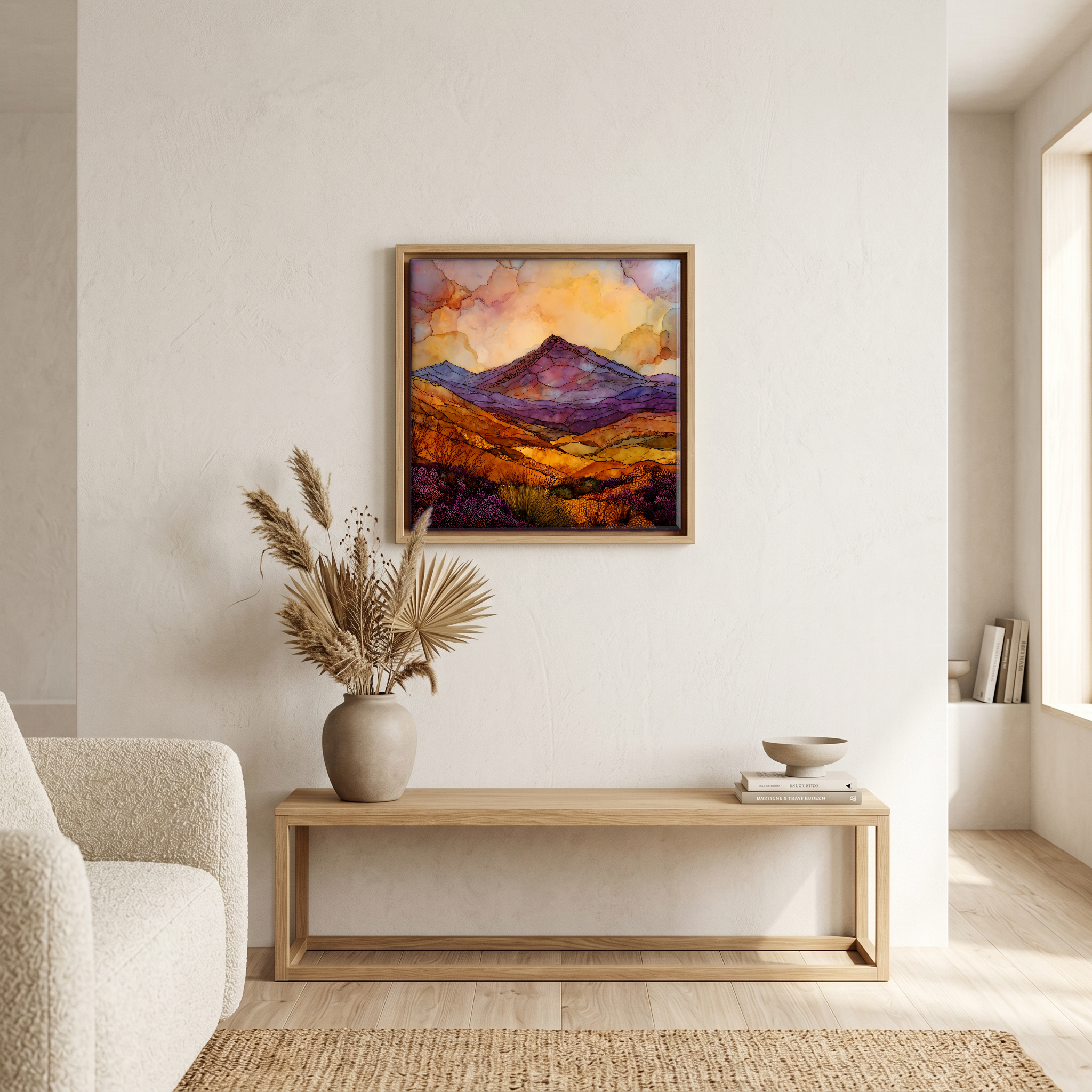
Above the bench, in a warm oak surround.
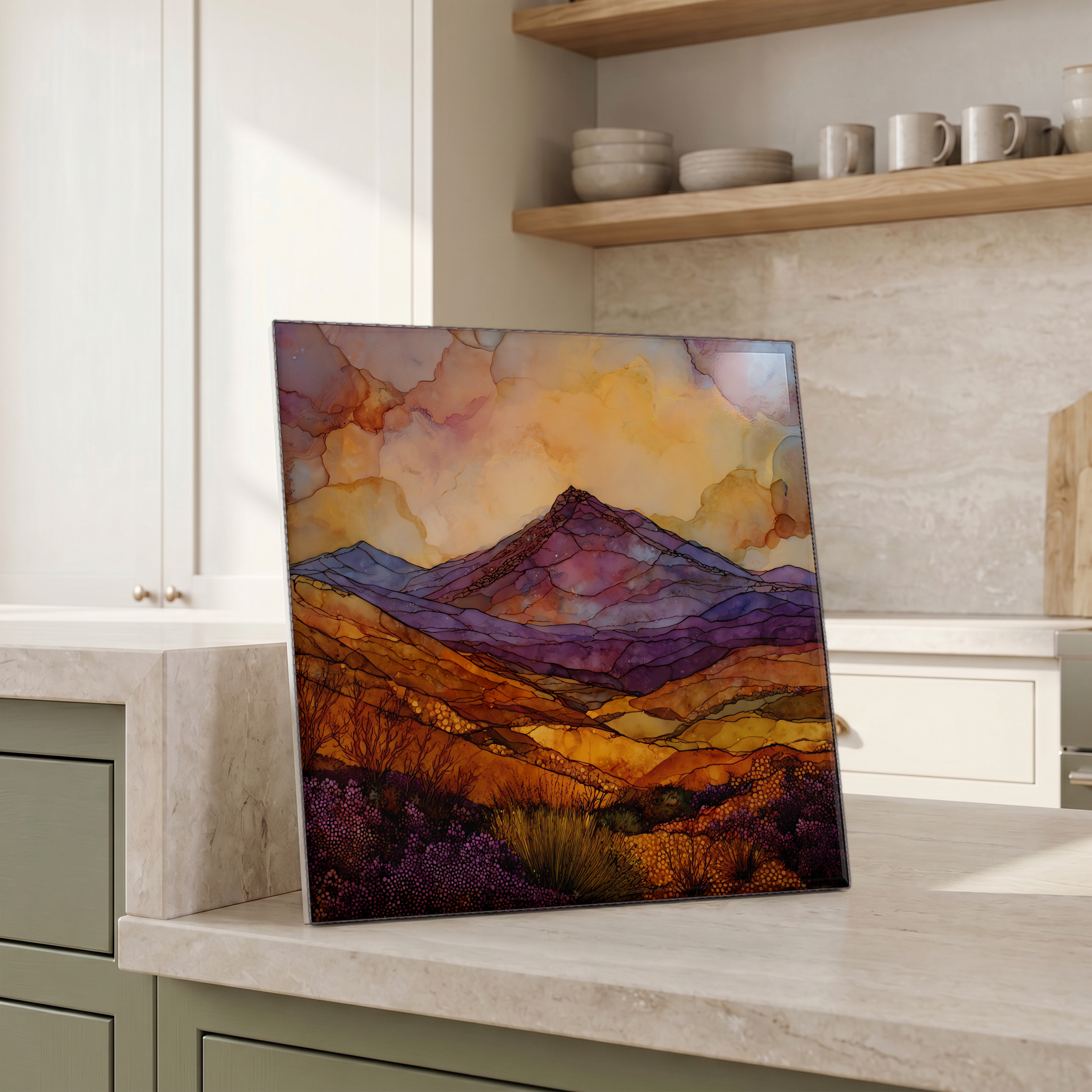
Beside the kettle, propped on the counter.
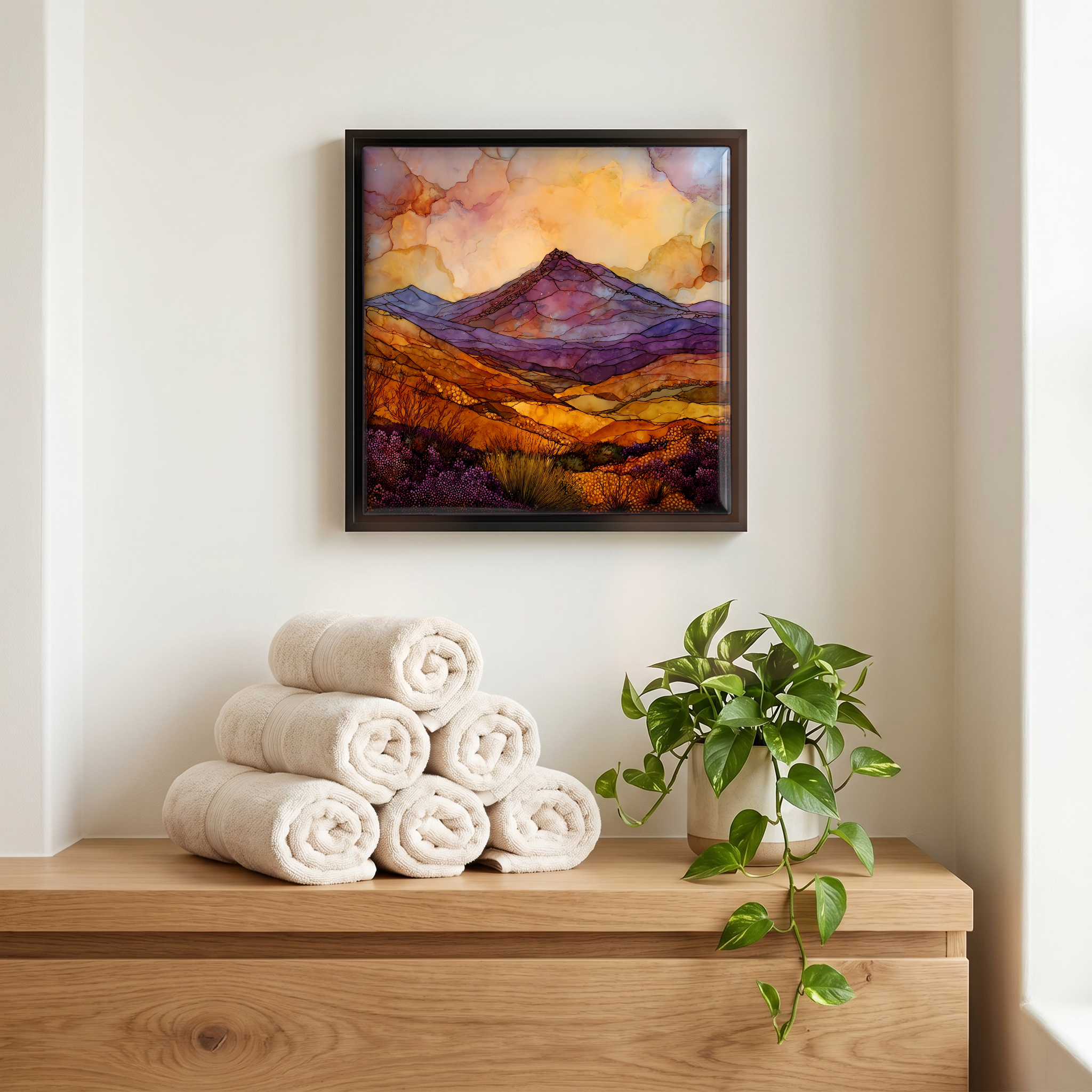
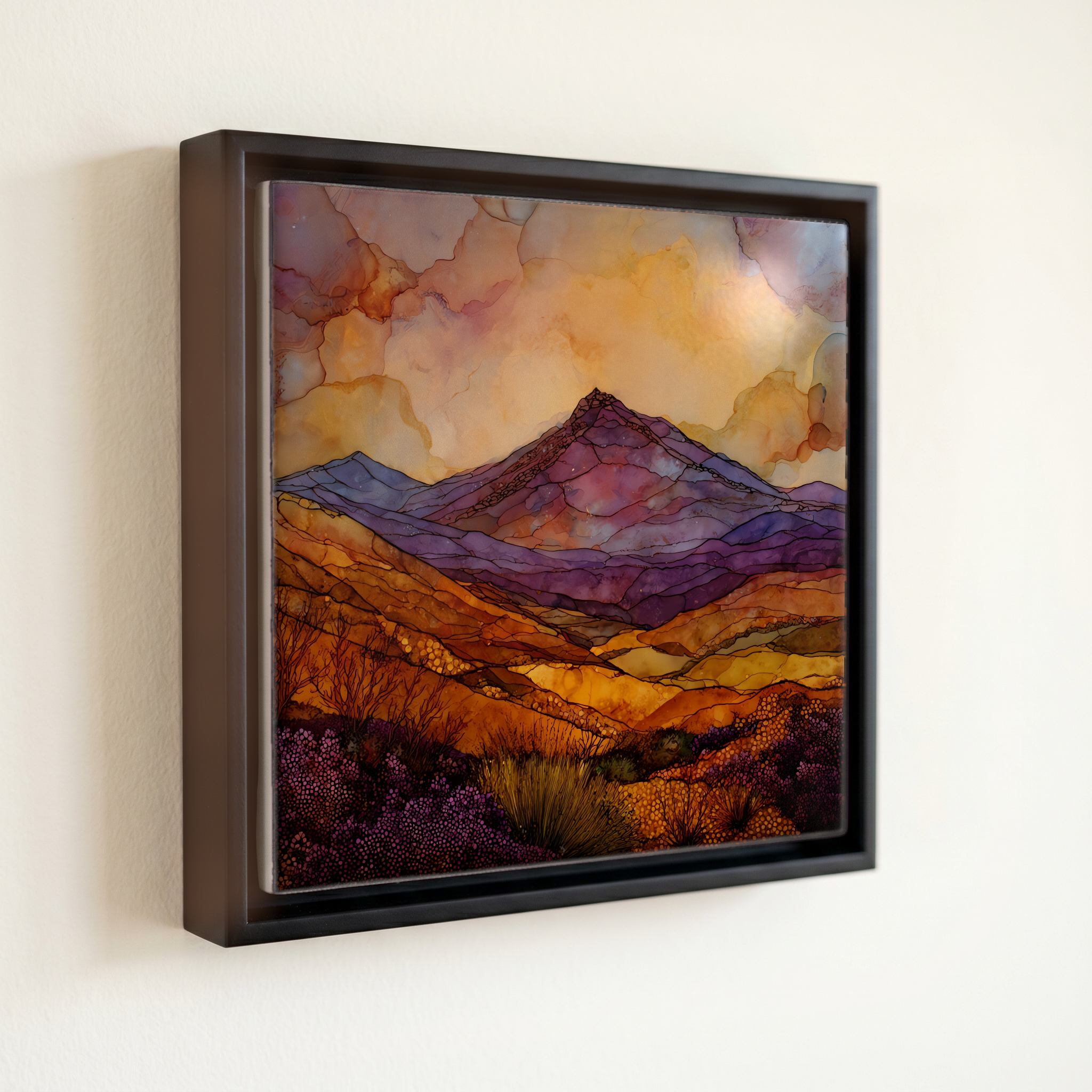
Above the linens, in a slim black surround.
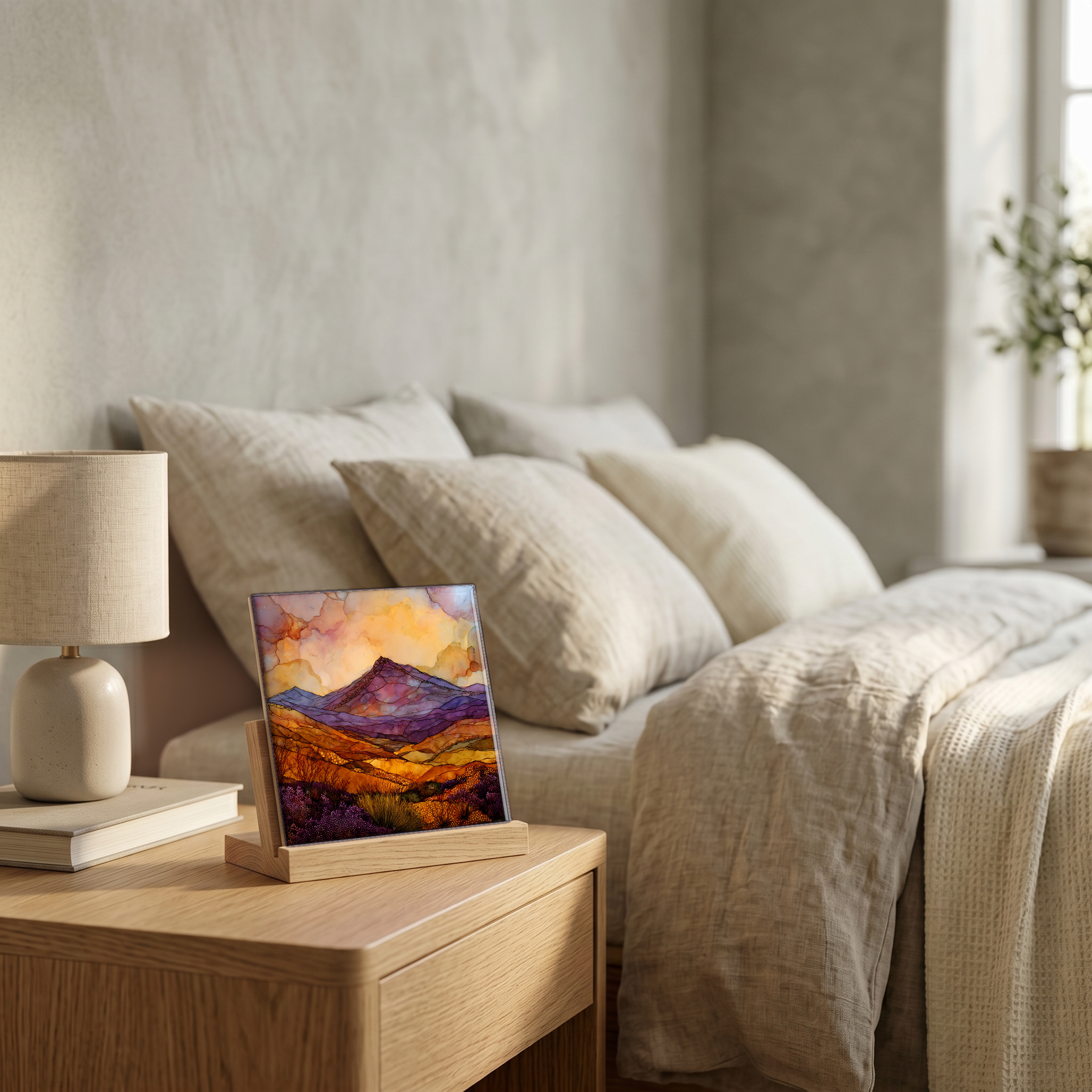
On the nightstand, on a light oak stand.
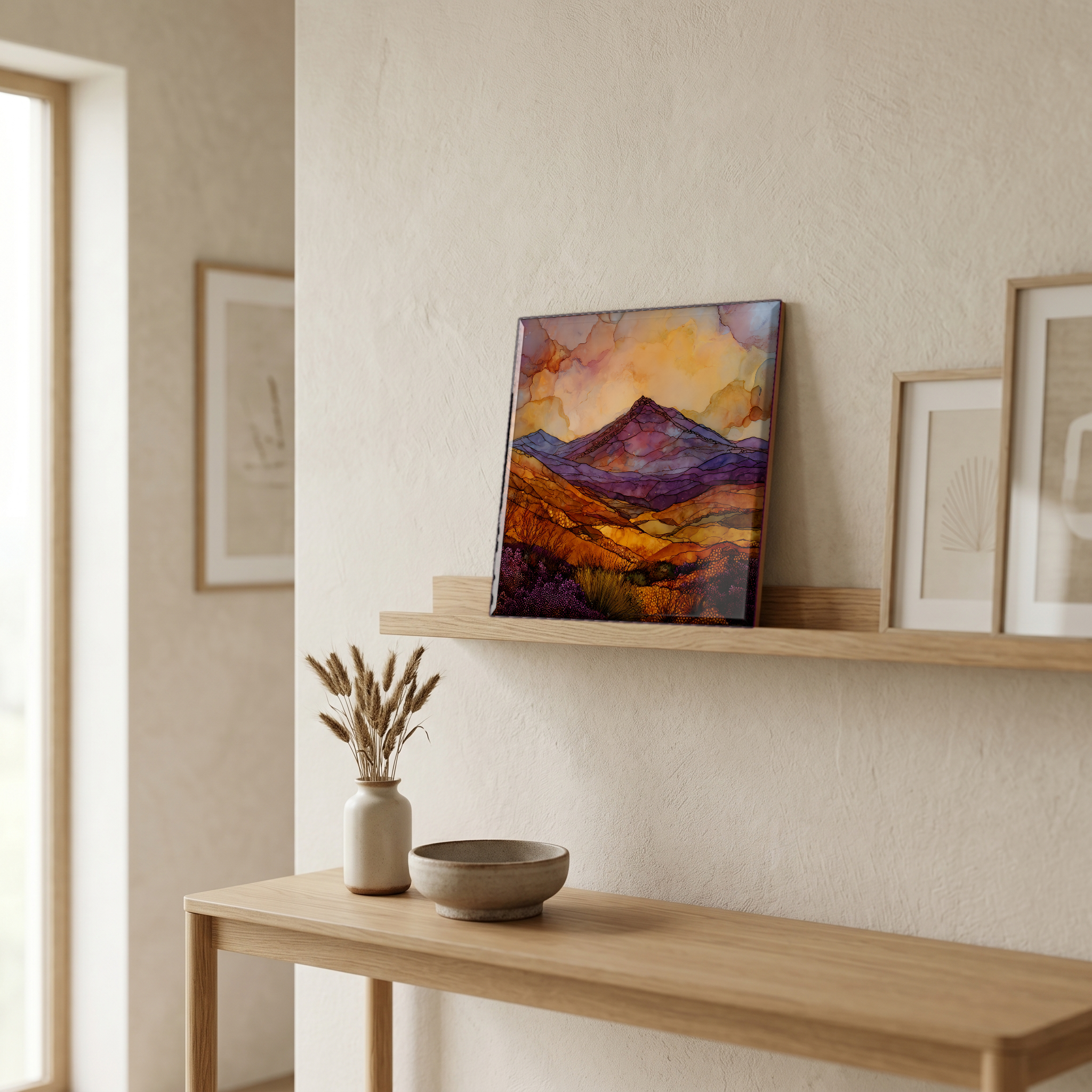
On a picture ledge, where the light comes in.
a note from the studio

A mountain in south Armagh, ringed by thirteen smaller hills called the Ring of Gullion. The whole formation is the weathered remains of a volcano that erupted roughly sixty million years ago. On the summit sits a Neolithic cairn older than the pyramids, with a chamber the winter solstice sunset still finds. Beside the cairn, a small dark lake. The old name is Calliagh Berra's Lough, after the witch who, in the story, bathed Fionn mac Cumhaill until his hair went grey. The drive around the ring is eight miles, low gear, slow.
from the studio
shown in a slim black floating frame · 6 × 6 in
— bring it home

Slieve Gullion, on ceramic.

Each tile is finished by hand in our Knoxville studio. Artwork is slowly infused into the ceramic surface under high heat and pressure, and rests beneath a thin glossy finish. The colour lives in the surface, not on top of it.

What kind of piece?
One tile — square or rectangle.
How big?
the popular one — counter, shelf, nightstand
6 × 6 in · 15 cm · 1.6 lb
Surface finish
A clear glossy finish — the artwork reads as if under resin. Ideal for show-pieces and framed wall art.
How it sits
A hidden cleat — sits ¼″ proud of the wall.
$58
Hand-finished and shipped from our studio at the foot of the Smokies. On your wall in about ten days.
size
6 × 6 in
15 cm
weighs
1.6 lb
solid in the hand
surface
ceramic, hand-finished
art rests beneath a thin glossy finish
from
Knoxville, TN
our family studio, at the foot of the Smokies
— start a Coaster Set

Pick any four 4-inch tiles — National Parks you've been to, a Smokies set, the four seasons of one place. $ for a set of , cork-backed, ready to live on the table.
comes gift-ready
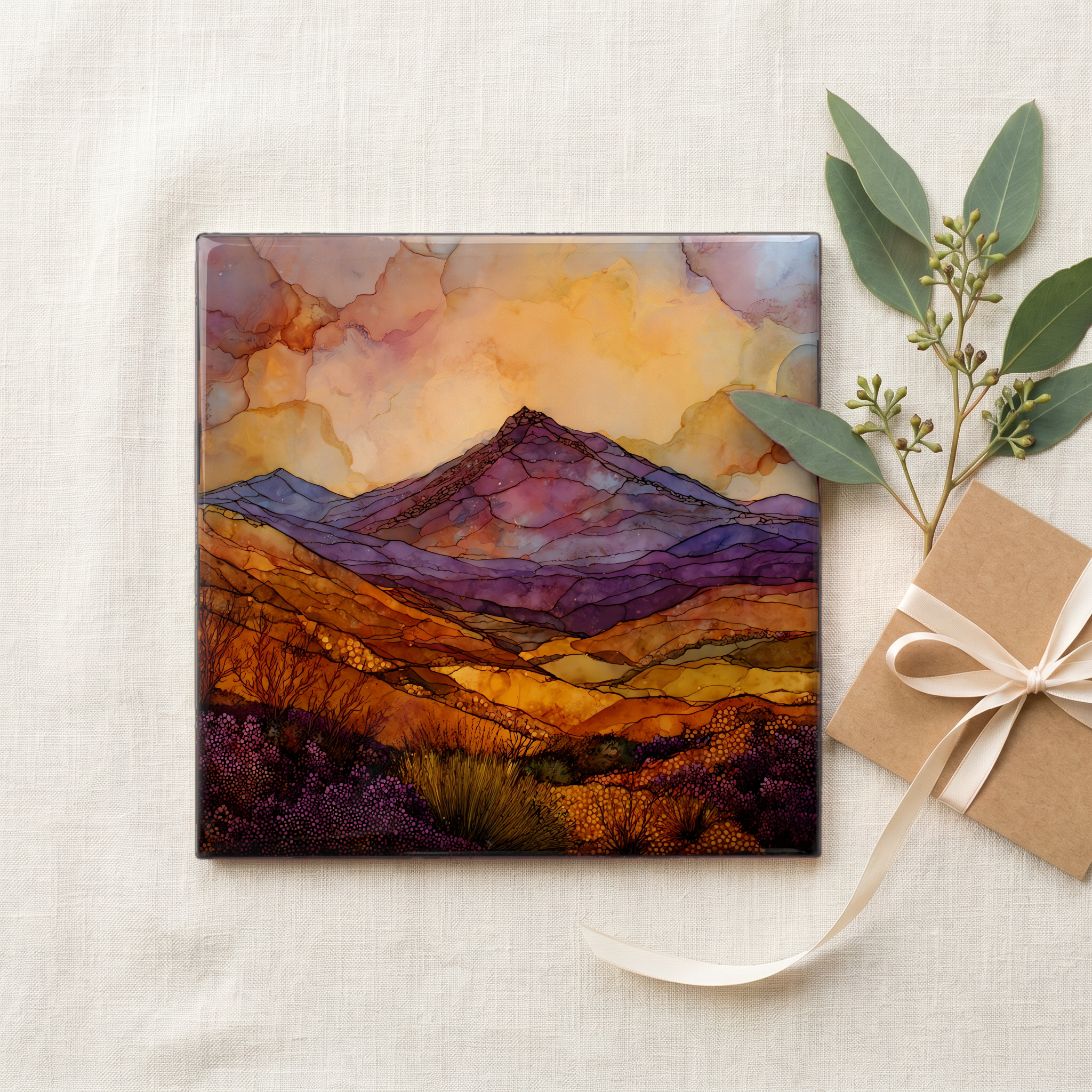
comes gift-ready

Each tile ships in a kraft box, tied with cream ribbon, with a handwritten note from the studio if you'd like to add one.
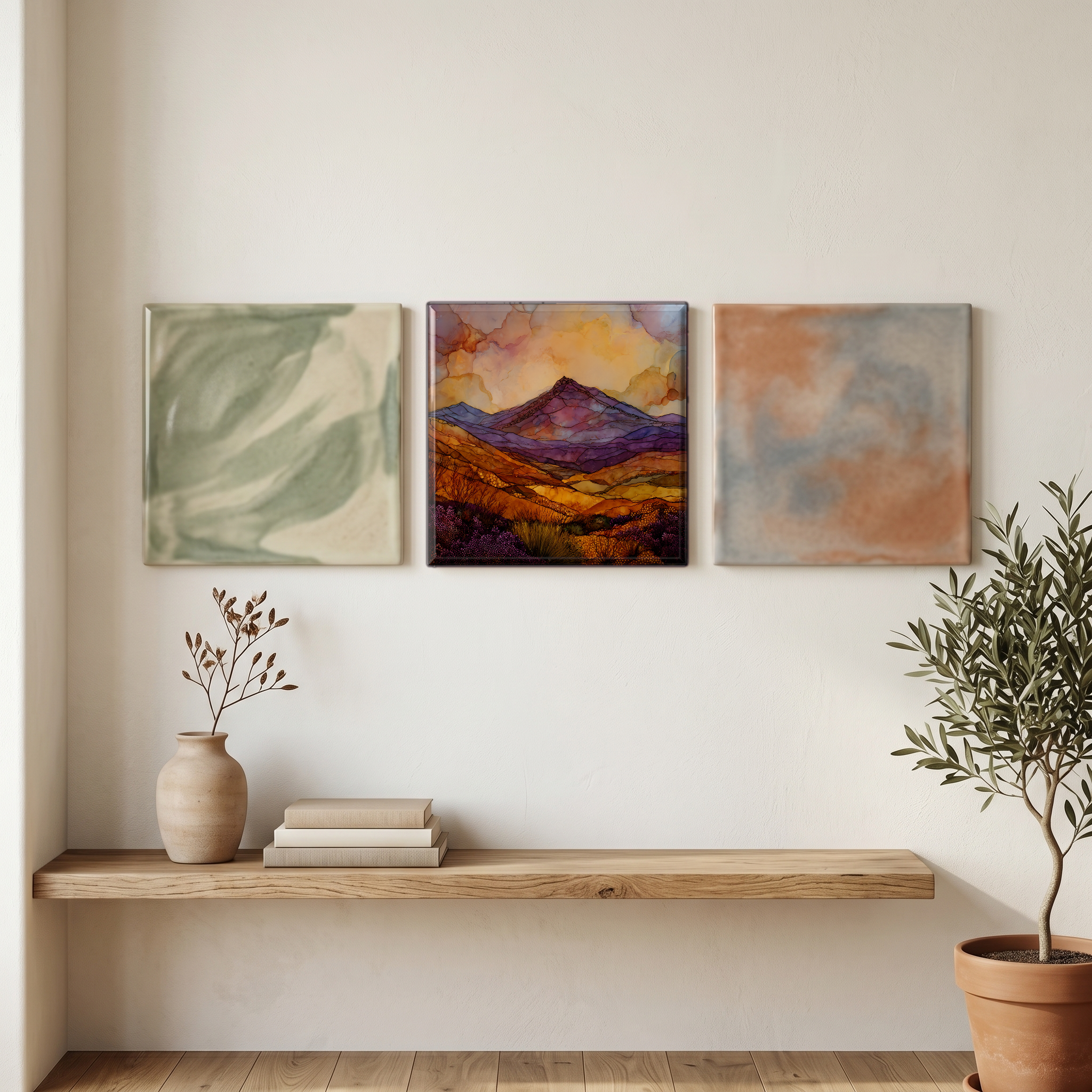
or build a grouping
or build a grouping

Three or five different vistas, hung together — a chapter of places you've been, or want to go.

about Slieve Gullion

The place, in three passes.

A little of what's known, in case you fall down the rabbit hole — or want to go see it yourself.
the place

Slieve Gullion rises 573 metres above the rolling drumlin country of south County Armagh, the highest point in the county and the centerpiece of the Ring of Gullion. The mountain itself is the deeply weathered remains of a ring dyke, a circular structure of igneous rock that formed when a volcanic complex collapsed roughly sixty million years ago. Thirteen smaller hills ring it at a distance of a few miles, the dyke wall. The Ring of Gullion was designated an Area of Outstanding Natural Beauty in 1991. The summit is reached on foot from the upper car park of Slieve Gullion Forest Park, a climb of about ninety minutes. The town of Newry sits eight miles to the north.

the stone

At the summit sit two cairns, the southern of which is the highest surviving passage grave in Ireland. The South Cairn is roughly five thousand years old, built sometime in the fourth millennium BCE by the Neolithic farming people of the surrounding lowlands. Its inner chamber is oriented to the setting sun of the winter solstice; on a clear December afternoon, the light still reaches the back wall. Beside the cairn lies a small dark lake known in Irish as Calliagh Berra's Lough, the only natural body of water at this elevation in the region. The cairn and the lake together belong to the older mythological landscape of the Táin Bó Cúailnge, the Cattle Raid of Cooley, which the hero Cú Chulainn defended single-handed.

the visit

Access to the mountain is through Slieve Gullion Forest Park, opened in 1958 and run today by Forest Service Northern Ireland. The park has an eight-mile one-way scenic drive that loops the base of the mountain; the drive is open most days, with occasional closures in winter weather. From the upper car park, a marked trail climbs to the South Cairn in about ninety minutes. The terrain is exposed and turns boggy in wet weather; sturdy footwear is essential. The forest park is open daily from eight in the morning until sunset, and admission is free. The nearest town for lodging and supplies is Newry, eight miles north on the A1.

— informed by nidirect, Ring of Gullion
where
Northern Ireland · County Armagh, Northern Ireland
within
Slieve Gullion Forest Park
elevation
573 m · 1,880 ft
position
54.1214° N · 6.4347° W
the neighborhood

What's nearby.

A handful of named places within an hour's walk or short drive. Some we've already painted; some we will.
13 km N
Newry
town
6 km N
Camlough Lake
lake
5 km SW
Forkhill
village
10 km S
Cooley Mountains
mountain range
15 km SE
Carlingford Lough
sea inlet
25 km E
Mourne Mountains
mountain range
N
Slieve Gullion
Newry
Camlough Lake
Forkhill
Cooley Mountains
Carlingford Lough
Mourne Mountains
common questions

What people ask.

A few questions we get about Slieve Gullion — and about bringing the piece home.
about the place

Slieve Gullion is a mountain in south County Armagh, Northern Ireland, about eight miles south of Newry and a short distance from the border with the Republic. Its summit reaches 573 metres, making it the highest point in Armagh and the centerpiece of the Ring of Gullion.

The mountain is the eroded core of a volcanic ring complex that formed roughly sixty million years ago, in the early Palaeogene. As the volcanic chamber collapsed, magma intruded along the ring fault, leaving behind the harder igneous rock that today stands as Slieve Gullion and the surrounding thirteen hills of the Ring of Gullion.

Two Neolithic cairns and a small dark lake known as Calliagh Berra's Lough. The South Cairn is a passage grave roughly five thousand years old, the highest surviving passage grave in Ireland. Its inner chamber is aligned to the winter solstice sunset, which still reaches the back wall on clear December afternoons.

In Irish mythology she is an ancient hag-goddess associated with winter, mountains, and the shaping of the landscape. The local legend at Slieve Gullion tells that she bathed the young warrior Fionn mac Cumhaill in the summit lake; he emerged old, his hair turned white.

Most walkers start from the upper car park of Slieve Gullion Forest Park, reached by the eight-mile scenic drive that loops the base of the mountain. A marked trail climbs to the South Cairn in roughly ninety minutes. The terrain is exposed and turns boggy in wet weather.

Late spring through early autumn offers the clearest weather and longest days, with May and June especially good for the heather and bog cotton on the upper slopes. December draws walkers and archaeologists for the winter solstice alignment, when sunset reaches the back chamber of the South Cairn.

Yes. The mountain and the surrounding ring of thirteen hills together make up the Ring of Gullion, designated an Area of Outstanding Natural Beauty in 1991. Slieve Gullion Forest Park, which provides public access, sits within the AONB and is managed by Forest Service Northern Ireland.

about the piece in your home

It has been a meaningful gift for our customers with ties to the region. Slieve Gullion is the named landmark of south Armagh and the Ring of Gullion, recognized by anyone from Newry, Forkhill, or the surrounding country. A Small or Medium hung in an entry or study carries well.

The palette of slate, peat, deep moss, and stained-glass green pairs well with Heritage Modern, Celtic Revival, and Mountain-modern interiors. It also reads at home in a darker library or study where the colours of the bog and stone find context. The Voynich treatment keeps it from feeling literal.

Yes. Heritage Irish and Celtic Revival interiors have been returning since the late 2010s, often paired with natural linen, peat-fired ceramics, and oxidized brass. The deeper jewel tones of this artwork sit comfortably in that vocabulary without leaning twee or themed.

Above a standard three-seat sofa or a console table, a single Large reads well and centers the wall. For more presence, a four-tile Mural fills the same space with more weight and movement. Above a wider sectional, a nine-tile Mural is the larger statement.

Yes. For bathrooms, kitchens, and any installation near steam or splash, order the tile in the Dura Satin or Matte finish. Both are scratch-resistant and suited to vertical surfaces. The Glossy finish is best kept to framed wall art in dryer rooms.

A soft microfibre cloth with water cleans the surface. Skip abrasive pads and household scouring chemicals. The colour is slowly infused into the ceramic surface beneath a thin protective finish, so the image will not fade or wipe off with ordinary care.

Yes. Every WenderVista tile is from a single original painting by Reid Wender, the studio's founder and curator. The studio does not license artwork in or out; each piece is made and hand-finished in Knoxville, Tennessee.

if this one stayed with you

A few you might also love.

Hand-picked by the eye that found Sorapis. Same air, same kind of quiet.