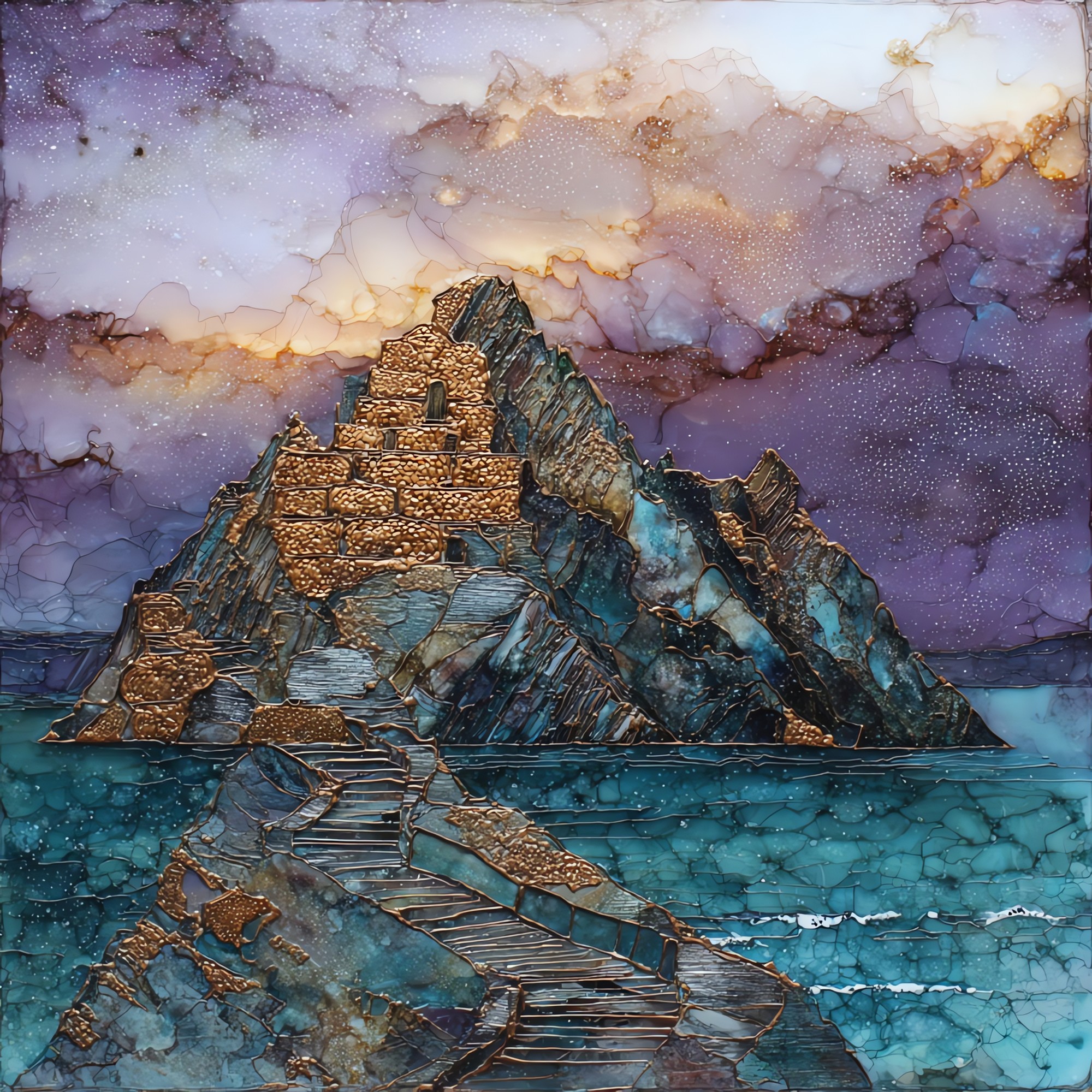
Skellig Michael
— — the rock the monks kept, eight miles out.
Not only on a wall.
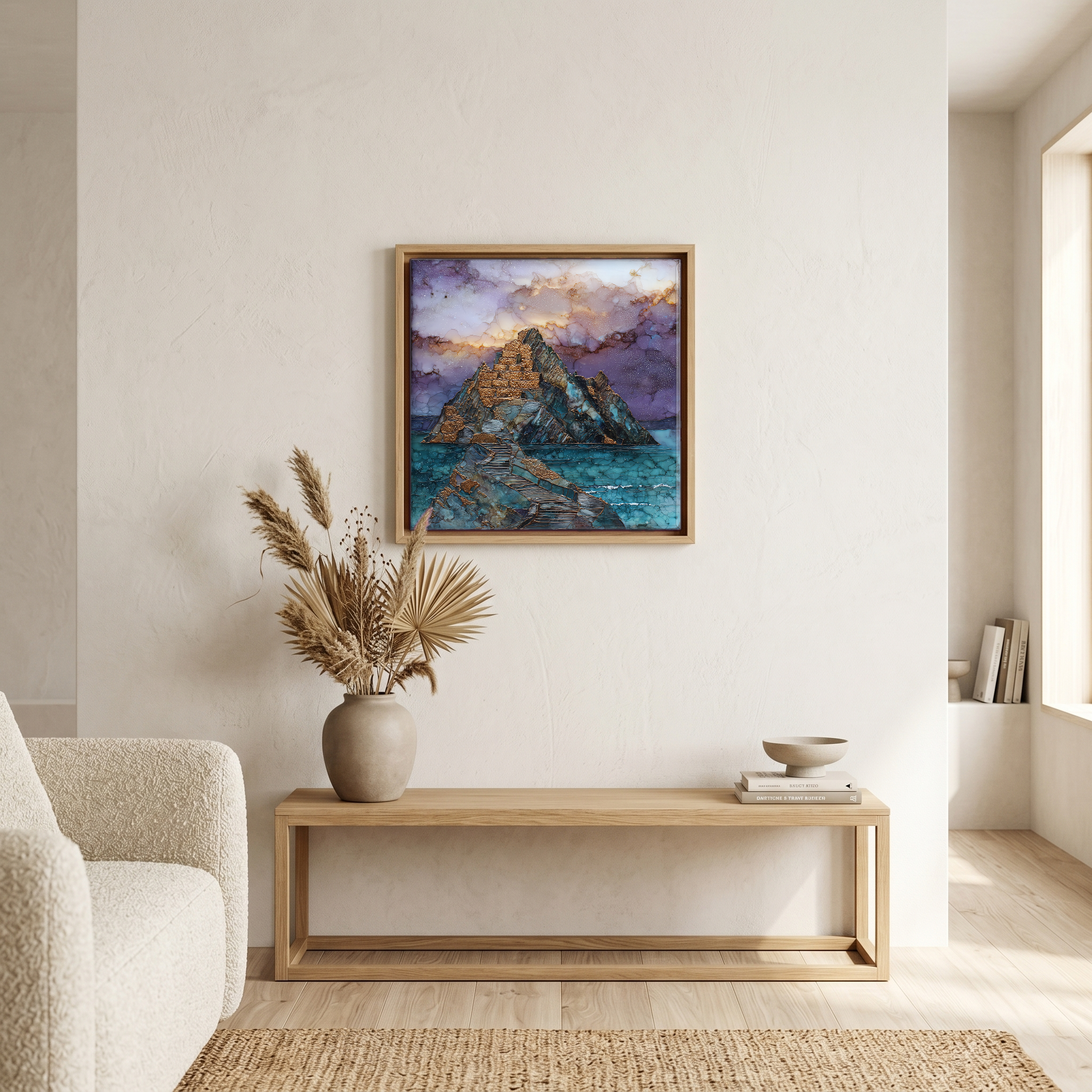
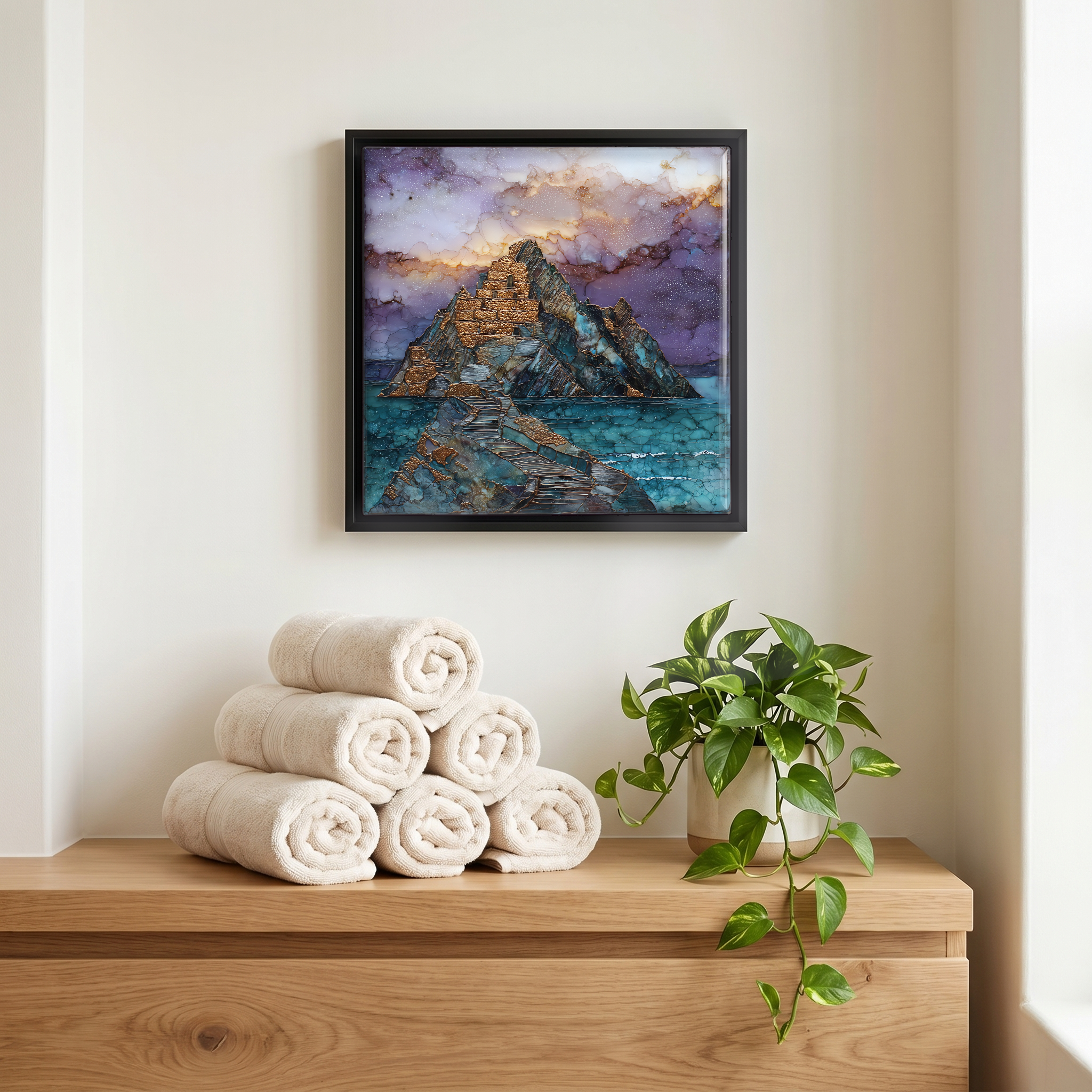
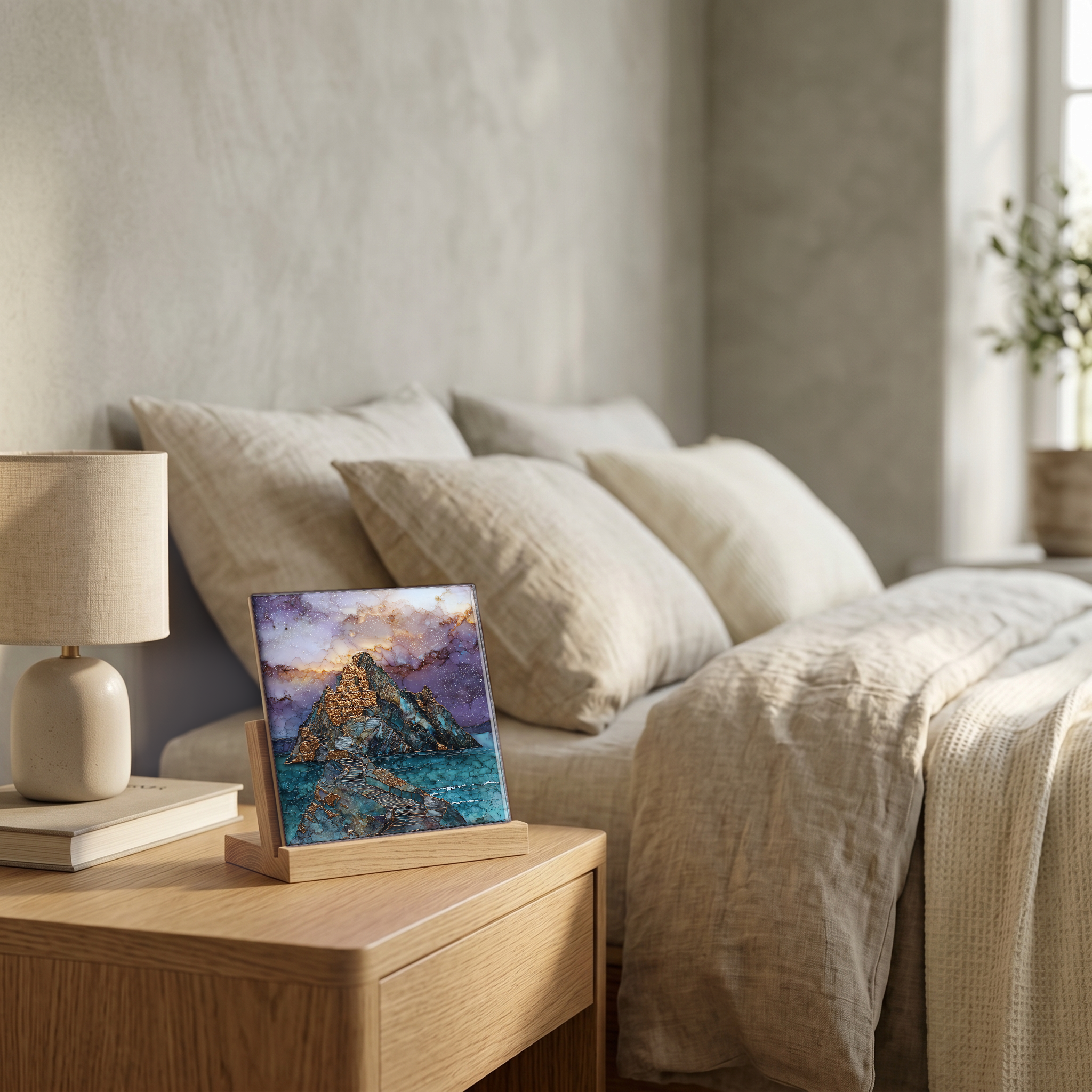
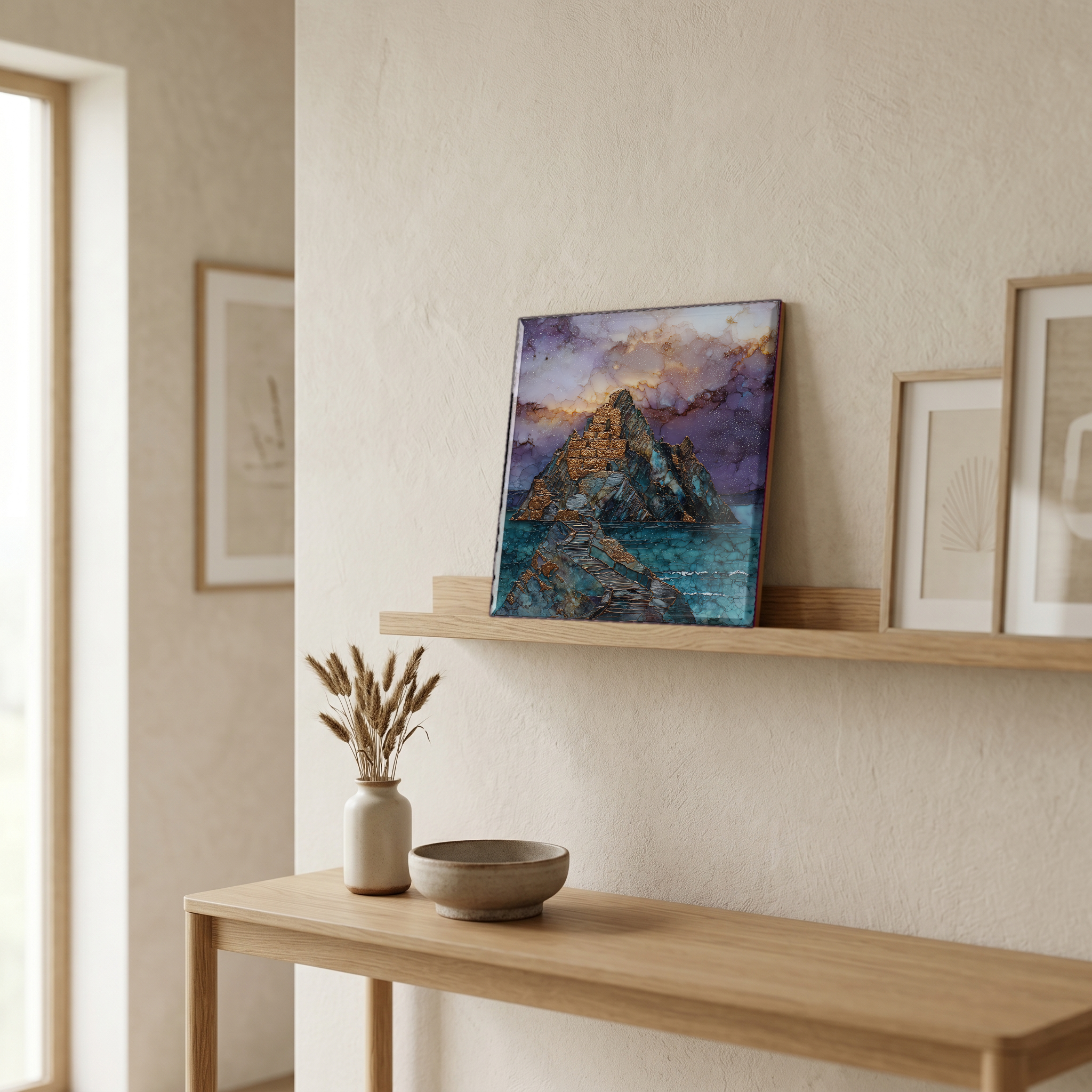
“A pyramid of stone rising 218 metres straight from the Atlantic, eight miles west of Portmagee. Six dry-stone beehive cells stand on the upper ledge, built around the sixth century and lived in by monks for six hundred years. More than six hundred steps climb from the landing. The boats run from May to early October when the swell allows, and not on the days it doesn't. Puffins nest in the burrows below the saddle in late spring. Most days the rock wears a half-collar of fog. The Office of Public Works caps the island at 180 visitors a day.
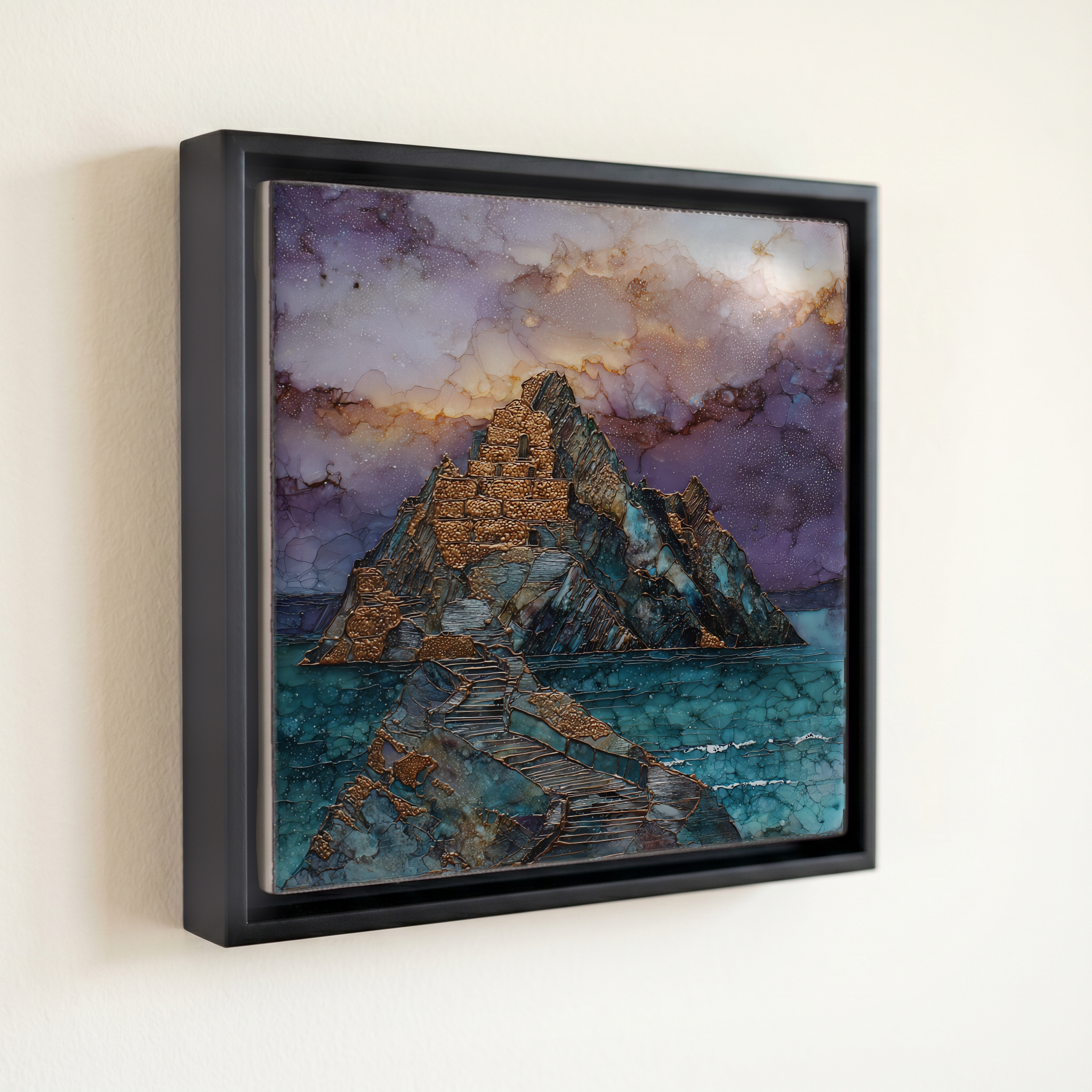
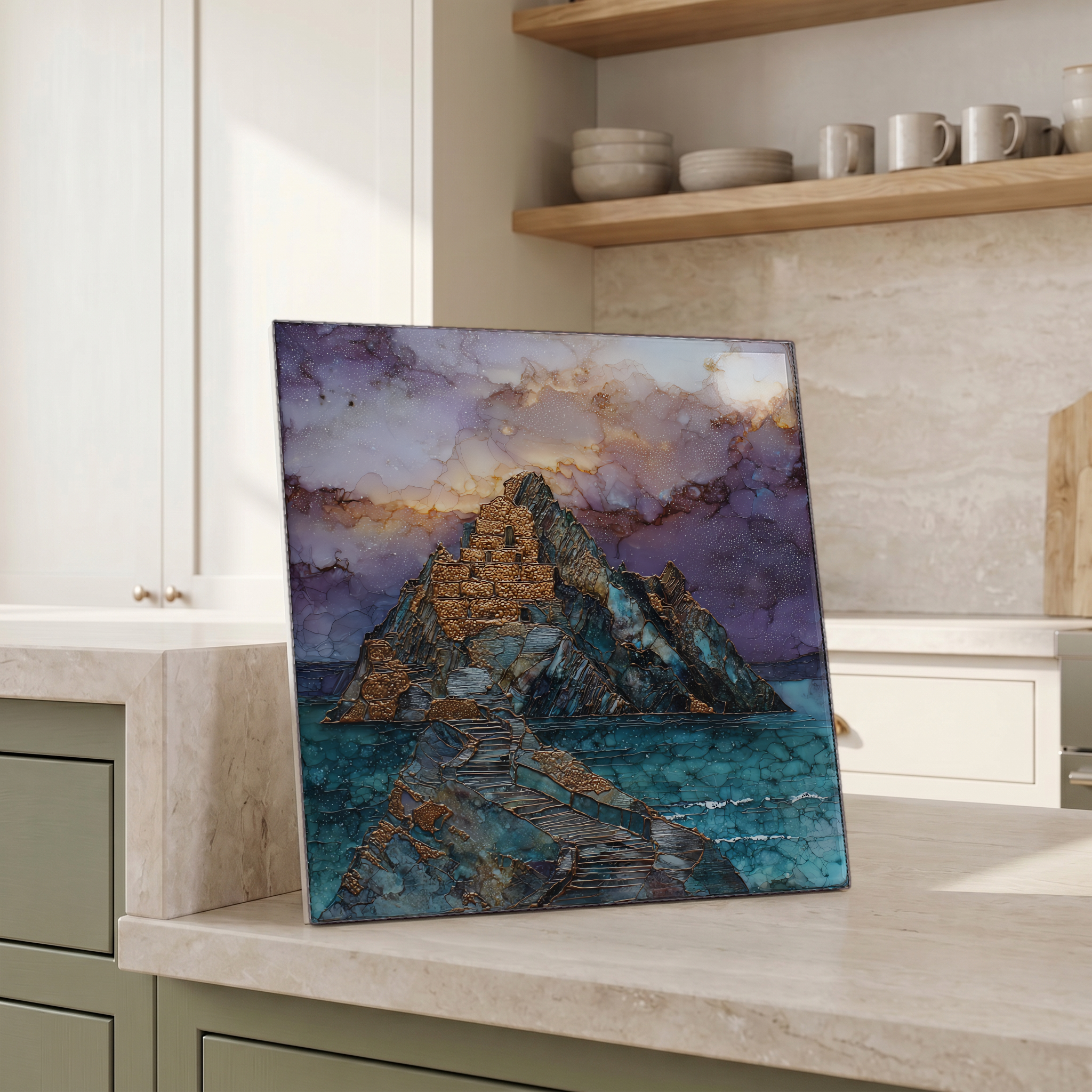
Skellig Michael, on ceramic.
Each tile is finished by hand in our Knoxville studio. Artwork is slowly infused into the ceramic surface under high heat and pressure, and rests beneath a thin glossy finish. The colour lives in the surface, not on top of it.
Pick any four 4-inch tiles — National Parks you've been to, a Smokies set, the four seasons of one place. $ for a set of , cork-backed, ready to live on the table.
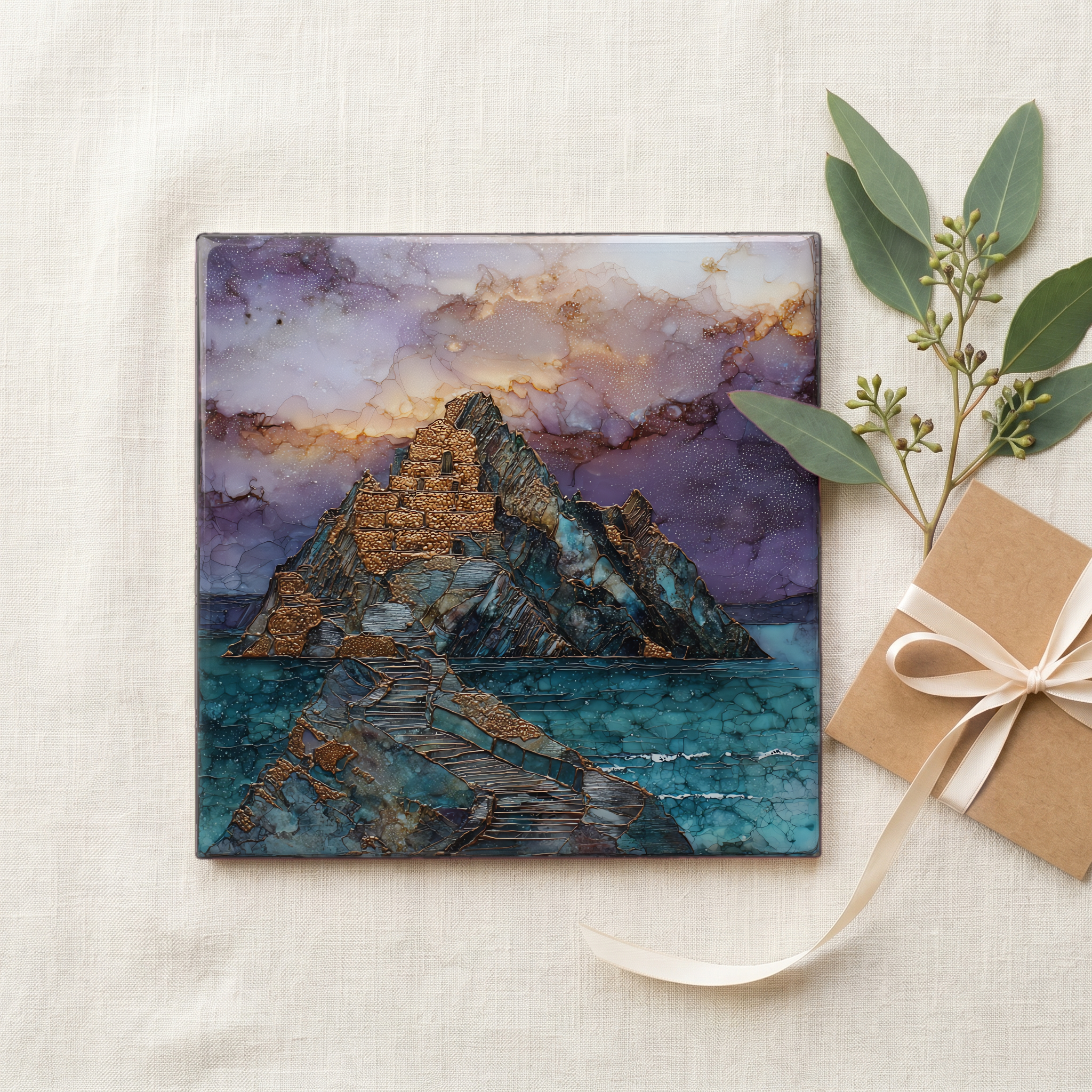
Each tile ships in a kraft box, tied with cream ribbon, with a handwritten note from the studio if you'd like to add one.
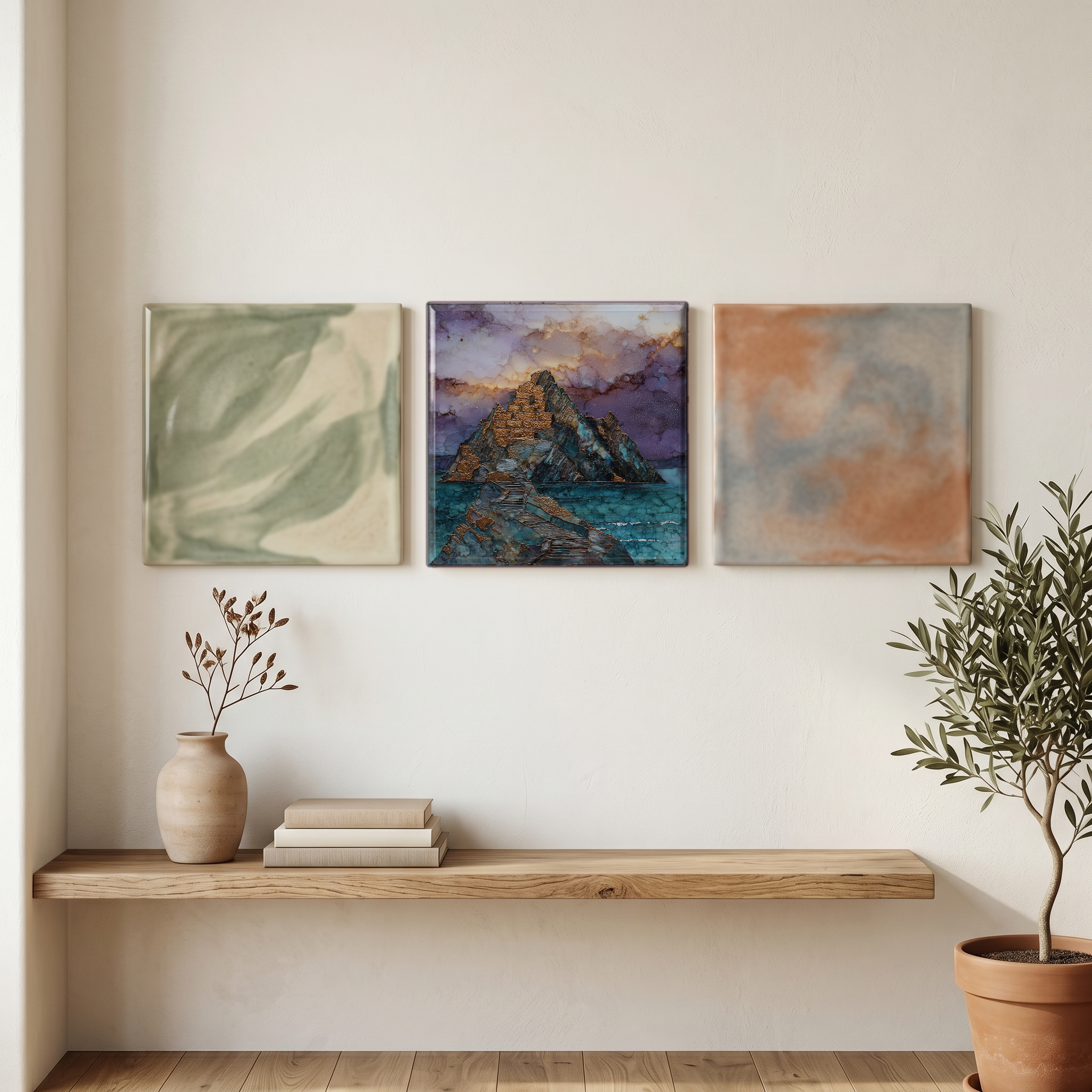
Three or five different vistas, hung together — a chapter of places you've been, or want to go.
The place, in three passes.
Skellig Michael, called Sceilg Mhichíl in Irish, sits 11.6 kilometres west of Portmagee on Ireland's Iveragh Peninsula, in County Kerry. The island rises 218 metres straight from the Atlantic, its sister rock Little Skellig roughly a kilometre to the northeast. UNESCO inscribed Skellig Michael as a World Heritage Site in 1996 for the survival of its sixth-to-eighth-century monastic settlement. The Office of Public Works manages the site under the National Monuments Service. Boats depart from Portmagee and Ballinskelligs piers when sea conditions allow, a passage of about forty-five minutes. The smaller island holds no monastery and is closed to landings; it is the second-largest northern gannet colony in the world.
Six dry-stone beehive cells (clocháin), two oratories, and a small medieval church survive on the ledge near the summit, sheltered behind retaining walls the monks built into the rock. The construction is corbelled: each successive ring of stone slightly overhangs the one below until the dome closes at the apex without mortar or beam. The technique kept the cells dry for over a thousand years in one of the wettest, windiest places in the North Atlantic. The monastery was founded in the sixth or seventh century and held for roughly six hundred years, until the community relocated to Ballinskelligs on the County Kerry mainland in the late twelfth or thirteenth century. The rock is Old Red Sandstone of the Saint Finan's Formation, the same stone the steps were cut from.
The Office of Public Works caps landings at 180 visitors per day across about fifteen licensed boat operators, and the season runs from May through early October, weather permitting. Crossings from Portmagee or Ballinskelligs take roughly forty-five minutes each way, with about two hours on the island. The 618 stone steps to the monastery are unguarded, steep, and irregular; the OPW publishes a safety warning and asks visitors with mobility limits not to attempt the climb. Cancellations are routine: Atlantic swell, rain, or wind above force five close the island without notice. Booking opens in mid-March each year and most weekend slots are gone within days. Some operators also run non-landing tours that circle the rock.