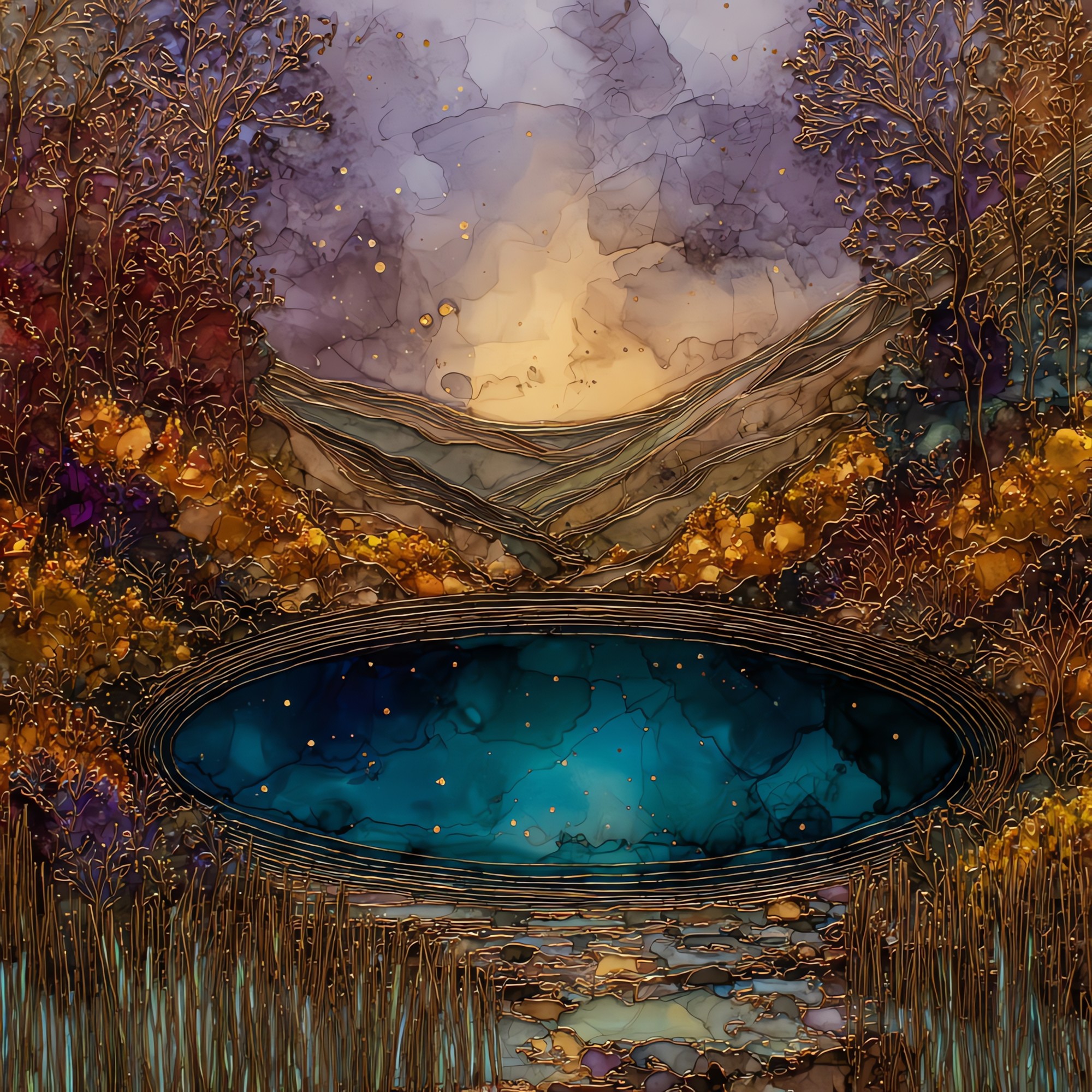
Shannon Pot
— a small dark eye, and a river begins.
Not only on a wall.
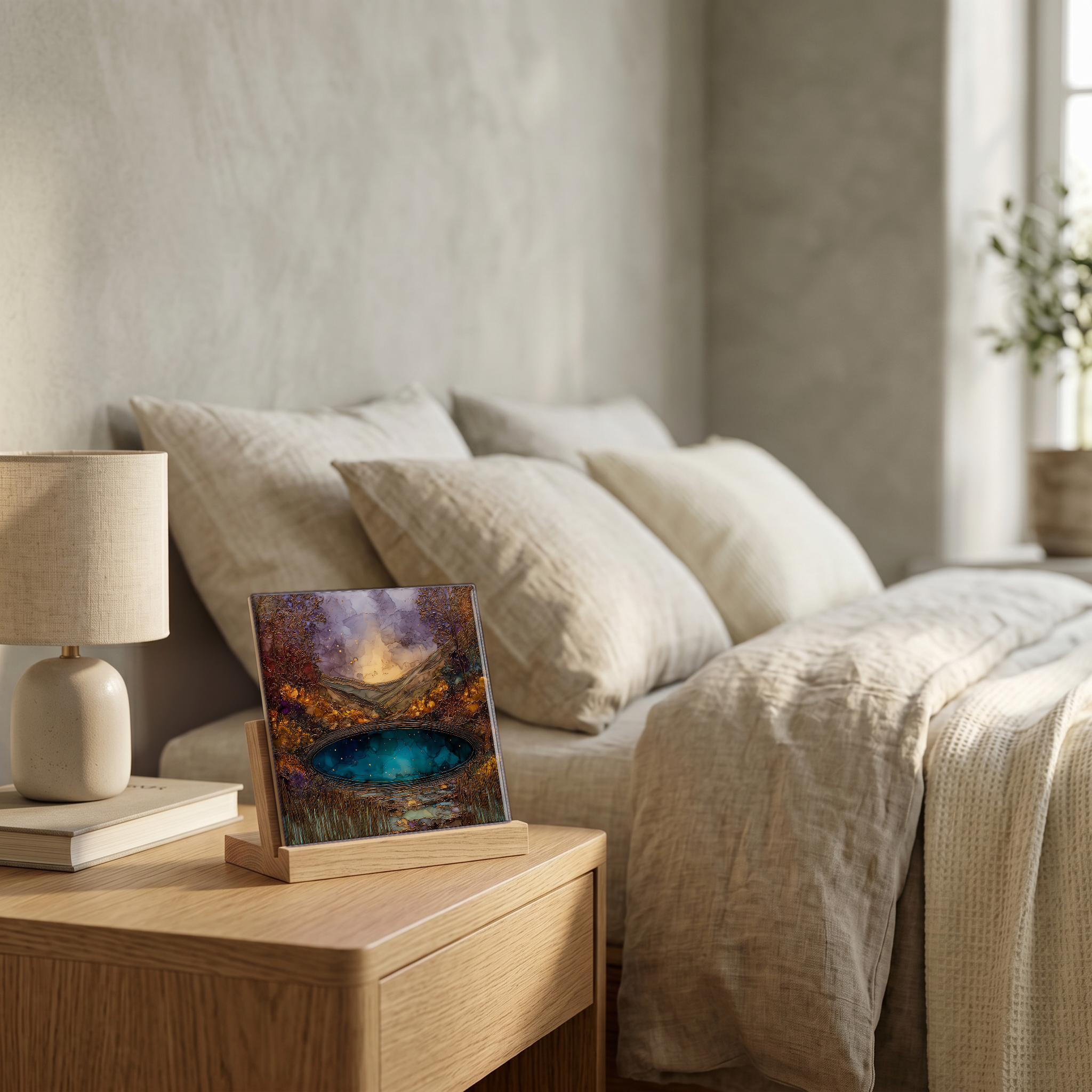
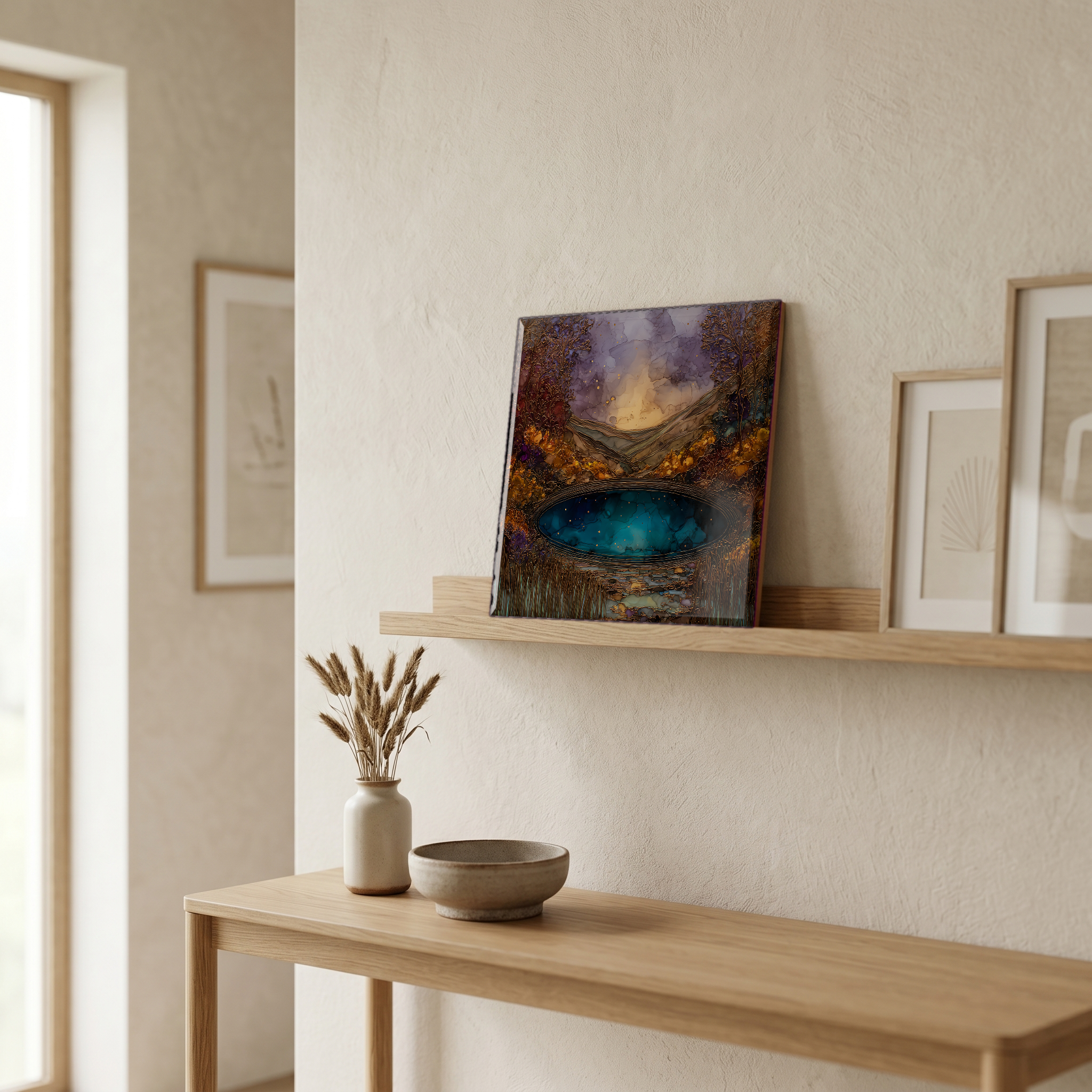
“A small dark pool on a north-Cavan hillside, about fifteen metres across, ringed by reeds and quiet water. The Shannon, Ireland's longest river at three hundred and sixty kilometres, begins here. The water is fed by streams that sink into Cuilcagh's limestone slopes above and rise again in this one quiet place. In the old story, Sinann came looking for wisdom, broke a taboo at the well, and the water rose and took her west to the sea. The river still carries her name. People who visit say there isn't much to it. That's the thing.
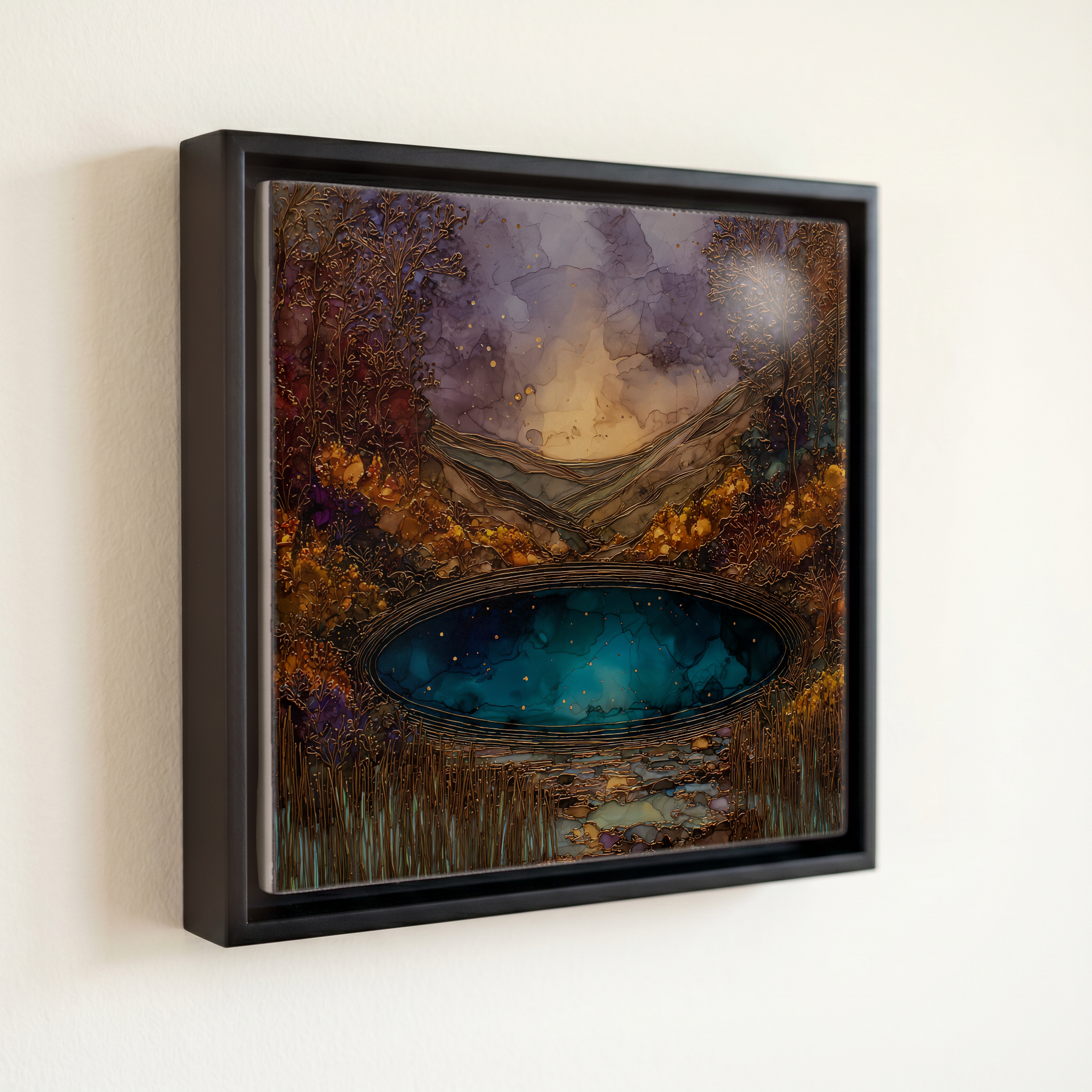
Shannon Pot, on ceramic.
Each tile is finished by hand in our Knoxville studio. Artwork is slowly infused into the ceramic surface under high heat and pressure, and rests beneath a thin glossy finish. The colour lives in the surface, not on top of it.
Pick any four 4-inch tiles — National Parks you've been to, a Smokies set, the four seasons of one place. $ for a set of , cork-backed, ready to live on the table.
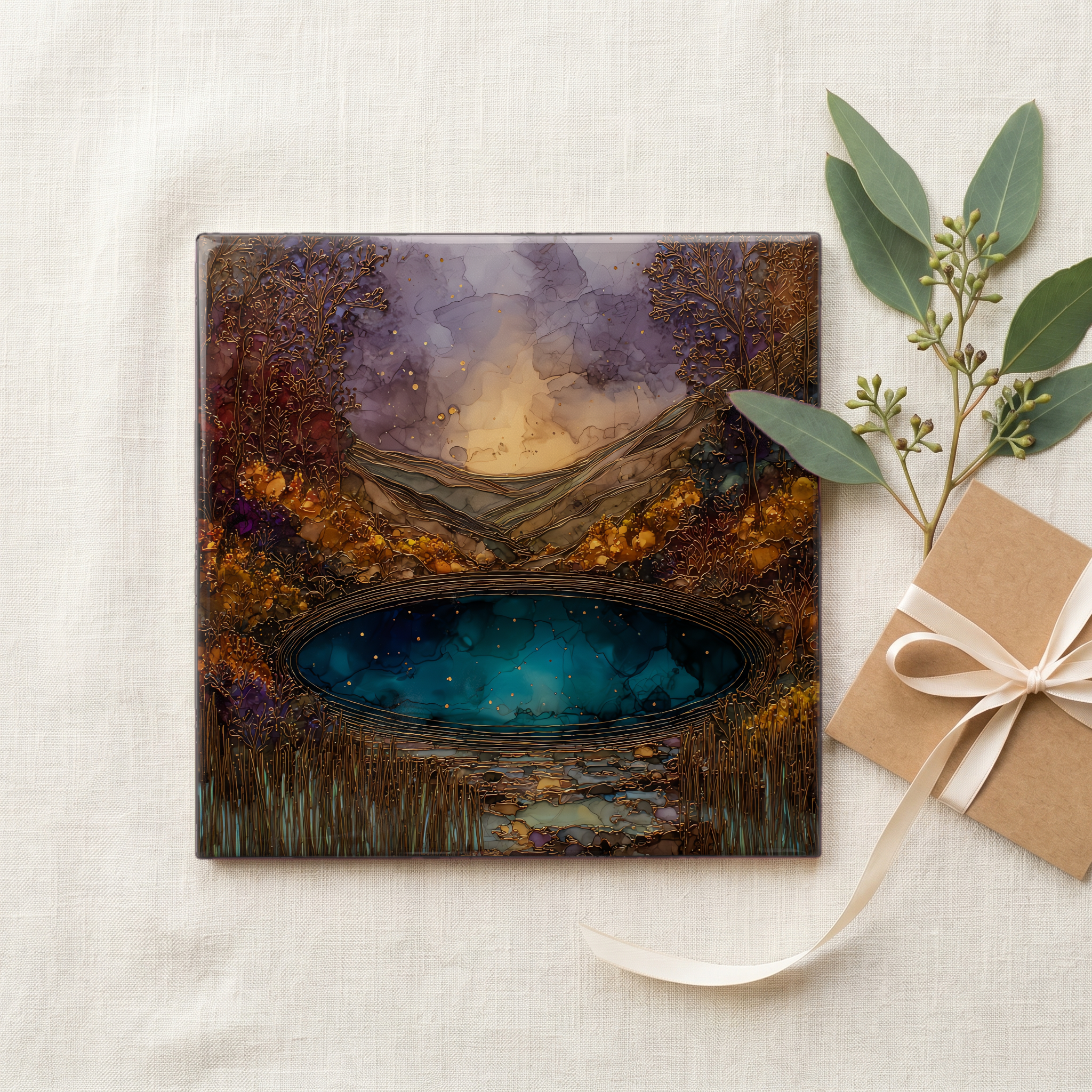
Each tile ships in a kraft box, tied with cream ribbon, with a handwritten note from the studio if you'd like to add one.
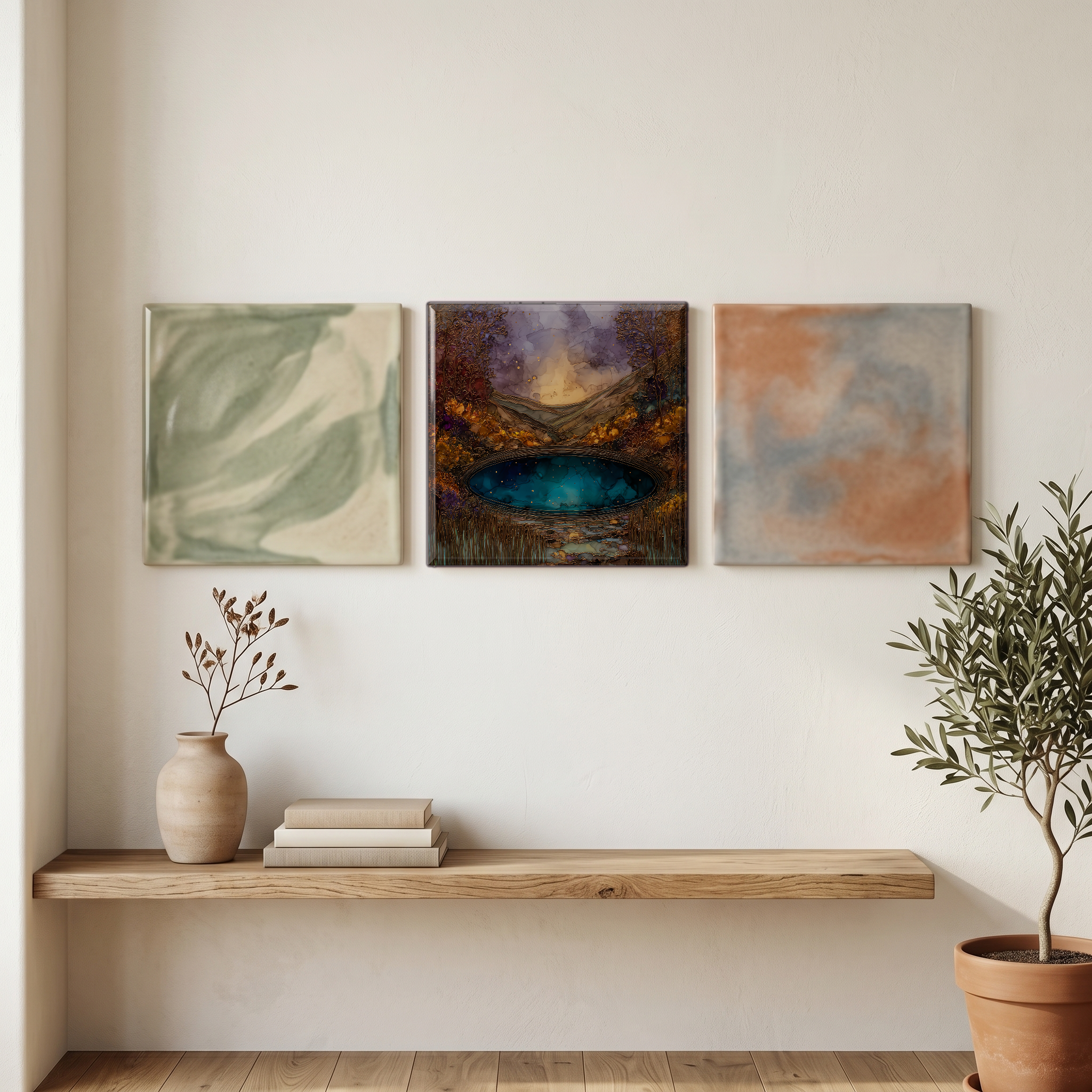
Three or five different vistas, hung together — a chapter of places you've been, or want to go.
The place, in three passes.
The Shannon Pot is a small dark pool, around fifteen metres across, on the lower slopes of Cuilcagh Mountain in north-west County Cavan, Ireland. It is the traditional source of the River Shannon, the longest river in either Ireland or Britain, which flows three hundred and sixty kilometres south and west to enter the Atlantic at the Shannon Estuary near Limerick. The pot sits within the Cuilcagh Lakelands UNESCO Global Geopark, a cross-border landscape of limestone uplands and bogland that straddles Cavan and County Fermanagh in Northern Ireland, and within the wider Glangevlin valley. The site is reached by a short footpath from a small roadside car park near the village of Dowra.
The pool is fed not by surface springs but by water that has travelled underground through limestone. Streams falling on the higher slopes of Cuilcagh Mountain sink into the rock and run through cave passages beneath the bog before rising again at Shannon Pot. Dye-tracing surveys carried out by hydrologists in the 1990s and 2000s confirmed the connection, mapping a flow of roughly five kilometres beneath the surface. The water comes up slowly and very steady, dark with the peat it has crossed, and barely seems to move at all. From here it runs north and east in a small stream that quickly widens into the upper Shannon and the chain of loughs that begin its course to the sea.
In Irish tradition the Shannon takes its name from Sinann, a figure of medieval myth and a granddaughter of the sea-god Lir. The story is told in the Dindshenchas, a body of Irish place-lore preserved in twelfth-century manuscripts. Sinann came to the Well of Connla, a pool said to hold the salmon of wisdom and forbidden to women. She approached the well anyway. The waters rose up against her, and they carried her body west to the sea. The river afterwards held her name, and the pool where it first rises has long been held to be the well itself. The signs at the road point to it as the source. The story is older than any of that.