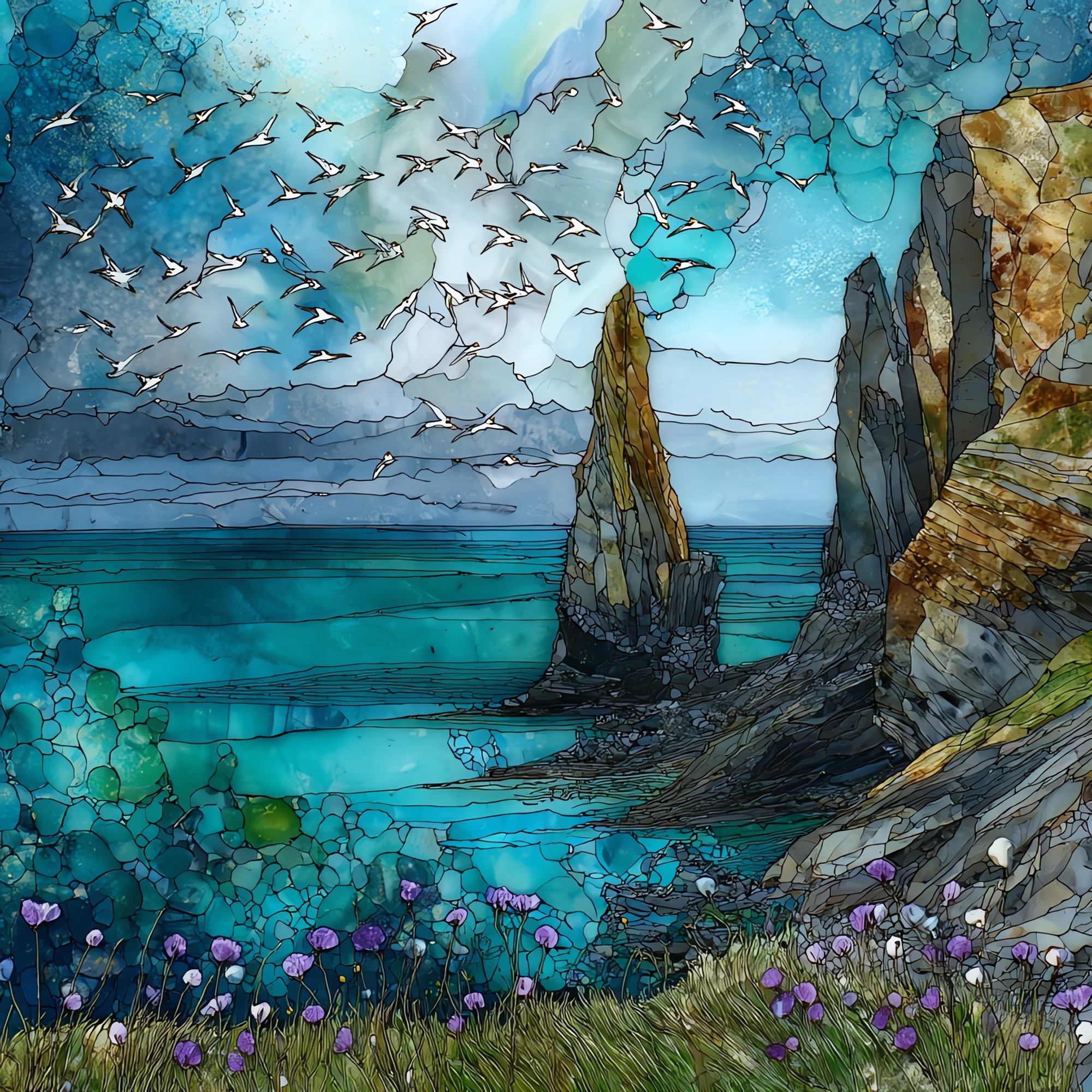
Saltee Islands
— — the cliff that takes flight in May.
Not only on a wall.
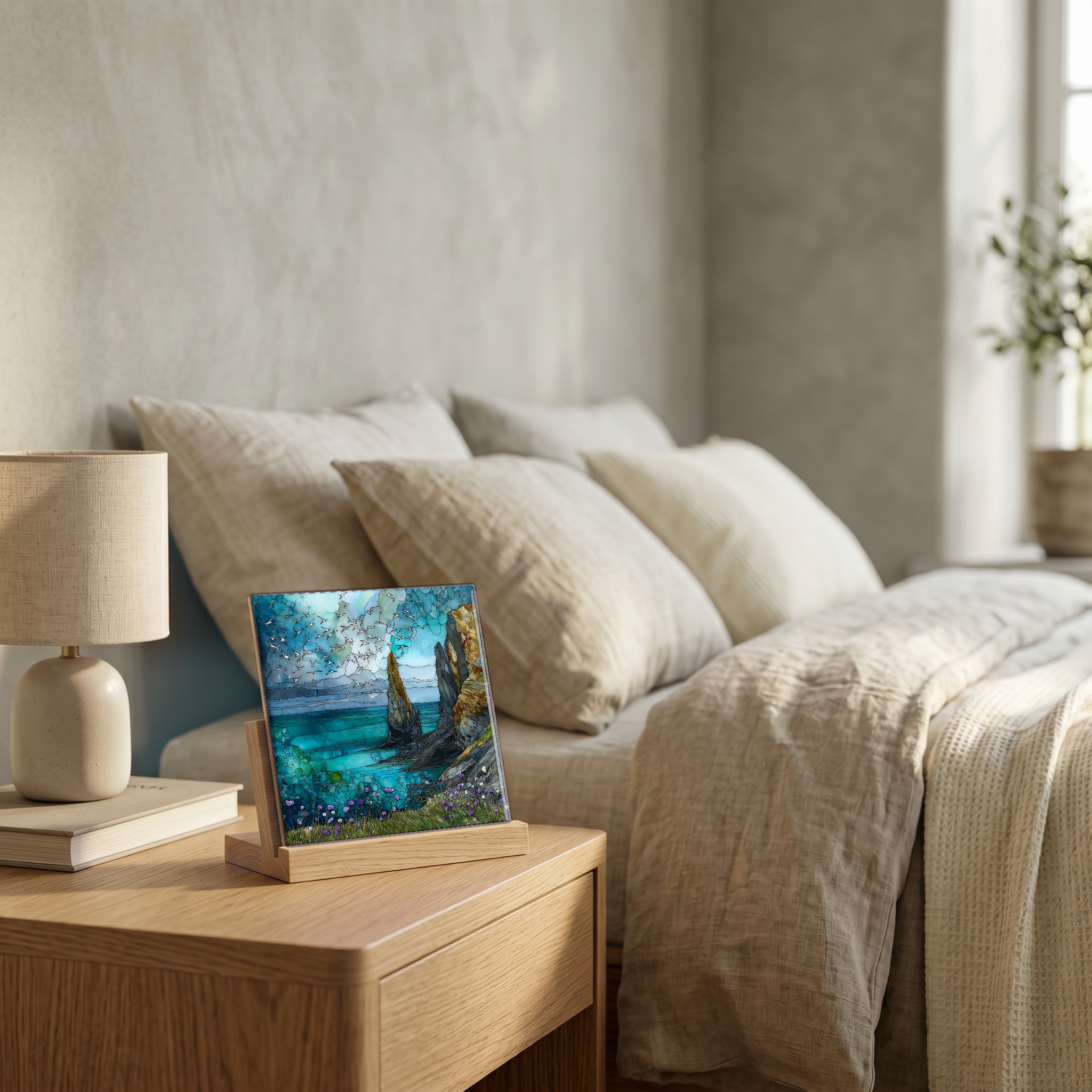
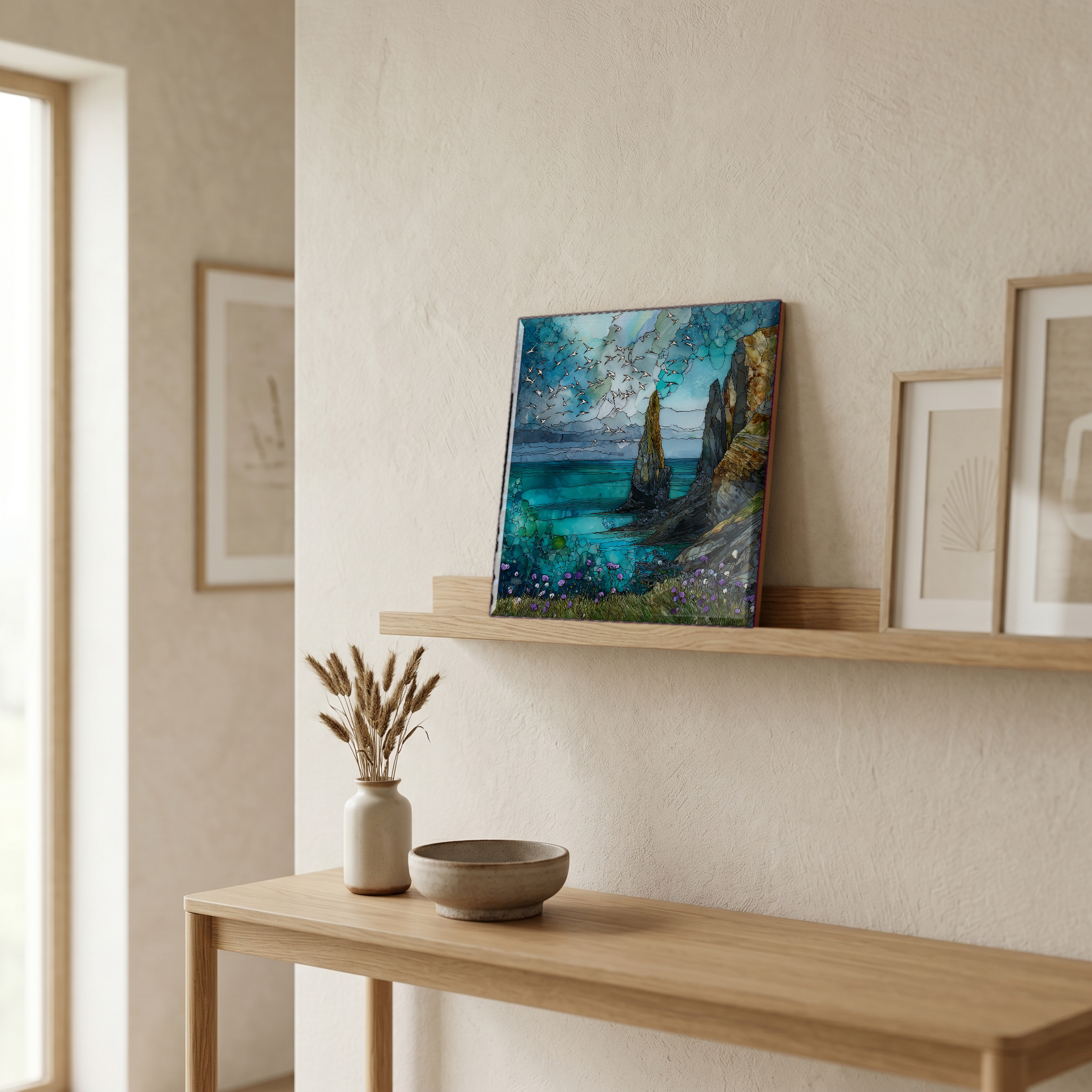
“Two islands off the south Wexford coast, about five kilometres out from Kilmore Quay. Great Saltee and Little Saltee are private. The Neale family has held them since the 1940s, and Great Saltee is open to day visitors when the boats from the harbour run. In May the cliffs fill with gannets, razorbills, guillemots, puffins. By August the chicks fledge and the colonies thin and the islands return to wind and grass. There is an obelisk on Great Saltee that calls itself the throne of a kingdom. The boatmen point it out and don't explain much.
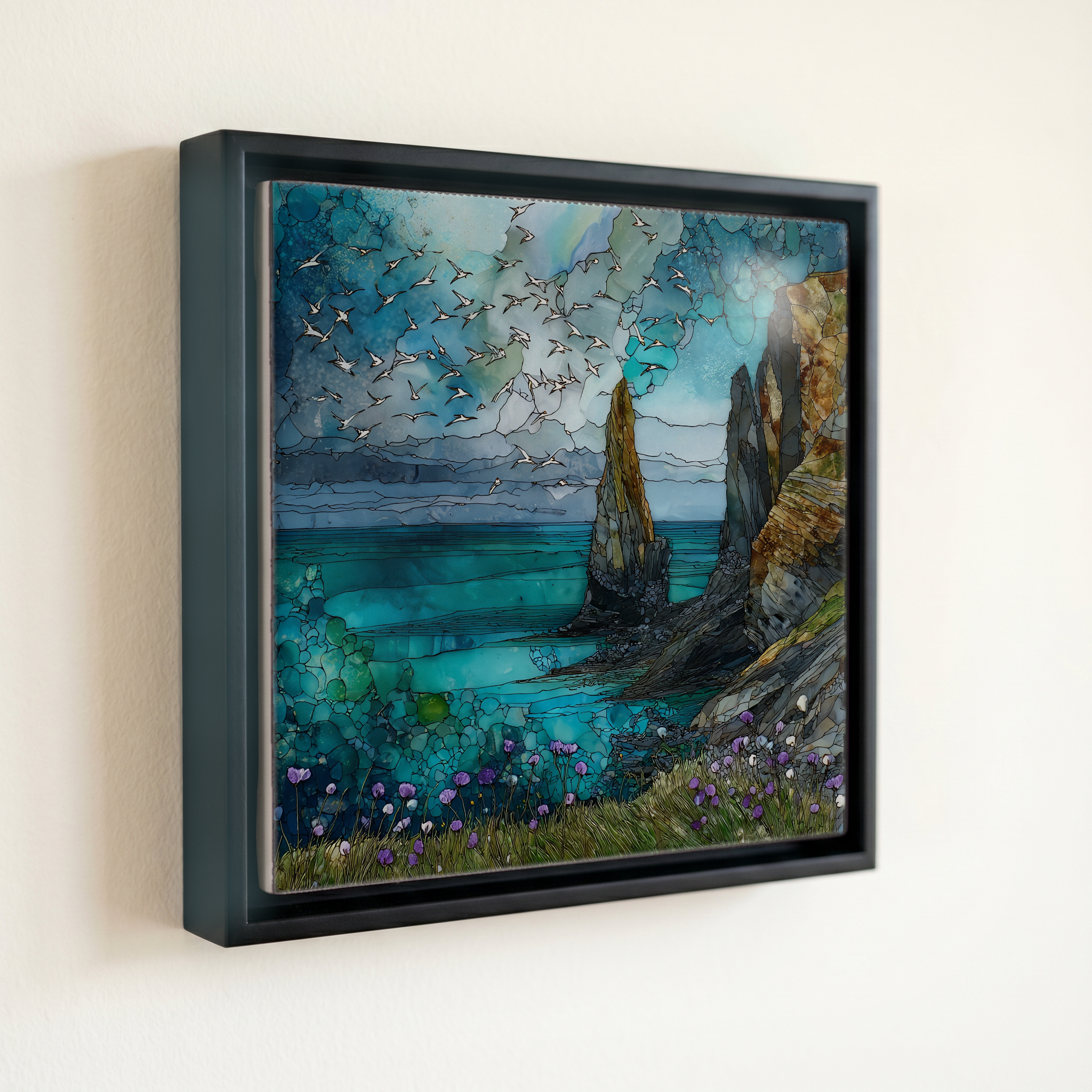
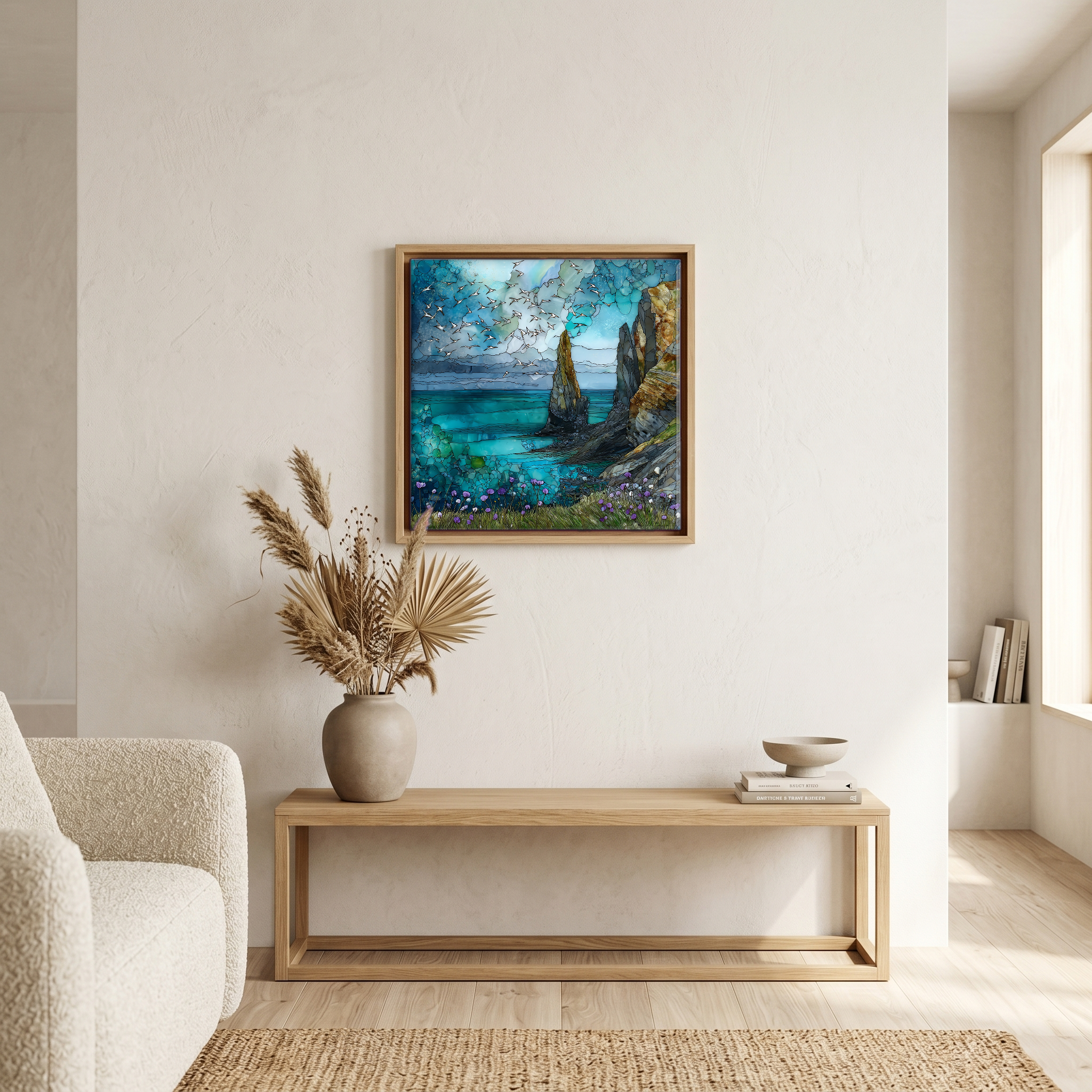
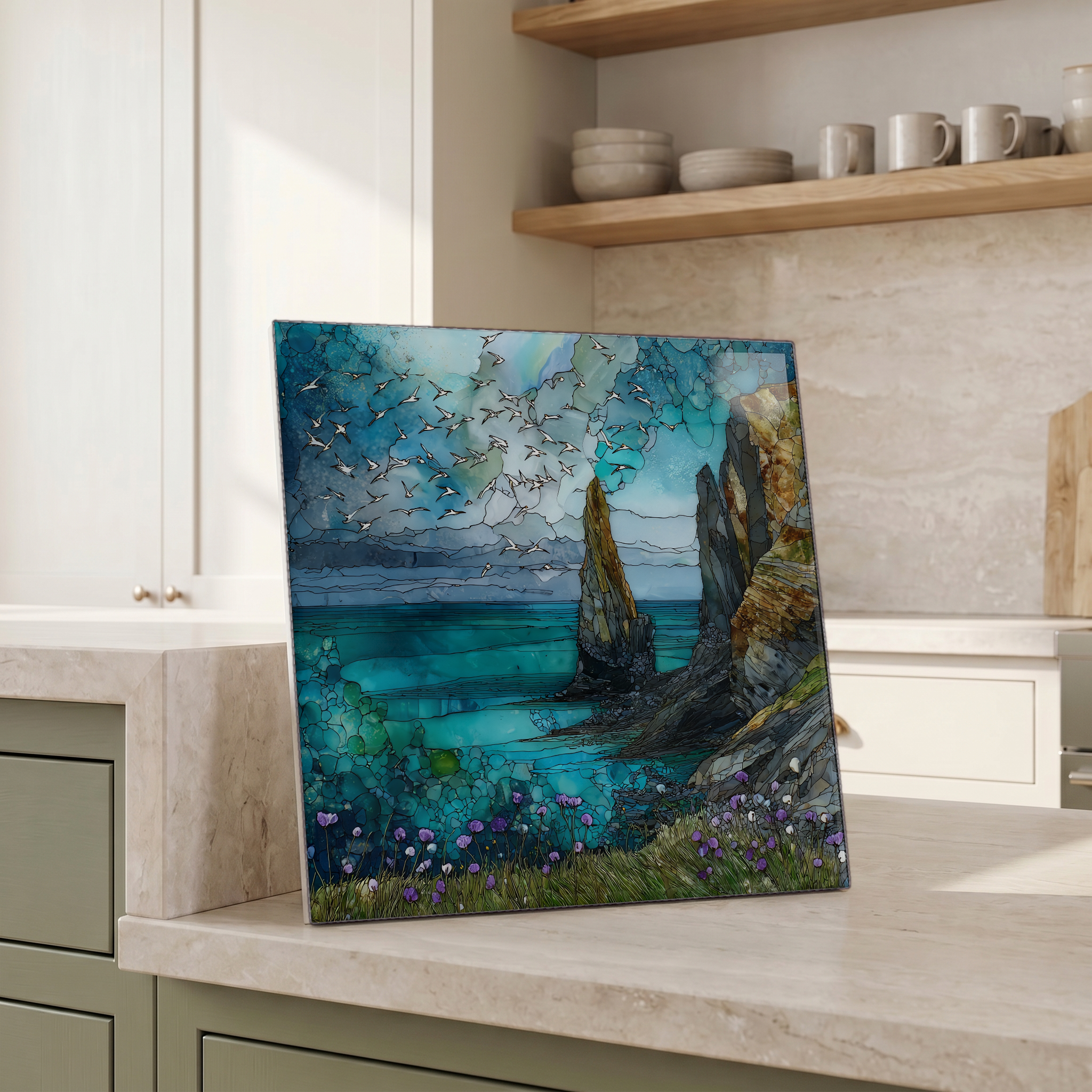
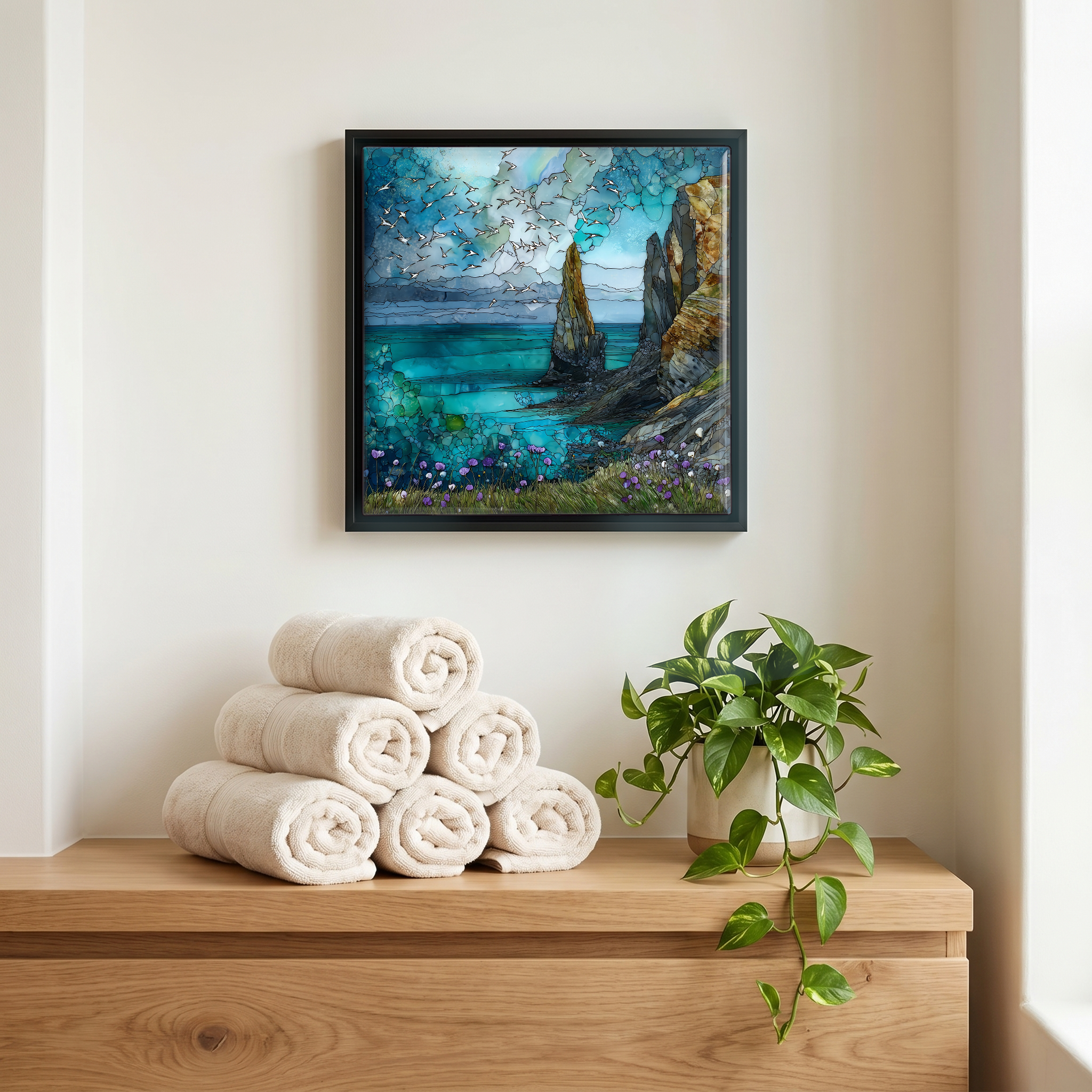
Saltee Islands, on ceramic.
Each tile is finished by hand in our Knoxville studio. Artwork is slowly infused into the ceramic surface under high heat and pressure, and rests beneath a thin glossy finish. The colour lives in the surface, not on top of it.
Pick any four 4-inch tiles — National Parks you've been to, a Smokies set, the four seasons of one place. $ for a set of , cork-backed, ready to live on the table.
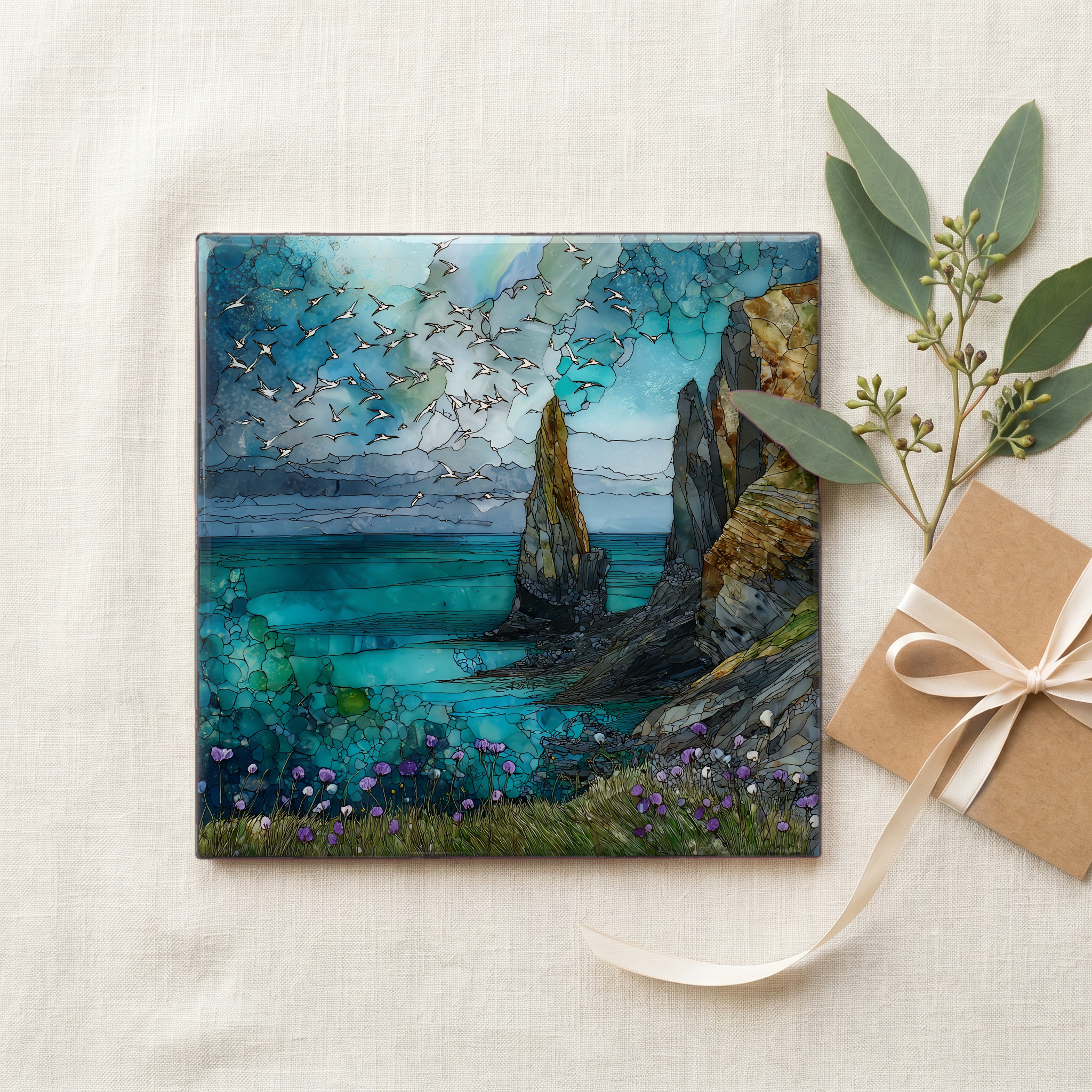
Each tile ships in a kraft box, tied with cream ribbon, with a handwritten note from the studio if you'd like to add one.
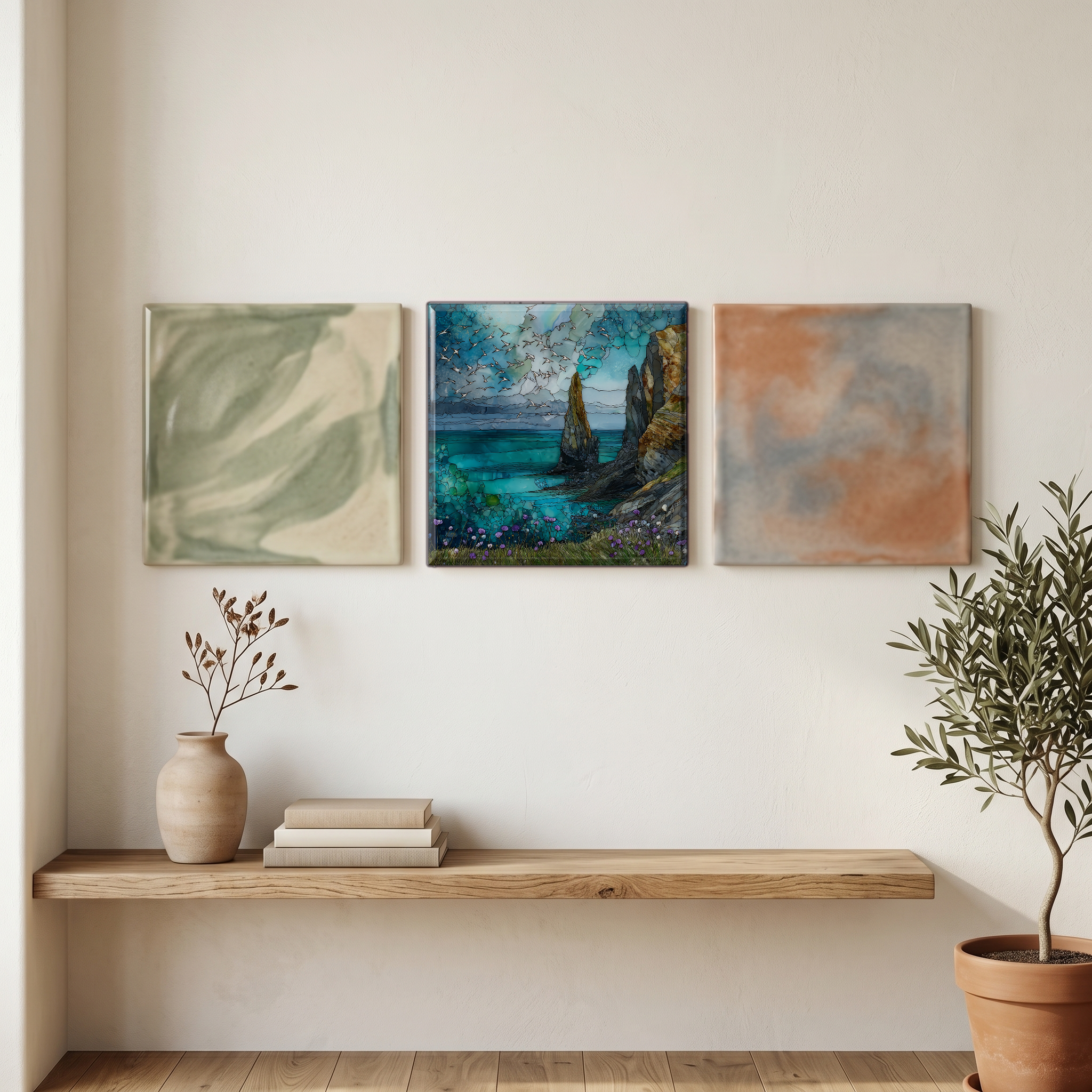
Three or five different vistas, hung together — a chapter of places you've been, or want to go.
The place, in three passes.
Two islands in the Celtic Sea, roughly five kilometres south of Kilmore Quay in County Wexford. Great Saltee covers about 89 hectares; Little Saltee, the smaller sister to the north, about 37. They sit on the edge of the continental shelf, where the Atlantic begins to deepen. Both have been privately owned by the Neale family since 1943, when Michael Neale bought them and declared a kingdom. An obelisk and a stone throne on Great Saltee still mark the gesture. The islands were a hideout for Bagenal Harvey and John Henry Colclough after the 1798 rising, before British forces took them off the rocks.
The Saltee year is shaped by seabirds. Gannets, razorbills, guillemots, puffins, kittiwakes, fulmars, and shags arrive in spring and nest along the southern cliffs of Great Saltee. The gannet colony, first established on the island in 1929, now numbers in the thousands of pairs. By May the cliffs are loud and full; by mid-July the chicks begin to fledge and the colonies thin; by autumn the islands belong again to the grey seals on the beaches and the wind off the Celtic Sea. The Saltees are designated a Special Protection Area under the EU Birds Directive.
The islands are privately owned, but Great Saltee is open to day visitors who arrive by boat from Kilmore Quay, weather permitting. Boats run from spring through late summer; the crossing takes about thirty minutes. Visitors stay for the day. No overnight stays, no camping, no fires, and the Neale family asks that paths be kept to and the birds left undisturbed. Little Saltee is closed to the public. Kilmore Quay itself is a working fishing village on the Wexford coast, and the boat operators are local; schedules depend on the swell.