Wender·Vista
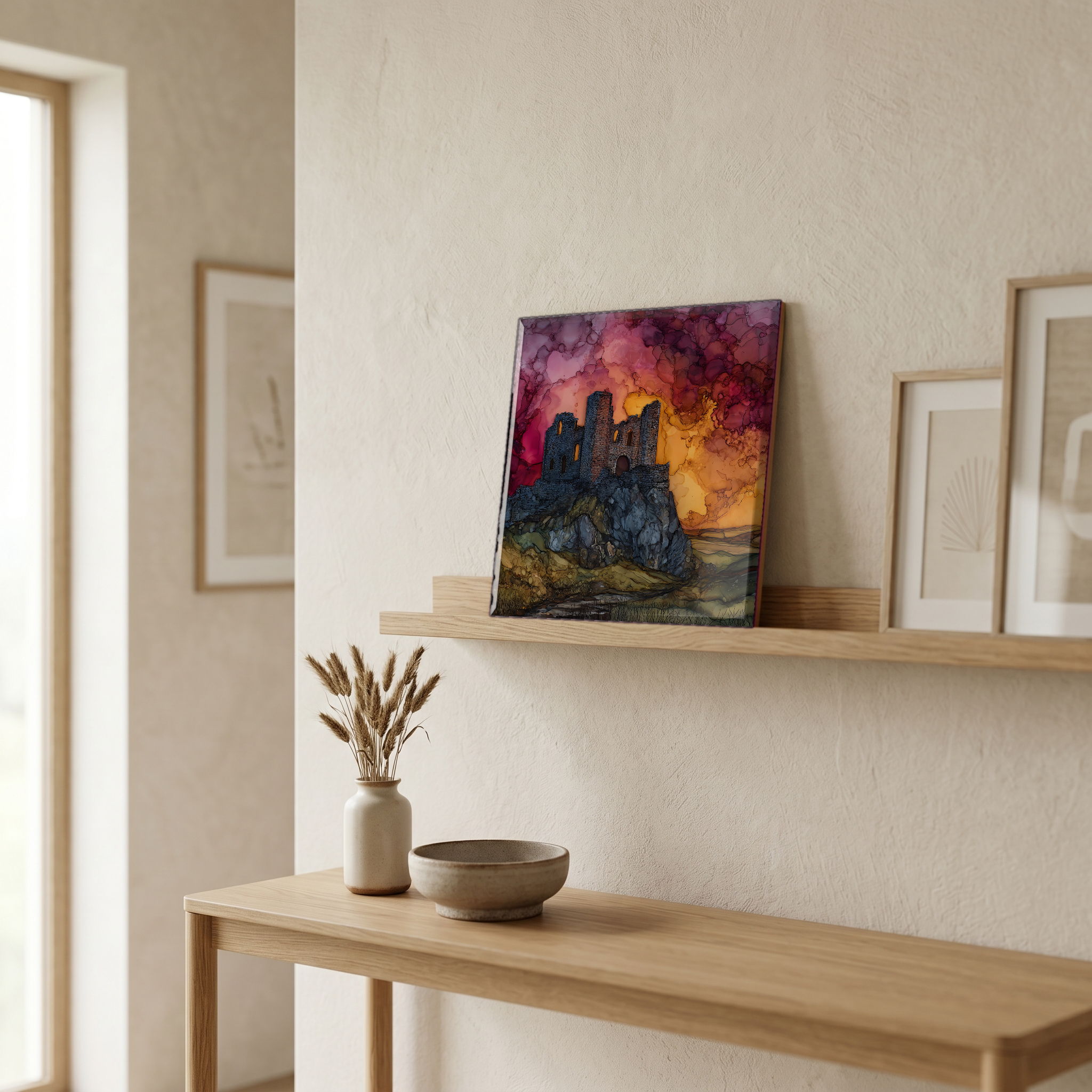
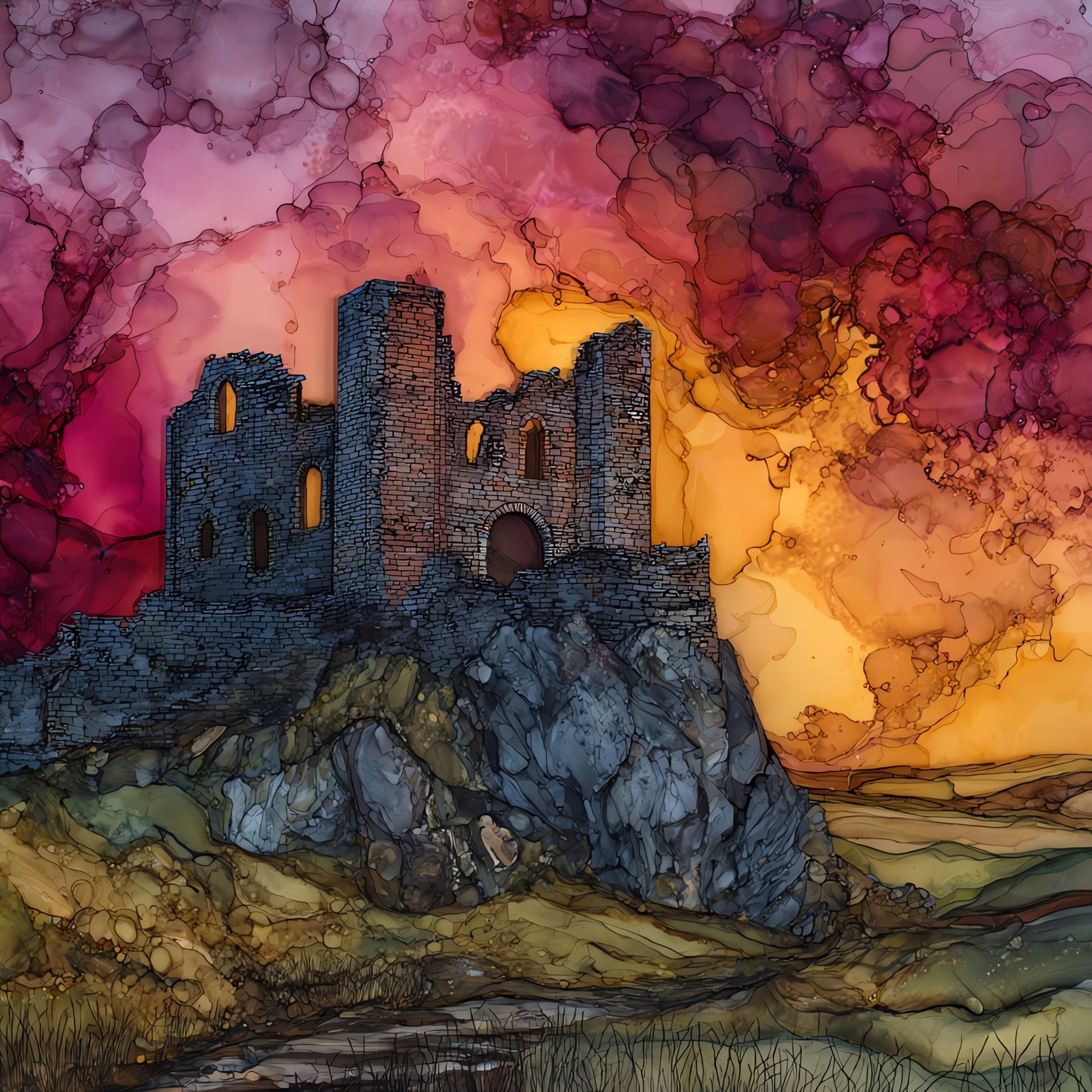
Rock of Dunamase
shown on ceramic, 12-inch tileIreland
east of Portlaoise, in the Irish midlands

Rock of Dunamase

a Norman keep the rock outlasted.

Where it lives

Not only on a wall.

A small tile on the nightstand catching the morning. A larger one above the fire. Yours, wherever you spend the slow hours.
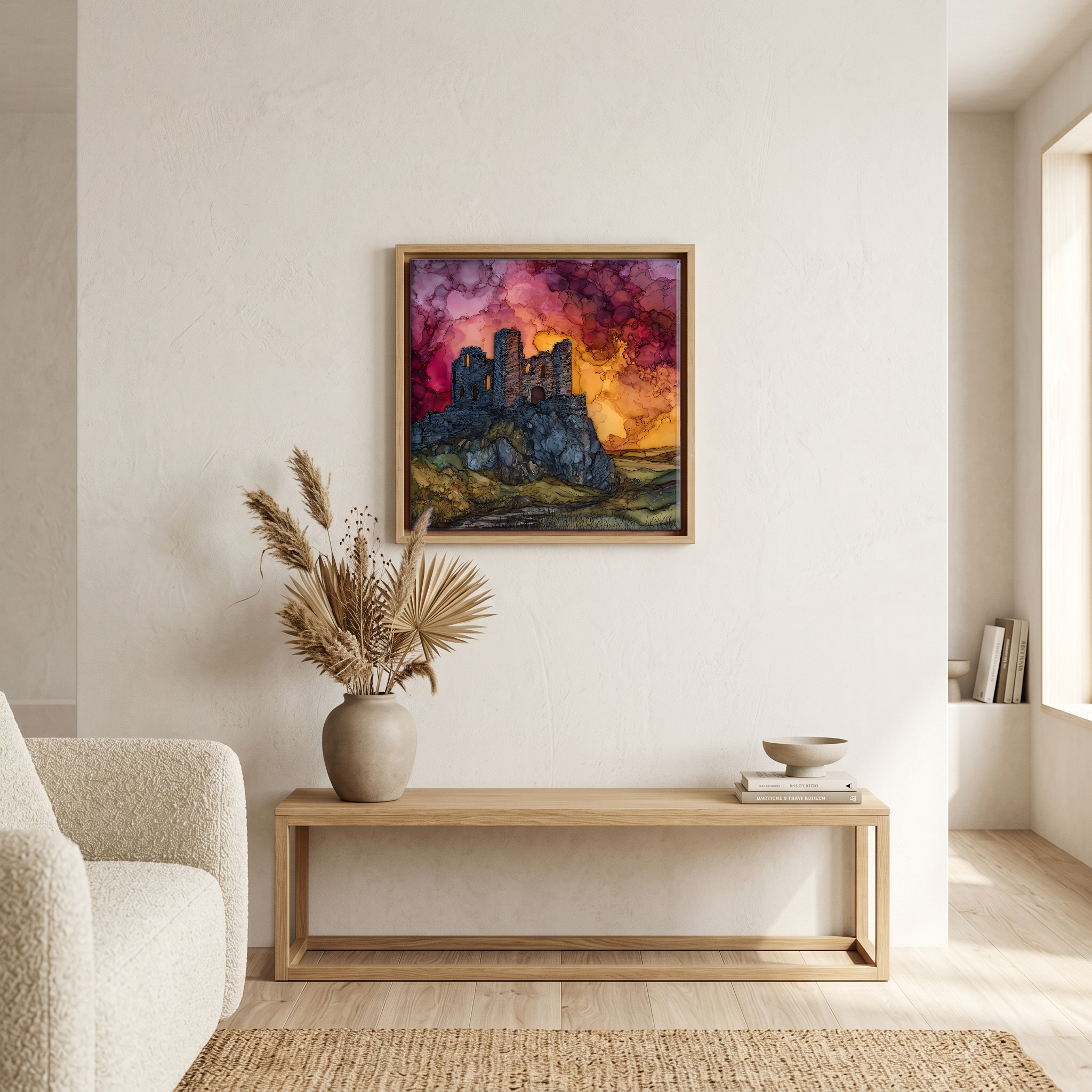
Above the bench, in a warm oak surround.
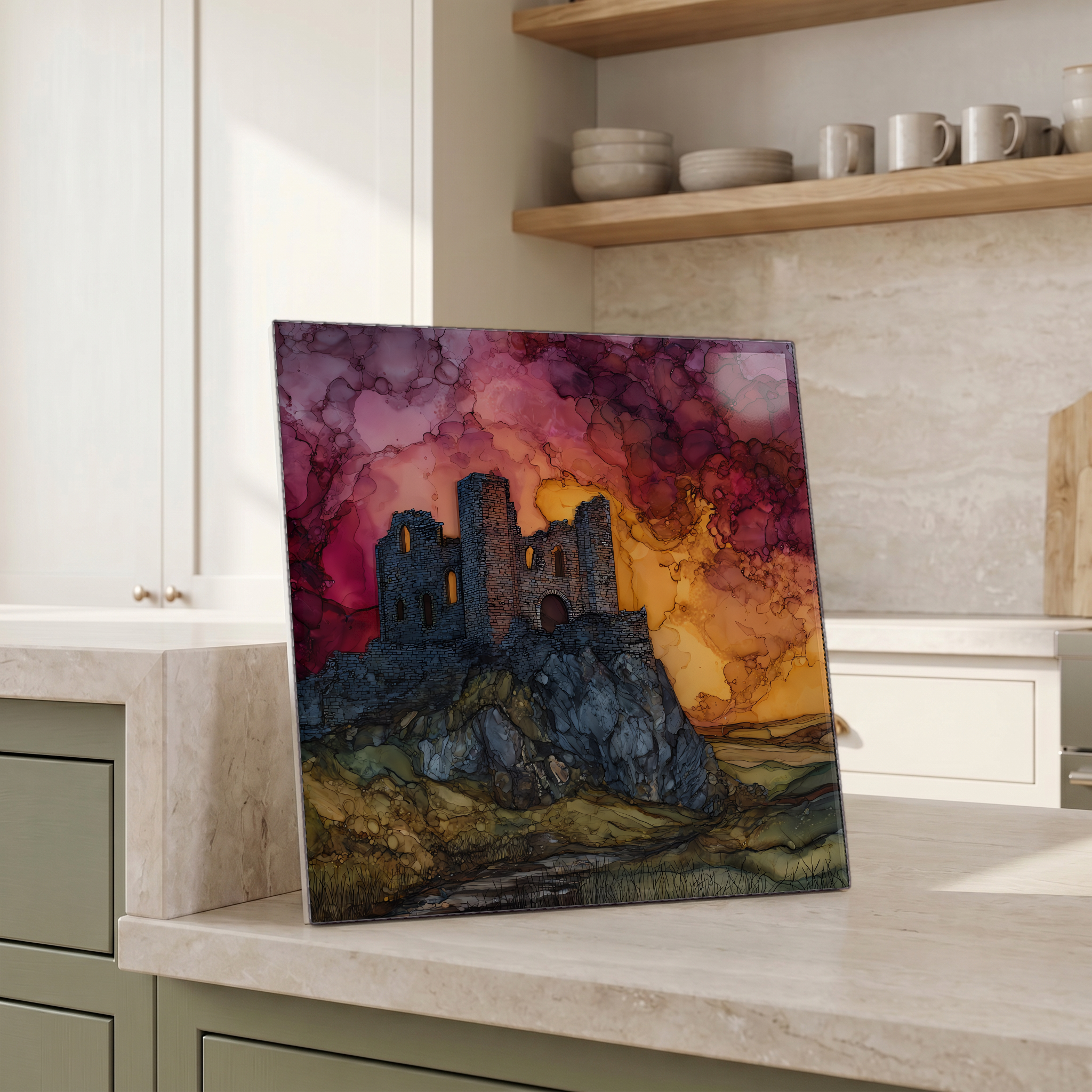
Beside the kettle, propped on the counter.
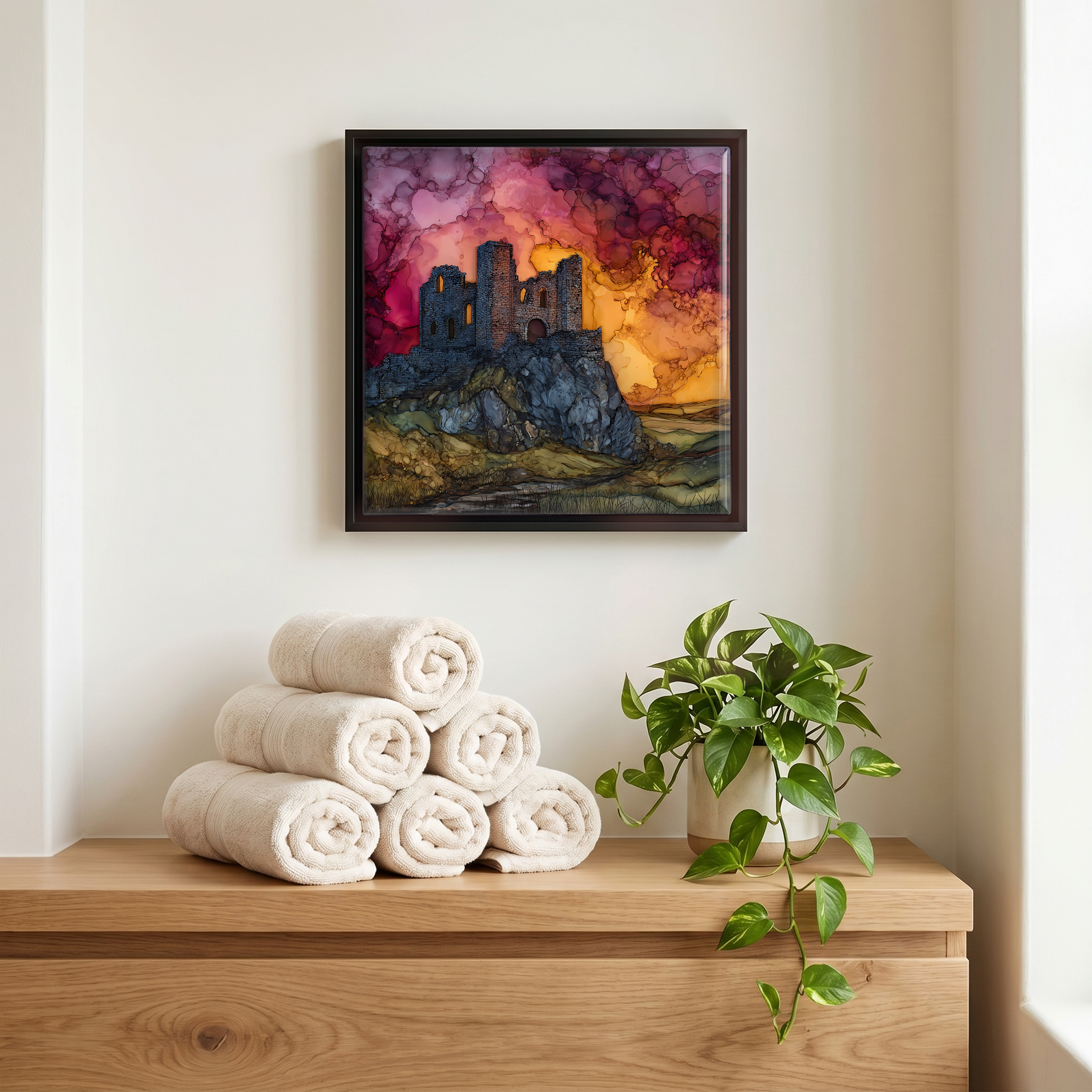
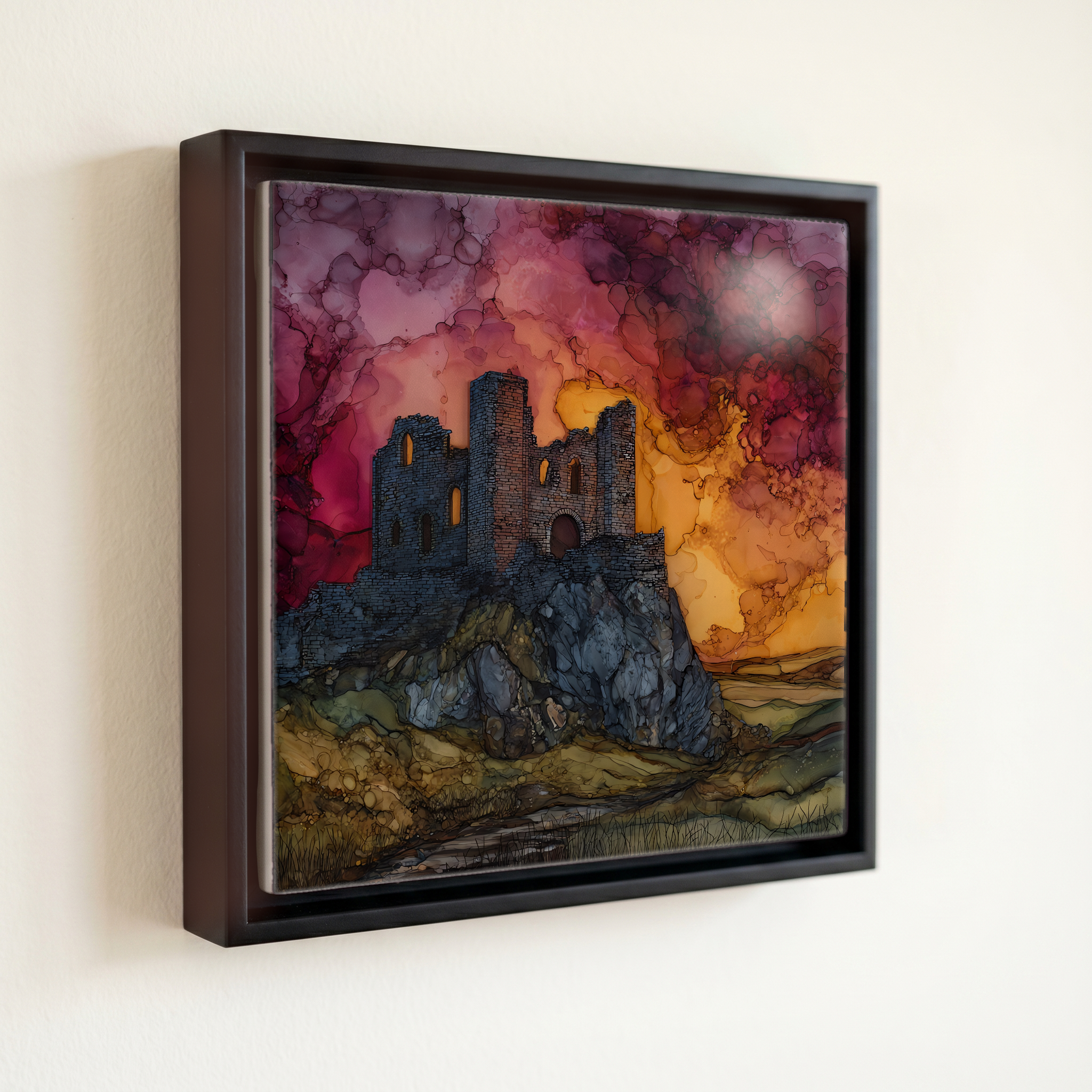
Above the linens, in a slim black surround.
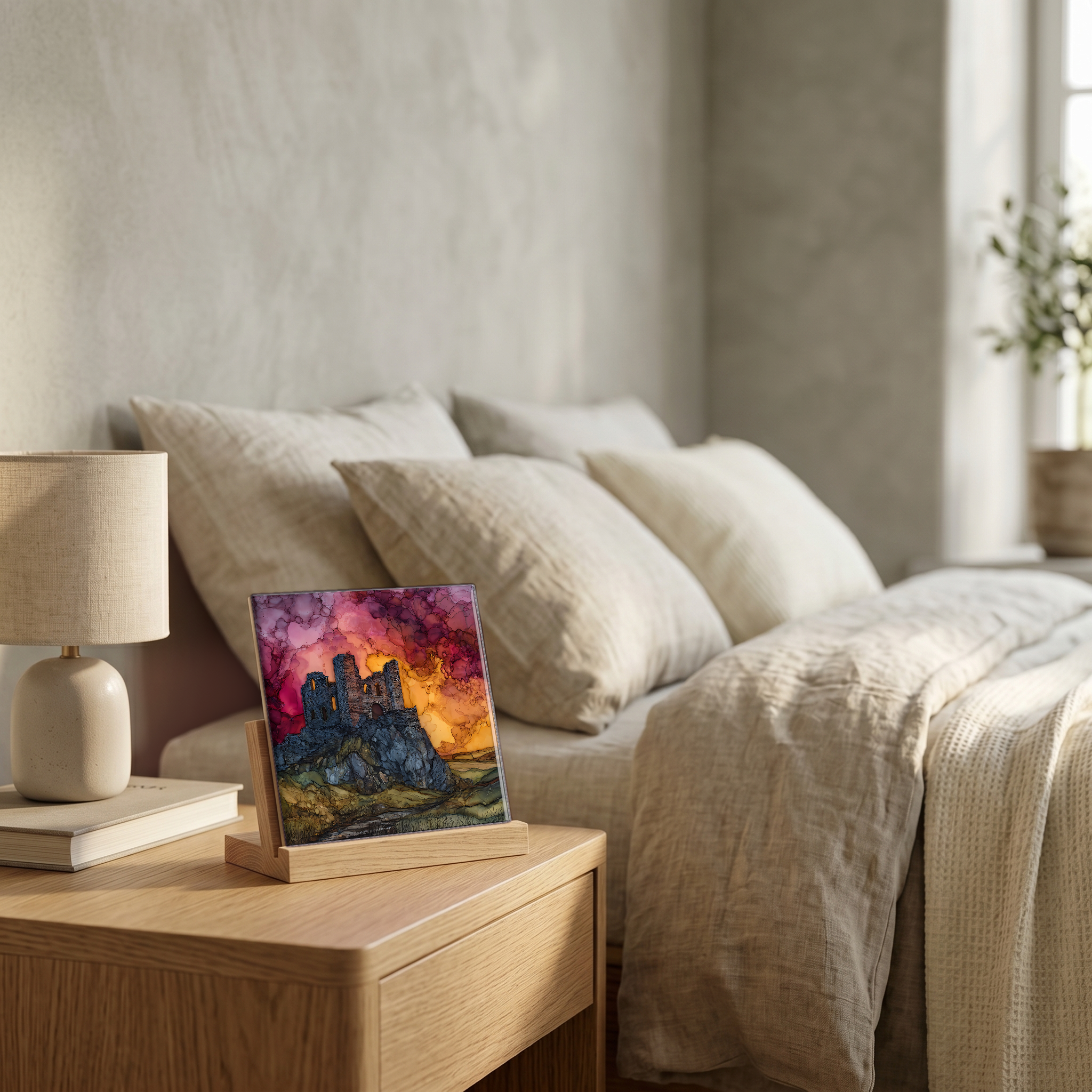
On the nightstand, on a light oak stand.
On a picture ledge, where the light comes in.
a note from the studio

A medieval ruin on a 46-metre limestone outcrop, rising out of flat midland farmland. The fortress here was old before the Normans arrived: Viking raiders sacked the original Dún Másc in 845. William Marshal's family built the stone castle that survives, around 1208. Cromwell's troops broke most of it in 1650. What stands now stands without a roof: gatehouses, curtain walls, the empty doorway of the keep. From the upper ward the Slieve Bloom Mountains sit on the western horizon. Most days, nobody else is on the path.
from the studio
shown in a slim black floating frame · 6 × 6 in
— bring it home

Rock of Dunamase, on ceramic.

Each tile is finished by hand in our Knoxville studio. Artwork is slowly infused into the ceramic surface under high heat and pressure, and rests beneath a thin glossy finish. The colour lives in the surface, not on top of it.

What kind of piece?
One tile — square or rectangle.
How big?
the popular one — counter, shelf, nightstand
6 × 6 in · 15 cm · 1.6 lb
Surface finish
A clear glossy finish — the artwork reads as if under resin. Ideal for show-pieces and framed wall art.
How it sits
A hidden cleat — sits ¼″ proud of the wall.
$58
Hand-finished and shipped from our studio at the foot of the Smokies. On your wall in about ten days.
size
6 × 6 in
15 cm
weighs
1.6 lb
solid in the hand
surface
ceramic, hand-finished
art rests beneath a thin glossy finish
from
Knoxville, TN
our family studio, at the foot of the Smokies
— start a Coaster Set

Pick any four 4-inch tiles — National Parks you've been to, a Smokies set, the four seasons of one place. $ for a set of , cork-backed, ready to live on the table.
comes gift-ready
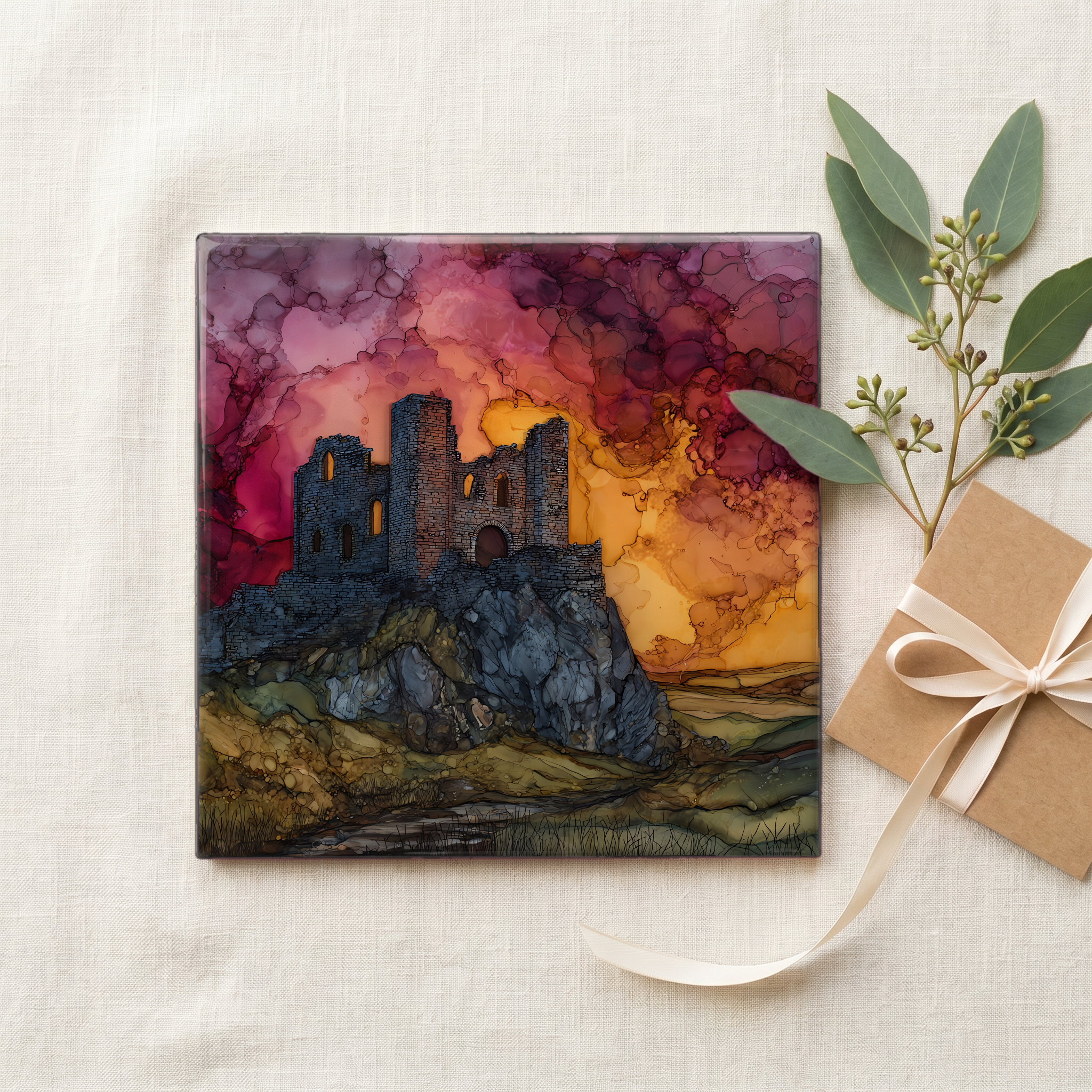
comes gift-ready

Each tile ships in a kraft box, tied with cream ribbon, with a handwritten note from the studio if you'd like to add one.
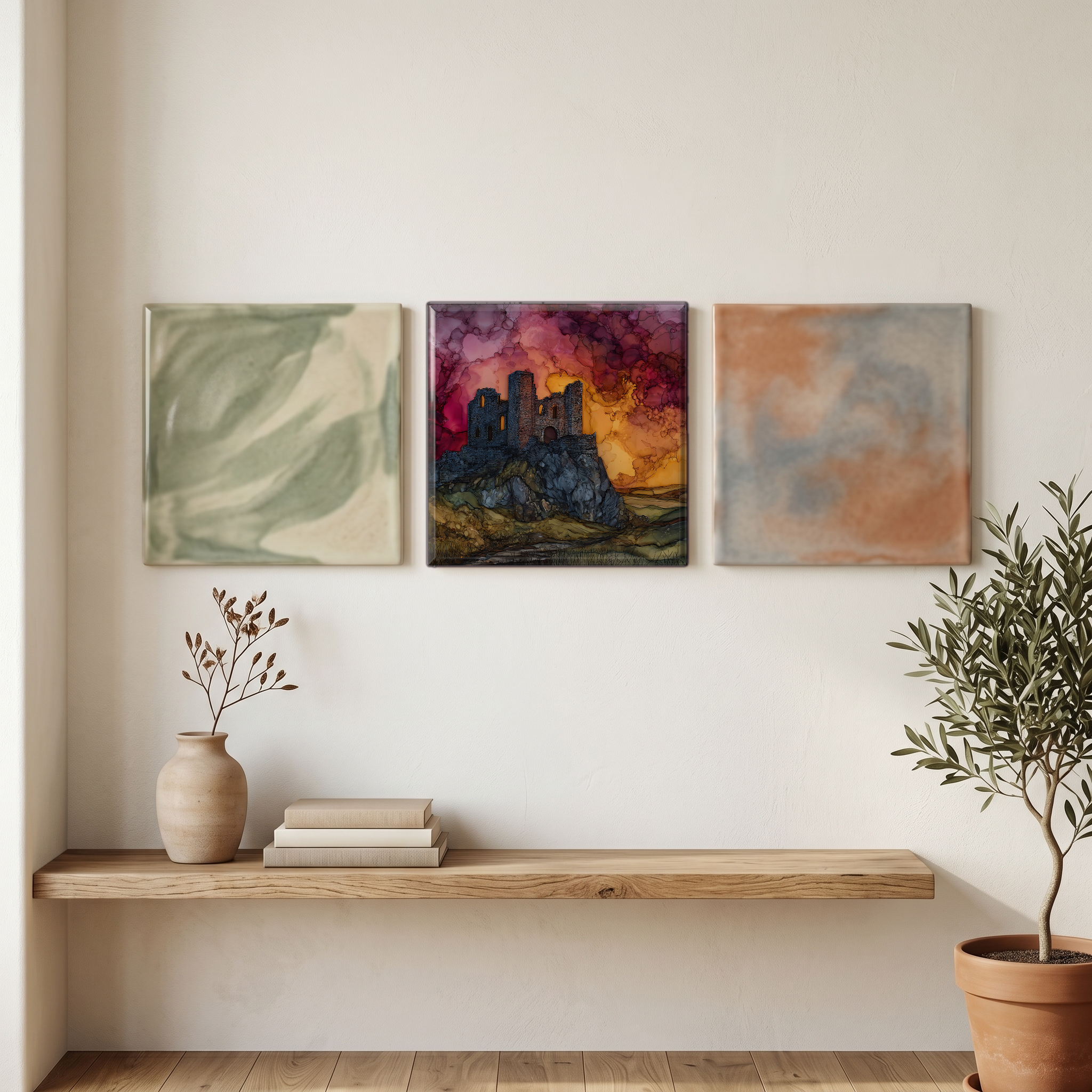
or build a grouping
or build a grouping

Three or five different vistas, hung together — a chapter of places you've been, or want to go.

about Rock of Dunamase

The place, in three passes.

A little of what's known, in case you fall down the rabbit hole — or want to go see it yourself.
the place

The Rock of Dunamase sits on a 46-metre limestone outcrop on the Laois plain, about 6 kilometres east of Portlaoise on the N80 toward Stradbally. The name comes from the Irish Dún Másc, the fort of Masc, and the site was already old when Viking raiders sacked it in 845, an event recorded in the Annals of the Four Masters. The surviving medieval castle was largely the work of William Marshal in the early thirteenth century, after his marriage to Isabel de Clare brought the rock into his family's holdings. The site is in the care of the Office of Public Works and is open year-round at no charge.

— informed by Wikipedia
the stone

The defensive scheme stacks four layers up the rock: an outer barbican, a lower bailey, an inner gatehouse, and the upper ward with the great keep. Most of what stands is the work of William Marshal, Earl of Pembroke, in the first decade of the thirteenth century. Marshal also undertook major works at Pembroke and Chepstow Castles in the Welsh Marches. The site changed hands repeatedly through the medieval and early-modern centuries and was slighted by Cromwellian forces in 1650, when much of the upper ward was reduced to the curtain-wall fragments visible today. Two of the upper-ward gateways still carry their thirteenth-century arches.

— informed by Wikipedia
the visit

The site is open year-round, with no admission fee and no gate. A small unmarked car park sits at the base of the rock off the L4663 (signed from the N80), and a grass path climbs through the lower defences to the summit in about ten minutes. There is no visitor centre, no signage on the walls themselves, and no toilet. Sturdy footwear is sensible: the upper ward is uneven and unfenced, and the views over the Laois plain and toward the Slieve Bloom Mountains are unguarded on every side. The site is in the care of the Office of Public Works.

— informed by Wikipedia
where
Ireland · County Laois, Ireland
position
53.0314° N · 7.2106° W
the neighborhood

What's nearby.

A handful of named places within an hour's walk or short drive. Some we've already painted; some we will.
6 km W
Portlaoise
county town
7 km E
Stradbally
village
10 km N
Emo Court
neoclassical country house
12 km S
Heywood Gardens
Lutyens garden
10 km S
Timahoe Round Tower
early medieval round tower
N
Rock of Dunamase
Portlaoise
Stradbally
Emo Court
Heywood Gardens
Timahoe Round Tower
common questions

What people ask.

A few questions we get about Rock of Dunamase — and about bringing the piece home.
about the place

The Rock of Dunamase stands on a 46-metre limestone outcrop in County Laois, in the midlands of Ireland, about 6 kilometres east of Portlaoise on the N80 road toward Stradbally. It is one of the most visible landmarks of the Laois plain.

The fortress called Dún Másc was already established when Viking raiders sacked it in 845, an attack recorded in the Annals of the Four Masters. The stone castle whose walls survive was built mainly in the early thirteenth century under William Marshal.

The surviving stone castle is principally the work of William Marshal, Earl of Pembroke, in the first decade of the 1200s. He gained the rock through his marriage to Isabel de Clare, daughter of Strongbow and Aoife of Leinster, who had brought it to her family as dowry.

Cromwellian forces under Henry Ireton demolished most of the upper ward in 1650, during the Cromwellian conquest of Ireland. The castle had changed hands many times over the previous four centuries and was never restored as a working fortress after the slighting.

Yes. The site is open year-round at no charge, with no gate and no visitor centre. A short grass path climbs the rock from a small car park at its base, signed from the N80. The upper ward is unfenced, so caution is sensible near the curtain walls.

From the upper ward the view runs west across the Laois plain to the Slieve Bloom Mountains, and east toward the Wicklow uplands on a clear day. The defensive value of the rock is immediately obvious: nothing rises between it and the horizon in most directions.

Dunamase comes from the Irish Dún Másc, meaning the fort of Masc. The name is recorded in early Irish annals as the seat of a regional ruler before the arrival of the Anglo-Normans in the twelfth century.

about the piece in your home

It has been a meaningful gift for many of our customers with ties to the Irish midlands. Dunamase is one of the great landmarks of County Laois, visible for miles across the plain. A Small or Medium with a handwritten note from the studio carries well.

The piece sits well in Celtic Revival interiors, Heritage-modern rooms, and warm-toned Maximalist settings. The stained-glass treatment of the stone and the deep mineral palette of the ruined keep also work in studies, libraries, and rooms with darker wood furniture.

Yes. Heritage-modern interiors that mix antique stonework references with contemporary fixtures pair well with this piece, as do rooms styled around Celtic Revival imagery. The mineral palette grounds rooms with neutral linens and aged oak.

A single Large works well above a console or smaller sofa. For a standard three-seater or a long entryway, a 4-tile Mural carries the wall. Above a generous sectional, a 9-tile Mural gives the architecture its full scale.

Yes. The same artwork is available in our Dura Satin and Matte finishes, both of which are scratch-resistant and suited to vertical installation in bathrooms, kitchens, and backsplashes. The colour stays in the surface and will not fade with cleaning.

A soft microfibre cloth and water is all that is needed. For the Dura Satin or Matte finishes used in bathrooms and kitchens, the same routine works. Avoid abrasive scouring pads and citrus-based cleaners, which can dull the surface over time.

Yes. Every WenderVista piece is original to our studio in Knoxville, Tennessee. There is no licensing and no third-party catalogue. The Rock of Dunamase artwork was made by Reid Wender as part of the WenderVista atlas of places.

if this one stayed with you

A few you might also love.

Hand-picked by the eye that found Sorapis. Same air, same kind of quiet.