Wender·Vista
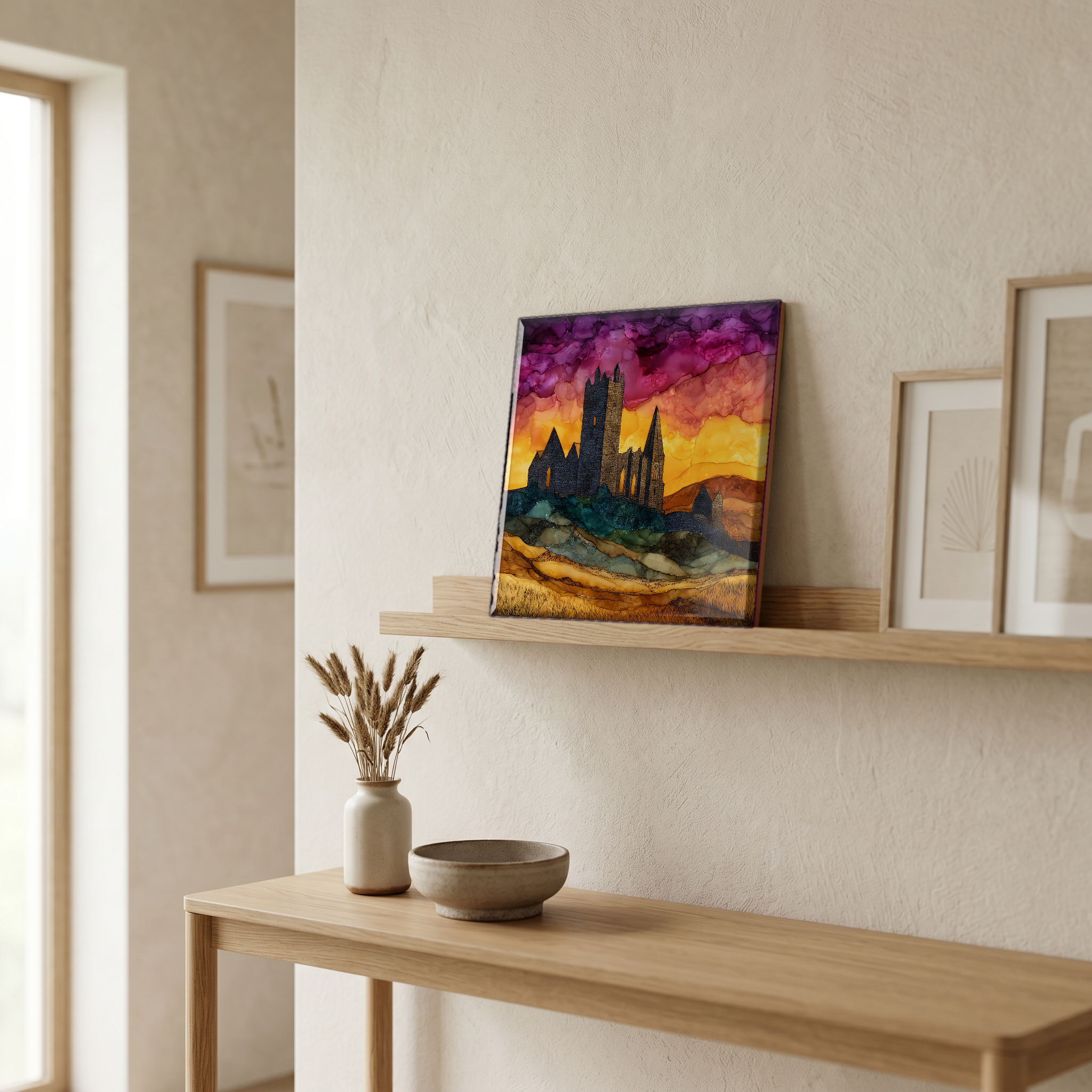
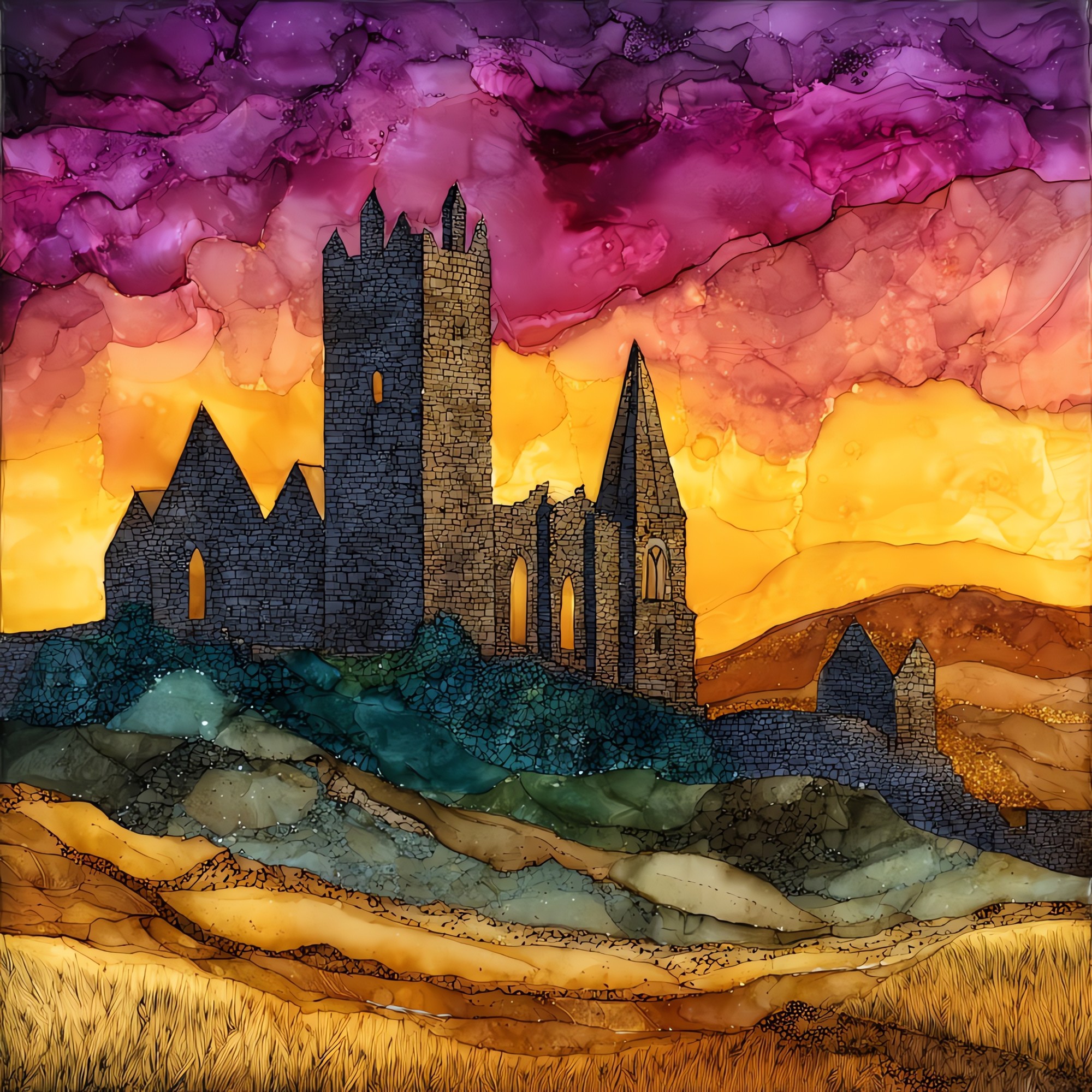
Rock of Cashel
shown on ceramic, 12-inch tileIreland
above the Plain of Tipperary, in southern Ireland

Rock of Cashel

the silhouette you see before you see the town.

Where it lives

Not only on a wall.

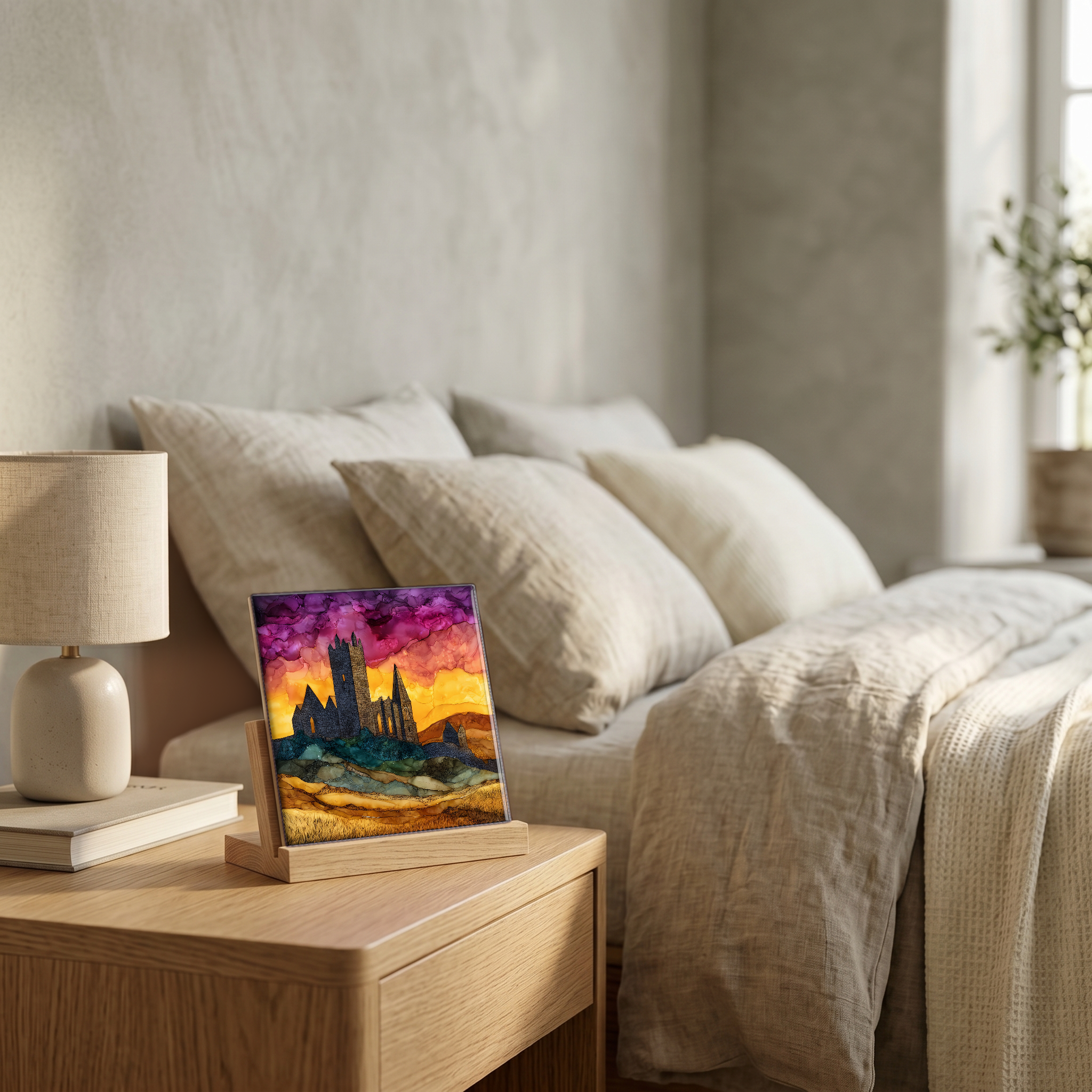
A small tile on the nightstand catching the morning. A larger one above the fire. Yours, wherever you spend the slow hours.
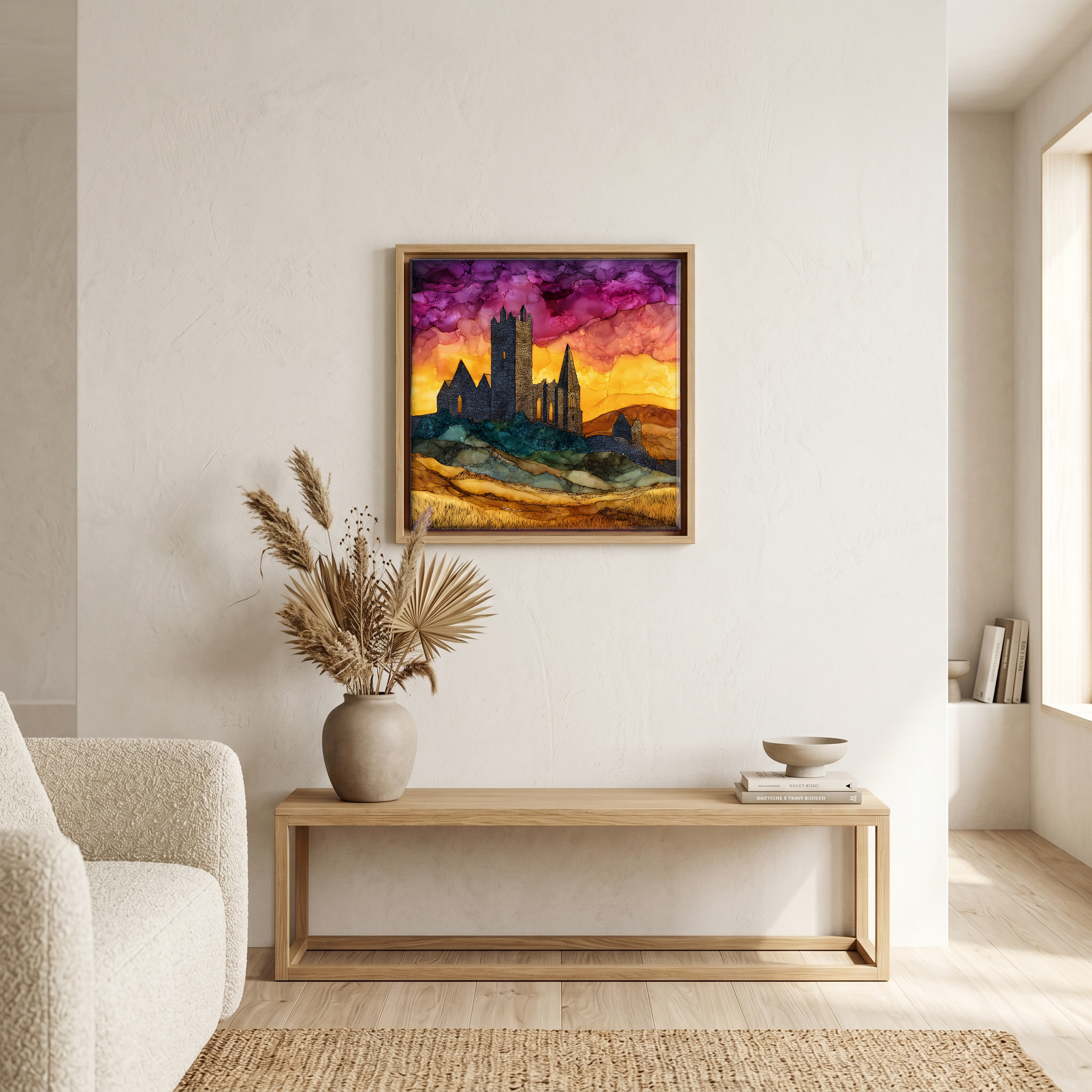
Above the bench, in a warm oak surround.
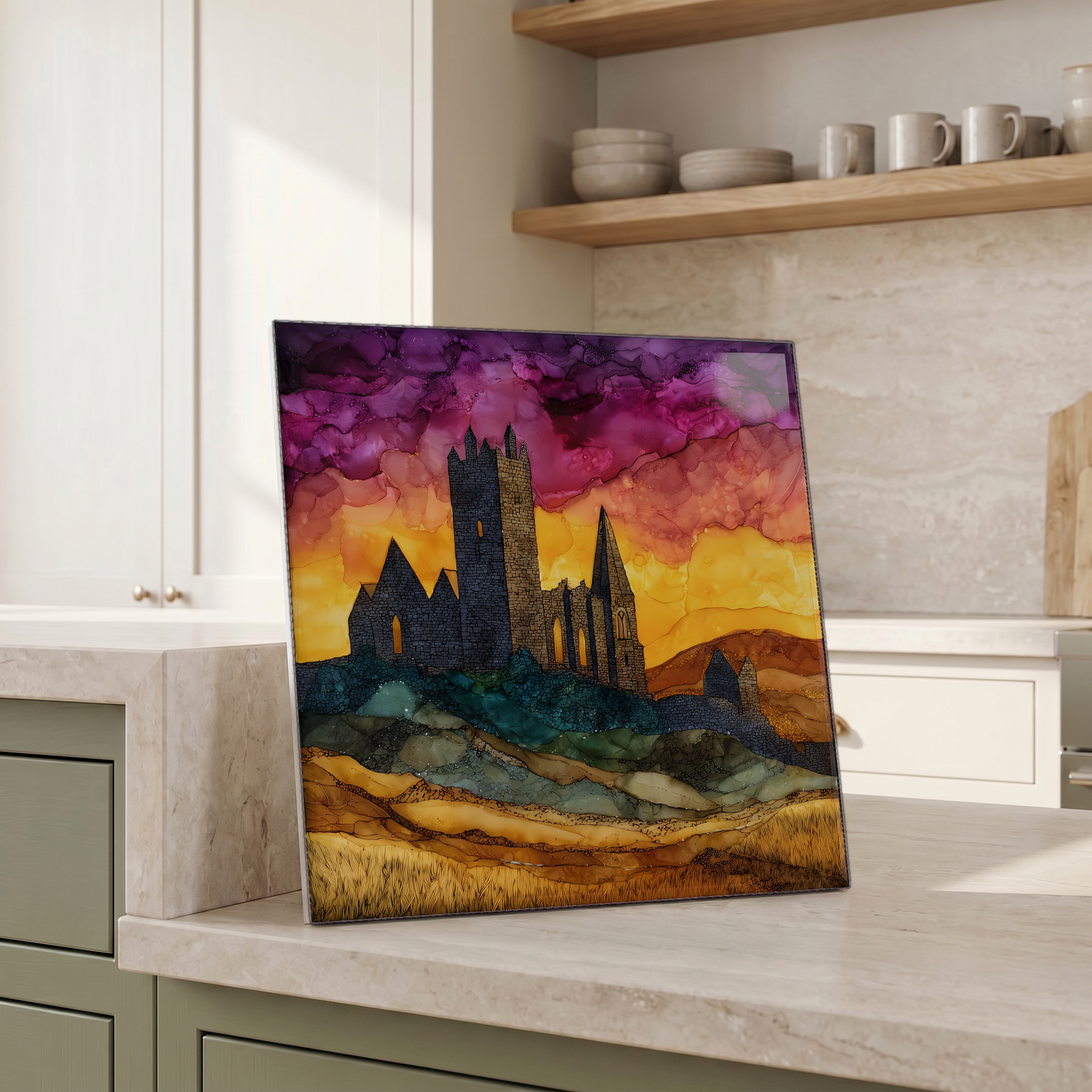
Beside the kettle, propped on the counter.
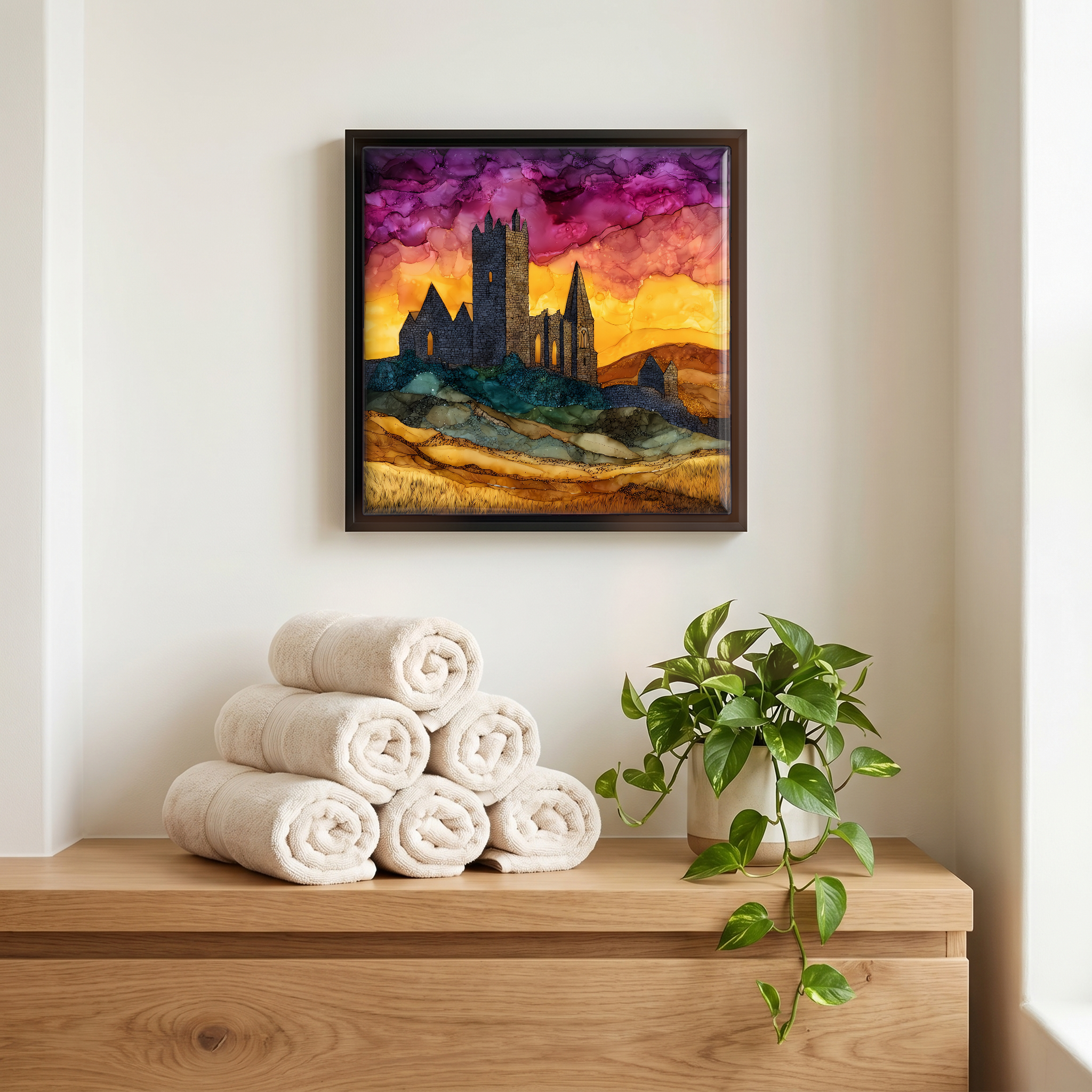
Above the linens, in a slim black surround.
On the nightstand, on a light oak stand.
On a picture ledge, where the light comes in.
a note from the studio

A limestone outcrop rising above the Plain of Tipperary. You see it long before you reach the town: round tower, cathedral, the small dark shape of Cormac's Chapel on the south side. The Kings of Munster ruled from this rock before they gave it to the Church in 1101. The stones have been there ever since, mostly without a roof. The light moves across the limestone differently than it moves across the fields below. Sheep graze around Hore Abbey in the meadow. From the wall at the edge, the Galtee Mountains sit on the southern horizon.
from the studio
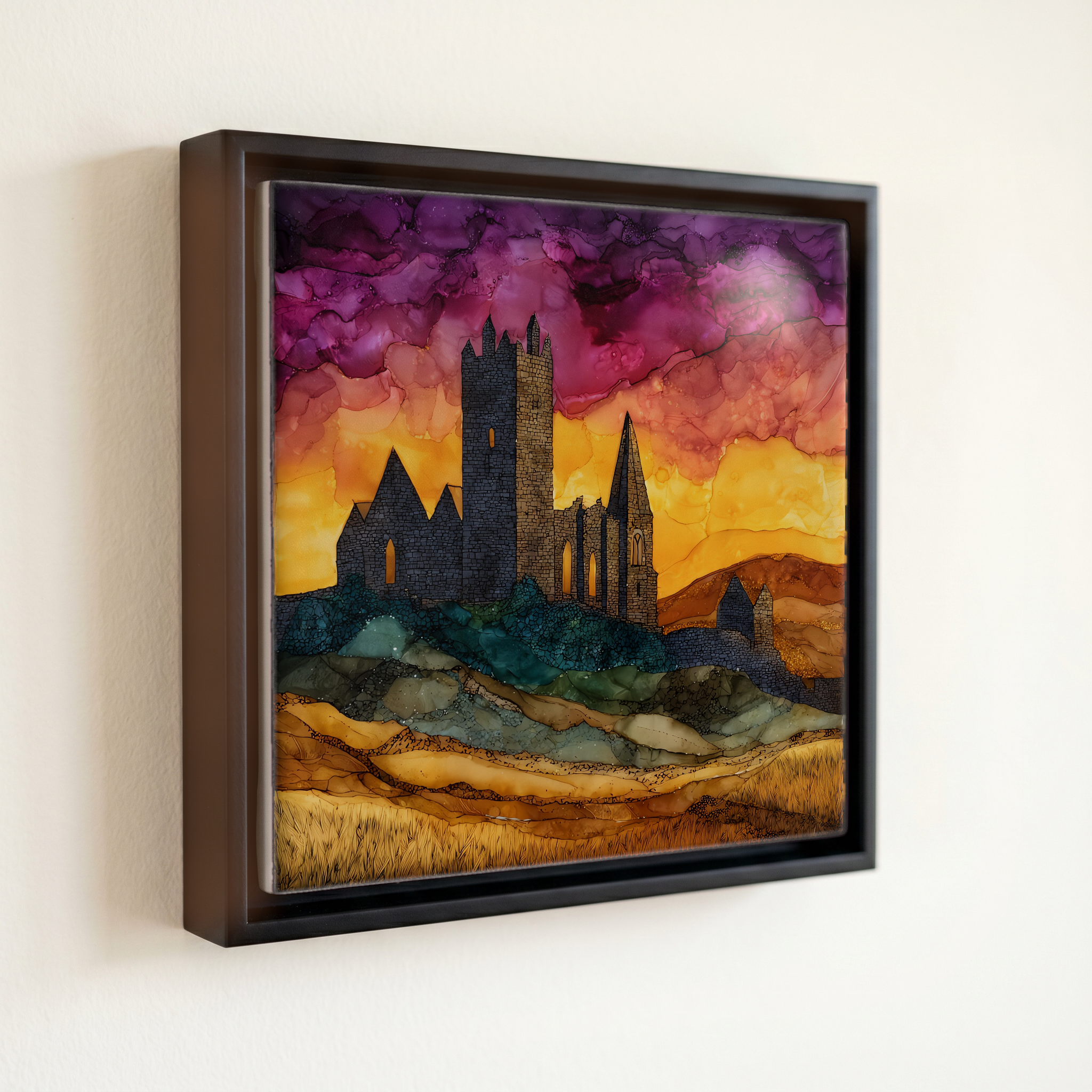
shown in a slim black floating frame · 6 × 6 in
— bring it home

Rock of Cashel, on ceramic.

Each tile is finished by hand in our Knoxville studio. Artwork is slowly infused into the ceramic surface under high heat and pressure, and rests beneath a thin glossy finish. The colour lives in the surface, not on top of it.

What kind of piece?
One tile — square or rectangle.
How big?
the popular one — counter, shelf, nightstand
6 × 6 in · 15 cm · 1.6 lb
Surface finish
A clear glossy finish — the artwork reads as if under resin. Ideal for show-pieces and framed wall art.
How it sits
A hidden cleat — sits ¼″ proud of the wall.
$58
Hand-finished and shipped from our studio at the foot of the Smokies. On your wall in about ten days.
size
6 × 6 in
15 cm
weighs
1.6 lb
solid in the hand
surface
ceramic, hand-finished
art rests beneath a thin glossy finish
from
Knoxville, TN
our family studio, at the foot of the Smokies
— start a Coaster Set

Pick any four 4-inch tiles — National Parks you've been to, a Smokies set, the four seasons of one place. $ for a set of , cork-backed, ready to live on the table.

comes gift-ready
comes gift-ready

Each tile ships in a kraft box, tied with cream ribbon, with a handwritten note from the studio if you'd like to add one.
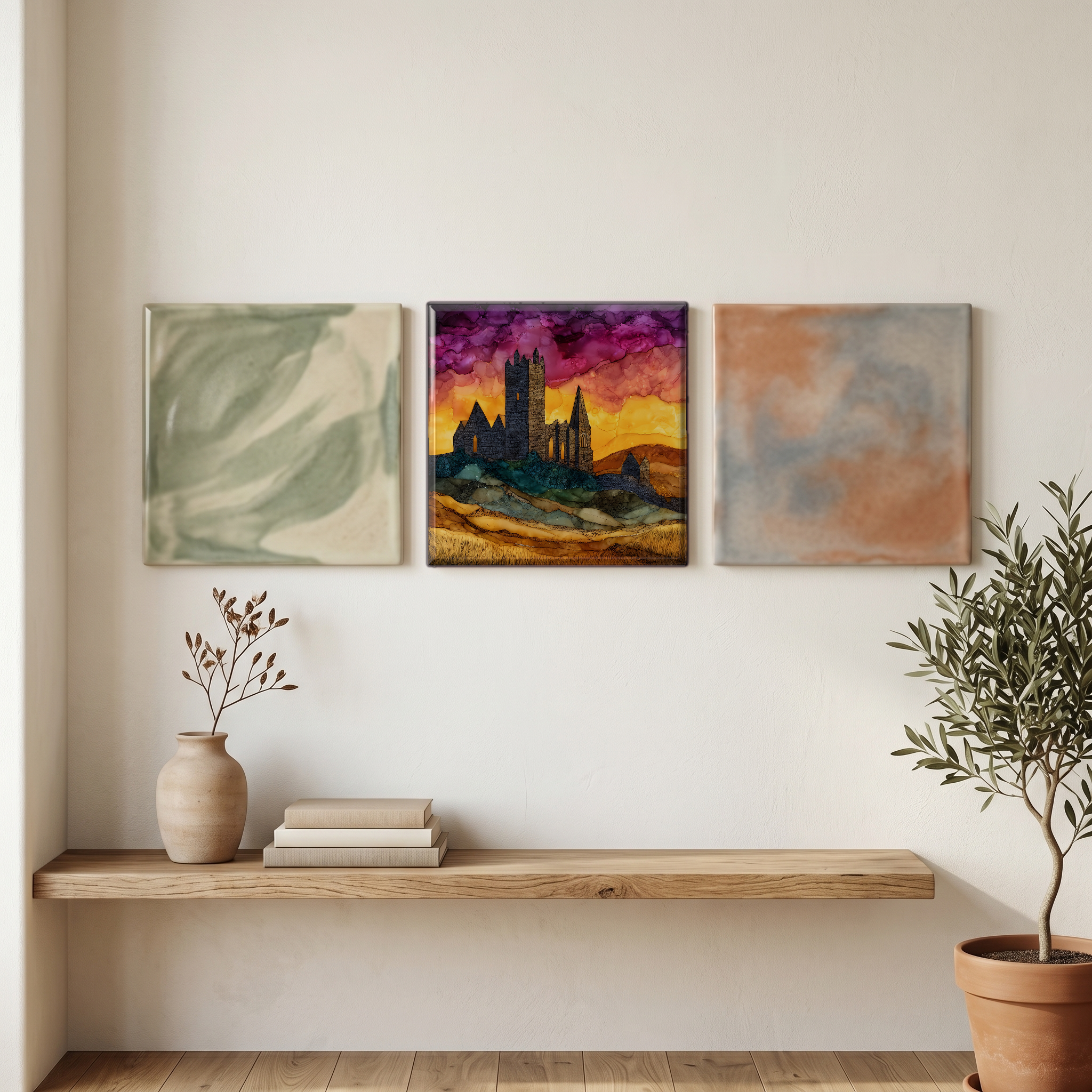
or build a grouping
or build a grouping

Three or five different vistas, hung together — a chapter of places you've been, or want to go.

about Rock of Cashel

The place, in three passes.

A little of what's known, in case you fall down the rabbit hole — or want to go see it yourself.
the place

The Rock of Cashel rises about 60 metres above the surrounding Plain of Tipperary in County Tipperary, in the Irish province of Munster. The limestone outcrop sits at the edge of the town of Cashel, roughly 160 km southwest of Dublin and about 100 km north of Cork. The site was the traditional seat of the Kings of Munster for several centuries until King Muirchertach Ua Briain granted the rock to the Church in 1101. The principal buildings still standing include the round tower, Cormac's Chapel, the Gothic cathedral, and the Hall of the Vicars Choral, all raised between the early twelfth and fifteenth centuries. The site is now a National Monument cared for by the Office of Public Works.

the stone

Cormac's Chapel, consecrated in 1134, is one of the earliest and finest Romanesque churches in Ireland. King Cormac Mac Carthaigh commissioned it, and its interior still carries traces of twelfth-century frescoes, among the oldest surviving wall paintings in the country. The round tower, the oldest building on the rock, dates from around 1100 and rises about 28 metres. The Gothic cathedral was built between 1235 and 1270 and was burned in 1495 by Gerald FitzGerald, the eighth Earl of Kildare. Cromwellian forces under Murrough O'Brien sacked the rock in 1647, and Archbishop Arthur Price had the cathedral roof removed in 1749. The buildings have stood roofless above the plain ever since.

— informed by Wikipedia
the visit

The Rock of Cashel is open year-round. Hours run roughly 9 a.m. to 4:30 p.m. in winter and to 7 p.m. in summer; last admission is forty-five minutes before closing. The Office of Public Works charges a modest admission fee, with reduced rates for seniors, students, and children. Cormac's Chapel is shown by guided tour only, in small groups, to protect the surviving twelfth-century frescoes from humidity damage. Hore Abbey, a thirteenth-century Cistercian ruin in the meadow at the foot of the rock, is freely accessible and worth the short walk down through the gate at the lower car park.

— informed by OPW Heritage Ireland
where
Ireland · Cashel, County Tipperary
position
52.5200° N · 7.8903° W
the neighborhood

What's nearby.

A handful of named places within an hour's walk or short drive. Some we've already painted; some we will.
1 km SW
Hore Abbey
Cistercian abbey ruin
10 km W
Athassel Priory
Augustinian priory ruin
15 km N
Holy Cross Abbey
Cistercian abbey
17 km S
Cahir Castle
medieval castle
N
Rock of Cashel
Hore Abbey
Athassel Priory
Holy Cross Abbey
Cahir Castle
common questions

What people ask.

A few questions we get about Rock of Cashel — and about bringing the piece home.
about the place

The Rock of Cashel is a limestone outcrop in the town of Cashel, County Tipperary, in southern Ireland's Munster province. It sits about 160 km southwest of Dublin and roughly 100 km north of Cork, rising above the Plain of Tipperary.

The Rock of Cashel was the seat of the Kings of Munster for several centuries before being granted to the Church in 1101. Its medieval cluster of round tower, Romanesque chapel, and Gothic cathedral is one of Ireland's most concentrated groups of early ecclesiastical architecture.

Cormac's Chapel was consecrated in 1134. King Cormac Mac Carthaigh of Munster commissioned it, and it stands as one of the earliest and finest examples of Hiberno-Romanesque architecture in Ireland, with rare twelfth-century frescoes still visible inside.

Cormac's Chapel is accessible only by guided tour, in small groups, run by the Office of Public Works. The limit protects the surviving frescoes from humidity. Tours are included in general admission to the site.

The site is open year-round but reads best from May through September, when the surrounding fields of the Golden Vale are green and the round tower's silhouette holds the long northern light into the evening. Crowds are lightest first thing in the morning.

Archbishop Arthur Price had the roof of the cathedral removed in 1749, leaving the building open to the weather. Cromwellian forces under Murrough O'Brien had already sacked the rock in 1647. The cathedral has stood roofless ever since.

Hore Abbey, a thirteenth-century Cistercian ruin in the meadow at the foot of the rock, is freely accessible and a short walk from the lower car park. It frames one of the best-known views of the Rock of Cashel from the southwest.

about the piece in your home

It has been a meaningful gift for many of our customers with family or roots in Ireland. The Rock of Cashel is one of the most recognised places in Munster, often connected to memories of family visits, history-class outings, or weekend drives through the Golden Vale. A Coaster or Small with a handwritten note from the studio carries well.

The colour and stained-glass treatment of the Rock of Cashel piece sits comfortably in three style families: Celtic-traditional rooms, Cottagecore interiors with warm wood, and Modern-historical spaces where one strong stone-and-sky image anchors a quieter wall.

Heritage interiors with rough wood, linen, and stone elements have been a steady current in Irish and Irish-American homes for years. A single Medium of the Rock of Cashel above a fireplace or sideboard reads as quietly rooted rather than themed.

For a sofa or console, a single Large fills the wall as a focal piece. A 4-tile Mural opens the image to a more grouped, mosaic-like presence. A 9-tile Mural is the gallery-scale choice for a long wall or stairwell.

Yes. Choose the Dura Satin or Matte finish for any room that sees steam or grease, such as bathrooms, showers, kitchens, and backsplashes. The Glossy finish is best reserved for framed wall pieces in dry rooms.

A soft microfibre cloth with water is enough for routine care. For kitchen or bathroom installations, mild dish soap and water is fine. Avoid abrasive scouring pads and ammonia-based cleaners, which can dull the surface over time.

Yes. Every Wender Studios image is made in-house, by Reid Wender, the curator. We do not license artwork from outside sources. The Rock of Cashel piece is part of WenderVista's Ireland series.

if this one stayed with you

A few you might also love.

Hand-picked by the eye that found Sorapis. Same air, same kind of quiet.