Wender·Vista
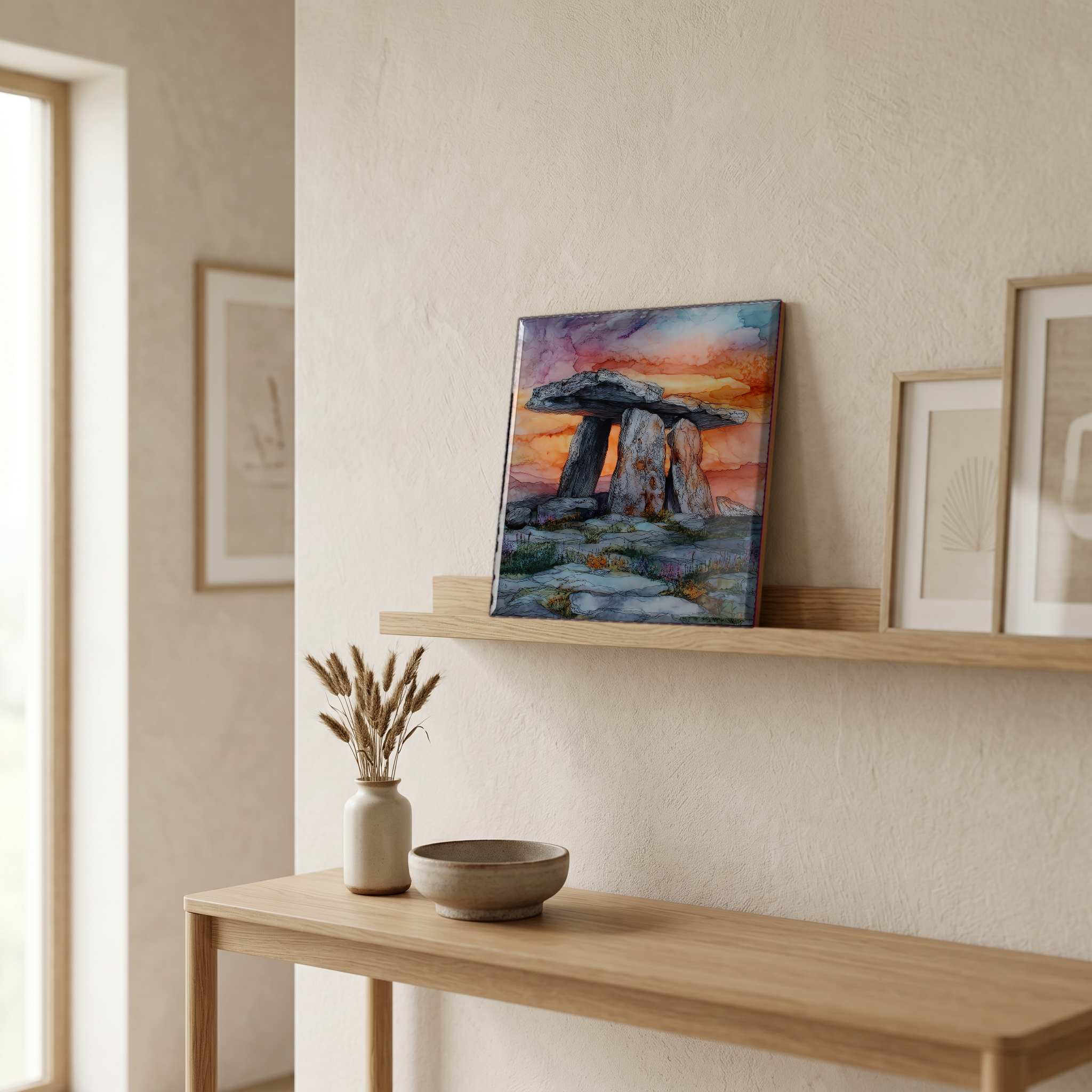
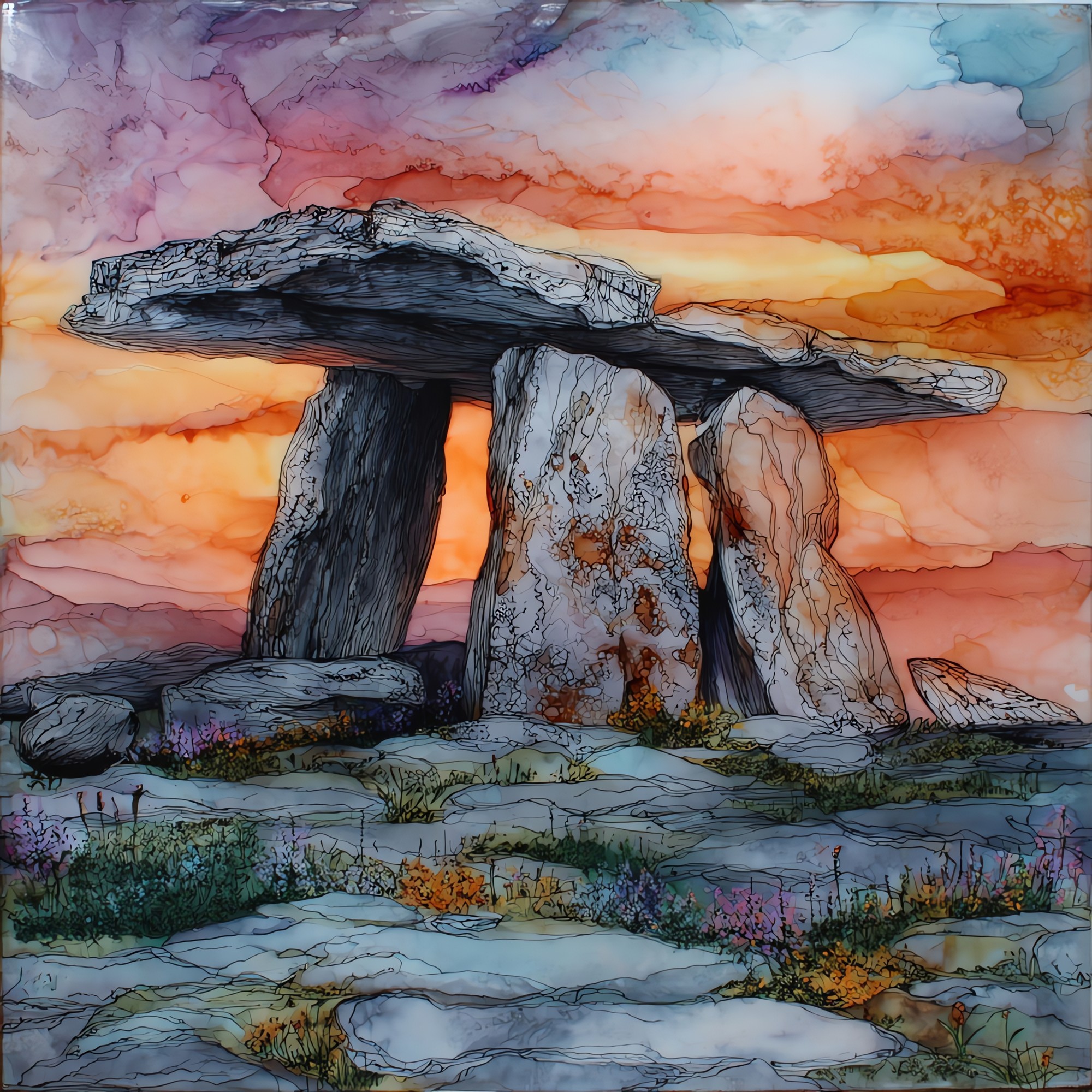
Poulnabrone Dolmen
shown on ceramic, 12-inch tileIreland
on the bare limestone of the Burren, west of Galway

Poulnabrone Dolmen

stone that has held the sky for six thousand years.

Where it lives

Not only on a wall.

A small tile on the nightstand catching the morning. A larger one above the fire. Yours, wherever you spend the slow hours.
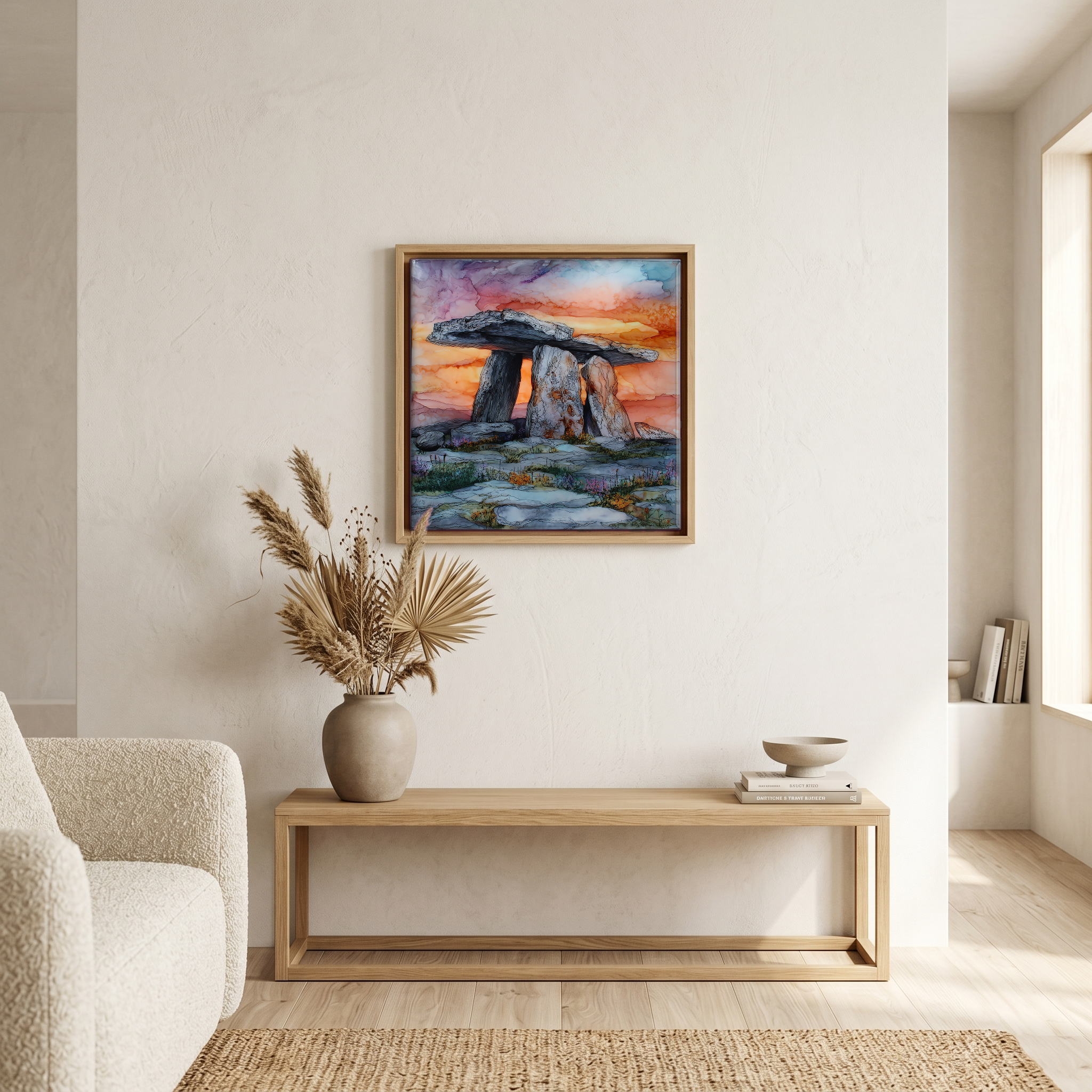
Above the bench, in a warm oak surround.
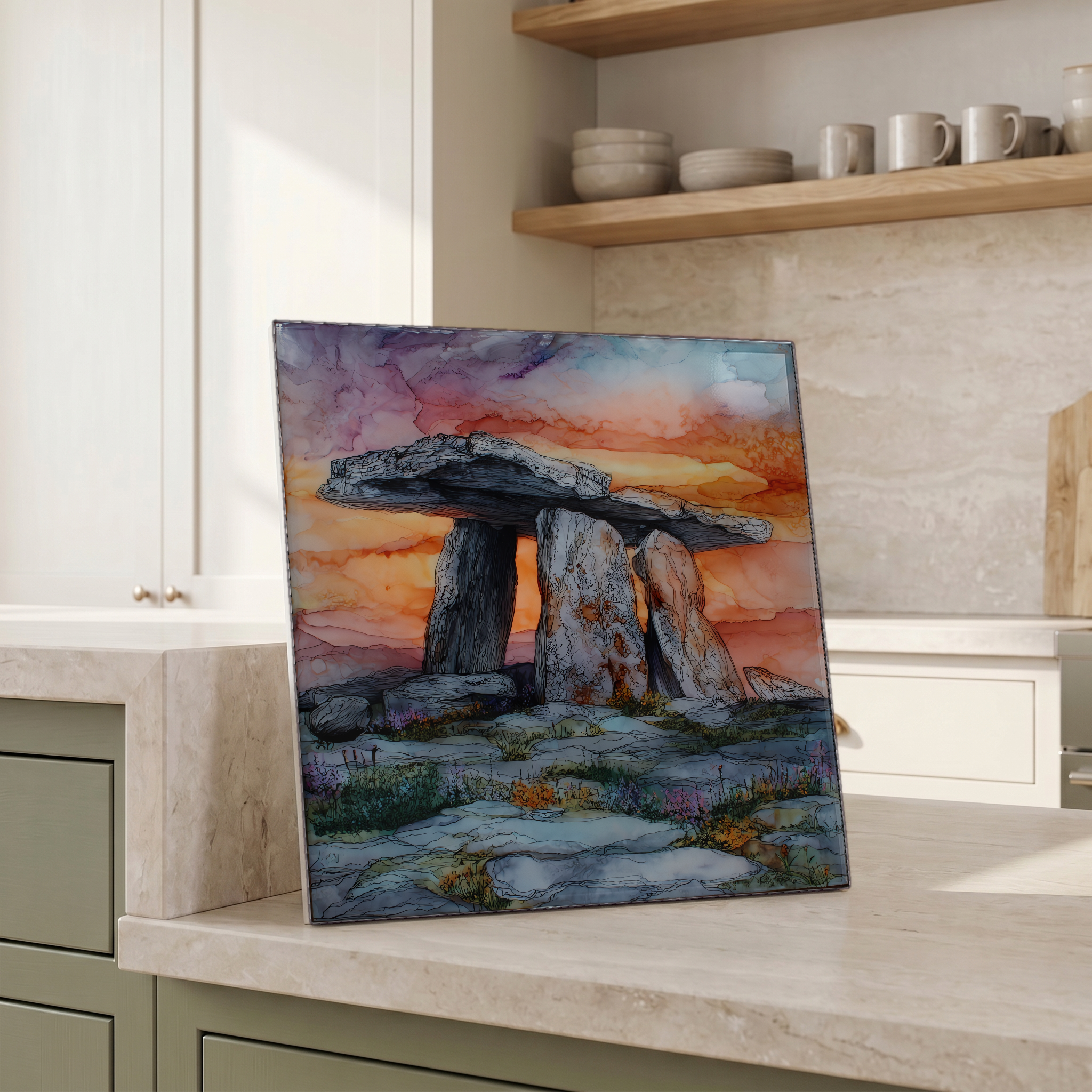
Beside the kettle, propped on the counter.
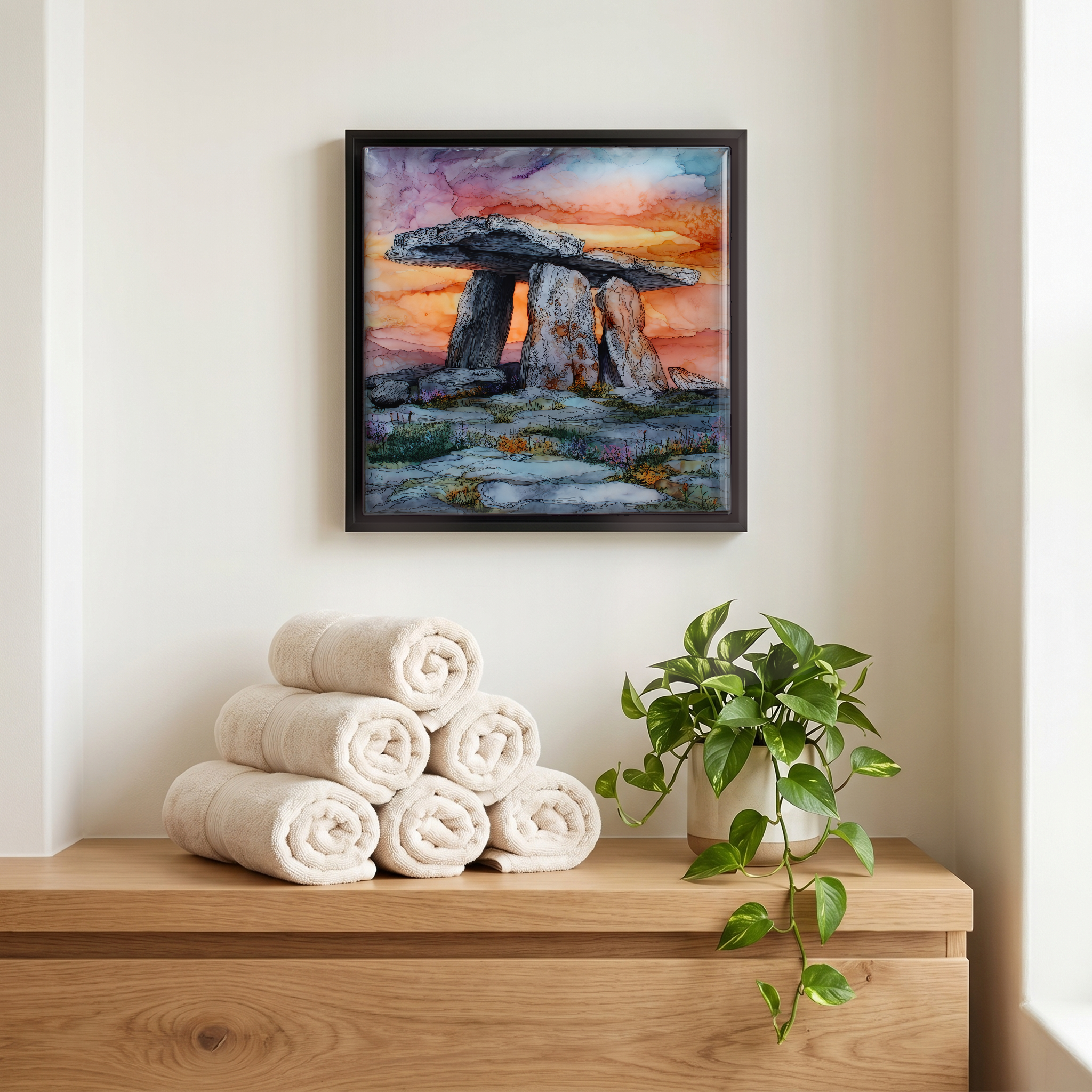
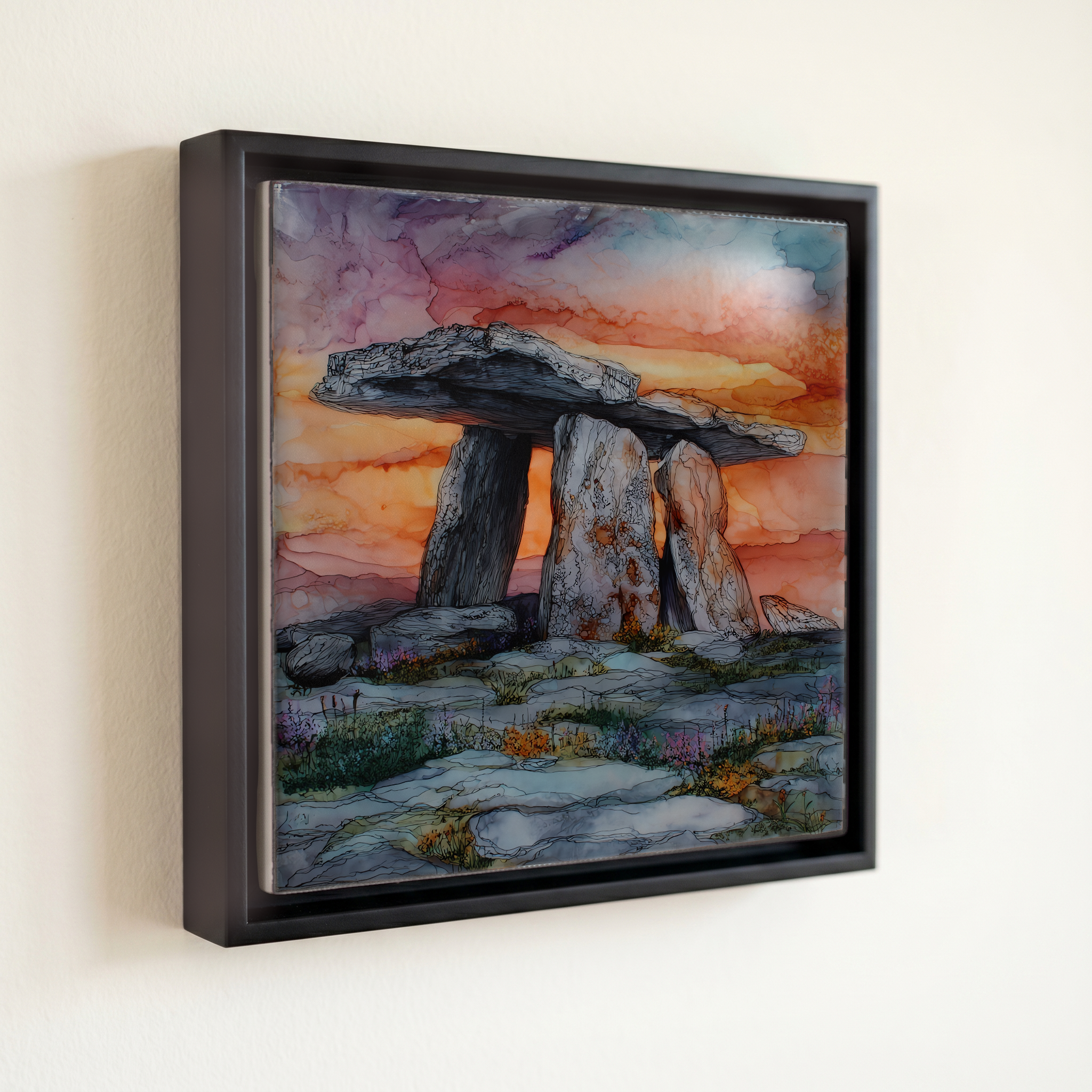
Above the linens, in a slim black surround.
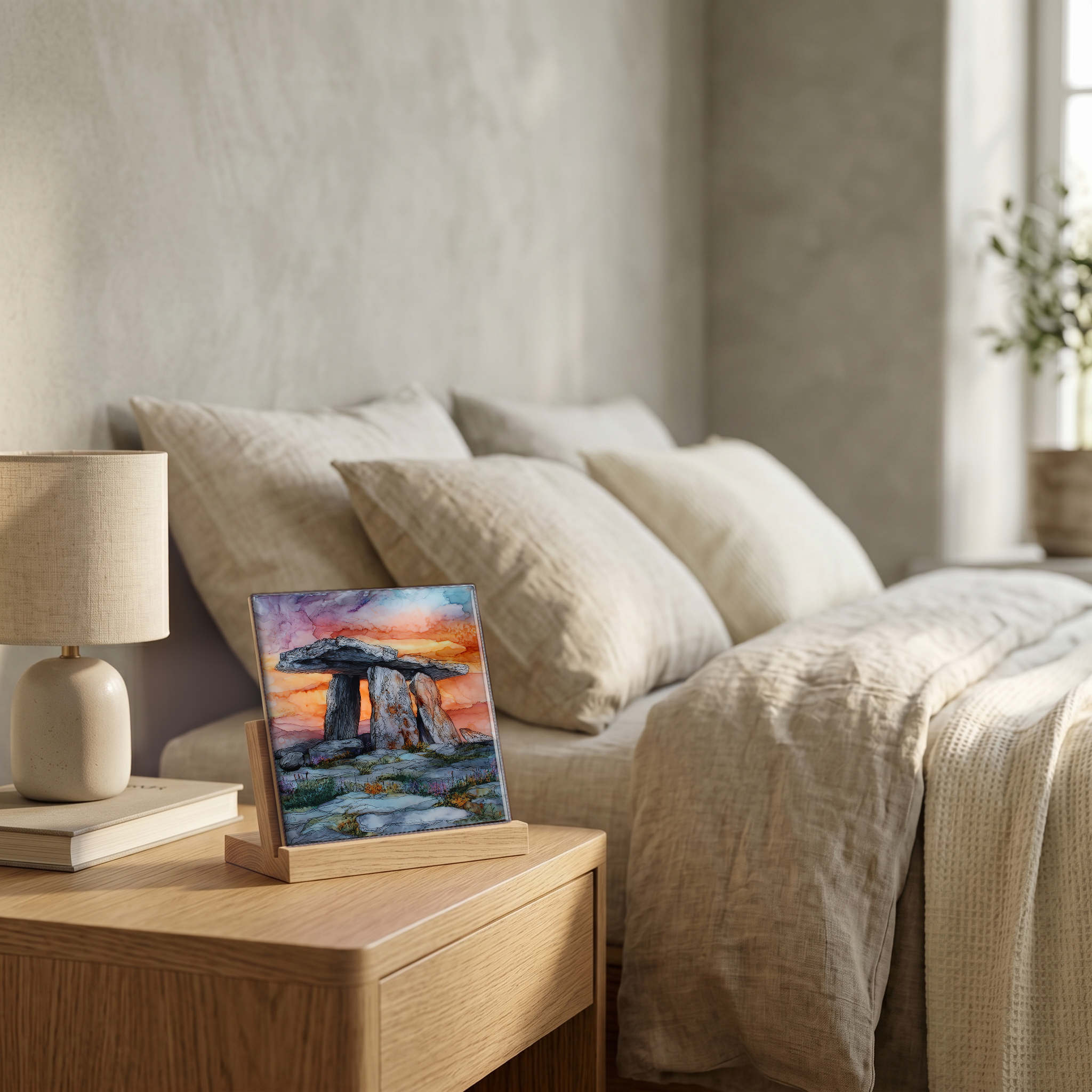
On the nightstand, on a light oak stand.
On a picture ledge, where the light comes in.
a note from the studio

A portal tomb on the bare limestone of the Burren. Three uprights and a capstone the size of a kitchen table, balanced where some Neolithic farmers set them more than five thousand years ago. People come over the stile from the lay-by on the R480 and stand for a while. The wind moves across the karst and through the gentians in the cracks. The stones don't need an explanation.
from the studio
shown in a slim black floating frame · 6 × 6 in
— bring it home

Poulnabrone Dolmen, on ceramic.

Each tile is finished by hand in our Knoxville studio. Artwork is slowly infused into the ceramic surface under high heat and pressure, and rests beneath a thin glossy finish. The colour lives in the surface, not on top of it.

What kind of piece?
One tile — square or rectangle.
How big?
the popular one — counter, shelf, nightstand
6 × 6 in · 15 cm · 1.6 lb
Surface finish
A clear glossy finish — the artwork reads as if under resin. Ideal for show-pieces and framed wall art.
How it sits
A hidden cleat — sits ¼″ proud of the wall.
$58
Hand-finished and shipped from our studio at the foot of the Smokies. On your wall in about ten days.
size
6 × 6 in
15 cm
weighs
1.6 lb
solid in the hand
surface
ceramic, hand-finished
art rests beneath a thin glossy finish
from
Knoxville, TN
our family studio, at the foot of the Smokies
— start a Coaster Set

Pick any four 4-inch tiles — National Parks you've been to, a Smokies set, the four seasons of one place. $ for a set of , cork-backed, ready to live on the table.
comes gift-ready
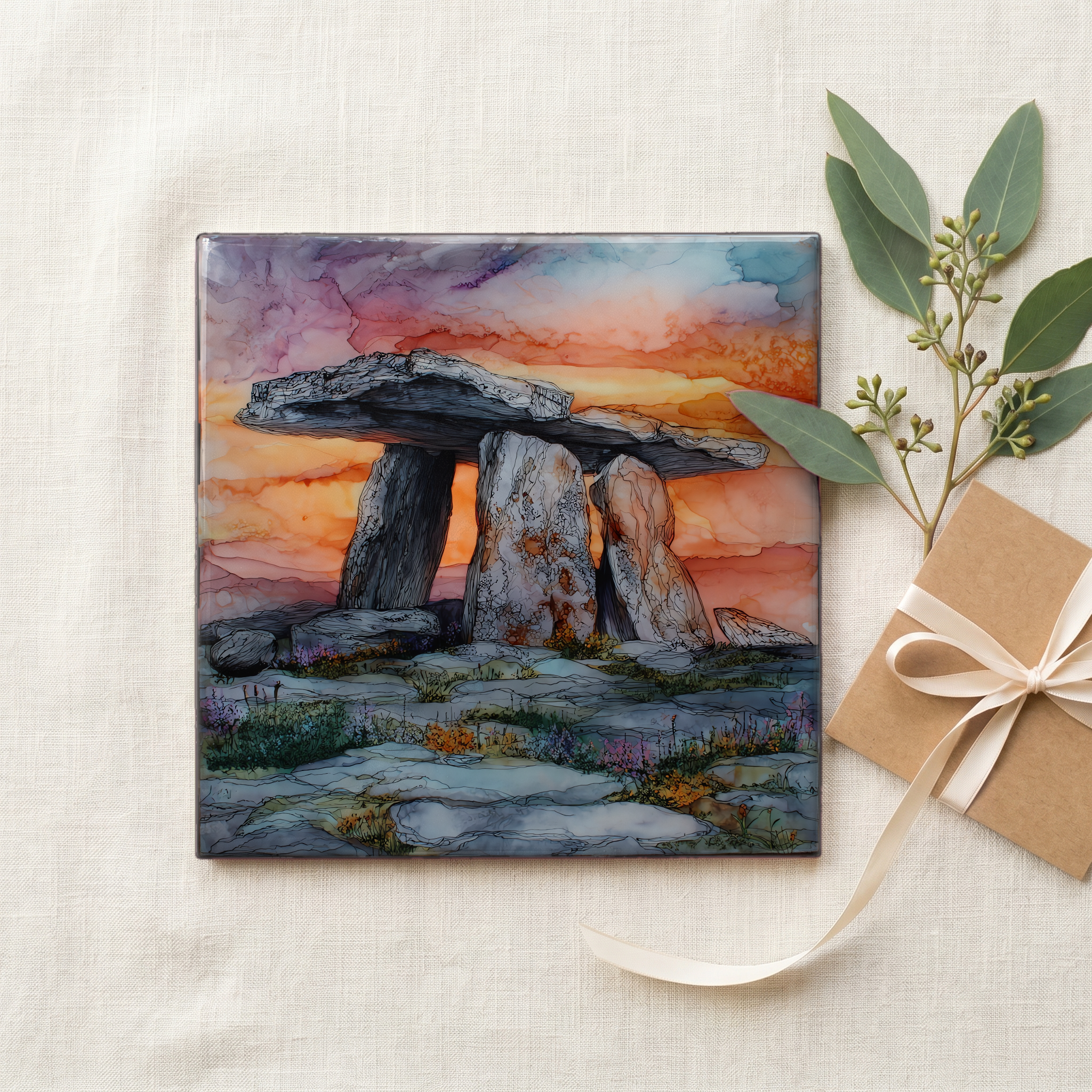
comes gift-ready

Each tile ships in a kraft box, tied with cream ribbon, with a handwritten note from the studio if you'd like to add one.
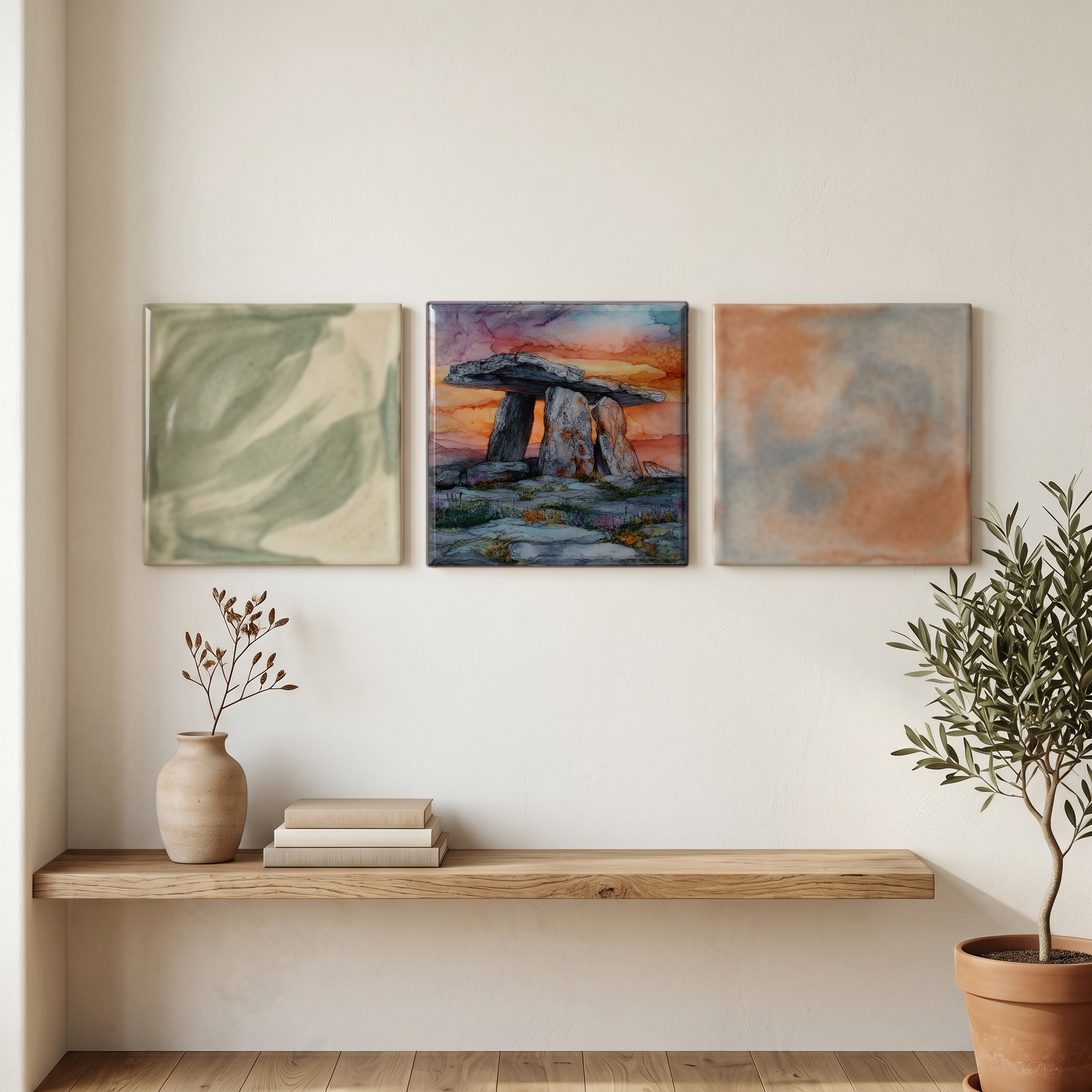
or build a grouping
or build a grouping

Three or five different vistas, hung together — a chapter of places you've been, or want to go.

about Poulnabrone Dolmen

The place, in three passes.

A little of what's known, in case you fall down the rabbit hole — or want to go see it yourself.
the place

Poulnabrone stands on the open limestone of the Burren in north County Clare, on the R480 road between Ballyvaughan on Galway Bay and Kilfenora to the south. The Burren is a karst plateau formed when shallow tropical seas laid down Carboniferous limestone roughly 330 million years ago, later scoured smooth by Pleistocene glaciers. The result is a treeless pavement of grey slabs, cracked into squares by joints called grikes, where Arctic, Alpine, and Mediterranean wildflowers share the same calcium-rich soil. The dolmen sits within the Burren and Cliffs of Moher UNESCO Global Geopark, designated in 2011. From Galway city to the lay-by is about an hour by car.

the stone

The monument is a portal tomb, two upright orthostats of local limestone supporting a tilted capstone roughly 3.65 metres long and estimated at five tonnes. Excavations led by archaeologist Ann Lynch in 1986 and 1988 recovered the disarticulated remains of at least thirty-three people, including adults, children, and a newborn, buried in the chamber over roughly six centuries between 3800 and 3200 BCE. Among the bones lay a polished stone axe, a bone pendant, two quartz crystals, and pottery sherds. The monument was already ancient when the first sarsens were raised at Stonehenge, and older still than the pyramids at Giza.

the visit

Access is free and the site is open in every season. A signposted lay-by on the R480 leaves a short walk over a stile and along a stone path across the karst pavement; the round trip takes about fifteen minutes. There are no admission gates, no audio guide, no scheduled tours, and no nearby cafe. The light is best in the long midsummer evenings or under the low winter sun, both of which throw long shadows from the capstone across the limestone. Visitor numbers are highest from June through August; an early-morning visit in the shoulder months usually leaves the monument to two or three other people.

where
Ireland · The Burren, County Clare
position
53.0486° N · 9.1400° W
the neighborhood

What's nearby.

A handful of named places within an hour's walk or short drive. Some we've already painted; some we will.
1 km S
Caherconnell Stone Fort
ringfort
8 km N
Aillwee Cave
show cave
12 km N
Ballyvaughan
harbour village
9 km S
Kilfenora
high cross village
22 km S
Cliffs of Moher
sea cliffs
N
Poulnabrone Dolmen
Caherconnell Stone Fort
Aillwee Cave
Ballyvaughan
Kilfenora
Cliffs of Moher
common questions

What people ask.

A few questions we get about Poulnabrone Dolmen — and about bringing the piece home.
about the place

Poulnabrone Dolmen sits on the karst limestone of the Burren in north County Clare, Ireland, on the R480 road between Ballyvaughan and Kilfenora. It is about an hour's drive west of Galway and a 30-minute drive north of the Cliffs of Moher.

Radiocarbon dating of human remains found in the chamber places the burials between roughly 3800 and 3200 BCE, making the tomb about 5,800 years old at its earliest use. Construction of the monument itself is estimated to have begun around 4200 BCE during the Irish Neolithic period.

A dolmen, or portal tomb, is a Neolithic megalithic burial monument made of two or more upright stones supporting a heavy horizontal capstone. Ireland has roughly 174 known portal tombs, most concentrated in the north and west. Poulnabrone is the best-known example.

Excavations by archaeologist Ann Lynch in 1986 and 1988 uncovered the disarticulated remains of at least thirty-three individuals, including adults, children, and a newborn. The bones had been placed in the chamber over roughly six centuries, alongside a polished stone axe, a bone pendant, and quartz crystals.

The tilted capstone measures roughly 3.65 metres long and 2.2 metres wide, and is estimated to weigh about five tonnes. It rests on two upright portal stones standing about 1.8 metres tall, with a low backstone closing the chamber.

Yes. The site is on private land but open to the public throughout the year at no charge. A signposted lay-by on the R480 leads to a short walk over a stile and along a stone path; visitors are asked to stay on the path and not to touch or climb the stones.

about the piece in your home

It has been a meaningful piece for customers with County Clare connections in particular, where Poulnabrone is one of the most-photographed monuments in Ireland. For someone whose family came through Galway or the west coast, the Small or Medium reads as a piece of inherited landscape rather than a souvenir.

The slate grey, mossy green, and pale gold palette suits Modern Rustic, Stone-and-Linen Minimalist, and the muted Irish Cottage Modern look. It also pairs well with reclaimed-oak shelving and limewashed walls. The piece carries enough weight to anchor a room without dominating it.

Yes, especially within the Wabi-Sabi and New Heritage movements, both of which favor weathered stone, ancient mark-making, and time-deepened palettes. The artwork's reference to Neolithic architecture also resonates with the growing interest in archaeoaesthetic and slow-design interiors.

Above a standard sofa or console, the single Large reads with presence; a 4-tile Mural fills the wall with quiet authority; a 9-tile Mural becomes the room's centre of gravity. The Medium is sized for a hallway, mantel, or a smaller console.

Yes. The Dura Satin and Matte finishes are scratch-resistant and stand up well to steam and splash; they are the right choice for backsplashes, shower walls, and other wet-room installations. Use the Glossy finish for framed wall pieces in dry rooms.

A soft microfibre cloth and clean water are enough for everyday care. The colour is slowly infused into the ceramic surface under high heat and pressure, beneath a thin glossy finish, so it will not fade or rub off and does not need special cleaners.

Yes. Every WenderVista piece is original to the studio, painted by Reid Wender in our stained-glass and alcohol-ink visual language, then slowly infused into ceramic in our Knoxville workshop. No licensing, no stock art, no reproduction.

if this one stayed with you

A few you might also love.

Hand-picked by the eye that found Sorapis. Same air, same kind of quiet.