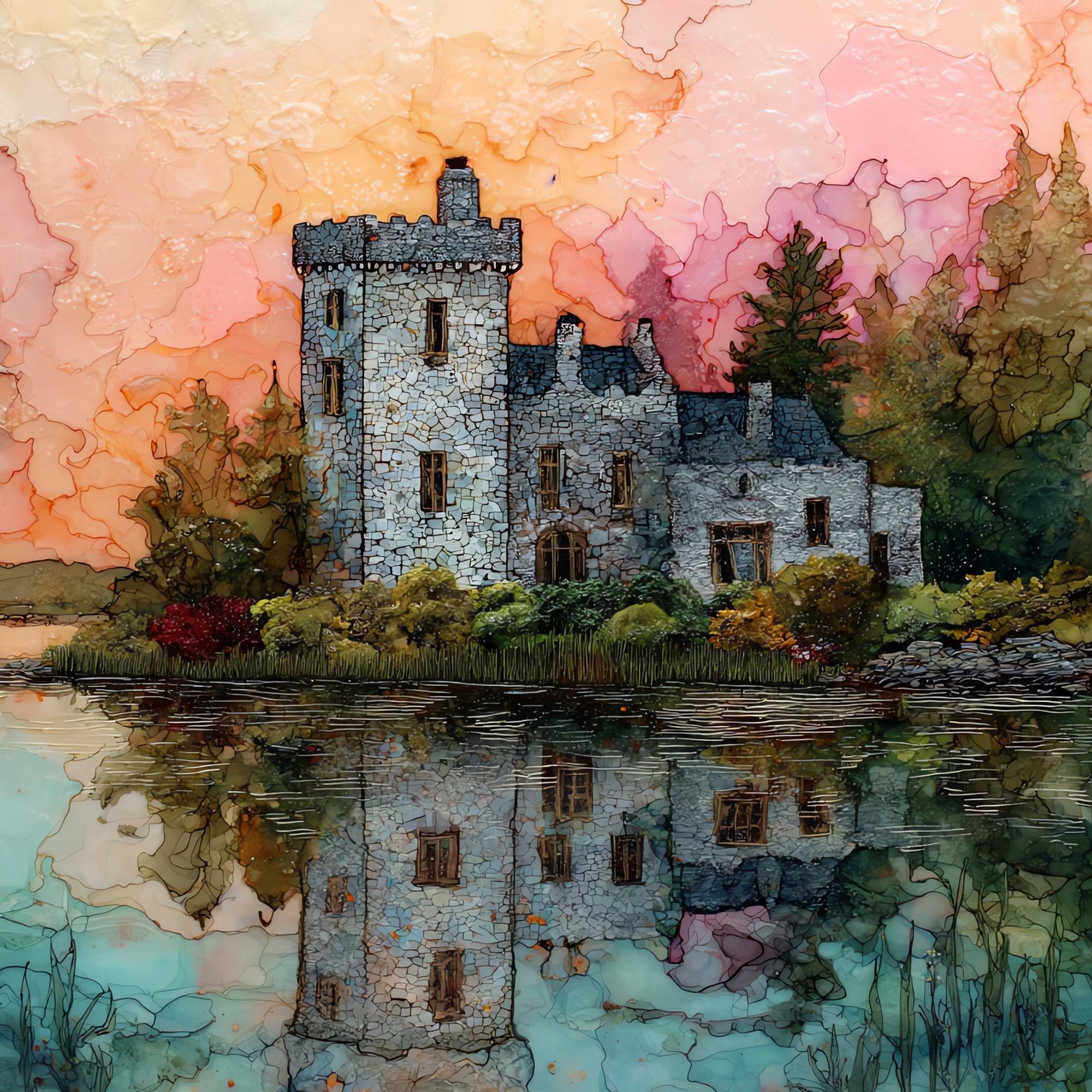
Parke's Castle
— stone the lake keeps coming back to.
Not only on a wall.
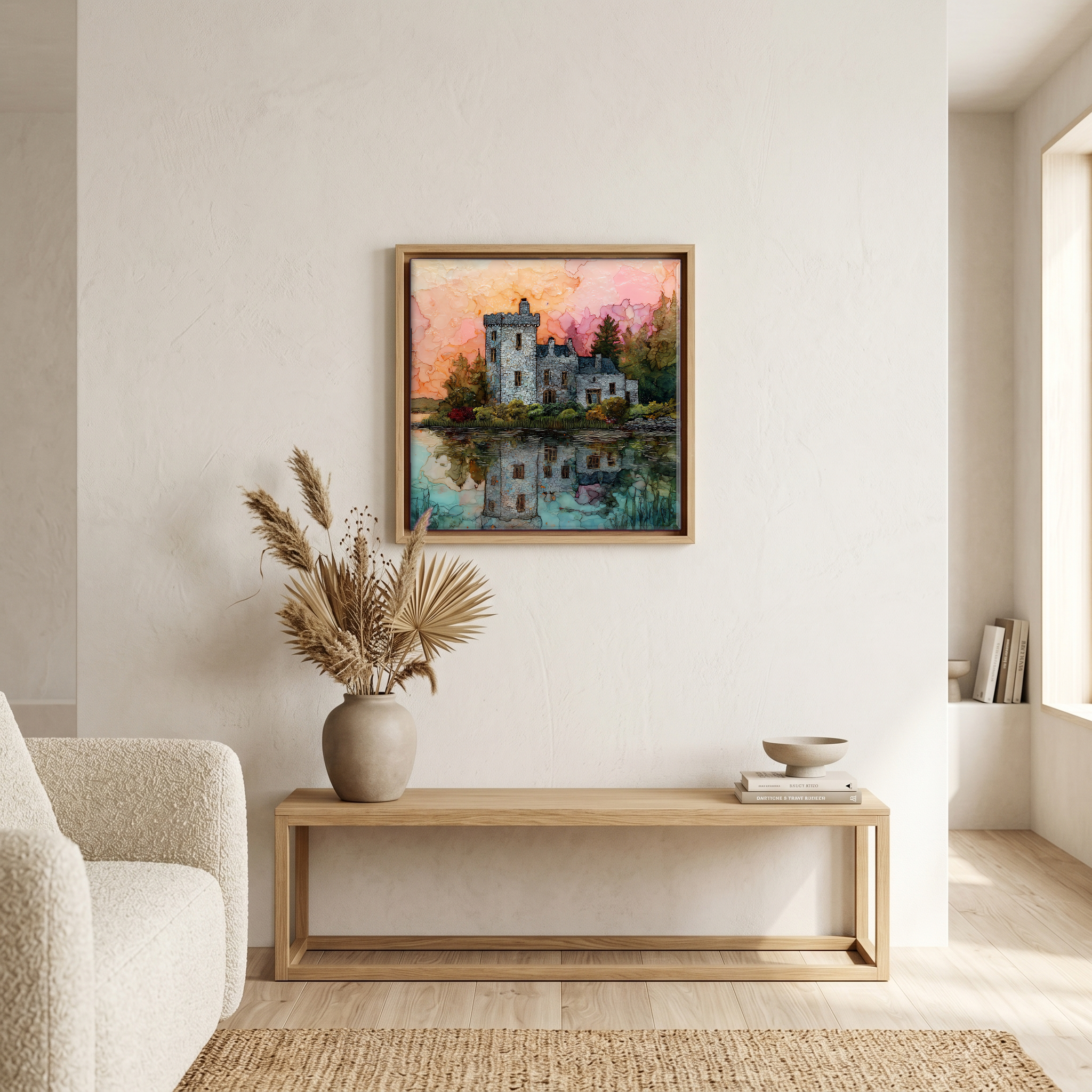
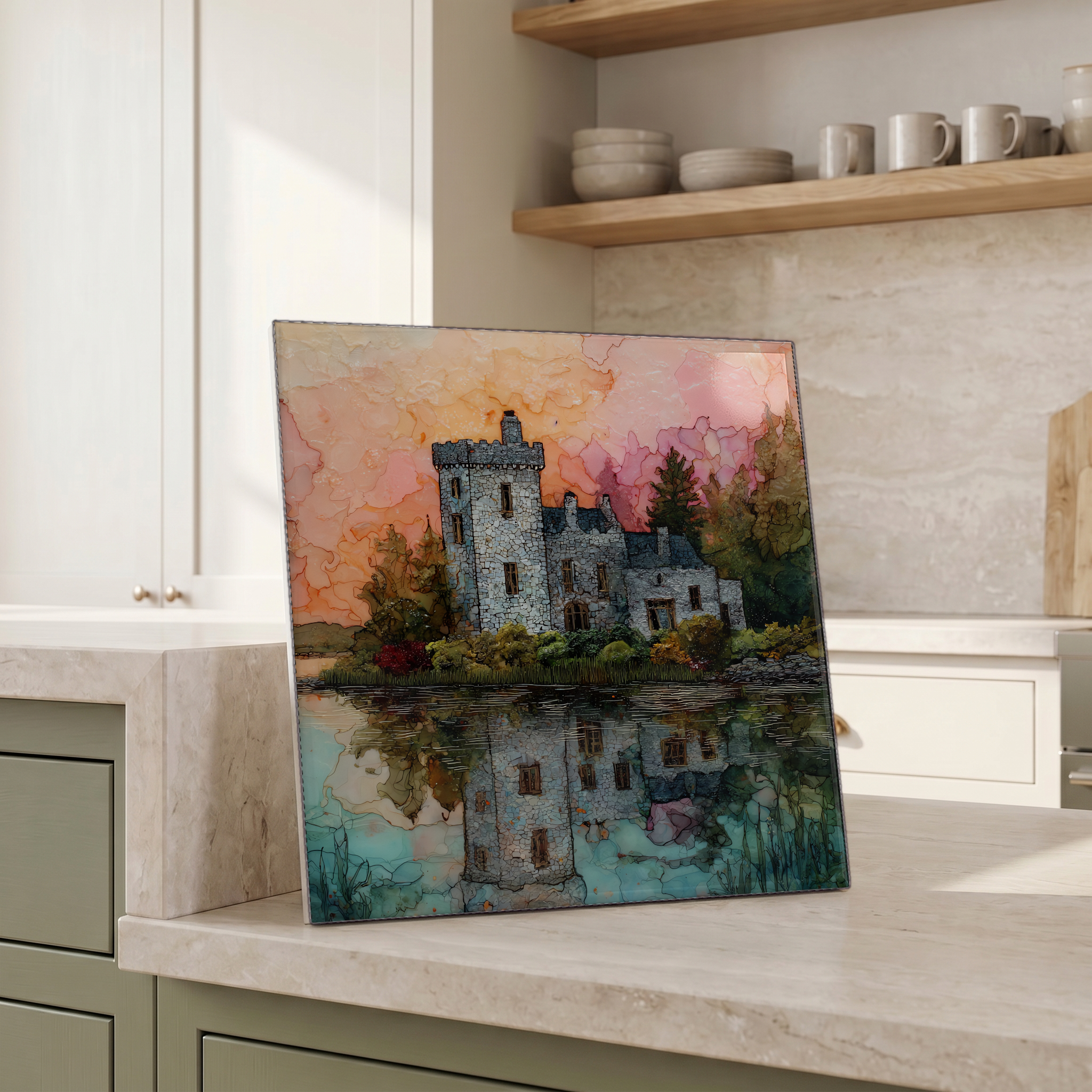
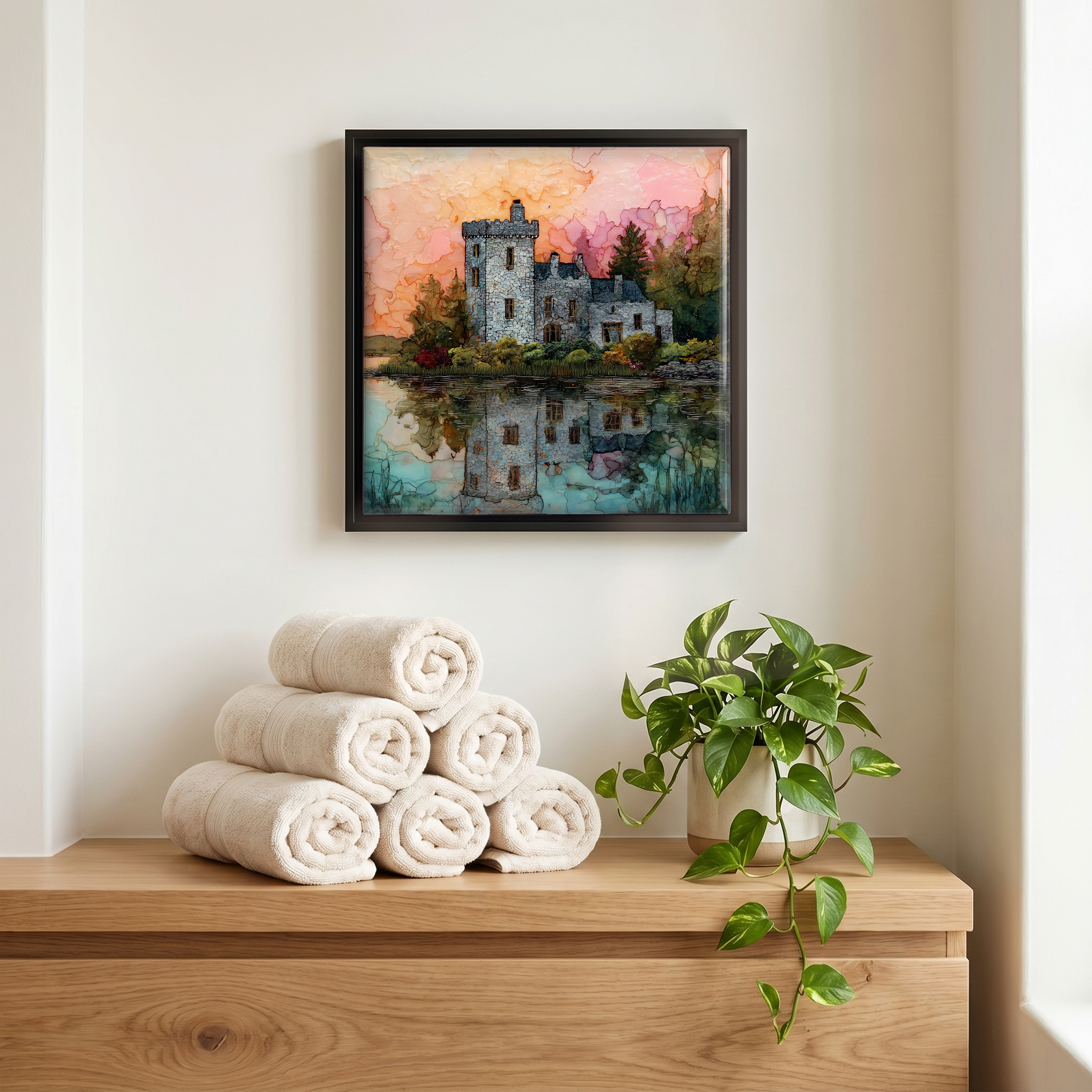
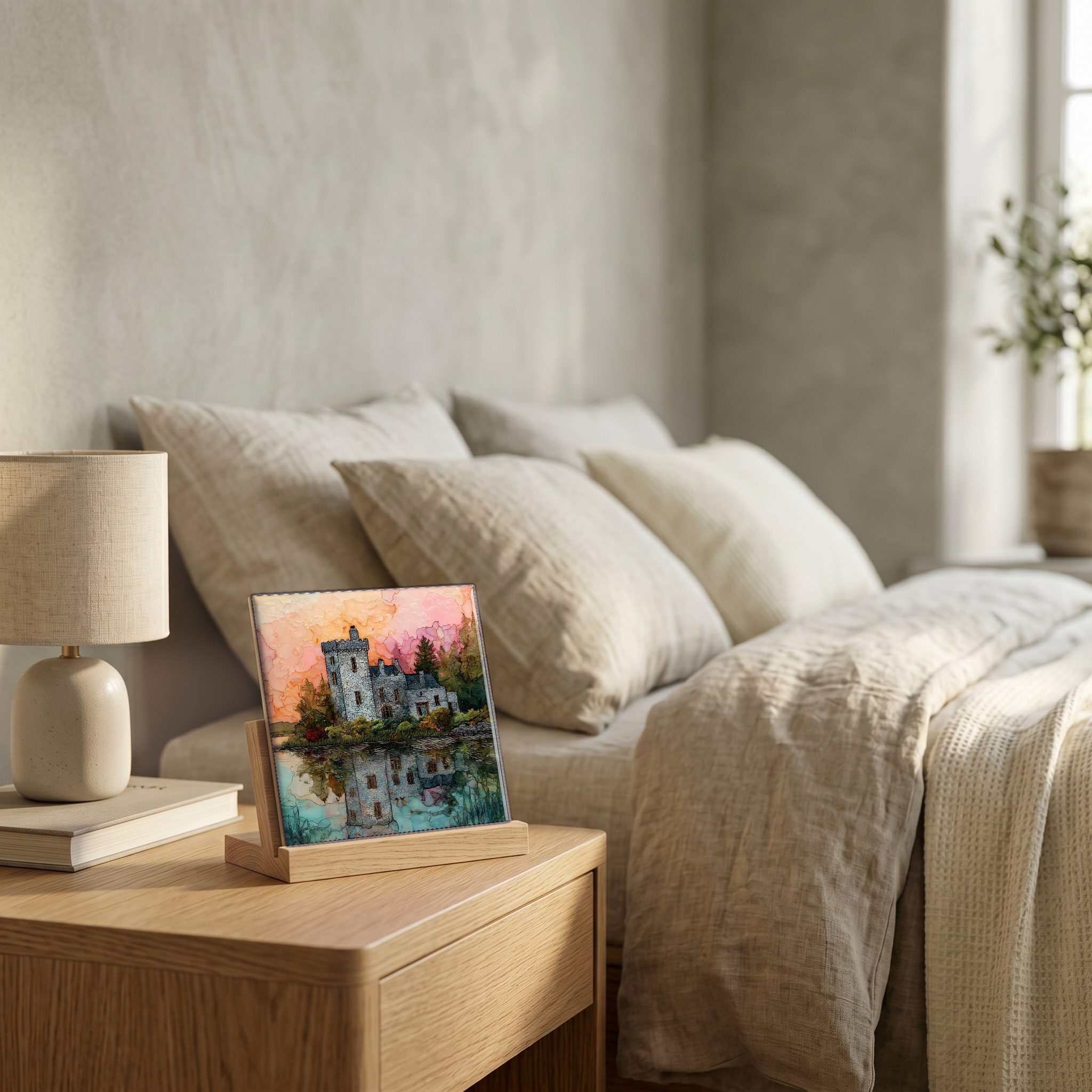
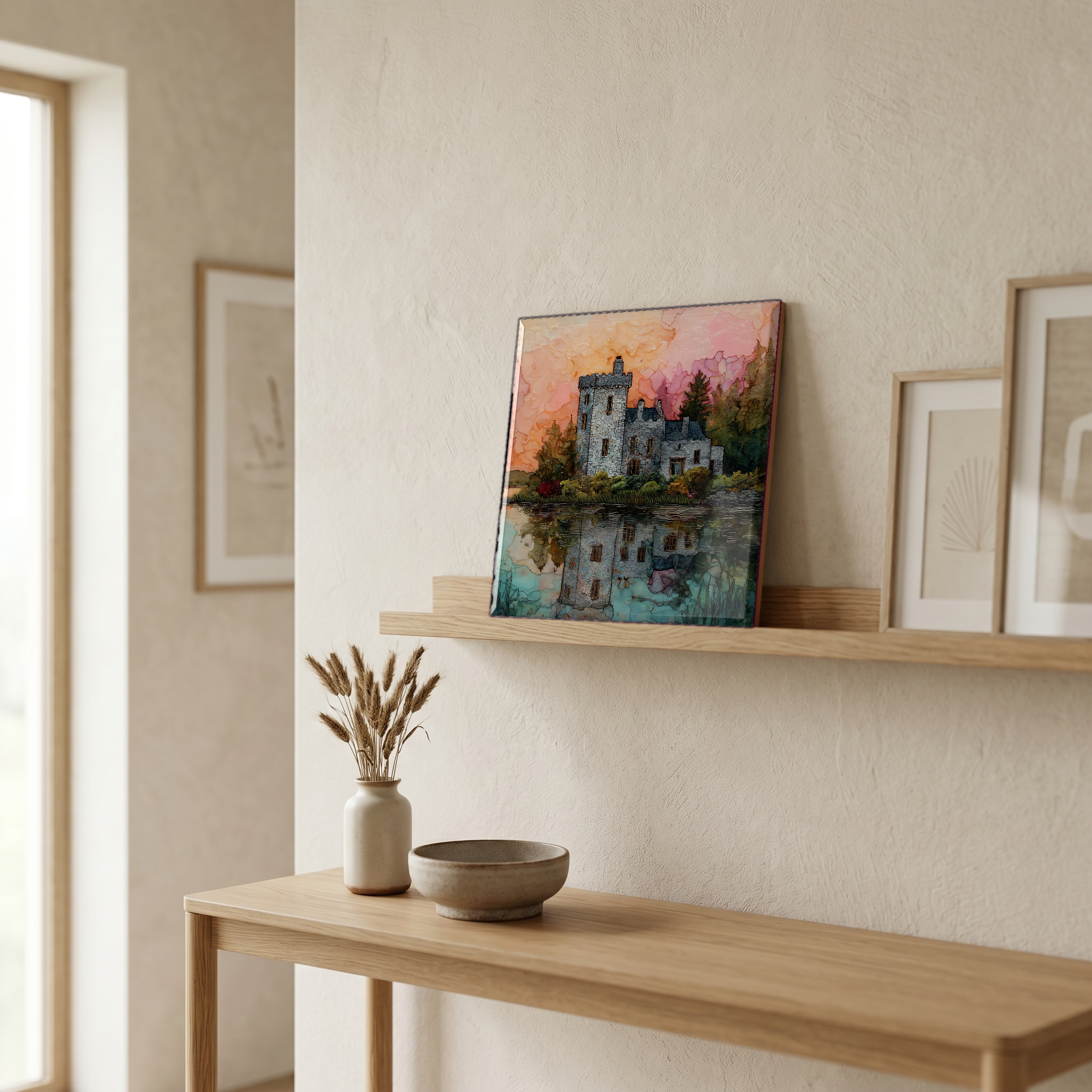
“A three-storey fortified manor on the eastern shore of Lough Gill, built in the early seventeenth century by Captain Robert Parke on the site of the O'Rourke tower he had been granted to occupy. Lough Gill is the lake of Yeats's 'The Lake Isle of Innisfree,' and the island itself sits a few kilometres west. The bawn encloses a courtyard that runs to the water; the roof timbers and floors were re-cut from native Irish oak during the long Office of Public Works restoration that finished in the 1990s. Most photographs are taken from the lakeshore, in the still half-hour after rain.
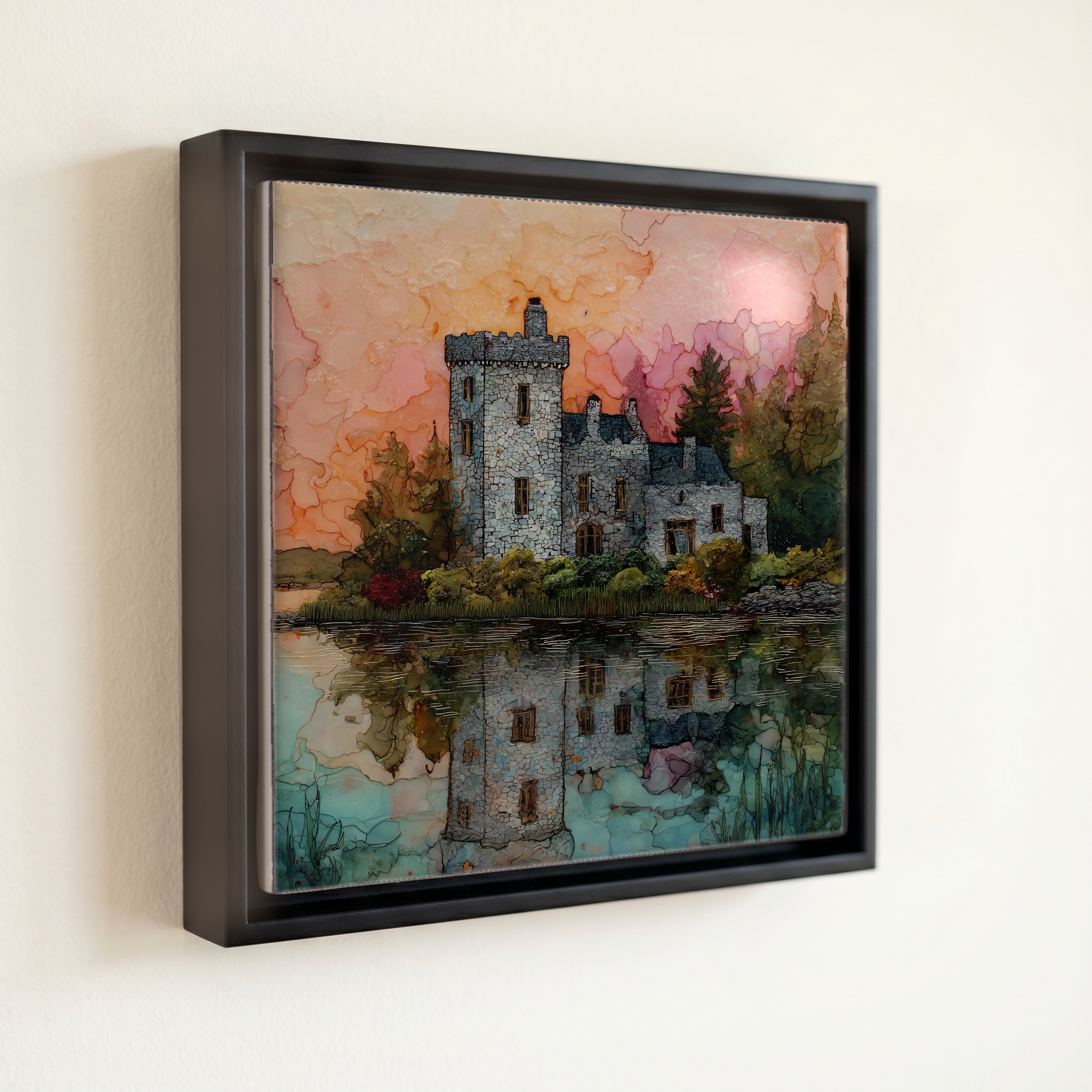
Parke's Castle, on ceramic.
Each tile is finished by hand in our Knoxville studio. Artwork is slowly infused into the ceramic surface under high heat and pressure, and rests beneath a thin glossy finish. The colour lives in the surface, not on top of it.
Pick any four 4-inch tiles — National Parks you've been to, a Smokies set, the four seasons of one place. $ for a set of , cork-backed, ready to live on the table.
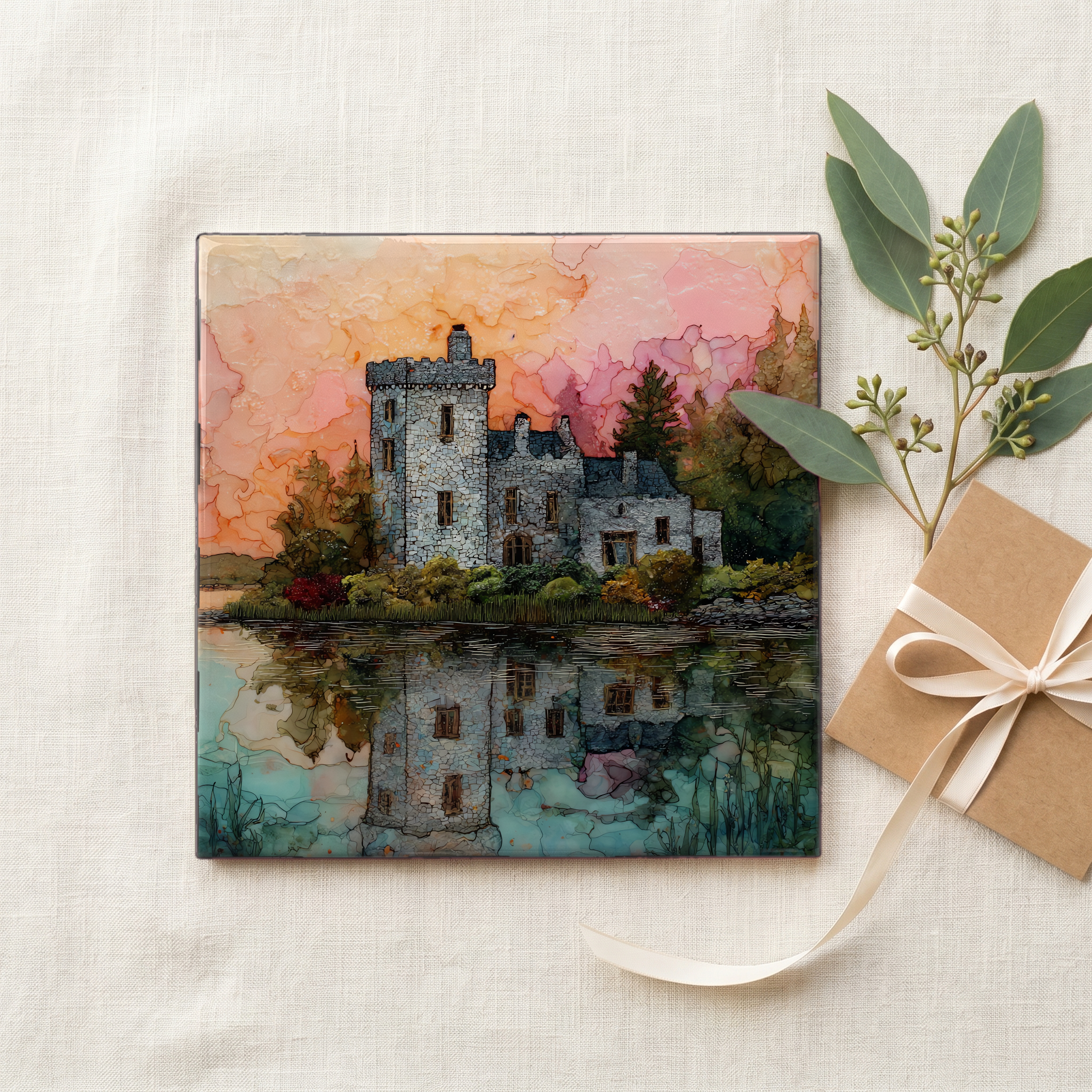
Each tile ships in a kraft box, tied with cream ribbon, with a handwritten note from the studio if you'd like to add one.
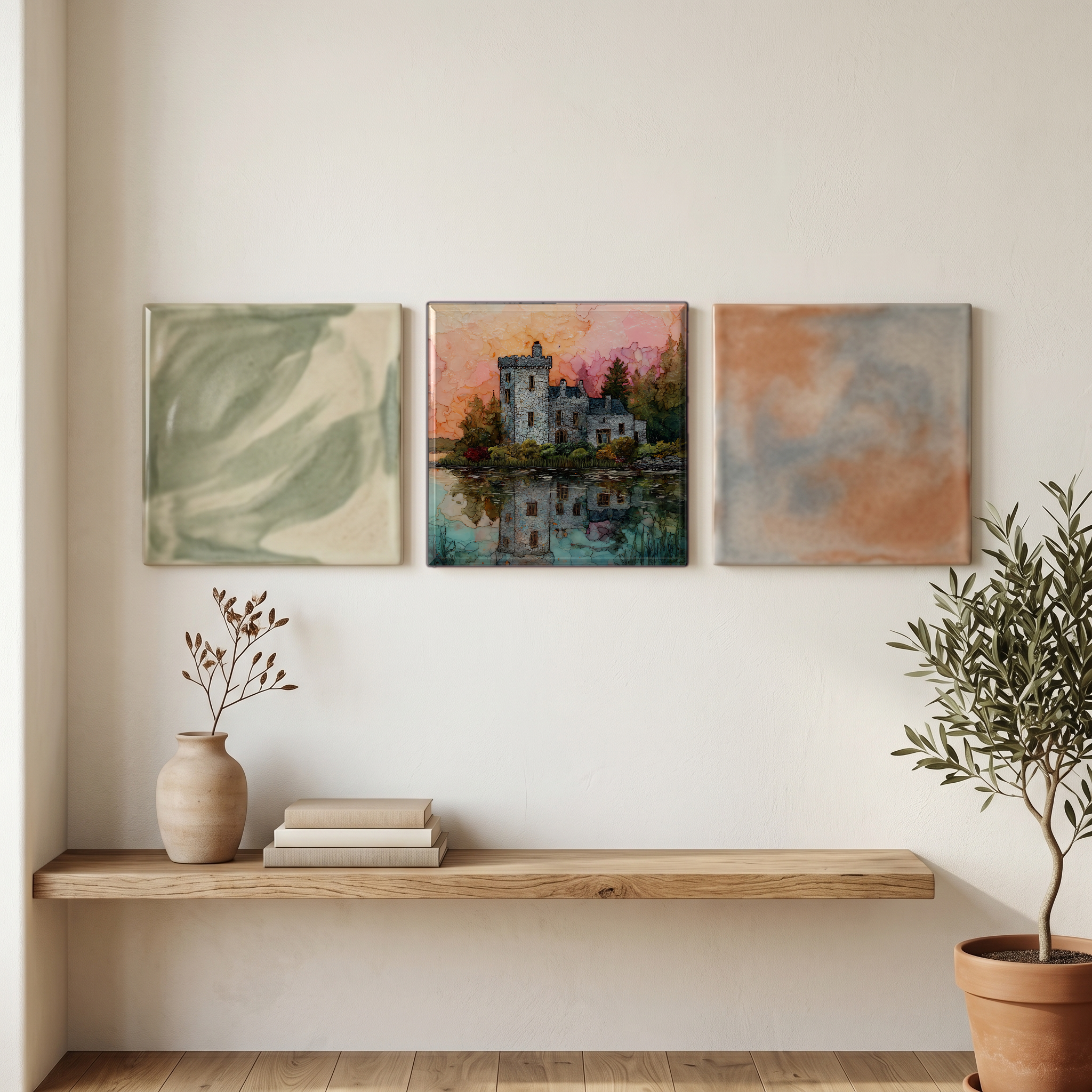
Three or five different vistas, hung together — a chapter of places you've been, or want to go.
The place, in three passes.
Parke's Castle stands on the eastern shore of Lough Gill, in County Leitrim, about ten kilometres east of Sligo town along the R286 road that loops the lake [Heritage Ireland]. Lough Gill itself straddles the boundary between counties Leitrim and Sligo, and the castle keeps the Leitrim side. The site sits within the Lough Gill Drive, a circular scenic route of roughly twenty-six kilometres that takes in the Isle of Innisfree and the surrounding drumlin country of north Connacht [Wikipedia]. The castle is administered today by the Office of Public Works, which restored the gatehouse, the bawn enclosure, and the three-storey manor house in a long programme that ran from the 1970s into the early 1990s.
Parke's Castle is a plantation-period fortified manor, built around 1610 by Captain Robert Parke on the site of an earlier O'Rourke tower house that had been the seat of the lords of West Bréifne [Wikipedia]. The previous chieftain, Brian na Múrtha O'Rourke, was executed at Tyburn in London in 1591 for sheltering Captain Francisco de Cuéllar, a Spanish Armada officer whose written account of his escape across Ireland remains one of the most vivid sources on late Tudor Connacht [Cuéllar, Wikipedia]. The bawn enclosure runs down to the lakeshore, and the gatehouse stands on the landward side of the courtyard. The Office of Public Works restoration used native Irish oak, re-cut by hand for the roof timbers and the floors.
The site is open seasonally, typically from spring through October, with hours and admission published each year by the Office of Public Works on heritageireland.ie [Heritage Ireland]. Guided tours run on the hour through the gatehouse, the three-storey manor block, and the bawn courtyard, and a short exhibition covers the O'Rourke history and the seventeenth-century plantation context. The R286 lake road is single-carriageway and twists; an extra fifteen minutes is reasonable on the drive from Sligo town. Photographers often come twice in a day, once on arrival for the courtyard and again later for the lakeside light off the eastern face. The Isle of Innisfree is signposted from a layby a few kilometres west of the castle.