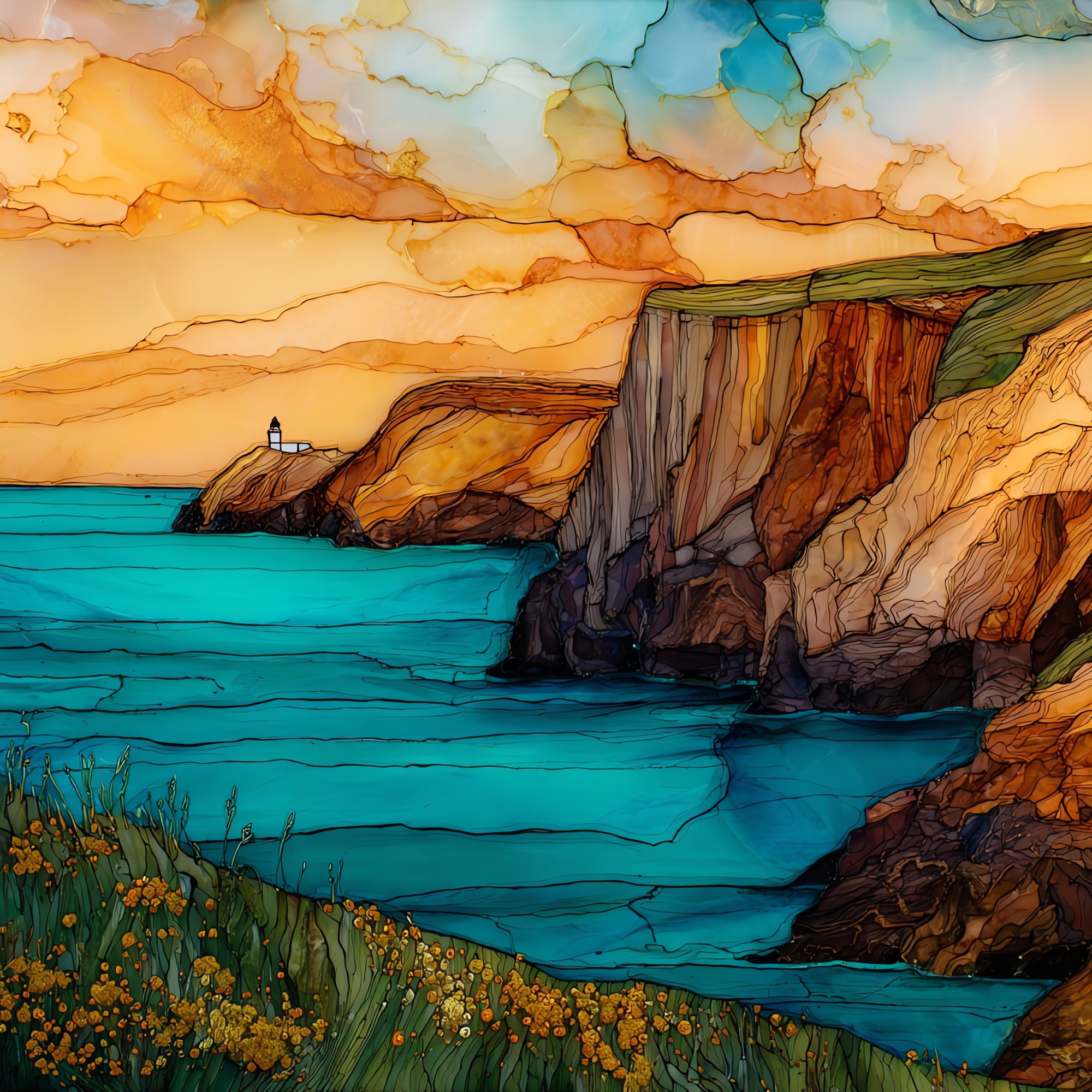
Old Head of Kinsale
— the land sharpens to a white light.
Not only on a wall.




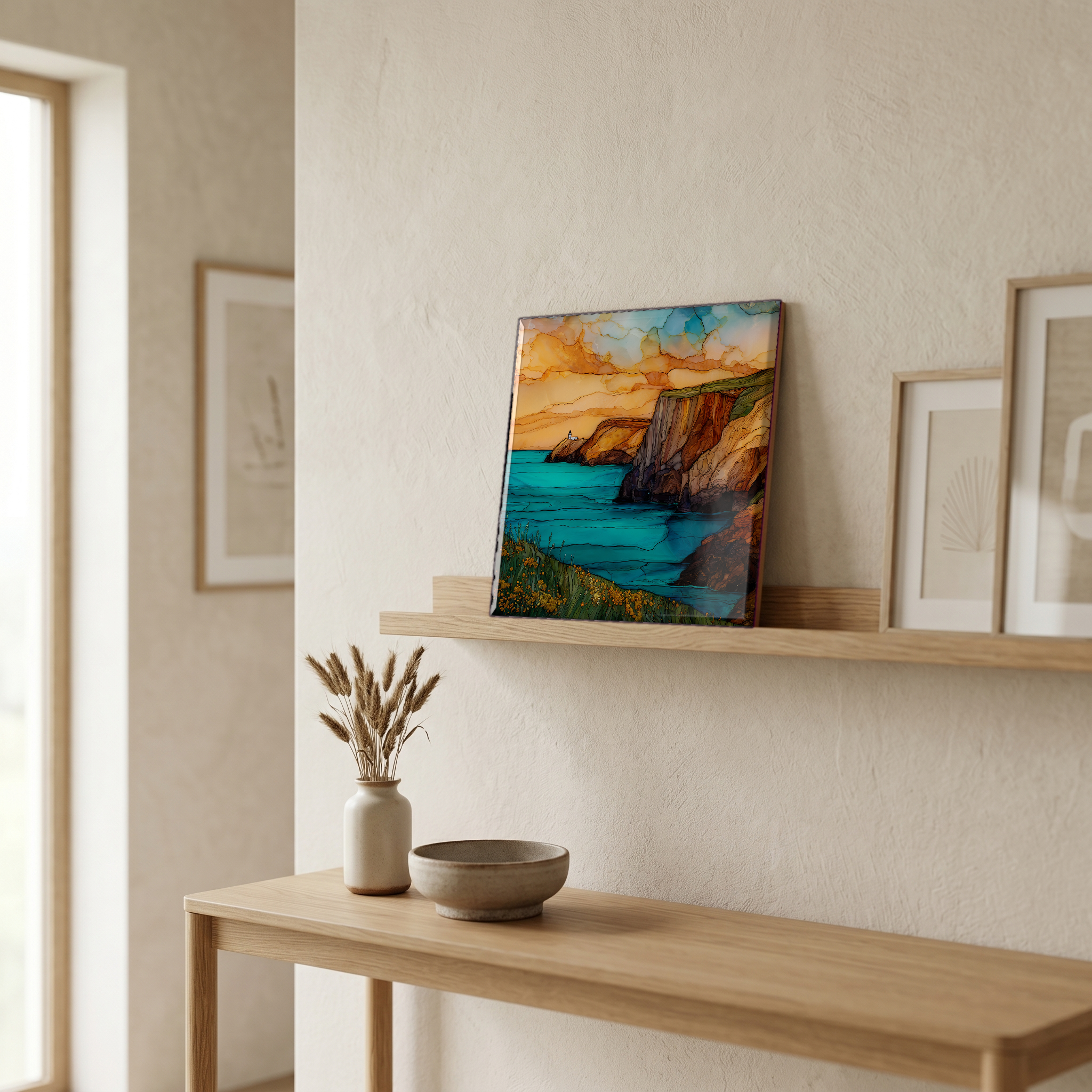
“A long, narrow headland on the south Cork coast, ending in a white lighthouse and a drop to the Celtic Sea. The current light has stood since 1853; the signal tower at the neck goes back further. Off this coast the Lusitania went down in May 1915, and the headland was the last land the passengers would have seen. On a clear afternoon the green of the grass and the green of the water are different greens, and the white of the tower is the brightest thing for miles.
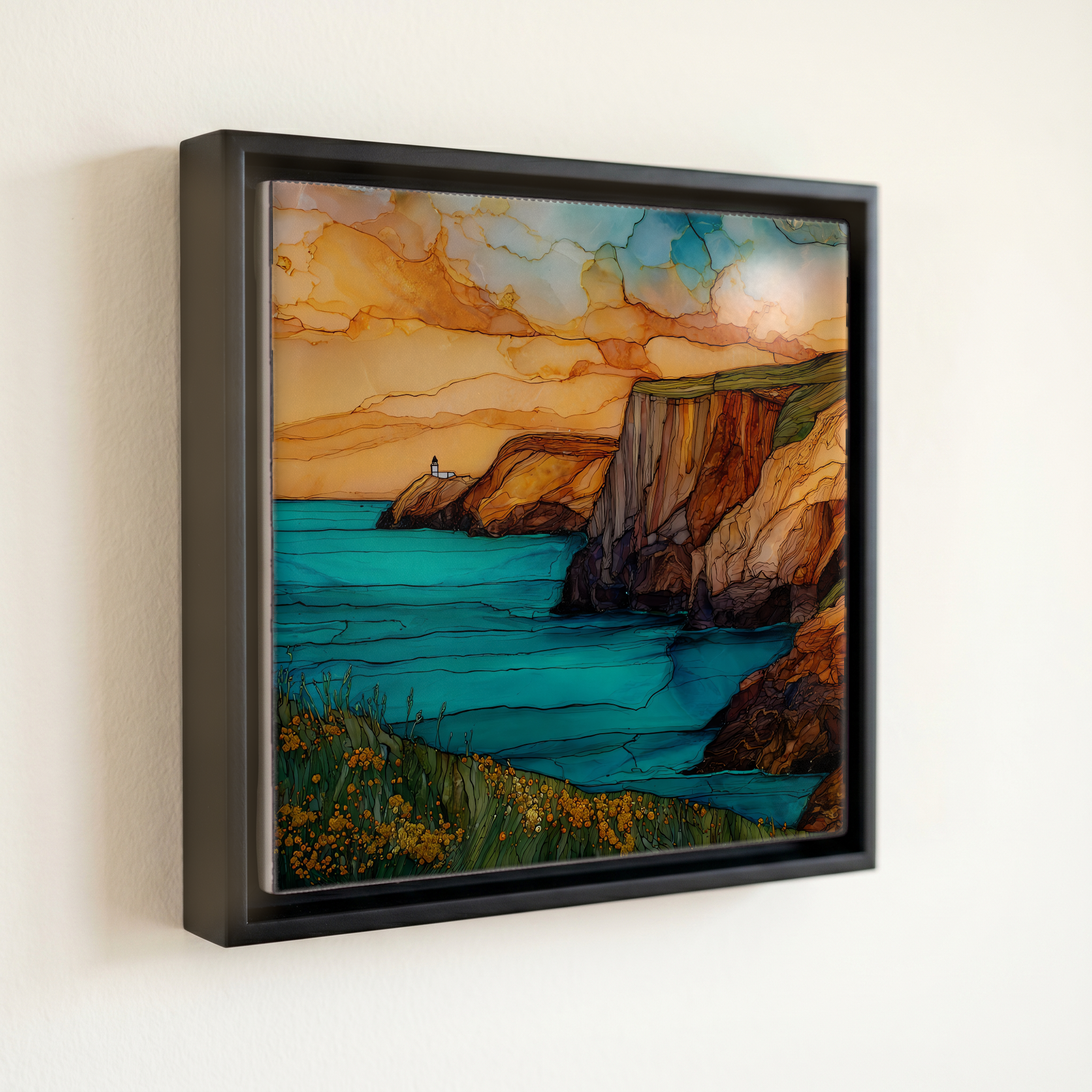
Old Head of Kinsale, on ceramic.
Each tile is finished by hand in our Knoxville studio. Artwork is slowly infused into the ceramic surface under high heat and pressure, and rests beneath a thin glossy finish. The colour lives in the surface, not on top of it.
Pick any four 4-inch tiles — National Parks you've been to, a Smokies set, the four seasons of one place. $ for a set of , cork-backed, ready to live on the table.

Each tile ships in a kraft box, tied with cream ribbon, with a handwritten note from the studio if you'd like to add one.
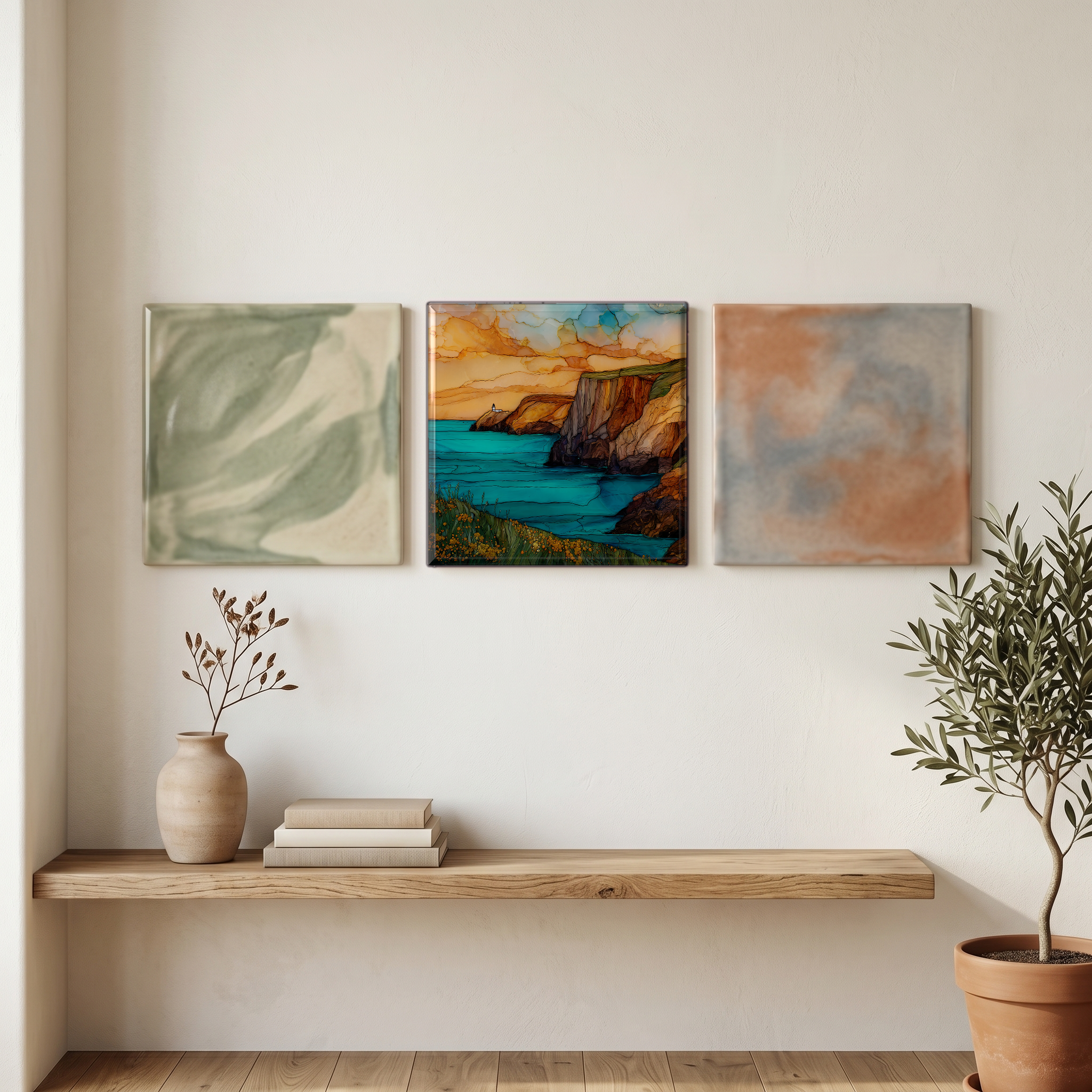
Three or five different vistas, hung together — a chapter of places you've been, or want to go.
The place, in three passes.
Old Head of Kinsale is a narrow peninsula on the south coast of Ireland, in County Cork, approximately eight kilometres south of Kinsale town and twenty-five kilometres south of Cork City. The headland projects roughly three kilometres into the Celtic Sea and is connected to the mainland by a thin neck of land, across which a Bronze Age or Iron Age promontory fort once stood. The current Old Head Lighthouse, an active aid to navigation, has stood at the southern tip since 1853 and was automated in 1987. The western cliffs rise to over fifty metres at the highest points. Access is by the R604 road from Kinsale; most of the peninsula is occupied by Old Head Golf Links, with public visiting focused on the Signal Tower and Lusitania Museum at the neck.
The headland is built of Old Red Sandstone laid down some 370 million years ago in the Devonian period, the same formation that runs along the south Cork coast and into the Beara and Iveragh peninsulas. Three layered structures now sit on this stone. A late Bronze Age or Iron Age promontory fort once spanned the narrow neck, traces of its earthen bank and ditch still visible. The Old Head Signal Tower at the neck was built in 1804 as part of the British Admiralty's chain of Napoleonic-era coastal watch towers around Ireland. The Old Head Lighthouse at the tip, a white tower with a single black band, was completed in 1853 and replaced a series of earlier lights that had marked the headland since the seventeenth century.
The peninsula is largely private land. Old Head Golf Links, opened in 1997, occupies the headland's interior, and public access to the cliff path is restricted. Visitors instead come to the Old Head Signal Tower and the adjacent Lusitania Museum and Garden of Remembrance, which opened in May 2015 on the centenary of the sinking. The museum tells the story of the Cunard liner RMS Lusitania, torpedoed by the German submarine U-20 on 7 May 1915 about eighteen kilometres south of the headland, with the loss of 1,198 lives. The site at the neck is open seasonally; the R604 road from Kinsale ends at a small car park beside the tower.