Wender·Vista
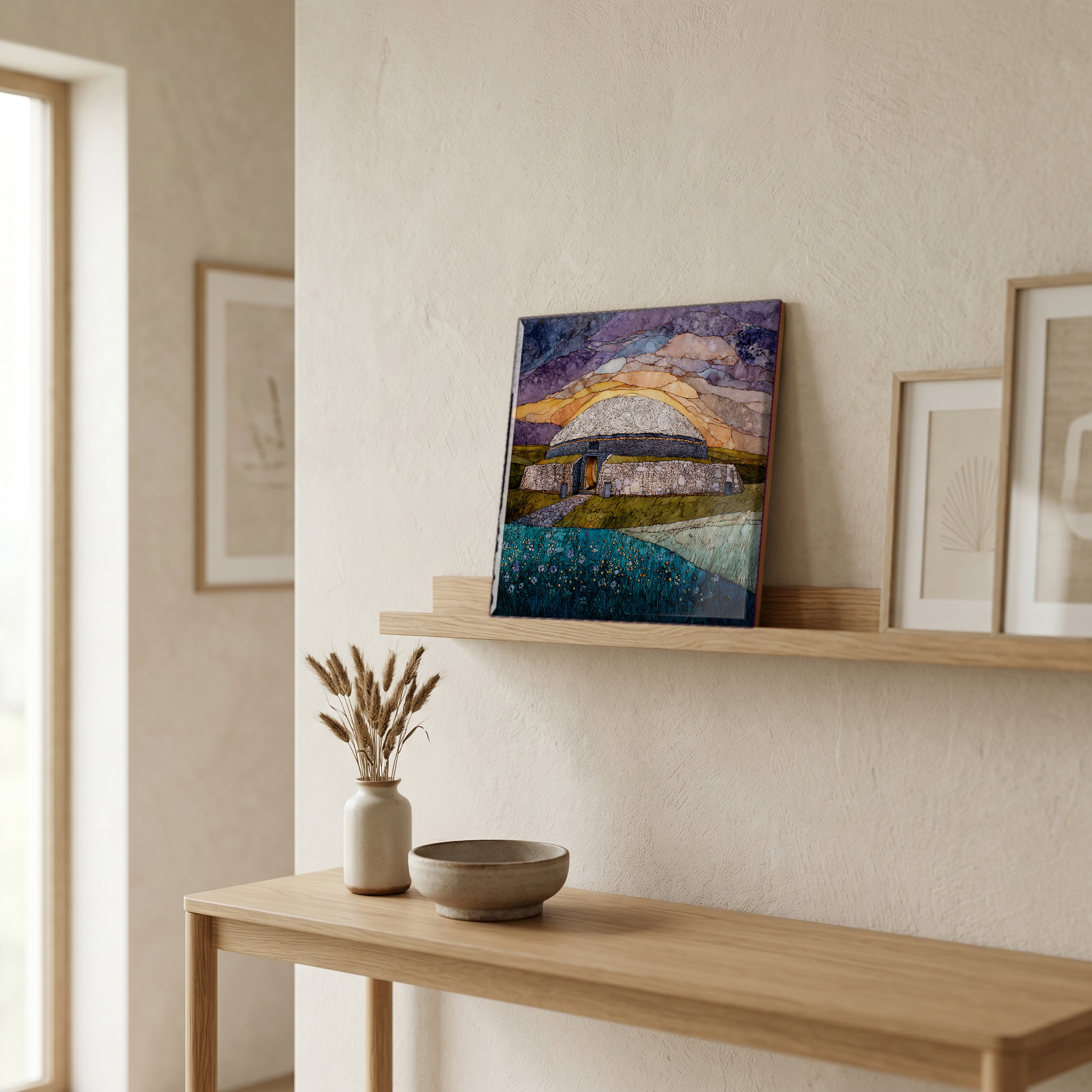
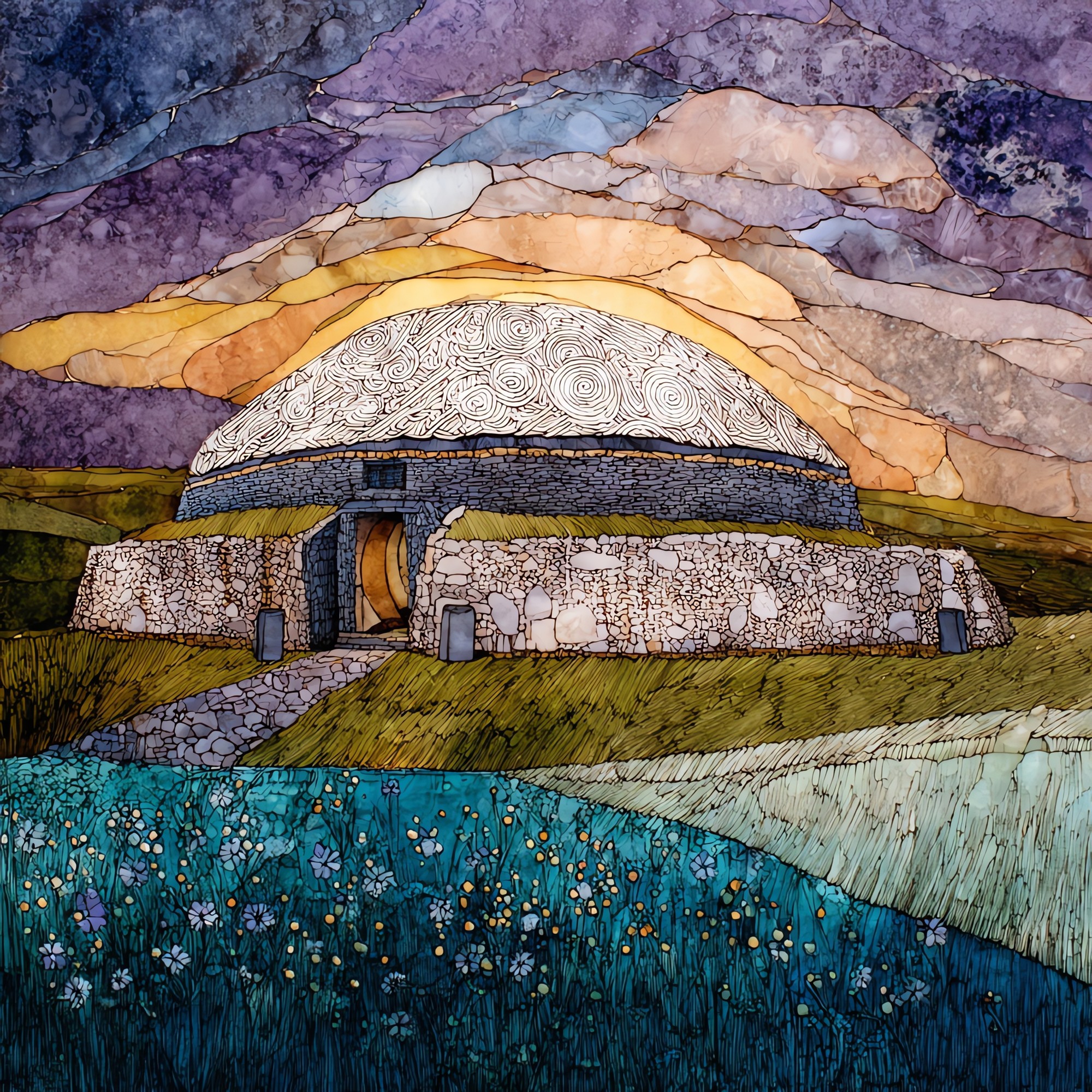
Newgrange
shown on ceramic, 12-inch tileIreland
in the Boyne Valley, an hour north of Dublin

Newgrange

the room the sun visits once a year.

Where it lives

Not only on a wall.

A small tile on the nightstand catching the morning. A larger one above the fire. Yours, wherever you spend the slow hours.
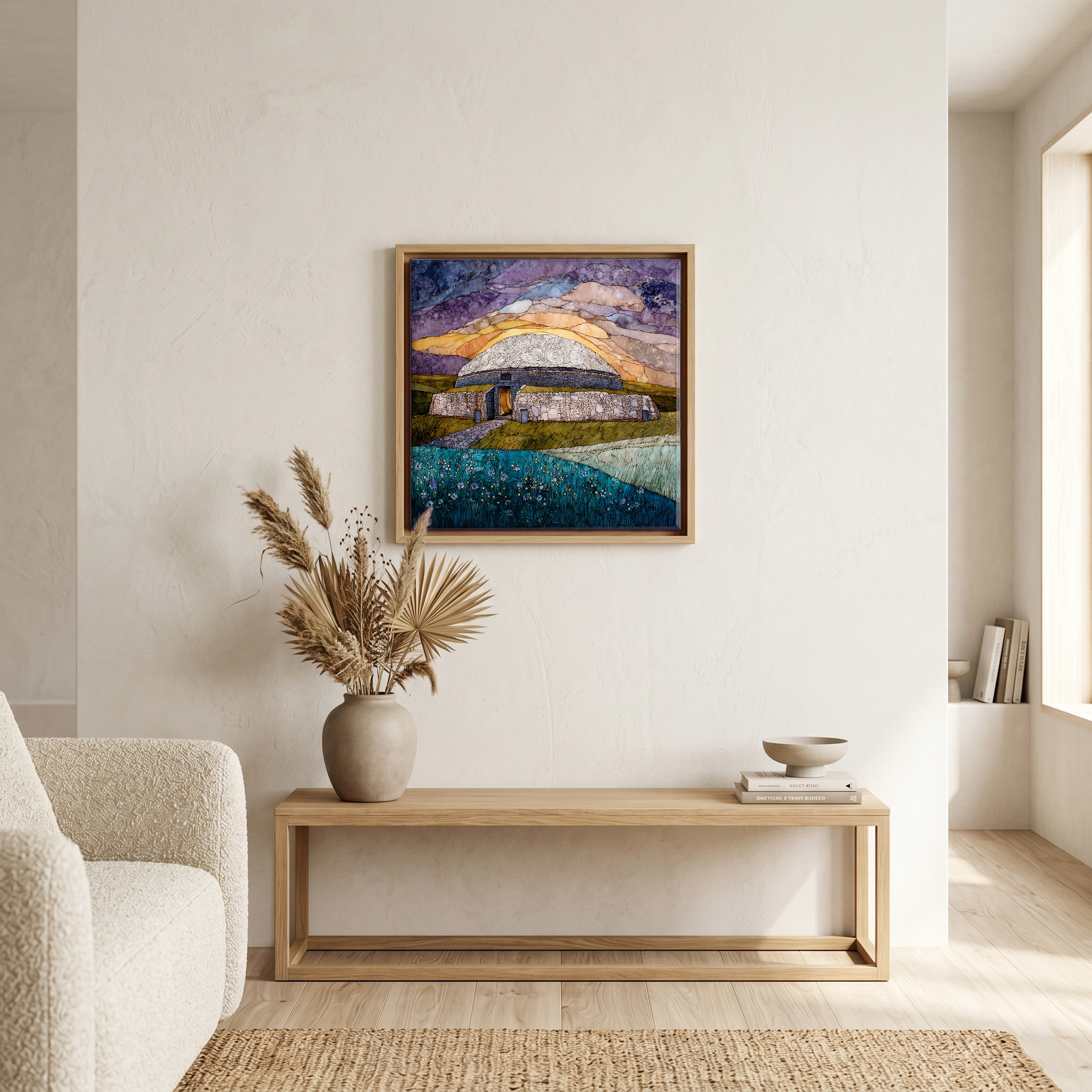
Above the bench, in a warm oak surround.
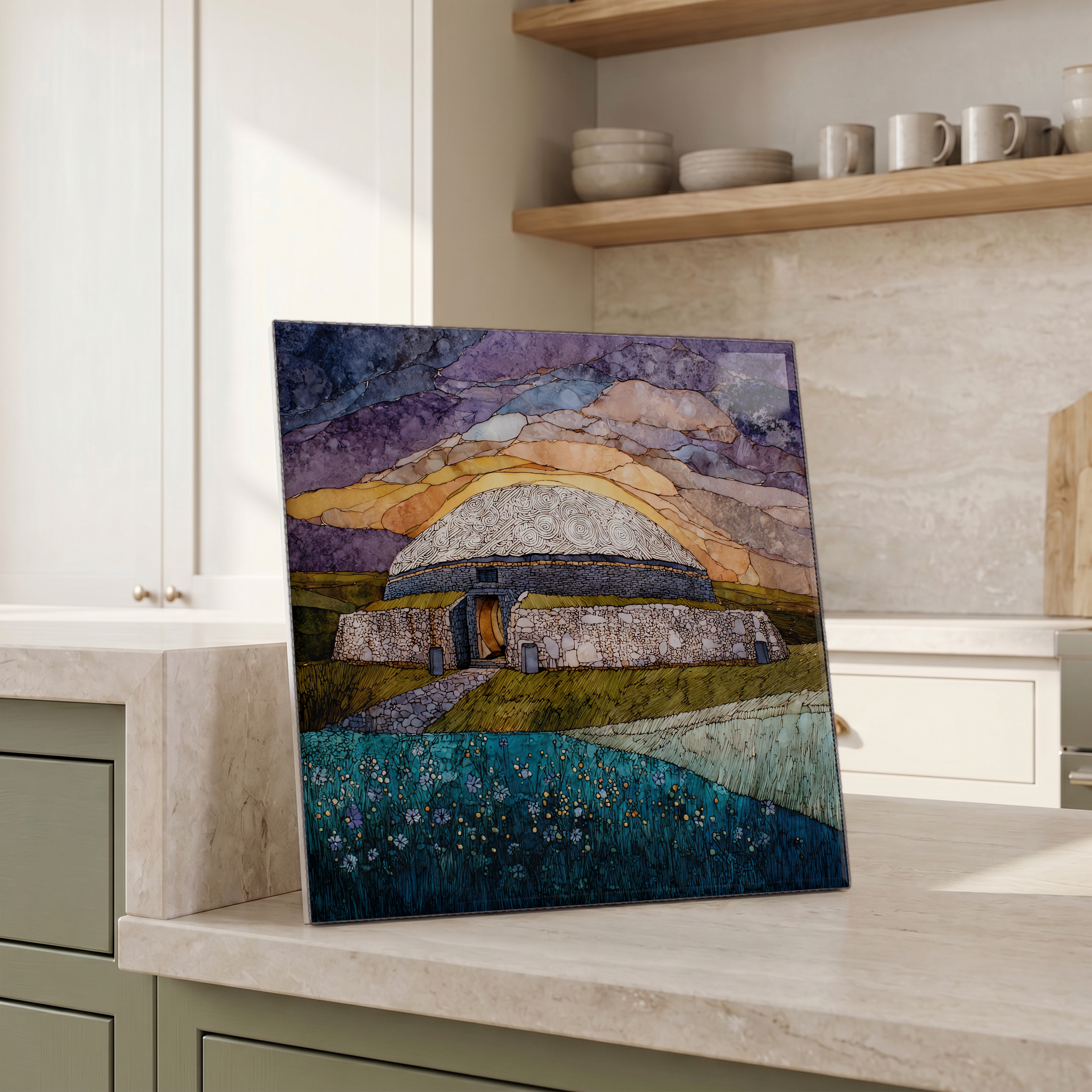
Beside the kettle, propped on the counter.
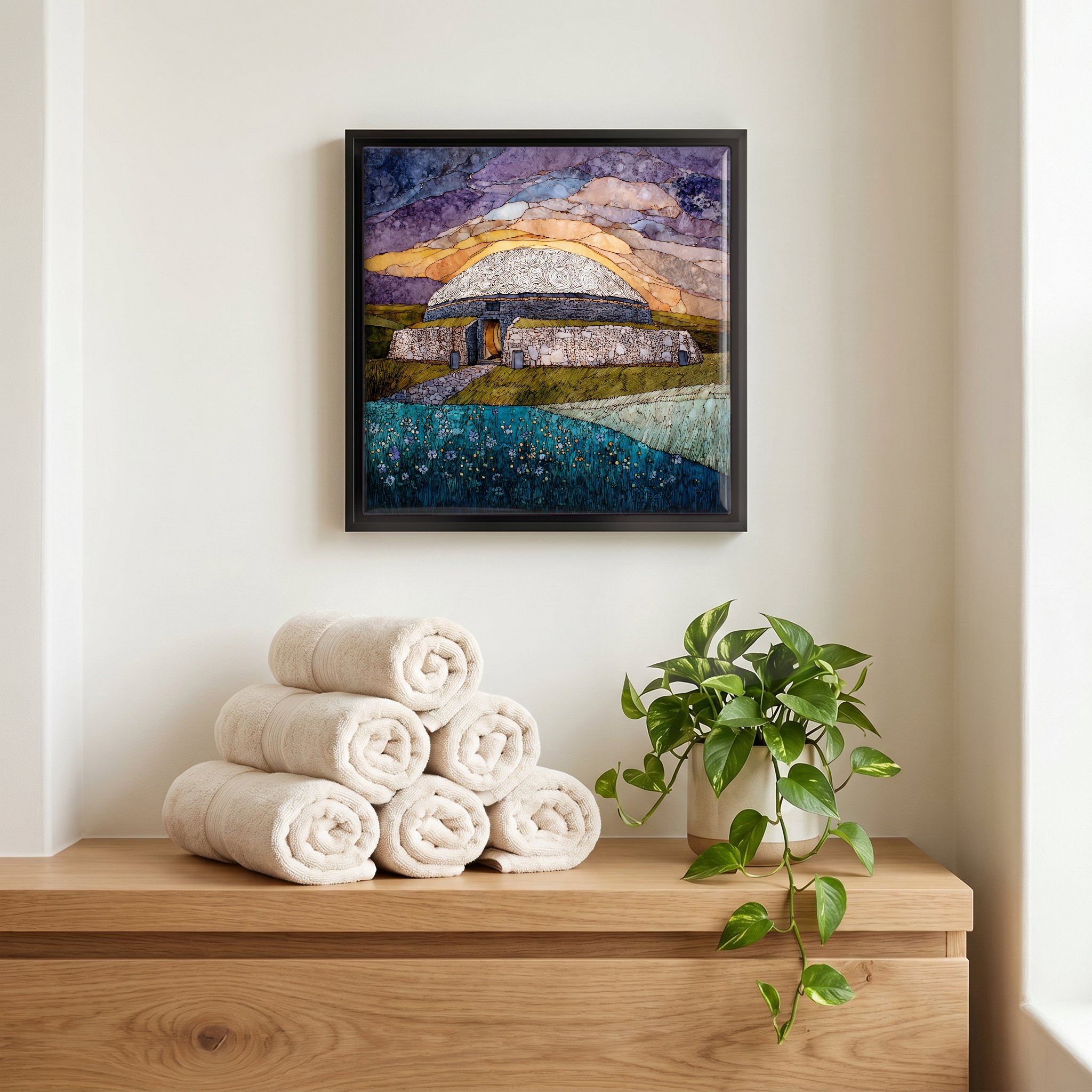
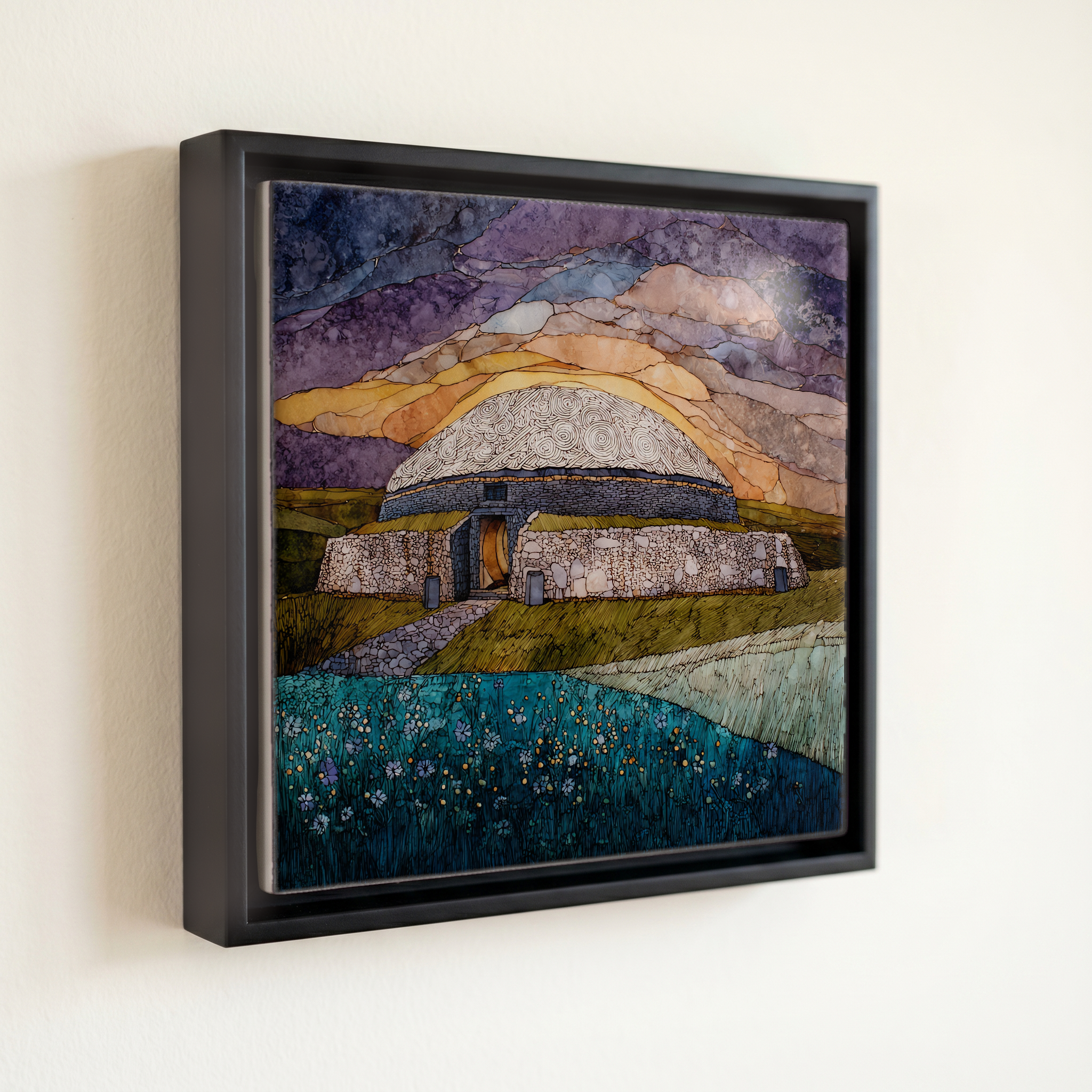
Above the linens, in a slim black surround.
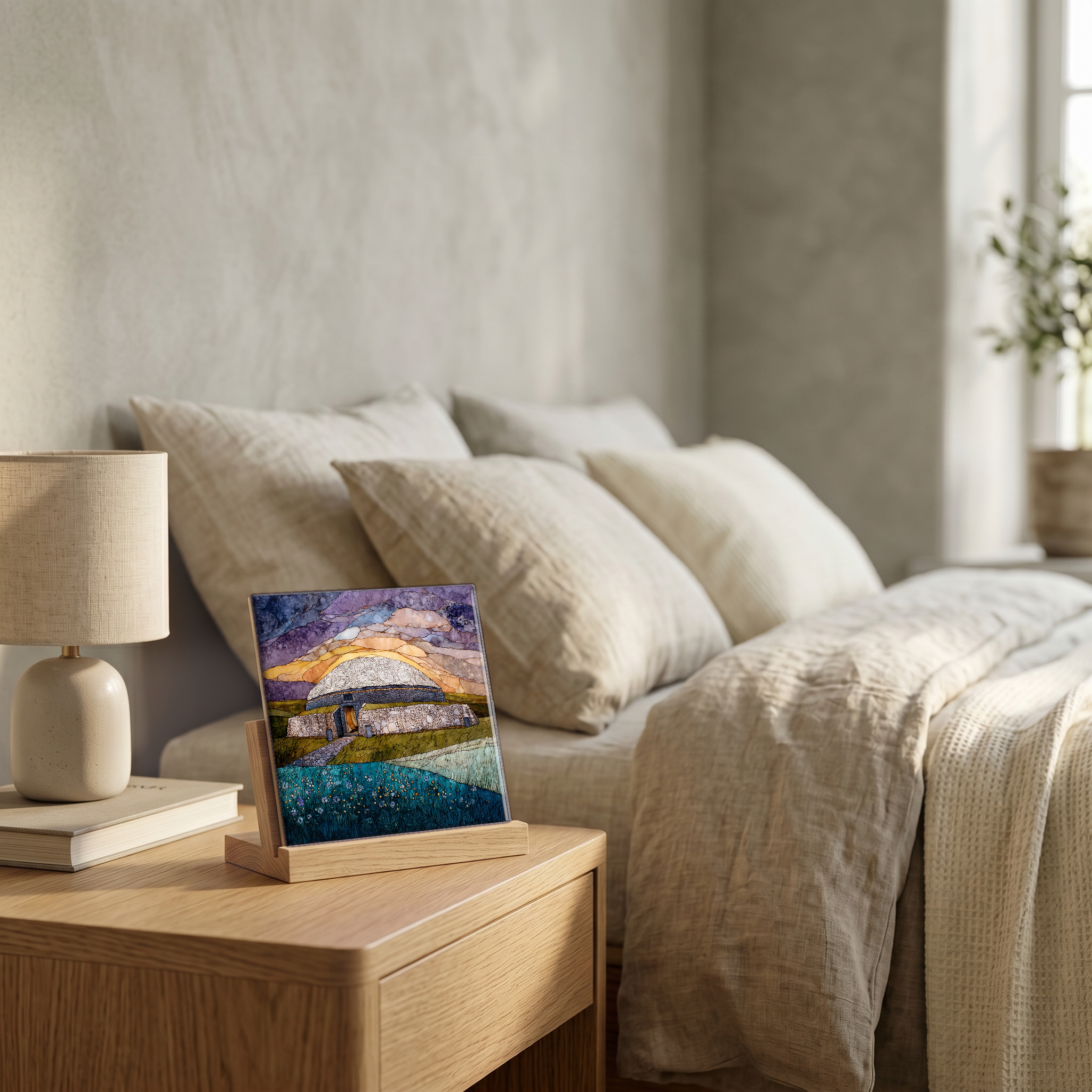
On the nightstand, on a light oak stand.
On a picture ledge, where the light comes in.
a note from the studio

A passage tomb in the Boyne Valley, raised around 3200 BCE, older than the pyramids at Giza and older than Stonehenge. The mound is a quiet rise above the river, ringed by ninety-seven kerbstones whose spirals have held their lines for five thousand years. For about seventeen minutes around the winter solstice, sunrise threads through a small opening above the doorway and walks the length of the passage to the inner chamber. The rest of the year the chamber holds its dark. A lottery decides who is inside on the morning that matters.
from the studio
shown in a slim black floating frame · 6 × 6 in
— bring it home

Newgrange, on ceramic.

Each tile is finished by hand in our Knoxville studio. Artwork is slowly infused into the ceramic surface under high heat and pressure, and rests beneath a thin glossy finish. The colour lives in the surface, not on top of it.

What kind of piece?
One tile — square or rectangle.
How big?
the popular one — counter, shelf, nightstand
6 × 6 in · 15 cm · 1.6 lb
Surface finish
A clear glossy finish — the artwork reads as if under resin. Ideal for show-pieces and framed wall art.
How it sits
A hidden cleat — sits ¼″ proud of the wall.
$58
Hand-finished and shipped from our studio at the foot of the Smokies. On your wall in about ten days.
size
6 × 6 in
15 cm
weighs
1.6 lb
solid in the hand
surface
ceramic, hand-finished
art rests beneath a thin glossy finish
from
Knoxville, TN
our family studio, at the foot of the Smokies
— start a Coaster Set

Pick any four 4-inch tiles — National Parks you've been to, a Smokies set, the four seasons of one place. $ for a set of , cork-backed, ready to live on the table.
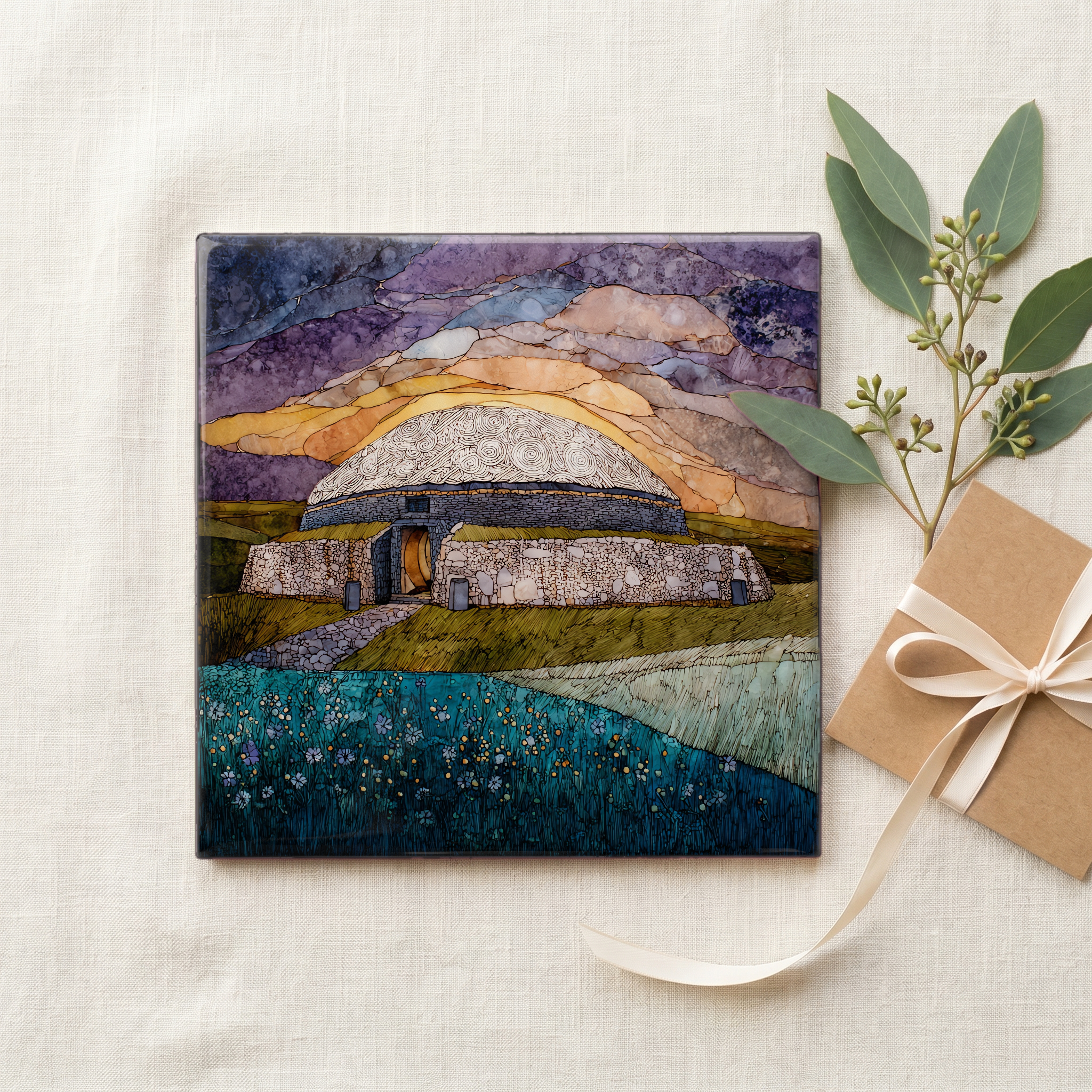
comes gift-ready
comes gift-ready

Each tile ships in a kraft box, tied with cream ribbon, with a handwritten note from the studio if you'd like to add one.
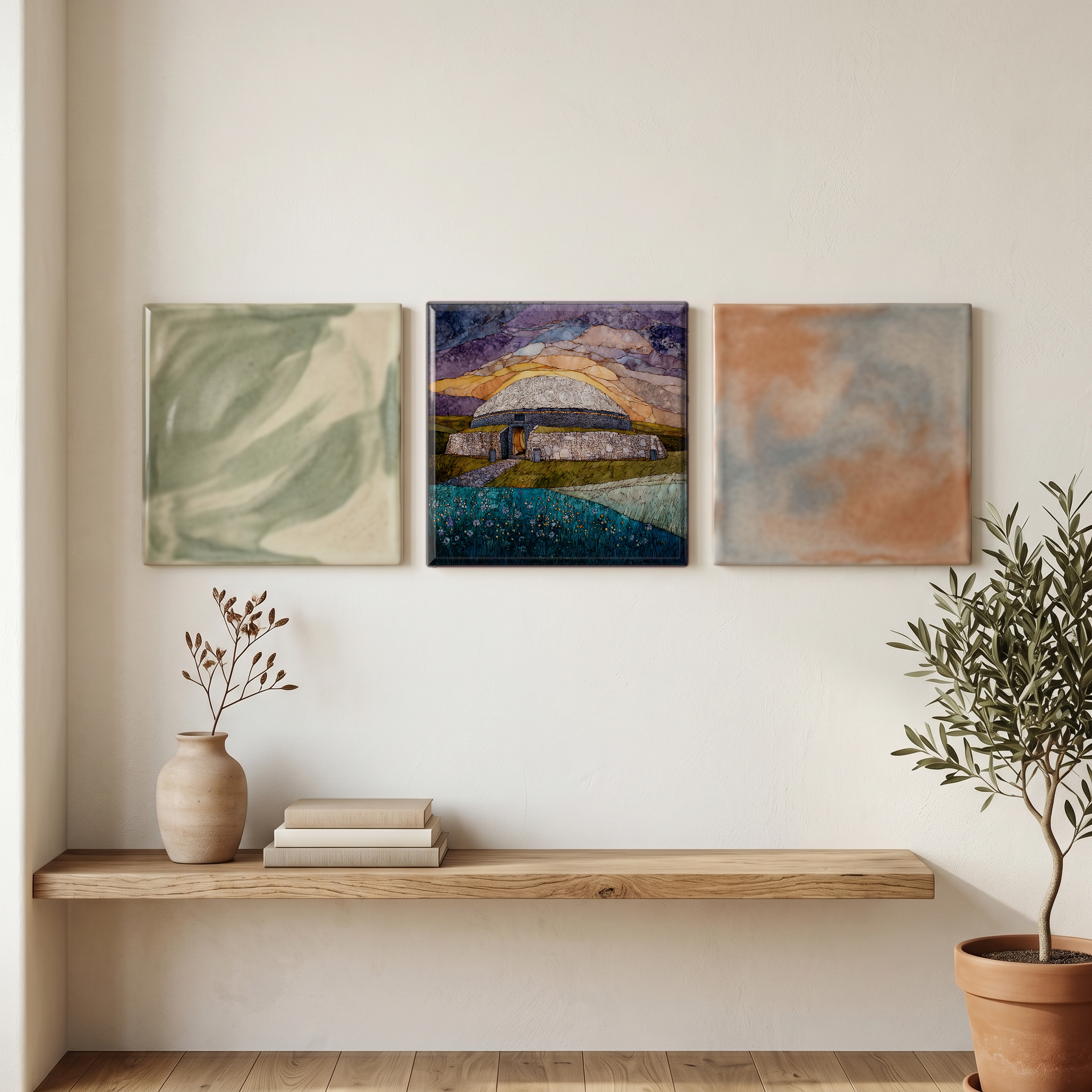
or build a grouping
or build a grouping

Three or five different vistas, hung together — a chapter of places you've been, or want to go.

about Newgrange

The place, in three passes.

A little of what's known, in case you fall down the rabbit hole — or want to go see it yourself.
the place

Newgrange stands on a ridge above a wide bend in the River Boyne in County Meath, about 50 km north of Dublin. The mound is roughly 85 metres across and 13 metres high, and forms the largest of three great passage tombs that make up the Brú na Bóinne archaeological complex, alongside Knowth and Dowth. The site was inscribed as a UNESCO World Heritage Site in 1993. Visitors do not drive to the mound itself; access is by shuttle from the Brú na Bóinne Visitor Centre at Donore, on the south side of the river. Excavations led by archaeologist Michael J. O'Kelly through the 1960s and 1970s confirmed a construction date of around 3200 BCE.

the stone

Ninety-seven decorated kerbstones ring the base of the mound, carved with spirals, lozenges, chevrons, and concentric arcs in the style now called Irish megalithic art. The entrance stone, catalogued as Kerbstone 1, is among the most reproduced pieces of European prehistoric carving; its triple spiral and two interlocking double spirals are divided by a vertical groove that aligns with the passage behind it. The mound itself is built of layered stone and turf, faced on its southern flank with white quartz and rounded granite cobbles. The quartz is not local to County Meath. The nearest source lies in the Wicklow Mountains, more than 70 km to the south, and was carried north by the Neolithic builders to face the entrance.

the light

For about seventeen minutes around sunrise on the winter solstice each December, a narrow beam of light enters a deliberately built opening above the entrance, called the roof box, and travels down the 19-metre passage to fill the inner cruciform chamber. The alignment was rediscovered on the morning of 21 December 1967 by archaeologist Michael J. O'Kelly, who was the first known person to observe it in modern times. The chamber holds the light for the duration of the dawn, then returns to dark for another year. Public access to the chamber on the solstice mornings is awarded by an annual lottery run by the Office of Public Works, which receives tens of thousands of applications for roughly fifty places.

— informed by Heritage Ireland, Wikipedia
where
Ireland · Donore, County Meath
within
Brú na Bóinne
position
53.6947° N · 6.4757° W
the neighborhood

What's nearby.

A handful of named places within an hour's walk or short drive. Some we've already painted; some we will.
1 km NE
Knowth
Neolithic passage tomb
2 km E
Dowth
Neolithic passage tomb
5 km E
Battle of the Boyne site
1690 battlefield
10 km NW
Hill of Slane
early Christian hilltop site
12 km NE
Mellifont Abbey
Cistercian abbey ruin
25 km SW
Hill of Tara
ancient royal site
N
Newgrange
Knowth
Dowth
Battle of the Boyne site
Hill of Slane
Mellifont Abbey
Hill of Tara
common questions

What people ask.

A few questions we get about Newgrange — and about bringing the piece home.
about the place

Newgrange is a Neolithic passage tomb in County Meath, Ireland, about 50 km north of Dublin and roughly 8 km west of the town of Drogheda. It sits on a low ridge above the River Boyne and is the largest monument in the Brú na Bóinne UNESCO World Heritage Site.

Newgrange was built around 3200 BCE, which makes it roughly five thousand years old and several centuries older than the pyramids at Giza and the standing stones at Stonehenge. Construction is attributed to the Neolithic farming communities of the Boyne Valley, anchored by radiocarbon work from the O'Kelly excavations.

For about seventeen minutes around sunrise on the winter solstice, a narrow beam of light enters the roof box above the entrance and walks down the 19-metre passage into the inner chamber. The alignment was rediscovered on 21 December 1967 by the archaeologist Michael J. O'Kelly.

Access is awarded by an annual lottery run by the Office of Public Works. The draw receives tens of thousands of entries each year, and around fifty winners are chosen across the five or six dawn windows in late December. Each winner may bring one guest into the chamber.

Yes. Guided visits run throughout the year via the Brú na Bóinne Visitor Centre at Donore, which operates shuttle buses across the river to the mound. Inside-chamber access on a normal day uses an electric lamp to simulate the solstice beam for visitors.

The entrance stone, catalogued as Kerbstone 1, is the carved slab lying across the front of the mound and is among the most photographed pieces of European prehistoric art. Its triple-spiral motif is divided by a vertical groove that aligns with the passage behind it.

The white facade is a wall of quartz cobbles and rounded granite that the Neolithic builders carried from the Wicklow Mountains, more than 70 km to the south. The current reconstruction by Michael J. O'Kelly in the 1970s is one interpretation of how the original facing may have looked; other archaeologists have proposed alternatives.

about the piece in your home

It has been a meaningful gift for many of our customers with ties to Ireland. Newgrange is older than nearly every other monument in the country and carries deep cultural weight, particularly around the solstice. A Keepsake or Small with a handwritten note from the studio carries well.

The piece reads well in Heritage-Irish, Old-World Library, and Moody Romantic interiors, where deep greens, warm leathers, and aged brass already do the work. The spiral motif and ochre-and-stone palette also play with Earthy Modern rooms that lean into texture.

It sits well inside the current Heritage-Revival and Old-World maximalist movements, where prehistoric and folk-art motifs are returning to fine homes. The Newgrange spiral is one of the oldest decorative forms still in continuous cultural use and reads as ancient without reading as kitsch.

Above a standard three-seat sofa, a single Large reads as a focal piece. For more presence, a four-tile Mural at sixteen by sixteen inches anchors the wall, and a nine-tile Mural at twenty-four by twenty-four inches turns the wall into the centre of the room. Above a console, the Medium is usually the right answer.

Yes. For wet rooms and backsplashes, choose the Dura Satin or Matte finish. Both are scratch-resistant and hold up to steam and splash. The Glossy finish is reserved for framed wall display in dry rooms.

A soft microfibre cloth and clean water. Avoid abrasive cleansers and anything ammonia-based. The colour lives inside the ceramic surface beneath a thin protective layer, so the piece will hold its tone for the life of the tile.

Yes. Every WenderVista piece is created and hand-finished in our Knoxville studio by Reid Wender, the curator. We do not license third-party imagery, and no two vista records share the same artwork.

if this one stayed with you

A few you might also love.

Hand-picked by the eye that found Sorapis. Same air, same kind of quiet.