Wender·Vista
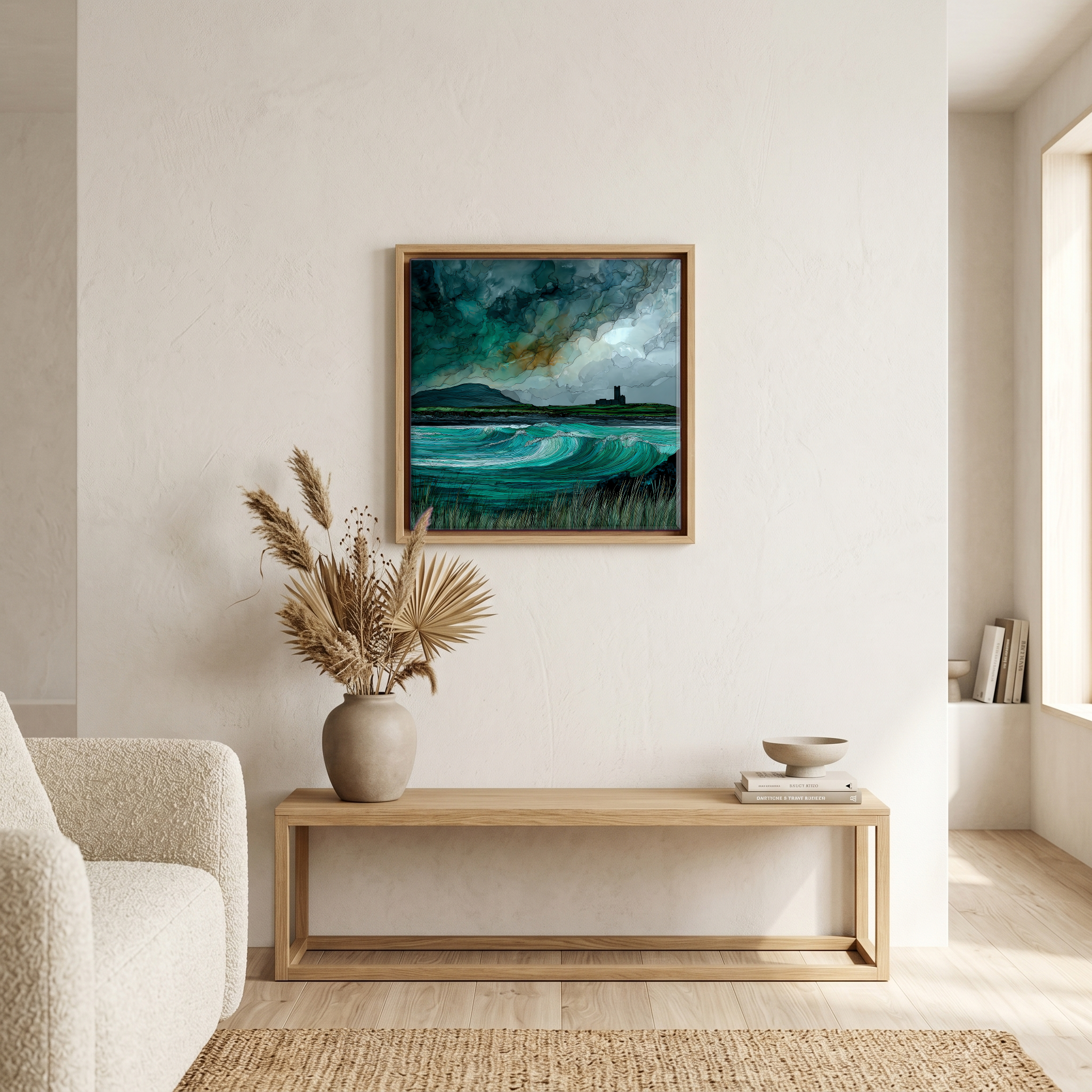
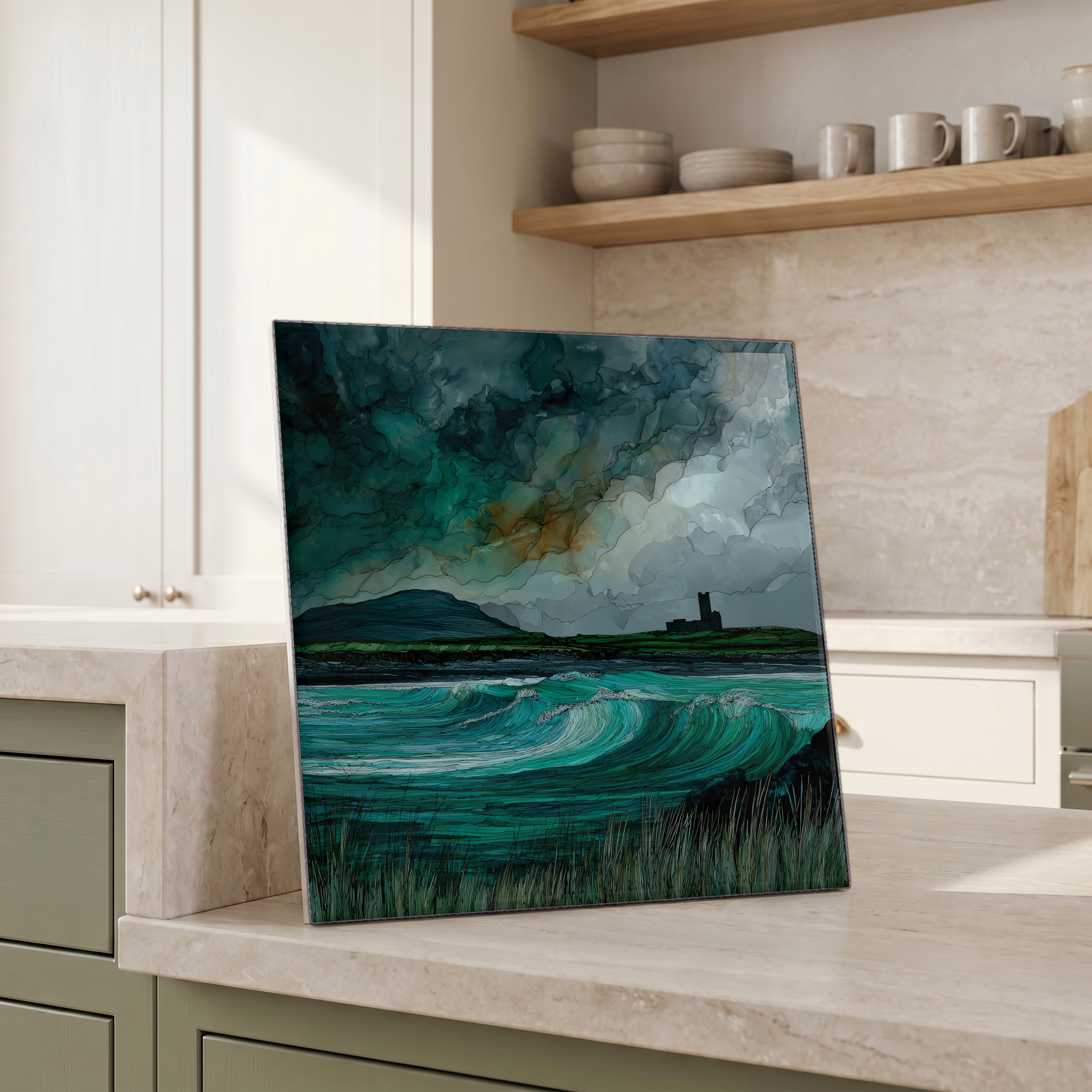
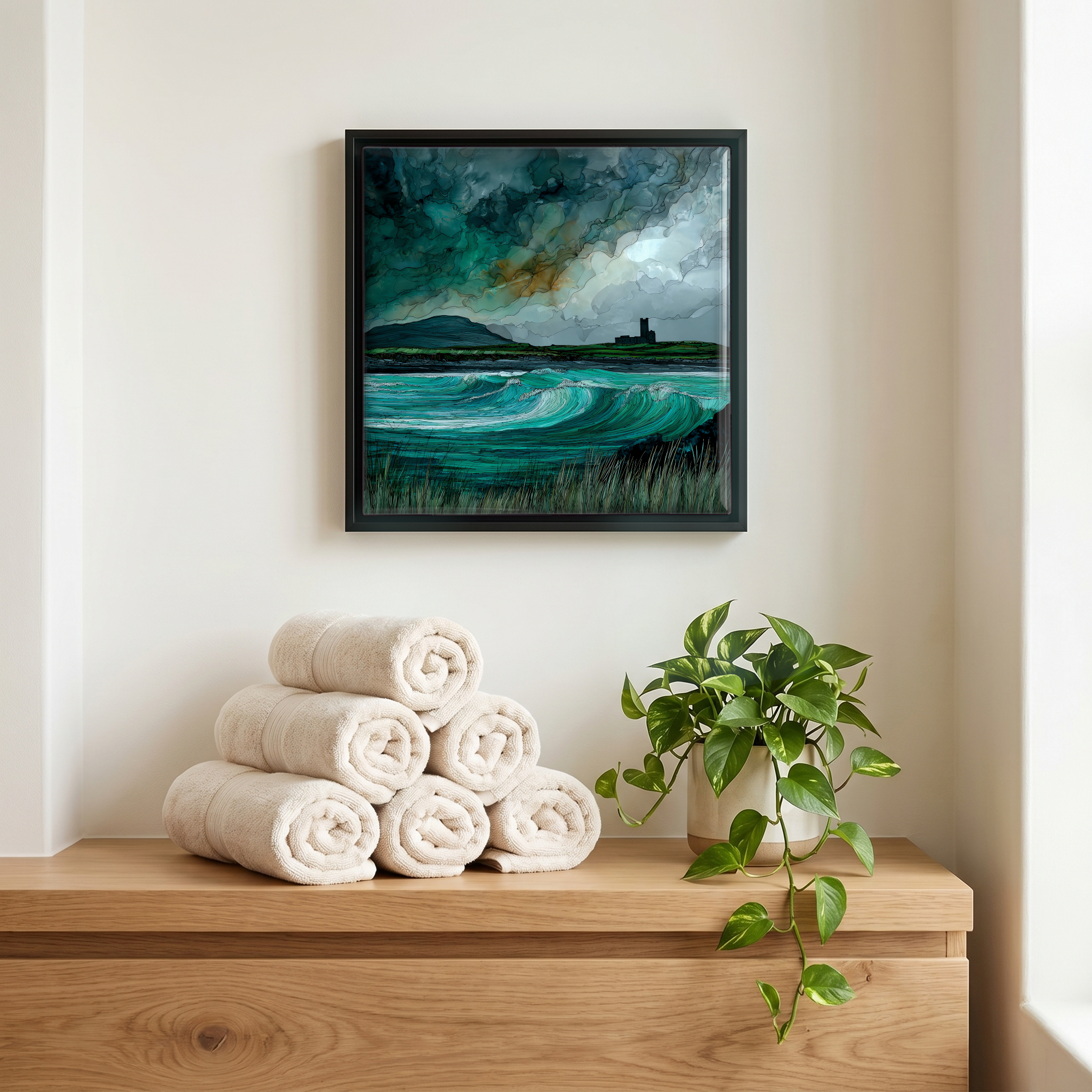
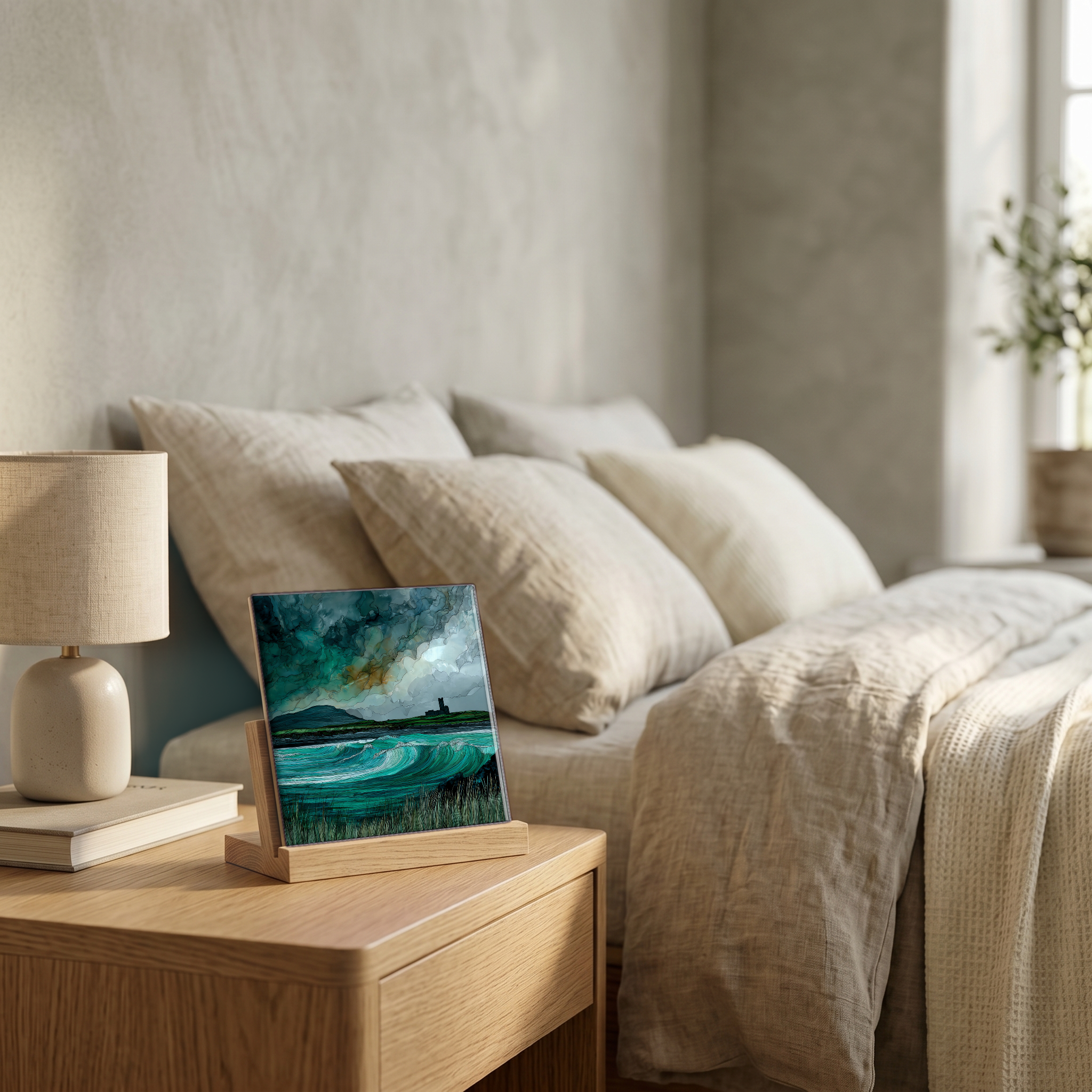
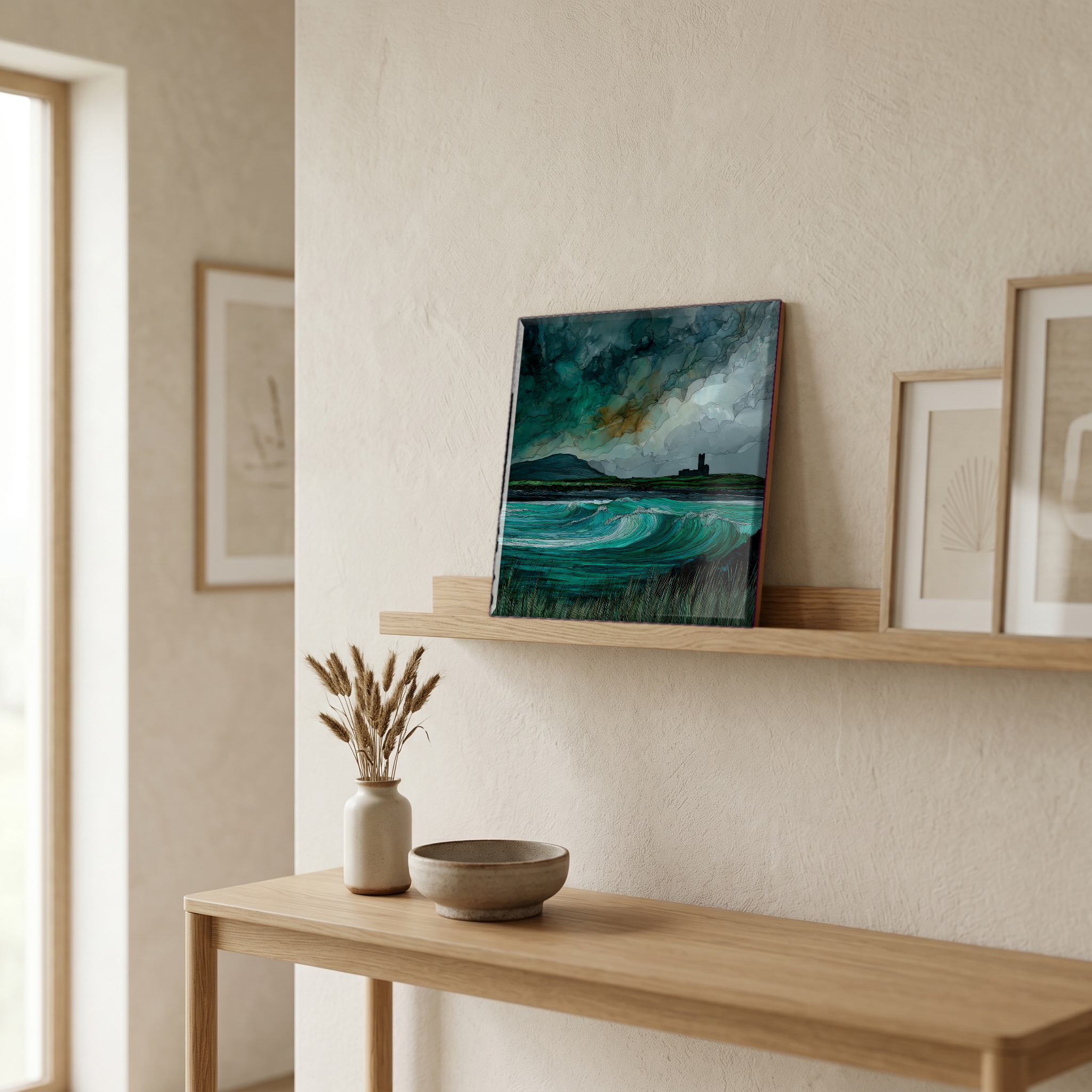
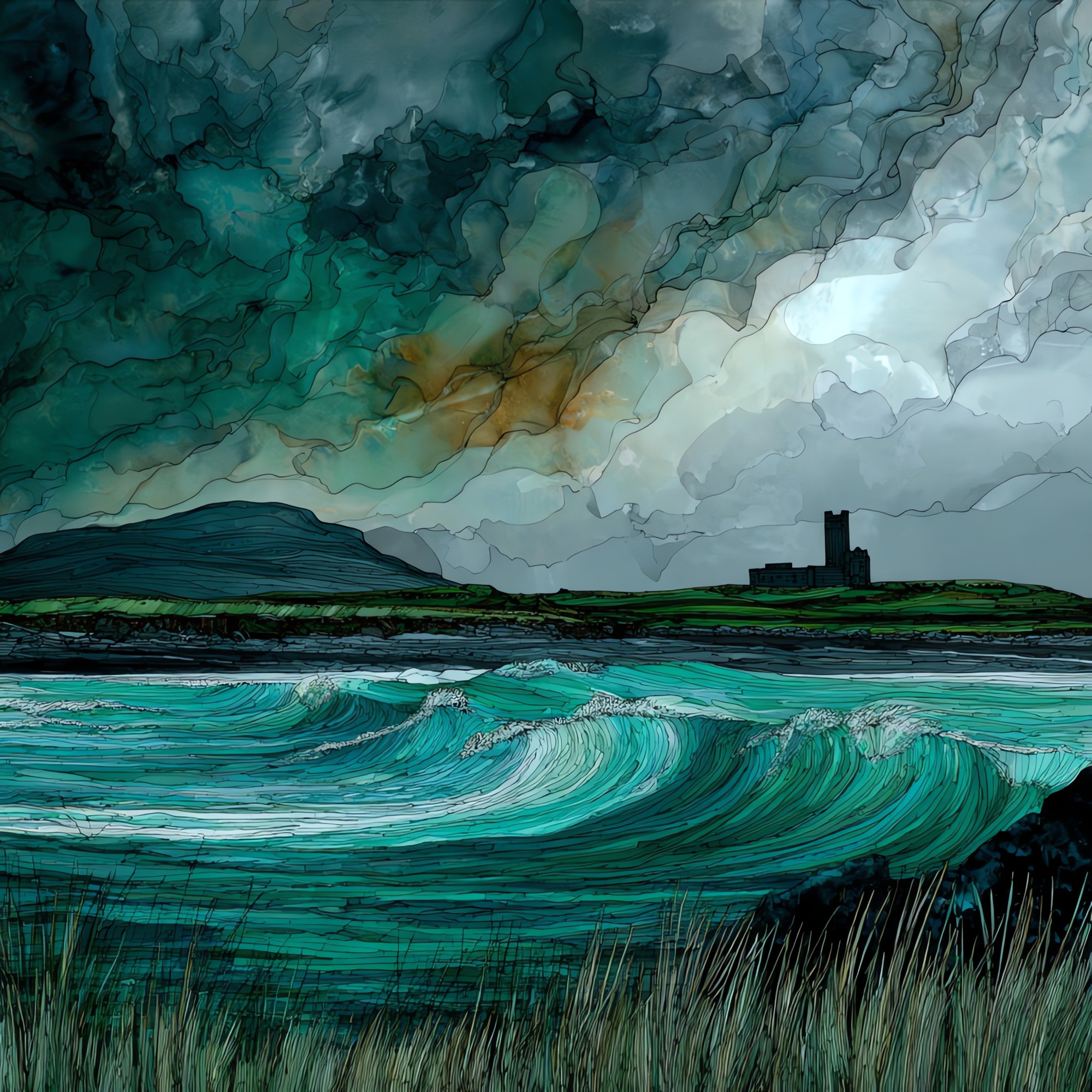
Mullaghmore Head
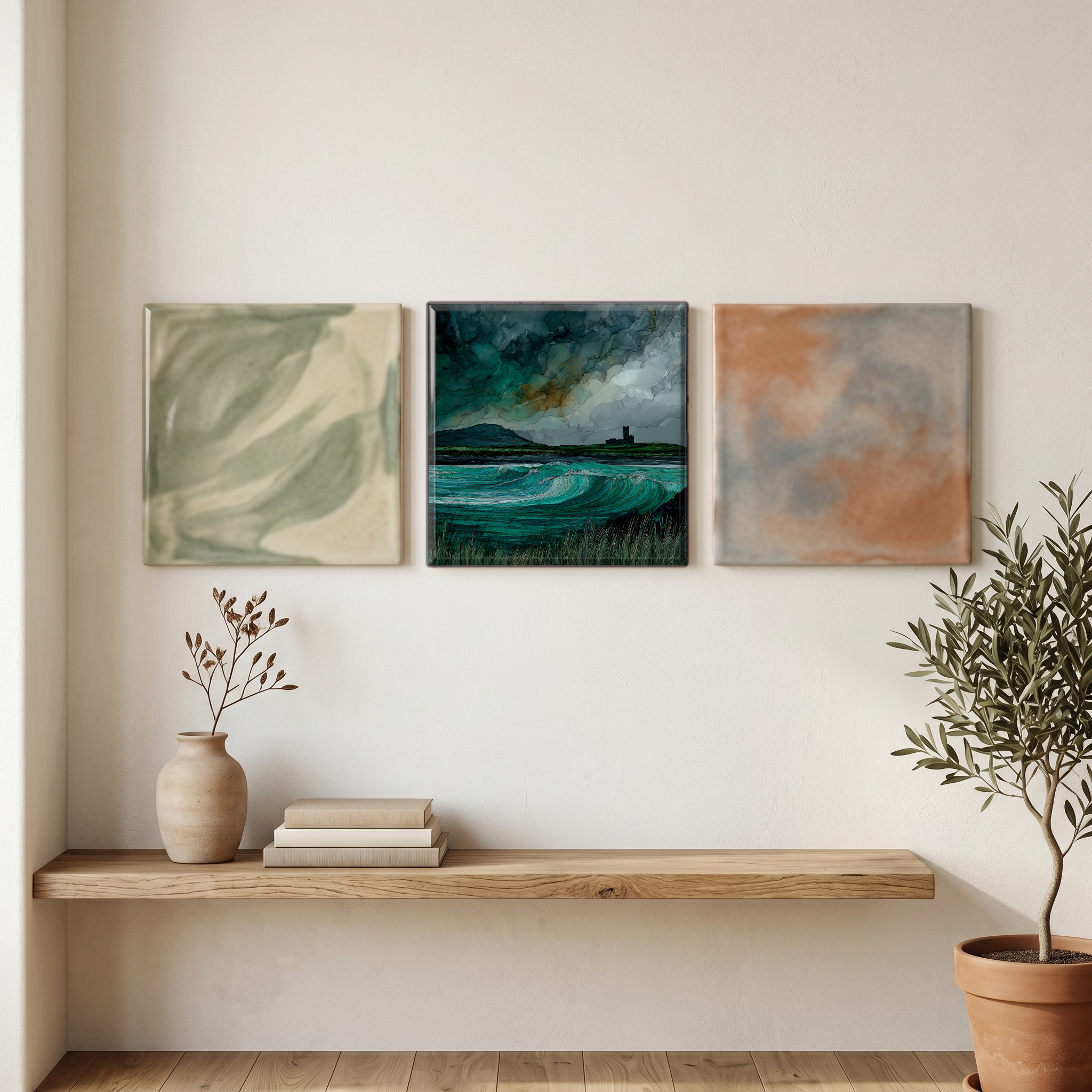
shown on ceramic, 12-inch tileIreland
on the north Sligo coast, looking across Donegal Bay

Mullaghmore Head

— the green headland the Atlantic comes to find.

Where it lives

Not only on a wall.

A small tile on the nightstand catching the morning. A larger one above the fire. Yours, wherever you spend the slow hours.
Above the bench, in a warm oak surround.
Beside the kettle, propped on the counter.
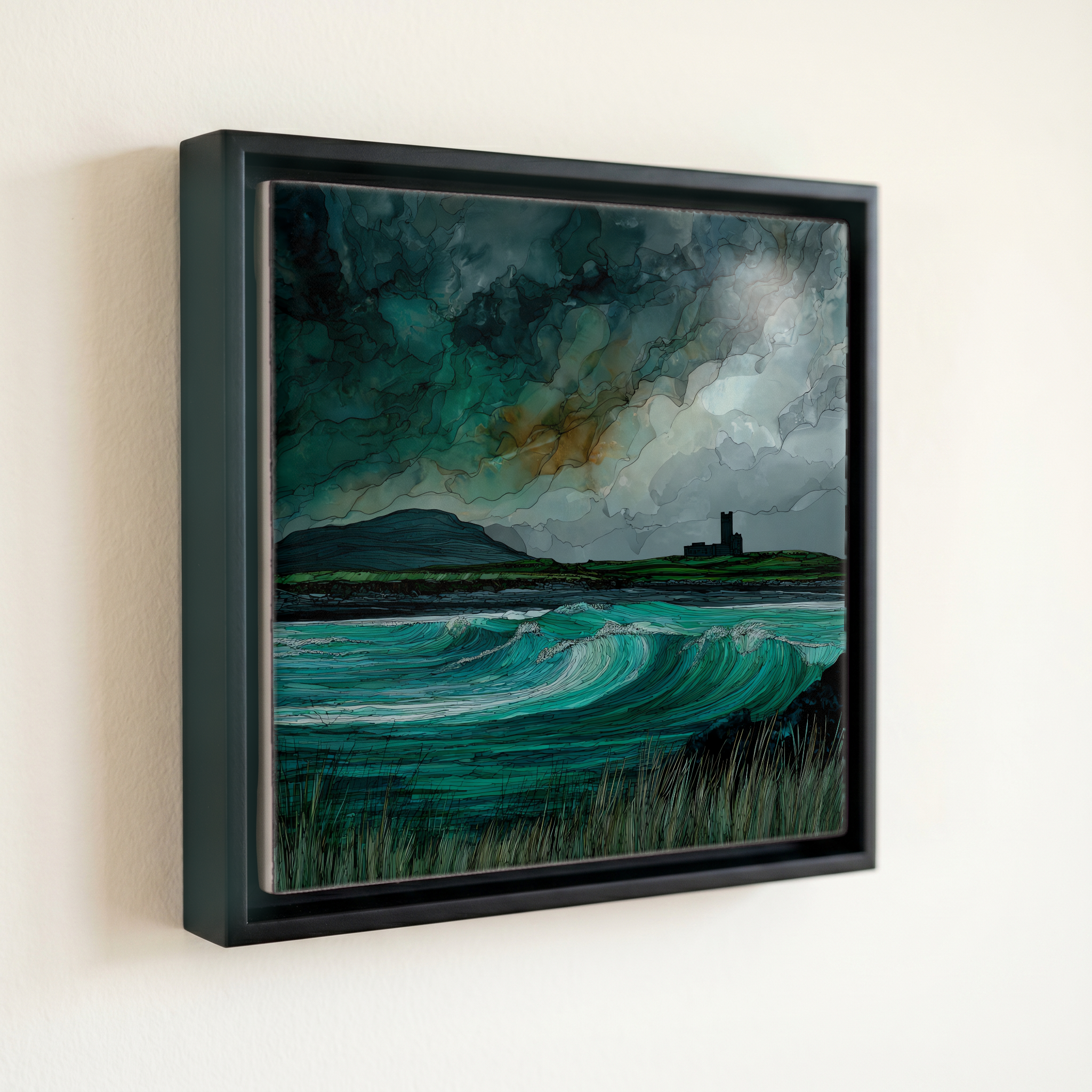
Above the linens, in a slim black surround.
On the nightstand, on a light oak stand.
On a picture ledge, where the light comes in.
a note from the studio

A small green peninsula at the top of County Sligo, where the Atlantic turns into Donegal Bay. The harbour was designed by Alexander Nimmo in the 1820s and the village still uses it: fishing boats, a row of houses, a hotel above the slip. On a still summer day it reads as a quiet seaside town. In winter, the offshore reef known as Prowlers throws up some of the largest ridable waves in Europe, and surfers travel from across the world for the chance at one. Classiebawn Castle holds the rise above the harbour, the same silhouette since 1874.
from the studio
shown in a slim black floating frame · 6 × 6 in
— bring it home

Mullaghmore Head, on ceramic.

Each tile is finished by hand in our Knoxville studio. Artwork is slowly infused into the ceramic surface under high heat and pressure, and rests beneath a thin glossy finish. The colour lives in the surface, not on top of it.

What kind of piece?
One tile — square or rectangle.
How big?
the popular one — counter, shelf, nightstand
6 × 6 in · 15 cm · 1.6 lb
Surface finish
A clear glossy finish — the artwork reads as if under resin. Ideal for show-pieces and framed wall art.
How it sits
A hidden cleat — sits ¼″ proud of the wall.
$58
Hand-finished and shipped from our studio at the foot of the Smokies. On your wall in about ten days.
size
6 × 6 in
15 cm
weighs
1.6 lb
solid in the hand
surface
ceramic, hand-finished
art rests beneath a thin glossy finish
from
Knoxville, TN
our family studio, at the foot of the Smokies
— start a Coaster Set

Pick any four 4-inch tiles — National Parks you've been to, a Smokies set, the four seasons of one place. $ for a set of , cork-backed, ready to live on the table.
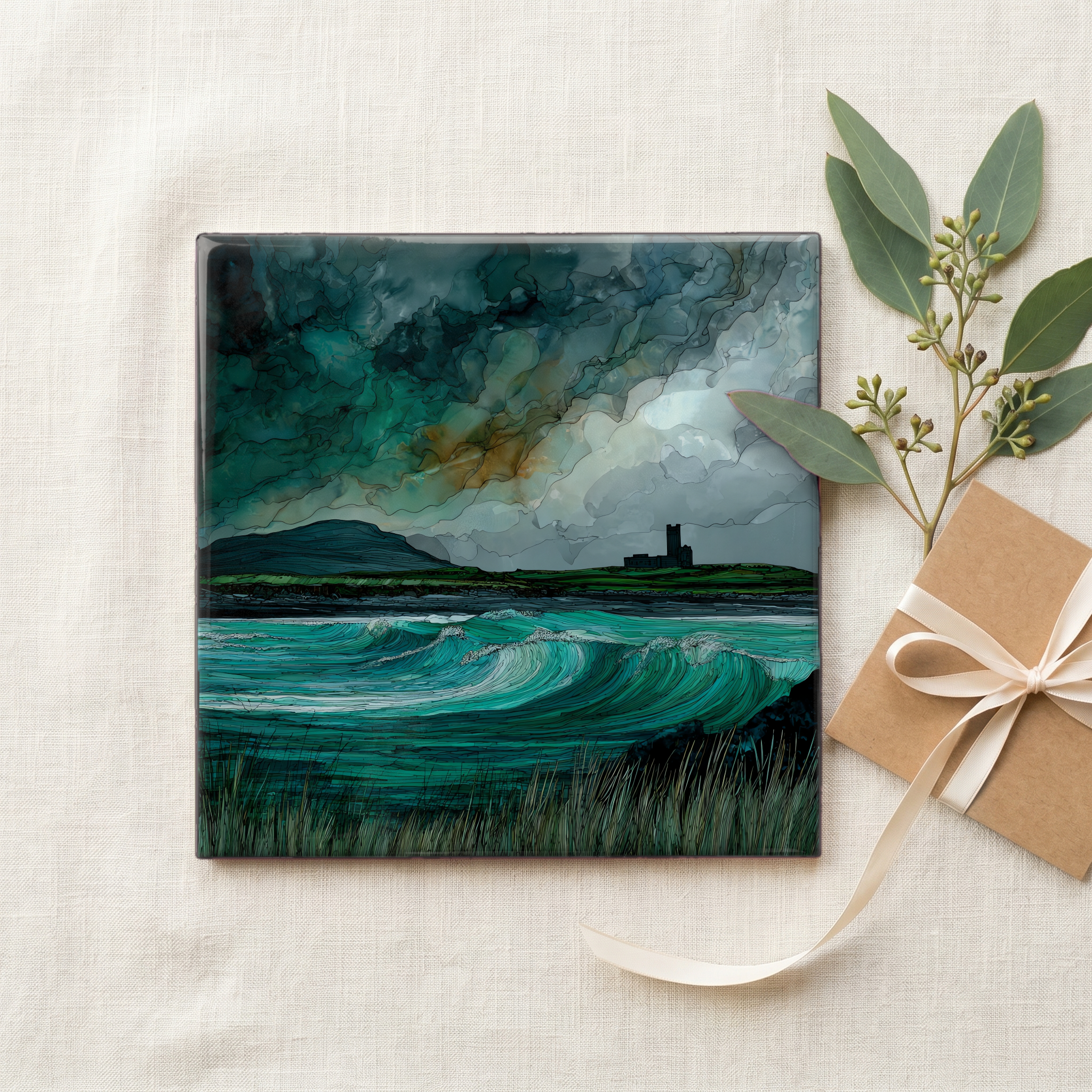
comes gift-ready
comes gift-ready

Each tile ships in a kraft box, tied with cream ribbon, with a handwritten note from the studio if you'd like to add one.
or build a grouping
or build a grouping

Three or five different vistas, hung together — a chapter of places you've been, or want to go.

about Mullaghmore Head

The place, in three passes.

A little of what's known, in case you fall down the rabbit hole — or want to go see it yourself.
the place

Mullaghmore is a peninsula and village on the northwest coast of Ireland, in County Sligo in the province of Connacht, about 25 kilometres north of Sligo town. The headland reaches into Donegal Bay, with views east toward the table-topped summit of Benbulben (526 metres) and northwest across open Atlantic water toward the coast of County Donegal. The Mullaghmore Head loop is a designated discovery point on the Wild Atlantic Way, the 2,500-kilometre coastal driving route that runs the length of Ireland's western seaboard from Kinsale in Cork to the Inishowen peninsula in Donegal. The harbour was constructed in the 1820s under the engineer Alexander Nimmo, commissioned by the Palmerston family, who owned the surrounding estate.

the water

The waves that have made Mullaghmore famous form on a reef called Prowlers, roughly a kilometre offshore from the head. Atlantic depressions rolling in from a thousand kilometres of open ocean focus on a shallow underwater ledge, throwing up rideable faces approaching 18 metres during the strongest winter swells. In 2020, the Irish surfer Conor Maguire was towed into a wave at Mullaghmore later estimated at around 18 metres, the largest yet ridden in Ireland. The window for such waves is narrow: late autumn through early spring, when low-pressure systems track south of Iceland and the wind blows offshore from the southeast, holding the face up long enough to surf.

the stone

Classiebawn Castle stands on the rise above the harbour, its single tower visible from every approach to the peninsula. Construction began in 1856 under Henry John Temple, third Viscount Palmerston and twice British prime minister, who had inherited the Mullaghmore estate. He died in 1865 before the castle was finished; it was completed in 1874 by his successor. In the twentieth century it became the summer home of Louis Mountbatten, the last Viceroy of India, who was killed by an IRA bomb placed on his fishing boat in Mullaghmore harbour on 27 August 1979. The castle remains in private hands and is not open to the public, though it can be seen clearly from the head and the coast road.

where
Ireland · County Sligo, Connacht
position
54.4667° N · 8.4667° W
the neighborhood

What's nearby.

A handful of named places within an hour's walk or short drive. Some we've already painted; some we will.
17 km SE
Benbulben
table mountain
20 km S
Drumcliffe
churchyard and Yeats grave
10 km S
Streedagh Beach
Atlantic strand
10 km N
Bundoran
surf town
25 km S
Sligo
county town
N
Mullaghmore Head
Benbulben
Drumcliffe
Streedagh Beach
Bundoran
Sligo
common questions

What people ask.

A few questions we get about Mullaghmore Head — and about bringing the piece home.
about the place

Mullaghmore Head is a peninsula on the northwest coast of Ireland, in County Sligo, roughly 25 kilometres north of Sligo town. It marks one of the western shores of Donegal Bay and is signposted as a discovery point on the Wild Atlantic Way coastal route.

A shallow reef called Prowlers, about a kilometre offshore from the head, focuses incoming Atlantic swell into rideable big waves. Faces approaching 18 metres have been ridden during winter storms, including a 2020 ride by Conor Maguire that is the largest yet recorded in Ireland.

Classiebawn Castle, begun in 1856 by Henry John Temple, third Viscount Palmerston, and completed in 1874 after his death. It later became the summer home of Louis Mountbatten, the last Viceroy of India, who was killed by an IRA bomb in the harbour below in August 1979. The castle is privately owned.

Summer offers calm seas, swimming at the village beach, and clear views east to Benbulben. Late autumn through early spring brings the Atlantic storm swell that surfers come for. The coast road around the head stays open through winter and takes about ten minutes to drive.

Only experienced big-wave surfers ride the Prowlers reef offshore, and only during specific storm windows with a tow team and rescue support. The beach at Mullaghmore village offers gentler conditions in summer, suited to swimming and small-wave sessions, but the main reef is not a learner's break.

A 2,500-kilometre signed coastal driving route along Ireland's western seaboard, running from Kinsale in County Cork to the Inishowen peninsula in County Donegal. Mullaghmore Head is one of more than a hundred designated discovery points on the route and a common stop on the Sligo-to-Donegal stretch.

East across the peninsula: the table-topped summit of Benbulben (526 metres), the mountain that runs through W. B. Yeats's poetry. North and west: open Atlantic water toward the coast of Donegal. South: the strand at Streedagh, where three ships of the Spanish Armada were wrecked in 1588.

about the piece in your home

It has carried well for our customers who grew up in Sligo or who summer on the northwest coast. The headland and the Classiebawn silhouette are immediately recognisable to anyone who has driven the Wild Atlantic Way. A Small or Medium with a handwritten note from the studio is a common choice.

The Mullaghmore palette runs through deep Atlantic blues, headland greens, and the warm stone tones of the castle. It fits Coastal-modern interiors, Irish-country rooms with darker woods, and Maximalist gallery walls where it sits among other framed places. It reads less well against bright Scandinavian-pale schemes.

Coastal-modern has moved away from light-blue-and-white seaside palettes toward deeper Atlantic and North Sea tones, painterly textures, and a sense of weather. The Mullaghmore tile reads in that direction and pairs naturally with linen, oak, and bronze hardware rather than chrome and glass.

A single Large works above most consoles and reading chairs. Above a standard three-seat sofa the four-tile Mural reads as one landscape and gives the headland room to extend. A nine-tile Mural is the choice for a long entry wall or above a king bed.

Yes. Order the Dura Satin or Matte finish for any room with steam, splash, or direct sunlight. The colour is slowly infused into the ceramic surface under high heat and pressure, so it does not fade with light or moisture. The Glossy finish is for framed wall pieces in dry rooms.

A soft microfibre cloth and water. The surface is sealed and resists fingerprints. Avoid abrasive scrubbers and any cleaner with bleach or solvent, which can dull the surface over time. The colour lives beneath a thin protective layer and will not lift.

Yes. Every WenderVista place is painted in the studio's own visual language and is not licensed from a third party. Reid Wender curates which places enter the atlas. The Mullaghmore Head piece is part of the Ireland collection and is not sold anywhere else.

if this one stayed with you

A few you might also love.

Hand-picked by the eye that found Sorapis. Same air, same kind of quiet.