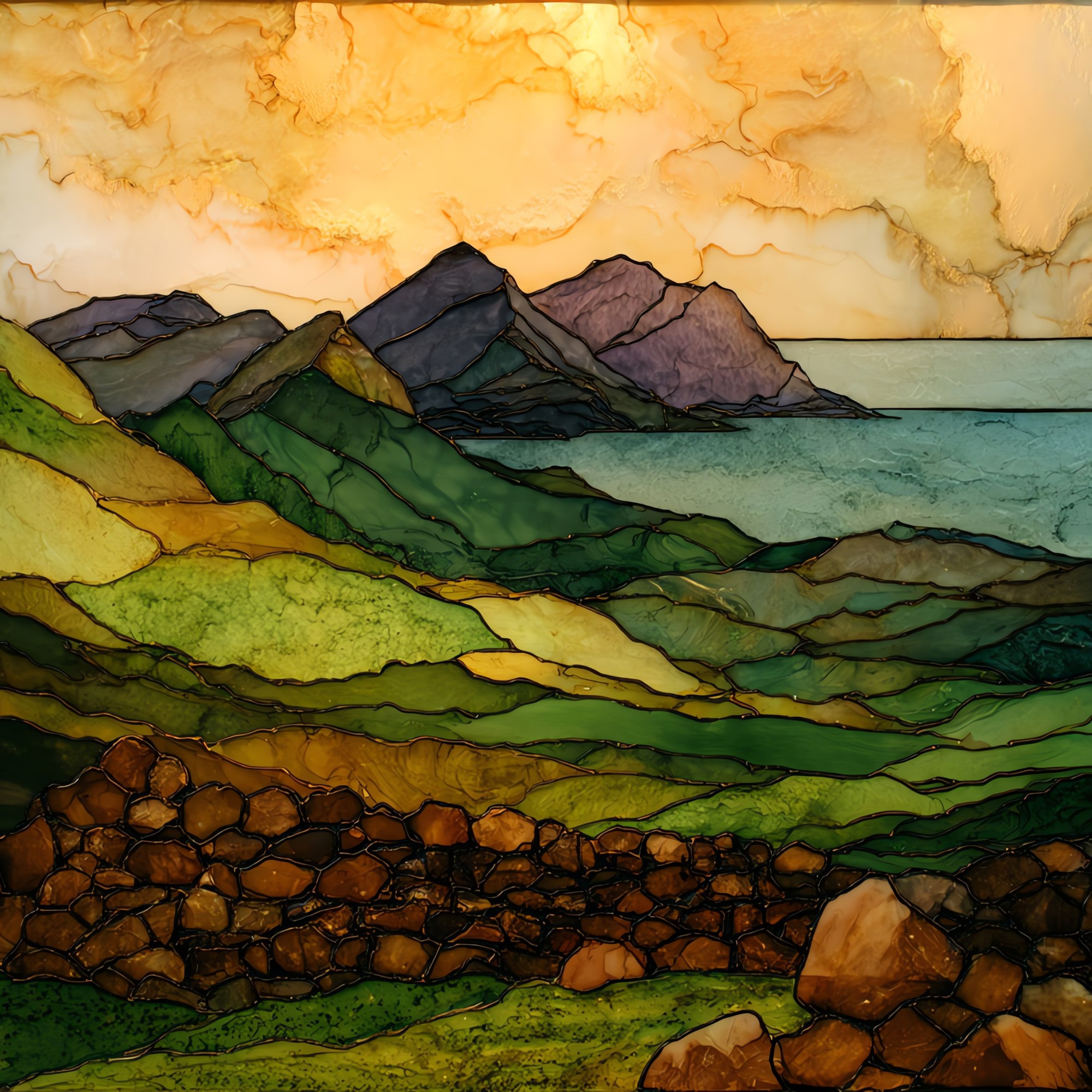
Mourne Mountains
— — the landscape C.S. Lewis kept seeing.
Not only on a wall.
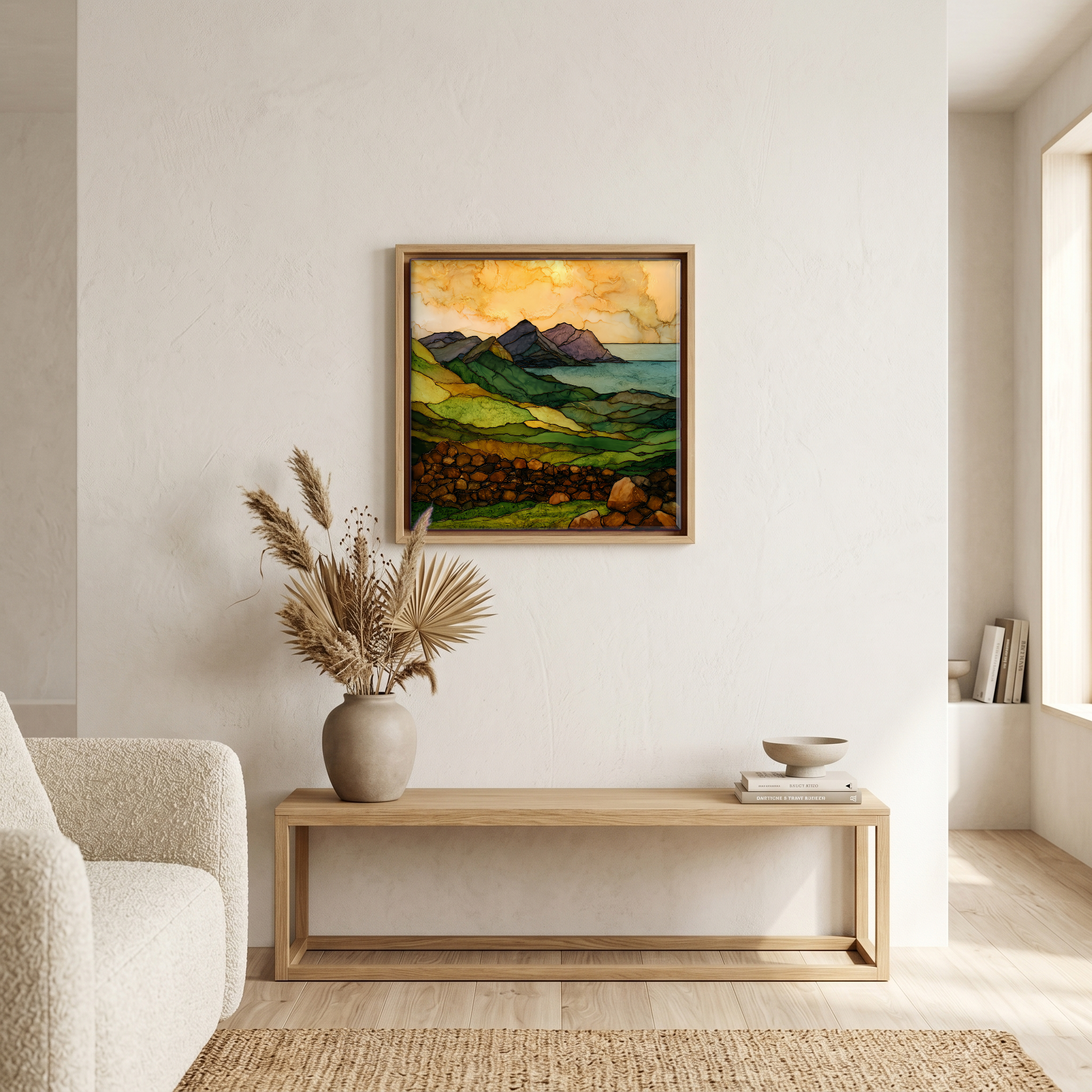
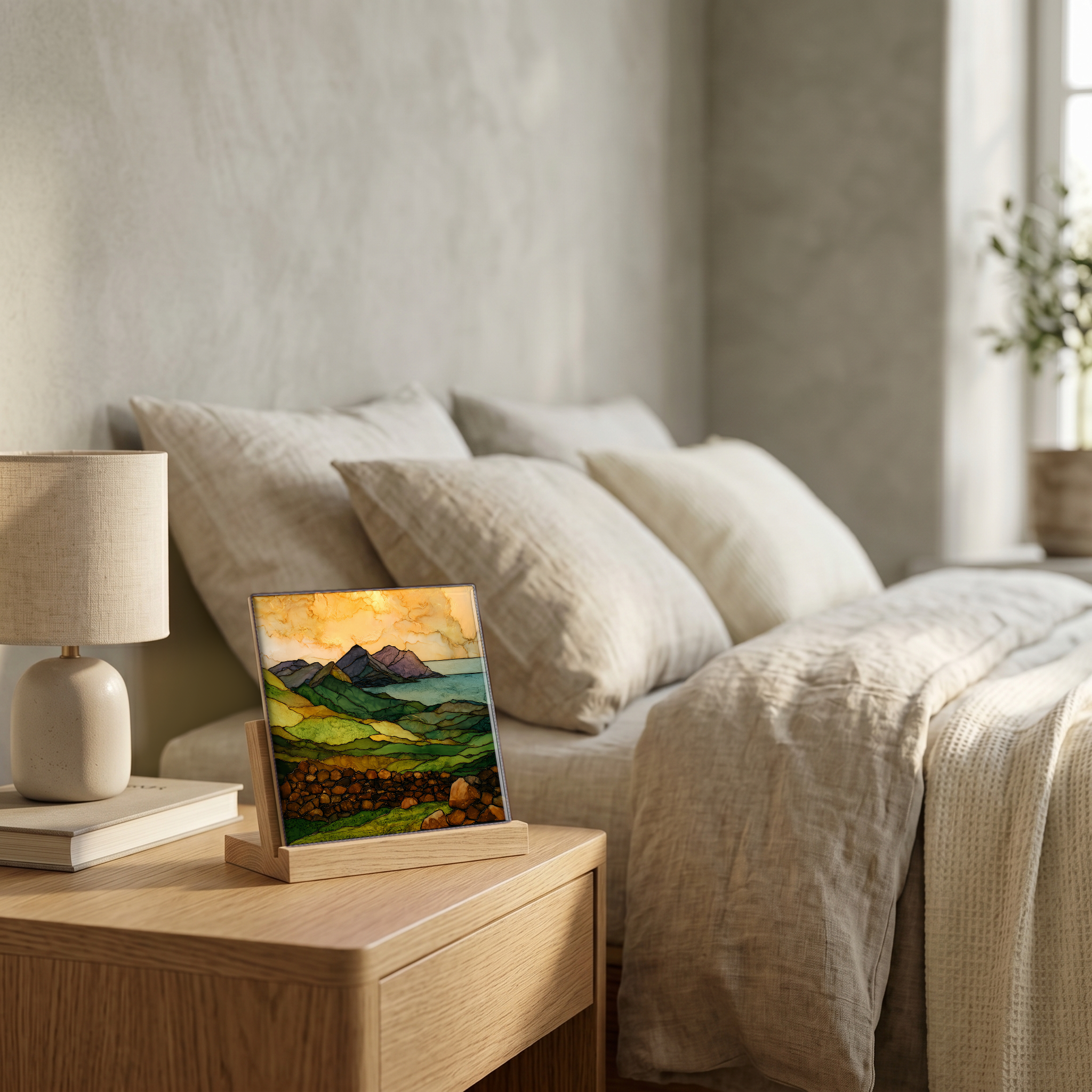
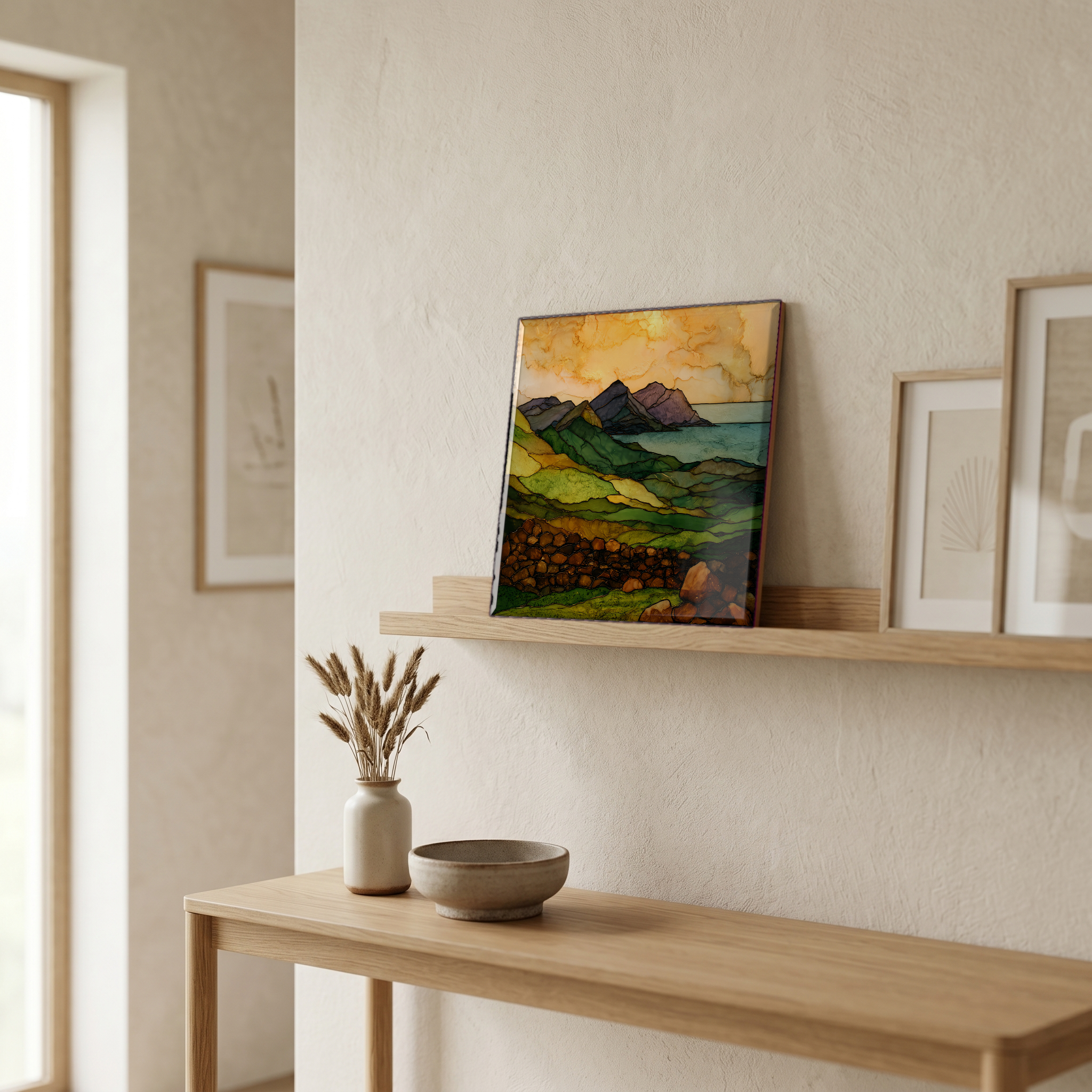
“A small granite country in the south-east of Northern Ireland. Twelve summits above 600 metres, all encircled by a single dry-stone wall that took eighteen years to build. The range climbs from Newcastle harbour and gives out, twelve miles inland, the way ranges do. The light coming off the Irish Sea is the kind of cool blue you find on the eastern edge of a westerly island. The song everyone knows about these mountains is right about them.
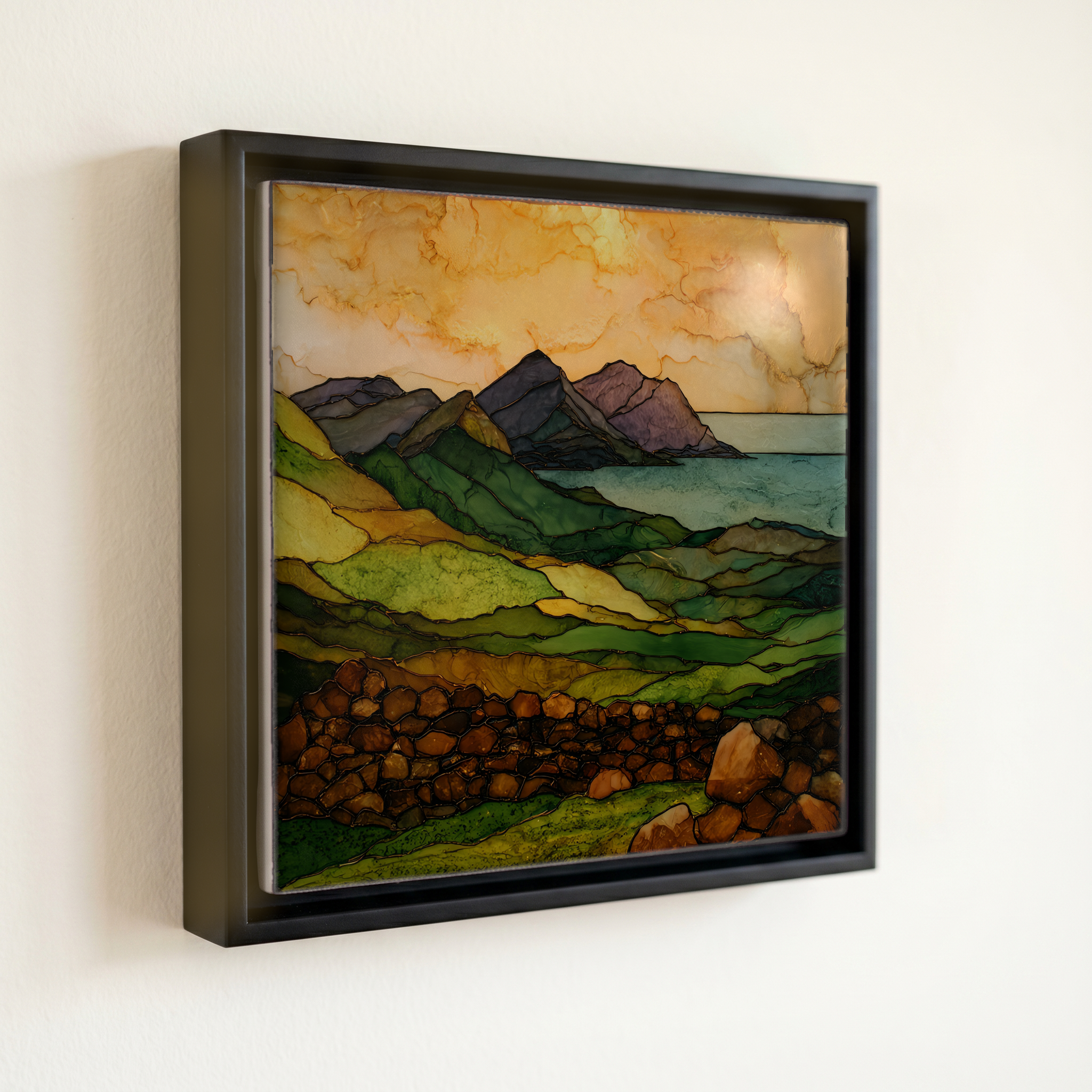
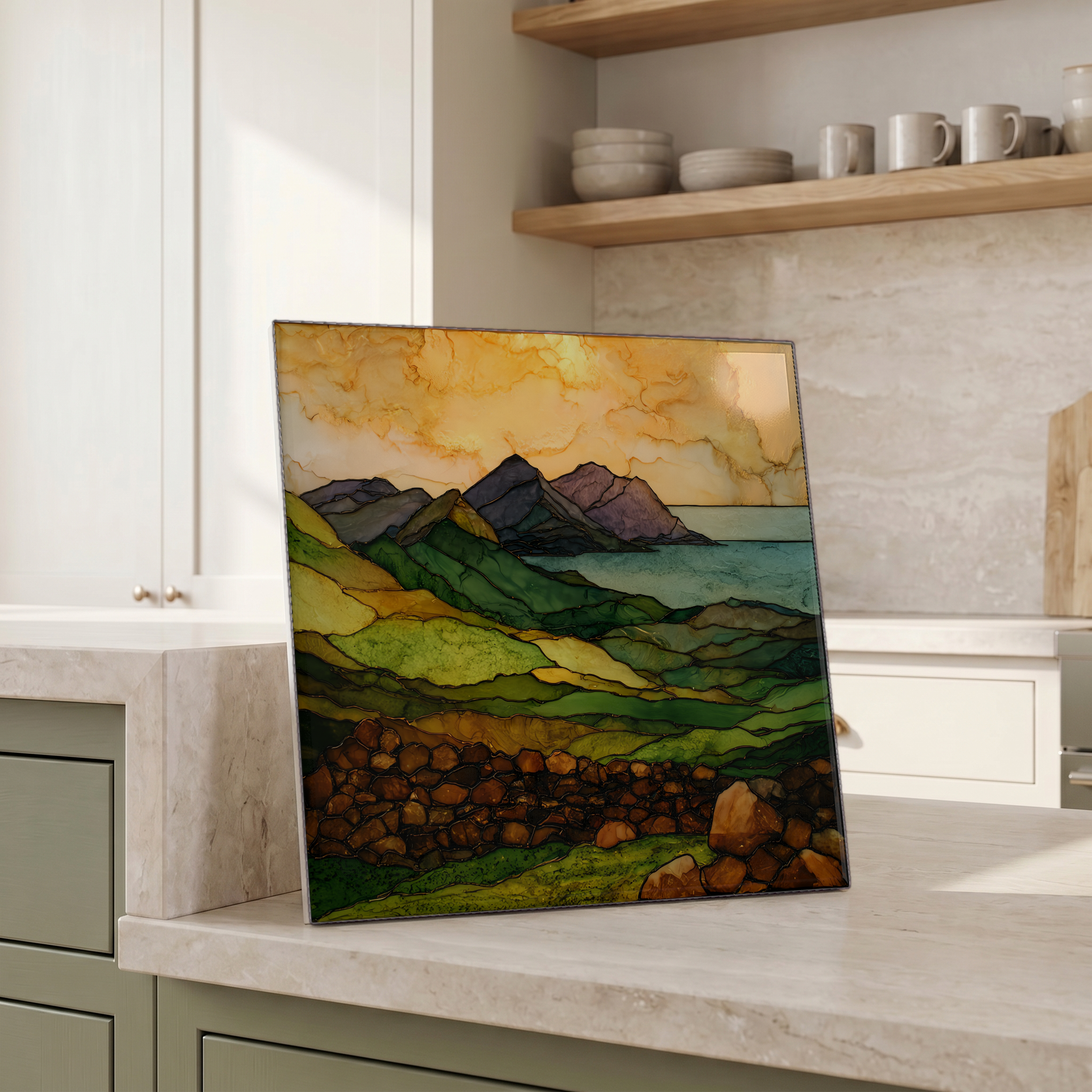
Mourne Mountains, on ceramic.
Each tile is finished by hand in our Knoxville studio. Artwork is slowly infused into the ceramic surface under high heat and pressure, and rests beneath a thin glossy finish. The colour lives in the surface, not on top of it.
Pick any four 4-inch tiles — National Parks you've been to, a Smokies set, the four seasons of one place. $ for a set of , cork-backed, ready to live on the table.
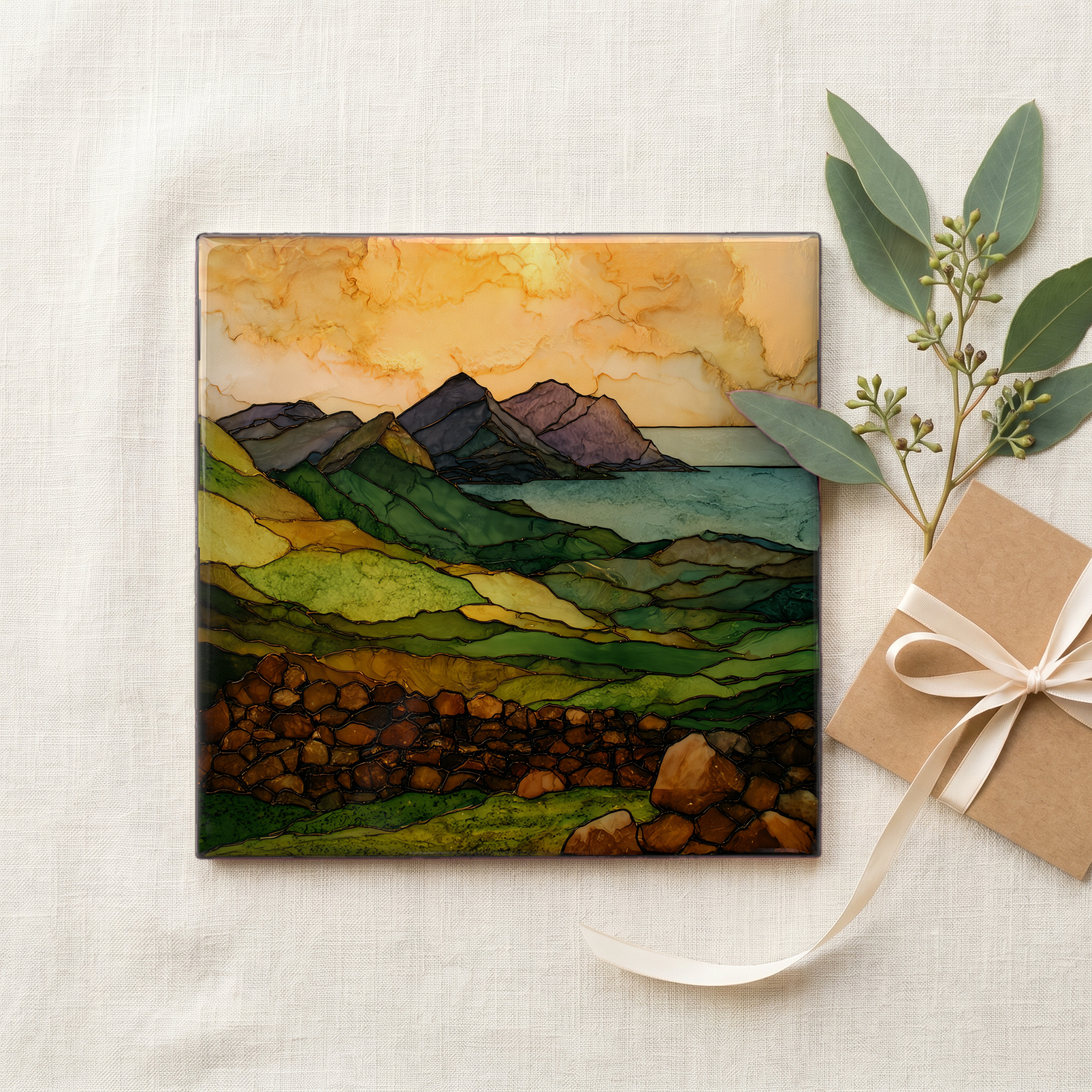
Each tile ships in a kraft box, tied with cream ribbon, with a handwritten note from the studio if you'd like to add one.
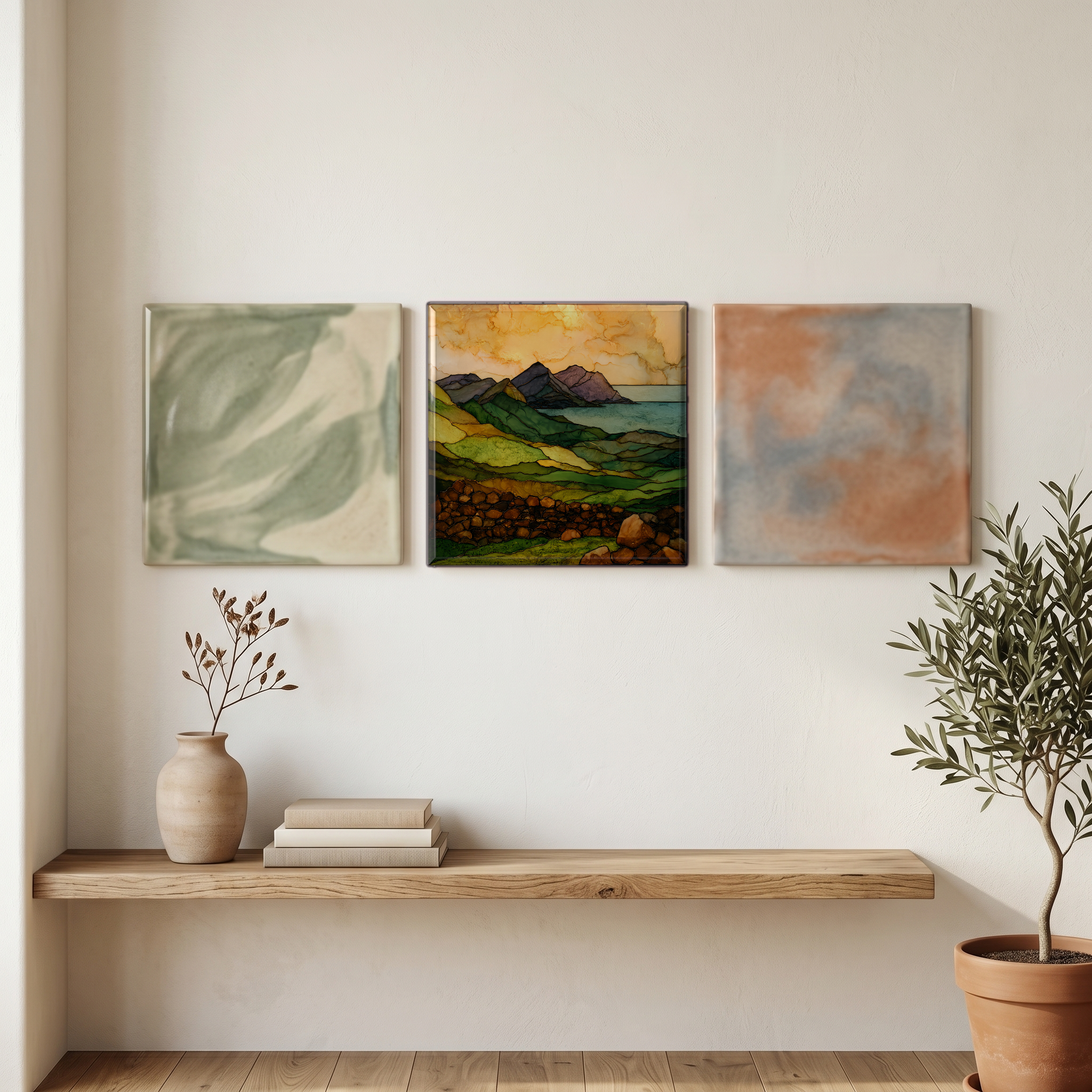
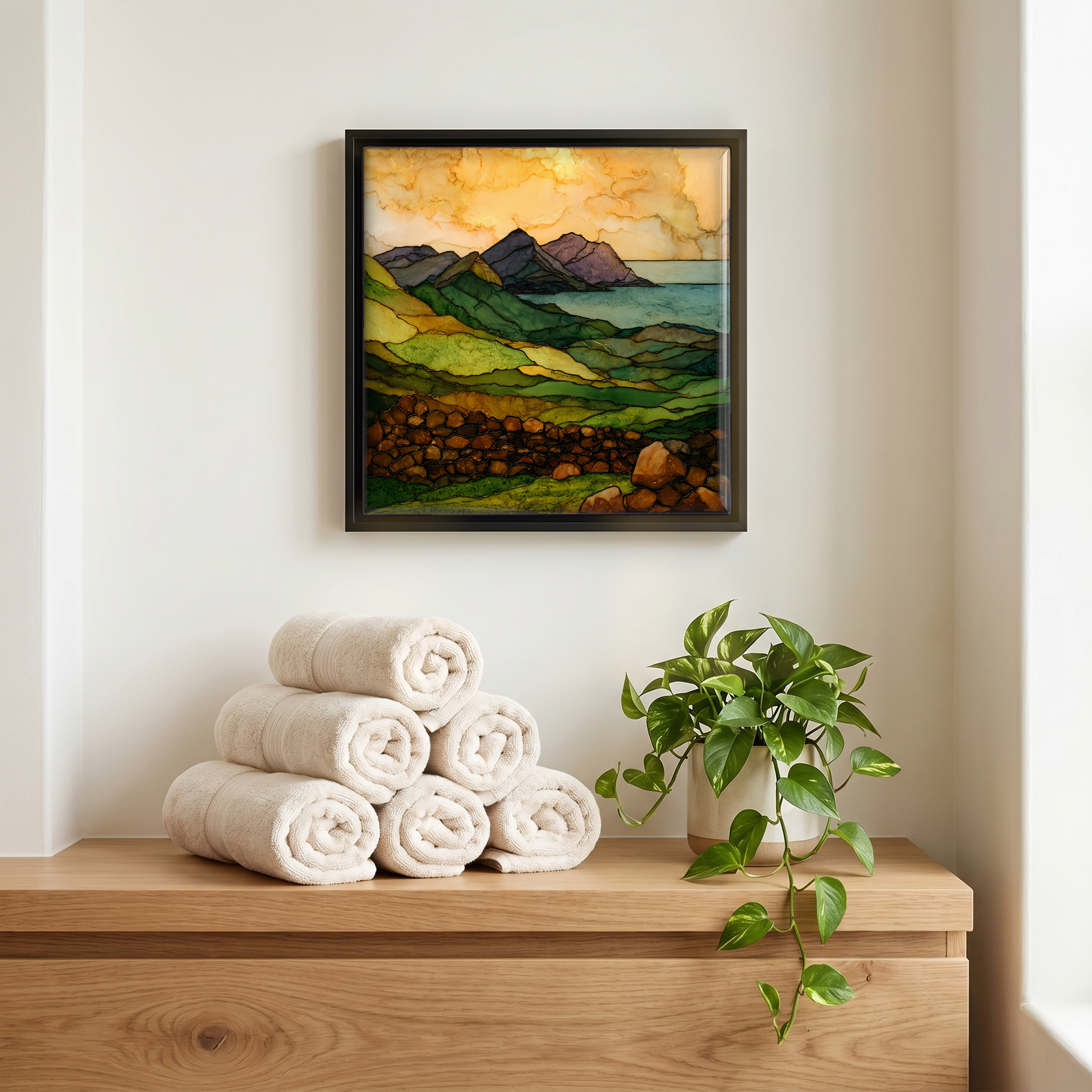
Three or five different vistas, hung together — a chapter of places you've been, or want to go.
The place, in three passes.
The Mourne Mountains rise in County Down, in the south-east of Northern Ireland, between Newcastle on the Irish Sea and the village of Hilltown to the west. The range is compact, roughly 24 by 13 kilometres, and contains the highest peaks in Northern Ireland, headed by Slieve Donard at 850 metres above sea level. The Mournes were designated an Area of Outstanding Natural Beauty in 1986 and are managed today by the Mourne Heritage Trust. The Silent Valley Reservoir, built between 1923 and 1933, sits in the western interior of the range and supplies Belfast and most of County Down with their drinking water.
Mourne granite is the bedrock fact of the range. The peaks are made of a series of granite plutons that intruded into the surrounding Silurian rock about 56 million years ago, during the same volcanic episode that opened the North Atlantic. The granite has been quarried locally since the nineteenth century and was used for the kerbstones of London and the docks of Liverpool. The most visible expression of that granite on the mountains themselves is the Mourne Wall, a 35-kilometre dry-stone barrier that climbs over fifteen summits and was hand-built between 1904 and 1922 to enclose the catchment of the Silent Valley Reservoir. The wall is about a metre and a half tall and, in places, still arrow-straight.
The standard introduction to the Mournes is the path up Slieve Donard from Donard Park in Newcastle, a 9-kilometre out-and-back along the Glen River that climbs about 800 metres and takes most walkers four to five hours. The summit, the highest point in Northern Ireland, holds a small stone shelter long associated with the fifth-century hermit Saint Donard, after whom the mountain is named. The range is open and free to walk, with no entry fee and no permit needed, but the weather turns faster than the maps suggest and full waterproofs are sensible from October through April. Newcastle, at the mountain's foot, is the natural base, with seafront hotels and the Mourne Heritage Trust's visitor centre.