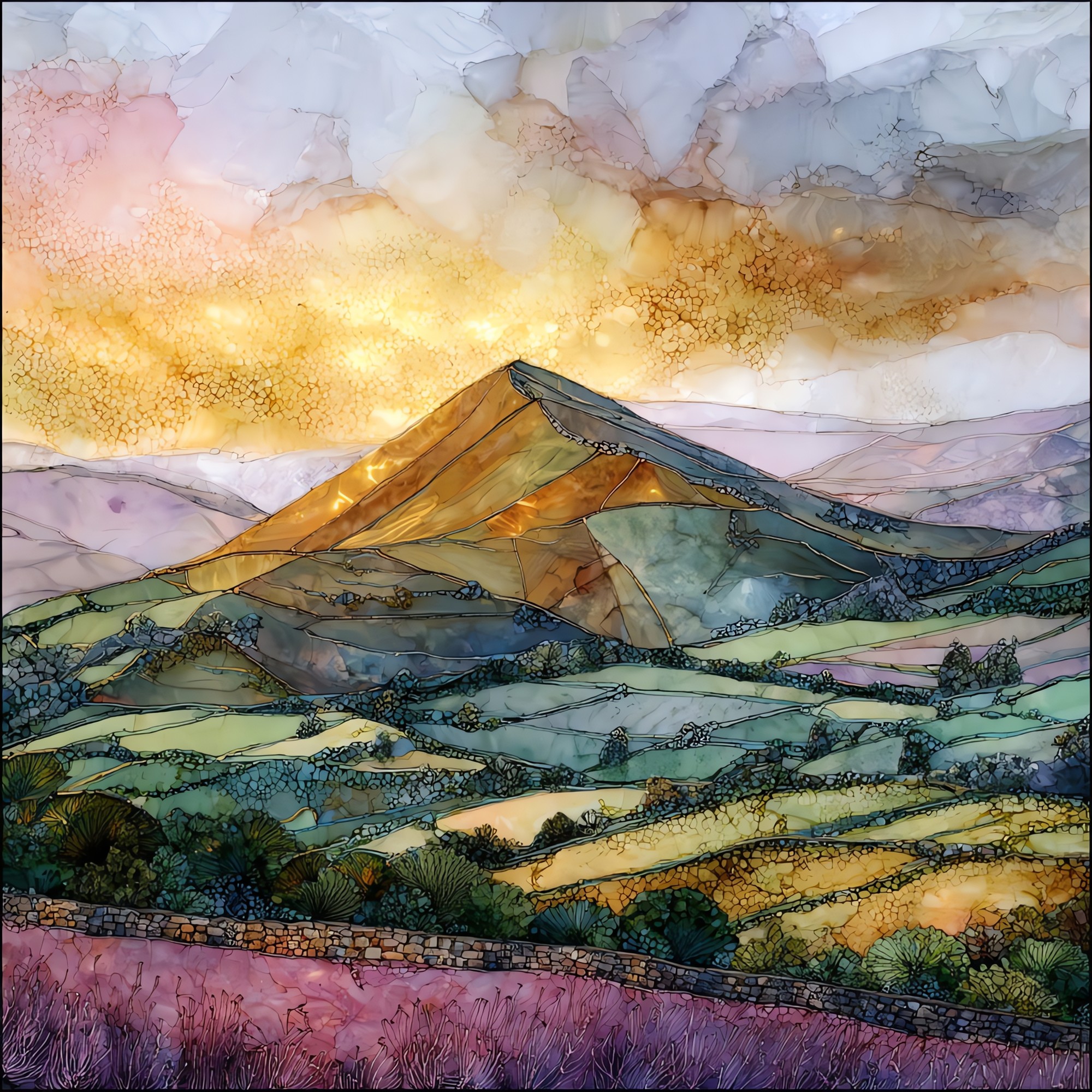
Mount Leinster
— the day the view runs all the way to Wales.
Not only on a wall.
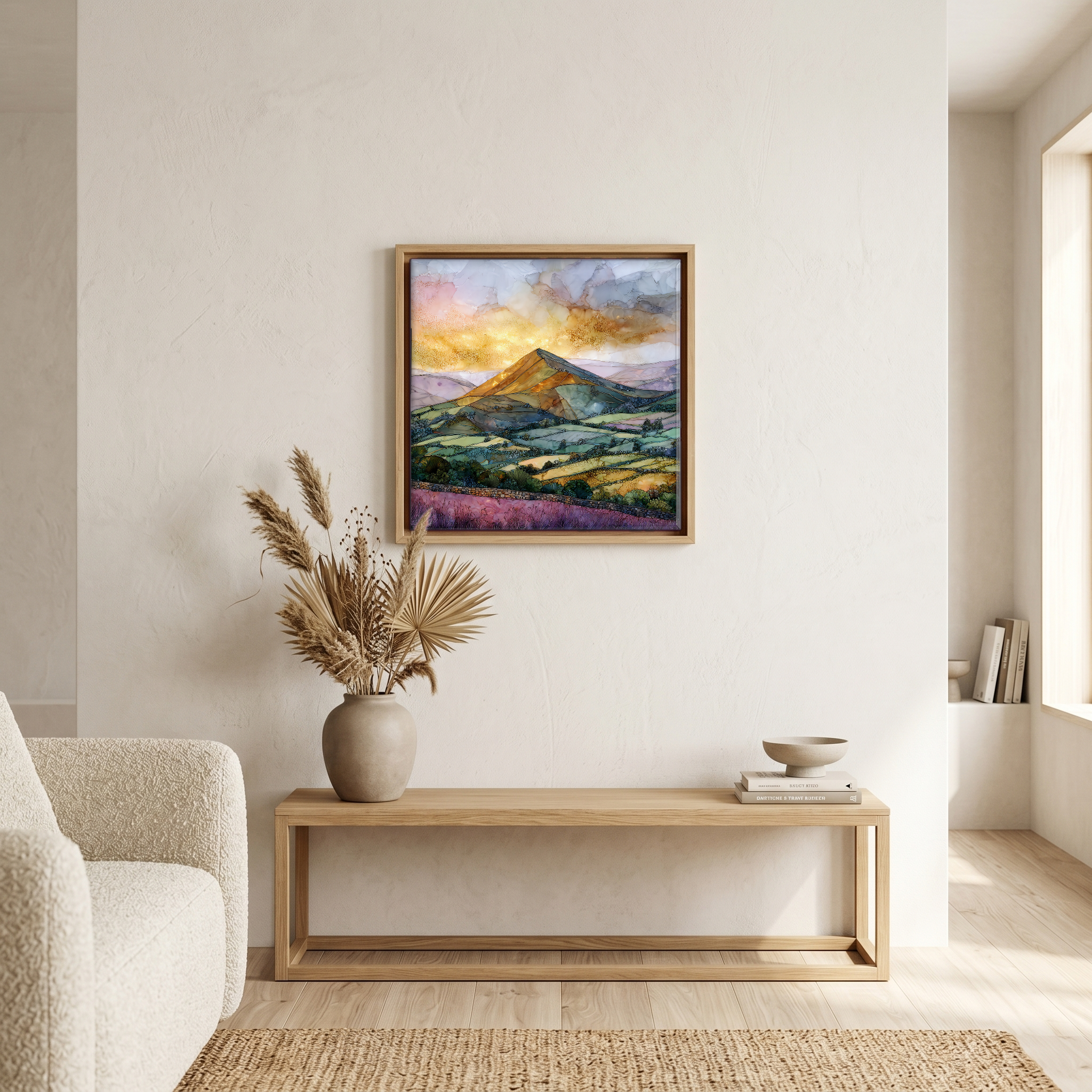
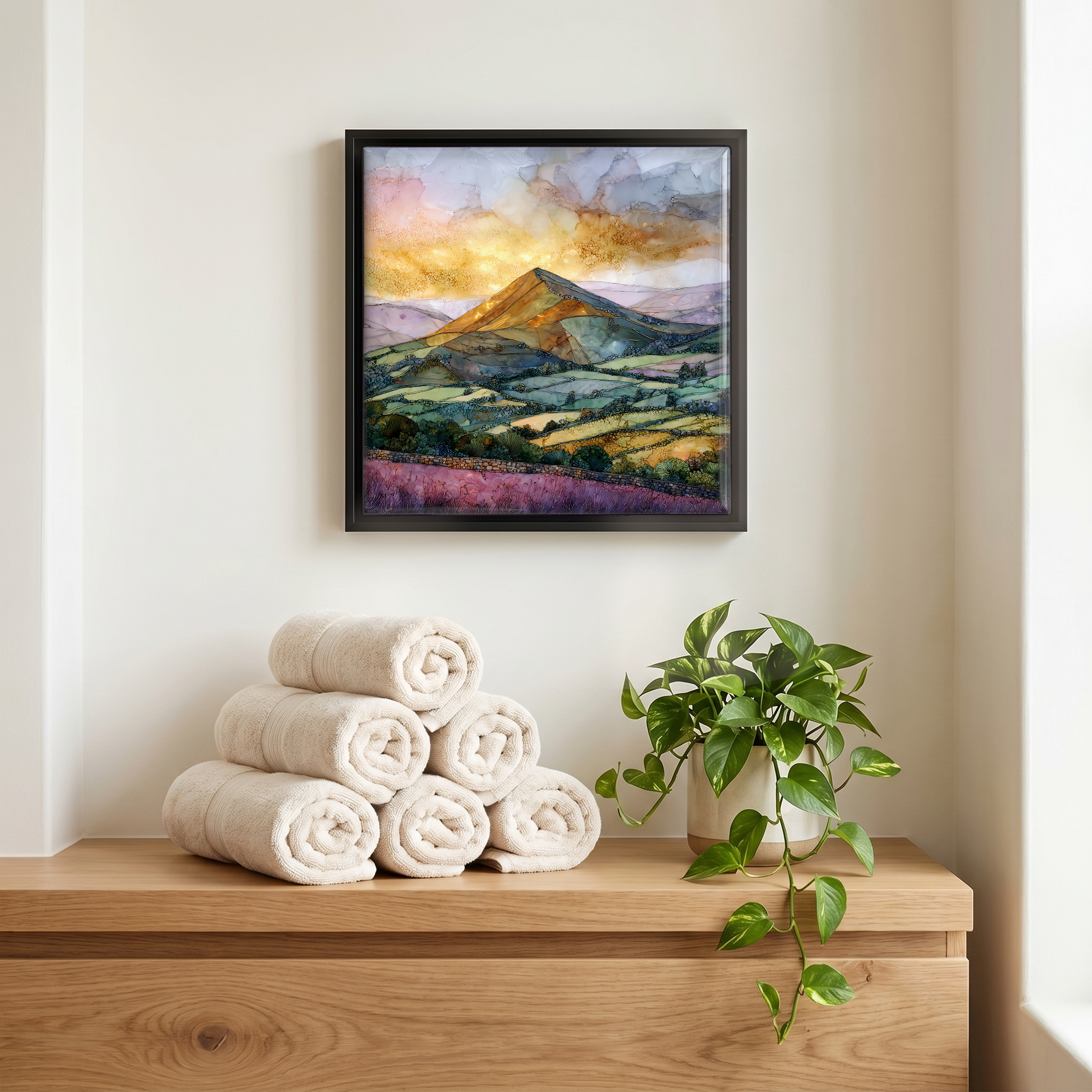
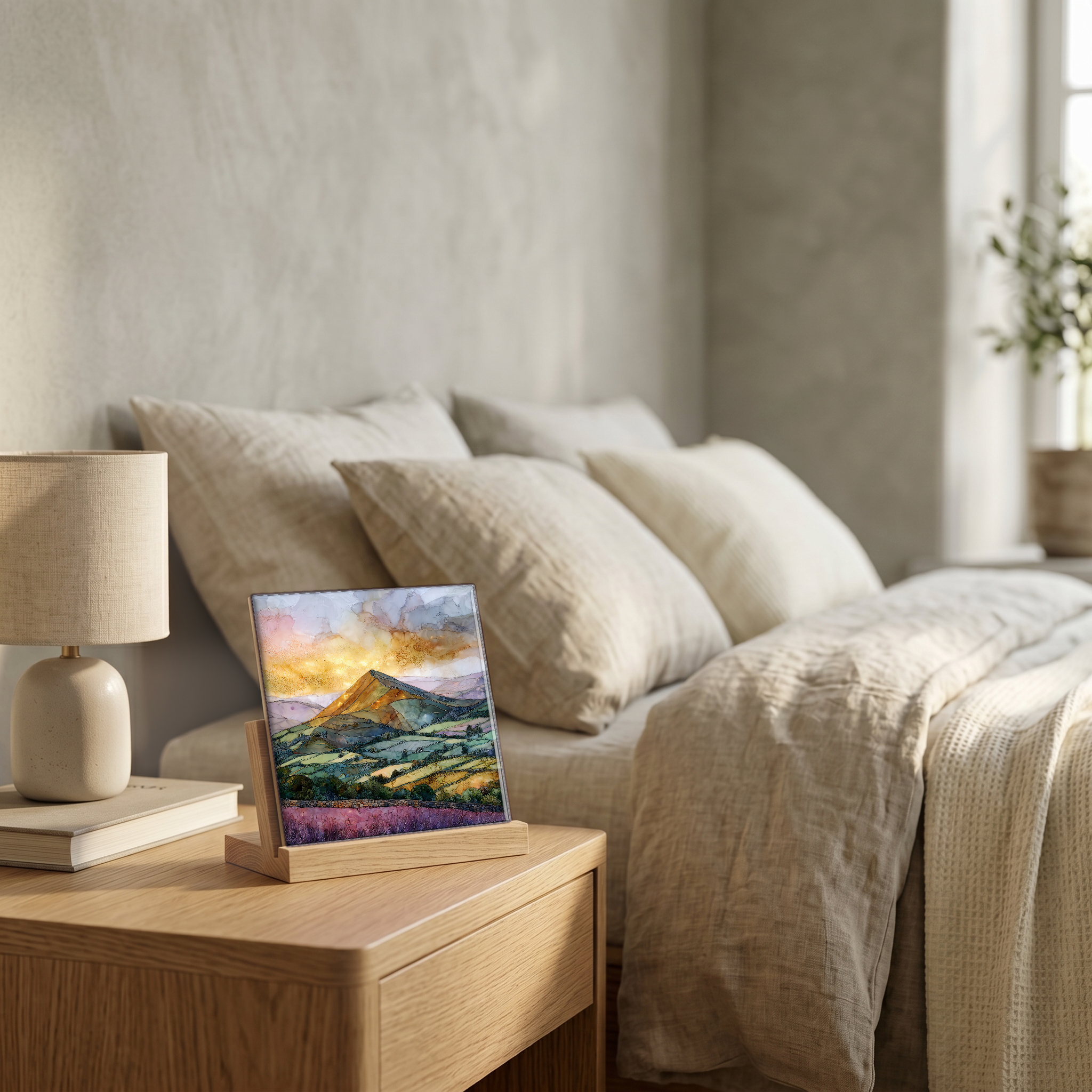
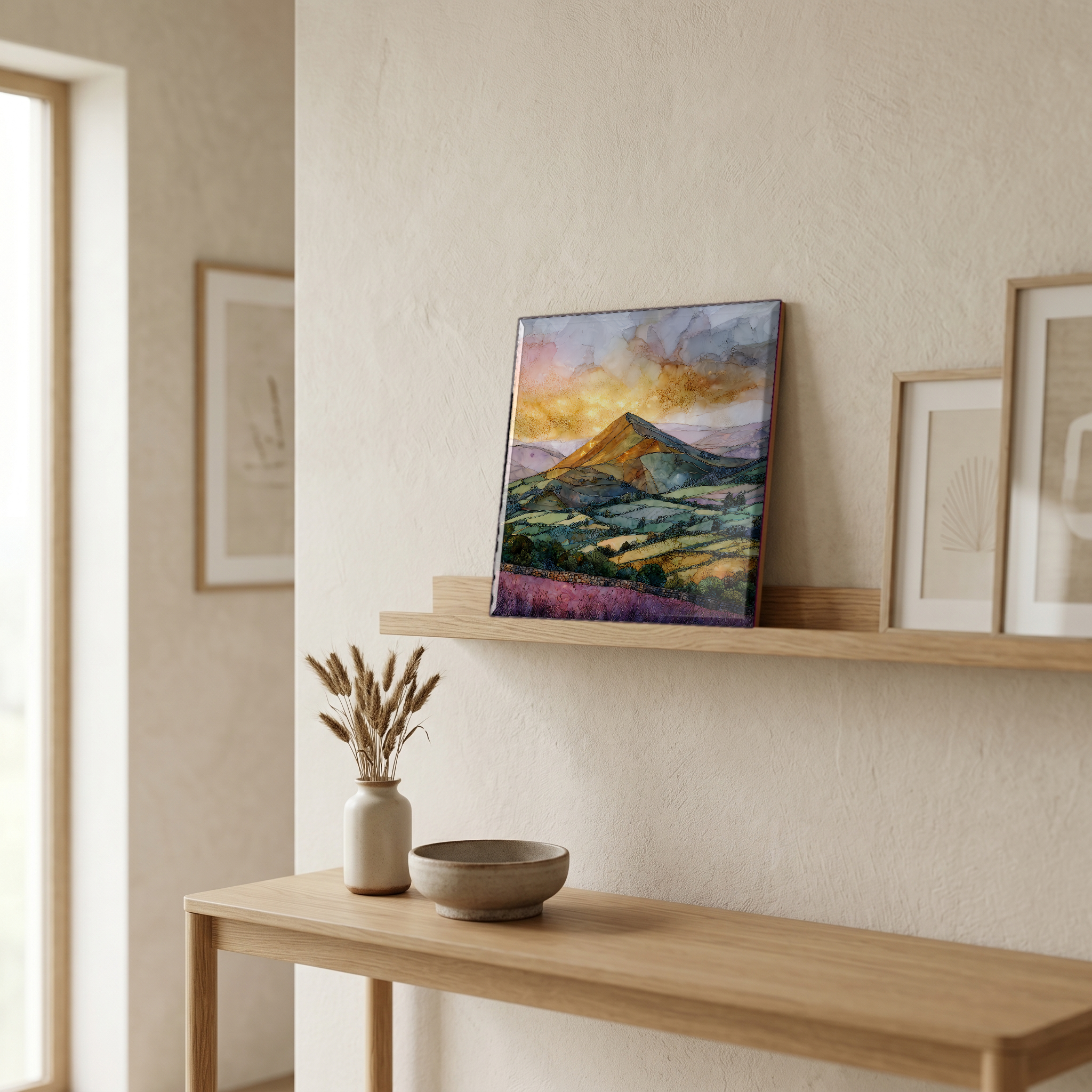
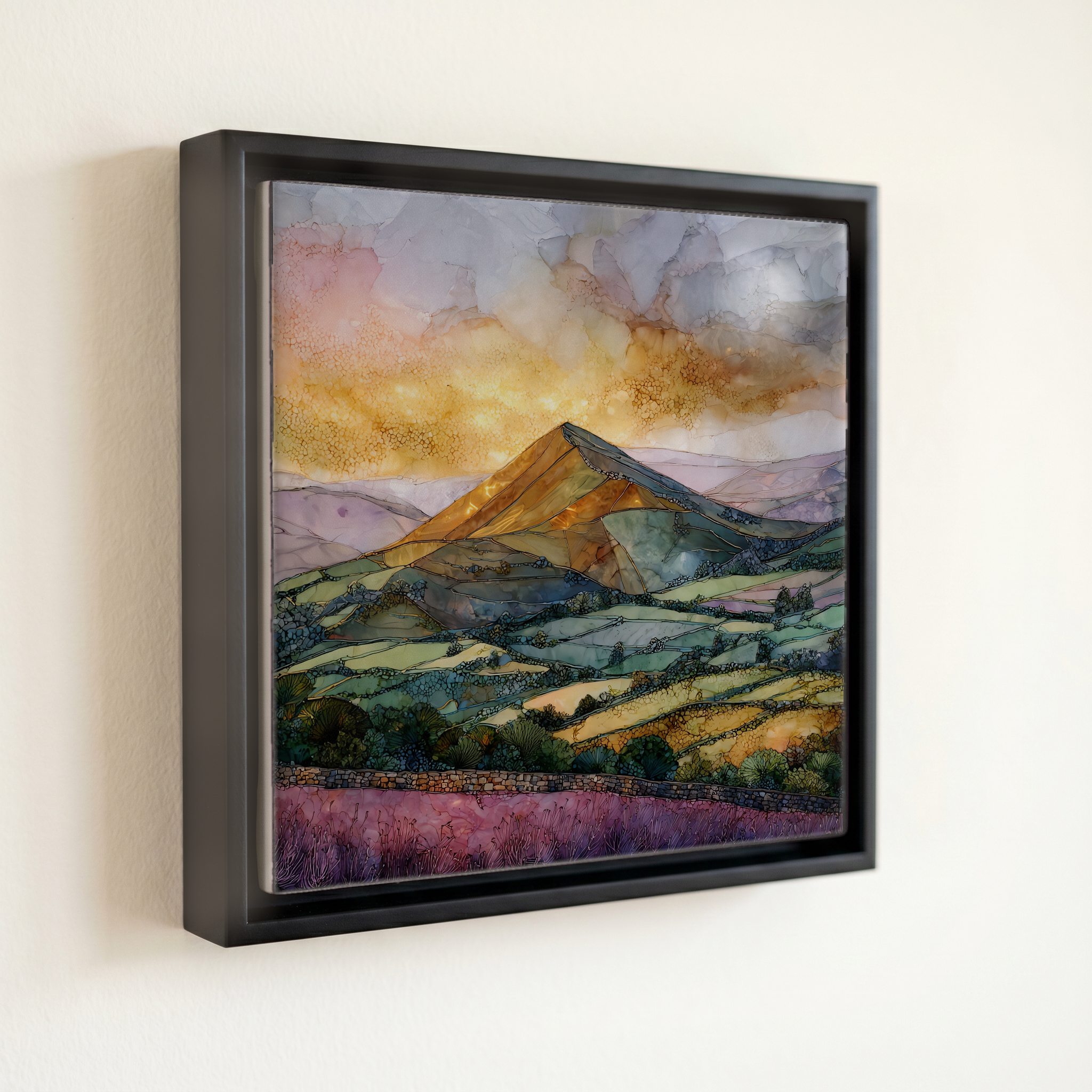
“The high point of the Blackstairs, where the Carlow farmland gives way to granite. The transmitter mast at the summit makes the mountain visible from sixty miles away on a clear day, and from the top the view runs east across the Irish Sea to the Welsh hills when the air is dry enough. A drivable road climbs most of the way from the Nine Stones car park; the last bit is wind and a short walk. Hill walkers go up at dawn for the silence; pilots and paragliders come for the westerly that runs up the western face most afternoons.
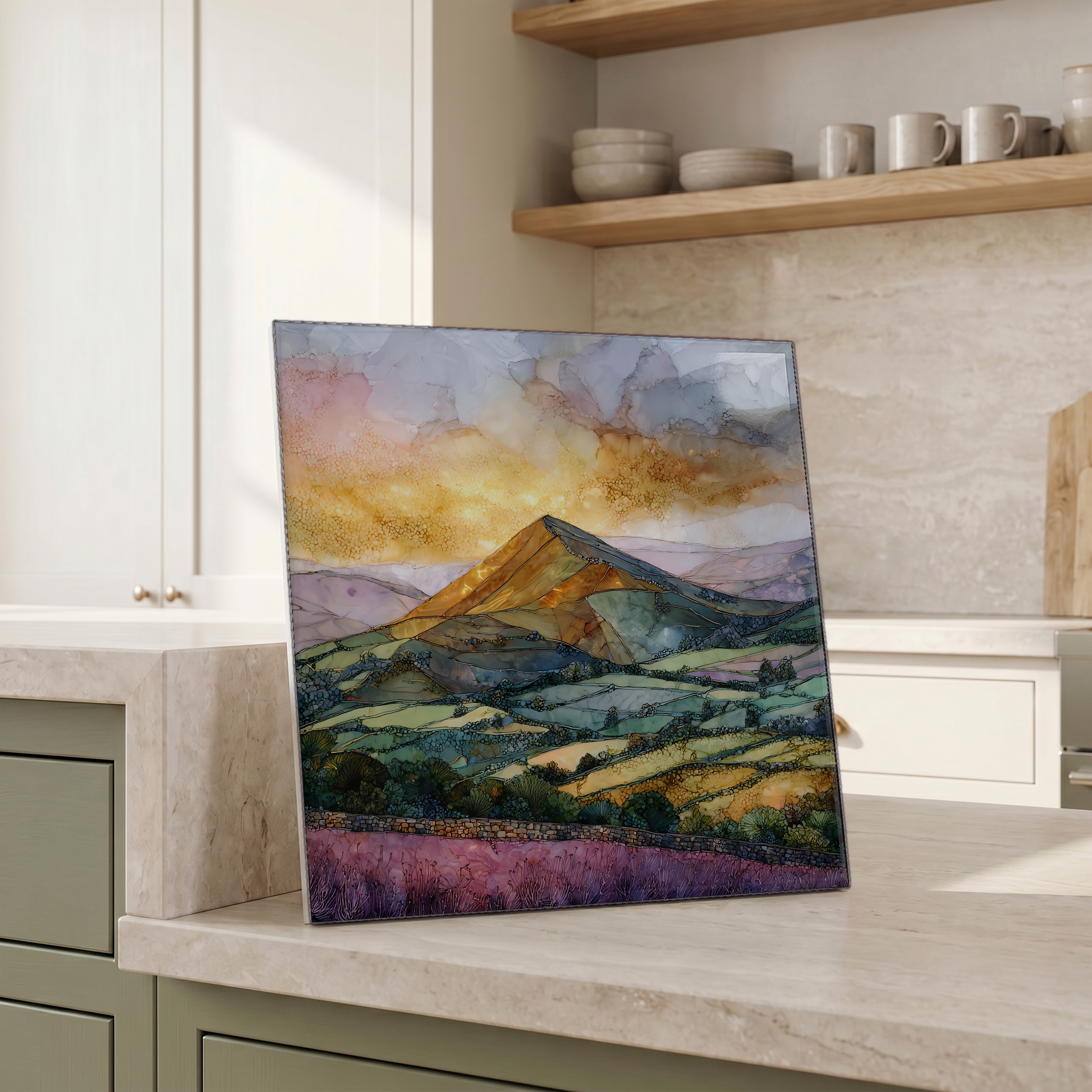
Mount Leinster, on ceramic.
Each tile is finished by hand in our Knoxville studio. Artwork is slowly infused into the ceramic surface under high heat and pressure, and rests beneath a thin glossy finish. The colour lives in the surface, not on top of it.
Pick any four 4-inch tiles — National Parks you've been to, a Smokies set, the four seasons of one place. $ for a set of , cork-backed, ready to live on the table.
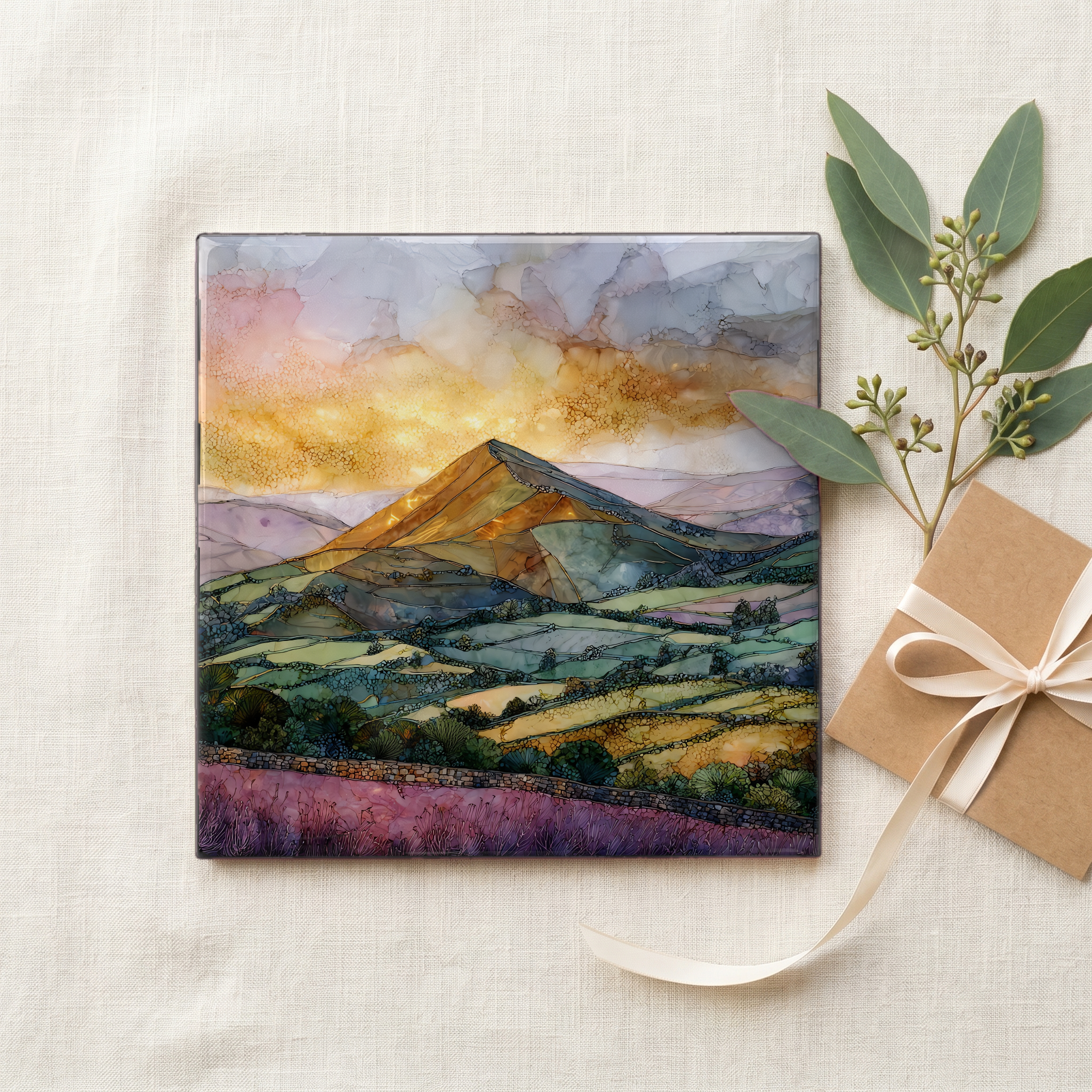
Each tile ships in a kraft box, tied with cream ribbon, with a handwritten note from the studio if you'd like to add one.
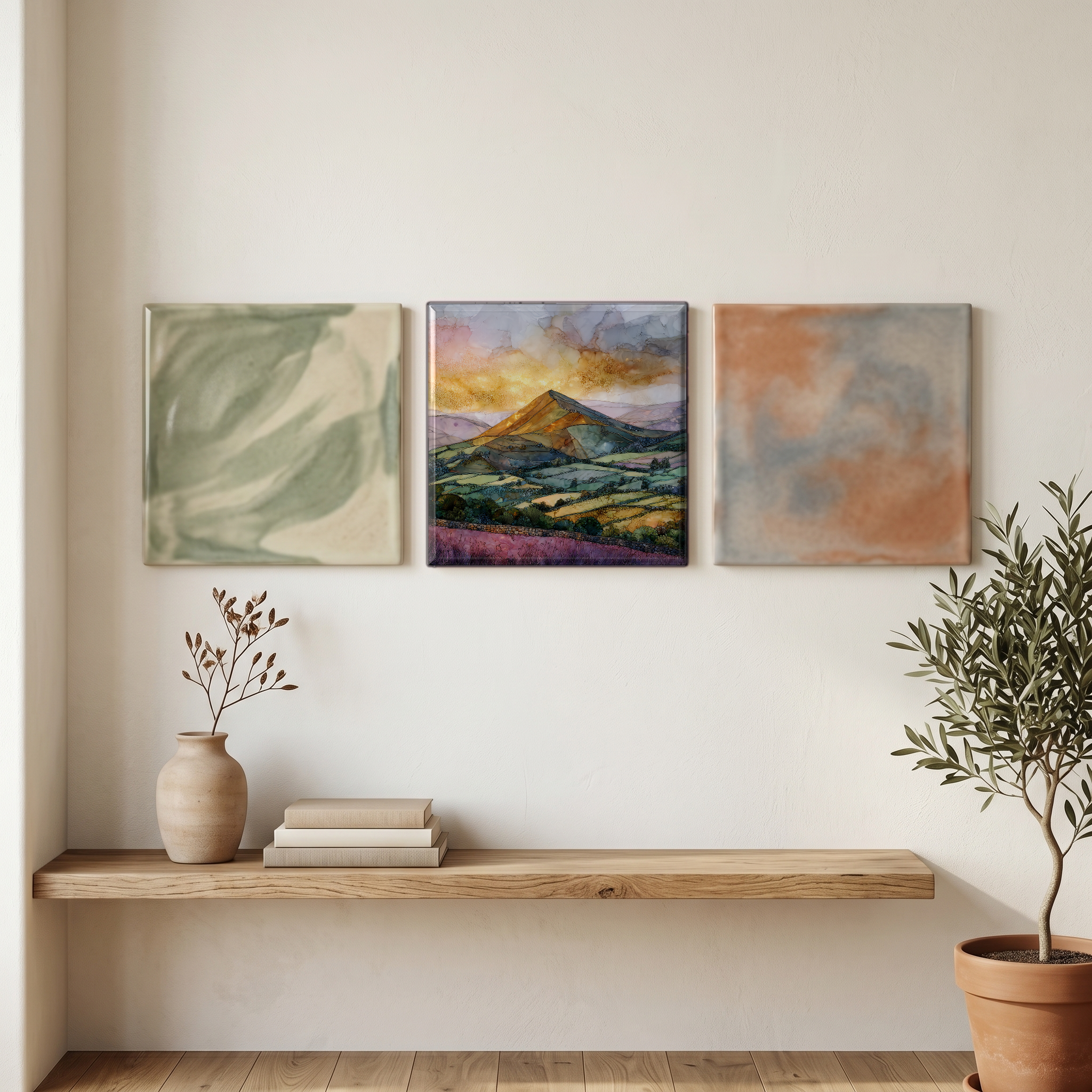
Three or five different vistas, hung together — a chapter of places you've been, or want to go.
The place, in three passes.
Mount Leinster rises to 795 metres on the border between County Carlow and County Wexford, the highest summit of the Blackstairs Mountains in southeast Ireland. The peak forms the southern end of the Leinster Granite batholith, the same Caledonian-era granite that builds the Wicklow Mountains to the north. A tall RTÉ broadcast mast at the summit makes the mountain a navigational landmark across most of the southeast. The nearest towns are Bunclody to the east and Borris to the west, both within twenty kilometres. The Nine Stones viewpoint, on the road from Bunclody, is the usual starting point for walkers and the place most visitors first see the summit.
On a clear day the summit gives one of the longest views in Ireland. The Wicklow Mountains run along the northern horizon; the Galtee and Comeragh ranges show to the west and south; on dry, settled afternoons Wales comes up across the Irish Sea, more than 100 kilometres east. The mountain's open western face and the steady westerly that climbs it have made Mount Leinster one of Ireland's longest-running hang-gliding and paragliding sites. The Irish Hang Gliding and Paragliding Association has used the slope above the Nine Stones for decades. The wind is rarely still at the top, and the cloud closes in fast.
A narrow public road climbs from the Nine Stones car park to within about a kilometre of the summit, which makes Mount Leinster one of the more accessible 2,000-foot peaks in Ireland. The road is open to vehicles as far as a turning area near the antenna gate; the final stretch is a steady walk on the service track, usually under thirty minutes from where the cars stop. The Nine Stones themselves, a row of granite blocks set along the ridge, sit at roughly 415 metres and are a popular short stop for travellers on the Bunclody-to-Borris road. The South Leinster Way, the long-distance walking route between Kildavin and Carrick-on-Suir, passes the foot of the mountain.