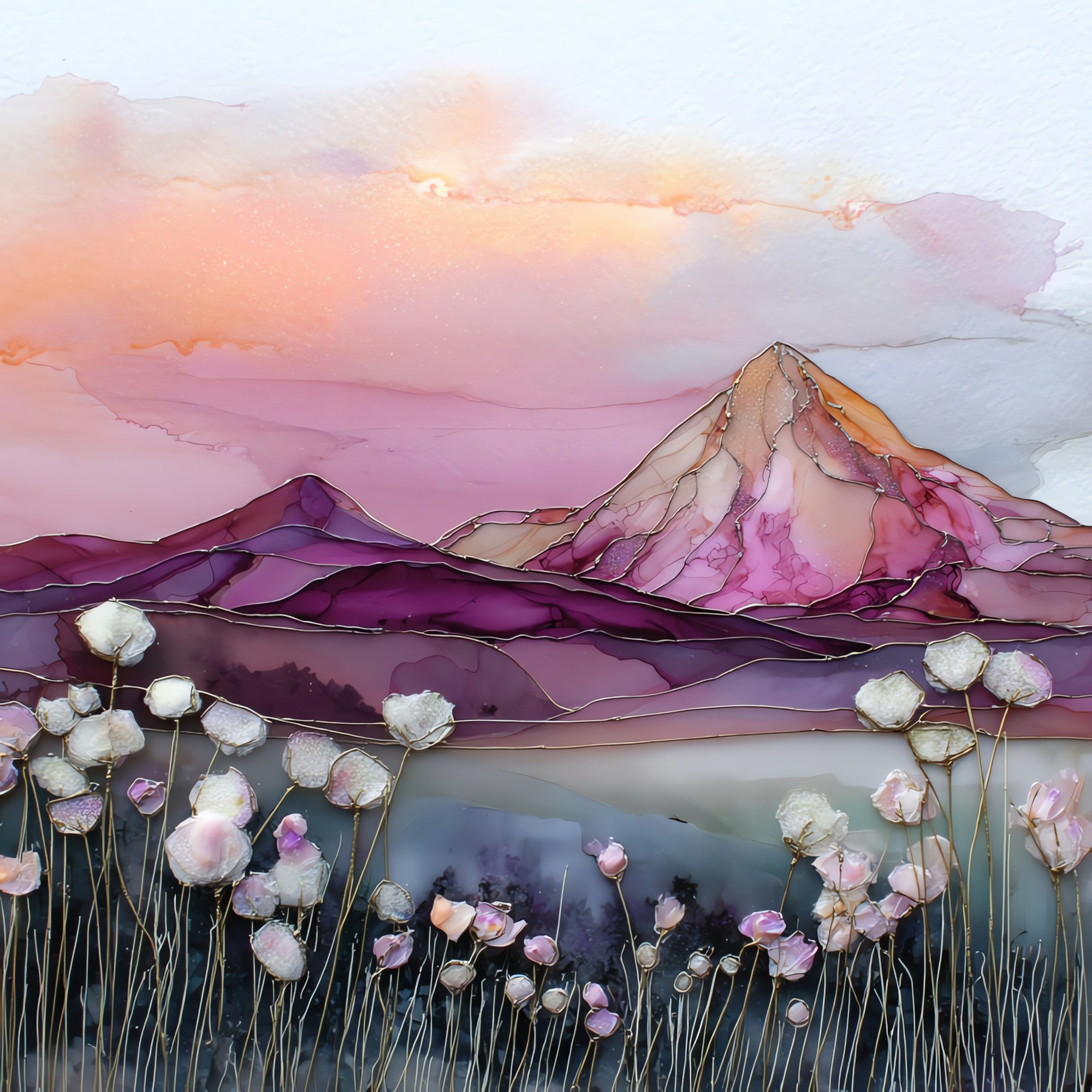
Mount Errigal
— — the cone the last light turns pink.
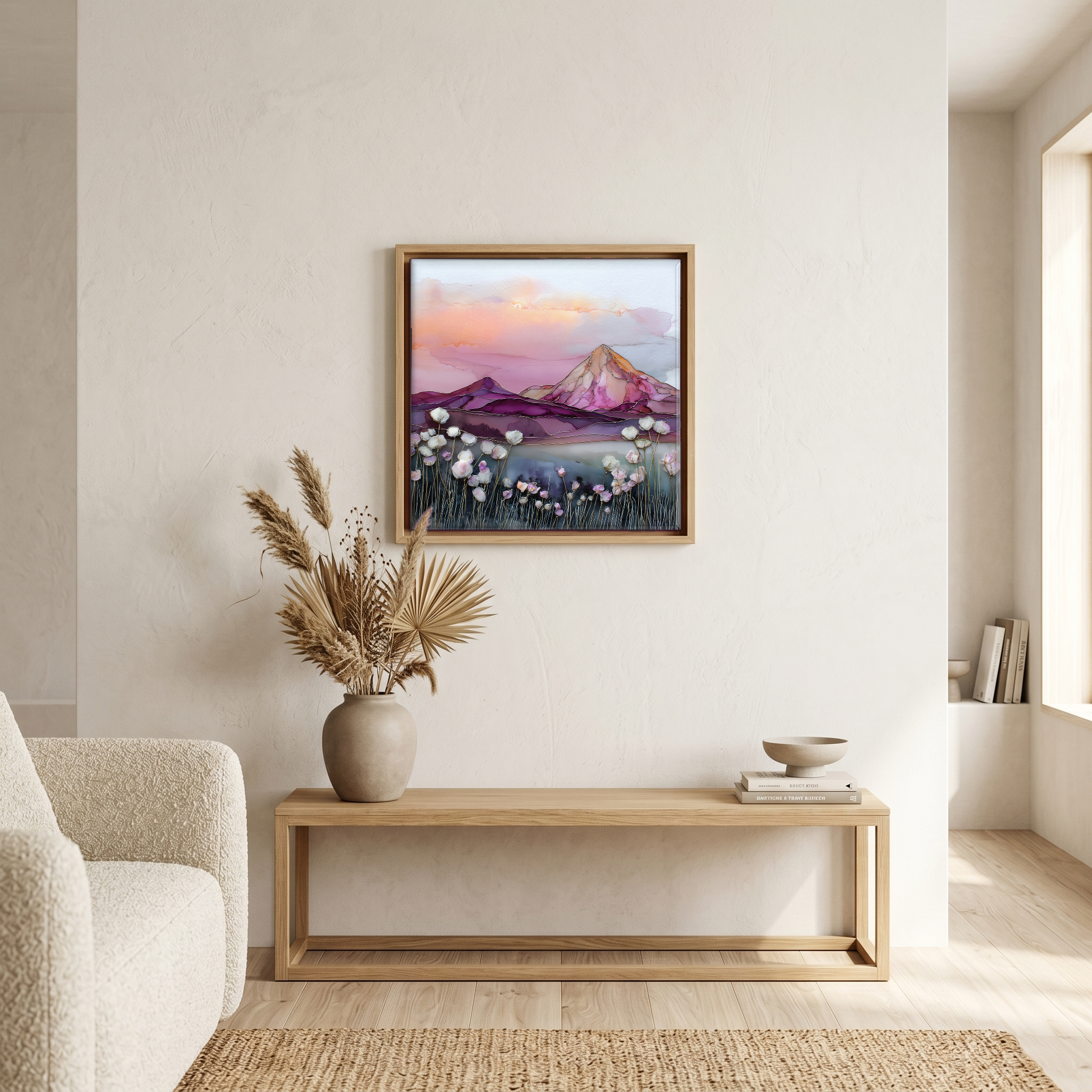
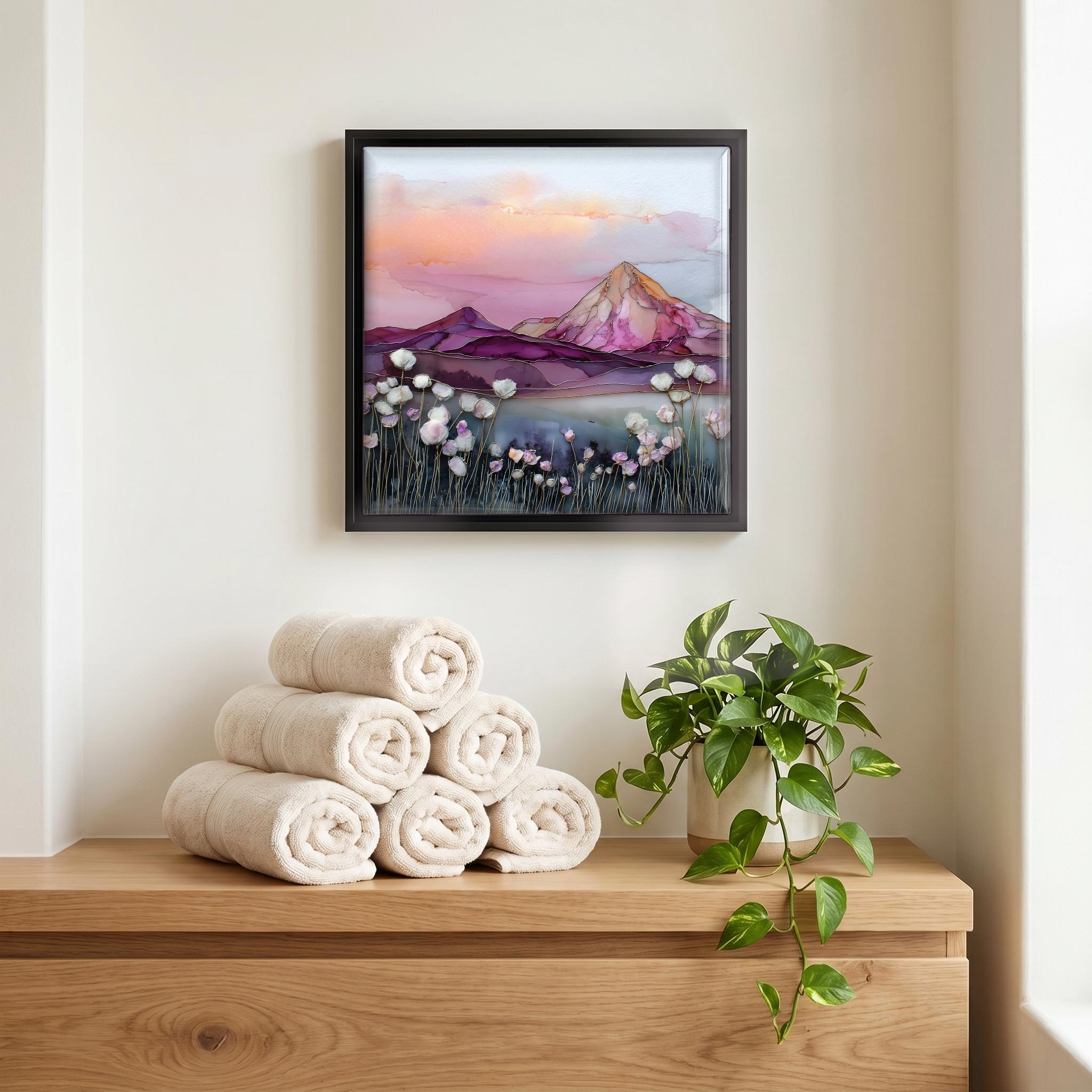
Not only on a wall.
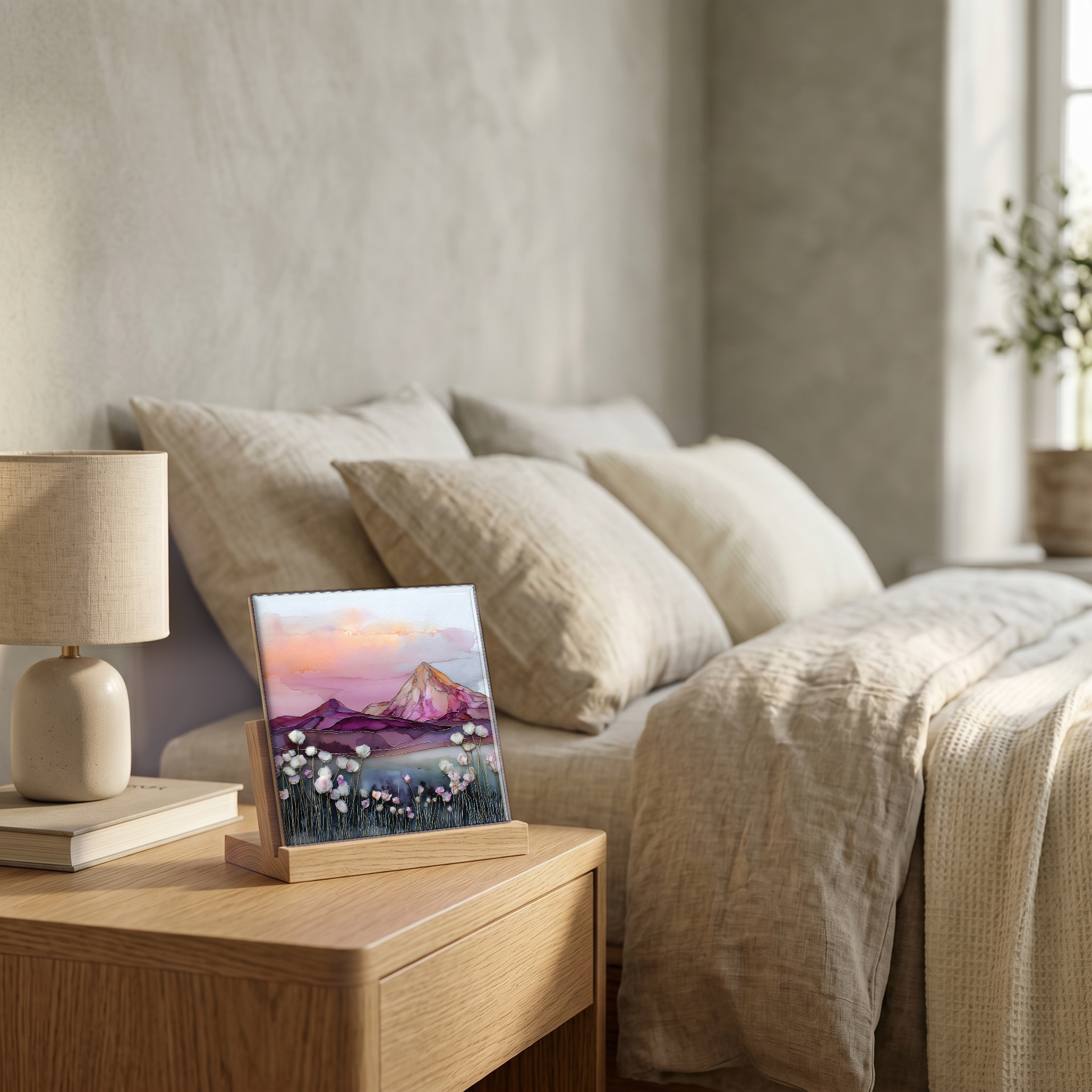
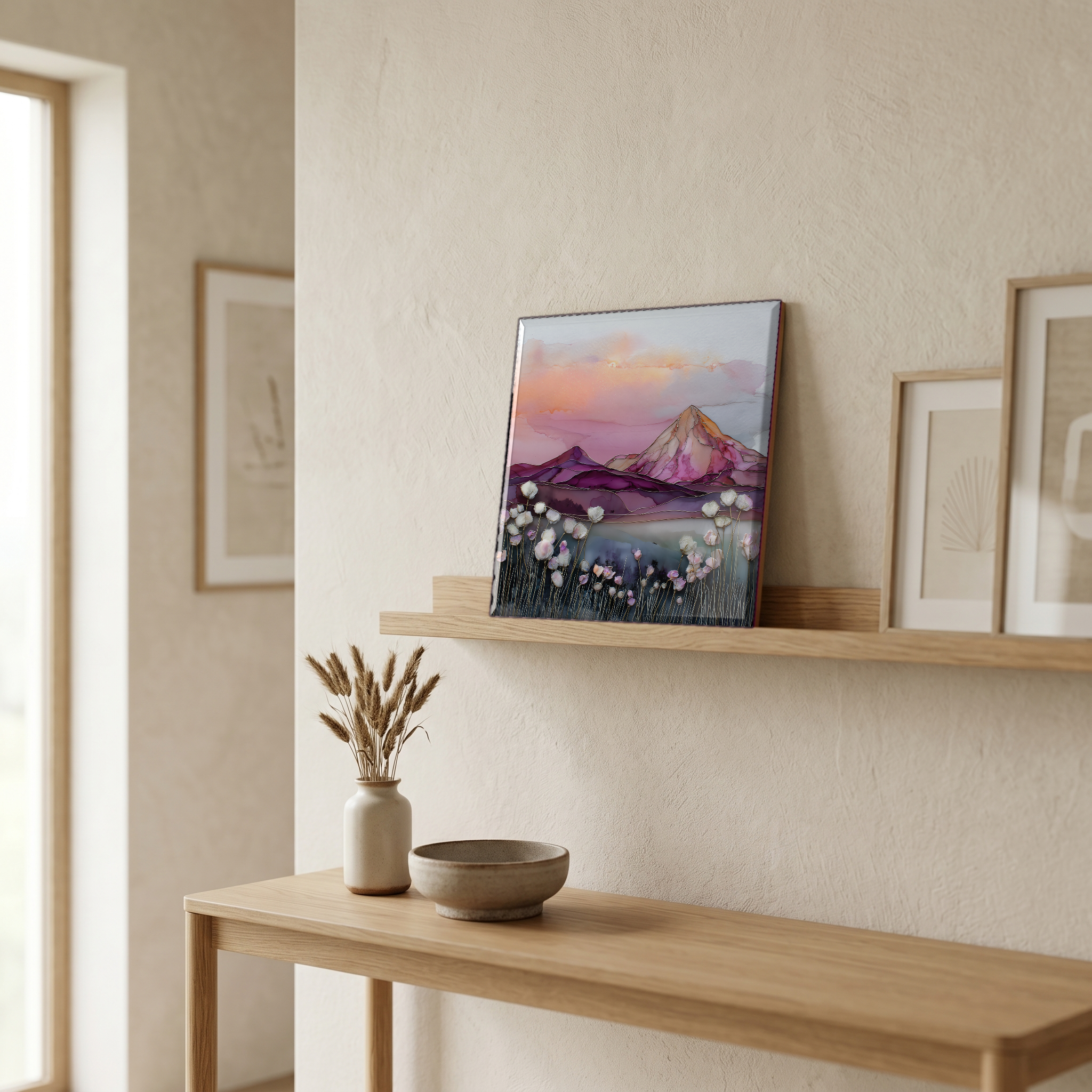
“A quartzite cone above the village of Dunlewey, the highest peak in Donegal at 751 metres. The slope catches light differently than the basalt and granite of the rest of Ireland. At the end of long summer days the whole mountain washes pink, then silver as the cloud comes back over. The Poisoned Glen sits at its eastern foot, dark and held. The path up from the R251 takes most walkers about two hours; the One Man's Pass at the top is narrower than the photographs make it look.
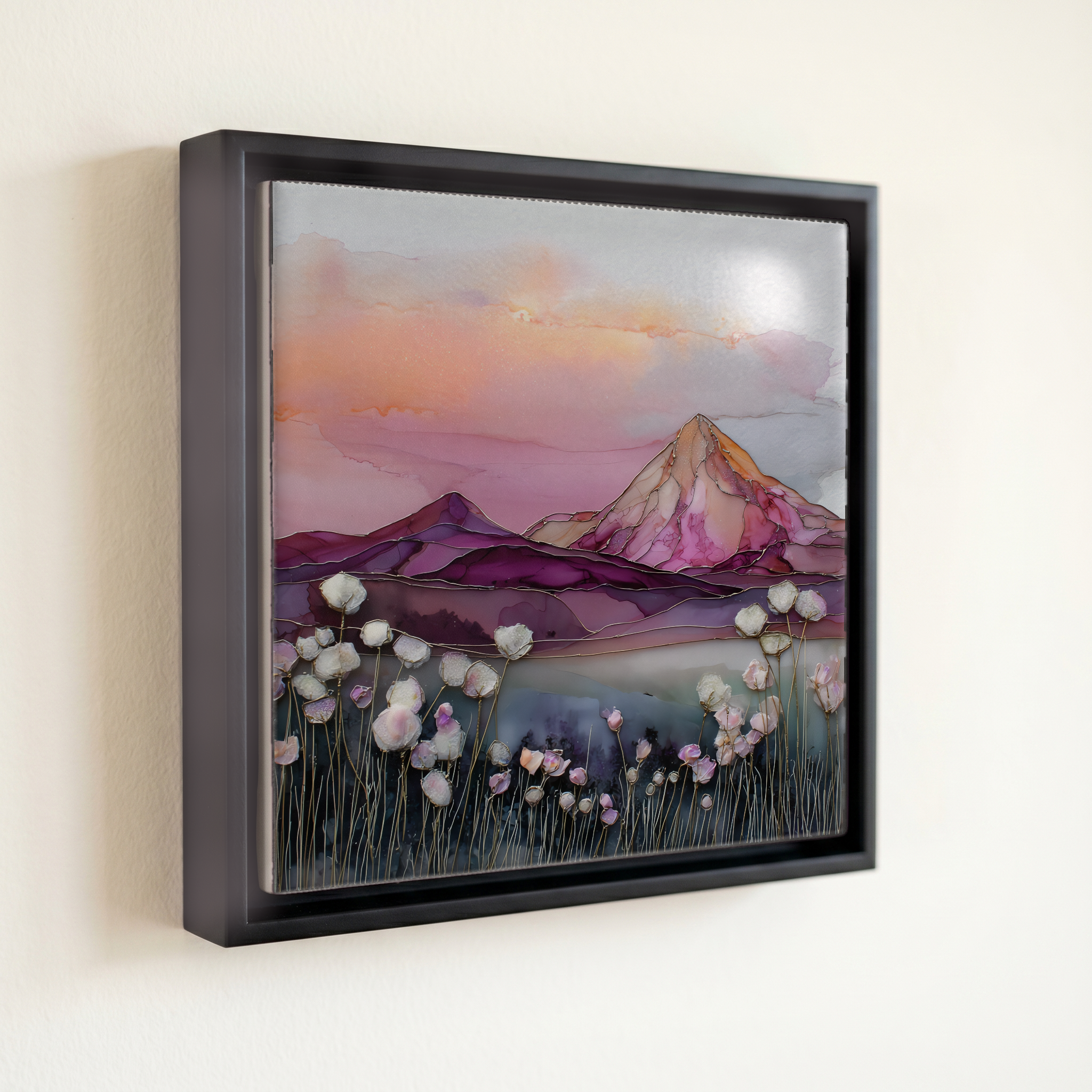
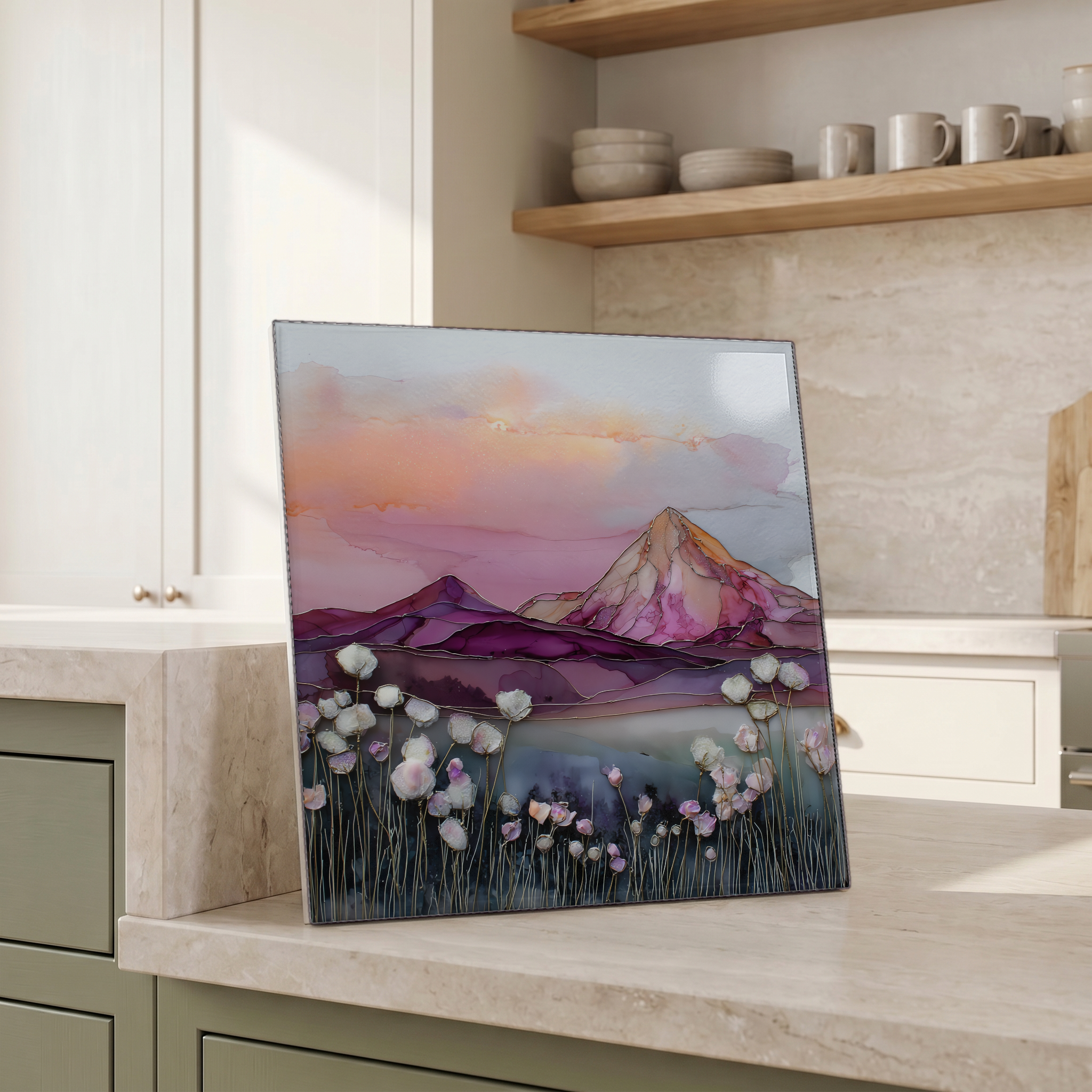
Mount Errigal, on ceramic.
Each tile is finished by hand in our Knoxville studio. Artwork is slowly infused into the ceramic surface under high heat and pressure, and rests beneath a thin glossy finish. The colour lives in the surface, not on top of it.
Pick any four 4-inch tiles — National Parks you've been to, a Smokies set, the four seasons of one place. $ for a set of , cork-backed, ready to live on the table.
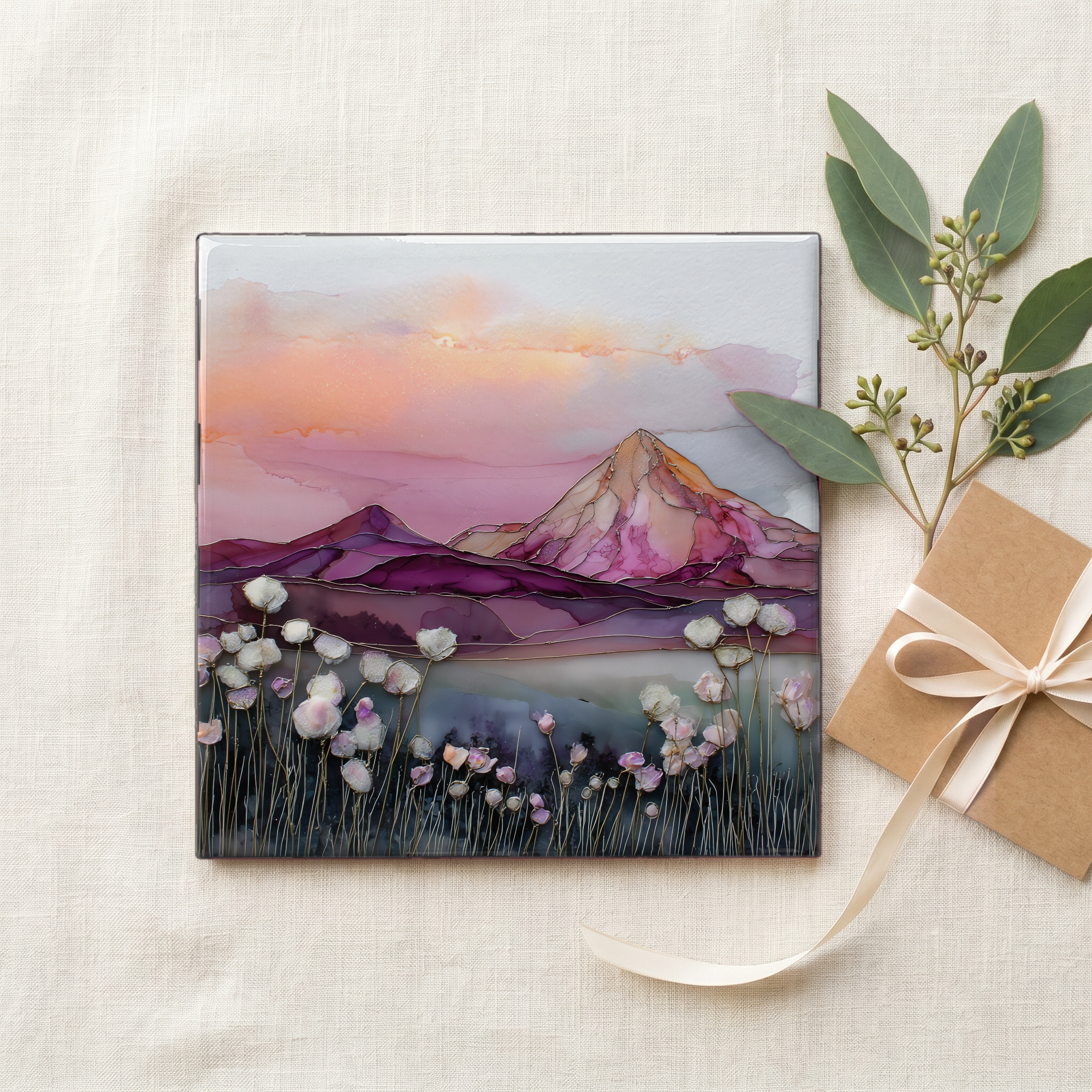
Each tile ships in a kraft box, tied with cream ribbon, with a handwritten note from the studio if you'd like to add one.
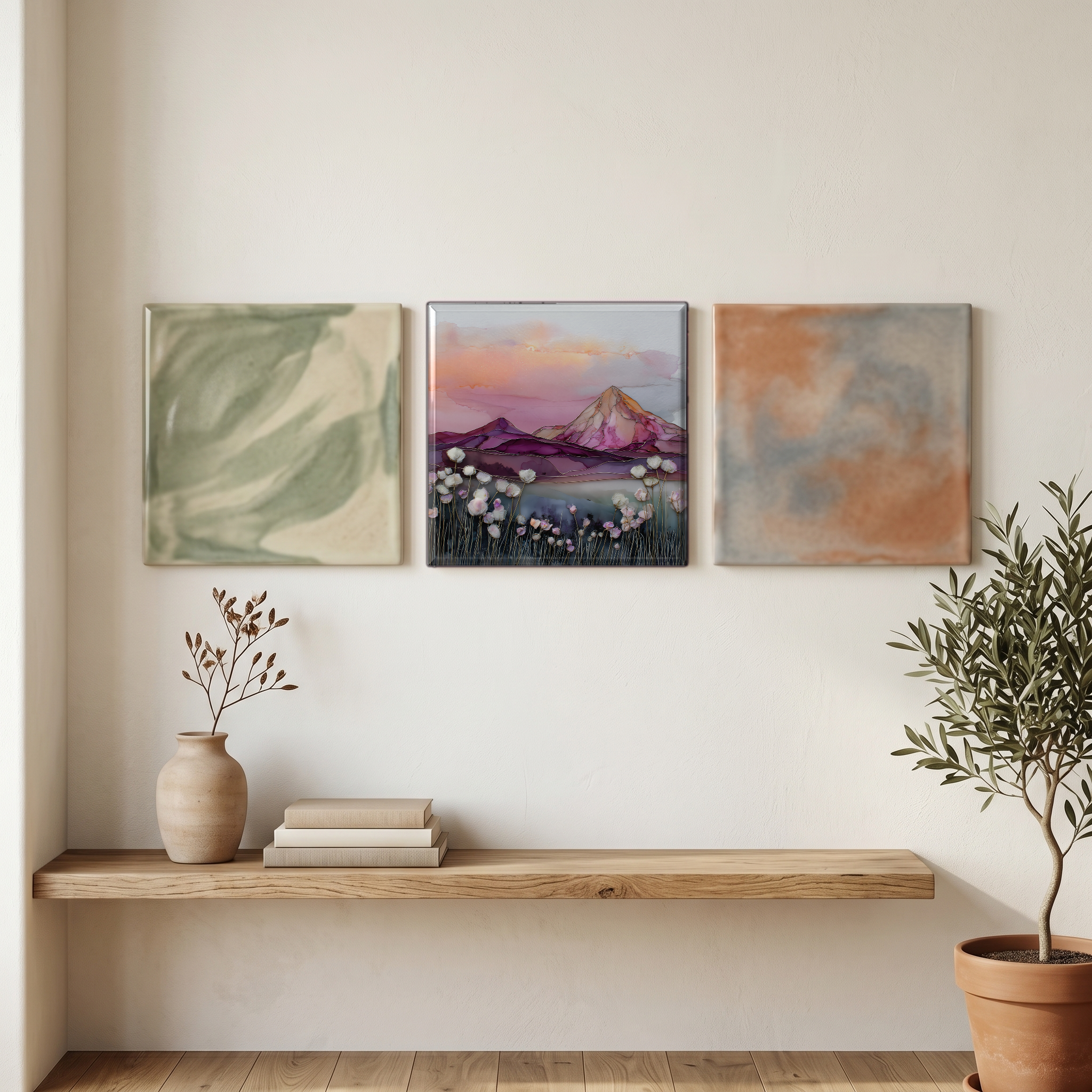
Three or five different vistas, hung together — a chapter of places you've been, or want to go.
The place, in three passes.
Mount Errigal rises 751 metres (2,464 feet) above the village of Dunlewey in County Donegal, on Ireland's northwestern coast. It is the highest peak in the Derryveagh Mountains and the tallest of the Seven Sisters, a chain of conical quartzite peaks that runs west from Glenveagh National Park toward the Atlantic. The mountain sits on the R251 between Letterkenny and Falcarragh; most walkers approach from a small lay-by at the base of the southeast ridge. Two summits stand at the top, connected by a short, narrow saddle that local guides call One Man's Pass. The ascent typically takes two to three hours on quartzite scree that shifts underfoot.
Errigal is built of quartzite, a metamorphic rock formed from sandstone laid down roughly 600 million years ago and uplifted into the Derryveagh range during the Caledonian orogeny. The rock is pale grey on a cloudy day and shifts to pink and copper at sunset, when the low light scatters off the quartz crystals in the scree. Walkers climbing the southeast ridge spend most of the ascent on this loose, blade-like rock. The same band of quartzite continues west through the Seven Sisters (Mackoght, Aghla More, Aghla Beg, Muckish), giving the whole range its distinctive pale-coned silhouette, unlike the darker basalt and granite of most of Ireland's mountains.
The standard route up Errigal starts at a small lay-by on the R251 about ten kilometres west of Dunlewey and follows the southeast ridge to the summit. The walk gains roughly 600 metres over 2.5 kilometres and takes most parties between two and three hours up. The upper section is exposed quartzite scree; the final ridge, One Man's Pass, runs about thirty metres between the twin summits and feels narrower than its measurements suggest. The mountain is unsafe in cloud, when navigation from the summit becomes difficult. There is no fee and no permit. The nearest food, water, and lodging are in Dunlewey village.