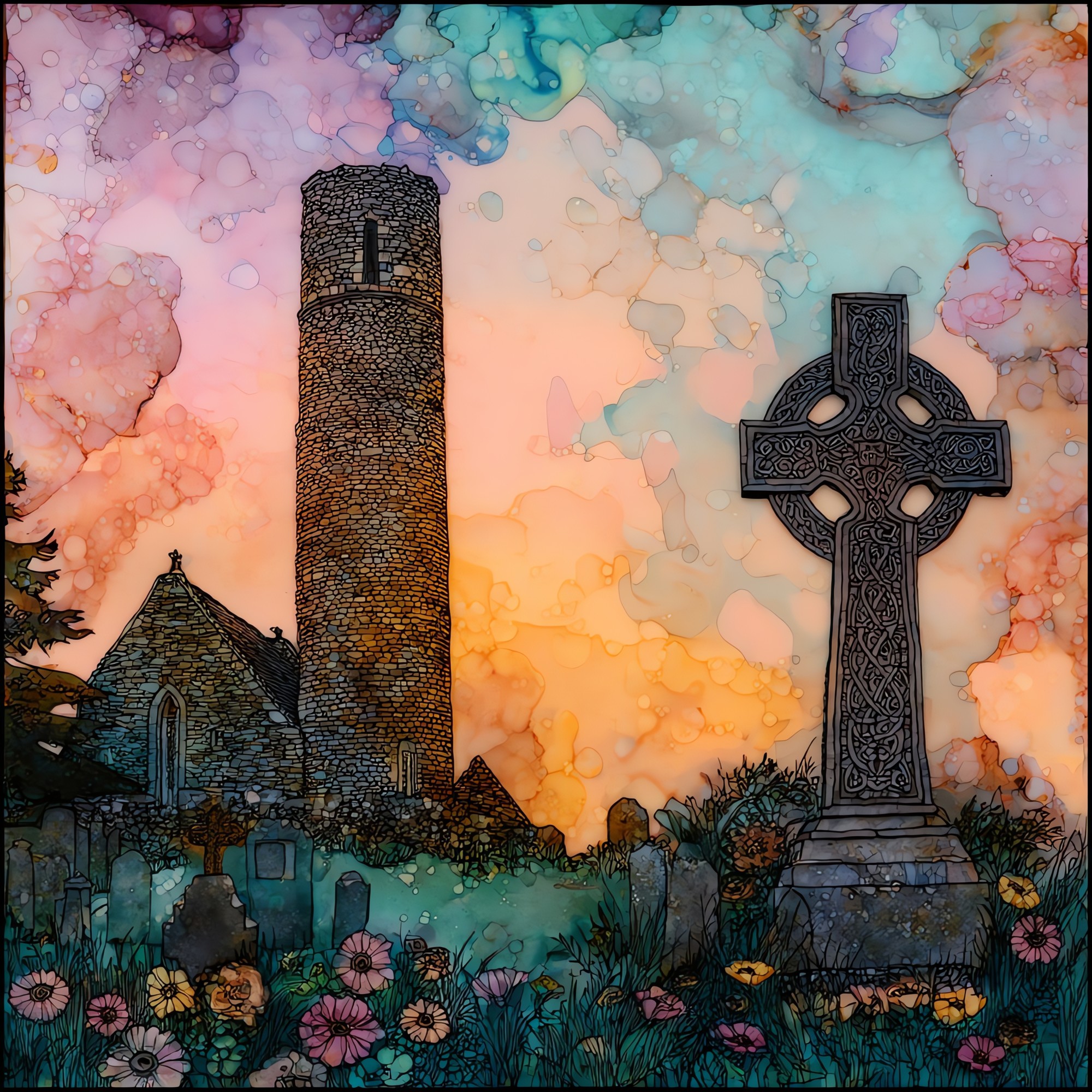
Monasterboice
— the gospel still legible in the sandstone.
Not only on a wall.
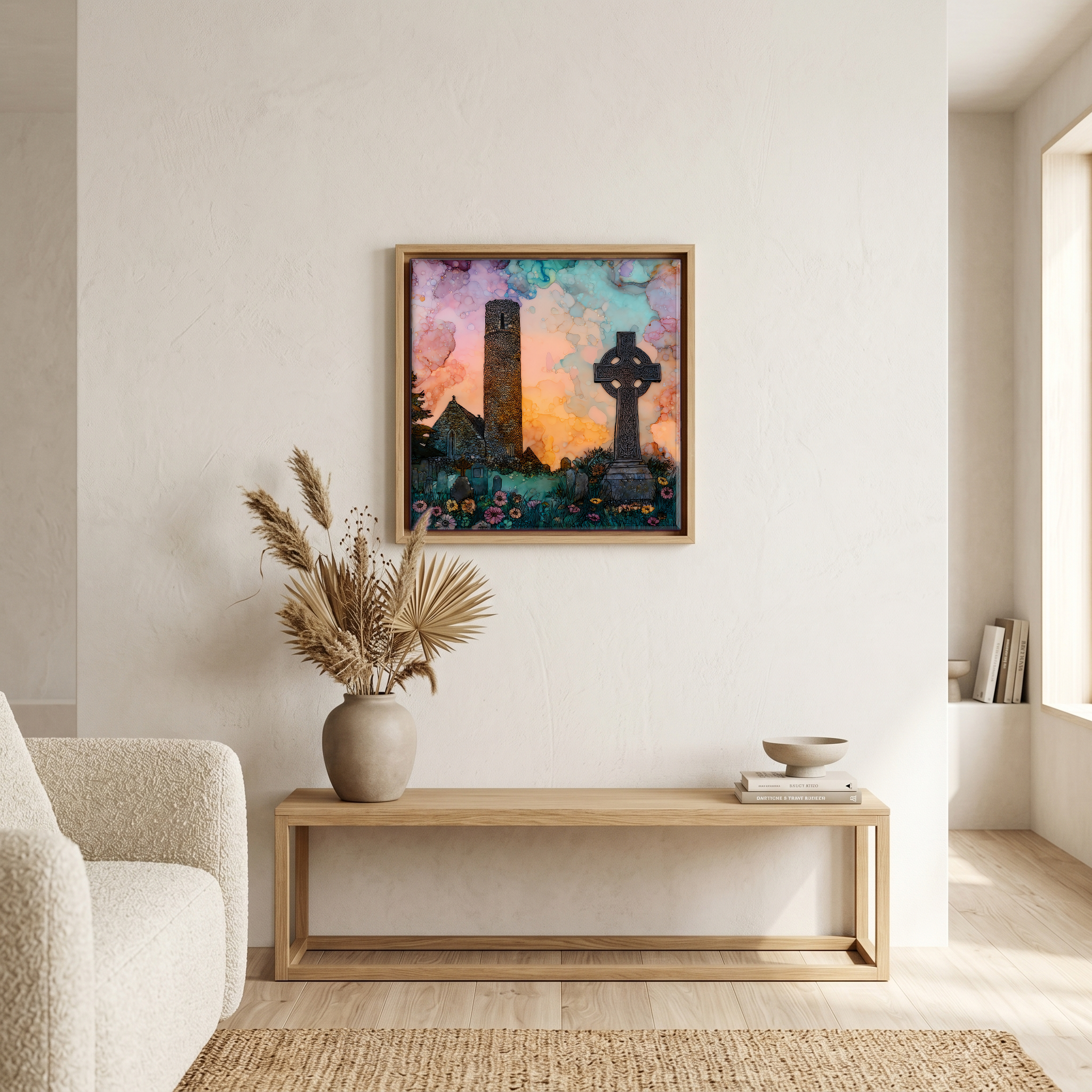

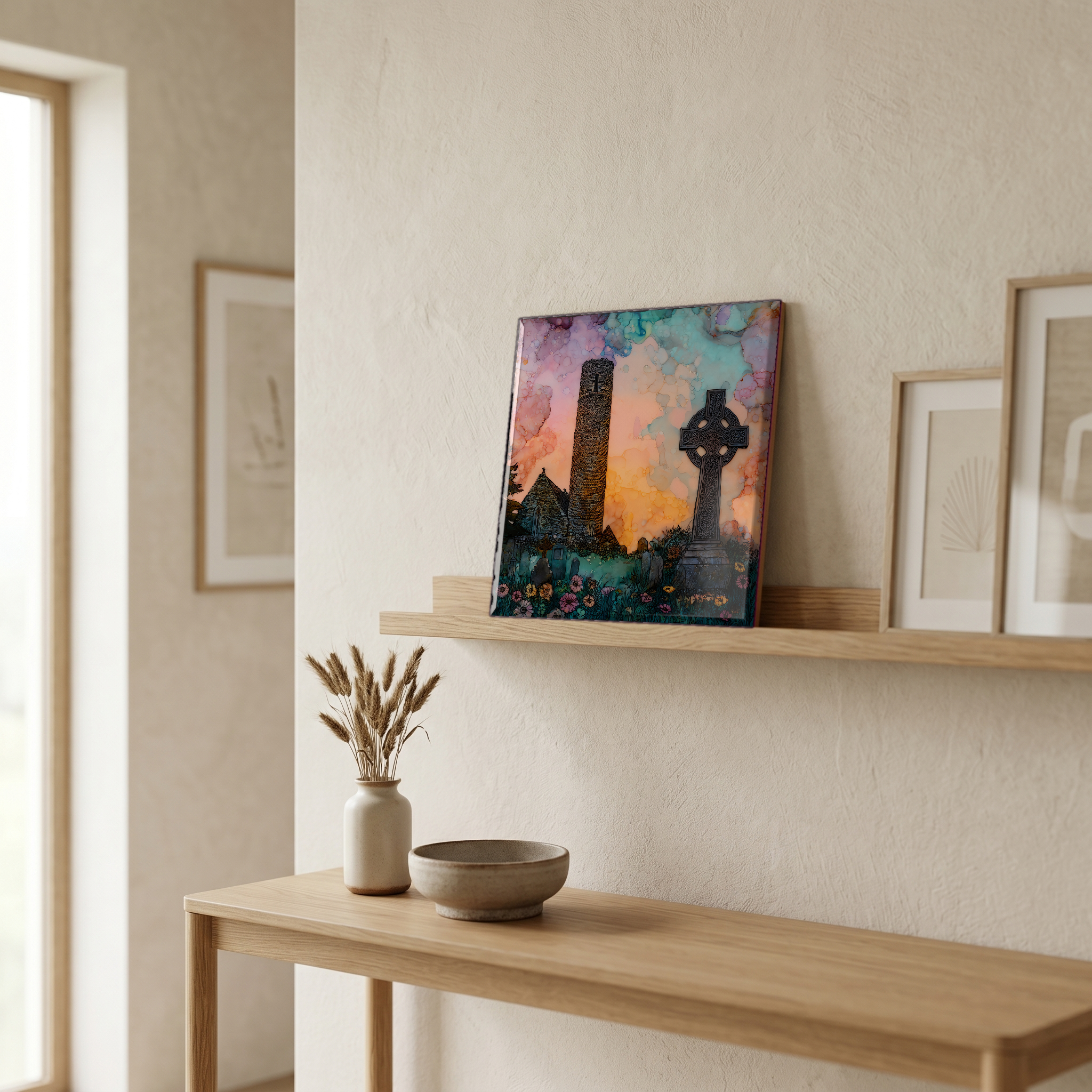
“A small walled graveyard at the end of a country lane, eight kilometres north of Drogheda. Inside it: two ruined churches, three sandstone high crosses cut in the tenth century, and a round tower with its cap gone. Muiredach's Cross stands about five and a half metres tall and still carries the figures of Adam and Eve, the Last Judgement, and Christ in glory, though a thousand years of County Louth weather have softened the deepest carvings. The gate is open and the grass is kept short.
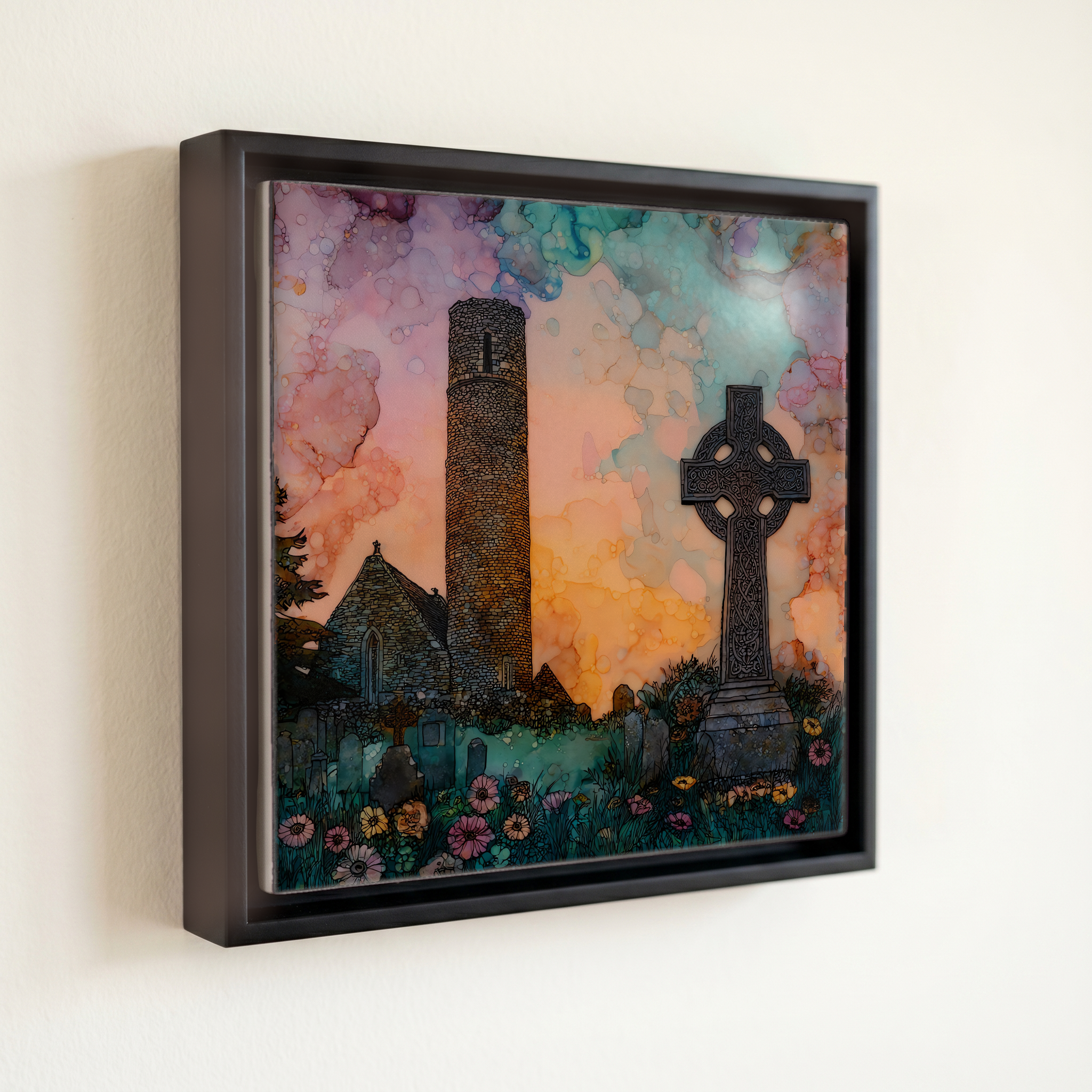
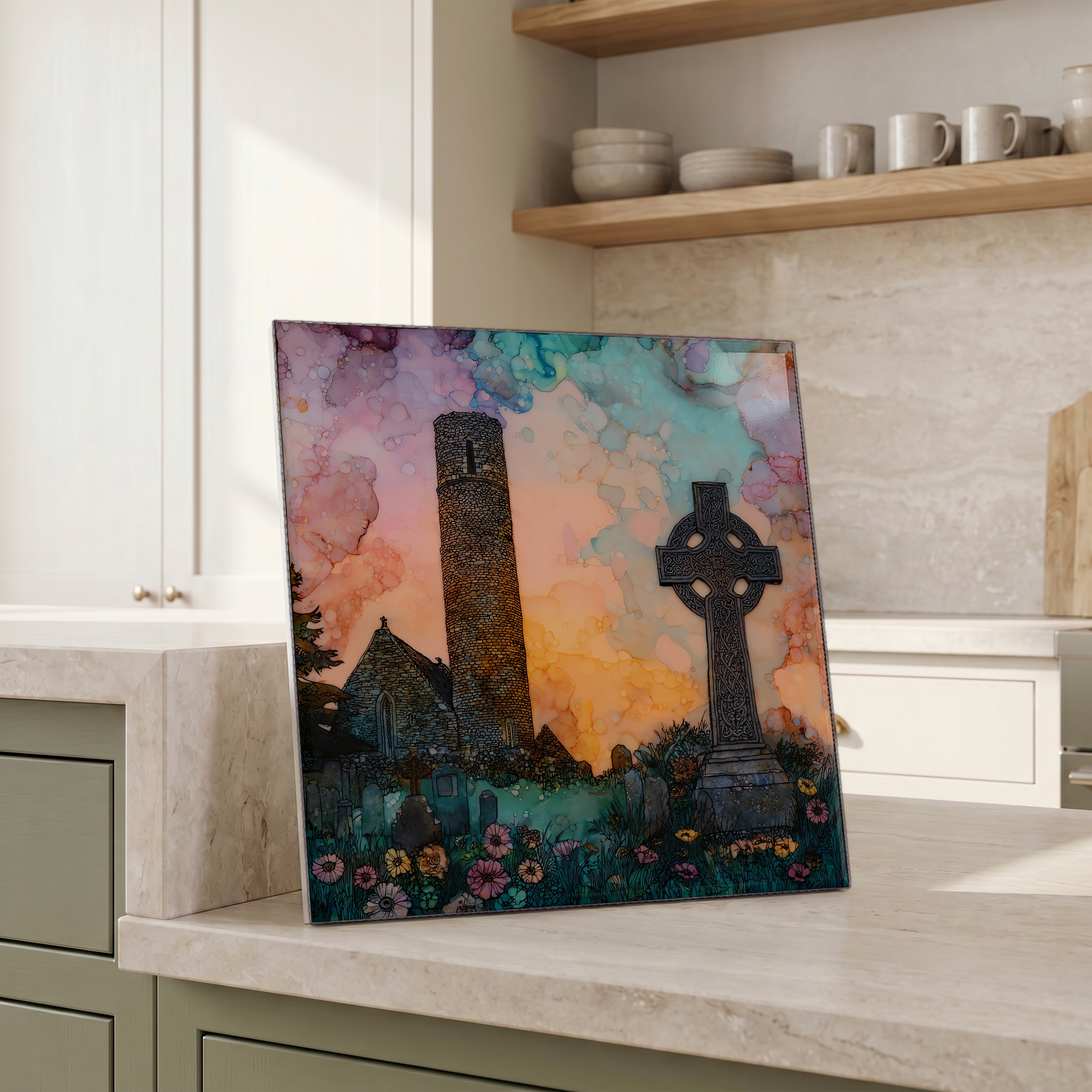
Monasterboice, on ceramic.
Each tile is finished by hand in our Knoxville studio. Artwork is slowly infused into the ceramic surface under high heat and pressure, and rests beneath a thin glossy finish. The colour lives in the surface, not on top of it.
Pick any four 4-inch tiles — National Parks you've been to, a Smokies set, the four seasons of one place. $ for a set of , cork-backed, ready to live on the table.
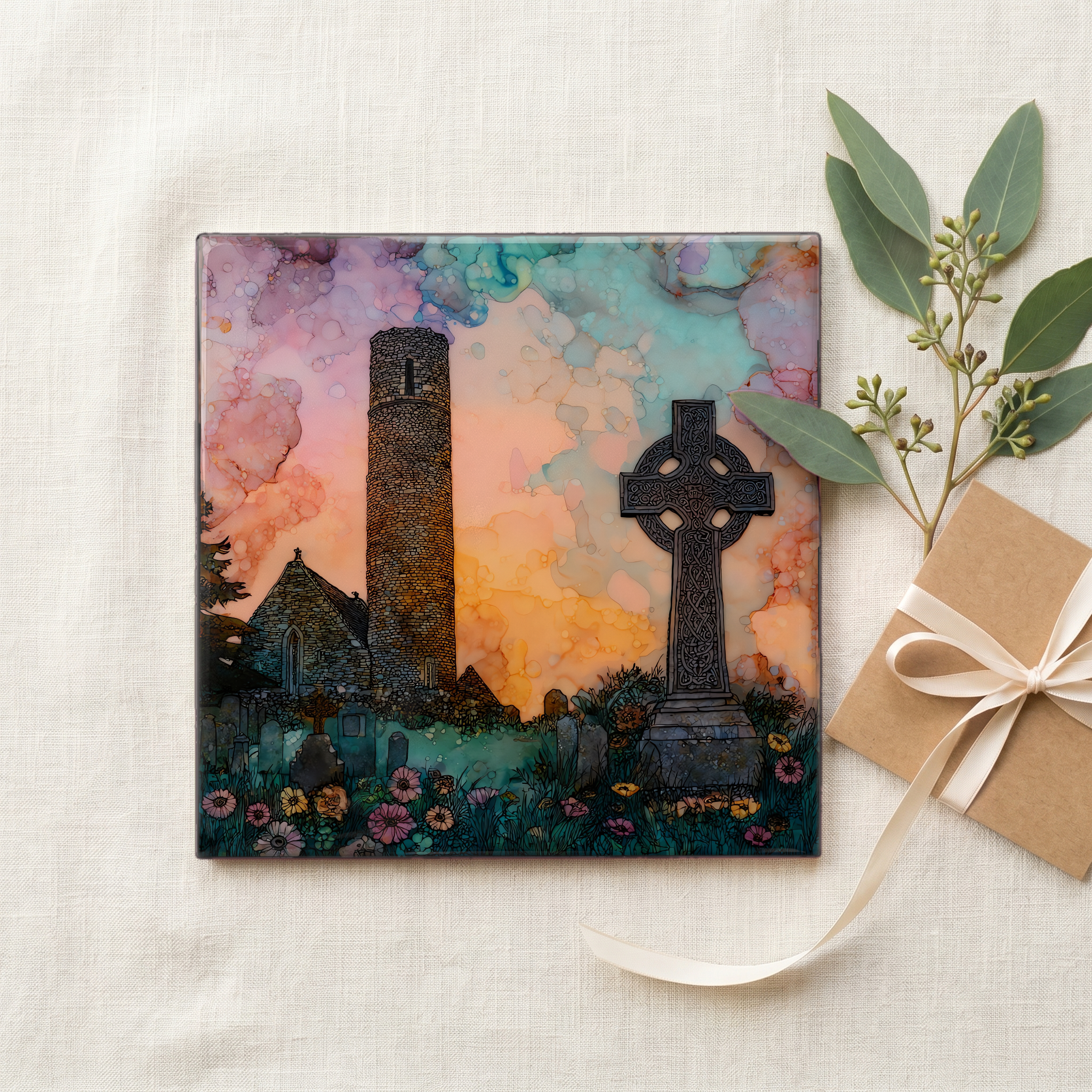
Each tile ships in a kraft box, tied with cream ribbon, with a handwritten note from the studio if you'd like to add one.
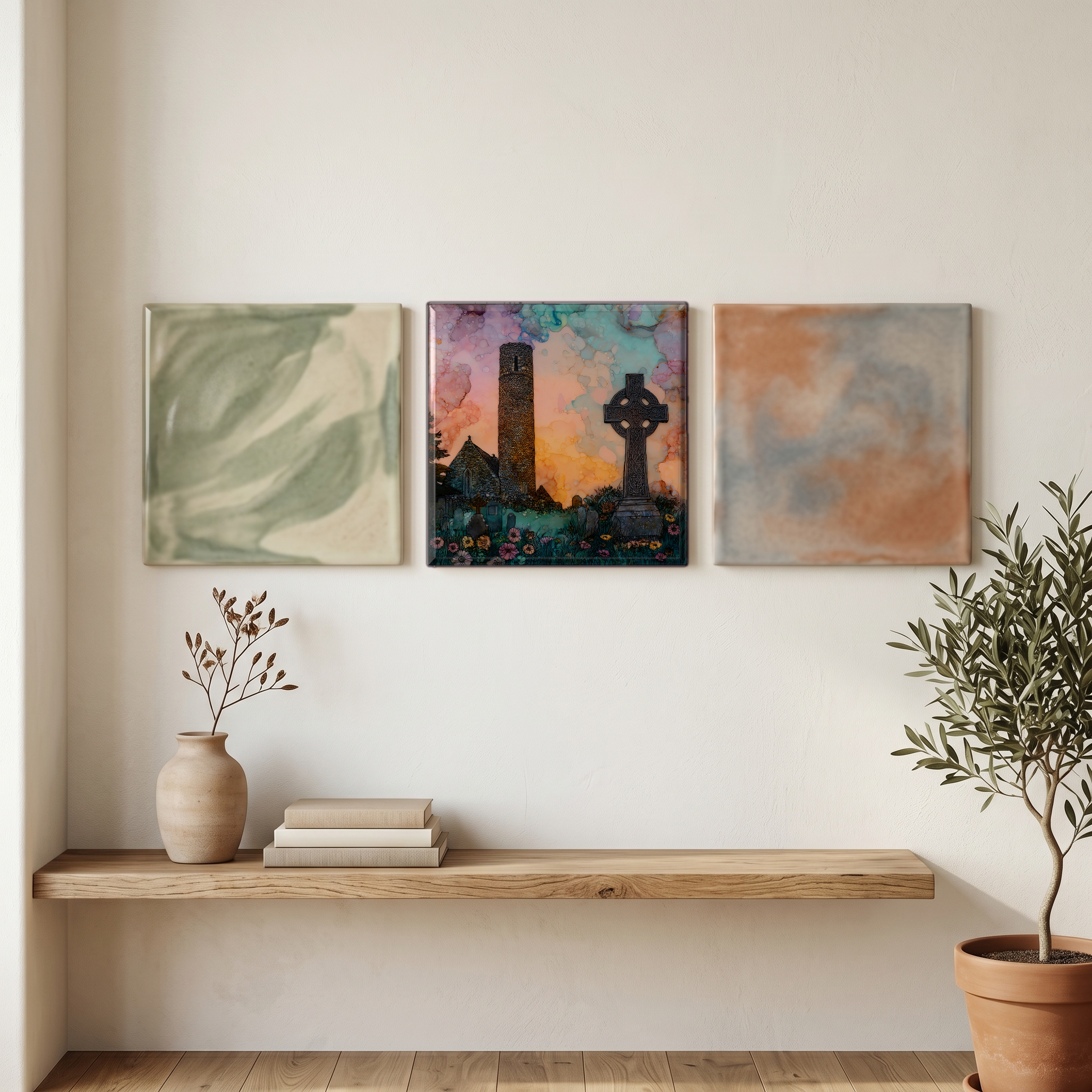
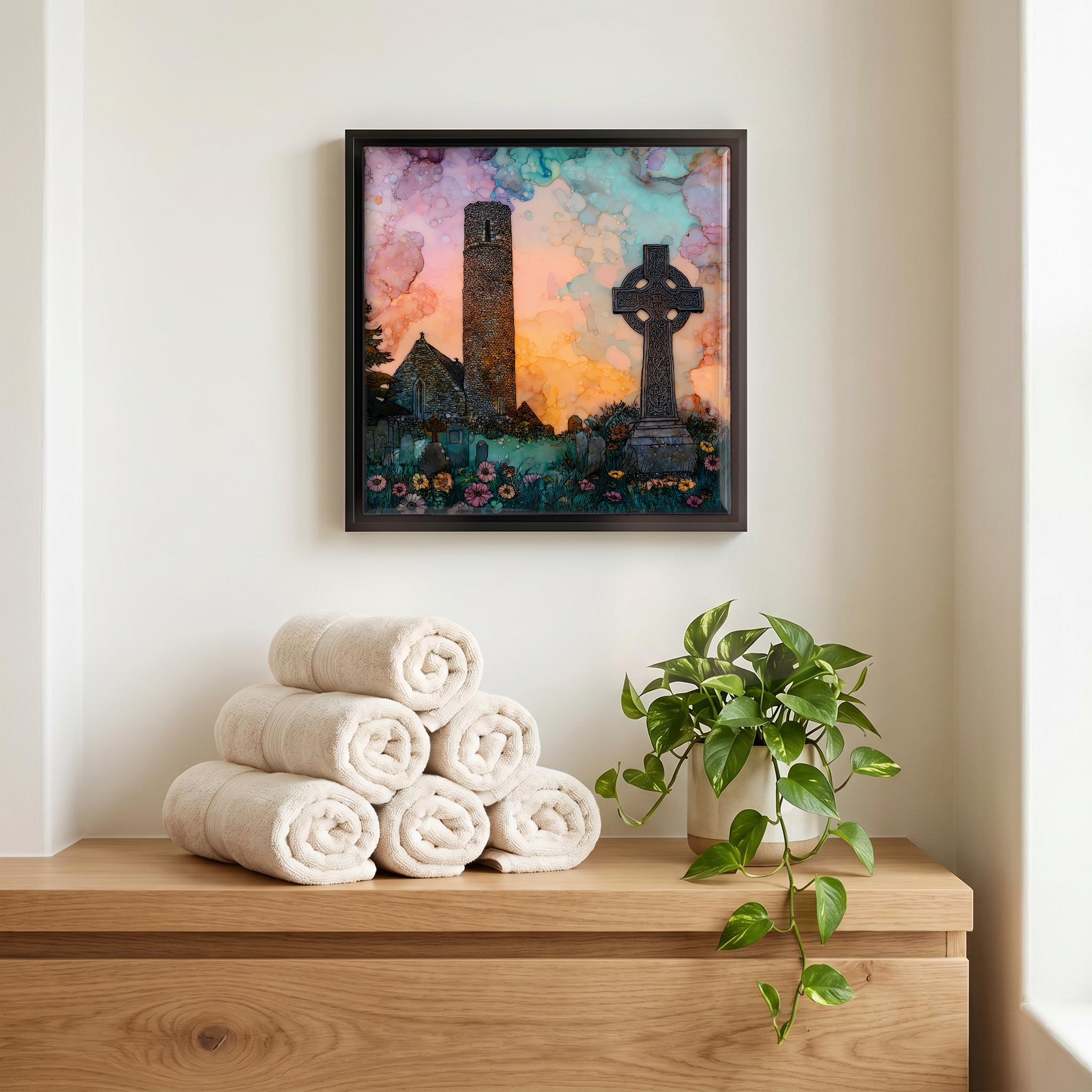
Three or five different vistas, hung together — a chapter of places you've been, or want to go.
The place, in three passes.
Monasterboice sits in low farmland eight kilometres north of Drogheda, in County Louth. The site was founded in the fifth century by Saint Buithe, a follower of Saint Patrick who died around 521, and the name in Irish (Mainistir Bhuithe) means simply 'the monastery of Buithe.' What remains today is a walled graveyard holding two ruined medieval churches, three carved high crosses, an early sundial, and a round tower that rises about twenty-eight metres above the surrounding fields. The community was a centre of learning and manuscript work until a fire destroyed the round tower's library in 1097, and the founding of the Cistercian abbey at nearby Mellifont in 1142 drew its religious life away over the following century.
The three high crosses at Monasterboice are carved from sandstone and date from the late ninth or early tenth century, when figural cross-carving in Ireland reached its highest point. Muiredach's Cross, the most famous of the three, stands about five and a half metres tall and carries scenes from both Testaments cut in low relief: Adam and Eve, the sacrifice of Isaac, David and Goliath on the west face, and a centrally placed Last Judgement on the east. An inscription on the base reads 'OR DO MUIREDACH LASNDERNAD IN CHROS,' a prayer for the Muiredach who commissioned the work, generally identified as the abbot of the monastery who died in 923. The West Cross beside it is taller, about six and a half metres, and is among the tallest surviving high crosses in Ireland.
Monasterboice is a National Monument in the care of the Office of Public Works, accessible without a fee from the public road that ends at the site. There is no formal visitor centre, no ticketing, and no staffed hours; the gate stands open and the small car park outside the wall holds perhaps a dozen vehicles. From Dublin the drive is roughly an hour up the M1, exiting near Monasterboice village and following a narrow country lane east. Early morning or late afternoon light rakes the carving on the crosses, picks up the detail in the high relief, and avoids the brief midday rush of coaches stopping en route to the Boyne Valley and Newgrange.