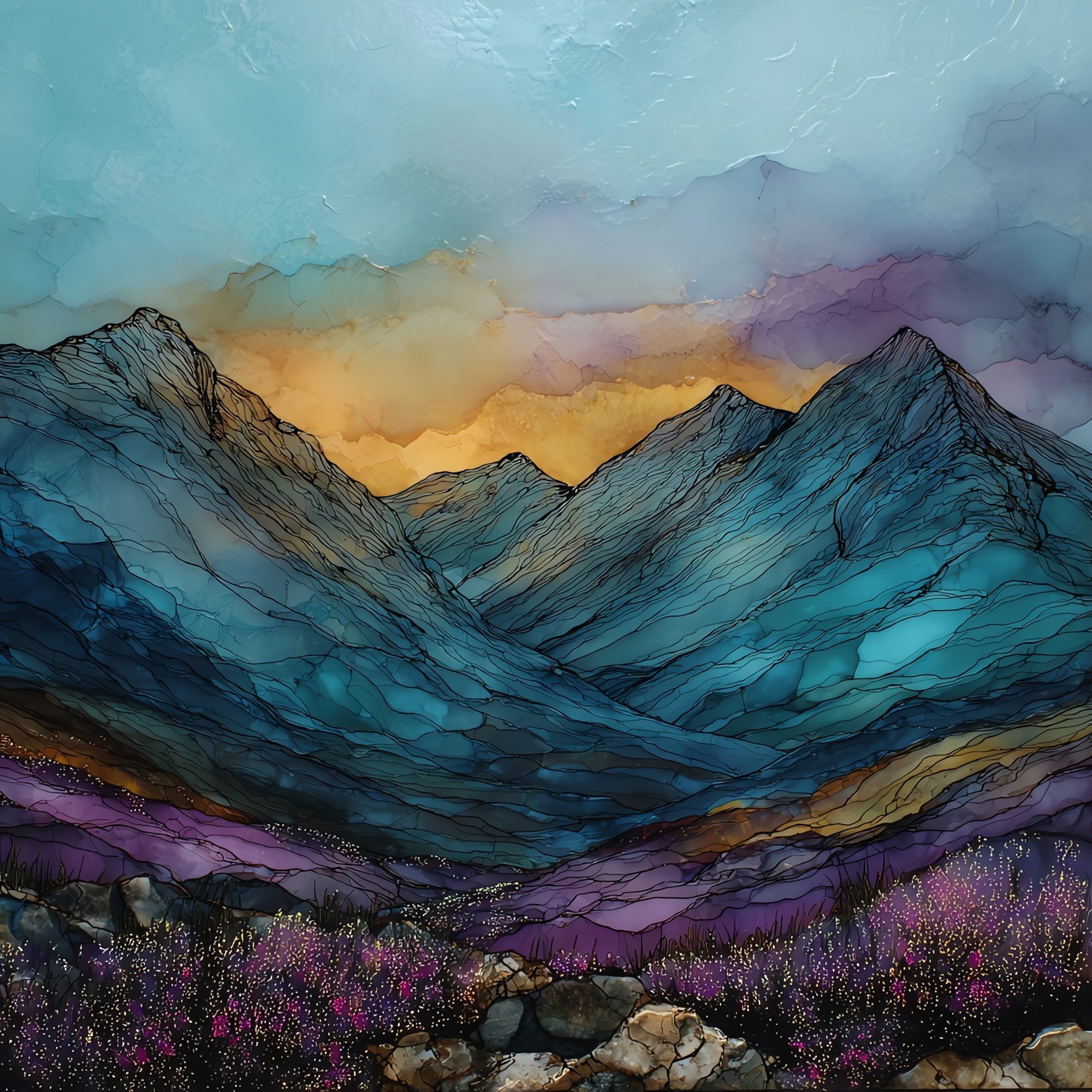
MacGillycuddy's Reeks
— — the ridge the cloud comes to rest on.
Not only on a wall.
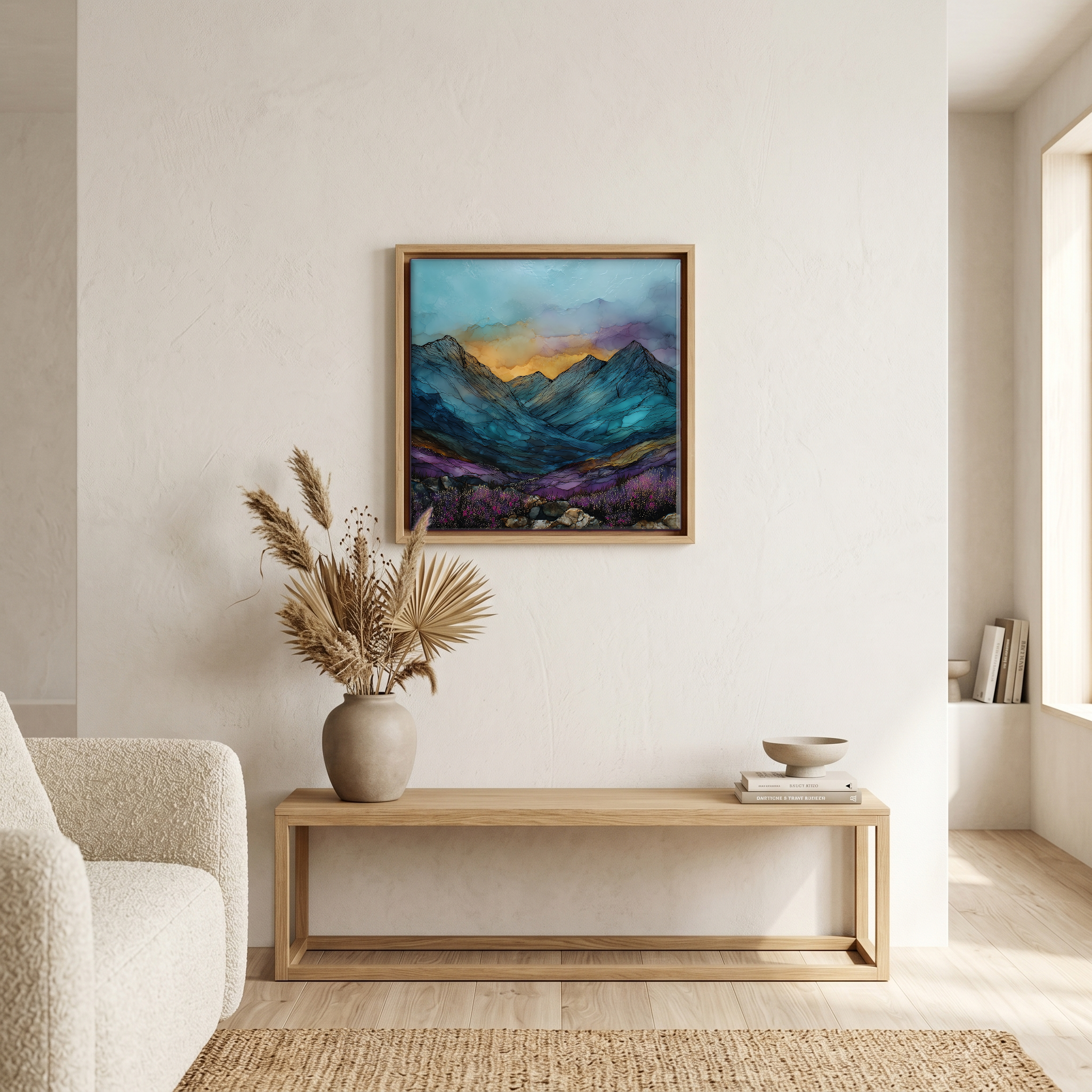
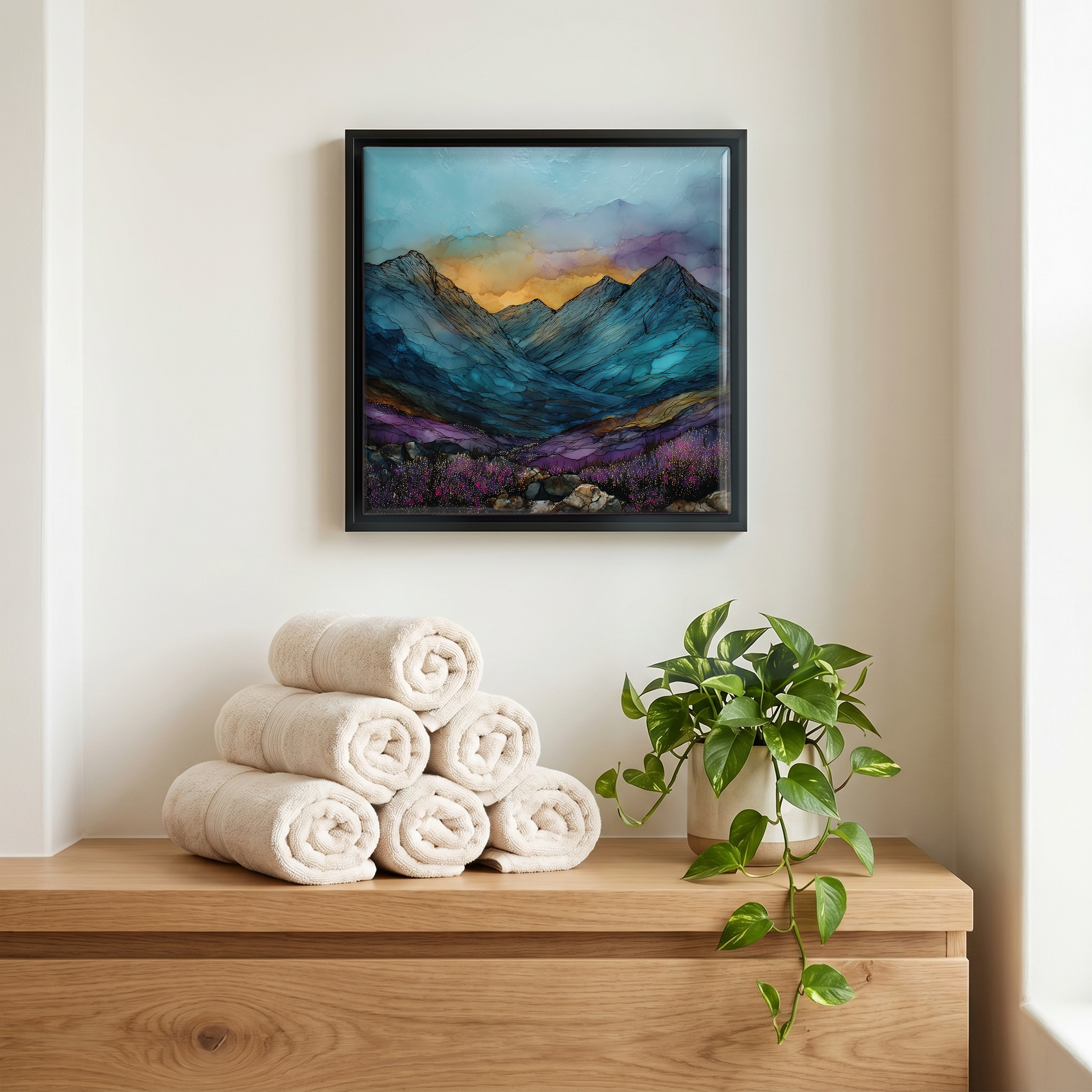
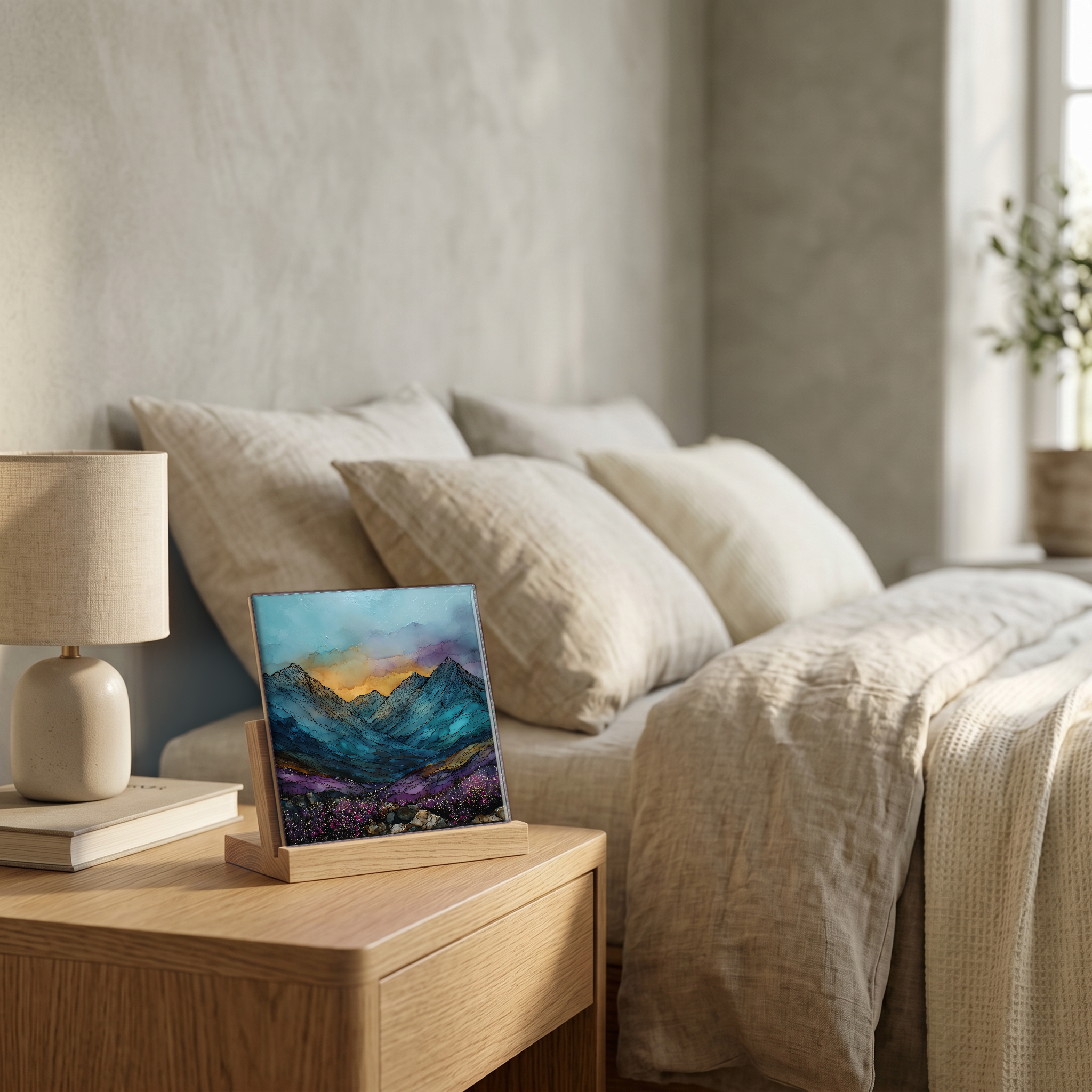
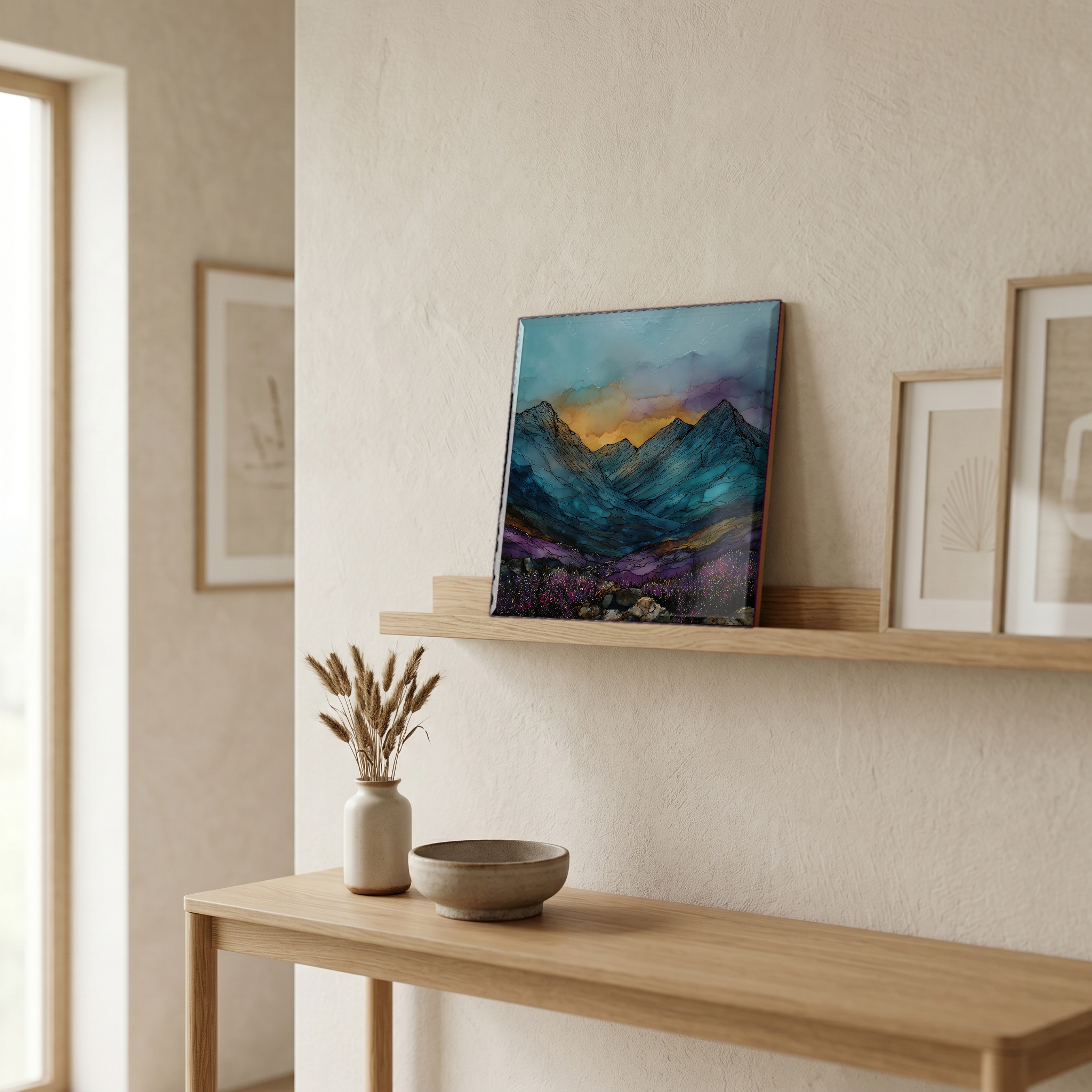
“The highest line of mountains in Ireland, on the Iveragh Peninsula in County Kerry. Carrauntoohil at the centre, 3,406 feet of dark sandstone, modest by alpine numbers but rising straight from sea level out of small fields and stone walls. The rock is the deep red-brown of Old Red Sandstone, darker when wet, which is most of the time. The cloud comes in off the Atlantic and settles in the corries, lifting in late afternoon if it is going to lift at all. Below the saddle, the meadow at Cronin's Yard sends walkers up the Devil's Ladder while the sheep watch them go.
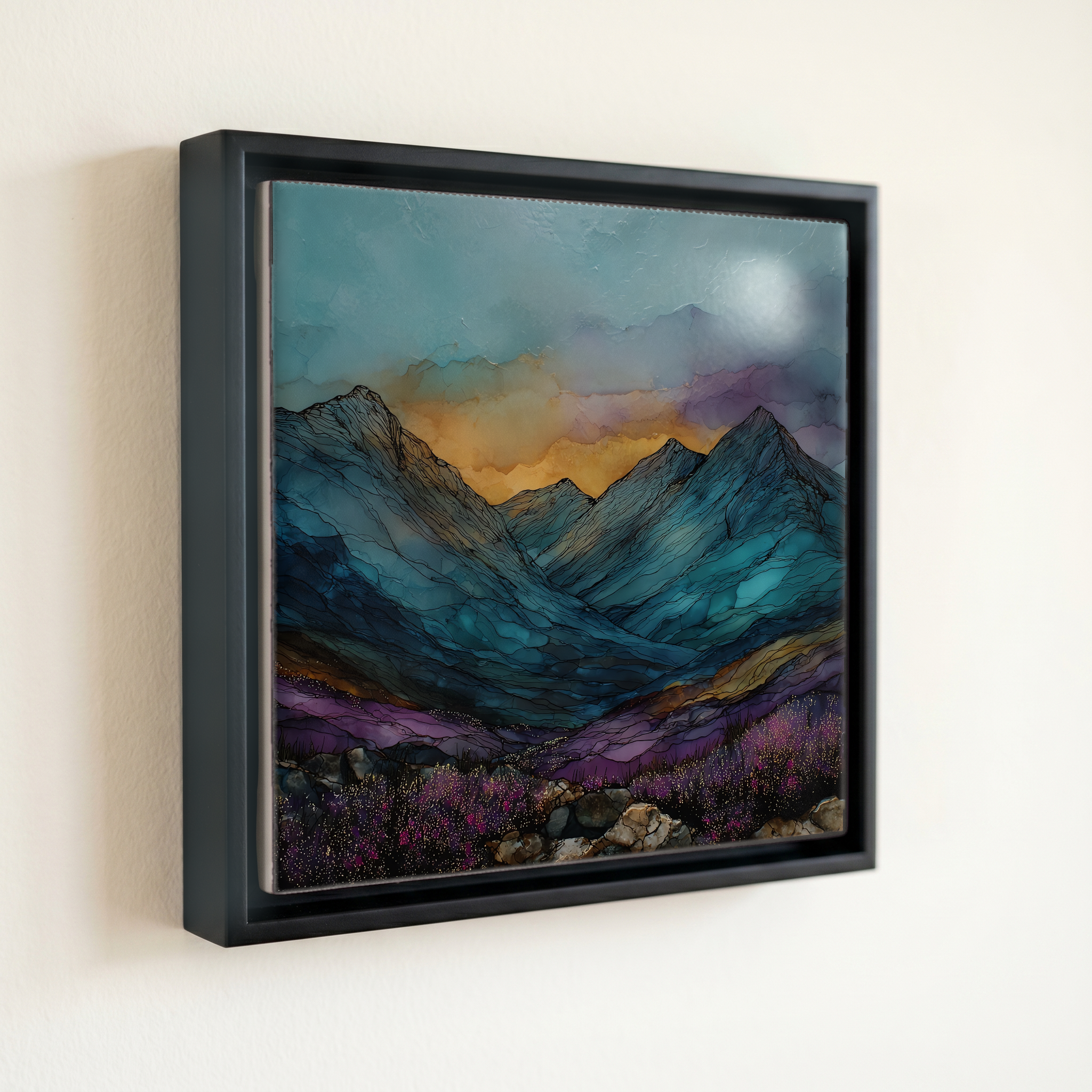
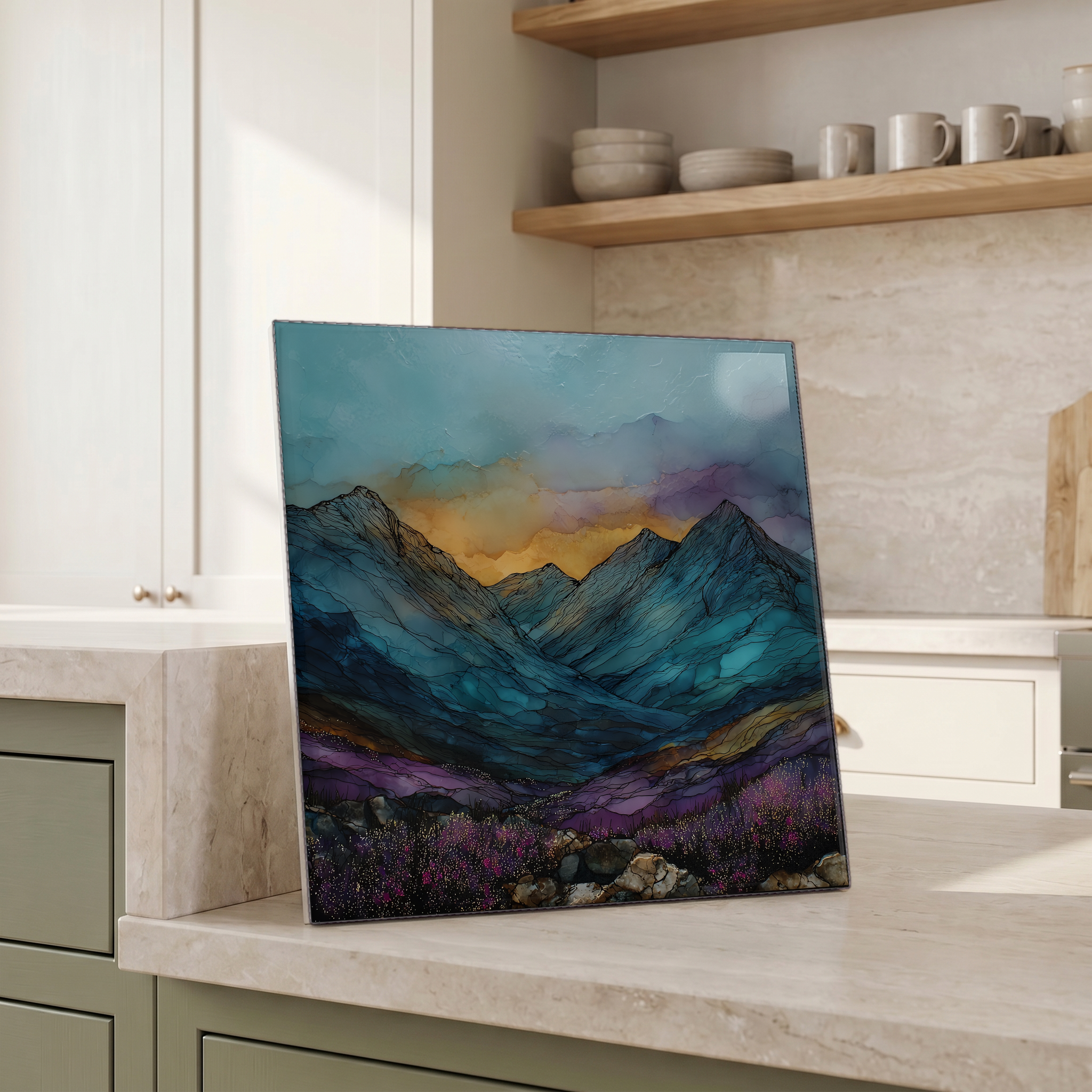
MacGillycuddy's Reeks, on ceramic.
Each tile is finished by hand in our Knoxville studio. Artwork is slowly infused into the ceramic surface under high heat and pressure, and rests beneath a thin glossy finish. The colour lives in the surface, not on top of it.
Pick any four 4-inch tiles — National Parks you've been to, a Smokies set, the four seasons of one place. $ for a set of , cork-backed, ready to live on the table.
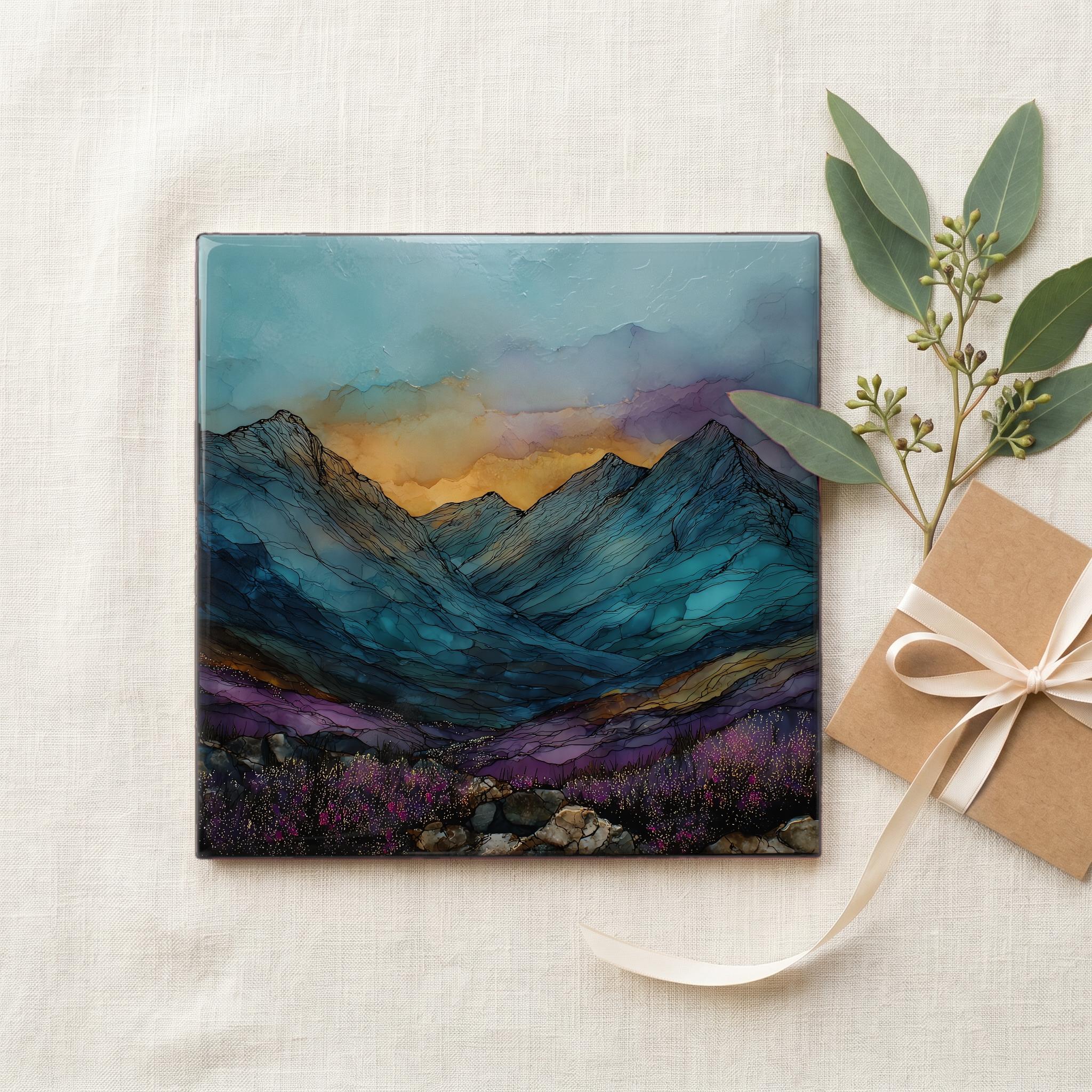
Each tile ships in a kraft box, tied with cream ribbon, with a handwritten note from the studio if you'd like to add one.
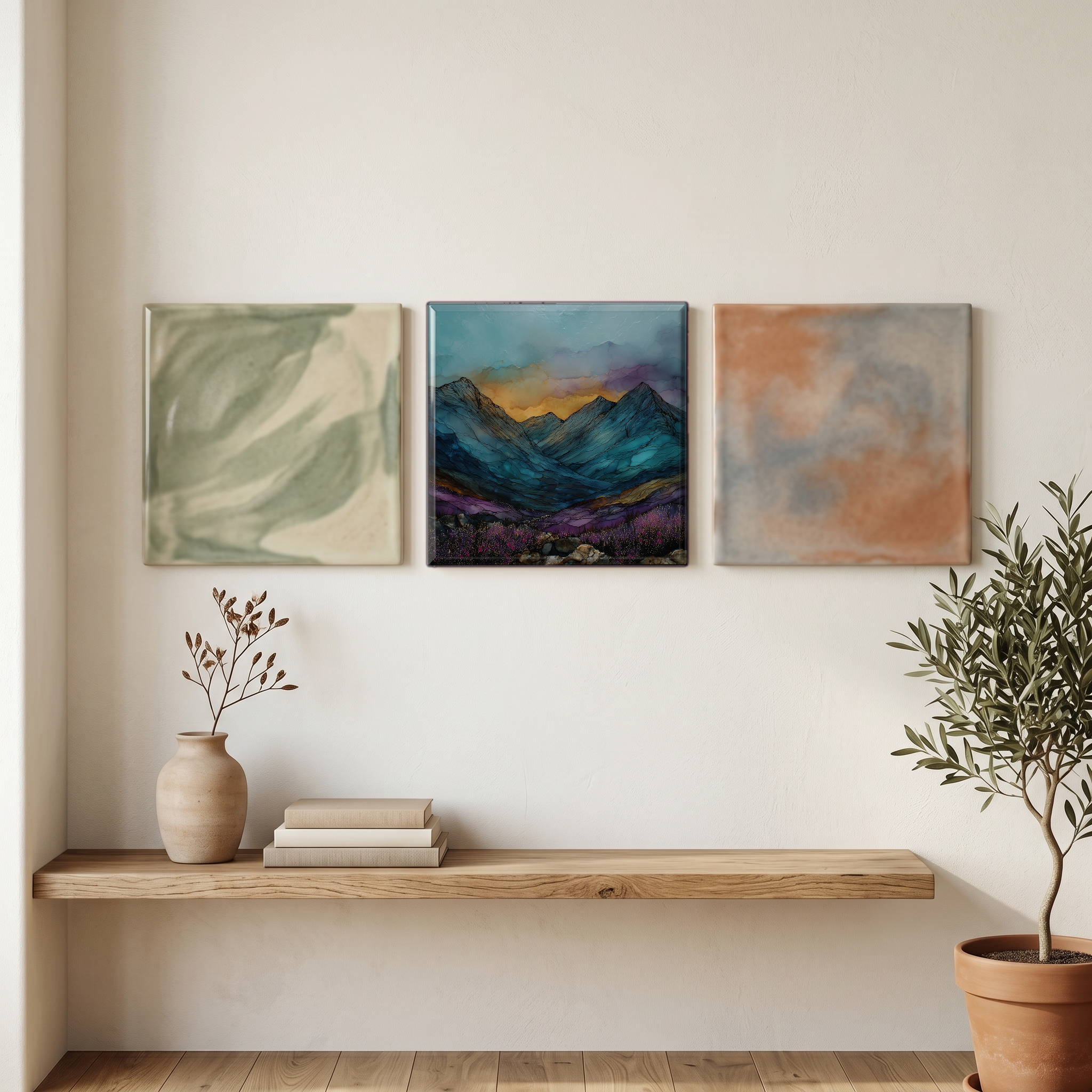
Three or five different vistas, hung together — a chapter of places you've been, or want to go.
The place, in three passes.
MacGillycuddy's Reeks form the highest mountain range in Ireland, running roughly twelve miles east-to-west across the Iveragh Peninsula in County Kerry. The range holds nine peaks above 914 metres, or 3,000 feet, including Carrauntoohil at 1,038 metres, Beenkeragh at 1,010 metres, and Caher at 1,001 metres. The name comes from the MacGillycuddy family of Iveragh, a branch of the O'Sullivan clan who long held lands at the foot of these mountains. The range sits west of the town of Killarney and just north of the Ring of Kerry coastal road, separated from the Atlantic by a narrow band of farmland and bog.
The Reeks are built almost entirely of Old Red Sandstone, deposited as river sediments roughly 400 million years ago during the Devonian period, then folded and uplifted by the Variscan orogeny that closed out the Palaeozoic era. The rock is a deep red-brown when dry and almost black when wet. Pleistocene glaciation carved the corries on the north face, leaving two small lakes in Hag's Glen, Lough Callee and Lough Gouragh, hanging below the ridge. The Devil's Ladder, the main walking route to Carrauntoohil's summit, is a steep gully of broken sandstone scree that has eroded badly under foot traffic and is now subject to ongoing path-restoration work led in part by Mountaineering Ireland.
Cloud sits on the Reeks more days than not. The range catches weather coming off the North Atlantic before it reaches anywhere else in Ireland, and the summits spend most of the year in mist. Rainfall over the high ground here is among the heaviest in the country, running well above the roughly 1,250 millimetres recorded annually at Met Éireann's station in Killarney town below. The lift, when it comes, is usually a late-afternoon affair as the sun pulls the moisture off the corrie walls. Walkers who set off from Cronin's Yard at dawn often climb through grey for two hours before the cloud breaks above them and the ridge appears.