Wender·Vista
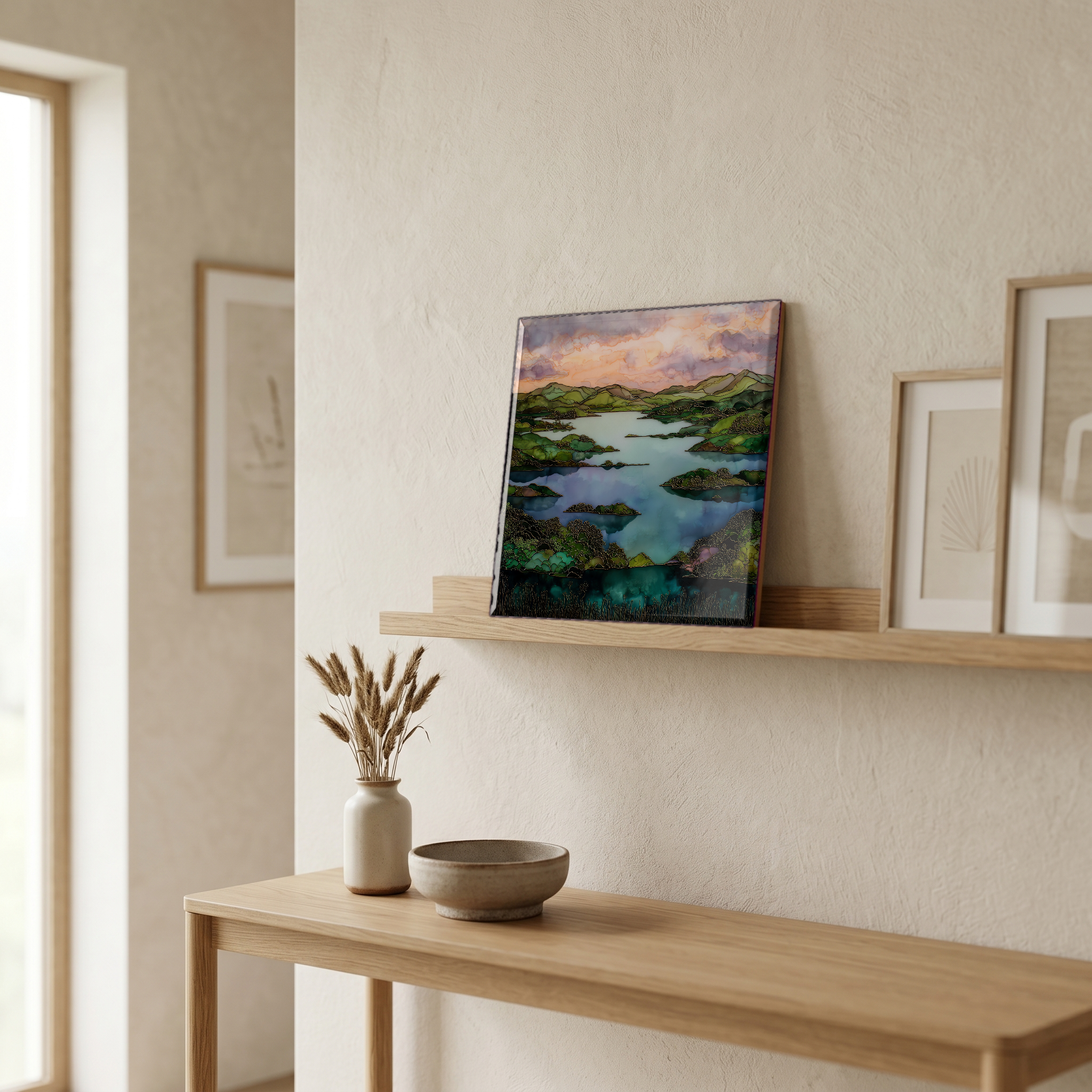
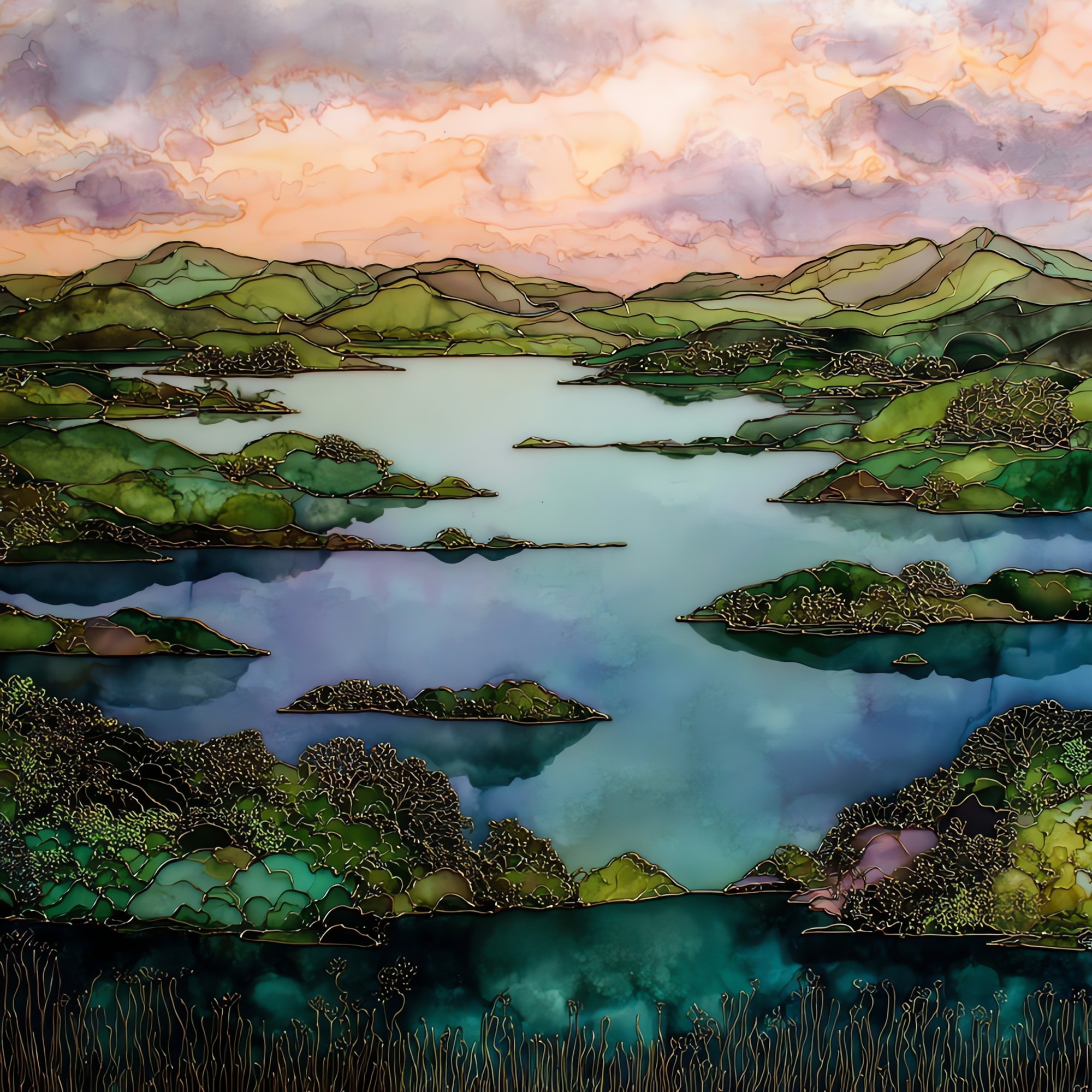
Lough Muckno
shown on ceramic, 12-inch tileIreland
in the drumlin country of County Monaghan

Lough Muckno

— a green so old it forgets the year.

Where it lives

Not only on a wall.

A small tile on the nightstand catching the morning. A larger one above the fire. Yours, wherever you spend the slow hours.
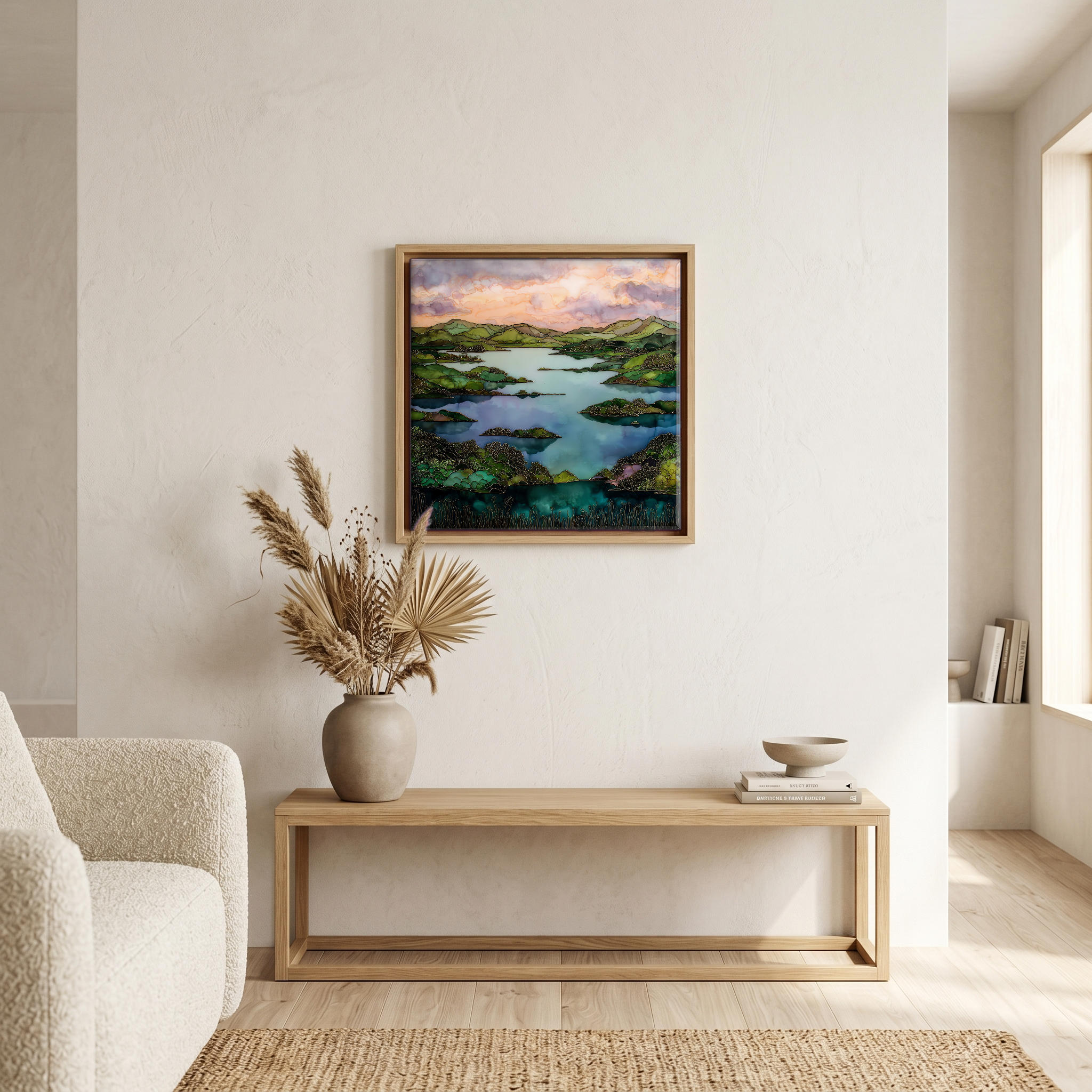
Above the bench, in a warm oak surround.
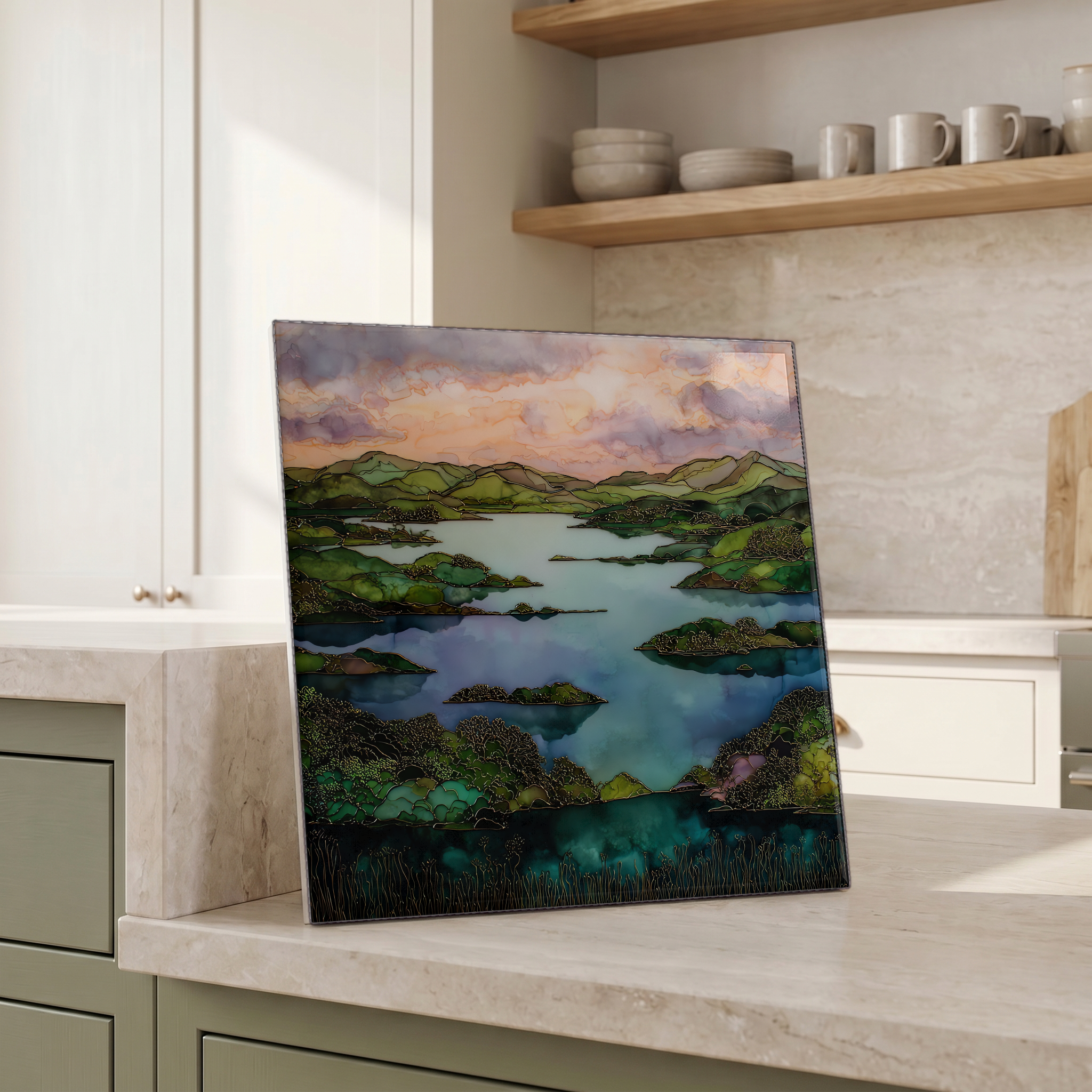
Beside the kettle, propped on the counter.
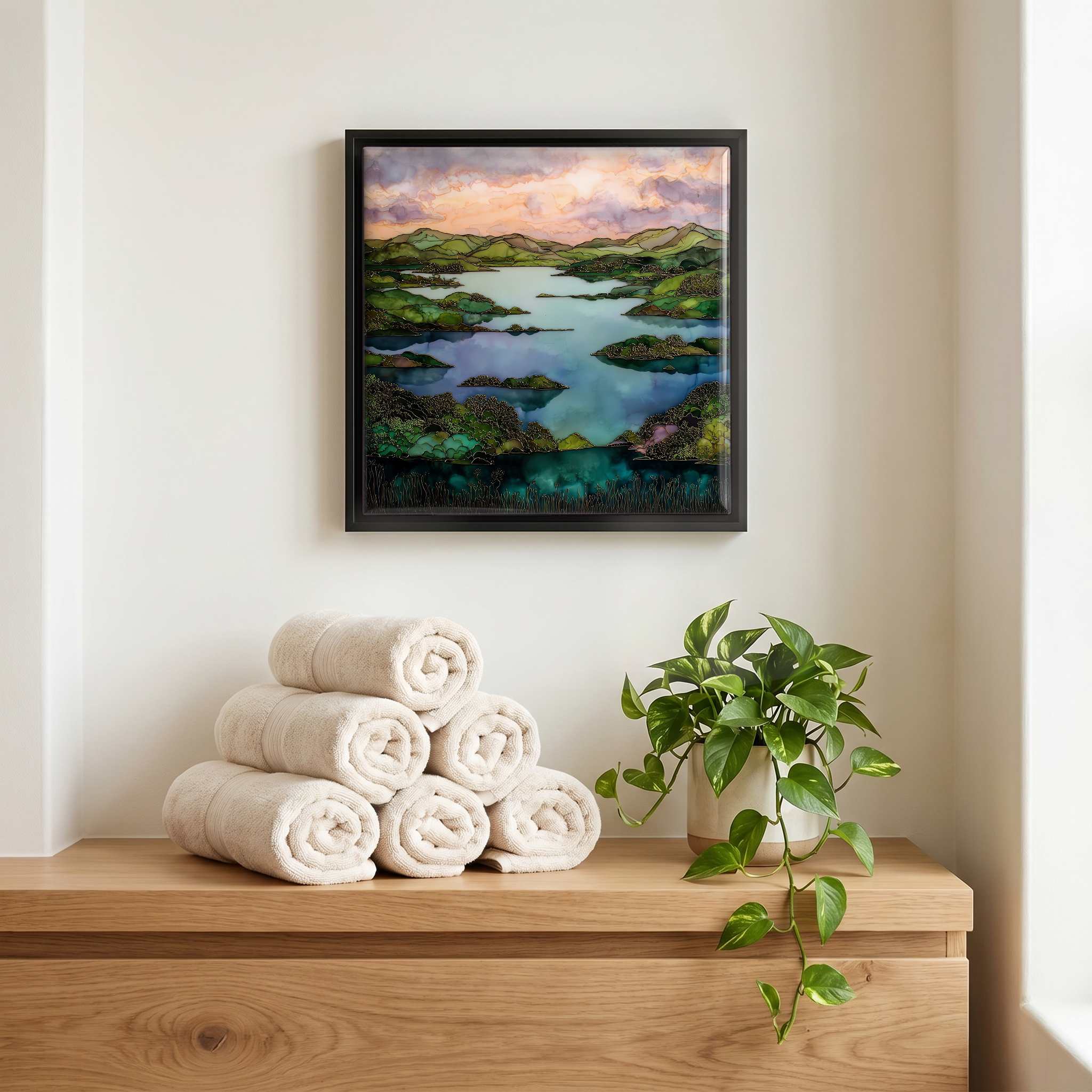
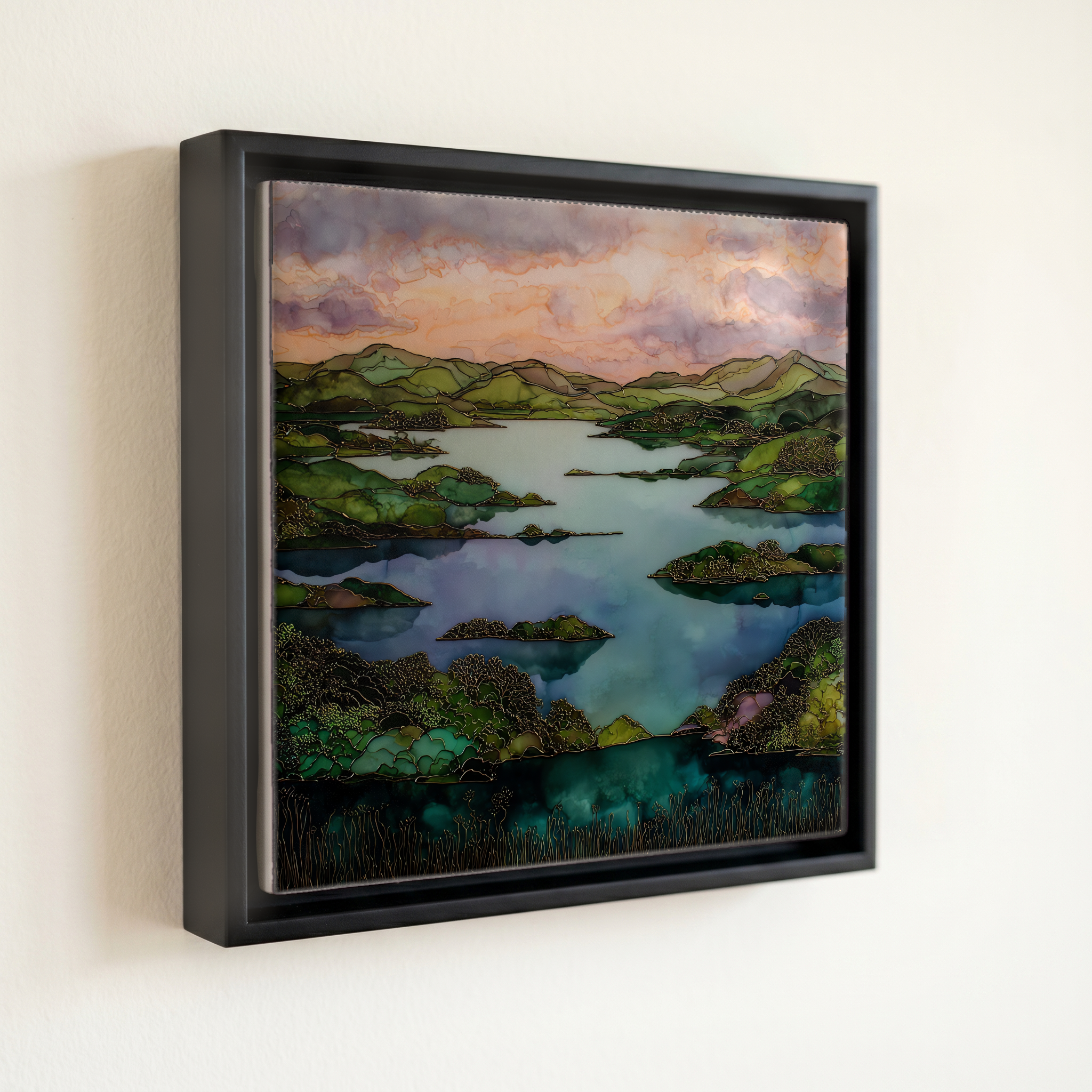
Above the linens, in a slim black surround.
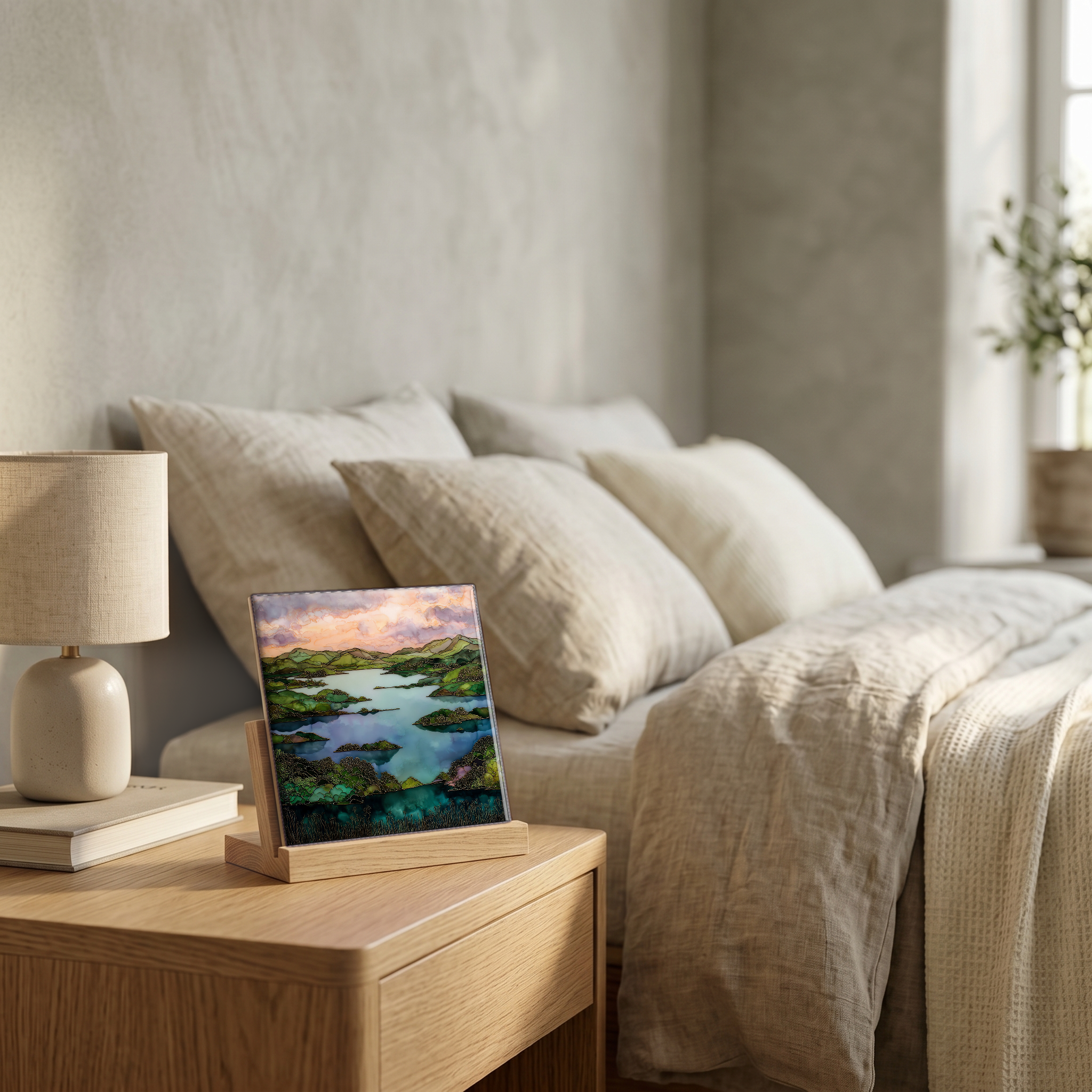
On the nightstand, on a light oak stand.
On a picture ledge, where the light comes in.
a note from the studio

The largest lake in County Monaghan, set in the drumlin country of south Ulster, on the eastern edge of Castleblayney. Nearly nine hundred acres of dark, fish-held water, broken by a scatter of small wooded islands. Hope Castle still stands on the western shore, where the old Blayney estate ran down to the reeds. Coarse anglers come here for the bream and pike, walkers for the lake loop through oak and beech and old planted lime. The light is the northern kind that holds onto the morning, and the water keeps its colour.
from the studio
shown in a slim black floating frame · 6 × 6 in
— bring it home

Lough Muckno, on ceramic.

Each tile is finished by hand in our Knoxville studio. Artwork is slowly infused into the ceramic surface under high heat and pressure, and rests beneath a thin glossy finish. The colour lives in the surface, not on top of it.

What kind of piece?
One tile — square or rectangle.
How big?
the popular one — counter, shelf, nightstand
6 × 6 in · 15 cm · 1.6 lb
Surface finish
A clear glossy finish — the artwork reads as if under resin. Ideal for show-pieces and framed wall art.
How it sits
A hidden cleat — sits ¼″ proud of the wall.
$58
Hand-finished and shipped from our studio at the foot of the Smokies. On your wall in about ten days.
size
6 × 6 in
15 cm
weighs
1.6 lb
solid in the hand
surface
ceramic, hand-finished
art rests beneath a thin glossy finish
from
Knoxville, TN
our family studio, at the foot of the Smokies
— start a Coaster Set

Pick any four 4-inch tiles — National Parks you've been to, a Smokies set, the four seasons of one place. $ for a set of , cork-backed, ready to live on the table.
comes gift-ready
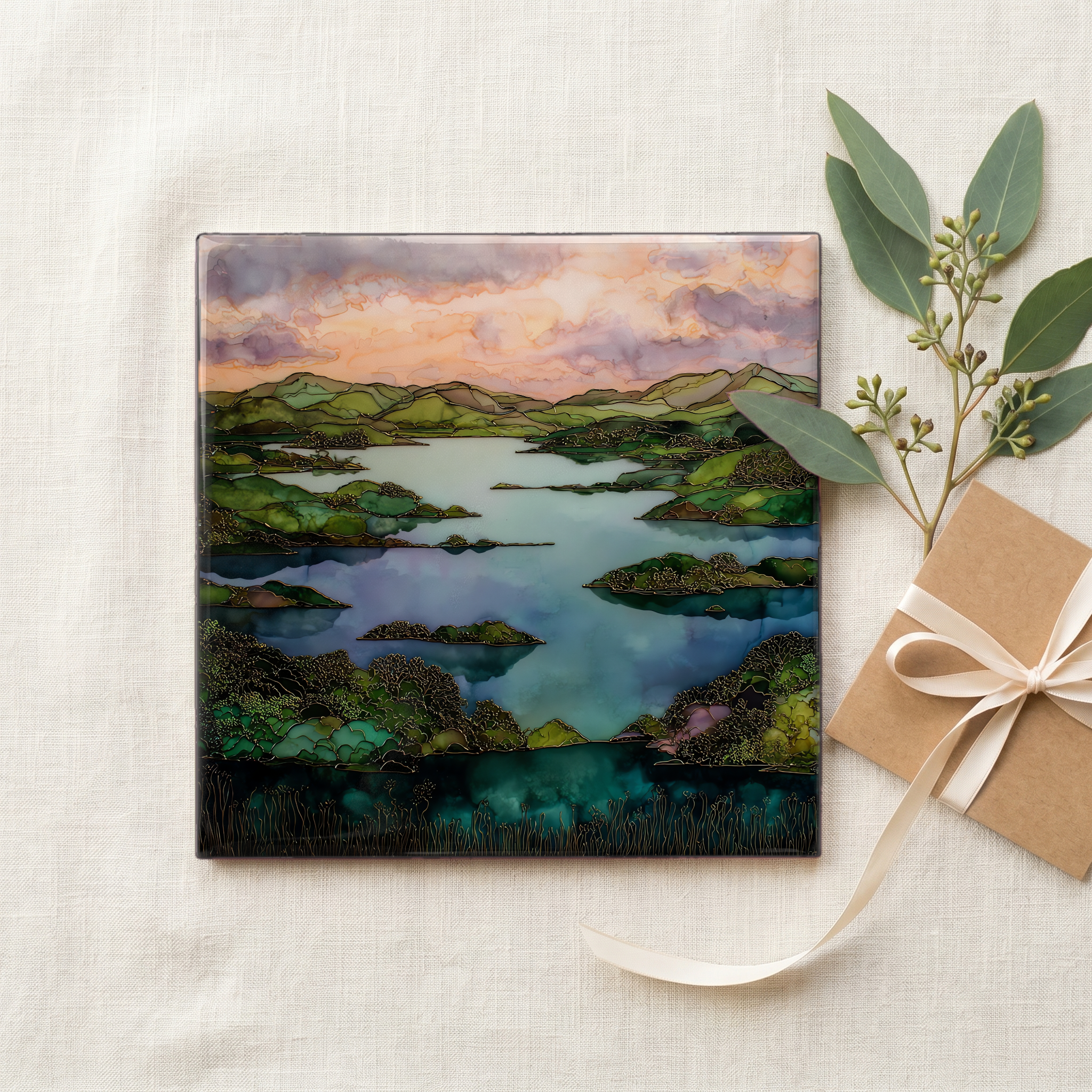
comes gift-ready

Each tile ships in a kraft box, tied with cream ribbon, with a handwritten note from the studio if you'd like to add one.
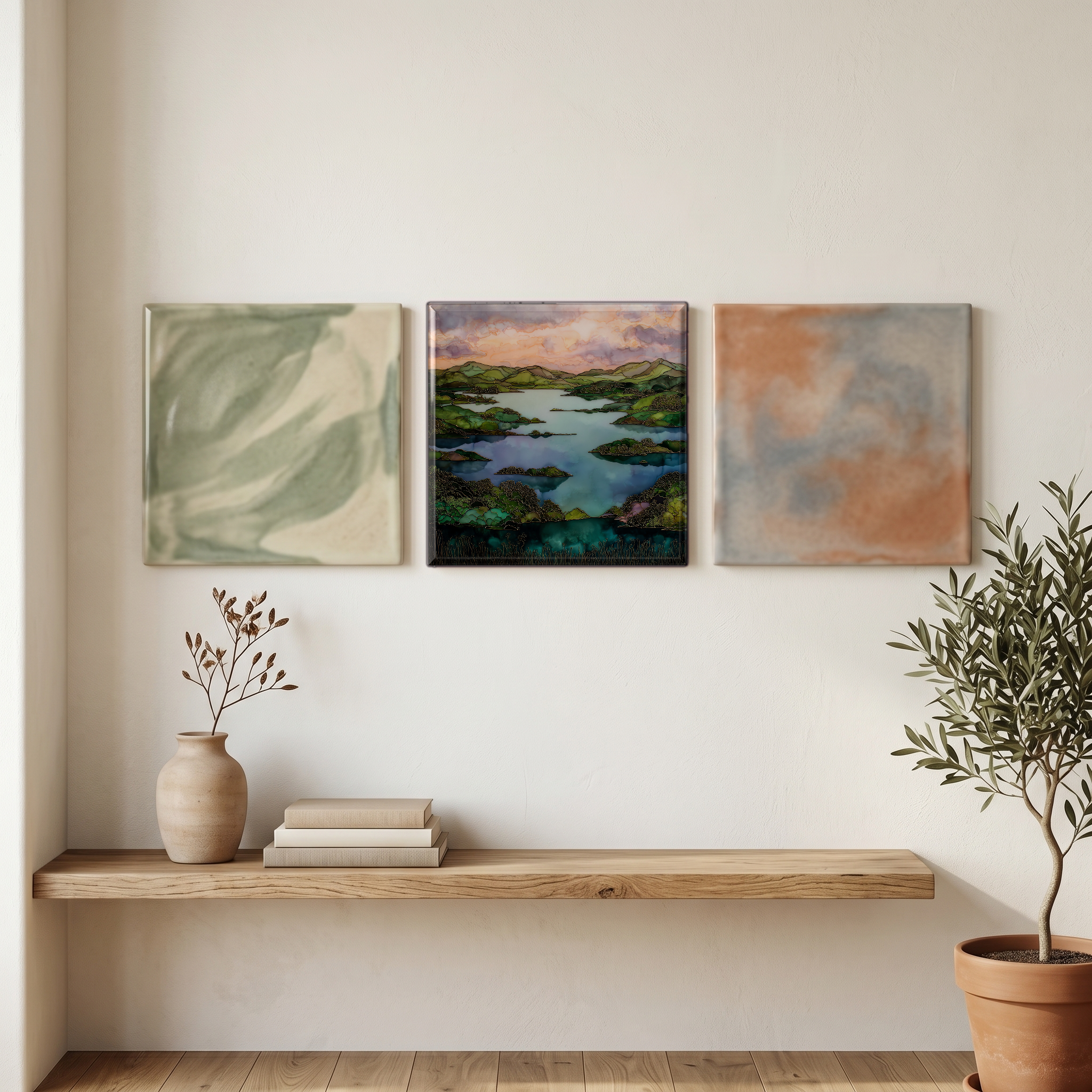
or build a grouping
or build a grouping

Three or five different vistas, hung together — a chapter of places you've been, or want to go.

about Lough Muckno

The place, in three passes.

A little of what's known, in case you fall down the rabbit hole — or want to go see it yourself.
the place

Lough Muckno is the largest lake in County Monaghan, covering roughly 365 hectares (about 900 acres) on the eastern edge of the market town of Castleblayney, in the Irish province of Ulster. The shoreline runs through Lough Muckno Leisure Park, a 365-hectare estate of forest, lake and woodland walk formerly attached to the Hope Castle demesne. Castleblayney sits on the N2 road between Dublin and Derry, about 110 kilometres north of Dublin and roughly 25 kilometres south of the border with Northern Ireland. The lake's name comes from the Irish Muc Shnámha, the swim of the pig, recorded in the surrounding parish name well before the town was founded in the early seventeenth century.

the water

Lough Muckno is one of the best-known coarse fishing waters in Ireland, holding strong populations of bream, roach, perch and northern pike. The water carries the dark green of a lowland Irish lake. The colour comes from peat-stained inflows draining the drumlin country to the north, not from glacial silt or limestone meltwater. The lake is fished from bankside stands and small open boats, and Castleblayney has hosted national-class bream festivals on Muckno for decades, drawing competition anglers from across Britain and continental Europe. Pike of double-figure weight are taken from the deeper channels around the lake's larger wooded islands.

the stone

Hope Castle stands on the western shore of Lough Muckno, a four-storey Georgian house built by the Blayney family around 1799. The Blayneys were the founders of Castleblayney, granted the surrounding lands in the early seventeenth century. The estate took its later name from the Hope banking family, who bought the demesne in the 1850s and whose name became famous for the Hope Diamond. The house has had many lives since: convent school, hospital, hotel, and a military post during the Irish Civil War. It was badly damaged by fire in 2010, and the 365-hectare grounds now run as public parkland under Monaghan County Council.

where
Ireland · Castleblayney, County Monaghan
within
Lough Muckno Leisure Park
position
54.1080° N · 6.7130° W
the neighborhood

What's nearby.

A handful of named places within an hour's walk or short drive. Some we've already painted; some we will.
1 km W
Castleblayney
market town
1 km W
Hope Castle
Georgian house
15 km SE
Inniskeen
village
18 km SW
Carrickmacross
market town
12 km W
Lough Egish
lake
N
Lough Muckno
Castleblayney
Hope Castle
Inniskeen
Carrickmacross
Lough Egish
common questions

What people ask.

A few questions we get about Lough Muckno — and about bringing the piece home.
about the place

Lough Muckno is on the eastern edge of Castleblayney, in County Monaghan, in the Irish province of Ulster. It sits about 110 kilometres north of Dublin and roughly 25 kilometres south of the border with Northern Ireland, in the drumlin country of south Ulster.

Lough Muckno covers about 365 hectares, or roughly 900 acres, making it the largest lake in County Monaghan. The surrounding parkland, the former Hope Castle demesne now known as Lough Muckno Leisure Park, covers a similar area of forest, shoreline and waymarked walk.

The name comes from the Irish Muc Shnámha, meaning the swim of the pig. The local story is of pigs swimming between the lake's wooded islands. The townland and parish that surround the water carried the name well before the town of Castleblayney was founded in the early seventeenth century.

Lough Muckno is one of Ireland's best-known coarse fishing waters, holding bream, roach, perch and northern pike. Bream of double-figure weight are taken in summer; large pike come from the deeper channels around the islands. Castleblayney has hosted national bream festivals on the lake for decades.

Hope Castle is a four-storey Georgian house on the western shore of Lough Muckno, built by the Blayney family around 1799. The estate took its later name from the Hope banking family, whose name became famous for the Hope Diamond. The house was badly damaged by fire in 2010.

Lough Muckno Leisure Park carries a network of waymarked walks along the shore through oak, beech and old planted lime. Trail lengths range from a short loop near Hope Castle to longer multi-kilometre routes that take in the quieter eastern bank and the lake's wooded peninsulas.

Late spring through early autumn is the open season for coarse anglers, with bream fishing strongest from May through August. Walkers come through the seasons, but the parkland is at its most photographable in early autumn, when the planted beeches and limes around the old demesne turn.

about the piece in your home

It's been a meaningful gift for our customers with roots in the border counties. Lough Muckno is the centrepiece of Castleblayney, and the kind of place a Monaghan emigrant carries with them. A Small or Medium with a handwritten note from the studio carries well.

The deep greens and quiet browns sit naturally with Irish-cottage, English-country, and library-modern interiors. The piece holds its own beside dark wood, vintage Persian rugs, and Donegal-wool throws. It also reads well in a more minimal room as a single grounding colour against pale walls.

For a sofa or long console, a single Large fills the space with quiet authority. For a wider wall, a four-tile Mural lets the lake breathe across the room; a nine-tile Mural carries a whole gallery wall.

Yes. For wet rooms, kitchens, or behind a sink, choose the Dura Satin or Matte finish. Both are scratch-resistant and read calmly under varied light. The Glossy finish is best kept to dry walls and framed display pieces.

A soft microfibre cloth and clean water is all the piece needs. The colour lives in the ceramic surface, beneath a thin protective finish, so it will not fade with normal cleaning. Avoid abrasive sponges and ammonia-based glass cleaners.

Yes. Every WenderVista piece is original to our studio in Knoxville, Tennessee, and is not licensed from a stock library or photograph. Reid Wender, the curator, chooses each place that enters the atlas, and the artwork lives only on Wender Studios tiles.

Yes. The Keepsake is a small standing tile that sits well on a shelf, a desk, or a windowsill. A Coaster Set carries the same artwork in a tactile everyday object, and works as a quieter gift for someone who already has a wall full of pictures.

if this one stayed with you

A few you might also love.

Hand-picked by the eye that found Sorapis. Same air, same kind of quiet.