Wender·Vista
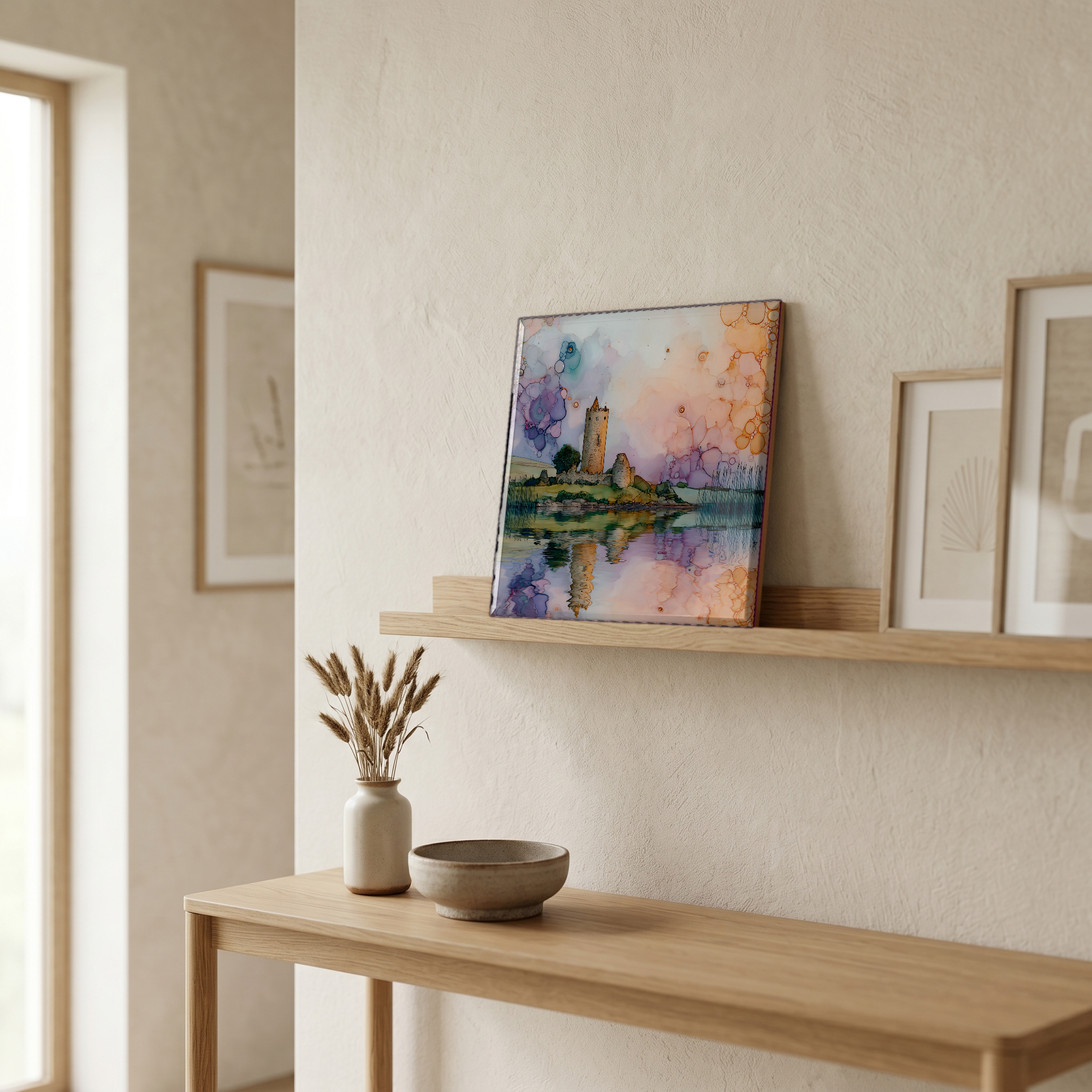
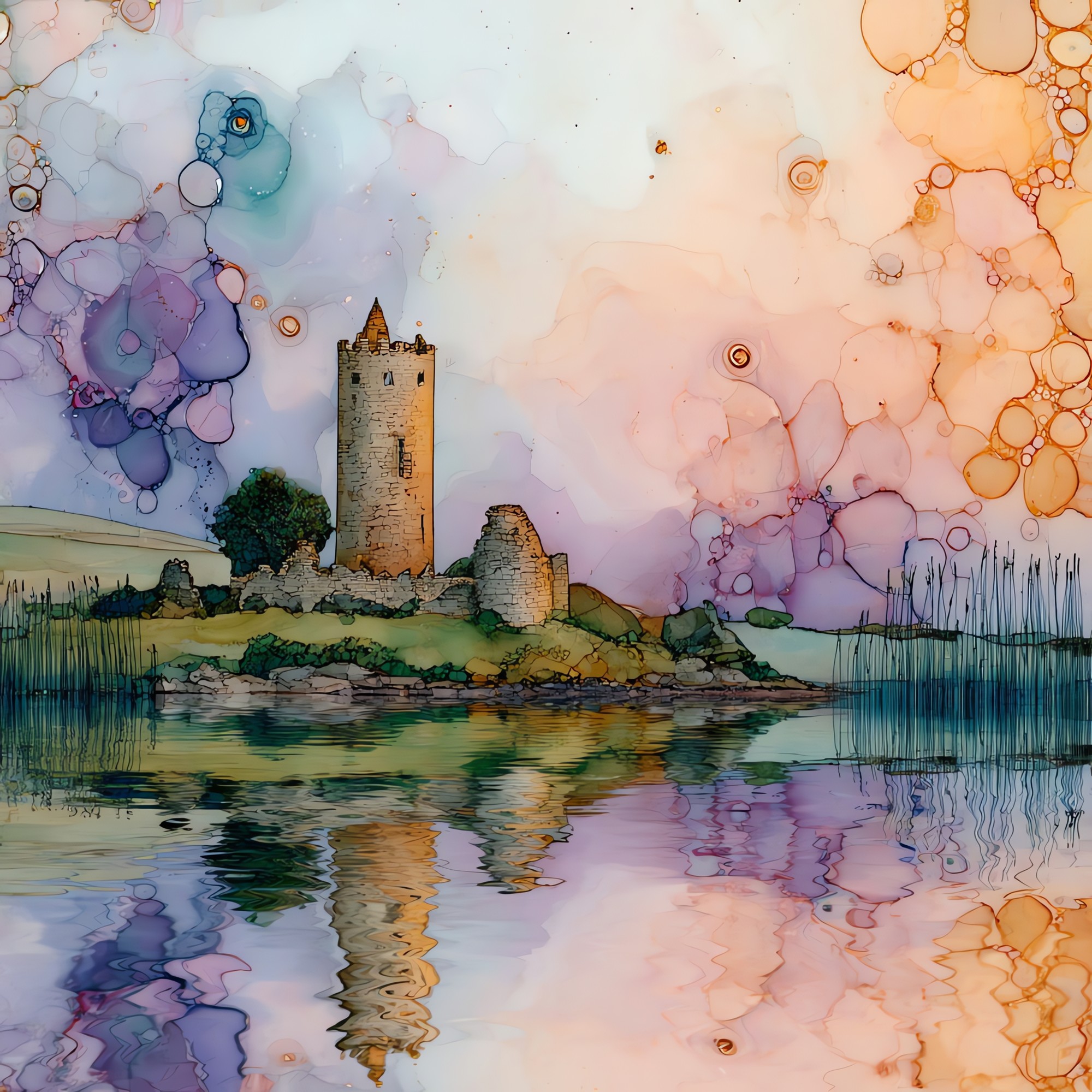
Lough Erne Devenish Island
shown on ceramic, 12-inch tileIreland
in Lower Lough Erne, north of Enniskillen

Lough Erne Devenish Island

— a round tower the lake didn't take back.

Where it lives

Not only on a wall.

A small tile on the nightstand catching the morning. A larger one above the fire. Yours, wherever you spend the slow hours.
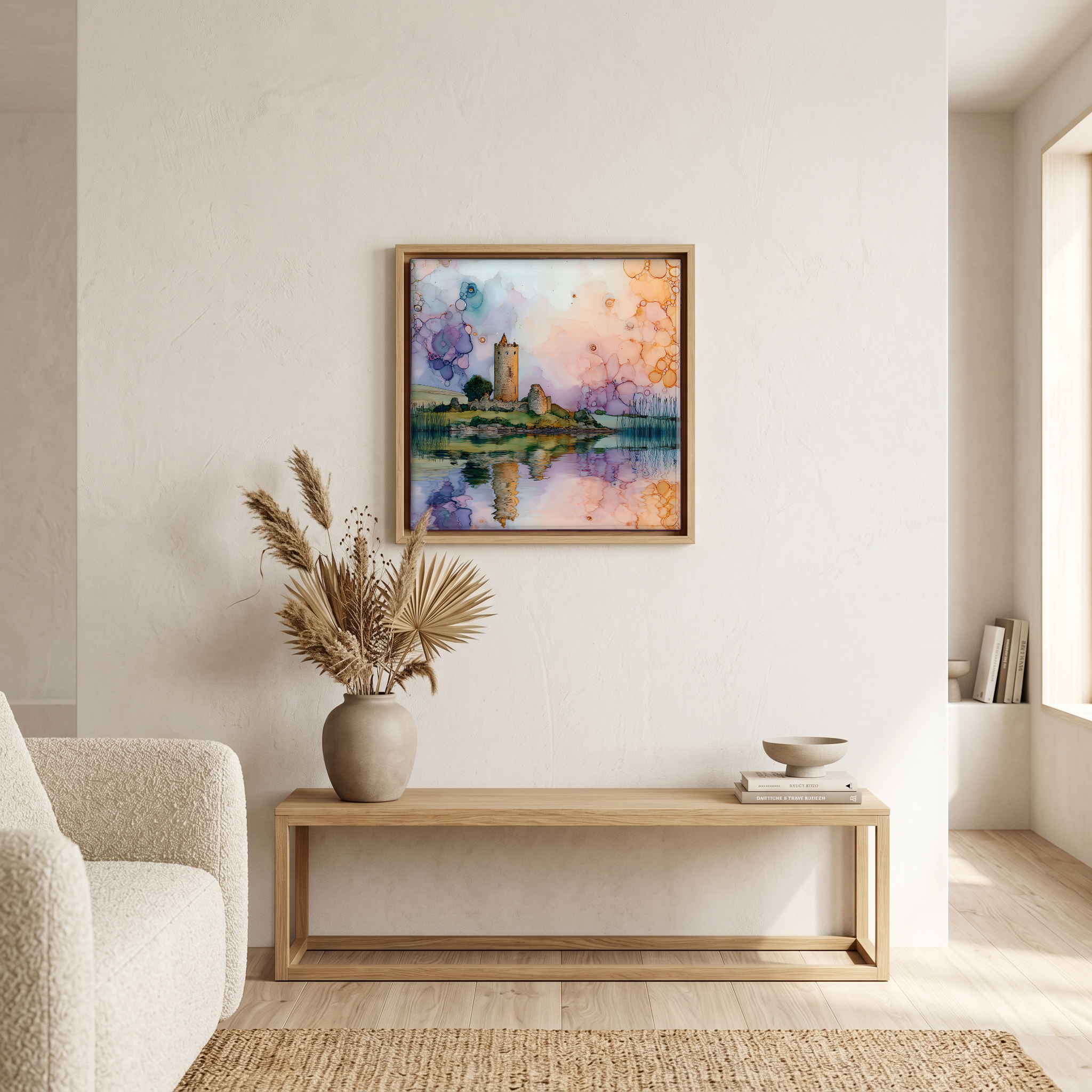
Above the bench, in a warm oak surround.
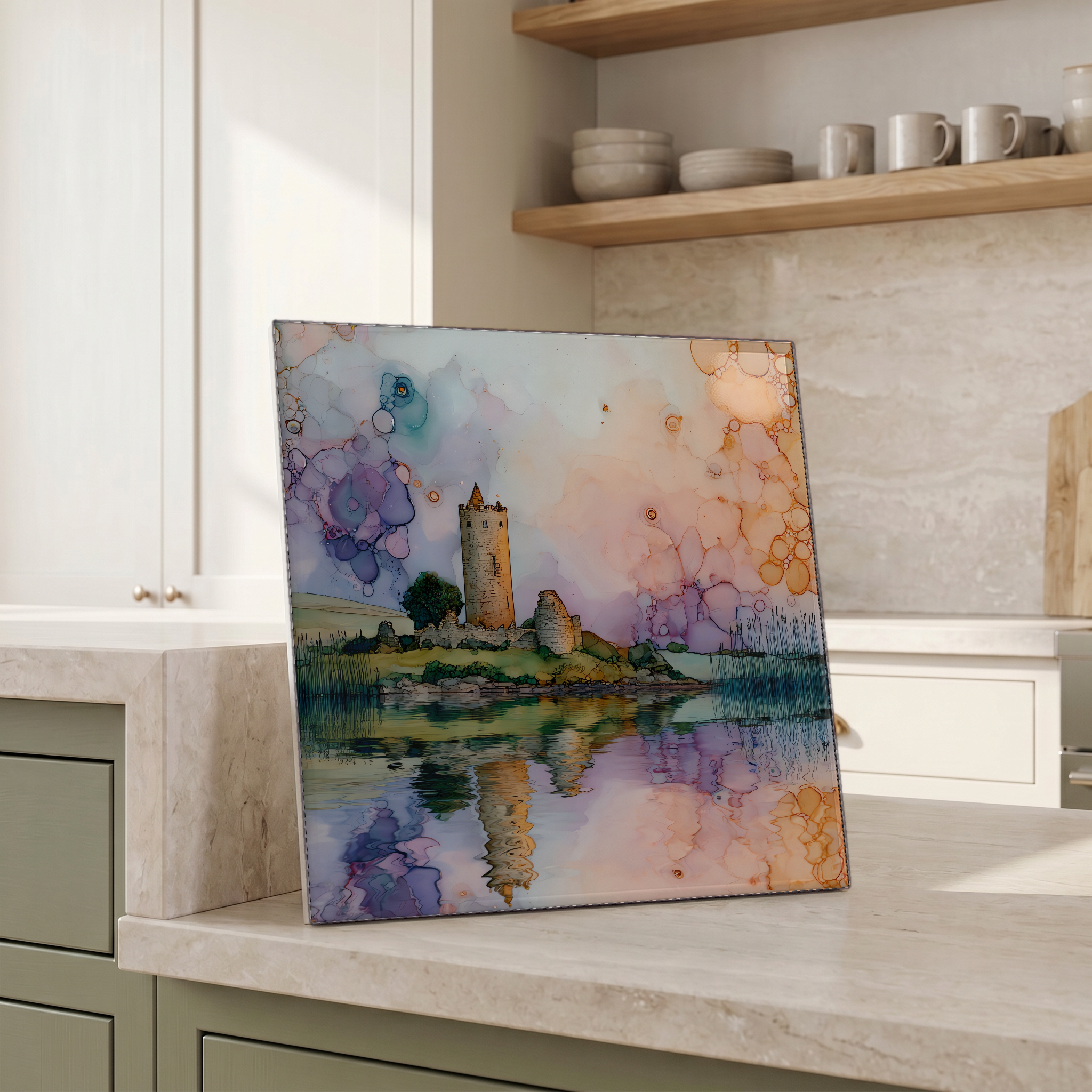
Beside the kettle, propped on the counter.
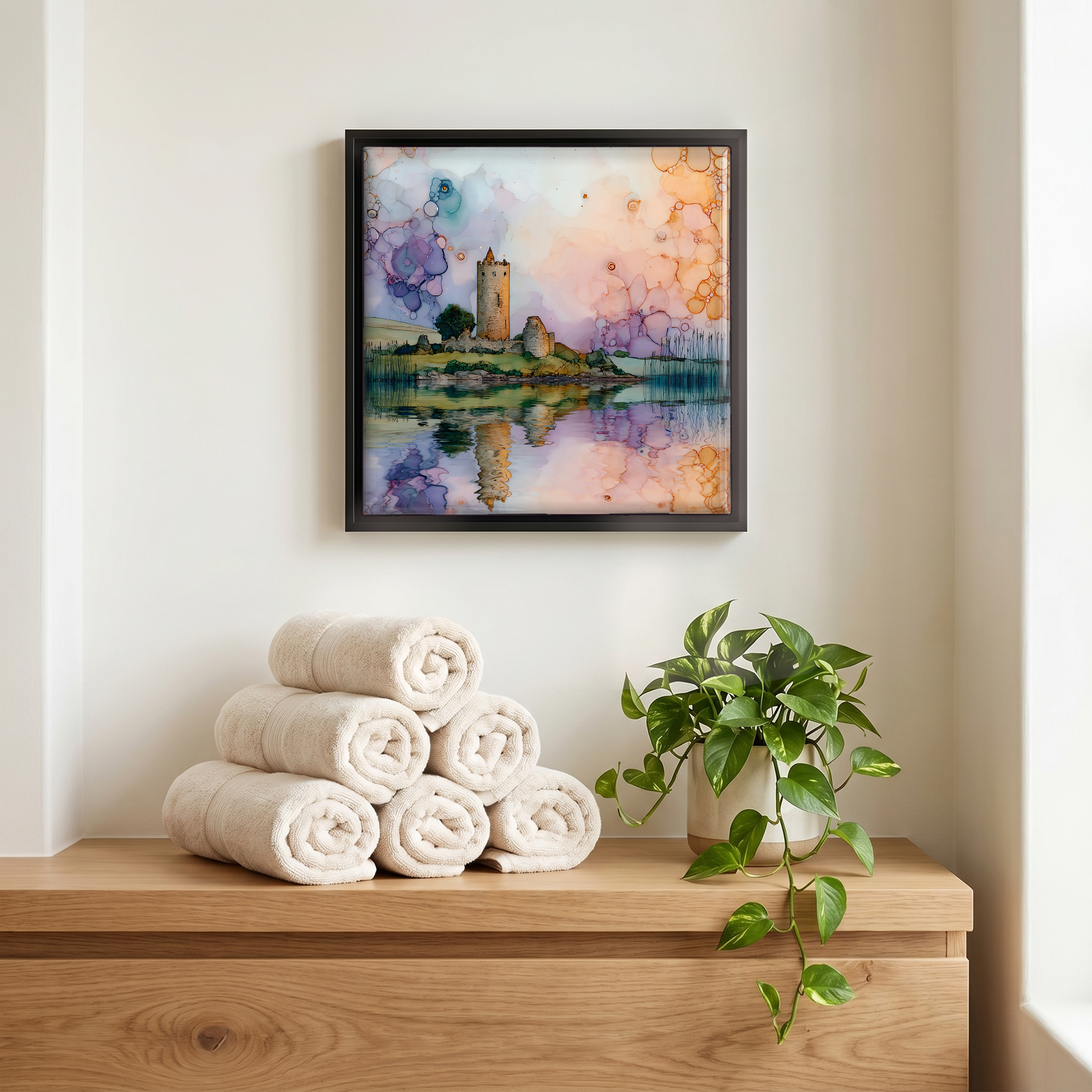
Above the linens, in a slim black surround.
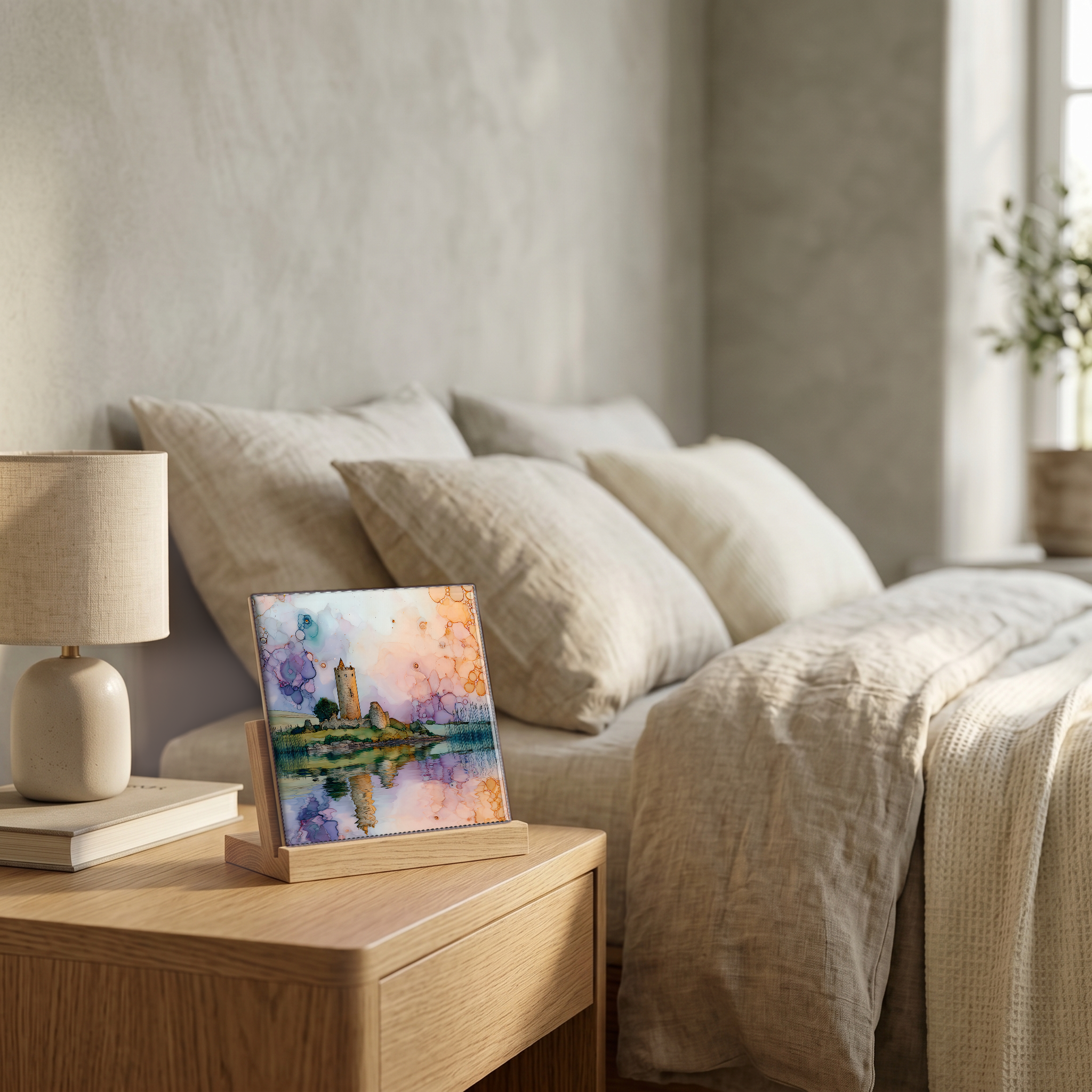
On the nightstand, on a light oak stand.
On a picture ledge, where the light comes in.
a note from the studio

A small green island in Lower Lough Erne, north of Enniskillen. The kind of place a saint chose in the sixth century because the water did the work of a wall. Saint Molaise founded the monastery around 540. The round tower came later, twelfth century, and is still standing, dressed stone with four small windows facing the cardinal directions. The ferry from Trory runs in summer. The crossing takes only a few minutes, and the wind tends to drop in the lee of the island. The round tower comes into view all at once.
from the studio
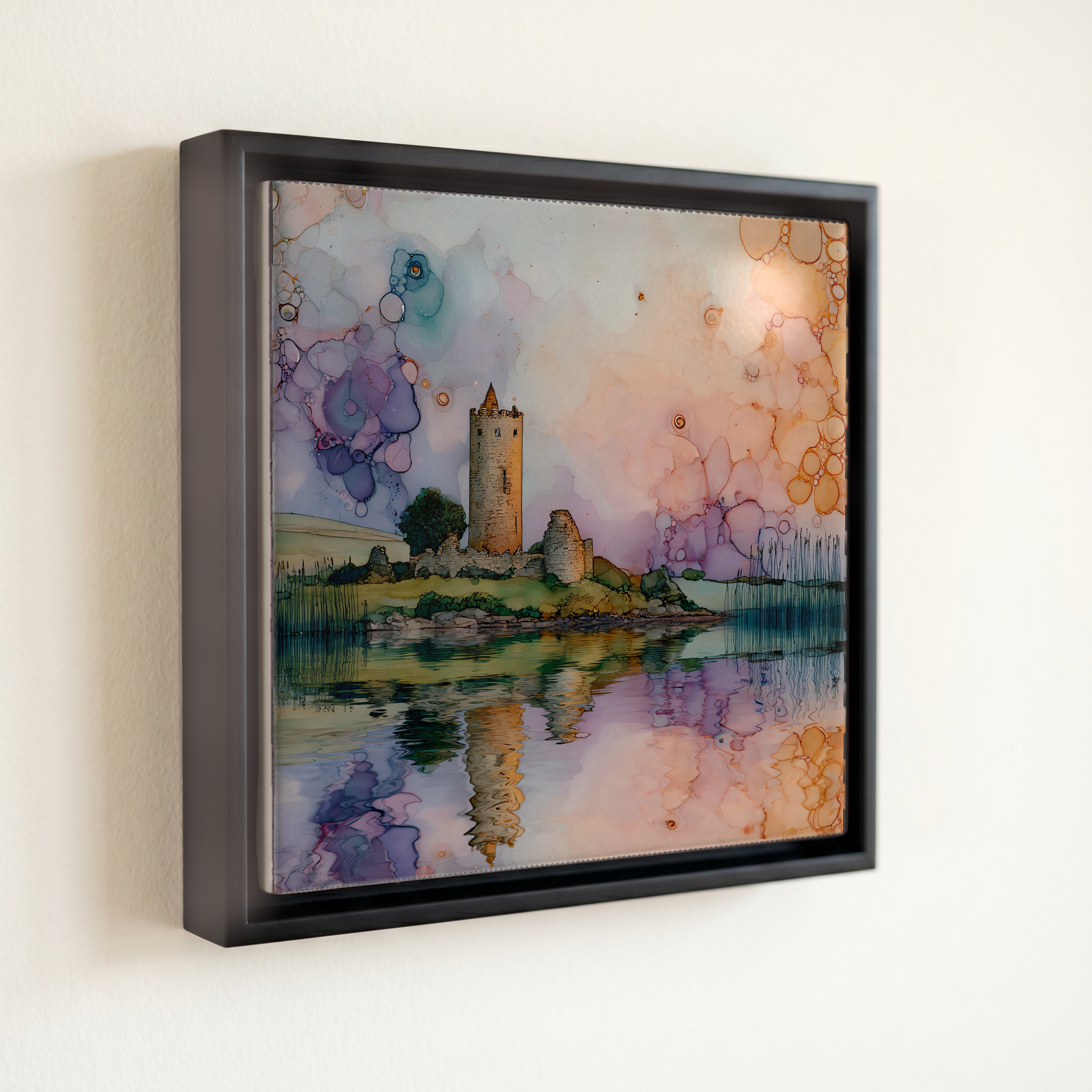
shown in a slim black floating frame · 6 × 6 in
— bring it home

Lough Erne Devenish Island, on ceramic.

Each tile is finished by hand in our Knoxville studio. Artwork is slowly infused into the ceramic surface under high heat and pressure, and rests beneath a thin glossy finish. The colour lives in the surface, not on top of it.

What kind of piece?
One tile — square or rectangle.
How big?
the popular one — counter, shelf, nightstand
6 × 6 in · 15 cm · 1.6 lb
Surface finish
A clear glossy finish — the artwork reads as if under resin. Ideal for show-pieces and framed wall art.
How it sits
A hidden cleat — sits ¼″ proud of the wall.
$58
Hand-finished and shipped from our studio at the foot of the Smokies. On your wall in about ten days.
size
6 × 6 in
15 cm
weighs
1.6 lb
solid in the hand
surface
ceramic, hand-finished
art rests beneath a thin glossy finish
from
Knoxville, TN
our family studio, at the foot of the Smokies
— start a Coaster Set

Pick any four 4-inch tiles — National Parks you've been to, a Smokies set, the four seasons of one place. $ for a set of , cork-backed, ready to live on the table.
comes gift-ready
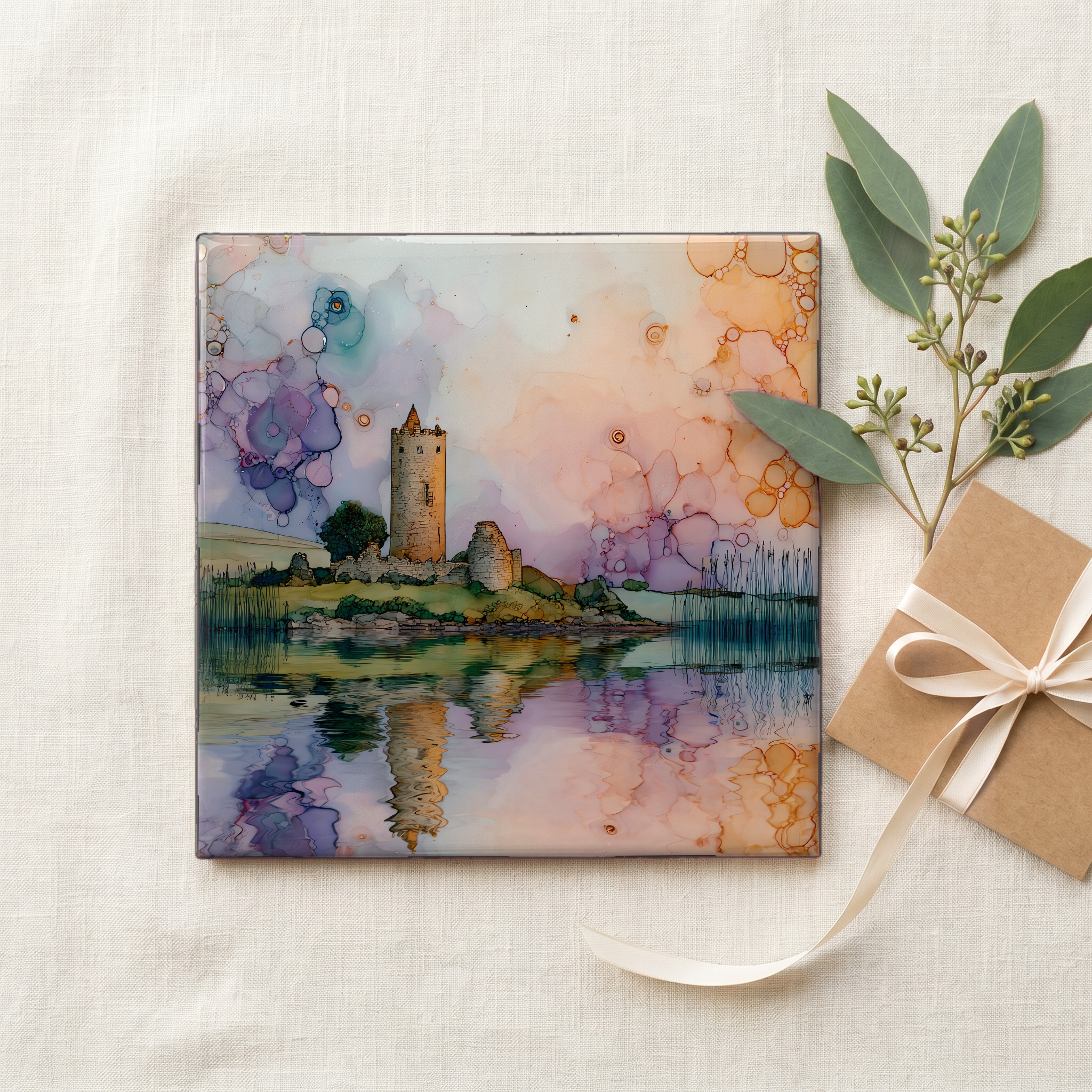
comes gift-ready

Each tile ships in a kraft box, tied with cream ribbon, with a handwritten note from the studio if you'd like to add one.
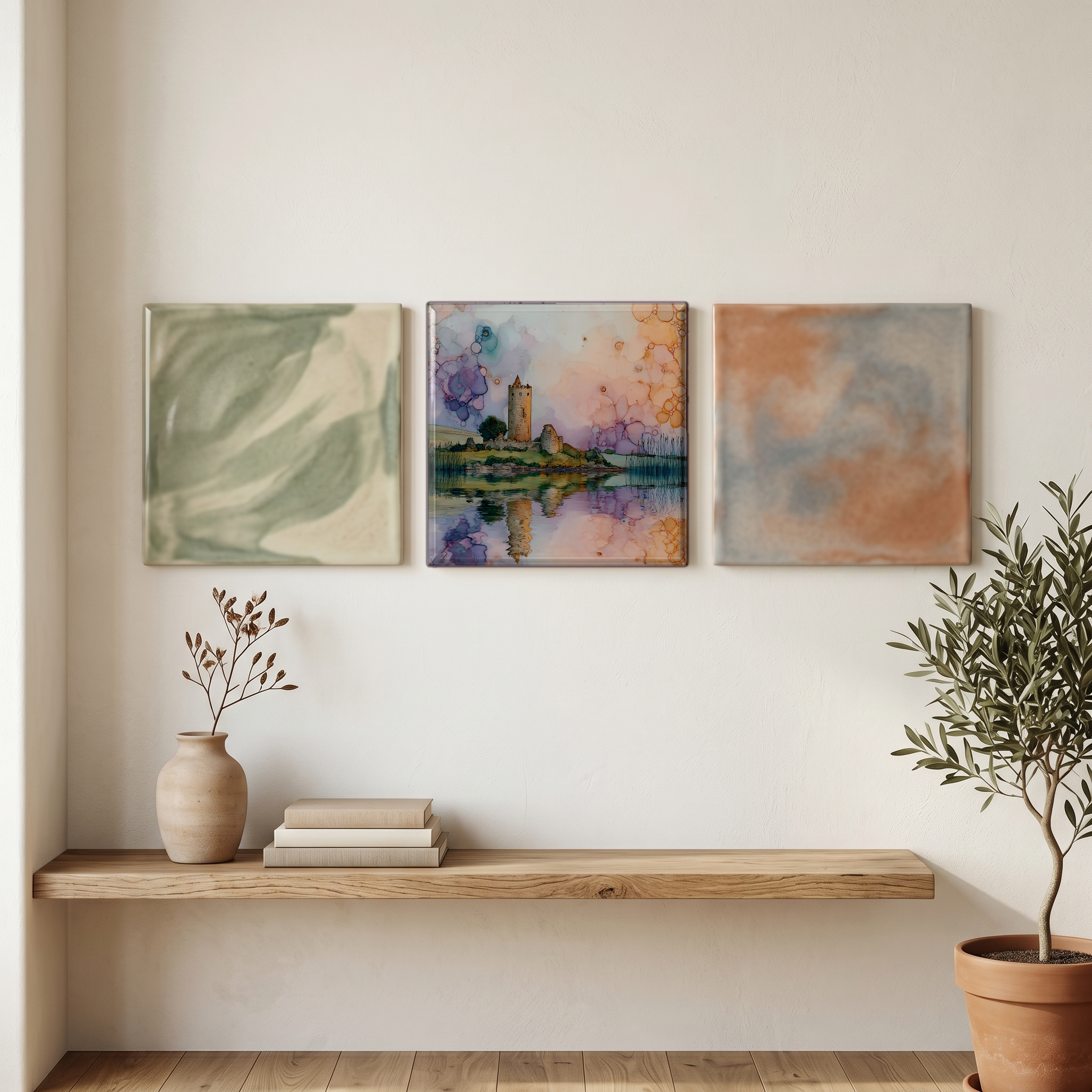
or build a grouping
or build a grouping

Three or five different vistas, hung together — a chapter of places you've been, or want to go.

about Lough Erne Devenish Island

The place, in three passes.

A little of what's known, in case you fall down the rabbit hole — or want to go see it yourself.
the place

Devenish Island sits in Lower Lough Erne, about three kilometres downstream of Enniskillen in County Fermanagh, Northern Ireland. Lower Lough Erne is the larger of the two lakes that make up the Erne system; together they cover roughly 300 square kilometres and drain into the Atlantic via Donegal Bay. The island itself is a low green pasture about a kilometre long, scattered with the ruins of a monastic settlement begun by Saint Molaise in the sixth century. The site is a State Care Monument managed by the Department for Communities of Northern Ireland, accessible by a small ferry from Trory jetty during the summer months.

the stone

The round tower is the survivor. Built in the twelfth century from finely dressed sandstone, it stands about twenty-five metres tall, with a conical cap and four small windows under the eaves facing the four points of the compass. The doorway is set well above ground, a feature common to Irish round towers and one of the reasons so many of them still stand. Beside the tower sit the ruins of St Mary's Augustinian Priory, raised in the fifteenth century, and the smaller Teampall Mór, the older Great Church. A fifteenth-century high cross stands in the graveyard, carved with the Crucifixion.

the visit

Access is by a small ferry that runs from Trory jetty, about four kilometres north of Enniskillen, between Easter and the end of September. The crossing takes a few minutes; the island is open daylight hours, with a small visitor centre near the landing. The site is in State Care and admission is free. The grass is uneven and the ground around the older ruins can be wet after rain, so sturdy footwear is sensible. The lake can turn quickly in westerly weather and the ferry occasionally pauses to wait it out.

where
United Kingdom · County Fermanagh, Northern Ireland
elevation
46 m · 151 ft
position
54.3820° N · 7.6540° W
the neighborhood

What's nearby.

A handful of named places within an hour's walk or short drive. Some we've already painted; some we will.
3 km S
Enniskillen Castle
castle and museum
4 km S
Castle Coole
Georgian estate
10 km NW
White Island
monastic island with carved figures
15 km NW
Boa Island
Janus figures and graveyard
N
Lough Erne Devenish Island
Enniskillen Castle
Castle Coole
White Island
Boa Island
common questions

What people ask.

A few questions we get about Lough Erne Devenish Island — and about bringing the piece home.
about the place

Devenish Island lies in Lower Lough Erne, about three kilometres downstream of Enniskillen in County Fermanagh, Northern Ireland. It is one of more than one hundred and fifty islands in Lower Lough Erne and is reached by ferry from Trory jetty, four kilometres north of the town.

Saint Molaise of Devenish, an early Irish abbot also recorded as Laisrén mac Nad Froích, founded the monastic community on the island in the sixth century around 540. The smaller oratory on the site, called St Molaise's House, is associated with him, and his feast day is the twelfth of September.

The round tower was built in the twelfth century, about six hundred years after the monastery was founded. It is one of the finest preserved round towers in Ireland, standing roughly twenty-five metres tall and capped with a conical stone roof.

A small passenger ferry crosses to Devenish from Trory jetty, about four kilometres north of Enniskillen on the A32. The ferry operates from Easter through the end of September. The crossing takes only a few minutes across Lower Lough Erne.

Devenish is a State Care Monument managed by the Department for Communities of Northern Ireland, and admission to the site is free. There is a small visitor centre near the landing with information on the monastery and the ferry schedule.

Five main structures survive: the twelfth-century round tower, the small oratory called St Molaise's House, Teampall Mór or the Great Church, the fifteenth-century St Mary's Augustinian Priory, and a fifteenth-century high cross carved with the Crucifixion in the graveyard.

The monastery was founded in the sixth century, traditionally around 540, by Saint Molaise. It remained an active religious community for nearly a thousand years, with successive building campaigns adding the round tower in the twelfth century and the Augustinian priory in the fifteenth.

about the piece in your home

Yes, often. Lough Erne and Devenish are central to the cultural memory of County Fermanagh, the kind of place a family there will have visited on school trips and Sunday drives for generations. A Small or Medium tile with a handwritten note from the studio carries well.

The deep greens, slate blues, and warm stone tones sit comfortably in three styles: Celtic Traditional with dark wood and woven wool; Old World Library with leather, brass, and bound books; and Pastoral Modern, where one strong painting anchors a quiet room.

It is. Celtic Heritage interiors have been quietly building since around 2022, anchored on Donegal tweeds, stone-cut hearths, and a single piece of place art over the mantle. A Large tile of Devenish reads as both rooted and elevated in that setting.

A single Large tile suits a console or a small sofa. Above a full-length sofa, a 4-tile Mural reads in scale; over a long sectional, a 9-tile Mural fills the wall without crowding it. Hang the centre of the work at eye level.

Yes. For damp rooms and kitchens, order the Dura Satin or Matte finish rather than the Glossy. Both are scratch-resistant and stand up to steam and splashes. The colour is slowly infused into the ceramic surface under high heat and pressure, so it does not fade with cleaning.

A soft microfibre cloth with water is enough for everyday dust. For kitchen splashes on a Dura Satin or Matte finish, a damp cloth with a little dish soap is fine. Avoid abrasive pads and bleach-based cleaners, which can dull the surface over time.

Yes. Every WenderVista piece is original work by Reid Wender, the curator of the studio. The art is painted, finished, and shipped from a single family studio at the foot of the Smoky Mountains in Knoxville, Tennessee. No licensing, no third-party prints.

if this one stayed with you

A few you might also love.

Hand-picked by the eye that found Sorapis. Same air, same kind of quiet.