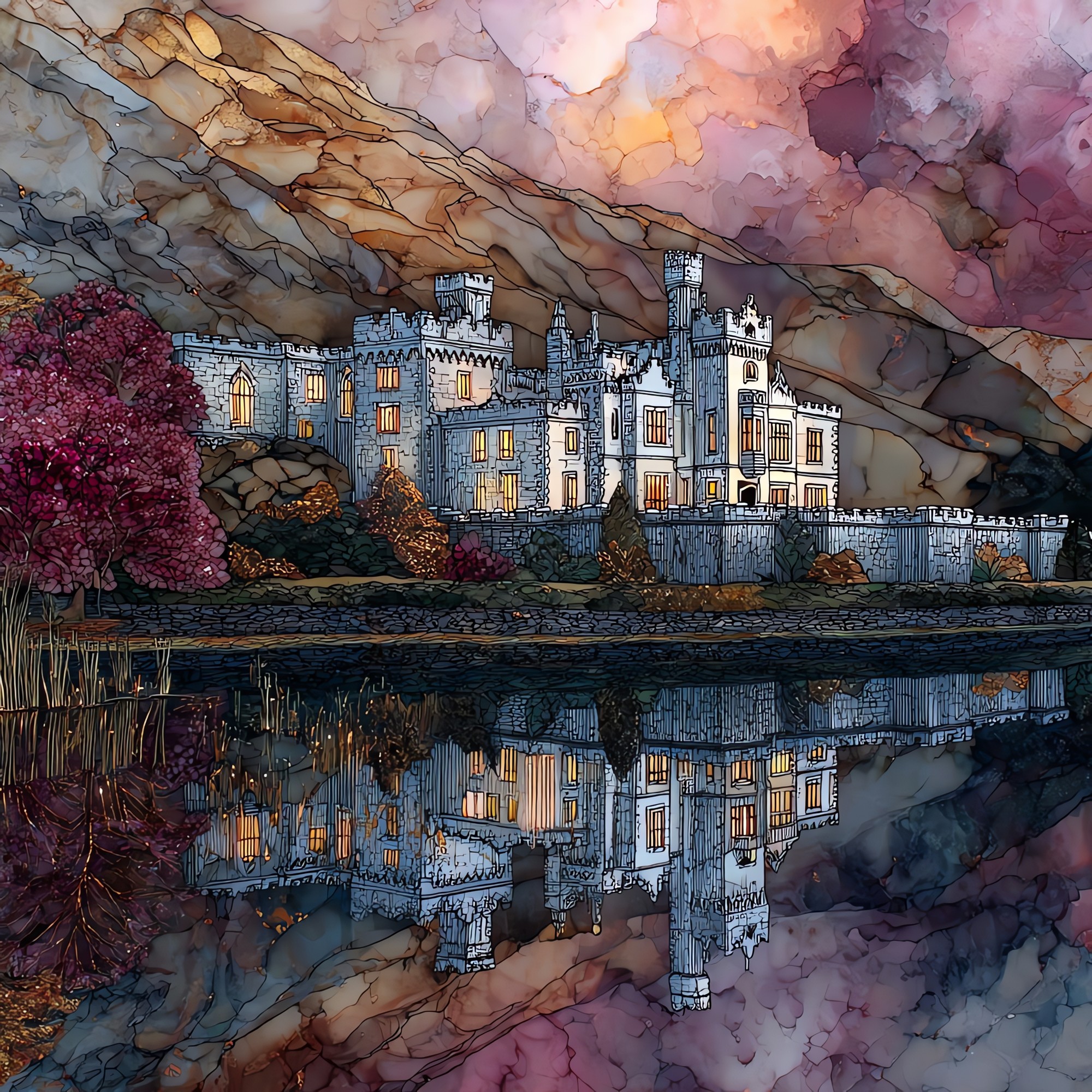
Kylemore Abbey
— the granite the lake remembers.
Not only on a wall.
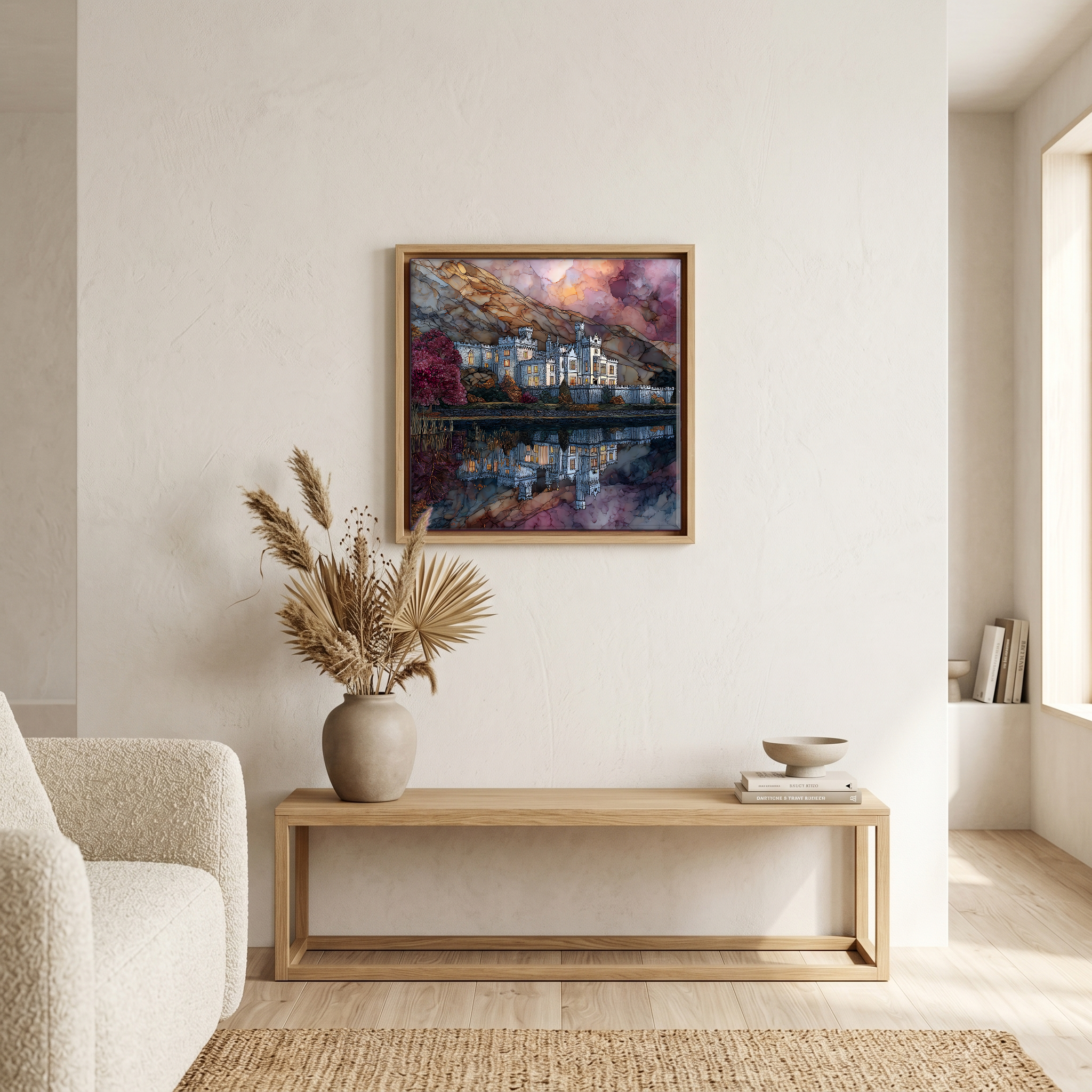
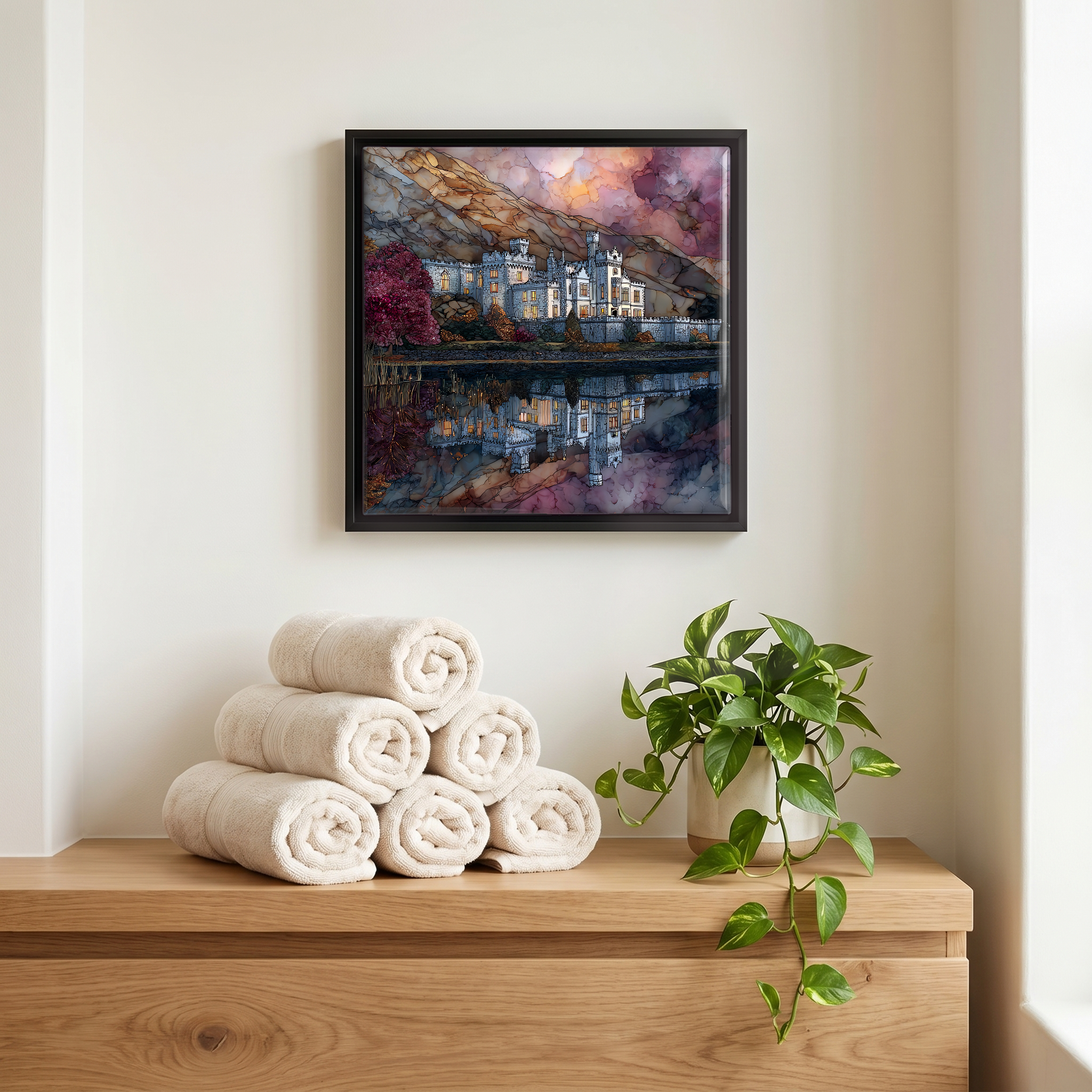
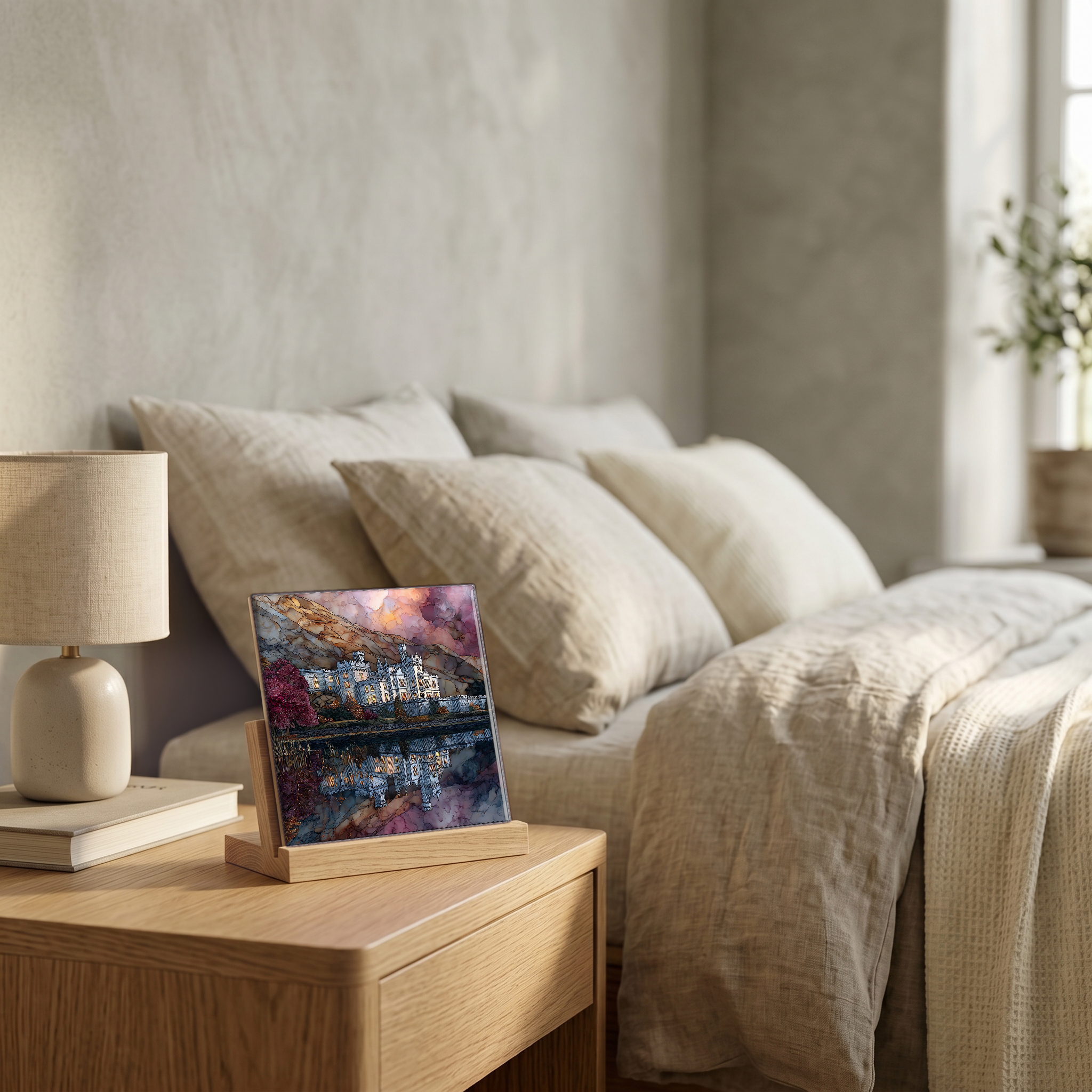
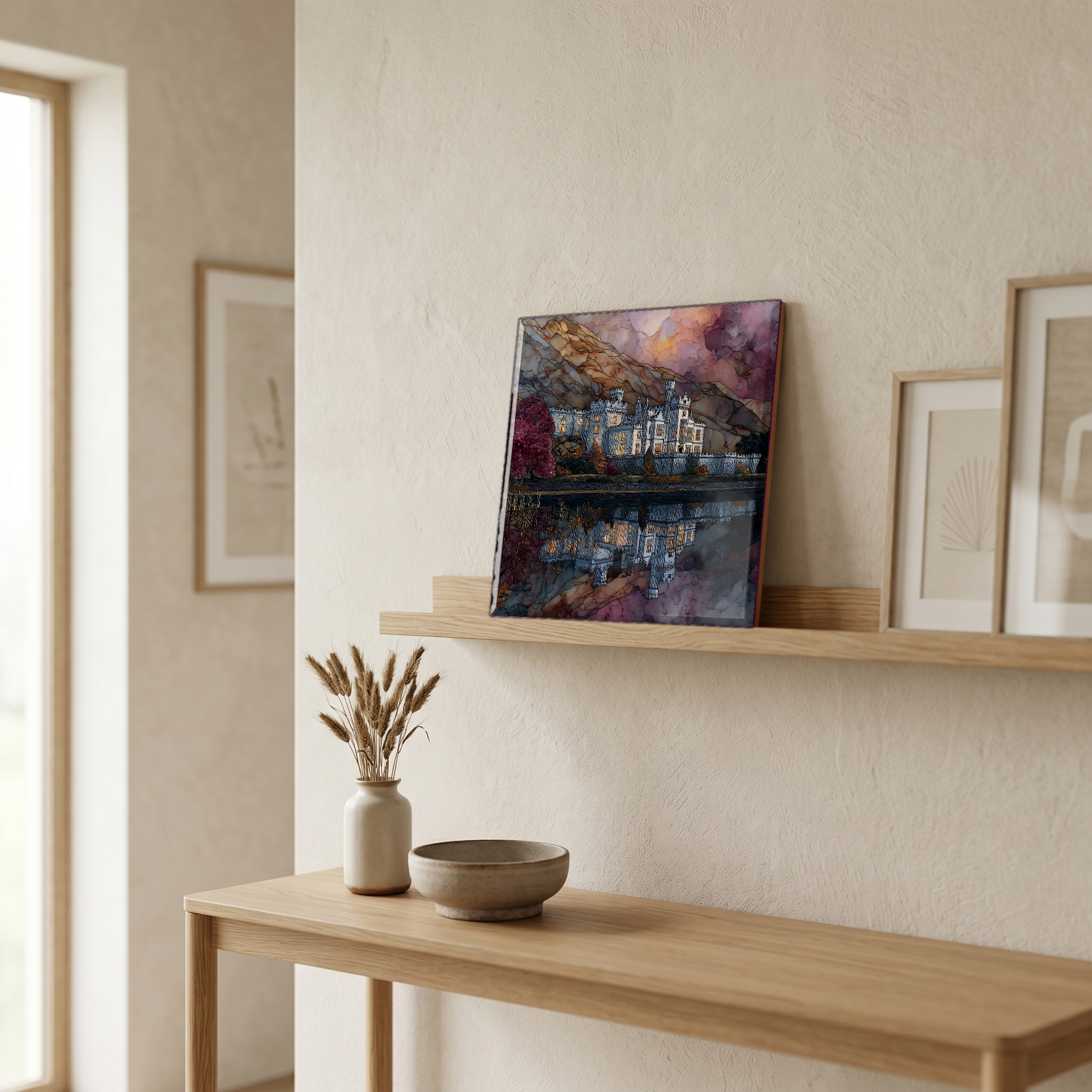
“A neo-Gothic granite mansion on the north shore of Pollacapall Lough, built in the 1860s and given a second life in 1920 when Benedictine nuns from Ypres came to live in it. Connemara weather changes hourly. On the still mornings the lake does the rest of the work, the whole façade laid down again, perfect, until the wind comes up. People come for the abbey and stay an hour longer than they meant to in the walled garden. The nuns still make chocolate.
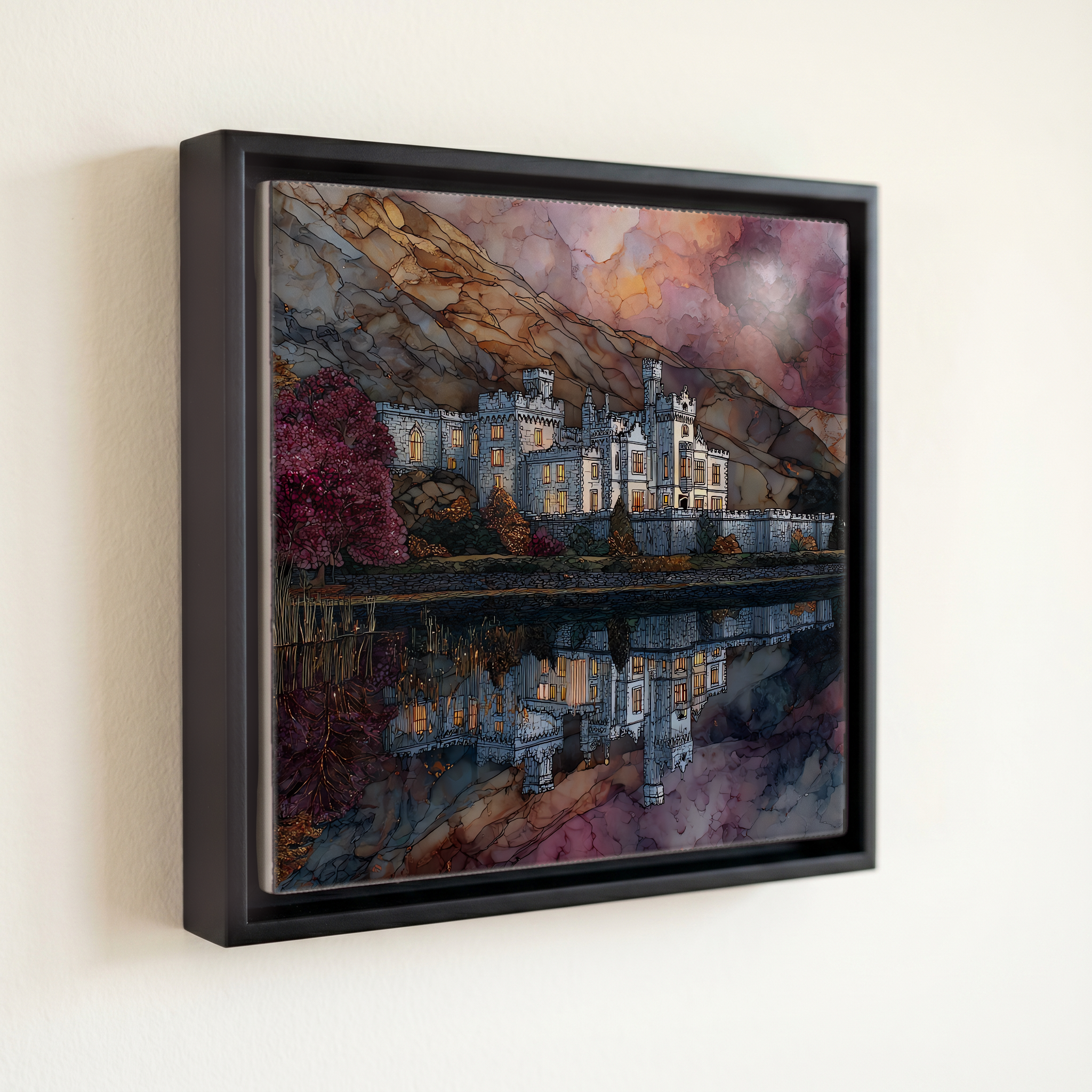
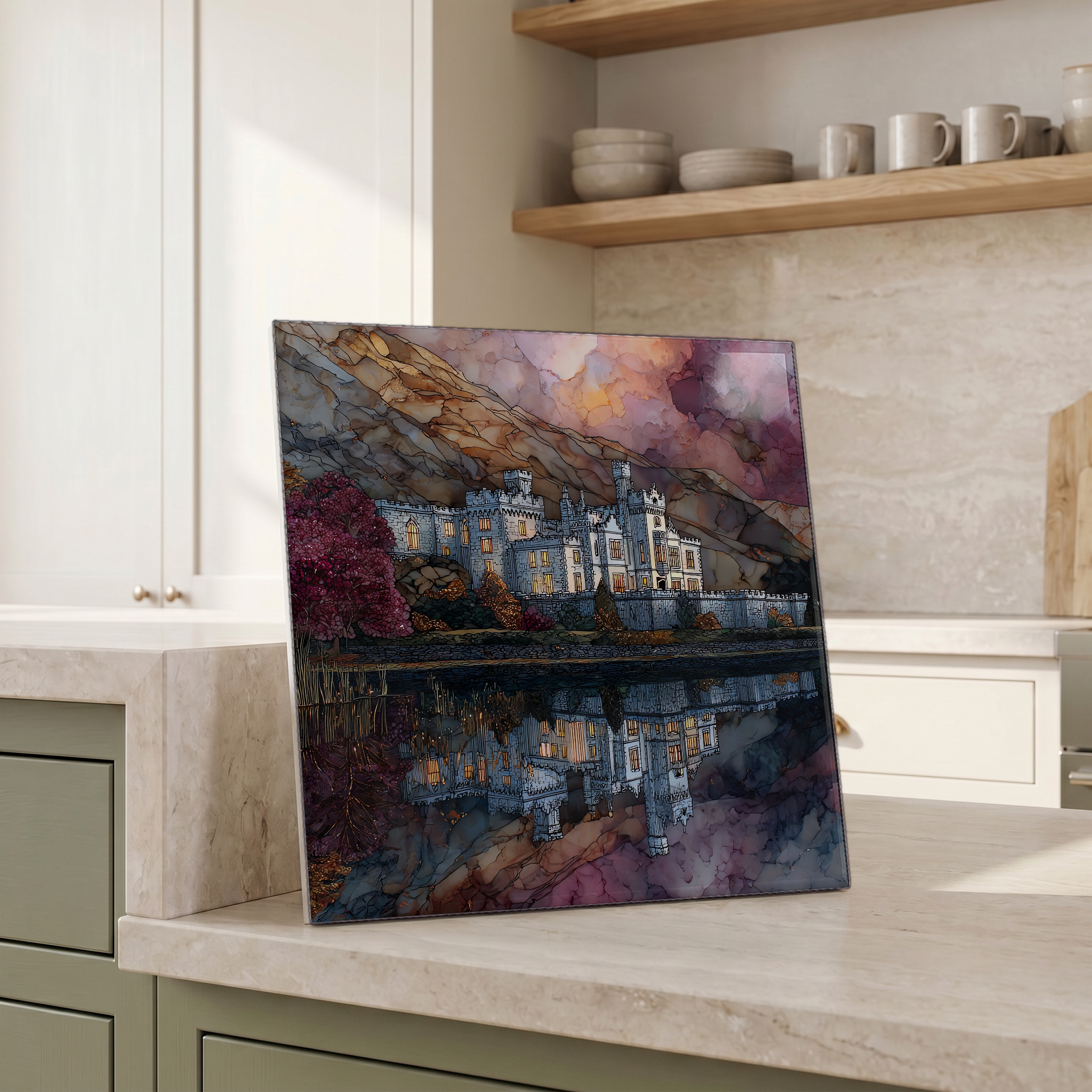
Kylemore Abbey, on ceramic.
Each tile is finished by hand in our Knoxville studio. Artwork is slowly infused into the ceramic surface under high heat and pressure, and rests beneath a thin glossy finish. The colour lives in the surface, not on top of it.
Pick any four 4-inch tiles — National Parks you've been to, a Smokies set, the four seasons of one place. $ for a set of , cork-backed, ready to live on the table.
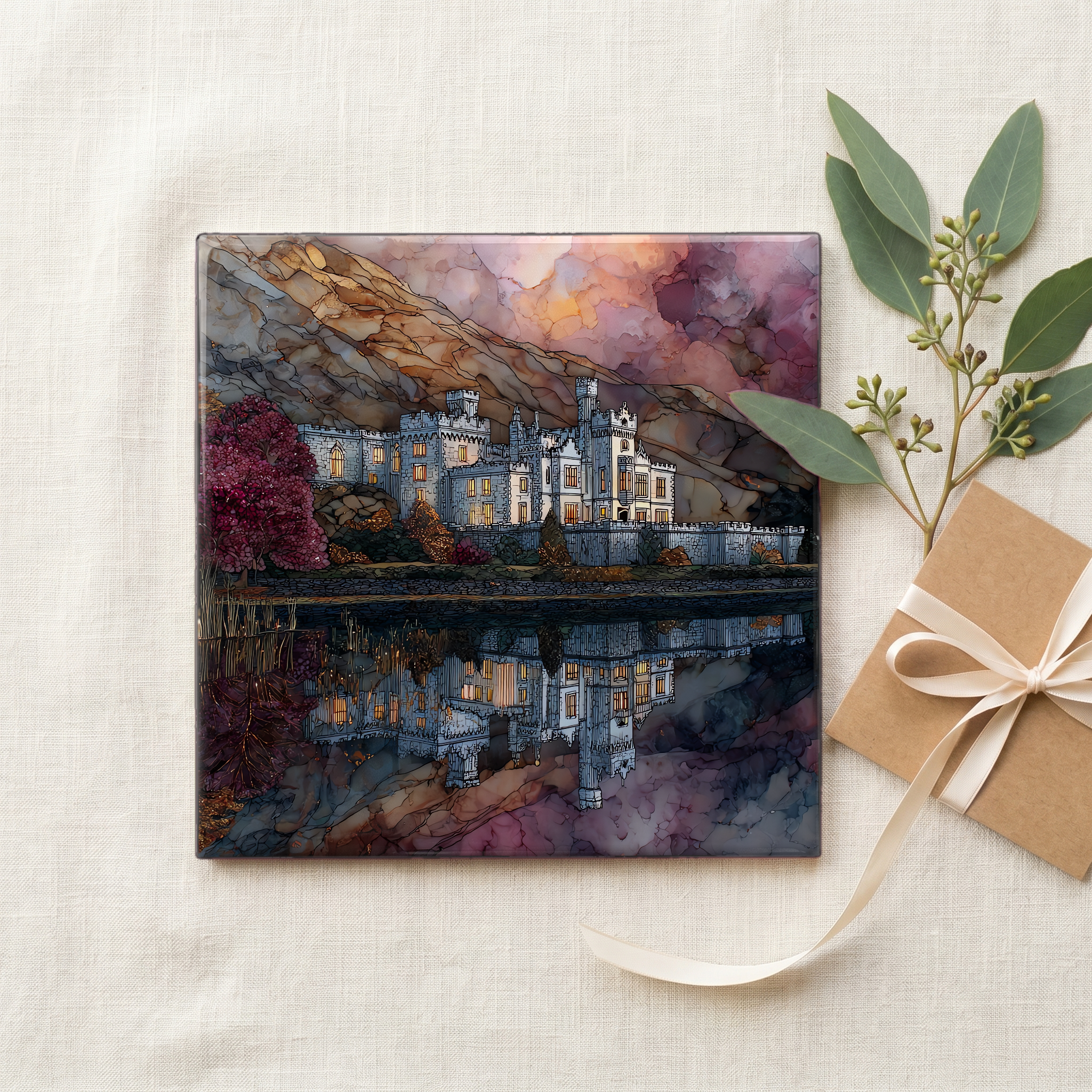
Each tile ships in a kraft box, tied with cream ribbon, with a handwritten note from the studio if you'd like to add one.
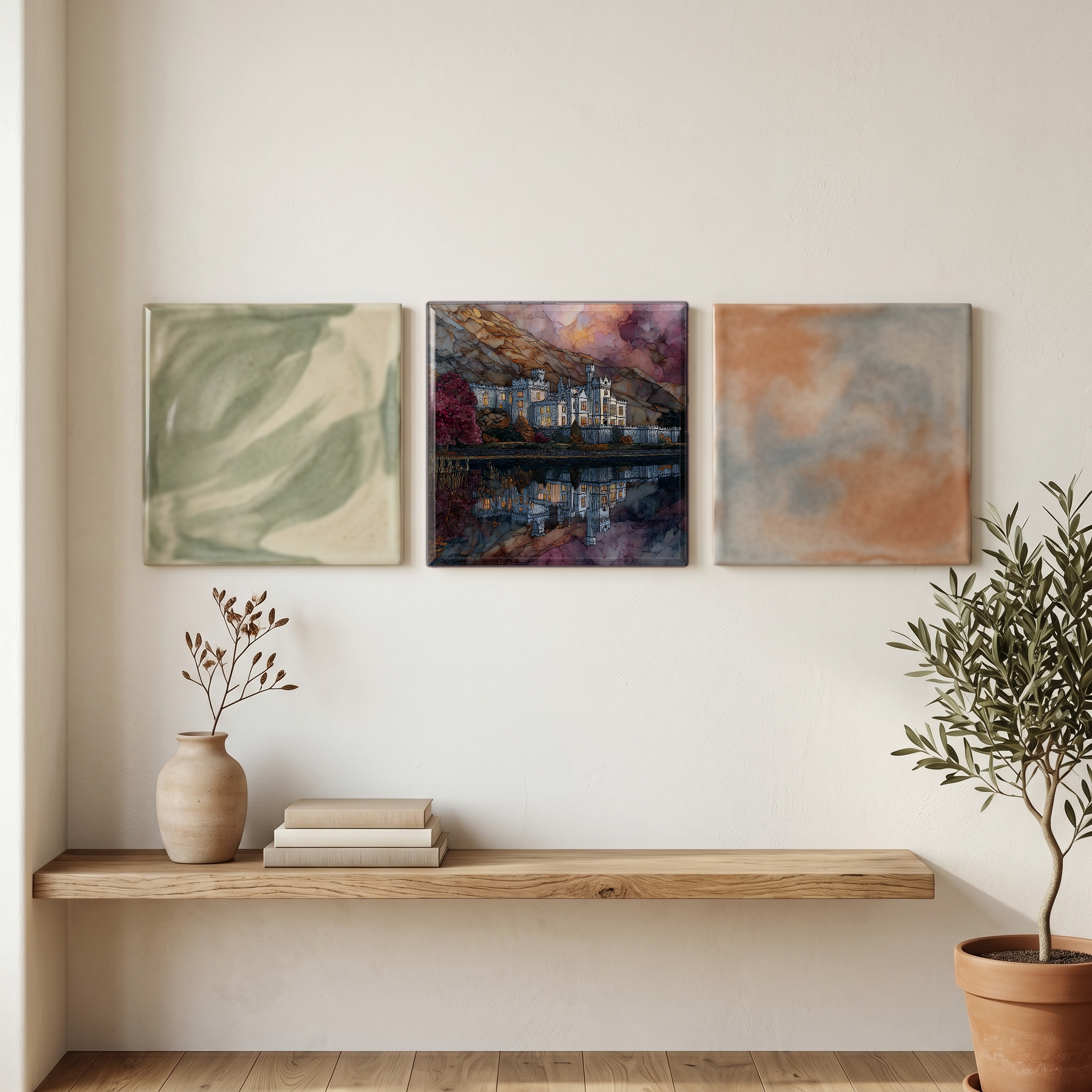
Three or five different vistas, hung together — a chapter of places you've been, or want to go.
The place, in three passes.
Kylemore Abbey stands on the north shore of Pollacapall Lough in Connemara, in the west of County Galway, about 80 kilometres north-west of Galway city by the N59. The neo-Gothic granite house was built between 1867 and 1871 for Mitchell Henry, a Manchester surgeon and later Liberal MP for Galway, as a home for his wife Margaret. After Margaret's early death in 1875, Henry commissioned a miniature Gothic church a few hundred yards along the shore in her memory. In 1920 a community of Benedictine nuns from Ypres, displaced by the First World War, bought the estate and have been here ever since.
The mansion is faced in cut granite with limestone trim, originally containing thirty-three bedrooms, four sitting rooms, a ballroom, a library, and a billiard room running across its lakefront face. The Gothic Church, finished in 1881 by the Irish architect James Franklin Fuller to Mitchell Henry's commission, sits a short walk west along the shore. It is sometimes described as a cathedral in miniature, with marble shafts inside cut from each of Ireland's four provinces (Connemara green, Cork red, Armagh red, and Kilkenny black) and a richly carved Gothic Revival interior. The whole estate was a Manchester surgeon's gift to his wife, and a memorial after her death.
Pollacapall Lough sits in a valley between Druchruach Mountain rising behind the abbey and the Twelve Bens range further south, fed by short streams off the surrounding Connemara peatland. The lake is shallow and peat-stained, only a few metres at its deepest, which on calm mornings makes it a near-perfect mirror. The Atlantic reaches Killary Harbour about fifteen kilometres north, depressions track in fast off the ocean, and the still hour comes most often just after sunrise before the wind comes up. The reflection most photographers come for can be gone by ten.