Wender·Vista
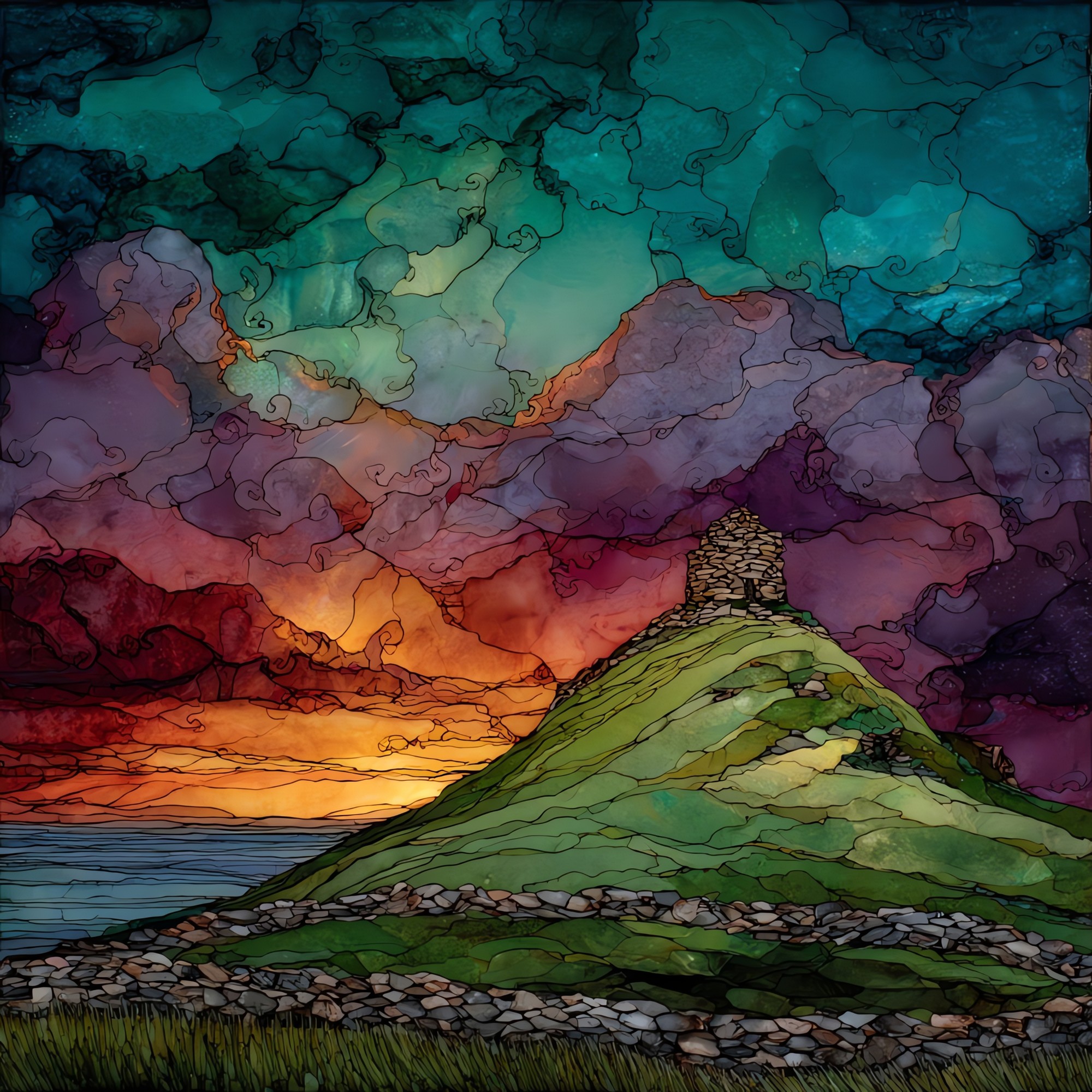
Knocknarea
shown on ceramic, 12-inch tileIreland
above Sligo Bay, in the northwest of Ireland

Knocknarea

the cairn the centuries keep adding to.

Where it lives

Not only on a wall.

A small tile on the nightstand catching the morning. A larger one above the fire. Yours, wherever you spend the slow hours.
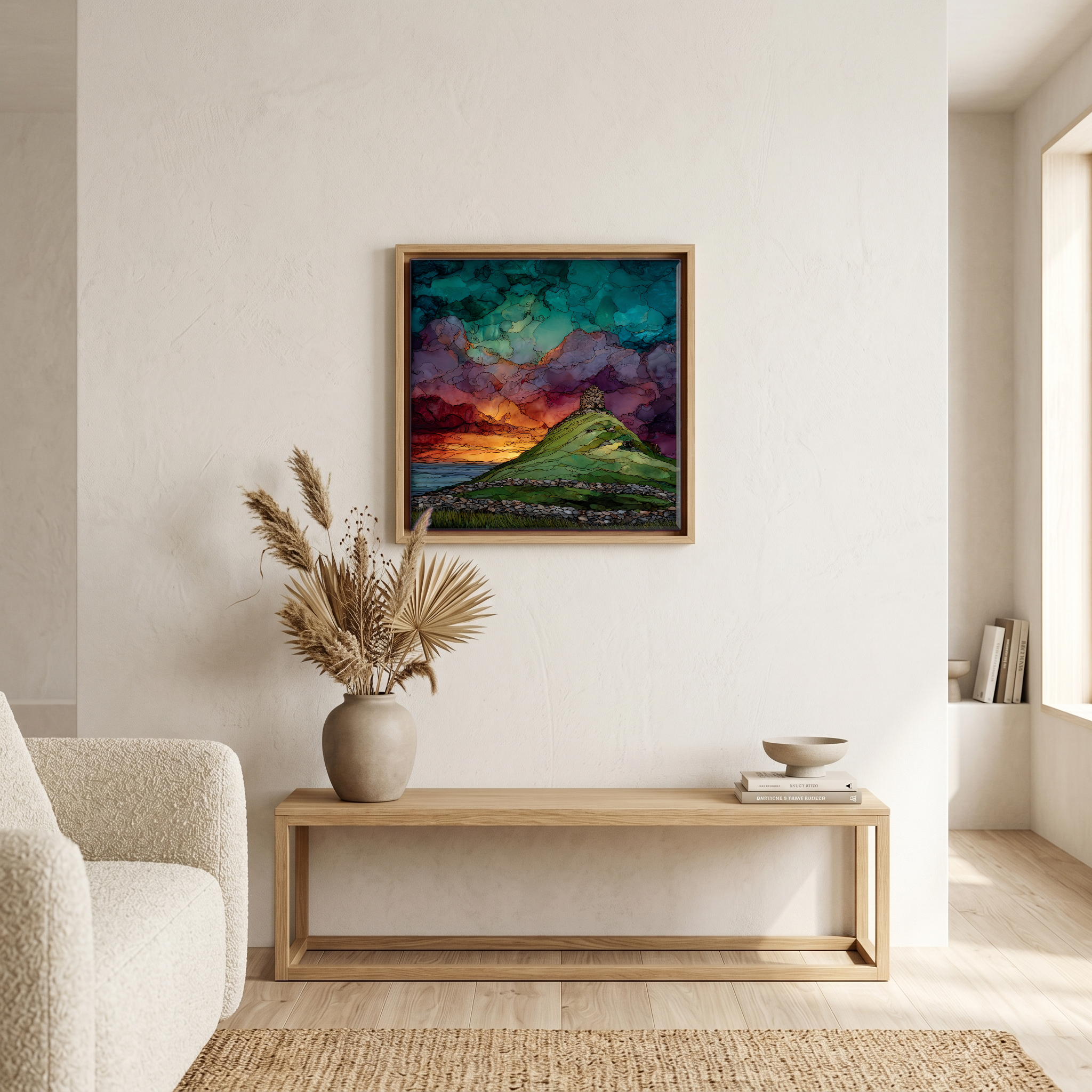
Above the bench, in a warm oak surround.
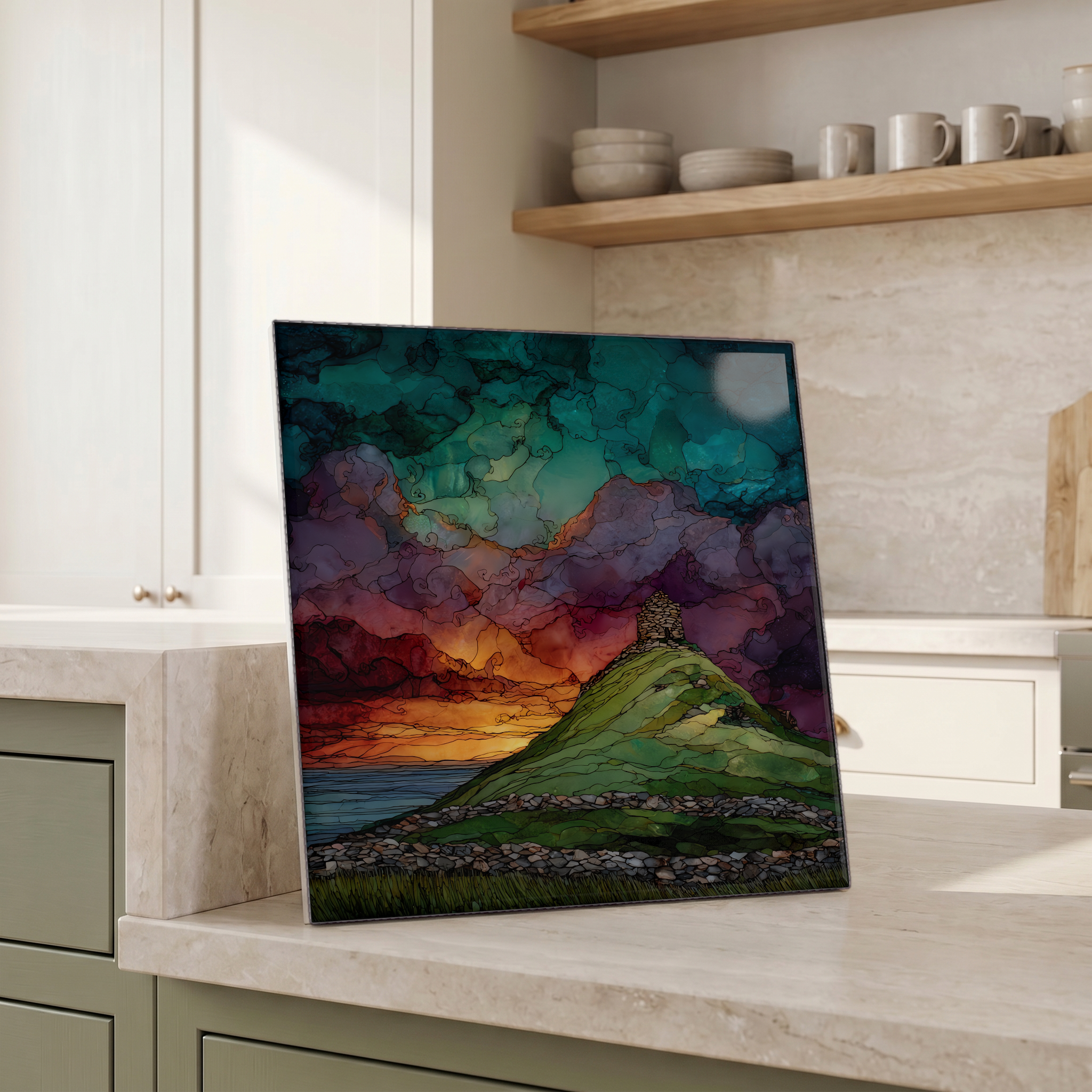
Beside the kettle, propped on the counter.
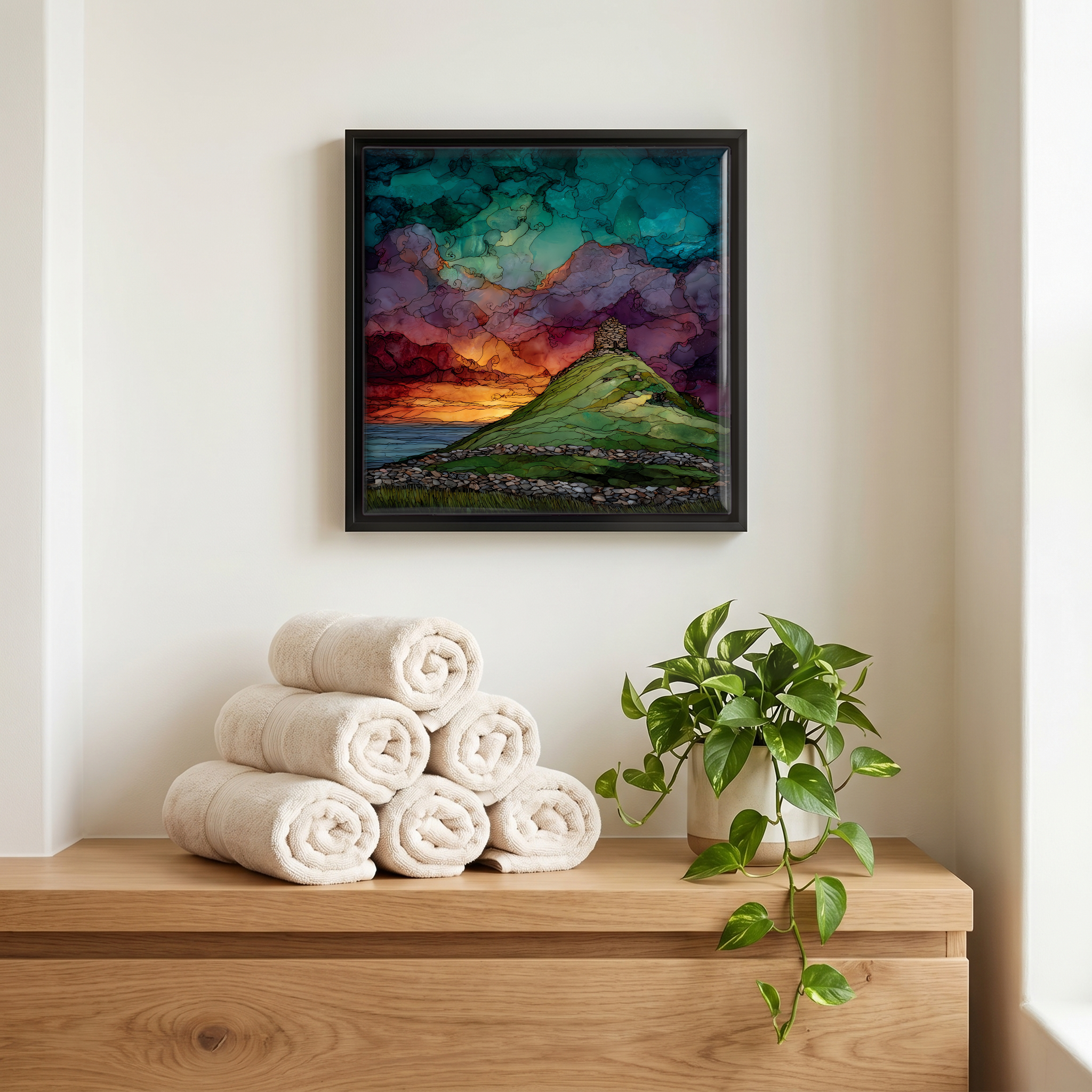
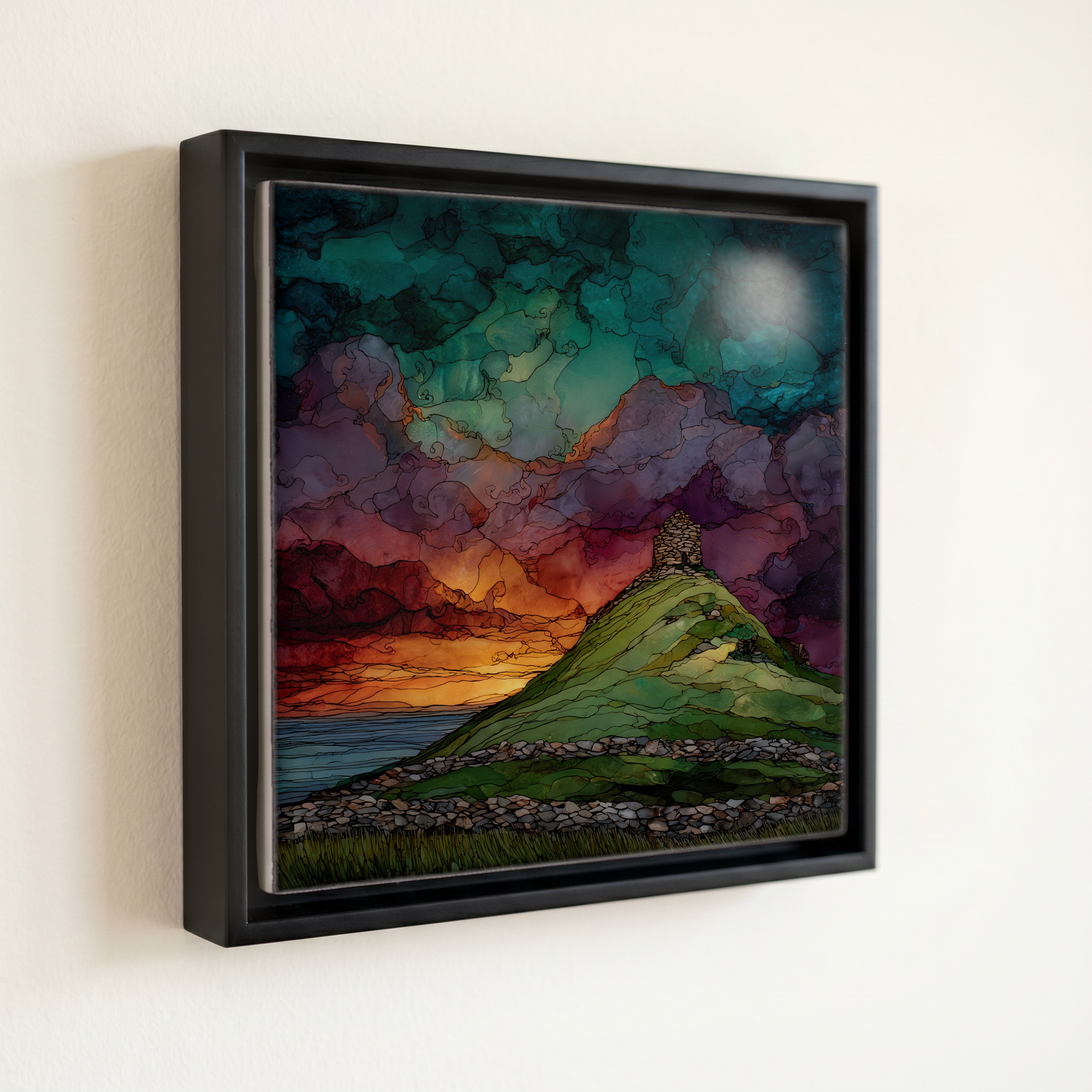
Above the linens, in a slim black surround.
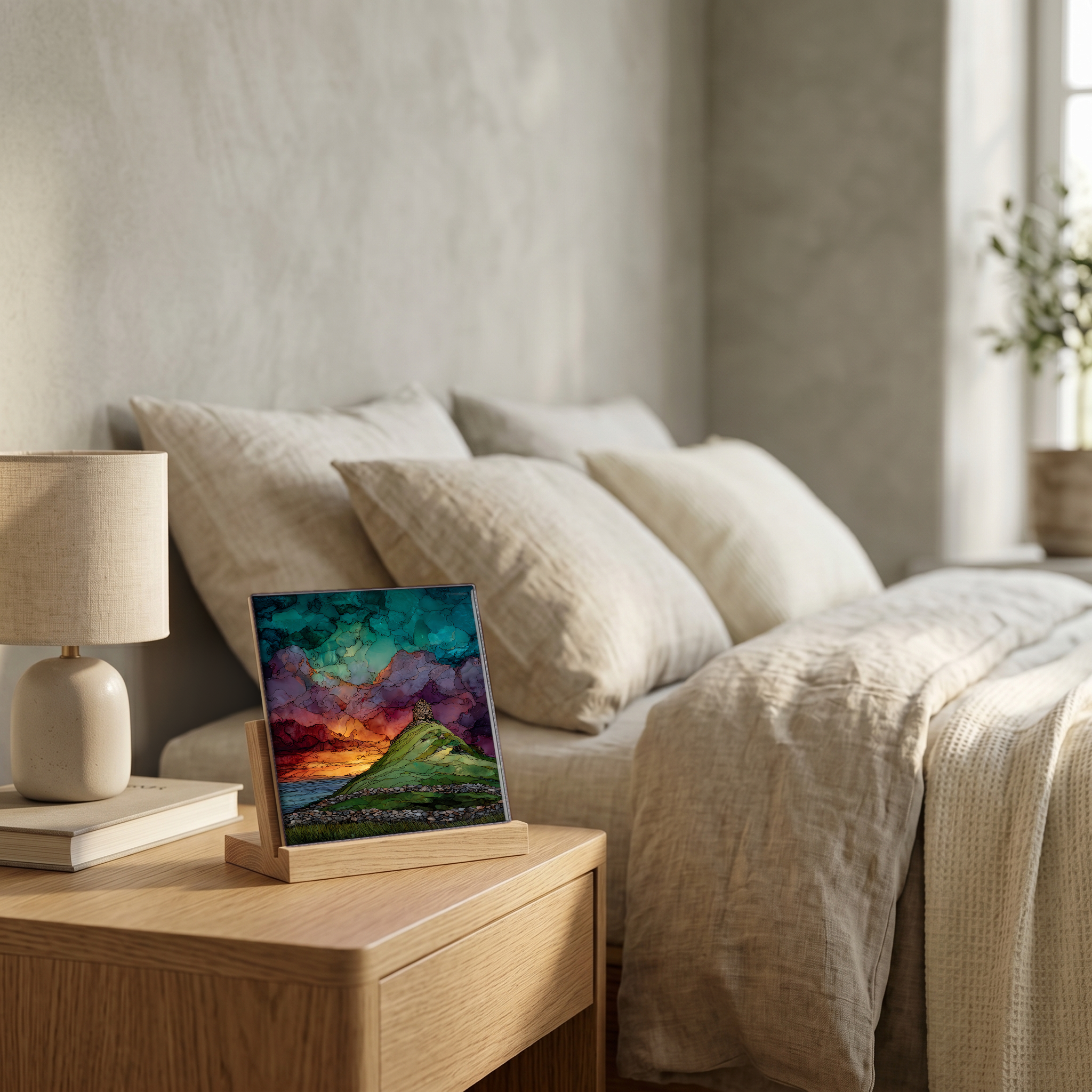
On the nightstand, on a light oak stand.
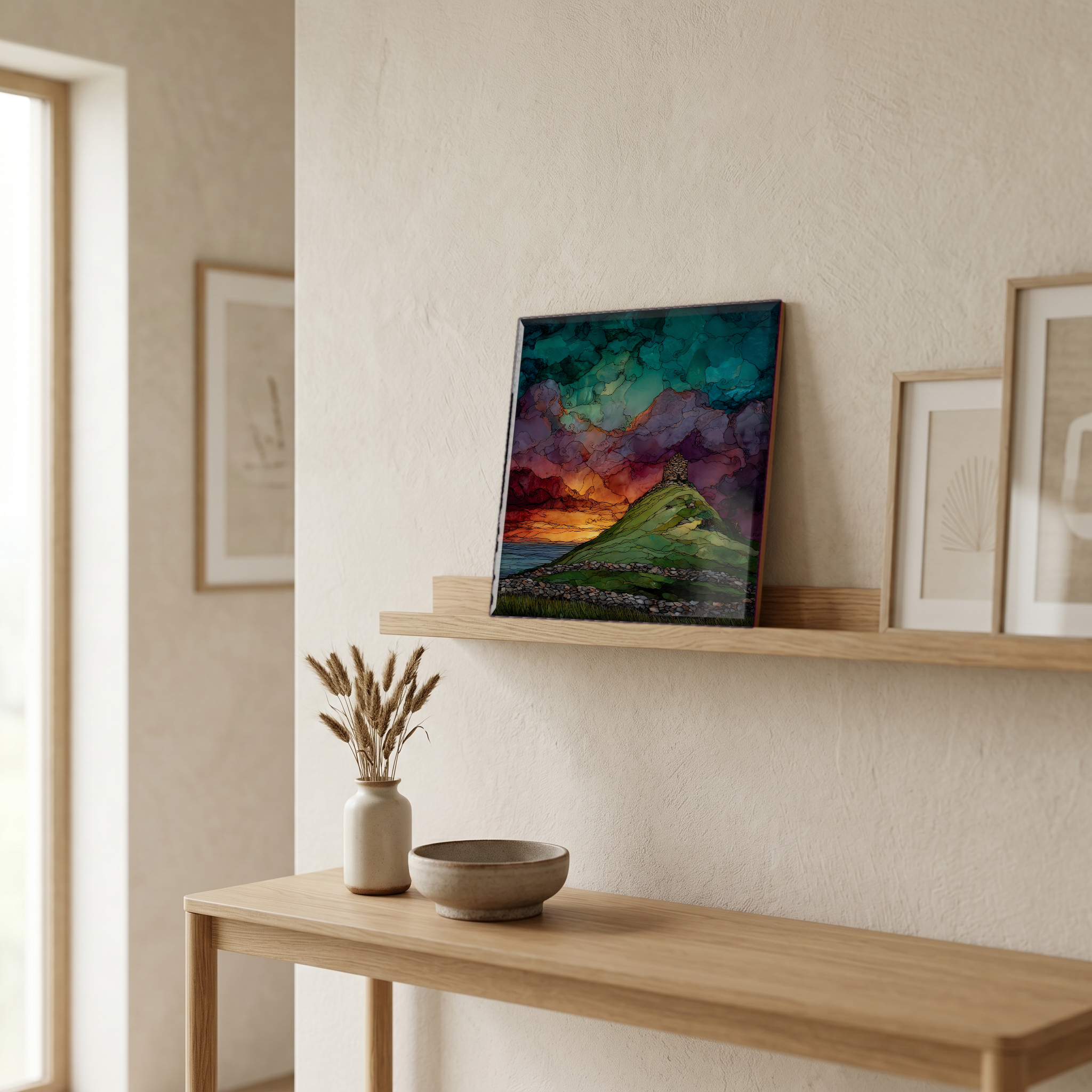
On a picture ledge, where the light comes in.
a note from the studio

A flat-topped limestone hill above Sligo Bay, crowned by a cairn the size of a small church. Tradition says it holds Queen Maeve, the warrior queen of Connacht, standing upright in her armour facing her old enemies in Ulster. Tradition also says each walker carries a stone up and adds it to the cairn. The pile has been growing in this way for five thousand years. The walk is short and steep. The wind at the top has worked on the place a long time. From the summit the view runs over most of Sligo, the Atlantic, and on a clear day the flat head of Ben Bulben to the north.
from the studio
shown in a slim black floating frame · 6 × 6 in
— bring it home

Knocknarea, on ceramic.

Each tile is finished by hand in our Knoxville studio. Artwork is slowly infused into the ceramic surface under high heat and pressure, and rests beneath a thin glossy finish. The colour lives in the surface, not on top of it.

What kind of piece?
One tile — square or rectangle.
How big?
the popular one — counter, shelf, nightstand
6 × 6 in · 15 cm · 1.6 lb
Surface finish
A clear glossy finish — the artwork reads as if under resin. Ideal for show-pieces and framed wall art.
How it sits
A hidden cleat — sits ¼″ proud of the wall.
$58
Hand-finished and shipped from our studio at the foot of the Smokies. On your wall in about ten days.
size
6 × 6 in
15 cm
weighs
1.6 lb
solid in the hand
surface
ceramic, hand-finished
art rests beneath a thin glossy finish
from
Knoxville, TN
our family studio, at the foot of the Smokies
— start a Coaster Set

Pick any four 4-inch tiles — National Parks you've been to, a Smokies set, the four seasons of one place. $ for a set of , cork-backed, ready to live on the table.

comes gift-ready
comes gift-ready

Each tile ships in a kraft box, tied with cream ribbon, with a handwritten note from the studio if you'd like to add one.

or build a grouping
or build a grouping

Three or five different vistas, hung together — a chapter of places you've been, or want to go.

about Knocknarea

The place, in three passes.

A little of what's known, in case you fall down the rabbit hole — or want to go see it yourself.
the place

Knocknarea (Cnoc na Riabh) is a 327-metre limestone hill on the Cúil Irra peninsula in County Sligo, in the northwest of Ireland's Connacht province. It rises from sea level on the Atlantic side and stands isolated above the Coolera peninsula, with the town of Sligo five kilometres to the northeast and Strandhill village at its western foot. The summit is reached by a maintained trail from the eastern car park at Grange North, a walk of roughly two kilometres each way with about 270 metres of climb. The peninsula sits between Sligo Bay and Ballysadare Bay, and on a clear day the view takes in Ben Bulben, the Ox Mountains, Lough Arrow, and a long stretch of the Atlantic.

— informed by Wikipedia — Knocknarea
the stone

The cairn at the summit, called Miosgán Méabha or Maeve's Cairn, is one of the largest unopened megalithic monuments in Ireland: roughly 55 metres across and 10 metres high, an estimated 27,000 tonnes of hand-piled limestone and quartz. Archaeologists place its construction in the Neolithic period, around 3000 BCE, contemporary with the nearby Carrowmore passage tomb cemetery four kilometres east. The Irish folk name comes from Queen Medb of Connacht, the legendary warrior queen of the Táin Bó Cúailnge, said to be buried beneath it standing upright and armoured. The cairn has never been excavated. Walkers are asked not to climb on it; the local custom is to carry a stone up and add it to the base.

the visit

The hill is open to walkers all year and there is no admission fee. The standard ascent starts at the Knocknarea (Grange North) car park signposted from the R292 between Sligo and Strandhill, a maintained boardwalk-and-stone path of about two kilometres each way that takes most people forty-five minutes up and thirty down. There is a smaller, steeper trail from the Strandhill side. Weather changes quickly on the western coast: the summit can be in sun while Sligo Bay is in cloud. Sturdy shoes and a wind layer are sensible even in summer. Dogs are welcome on a lead. Sligo County Council manages the trailheads and asks that visitors not climb on the cairn itself.

— informed by Wikipedia — Knocknarea
where
Ireland · Strandhill, County Sligo
elevation
327 m · 1,073 ft
position
54.2581° N · 8.5731° W
the neighborhood

What's nearby.

A handful of named places within an hour's walk or short drive. Some we've already painted; some we will.
3 km W
Strandhill
Atlantic surf village
4 km E
Carrowmore Megalithic Cemetery
Neolithic cemetery
6 km NE
Sligo Town
county town
12 km E
Lough Gill
lake
13 km N
Drumcliffe
churchyard, W. B. Yeats's grave
15 km NE
Ben Bulben
flat-topped mountain
N
Knocknarea
Strandhill
Carrowmore Megalithic Cemetery
Sligo Town
Lough Gill
Drumcliffe
Ben Bulben
common questions

What people ask.

A few questions we get about Knocknarea — and about bringing the piece home.
about the place

Knocknarea is a 327-metre limestone hill on the Cúil Irra peninsula in County Sligo, in the northwest of Ireland's Connacht province. It rises directly above the Atlantic, about five kilometres west of Sligo town and immediately east of Strandhill village.

The summit is crowned by Miosgán Méabha (Maeve's Cairn), one of the largest unopened megalithic cairns in Ireland: about 55 metres across, 10 metres high, and roughly 27,000 tonnes of stone. It dates to the Neolithic period, around 3000 BCE, and has never been excavated.

The cairn is traditionally said to hold Queen Medb of Connacht, the warrior queen of the Táin Bó Cúailnge, standing upright in her armour facing Ulster. Archaeologists treat the burial as folklore: the cairn was built nearly two thousand years before the Iron Age figure of Medb.

The maintained path from the Grange North car park off the R292 is roughly two kilometres each way with about 270 metres of climb. Most walkers reach the summit in forty-five minutes and descend in about thirty. The route is steep in places but well surfaced.

On a clear day the view takes in Sligo Bay, the Atlantic coast, the flat-topped silhouette of Ben Bulben to the north, the Ox Mountains to the south, and Lough Arrow inland. The Carrowmore megalithic cemetery sits four kilometres east at the foot of the hill.

Local custom asks each visitor to carry a single stone from the base of the hill and place it at the cairn rather than on it. The tradition is believed to be ancient and has measurably enlarged the monument over centuries. Climbing on the cairn itself is discouraged to protect it.

Knocknarea is the Anglicised form of the Irish Cnoc na Riabh, usually translated as hill of the stripes, with hill of the executions cited in older folklore. The cairn itself is called Miosgán Méabha, Maeve's Cairn, after Queen Medb of Connacht.

about the piece in your home

It has worked well as a gift for customers with ties to Sligo and the wider Connacht coast. Knocknarea is the hill many people remember from childhood walks and is visible from most of the bay. A Small or Medium with a handwritten note from the studio carries well.

The palette leans into deep greens, slate greys, and Atlantic blues with warm ochre in the highlights. It reads as luminous rather than literal and sits well in coastal-modern, Irish-cottage, and jewel-tone maximalist rooms. The piece holds attention on a single plain wall rather than competing in a busy gallery arrangement.

It reads as a quiet anchor in both. Coastal-modern rooms tend to use sea-glass blues and slate greys, which the painting carries; Celtic-revival rooms lean into deep greens and folkloric figures, which the cairn-and-bay composition supports. A Large or four-tile Mural carries the eye in either setting.

A single Large carries a standard console table or reading-nook wall. Above a sofa, the four-tile Mural carries the width; above wider seating, a nine-tile Mural reads as a centerpiece. A Medium suits a hallway, a small wall above a bedside lamp, or a kitchen open shelf.

Yes. Order the Dura Satin or Matte finish for wet or steamy rooms; both are scratch-resistant and hold up to humidity and splashing. The Glossy finish is best reserved for framed wall pieces away from direct water. The colour does not fade in steam.

A soft microfibre cloth dampened with water is enough for routine cleaning. For stubborn marks use a drop of mild dish soap, then wipe dry. The colour is slowly infused into the ceramic surface under high heat and pressure, so it will not lift or scratch with normal cleaning.

Yes. Reid Wender curates the WenderVista atlas, and the Knocknarea piece is original to the studio. Every tile is hand-finished in our Knoxville, Tennessee workshop, and the painting is not licensed from any third party. Each piece ships with a small signed card from the studio.

if this one stayed with you

A few you might also love.

Hand-picked by the eye that found Sorapis. Same air, same kind of quiet.