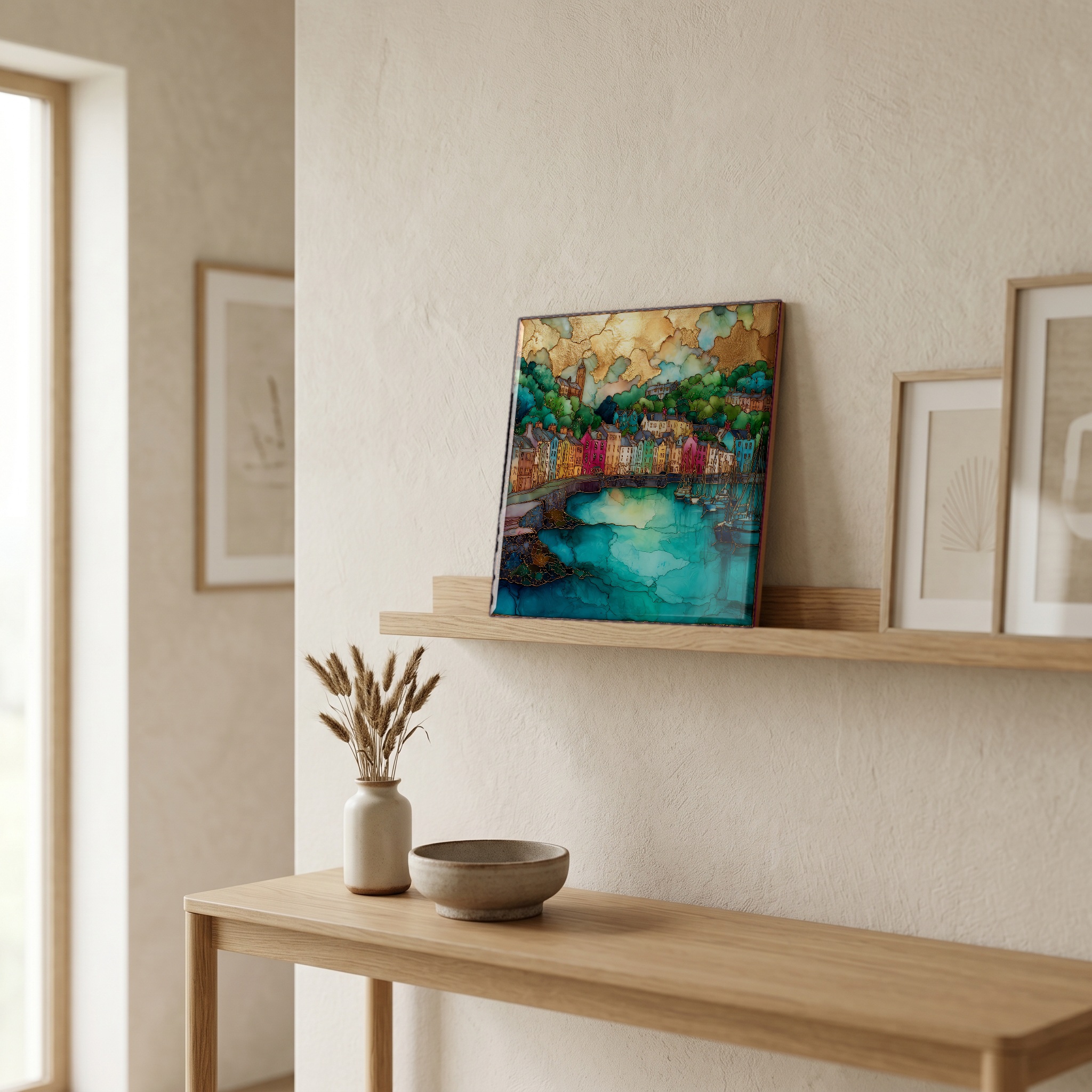
Wender·Vista
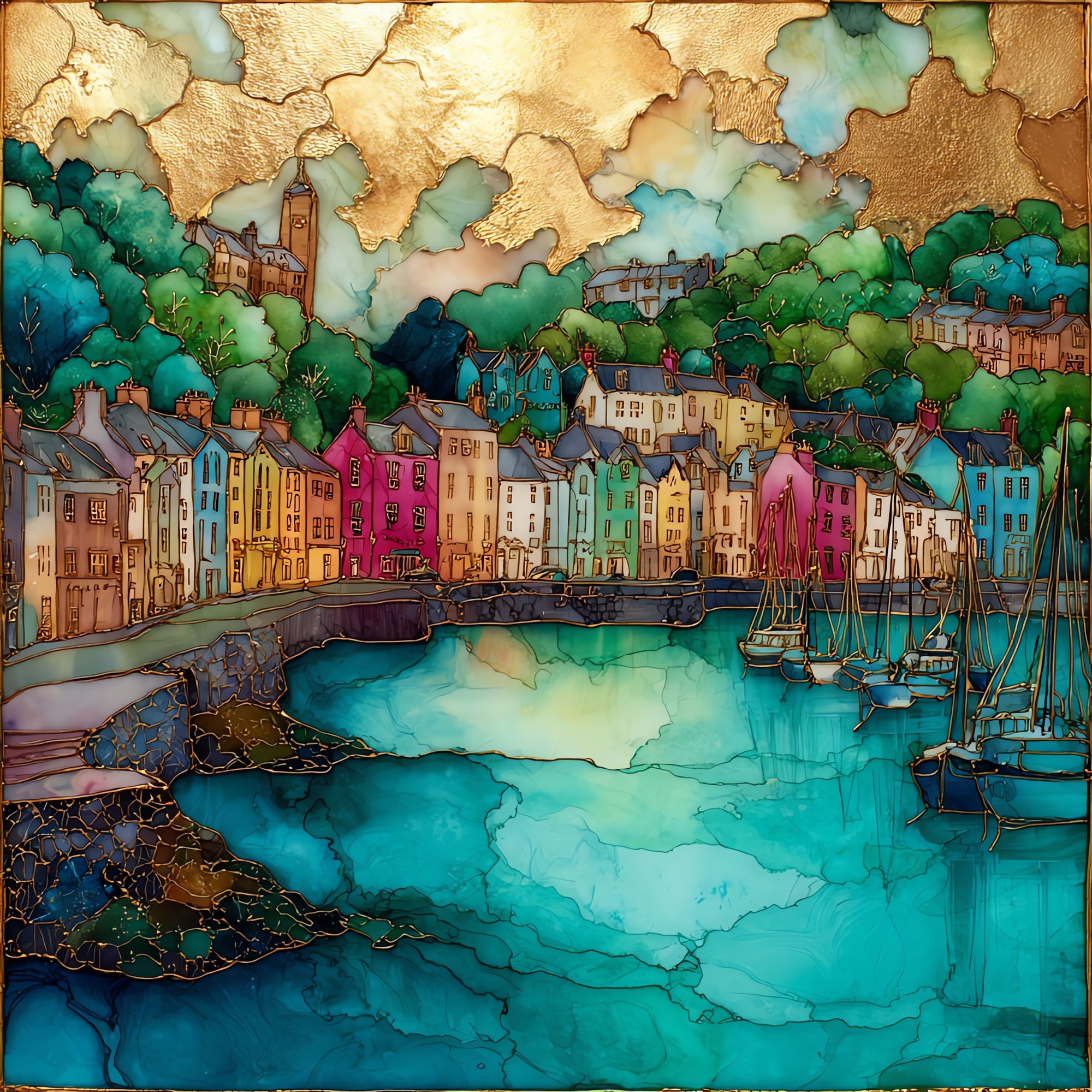
Kinsale
shown on ceramic, 12-inch tileIreland
on the south coast of Ireland, where the Bandon meets the sea

Kinsale

the painted town the rain makes brighter.

Where it lives

Not only on a wall.

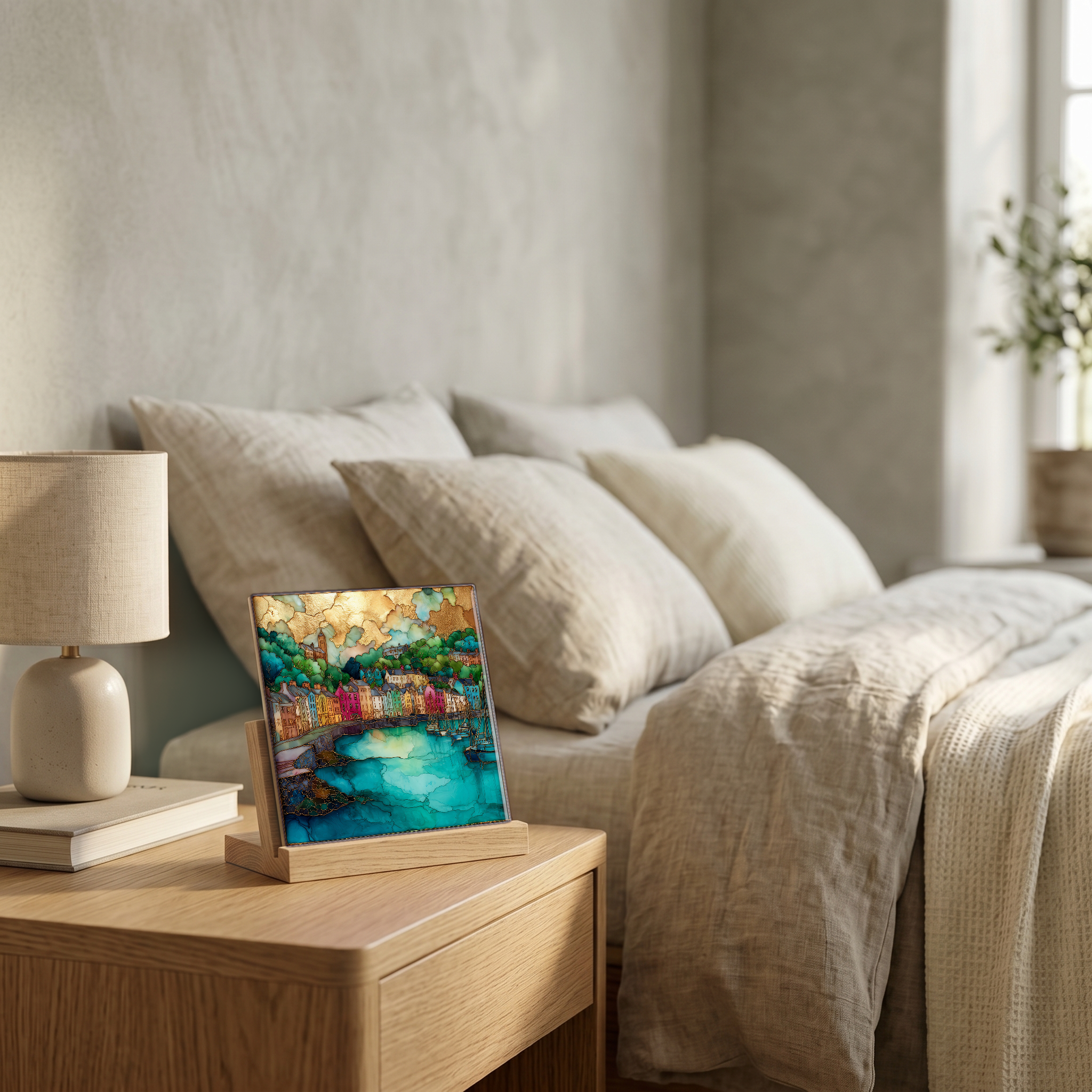
A small tile on the nightstand catching the morning. A larger one above the fire. Yours, wherever you spend the slow hours.
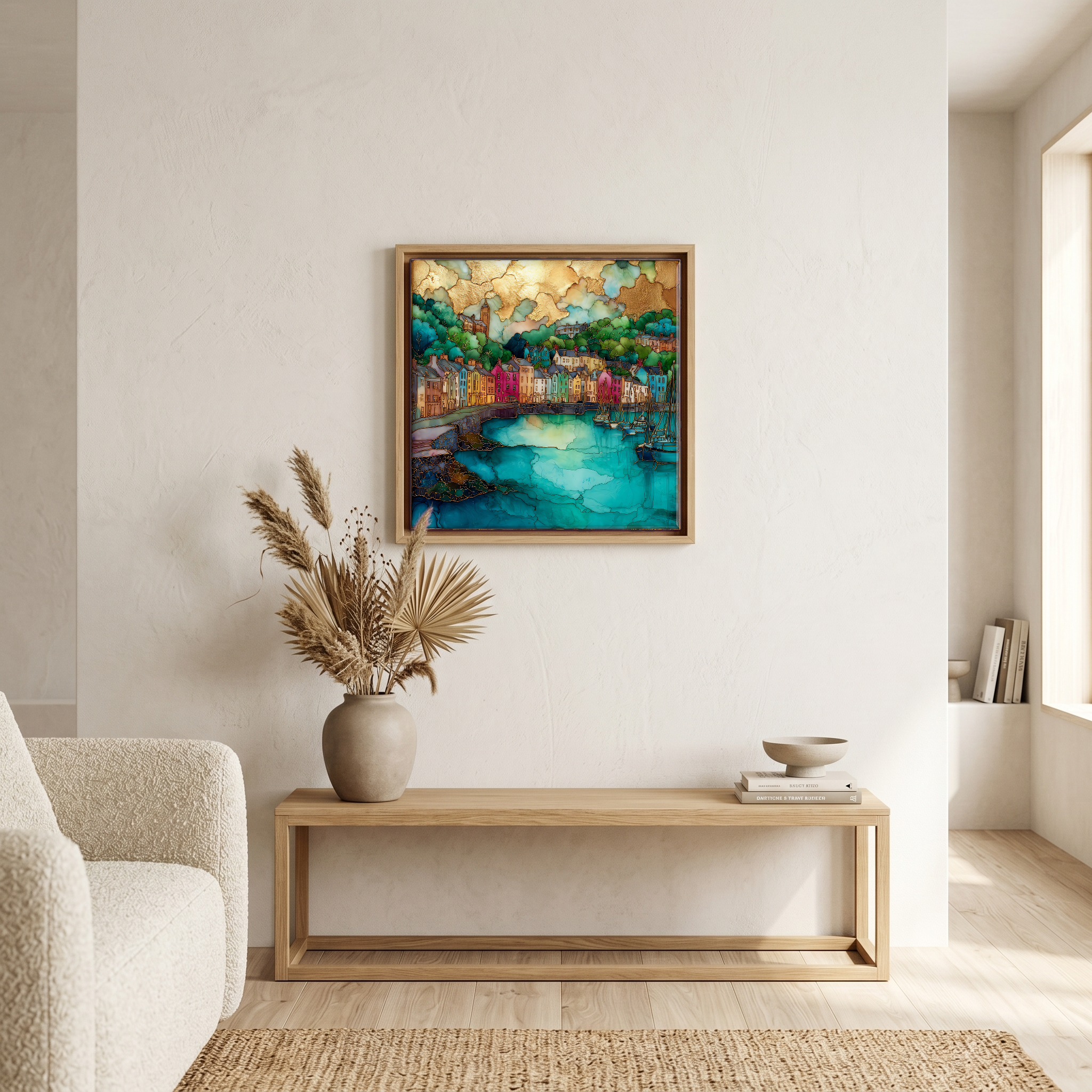
Above the bench, in a warm oak surround.
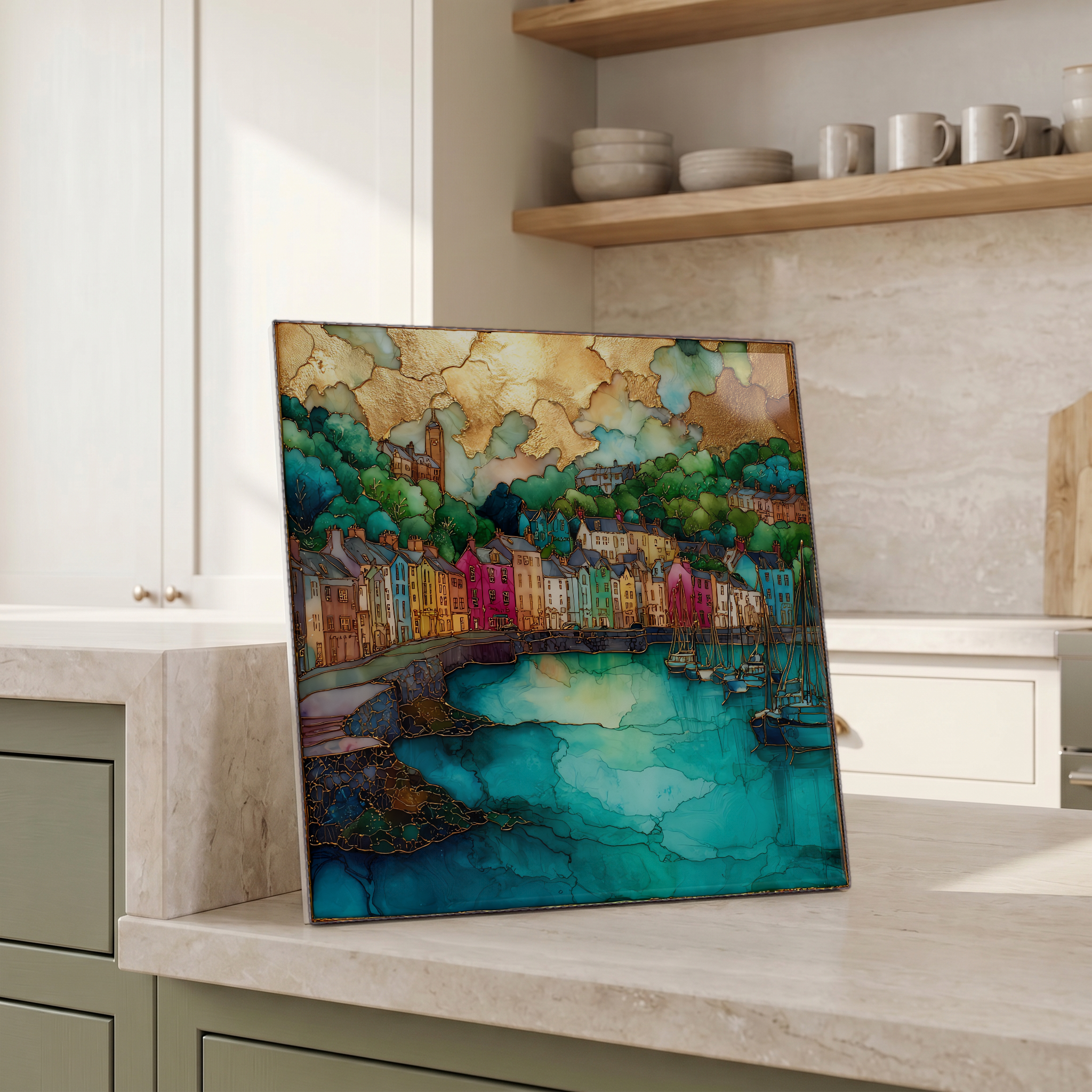
Beside the kettle, propped on the counter.
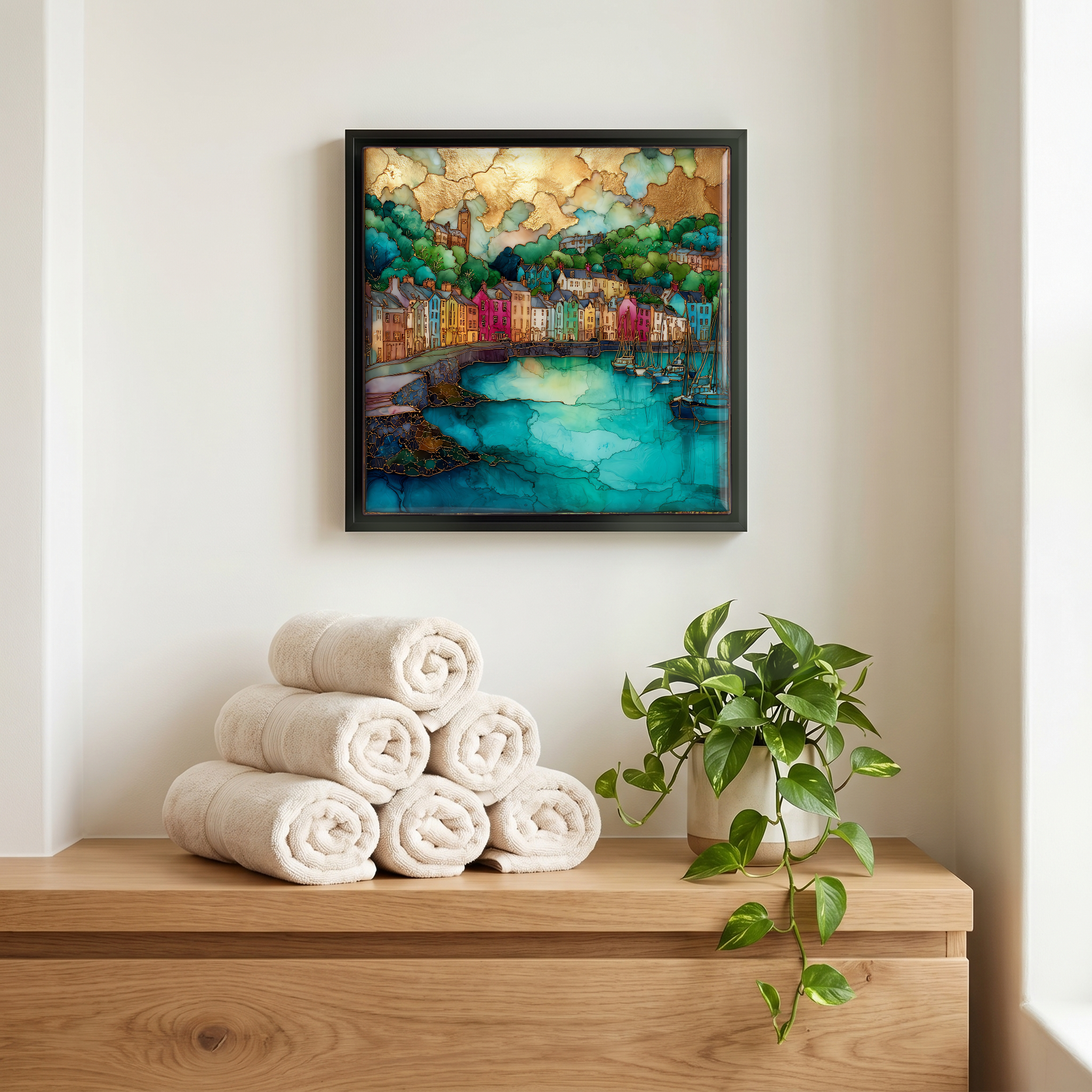
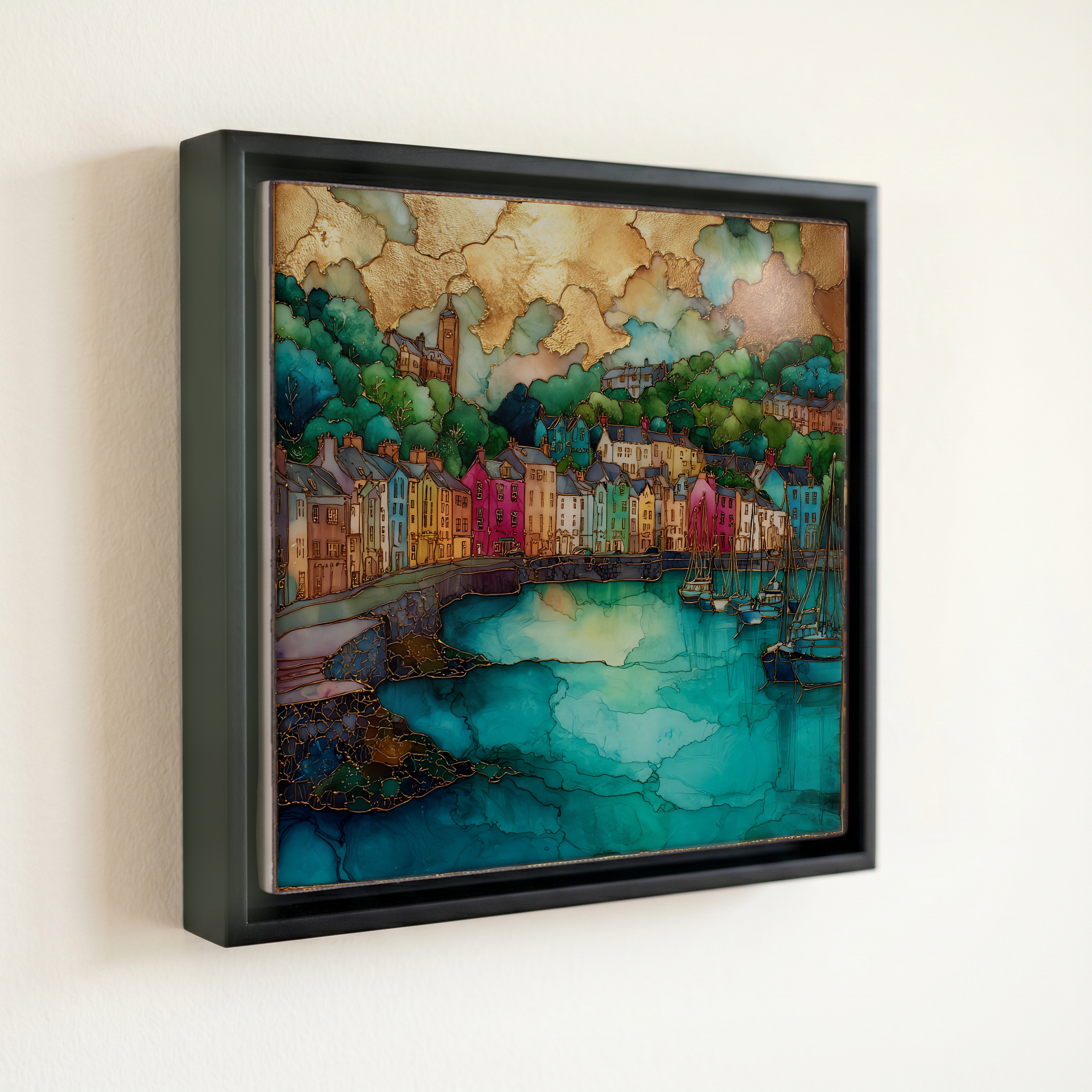
Above the linens, in a slim black surround.
On the nightstand, on a light oak stand.
On a picture ledge, where the light comes in.
a note from the studio

A small fishing town on the south coast of Cork, where the River Bandon meets the Celtic Sea. The houses run down to the harbour painted every colour: saffron, oxblood, slate-blue, mint. They sit against the dark stone of Charles Fort across the water. The Wild Atlantic Way begins (or ends) here, depending on how you arrive. The town has a long memory: of the 1601 battle, of the Lusitania going down off the Old Head in 1915, of generations of trawlers easing out past the headland at dawn. People come now for the food and stay for the light.
from the studio
shown in a slim black floating frame · 6 × 6 in
— bring it home

Kinsale, on ceramic.

Each tile is finished by hand in our Knoxville studio. Artwork is slowly infused into the ceramic surface under high heat and pressure, and rests beneath a thin glossy finish. The colour lives in the surface, not on top of it.

What kind of piece?
One tile — square or rectangle.
How big?
the popular one — counter, shelf, nightstand
6 × 6 in · 15 cm · 1.6 lb
Surface finish
A clear glossy finish — the artwork reads as if under resin. Ideal for show-pieces and framed wall art.
How it sits
A hidden cleat — sits ¼″ proud of the wall.
$58
Hand-finished and shipped from our studio at the foot of the Smokies. On your wall in about ten days.
size
6 × 6 in
15 cm
weighs
1.6 lb
solid in the hand
surface
ceramic, hand-finished
art rests beneath a thin glossy finish
from
Knoxville, TN
our family studio, at the foot of the Smokies
— start a Coaster Set

Pick any four 4-inch tiles — National Parks you've been to, a Smokies set, the four seasons of one place. $ for a set of , cork-backed, ready to live on the table.
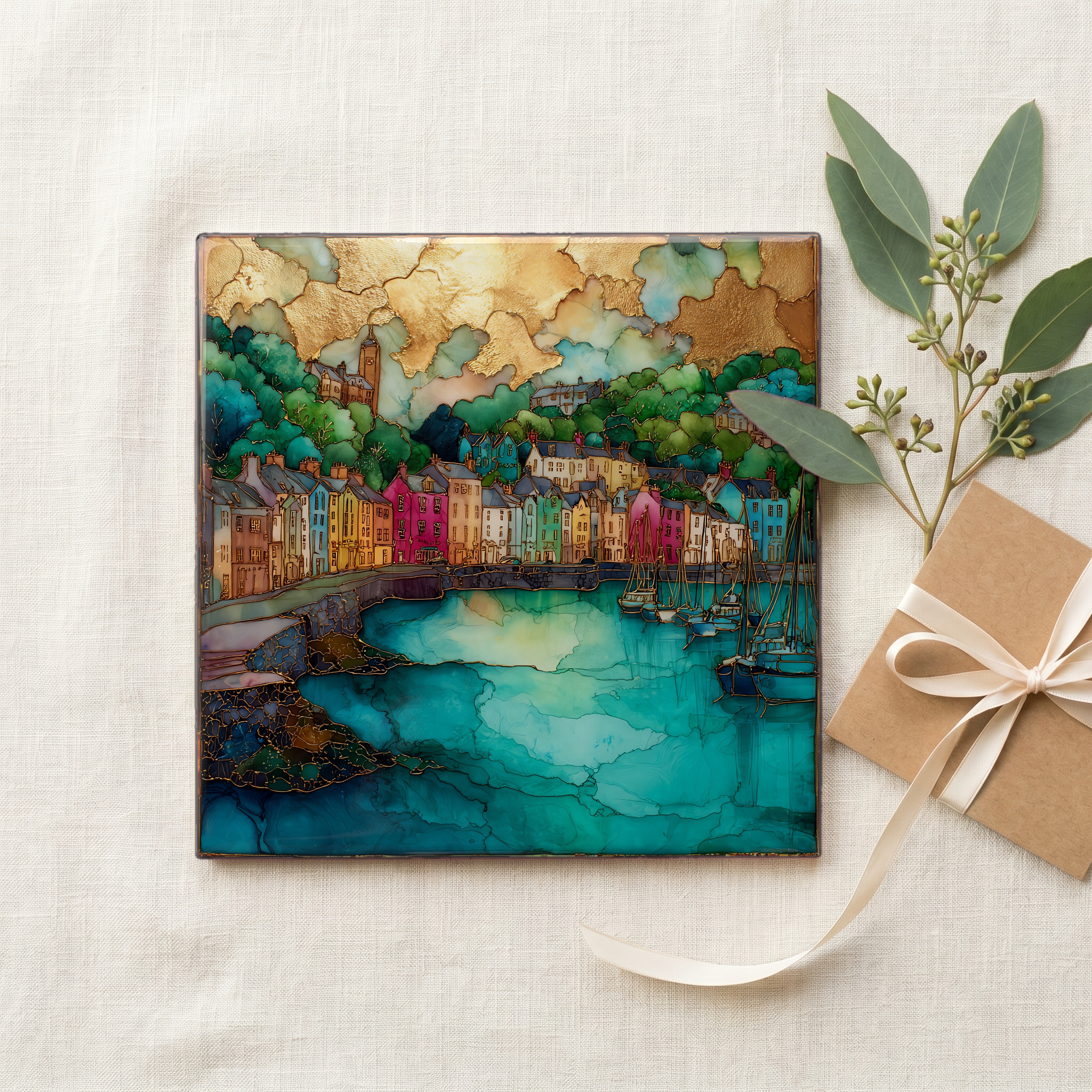
comes gift-ready
comes gift-ready

Each tile ships in a kraft box, tied with cream ribbon, with a handwritten note from the studio if you'd like to add one.
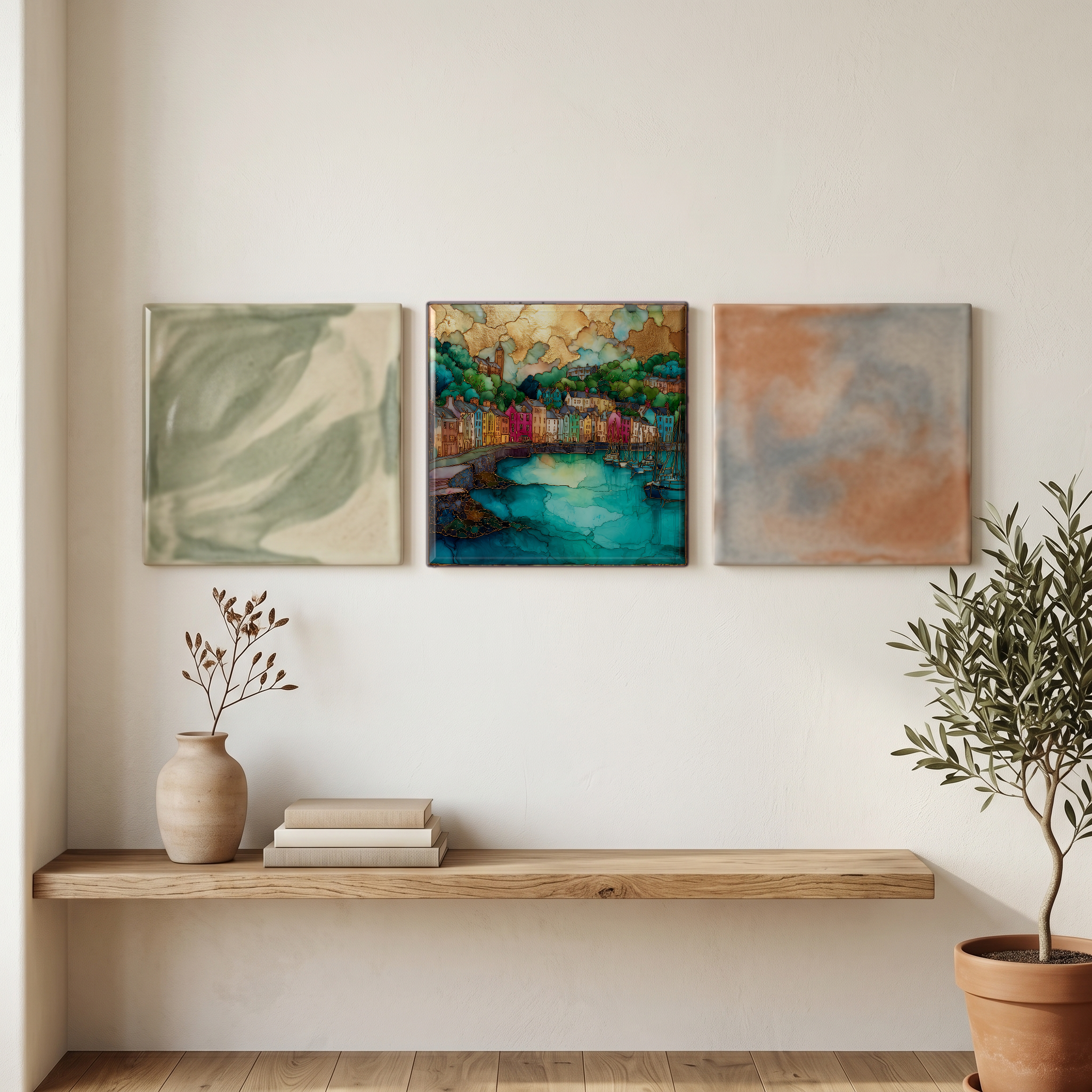
or build a grouping
or build a grouping

Three or five different vistas, hung together — a chapter of places you've been, or want to go.

about Kinsale

The place, in three passes.

A little of what's known, in case you fall down the rabbit hole — or want to go see it yourself.
the place

Kinsale is a small town and former fishing port in County Cork, on the southern coast of Ireland, about 25 kilometres south of Cork city at the mouth of the River Bandon. The harbour opens to the Celtic Sea and the wider Atlantic, sheltered by the Old Head of Kinsale, a long promontory to the south-west. The town's population is around 5,500. It is widely cited as the southern terminus of the Wild Atlantic Way, the 2,500-kilometre coastal driving route that runs north along the seaboard to Inishowen Head in County Donegal. It is reached from Cork by the R600 along the harbour shore.

— informed by Wikipedia, Wild Atlantic Way
the water

The harbour is deep and well-protected, formed where the River Bandon widens into a tidal estuary before opening to the Celtic Sea. It has been a working port since at least the Norman period, and today supports a small commercial fishing fleet alongside the busy marina at Kinsale Yacht Club. Ten kilometres south, the Old Head of Kinsale juts into the Atlantic. The RMS Lusitania was torpedoed roughly eleven nautical miles off this headland on 7 May 1915, with the loss of 1,198 lives. The story is told at the signal tower museum on the headland above the wreck site.

the stone

The town's stonework runs back nearly a thousand years. St. Multose Church, on Church Street, has stood in some form since around 1190 and is one of the oldest continuously used parish churches in Ireland. Across the harbour mouth sits Charles Fort, a star-shaped bastion fortress built between 1677 and 1682 by the architect Sir William Robinson, regarded as one of the best preserved 17th-century military works in Europe. Its older counterpart, James Fort, sits opposite on the Castlepark peninsula and dates to the years immediately after the Battle of Kinsale in 1602. Both forts are now in the care of the Office of Public Works and open to the public.

where
Ireland · County Cork, Munster
position
51.7059° N · 8.5222° W
the neighborhood

What's nearby.

A handful of named places within an hour's walk or short drive. Some we've already painted; some we will.
3 km E
Charles Fort
star fort
1 km SW
James Fort
bastion fort
12 km SW
Old Head of Kinsale
headland
8 km SW
Garretstown Beach
beach
25 km N
Cork
city
N
Kinsale
Charles Fort
James Fort
Old Head of Kinsale
Garretstown Beach
Cork
common questions

What people ask.

A few questions we get about Kinsale — and about bringing the piece home.
about the place

Kinsale is a small harbour town in County Cork, on the southern coast of Ireland, about 25 kilometres south of Cork city at the mouth of the River Bandon. The town sits at the head of a sheltered tidal estuary that opens to the Celtic Sea.

For its painted harbour-front houses, its food culture (Kinsale hosts a long-running Gourmet Festival each October), its two 17th-century forts guarding the harbour mouth, and as the southern starting point of the Wild Atlantic Way coastal route.

A long limestone promontory roughly ten to twelve kilometres south of the town, ending in a working lighthouse. The RMS Lusitania was torpedoed about eleven nautical miles off the Old Head on 7 May 1915, with the loss of 1,198 lives. A signal tower museum on the headland tells the story.

A star-shaped bastion fortress built between 1677 and 1682 by Sir William Robinson on the eastern side of Kinsale Harbour. It is regarded as one of the best preserved 17th-century military works in Europe and is run as a heritage site by the Office of Public Works.

Yes. Kinsale is the southern terminus of the Wild Atlantic Way, a signed coastal driving route of roughly 2,500 kilometres that runs from here north along the Atlantic seaboard to Inishowen Head in County Donegal.

In late 1601, a Spanish expeditionary force landed at Kinsale to support the Irish Gaelic lords against English rule. After a winter siege, an English army defeated the combined Irish and Spanish forces in January 1602. The defeat marked the end of the old Gaelic order in Ireland.

About 25 kilometres by road. The most scenic approach is the R600 along the harbour shore from Cork city, which takes around 40 minutes by car. The closest international airport is Cork Airport, roughly 20 kilometres to the north.

about the piece in your home

It carries that recognition well. The painted harbour-front, Charles Fort across the water, and the steep streets rising back from the quay read as Kinsale even from across a room. A Keepsake or Small with a handwritten note from the studio sends well to a relative abroad.

The piece suits coastal-modern, country-cottage, and jewel-tone maximalist rooms. The saturated colour of the harbour-front and the dark stonework give it more weight than a typical seaside print, so it holds its own in a room with deep wall colour or oak panelling.

It fits the warmer, less bleached current of coastal-modern that has come back into favour: real working harbours rather than white-sand resort coastlines. The stained-glass colour language puts it closer to the European-coastal end of the trend than the Cape-Cod end.

For a standard three-seat sofa or a six-foot console, a single Large reads well from across the room. For a longer wall or a statement install, a 4-tile Mural fills the space; a 9-tile Mural carries an entryway or a stairwell wall.

Yes. Order the Dura Satin or Matte finish for wet-room and splash-zone installs such as showers, backsplashes, and walls behind the range. The Glossy finish is for framed wall art in dry rooms. The colour lives in the ceramic surface itself, so it does not lift or fade with steam.

A soft microfibre cloth and water are enough for the Glossy finish. For Dura Satin and Matte tiles in kitchens or bathrooms, the same cloth with a mild pH-neutral cleaner is fine. Avoid abrasive pads and bleach-based scrubs, which can dull the surface over time.

Yes. Every WenderVista piece is original to Reid Wender and the studio in Knoxville, Tennessee. Nothing is licensed in. Each design is made for one place and held in the studio's atlas of vistas.

if this one stayed with you

A few you might also love.

Hand-picked by the eye that found Sorapis. Same air, same kind of quiet.