Wender·Vista
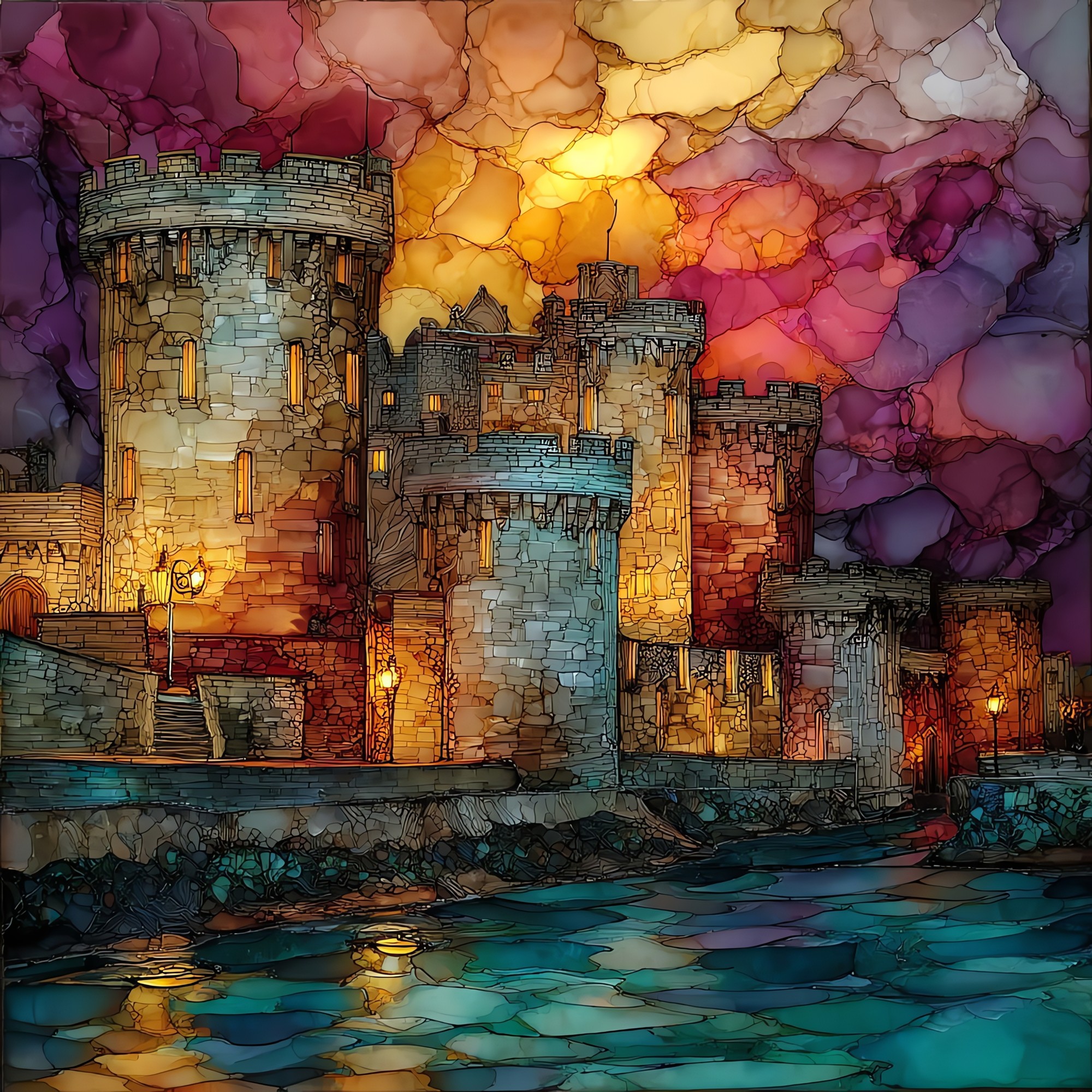
King John's Castle
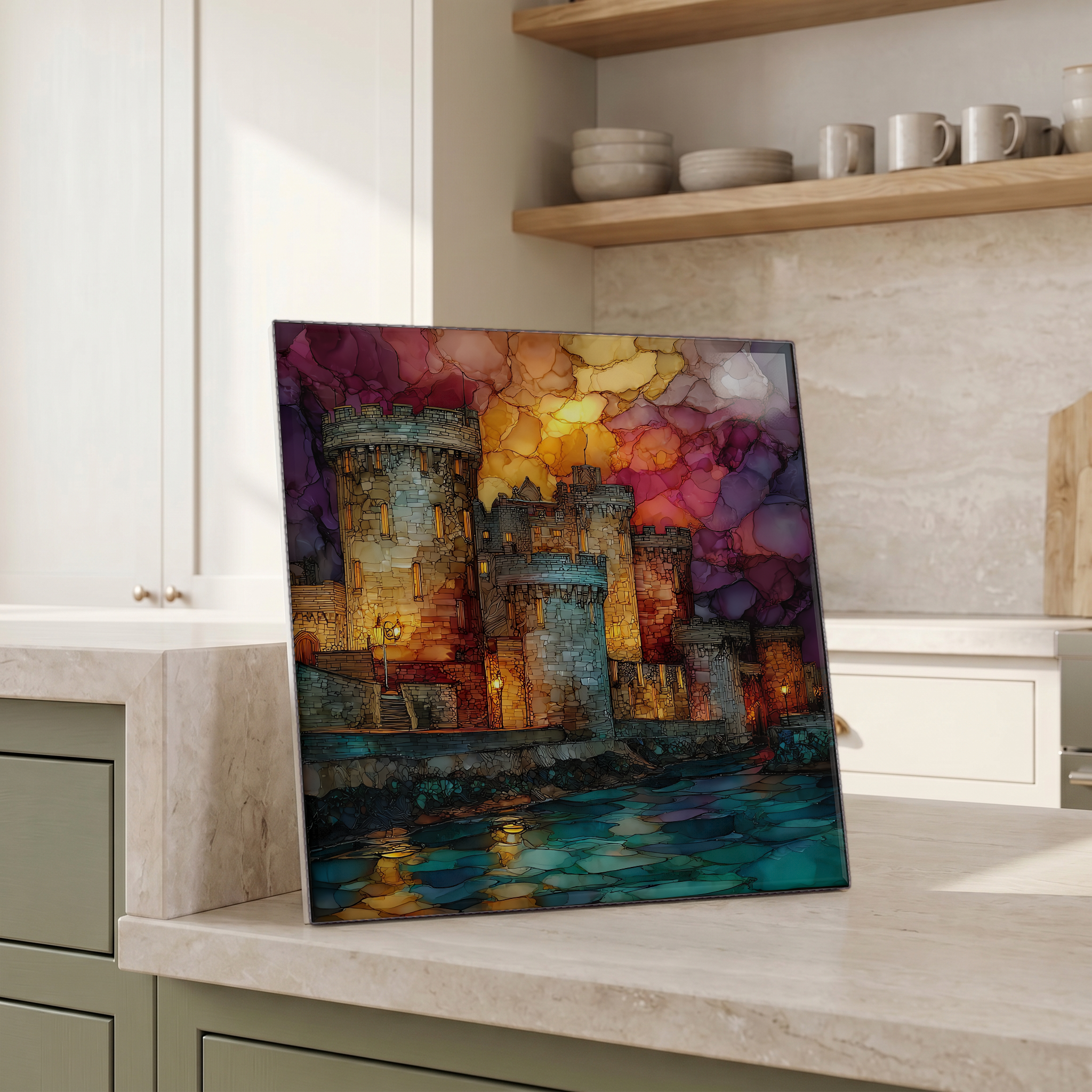
shown on ceramic, 12-inch tileIreland
on King's Island, where the Shannon bends through Limerick

King John's Castle

limestone the Shannon has watched for eight centuries.

Where it lives

Not only on a wall.

A small tile on the nightstand catching the morning. A larger one above the fire. Yours, wherever you spend the slow hours.
Above the bench, in a warm oak surround.
Beside the kettle, propped on the counter.
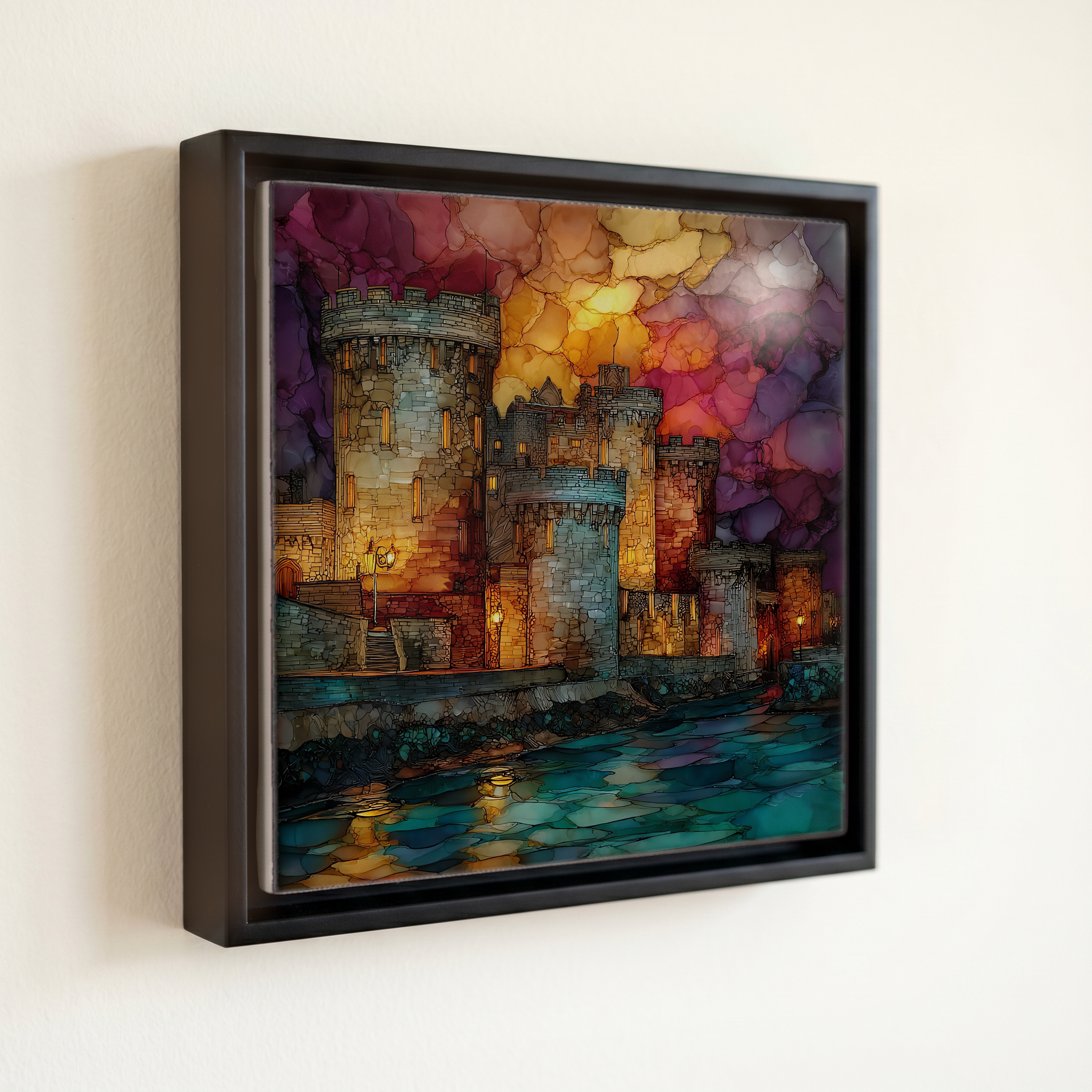
Above the linens, in a slim black surround.
On the nightstand, on a light oak stand.
On a picture ledge, where the light comes in.
a note from the studio

A five-sided keep on King's Island, where the Shannon bends through Limerick. King John of England ordered it raised around 1210, less than a century after the Normans landed in Ireland. The thick limestone walls have held through the Cromwellian guns of 1651 and the long Williamite siege of 1691, and were still standing when the modern visitor centre was cut into the courtyard. The Vikings had a longphort on this same bend of the river three hundred years before the castle went up. Stand at the curtain wall at low tide and the Shannon is right below you.
from the studio
shown in a slim black floating frame · 6 × 6 in
— bring it home

King John's Castle, on ceramic.

Each tile is finished by hand in our Knoxville studio. Artwork is slowly infused into the ceramic surface under high heat and pressure, and rests beneath a thin glossy finish. The colour lives in the surface, not on top of it.

What kind of piece?
One tile — square or rectangle.
How big?
the popular one — counter, shelf, nightstand
6 × 6 in · 15 cm · 1.6 lb
Surface finish
A clear glossy finish — the artwork reads as if under resin. Ideal for show-pieces and framed wall art.
How it sits
A hidden cleat — sits ¼″ proud of the wall.
$58
Hand-finished and shipped from our studio at the foot of the Smokies. On your wall in about ten days.
size
6 × 6 in
15 cm
weighs
1.6 lb
solid in the hand
surface
ceramic, hand-finished
art rests beneath a thin glossy finish
from
Knoxville, TN
our family studio, at the foot of the Smokies
— start a Coaster Set

Pick any four 4-inch tiles — National Parks you've been to, a Smokies set, the four seasons of one place. $ for a set of , cork-backed, ready to live on the table.

comes gift-ready
comes gift-ready

Each tile ships in a kraft box, tied with cream ribbon, with a handwritten note from the studio if you'd like to add one.

or build a grouping
or build a grouping

Three or five different vistas, hung together — a chapter of places you've been, or want to go.

about King John's Castle

The place, in three passes.

A little of what's known, in case you fall down the rabbit hole — or want to go see it yourself.
the place

King John's Castle stands on King's Island, the low limestone island formed where the River Shannon meets the Abbey River at Limerick. The keep was raised between roughly 1200 and 1212 on the orders of King John of England, then Lord of Ireland, to hold the Norman frontier in Munster. King's Island sits at the centre of Limerick's Medieval Quarter, a short walk from St Mary's Cathedral, which predates the castle by some thirty years. The Shannon, at 360 kilometres the longest river in Ireland, has been a strategic crossing at Limerick since long before either church or keep.

the stone

The keep is built of Limerick limestone, the same grey-blue stone that forms the city's medieval cathedrals and the river quays. Its plan is unusual: a five-sided polygon with round towers at four of the corners, an early experiment in keepless castles where the curtain wall and the gatehouse do the work of a central donjon. The walls have absorbed two of the heaviest sieges in Irish history, Henry Ireton's Cromwellian assault in 1651 and the long Williamite siege of 1691 that ended with the Treaty of Limerick signed on a stone near the Thomond Bridge. Each siege left its mark in the courtyard masonry.

the visit

The castle is operated by Shannon Heritage and open through the year, with reduced winter hours. A 2013 redevelopment placed a modern interpretive centre inside the courtyard; the exhibition walks through the Viking longphort, the Norman conquest, the Cromwellian and Williamite sieges, and the long post-treaty centuries when the keep was used as a barracks. Admission is charged at the gate, and the courtyard archaeology is included. The walk from St Mary's Cathedral, across the Abbey River bridge, takes about ten minutes. A west-facing terrace looks out across the Shannon toward Thomondgate; Limerick weather being what it is, a coat earns its keep.

where
Ireland · Limerick, County Limerick
position
52.6694° N · 8.6256° W
the neighborhood

What's nearby.

A handful of named places within an hour's walk or short drive. Some we've already painted; some we will.
0.3 km E
St Mary's Cathedral
medieval cathedral
0.1 km W
Thomond Bridge
stone bridge
0.3 km W
Treaty Stone
monument
0.7 km S
Hunt Museum
museum
14 km W
Bunratty Castle
Norman castle
N
King John's Castle
St Mary's Cathedral
Thomond Bridge
Treaty Stone
Hunt Museum
Bunratty Castle
common questions

What people ask.

A few questions we get about King John's Castle — and about bringing the piece home.
about the place

King John's Castle stands on King's Island in Limerick, in southwest Ireland, where the River Shannon meets the Abbey River. The castle is the centrepiece of Limerick's Medieval Quarter, a short walk from St Mary's Cathedral and from the Treaty Stone across Thomond Bridge.

Construction began around 1200 and was largely complete by 1212, on the orders of King John of England, then Lord of Ireland. The castle was raised to anchor the Norman foothold in Munster, on a bend of the Shannon the Vikings had already settled three centuries earlier.

King John of England, born 1166, was Lord of Ireland from 1177 and king from 1199. He ordered the castle's construction during his second visit to Ireland in 1210, when he passed through Limerick. The keep took his name as a royal commission of the Crown.

King John's Castle has a five-sided polygonal plan with round towers at four corners, an early Norman experiment in keepless design. Instead of a central tower, the curtain wall and the twin-towered gatehouse hold the defence, an arrangement that anticipated later castles like Caerphilly in Wales.

The castle was attacked at least four times. The two heaviest sieges were Henry Ireton's Cromwellian assault in 1651 and the long Williamite siege of 1691, which ended with the Treaty of Limerick signed on a stone across the Thomond Bridge. Both sieges left scars in the courtyard masonry.

Yes. Vikings established a longphort, or fortified longship base, on King's Island around 922. They traded and raided along the Shannon for two centuries before being absorbed into Norman Limerick. Archaeological remains from the longphort and the early medieval town are visible in the castle courtyard exhibit.

The Treaty of Limerick, signed October 3, 1691, ended the Williamite siege that drove the last Jacobite forces out of Ireland. It guaranteed certain rights to the defeated Irish Catholics, terms that were soon broken by the Irish Parliament. The treaty stone sits across the Shannon at Thomondgate.

about the piece in your home

It's the kind of gift that lands well for a parent or grandparent born in or around Limerick. King John's Castle is one of the city's defining landmarks, visible from the Thomond Bridge crossing. A Small or Medium with a handwritten note from the studio carries well.

The colour palette of limestone grey-blue, deep slate, and warm amber from the medieval flagstones sits well with Irish-modern, Mountain-modern, and Jewel-tone Maximalist interiors. It also reads as a quiet accent in a darker library or pub-styled room, especially against bookshelves and aged leather.

Yes. The medieval-stone register and the stained-glass colour treatment fit the broader return to Old-world Maximalist, Library-style, and Castlecore interiors. The piece reads as a small heirloom rather than a print, which is what these rooms are reaching for.

For a console or a smaller sofa, the Large reads strongly at eye-level. Above a longer sofa or a substantial console, a 4-tile Mural fills the wall plane. For a feature wall above a king bed or a fireplace, a 9-tile Mural is the right scale.

Yes. The Dura Satin and Matte finishes are scratch-resistant and rated for vertical installation in bathrooms, showers, and kitchen backsplashes. The Glossy finish is intended for framed wall pieces in living areas where steam and direct water contact are limited.

A soft microfibre cloth and warm water lift everyday dust and fingerprints. For tiles installed near a stove or in a shower, an occasional pass with a mild non-abrasive household cleaner is fine. Avoid abrasive pads and bleach-based sprays, which can dull the surface over time.

Yes. Every piece in the WenderVista line is original to the studio, drawn from Reid Wender's eye for places that hold light a certain way. The artwork is not licensed from any third party, and the King John's Castle piece is sold only through Wender Studios.

if this one stayed with you

A few you might also love.

Hand-picked by the eye that found Sorapis. Same air, same kind of quiet.