Wender·Vista
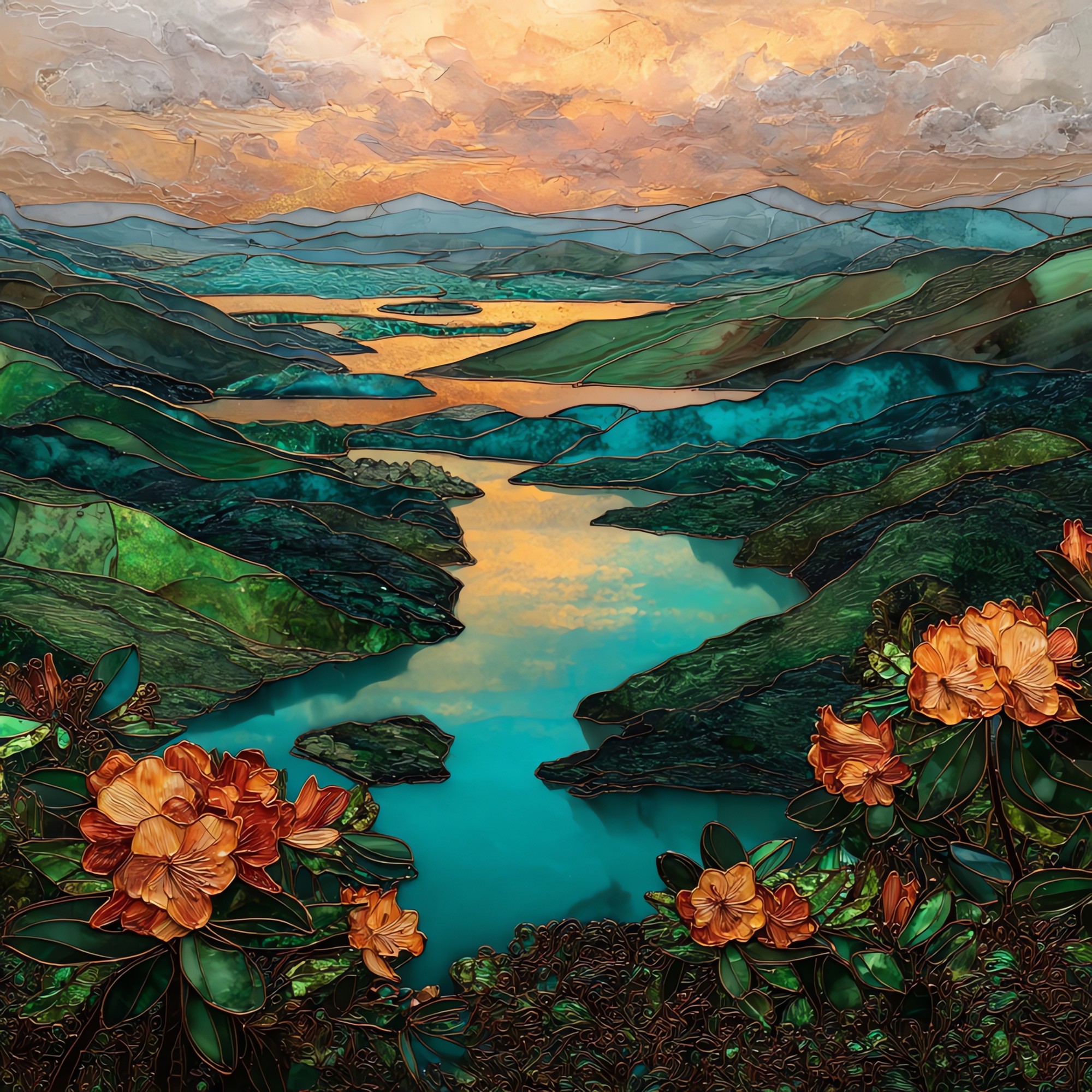
Killarney Lakes
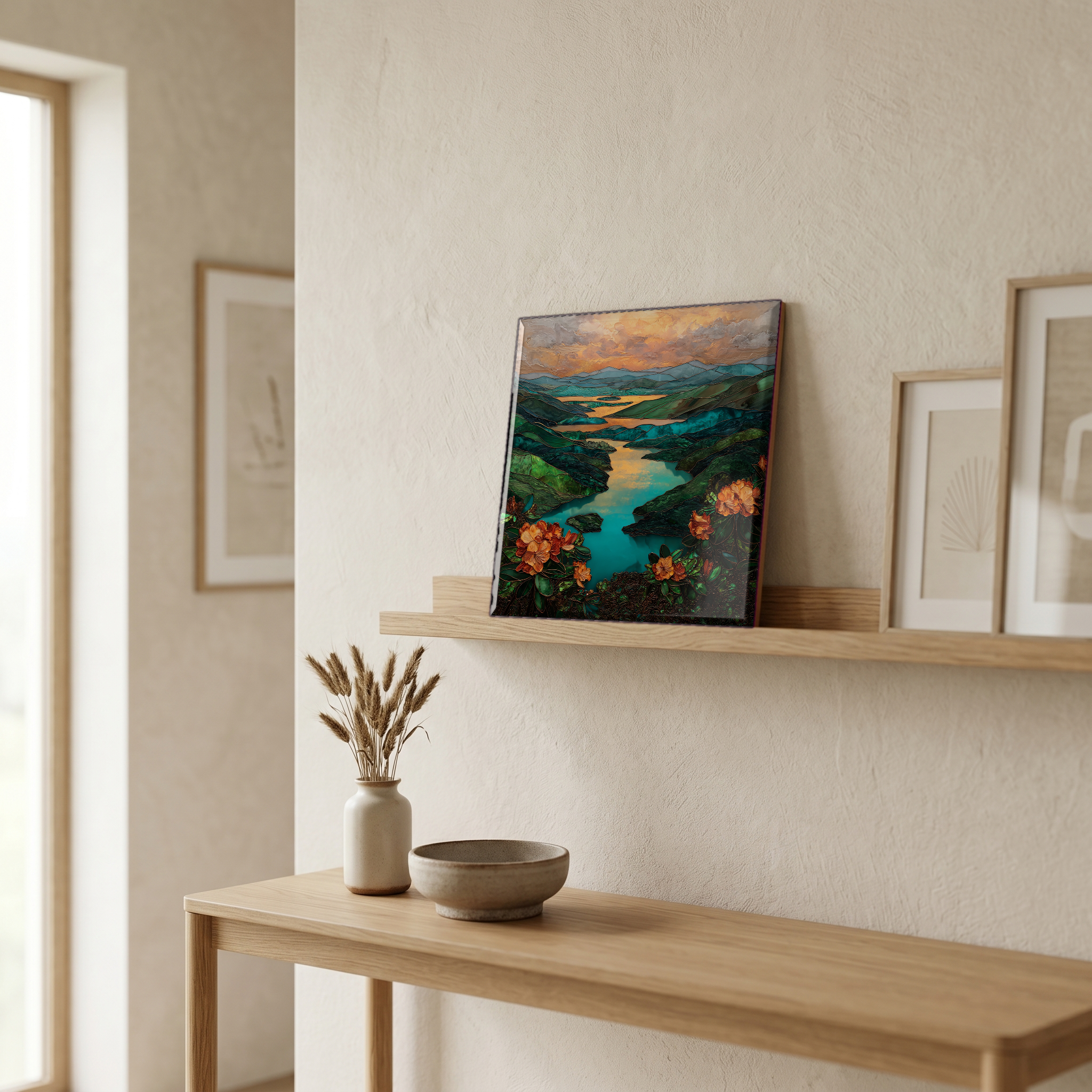
shown on ceramic, 12-inch tileIreland
in County Kerry, at the foot of the Macgillycuddy's Reeks

Killarney Lakes

— a dark mirror under the Reeks.

Where it lives

Not only on a wall.

A small tile on the nightstand catching the morning. A larger one above the fire. Yours, wherever you spend the slow hours.
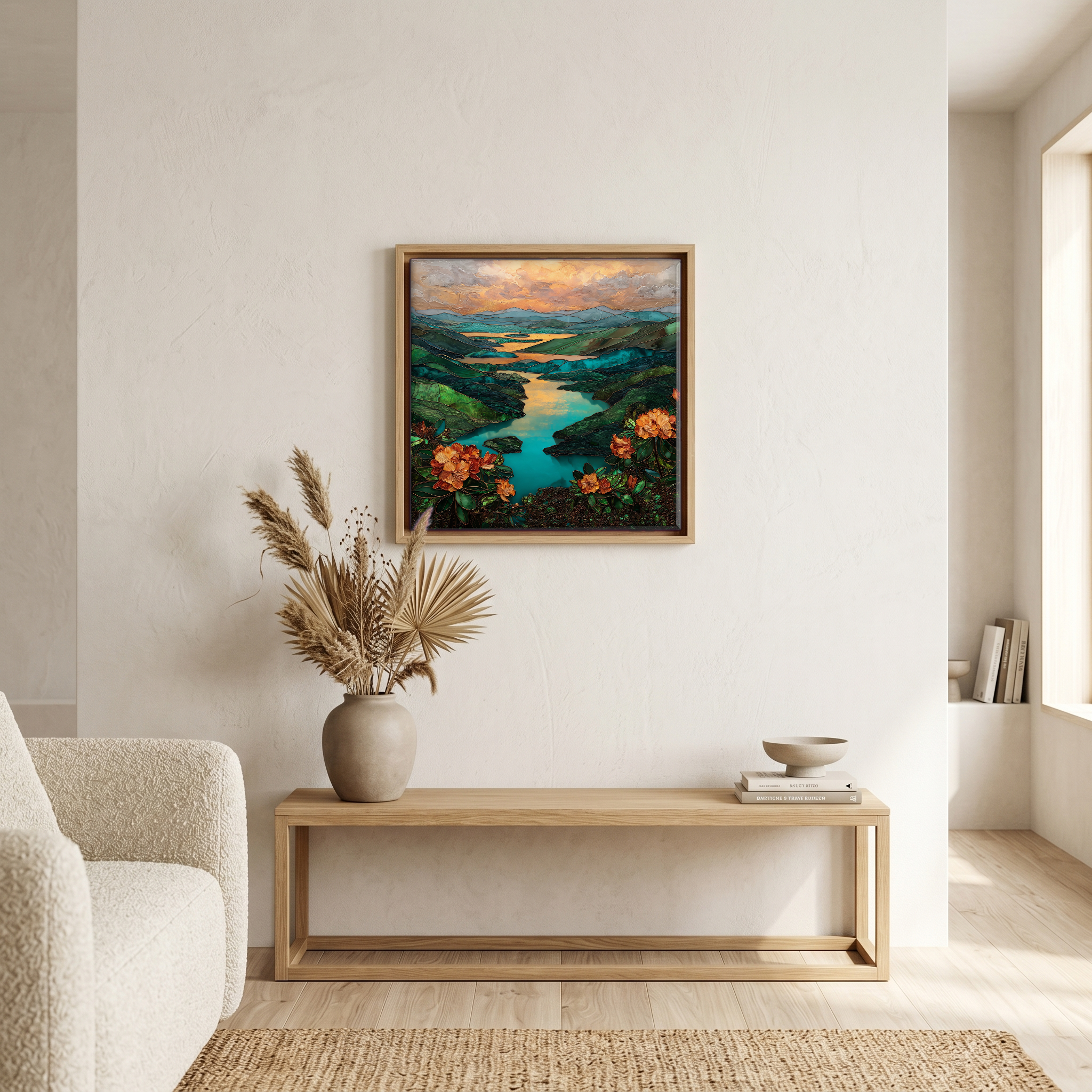
Above the bench, in a warm oak surround.
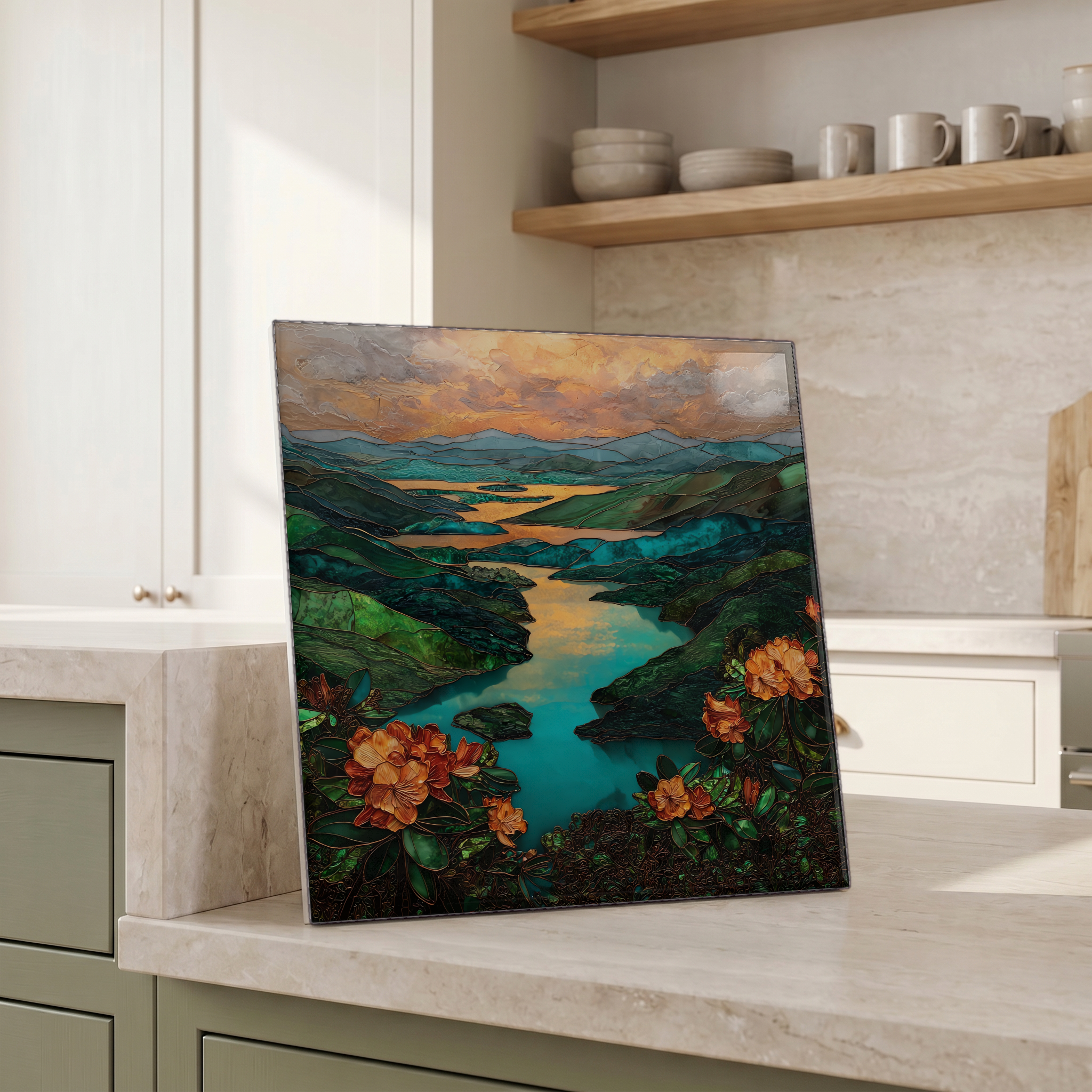
Beside the kettle, propped on the counter.
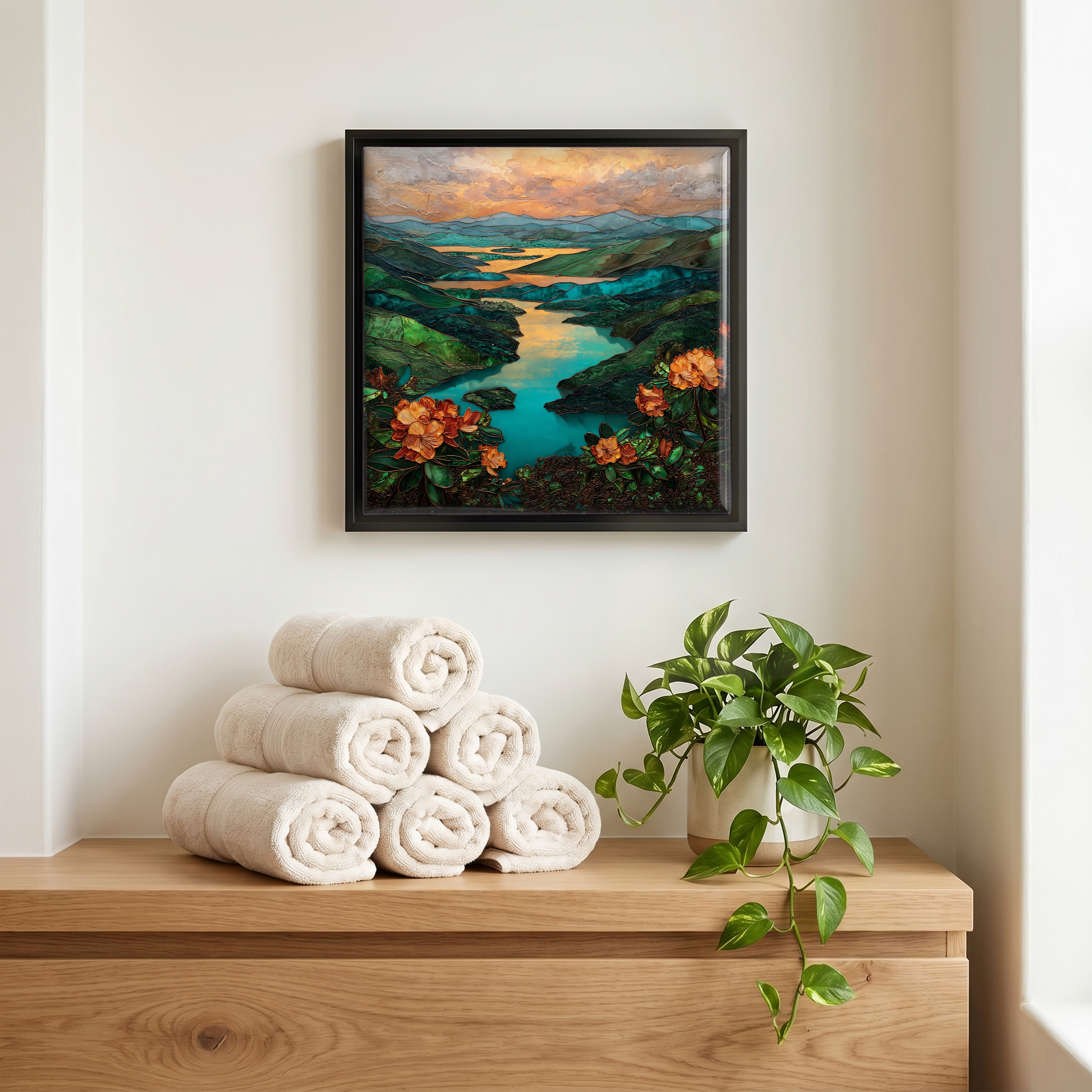
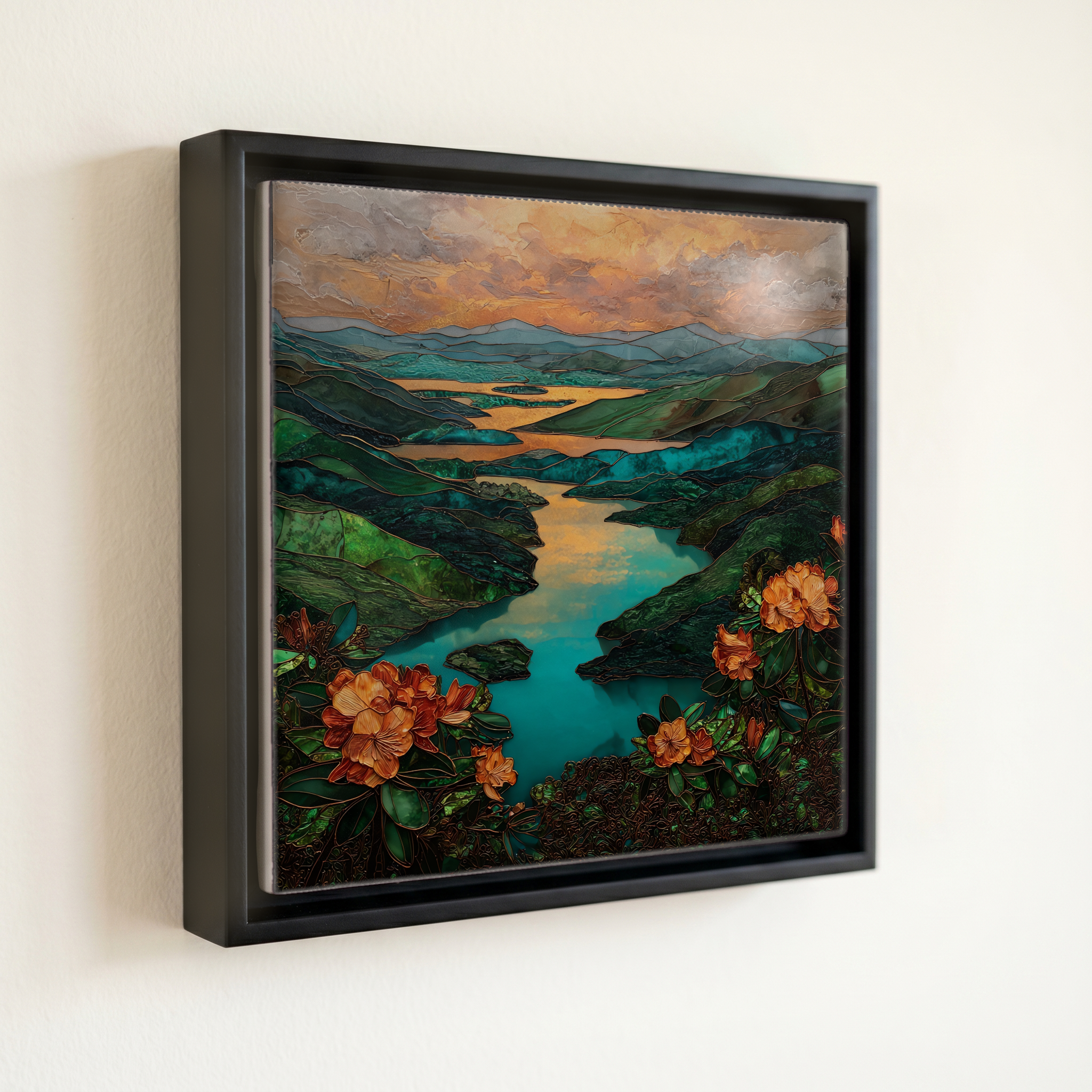
Above the linens, in a slim black surround.
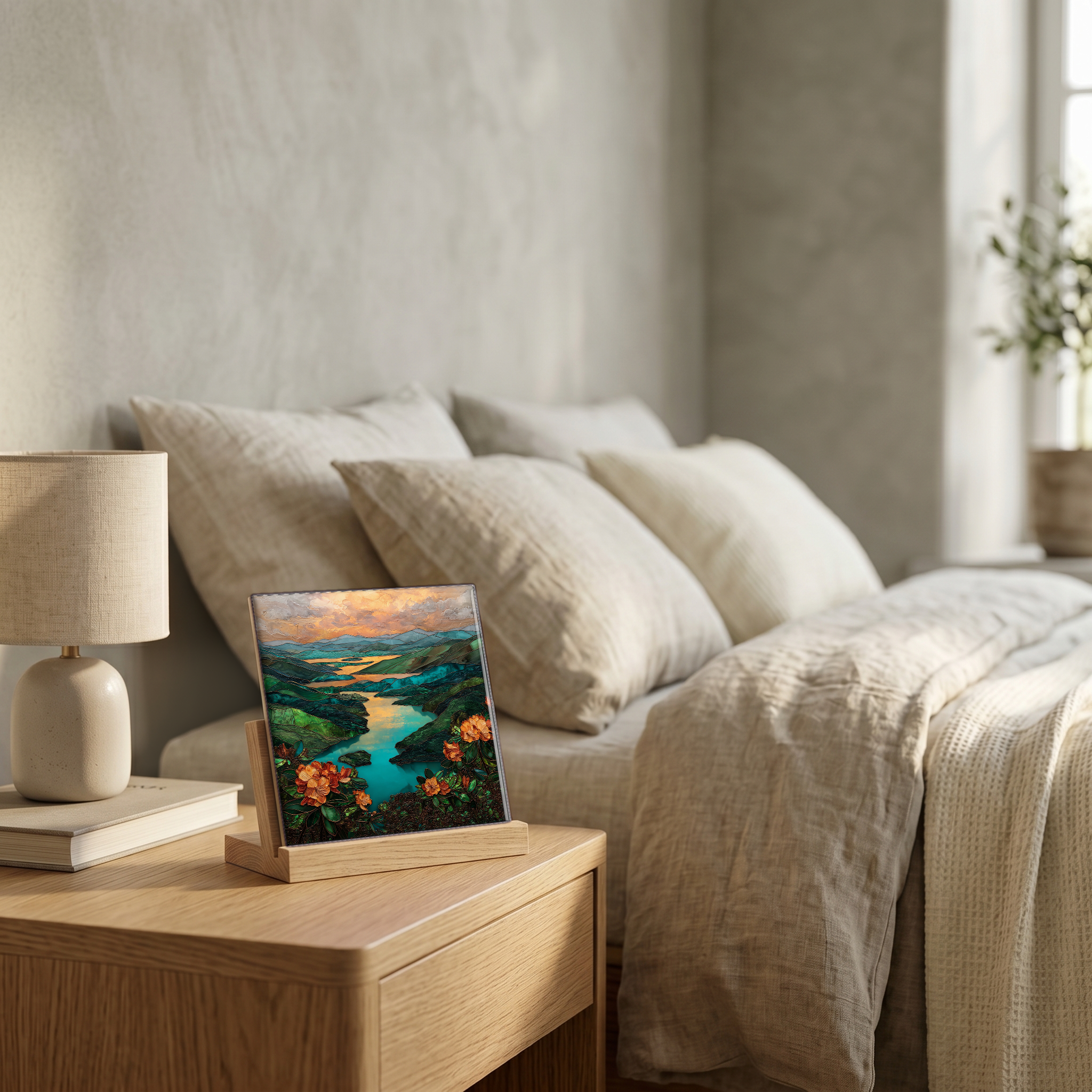
On the nightstand, on a light oak stand.
On a picture ledge, where the light comes in.
a note from the studio

Three lakes in a chain through Killarney National Park, joined by a single river that meets at the Old Weir Bridge. The largest, Lough Leane, holds Innisfallen Island and the ruins of a medieval monastery. The Macgillycuddy's Reeks rise behind everything. The water reads dark, peat-stained from the catchment, until the light catches it and turns it silver. Red deer still drink at the shore in the morning, the same continuous herd that has been here since the last Ice Age. People have been writing about this view for two hundred years and they don't seem to have run out of things to say.
from the studio
shown in a slim black floating frame · 6 × 6 in
— bring it home

Killarney Lakes, on ceramic.

Each tile is finished by hand in our Knoxville studio. Artwork is slowly infused into the ceramic surface under high heat and pressure, and rests beneath a thin glossy finish. The colour lives in the surface, not on top of it.

What kind of piece?
One tile — square or rectangle.
How big?
the popular one — counter, shelf, nightstand
6 × 6 in · 15 cm · 1.6 lb
Surface finish
A clear glossy finish — the artwork reads as if under resin. Ideal for show-pieces and framed wall art.
How it sits
A hidden cleat — sits ¼″ proud of the wall.
$58
Hand-finished and shipped from our studio at the foot of the Smokies. On your wall in about ten days.
size
6 × 6 in
15 cm
weighs
1.6 lb
solid in the hand
surface
ceramic, hand-finished
art rests beneath a thin glossy finish
from
Knoxville, TN
our family studio, at the foot of the Smokies
— start a Coaster Set

Pick any four 4-inch tiles — National Parks you've been to, a Smokies set, the four seasons of one place. $ for a set of , cork-backed, ready to live on the table.
comes gift-ready
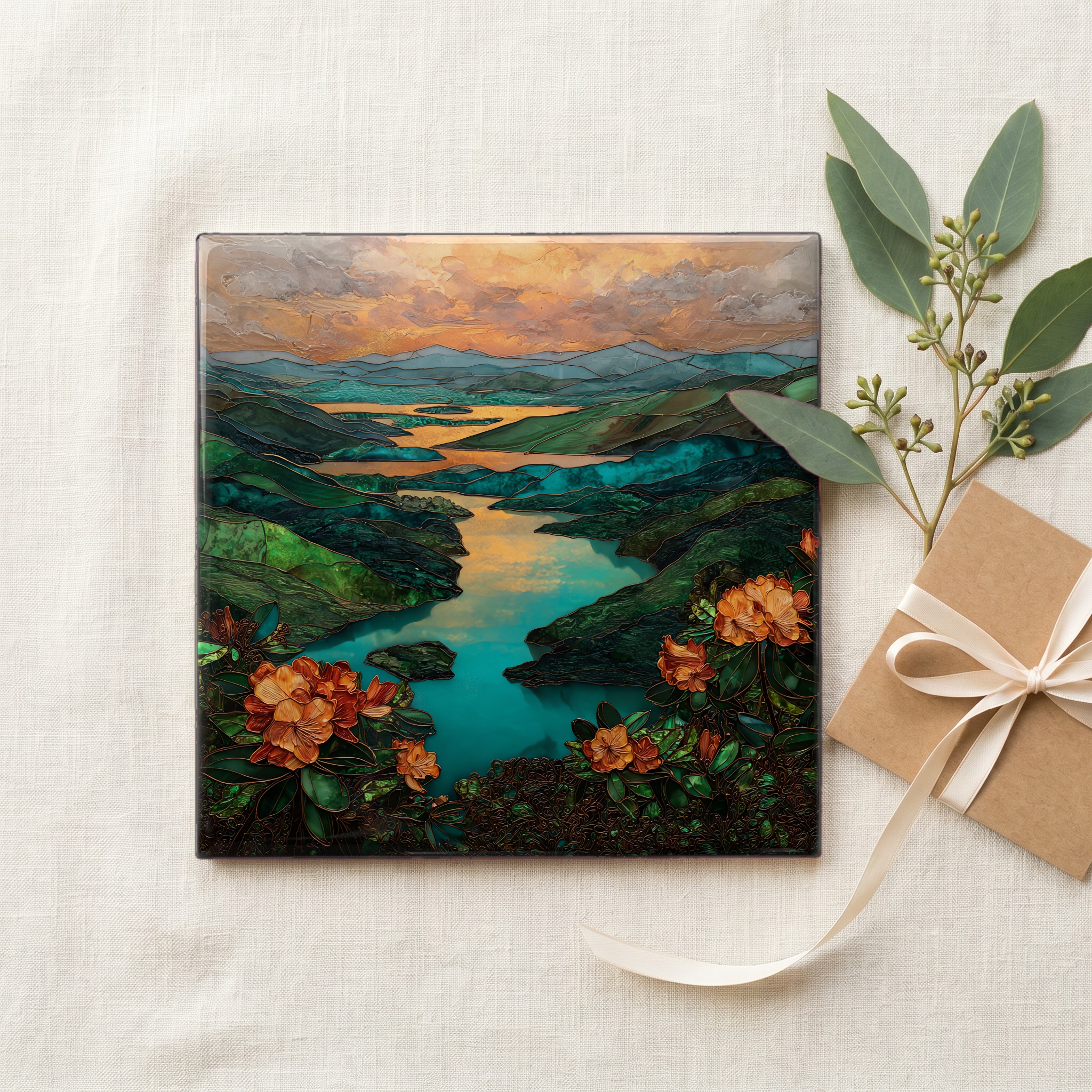
comes gift-ready

Each tile ships in a kraft box, tied with cream ribbon, with a handwritten note from the studio if you'd like to add one.
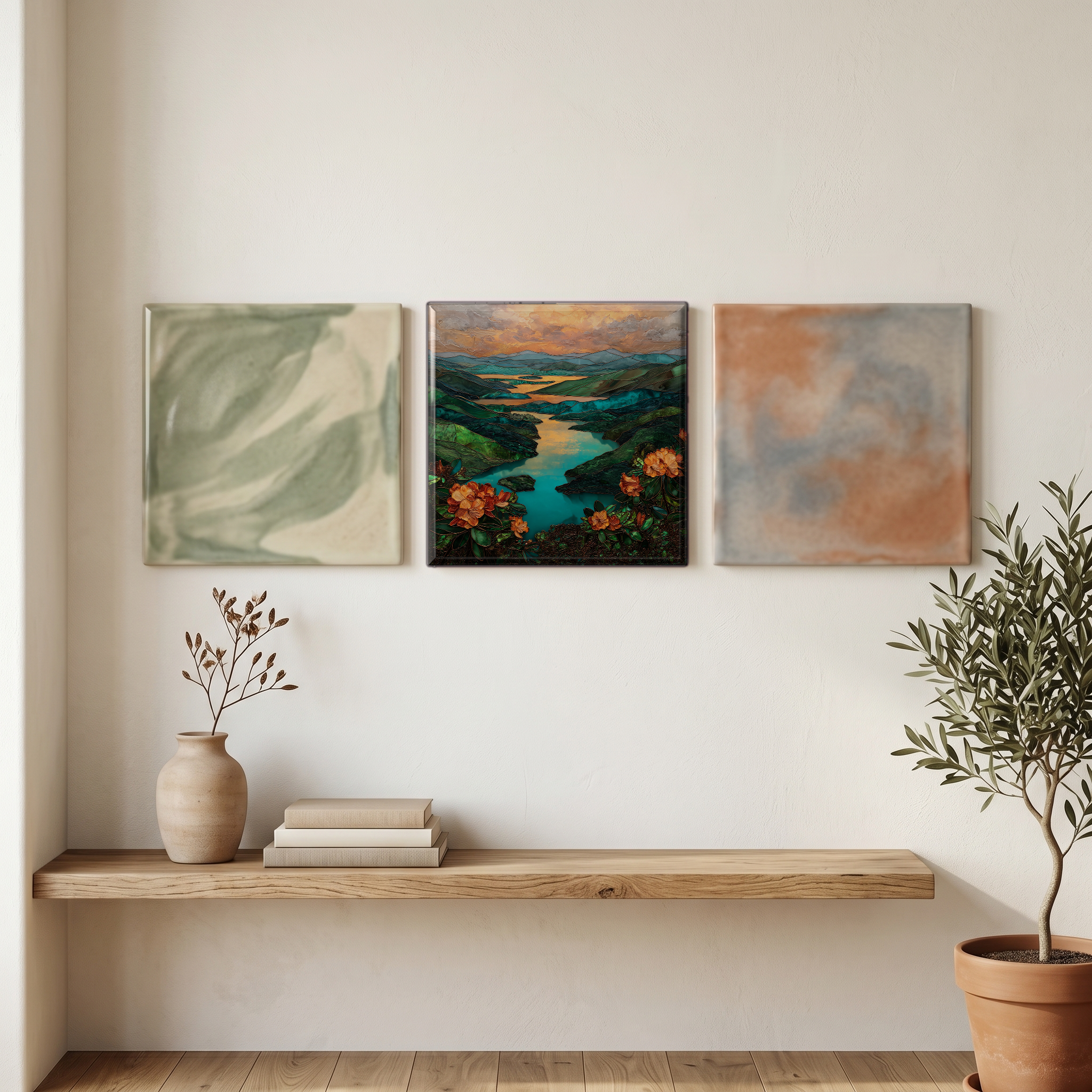
or build a grouping
or build a grouping

Three or five different vistas, hung together — a chapter of places you've been, or want to go.

about Killarney Lakes

The place, in three passes.

A little of what's known, in case you fall down the rabbit hole — or want to go see it yourself.
the place

The Lakes of Killarney are a chain of three connected lakes in the southwest of Ireland, in County Kerry, set within Killarney National Park. Lough Leane, the largest at roughly 19 square kilometres, lies closest to the town of Killarney at an elevation of about 22 metres above sea level. Muckross Lake (the Middle Lake) and the Upper Lake sit higher and deeper to the south, the three connected by the Long Range river. The chain is held in a basin formed by the Macgillycuddy's Reeks, the highest mountain range in Ireland, rising to 1,038 metres at Carrauntoohil. The park itself, established in 1932 from the donated Muckross Estate, was named a UNESCO Biosphere Reserve in 1981.

the water

The dark, near-black colour of the lake water comes from peat in the surrounding catchment. Rainfall draining through the bogs and old oak and yew woodland of the park carries tannins into the lakes, which absorb the shorter wavelengths of light and leave the surface reading brown to black under cloud. The same chemistry holds the endemic Killarney shad, a freshwater herring relict from the last glaciation found only in Lough Leane. Muckross Lake is the deepest of the three at about 73 metres, deep enough that its surface holds the reflection of Torc Mountain even on a windless morning. The Meeting of the Waters at the Old Weir Bridge is where all three lakes briefly run together.

the season

Killarney is reached most easily by road from Cork (about 90 km east) or from Dublin (about 300 km northeast). The park is open all year and free to enter. May and June bring the longest light and the lowest rainfall, with rhododendron flowering on the slopes (much of it invasive Rhododendron ponticum the park has worked to remove since the 1980s). October turns the oak and beech of Muckross gold. Winter is wet; Killarney averages around 1,400 mm of rain a year, but the lakes hold their mirror best in the still afternoons of a cold, clear December. Ross Castle and Muckross House run reduced hours from November through March; the Gap of Dunloe road is best avoided in ice.

where
Ireland · County Kerry, Munster
within
Killarney National Park
elevation
22 m · 72 ft
position
52.0200° N · 9.5500° W
the neighborhood

What's nearby.

A handful of named places within an hour's walk or short drive. Some we've already painted; some we will.
2 km NE
Ross Castle
15th-century tower house
1 km N
Innisfallen Island
monastic island
4 km E
Muckross House
19th-century mansion
6 km SE
Torc Waterfall
waterfall
15 km S
Ladies View
scenic viewpoint
12 km W
Gap of Dunloe
mountain pass
10 km W
Macgillycuddy's Reeks
mountain range
5 km N
Killarney town
town
N
Killarney Lakes
Ross Castle
Innisfallen Island
Muckross House
Torc Waterfall
Ladies View
Gap of Dunloe
Macgillycuddy's Reeks
common questions

What people ask.

A few questions we get about Killarney Lakes — and about bringing the piece home.
about the place

In County Kerry in the southwest of Ireland, within Killarney National Park, about 90 kilometres west of Cork and 300 kilometres southwest of Dublin. The three lakes (Lough Leane, Muckross Lake, and the Upper Lake) sit in a basin at the foot of the Macgillycuddy's Reeks.

Peat in the surrounding catchment colours the water. Rain draining through the park's bogs and its yew and oak woodland picks up tannins and carries them into the lakes. The same dissolved organic matter that darkens the surface gives Killarney's water its characteristic glassy black-brown under cloud.

The three lakes total around 33 square kilometres. Lough Leane is the largest at roughly 19 square kilometres, Muckross Lake the deepest at about 73 metres, and the Upper Lake the smallest and highest. The Long Range river connects all three through the Meeting of the Waters at the Old Weir Bridge.

The ruins of Innisfallen Abbey, an early medieval Christian monastery founded around the seventh century on the largest island in Lough Leane. The Annals of Innisfallen, a Gaelic chronicle of Irish history covering events through the late thirteenth century, was compiled there. Brian Boru is said to have been educated at the monastery.

The native Killarney red deer herd is the only continuous wild population in Ireland and has been present since the last Ice Age. White-tailed eagles, reintroduced beginning in 2007, nest on the lakes. The endemic Killarney shad, a freshwater herring also called the goureen, lives only in Lough Leane.

In 1932, when Arthur Bourn Vincent and his family donated the Muckross Estate to the Irish state. It was the first national park in the Republic of Ireland. The wider park was designated a UNESCO Biosphere Reserve in 1981 and now covers about 102 square kilometres.

From the water by Killarney boat or on foot along the lakeshore paths from Ross Castle and Muckross House. The traditional Gap of Dunloe day combines a pony-and-trap or hike through the gap with a boat back across the three lakes to Ross Castle. Bicycles are allowed on most park roads.

about the piece in your home

It has been a meaningful gift for many of our customers with family in Munster or anyone who has walked the lakes from Ross Castle. Killarney is one of Ireland's most loved landscapes, and the chain of three lakes under the Reeks is the image people carry home. A Medium with a handwritten note from the studio carries well.

The deep peat-dark water and mountain greens read well with Cottagecore, Celtic-traditional, and Mountain-modern interiors. The piece holds against an oak panel, a stone wall, or a quiet linen-coloured paint. It also sits comfortably in Coastal-modern rooms that want a moodier counterpoint to bleached driftwood and sea blues.

A single Large fills the space above most consoles. For a sofa, a four-tile Mural carries the eye across the back wall, and a nine-tile Mural is the right scale for a long living-room wall over an extended sectional. The Medium suits a hallway or a stairwell return.

Yes, with the Dura Satin or Matte finish. The Glossy finish is reserved for show pieces and framed wall art. Dura Satin is the standard choice for a kitchen backsplash or a shower wall: soft sheen, scratch-resistant, and the colour lives in the surface.

A microfibre cloth and water for daily care. For a kitchen tile with grease, a mild dish soap is fine. The colour lives in the ceramic surface beneath a thin glossy finish, so it does not lift with cleaning. Avoid abrasive pads on the Glossy finish.

Yes. Every WenderVista piece is created in our Knoxville, Tennessee studio under Reid Wender's curation, with no licensing and no stock art. Each tile is hand-finished in-house. The Killarney Lakes piece is part of our Ireland atlas and exists in no other catalogue.

Yes, particularly for Irish pubs, hotel lobbies, or restaurants leaning into a Celtic or coastal-traditional palette. The four-tile Mural is the most common choice for behind a bar or in an entry foyer. We offer trade pricing on orders of three or more pieces.

if this one stayed with you

A few you might also love.

Hand-picked by the eye that found Sorapis. Same air, same kind of quiet.