Wender·Vista
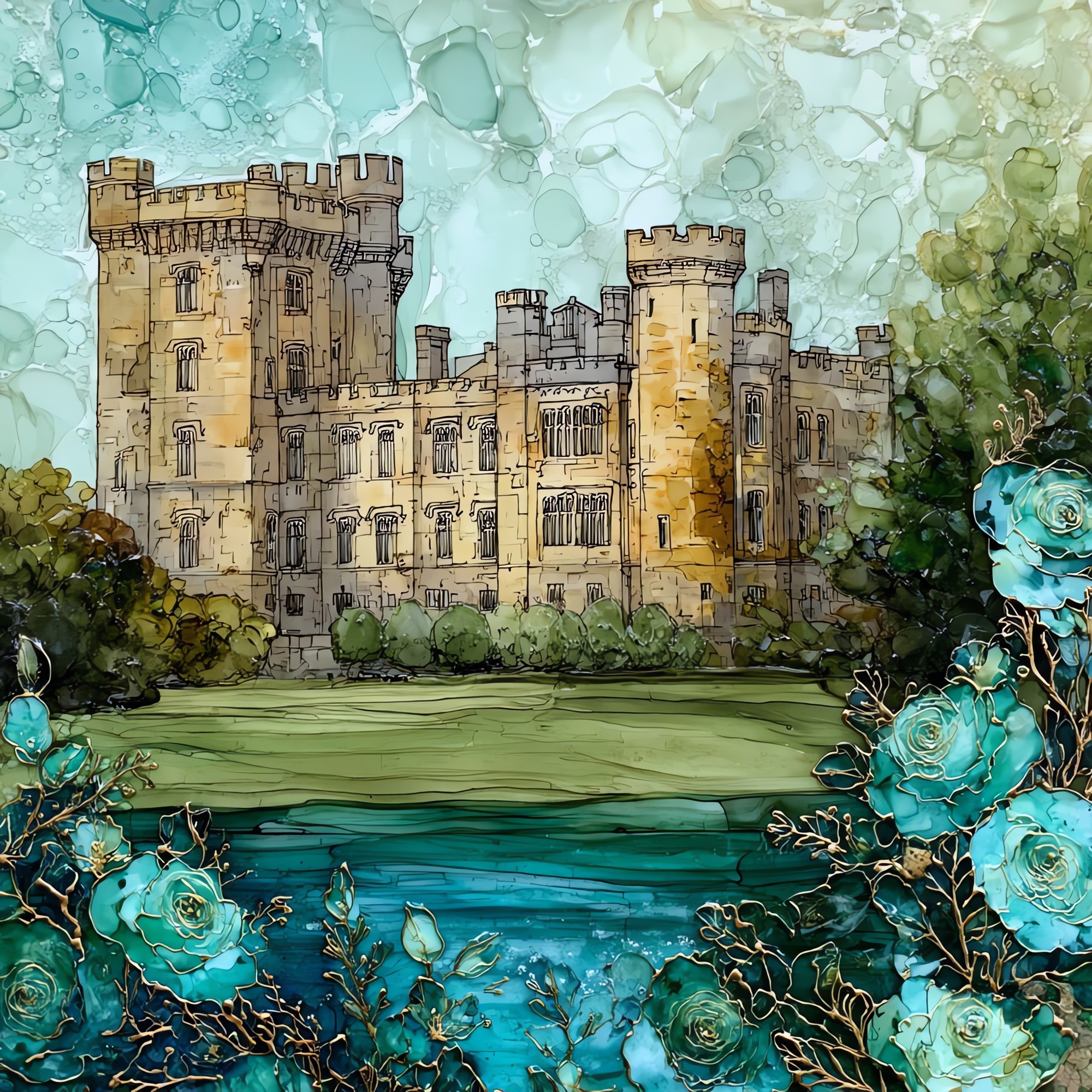
Kilkenny Castle
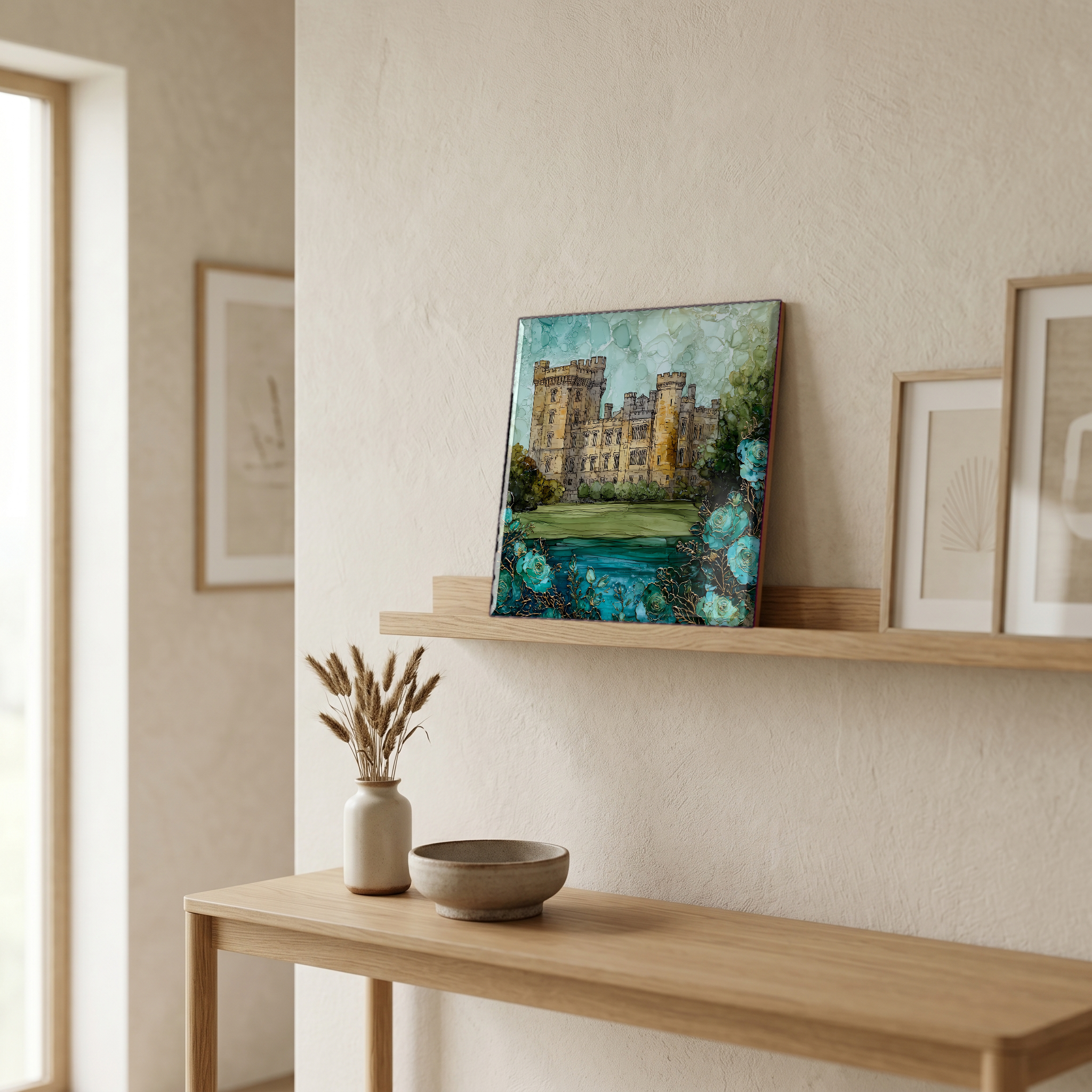
shown on ceramic, 12-inch tileIreland
on a bend of the River Nore, southeast Ireland

Kilkenny Castle

— eight centuries leaning into the bend of the Nore.

Where it lives

Not only on a wall.

A small tile on the nightstand catching the morning. A larger one above the fire. Yours, wherever you spend the slow hours.
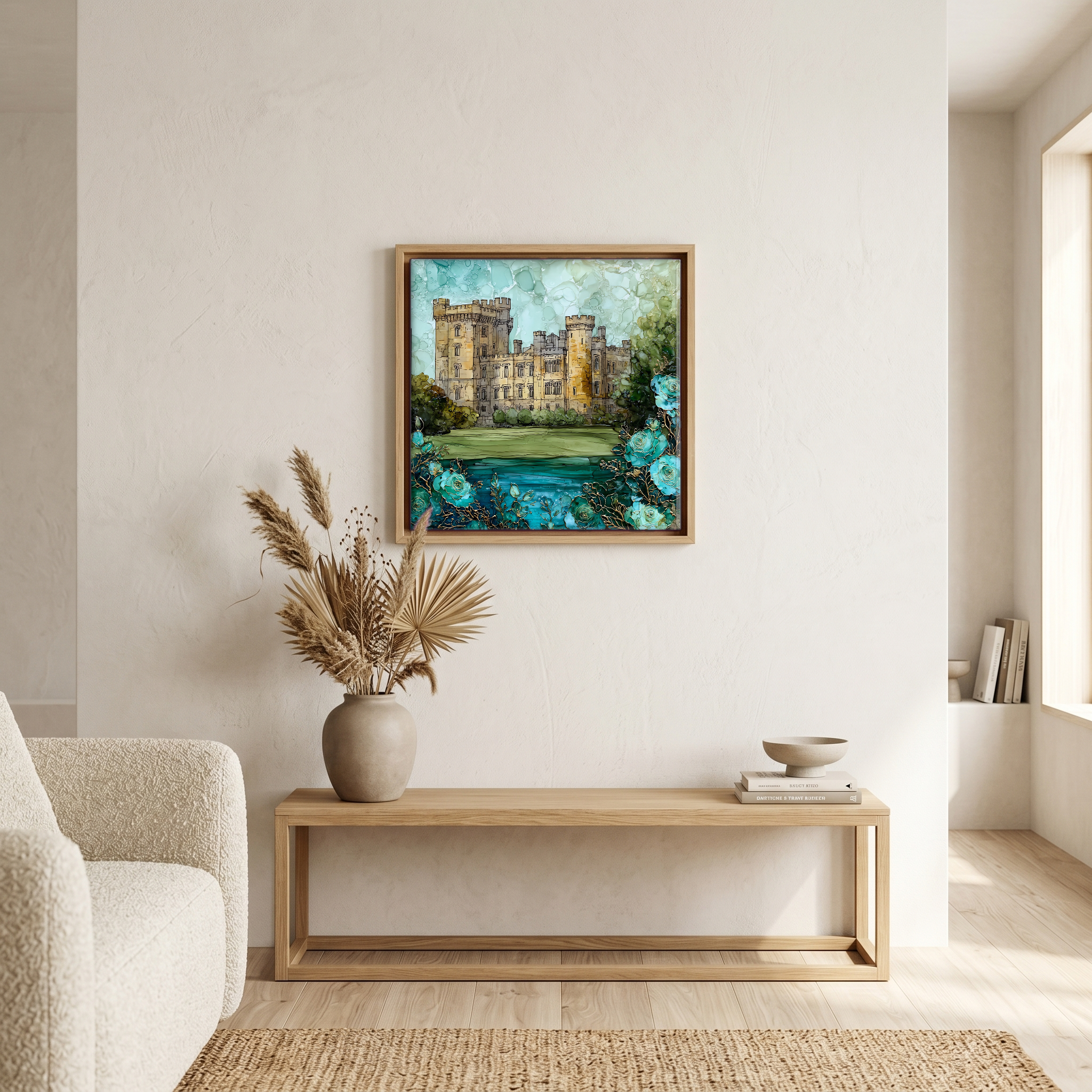
Above the bench, in a warm oak surround.
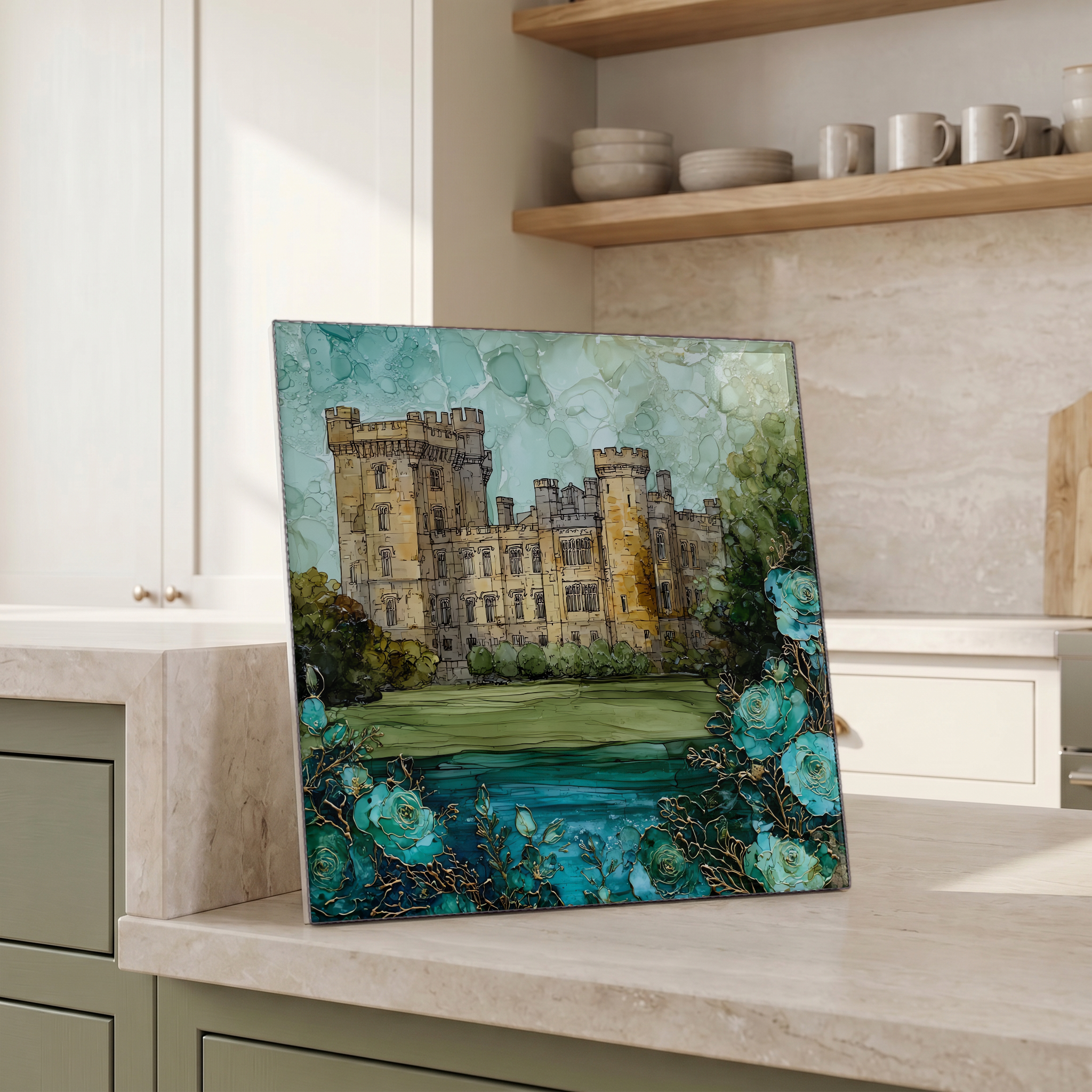
Beside the kettle, propped on the counter.
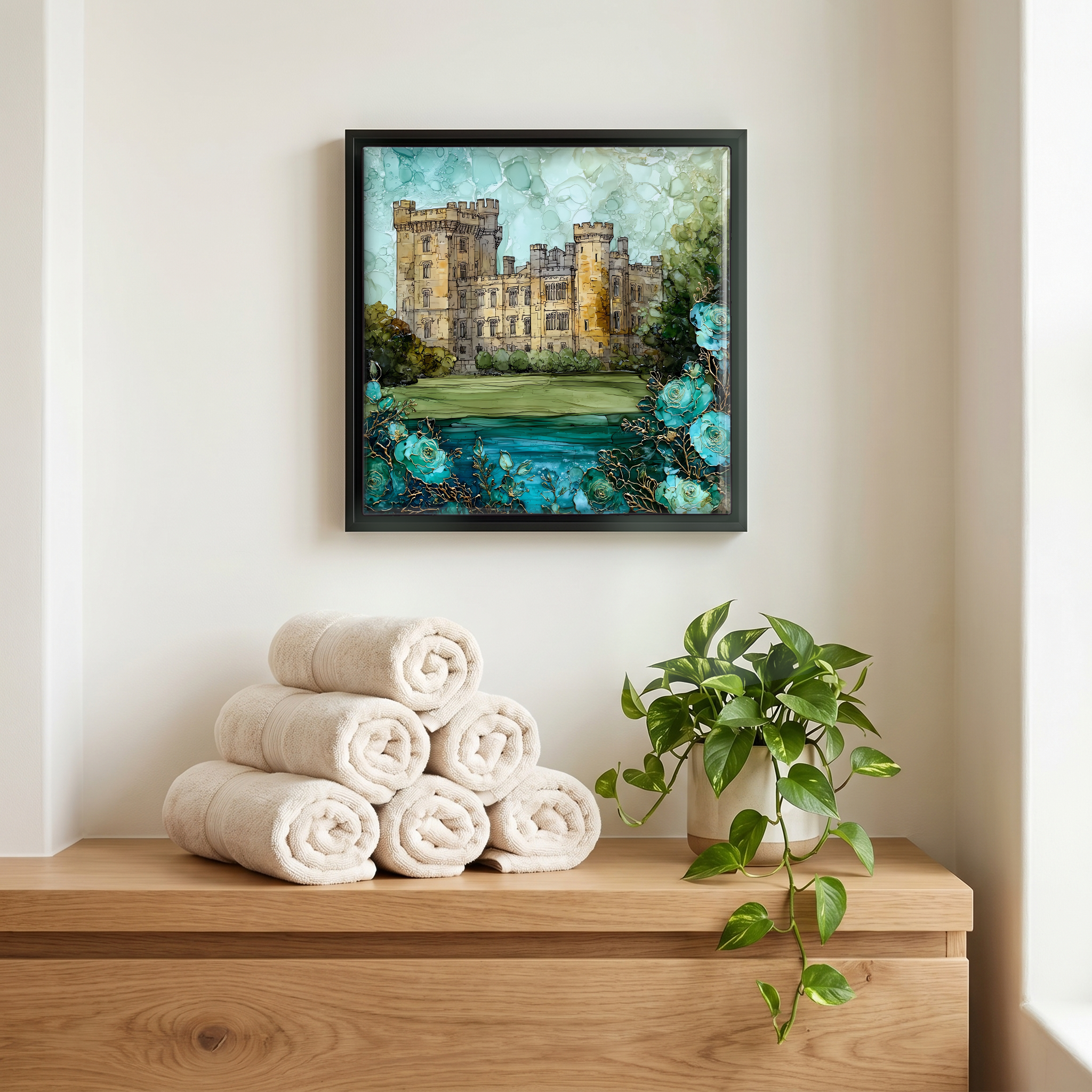
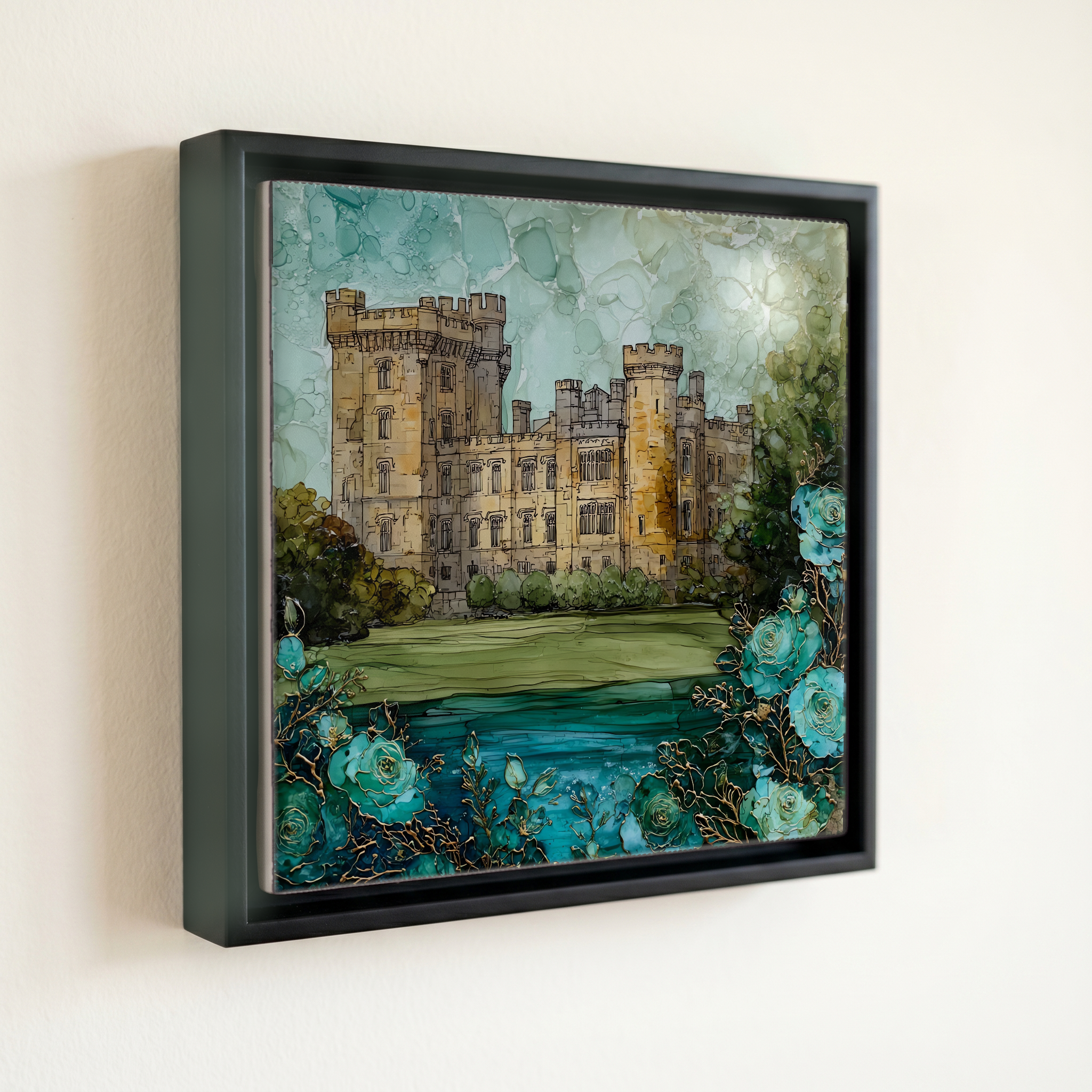
Above the linens, in a slim black surround.
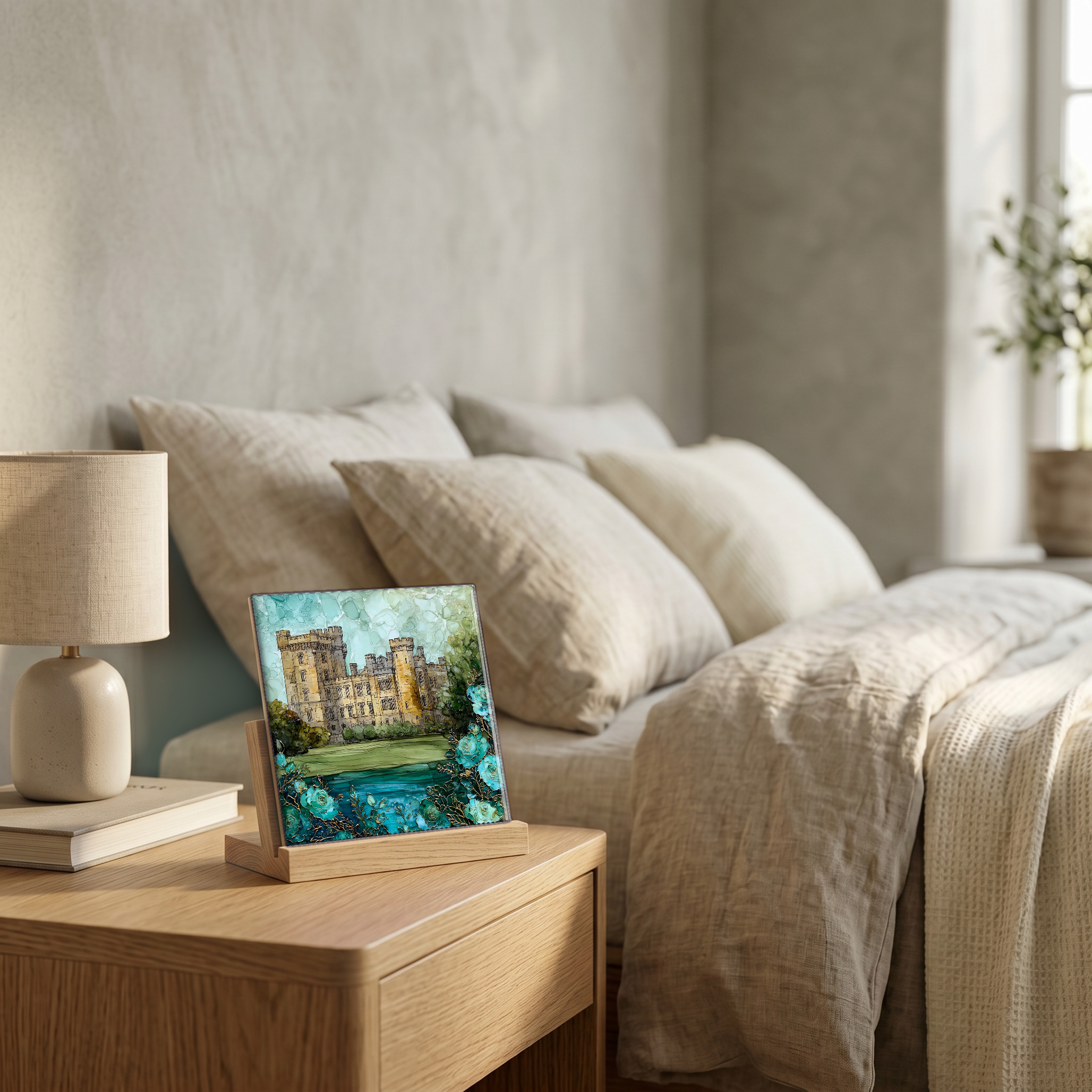
On the nightstand, on a light oak stand.
On a picture ledge, where the light comes in.
a note from the studio

A Norman castle on a high bend of the River Nore, built in 1195 and held by the Butler family for nearly six hundred years. In 1967 the sixth Marquess of Ormonde sold it to the people of Kilkenny for fifty pounds, and the town has run it since. Three of the original four corner towers still stand. Inside, the Long Gallery is the surprise — a hammerbeam roof painted with Celtic figures, and a row of family portraits the building seems to have grown around. The grounds run down to the river, fifty acres of lawn and beech.
from the studio
shown in a slim black floating frame · 6 × 6 in
— bring it home

Kilkenny Castle, on ceramic.

Each tile is finished by hand in our Knoxville studio. Artwork is slowly infused into the ceramic surface under high heat and pressure, and rests beneath a thin glossy finish. The colour lives in the surface, not on top of it.

What kind of piece?
One tile — square or rectangle.
How big?
the popular one — counter, shelf, nightstand
6 × 6 in · 15 cm · 1.6 lb
Surface finish
A clear glossy finish — the artwork reads as if under resin. Ideal for show-pieces and framed wall art.
How it sits
A hidden cleat — sits ¼″ proud of the wall.
$58
Hand-finished and shipped from our studio at the foot of the Smokies. On your wall in about ten days.
size
6 × 6 in
15 cm
weighs
1.6 lb
solid in the hand
surface
ceramic, hand-finished
art rests beneath a thin glossy finish
from
Knoxville, TN
our family studio, at the foot of the Smokies
— start a Coaster Set

Pick any four 4-inch tiles — National Parks you've been to, a Smokies set, the four seasons of one place. $ for a set of , cork-backed, ready to live on the table.
comes gift-ready
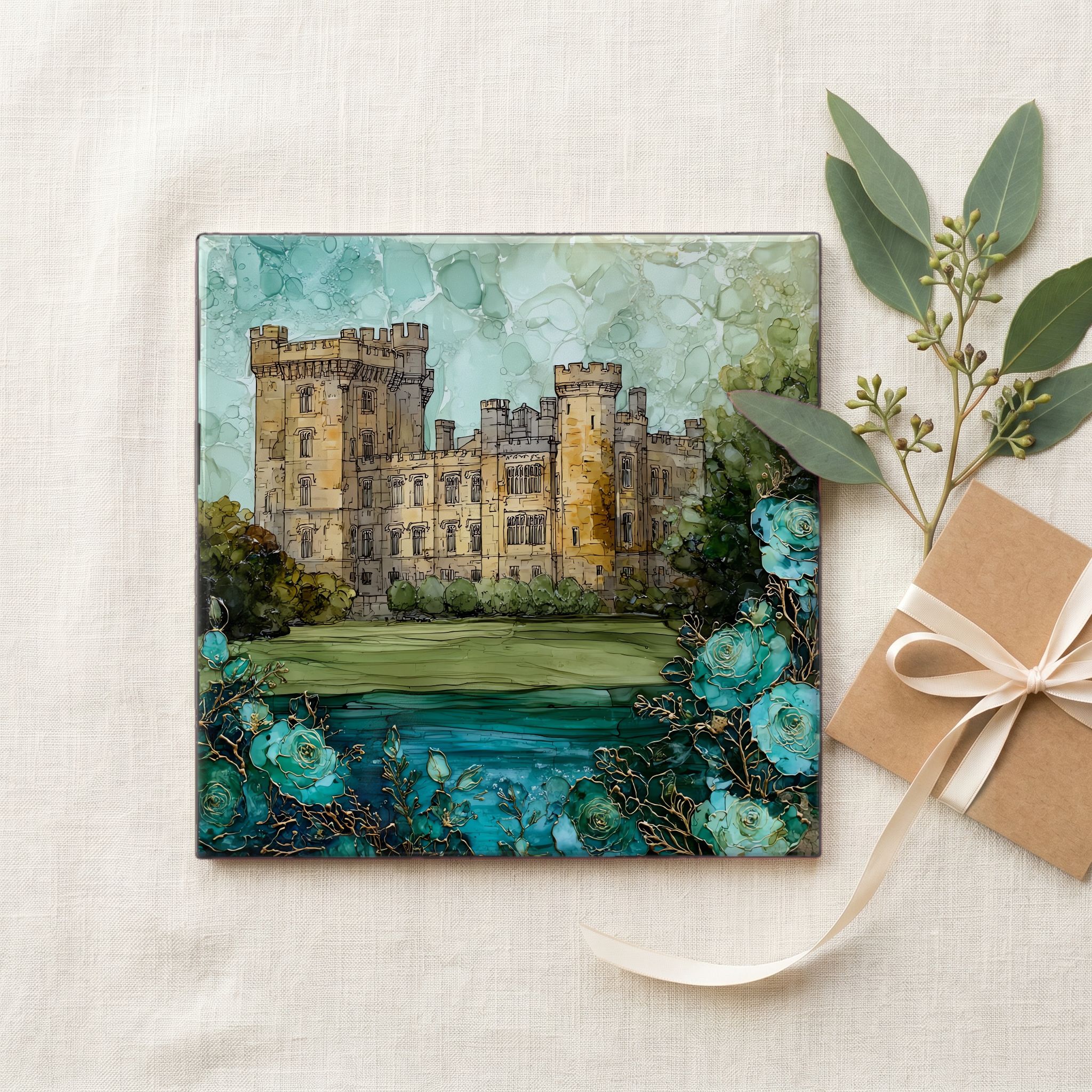
comes gift-ready

Each tile ships in a kraft box, tied with cream ribbon, with a handwritten note from the studio if you'd like to add one.
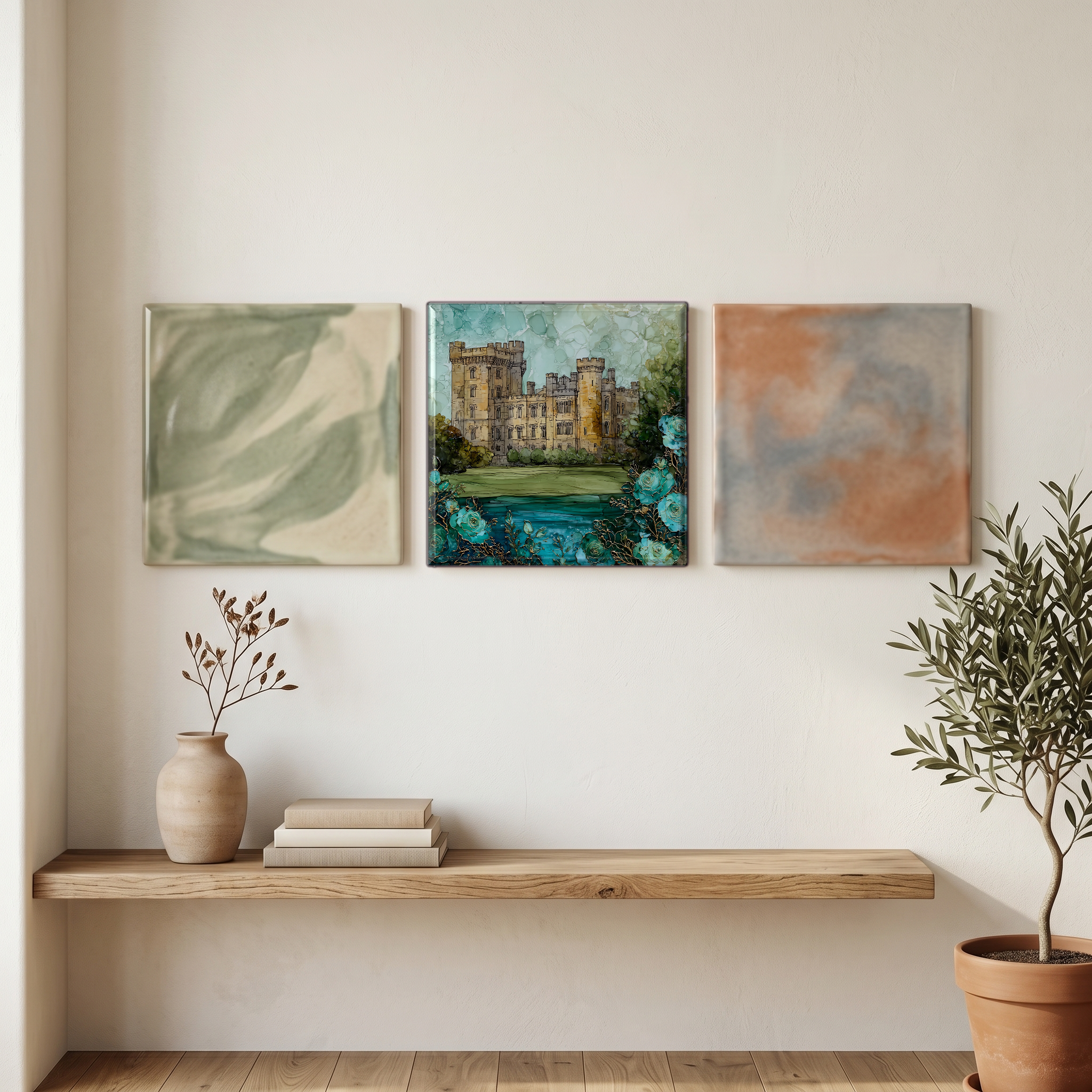
or build a grouping
or build a grouping

Three or five different vistas, hung together — a chapter of places you've been, or want to go.

about Kilkenny Castle

The place, in three passes.

A little of what's known, in case you fall down the rabbit hole — or want to go see it yourself.
the place

Kilkenny Castle stands on the eastern bank of the River Nore in Kilkenny, a medieval city in the southeast of Ireland, about 120 kilometres south of Dublin. The first stone castle on the site was raised in 1195 by William Marshal, the Anglo-Norman lord who took over his father-in-law Strongbow's earlier wooden fortification, to control the fording-point of the river and the junction of the routeways into Munster and Leinster. The castle's footprint is a slightly compressed quadrangle; three of the original four drum towers remain after Cromwellian siege damage in 1650. The 50-acre grounds open onto The Parade and form the south anchor of the city's Medieval Mile.

the stone

The castle's masonry is local Kilkenny limestone, the dark Carboniferous stone behind the city's nickname, the Marble City, and the same material as the nearby St Canice's Cathedral. The four-sided plan dates to the 13th century; the western wing was rebuilt in the 19th century by William Robertson, who reworked the medieval shell in a sober Tudor-Revival style for the Butler family. The Long Gallery, refitted in the 1860s by Thomas Newenham Deane, runs almost the full length of the east wing and is crowned by a hammerbeam roof painted by John Hungerford Pollen with Celtic and pre-Raphaelite figures.

the visit

The castle is owned by the Office of Public Works and open daily for most of the calendar, with reduced winter hours and closures around Christmas. The Picture Gallery, the State Rooms, and the basement kitchens are seen on a guided tour; the gardens and parkland are free to enter from dawn to dusk. Adult admission to the interior runs around eight euros; concessions and the OPW Heritage Card are accepted. The castle sits at the southern end of the Medieval Mile, a few minutes' walk from St Canice's Cathedral and the Black Abbey.

where
Ireland · Kilkenny, County Kilkenny
position
52.6491° N · 7.2497° W
the neighborhood

What's nearby.

A handful of named places within an hour's walk or short drive. Some we've already painted; some we will.
1 km N
St Canice's Cathedral and Round Tower
medieval cathedral and round tower
1 km NW
Black Abbey
Dominican friary
1 km N
Rothe House
Tudor merchant house
at the lake
Kilkenny Design Centre
craft centre in the castle stables
N
Kilkenny Castle
St Canice's Cathedral and Round Tower
Black Abbey
Rothe House
Kilkenny Design Centre
common questions

What people ask.

A few questions we get about Kilkenny Castle — and about bringing the piece home.
about the place

Kilkenny Castle stands on the east bank of the River Nore in Kilkenny city, the county town of County Kilkenny, in the southeast of Ireland. It is about 120 kilometres south of Dublin and 50 kilometres north of Waterford.

The stone castle was built around 1195 by William Marshal, who acquired the site through his marriage to Strongbow's daughter Isabel de Clare. It replaced the earlier wooden fortification on the same spot. The Butler family took possession in 1391 and held the castle for nearly six hundred years.

The original Norman castle had four round drum towers, one at each corner, joined by curtain walls. The southwest tower and the south wing were lost following damage from the Cromwellian siege of 1650 and were never restored. Three towers and three wings remain, set around a slightly compressed quadrangular plan.

In 1967 Arthur Butler, the 6th Marquess of Ormonde, sold the castle to the Kilkenny Castle Restoration Committee for fifty pounds, on behalf of the people of Kilkenny. The Office of Public Works has managed the site since.

The Long Gallery is the castle's grandest interior, refitted in the 1860s by the architect Thomas Newenham Deane. It runs nearly the full length of the east wing and is crowned by a hammerbeam roof painted by John Hungerford Pollen with Celtic and pre-Raphaelite figures. Generations of Butler family portraits line the walls.

Yes. The Picture Gallery, the State Rooms, and the basement kitchens are open to the public, often on a guided tour, and the surrounding 50-acre parkland is free to enter from dawn to dusk. The site is managed by the Office of Public Works.

Yes. The 50-acre parkland and formal rose garden are free to walk during daylight hours; only the interior tour carries a fee. Entrances are off The Parade and from the riverside path along the River Nore.

about the piece in your home

It has been a meaningful gift for our customers with Irish ties. Kilkenny Castle is the recognised face of the city. Locals call it simply the castle, and a Keepsake or Coaster with a handwritten note from the studio carries home well, whether the recipient is from Kilkenny itself or the wider Irish diaspora.

The stained-glass and alcohol-ink palette reads jewel-toned and slightly heraldic: limestone greys against warmer ambers and a few notes of deep red. It sits in Old-World Maximalist, Celtic Revival, and dark-academia interiors. Against a saturated wall colour the leaded lines hold their own.

Yes. The Celtic Revival and dark-academia movements have both held into 2026, particularly in entryways, libraries, and stairwell walls where layered detail is welcome. Tiles in this register tend to be kept and rehung rather than swapped each cycle.

A single Large suits a console or a small sofa wall. For a standard sofa or above a fireplace, the 4-tile Mural reads as one painting and gives the artwork room to breathe. A 9-tile Mural is the choice for a stairwell or a feature wall in an entry hall.

Yes, on a Dura Satin or Matte finish. Both are scratch-resistant and humidity-tolerant and suit backsplashes, shower walls, and steam-rich rooms. The standard Glossy finish is reserved for framed wall pieces and dry interiors.

A soft microfibre cloth and clean water. The colour is slowly infused into the ceramic surface under high heat and pressure and lives beneath a thin protective finish, so household cleaners are unnecessary and abrasive pads should be avoided.

Yes. Every WenderVista piece is curated by Reid Wender and made by the studio in Knoxville, Tennessee. The work is not licensed from a stock library or a third-party artist. Each tile is hand-finished before it ships.

if this one stayed with you

A few you might also love.

Hand-picked by the eye that found Sorapis. Same air, same kind of quiet.