Wender·Vista
Jerpoint Abbey
shown on ceramic, 12-inch tileIreland
in the Nore valley, south of Thomastown

Jerpoint Abbey

the company the cloister still keeps.

Where it lives

Not only on a wall.

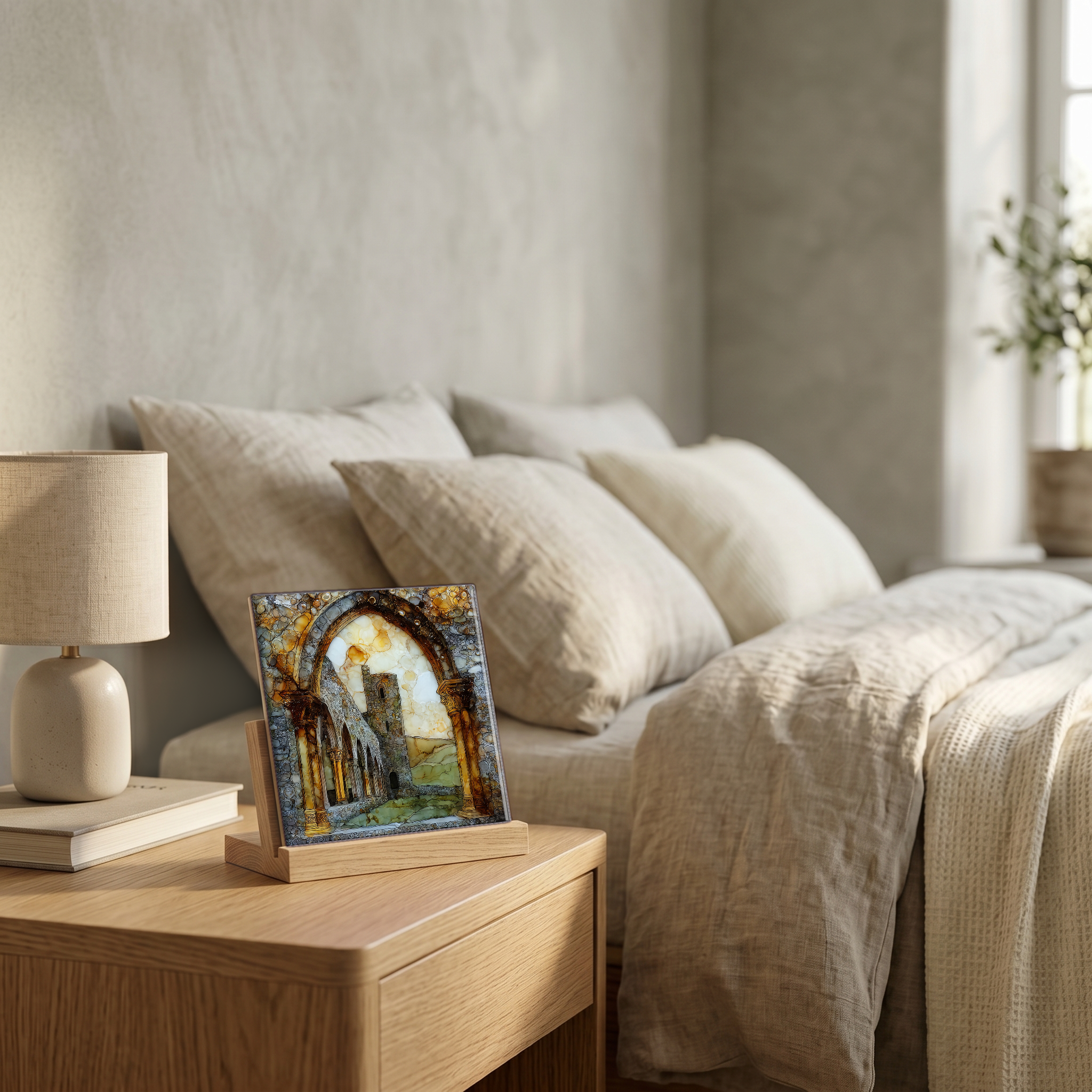
A small tile on the nightstand catching the morning. A larger one above the fire. Yours, wherever you spend the slow hours.
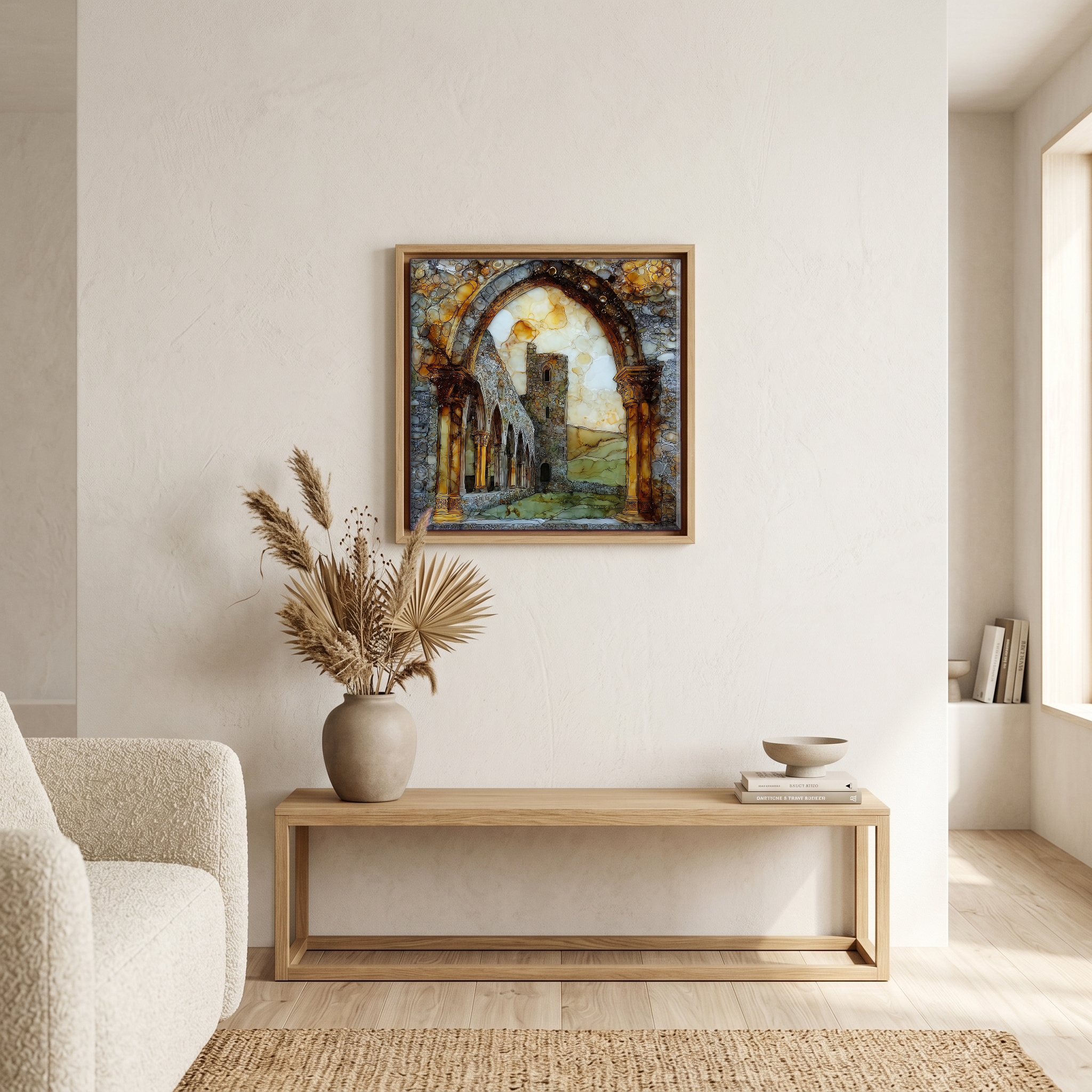
Above the bench, in a warm oak surround.
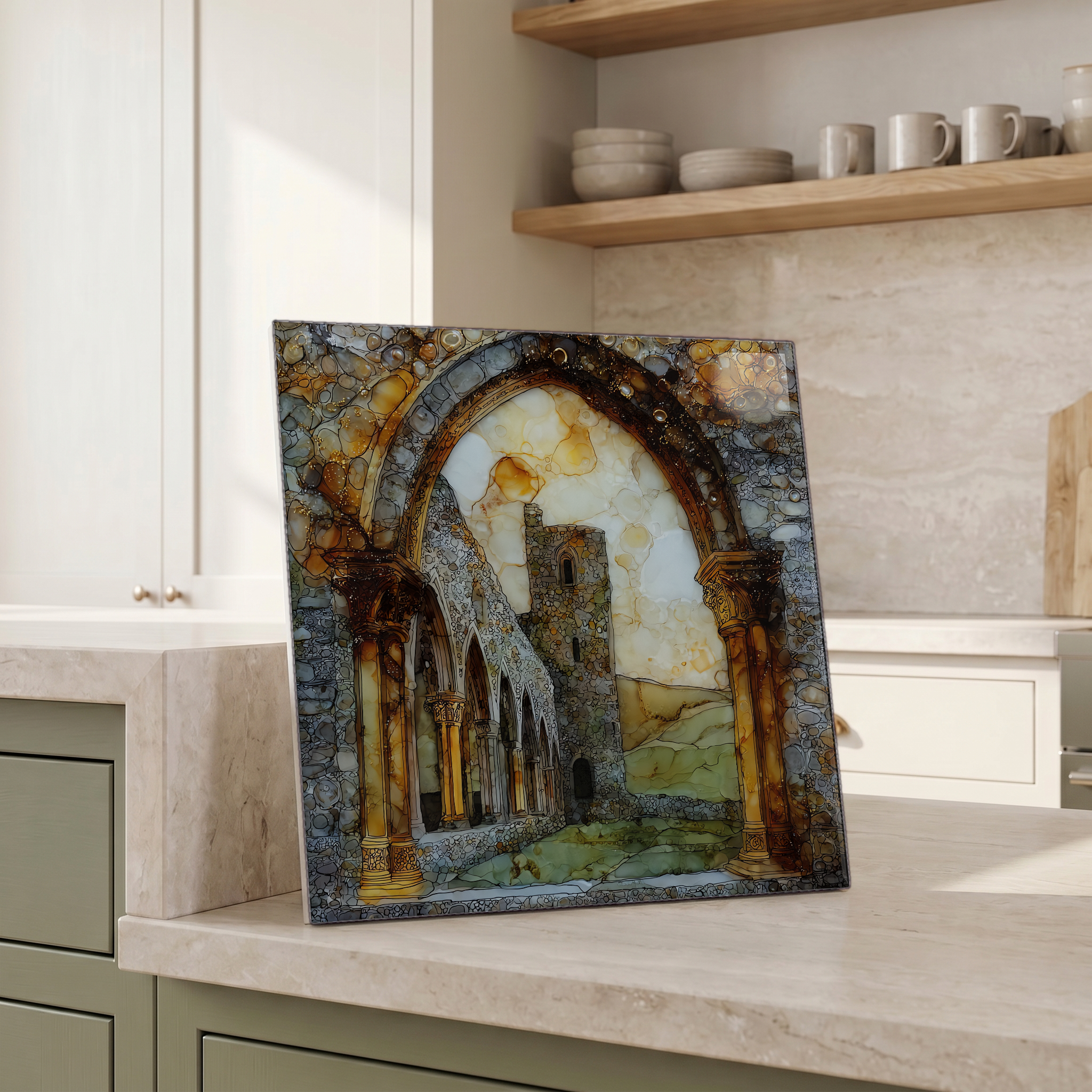
Beside the kettle, propped on the counter.
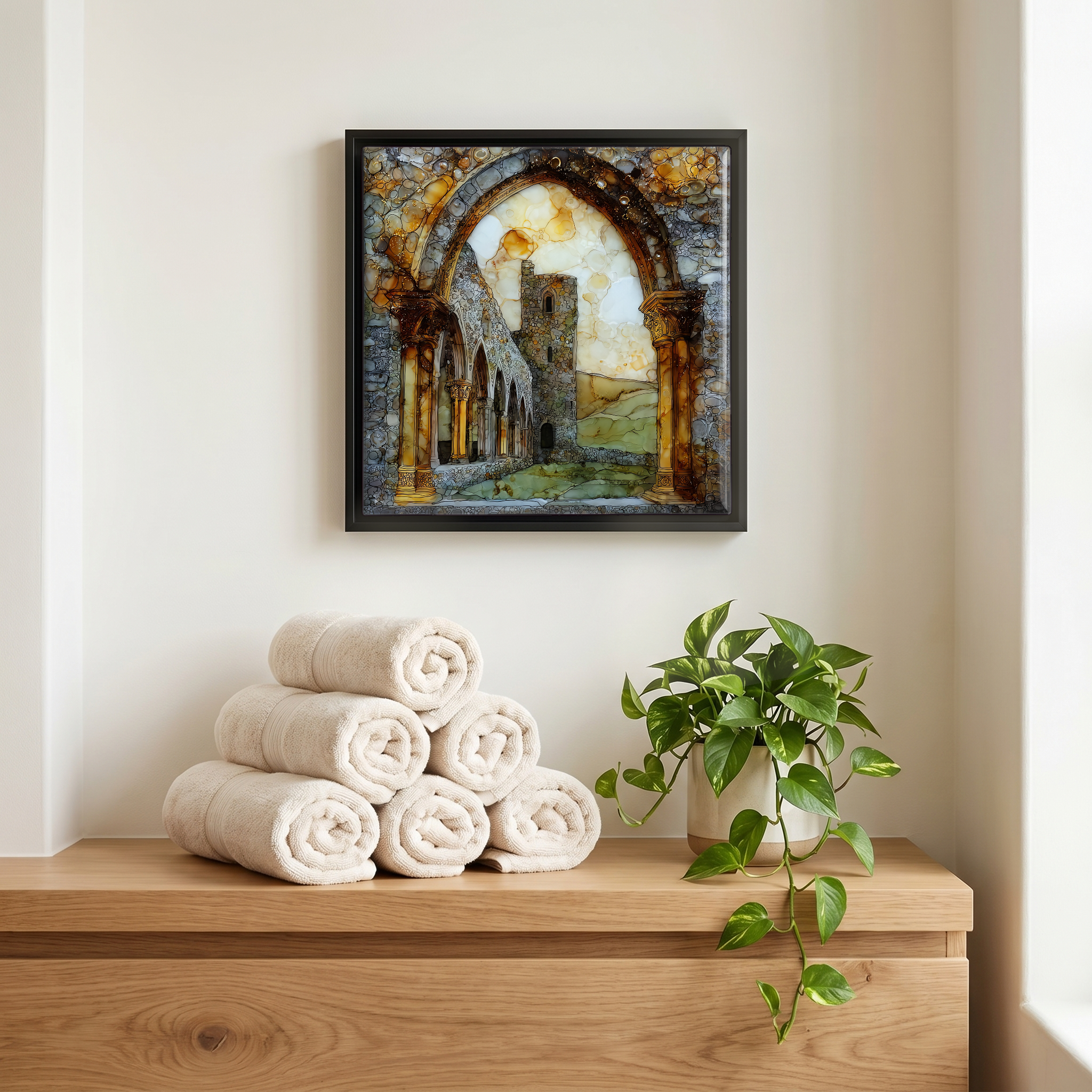
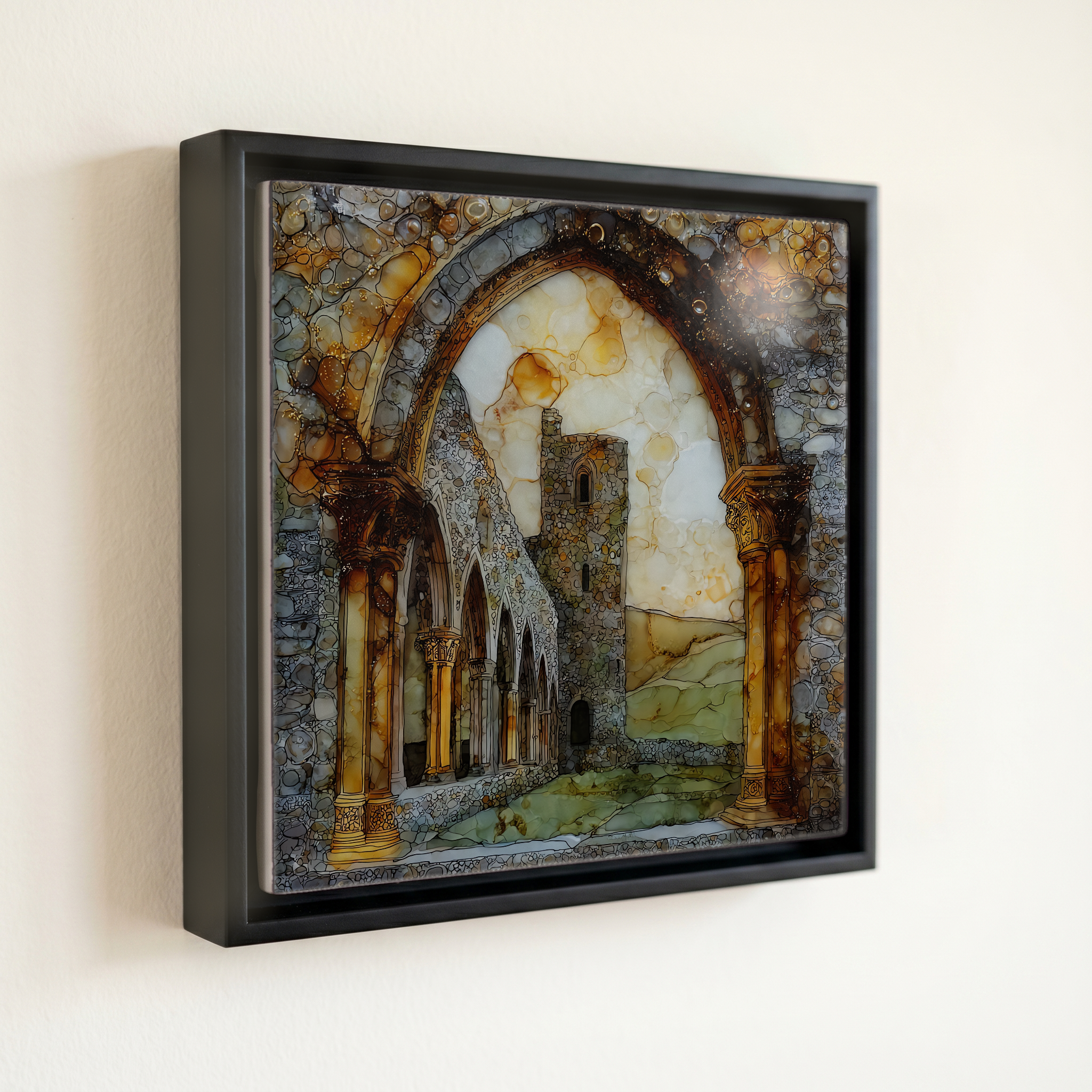
Above the linens, in a slim black surround.
On the nightstand, on a light oak stand.
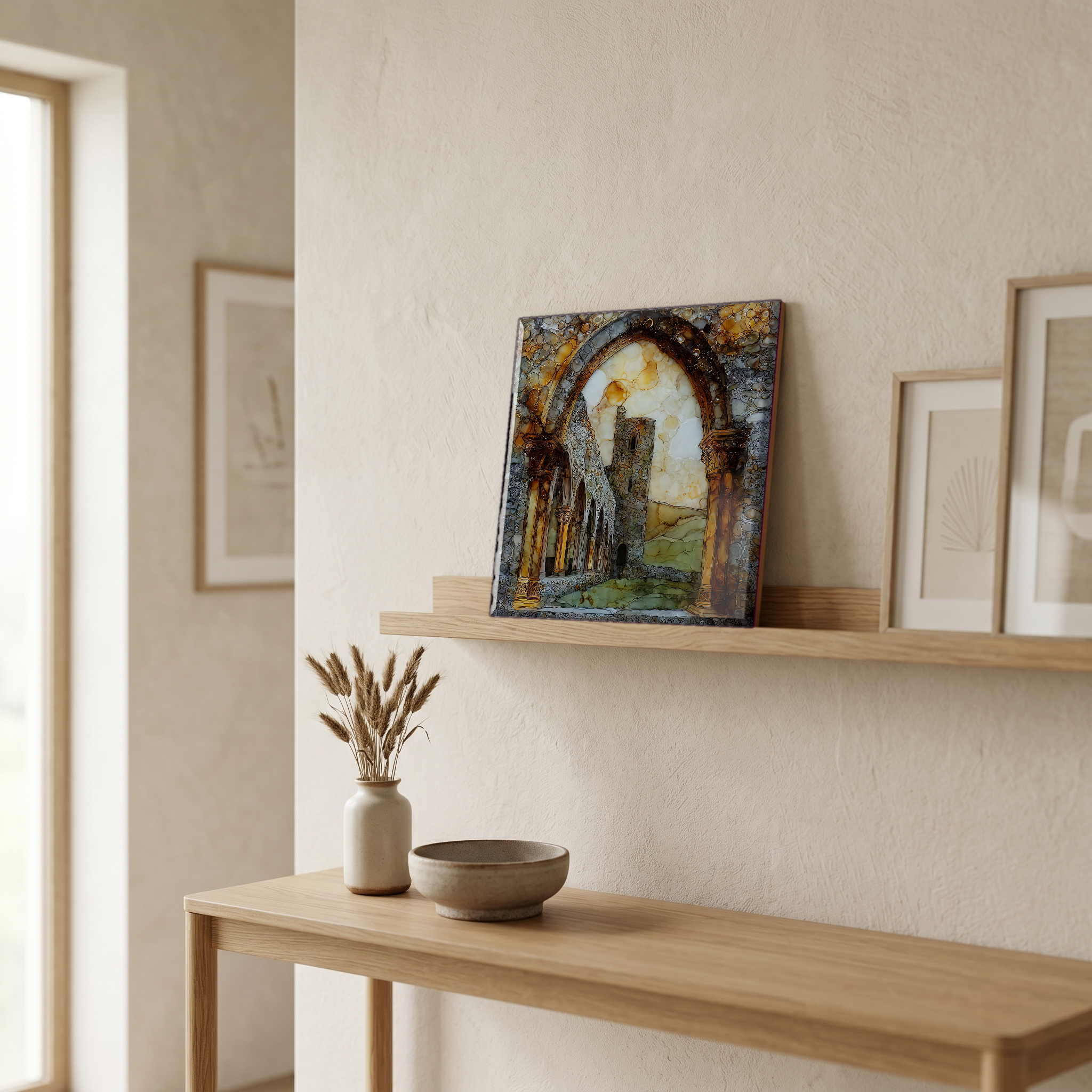
On a picture ledge, where the light comes in.
a note from the studio

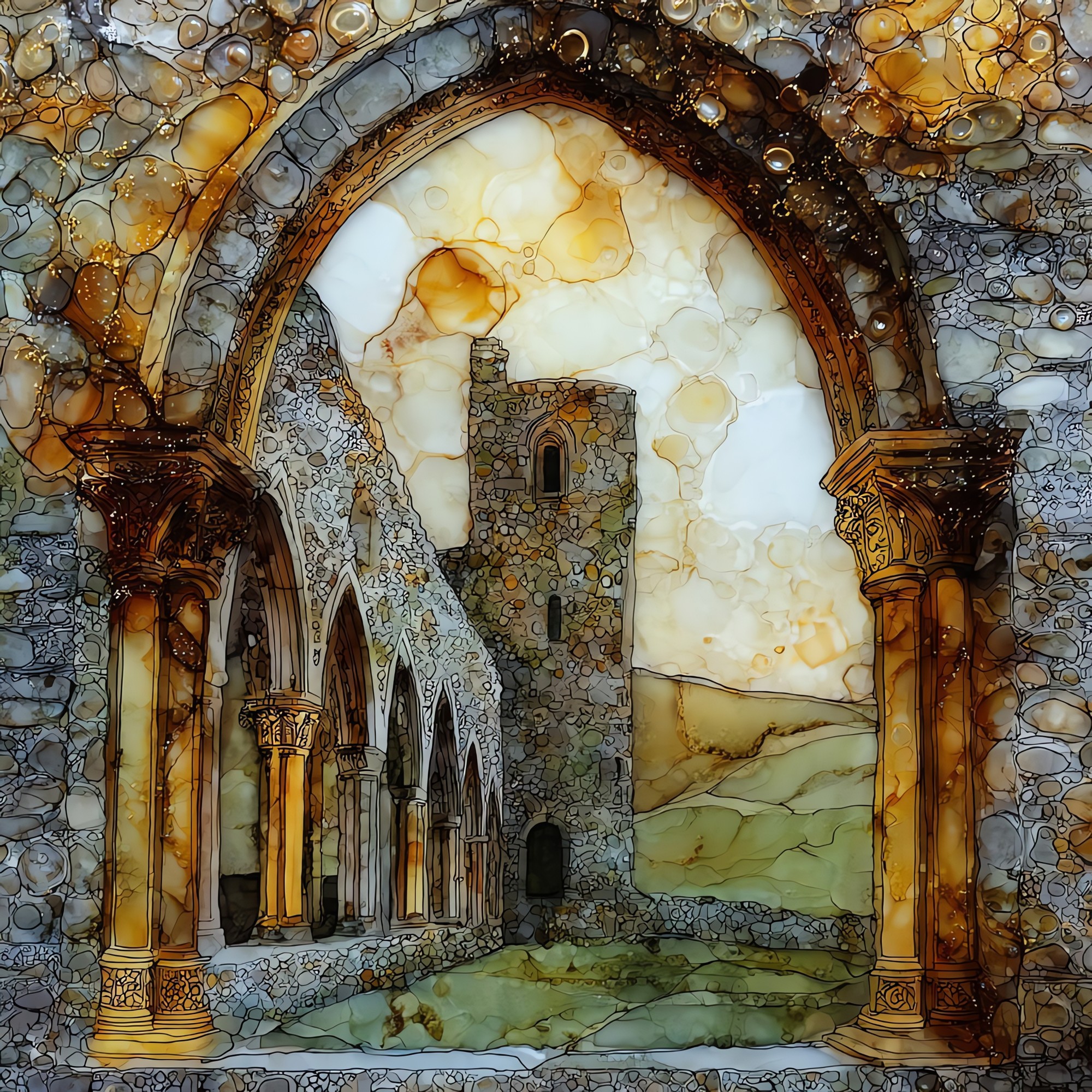
A Cistercian house in the valley of the Nore, south of Thomastown. The white monks who built it in 1180 are long gone; the cloister arcade is not. Saints, knights, ladies, and ecclesiastics still stand carved in the columns where the brothers once walked the daily round. The crossing tower came later, in the fifteenth century, set against the original Romanesque east end. Henry VIII closed the house in 1540. The stone has kept the rest. Best in late light, when the carved figures throw shadows across the garth and the limestone reads almost gold.
from the studio
shown in a slim black floating frame · 6 × 6 in
— bring it home

Jerpoint Abbey, on ceramic.

Each tile is finished by hand in our Knoxville studio. Artwork is slowly infused into the ceramic surface under high heat and pressure, and rests beneath a thin glossy finish. The colour lives in the surface, not on top of it.

What kind of piece?
One tile — square or rectangle.
How big?
the popular one — counter, shelf, nightstand
6 × 6 in · 15 cm · 1.6 lb
Surface finish
A clear glossy finish — the artwork reads as if under resin. Ideal for show-pieces and framed wall art.
How it sits
A hidden cleat — sits ¼″ proud of the wall.
$58
Hand-finished and shipped from our studio at the foot of the Smokies. On your wall in about ten days.
size
6 × 6 in
15 cm
weighs
1.6 lb
solid in the hand
surface
ceramic, hand-finished
art rests beneath a thin glossy finish
from
Knoxville, TN
our family studio, at the foot of the Smokies
— start a Coaster Set

Pick any four 4-inch tiles — National Parks you've been to, a Smokies set, the four seasons of one place. $ for a set of , cork-backed, ready to live on the table.
comes gift-ready
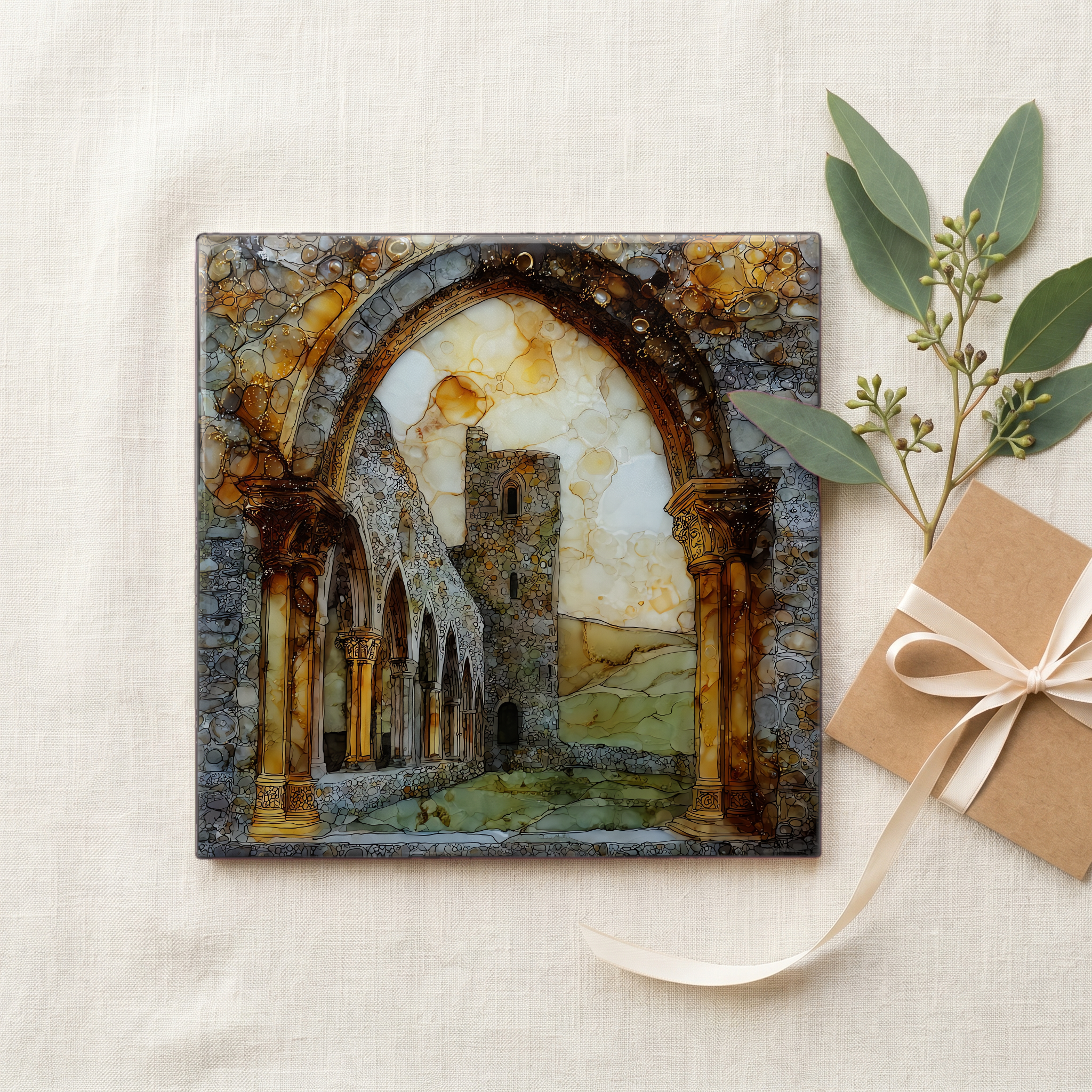
comes gift-ready

Each tile ships in a kraft box, tied with cream ribbon, with a handwritten note from the studio if you'd like to add one.
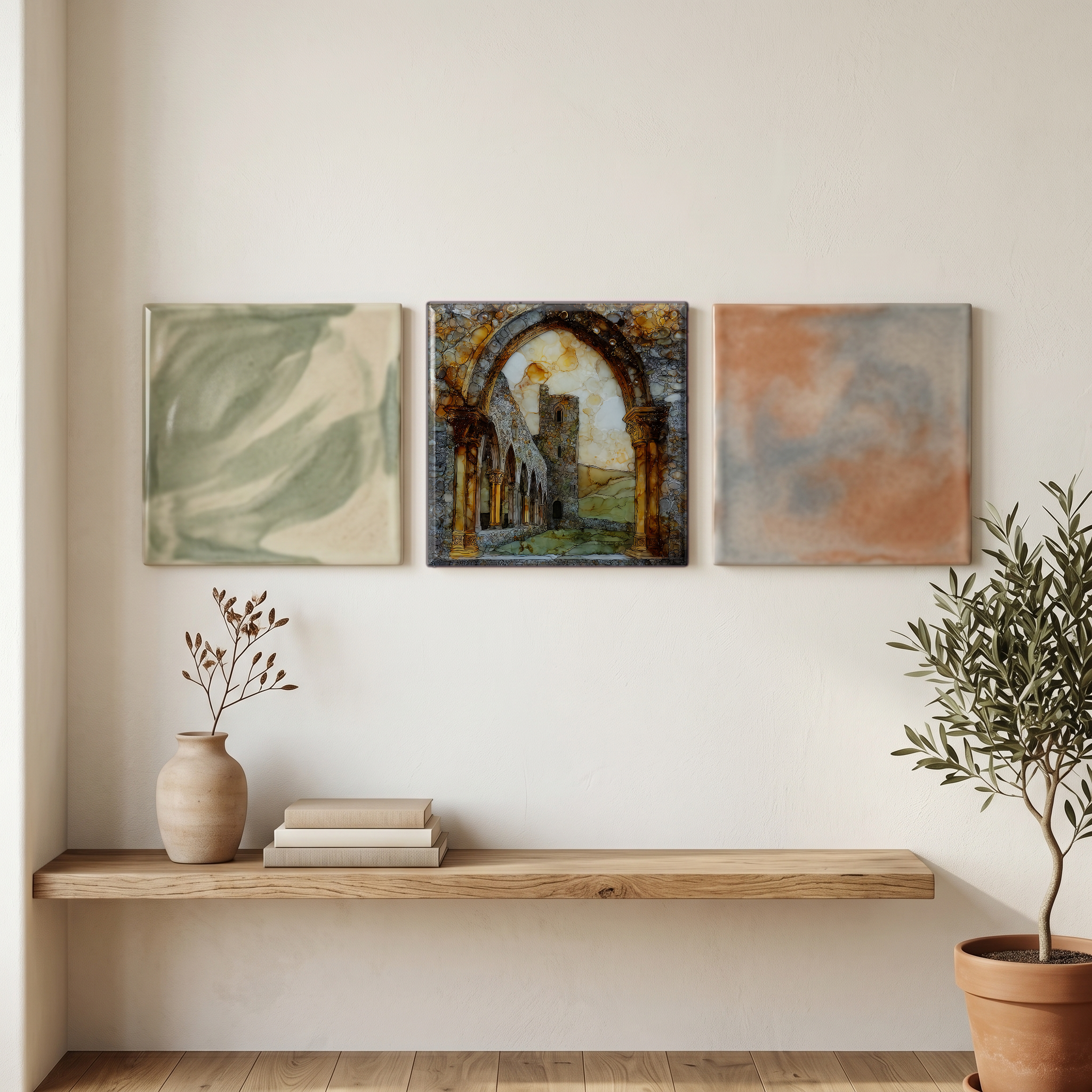
or build a grouping
or build a grouping

Three or five different vistas, hung together — a chapter of places you've been, or want to go.

about Jerpoint Abbey

The place, in three passes.

A little of what's known, in case you fall down the rabbit hole — or want to go see it yourself.
the place

Jerpoint Abbey stands about 2.5 kilometres south of Thomastown in County Kilkenny, in the valley of the River Nore. It was founded around 1180 as a Cistercian house under the patronage of Donnchadh Mac Gilla Pátraic, King of Osraige. The community was a daughter house of Baltinglass Abbey in County Wicklow, which in turn descended from Mellifont, the first Cistercian foundation in Ireland. The white monks held the site for three and a half centuries, until Henry VIII's suppression of the monasteries reached Ireland in 1540 and the lands passed to the Earl of Ormond. The ruins are managed today by the Office of Public Works as a national monument, with seasonal access and a small visitor centre at the gate.

the stone

The Cistercian rule generally forbade decorative sculpture, which makes the carved cloister at Jerpoint a quiet rebellion. The arcade, partially reconstructed in the mid-twentieth century from surviving fragments and dated to the late medieval period, carries paired columns whose shafts depict full-length figures: bishops with crosiers, armoured knights, abbots, and courtly couples. Some are identified by their attributes; many remain anonymous. The crossing tower, added in roughly the same period, replaces an earlier low Romanesque lantern, and the east end of the church retains its original twelfth-century lancets, the oldest stonework on the site. Limestone throughout, weathered to a soft grey-gold.

the visit

The site is in the care of the Office of Public Works and opens to visitors from early March through late November, with reduced hours at the shoulders of the season. A modest admission fee applies, free to holders of an OPW Heritage Card. The visitor centre at the gate holds carved stone fragments and a small collection of medieval grave slabs from the church and chapter house. Inside the church itself, the tomb of Bishop Felix O'Dulany of Ossory, who died in 1202, is the earliest named monument on the site. Parking is on site. Allow ninety minutes for the church, the cloister, and the chapter house.

— informed by Heritage Ireland (OPW)
where
Ireland · Thomastown, County Kilkenny
position
52.5022° N · 7.1525° W
the neighborhood

What's nearby.

A handful of named places within an hour's walk or short drive. Some we've already painted; some we will.
2 km N
Thomastown
market town on the Nore
1 km W
Newtown Jerpoint
deserted medieval town
3 km N
Mount Juliet
country estate
8 km SE
Inistioge
village on the Nore
20 km N
Kilkenny
medieval city
N
Jerpoint Abbey
Thomastown
Newtown Jerpoint
Mount Juliet
Inistioge
Kilkenny
common questions

What people ask.

A few questions we get about Jerpoint Abbey — and about bringing the piece home.
about the place

Jerpoint Abbey stands in the valley of the River Nore, about 2.5 kilometres south of Thomastown in County Kilkenny, Ireland. It is signposted off the N9 road and managed today by the Office of Public Works as a national monument.

The abbey was founded around 1180 by Donnchadh Mac Gilla Pátraic, King of Osraige, as a Cistercian house. It was a daughter house of Baltinglass Abbey in County Wicklow, which in turn descended from Mellifont, the first Cistercian foundation in Ireland.

The carved cloister arcade. Paired columns from the late medieval period carry full-length figures of bishops, knights, courtly couples, and saints. This is unusual sculptural ornament for a Cistercian house, which generally avoided figurative carving in monastic spaces.

Jerpoint was suppressed in 1540 under Henry VIII's dissolution of the monasteries. The lands passed to the Earl of Ormond and the conventual buildings were never restored to religious use. The ruins have stood largely as they are today since the sixteenth century.

The earliest named burial is Bishop Felix O'Dulany of Ossory, who died in 1202 and is preserved in effigy in the church. Later medieval tomb sculpture from local Anglo-Norman families, including the Walshes and the Butlers, survives at the site and in the visitor centre.

A long-standing local tradition holds that the relics of Saint Nicholas of Myra were brought from the Holy Land by Norman crusaders and buried at Newtown Jerpoint, a deserted medieval town less than a kilometre from the abbey. A carved slab in the ruined parish church there marks the supposed grave.

The site opens seasonally from early March through late November, with reduced hours at the start and end of the season. There is a small admission fee and a visitor centre at the gate displaying carved fragments. Entry is free with an OPW Heritage Card.

about the piece in your home

It carries well as a gift for someone with ties to Kilkenny or the Irish southeast. Jerpoint is one of the most recognised medieval sites in the county, and the carved cloister figures are familiar to anyone who has walked the abbey. A Small or Medium with a handwritten note from the studio is the usual choice.

The greys, soft golds, and stained-glass blues read well against heritage-modern, old-world neutral, and warm minimalist rooms. It pairs particularly well with oak, linen, and unpolished brass. Less natural fit for high-gloss contemporary or coastal palettes.

The heritage neutrals (warm grey, soft gold, stained-glass blue) sit comfortably inside the quiet-luxury and old-world maximalist palettes that have held through the last few seasons. The piece also reads well in a Celtic or monastic-modern room, both narrower but enduring style families.

Above a standard three-seater sofa, a single Large reads with quiet authority; a four-tile Mural carries the room. Above a narrow console or entry table, the Medium is the right scale. For a small chapel-style nook, a Small or Keepsake on a stand.

Yes. Order the Dura Satin or Matte finish for vertical installations in damp rooms. Both are scratch-resistant and read without a glossy reflection. The Glossy finish is best kept to framed wall art and showpieces away from steady moisture.

A soft microfibre cloth and warm water. The colour lives in the ceramic surface beneath a thin glossy finish, or beneath Dura Satin or Matte where chosen, so the artwork will not lift or fade from normal cleaning. Avoid abrasive pads and harsh solvents.

Yes. Every piece is curated by Reid Wender and produced in-house at the studio in Knoxville, Tennessee. No designs are licensed in or sold out for reproduction; each vista is hand-finished and ships from us, signed on the back.

if this one stayed with you

A few you might also love.

Hand-picked by the eye that found Sorapis. Same air, same kind of quiet.