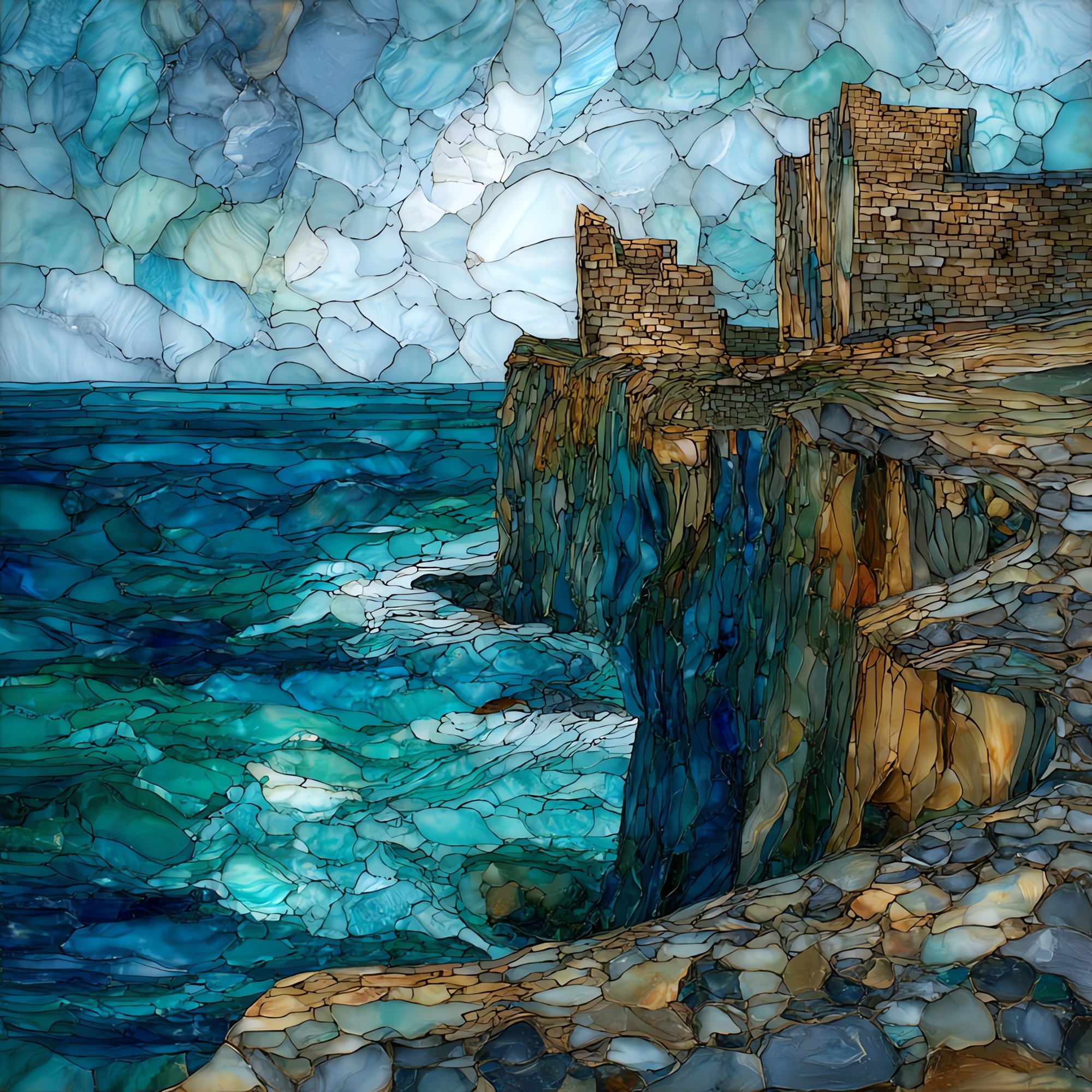
Dún Aonghasa
— half a circle of stone, then the Atlantic.
Not only on a wall.
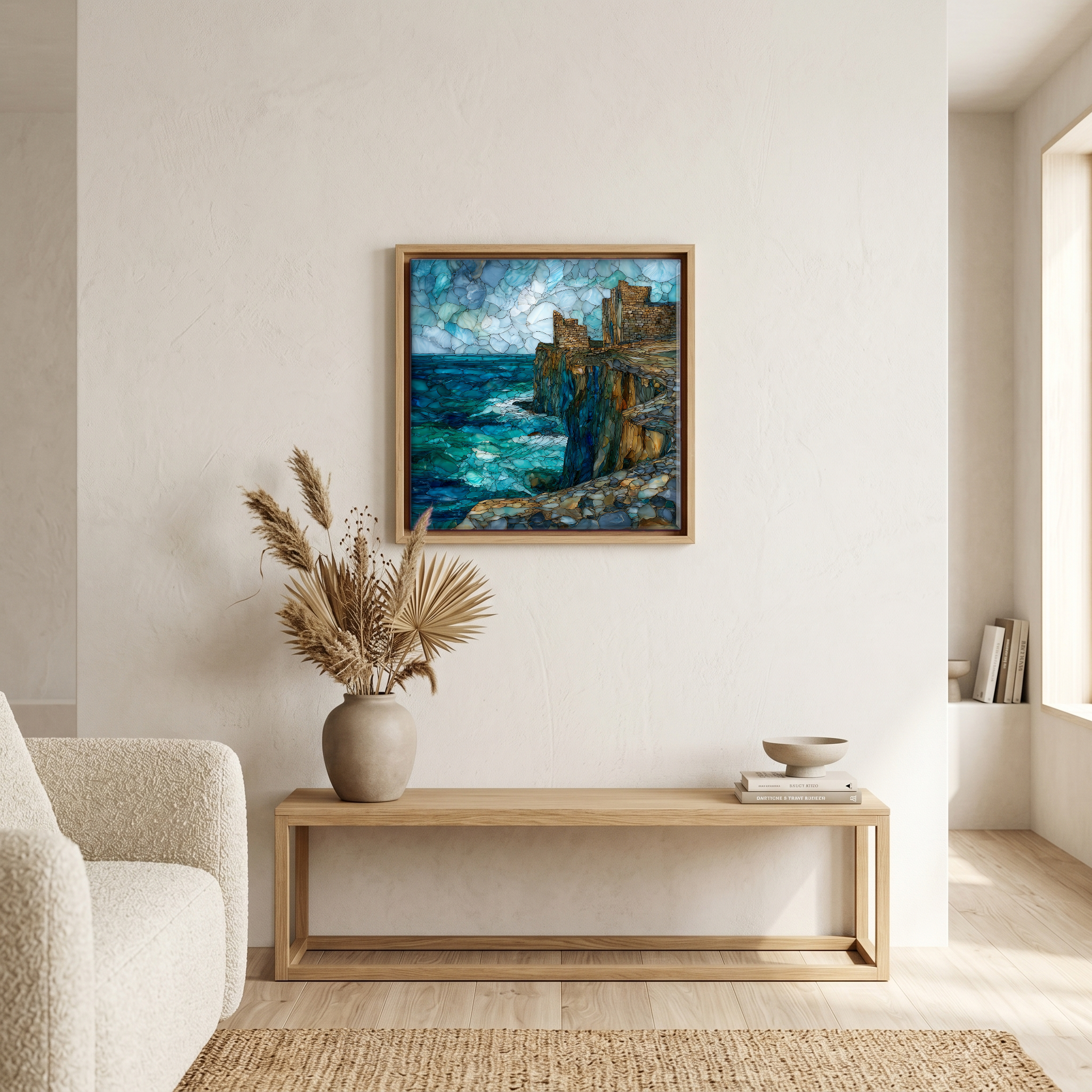
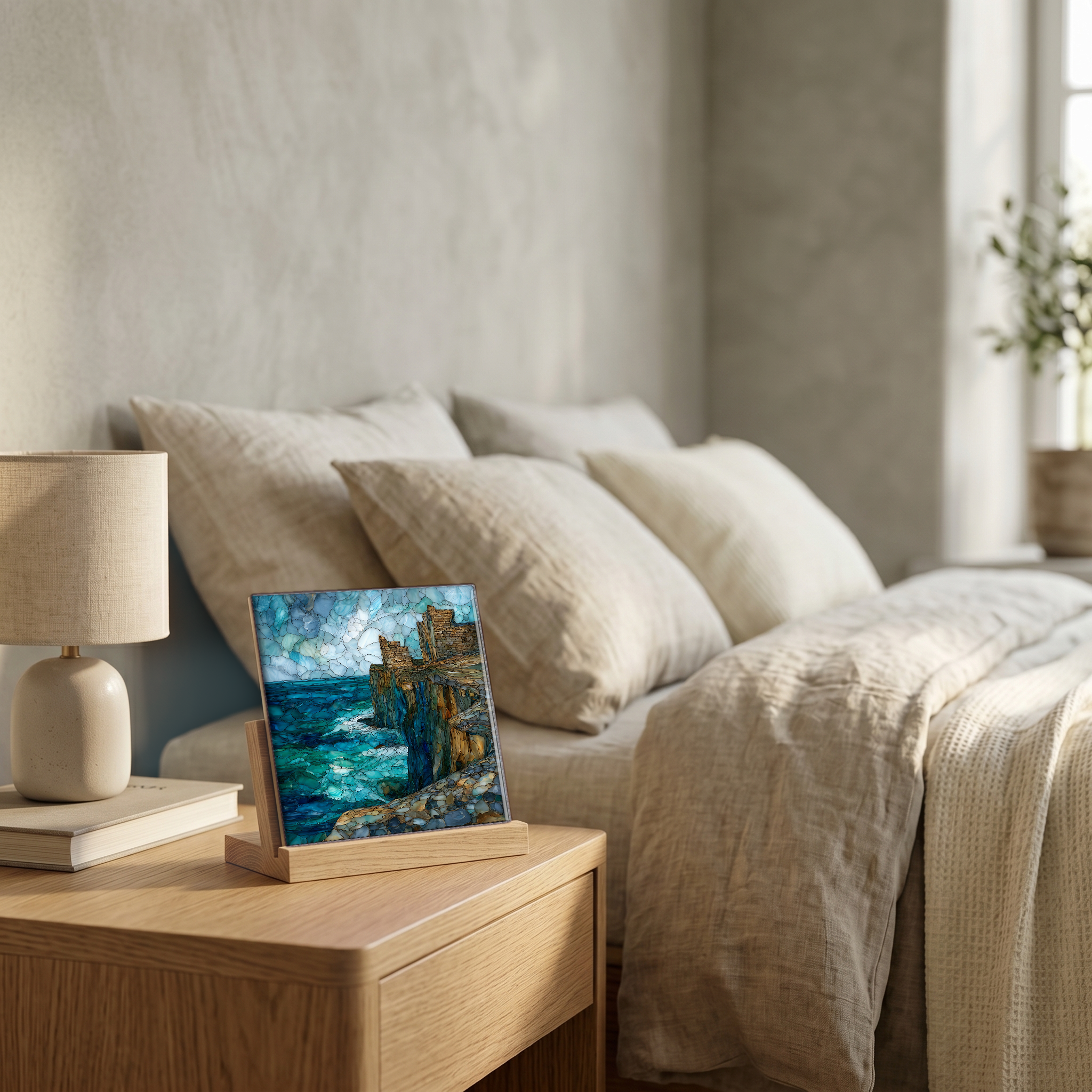
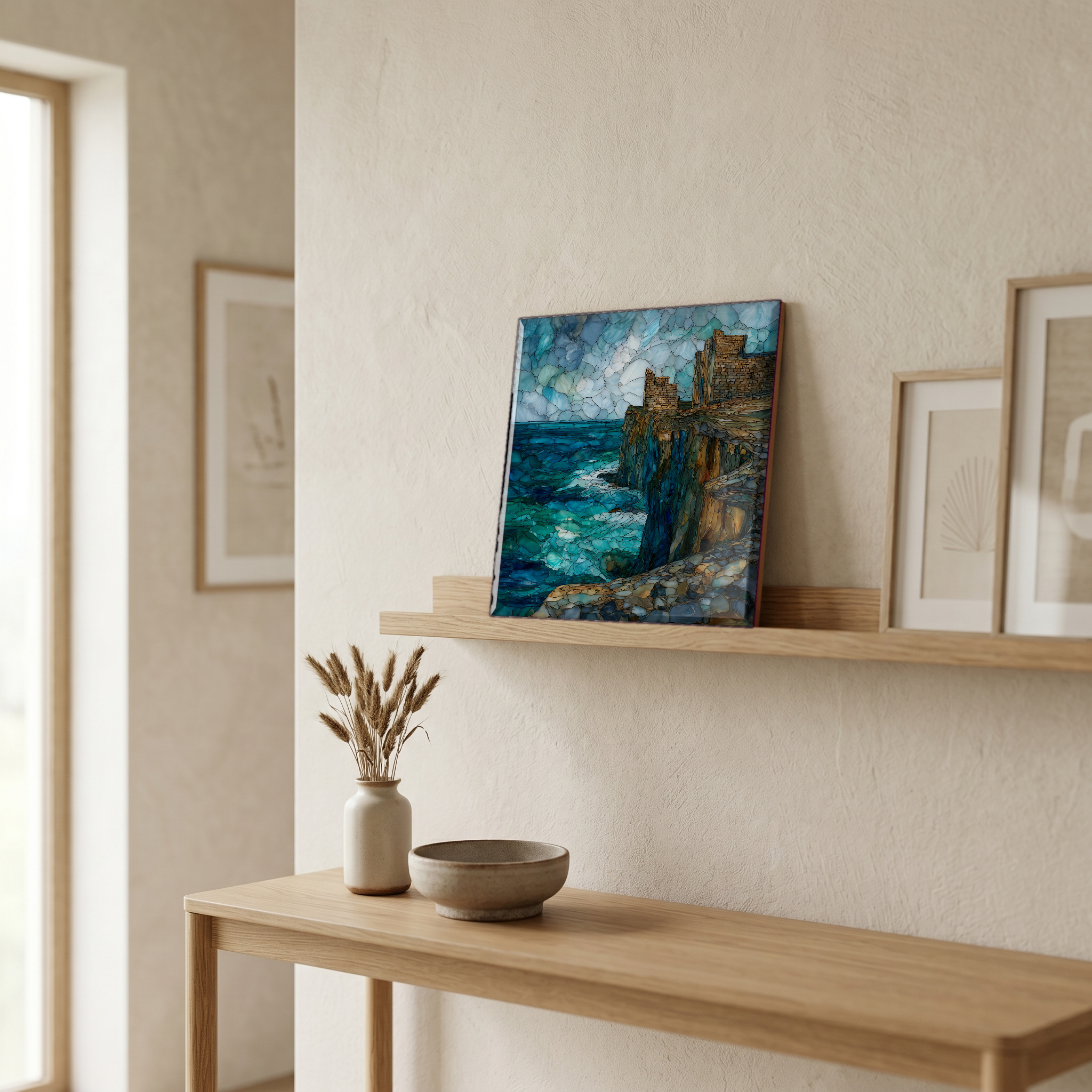
“The Iron Age fort on the western edge of Inishmore, perched at the cliff. Three drystone walls in concentric arcs, and where a fourth would close the circle the cliff drops about a hundred metres to the Atlantic. The chevaux-de-frise, a field of upright limestone slabs around the outer walls, was a defensive band of sharp stones tilted toward whoever was coming up the hill. The walk from the visitor centre at Kilmurvey is a kilometre, uphill, through walled fields and Aran light. People who reach the inner enclosure tend to sit down.
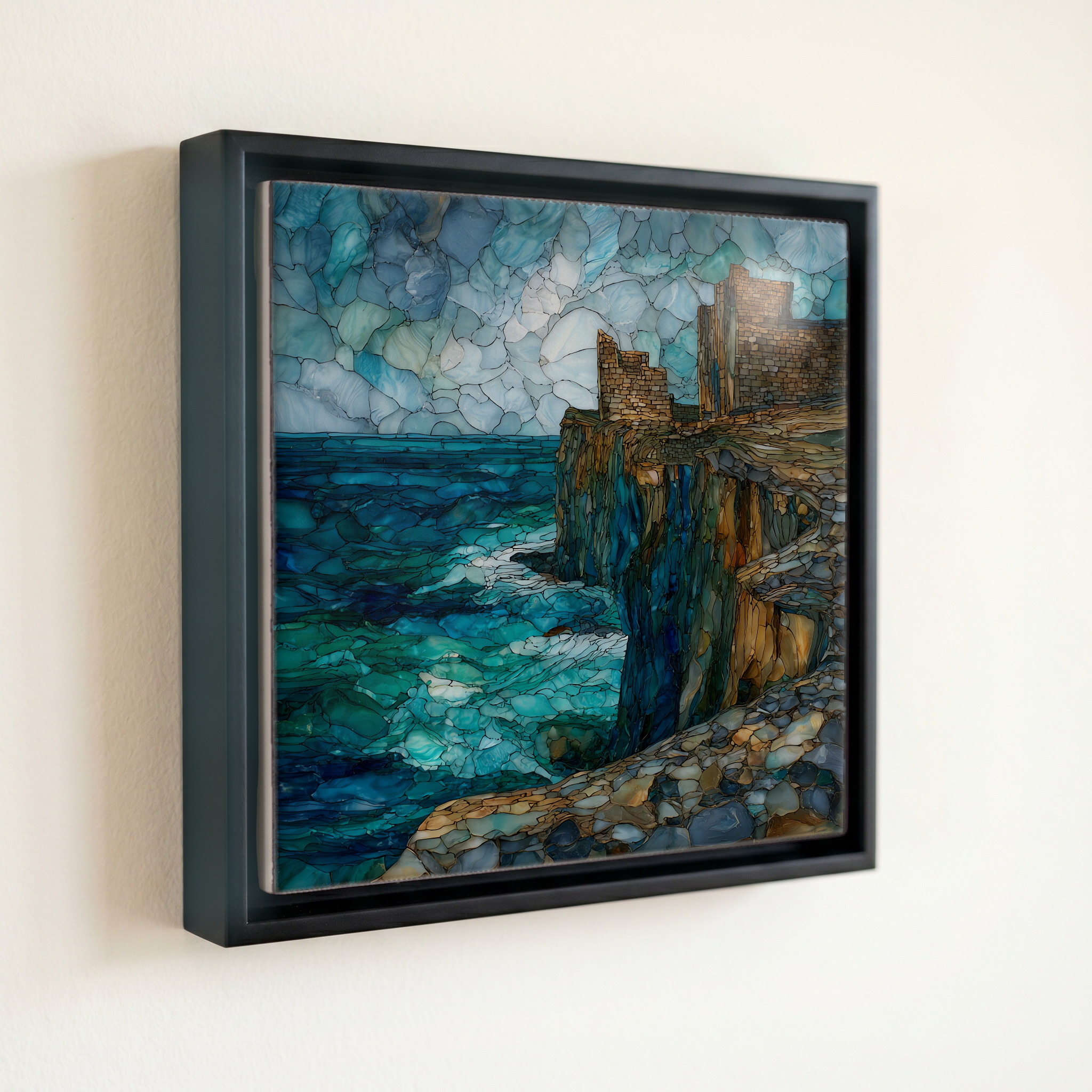
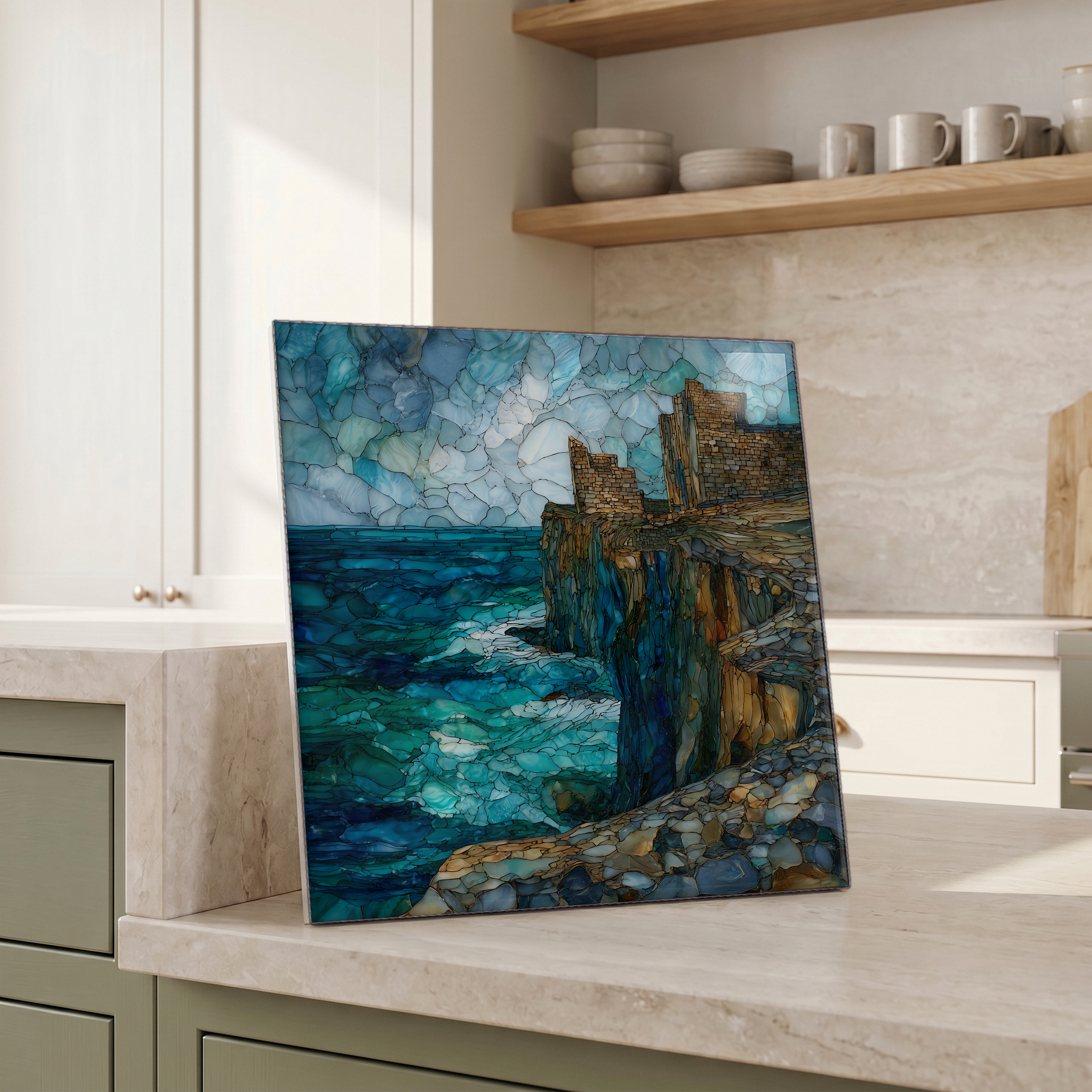
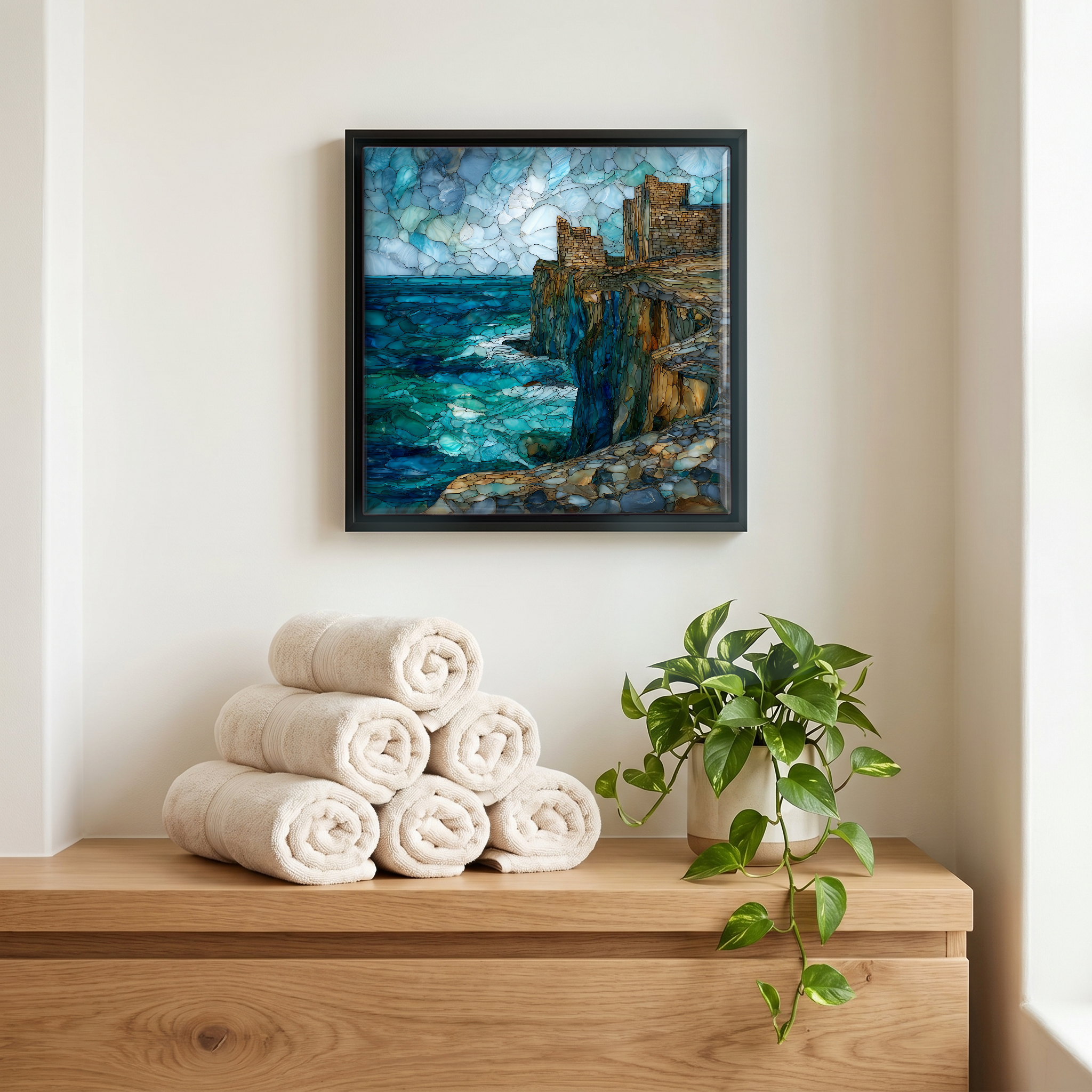
Dún Aonghasa, on ceramic.
Each tile is finished by hand in our Knoxville studio. Artwork is slowly infused into the ceramic surface under high heat and pressure, and rests beneath a thin glossy finish. The colour lives in the surface, not on top of it.
Pick any four 4-inch tiles — National Parks you've been to, a Smokies set, the four seasons of one place. $ for a set of , cork-backed, ready to live on the table.
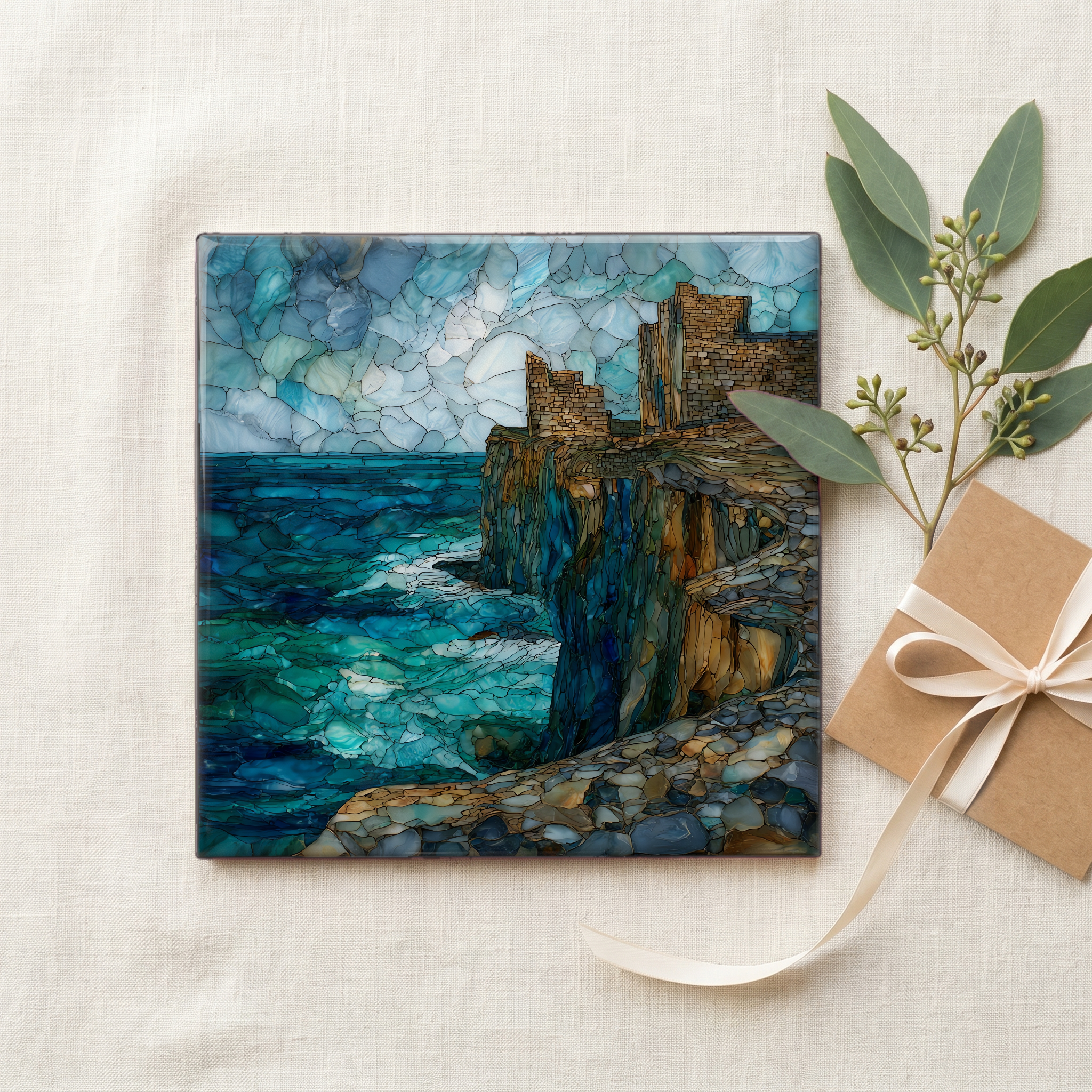
Each tile ships in a kraft box, tied with cream ribbon, with a handwritten note from the studio if you'd like to add one.
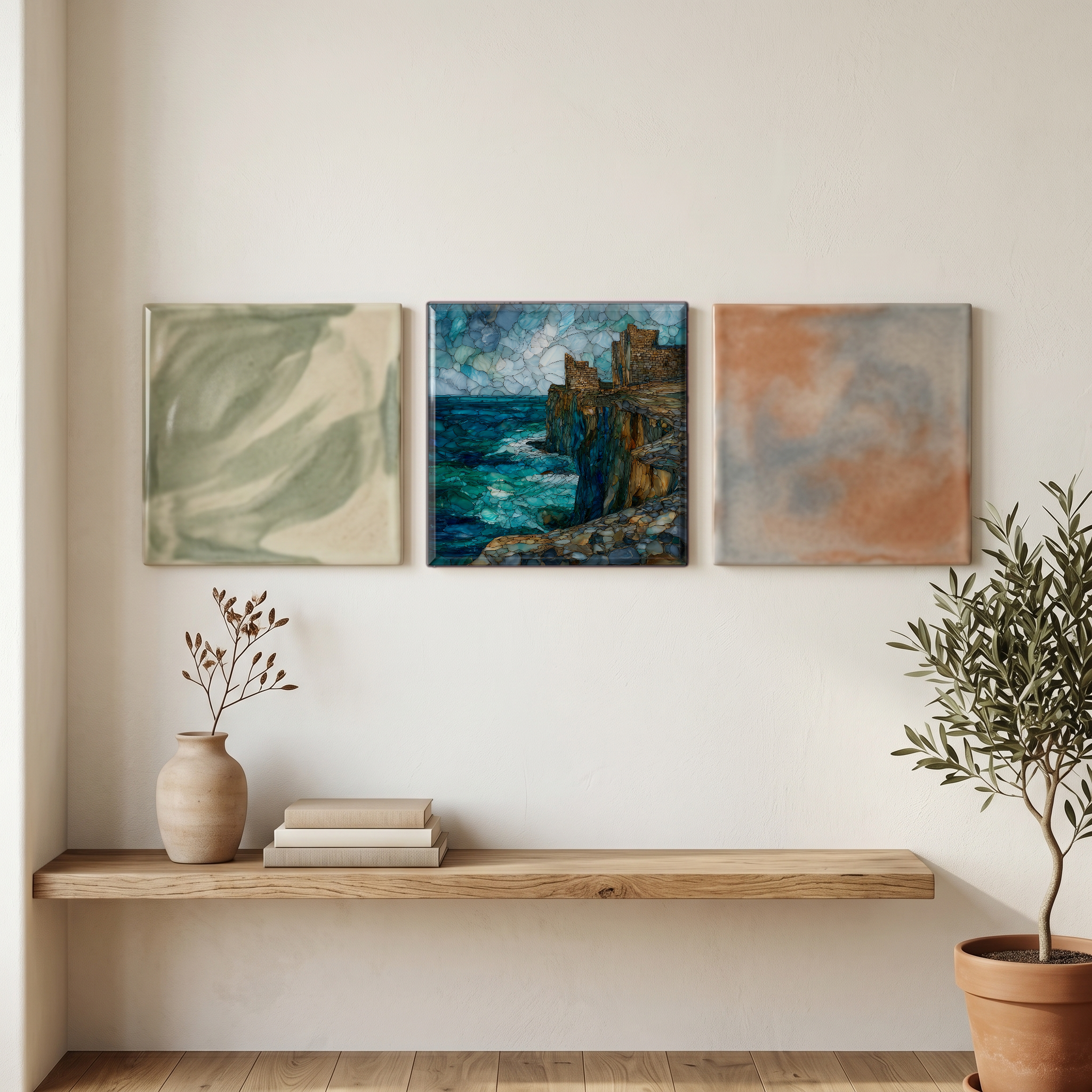
Three or five different vistas, hung together — a chapter of places you've been, or want to go.
The place, in three passes.
Dún Aonghasa sits on the western edge of Inishmore (Inis Mór), the largest of the three Aran Islands in Galway Bay off the west coast of Ireland. The fort consists of three semicircular drystone enclosures wrapped around an inner cashel, with the open side bounded by a sheer cliff that drops roughly 100 metres to the Atlantic. Archaeological work places the earliest construction in the Late Bronze Age, around 1100 BC, with major rebuilding in the Iron Age. The site is reached from the village of Kilronan, the island's ferry port, with the visitor centre at Kilmurvey about seven kilometres west; a final kilometre walk uphill leads to the fort itself. The site is managed by the Office of Public Works.
The walls of Dún Aonghasa are built without mortar from the same Carboniferous limestone that makes up the rest of the Aran Islands, the bedrock surfacing as a karst pavement across the fields between the harbour and the fort. The inner enclosure is roughly 50 metres at its widest; the outer wall, where it survives, encloses an area of about six hectares. The most distinctive feature is the chevaux-de-frise: a field of thousands of jagged limestone slabs set upright in the ground around the middle wall, tilted outward, intended to slow anyone approaching the fort on foot. Comparable defensive bands survive at only a handful of European Iron Age sites.
Inishmore is reached by ferry from Rossaveel (Ros a' Mhíl) on the Connemara coast, a crossing of about forty minutes, or by small plane from Connemara Regional Airport at Indreabhán. From the pier at Kilronan most visitors travel by bicycle, minibus, or pony trap to the visitor centre at Kilmurvey, then walk the final kilometre up the limestone path to the fort. The Office of Public Works runs the site and the centre. The cliff edge has no railing; OPW signage asks visitors not to approach within five metres. The Aran Islands are a Gaeltacht: Irish is the everyday language of the roughly 800 islanders on Inishmore.