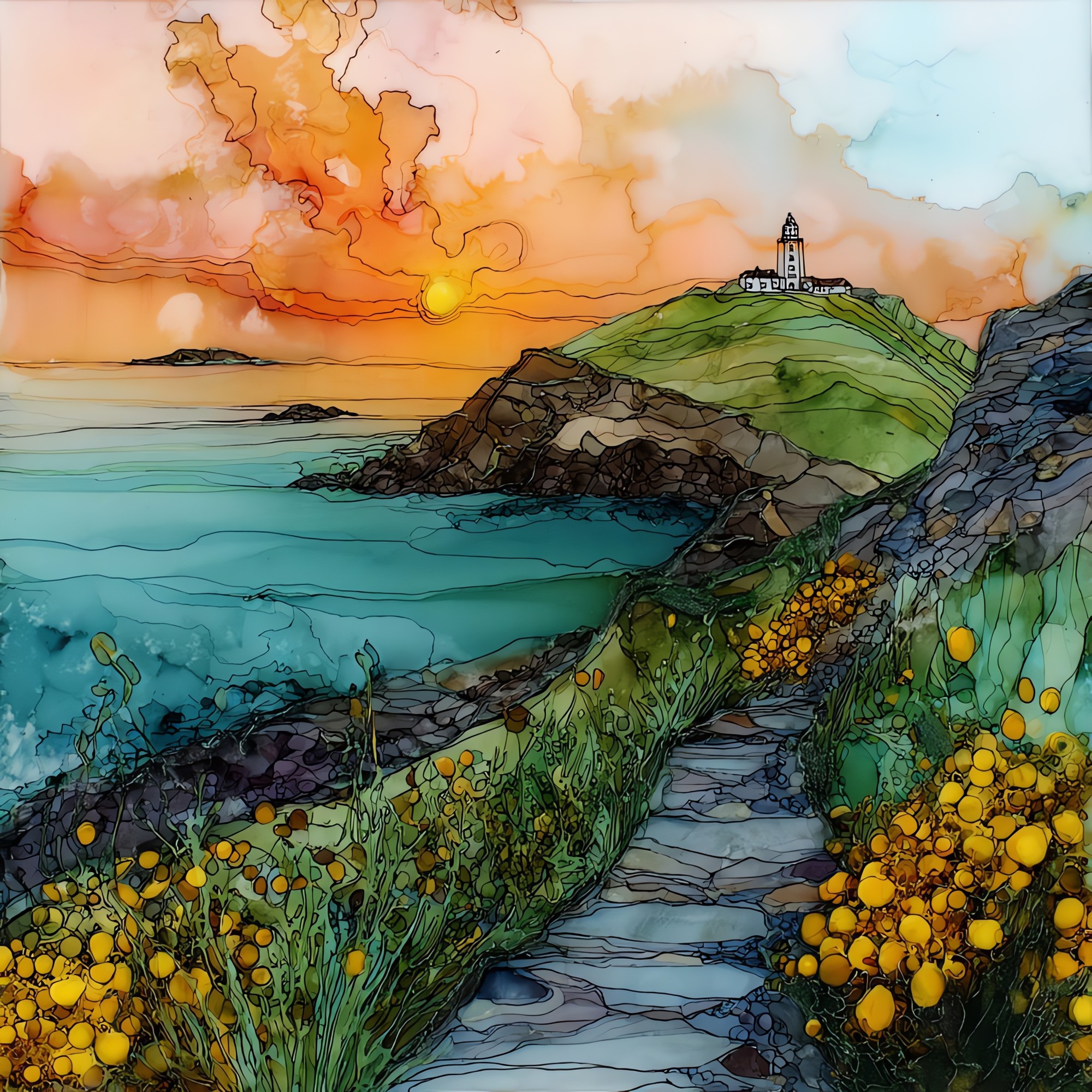
Howth Head
— gorse, gulls, and the long Irish Sea.
Not only on a wall.
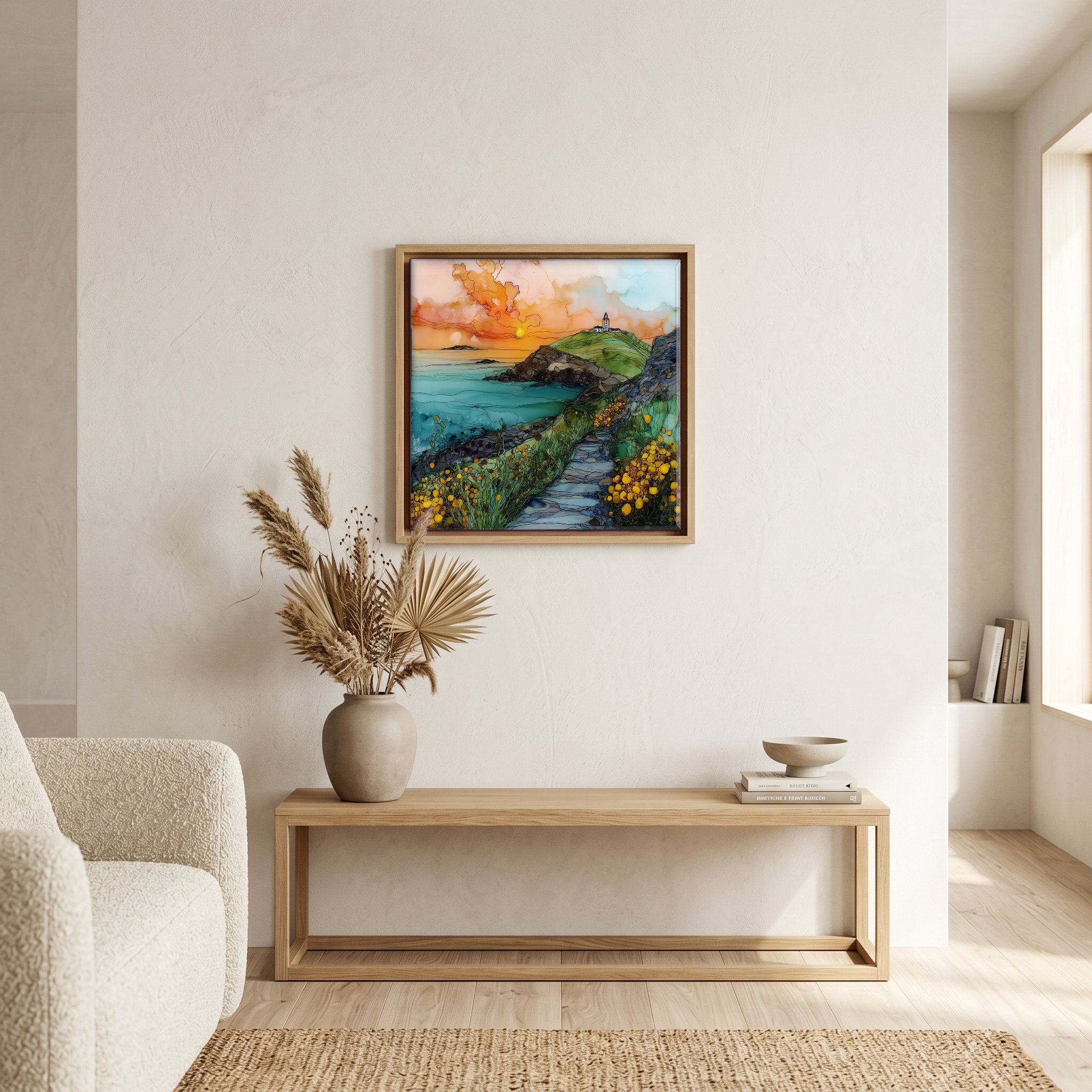
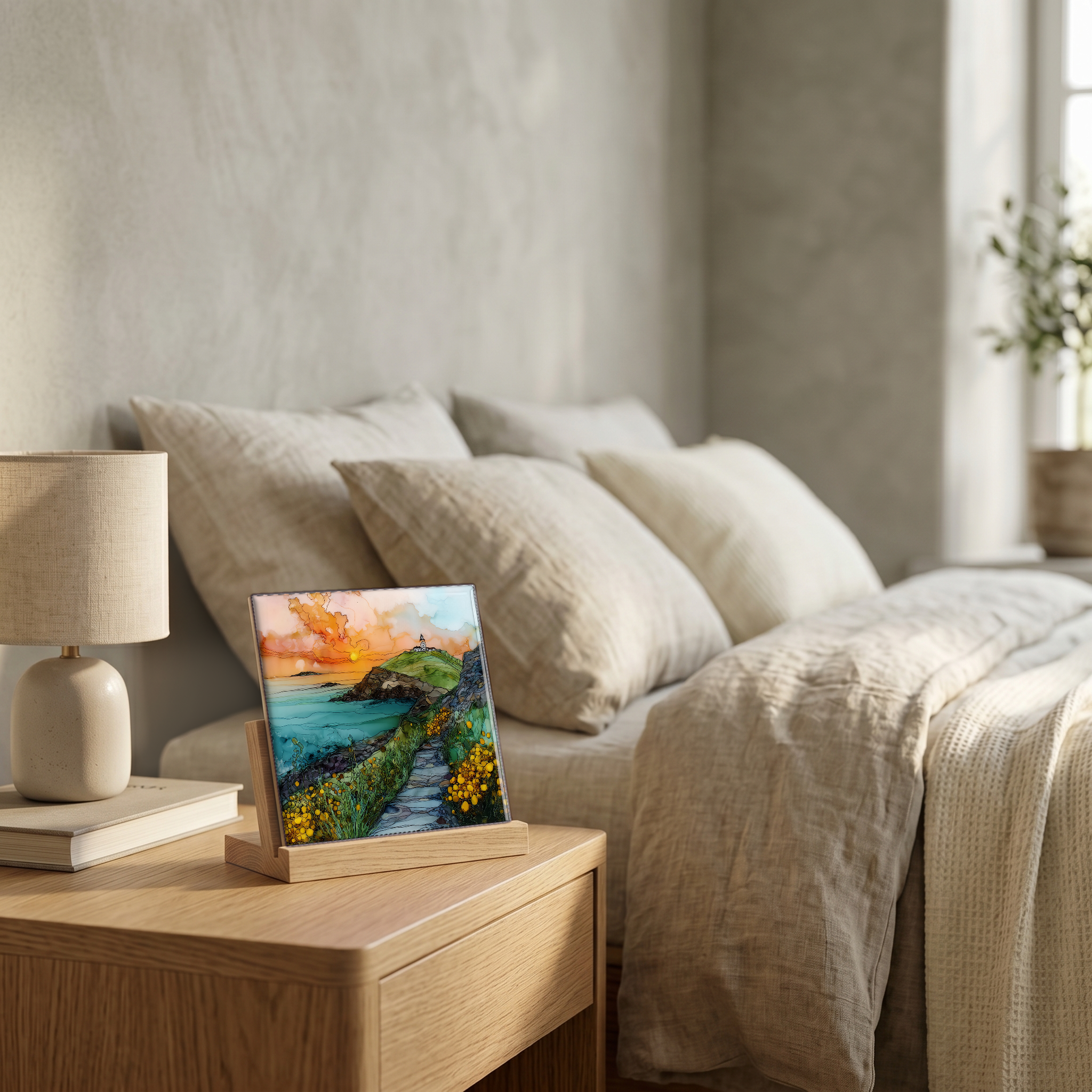
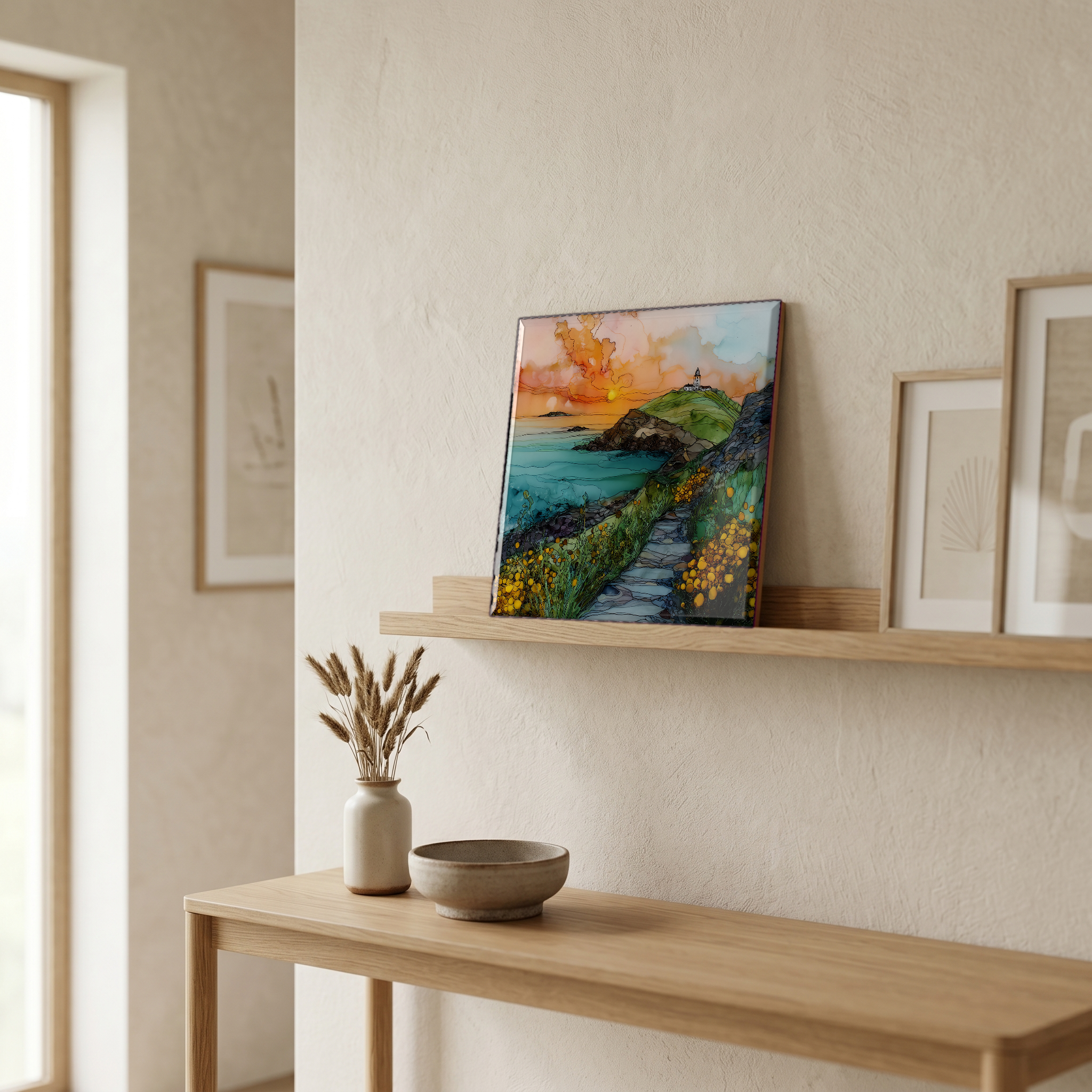
“A heather-covered headland at the north arm of Dublin Bay, where the DART line from the city ends and the cliff path begins. The Baily Lighthouse sits at the southeastern tip, white against weathered rock. Below stretches the Irish Sea, the same water Joyce kept circling back to in Ulysses, that has held Ireland's Eye and its early-medieval monastery ruins just offshore. In summer the gorse turns the slopes yellow. In any season the gulls are loud.
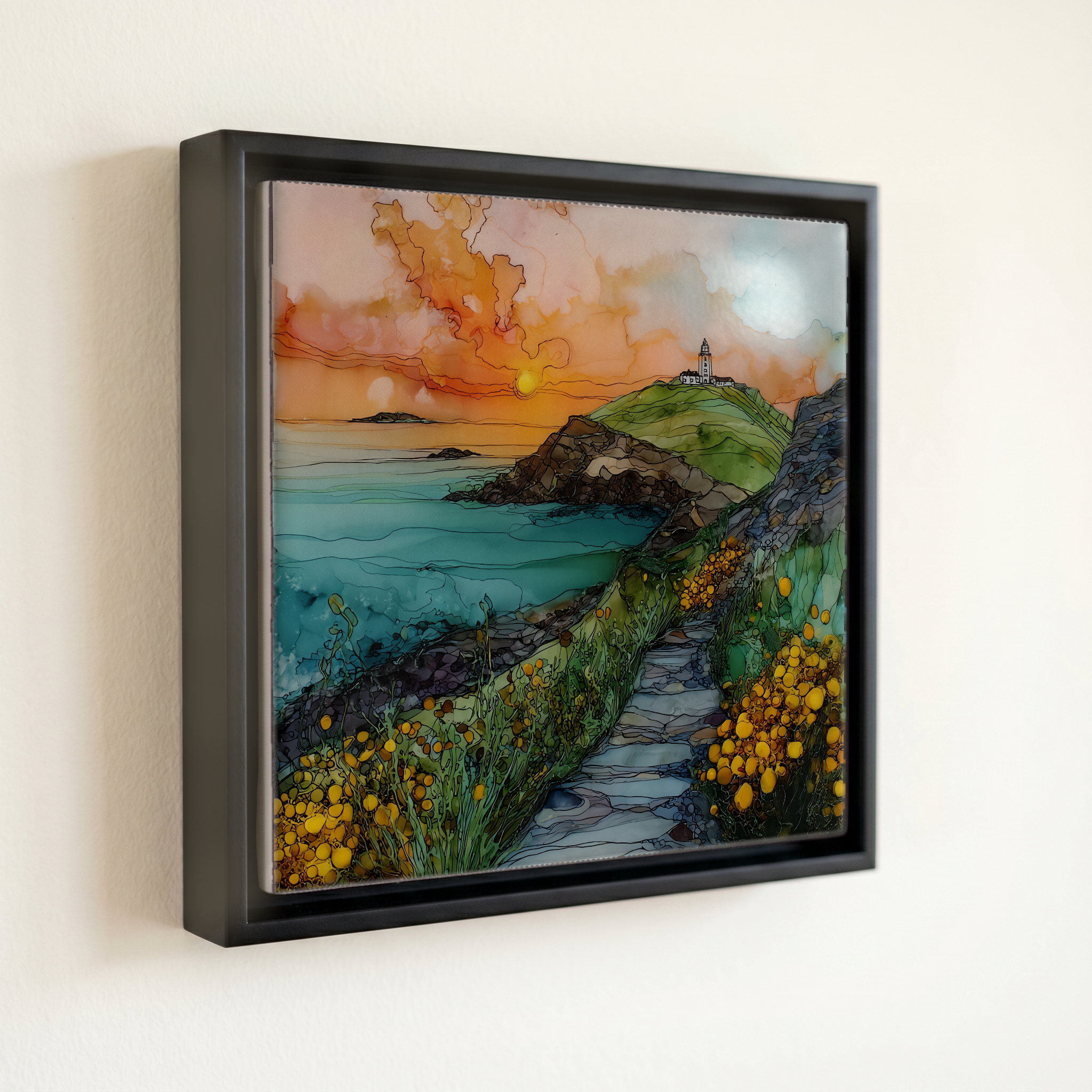
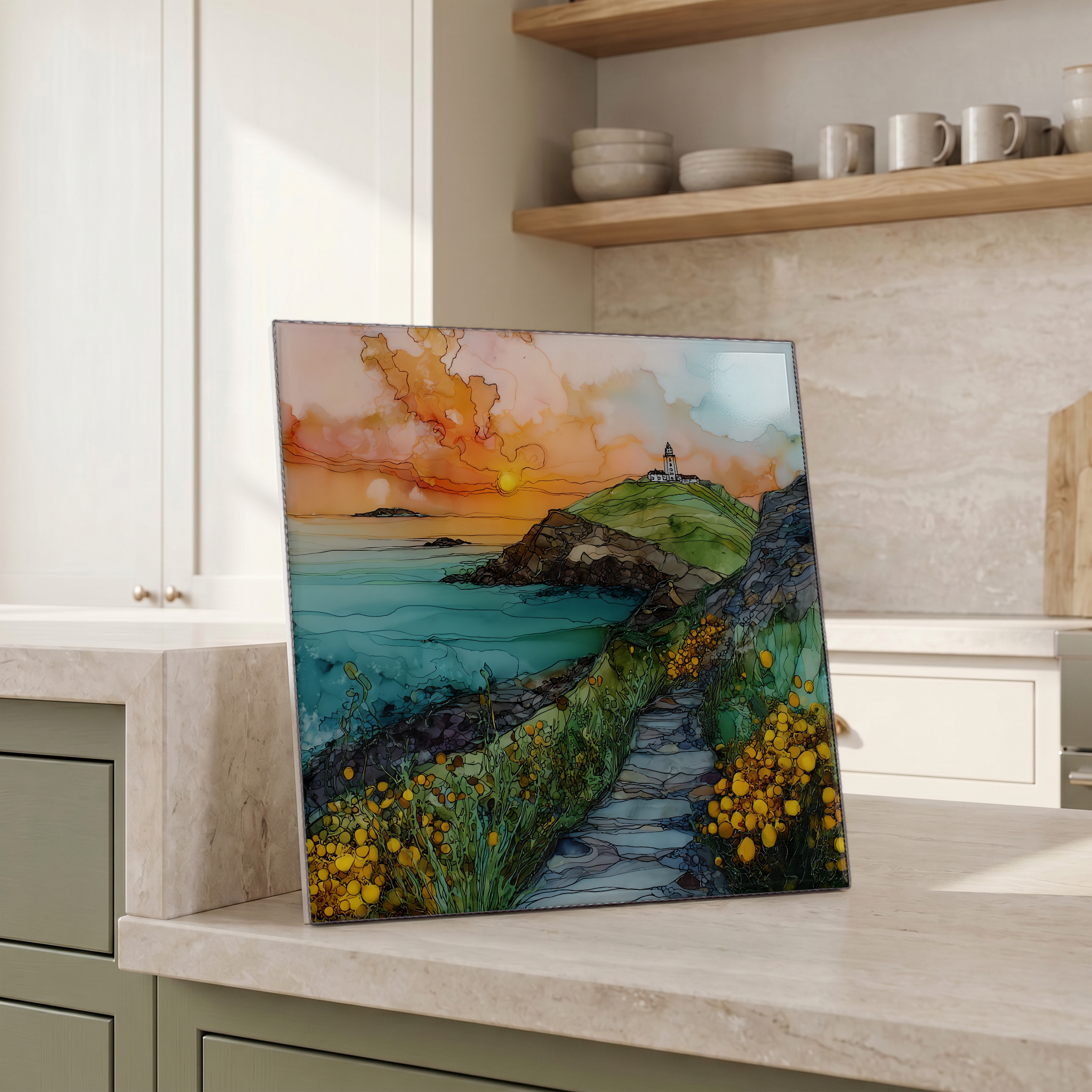
Howth Head, on ceramic.
Each tile is finished by hand in our Knoxville studio. Artwork is slowly infused into the ceramic surface under high heat and pressure, and rests beneath a thin glossy finish. The colour lives in the surface, not on top of it.
Pick any four 4-inch tiles — National Parks you've been to, a Smokies set, the four seasons of one place. $ for a set of , cork-backed, ready to live on the table.
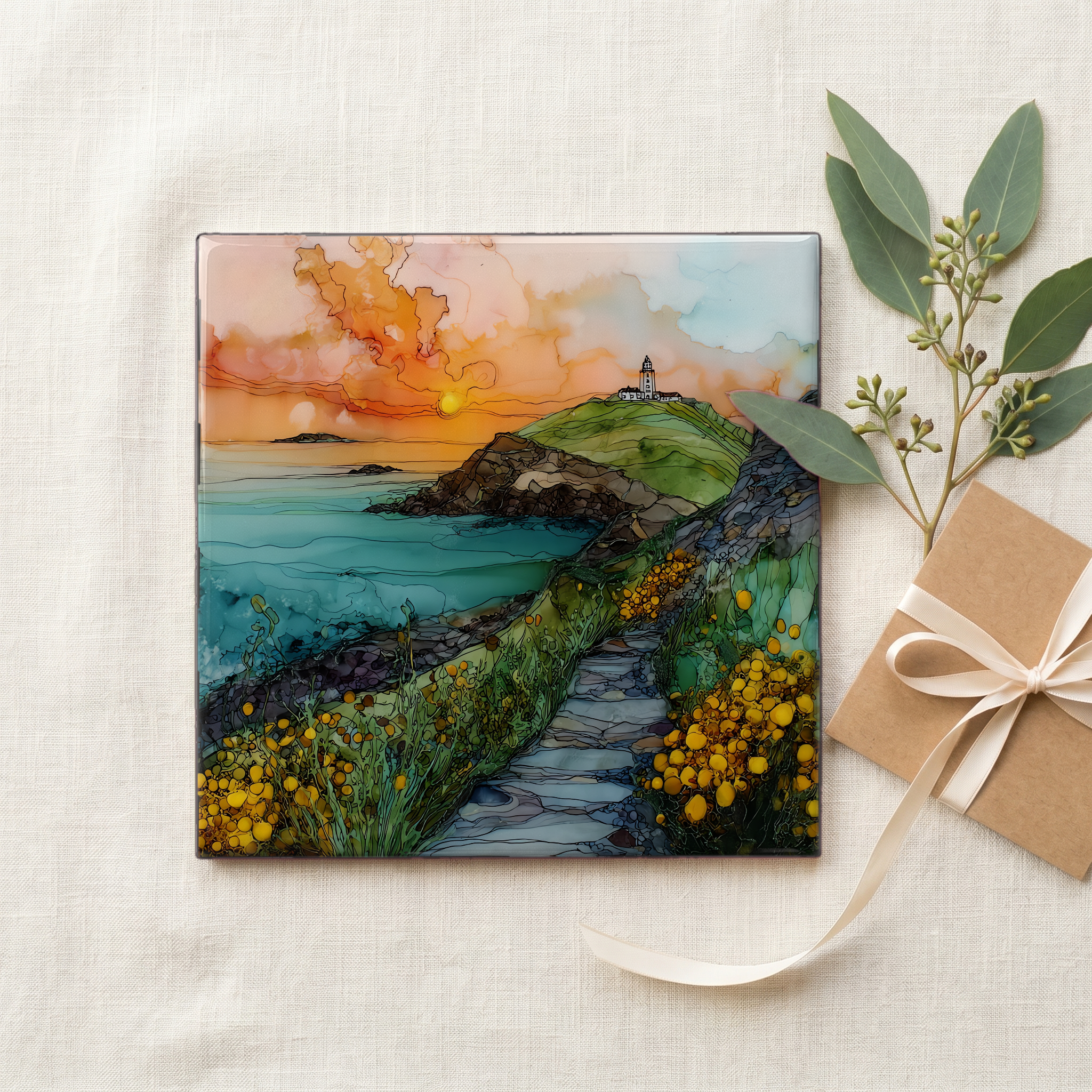
Each tile ships in a kraft box, tied with cream ribbon, with a handwritten note from the studio if you'd like to add one.
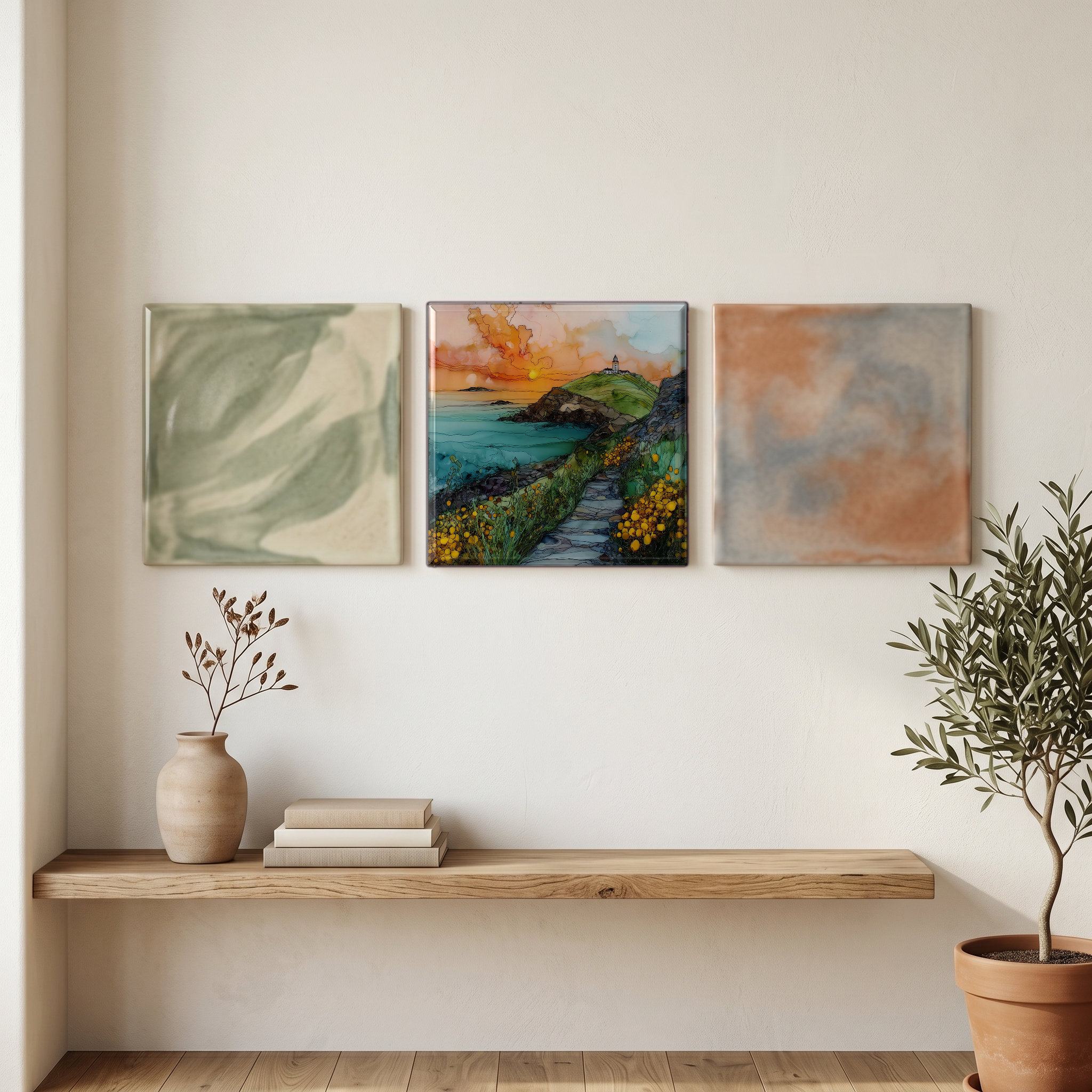
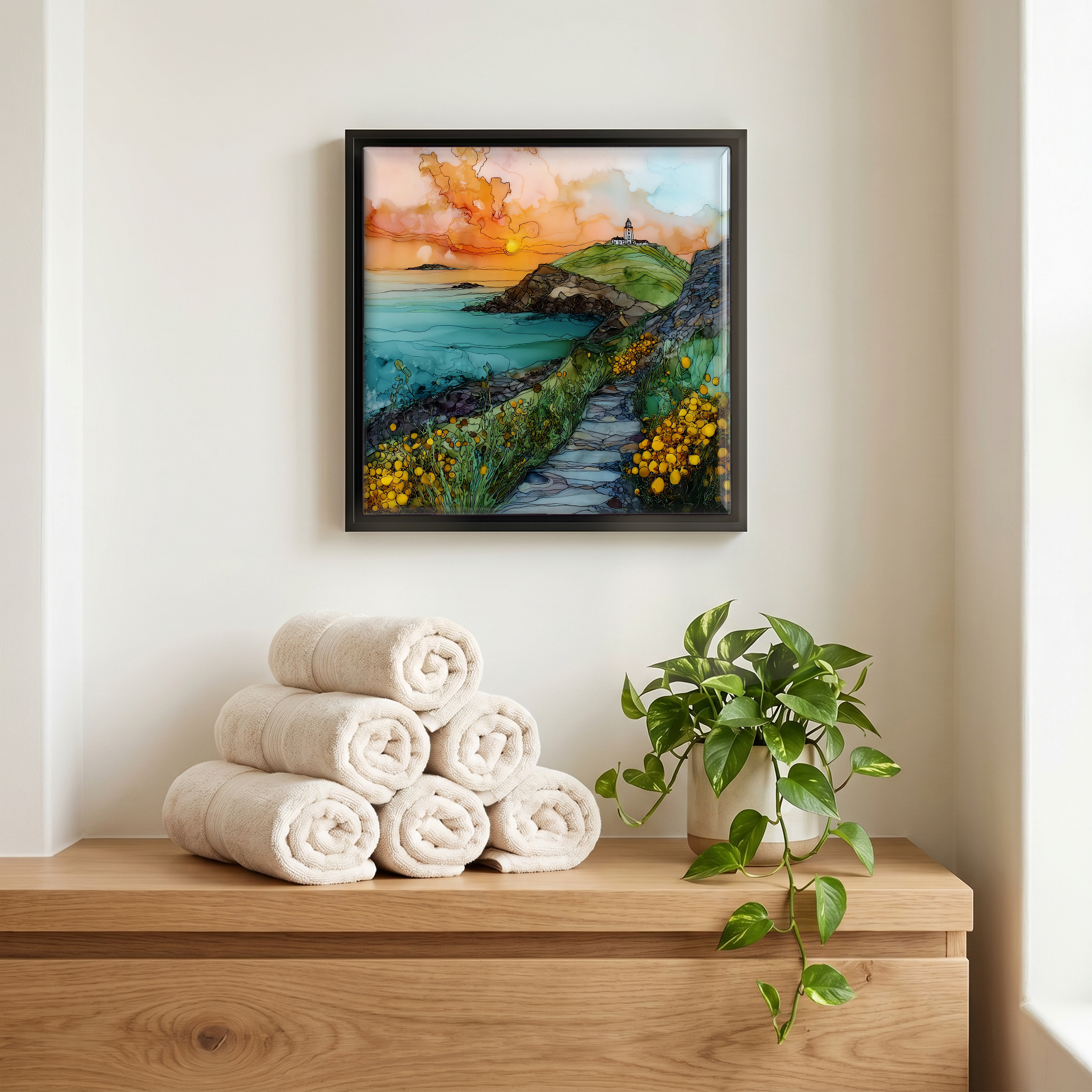
Three or five different vistas, hung together — a chapter of places you've been, or want to go.
The place, in three passes.
Howth Head is a peninsula on the northeast side of Dublin Bay, about 13 kilometres from the centre of Dublin city. Administratively it sits in County Fingal, and historically it was a tied island connected to the mainland by a low sandy isthmus at the village of Sutton. The high point, called the Ben of Howth, reaches about 171 metres (561 ft) above the sea. The headland's southeastern tip carries the Baily Lighthouse, in continuous operation since 1814. Just offshore, Ireland's Eye holds the ruins of the early-medieval church of Cill Mac Nessán, founded in association with Saint Nessán.
Most visitors reach Howth Head on the DART, the suburban rail line from Dublin city; the train terminates at Howth station, beside the harbour, after a journey of roughly 25 minutes from Dublin Connolly. From the station, a signed loop walk runs around the headland, with the main route covering about 6 kilometres and a shorter variant about 3.5 kilometres. The path passes the Baily view, the high heather above the Nose of Howth, and a string of small coves. There is no admission fee and no fixed closing time, though sections close at short notice after winter storms have undermined the path.
The air on Howth Head is North Atlantic air, salt-laden and rarely still, scrubbing the heather and gorse that cover the cliff slopes. The peninsula sits exposed to the prevailing southwesterly wind off the Irish Sea. The sea birds belong to the wind: kittiwakes nest on the cliff faces, with razorbills and guillemots in summer, and gannets cross from the colony on Ireland's Eye, about 1.5 kilometres offshore. In winter the same wind brings gulls inland and the gorse darkens against the heather. On a clear day the Mountains of Mourne lift faintly above the northern horizon.