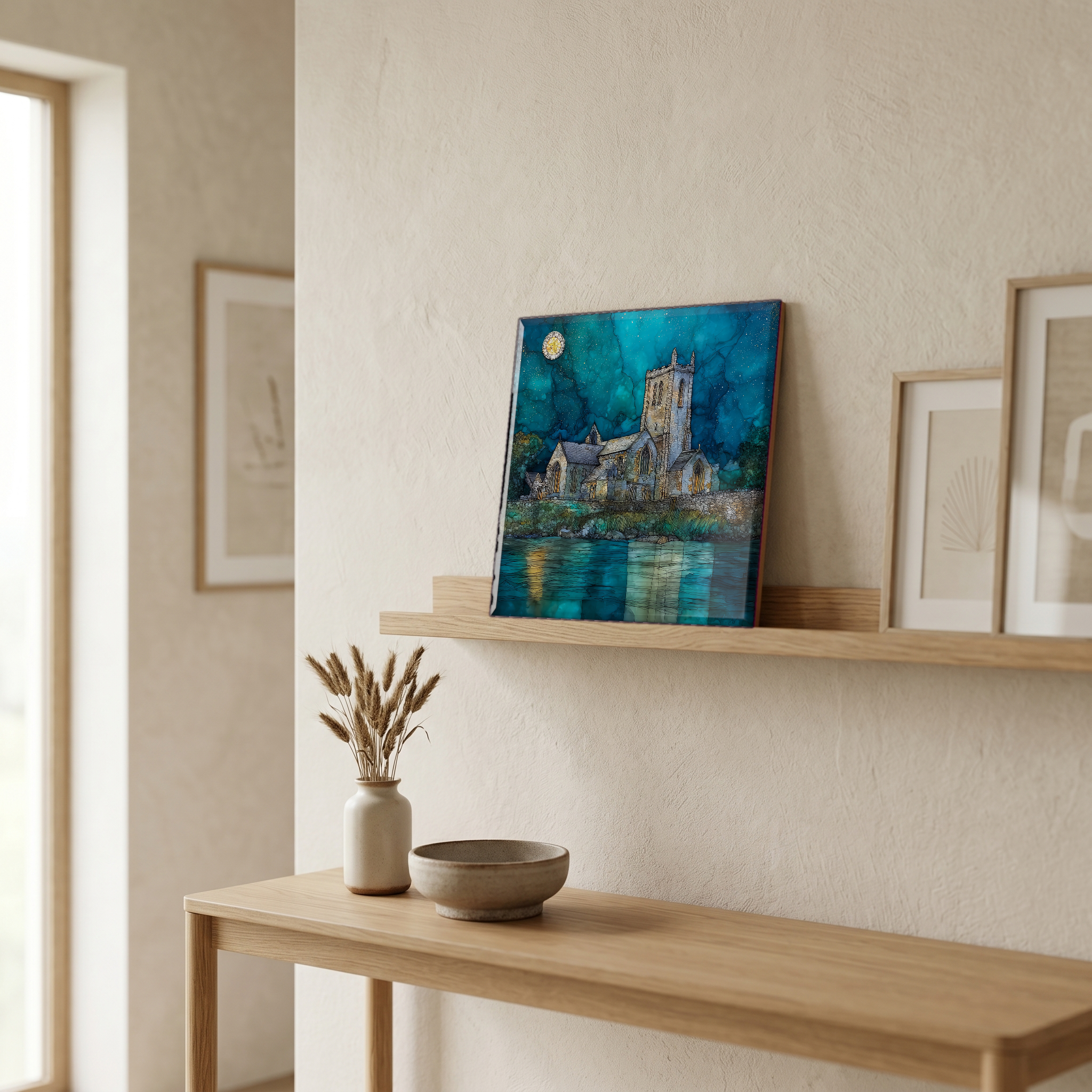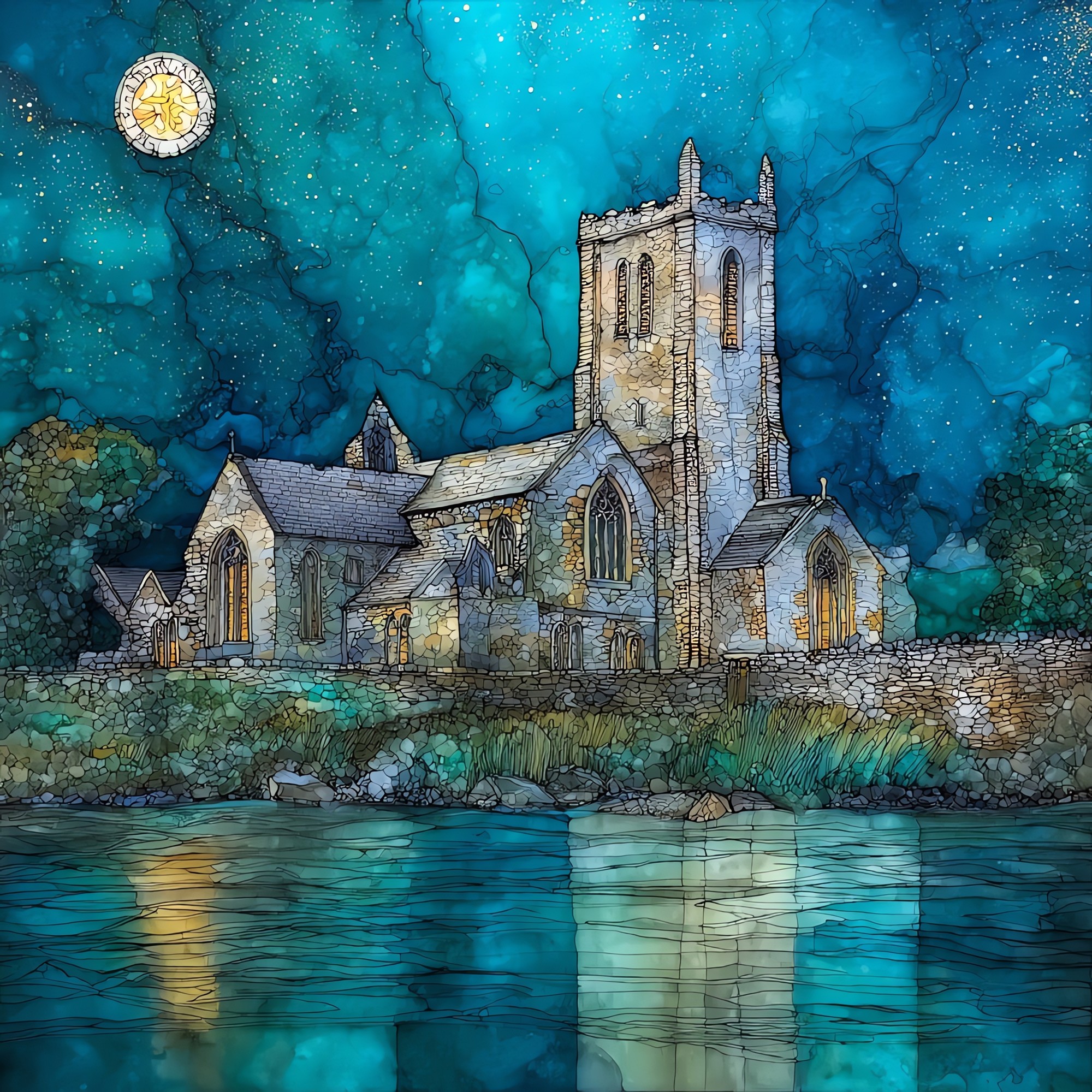
Wender·Vista
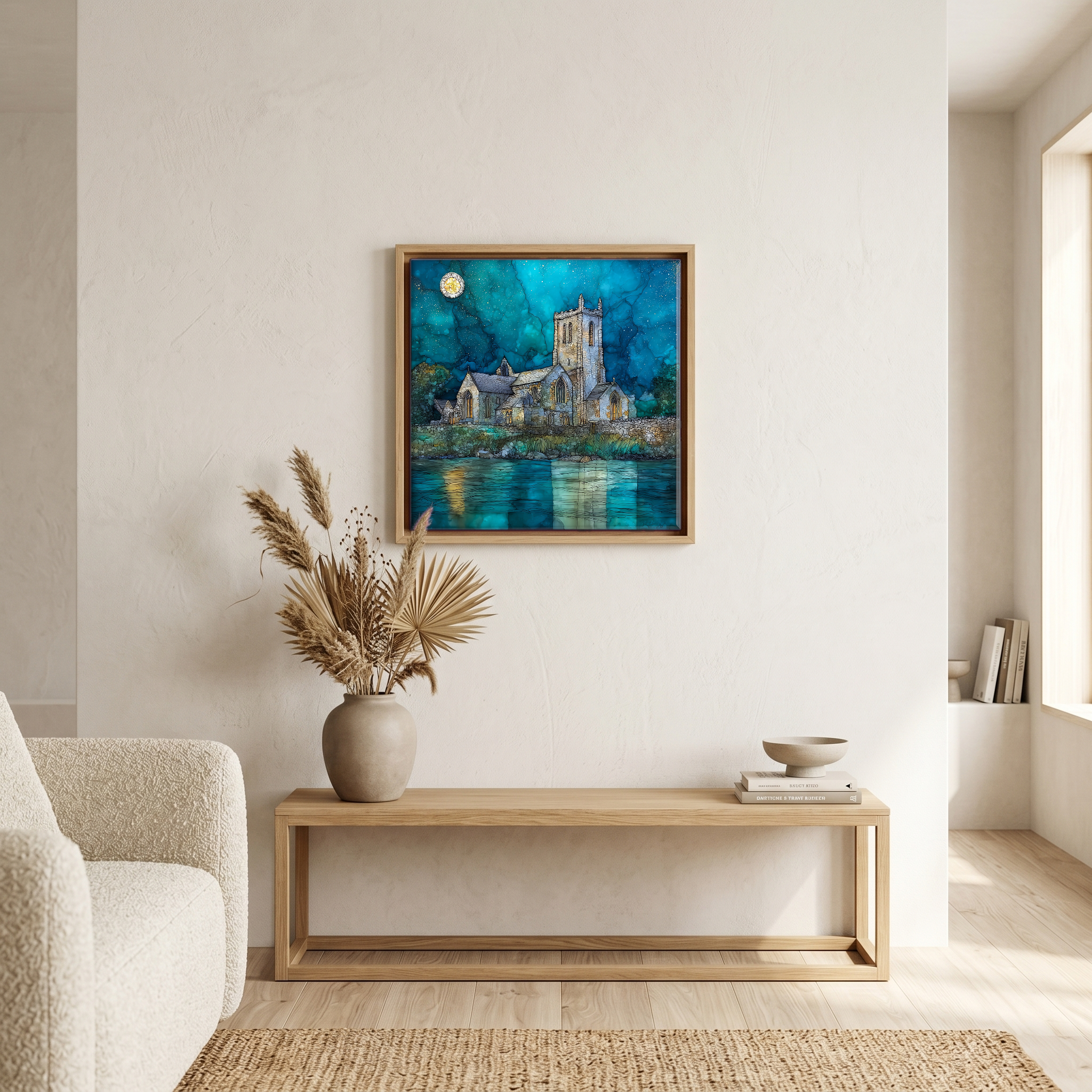
Holy Cross Abbey
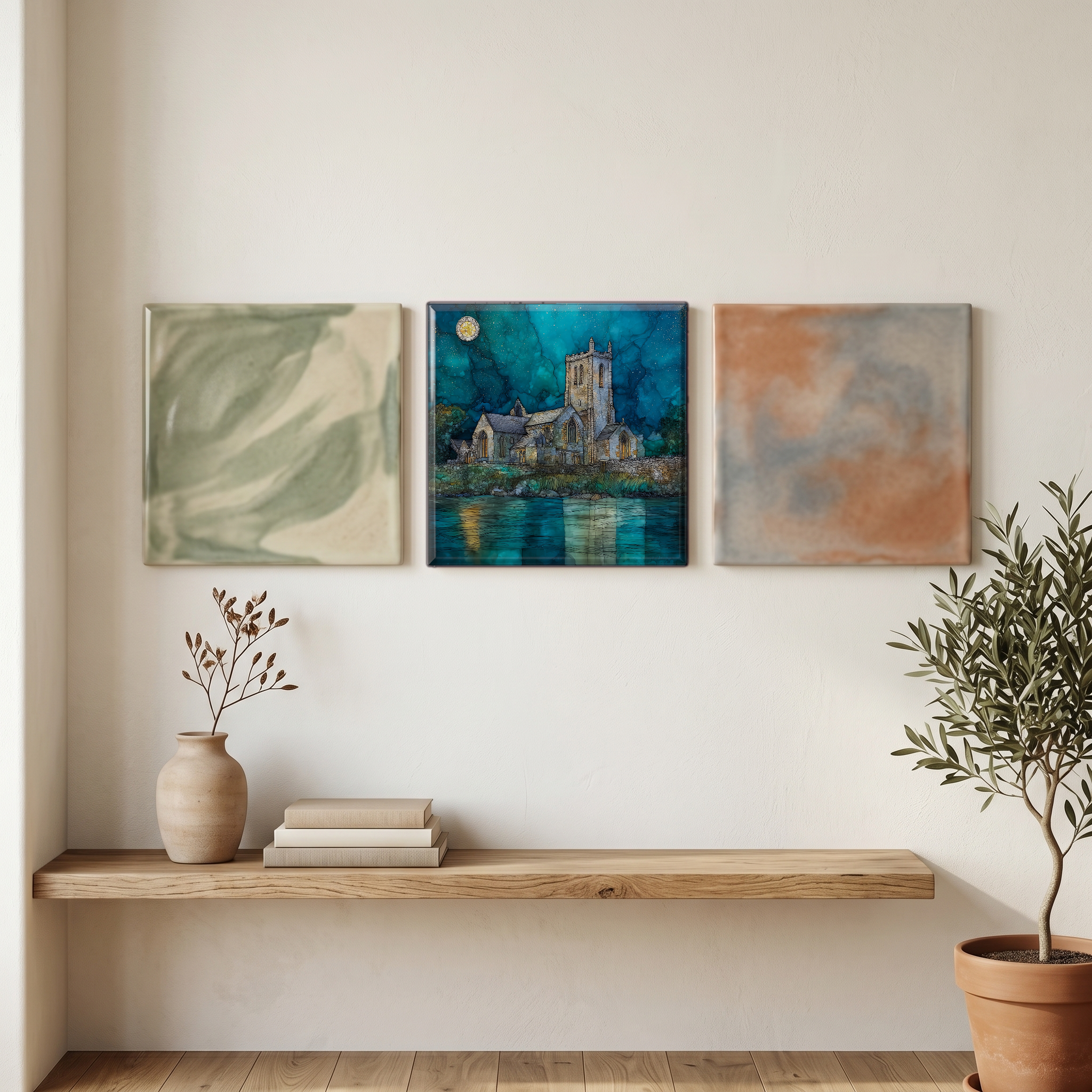
shown on ceramic, 12-inch tileIreland
in Tipperary, south of Thurles

Holy Cross Abbey

the silence the Suir kept for three hundred years.

Where it lives

Not only on a wall.

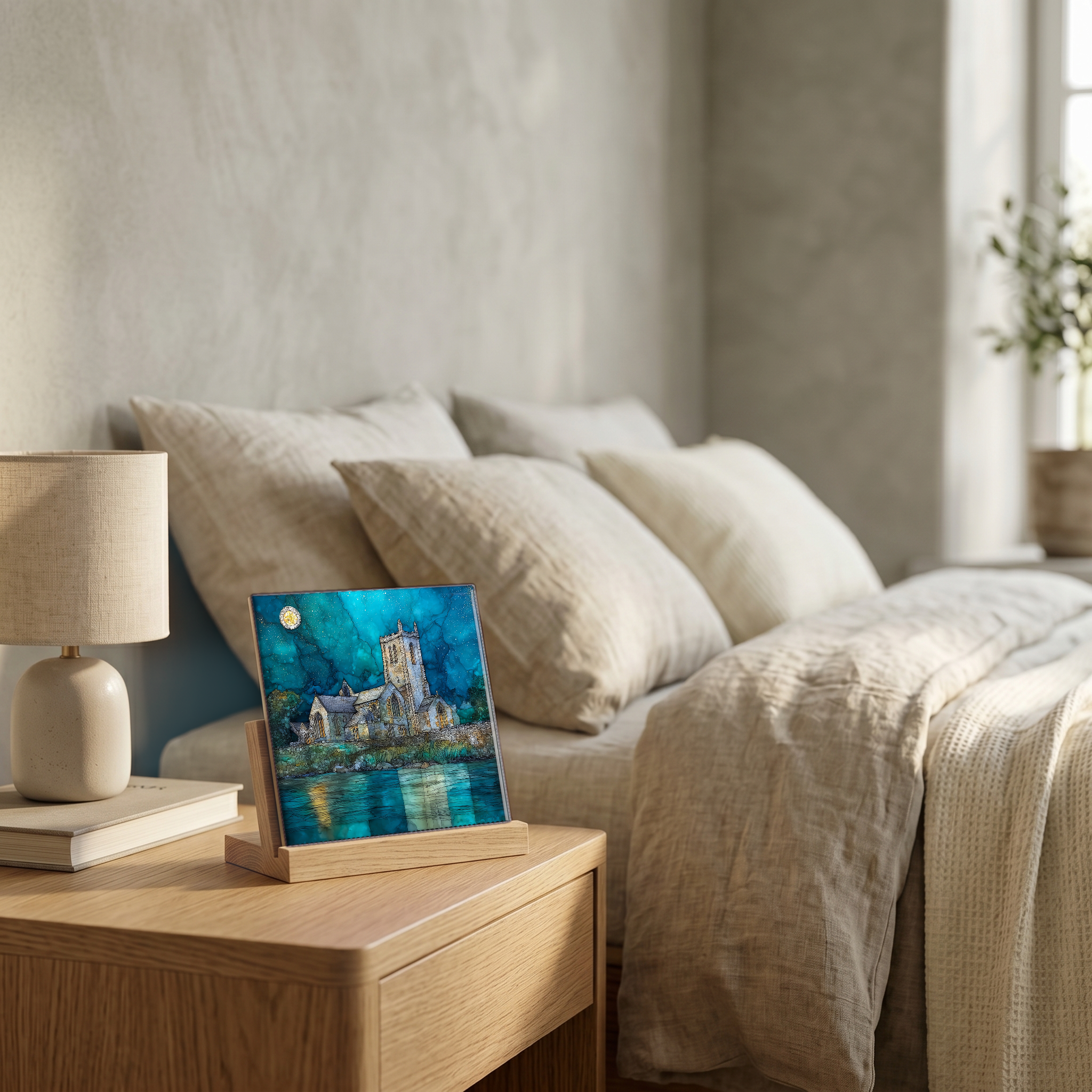
A small tile on the nightstand catching the morning. A larger one above the fire. Yours, wherever you spend the slow hours.
Above the bench, in a warm oak surround.
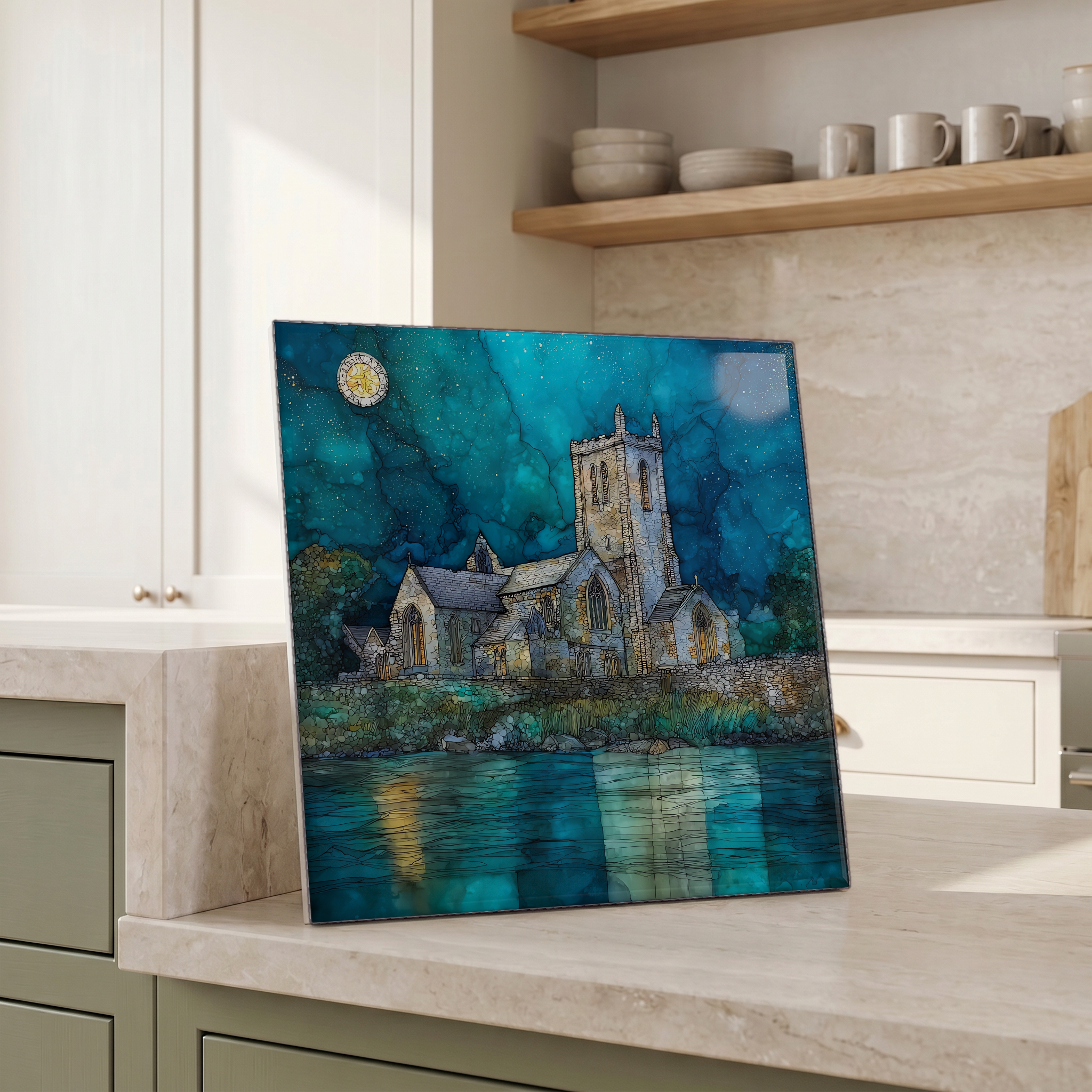
Beside the kettle, propped on the counter.
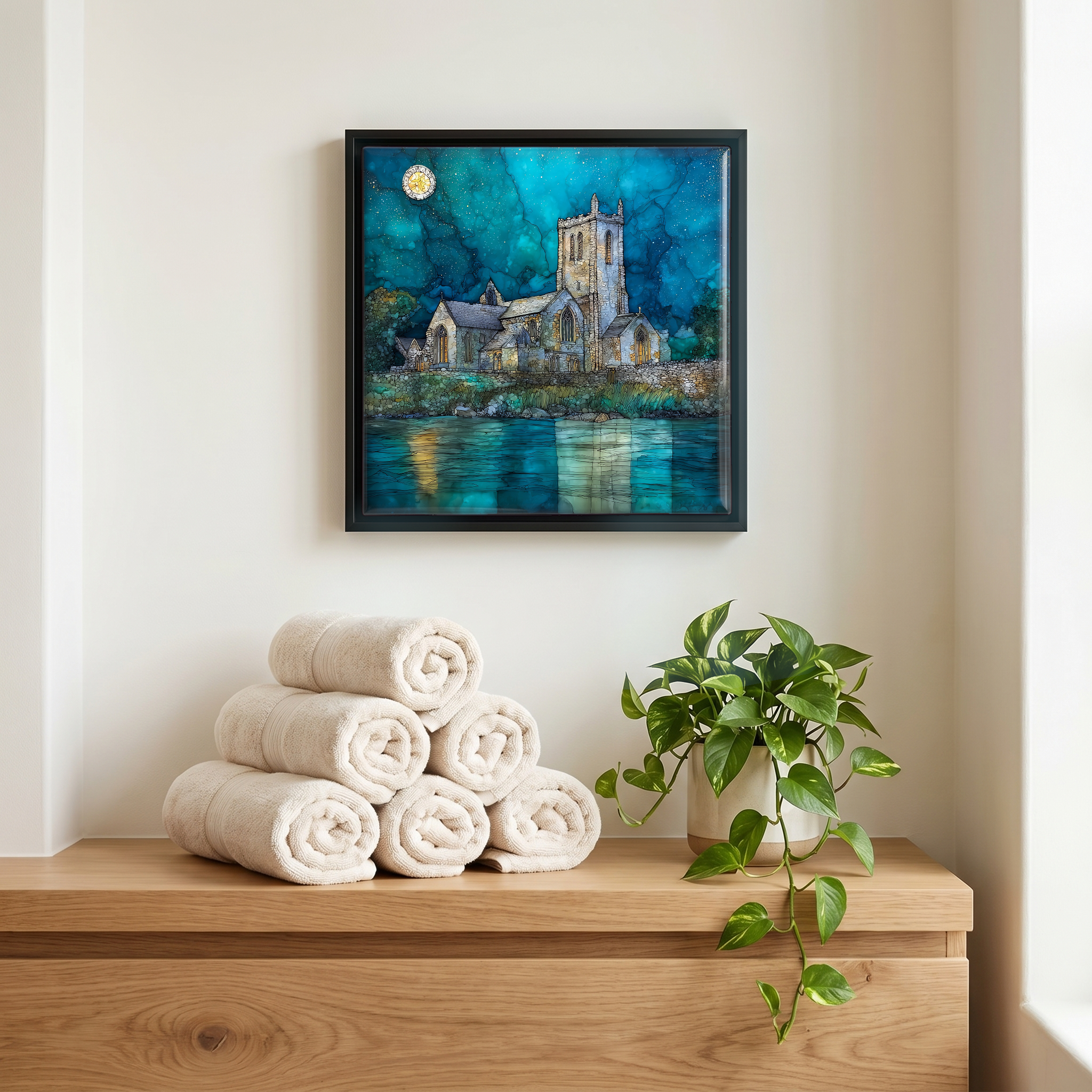
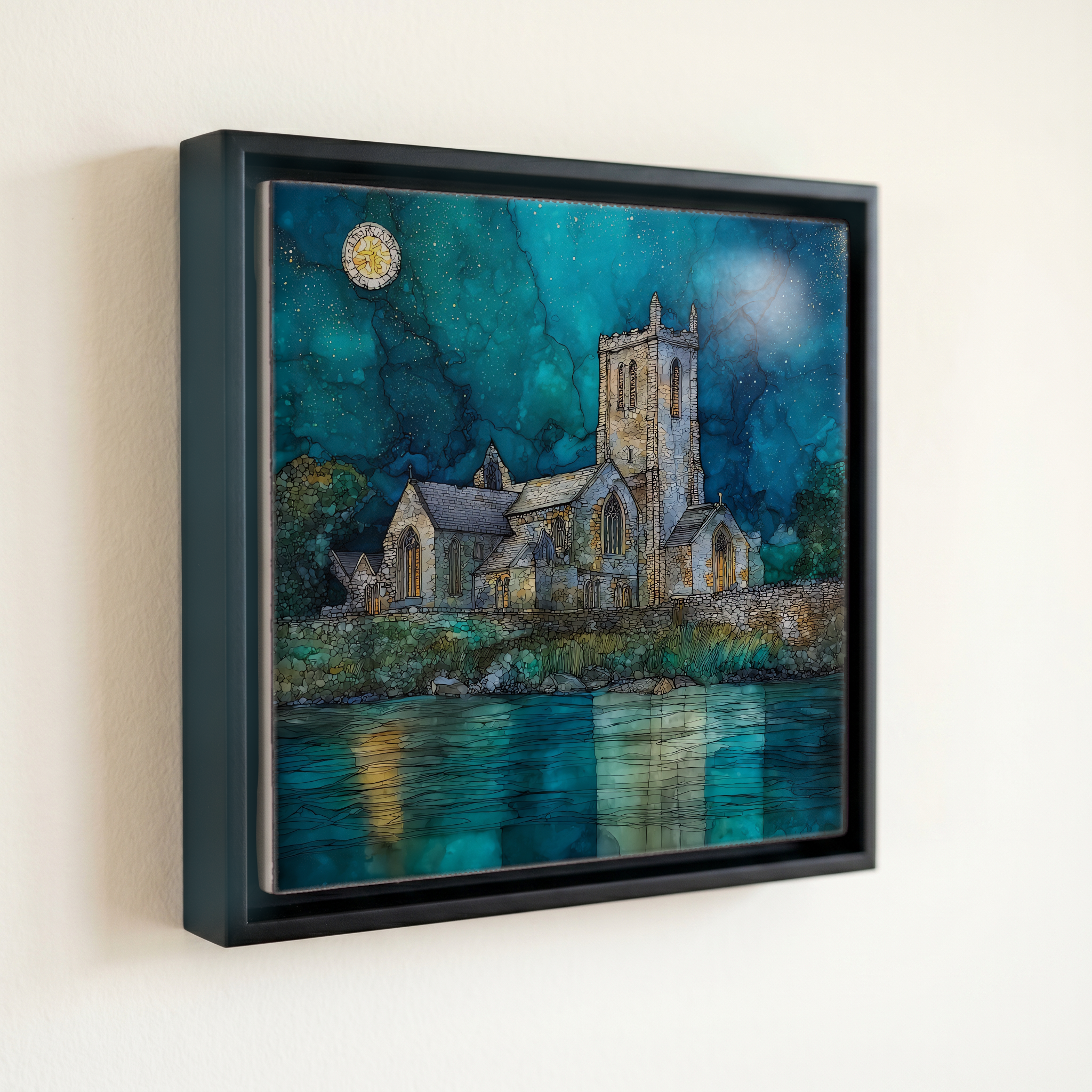
Above the linens, in a slim black surround.
On the nightstand, on a light oak stand.
On a picture ledge, where the light comes in.
a note from the studio

A grey limestone abbey on a bend of the River Suir, six kilometres south of Thurles. King Donal O'Brien of Thomond founded it for Cistercian monks in 1169. A fragment of the True Cross arrived around 1233, sent by Queen Isabella of Angoulême. Cromwell's men left it open to the sky for three hundred years; the Dáil passed special legislation in 1969 to let a National Monument become a church again. The sedilia, three carved limestone seats for the abbot, is reckoned the finest piece of medieval church furniture in Ireland. The pews fill on Sundays now, eight centuries in.
from the studio
shown in a slim black floating frame · 6 × 6 in
— bring it home

Holy Cross Abbey, on ceramic.

Each tile is finished by hand in our Knoxville studio. Artwork is slowly infused into the ceramic surface under high heat and pressure, and rests beneath a thin glossy finish. The colour lives in the surface, not on top of it.

What kind of piece?
One tile — square or rectangle.
How big?
the popular one — counter, shelf, nightstand
6 × 6 in · 15 cm · 1.6 lb
Surface finish
A clear glossy finish — the artwork reads as if under resin. Ideal for show-pieces and framed wall art.
How it sits
A hidden cleat — sits ¼″ proud of the wall.
$58
Hand-finished and shipped from our studio at the foot of the Smokies. On your wall in about ten days.
size
6 × 6 in
15 cm
weighs
1.6 lb
solid in the hand
surface
ceramic, hand-finished
art rests beneath a thin glossy finish
from
Knoxville, TN
our family studio, at the foot of the Smokies
— start a Coaster Set

Pick any four 4-inch tiles — National Parks you've been to, a Smokies set, the four seasons of one place. $ for a set of , cork-backed, ready to live on the table.
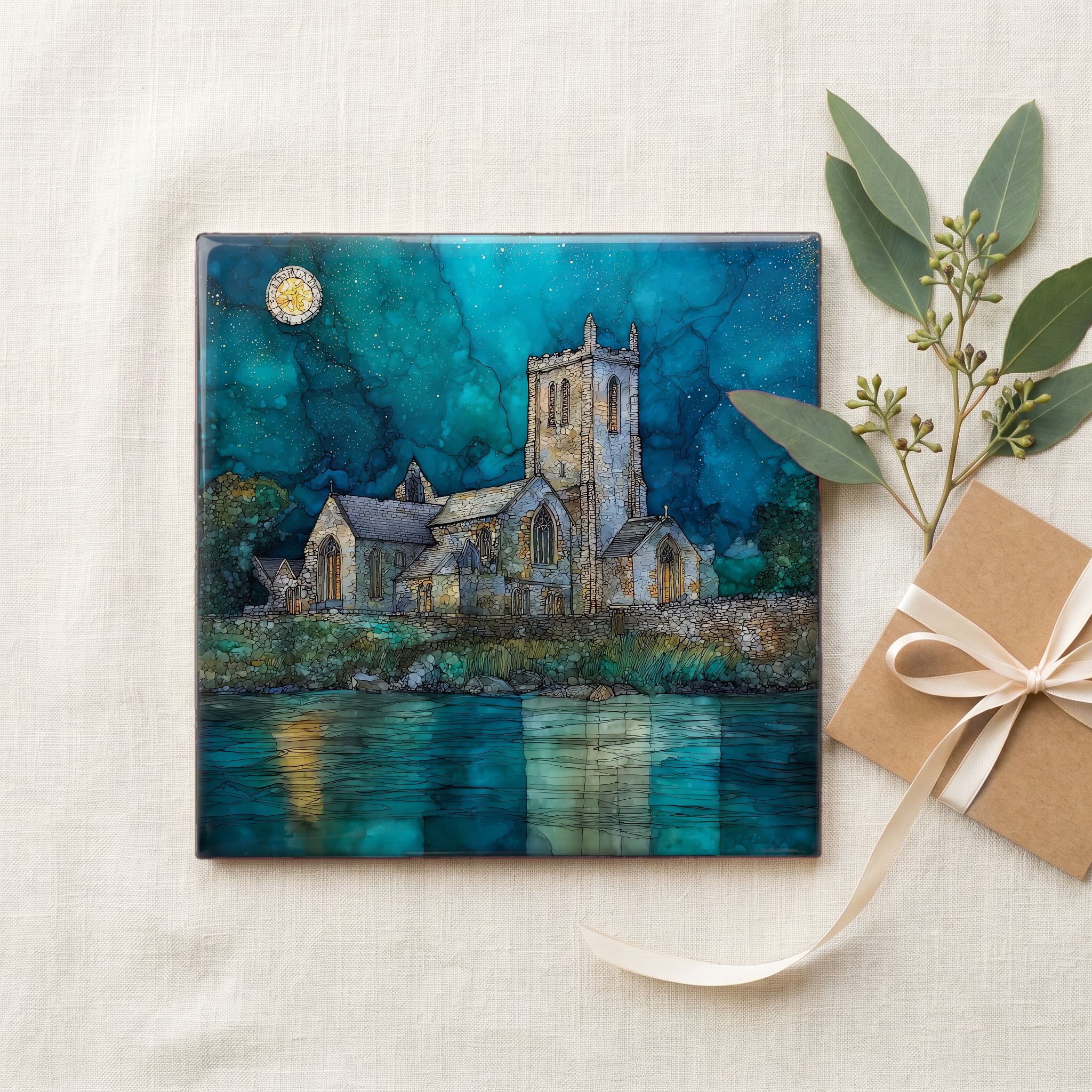
comes gift-ready
comes gift-ready

Each tile ships in a kraft box, tied with cream ribbon, with a handwritten note from the studio if you'd like to add one.
or build a grouping
or build a grouping

Three or five different vistas, hung together — a chapter of places you've been, or want to go.

about Holy Cross Abbey

The place, in three passes.

A little of what's known, in case you fall down the rabbit hole — or want to go see it yourself.
the place

Holy Cross Abbey sits on a meander of the River Suir in the village of Holycross, civil parish of Eliogarty, about six kilometres south of Thurles in County Tipperary. Domnall Mór Ua Briain, King of Thomond, founded the house for Cistercian monks in 1169 and the community was settled from Monasteranenagh in County Limerick by 1182. The site became a major medieval pilgrimage destination after Queen Isabella of Angoulême, widow of King John of England, sent a fragment relic of the True Cross around 1233. The abbey was designated a National Monument in 1880. It is reached by the R660 from Thurles or the R661 from Cashel.

the stone

The abbey is built of grey limestone from the surrounding valley, shaped by masons whose marks survive in the rib-vaulted ceiling of the chancel and the north transept. The sedilia, three canopied seats carved into the south wall of the chancel for the abbot, prior, and sub-prior, has long been reckoned the most accomplished piece of medieval church furniture in Ireland. A medieval mural of a hunting scene on the north transept's west wall, unusual on monastic ground, was conserved by the Office of Public Works during the 1969–1975 restoration. Mason's marks, the east window tracery, and the rose window above the west door are visible on a guided visit.

the visit

The abbey is open to visitors and to prayer from 9am to 6pm every day of the year; admission is free, with a five-euro donation suggested for guided tours. Sunday tours depart at half-two from March through September and require advance booking. Mass is offered as part of the parish life of the Archdiocese of Cashel and Emly, the diocese to which Holy Cross returned when it was reconsecrated as a working church on 25 September 1975. Thurles, six kilometres north along the R660, has the nearest train station, with regular Cork-Dublin services on the Iarnród Éireann Mainline. The site is partially wheelchair-accessible.

where
Ireland · Holycross, County Tipperary
position
52.6392° N · 7.8681° W
the neighborhood

What's nearby.

A handful of named places within an hour's walk or short drive. Some we've already painted; some we will.
6 km N
Thurles
market town
14 km S
Rock of Cashel
medieval ecclesiastical complex
14 km N
Devil's Bit Mountain
limestone peak
N
Holy Cross Abbey
Thurles
Rock of Cashel
Devil's Bit Mountain
common questions

What people ask.

A few questions we get about Holy Cross Abbey — and about bringing the piece home.
about the place

Holy Cross Abbey stands on the River Suir in the village of Holycross, County Tipperary, about six kilometres south of Thurles. The nearest motorway is the M8 between Dublin and Cork, and the nearest railway is at Thurles, on the Iarnród Éireann Mainline.

The abbey takes its name from a relic of the True Cross, a fragment of the cross of Christ's crucifixion, sent to the Cistercian community around 1233 by Queen Isabella of Angoulême, widow of King John of England. The relic survives and was re-enshrined when the abbey was restored.

Domnall Mór Ua Briain, King of Thomond, founded the house in 1169. A Cistercian community arrived from Monasteranenagh in County Limerick by 1182 and built out the original church and cloister. The present building is largely a 15th-century rebuilding on those medieval foundations.

Holy Cross was a roofless ruin from the Cromwellian period until 1969, when the Dáil passed special legislation to allow a designated National Monument to be restored as a working church. Restoration ran from 1970 to 1975 under the Office of Public Works. The abbey was reconsecrated on 25 September 1975.

The sedilia is a set of three canopied stone seats carved into the south wall of the chancel for the abbot, prior, and sub-prior during the Eucharist. The Holy Cross sedilia, in grey limestone with delicate Gothic tracery, is widely considered the most accomplished piece of medieval church furniture in Ireland.

Yes. Holy Cross is one of the very few National Monuments in Ireland that functions as a working Catholic parish church, within the Archdiocese of Cashel and Emly. The abbey is open from 9am to 6pm every day of the year and Sunday tours run at half-two from March through September.

A rare medieval wall painting on the west wall of the north transept shows a hunting scene with a deer, hounds, and a huntsman, secular subject matter that almost never survives in Irish monastic settings. It was conserved during the 1969–1975 restoration and remains visible on guided tours.

about the piece in your home

Holy Cross has held a place in Tipperary identity for over eight centuries, as pilgrimage site, then ruin, then active parish church for the surrounding villages. The True Cross relic gives it deep meaning across Irish Catholic family lines. A Small or Medium with a handwritten note from the studio carries well for someone with family there or in the diaspora.

The grey limestone, jewel-tone stained-glass colour, and warm oil-painted lights of this piece sit comfortably with Irish farmhouse interiors, soft Catholic Traditional rooms, and a Cloister Modern study with dark wood, brass, and unbleached linen. It works less well in a high-gloss minimalist room with cool greys.

Yes. Cloister Modern, pared-back rooms drawing on monastic architecture, sandstone neutrals, and slow domestic ritual, has been a steady current in Irish, English, and Northeast US interiors for several years. The limestone-and-jewel palette of Holy Cross reads as serious devotional art inside that current, not decoration.

Above a standard sofa, a single Large reads as one anchored painting; a 4-tile Mural fills the wall above with more visual weight; a 9-tile Mural treats the wall as a stained-glass window. Above a console table, a Medium or a 4-tile Mural is the steady choice.

Yes. Ask for the Dura Satin or Matte finish rather than the Glossy. Both are scratch-resistant and made for vertical installations like backsplashes, shower surrounds, and bathroom feature walls. The colour lives in the ceramic surface and does not lift in steam or humidity.

A microfibre cloth and warm water is all that is needed. The colour lives in the ceramic surface beneath a thin durable finish, so there is no special chemistry, no sealant, no soft-paint care. For kitchen or bath installations, an occasional wipe with mild soap will keep the surface bright for decades.

Yes. Every WenderVista piece is painted in-house at Wender Studios in Knoxville, Tennessee, in our stained-glass and alcohol-ink visual language. Nothing is licensed. The Holy Cross Abbey piece is exclusive to WenderVista and slowly infused into the ceramic surface under high heat and pressure.

if this one stayed with you

A few you might also love.

Hand-picked by the eye that found Sorapis. Same air, same kind of quiet.