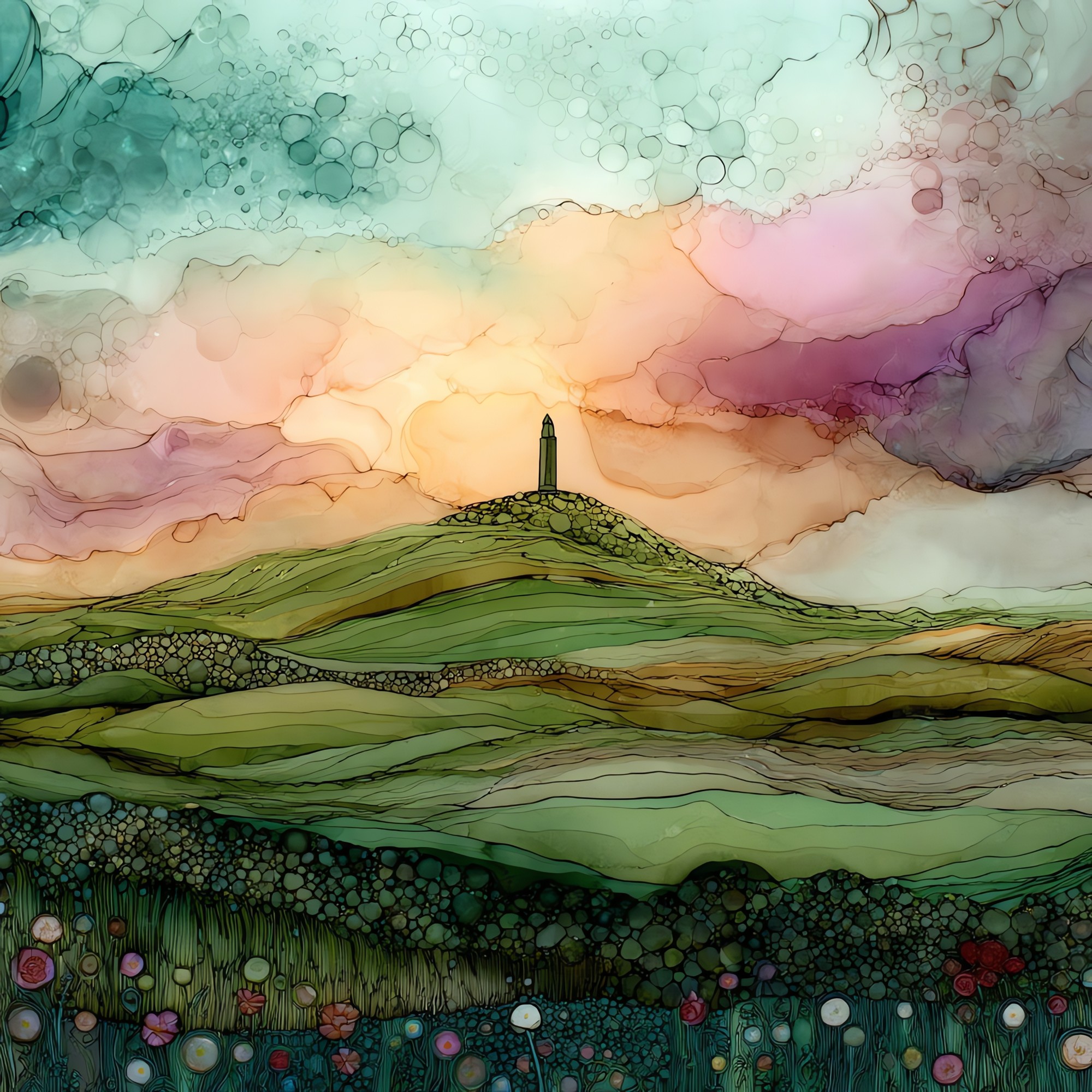
Hill of Tara
— the wind that knew the kings.
Not only on a wall.

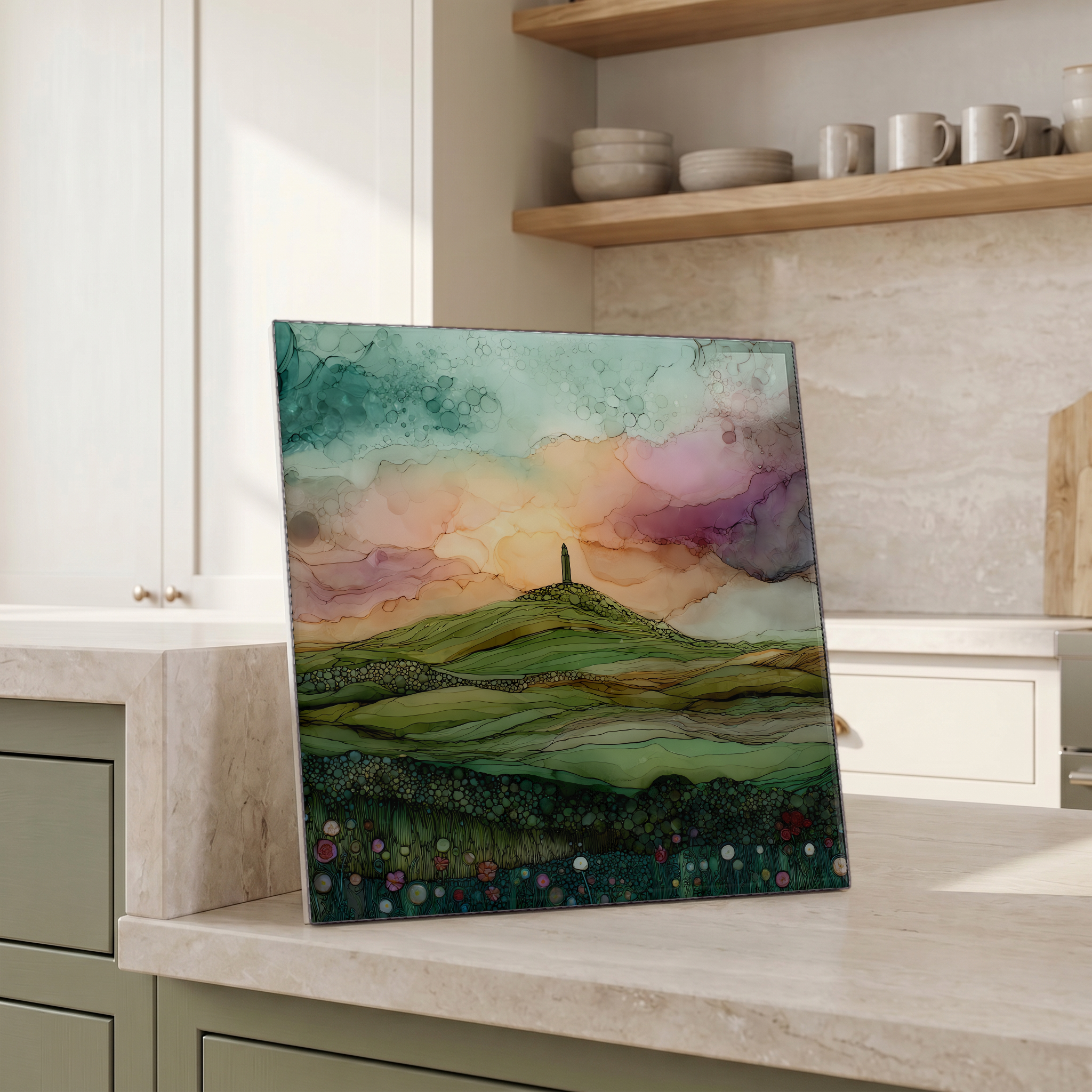
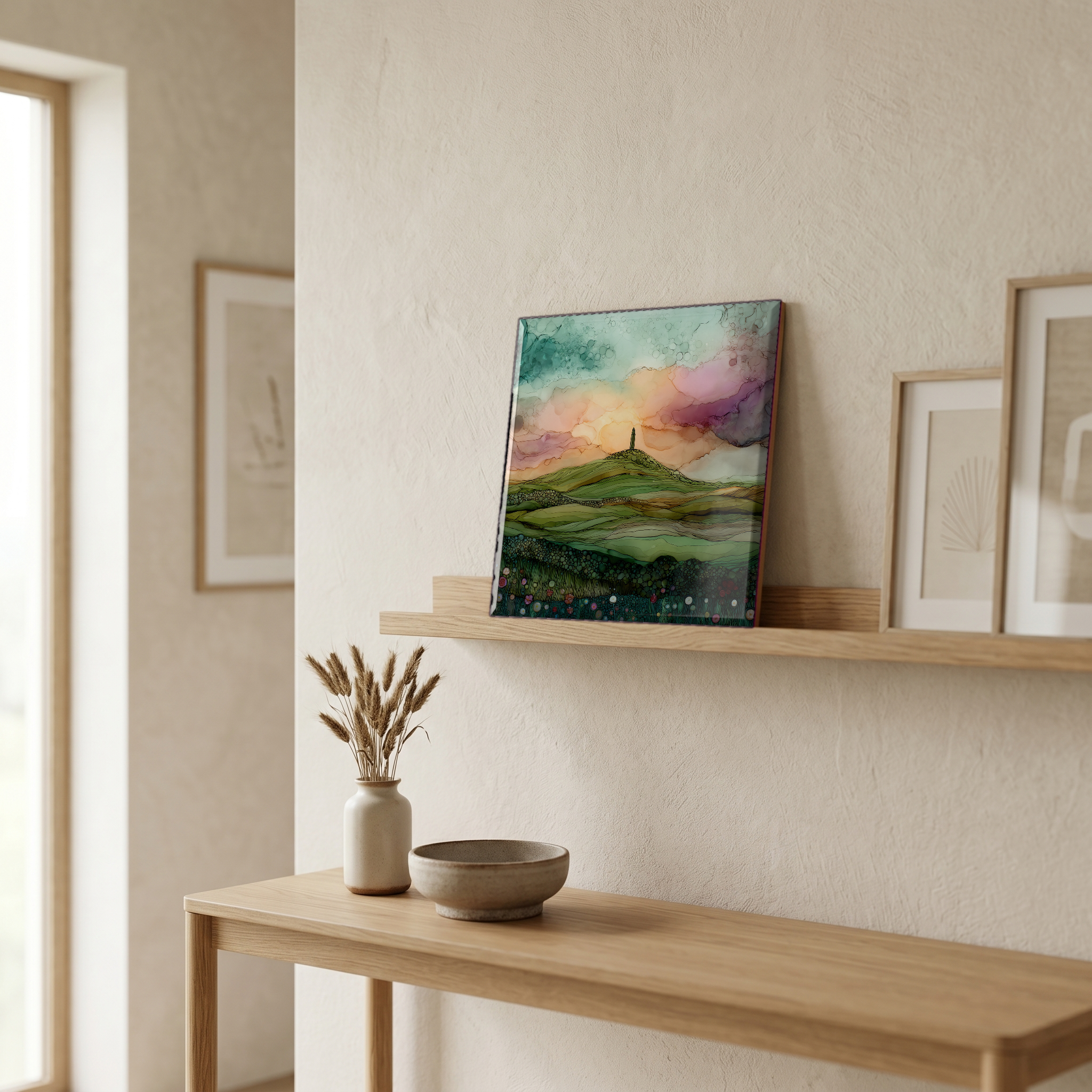
“A grassy hill in County Meath, low and wide, where the High Kings of Ireland were crowned for over a thousand years. The earthworks are barely there now, soft rings of grass holding the shape of Iron Age ramparts. The Lia Fáil still stands on the Forrad, the Stone of Destiny that was said to cry out when the rightful king touched it. On a clear day the Boyne Valley opens out below it and the land runs for miles in every direction. The wind comes from everywhere. Sheep graze the ring of Cormac's House. People walk the path slowly and don't say much.
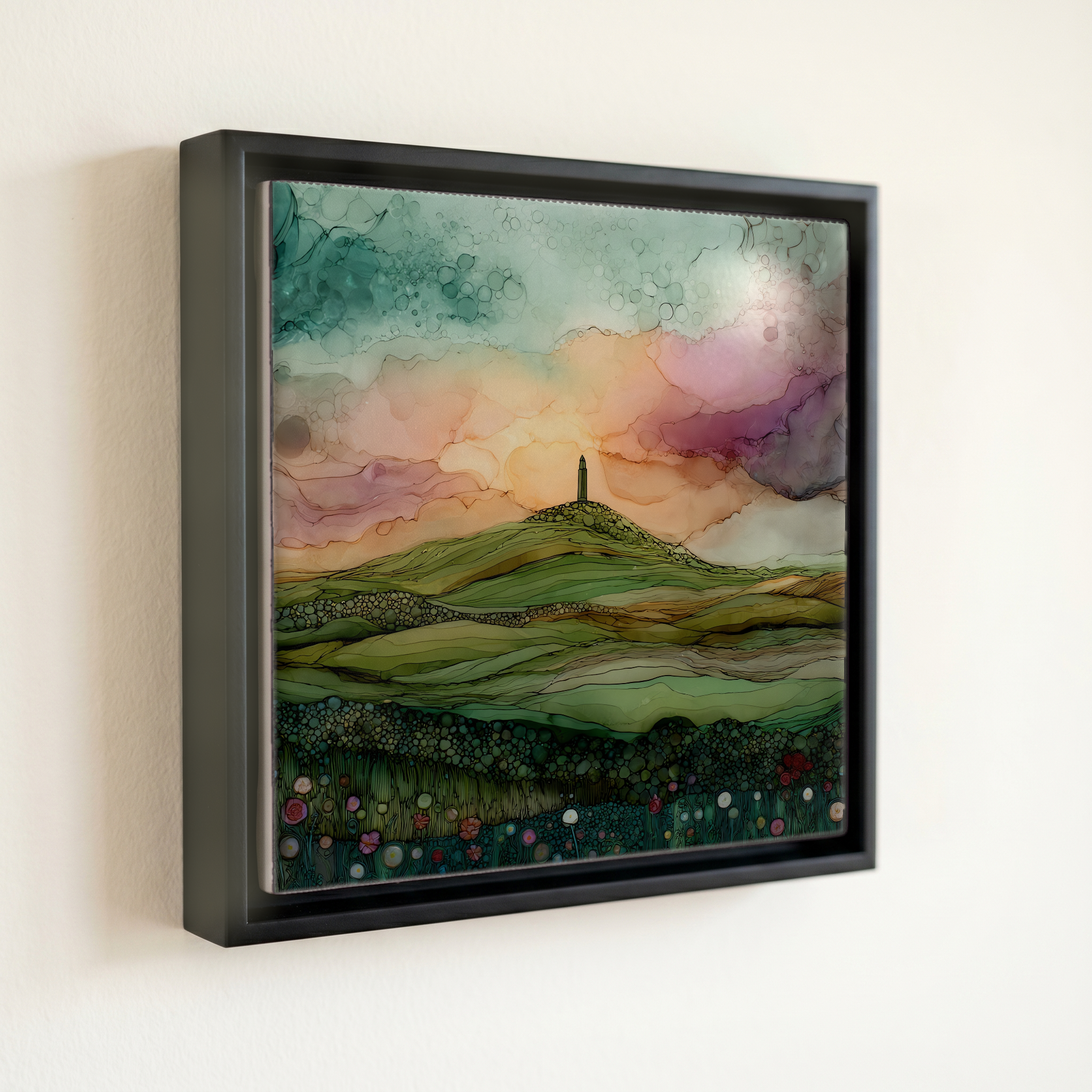
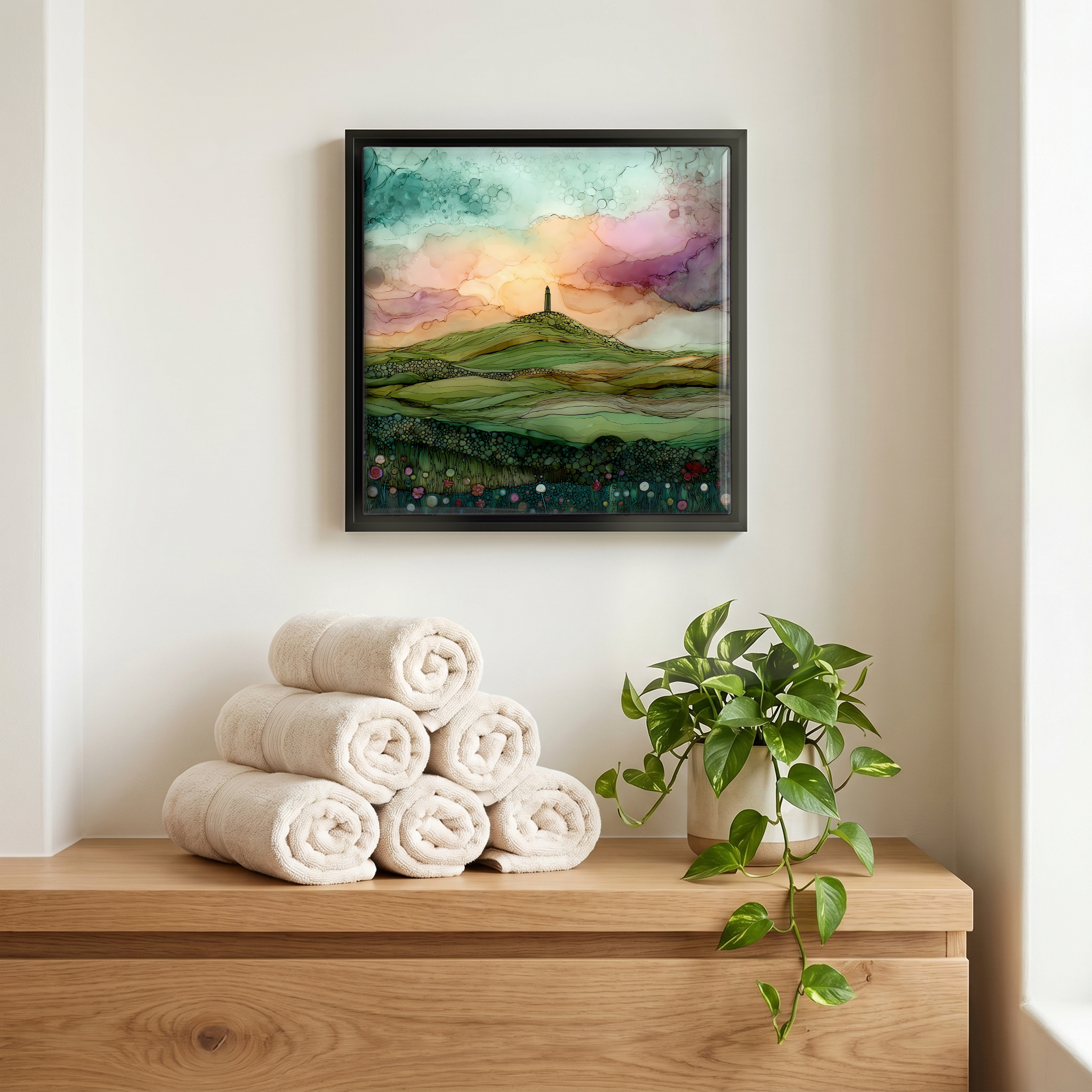
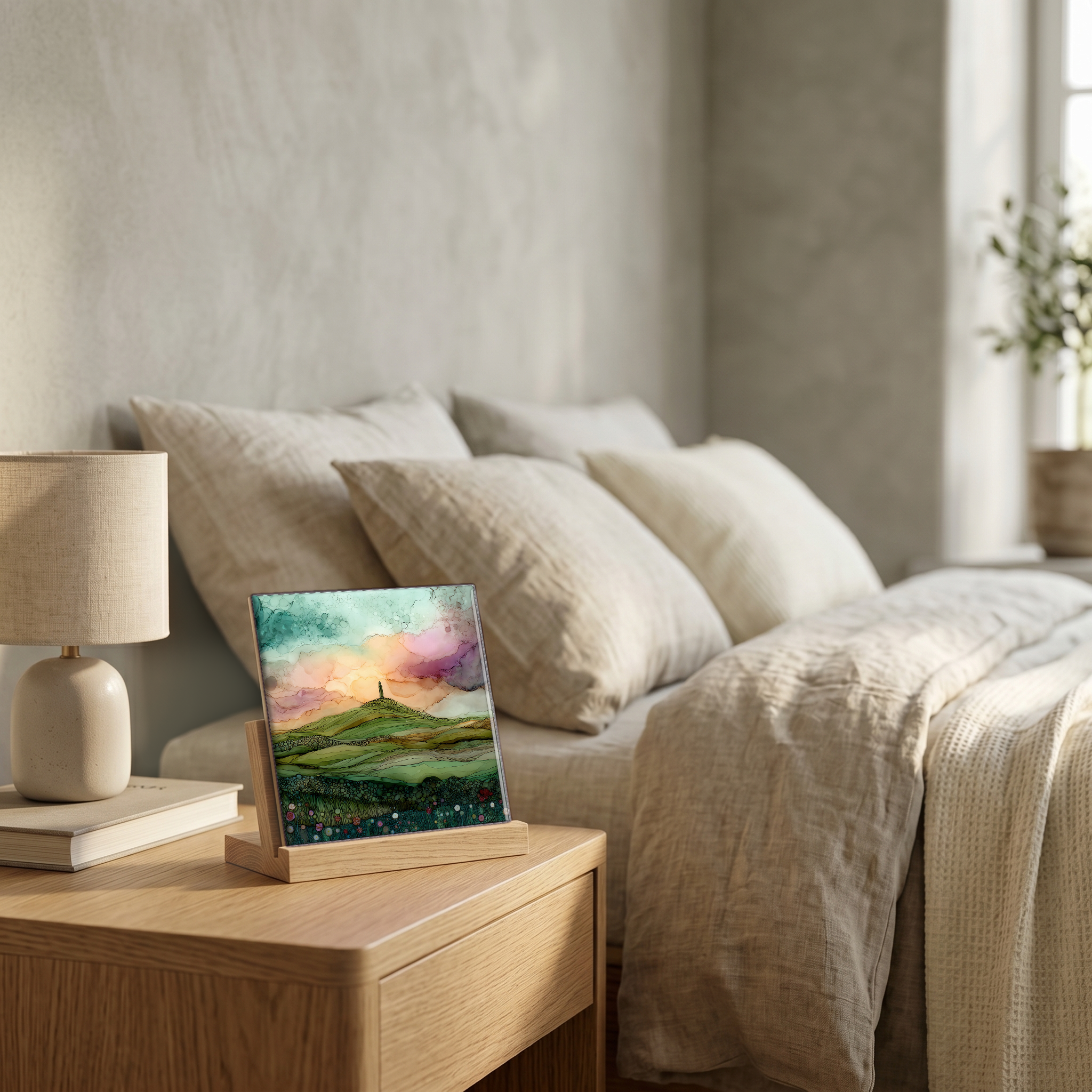
Hill of Tara, on ceramic.
Each tile is finished by hand in our Knoxville studio. Artwork is slowly infused into the ceramic surface under high heat and pressure, and rests beneath a thin glossy finish. The colour lives in the surface, not on top of it.
Pick any four 4-inch tiles — National Parks you've been to, a Smokies set, the four seasons of one place. $ for a set of , cork-backed, ready to live on the table.
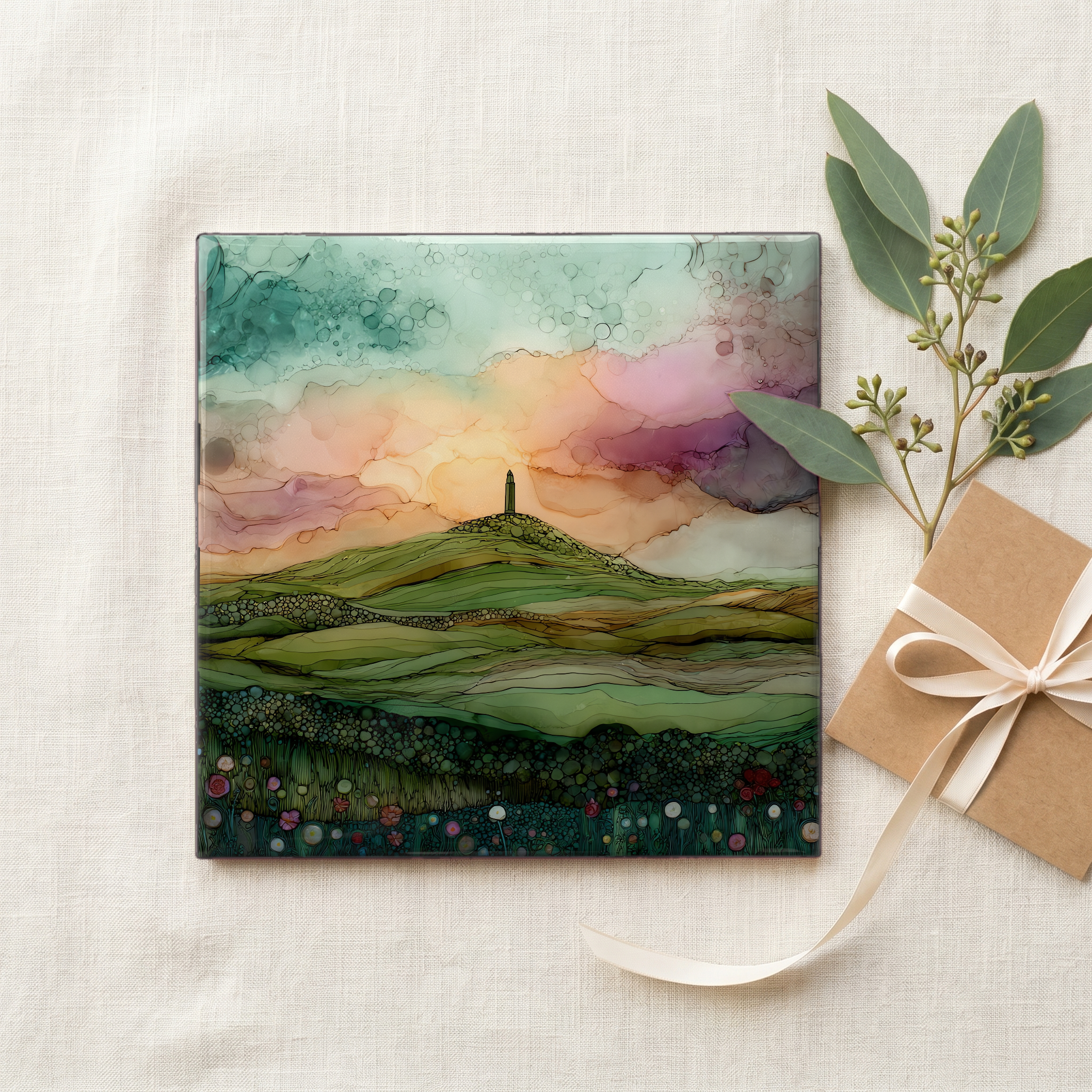
Each tile ships in a kraft box, tied with cream ribbon, with a handwritten note from the studio if you'd like to add one.

Three or five different vistas, hung together — a chapter of places you've been, or want to go.
The place, in three passes.
The Hill of Tara, Cnoc na Teamhrach in Irish, sits in County Meath, roughly 12 kilometres south of Navan and about 40 kilometres north-west of Dublin. The hill itself is only 155 metres above sea level, but the land falls away in every direction and the view runs for miles across the Boyne Valley. The site holds more than thirty visible monuments dating from the Neolithic through the medieval period, and Tara was the symbolic seat of the High Kings of Ireland for more than a thousand years. It is now a National Monument cared for by the Office of Public Works. The grassy paths are open to the public in every season and there is no admission fee for the hill itself.
The most famous object on the hill is the Lia Fáil, the Stone of Destiny, a granite standing stone on the summit of the Forrad ringfort. Tradition holds that the stone cried out under the foot of the rightful High King of Ireland. The Mound of the Hostages, a small Neolithic passage tomb on the north side of the inauguration mound, dates to around 3,000 BCE, older than Tara's kingship by two thousand years. Its short passage was built to admit the rising sun at the cross-quarter days of Samhain and Imbolc. Around the inauguration mound are the curving banks of Cormac's House and the Royal Enclosure, Iron Age ringforts whose ramparts have softened into low rings of grass.
The hill is reached by a small road off the N3, between Dunshaughlin and Navan, with parking at the foot of the slope beside the Office of Public Works visitor centre. The centre occupies the disused St. Patrick's Church, a 19th-century building on the hill. Guided walks of the monuments run through the summer months, and an audio-visual presentation plays inside the church. The hill itself is free to walk, and the paths are grass and gravel. Sturdy shoes help when the ground is wet, which it often is. The site is a working pasture in places, so sheep have right of way. Walking the inauguration ridge, from the Mound of the Hostages to Rath Laoghaire, takes about an hour at an unhurried pace.