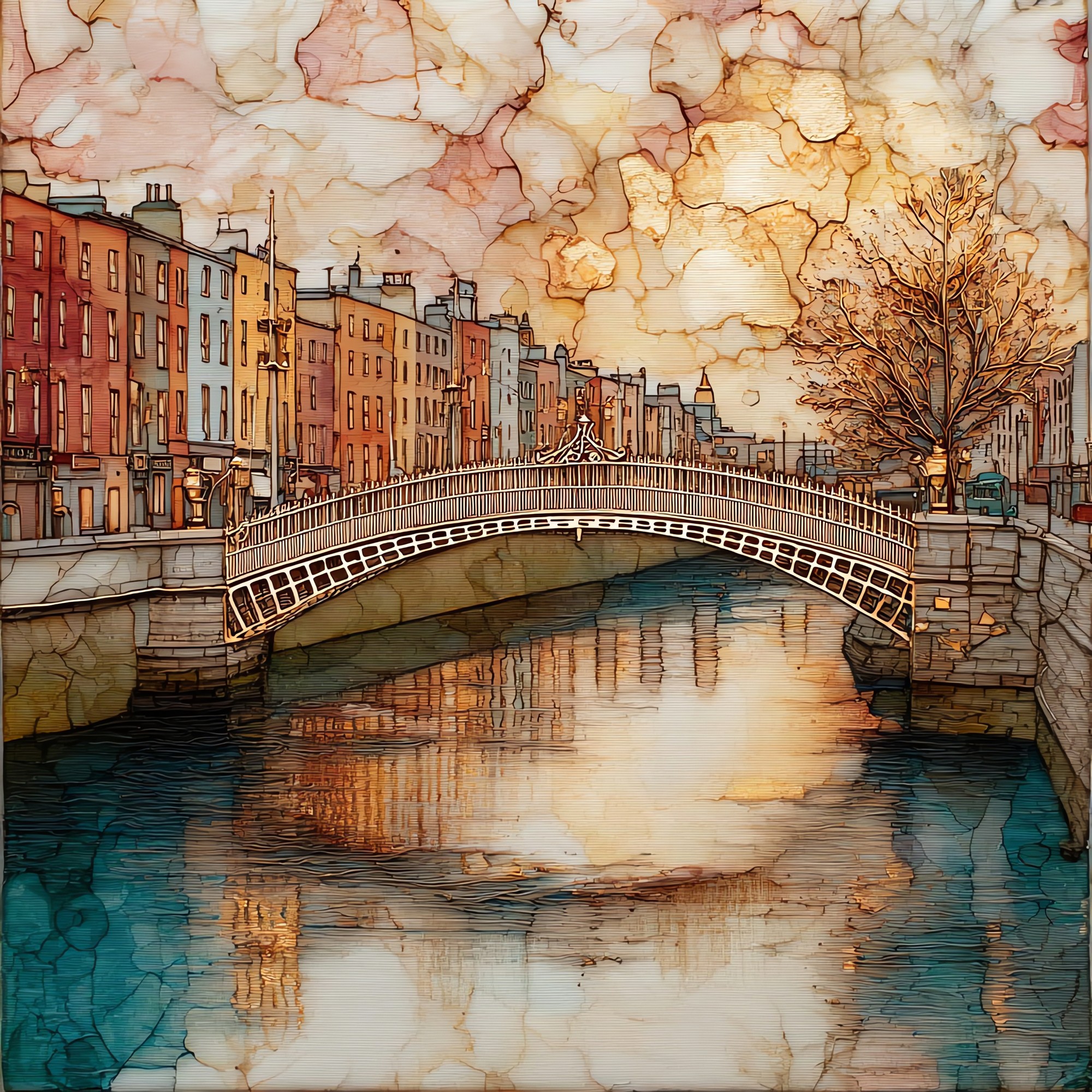
Ha'penny Bridge
— iron lace over a slow brown river.
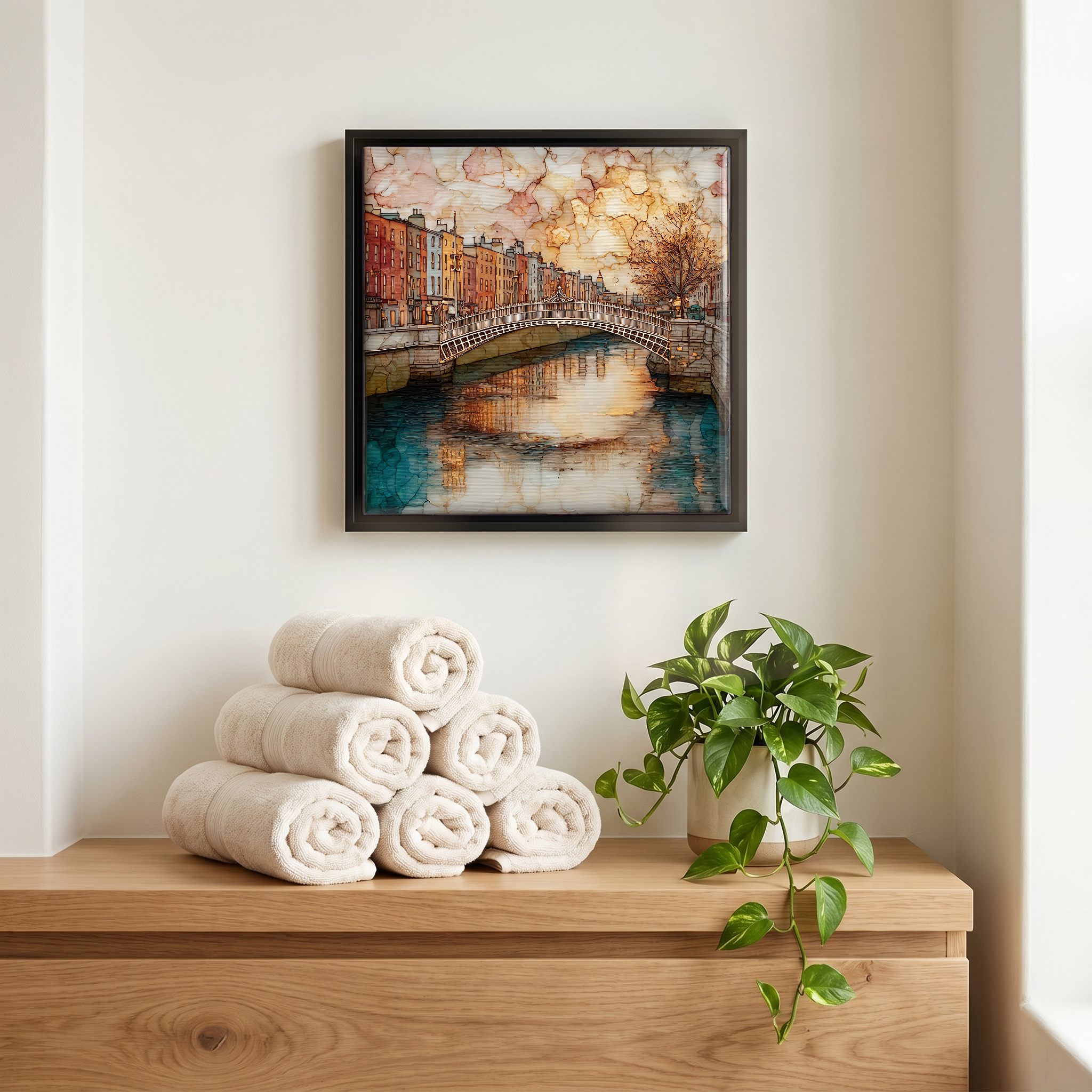
Not only on a wall.
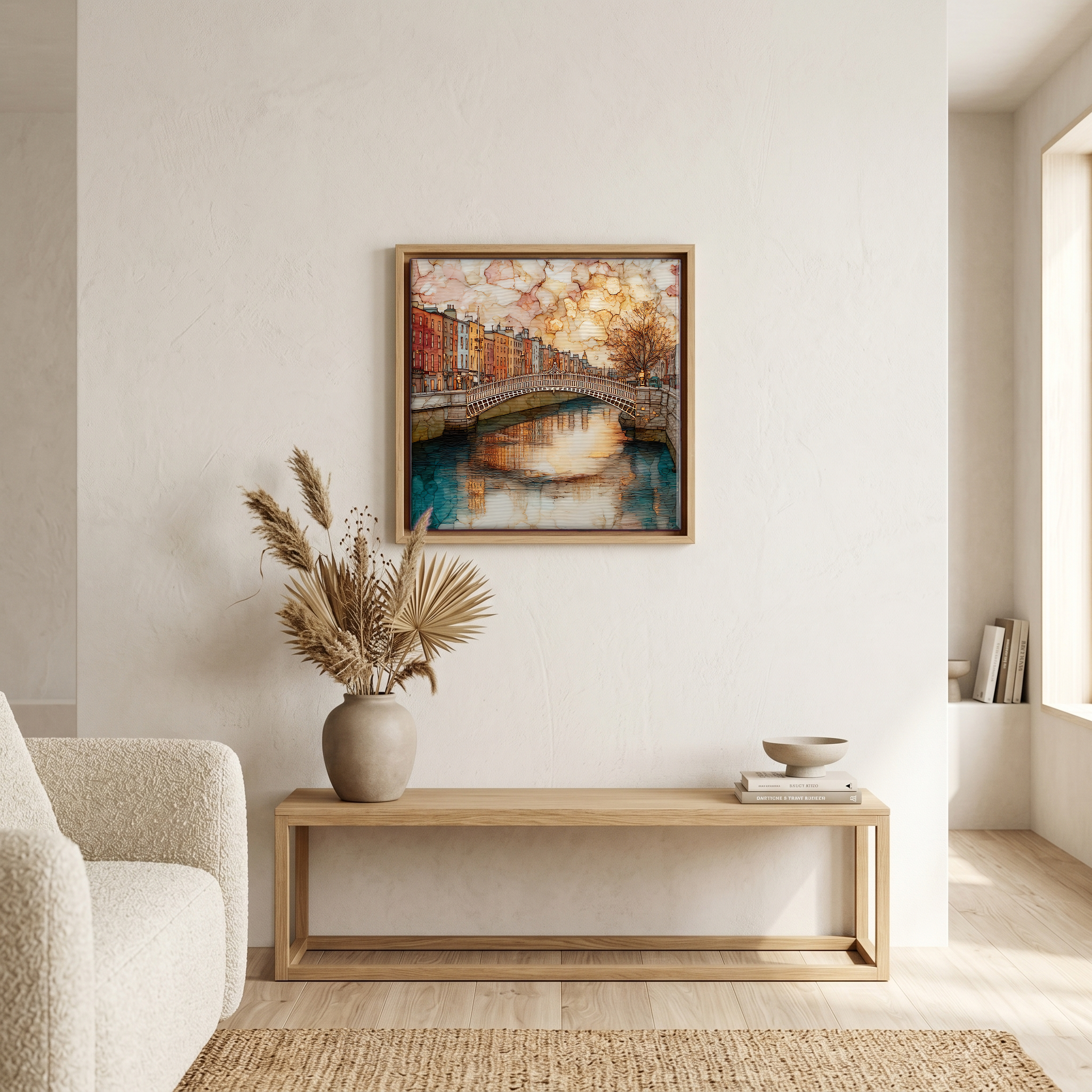
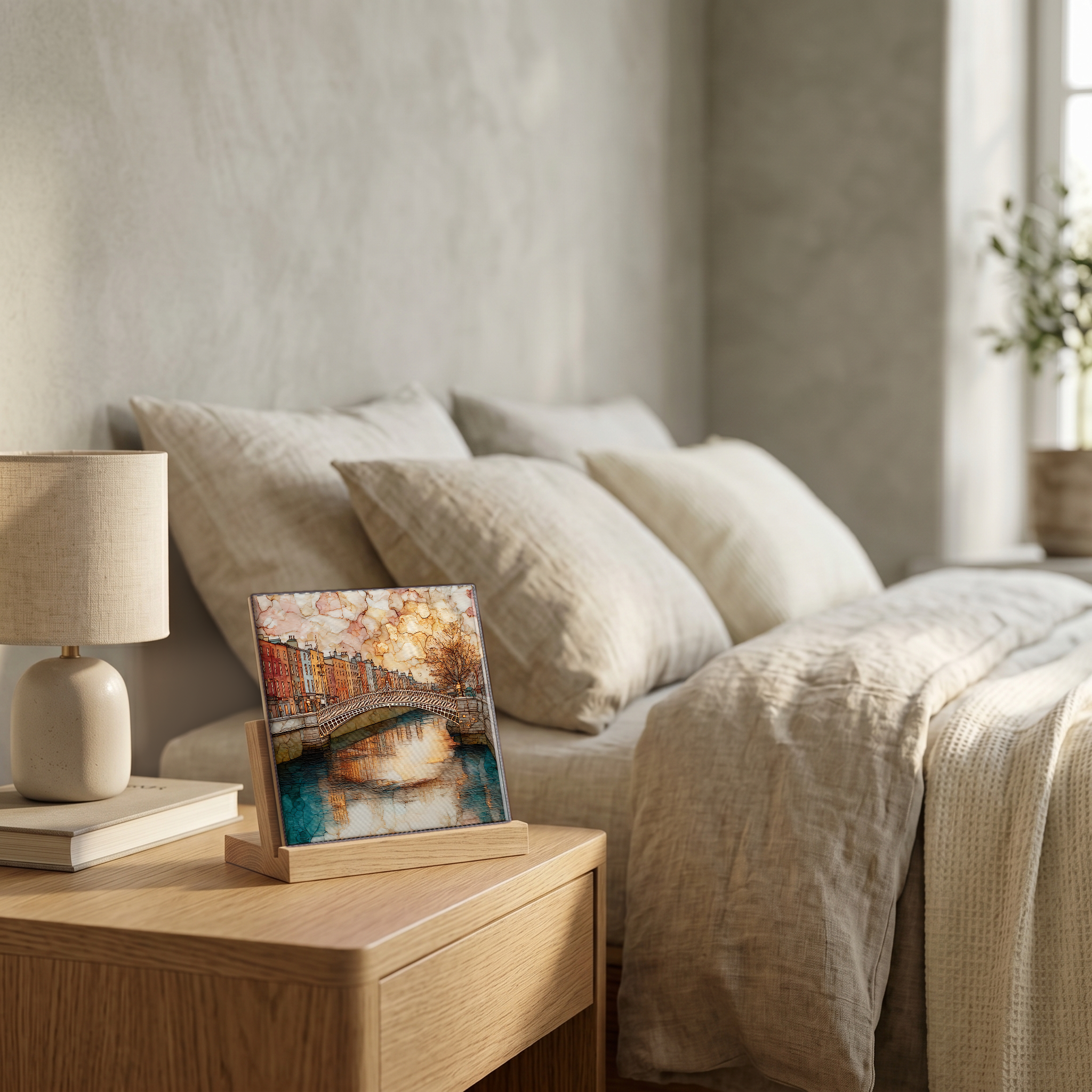
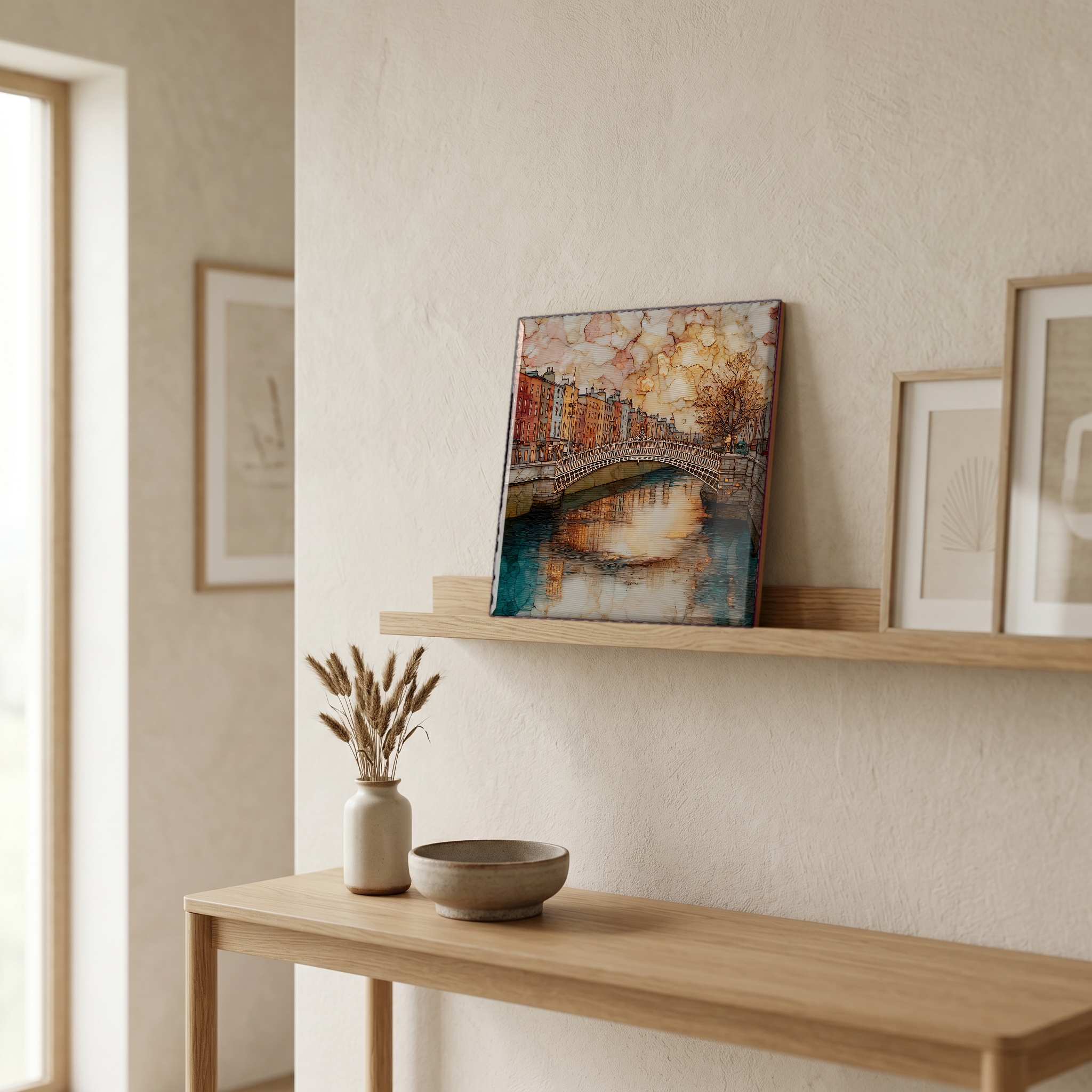
“A small cast-iron arch over the River Liffey, joining Bachelors Walk to the lane that opens into Temple Bar. Built in 1816 by an ironworks in Shropshire and the first iron bridge in Ireland. The nickname comes from the halfpenny toll Dubliners paid to cross it for over a century, until 1919. The lamps come on early in winter. Afternoon shadow falls across the quays by half past four. People pause on it for a photograph and then keep walking. The river underneath is dark and slow and goes out to the bay.
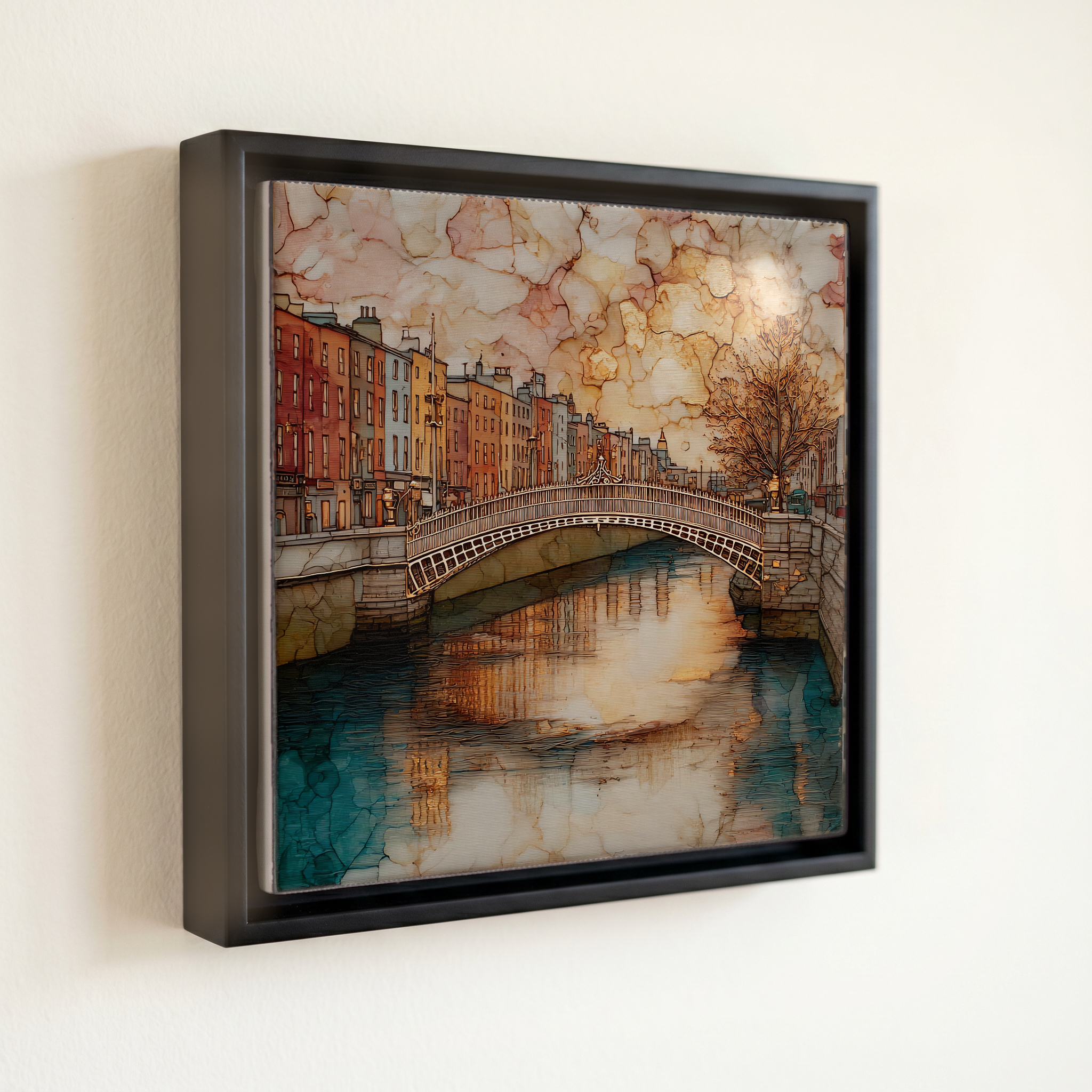
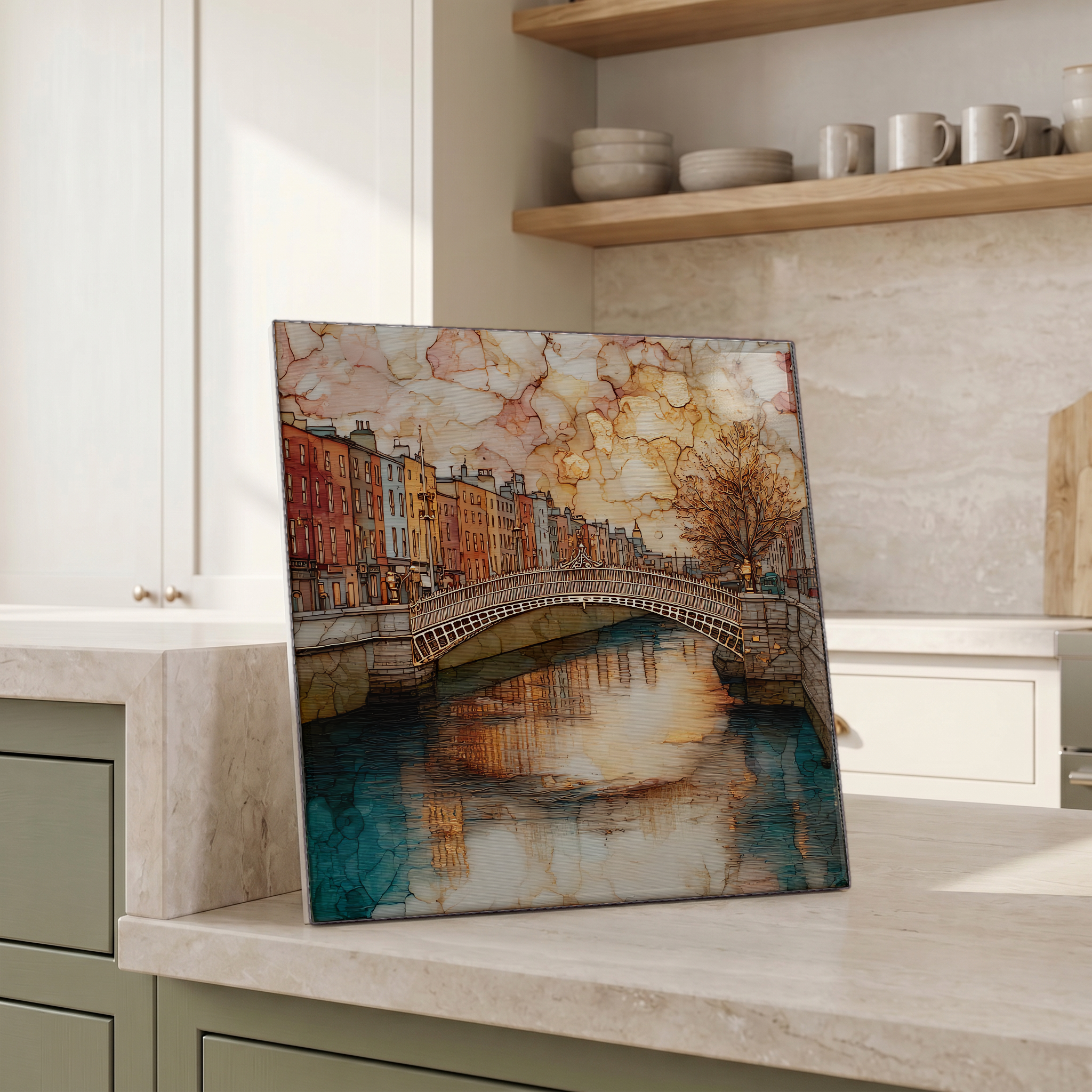
Ha'penny Bridge, on ceramic.
Each tile is finished by hand in our Knoxville studio. Artwork is slowly infused into the ceramic surface under high heat and pressure, and rests beneath a thin glossy finish. The colour lives in the surface, not on top of it.
Pick any four 4-inch tiles — National Parks you've been to, a Smokies set, the four seasons of one place. $ for a set of , cork-backed, ready to live on the table.
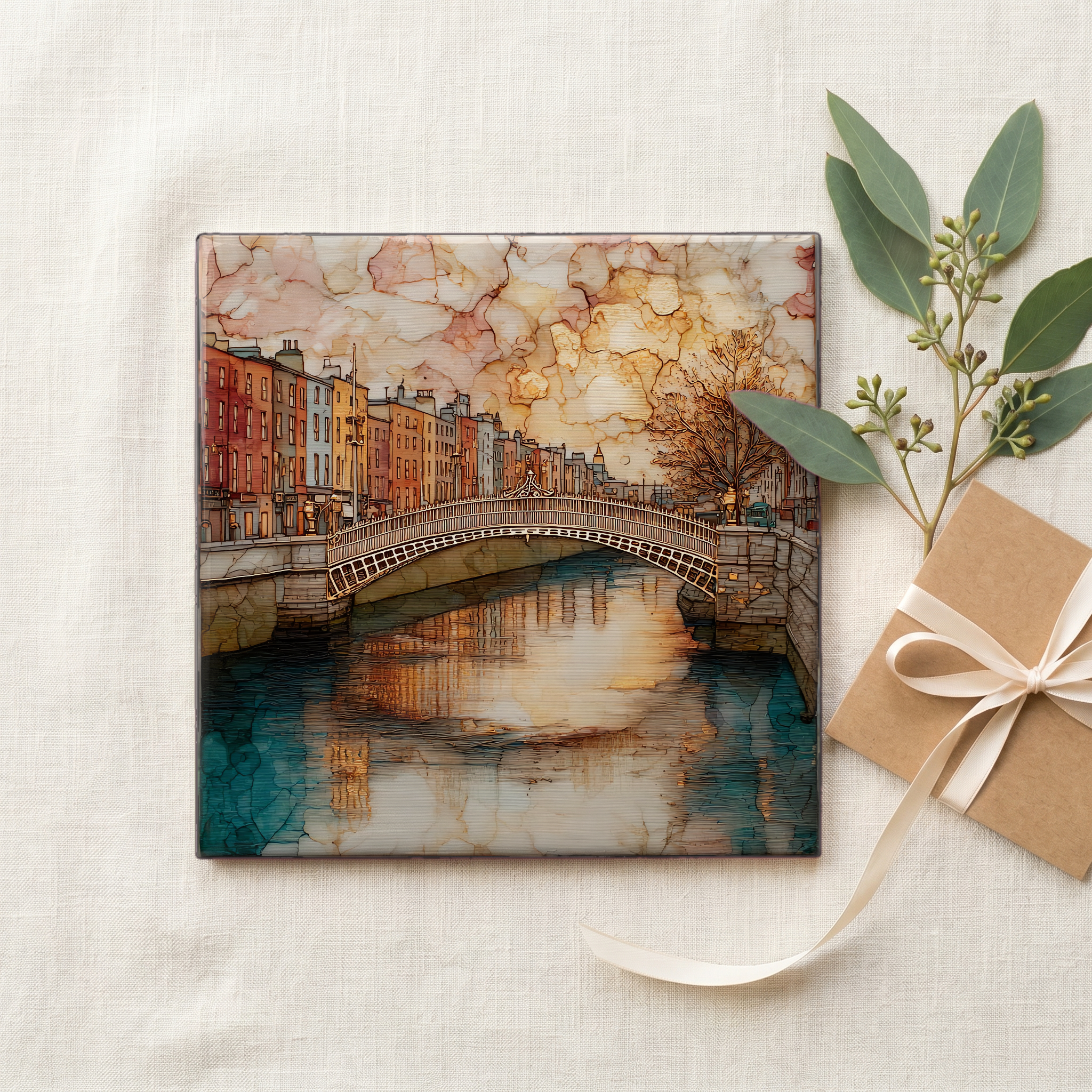
Each tile ships in a kraft box, tied with cream ribbon, with a handwritten note from the studio if you'd like to add one.
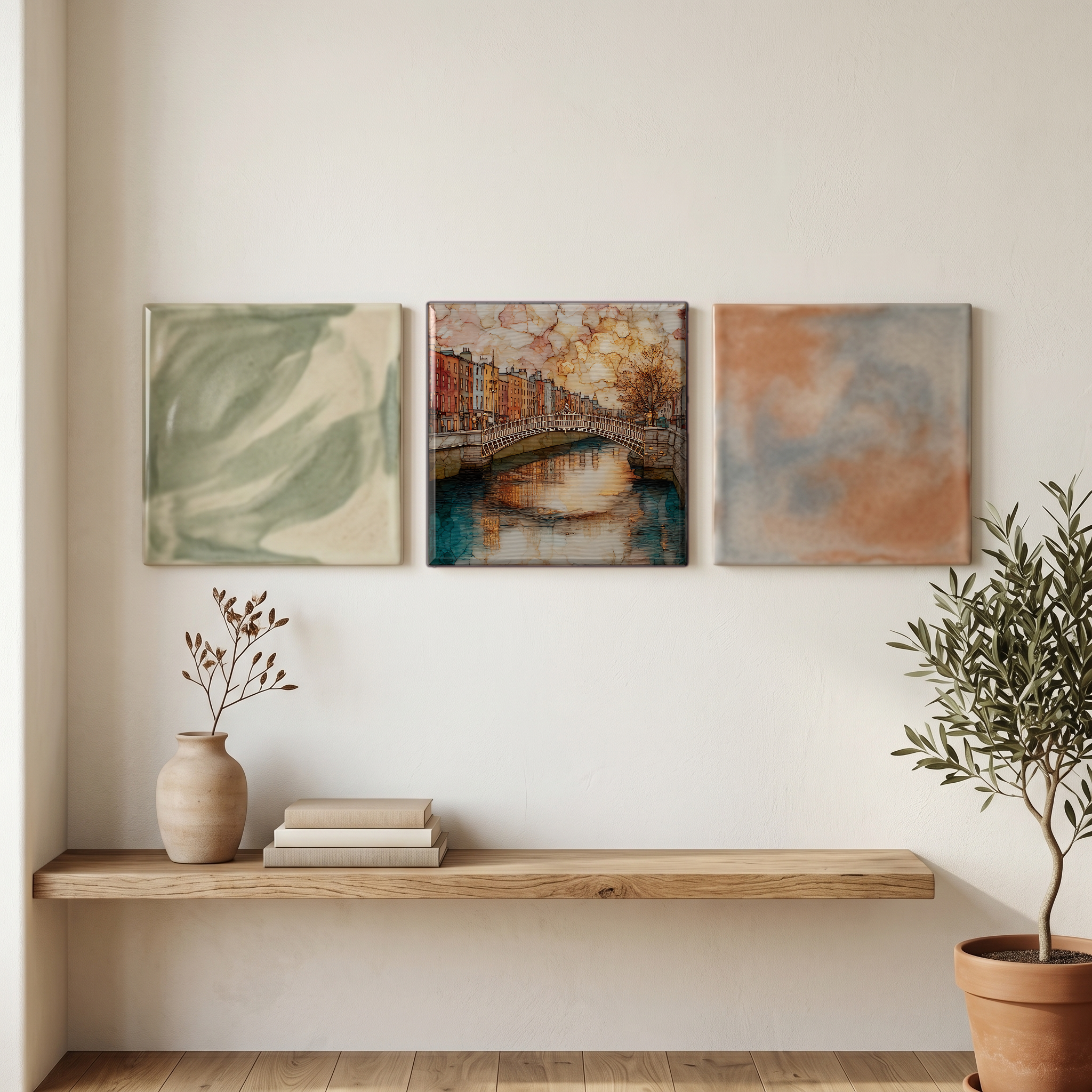
Three or five different vistas, hung together — a chapter of places you've been, or want to go.
The place, in three passes.
Ha'penny Bridge, officially the Liffey Bridge, crosses the River Liffey in central Dublin, linking Bachelors Walk on the north quay to Merchants Arch and Temple Bar on the south. It opened in May 1816 as the first iron bridge in Ireland, replacing seven ferries operated by William Walsh, who was given the right to charge a halfpenny toll in exchange for funding its construction. The toll, paid by every pedestrian crossing for more than a century, gave the bridge its nickname; it was lifted in 1919. The single elliptical arch spans about 43 metres and was cast at the Coalbrookdale ironworks in Shropshire. The bridge is pedestrian-only and listed as a Protected Structure under the Dublin City Development Plan.
The arch is cast iron: three ribs from the Coalbrookdale Company in Shropshire, the same English foundry that built the world's first iron bridge over the Severn in 1779. The Dublin commission went to ironfounder John Windsor of Shropshire; the components were shipped by sea, assembled on site, and the bridge opened to the public on 19 May 1816. The white paintwork, lattice railings, and lamp standards along the deck are restorations. The most recent full refurbishment was carried out in 2001, when the bridge was closed for ten months and the ironwork stripped, repaired, and repainted.
Cast-iron lamp standards line the deck. In December and January, Dublin's shortest days mean street lights come on by about half past four in the afternoon; in midsummer they hold off until almost ten. The bridge reads white in daylight against the slate and brick of the quay buildings, then changes character entirely after dark, when the lamps and their reflections in the slow Liffey carry the silhouette. Photographers favour the hour before sunrise, when the river is at its quietest. On Wellington Quay just south of the bridge sits the Halfpenny Bridge Inn, a pub that has held that corner for generations.