Wender·Vista
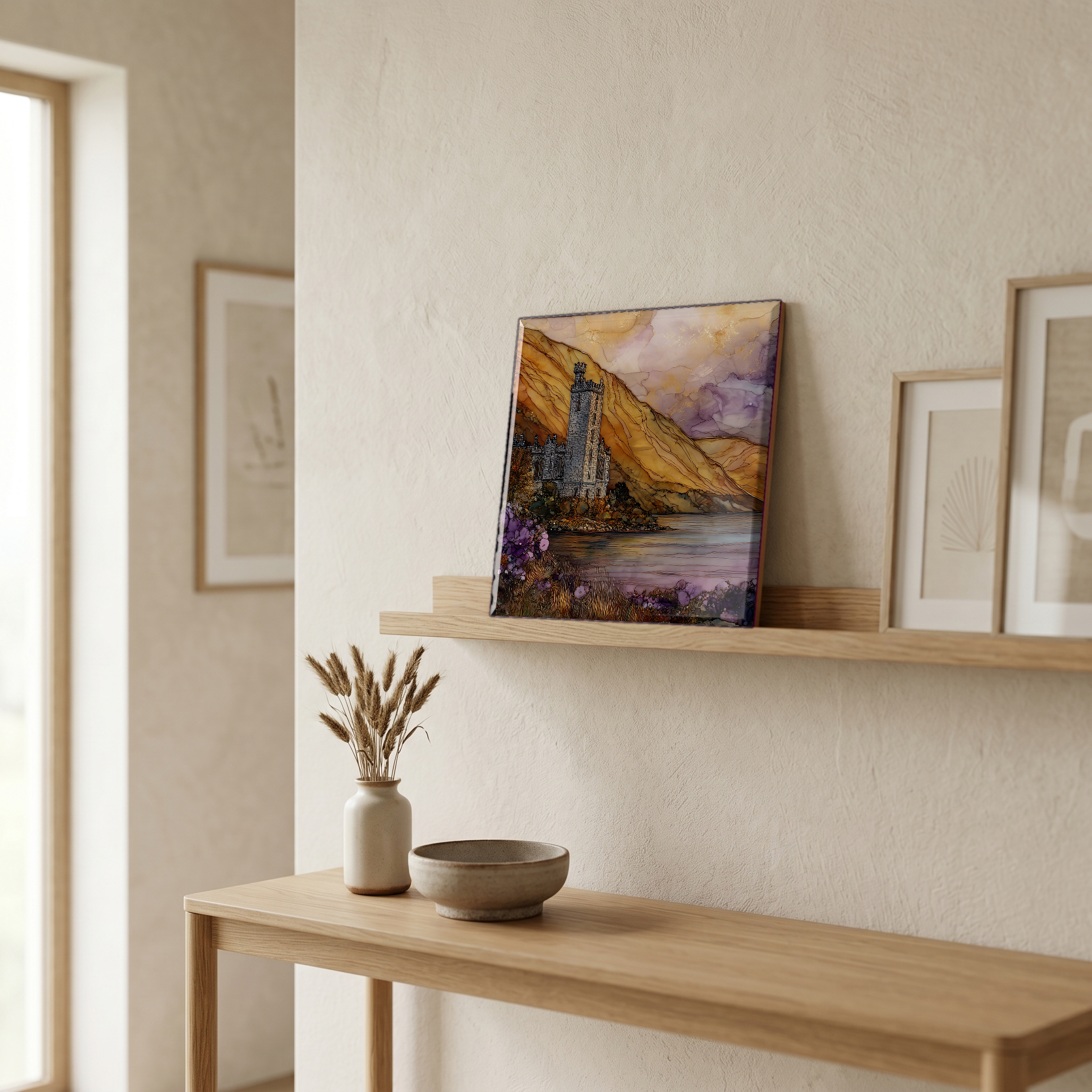
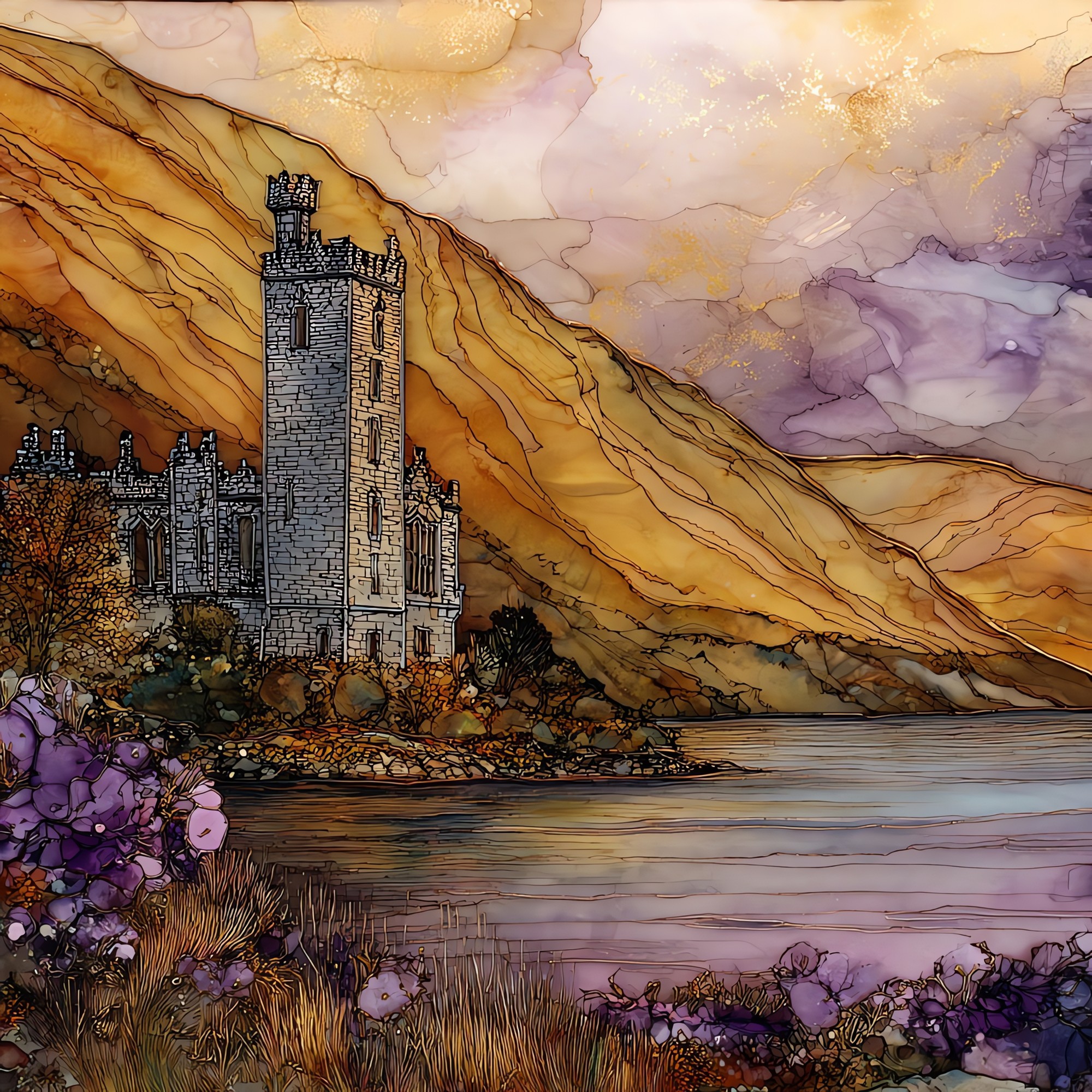
Glenveagh Castle
shown on ceramic, 12-inch tileIreland
in the Derryveagh Mountains, northwest Donegal

Glenveagh Castle

— a castle the glen kept after the people left.

Where it lives

Not only on a wall.

A small tile on the nightstand catching the morning. A larger one above the fire. Yours, wherever you spend the slow hours.
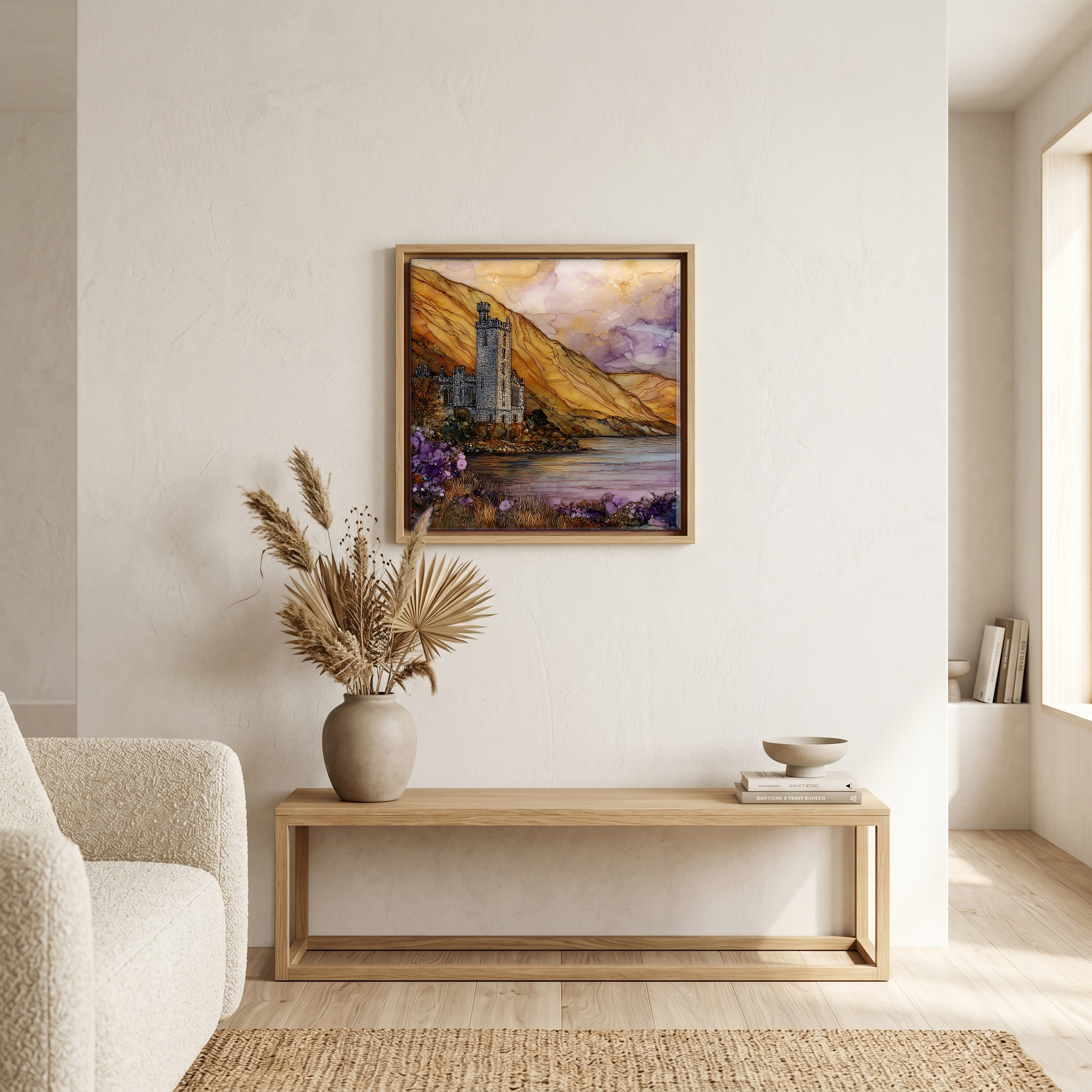
Above the bench, in a warm oak surround.
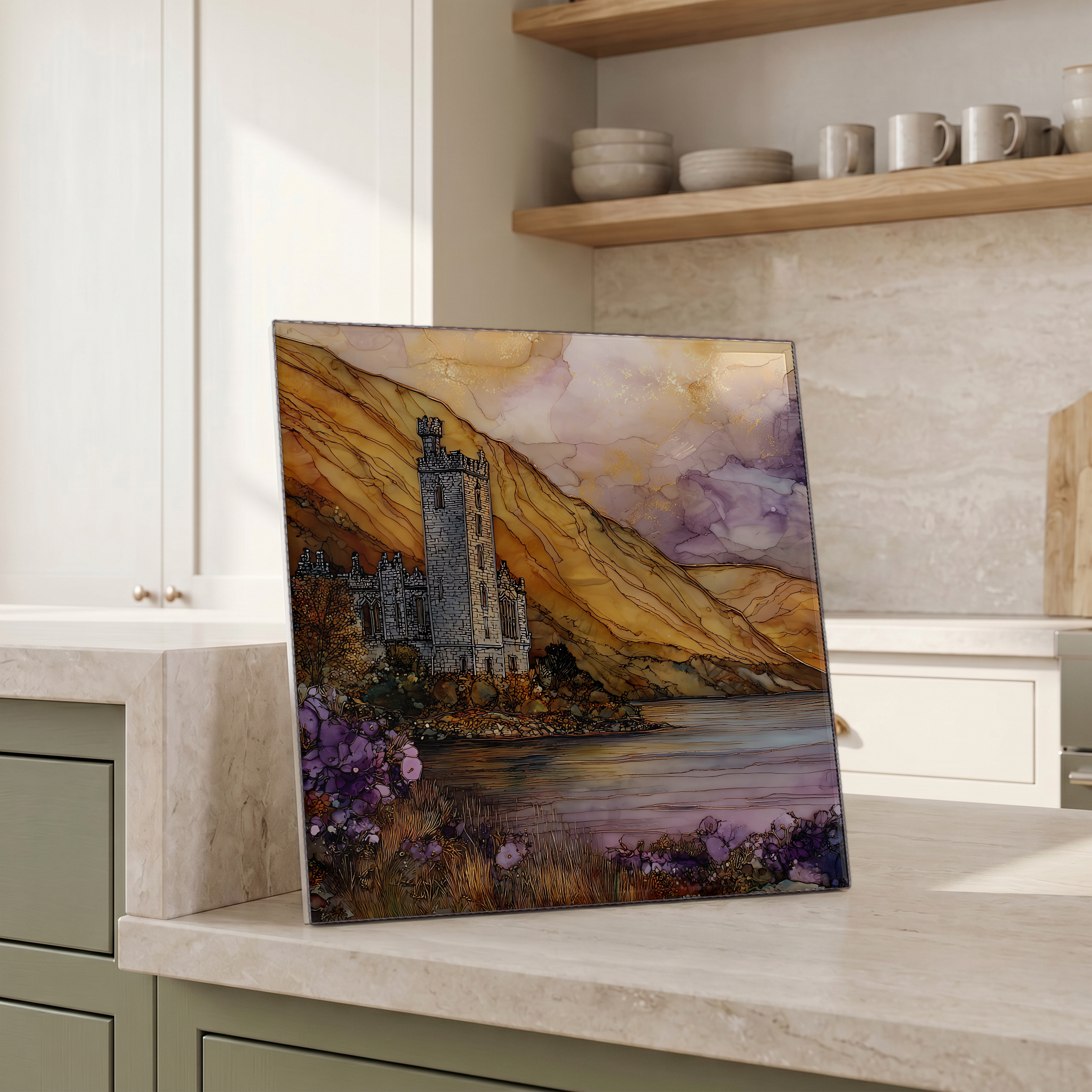
Beside the kettle, propped on the counter.
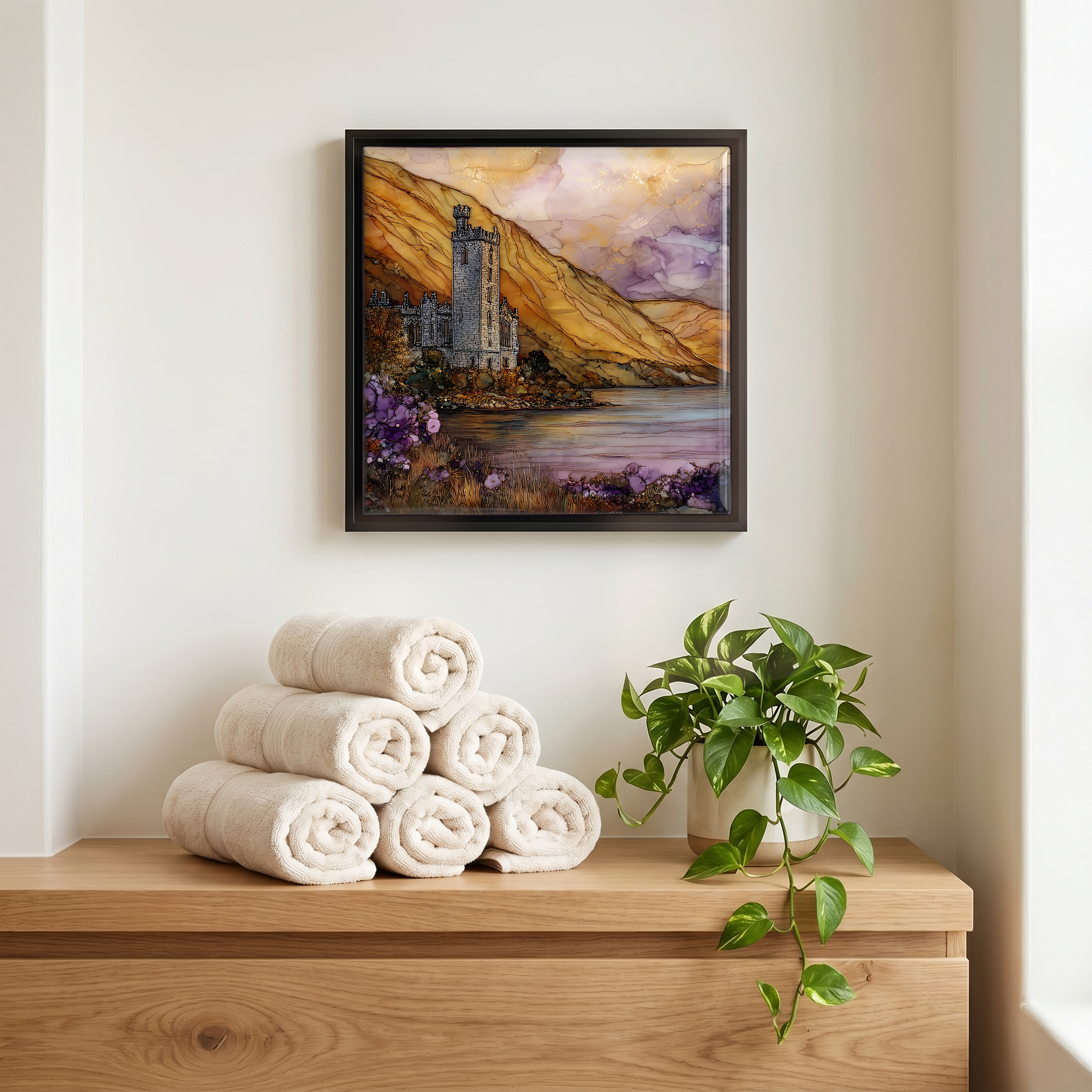
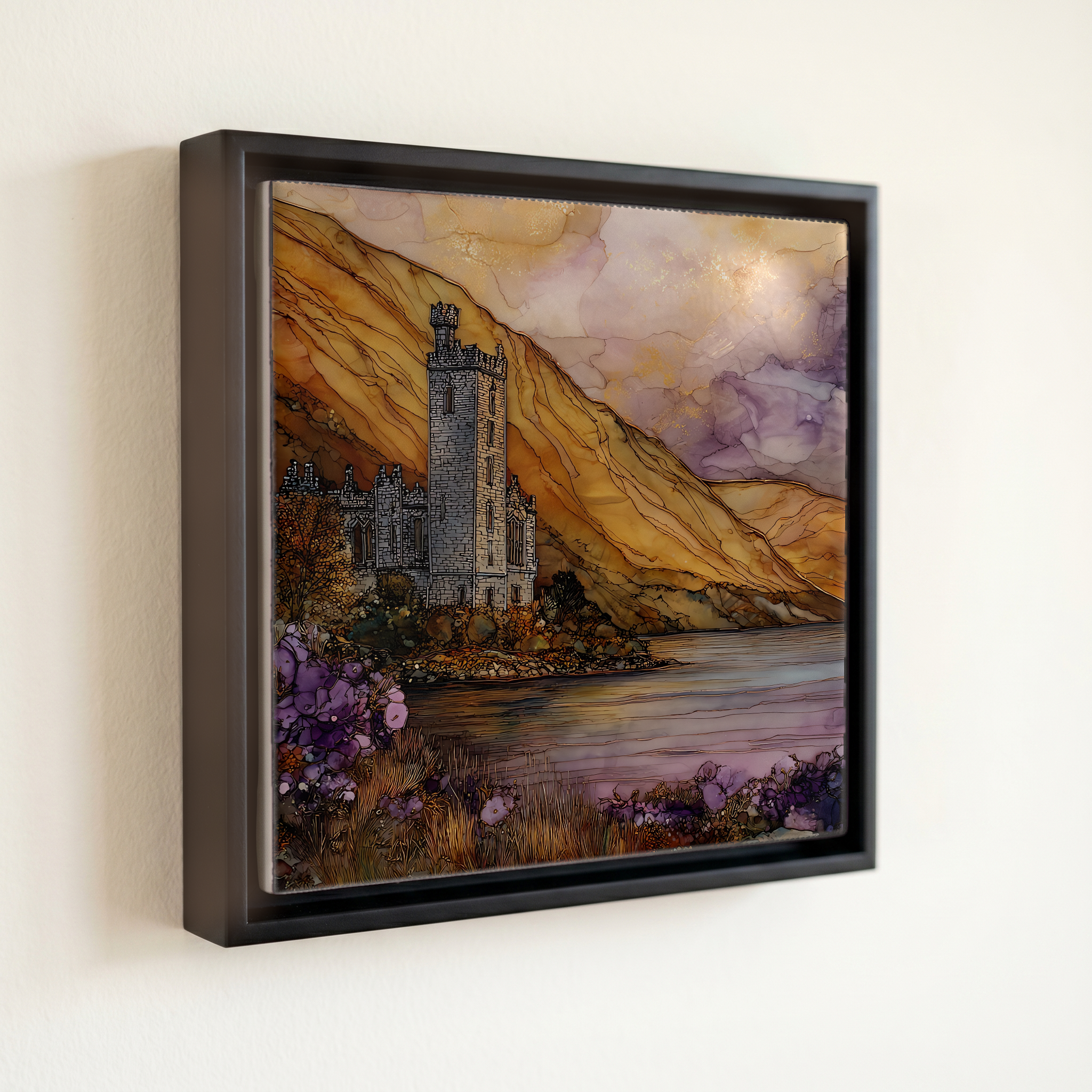
Above the linens, in a slim black surround.
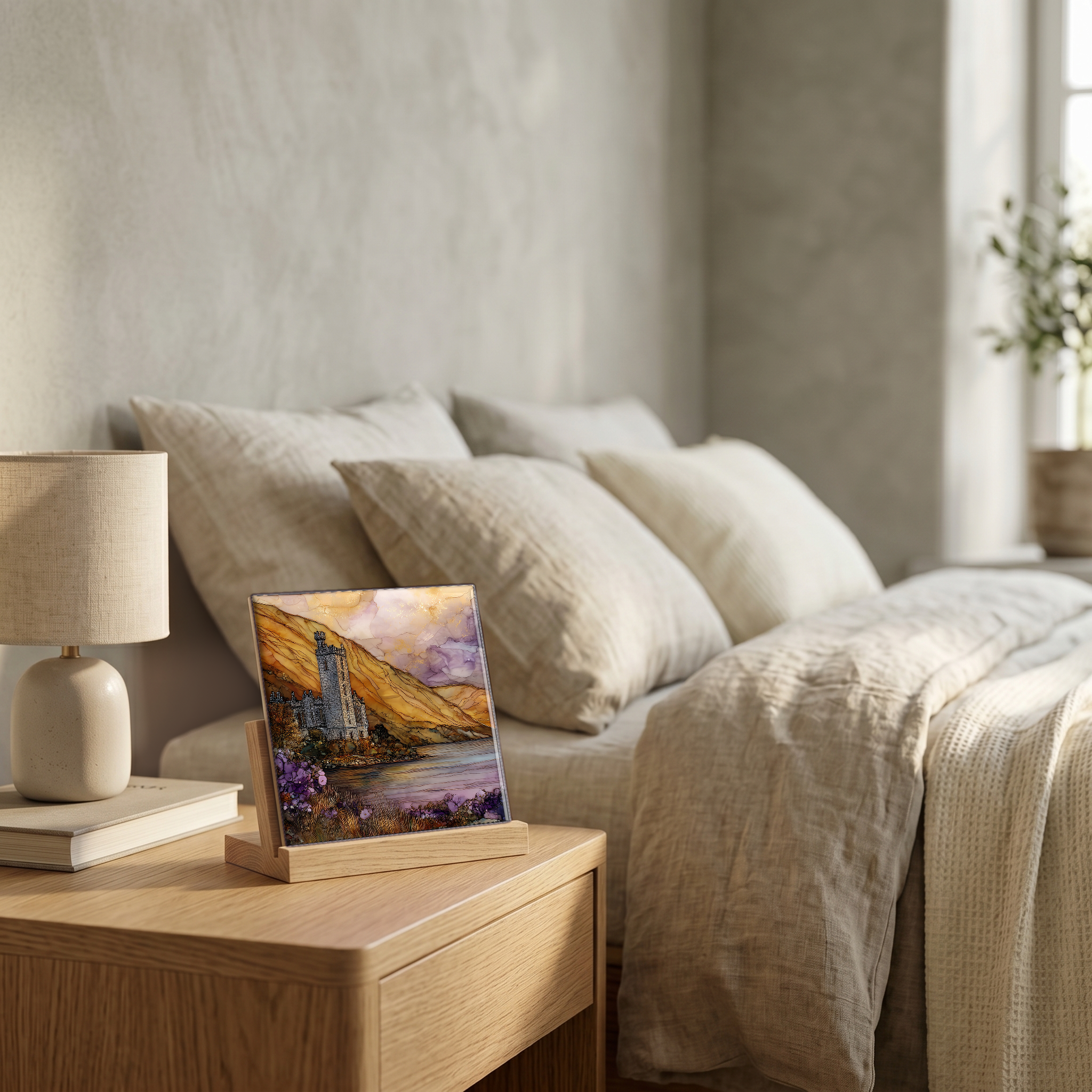
On the nightstand, on a light oak stand.
On a picture ledge, where the light comes in.
a note from the studio

Seventeen thousand hectares of glen and mountain in the northwest corner of Donegal, with a single stone castle at the head of Lough Veagh. The castle is reached by shuttle from the visitor centre, three and a half kilometres of road that follow the lake. The glen has been quiet for a long time. After the evictions of 1861 the hills emptied; the castle came later, built into the silence. Henry McIlhenny, the last private owner, completed the gift of the estate to Ireland by 1981. The red deer outnumber the visitors most days.
from the studio
shown in a slim black floating frame · 6 × 6 in
— bring it home

Glenveagh Castle, on ceramic.

Each tile is finished by hand in our Knoxville studio. Artwork is slowly infused into the ceramic surface under high heat and pressure, and rests beneath a thin glossy finish. The colour lives in the surface, not on top of it.

What kind of piece?
One tile — square or rectangle.
How big?
the popular one — counter, shelf, nightstand
6 × 6 in · 15 cm · 1.6 lb
Surface finish
A clear glossy finish — the artwork reads as if under resin. Ideal for show-pieces and framed wall art.
How it sits
A hidden cleat — sits ¼″ proud of the wall.
$58
Hand-finished and shipped from our studio at the foot of the Smokies. On your wall in about ten days.
size
6 × 6 in
15 cm
weighs
1.6 lb
solid in the hand
surface
ceramic, hand-finished
art rests beneath a thin glossy finish
from
Knoxville, TN
our family studio, at the foot of the Smokies
— start a Coaster Set

Pick any four 4-inch tiles — National Parks you've been to, a Smokies set, the four seasons of one place. $ for a set of , cork-backed, ready to live on the table.
comes gift-ready
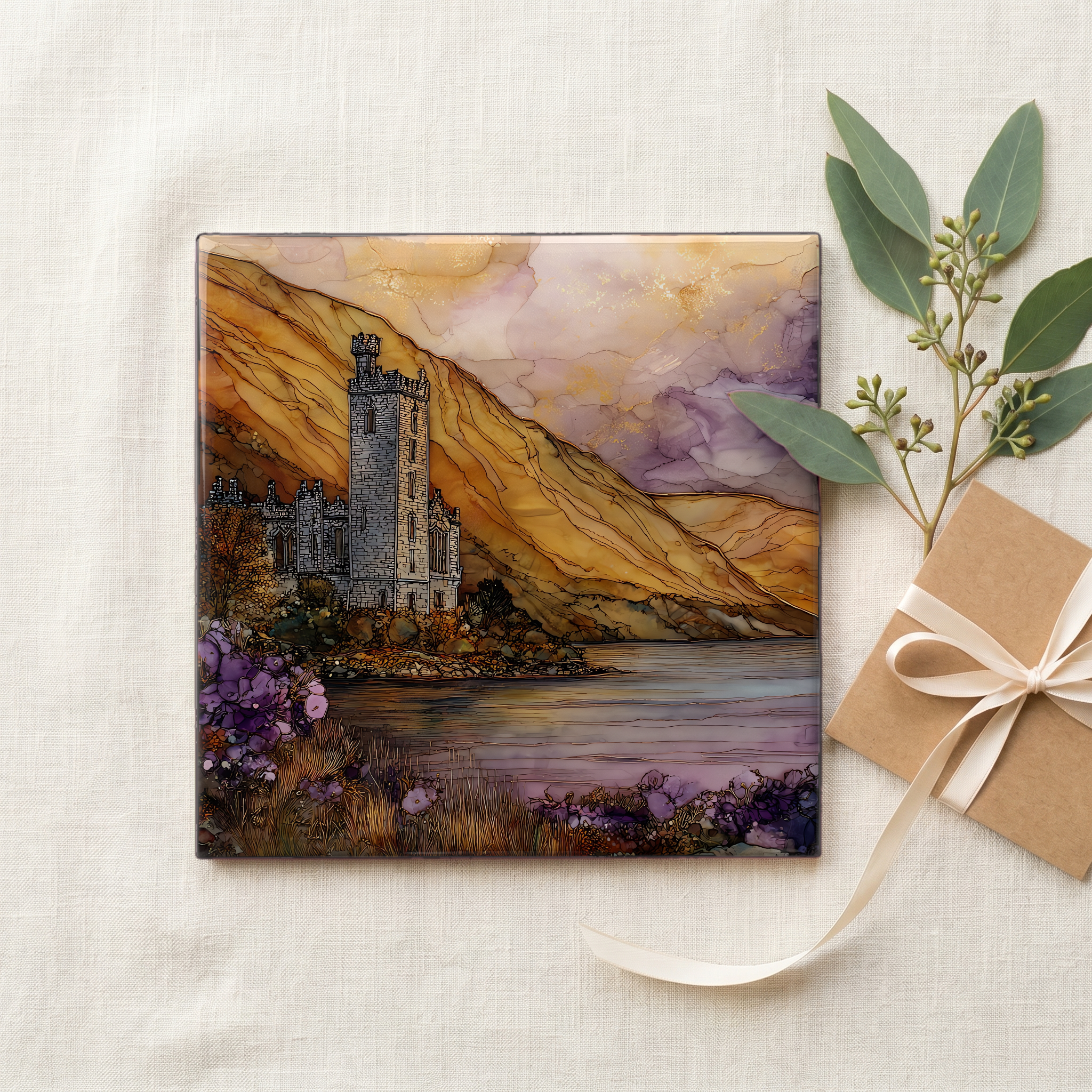
comes gift-ready

Each tile ships in a kraft box, tied with cream ribbon, with a handwritten note from the studio if you'd like to add one.
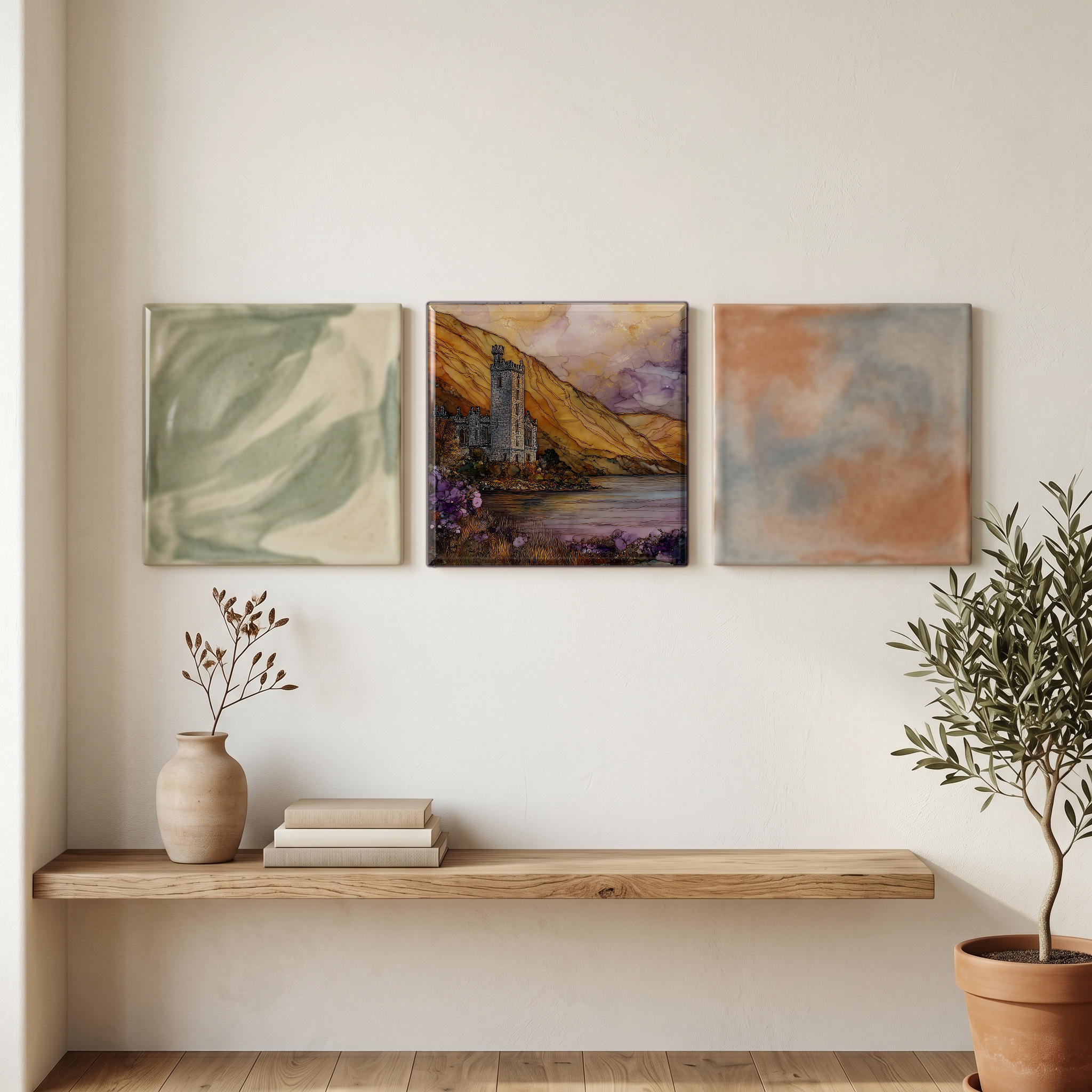
or build a grouping
or build a grouping

Three or five different vistas, hung together — a chapter of places you've been, or want to go.

about Glenveagh Castle

The place, in three passes.

A little of what's known, in case you fall down the rabbit hole — or want to go see it yourself.
the place

Glenveagh Castle stands at the head of Lough Veagh in the Derryveagh Mountains of northwest County Donegal, the largest county in the province of Ulster. It is the centrepiece of Glenveagh National Park, established in 1984 and covering about 17,000 hectares, the second-largest national park in Ireland. The name comes from the Irish Gleann Bheatha, the glen of the birches. The estate sits roughly 24 km northwest of Letterkenny; the castle itself is reached by shuttle bus from the visitor centre, a three-and-a-half-kilometre run along the lake, or on foot by the same road. The park is managed by the National Parks and Wildlife Service.

the stone

The castle is a four-storey castellated mansion built between 1867 and 1873 for John George Adair, a wealthy land speculator, to a design by Adair's cousin John Townsend Trench. Its silhouette is Scottish baronial: square keep, round tower, battlemented parapet, set into the lake-shore in grey local granite. Adair did not live to enjoy it. He died in 1885, and his American widow Cornelia Adair completed the gardens. The castle passed through Harvard art historian Arthur Kingsley Porter and then, in 1937, to Henry McIlhenny of Philadelphia, who carried out the interior the visitor sees now: a slow, exact restoration over four decades. McIlhenny gave the building and its grounds to the Irish nation in 1981.

the silence

The Derryveagh Evictions of April 1861 emptied the glen. The landlord John George Adair removed 244 tenants from forty-seven households after the killing of his steward; many of the families sailed for Australia. When Adair began building the castle six years later, he built into a depopulated landscape. The quiet of Glenveagh today, the long lake without lakeside houses, the bare slopes of Slieve Snaght rising above the valley, traces directly to that displacement. The herd of red deer reintroduced under McIlhenny now numbers in the hundreds; on a weekday off-season, the visitor walking the three kilometres of lakeside road may pass no one between the visitor centre and the castle gate.

where
Ireland · Churchill, County Donegal
within
Glenveagh National Park
position
55.0339° N · 7.9636° W
the neighborhood

What's nearby.

A handful of named places within an hour's walk or short drive. Some we've already painted; some we will.
10 km SW
Mount Errigal
mountain peak
12 km SW
Poisoned Glen
glacial valley
7 km SE
Glebe House and Gallery
artist's house and gallery
7 km SE
Gartan Lough
lake
5 km N
Slieve Snaght
mountain peak
9 km SW
Dunlewey
village
N
Glenveagh Castle
Mount Errigal
Poisoned Glen
Glebe House and Gallery
Gartan Lough
Slieve Snaght
Dunlewey
common questions

What people ask.

A few questions we get about Glenveagh Castle — and about bringing the piece home.
about the place

Glenveagh Castle sits at the head of Lough Veagh in the Derryveagh Mountains of northwest County Donegal, Ireland. It is the centrepiece of Glenveagh National Park, roughly 24 kilometres northwest of Letterkenny, the largest town in the county.

John George Adair, an Irish land speculator who had bought the Glenveagh estate in 1857, built the castle between 1867 and 1873 to a design by his cousin John Townsend Trench. The interior visible today was largely shaped by Henry McIlhenny of Philadelphia, who restored the house between 1937 and 1981.

In April 1861, John George Adair evicted 244 tenants from forty-seven households on the Glenveagh estate, following the killing of his land steward the previous November. Many of the displaced families later emigrated to Australia. The evictions left the glen depopulated and remain a defining event in Donegal memory.

Henry McIlhenny was an American art collector and curator at the Philadelphia Museum of Art who bought Glenveagh in 1937. He restored the castle and gardens over four decades, sold the estate's lands to Ireland in 1975, and gifted the castle itself to the State in 1981.

The castle is about 3.5 kilometres from the visitor centre at Glenveagh National Park. A shuttle bus runs the route in season for a small fee; visitors may also walk or cycle the same lakeside road. The park itself is roughly 24 kilometres from Letterkenny along the R251 and R254.

May and June are the most settled months in northwest Donegal, when the gardens are in flower and daylight runs past ten in the evening. The castle and gardens are open through the year, but the shuttle bus and full guided tours run mainly from March through October. Park trails stay open in winter.

The grounds include the Walled Garden, the Italian Terrace, the Belgian Walk, the View Garden, and the Pleasure Grounds, all developed across the Adair and McIlhenny eras. The wider park supports a herd of red deer, golden eagles reintroduced in 2001, and remnant native oak and birch woodland on the Derryveagh slopes.

about the piece in your home

It often is. Glenveagh is one of the most recognised places in the county, particularly for families with ties to the western parishes or the diaspora that left after the 1861 evictions. A Small or Medium with a handwritten note from the studio carries well; a Coaster Set works for a desk or a Christmas exchange.

The grey-stone palette and stained-glass-style accents read well in Celtic-revival, Mountain-modern, and stone-and-linen interiors. The image holds its own against bare plaster, oak panelling, or a darker library wall. Against very white minimalist rooms it can feel slightly muted; pair with a warmer lamp.

Castle-core and the wider Romantic-Revival look have moved steadily from Pinterest into mainstream interiors over the past two years, with grey-stone exteriors, gothic-arched windows, and slow-painted wall art at the centre. A Glenveagh tile sits comfortably in that vocabulary without feeling costumed; the painting is observational rather than ornamental.

Above a standard sofa or a long console, a single Large reads from across the room and holds well at a 30 to 36 inch height above the seat back. For larger walls or a feature behind a sectional, a four-tile or nine-tile Mural builds the image to architectural scale.

Yes. Order the tile in the Dura Satin or Matte finish for any vertical wet-area installation: bathroom feature wall, shower surround, kitchen backsplash, mudroom. The colour is slowly infused into the ceramic surface under high heat and pressure and lives in the surface, so steam and splash do not affect the image.

A soft microfibre cloth and warm water. For a stickier mark, a drop of mild dish soap; rinse and dry. Avoid abrasives, ammonia-based glass cleaners, and anything labelled for grout. The thin glossy finish on the show-piece tiles is the same surface family as fine porcelain dinnerware.

Yes. Every WenderVista painting is original work by Reid Wender, the studio's curator and eye, and produced in our Knoxville workshop. We do not license other artists' images and we do not sell prints we have not made ourselves. Each tile is finished by hand before it ships.

if this one stayed with you

A few you might also love.

Hand-picked by the eye that found Sorapis. Same air, same kind of quiet.