Wender·Vista
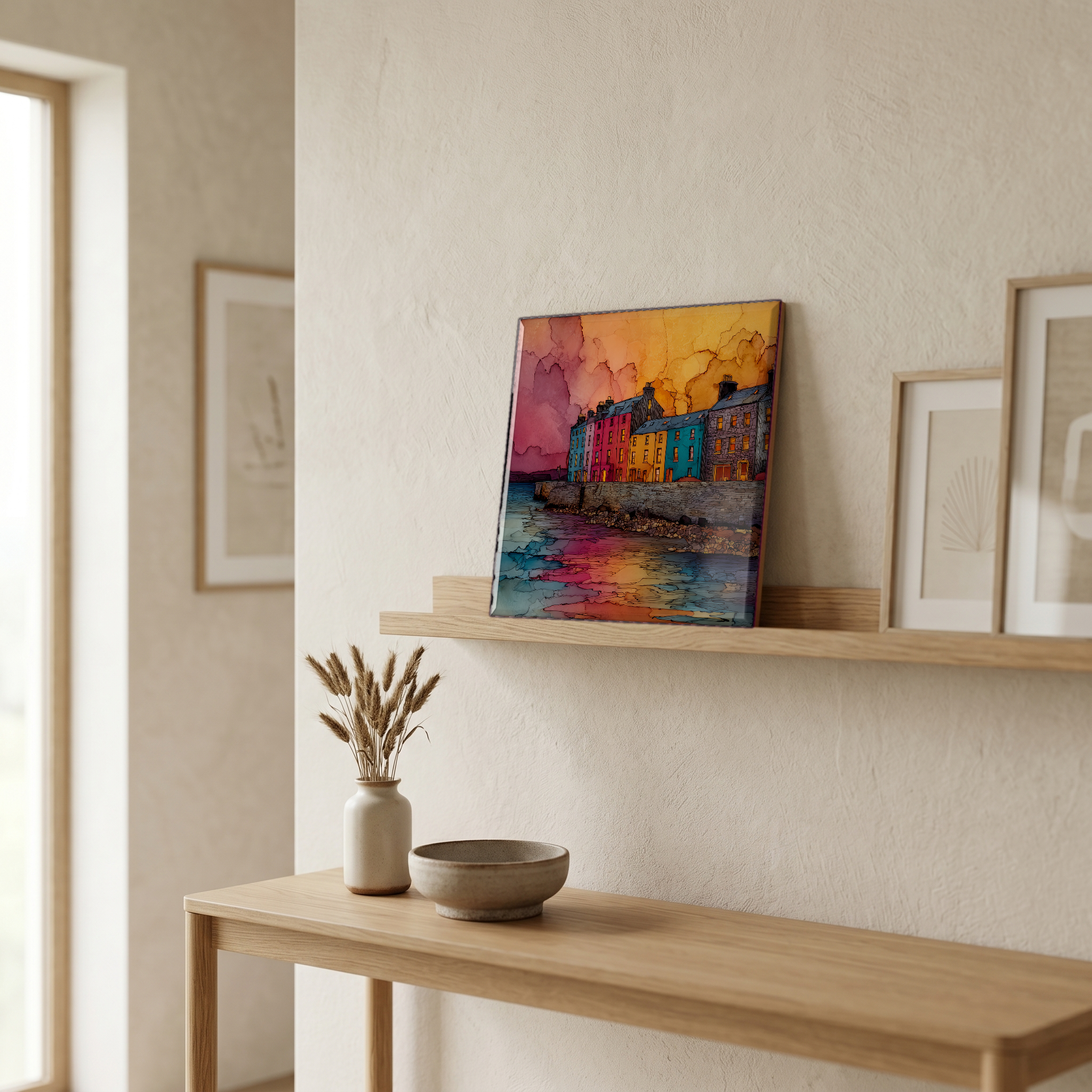
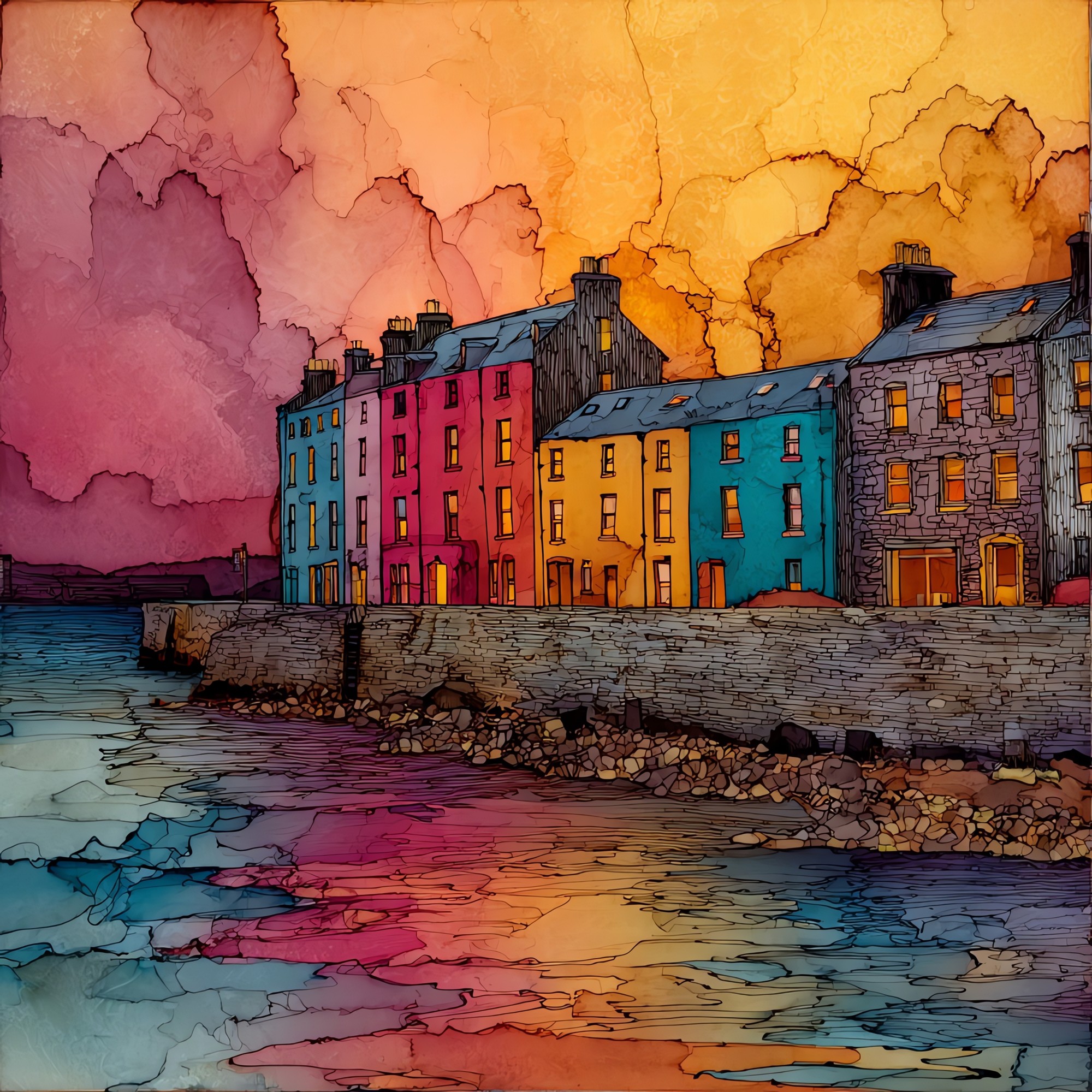
Spanish Arch Galway
shown on ceramic, 12-inch tileIreland
at the mouth of the Corrib, on the edge of Galway

Spanish Arch Galway

— the stone the river walks past on its way to the sea.

Where it lives

Not only on a wall.

A small tile on the nightstand catching the morning. A larger one above the fire. Yours, wherever you spend the slow hours.
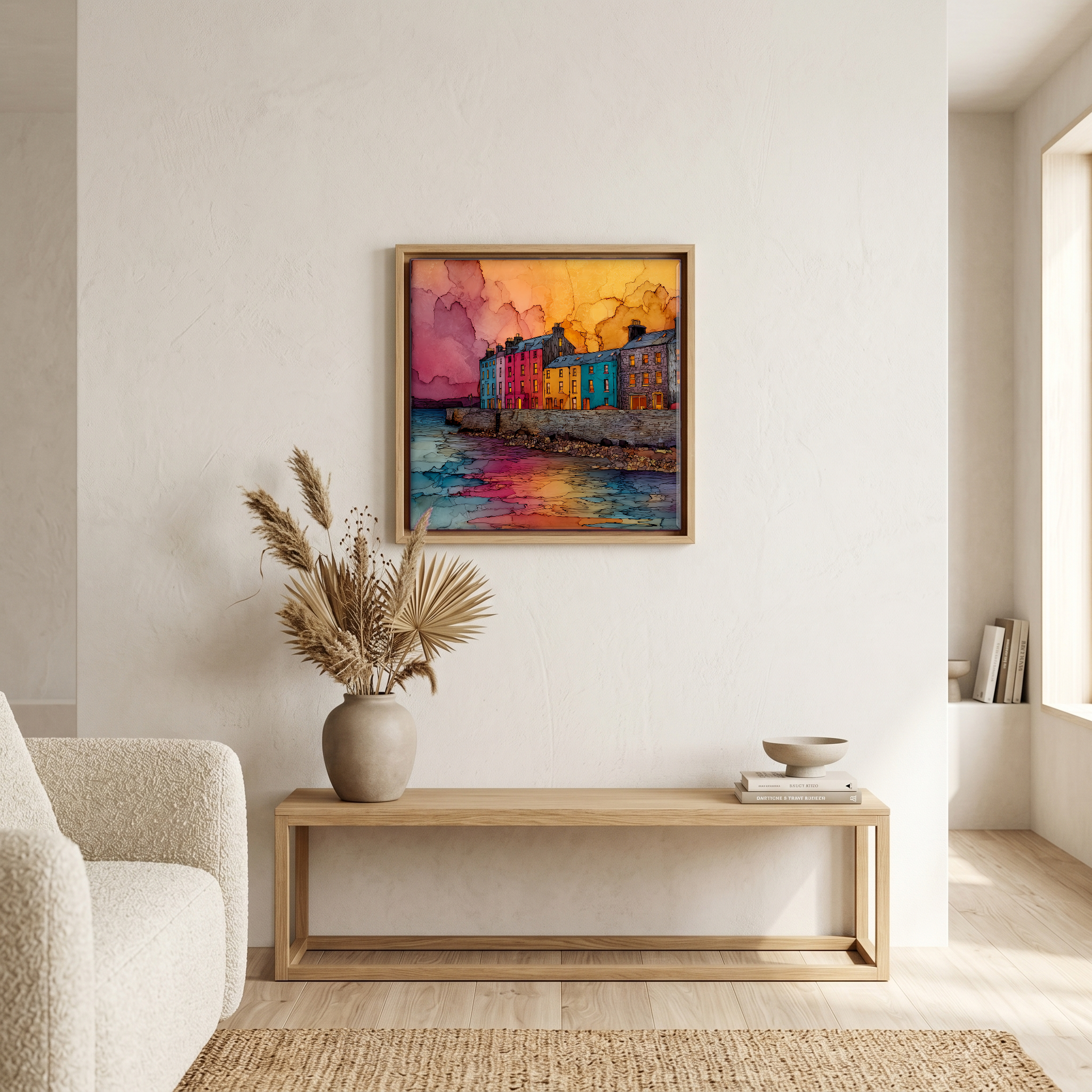
Above the bench, in a warm oak surround.
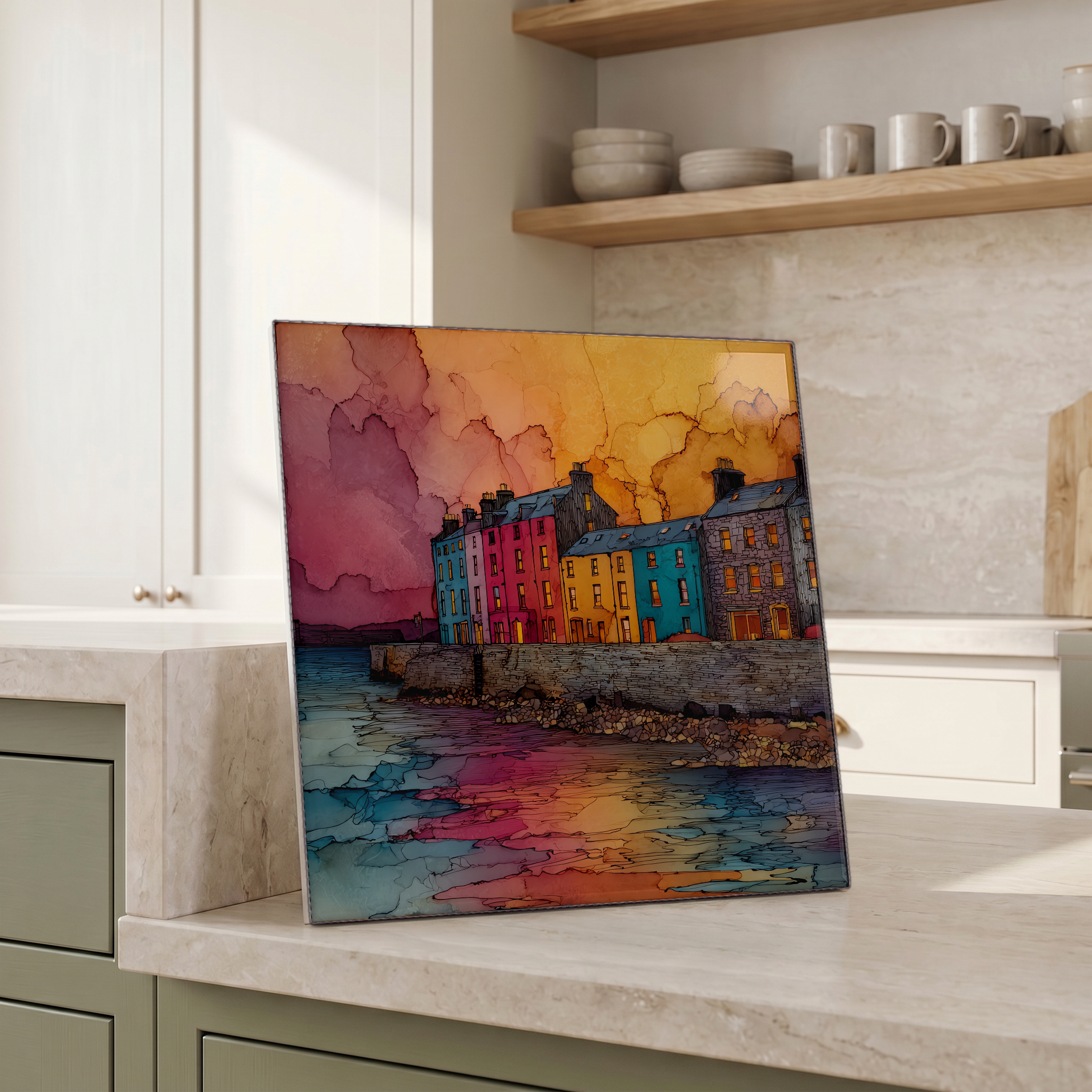
Beside the kettle, propped on the counter.
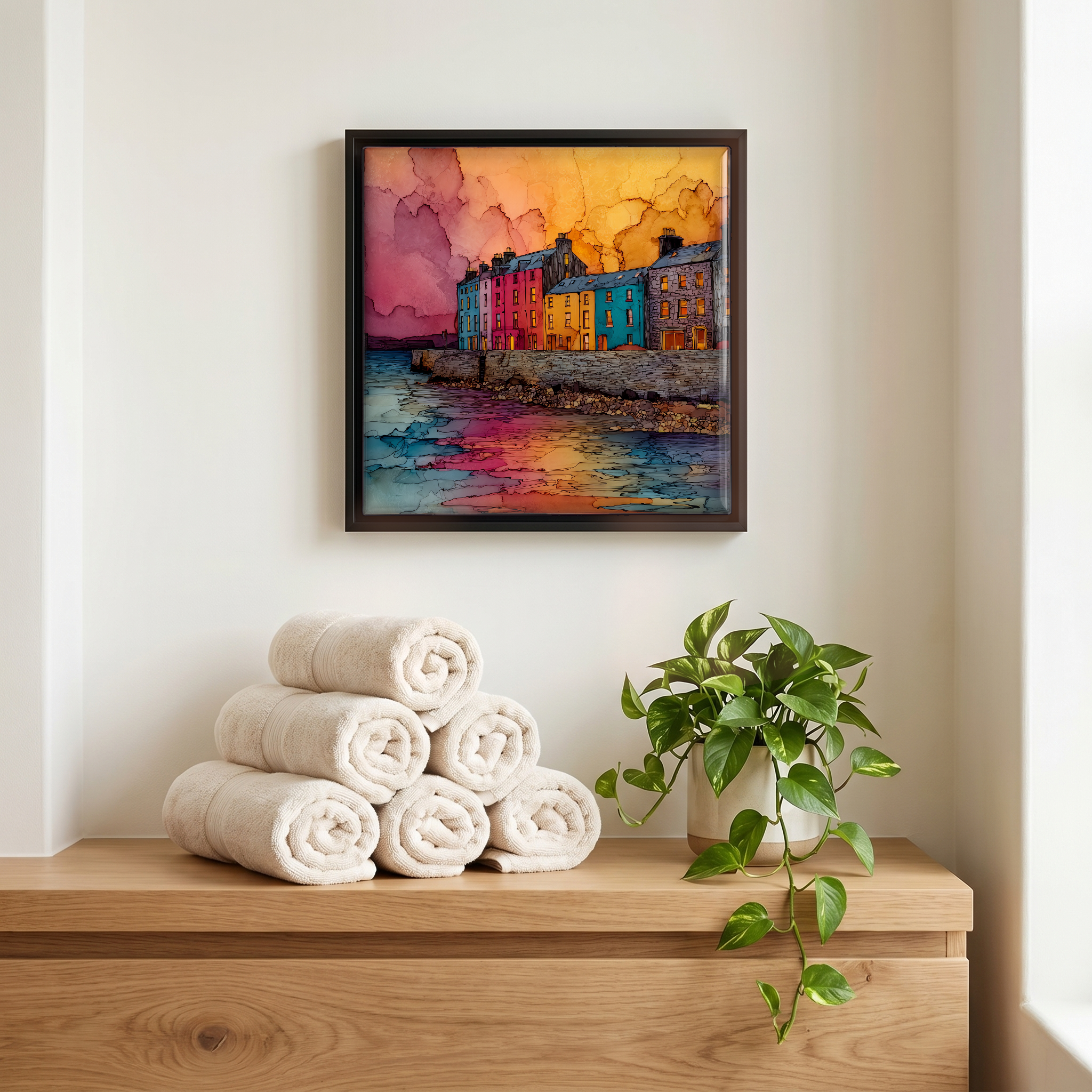
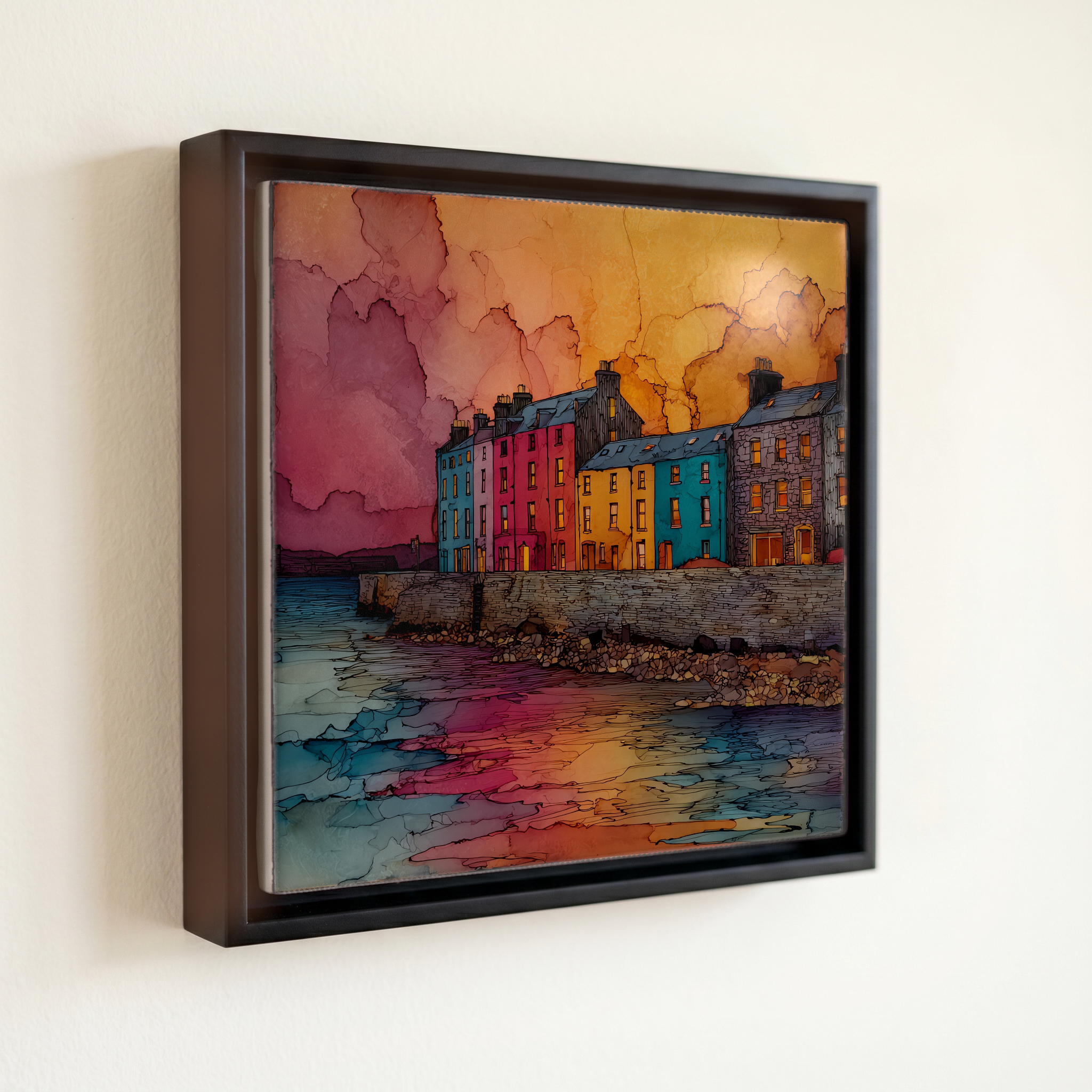
Above the linens, in a slim black surround.
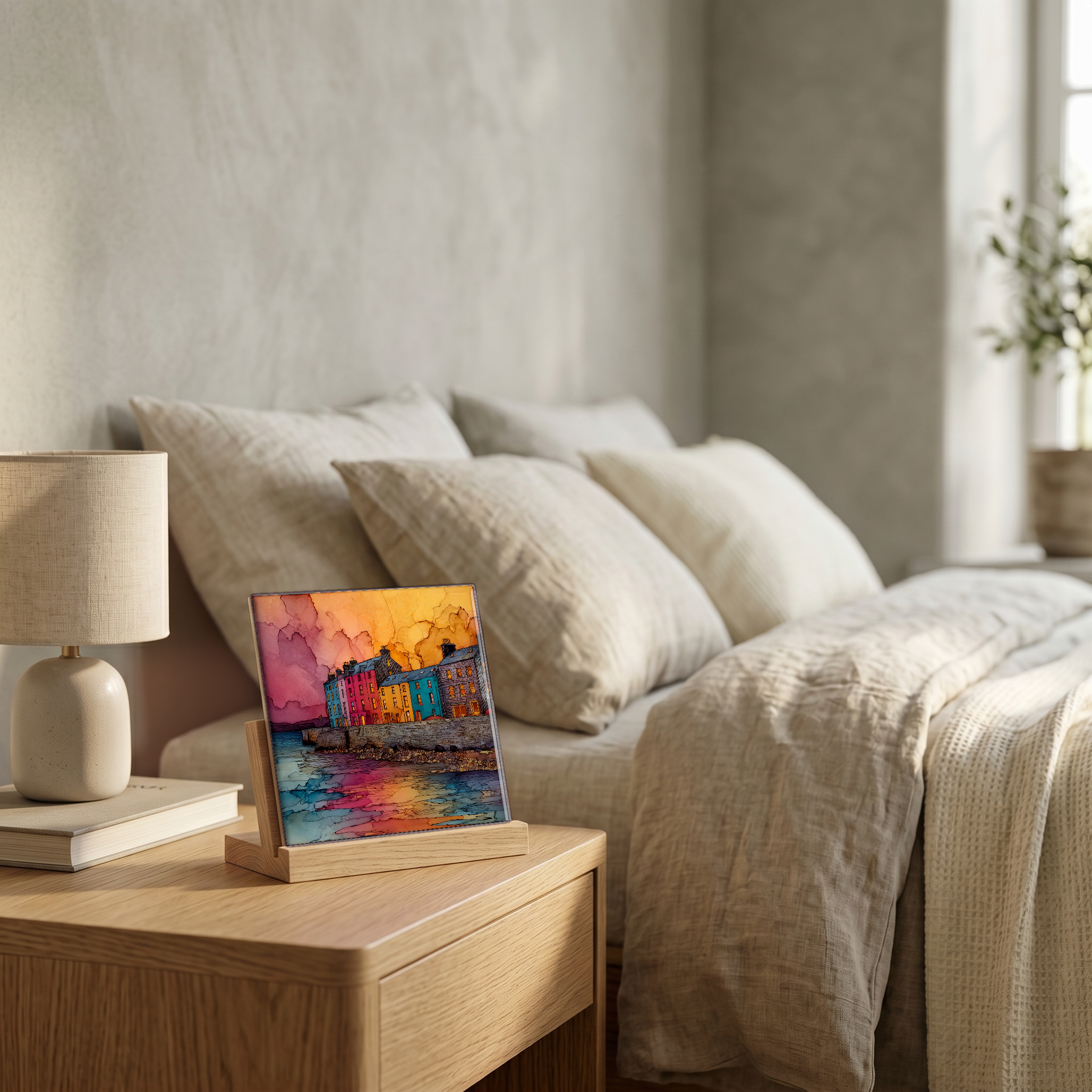
On the nightstand, on a light oak stand.
On a picture ledge, where the light comes in.
a note from the studio

The remains of a 1584 wall at the mouth of the River Corrib, where the river hands itself to Galway Bay. The arches once protected quays where Spanish ships unloaded wine and salt; that's where the name comes from. The Lisbon earthquake's tsunami took most of the structure in 1755, and what's left is the part Galway kept. On a clear afternoon people sit on the grass with chips, watching the swans, watching the Long Walk's painted houses across the water. The Atlantic is half a kilometre off and on a still day the sound of it carries across the grass.
from the studio
shown in a slim black floating frame · 6 × 6 in
— bring it home

Spanish Arch Galway, on ceramic.

Each tile is finished by hand in our Knoxville studio. Artwork is slowly infused into the ceramic surface under high heat and pressure, and rests beneath a thin glossy finish. The colour lives in the surface, not on top of it.

What kind of piece?
One tile — square or rectangle.
How big?
the popular one — counter, shelf, nightstand
6 × 6 in · 15 cm · 1.6 lb
Surface finish
A clear glossy finish — the artwork reads as if under resin. Ideal for show-pieces and framed wall art.
How it sits
A hidden cleat — sits ¼″ proud of the wall.
$58
Hand-finished and shipped from our studio at the foot of the Smokies. On your wall in about ten days.
size
6 × 6 in
15 cm
weighs
1.6 lb
solid in the hand
surface
ceramic, hand-finished
art rests beneath a thin glossy finish
from
Knoxville, TN
our family studio, at the foot of the Smokies
— start a Coaster Set

Pick any four 4-inch tiles — National Parks you've been to, a Smokies set, the four seasons of one place. $ for a set of , cork-backed, ready to live on the table.
comes gift-ready
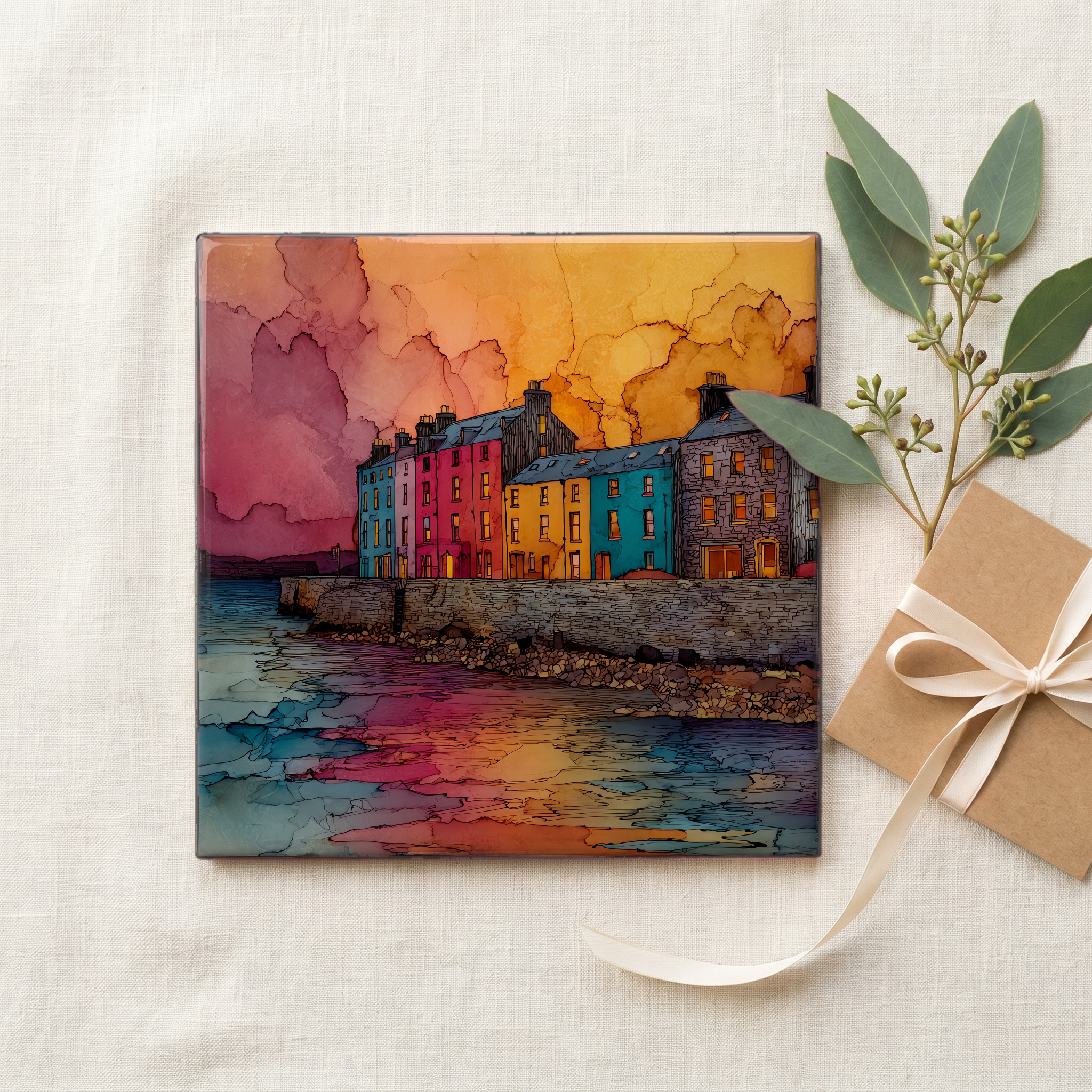
comes gift-ready

Each tile ships in a kraft box, tied with cream ribbon, with a handwritten note from the studio if you'd like to add one.
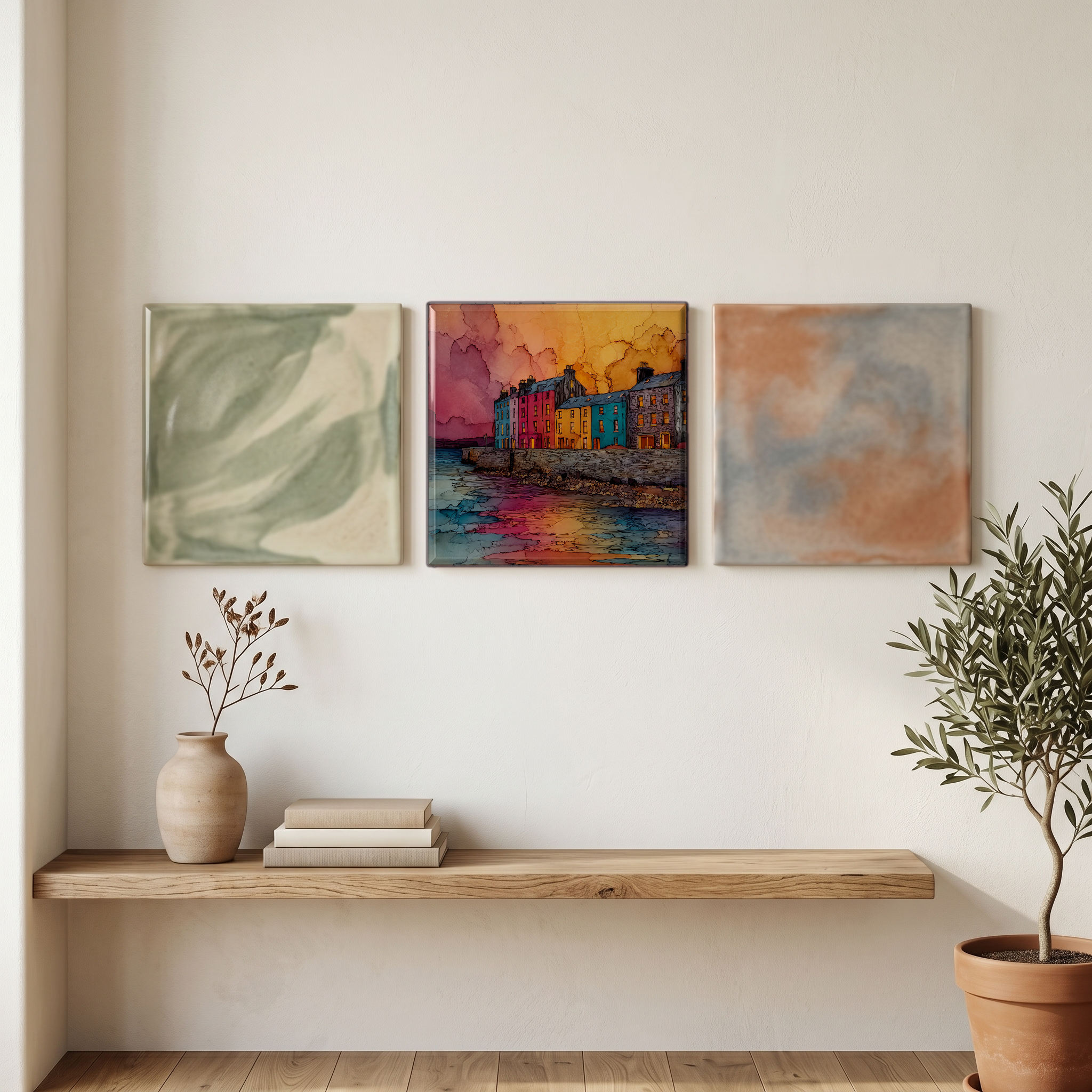
or build a grouping
or build a grouping

Three or five different vistas, hung together — a chapter of places you've been, or want to go.

about Spanish Arch Galway

The place, in three passes.

A little of what's known, in case you fall down the rabbit hole — or want to go see it yourself.
the place

The Spanish Arch sits on the east bank of the River Corrib in Galway, on Ireland's west coast, where the river meets Galway Bay and the open Atlantic. The arches are the surviving remnant of a 1584 extension to the medieval Norman city wall, built by Mayor William Martin to protect the city's quays in the Fish Market area, now Spanish Parade. The Long Walk promenade runs from the arch toward the Claddagh district across the river. Galway is the seat of County Galway in the province of Connacht, and the arch sits a short walk from the Galway City Museum, which opened in its current building beside the arch in 2007.

the stone

The arch is a fragment of Galway's old defensive wall, completed in 1584 during Mayor William Martin's tenure and originally called Ceann an Bhalla, the head of the wall. Two openings remain: the Spanish Arch proper, and the smaller Caoċ Arch, the blind arch. Both were extensions of an older Norman wall the city had grown around. The name Spanish was attached later, after centuries of trade with Spain; Galway merchants imported wine, salt, and sherry through these quays, and the docks just outside the arch were where those ships tied up. The 1755 Lisbon earthquake sent a tsunami across the Bay of Biscay and into the western Irish coast; it took down most of the structure. What remains is what the water spared.

the visit

There is no fee, no ticket, no closing hour. The arch is part of the public street fabric of the city; people sit on the lawn behind it, eat fish and chips from McDonagh's a few minutes' walk away, watch the swans drift on the Corrib, and watch the painted row houses of the Long Walk across the water. On summer evenings the grass fills up and someone usually has a guitar. The Galway City Museum, opened in its current building beside the arch in 2007, holds exhibits on Galway's medieval and Spanish-trade history and is free to enter. The river current here is fast; the Atlantic is less than a kilometre away, and the wind comes off it cold even in July.

where
Ireland · Galway, County Galway
position
53.2697° N · 9.0542° W
the neighborhood

What's nearby.

A handful of named places within an hour's walk or short drive. Some we've already painted; some we will.
0.1 km N
The Long Walk
painted-house riverfront row
0.3 km W
Claddagh
historic fishing district
0.6 km NE
Eyre Square
central city plaza
0.7 km N
Galway Cathedral
20th-century cathedral
2 km SW
Salthill Promenade
seaside walkway on Galway Bay
N
Spanish Arch Galway
The Long Walk
Claddagh
Eyre Square
Galway Cathedral
Salthill Promenade
common questions

What people ask.

A few questions we get about Spanish Arch Galway — and about bringing the piece home.
about the place

A pair of stone arches in Galway, Ireland, built in 1584 as an extension of the medieval city wall. The arches protected the quays where merchant ships, especially those trading with Spain, unloaded wine and salt at the mouth of the River Corrib.

The name reflects the long trading relationship between Galway and the Iberian peninsula. From the 16th century onward, Spanish merchants brought wine, salt, and sherry into the city through the quays the arch was built to defend. The original Irish name was Ceann an Bhalla, the head of the wall.

It was completed in 1584 during the term of Galway Mayor William Martin, as an extension to the city's older Norman wall. The Caoċ Arch beside it, sometimes called the blind arch, was part of the same construction.

The tsunami generated by the 1755 Lisbon earthquake reached the west coast of Ireland and partially destroyed the arches. What stands today is the surviving section; the original wall had multiple openings, and only two of them remain, both partial.

On the east bank of the River Corrib in Galway city, where the river empties into Galway Bay and the Atlantic Ocean. The Long Walk promenade runs alongside it, and the Galway City Museum stands directly beside the arch.

The Long Walk, a row of brightly painted houses lining the river; the Claddagh district across the water; the Galway City Museum; and Galway Hooker sailboats moored in the docks. The Latin Quarter and Quay Street start a few minutes inland.

No. The arch is a public landmark, open at any hour, free to walk through or sit beside. The Galway City Museum next door is also free to enter, with regular daytime hours through the week.

about the piece in your home

It often is. The Spanish Arch is one of the few places nearly every Galway local recognises from a single image, and sitting on the grass behind it is a city ritual. A Small or Medium with a handwritten note from the studio carries well for someone who grew up here or studied at the University of Galway.

The palette runs to deep blues, weathered stone greys, and the warm reds and ochres of the Long Walk houses. It sits naturally with Coastal-Modern, Old-World European, and jewel-tone Maximalist interiors. The colour reads as old-world and harbour-side rather than minimalist.

The piece fits the European Heritage and Old-World Maritime movements gaining ground in interior design: handmade tile, warm stone, watery palettes, a sense of place. It also lands in Coastal-Modern rooms when used as a single colour anchor over a console or sideboard.

A single Large is the right anchor over most sofas at roughly arm's reach above the back cushions. A 4-tile Mural reads bigger and gives the artwork room to breathe over a long console. A 9-tile Mural is the showpiece for a wide statement wall.

Yes. Order the piece in Dura Satin or Matte for any room with moisture or splash, including bathrooms, kitchen backsplashes, and shower surrounds. Both finishes are scratch-resistant and clean with a microfibre cloth. Glossy is recommended for dry display in the living room or hallway.

A microfibre cloth and warm water are enough for daily care. The colour is slowly infused into the ceramic surface under high heat and pressure, beneath a thin glossy or satin finish, so it does not fade or lift with cleaning. Avoid abrasive scrubbers; they can dull the finish over time.

Yes. Every WenderVista piece is drawn from a single studio's hand and not licensed from outside artists or stock libraries. The Spanish Arch tile was made for this catalogue and is hand-finished in Knoxville, Tennessee, before it ships.

if this one stayed with you

A few you might also love.

Hand-picked by the eye that found Sorapis. Same air, same kind of quiet.