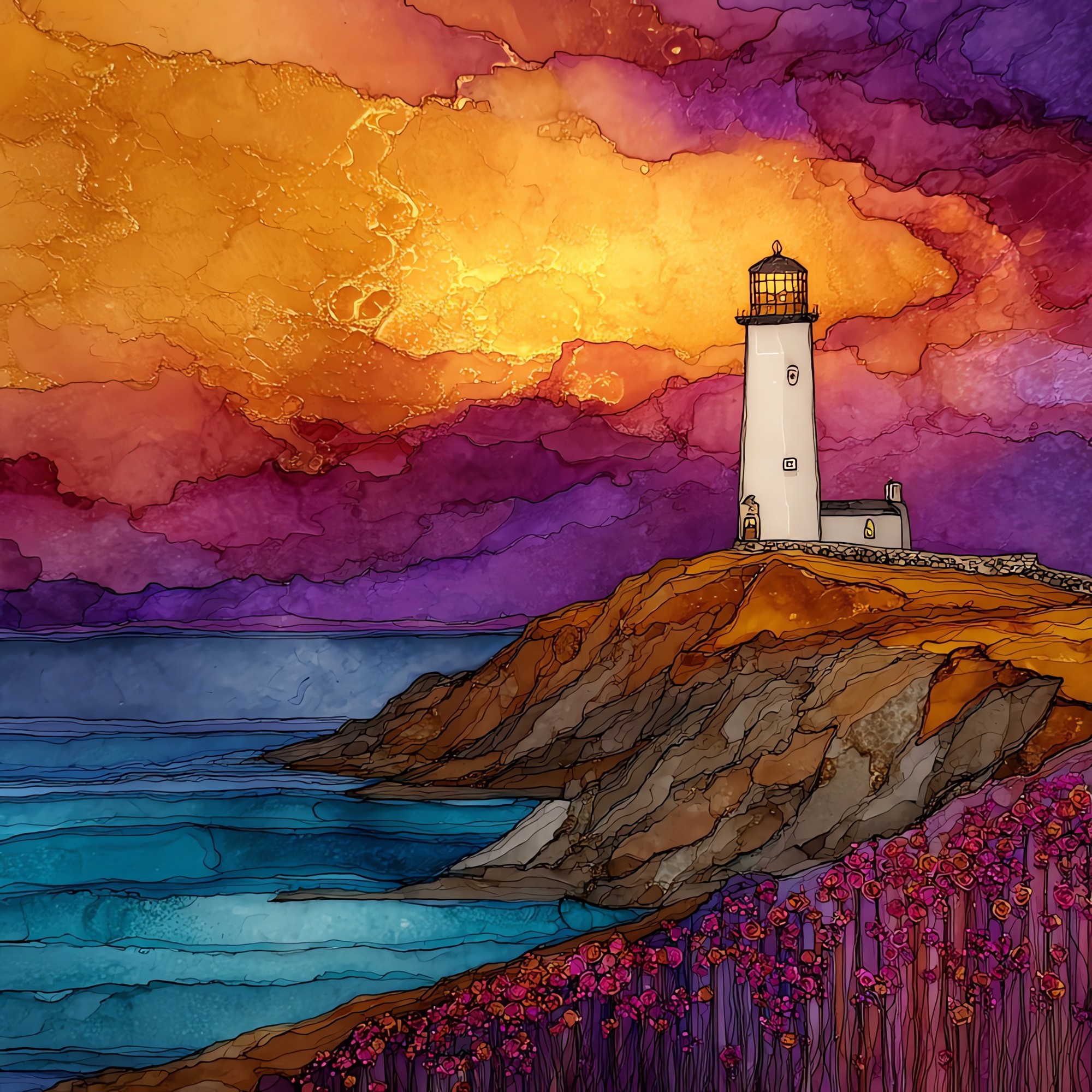
Galley Head Lighthouse
— — a light that turns to find the land.
Not only on a wall.
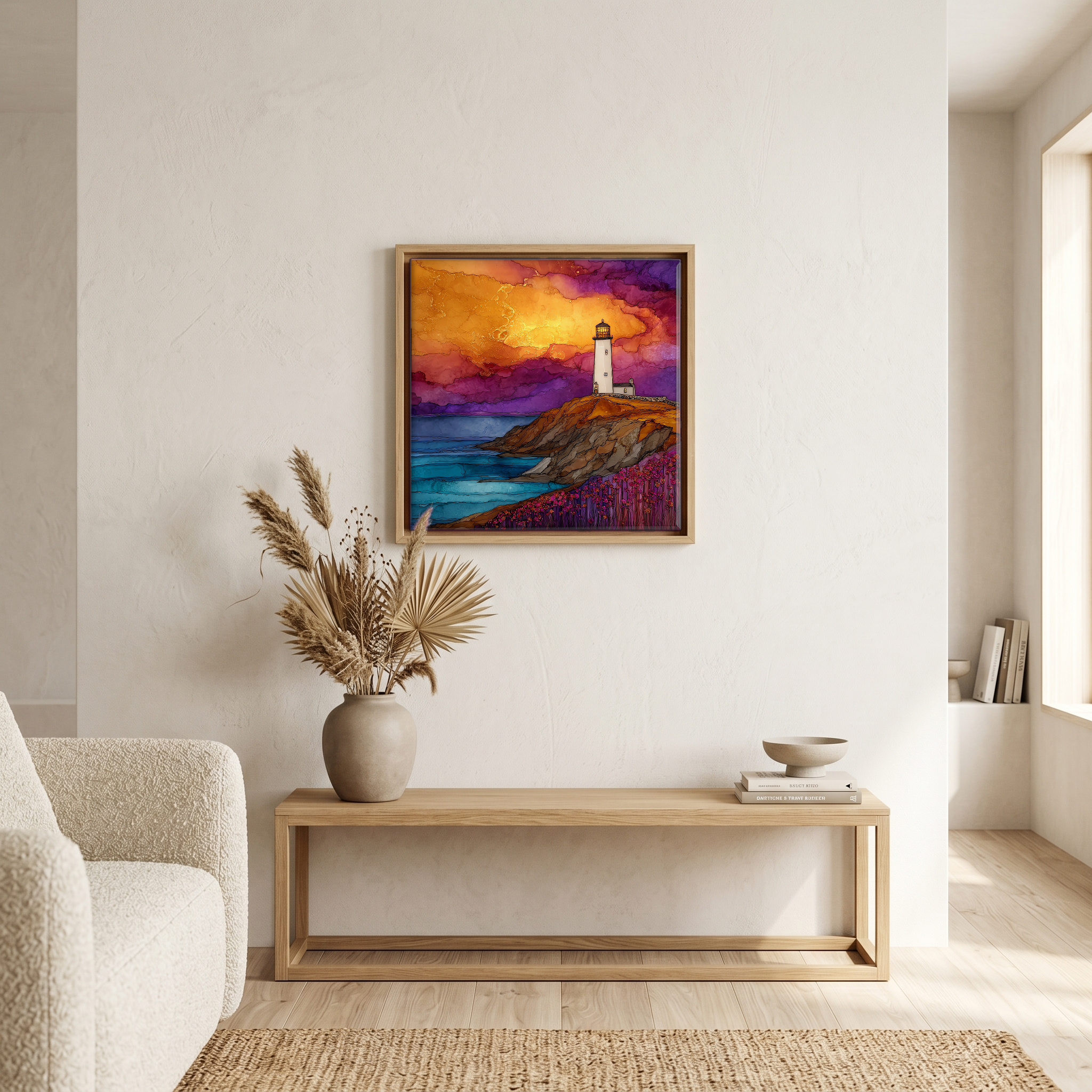
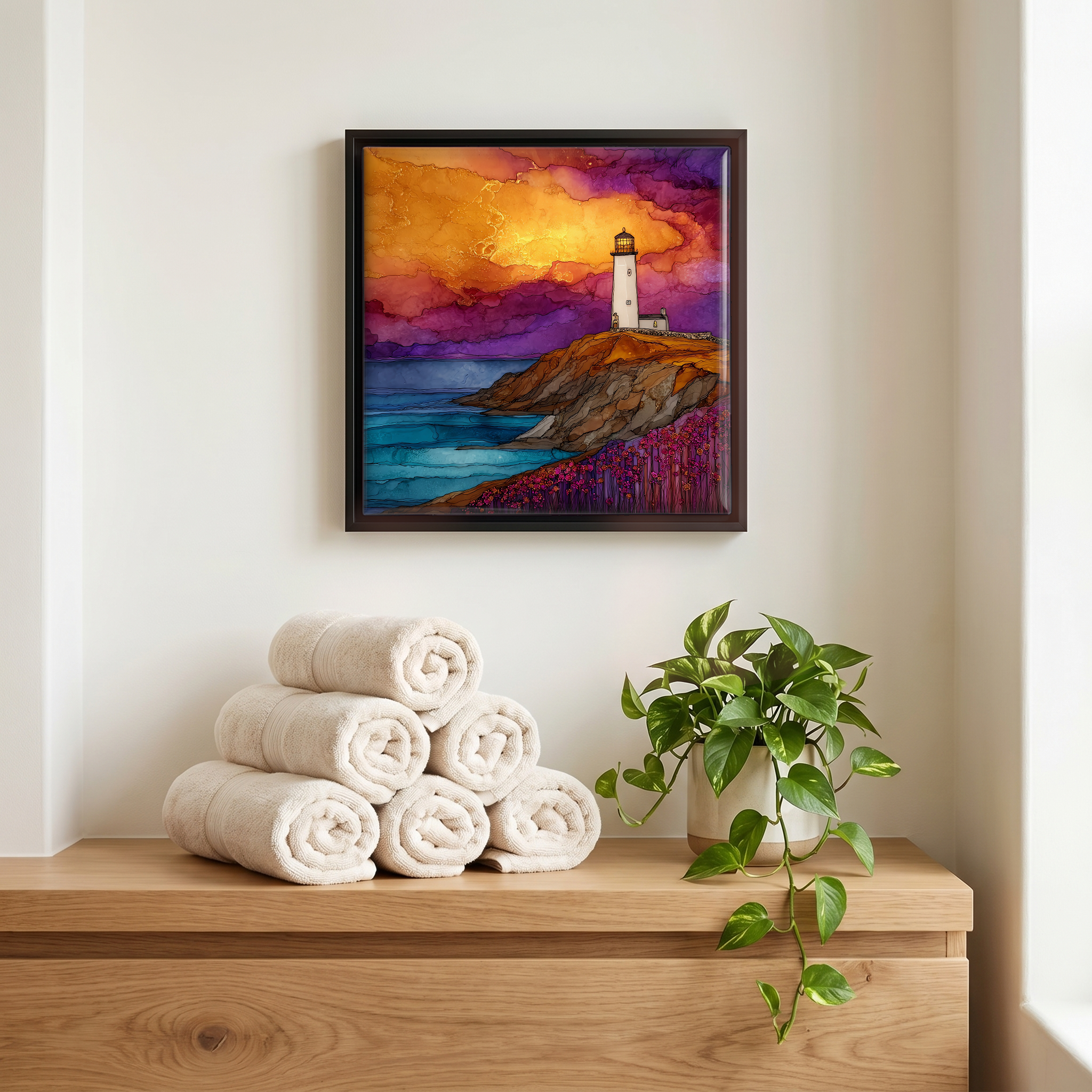
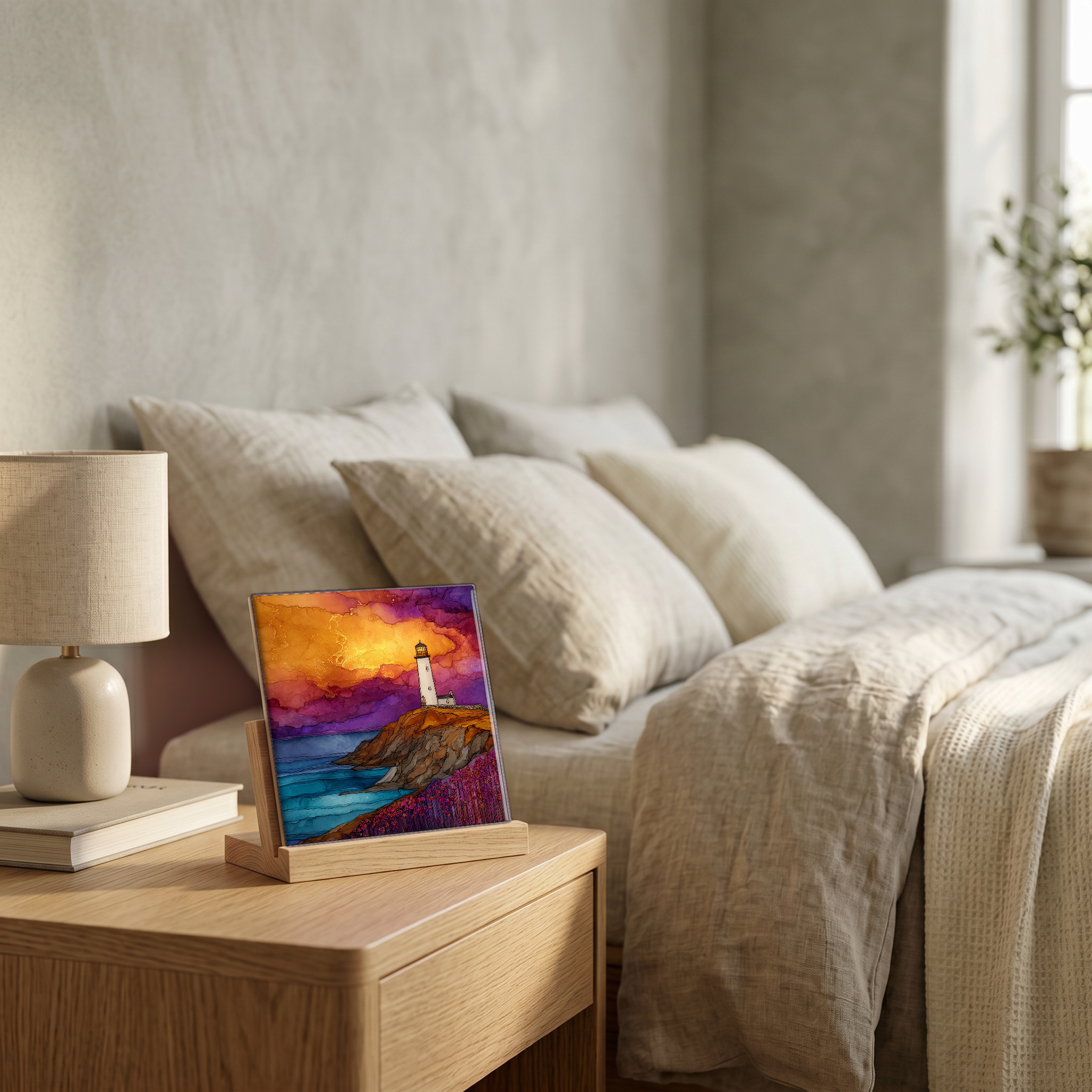
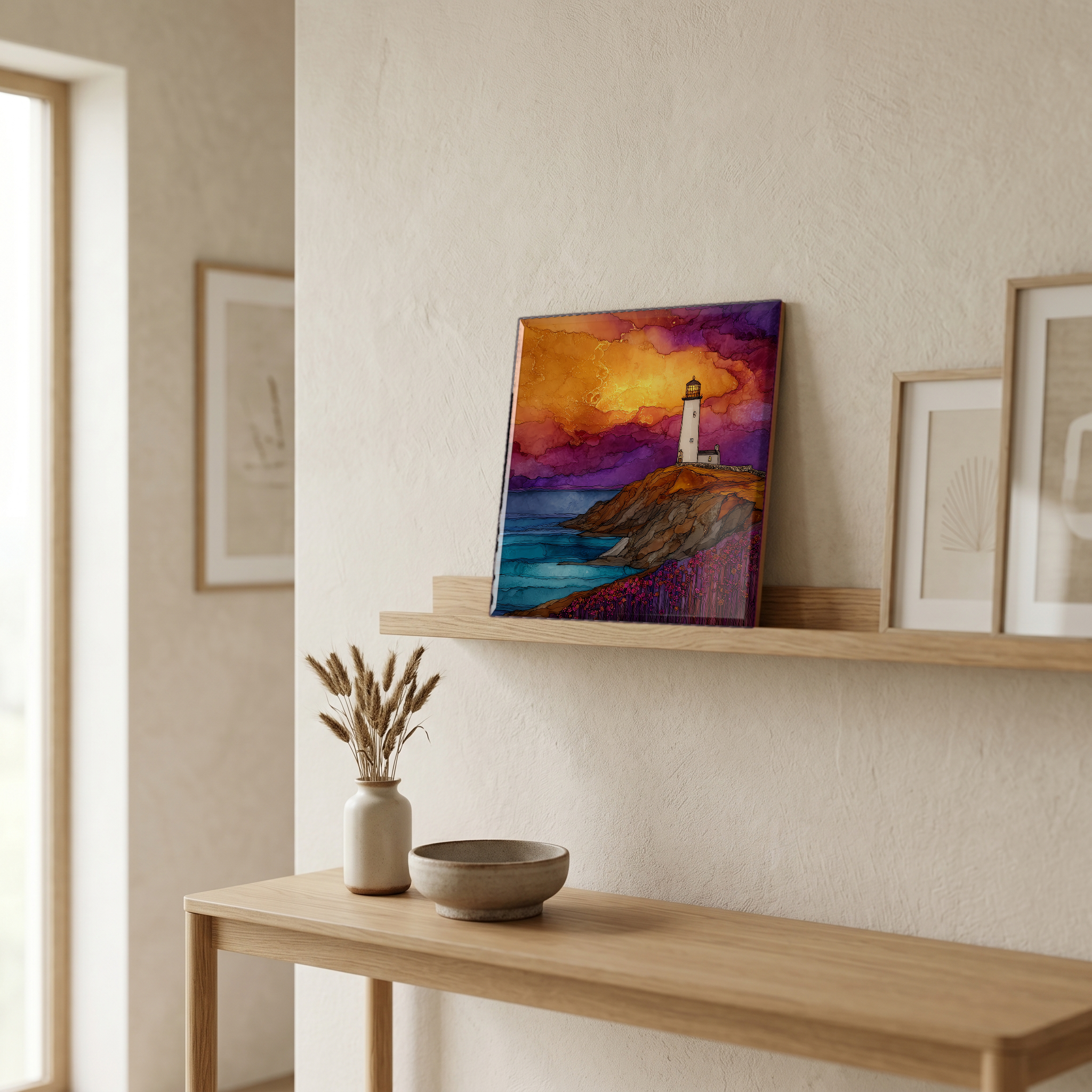
“A white tower with a red rail on Dundeady Head, west of Clonakilty. From 1878 it has thrown five flashes every twenty seconds across the Celtic Sea, with Red Strand on one side and Long Strand on the other. Built after Lord Bandon argued the headland kept claiming ships. The unusual part is the landward arc: four clear panes in the lantern aimed back at Castle Freke, said to be a courtesy to a visiting Sultan who wanted to see it from the house. The Castle is a gothic ruin now. The light still keeps the same rhythm.
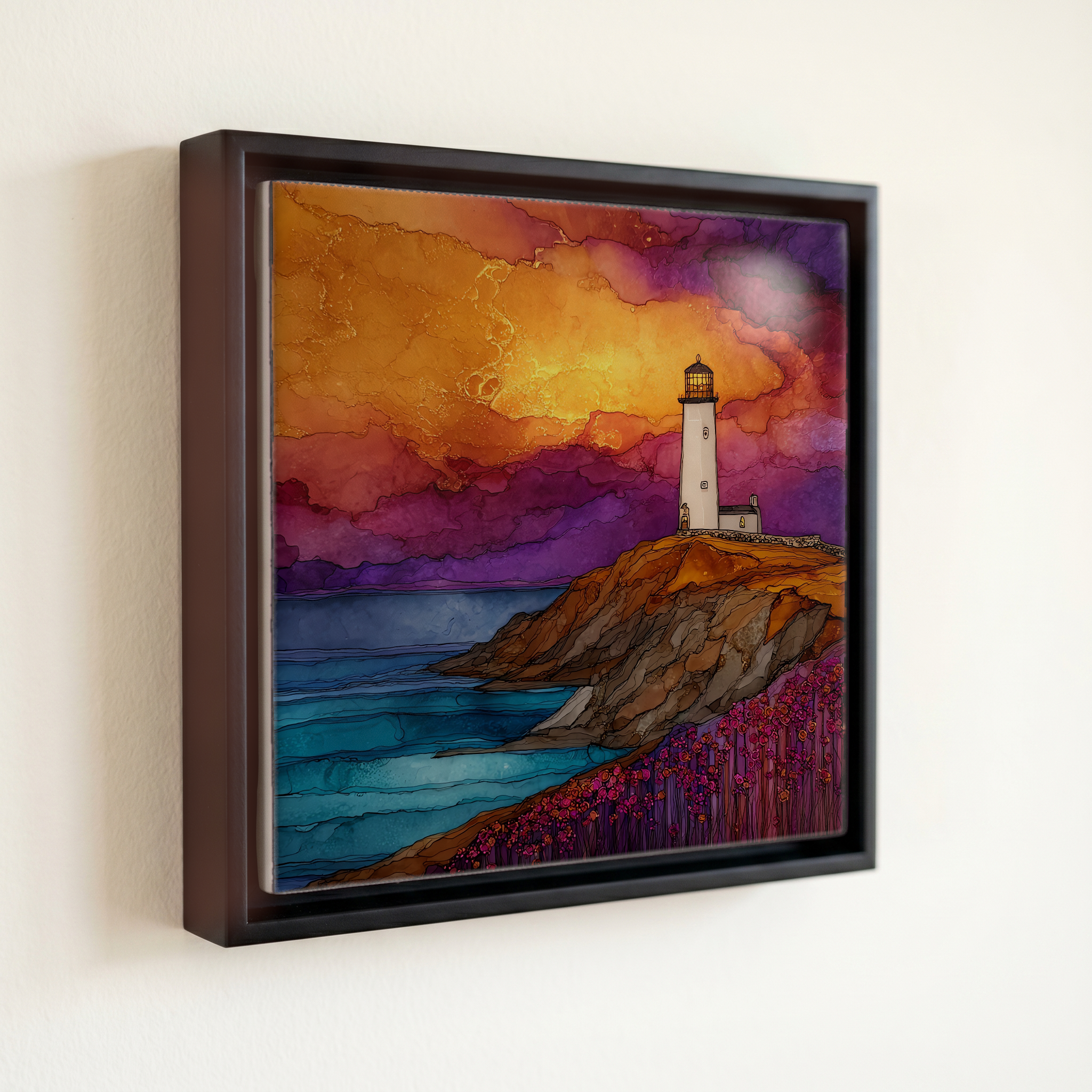
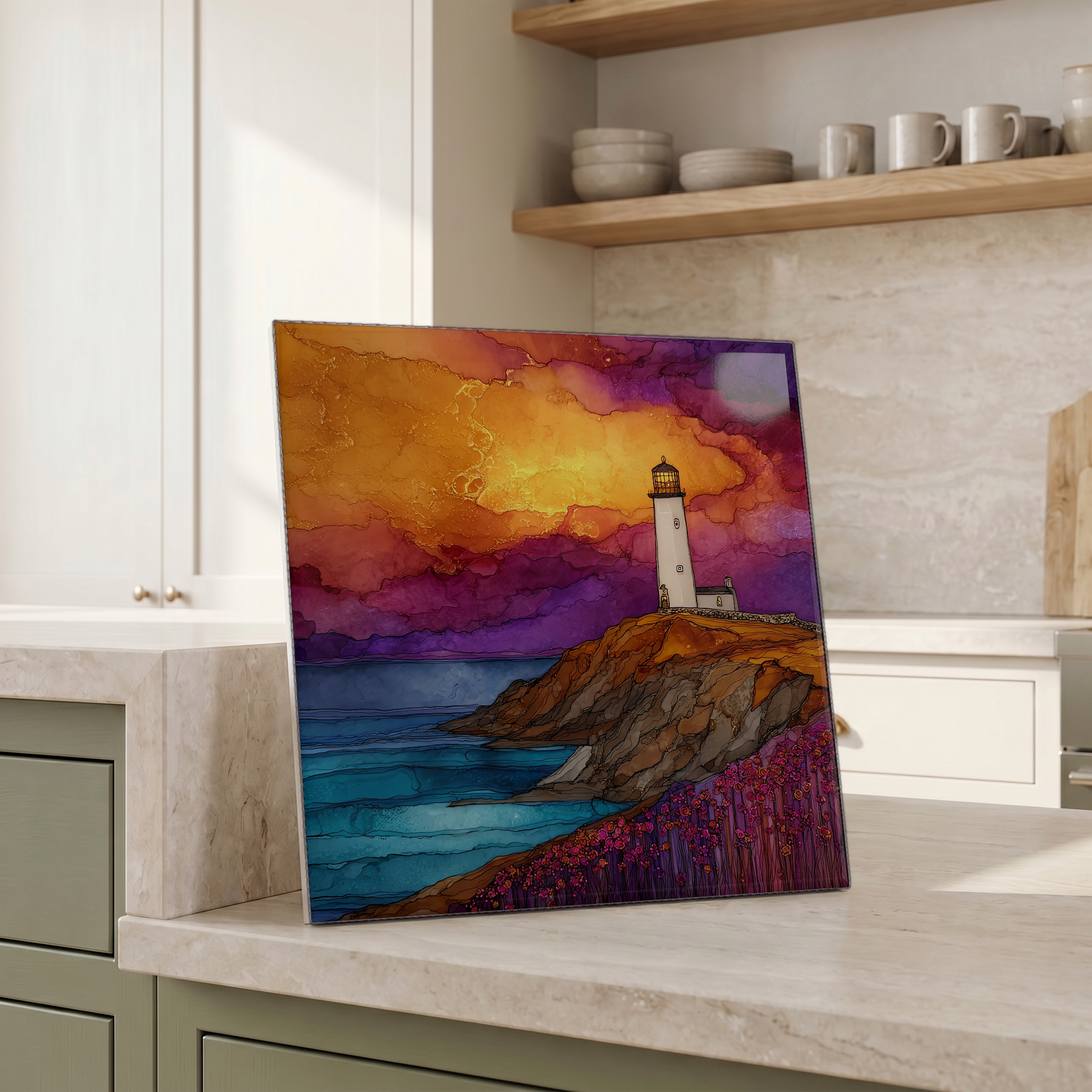
Galley Head Lighthouse, on ceramic.
Each tile is finished by hand in our Knoxville studio. Artwork is slowly infused into the ceramic surface under high heat and pressure, and rests beneath a thin glossy finish. The colour lives in the surface, not on top of it.
Pick any four 4-inch tiles — National Parks you've been to, a Smokies set, the four seasons of one place. $ for a set of , cork-backed, ready to live on the table.
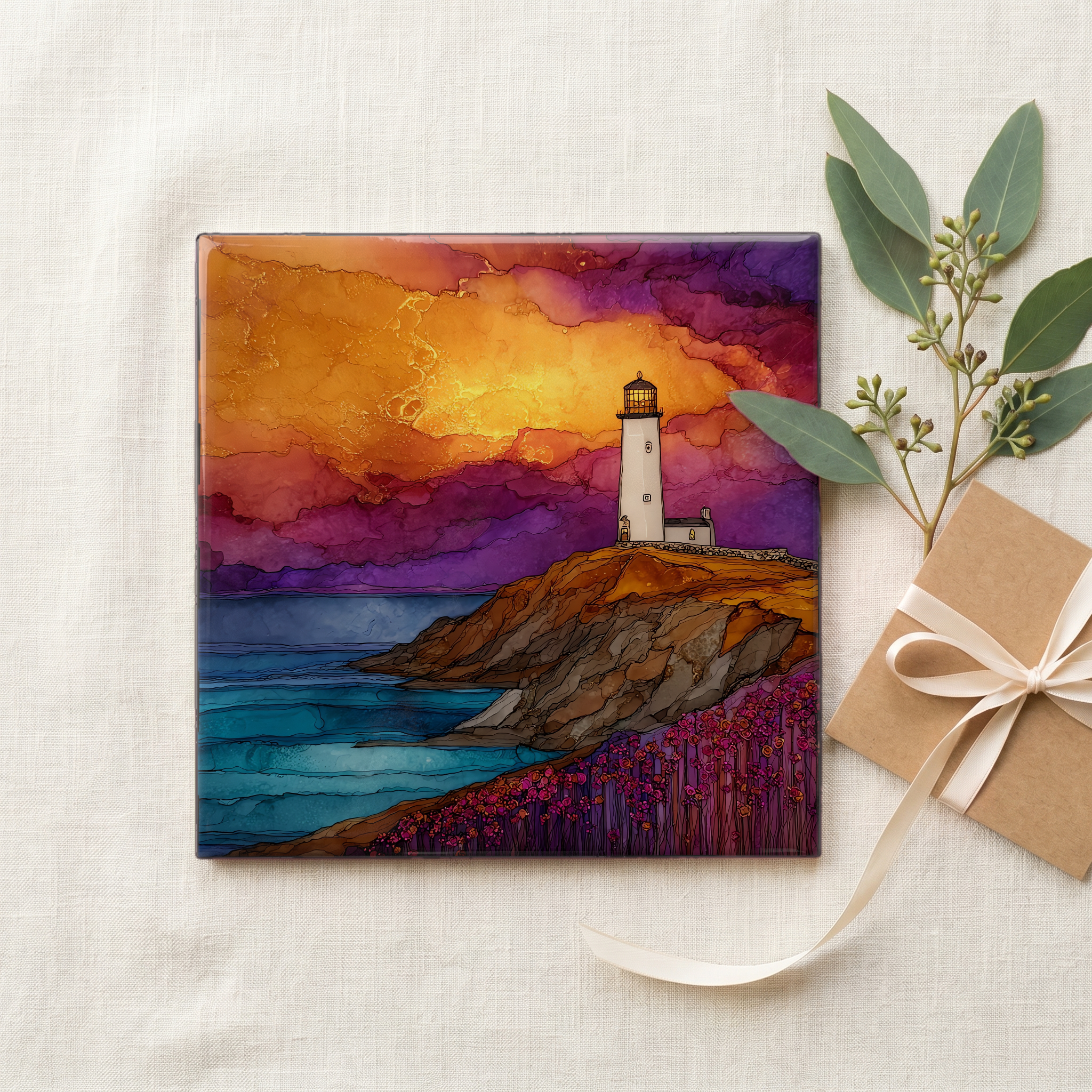
Each tile ships in a kraft box, tied with cream ribbon, with a handwritten note from the studio if you'd like to add one.
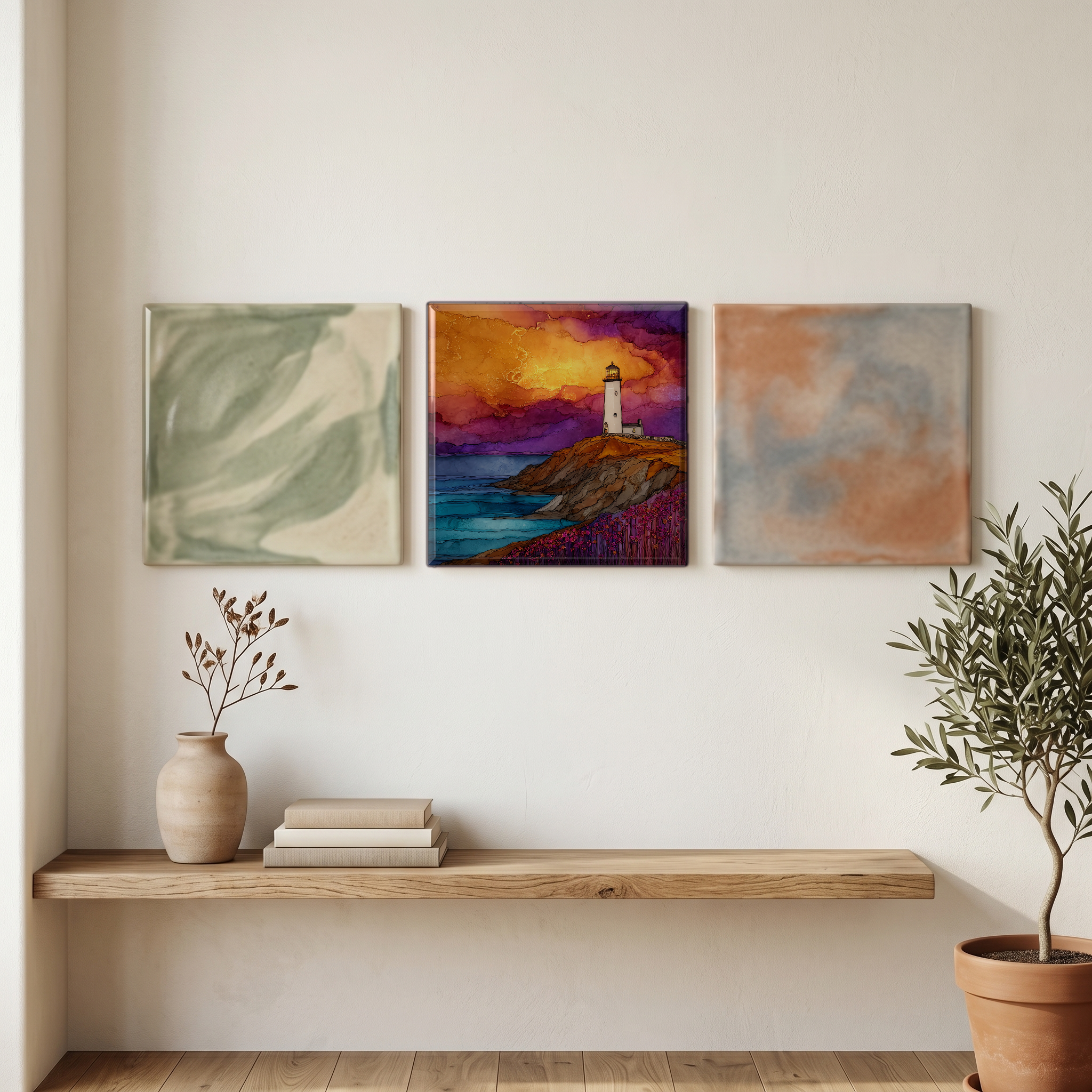
Three or five different vistas, hung together — a chapter of places you've been, or want to go.
The place, in three passes.
Galley Head Lighthouse sits at the southern end of Dundeady Head, a slim County Cork promontory between Rosscarbery and Clonakilty on Ireland's south coast. The tower is 21 metres of cylindrical masonry, painted white with a red lantern rail, standing on a headland that rises 133 feet above the Celtic Sea. Construction was approved in 1871 after Lord Bandon pressed the case for a light on this stretch, where shipwrecks had been a long-standing problem. The main buildings were completed in 1875 and the light was first lit in 1878. The station is operated by the Commissioners of Irish Lights and was automated in 1978.
The original optic was a revolving octagonal apparatus running on coal-gas burners, giving a 30-kilometre range that put Galley Head among the most powerful lights in Europe at its commissioning, alongside the Fastnet to the west. The current characteristic is five white flashes in a 20-second cycle, with a nominal range of 23 nautical miles from a focal plane 53 metres above the sea. The unusual signature is the landward arc: four clear panes were left in the lantern facing inland, said by local accounts to be a courtesy to a visiting Sultan who wanted to see the light from Castle Freke at Rosscarbery. The 1969 electrification kept it. The 1978 automation kept it. The four panes still throw light back across the headland.
The lighthouse stands at the southern end of Dundeady Head, reachable by road from Rosscarbery or Clonakilty along the West Cork section of the Wild Atlantic Way. The tower itself is a working aid to navigation and is not open as a daily tourist site, but the two symmetrical keepers' cottages on the compound are let for holiday stays by the Irish Landmark Trust. Each sleeps four to six; the pair together sleep up to twelve. Red Strand sits to the east of the headland and Long Strand to the west, both walkable from the gate. Castle Freke, visible inland as a gothic ruin since the house was abandoned in 1952, closes the picture from the other side.