Wender·Vista
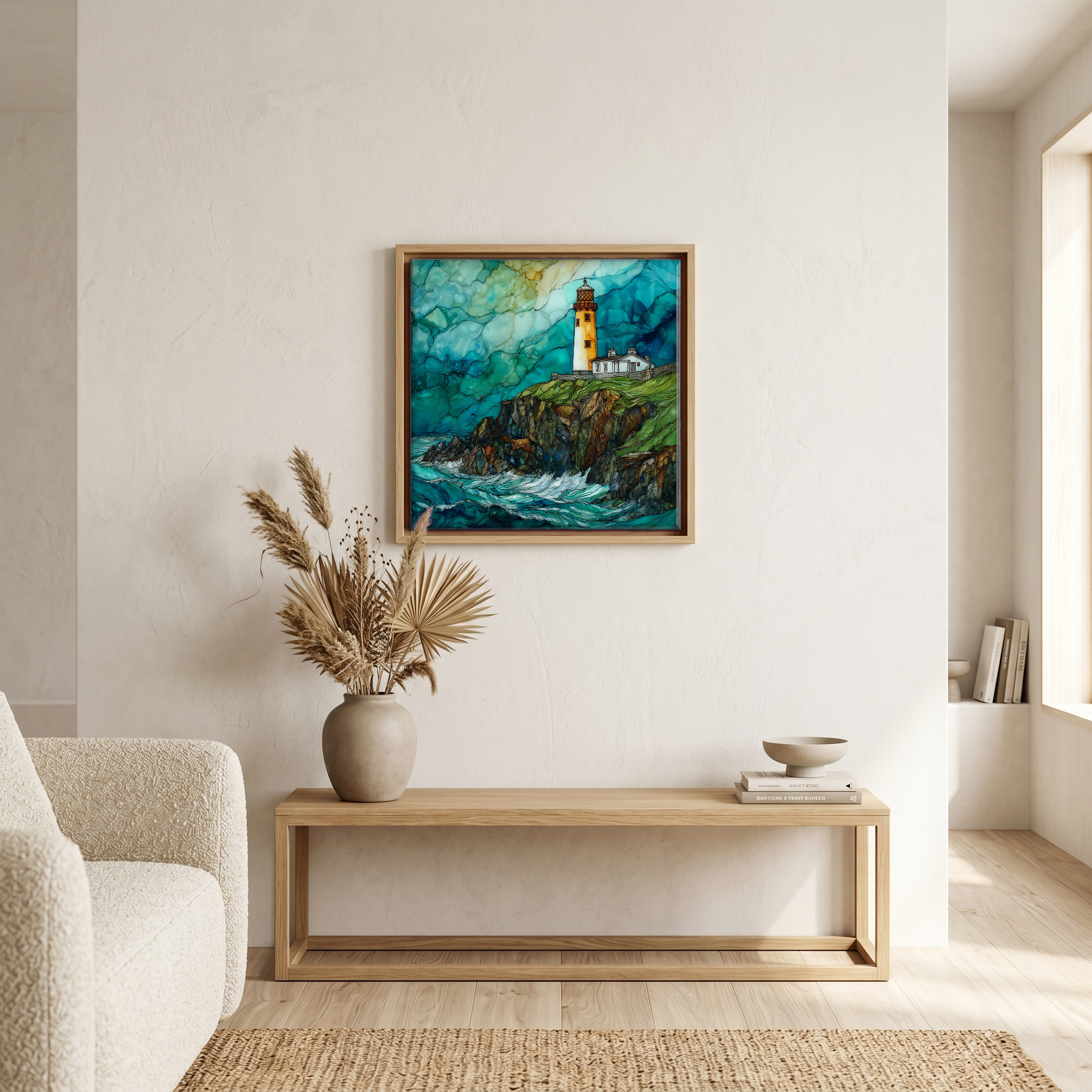
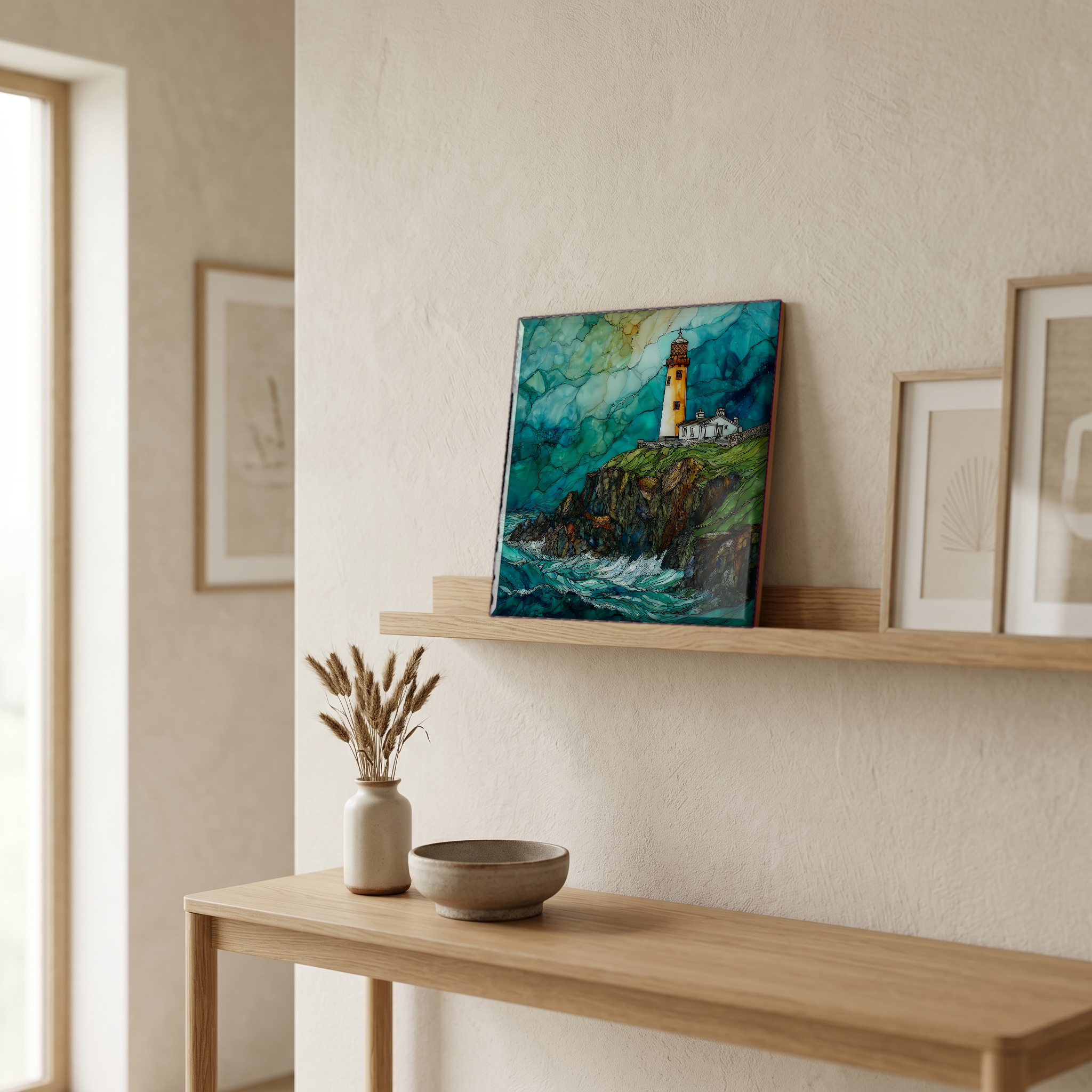
Fanad Head Lighthouse
shown on ceramic, 12-inch tileIreland
on the Atlantic edge of Donegal

Fanad Head Lighthouse

the white tower the Atlantic keeps finding.

Where it lives

Not only on a wall.

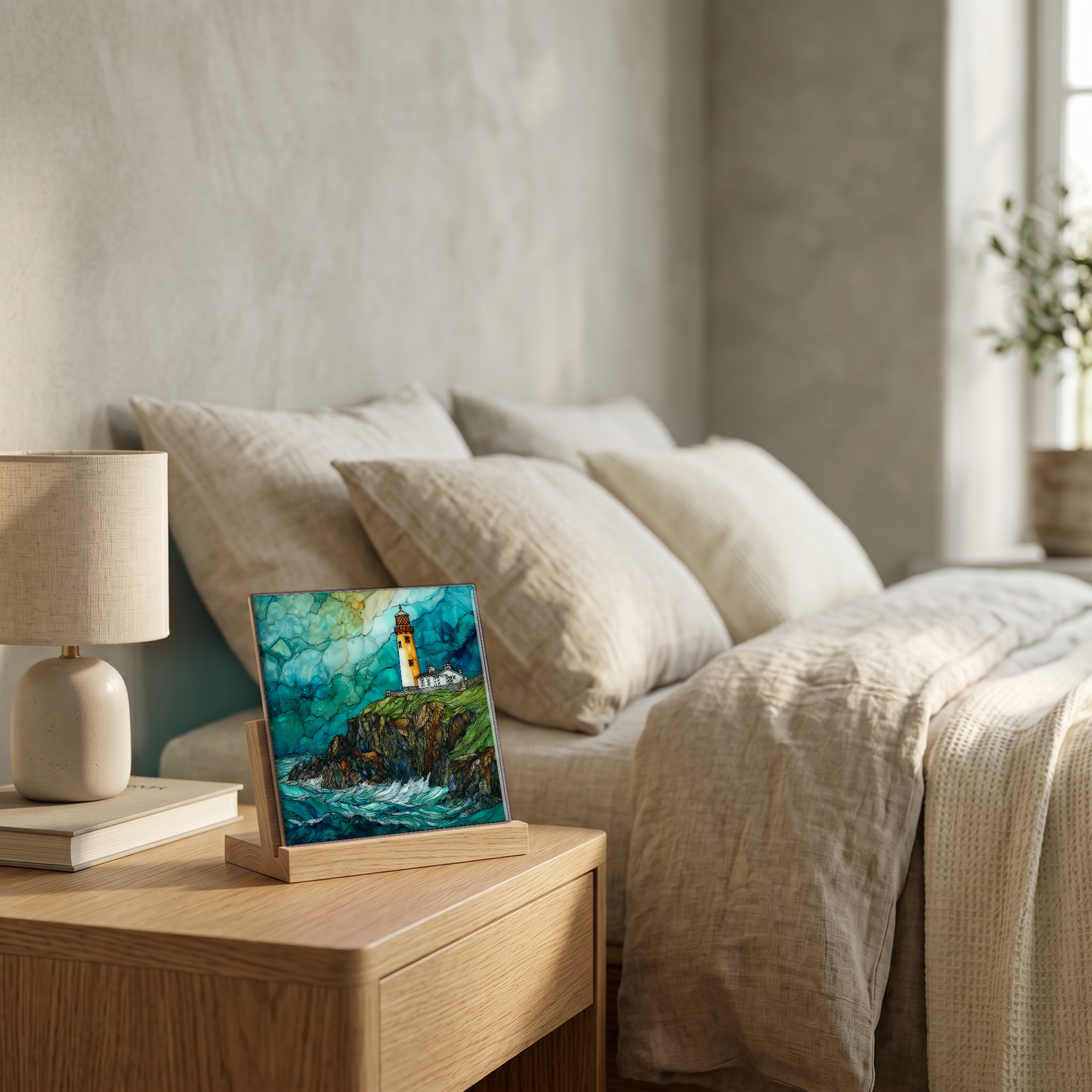
A small tile on the nightstand catching the morning. A larger one above the fire. Yours, wherever you spend the slow hours.
Above the bench, in a warm oak surround.
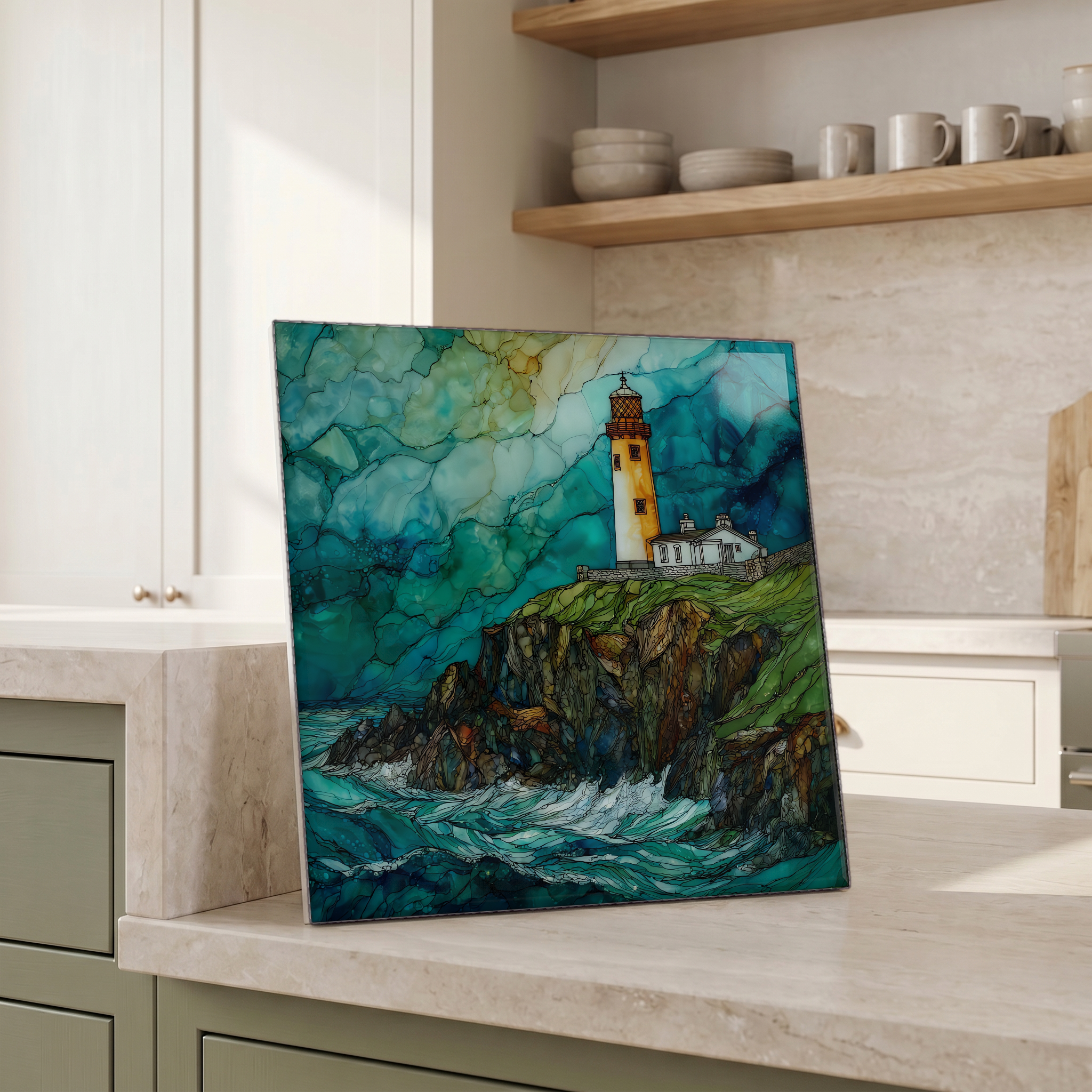
Beside the kettle, propped on the counter.
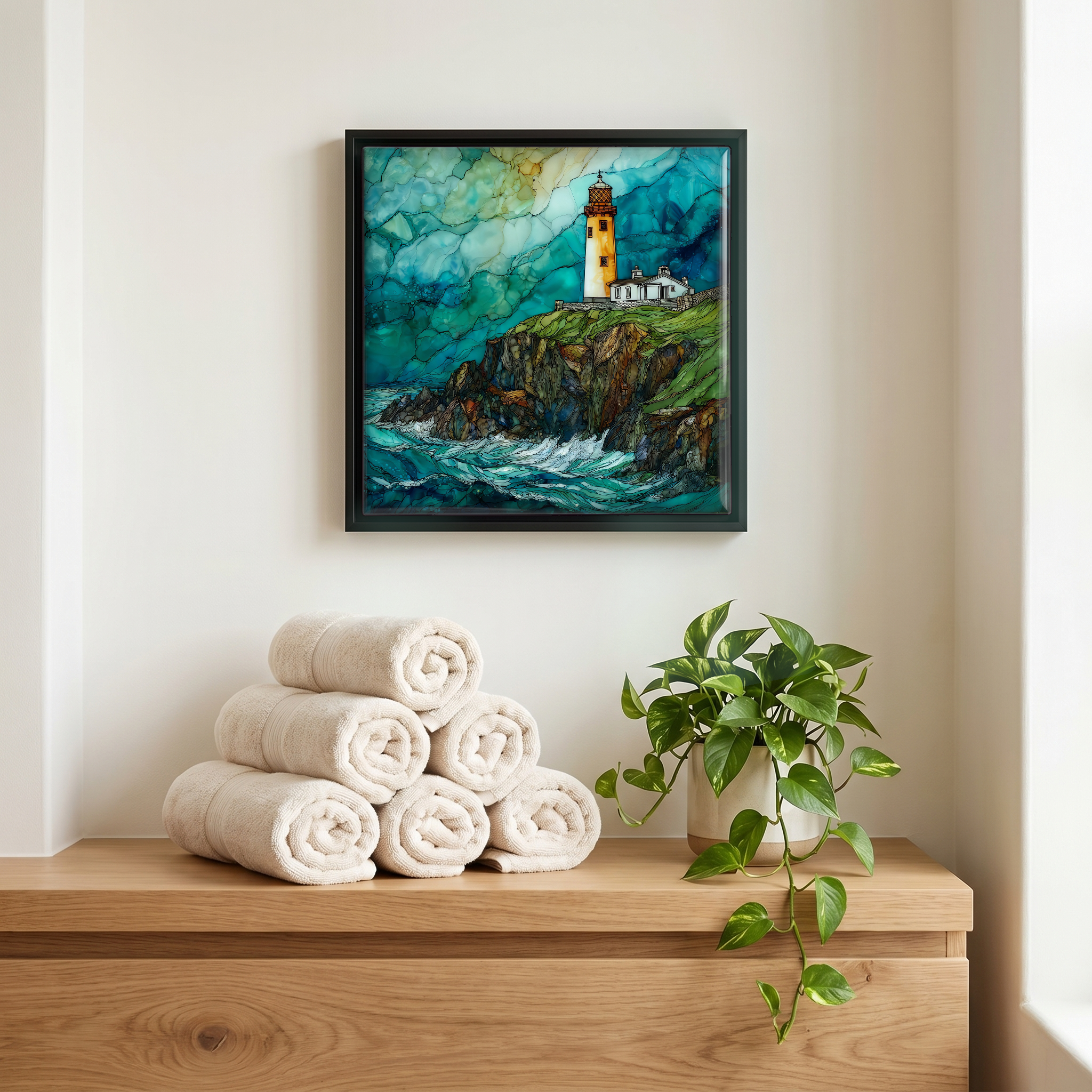
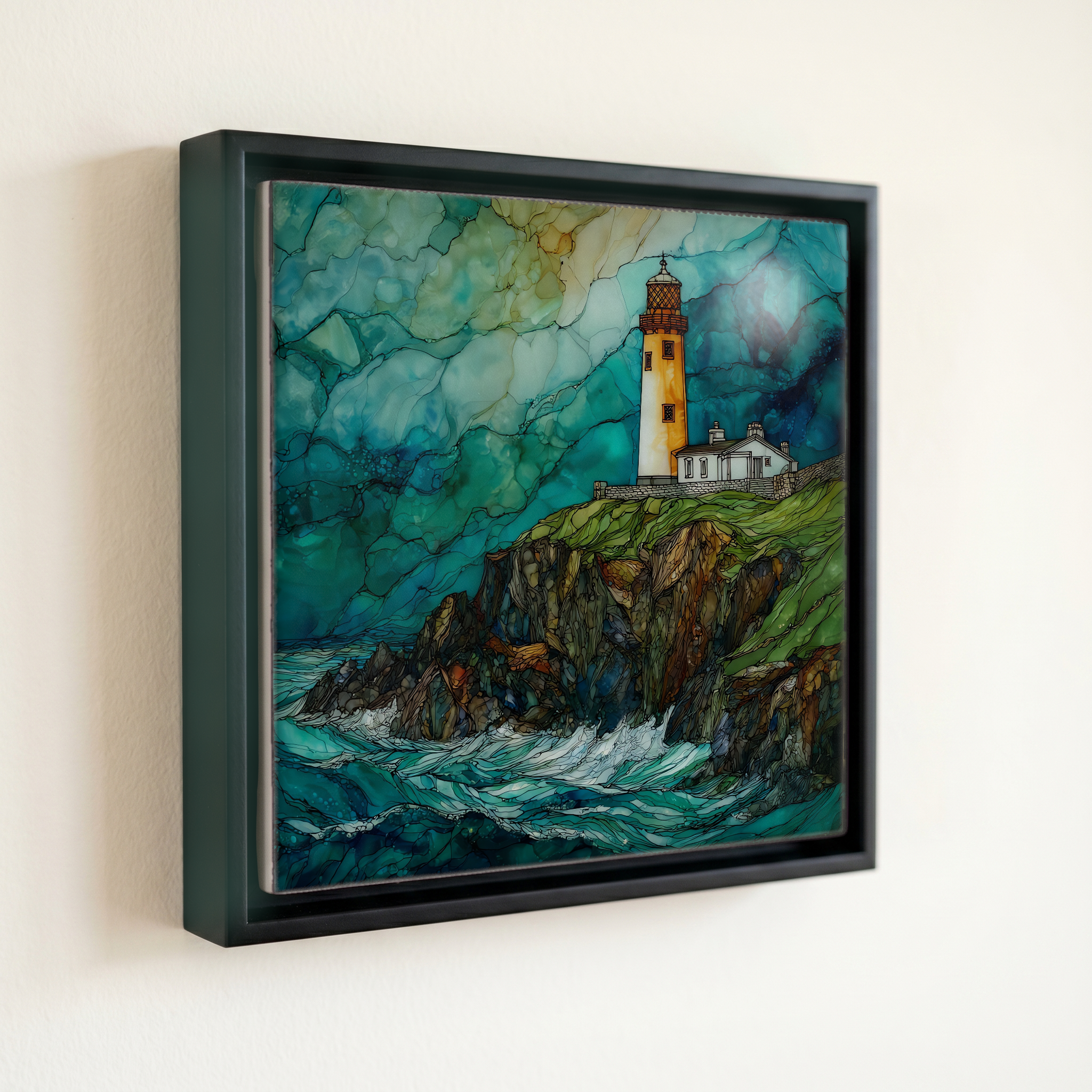
Above the linens, in a slim black surround.
On the nightstand, on a light oak stand.
On a picture ledge, where the light comes in.
a note from the studio

At the mouth of Lough Swilly, where Donegal turns its hardest corner into the Atlantic. The lighthouse was built after the loss of HMS Saldanha in 1811. The lamp was first lit in 1817, on a tower designed by George Halpin. The keepers' cottages still stand around it; a few have been opened for overnight stays, and the wind on the headland does not stop. The Wild Atlantic Way reaches it from the south. From the north there is nothing else: only the sea, and the lamp that has been kept here for two hundred years.
from the studio
shown in a slim black floating frame · 6 × 6 in
— bring it home

Fanad Head Lighthouse, on ceramic.

Each tile is finished by hand in our Knoxville studio. Artwork is slowly infused into the ceramic surface under high heat and pressure, and rests beneath a thin glossy finish. The colour lives in the surface, not on top of it.

What kind of piece?
One tile — square or rectangle.
How big?
the popular one — counter, shelf, nightstand
6 × 6 in · 15 cm · 1.6 lb
Surface finish
A clear glossy finish — the artwork reads as if under resin. Ideal for show-pieces and framed wall art.
How it sits
A hidden cleat — sits ¼″ proud of the wall.
$58
Hand-finished and shipped from our studio at the foot of the Smokies. On your wall in about ten days.
size
6 × 6 in
15 cm
weighs
1.6 lb
solid in the hand
surface
ceramic, hand-finished
art rests beneath a thin glossy finish
from
Knoxville, TN
our family studio, at the foot of the Smokies
— start a Coaster Set

Pick any four 4-inch tiles — National Parks you've been to, a Smokies set, the four seasons of one place. $ for a set of , cork-backed, ready to live on the table.

comes gift-ready
comes gift-ready

Each tile ships in a kraft box, tied with cream ribbon, with a handwritten note from the studio if you'd like to add one.
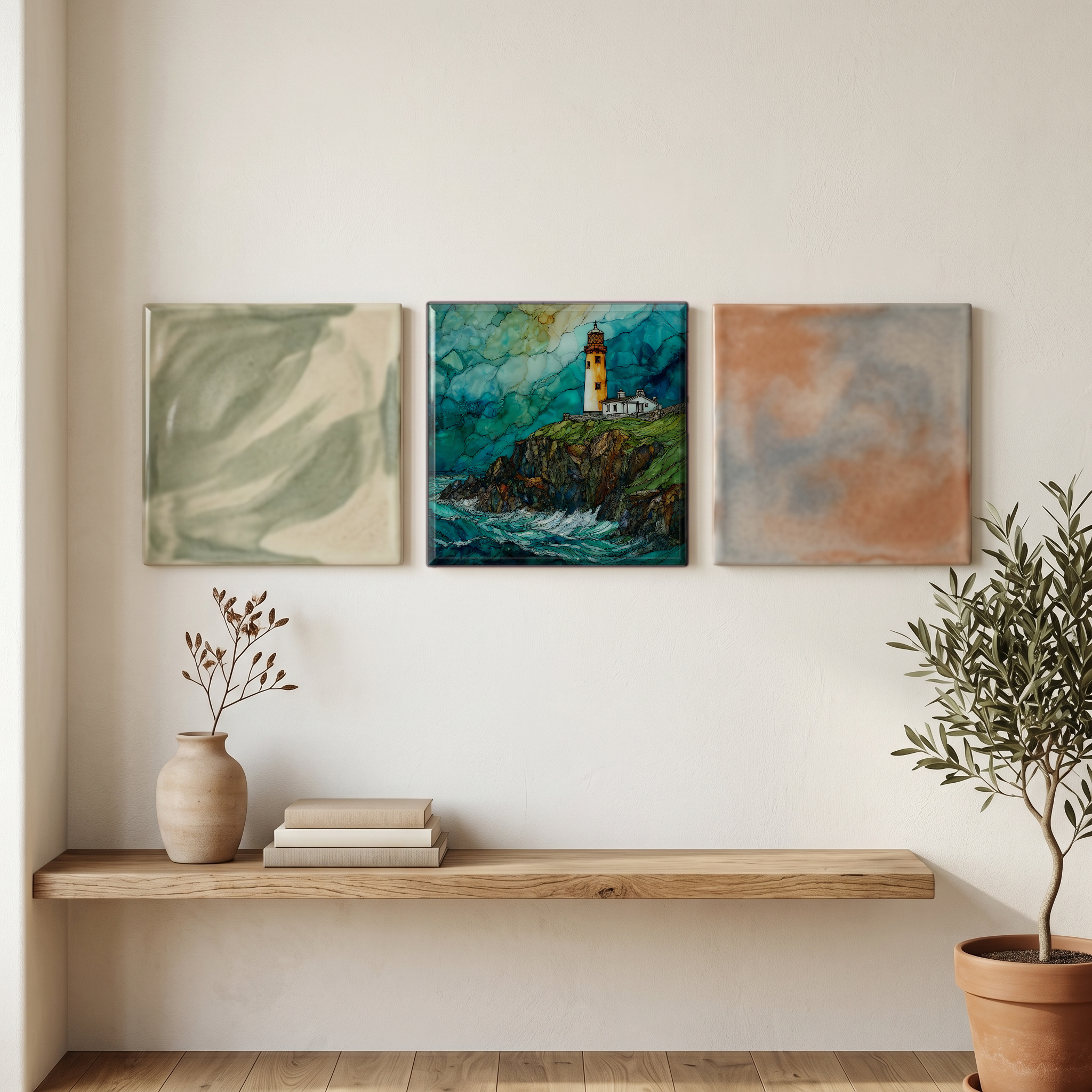
or build a grouping
or build a grouping

Three or five different vistas, hung together — a chapter of places you've been, or want to go.

about Fanad Head Lighthouse

The place, in three passes.

A little of what's known, in case you fall down the rabbit hole — or want to go see it yourself.
the place

Fanad Head sits at the eastern entrance to Lough Swilly, on the north coast of County Donegal, where the Fanad Peninsula meets the Atlantic. The Commissioners of Irish Lights first lit the lamp in 1817, six years after the wreck of HMS Saldanha at the lough's mouth claimed more than two hundred lives. The tower was designed by the inspector of works George Halpin and has been continuously kept since. It is reached by the R268 from Portsalon, the small village at the foot of the peninsula. Condé Nast Traveler has named it among the most beautiful lighthouses in the world. There is no other way in.

the light

The lamp at Fanad Head has been kept continuously since 1817, making it one of the older operating lights on the Irish coast. The original optic has been modernised many times across two centuries, and the station was automated in the late twentieth century by the Commissioners of Irish Lights. The keepers' cottages on the headland, now run as self-catering accommodation by Fanad Lighthouse, were inhabited by keeping families for more than 160 years before then. The tower is painted white, with a single black band at the gallery. From the headland the beam reaches across the entrance to Lough Swilly toward Inishtrahull Sound, where the Atlantic begins in earnest.

the visit

The lighthouse is open to the public through guided tours run by Fanad Lighthouse Tours, generally from spring through autumn and weather permitting. Tickets are booked through the visitor centre at the gate, and tours climb the spiral stair to the lantern room when conditions allow. Two of the former keepers' cottages are let as self-catering accommodation, often booked months in advance for summer. The headland and the cliff walk are open to the public in all seasons at no charge. The drive from Portsalon along the coast road is roughly twelve kilometres of single-lane road with passing places. There is one small café on site, and the wind matters more than the rain.

— informed by Fanad Lighthouse
where
Ireland · Fanad Peninsula, County Donegal
position
55.2747° N · 7.6306° W
the neighborhood

What's nearby.

A handful of named places within an hour's walk or short drive. Some we've already painted; some we will.
12 km S
Portsalon
village
13 km S
Ballymastocker Bay
beach
12 km S
Knockalla Mountain
peak
15 km W
Mulroy Bay
sea inlet
18 km W
Doagh Famine Village
museum
N
Fanad Head Lighthouse
Portsalon
Ballymastocker Bay
Knockalla Mountain
Mulroy Bay
Doagh Famine Village
common questions

What people ask.

A few questions we get about Fanad Head Lighthouse — and about bringing the piece home.
about the place

Fanad Head Lighthouse stands at the eastern entrance to Lough Swilly, on the Fanad Peninsula in the north of County Donegal, Ireland. It is reached by the R268 from Portsalon, the nearest village, and sits at the end of the road.

The lamp at Fanad Head was first lit in 1817. The tower was designed by George Halpin, inspector of works for the Commissioners of Irish Lights, and the station has been continuously kept since.

The lighthouse was built in response to the sinking of HMS Saldanha at the mouth of Lough Swilly in 1811, in which more than two hundred lives were lost. The station's purpose was to make the lough's entrance safe for shipping.

Yes. Guided tours of the tower run from spring through autumn, weather permitting, booked through the visitor centre at the gate. The headland and the cliff walk around the lighthouse are open to the public in all seasons at no charge.

Two of the former keepers' cottages on the headland are let as self-catering accommodation by Fanad Lighthouse. Summer dates book months in advance. The cottages sit beside the working tower, with the lamp turning above and the Atlantic on three sides.

The Commissioners of Irish Lights have operated the station since it was first lit in 1817. The Commissioners are the general lighthouse authority for the entire island of Ireland, north and south, and maintain lights along the whole Irish coast.

Yes. Fanad Head sits on the Wild Atlantic Way, the 2,500-kilometre coastal route along the west and north coast of Ireland from County Cork to County Donegal, and is one of its signature stops along the Donegal stretch.

about the piece in your home

It has been a meaningful gift for many of our customers with Donegal roots. Fanad Head is one of the most beloved places on the north coast, and the lighthouse stands in a great deal of family memory along the peninsula. A Coaster or Small with a handwritten note from the studio carries well.

The cool palette sits easily in coastal-modern interiors, in cottage and farmhouse rooms, and in jewel-tone maximalist spaces where the stained-glass tones can anchor a wall. The piece reads warm against natural oak, linen, and limewashed walls.

It belongs in the coastal-modern direction that has been quietly taking over from the harder grey-and-driftwood look of the last decade. The palette has more saturation, the line work has more craft, and the place itself is recognisable to anyone who knows the Wild Atlantic Way.

Above a standard sofa, the Large is the right anchor. For a larger room or a console with a tall ceiling, a 4-tile Mural reads better. For a feature wall in a stairwell or a great room, a 9-tile Mural carries the scale.

Yes. For a bathroom, a kitchen backsplash, or any high-humidity room, order in Dura Satin or Matte rather than the Glossy finish. The colour lives in the surface and will not lift or fade with steam, splash, or daily cleaning.

A soft microfibre cloth with warm water is enough. No solvents, no abrasive pads. The surface is hand-finished and durable, but the brightest whites read best when the sheen has not been dulled by scouring chemicals.

Yes. Every WenderVista piece is original artwork from a single small studio in Knoxville, Tennessee. There is no licensing and no stock library; the Fanad Head painting was made in our distinctive stained-glass and alcohol-ink visual language, slowly infused into the ceramic surface under high heat and pressure.

if this one stayed with you

A few you might also love.

Hand-picked by the eye that found Sorapis. Same air, same kind of quiet.