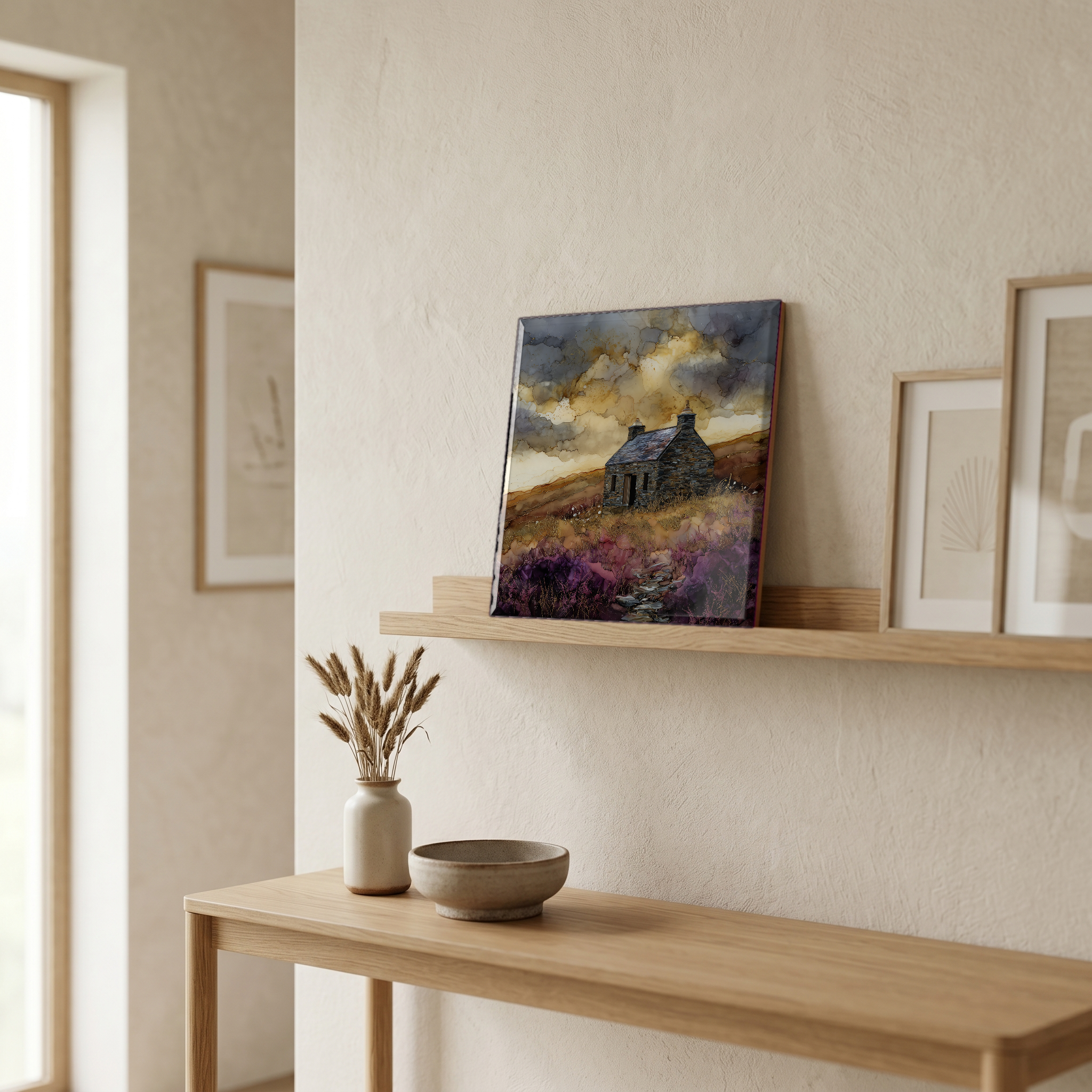
Wender·Vista
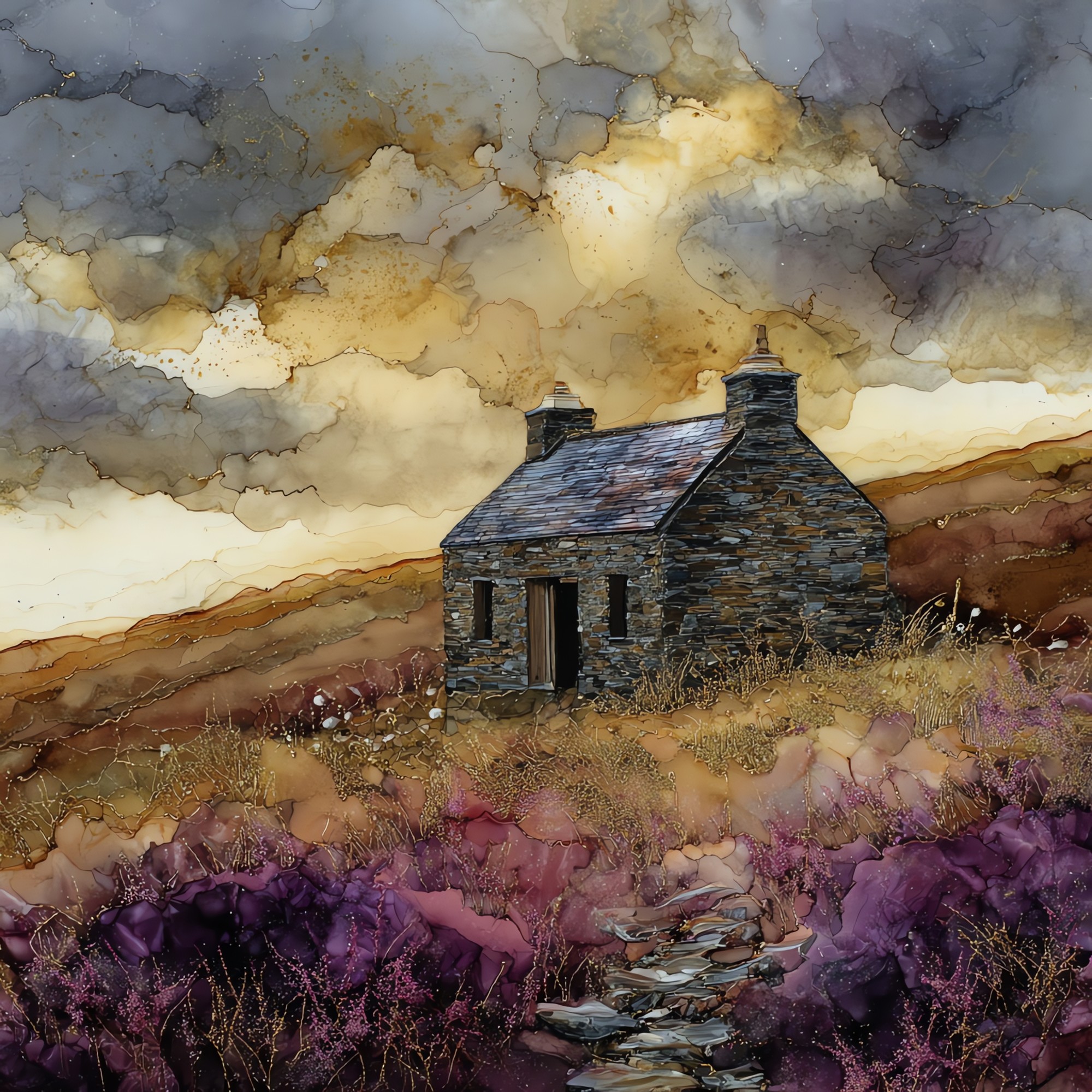
Famine Cottage Ruin
shown on ceramic, 12-inch tileIreland
on the Dingle Peninsula, west of Ventry

Famine Cottage Ruin

— the door the wind walks through.

Where it lives

Not only on a wall.

A small tile on the nightstand catching the morning. A larger one above the fire. Yours, wherever you spend the slow hours.
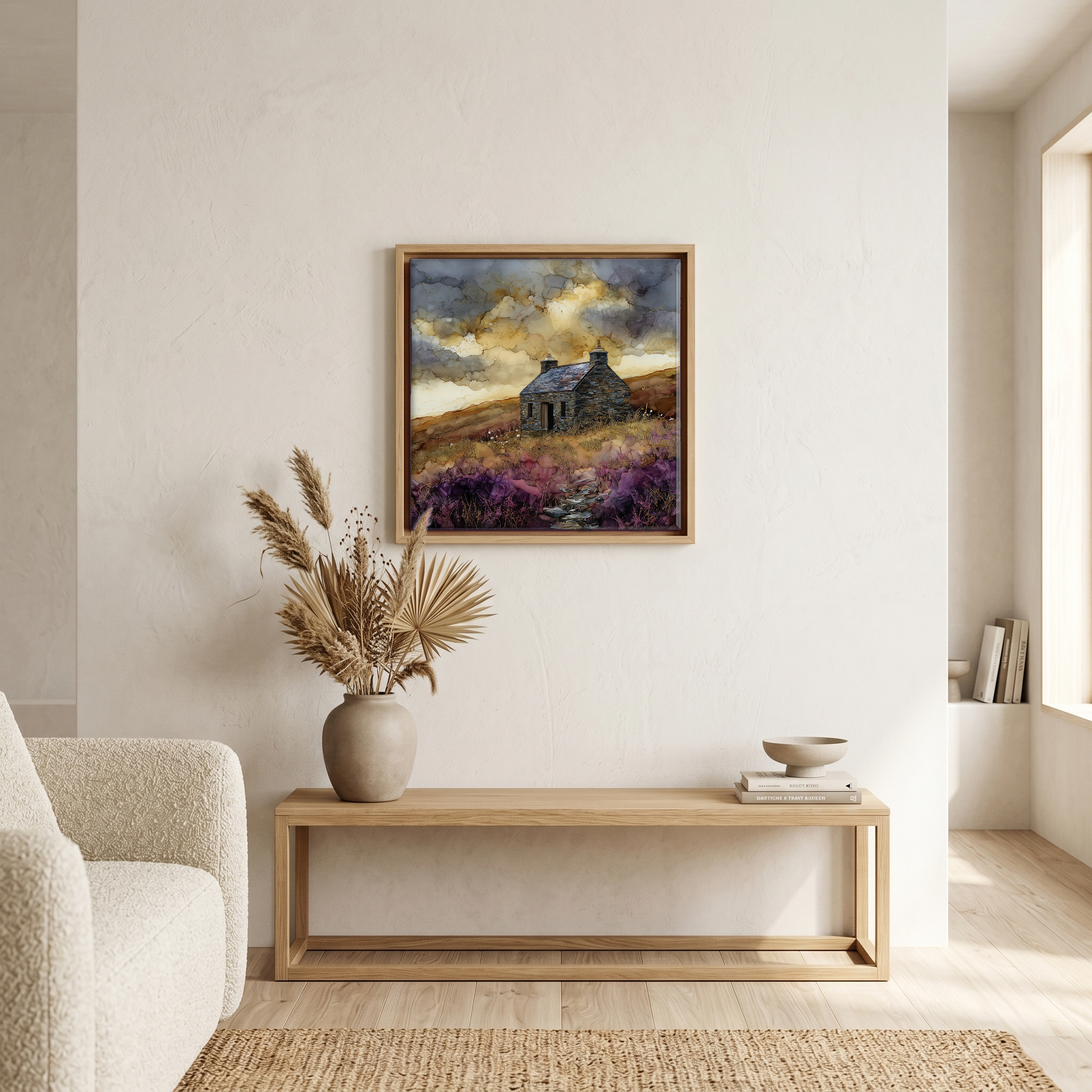
Above the bench, in a warm oak surround.
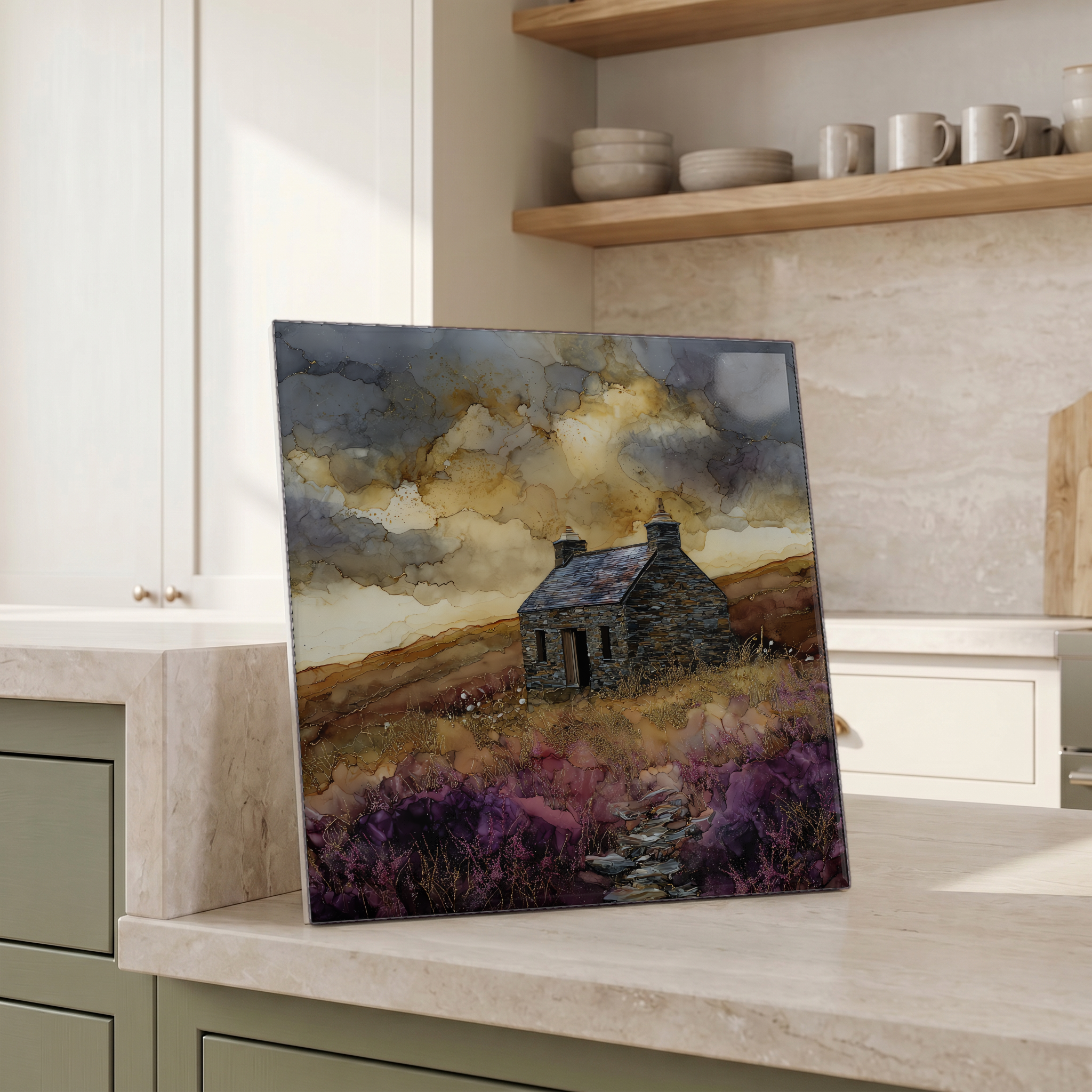
Beside the kettle, propped on the counter.
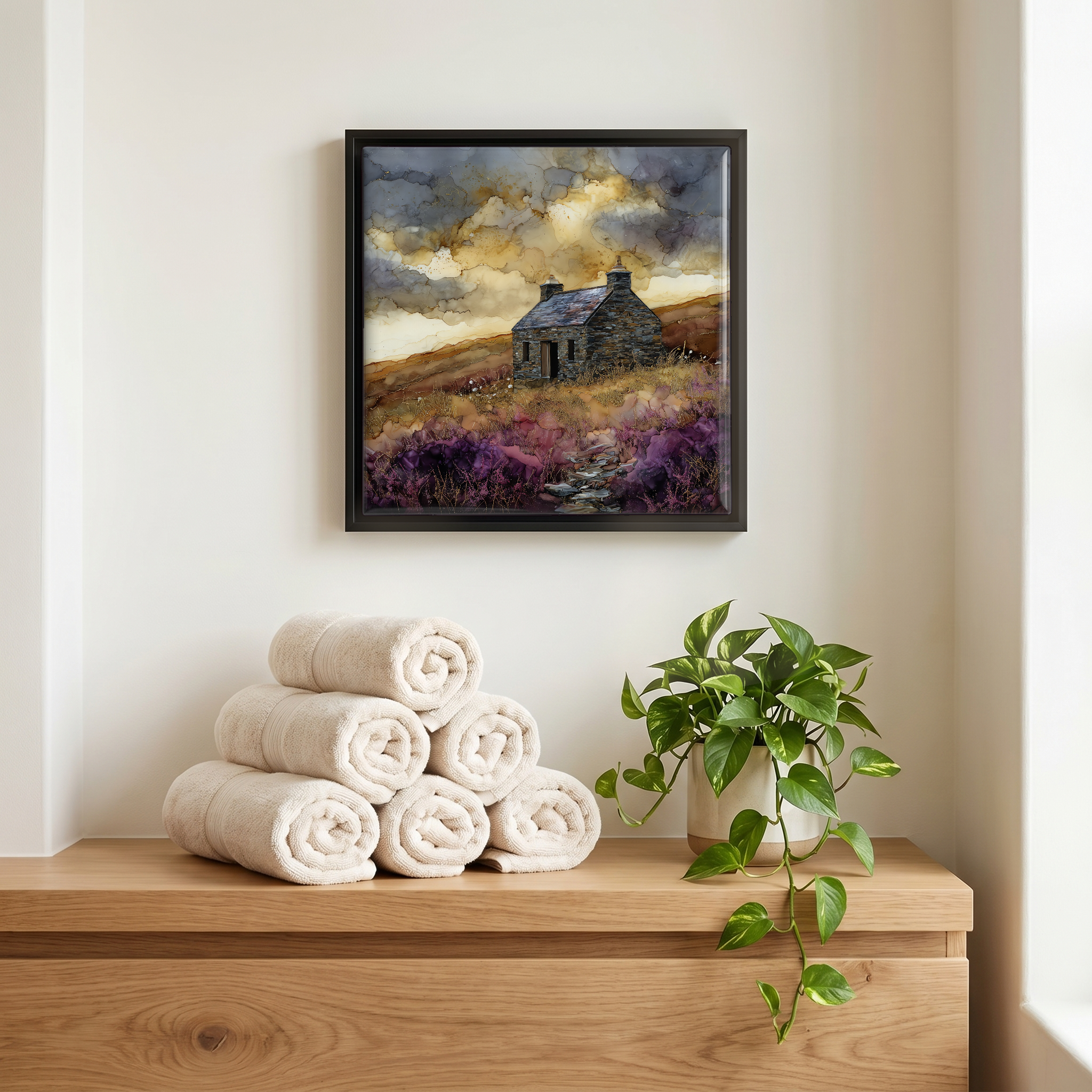
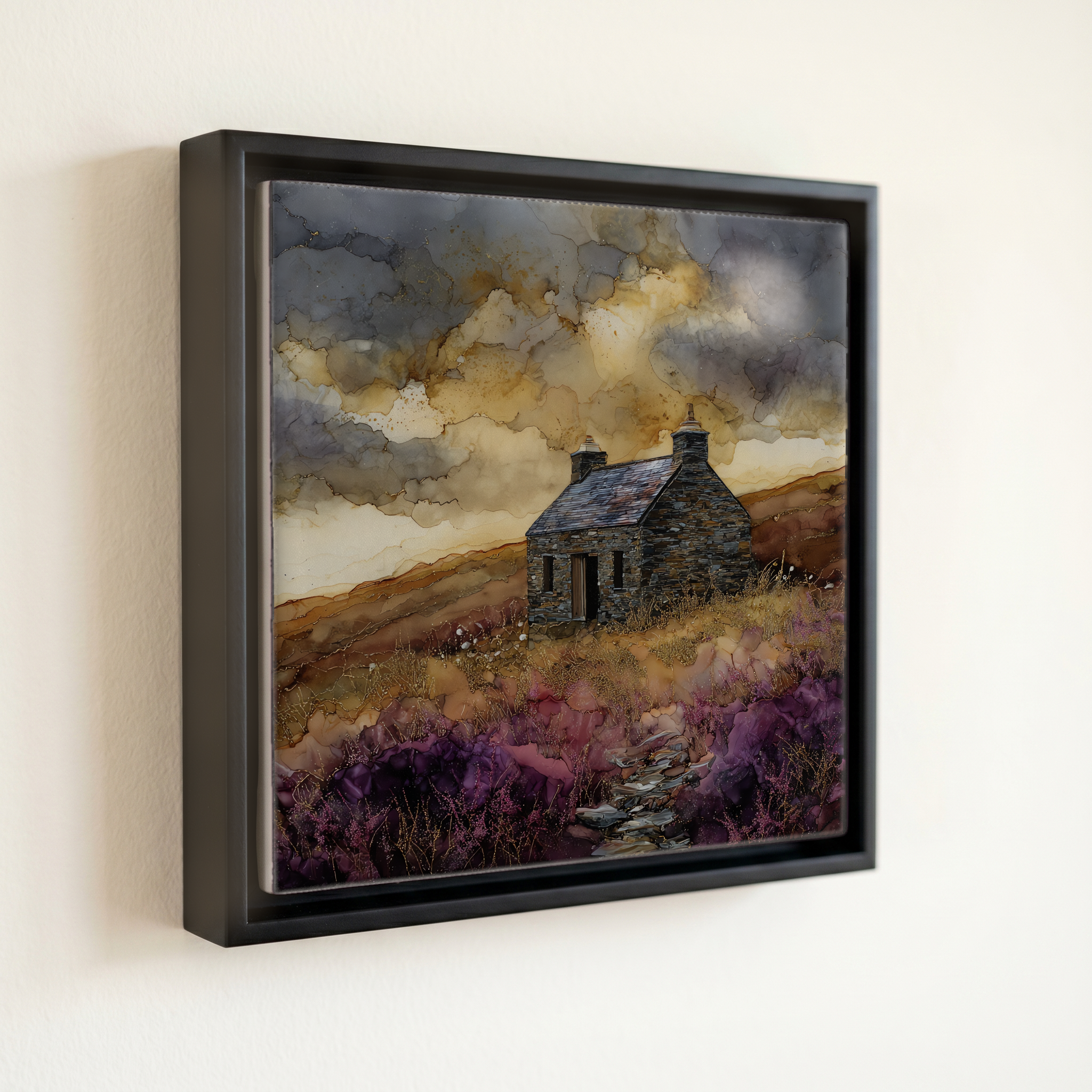
Above the linens, in a slim black surround.
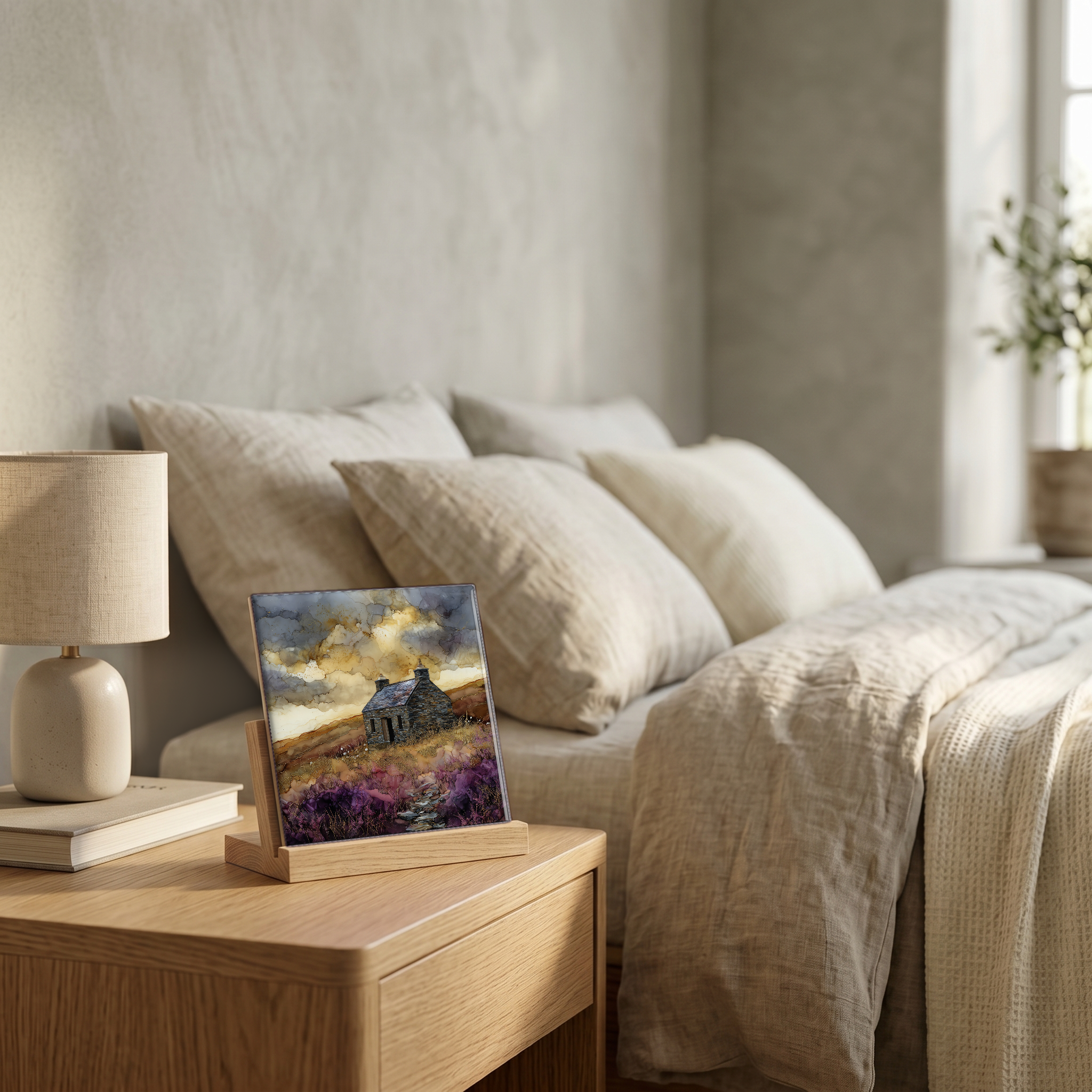
On the nightstand, on a light oak stand.
On a picture ledge, where the light comes in.
a note from the studio

A single roofless cottage on the way out to Slea Head. Stone walls, gable still standing, the doorway open to the Atlantic. Hundreds like it stand along Ireland's west coast, most quietly returning to the field. The Dingle Peninsula carries them well: the road runs close to the shore and the cottages sit just above it, in townlands that emptied in the 1840s and never came back. Locals on the R559 drive past them without ceremony. The wind does most of the visiting.
from the studio
shown in a slim black floating frame · 6 × 6 in
— bring it home

Famine Cottage Ruin, on ceramic.

Each tile is finished by hand in our Knoxville studio. Artwork is slowly infused into the ceramic surface under high heat and pressure, and rests beneath a thin glossy finish. The colour lives in the surface, not on top of it.

What kind of piece?
One tile — square or rectangle.
How big?
the popular one — counter, shelf, nightstand
6 × 6 in · 15 cm · 1.6 lb
Surface finish
A clear glossy finish — the artwork reads as if under resin. Ideal for show-pieces and framed wall art.
How it sits
A hidden cleat — sits ¼″ proud of the wall.
$58
Hand-finished and shipped from our studio at the foot of the Smokies. On your wall in about ten days.
size
6 × 6 in
15 cm
weighs
1.6 lb
solid in the hand
surface
ceramic, hand-finished
art rests beneath a thin glossy finish
from
Knoxville, TN
our family studio, at the foot of the Smokies
— start a Coaster Set

Pick any four 4-inch tiles — National Parks you've been to, a Smokies set, the four seasons of one place. $ for a set of , cork-backed, ready to live on the table.
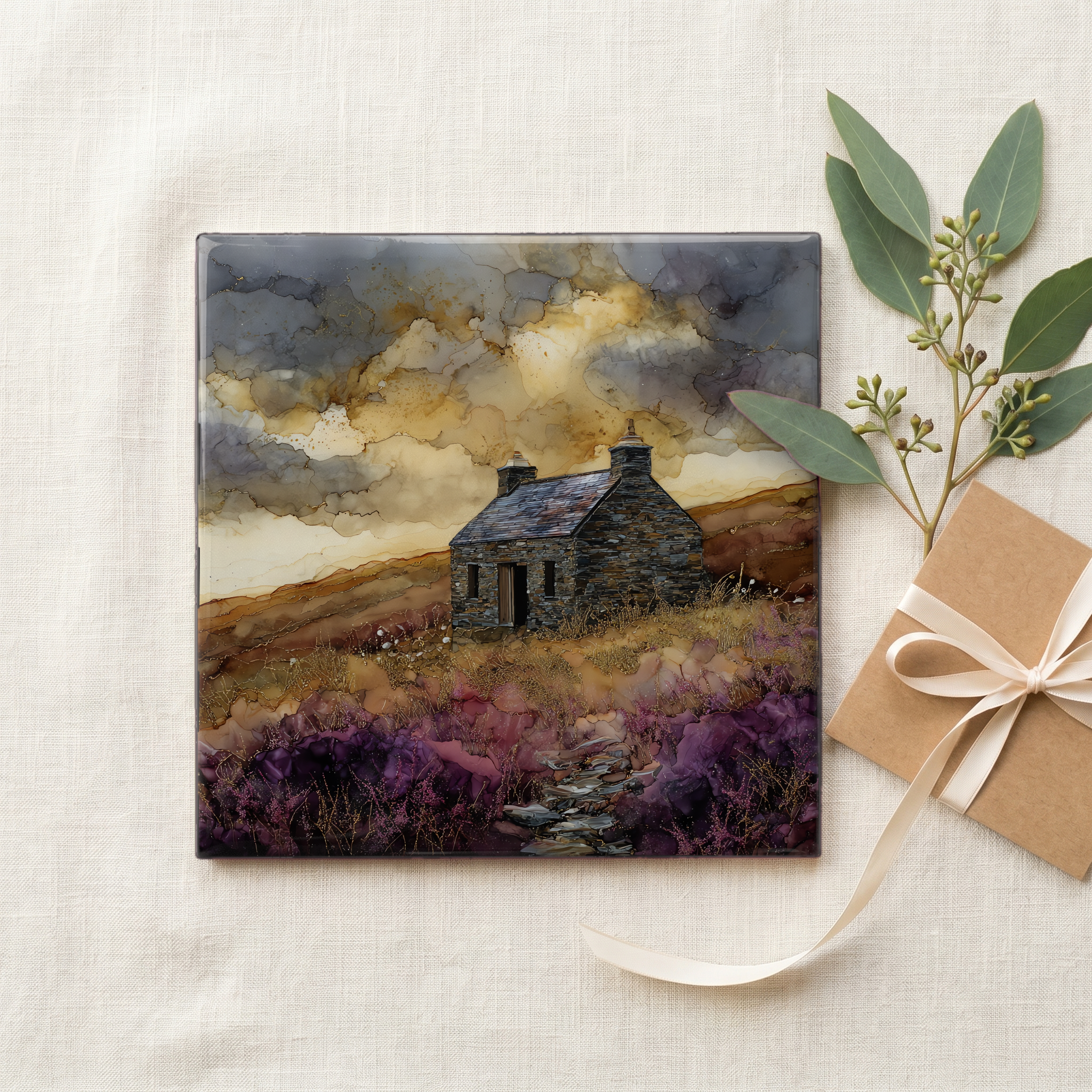
comes gift-ready
comes gift-ready

Each tile ships in a kraft box, tied with cream ribbon, with a handwritten note from the studio if you'd like to add one.
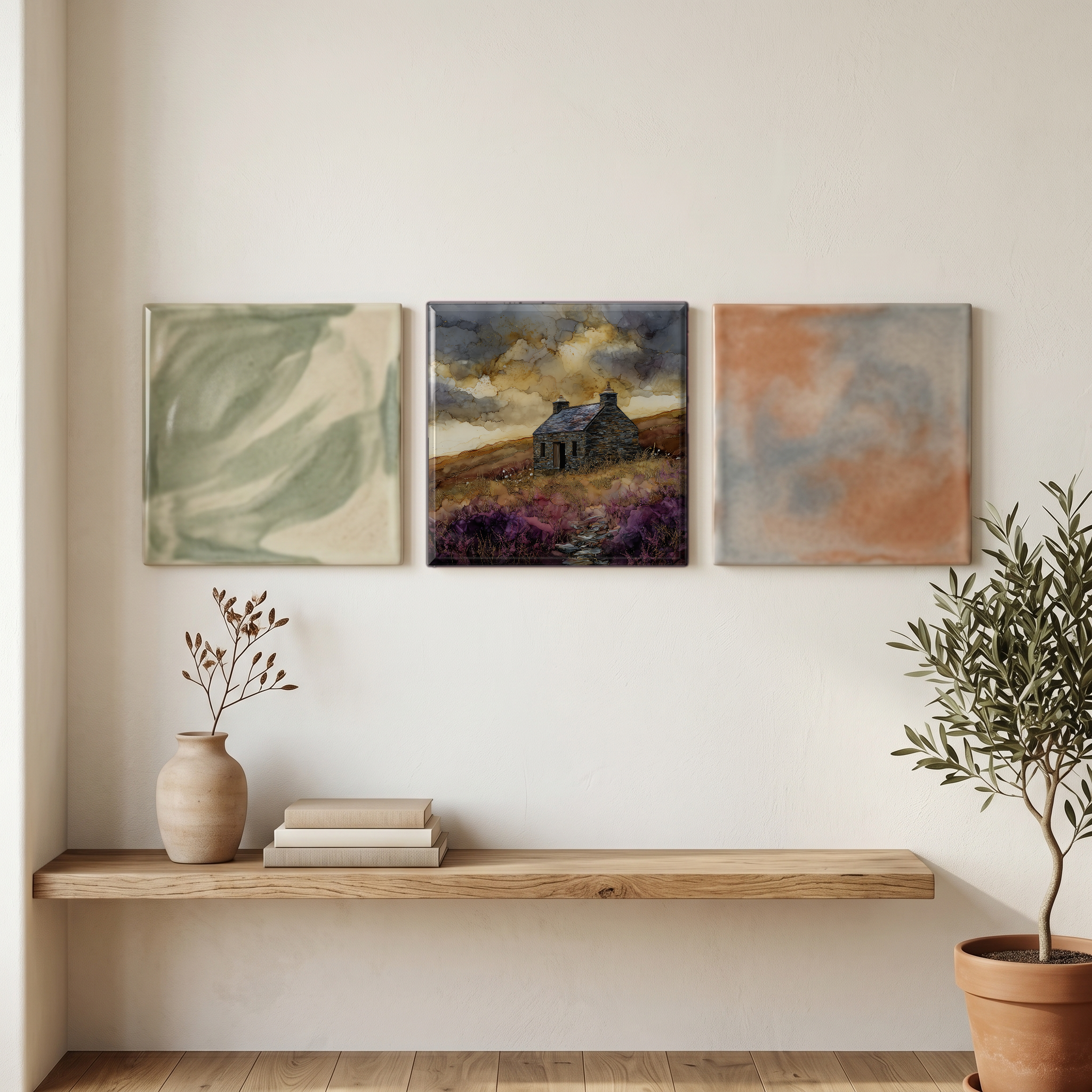
or build a grouping
or build a grouping

Three or five different vistas, hung together — a chapter of places you've been, or want to go.

about Famine Cottage Ruin

The place, in three passes.

A little of what's known, in case you fall down the rabbit hole — or want to go see it yourself.
the place

The cottage sits along Slea Head Drive (the R559), the loop road that runs west from Dingle town around the seaward end of the Corca Dhuibhne peninsula in County Kerry. The Dingle Peninsula reaches further west than any other part of mainland Ireland; its tip, Dunmore Head, looks across to the Blasket Islands a few miles offshore. The 47-kilometre road threads past dozens of ruined cottages above the carriageway, on the low slope below the ridge. The land here is officially Gaeltacht; Irish is still the everyday language of the townlands. The cottages were emptied in the years following the Great Famine of 1845-1852, when the population of the west of Ireland fell sharply and emigration carried off another generation.

the stone

The cottages are drystone: local sandstone and quartzite lifted from the field, no mortar, the walls roughly a metre thick at the base. Most were a single room with a hearth at one gable end and a thatched roof tied down with súgán rope against the Atlantic wind. When the rafters went, the gables stayed: wind passes through a roofless cottage rather than pushing against it. The hearth and the chimney breast are usually the last things to fall. You can read the floor plan of a vanished townland in the stone outlines a hundred and fifty years on.

the silence

Hundreds of deserted villages line Ireland's west coast, where the famine emptied the smallholdings first. The largest, at Slievemore on Achill Island in County Mayo, holds the foundations of 80 to 100 cottages on the southern slope of the mountain. The cottages along Slea Head are scattered rather than gathered, one or two to a field, but they read the same way: walls without a roof, a hearthstone still in place, the field around them grazed by sheep that do not care what was here. The sites are mostly unsignposted. You drive past them and they do not ask anything of you.

where
Ireland · Dingle Peninsula, County Kerry
position
52.1100° N · 10.4250° W
the neighborhood

What's nearby.

A handful of named places within an hour's walk or short drive. Some we've already painted; some we will.
1 km E
Dunbeg Fort
Iron Age promontory fort
1 km W
Fahan Beehive Huts
early Christian stone huts
3 km W
Slea Head
coastal viewpoint
4 km W
Coumeenoole Beach
Atlantic beach
4 km W
Dunmore Head
westernmost mainland point of Ireland
5 km SW
Blasket Islands
abandoned island village
11 km N
Gallarus Oratory
early Christian stone oratory
12 km E
Dingle Town
fishing town
N
Famine Cottage Ruin
Dunbeg Fort
Fahan Beehive Huts
Slea Head
Coumeenoole Beach
Dunmore Head
Blasket Islands
Gallarus Oratory
common questions

What people ask.

A few questions we get about Famine Cottage Ruin — and about bringing the piece home.
about the place

It sits along Slea Head Drive (the R559), the loop road that runs west from Dingle town in County Kerry, Ireland. The cottage ruins are scattered above the carriageway between Ventry and Slea Head, on the south-facing slope of the peninsula facing the Atlantic.

The Great Famine of 1845-1852 killed roughly one million people in Ireland and forced about a million more to emigrate. The townlands of the Dingle Peninsula were among the hardest hit; the cottages that remain were emptied by death, eviction, and the long emigration that followed.

Most Irish cottages of this period had thatched roofs tied down with súgán rope. When a cottage was abandoned, the rope rotted within a few seasons and the thatch and the timber rafters went next. The stone walls and gables, drystone built without mortar, lasted.

Most cottage ruins along the Dingle Peninsula date from the early 1800s, with abandonment dates clustered in the years after the Great Famine of 1845-1852. The drystone construction method itself predates the famine by generations on the western seaboard.

The cottages along Slea Head Drive sit on private grazing land and are visible from the R559. A small heritage site at Fahan, near Ventry, has a restored cottage and adjacent ruins open to visitors in season for a modest entry fee.

The Dingle Peninsula west of Dingle town is in the Gaeltacht, the official Irish-speaking region. Place names, road signs, and most everyday conversation are in Irish. The townland names along Slea Head Drive are Irish, not anglicised.

about the piece in your home

It carries weight for many of our customers with ties to the west of Ireland. Famine cottages stand in nearly every family story from Kerry, Mayo, Donegal, and the Aran Islands. A Small or Medium with a handwritten note from the studio travels well to a relative who hasn't been back in years.

The piece sits well in Old World, Rustic Modern, and Cottagecore rooms. The palette runs through slate grey, lichen green, and the rust of damp ironstone, and reads cleanly against whitewashed walls, raw linen, and aged oak. It also holds a Minimalist Modern room where it carries the only colour on the wall.

Cottagecore has held steady through 2026 as a quieter relative of the broader return-to-craft movement. The piece is closer to the original article than the trend's prettier version, so it tends to anchor a cottagecore room rather than play along with it.

For a standard sofa (about 84 inches), a Large hangs cleanly; a 4-tile Mural fills the wall above. Above a console table or a sideboard, a Medium or a 4-tile Mural reads at a glance. The 9-tile Mural is for stair landings and large kitchen walls.

Yes, order the Dura Satin or Matte finish. Both are scratch-resistant and handle moisture, steam, and the occasional splash. The colour is slowly infused into the ceramic surface under high heat and pressure, so steam and soap do not affect it.

A microfibre cloth and warm water. No abrasive cleaners and no acidic spray cleaners. The thin glossy finish polishes easily; the Dura Satin and Matte finishes wipe clean without buffing.

Yes. Every WenderVista piece is original to the studio. Reid Wender chooses the place, and the artwork is realised in our visual language: stained-glass alcohol-ink colour over textured oil. The studio does not license imagery from other artists.

if this one stayed with you

A few you might also love.

Hand-picked by the eye that found Sorapis. Same air, same kind of quiet.