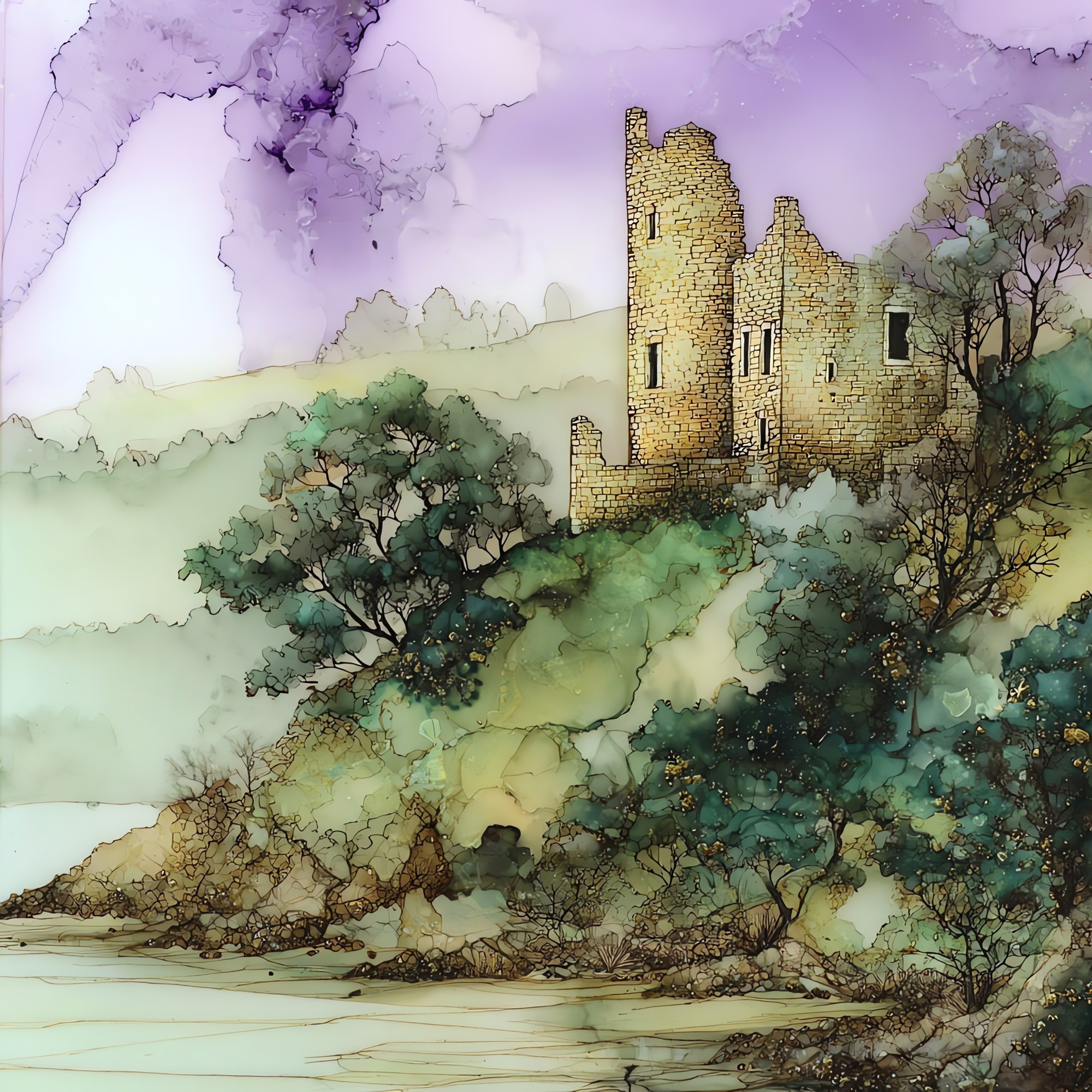
Dundrum Castle
— — a ring of stone above the bay.
Not only on a wall.
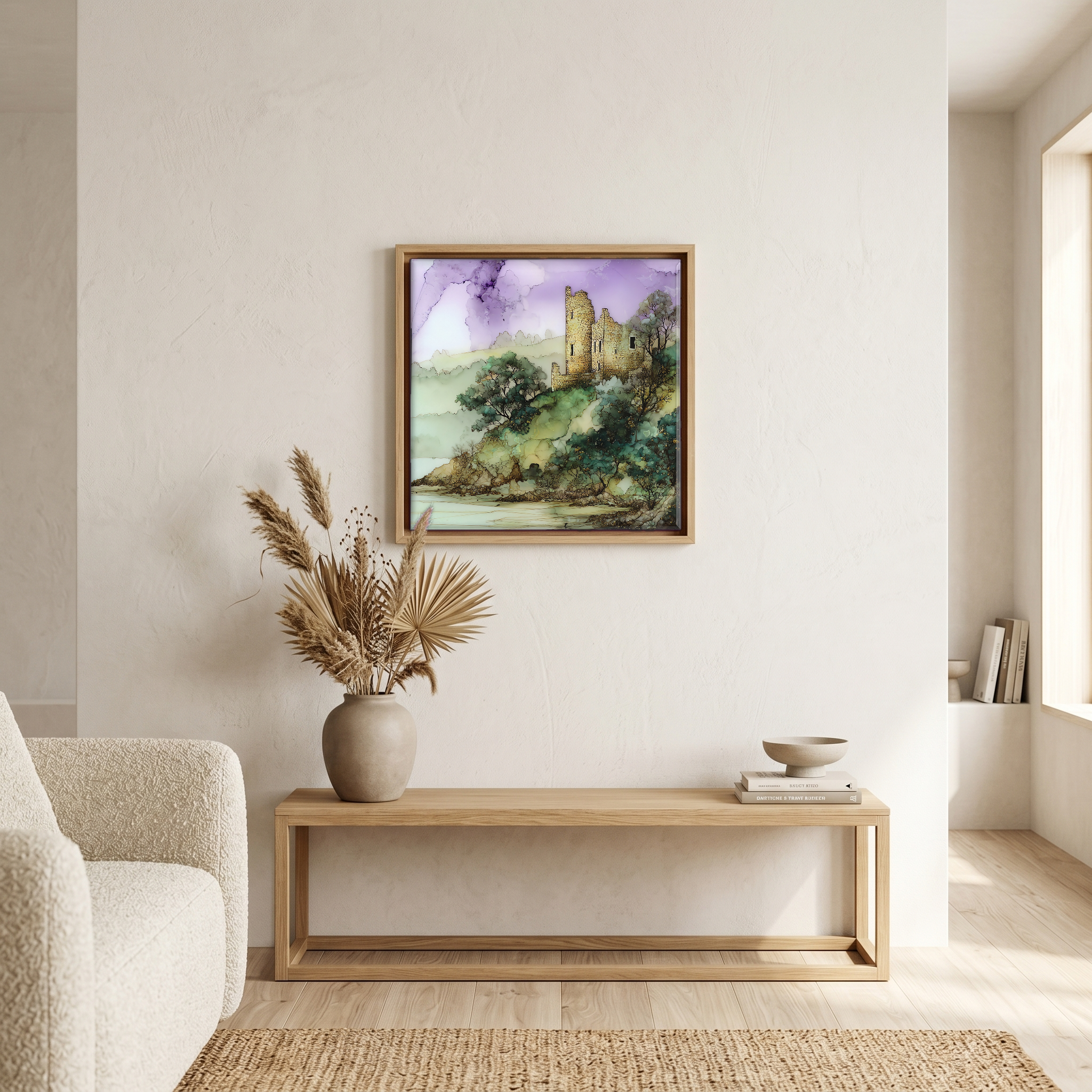
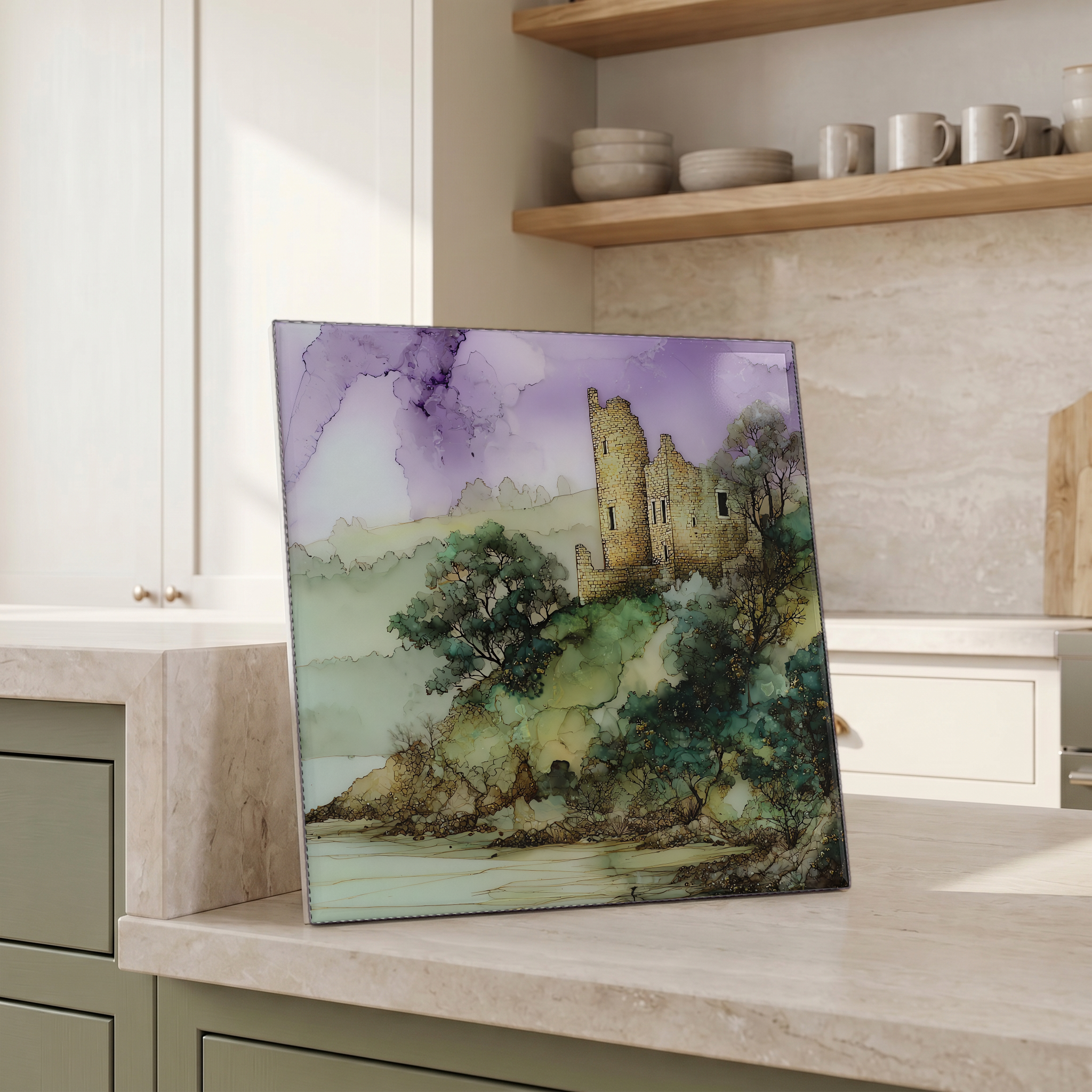
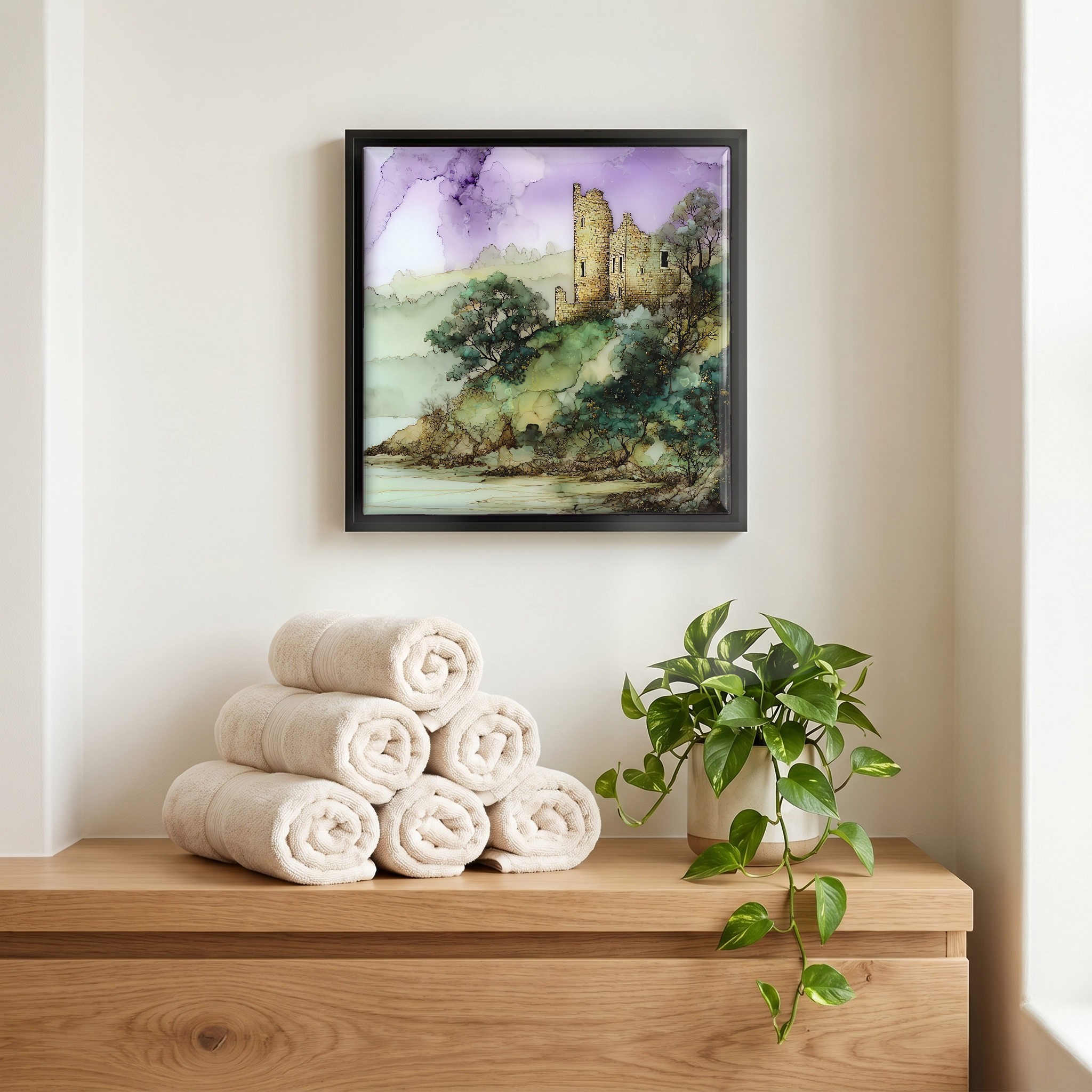
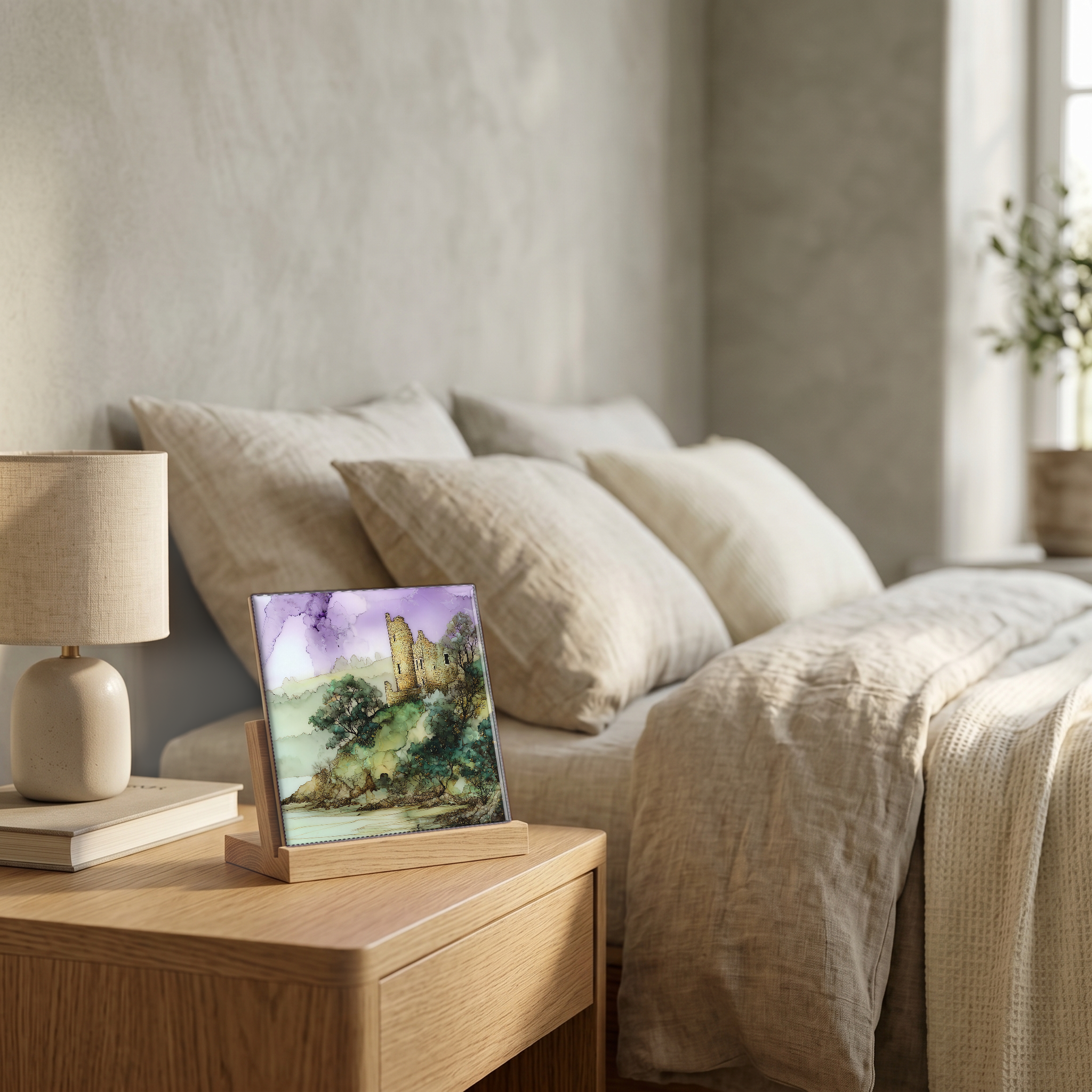
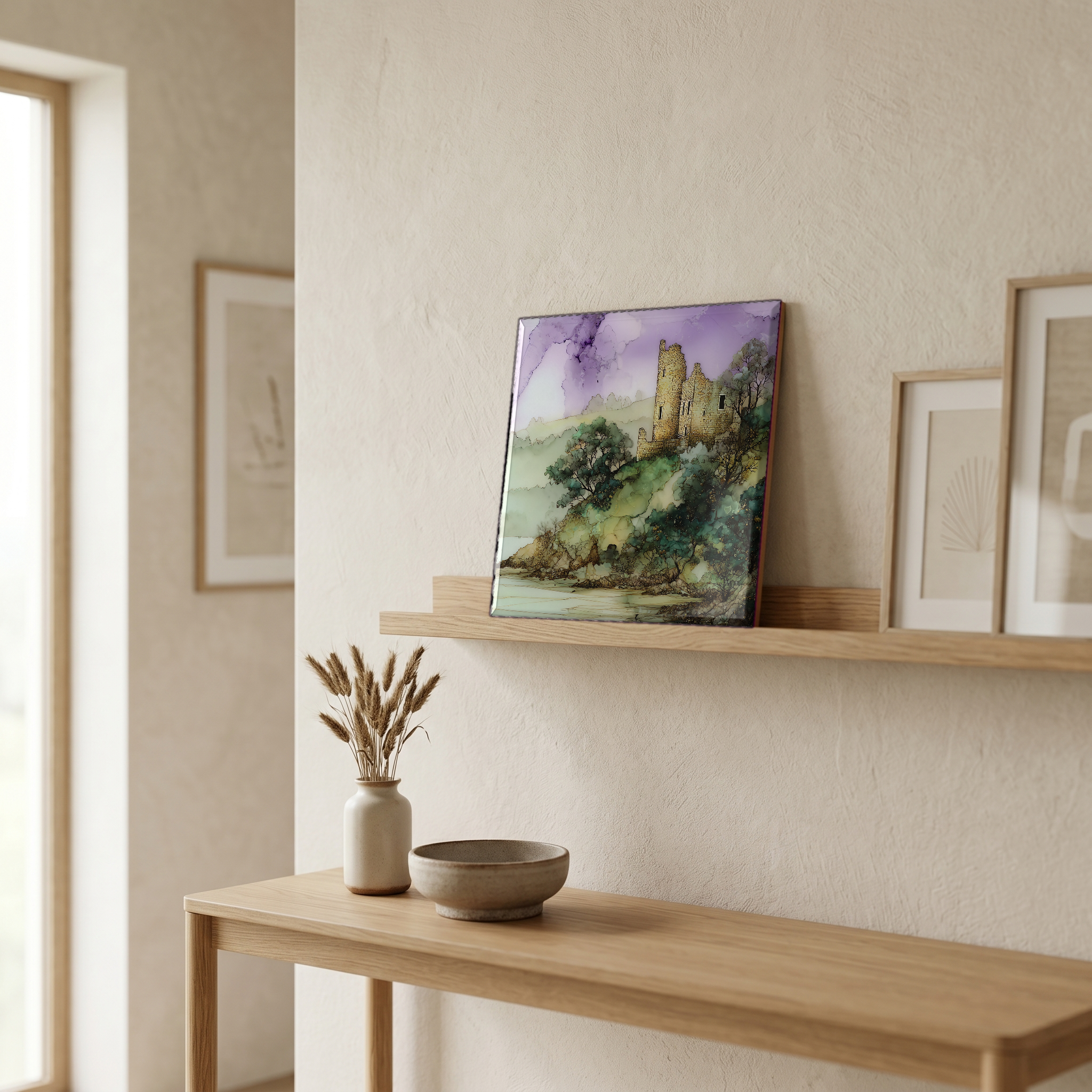
“A Norman keep on a rocky hilltop above Dundrum village, four miles north of Newcastle on the County Down coast. John de Courcy raised the first defences in the late twelfth century to command the way into Lecale; the great round donjon came up a generation later. The view from the top runs south across Dundrum Bay to the Mourne Mountains, with the long dunes of Murlough between. Parliamentarian soldiers pulled the place down in 1652. The wind off the Irish Sea has been moving through the empty windows ever since. The round donjon still holds its line against the bay.
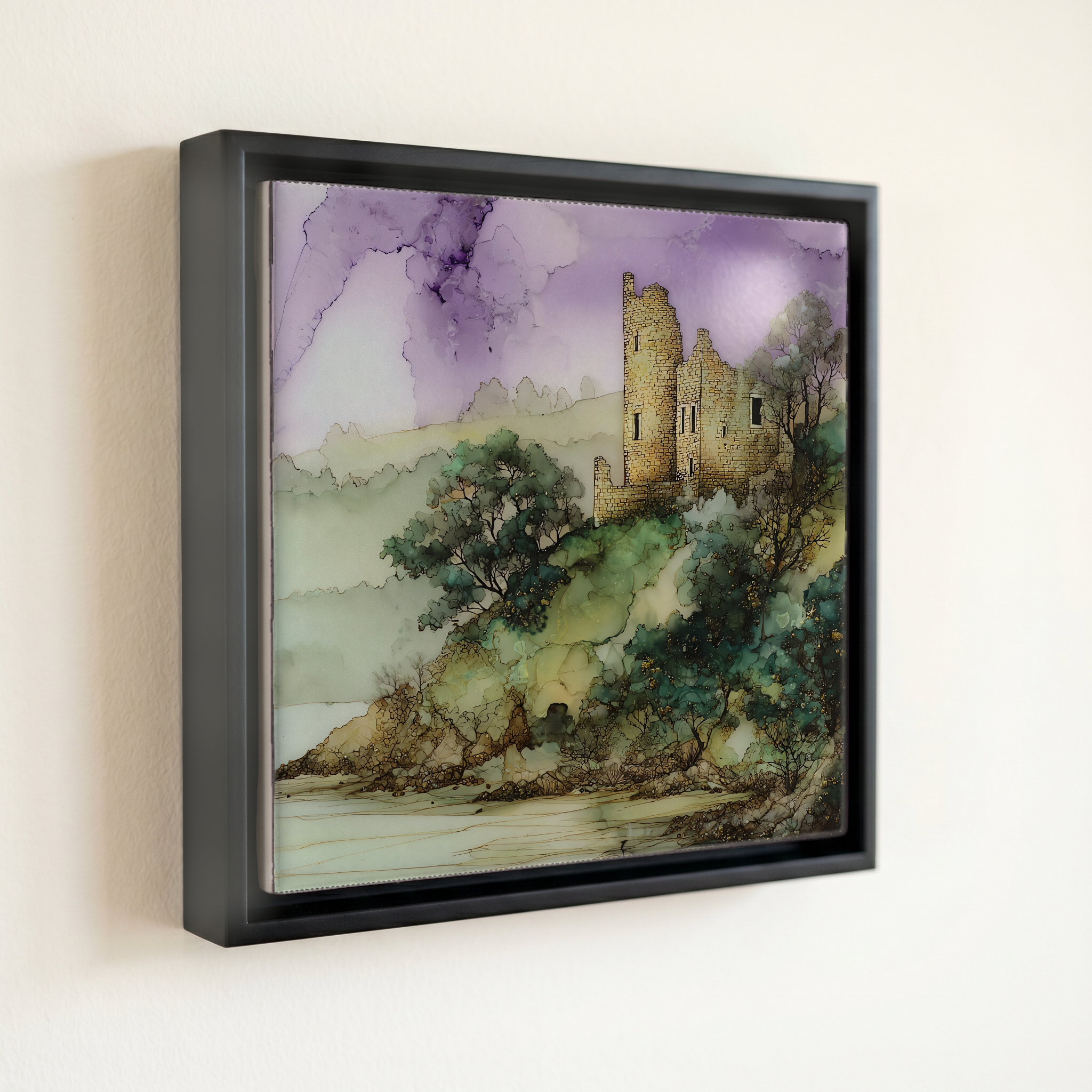
Dundrum Castle, on ceramic.
Each tile is finished by hand in our Knoxville studio. Artwork is slowly infused into the ceramic surface under high heat and pressure, and rests beneath a thin glossy finish. The colour lives in the surface, not on top of it.
Pick any four 4-inch tiles — National Parks you've been to, a Smokies set, the four seasons of one place. $ for a set of , cork-backed, ready to live on the table.
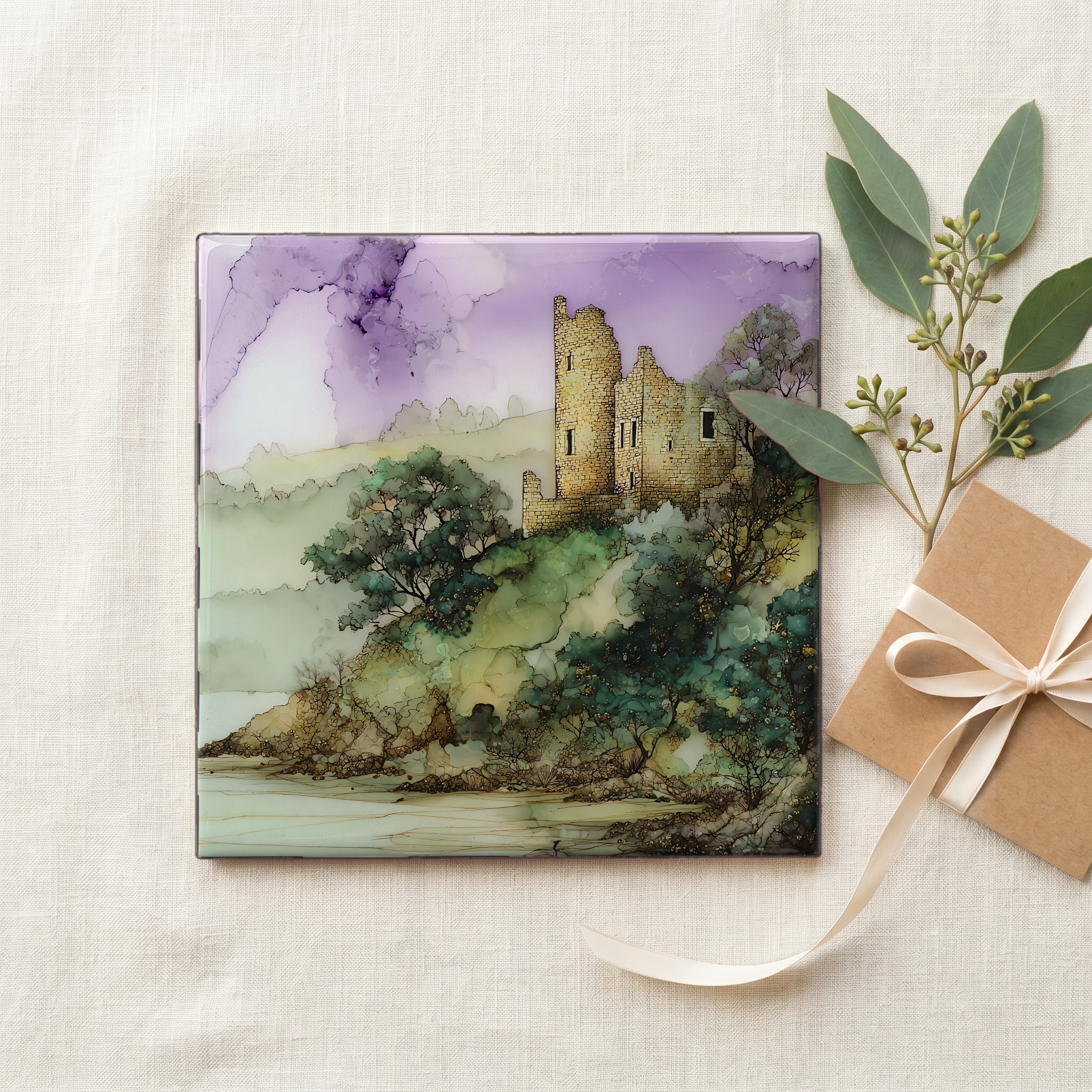
Each tile ships in a kraft box, tied with cream ribbon, with a handwritten note from the studio if you'd like to add one.
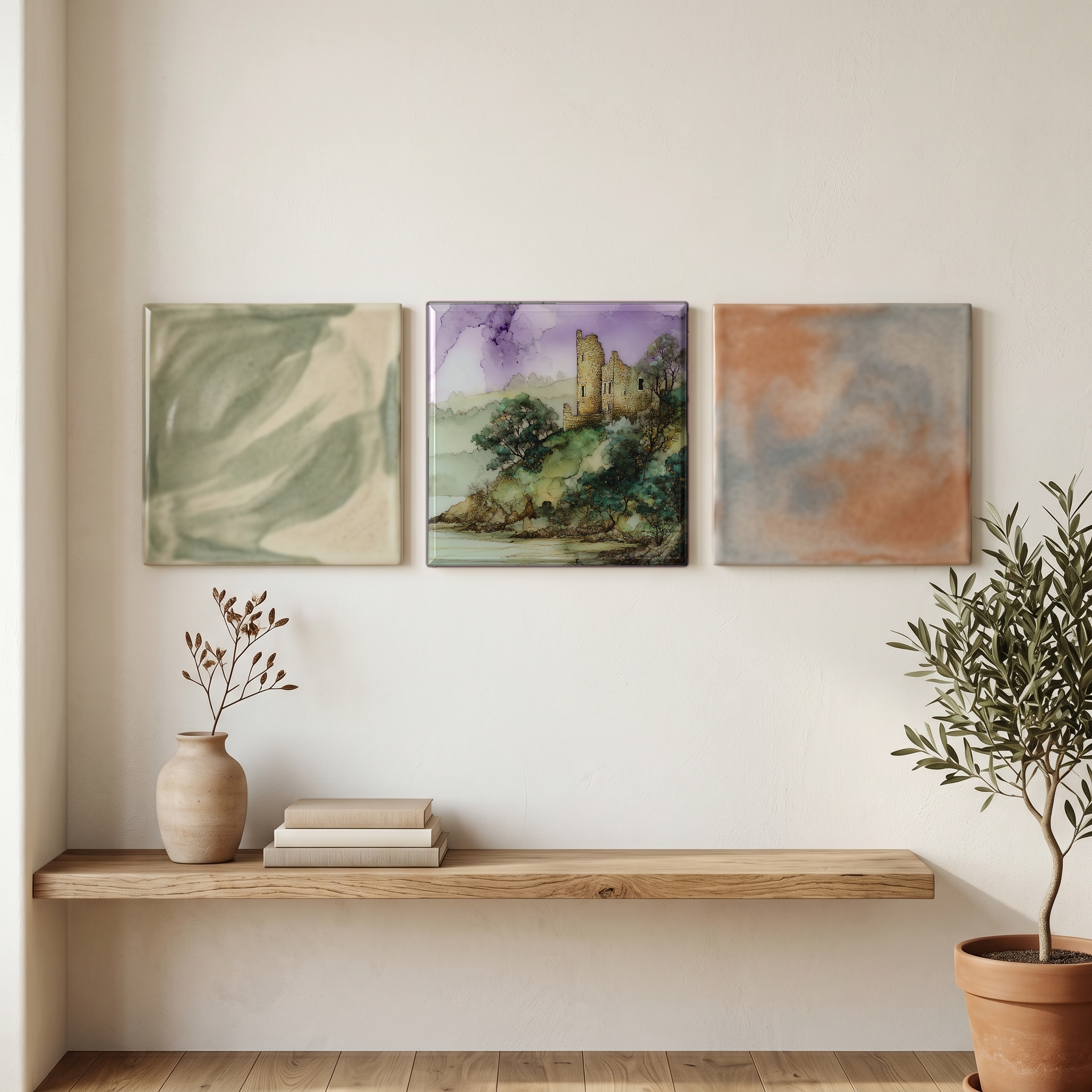
Three or five different vistas, hung together — a chapter of places you've been, or want to go.
The place, in three passes.
Dundrum Castle stands on a rocky hill above Dundrum village in County Down, four miles north of Newcastle on the A2 coast road. The village sits at the head of an inner inlet of Dundrum Bay, which opens onto the Irish Sea between the Mourne Mountains to the south and the dunes of Murlough National Nature Reserve to the east. John de Courcy, the Anglo-Norman knight who took Ulster after his invasion of January 1177, chose the hilltop to command the western approach to the Lecale peninsula; Slieve Croob rises inland to the west. The site is now a State Care Historic Monument managed by Northern Ireland's Historic Environment Division within the Department for Communities.
The dominant feature is a great circular keep that crowns the upper ward and reads from miles away across the bay. Most historians attribute the stone donjon to Hugh de Lacy, who held the earldom of Ulster between 1227 and 1243 and is thought to have brought master masons from the Welsh Marches; the curtain wall around the upper ward went up earlier, in the first years of the thirteenth century. A twin-towered gatehouse, inserted after de Lacy's time, has the same broad shoulders as the one at Pembroke Castle. In 1652 a Parliamentarian garrison pulled the place down on its way out, and the round keep has been weathering toward the bay ever since.
The site is open without charge; visitors walk up a short path from the village to the hilltop, where the donjon, the curtain wall, and the footings of a seventeenth-century Blundell mansion sit in their own quiet. The seventh Marquess of Downshire placed the castle in State Care in 1954, and it is now maintained by Northern Ireland's Historic Environment Division. Time Team filmed an excavation on the site in 2013. Below the hill, the village of about 1,500 people runs along the A2 between Belfast and Newcastle; the long dune system of Murlough National Nature Reserve, designated Ireland's first in 1967, begins nearby.