Wender·Vista
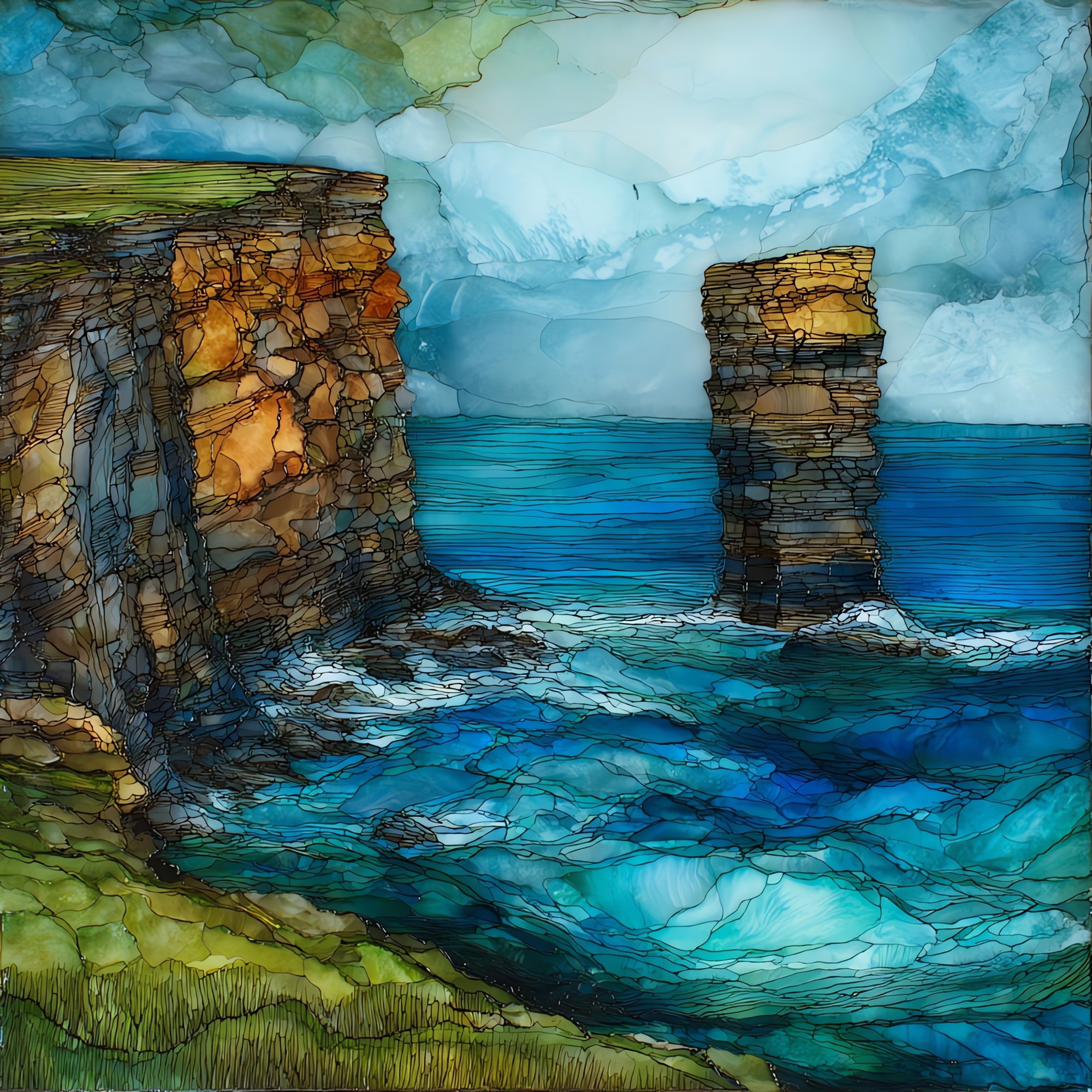
Downpatrick Head
shown on ceramic, 12-inch tileIreland
on the cliffs of north Mayo, above the Atlantic

Downpatrick Head

what the storm of 1393 left behind.

Where it lives

Not only on a wall.

A small tile on the nightstand catching the morning. A larger one above the fire. Yours, wherever you spend the slow hours.
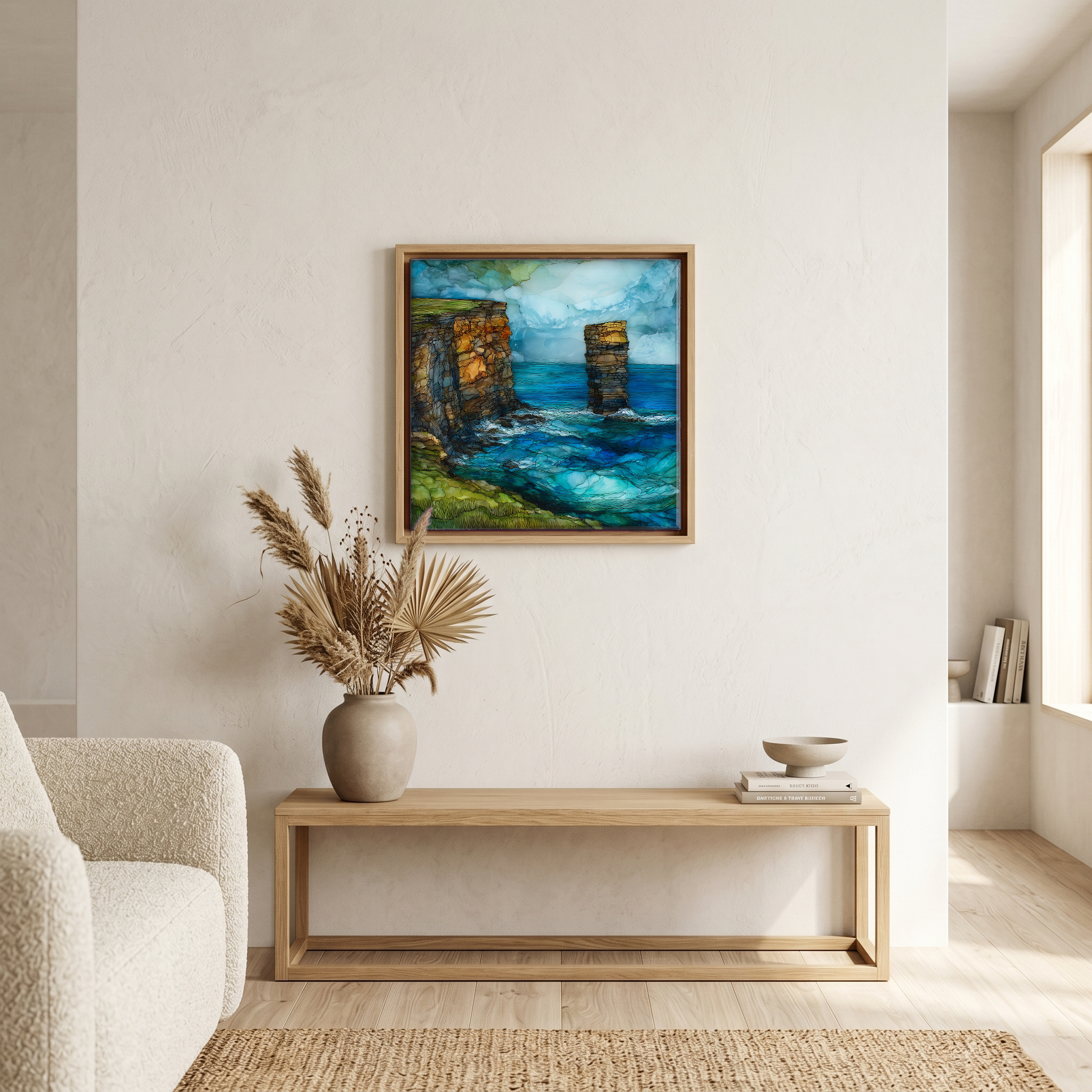
Above the bench, in a warm oak surround.
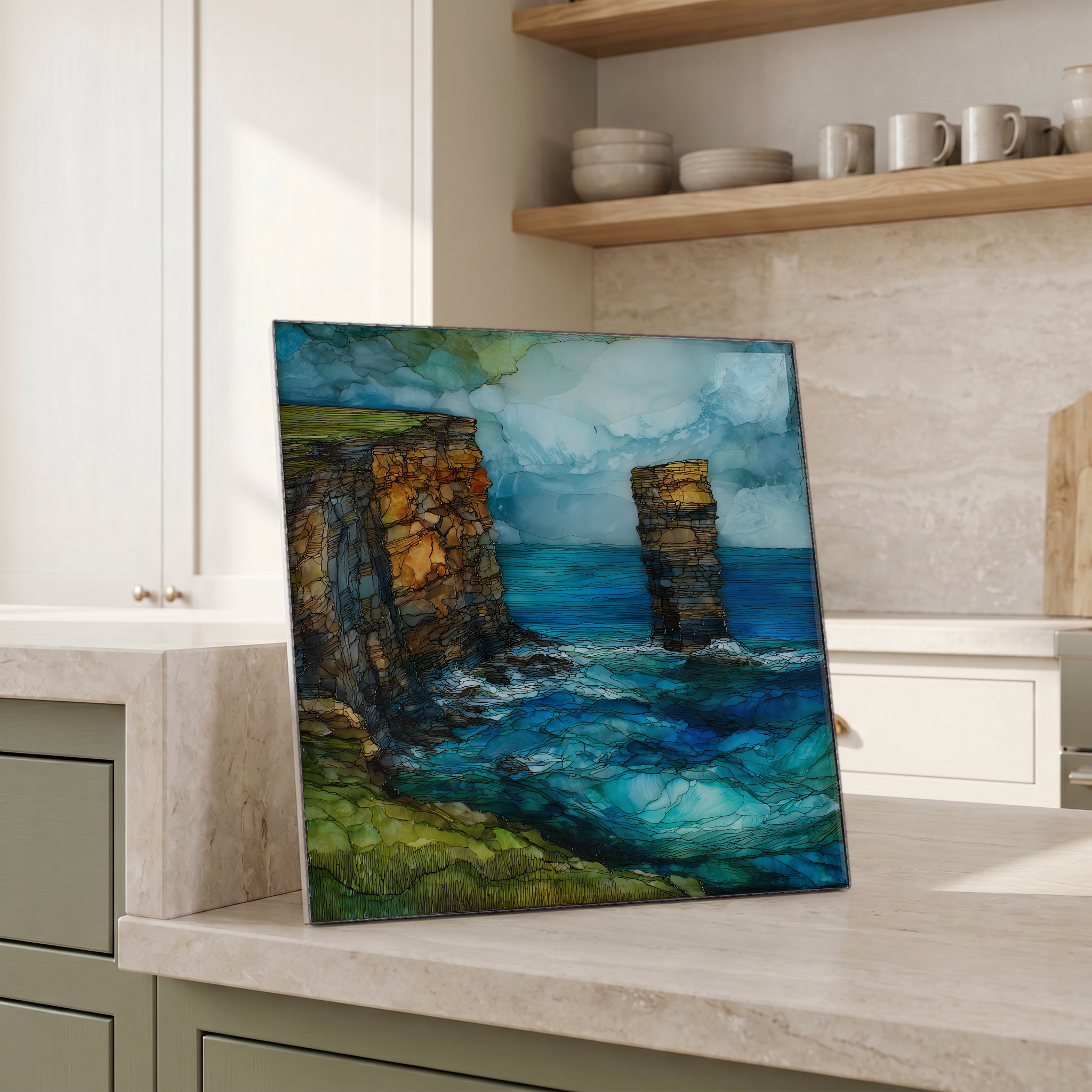
Beside the kettle, propped on the counter.
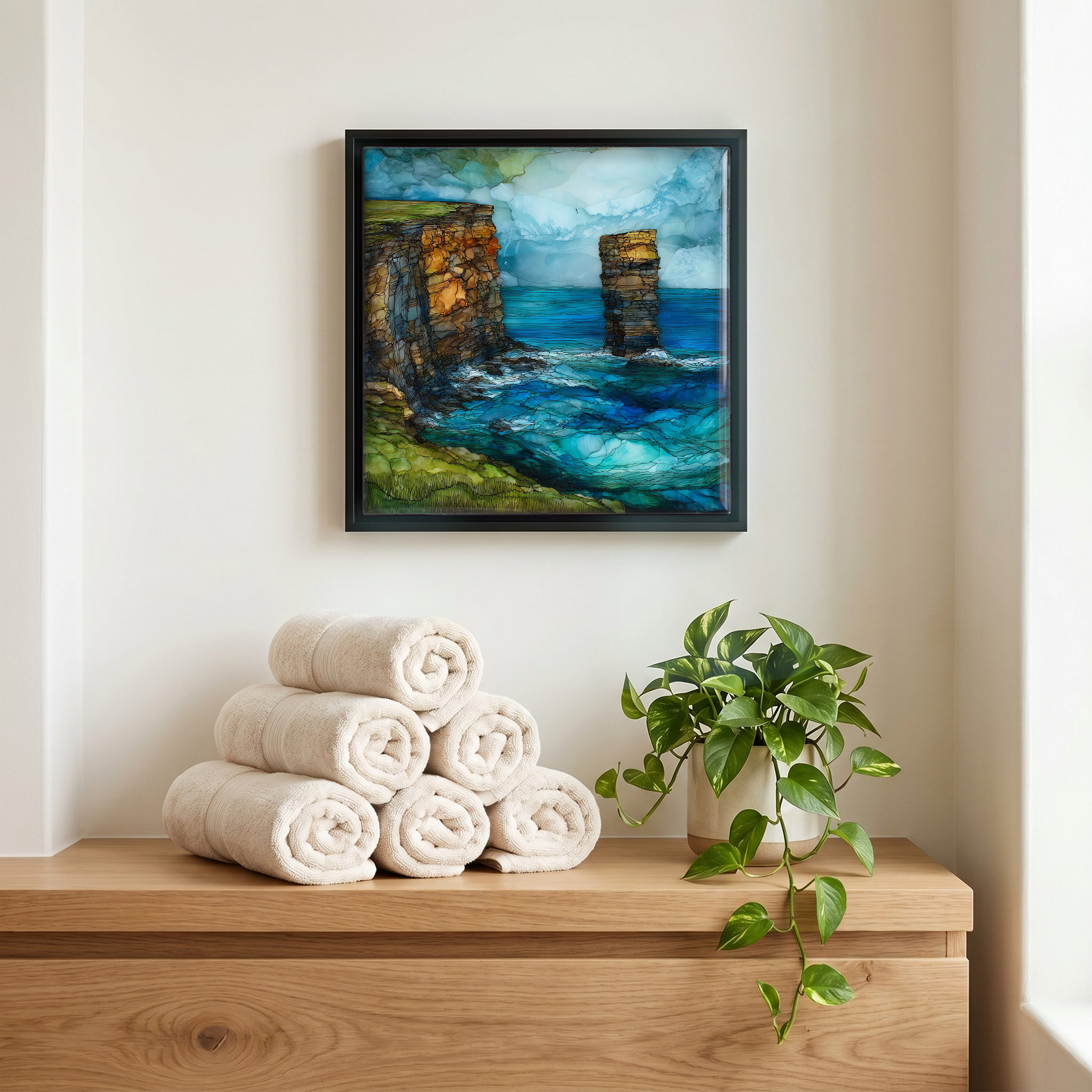
Above the linens, in a slim black surround.
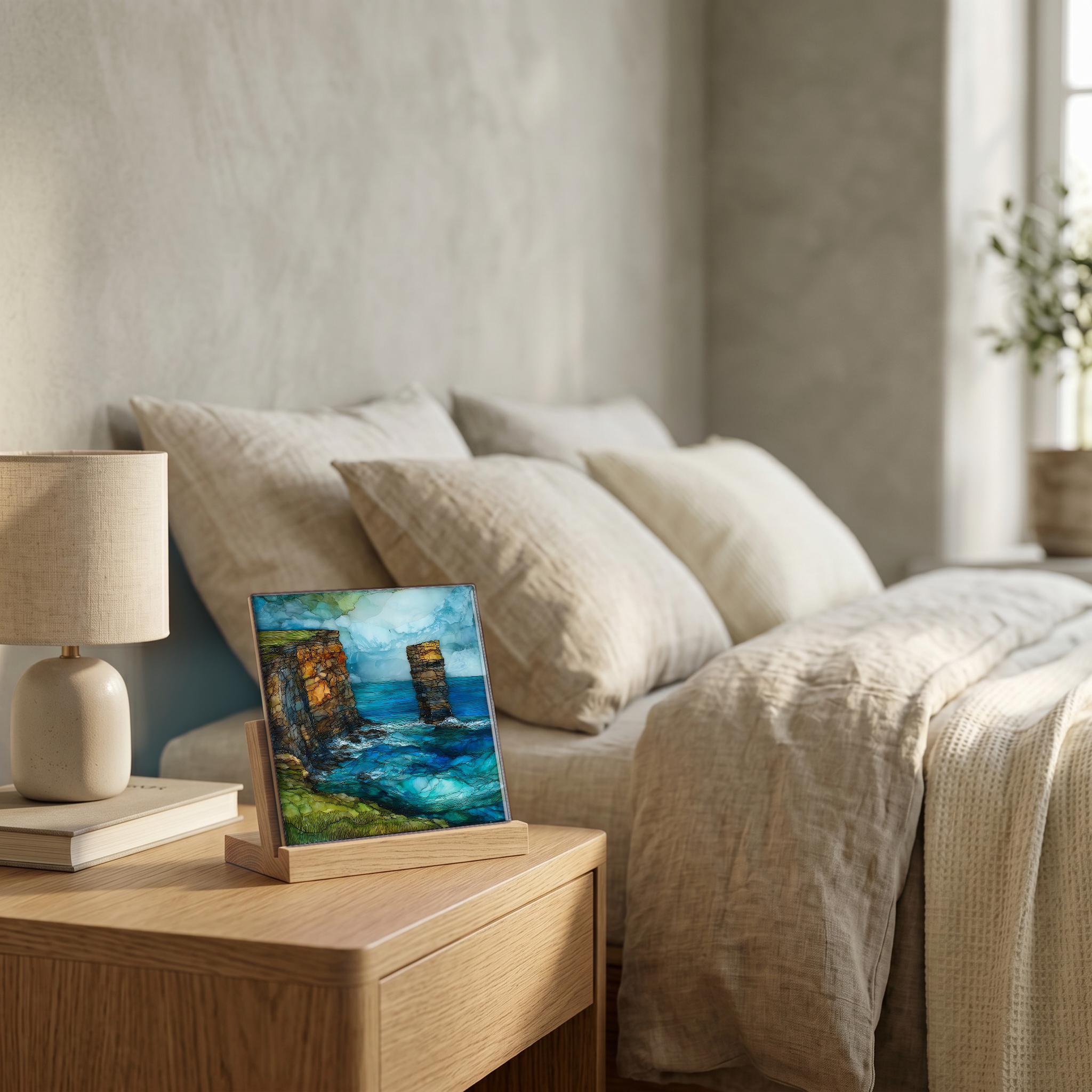
On the nightstand, on a light oak stand.
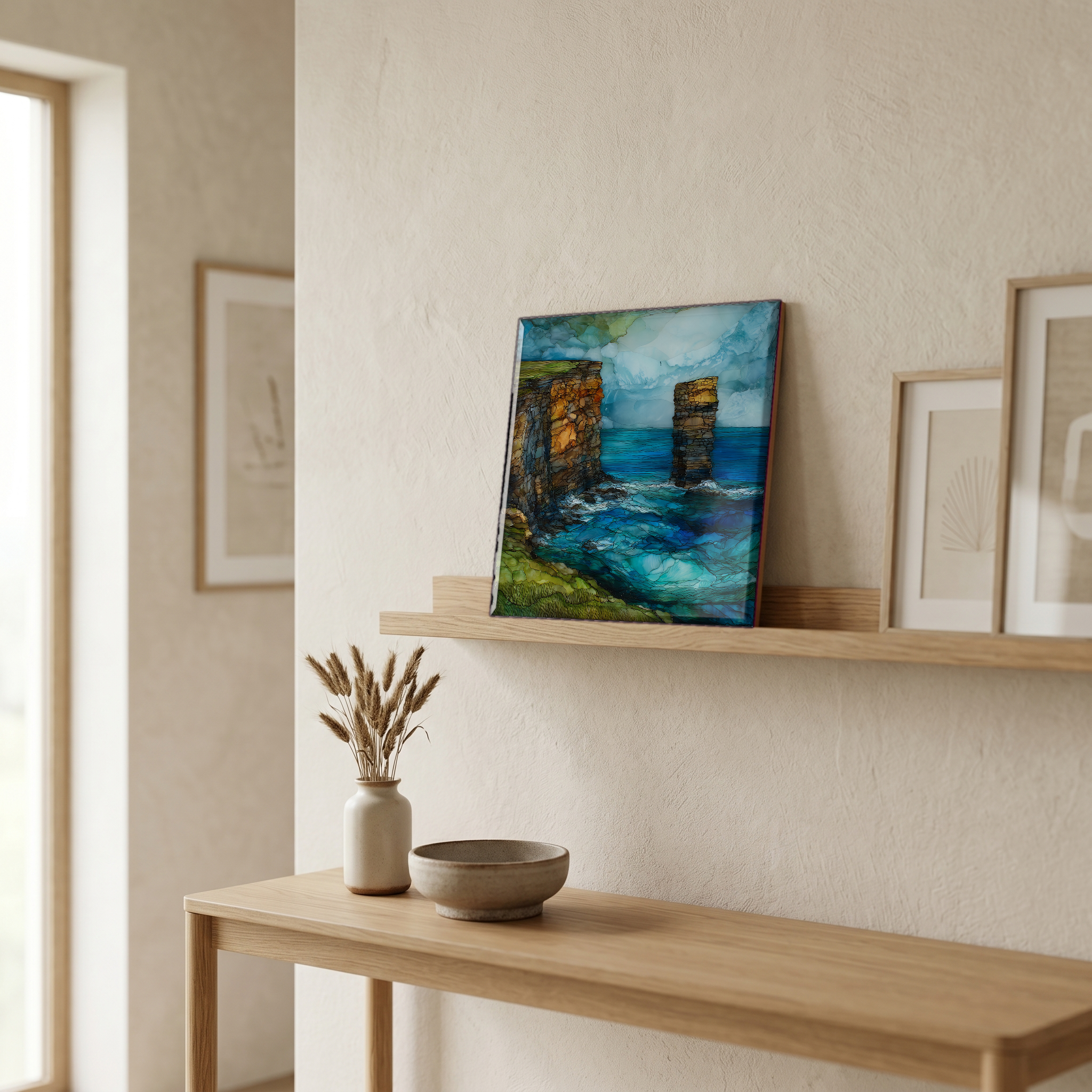
On a picture ledge, where the light comes in.
a note from the studio

The headland sits on the north Mayo coast, just north of the village of Ballycastle, where the cliffs end above the Atlantic. Just offshore stands Dún Briste, the Broken Fort, a sea stack the storm of 1393 cut loose from the headland. The layers in its sandstone run in clear horizontal bands you can read from the path. A small church ruin, a holy well, and a stone cross mark the saint's name here. The blowhole below the cliff sounds when the swell is running. Most days the wind moves the grass faster than anything else.
from the studio
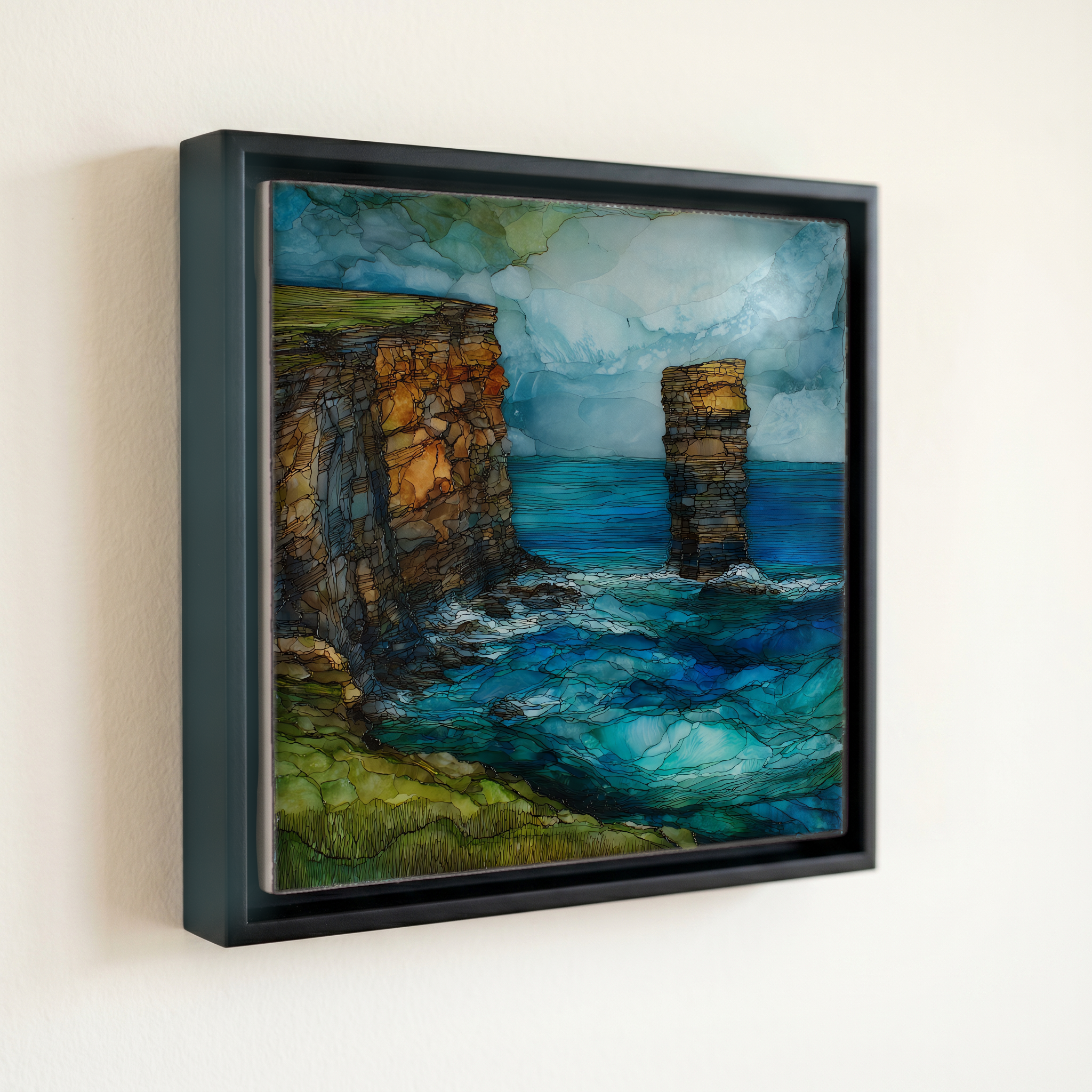
shown in a slim black floating frame · 6 × 6 in
— bring it home

Downpatrick Head, on ceramic.

Each tile is finished by hand in our Knoxville studio. Artwork is slowly infused into the ceramic surface under high heat and pressure, and rests beneath a thin glossy finish. The colour lives in the surface, not on top of it.

What kind of piece?
One tile — square or rectangle.
How big?
the popular one — counter, shelf, nightstand
6 × 6 in · 15 cm · 1.6 lb
Surface finish
A clear glossy finish — the artwork reads as if under resin. Ideal for show-pieces and framed wall art.
How it sits
A hidden cleat — sits ¼″ proud of the wall.
$58
Hand-finished and shipped from our studio at the foot of the Smokies. On your wall in about ten days.
size
6 × 6 in
15 cm
weighs
1.6 lb
solid in the hand
surface
ceramic, hand-finished
art rests beneath a thin glossy finish
from
Knoxville, TN
our family studio, at the foot of the Smokies
— start a Coaster Set

Pick any four 4-inch tiles — National Parks you've been to, a Smokies set, the four seasons of one place. $ for a set of , cork-backed, ready to live on the table.
comes gift-ready
comes gift-ready

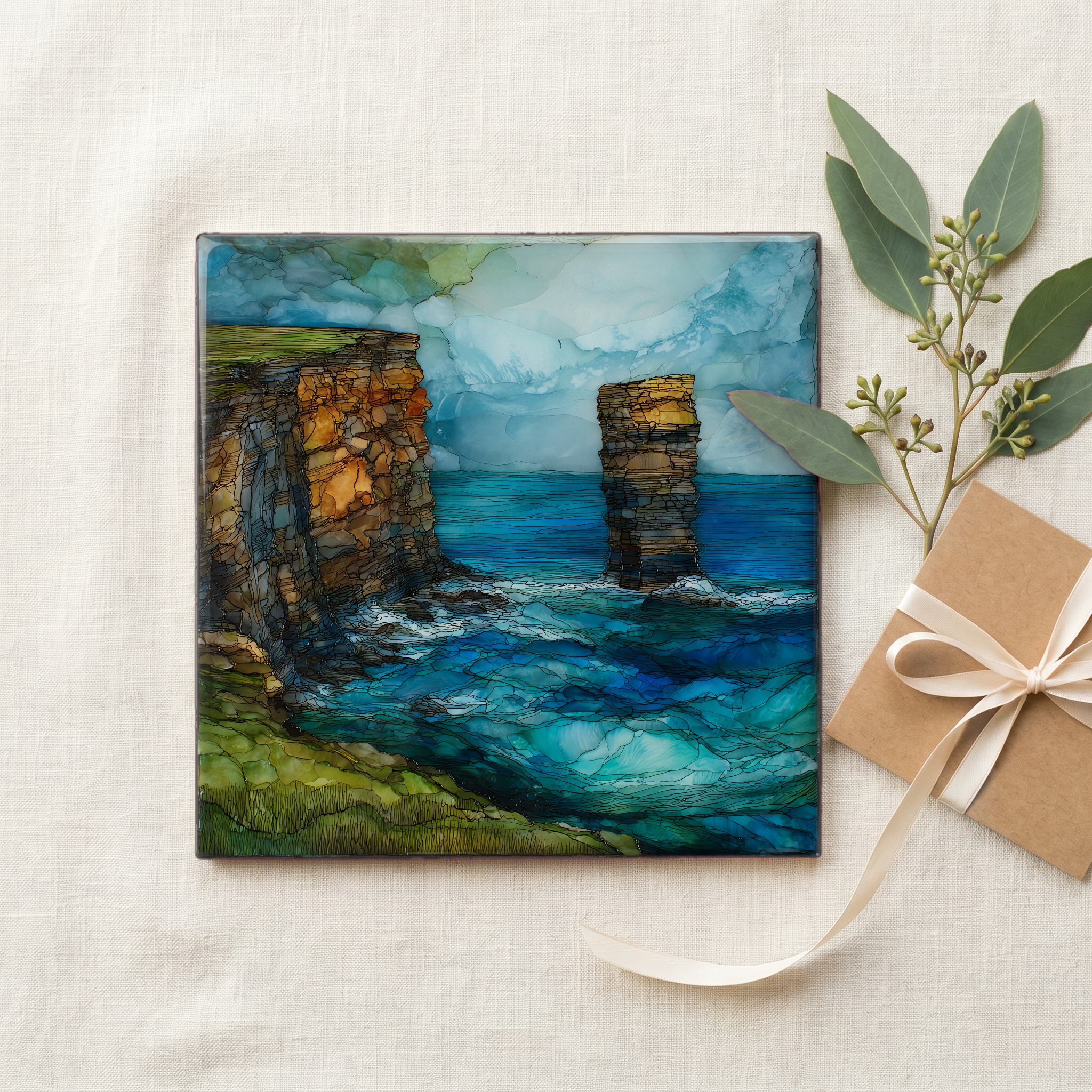
Each tile ships in a kraft box, tied with cream ribbon, with a handwritten note from the studio if you'd like to add one.
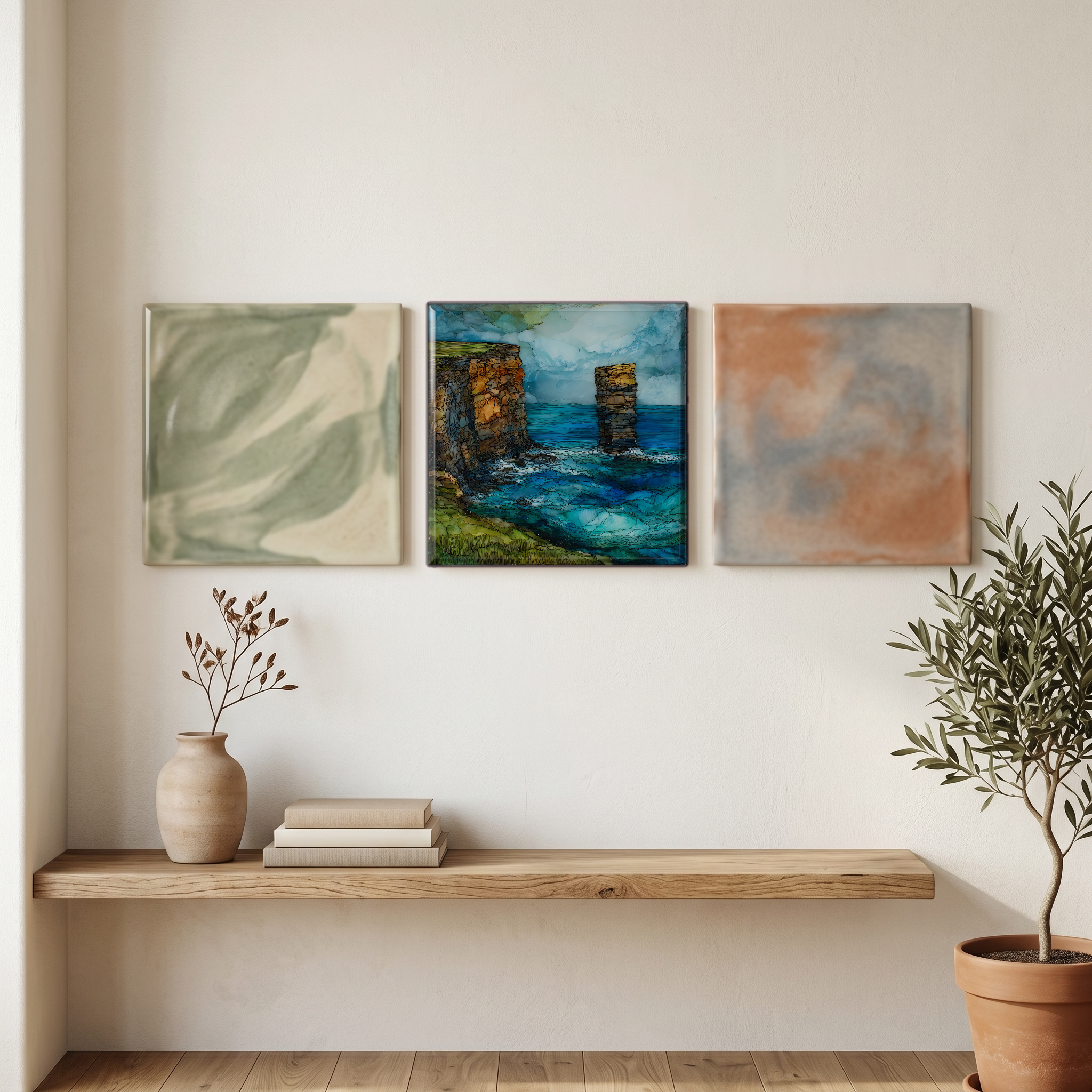
or build a grouping
or build a grouping

Three or five different vistas, hung together — a chapter of places you've been, or want to go.

about Downpatrick Head

The place, in three passes.

A little of what's known, in case you fall down the rabbit hole — or want to go see it yourself.
the place

Downpatrick Head sits on the north coast of County Mayo, roughly five kilometres north of the village of Ballycastle, on a sandstone headland that rises about forty metres above the Atlantic. The site is part of the Wild Atlantic Way, the 2,500-kilometre coastal route established by Fáilte Ireland in 2014. Just offshore stands Dún Briste, a sea stack about forty-five metres tall, separated from the mainland by an Atlantic storm in 1393 according to long tradition. The headland holds a small ruined church, a holy well known as Tobar Phádraig, a stone cross, and the outline of Éire 64, one of eighty-two coastal markers cut into the ground during the Second World War.

the stone

The stack and the headland are cut from Carboniferous sandstone laid down roughly 330 million years ago, when this part of Ireland sat under a shallow tropical sea. The horizontal banding visible in Dún Briste is the sequence of those marine deposits, identical to the layers in the cliff opposite. The stack stands a few metres higher than the headland it once belonged to, with erosion continuing along the same joints that produced the break in 1393. Earlier names for the stack survive in folklore; local tradition links the original break to a struggle between Saint Patrick and the pagan figure Crom Dubh, with the saint cracking the headland to leave the demon stranded on the rock.

the visit

Access is free and unrestricted, reached by a signposted road from Ballycastle and a short walk from the car park to the cliff edge. The site holds three small landmarks: the ruin of Cill Phádraig, the holy well Tobar Phádraig, and a stone cross marking the traditional foundation by Saint Patrick in the fifth century. On the last Sunday in July, Garland Sunday, known locally as Domhnach Chrom Dubh, draws a small pilgrimage in continuation of a pre-Christian harvest tradition. Wind is the main hazard; the cliff edge is unfenced. The blowhole at Poll na Seantine sounds when the swell is running.

where
Ireland · County Mayo, Connacht
position
54.3230° N · 9.3510° W
the neighborhood

What's nearby.

A handful of named places within an hour's walk or short drive. Some we've already painted; some we will.
5 km S
Ballycastle
village
8 km W
Céide Fields
Neolithic site
6 km E
Lacken Strand
beach
18 km E
Killala
harbour town
N
Downpatrick Head
Ballycastle
Céide Fields
Lacken Strand
Killala
common questions

What people ask.

A few questions we get about Downpatrick Head — and about bringing the piece home.
about the place

Downpatrick Head is on the north coast of County Mayo, Ireland, about five kilometres north of the village of Ballycastle. It is a stop on the Wild Atlantic Way driving route. The headland faces the open Atlantic and rises about forty metres above the sea.

The sea stack is called Dún Briste, which is Irish for "the Broken Fort." It stands about forty-five metres tall, just offshore from the headland, and is the most photographed feature of the site. Local tradition dates its separation from the mainland to a storm in 1393.

Long tradition records that a large Atlantic storm broke the stack from the headland in 1393. The stack still shows the same horizontal bands of Carboniferous sandstone as the cliff opposite it, which is the geological evidence that the two were once continuous.

The headland is named for Saint Patrick. Tradition says he founded a church here in the fifth century. A ruined church called Cill Phádraig, a holy well called Tobar Phádraig, and a stone cross still mark the site, along with a small enclosed garden.

Éire 64 is one of eighty-two stone markers laid along the Irish coast during the Second World War, identifying neutral Irish territory to passing aircraft. The Downpatrick Head sign sits beside the cliff path and was restored to its original outline in 2013.

Yes. On the last Sunday in July a small local pilgrimage gathers at the site for Domhnach Chrom Dubh, a tradition that pre-dates the Christian dedication and was absorbed into the Christian calendar as Garland Sunday.

about the piece in your home

It works well as a gift for someone from the north Mayo coast, or for anyone who has walked the Wild Atlantic Way. Dún Briste is one of the recognisable images of Mayo. A Small or Medium with a handwritten note from the studio carries well.

The piece suits Coastal-modern, Celtic Traditional, and slightly Maximalist interiors that lean toward stone, wool, and weathered wood. The blue-greys and ochres in the artwork sit comfortably against white plaster, oak, or a deep navy wall. It also reads well in a hallway against linen.

Above a standard three-seat sofa, a single Large reads at the right scale. For a wider wall a four-tile Mural or a Triptych extends the horizon line. Above a console table, a Medium or a pair of Smalls hold the line of the furniture.

Yes. For a backsplash, a shower, or a humid space, order the Dura Satin or Matte finish rather than Glossy. The colour is slowly infused into the ceramic surface under high heat and pressure, so it does not lift or fade in normal household conditions.

A microfibre cloth and warm water. No abrasives, no solvents, no scouring pads. For everyday dust a dry cloth is enough. The thin glossy finish wipes clean and the surface holds its colour over time.

Yes. The Downpatrick Head piece was painted in the WenderVista visual language by Reid Wender, the curator of the line. The studio does not license artwork from third parties; every WenderVista tile is original work made in the Wender Studios family.

if this one stayed with you

A few you might also love.

Hand-picked by the eye that found Sorapis. Same air, same kind of quiet.