Wender·Vista
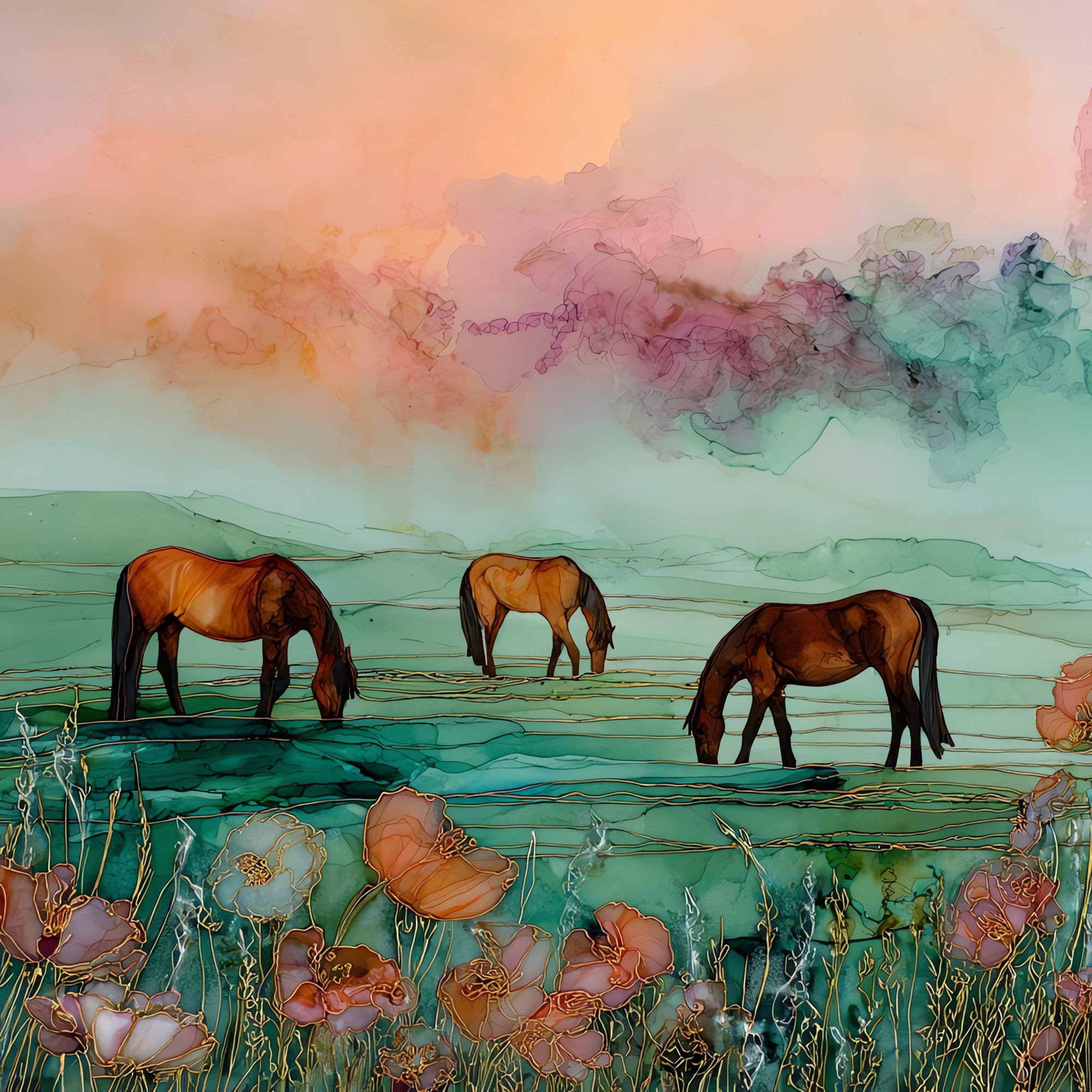
Curragh of Kildare
shown on ceramic, 12-inch tileIreland
on the Kildare plain, southwest of Dublin

Curragh of Kildare

— a country wide enough for the wind.

Where it lives

Not only on a wall.

A small tile on the nightstand catching the morning. A larger one above the fire. Yours, wherever you spend the slow hours.
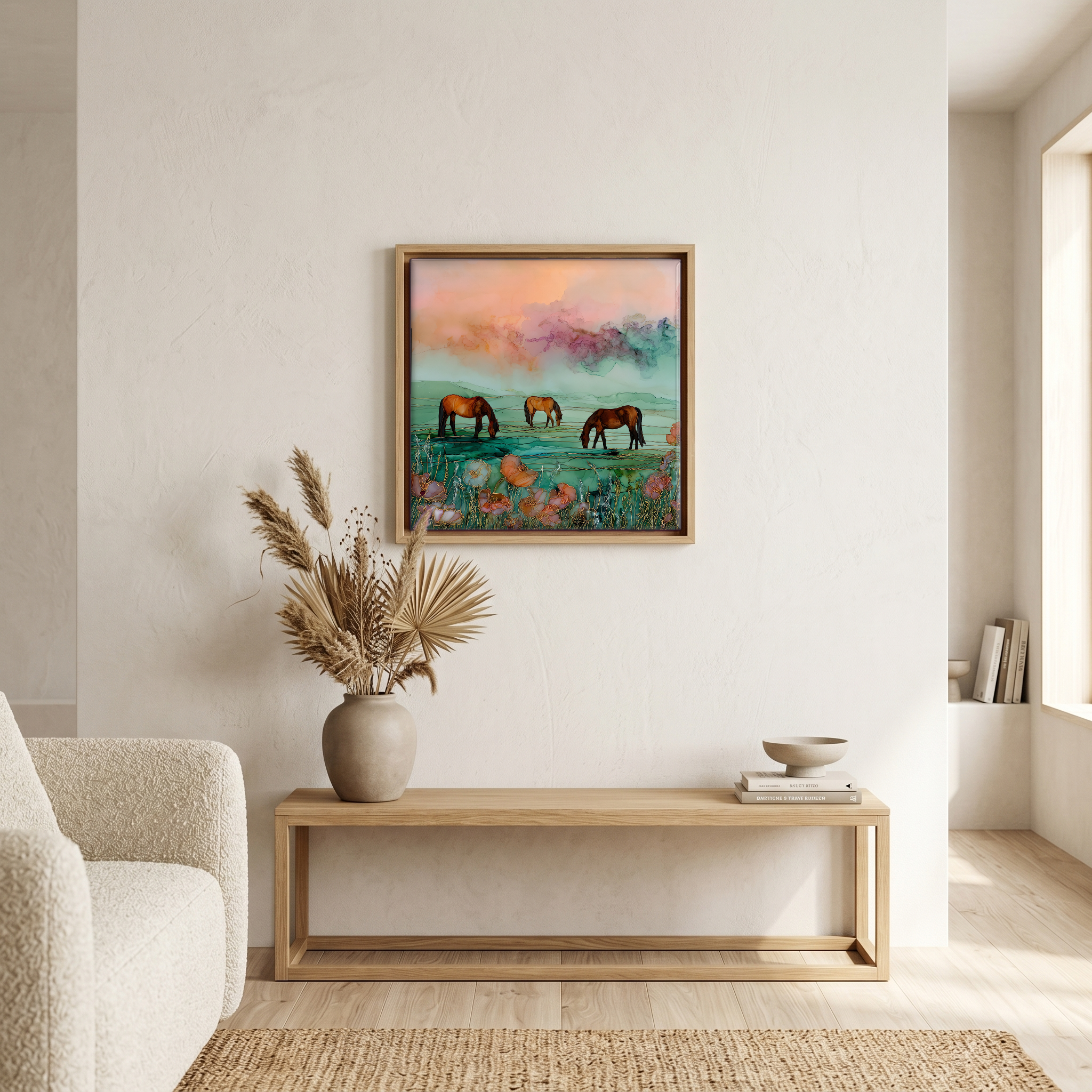
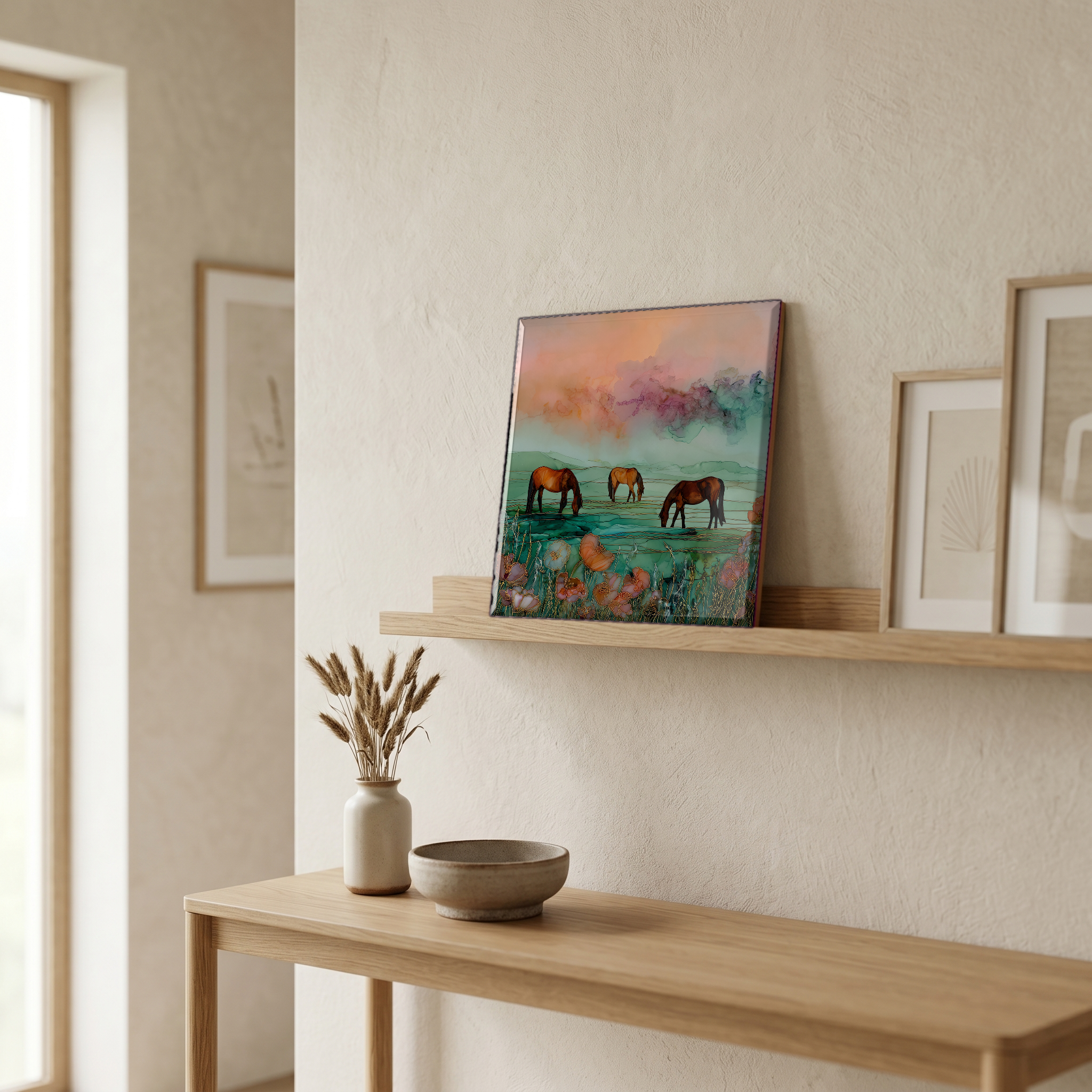
Above the bench, in a warm oak surround.
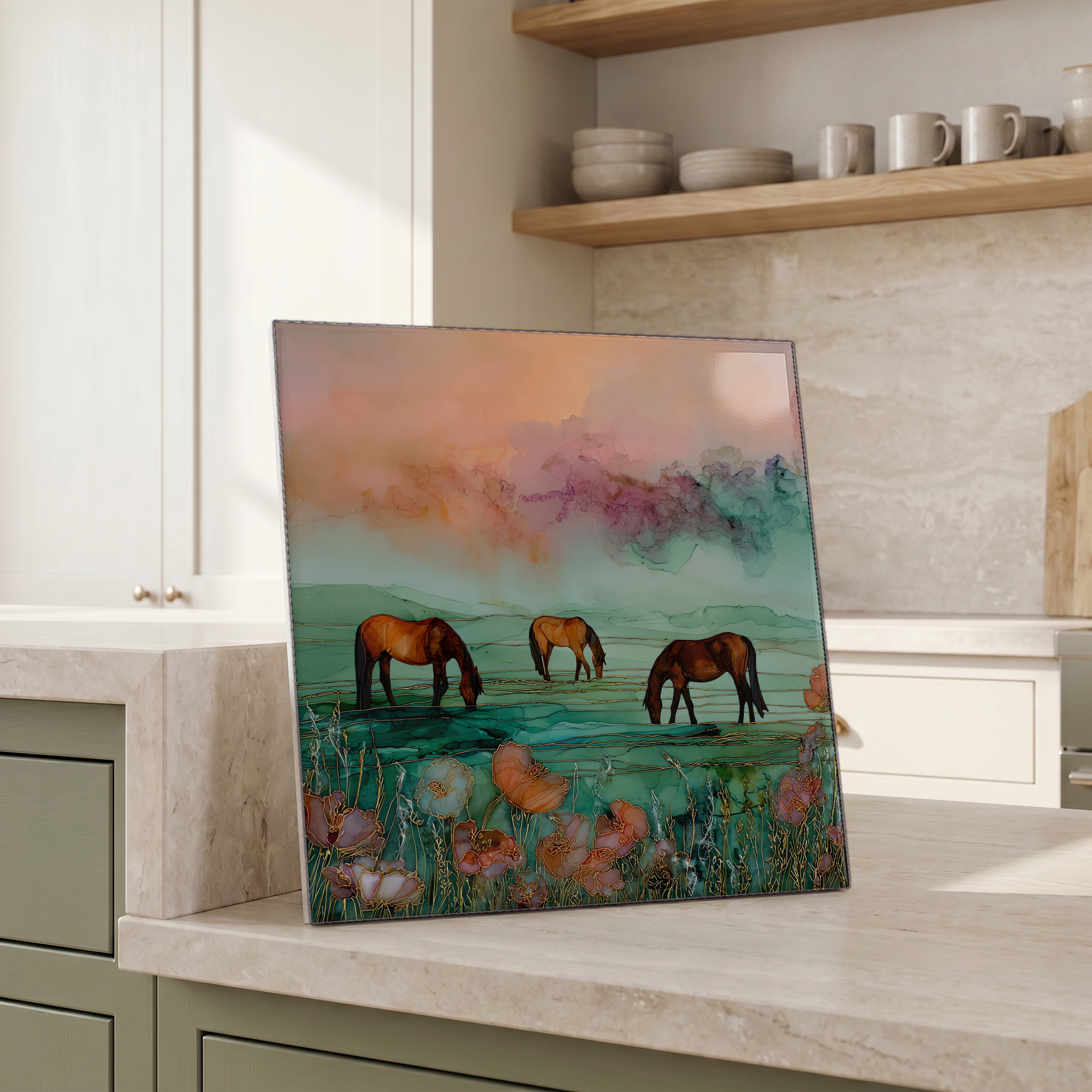
Beside the kettle, propped on the counter.
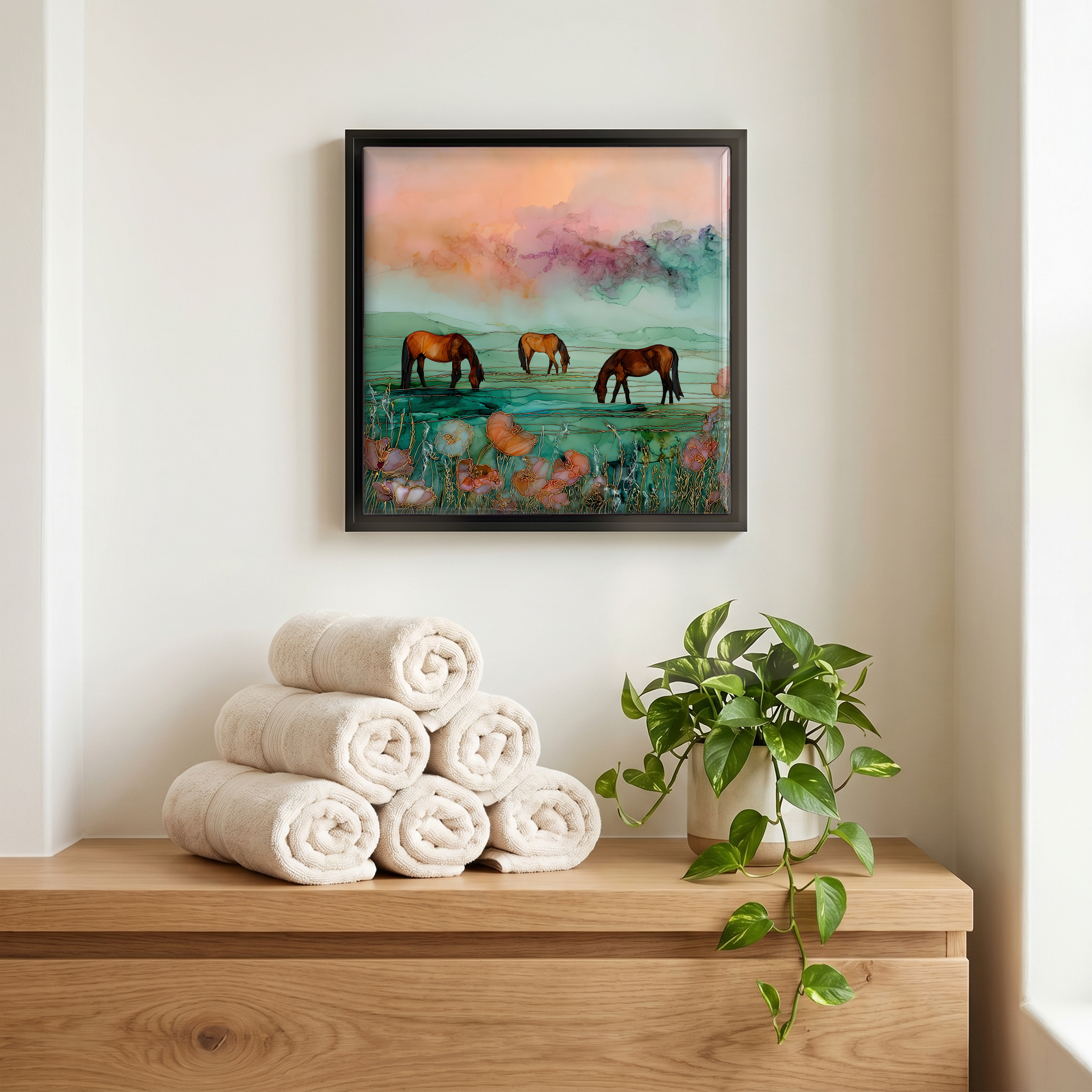
Above the linens, in a slim black surround.
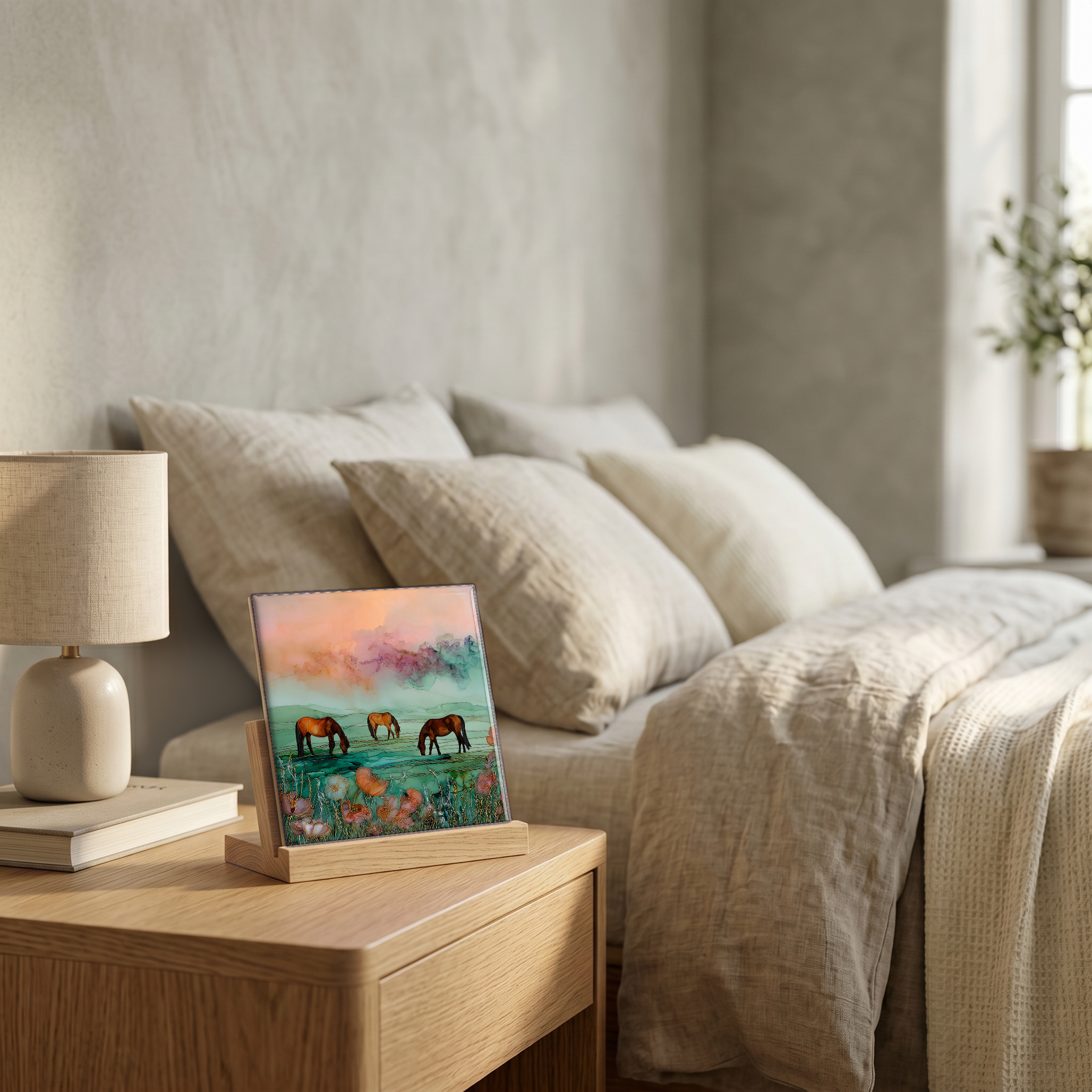
On the nightstand, on a light oak stand.
On a picture ledge, where the light comes in.
a note from the studio

The great grass plain of County Kildare, west of Dublin. Five thousand acres of treeless common, kept open by horses and sheep since before anyone wrote it down. The Curragh Racecourse sits at the eastern edge; the rest is gallops and old roads. There is a folk song that gives the place its other life, sung by Christy Moore and Andy Irvine, in a register slow enough to match the country. The wind here has nothing to break it. On a grey morning, hoofbeats carry before the horses come into sight.
from the studio
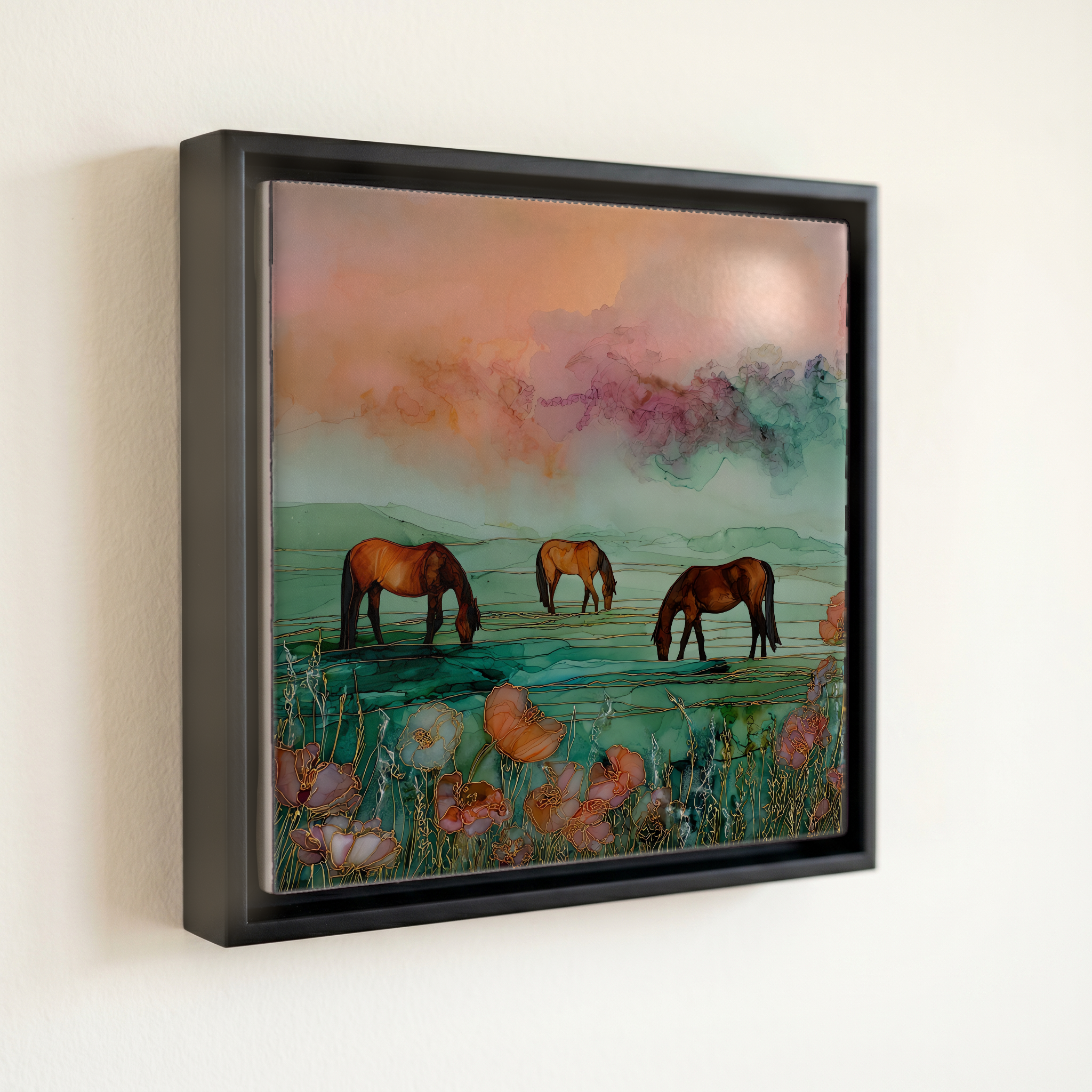
shown in a slim black floating frame · 6 × 6 in
— bring it home

Curragh of Kildare, on ceramic.

Each tile is finished by hand in our Knoxville studio. Artwork is slowly infused into the ceramic surface under high heat and pressure, and rests beneath a thin glossy finish. The colour lives in the surface, not on top of it.

What kind of piece?
One tile — square or rectangle.
How big?
the popular one — counter, shelf, nightstand
6 × 6 in · 15 cm · 1.6 lb
Surface finish
A clear glossy finish — the artwork reads as if under resin. Ideal for show-pieces and framed wall art.
How it sits
A hidden cleat — sits ¼″ proud of the wall.
$58
Hand-finished and shipped from our studio at the foot of the Smokies. On your wall in about ten days.
size
6 × 6 in
15 cm
weighs
1.6 lb
solid in the hand
surface
ceramic, hand-finished
art rests beneath a thin glossy finish
from
Knoxville, TN
our family studio, at the foot of the Smokies
— start a Coaster Set

Pick any four 4-inch tiles — National Parks you've been to, a Smokies set, the four seasons of one place. $ for a set of , cork-backed, ready to live on the table.
comes gift-ready
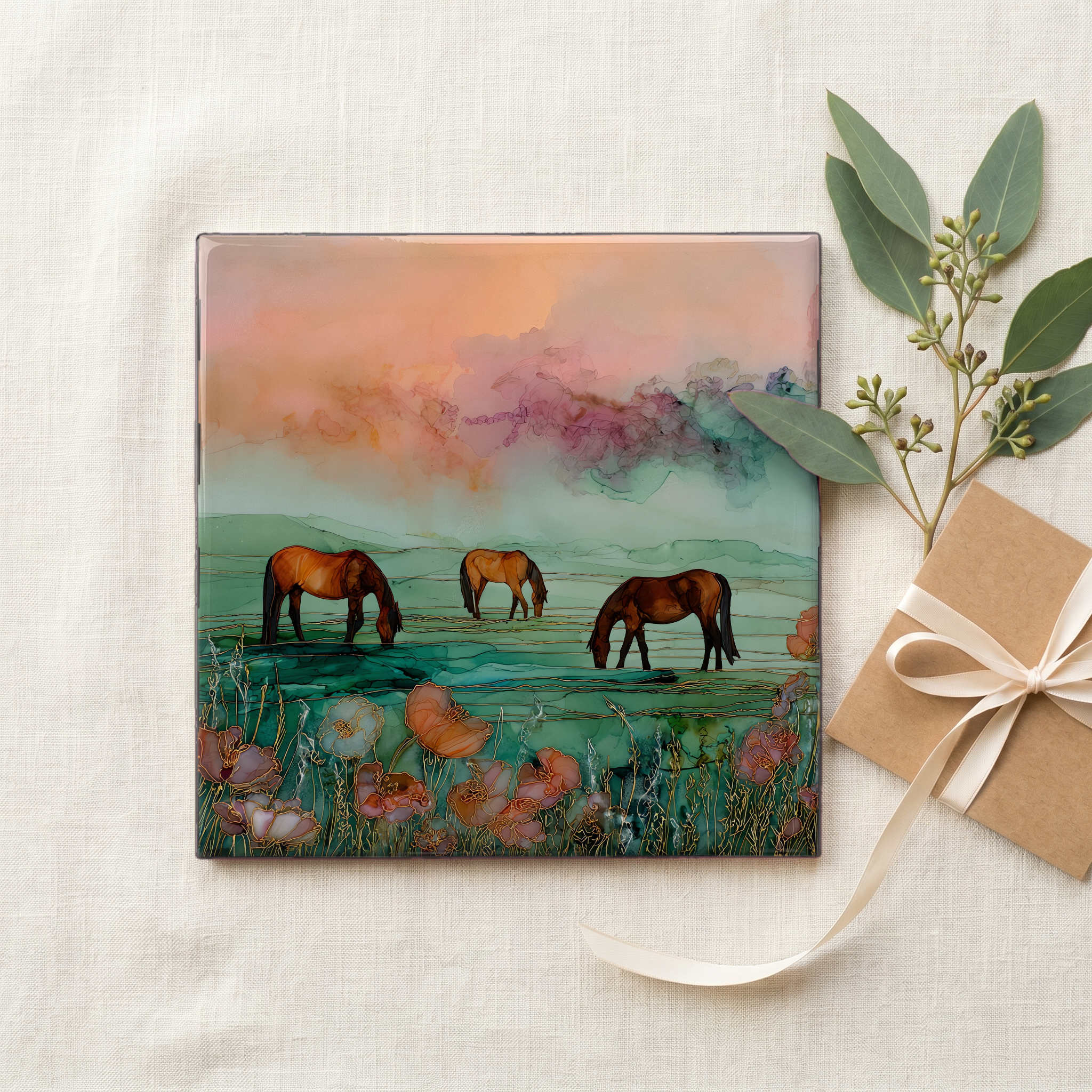
comes gift-ready

Each tile ships in a kraft box, tied with cream ribbon, with a handwritten note from the studio if you'd like to add one.
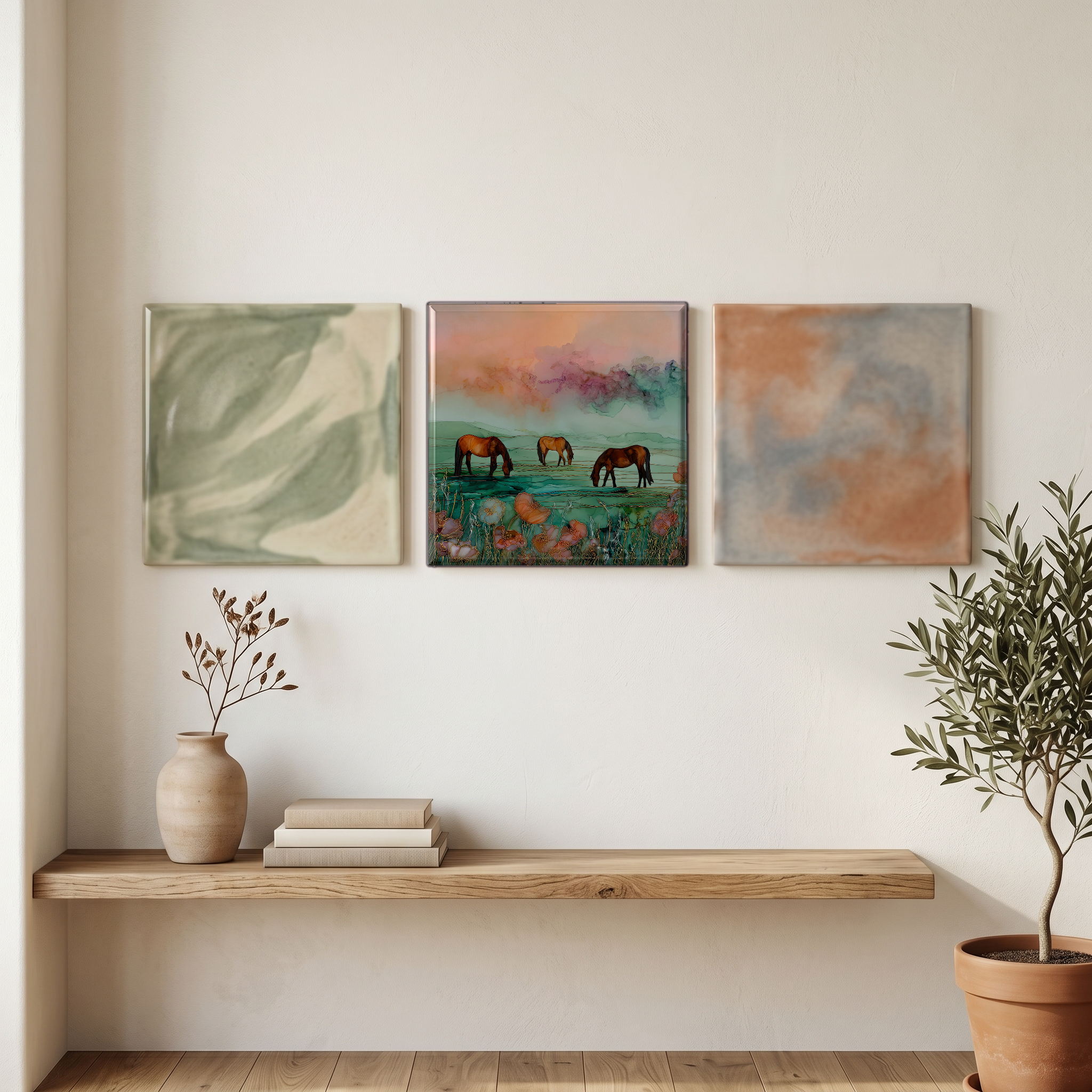
or build a grouping
or build a grouping

Three or five different vistas, hung together — a chapter of places you've been, or want to go.

about Curragh of Kildare

The place, in three passes.

A little of what's known, in case you fall down the rabbit hole — or want to go see it yourself.
the place

The Curragh is a flat grass plain of roughly 5,000 acres in County Kildare, about 50 kilometres southwest of Dublin. The name comes from the Irish *Cuirreach*, meaning a place of running. It is common land, one of the largest tracts of unenclosed common in Europe, grazed by sheep with ancient rights and crossed by working gallops where thoroughbreds are trained for the racing yards at Newbridge and Kildare town. The Curragh Racecourse sits at its eastern edge and has hosted racing in a continuous form since at least the 18th century, though Irish chronicles record horse contests on the plain a thousand years earlier.

the air

What makes the Curragh feel unlike anywhere else in Ireland is the absence: no hedgerows, no walled fields, no trees of any consequence. The plain holds roughly 5,000 acres of open grass sloping gently across the central plain of Ireland. Geologists trace its flatness to a sheet of glacial outwash laid down at the end of the last ice age, when meltwater spread sand and gravel across what is now the middle of the country. Wind crosses the Curragh without a windbreak from the Wicklow Mountains rising to the east or the Slieve Bloom range to the west, which is part of why the plain has remained, against every Irish instinct toward enclosure, a commons.

— informed by Wikipedia: Curragh
the year

The Curragh's year is shaped by horses. The Curragh Racecourse hosts five Irish Classics: the Irish 2,000 Guineas and Irish 1,000 Guineas in May, the Irish Derby in late June, the Irish Oaks in July, and the Irish St Leger in September, drawing thoroughbreds and crowds from across Europe. Outside race days the plain belongs to the gallops, where hundreds of thoroughbreds train from yards along its margin. The place has another year that runs in slower time. The folk song *The Curragh of Kildare*, also called *Winter It Is Past*, was set into print by Robert Burns in the 18th century and carried into modern record by Christy Moore and Andy Irvine. The song's first line is winter; the country in it is here.

where
Ireland · County Kildare
position
53.1550° N · 6.8350° W
the neighborhood

What's nearby.

A handful of named places within an hour's walk or short drive. Some we've already painted; some we will.
3 km W
Kildare
market town with St Brigid's Cathedral
5 km W
Irish National Stud
thoroughbred stud farm with Japanese Gardens
5 km N
Newbridge
town on the River Liffey
12 km NW
Hill of Allen
mythological hill in Irish legend
12 km E
Punchestown
national hunt racecourse
N
Curragh of Kildare
Kildare
Irish National Stud
Newbridge
Hill of Allen
Punchestown
common questions

What people ask.

A few questions we get about Curragh of Kildare — and about bringing the piece home.
about the place

The Curragh is a flat grass plain in County Kildare, about 50 kilometres southwest of Dublin, lying between the towns of Newbridge and Kildare. It covers roughly 5,000 acres on the central plain of Ireland and is reached from the M7 motorway.

The plain is a sheet of glacial outwash sand and gravel laid down at the end of the last ice age, which produces thin, free-draining soil unfriendly to woodland. Centuries of grazing by sheep with commons rights have kept the land open ever since.

*Curragh* comes from the Irish *Cuirreach*, an old word for a place of running, applied to ground used for horse contests. The Curragh of Kildare has been associated with racing since the earliest Irish chronicles, more than a thousand years before the modern racecourse was built.

The Curragh Racecourse hosts all five Irish Classics: the Irish 2,000 Guineas and Irish 1,000 Guineas in May, the Irish Derby in late June, the Irish Oaks in July, and the Irish St Leger in September. The Derby is the headline meeting.

*The Curragh of Kildare*, also titled *Winter It Is Past*, is a traditional Irish folk lament about a woman whose love has gone to the Curragh. A version was set into print by Robert Burns in the late 18th century; Christy Moore and Andy Irvine carried it to a wider audience.

Yes. The plain is common land and crossed by public roads; walkers and motorists pass freely through it. The Curragh Racecourse opens for race meetings from spring to autumn. Working gallops carry training thoroughbreds in the early mornings, so give them room.

Kildare town sits at the western edge of the plain and is the spiritual home of St. Brigid, with a cathedral on the site of her fifth-century monastery. Newbridge lies at the northern edge, on the River Liffey, and serves as the local working town.

about the piece in your home

It travels well to that recipient. The Curragh is the central place in Irish thoroughbred culture, and the folk song carries the place into Irish music as well. A Medium or Large, with a handwritten note from the studio, lands the gesture without ceremony.

The palette runs through warm greens, oat-coloured grass, and slate sky. It sits comfortably in Cottagecore, Heritage Irish, and Country-modern rooms, and reads well against painted plaster, lime-washed walls, or a stained oak frame. The horizon line is low and quiet, leaving room for whatever else is on the wall.

Yes. The current cycle in Irish interiors leans toward natural pigment palettes, raw textiles, and place-rooted art, a quiet revolt against the all-grey years. A Curragh of Kildare tile fits squarely in that direction, especially in a stained oak or painted-pine setting.

Over a standard sofa, the Large is the single-tile choice. For a wider wall, a 4-tile Mural opens the plain across the full sofa-back; a 9-tile Mural reads at architectural scale and gives the horizon room to settle. A Medium suits a console or a reading nook.

Yes, with the right finish. Order the Dura Satin or Matte tiles for vertical installations near water or heat: kitchen backsplashes, shower walls, powder rooms. The Glossy finish is built for show-pieces and framed wall art, away from steady moisture.

A soft microfibre cloth, slightly damp with water, lifts dust and fingerprints from any finish. The colour lives in the surface, not on top of it, so there is no top-coat to scratch off and no print layer to lift. Avoid abrasive pads and ammonia-based cleaners.

Yes. Every Wender Studios vista is made in our Knoxville, Tennessee studio under Reid Wender's direction. The colour is slowly infused into the ceramic surface under high heat and pressure, then hand-finished in-house. No licensing, no third-party prints. One studio, one eye.

if this one stayed with you

A few you might also love.

Hand-picked by the eye that found Sorapis. Same air, same kind of quiet.