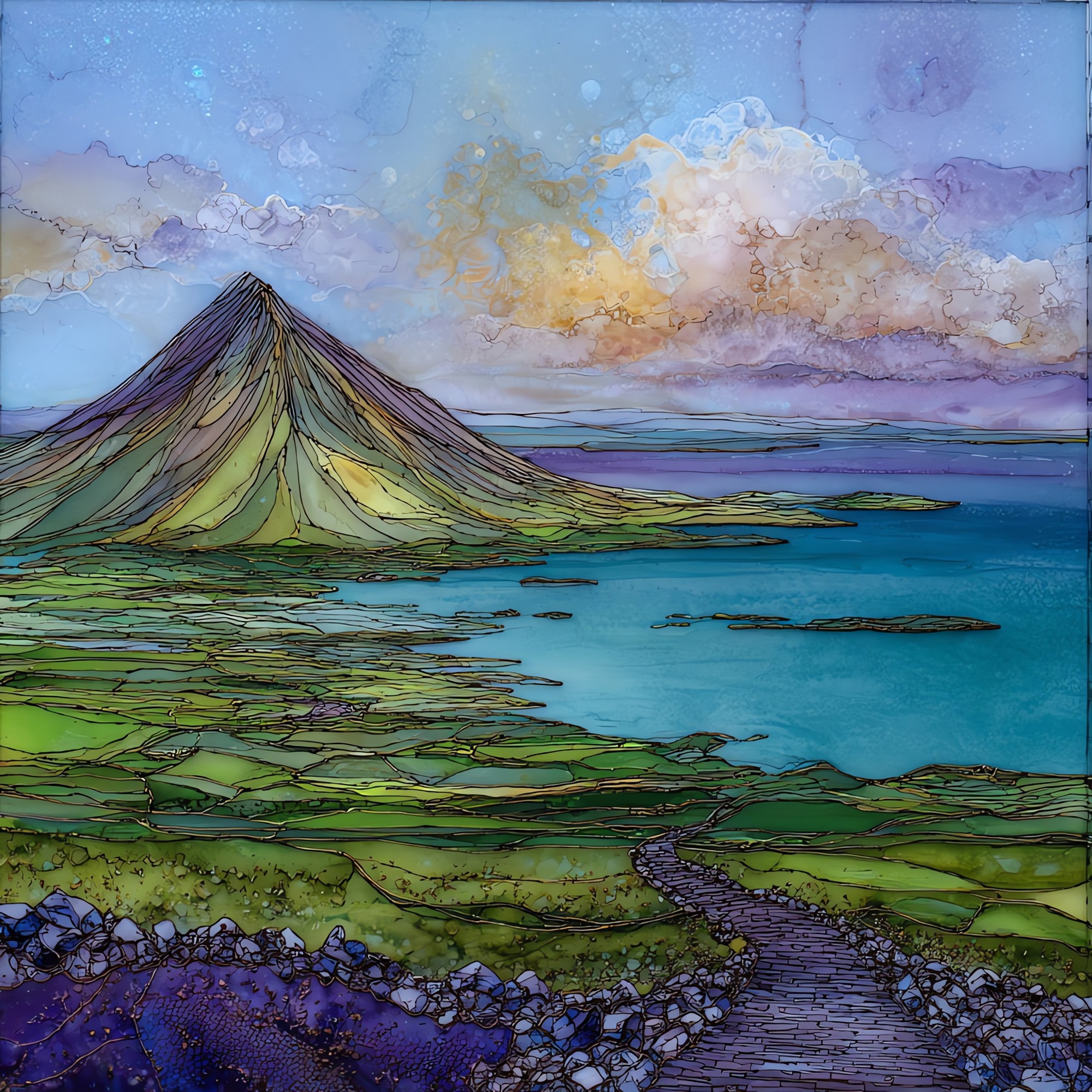
Croagh Patrick
— — a hill a country climbs barefoot.
Not only on a wall.
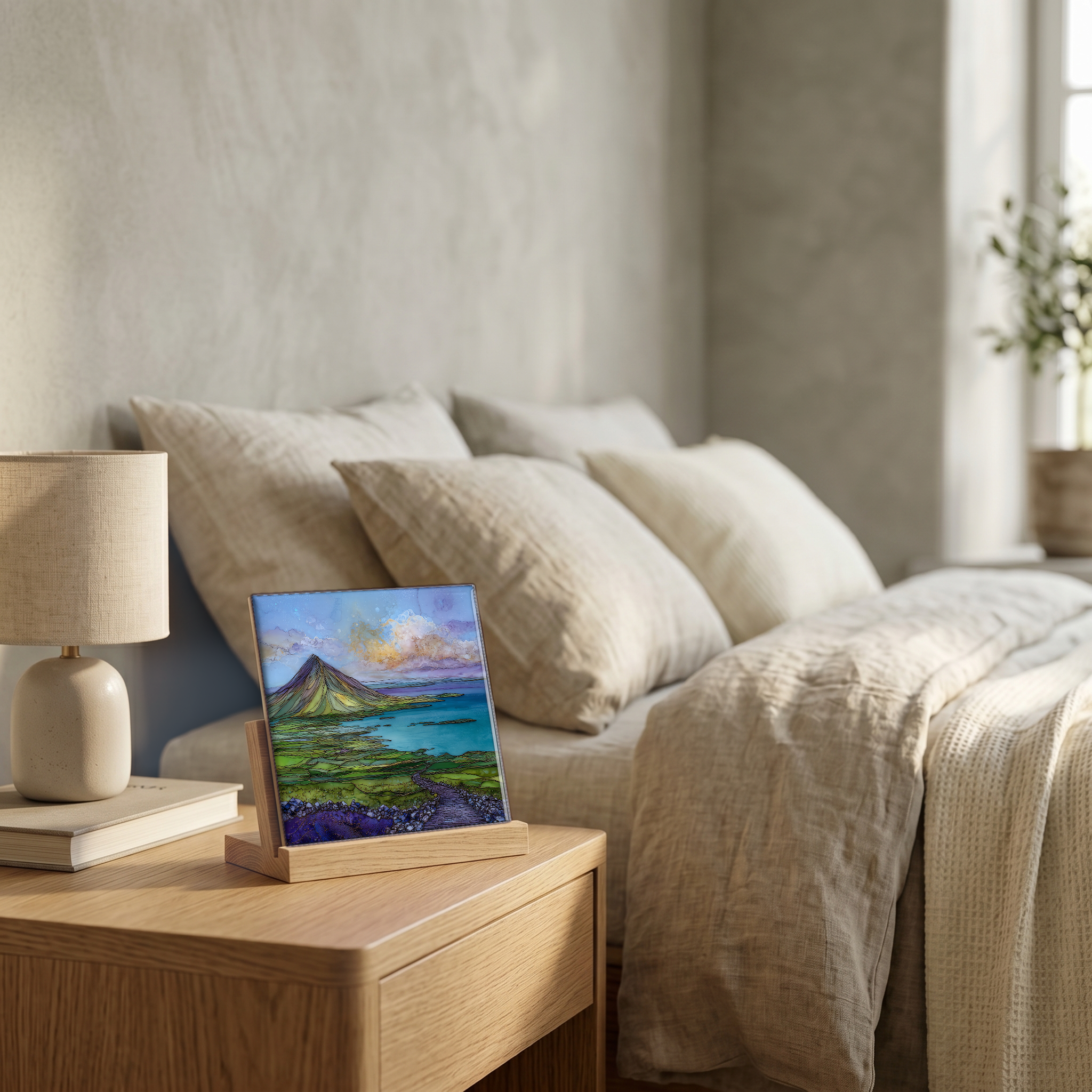
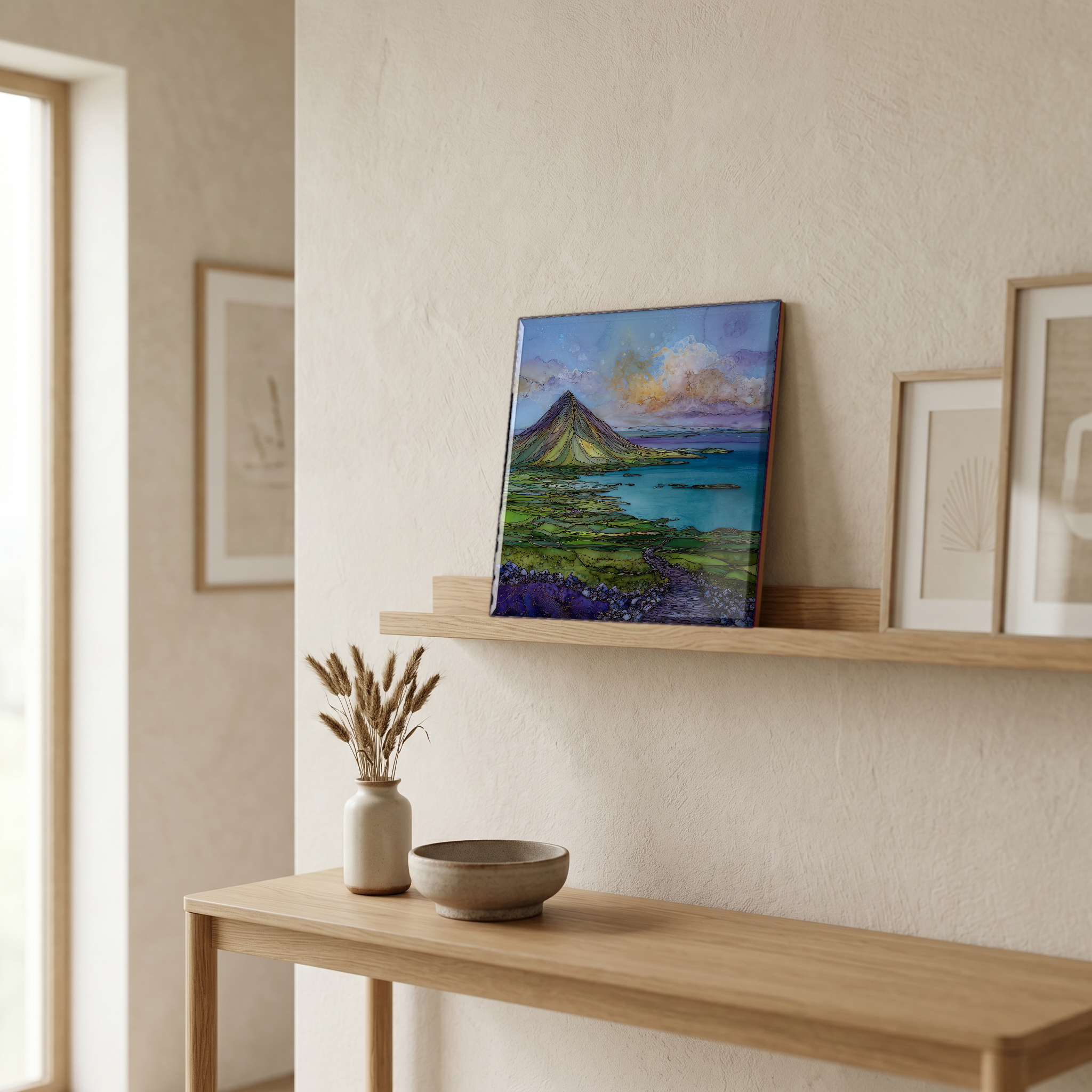
“A conical quartzite peak above Clew Bay, west of Westport in County Mayo. Locally called the Reek. People walk it barefoot on the last Sunday in July, tens of thousands of them, in an old tradition that reaches back through Saint Patrick to Lughnasadh before him. The path turns white and loose near the top, and a small whitewashed chapel waits at the summit. From up there, the bay reads as a pattern of small green islands. On a clear day the Twelve Bens are visible to the south, in Connemara.
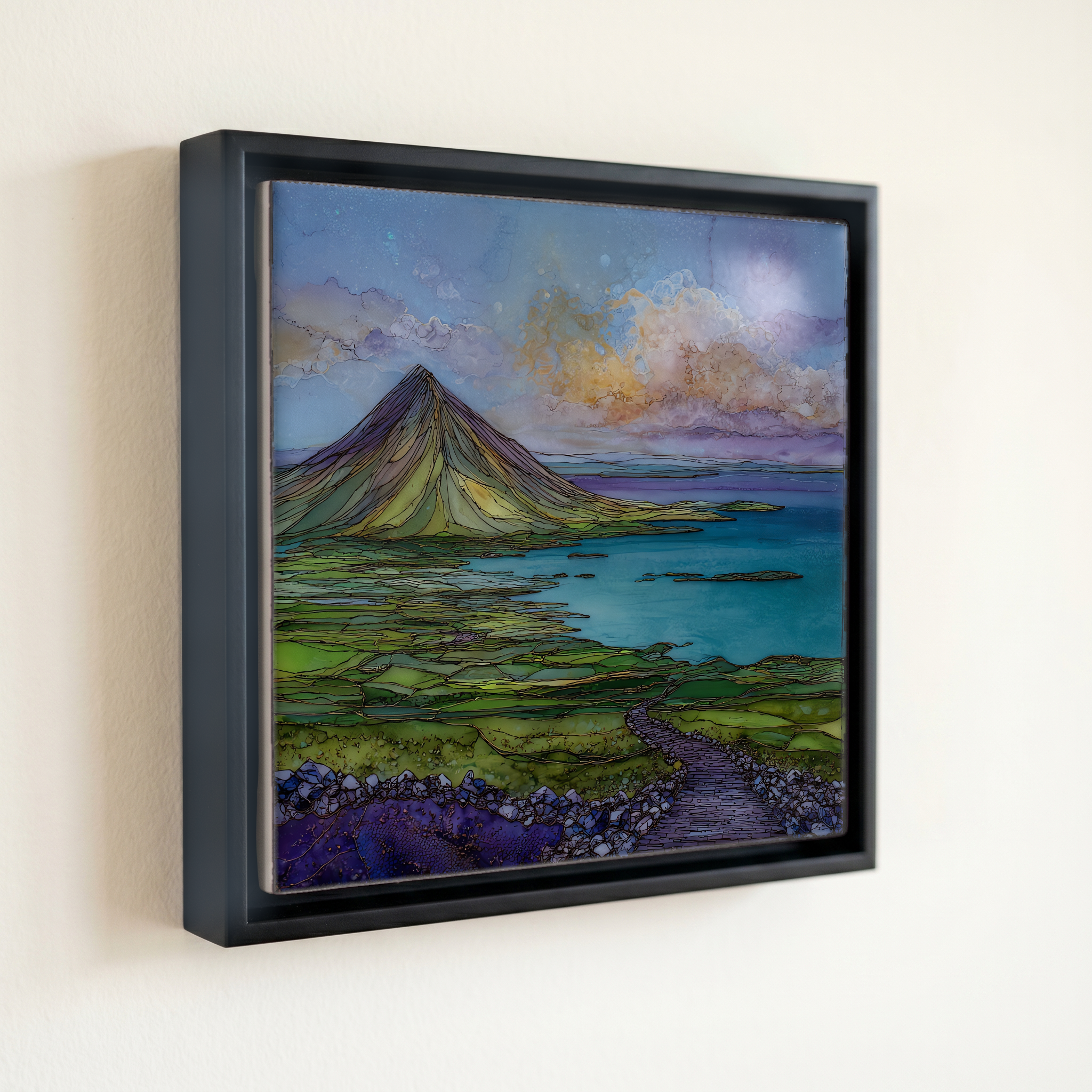
Croagh Patrick, on ceramic.
Each tile is finished by hand in our Knoxville studio. Artwork is slowly infused into the ceramic surface under high heat and pressure, and rests beneath a thin glossy finish. The colour lives in the surface, not on top of it.
Pick any four 4-inch tiles — National Parks you've been to, a Smokies set, the four seasons of one place. $ for a set of , cork-backed, ready to live on the table.
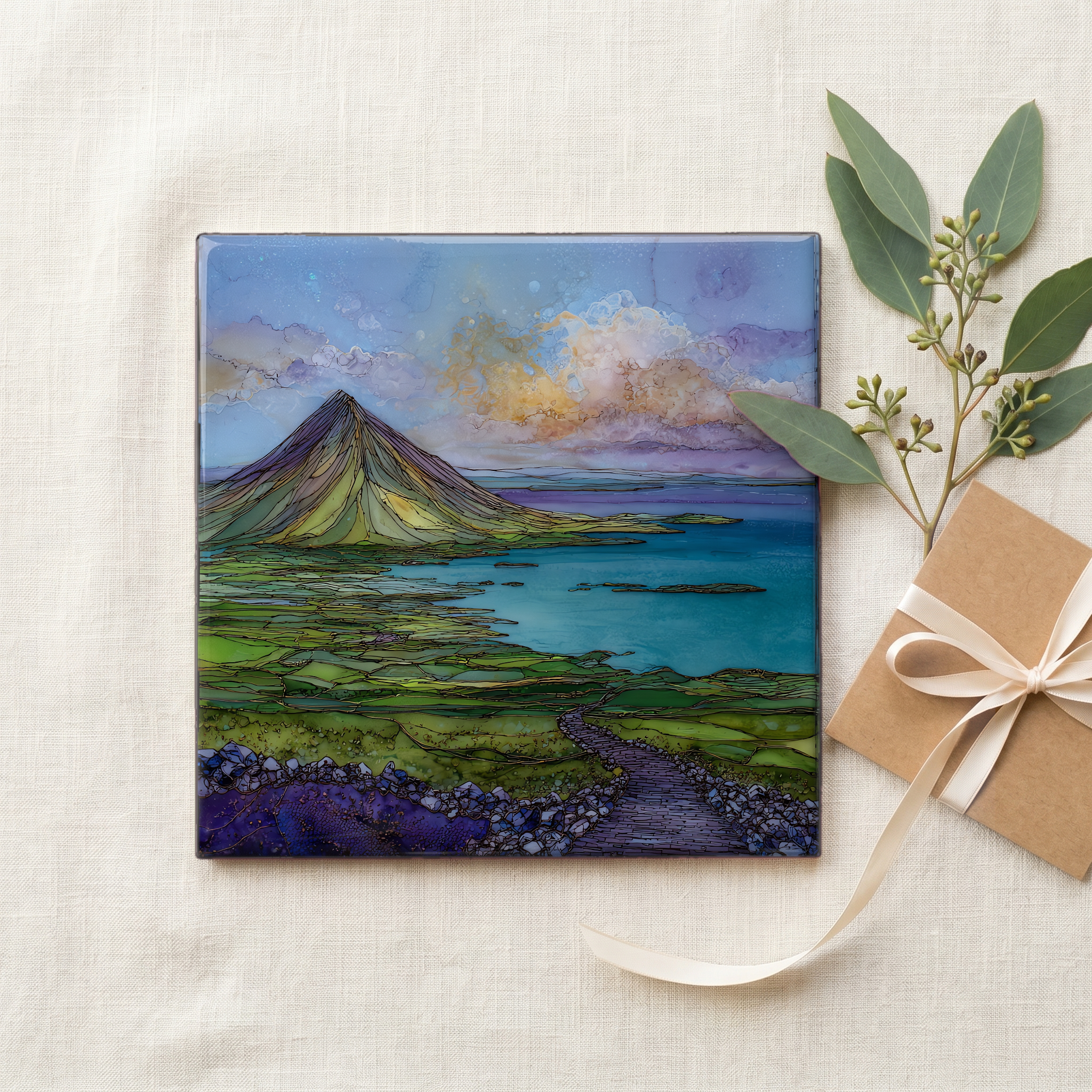
Each tile ships in a kraft box, tied with cream ribbon, with a handwritten note from the studio if you'd like to add one.
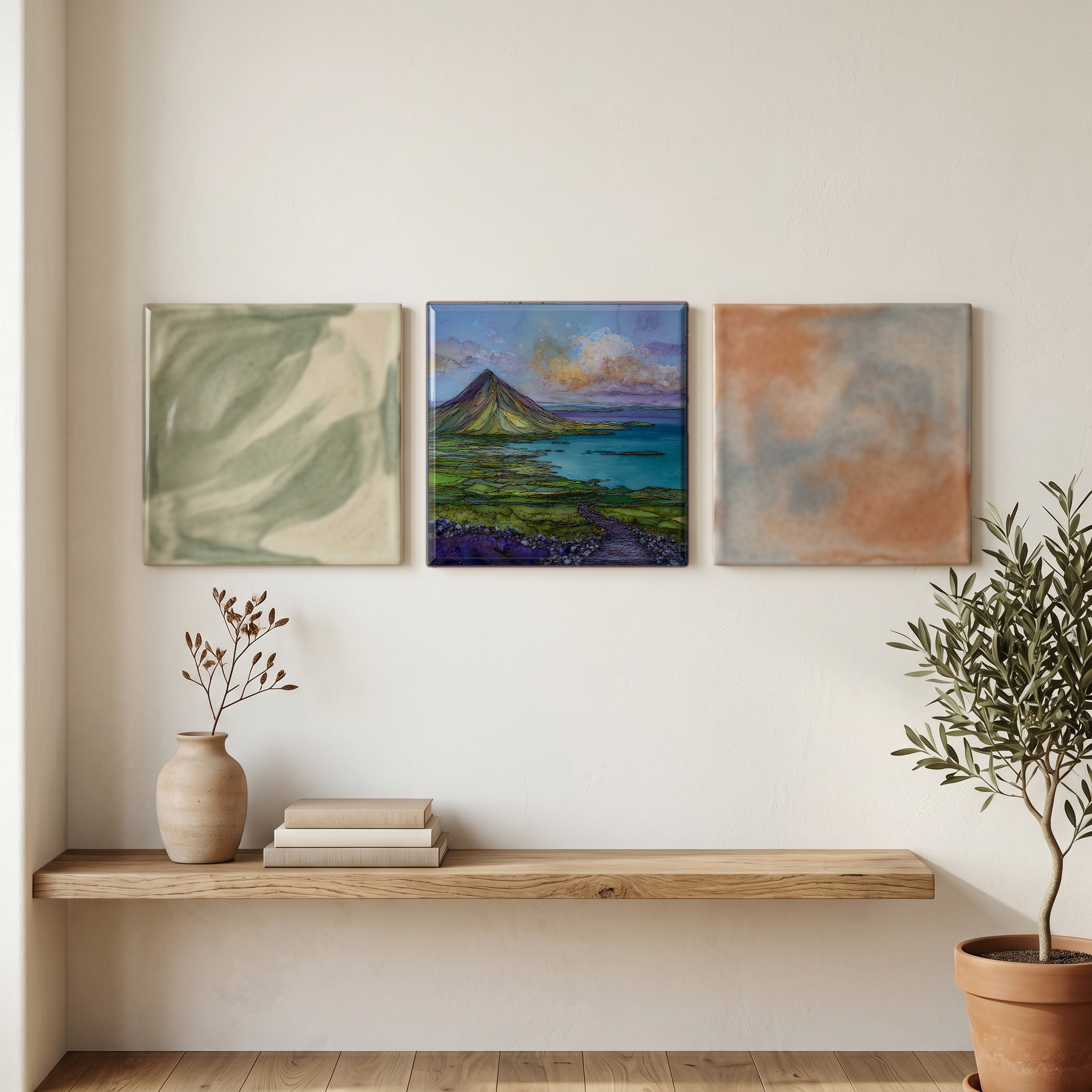
Three or five different vistas, hung together — a chapter of places you've been, or want to go.
The place, in three passes.
Croagh Patrick rises 764 metres on the south shore of Clew Bay, about 8 kilometres west of Westport in County Mayo. The mountain is a distinct quartzite cone, the highest point of a short range called the Murrisk Mountains, and stands almost alone on the coast, with the Atlantic to the north and west and the Connemara highlands to the south. The pilgrimage path begins at Murrisk Abbey on the R335, climbs roughly 4 kilometres to the summit, and gains close to 700 metres along the way. At the top a small whitewashed chapel, built in 1905, sits beside the stone cairn that tradition marks as the place of Saint Patrick's forty-day fast in 441.
The mountain is made almost entirely of quartzite, a hard, pale metamorphosed sandstone that fractures into angular blocks. Near the summit the path crosses a long, loose slope of quartzite scree that reads white from a distance, especially in rain, and gives the upper mountain its distinct conical profile from across Clew Bay. Geologists place the rock in the Dalradian Supergroup, formed from sands laid down on a Precambrian sea floor more than 600 million years ago and folded upward during the Caledonian orogeny. The same quartzite ridge runs east into the Sheeffry Hills and west to Mweelrea, the highest mountain in Connacht.
The climb begins at the visitor centre in Murrisk, a 4-kilometre path that takes most walkers two to three hours up and an hour and a half down. The mountain is open in every season but advised against in heavy cloud or winter ice; the upper scree is steep and loose, and the summit is often inside the weather. The annual pilgrimage falls on Reek Sunday, the last Sunday in July, when thousands walk the path together and an open-air Mass is said at the summit chapel. The Mayo Mountain Rescue team keeps a station at the foot of the path.