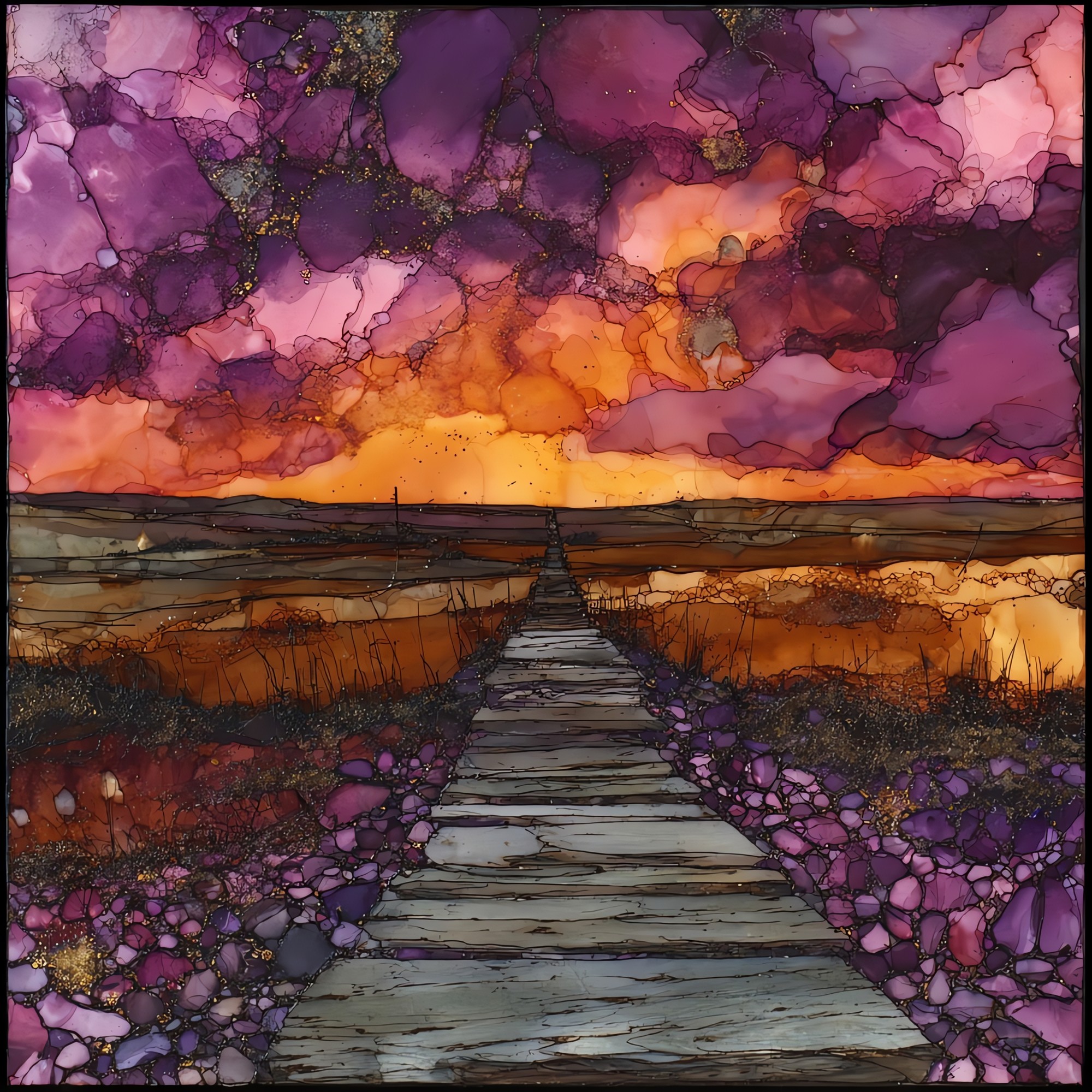
Corlea Trackway
— — oak the bog would not give back.
Not only on a wall.



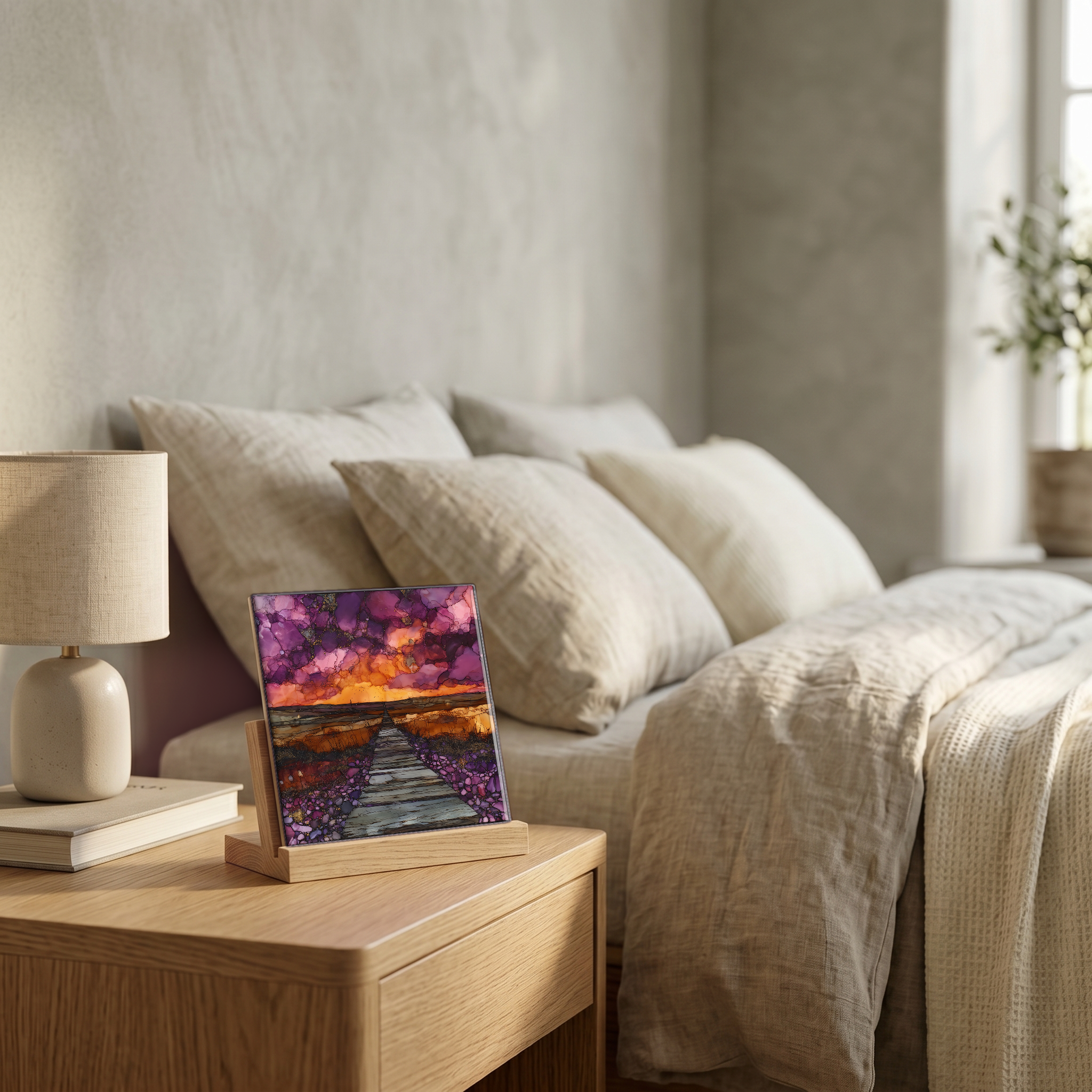
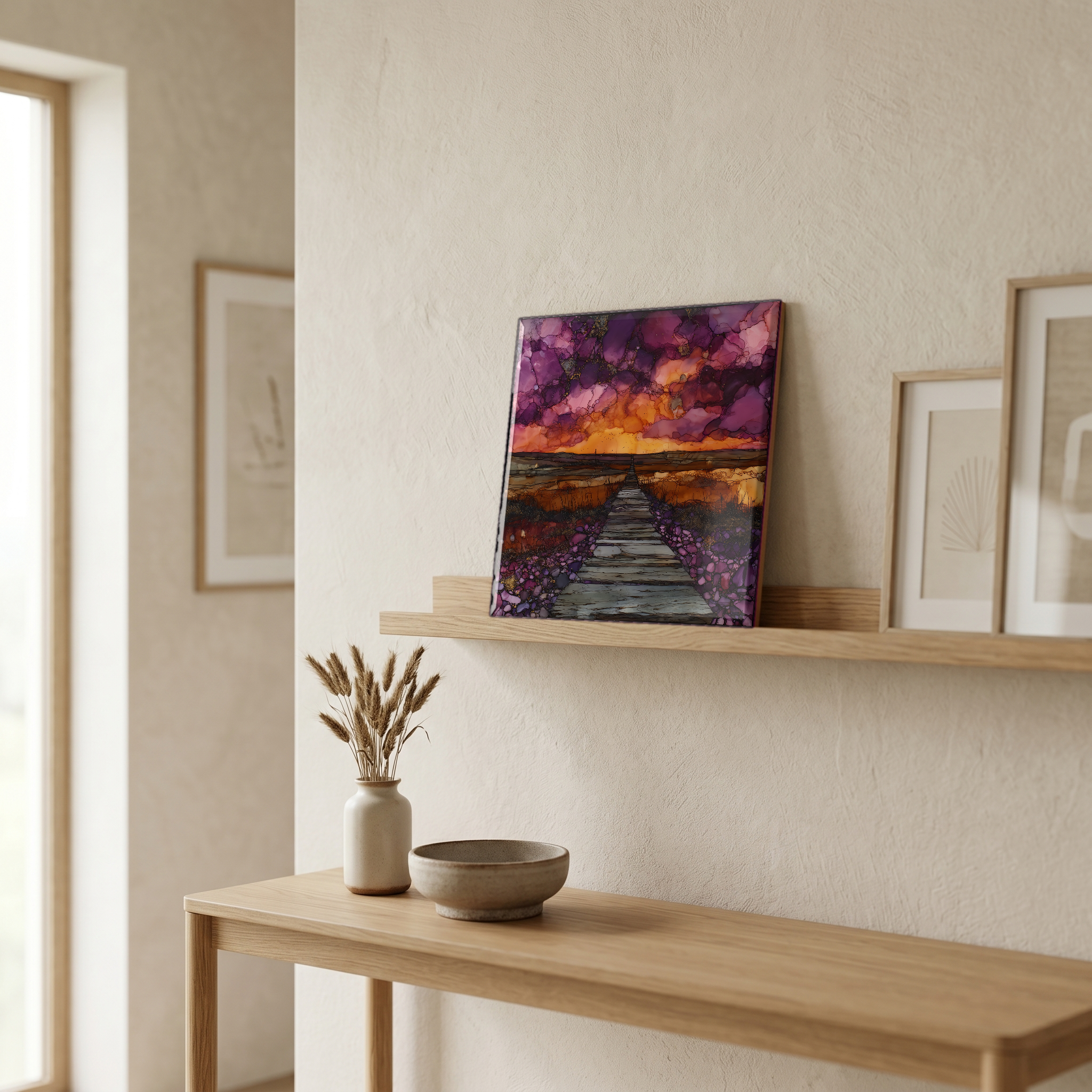
“An Iron Age oak road across a midlands bog, found in 1984 by peat-cutters working for Bord na Móna. The oak was felled the winter of 148 BC. The road sank into the peat almost as soon as it was laid, and that is why it is still here. The bog refused to let it go. Eighteen metres of it sits indoors now at the visitor centre near Keenagh, kept in cool damp air. The rest stayed where it was, dark under the heather, a few miles south of Lough Ree.
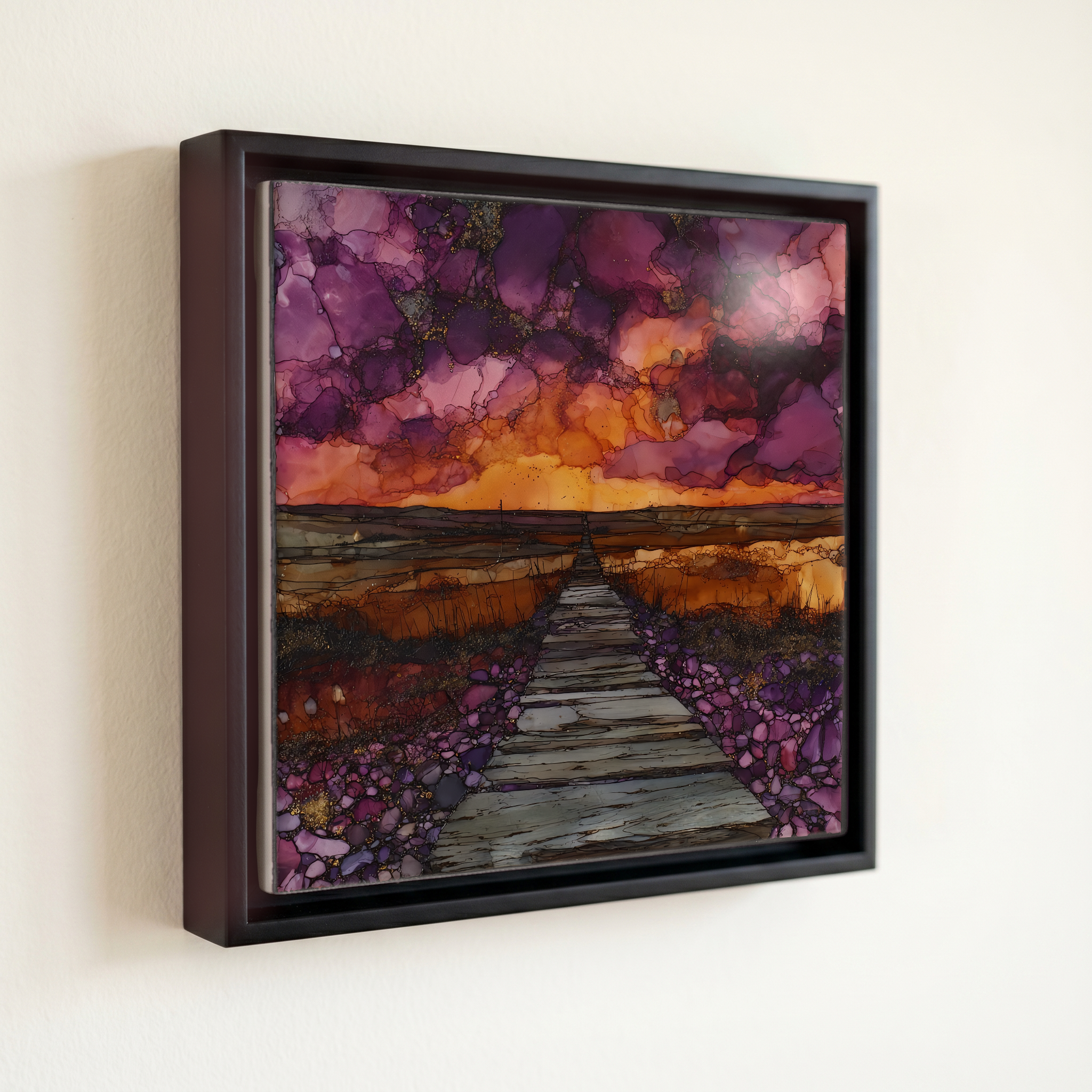
Corlea Trackway, on ceramic.
Each tile is finished by hand in our Knoxville studio. Artwork is slowly infused into the ceramic surface under high heat and pressure, and rests beneath a thin glossy finish. The colour lives in the surface, not on top of it.
Pick any four 4-inch tiles — National Parks you've been to, a Smokies set, the four seasons of one place. $ for a set of , cork-backed, ready to live on the table.

Each tile ships in a kraft box, tied with cream ribbon, with a handwritten note from the studio if you'd like to add one.

Three or five different vistas, hung together — a chapter of places you've been, or want to go.
The place, in three passes.
Corlea Trackway is an Iron Age wooden road across the Mountdillon bogs of south County Longford, about a kilometre east of the village of Keenagh and a few miles south of Lough Ree. The road ran for more than two kilometres, crossing into the neighbouring townland of Derraghan. It is the largest togher of its kind so far found in Europe. The site sits in the Irish midlands, in the flat raised-bog country between the Shannon and the Inny. The visitor centre is run by the Office of Public Works; the road itself stayed where it was, under heather and peat, with eighteen metres lifted into a humidity-controlled hall for visitors to walk.
Oak does not last in soil. In a raised peat bog it can last for thousands of years. The acidic, oxygen-poor water of the bog stops the bacteria and fungi that would otherwise eat the wood, so the planks felled in the winter of 148 BC came back up in 1984 still recognisable as worked timber. The wood is dark with bog tannin and soft from the water, but the toolmarks are still readable. The road sank as it was being built, which is what saved it. Above it, the moss grew back, the heather grew back, and the country went quiet over the road for two thousand years. Bord na Móna's peat-cutters came across the oak in 1984, exposed by industrial peat extraction for a nearby power station.
The Corlea Trackway Visitor Centre sits a kilometre east of Keenagh village and is operated by the Office of Public Works. Admission is free. The centre is open daily from mid-March through early November, ten in the morning to six in the evening, with last admission an hour before closing. A guided tour walks visitors through the dating and excavation work led by Barry Raftery of University College Dublin, then into the hall where the eighteen-metre section is laid out at floor level. The hall is kept humid so the timber does not dry. The OPW suggests giving an hour and a half to the visit. The rest of the road remains in the bog east of the centre, undisturbed.