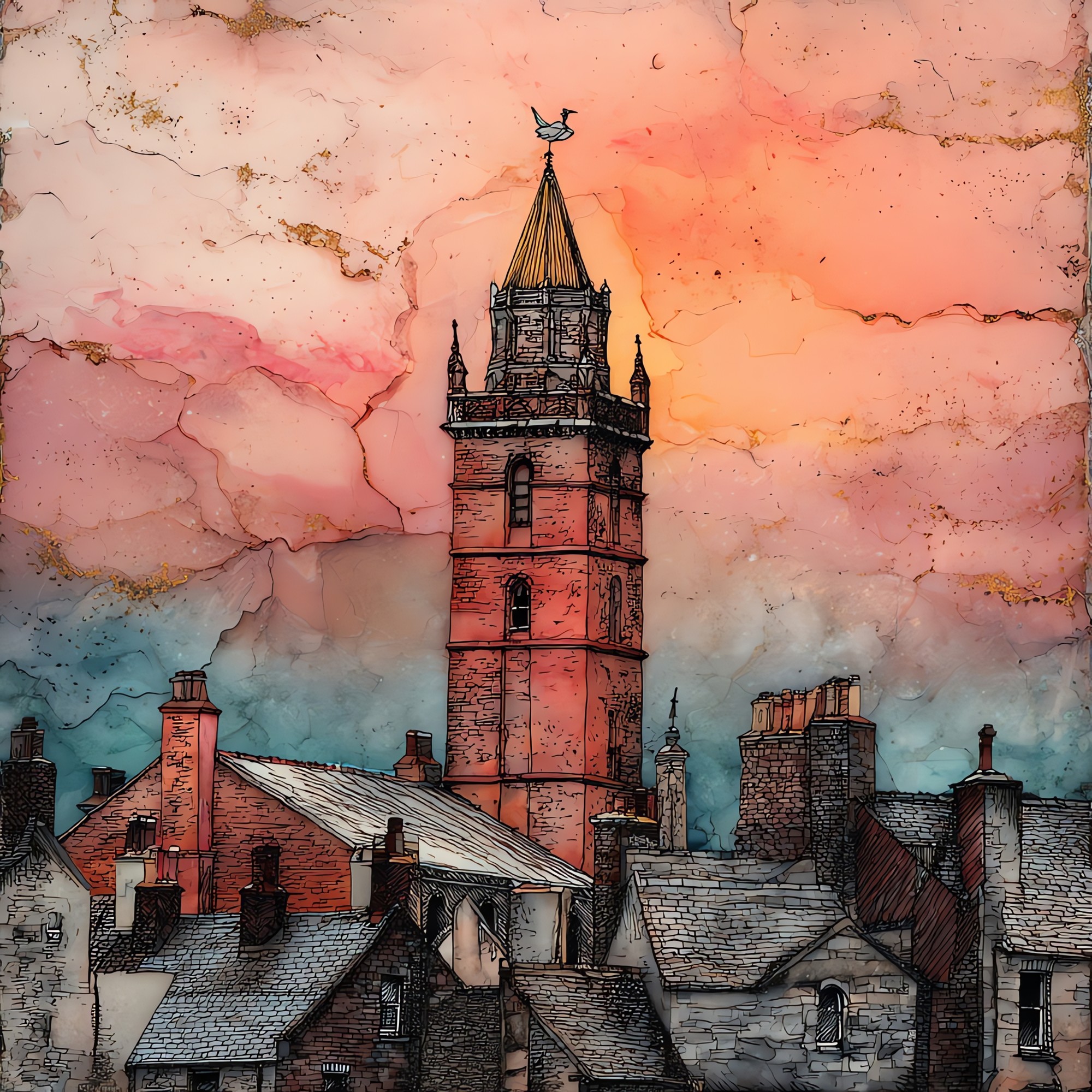
Shandon Bells
— — the bells the city plays itself.
Not only on a wall.
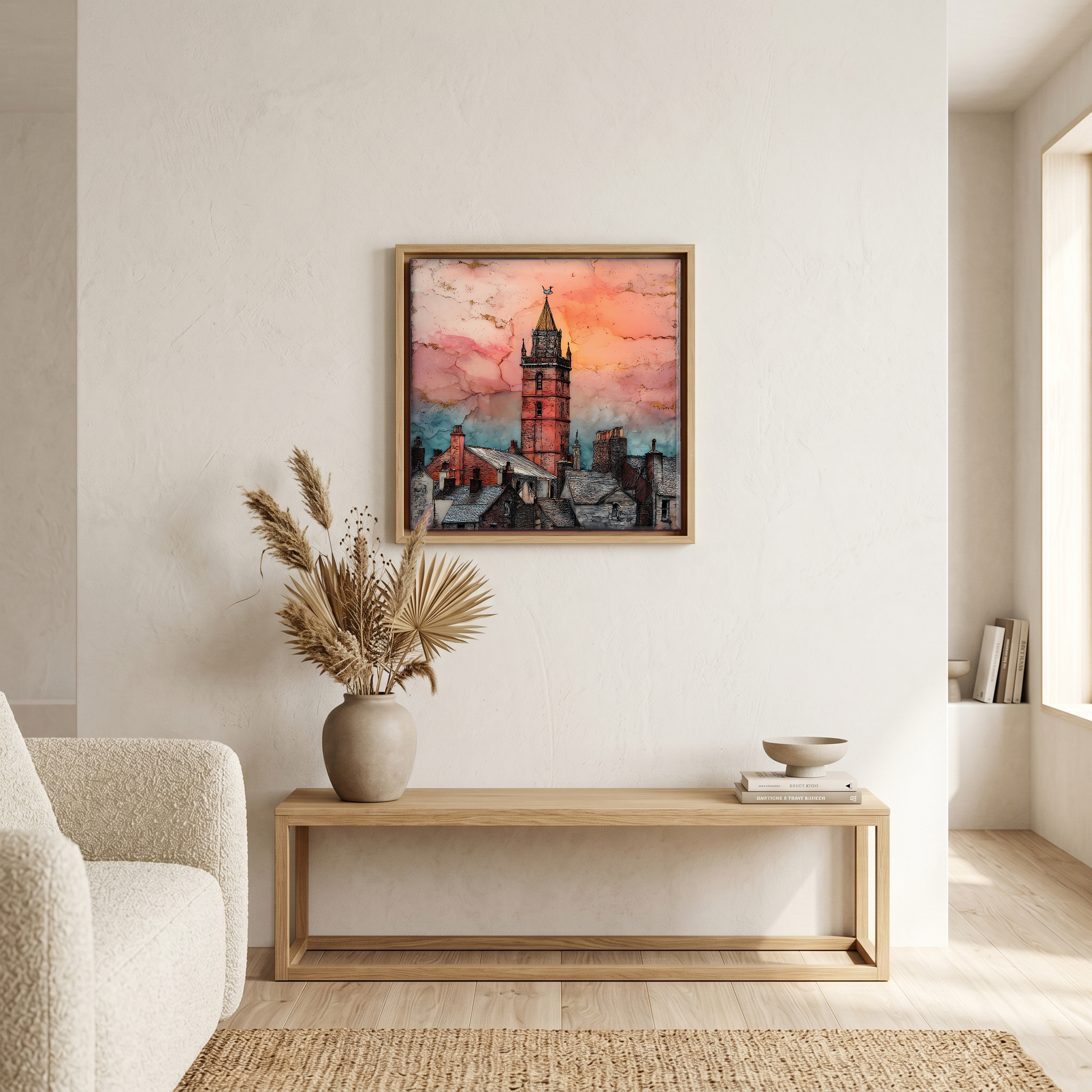
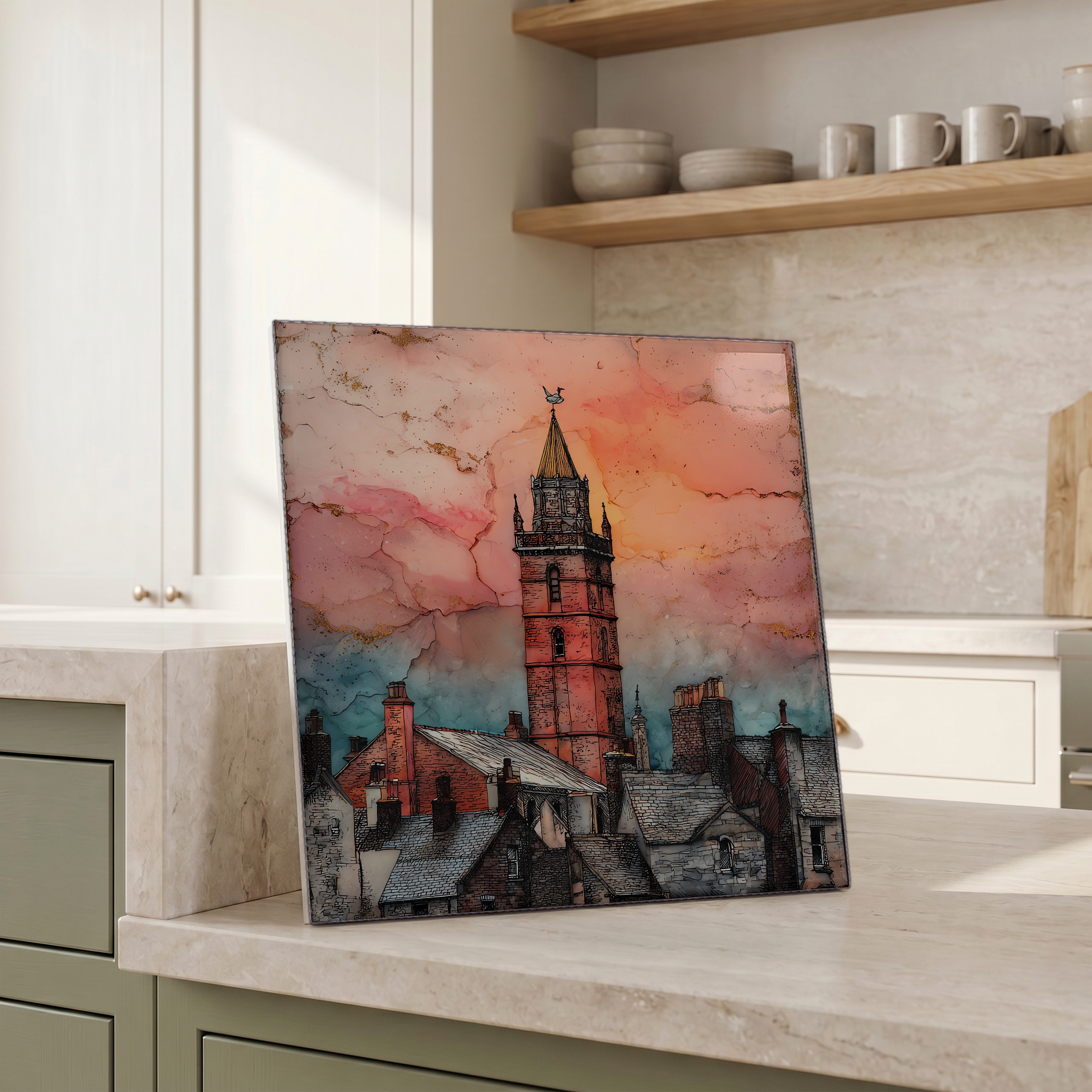
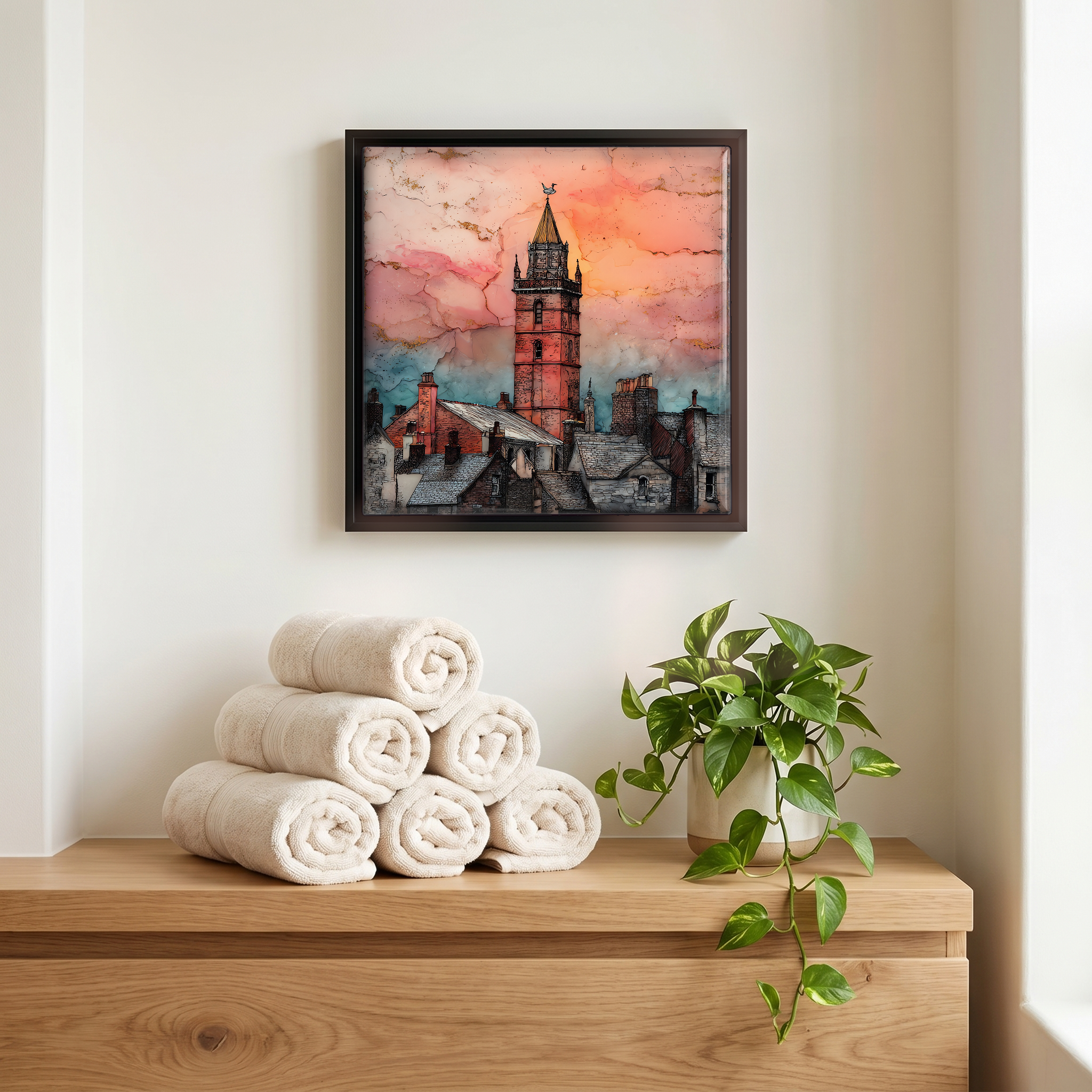
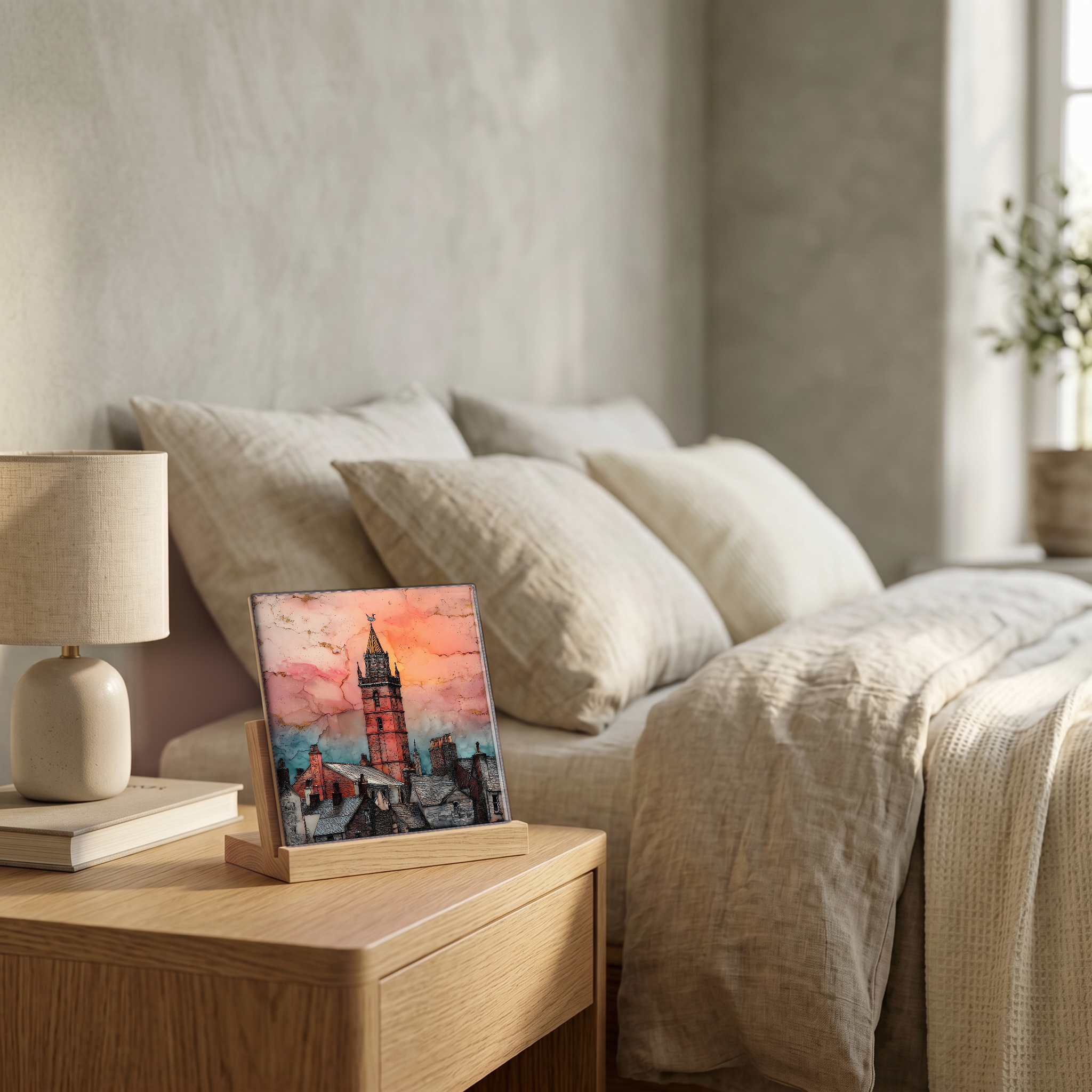
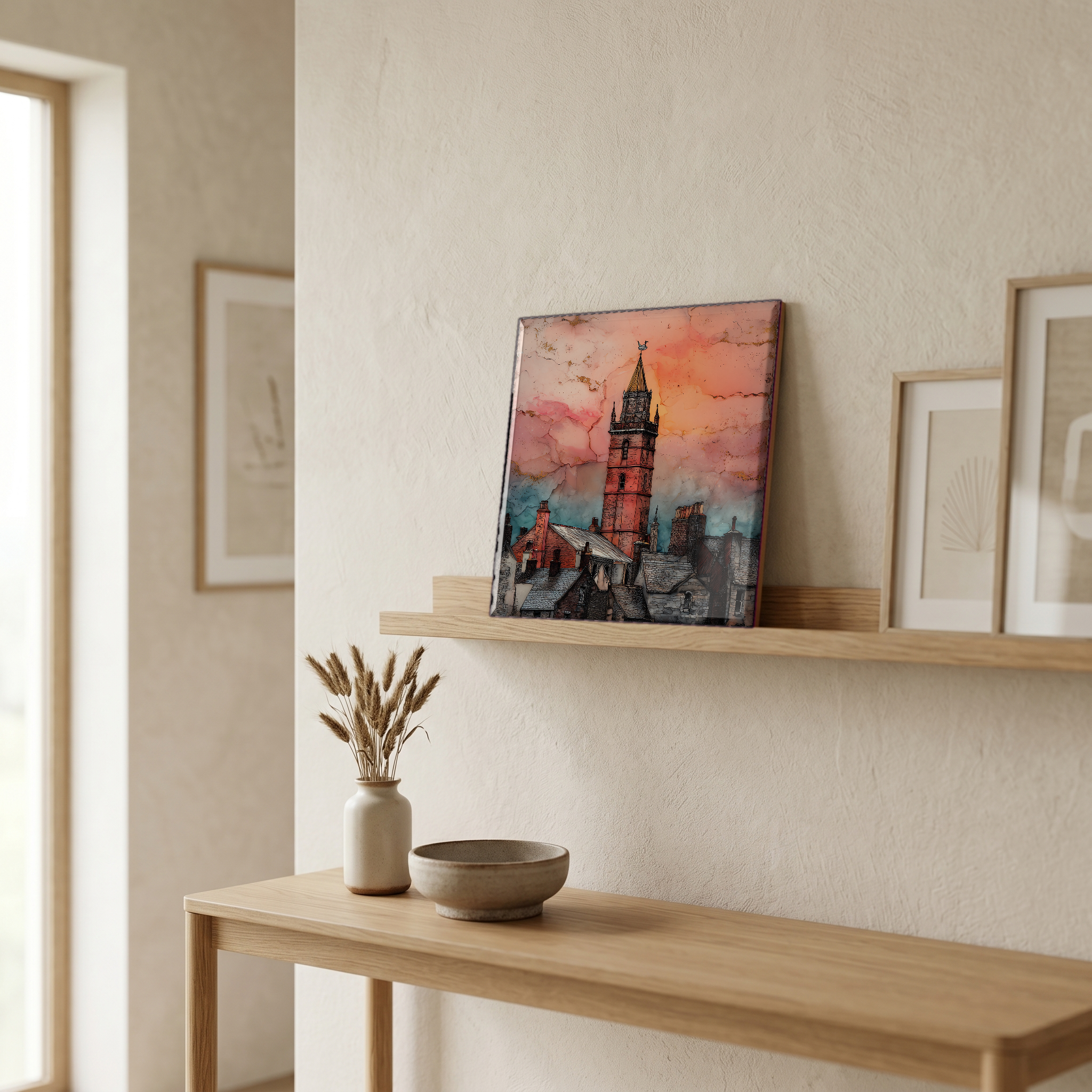
“St. Anne's tower rises above Shandon on the north slope of Cork. Two sides red sandstone, two sides pale limestone, four clocks that rarely agree, an eleven-foot salmon turning on top in the wind off the Lee. The bells inside — eight of them, cast by Abel Rudhall in Gloucester and rung from the city since 1752 — are one of the few peals in the world a visitor can climb up and ring themselves. There is a board of numbers above the ropes, the way a music box prints its tune.
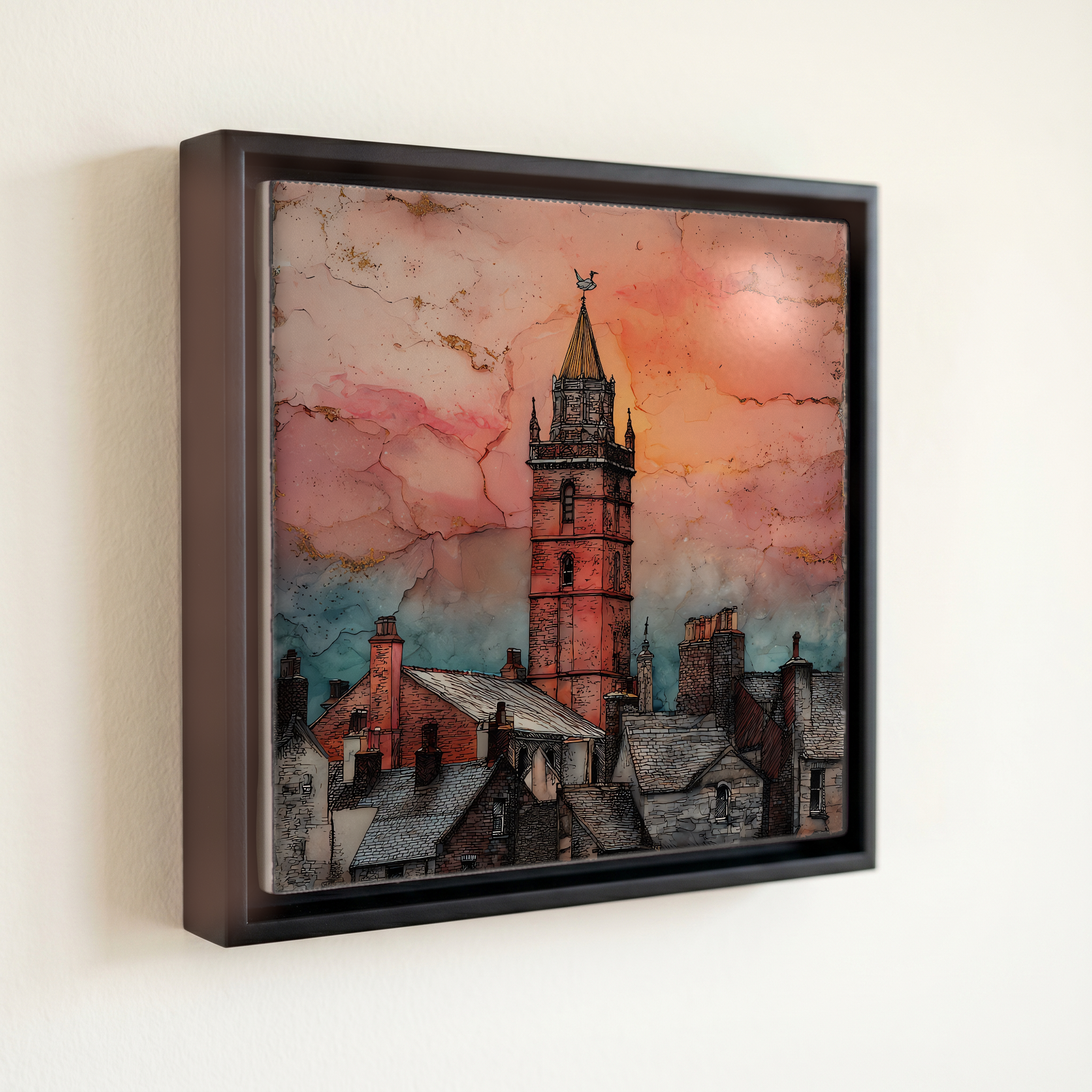
Shandon Bells, on ceramic.
Each tile is finished by hand in our Knoxville studio. Artwork is slowly infused into the ceramic surface under high heat and pressure, and rests beneath a thin glossy finish. The colour lives in the surface, not on top of it.
Pick any four 4-inch tiles — National Parks you've been to, a Smokies set, the four seasons of one place. $ for a set of , cork-backed, ready to live on the table.
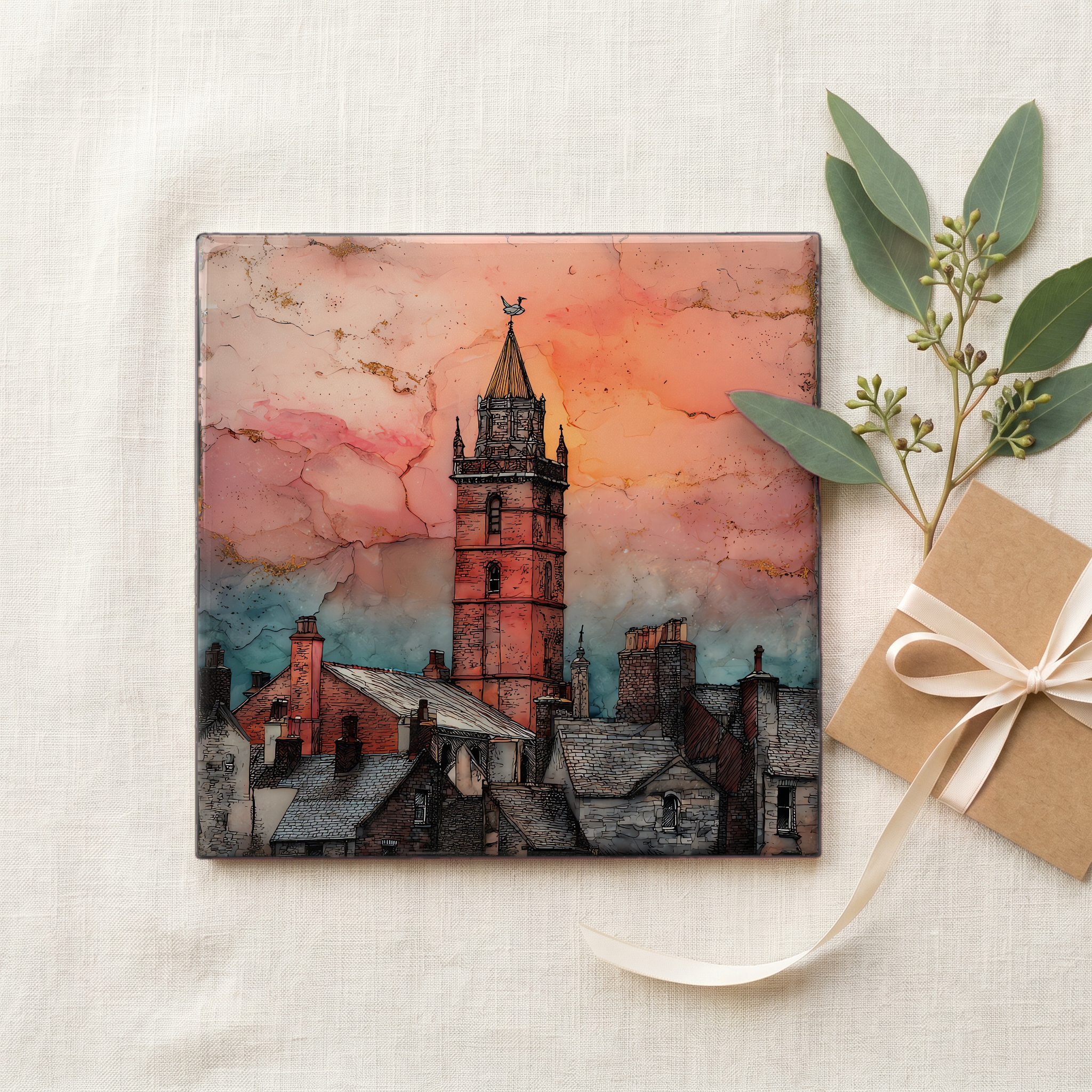
Each tile ships in a kraft box, tied with cream ribbon, with a handwritten note from the studio if you'd like to add one.
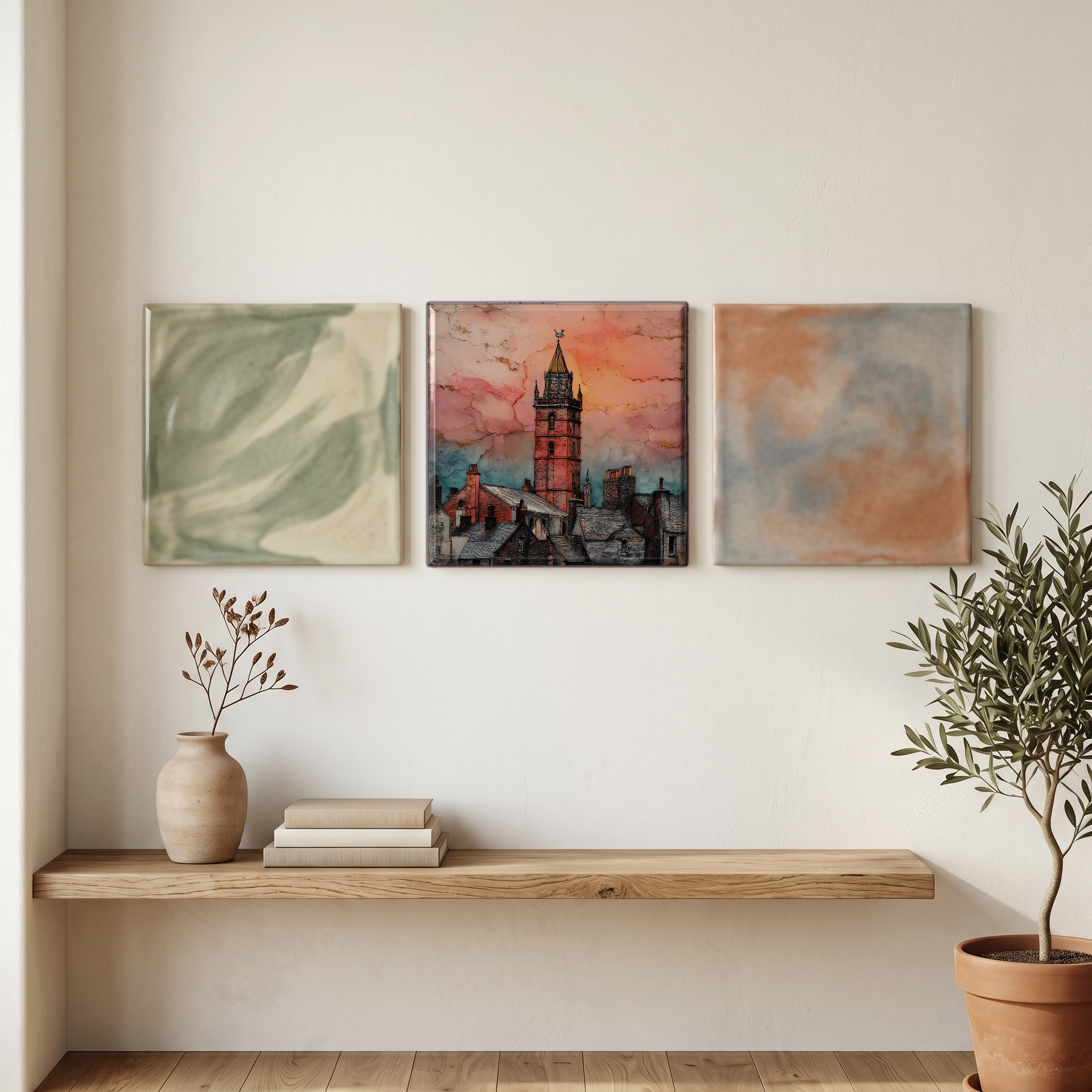
Three or five different vistas, hung together — a chapter of places you've been, or want to go.
The place, in three passes.
St. Anne's Church stands on Shandon Hill on the north bank of the River Lee in Cork, the second-largest city in Ireland. The current church, designed by the Cork builder John Coltsman and consecrated in 1722, replaced a medieval church destroyed during the Siege of Cork in 1690. Its tower rises about 36.5 metres (120 feet) above the old butter-market district, where the Cork Butter Exchange once handled most of Munster's salted-butter trade with Britain and the West Indies. The hill is reached on foot from the river quays in about ten minutes; the church and tower remain open to the public most weekdays.
The tower is famously two-coloured: the north and east faces in red sandstone, the south and west in pale grey limestone, both quarried locally and laid course-by-course as a single elevation. On top sits an eleven-foot salmon weathervane in gilded copper, a nod to the River Lee below and to the fish trade that built much of eighteenth-century Cork. The four clock faces, one on each side of the tower, are driven by a single mechanism but read on four different elevations exposed to four different winds; they rarely agree, and Cork has called the steeple the Four-Faced Liar for nearly two centuries. The tower was made widely known by Father Prout (Francis Sylvester Mahony), whose poem The Bells of Shandon was published in the 1830s in Fraser's Magazine.
St. Anne's is one of the few church towers in the world where a visitor can climb up and ring the peal themselves. A small admission fee covers entry to the tower and to the bell-ringing room, where the eight bells — cast by Abel Rudhall of Gloucester in 1750 and hung in the tower in 1752 — are rung from a set of ropes labelled by number. A printed card on the wall lists the numbers to pull for common tunes (Danny Boy, Amazing Grace, The Bells of Shandon itself), and a visitor's chosen tune carries clearly across the city. The tower is open most weekdays, with limited Sunday hours; the climb is steep but short, and the bell-ringing room sits about halfway up.